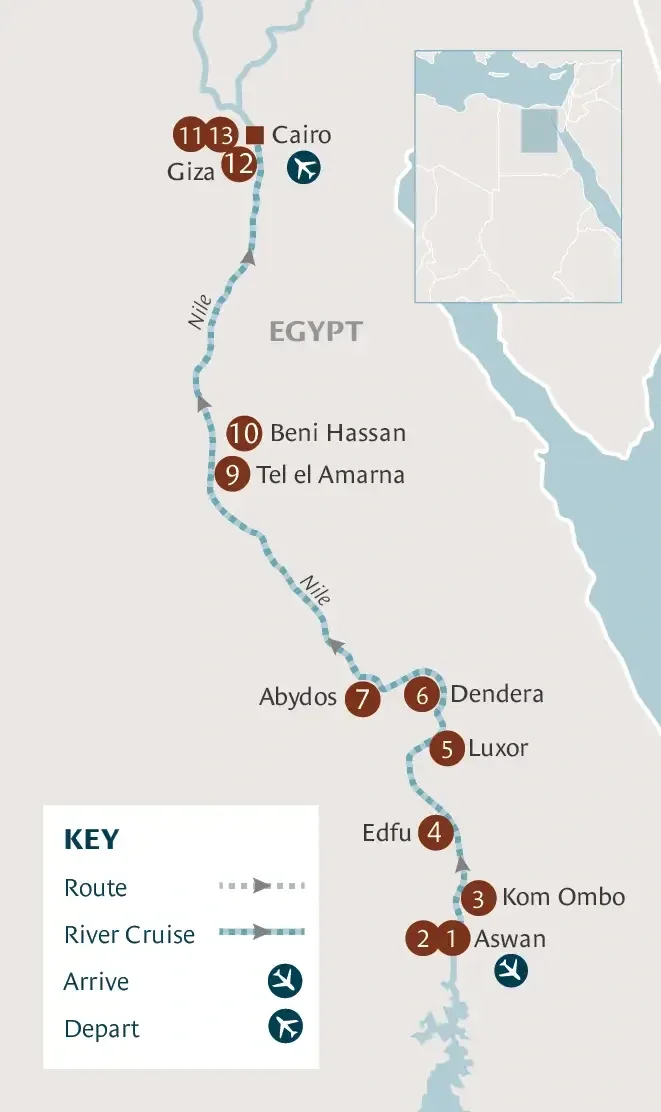
Your itinerary
Day 1
Arrival in Aswan
Arrival in Aswan – Please note, depending on flight schedules – arrival time at the ship may be very late at night or early morning on day 2.
Day 2
Aswan
Aswan – After a morning at leisure to rest after your late arrival, enjoy breakfast and lunch on board.
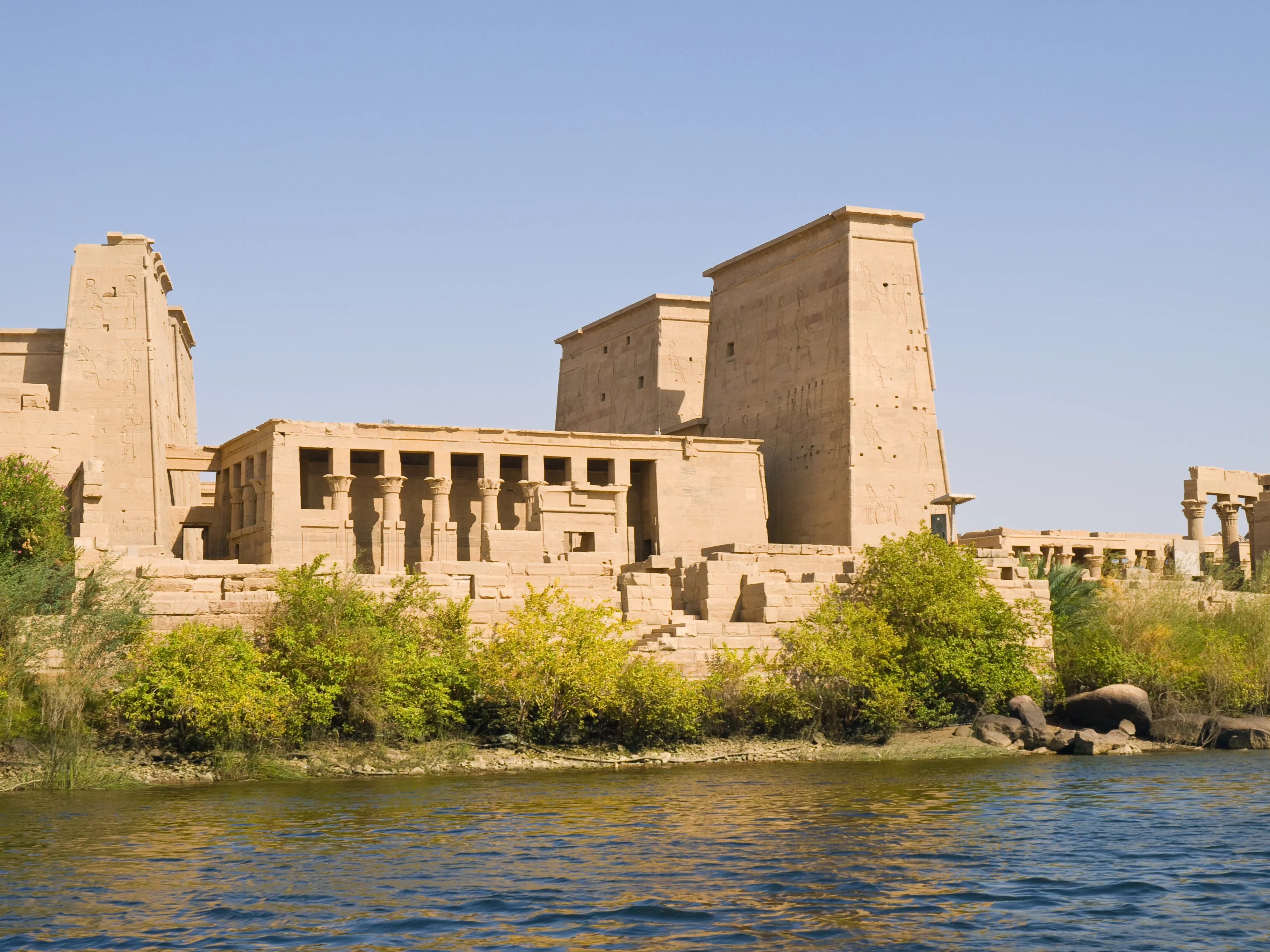
This afternoon, we visit one of modern Egypt’s greatest achievements – the Aswan High Dam. We continue to the Temple of Philae, which had to be rescued from the rising waters of Lake Nasser.
Meals: Breakfast,Lunch
Day 3
Kom Ombo
Kom Ombo – Enjoy a leisurely breakfast before a relaxing morning cruising.
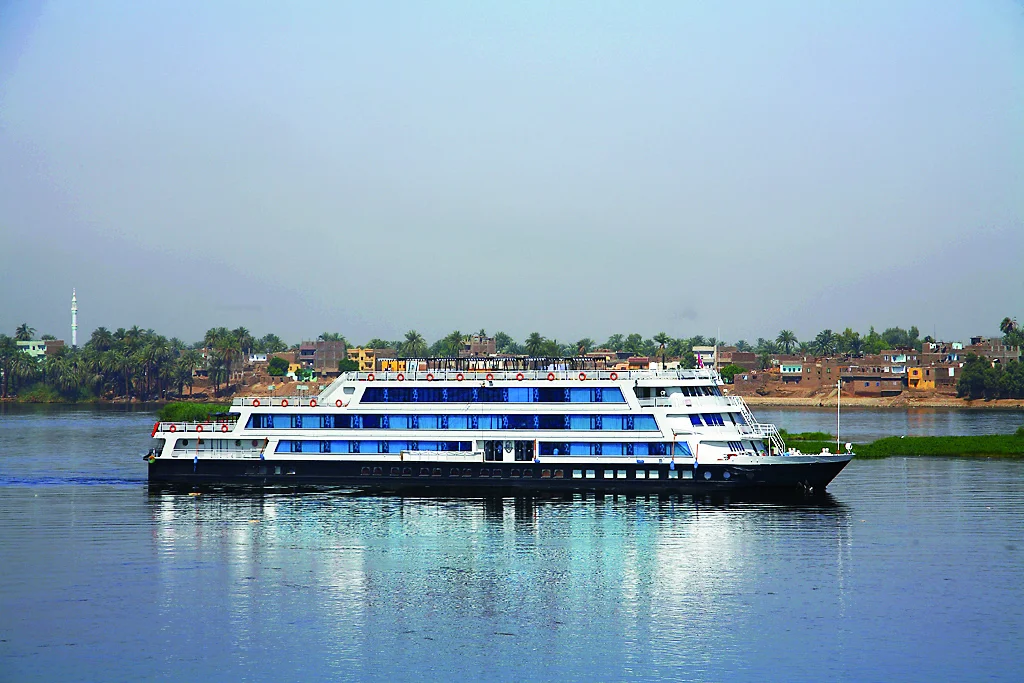
Maybe make your way to one of the three open decks and relax under one on one of the many comfortable shaded sun loungers or Balinese-style canopied day-beds as the unchanged landscape of the Nile slips by.
If you prefer to keep cool in air-conditioned comfort, then there’s plenty of armchairs by the full-length windows of the bar.
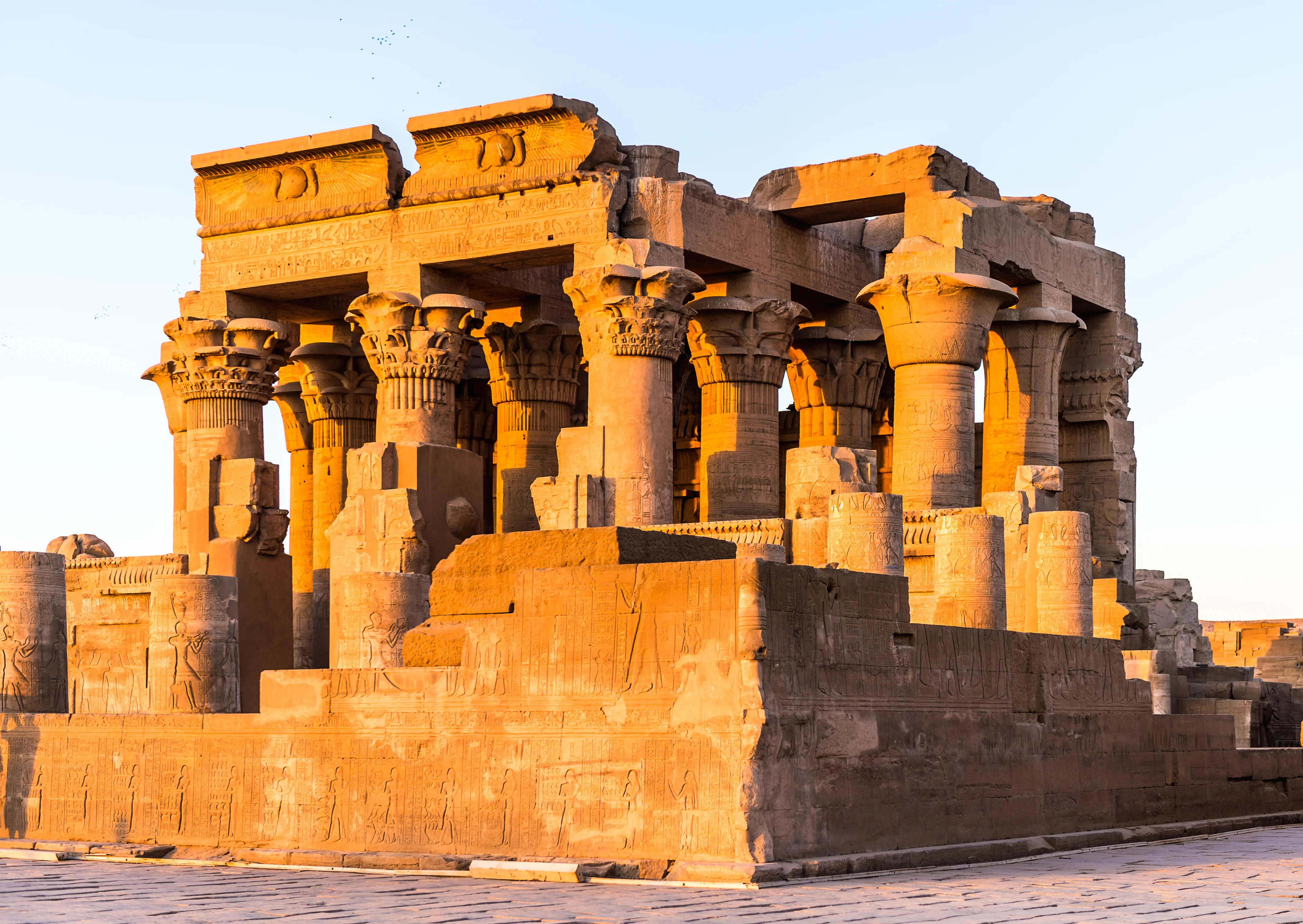
This afternoon, join your guide for a visit to the Temple at Kom Ombo – unusual in that it’s dedicated to two gods, Horus (the falcon-headed god) and Sobek (the crocodile god). The Temple once had a lake with sacred crocodiles and many mummies of them have been found nearby.
We sail to Edfu and moor overnight.
Meals: Breakfast
Day 4
Edfu
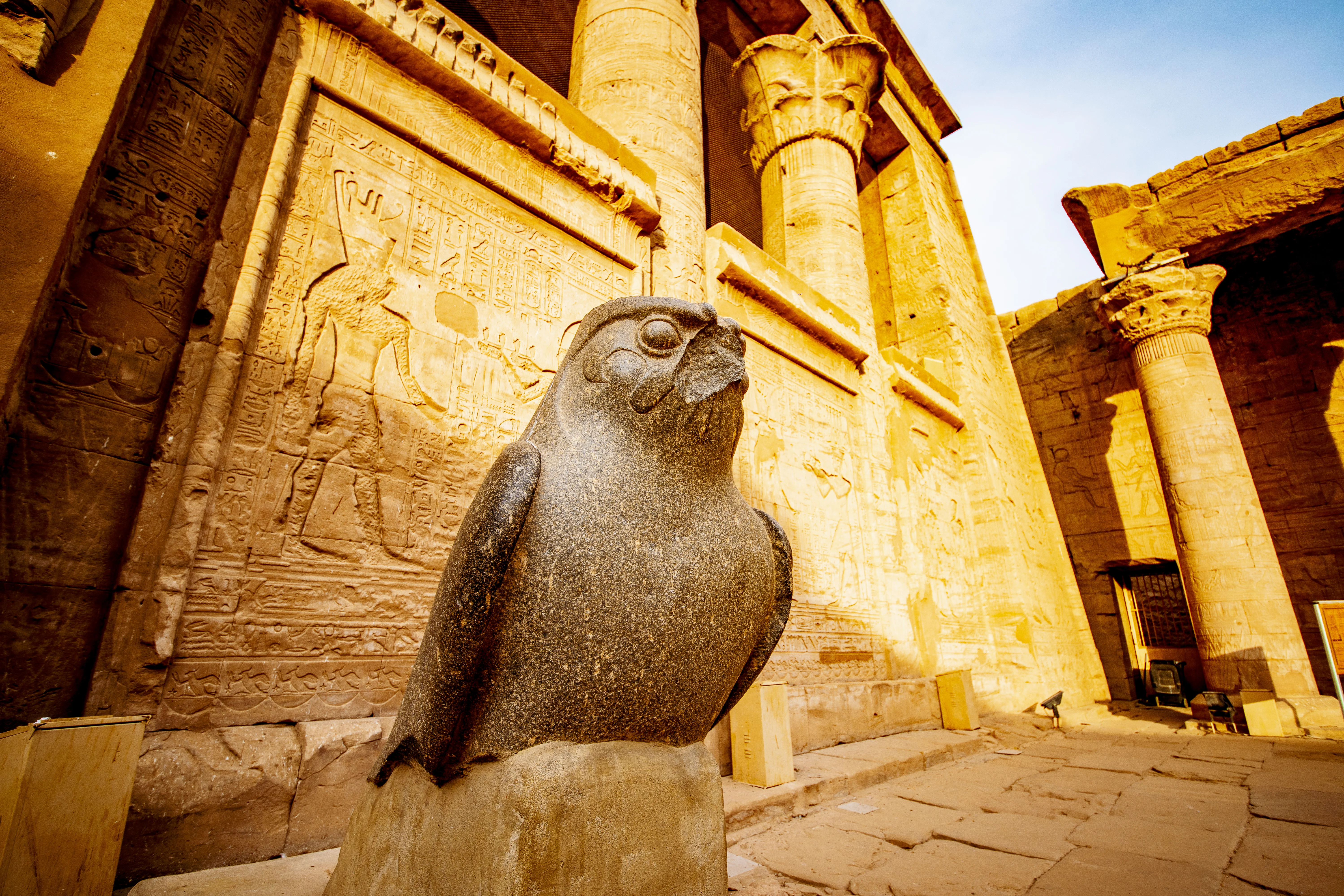
Edfu – This morning will be an early start to avoid the crowds and heat as we visit one of the best-preserved temples from the Ptolemaic era: the Temple of Edfu. The temple is dedicated to Horus, the patron deity of Edfu. This enormous structure provides a unique glimpse into ancient Egypt’s religious and cultural practices with towering columns and intricate hieroglyphics.
After time to explore, we’ll rejoin the ship and enjoy the rest of the day sailing on the Nile enjoying lunch and dinner on board as we head towards Luxor via Esna Lock.
Meals: Lunch,Dinner
Day 5
Luxor West Bank and Valley of the Kings
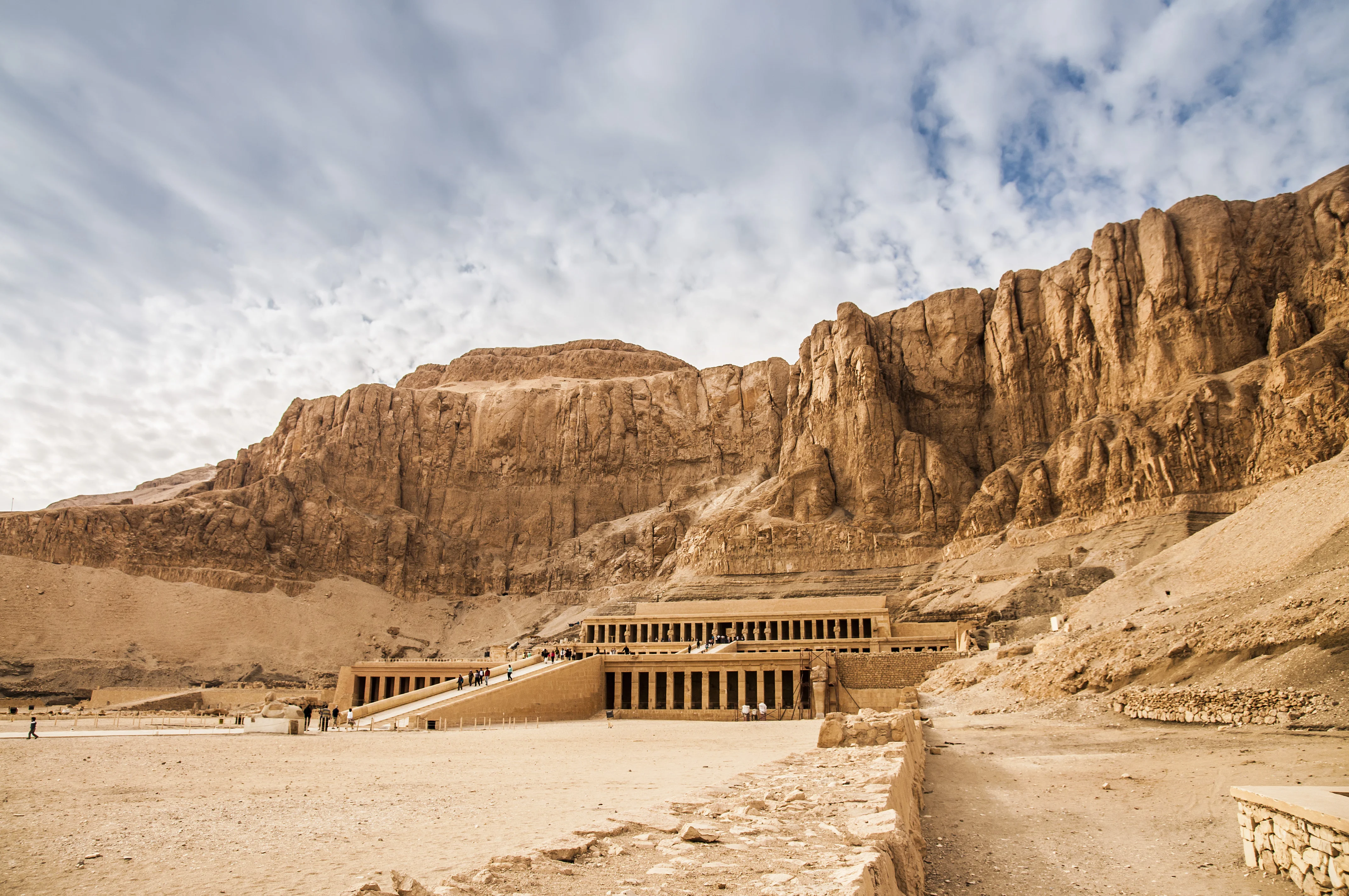
Luxor West Bank and Valley of the Kings – Today will be a full but compelling day as we cross the Nile to the West Bank for the ‘main event’ – the Valley of the Kings! It is simply remarkable that so much artistic beauty is hidden below the barren earth of this hot, dry, rock-strewn valley. The incredible state of preservation and the vividness of the paintings and hieroglyphics is simply astounding. It is tantalising to imagine what treasures all these tombs once held, lost to incredibly efficient grave robbers thousands of years ago. We will also visit the mortuary temple of Hatshepsut, the first female pharaoh, with its stunning three-tiered colonnaded terraces reflecting the outline of the cliffs above.
After lunch back on the ship, we visit the Temple of Karnak. The astounding Hypostyle Hall is the most awe-inspiring part of this vast complex, said to be the largest religious centre of the ancient world. Its 134 gigantic columns stretch up to 80ft high and are covered in hieroglyphics – look carefully and you’ll spot traces of the original colours still visible. One of the many interesting features is the first documented peace treaty in history, between Ramses II and the Hittites. Another highlight is the great Obelisk of Hatshepsut, carved from one 97-foot high block of polished red granite and weighing in at over 300 tons, it has stood here for over 3,450 years, a testament to the amazing abilities and ingenuity of its creators.
To complete your day, we visit the smaller, but equally remarkable Temple of Luxor, which was originally connected to Karnak via the 2-mile long Avenue of the Sphinxes. The temple is famous for its statues, unique artwork and wall carvings.
Meals: Lunch
Day 6
Dendera
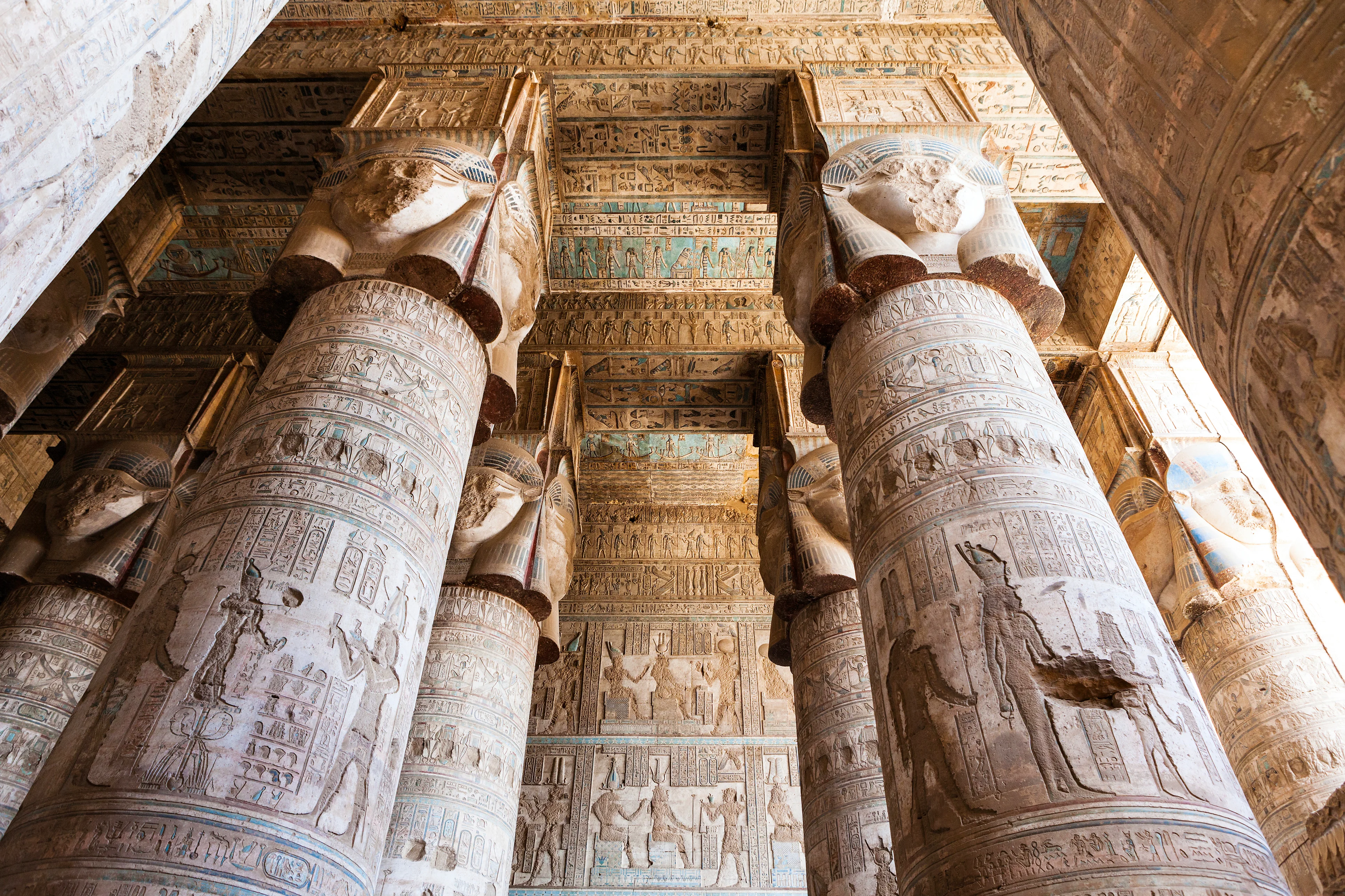
Dendera – Enjoy a morning’s sailing towards Qena and savour lunch on board before your afternoon visit to the Temple of Hathor at Dendera. The Temple of Hathor is one of the most complete and best-preserved in all of Egypt. Hathor was the Egyptian goddess of love, beauty, joy and healing, and her temple, although only completed in Roman times, nevertheless follows the architecture and style of much older temples. Intriguingly, one of the outside walls has a famous relief of Cleopatra and Caesarion, her son, by Julius Caesar, so the famous queen may well have visited the temple.
We sail on to Naga Hammadi, where we moor overnight.
Meals: Lunch
Day 7
Abydos
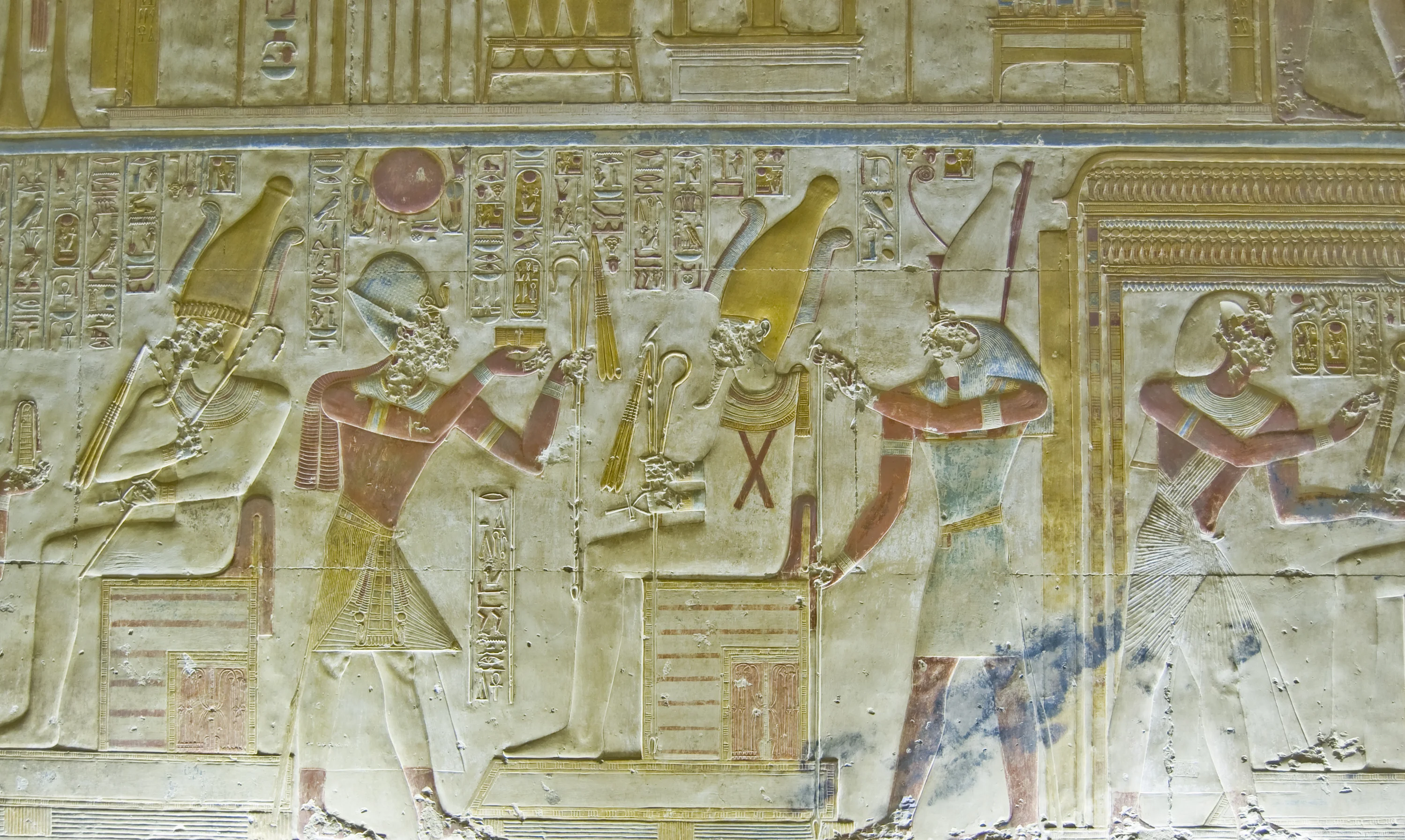
Abydos – Abydos remains one of ancient Egypt’s most mysterious sites, with the Great Temple of Seti I as its centrepiece. Dedicated to the cult of Osiris, god of the dead, Abydos was a pilgrimage centre for thousands of years. The temple is known for its Gallery of the Kings, which lists all the pharaohs, as well as some hieroglyphs which look like modern machines!
This afternoon, maybe enjoy a spot of afternoon tea or a refreshing drink on the pool deck. After another delicious dinner on board, you might have a chance to adorn a traditional costume for an on board Galabiya party!
Meals: Dinner
Day 8
Full day sail
Full day sail – Today we continue our journey northwards, with a full day’s cruising. You’ll cruise through a lock towards Tel El Amarna,pausing in front of Prince Tawdrous Monastery for a view from the ship and for your Tour Manager to explain the importance of this Coptic monastery.
Day 9
Amarna
Amarna – This morning, we arrive in Amarna, site of the short-lived capital of the Pharaoh Akhenaten and his queen Nefertiti. Akhenaten took a brave, and possibly foolhardy, decision to replace the existing ancient, complex and powerful theology (and its priesthood!) with a monotheistic cult of the sun-god, the Aten. In order to cement the break from the past he built this brand-new city, with its temples and altars open to the sky, unlike the dark cavernous interiors of traditional temples. After his death, his young son, Tutankhamun, ascended the throne and reinstated the old gods, leading to the abandonment of his father’s city. We’ll visit Akhenaten’s tomb, as well as those of some of his courtiers.
Day 10
Beni Hassan Tombs
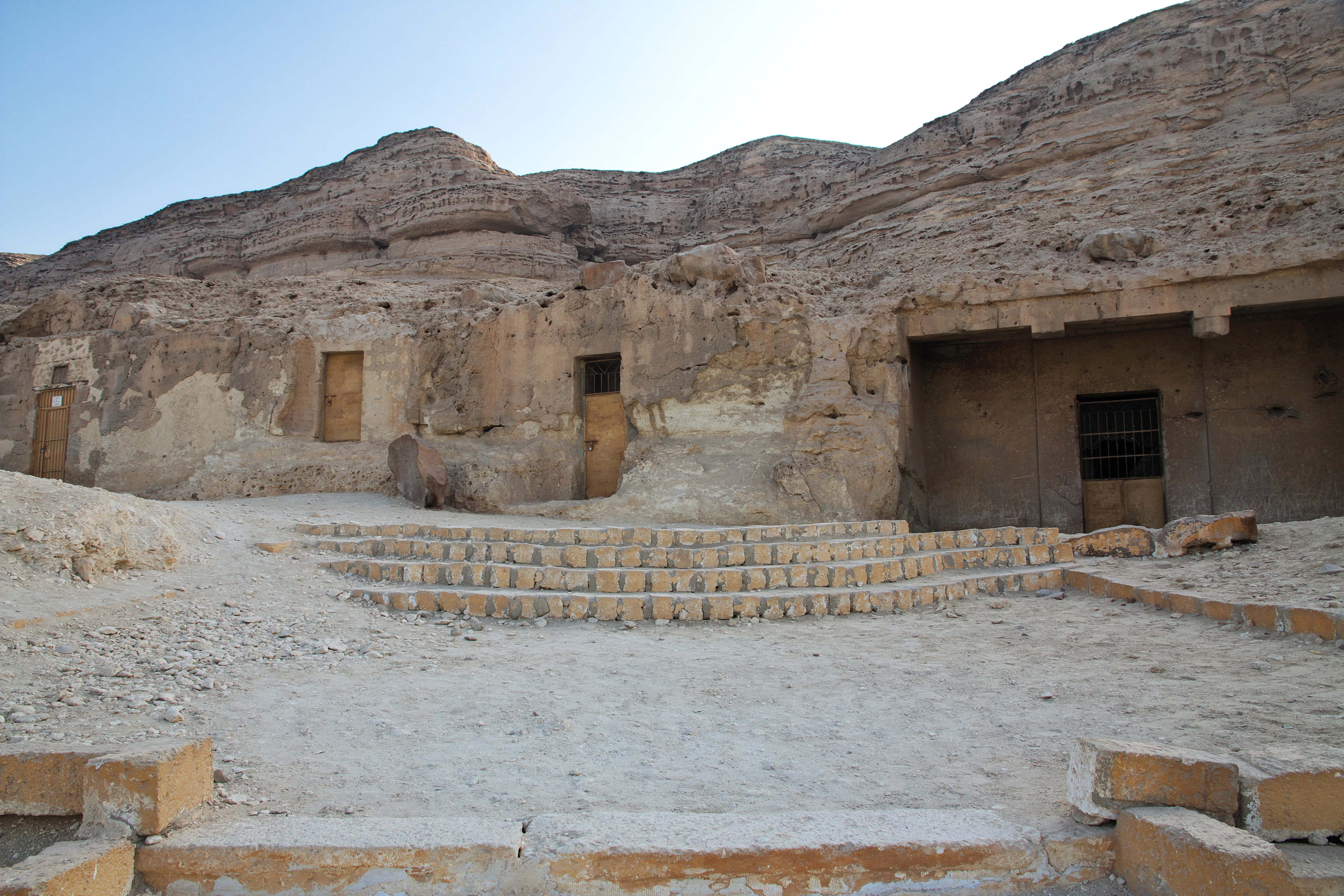
Beni Hassan Tombs – After breakfast, we continue with a tour of the little-visited tombs at Beni Hassan, set high above the Nile at the foot of a cliff, with wonderful views across the valley. The tombs belong to the 11th dynasty governors of the region and unlike more imposing royal tombs, here you’ll find wall paintings showing charming glimpses of real daily life, with hunting scenes, farming, dancing and even wrestling competitions!
Meals: Breakfast
Day 11
Cairo
Cairo – Enjoy a final morning’s sail watching the changing scenery as you near the historical city of Cairo, Egypt’s bustling capital.
This afternoon we’ll explore Old Cairo’s Christian history with a visit to the remarkable 3rd century ‘Hanging Church’, built over a gateway to the Roman era Babylon fortress. With its wooden barrel-roofed interior this makes for a fascinating introduction to Egypt’s long Coptic heritage. We continue to the Coptic Museum and the nearby Ben Ezra synagogue, said to be the place where the Pharaoh’s daughter found Moses in his basket amongst the reeds.
Day 12
Pyramids of Giza, Sphinx and Grand Egyptian Museum
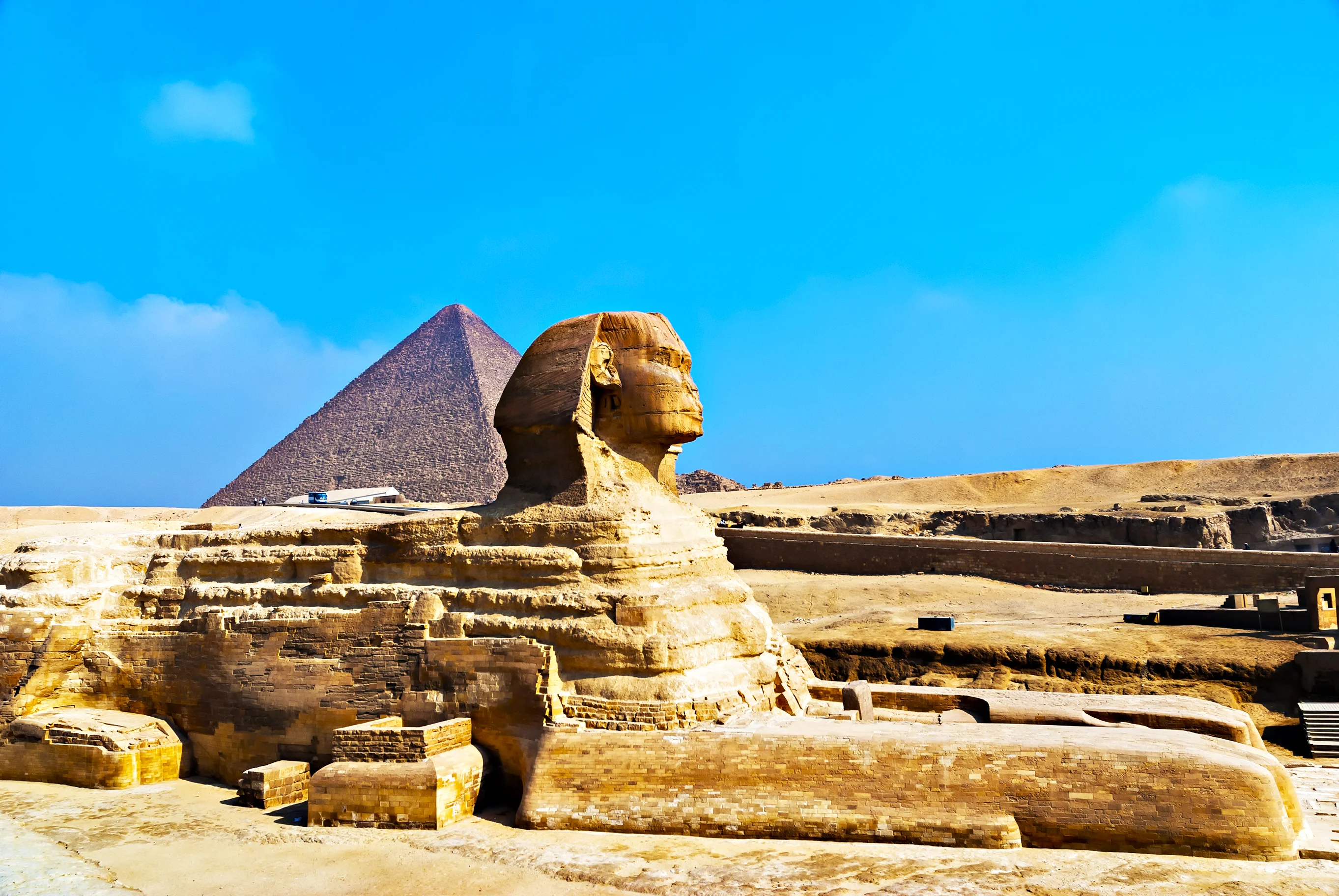
Pyramids of Giza, Sphinx and Grand Egyptian Museum – Today we’ll drive out of the city towards the Giza plateau for our first close-up view of the Great Pyramids. The truly gigantic size of the three main pyramids only becomes fully apparent when they tower above you in all their majesty. For the more adventurous, entry into the pyramids is available at an extra cost payable locally. For the Great Pyramid of Cheops there’s a daily limit to the number of visitors, so there’s no guarantee of an entry.
A little further down the hill is the mighty Sphinx, one of the world’s largest free-standing sculptures. We’ll then return to the ship for lunch.
“This day of days, the most wonderful that I have ever lived through…” is how Howard Carter described the day in 1922 when he realised, he had made the archaeological find of the century. King ‘Tut’s’ tomb held so many treasures that it took 10 years to examine, photograph, catalogue and finally remove all 5,398 of them. See the collection in the Tutankhamun Galleries at the newly opened Grand Egyptian Museum, the world’s largest museum dedicated to a single civilisation and, a treasure-house overflowing with artefacts of remarkable ancient craftsmanship, ranging from the mundane to the mystical.
Meals: Lunch
Day 13
DAY 13
Return home
What’s included
What’s not included
Additional information
Grand Egyptian Museum & Tutankhamun Galleries
Visit the Grand Egyptian Museum, a striking new complex where colossal statues greet you in a sunlit atrium. State-of-the-art displays trace craft, belief and courtly life across dynasties with context-rich storytelling and conservation insight.
In the dedicated spaces for Tutankhamun, marvel at Tutankhamun’s treasures—the Golden Mask and thousands of grave goods—reunited to illuminate a young king’s world. Elegant caskets, jewelry and ritual objects evoke artistry and symbolism shaped by eternity.
Abydos: Great Temple of Seti I
Visit the Great Temple of Seti I at Abydos, a pilgrimage city sacred to Osiris. Seven sanctuaries unfold in sequence, their exquisitely carved reliefs among the finest in Egypt, with delicate lines and graceful proportions.
Pause at the celebrated Abydos King List, a vital record of pharaonic succession. In hushed halls far from the main tourist path, pristine limestone scenes preserve a classical ideal of ritual purity and royal piety.
Dendera: Temple of Hathor
Explore the Temple of Hathor at Dendera, famed for star-painted ceilings and sistrum-topped capitals honoring the goddess of joy, music and healing. The crisp symmetry of its hypostyle hall and shadowed side chambers invites unhurried discovery.
Seek the relief of Cleopatra and Caesarion and examine exquisite carvings illustrating sacred festivals and celestial cycles. Roman-era craftsmanship channels ancient blueprints here, preserving a sanctuary where elegant decoration meets millennia-old ritual tradition.
Luxor Temple & the Avenue of the Sphinxes
Visit Luxor Temple, the riverside stage of coronations and festivals linked by the revived Avenue of the Sphinxes. Beyond the colossal seated figures of Ramesses II, elegant courts and colonnades reveal scenes of kingship shaped across millennia.
Note the mosque of Abu el-Haggag perched within the complex—living testimony to a city where faiths and eras overlap. Reliefs, statuary and reused stones blend New Kingdom grandeur with later additions, preserving Luxor’s enduring ritual landscape.
Scenic Nile Sailing & Prince Tawdrous Monastery View
Cruise the Nile past date palms, sandbanks and riverside villages, watching fishermen cast nets and fields unfurl in green ribbons along the desert’s edge. The gentle motion and ever-changing panorama set a contemplative rhythm.
As the ship pauses by Prince Tawdrous Monastery, your Tour Manager shares insights into Egypt’s Coptic heritage. Pause for photos and reflection on this cliff-side landmark, a quiet counterpoint to the pharaonic grandeur encountered elsewhere.
Amarna: Akhenaten’s Capital & Royal Tombs
Explore Amarna, the short-lived city of Akhenaten and Nefertiti, conceived for the monotheistic worship of the Aten. Open-air temples and boundary stelae trace a bold religious vision set amid cliffs and the river plain.
Descend to Akhenaten’s tomb and examine courtiers’ rock-cut tombs where unique Amarna art—flowing lines, intimate family scenes and radiant sun disks—captures a startlingly human royal household and a revolution that faded after the king’s death.
Beni Hassan Cliff Tombs
Visit the tombs at Beni Hassan, hewn high into limestone cliffs with wide porticoes overlooking the Nile valley. Inside, painters recorded provincial life with rare freshness—archers training, traders arriving and athletes grappling.
These vivid scenes of daily life, including famous wrestling frescoes, offer a Middle Kingdom counterpoint to royal narratives. The elevated setting and austere facades heighten the sense of time suspended between desert plateau and fertile fields.
Coptic Cairo: Hanging Church, Coptic Museum & Ben Ezra Synagogue
Explore Coptic Cairo, beginning as you step inside the Hanging Church, a 3rd-century sanctuary poised above a Roman gate. Carved screens, icons and wooden vaulting illuminate an ancient Christian tradition at the city’s heart.
Browse the Coptic Museum—texts, textiles and carvings mapping two millennia of faith—then visit the Ben Ezra Synagogue, long linked to the tradition of Moses. Narrow lanes and layered histories reveal Cairo’s intertwined communities and enduring devotions.
Pyramids of Giza & the Great Sphinx
Get close to the Pyramids of Giza—Khufu, Khafre and Menkaure—where precise geometry and massive stone courses embody ancient engineering on a monumental scale. From chosen viewpoints, the desert plateau frames their stark, timeless silhouettes.
Stand before the Great Sphinx, lion body and human face gazing east toward the Nile. Weathered features and the surrounding temples invite pause for photos and reflection on pharaonic power, cosmic order and the allure that has captivated travelers for centuries.
Onboard Galabiya Evening
Join an onboard Galabiya party celebrating Egyptian style and conviviality. Slip into a colorful robe, enjoy music and dancing, and share light-hearted moments with fellow travelers as the river drifts by.
This relaxed gathering showcases Egyptian hospitality and playful tradition, inviting stories, photos and laughter. Participation is optional, costumes are simple to arrange, and the evening’s mood is one of easy celebration rather than formality.
Optional: Pyramid Interior Entry at Giza
Enter the Great Pyramid of Khufu or another pyramid on the Giza plateau for an intimate encounter with Old Kingdom architecture. Navigate narrow corridors and steep passages to reach chambers where precision-cut granite and silent air amplify the sense of antiquity.
This experience is at additional cost and bookable on tour. Daily visitor numbers are limited and cannot be guaranteed; availability and specific pyramid access vary. Not advised for those with mobility or claustrophobia concerns.
Temple of Horus at Edfu
Step inside the Temple of Horus at Edfu, one of Egypt’s best-preserved Ptolemaic temples. Pass beneath towering pylons into shadowed halls where intricate hieroglyphs recount the falcon god’s triumphs and festival processions.
Admire chapels that once guarded the sacred barque sanctuary and gaze up at forest-like columns alive with mythic scenes. The temple’s scale, clarity of relief and intact layout offer a vivid window into ancient ceremonial life and Greek-Egyptian artistic synthesis.
Valley of the Kings & Temple of Hatshepsut
Explore the Valley of the Kings, descending into select royal tombs where walls blaze with color—spells, stars and solar boats guiding pharaohs to eternity. The hush of vivid tomb paintings and the cool of the rock amplify the drama of Egypt’s afterlife beliefs.
Visit the Temple of Hatshepsut at Deir el-Bahari, its soaring cliff-backed terraces honoring Egypt’s formidable female pharaoh. Precise colonnades mirror the limestone amphitheatre, marrying architecture and landscape in a statement of power and divine favor.
Karnak Temple Complex: Hypostyle Hall & Obelisks
Walk the great Hypostyle Hall at Karnak, a forest of 134 colossal columns whose papyrus capitals frame shifting shafts of light. Reliefs of pharaohs and gods animate every surface, turning stone into a chronicle of devotion and statecraft.
Seek out the Obelisk of Hatshepsut and stories carved around the Sacred Lake, including references to the first documented peace treaty between Ramses II and the Hittites. Karnak’s vastness and layered history reveal centuries of ritual at ancient Thebes’ spiritual heart.
Temple of Kom Ombo & Crocodile Museum
Explore the rare twin design of the Temple of Kom Ombo, uniquely dedicated to the crocodile god Sobek and the falcon-headed Horus. On a scenic bend of the Nile, its mirrored sanctuaries, carved columns and river breezes create a powerful sense of place.
Discover the small but fascinating Crocodile Museum, where mummified reptiles and votive offerings reveal the temple’s ancient cult. Intricate reliefs and medical scenes etched in stone illuminate daily life, healing rites and the beliefs that bound community to river and gods.
Aswan High Dam & Temple of Philae
Join a guided visit to the monumental Aswan High Dam, a 20th-century feat that tamed the Nile’s seasonal floods and created vast Lake Nasser. From the crest, take in sweeping desert-and-water vistas and learn how this project reshaped life along the river.
Continue to the Temple of Philae, serene island sanctuary of Isis. Meticulously rescued by UNESCO from rising waters, its pylons and colonnades glow with fine reliefs celebrating enduring faith and royal devotion amid rustling palms and shimmering channels.