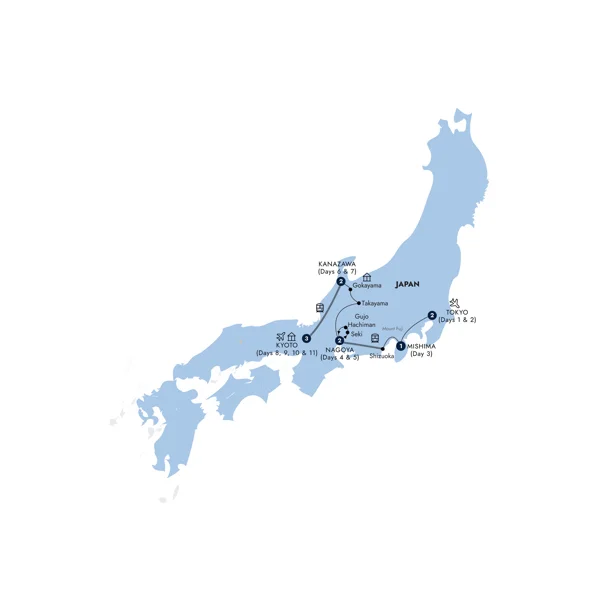
Your itinerary
Day 1
Day 1: Welcome to Tokyo
Arrive in Tokyo and transfer to your hotel. Meet your Travel Director and fellow travellers, then enjoy your first taste of Japanese cuisine together.
Meals: Dinner
Day 2
Day 2: Discover Tokyo
Take in views from Tokyo Tower, then drive past Imperial Palace Plaza, Tokyo Station, Marunouchi and Ginza. Visit Sensoji Temple and Nakamise shopping street in Asakusa, join a bonsai masterclass with an apprentice, and visit the Bonsai Museum, with more than 1,000 documented trees. Evening at leisure.
Meals: Breakfast
Day 3
Day 3: Mount Fuji Views and the Izu Peninsula
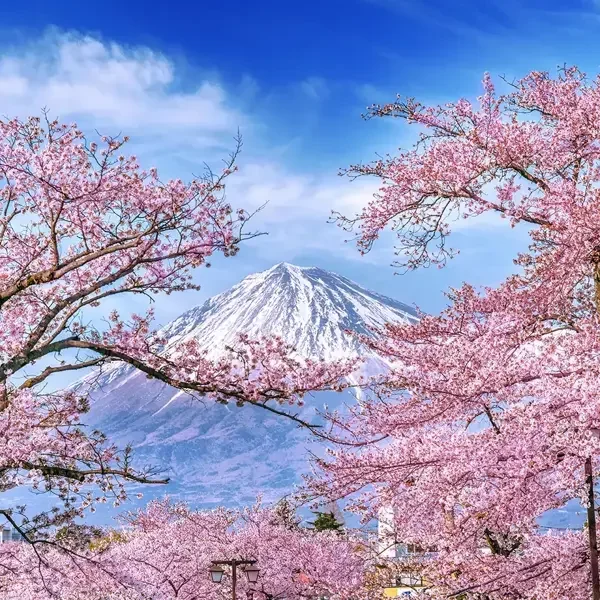
Travel in the Izu Peninsula and ride the ropeway at Izu Panorama Park to the 452 m summit of Mount Katsuragi, with views across the region and, on a clear day, Mount Fuji. Visit Katsuragi Shrine, then have lunch with paired wines at Nakaizu Winery Chateau. Continue to Mishima and join your fellow travellers for dinner at the hotel.
Meals: Breakfast,Lunch,Dinner
Day 4
Day 4: Tea Country to Nagoya
Visit a Shizuoka tea plantation and meet tea master Mr Noboru. Learn about gyokuro, make tea and taste different brews. Enjoy a green tea noodle soup lunch with vegetable tempura, then take the bullet train to Nagoya and check in to your hotel.
Meals: Breakfast,Lunch
Day 5
Day 5: Cultural Traditions of Gifu
In Seki, attend a private sword-forging demonstration with a master swordsmith. Visit the Washi Paper Museum and create a souvenir, then travel to Gujo Hachiman for a kaiseki lunch. Watch a Gujo Odori dance demonstration, with free time to explore and try the town’s eel.
Meals: Breakfast,Lunch
Day 6
Day 6: On To Kanzawa
Enjoy a relaxed start, then visit Takayama’s preserved old town, with time to explore its sake breweries and craft shops or visit Takayama Jinya. Continue to Ainokura in the UNESCO-listed Gokayama region to see its gassho-zukuri farmhouses, then travel to Kanazawa. Evening at leisure.
Meals: Breakfast
Day 7
Day 7: Discover Kanazawa
Visit Kenrokuen Garden and have a four-course lunch at Jardin Paul Bocuse, featuring seasonal ingredients from Ishikawa and the Hokuriku region. Discover Ohi ware at Ohi Gallery and enjoy matcha tea. Spend time in Higashi Chaya District, with its preserved wooden teahouses and gold-leaf craft shops.
Meals: Breakfast,Lunch
Day 8
Day 8: Kyoto by Bullet Train
Enjoy a relaxed start before taking the bullet train to Kyoto. Walk through Gion with your Travel Director, then have free time to explore before checking in to your hotel. The rest of the day is at leisure.
Meals: Breakfast
Day 9
Day 9: Explore Kyoto’s Treasures
Visit Fushimi Inari Shrine and Arashiyama Bamboo Forest. Choose between sutra copying at a temple or a rickshaw ride through Arashiyama. Visit Kinkaku-ji, the Golden Pavilion. Evening at leisure.
Meals: Breakfast
Day 10
Day 10: Kyoto Your Way
Spend the day at leisure in Kyoto. Optional experiences include a trip to Osaka and Nara, visiting an Osaka sake brewery for a tour and tasting, or a sake brewery tour and tasting. In the evening, enjoy a Kyo Kaiseki dinner accompanied by a performance from a maiko, an apprentice geisha.
Meals: Breakfast,Dinner
Day 11
Day 11: Farewell Japan
After breakfast, say goodbye to your small group and Travel Director, bringing your journey through Japan to a close.
Meals: Breakfast
What’s included
What’s not included
Additional information
Dining Summary
- 3 Dinner (D)
- 10 Breakfast (B)
- 4 Lunch (L)
Insight Experiences
- Shizuoka: Meet Mr Noboru at his family-run tea farm in Shizuoka, where gyokuro is produced using methods passed down through generations. You’ll learn about the traditional techniques still used here, hear stories from the farm and discover how preparation changes the character of each cup through tasting.
Operated By
Insight Vacations
How You'll Travel
- Top-rated dining, from farm-to-table to local restaurants
- Premium regional accommodation
- Business class coach with extended leg room, and train travel
Tokyo Welcome Dinner
Meet your Travel Director and fellow travellers over dinner in Tokyo. Japanese small bites offer an introduction to the flavours and shared dining styles encountered across the country, while the small-group setting makes it easy to get acquainted.
From carefully presented dishes to the conversation around the table, this hosted meal provides a welcoming first encounter with Japanese food culture in the capital.
Tokyo Tower & Panoramic City Drive
Take in Tokyo from the observation deck of Tokyo Tower, where the capital’s neighbourhoods and dense skyline spread out below. A panoramic drive offers another perspective, passing the Imperial Palace Plaza, Tokyo Station, Marunouchi and Ginza.
Opened in 1958, the tower became a symbol of Japan’s post-war transformation. Seeing it alongside the palace precinct and the city’s commercial districts reveals the contrasts that shape modern Tokyo.
Sensoji Temple & Nakamise Street
Visit Sensoji Temple in Tokyo’s Asakusa district, entering through the imposing Kaminarimon gate to explore one of the capital’s most important Buddhist sites. Browse nearby Nakamise Street, where stalls line the approach to the temple.
Founded in the seventh century, Sensoji remains an active place of worship as well as a landmark of old Tokyo. Incense, temple rituals and traditional snacks give this historic neighbourhood its distinctive bustle.
Bonsai Masterclass & Museum Visit
Join a bonsai apprentice for a hands-on masterclass in Tokyo, learning how planting, pruning and tying help shape a living tree. Visit the Bonsai Museum to see documented specimens, including a centuries-old pine in Mr Kobayashi’s collection.
Bonsai is an art of sustained attention rather than simple miniaturisation. The workshop and collection together reveal how growers use proportion, patience and careful maintenance to evoke the character of trees in nature.
Izu Panorama Park Ropeway & Mount Katsuragi
Ride the ropeway to Mount Katsuragi at Izu Panorama Park and explore the viewing area and forest walkway near its 452-metre summit. Look across the Izu Peninsula and, when skies are clear, towards Mount Fuji.
The summit is also home to Katsuragi Shrine, whose history reaches back to the Heian period. This combination of open mountain views and a long-revered sacred site gives the visit a sense of Izu’s natural and cultural landscape.
Nakaizu Winery Chateau Lunch & Wine Pairing
Enjoy lunch with paired wines at Nakaizu Winery Chateau, set among vineyard slopes in central Izu. The estate’s setting offers a close look at winemaking in Shizuoka, a region more often associated with tea and views of Mount Fuji.
Opened in 2000, the 10-hectare estate brings a relatively young Japanese wine tradition into focus. Food, wine and vineyard scenery make this a distinctive regional dining experience rather than a routine meal stop.
Shizuoka Tea Farm Visit, Tasting & Green Tea Lunch
Meet tea master Mr Noboru at his family-run Shizuoka farm to learn how its gyokuro is grown and prepared. Make a cup, compare brews and discover how preparation changes the tea’s flavour. A green tea-inspired lunch includes noodles in soup with vegetable tempura.
Shizuoka is one of Japan’s best-known tea-growing regions. This visit connects the skill behind a prized tea with the everyday ways green tea shapes local cuisine.
Japanese Bullet Train Experience
Ride Japan’s Shinkansen bullet train on the journey, experiencing the speed, comfort and precise operation for which the rail network is known. The tour includes bullet train travel to Nagoya and to Kyoto.
Introduced in 1964, the Shinkansen changed travel between Japan’s major cities. Its orderly stations and smooth, efficient service offer a firsthand encounter with a defining feature of modern Japanese life, beyond the destinations it connects.
Seki Sword Forging Demonstration & Sword Museum
Watch a private sword forging demonstration with a master swordsmith and apprentices in Seki. Visit the Sword Museum to explore the tools, techniques and blades associated with a city renowned for sword-making for more than 700 years.
Seki’s blades were prized by samurai for their strength and durability. This MAKE TRAVEL MATTER® Experience supports the preservation of living craft skills while showing how knowledge is passed between generations.
Washi Paper Museum & Papermaking
Visit the Washi Paper Museum to learn about the materials and techniques behind traditional Japanese paper. Create your own paper souvenir for a hands-on understanding of a craft that depends on careful preparation and practiced movements.
Washi has long been used for writing, art and everyday objects in Japan. Seeing how fibres become a finished sheet gives a tangible sense of the patience and skill behind this enduring tradition.
Gujo Hachiman Kaiseki Lunch
Enjoy a kaiseki lunch at a local restaurant in Gujo Hachiman. Served as a succession of carefully prepared courses, the meal introduces the balance of flavour, texture and presentation central to this traditional Japanese dining style.
Kaiseki takes its cues from the seasons, allowing ingredients and small changes in preparation to shape each course. It offers a considered way to experience Japanese cuisine through more than a single signature dish.
Gujo Odori Dance Demonstration
Watch a demonstration of Gujo Odori, the traditional festival dance of Gujo Hachiman, and have the chance to try its steps yourself. Dancers in yukata and wooden geta bring a local tradition into view through accessible, repeated movements.
Performed at the town’s festivals for generations, the dances draw on Gujo Hachiman’s castle, river and surrounding mountains. Taking part offers a connection to a tradition still shared within the community.
Takayama Old Town Visit
Explore the preserved streets of Takayama’s old town, where traditional buildings retain much of the character of the Edo period. Time in the district lets you look more closely at its streetscape and browse local craft shops or sake breweries if you wish.
Set in the Japanese Alps, Takayama developed a strong tradition of skilled craftsmanship. Its historic centre offers a quieter contrast to Japan’s large cities and a glimpse of the town’s merchant heritage.
Ainokura Village, Gokayama
Explore Ainokura village in the UNESCO-listed Gokayama region, where steeply thatched gassho-zukuri farmhouses stand against a mountain backdrop. See how their distinctive roofs were built to cope with the area’s heavy winter snowfall.
Ainokura remains a lived-in rural settlement, not simply a collection of historic buildings. Its farmhouses reveal building methods adapted to the landscape and offer insight into the traditions of Japan’s mountain communities.
Kenrokuen Garden
Visit Kenrokuen in Kanazawa, one of Japan’s three celebrated landscape gardens. Walk through a carefully composed setting of ponds, paths, trees and viewpoints designed to reveal different scenes as you move through it.
Developed over generations by Kanazawa’s Maeda lords, the garden is associated with six traditional qualities of an ideal landscape. Its changing seasonal character makes the design feel closely connected to the natural world.
Jardin Paul Bocuse Four-Course Lunch
Savour a four-course lunch at Jardin Paul Bocuse in Kanazawa’s Shiinoki Cultural Complex. The menu draws on the culinary heritage of Lyon while incorporating seasonal ingredients from Ishikawa and the wider Hokuriku region.
French technique and local produce meet at the table, highlighting flavours from this part of Japan’s land and sea. The experience offers a different perspective on regional food through a restaurant with a distinct Franco-Japanese approach.
Ohi Gallery & Matcha Tea Experience
Discover Ohi ware at Ohi Gallery in Kanazawa and learn about a pottery tradition established in 1666. Enjoy a matcha tea experience served in Ohi bowls, bringing the gallery’s craftsmanship into direct contact with the ritual it has long served.
Ohi pottery is closely linked to Kanazawa’s tea culture. Holding a handmade bowl while tasting matcha reveals how the vessel’s form and texture contribute to the experience.
Kanazawa Higashi Chaya District
Spend time in Higashi Chaya District, where preserved wooden teahouses recall Kanazawa’s geisha culture. Explore its historic streets and see shops showcasing the gold leaf craft for which the city is known.
Chaya districts developed as places of traditional hospitality and performance. Higashi Chaya’s closely set timber buildings preserve that atmosphere, while displays of gold leaf connect the streetscape to another of Kanazawa’s longstanding artistic traditions.
Kyoto Gion Walking Tour
Walk through Gion with your Travel Director, exploring the narrow lanes and wooden machiya townhouses of Kyoto’s best-known geisha district. Learn about the teahouses and traditions that have shaped this part of the former capital.
Gion remains associated with the highly skilled performing arts of geiko and maiko. Its preserved streets offer insight into Kyoto’s cultural history while continuing to function as a neighbourhood rather than an open-air museum.
Fushimi Inari Shrine
Visit Fushimi Inari Shrine in Kyoto, the head shrine of Inari worship in Japan. Explore the sacred complex and see its thousands of vermilion torii gates tracing pathways into the hillside.
Inari was first enshrined here in 711. The gates, shrines and wooded setting express a living tradition of worship and pilgrimage, making this far more than one of Kyoto’s most recognisable photographic sights.
Arashiyama Bamboo Forest
Walk through Arashiyama Bamboo Forest in western Kyoto, following a path bordered by tall bamboo. The closely spaced stalks create a distinctive play of filtered light, shadow and movement.
The grove lies in Saga-Arashiyama, an area long associated with temples, river crossings and historic approaches into the city. Experiencing it on foot reveals the atmosphere behind one of Kyoto’s most familiar landscapes.
Kyoto Insight Choice: Temple Sutra Copying
Choose to copy Buddhist scripture by hand at a Japanese temple in Kyoto. Work through the characters in a quiet setting, taking part in a practice shaped by concentration and careful repetition.
Sutra copying has been practised in Japan for generations as a way of engaging with sacred text. This is one of two included Insight Choice activities in Arashiyama; travellers select it instead of the rickshaw ride.
Kyoto Insight Choice: Arashiyama Rickshaw Ride
Choose a rickshaw ride through Arashiyama with a Local Expert, passing traditional streets and well-known sights while hearing about the district’s history and character. The ride offers a different, street-level view of western Kyoto.
Arashiyama’s temples, river setting and older lanes have long drawn visitors to this side of the city. This is one of two included Insight Choice activities; travellers select it instead of temple sutra copying.
Kinkaku-ji Golden Pavilion
Visit Kinkaku-ji, Kyoto’s Golden Pavilion, and view its gilded upper storeys reflected in the surrounding pond. The temple grounds frame one of the city’s most recognisable scenes.
First built in 1397 as a retirement villa for shogun Ashikaga Yoshimitsu, the site later became a Zen temple. Its layered architecture and garden setting evoke the cultural patronage of the shogunate and Kyoto’s long artistic legacy.
Kyoto Kyo Kaiseki Dinner & Maiko Performance
Enjoy a Kyo Kaiseki dinner in Kyoto, with seasonal courses prepared in the city’s refined multi-course tradition. A performance by a maiko, an apprentice geisha, adds an encounter with Kyoto’s performing arts.
Kyo Kaiseki places particular emphasis on seasonality, presentation and balance. Shared with your small group on the final evening, the meal and performance bring together two traditions closely associated with Kyoto’s cultural identity.
Osaka & Nara Optional Experience
Explore Osaka and Nara on an optional excursion from Kyoto. Take in Osaka Castle, visit the lively Dotonbori district and head to Nara Deer Park, known for the deer that roam its grounds.
The excursion pairs Osaka’s castle heritage and energetic urban streets with Nara’s historic parkland. It is at additional cost and bookable on tour, offering a way to see more of the Kansai region during your time in Kyoto.
Sake Brewery Tour & Tasting
Tour a sake brewery and taste its sake on an optional experience available during your time in Kyoto. Learn about the brewing process and sample the finished drink for a closer appreciation of this longstanding part of Japanese food culture.
Sake’s character reflects choices made throughout production, from rice preparation to fermentation. This focused tour and tasting is at additional cost and bookable on tour for travellers who want to explore Japan through its drinks.