Your itinerary
Day 1
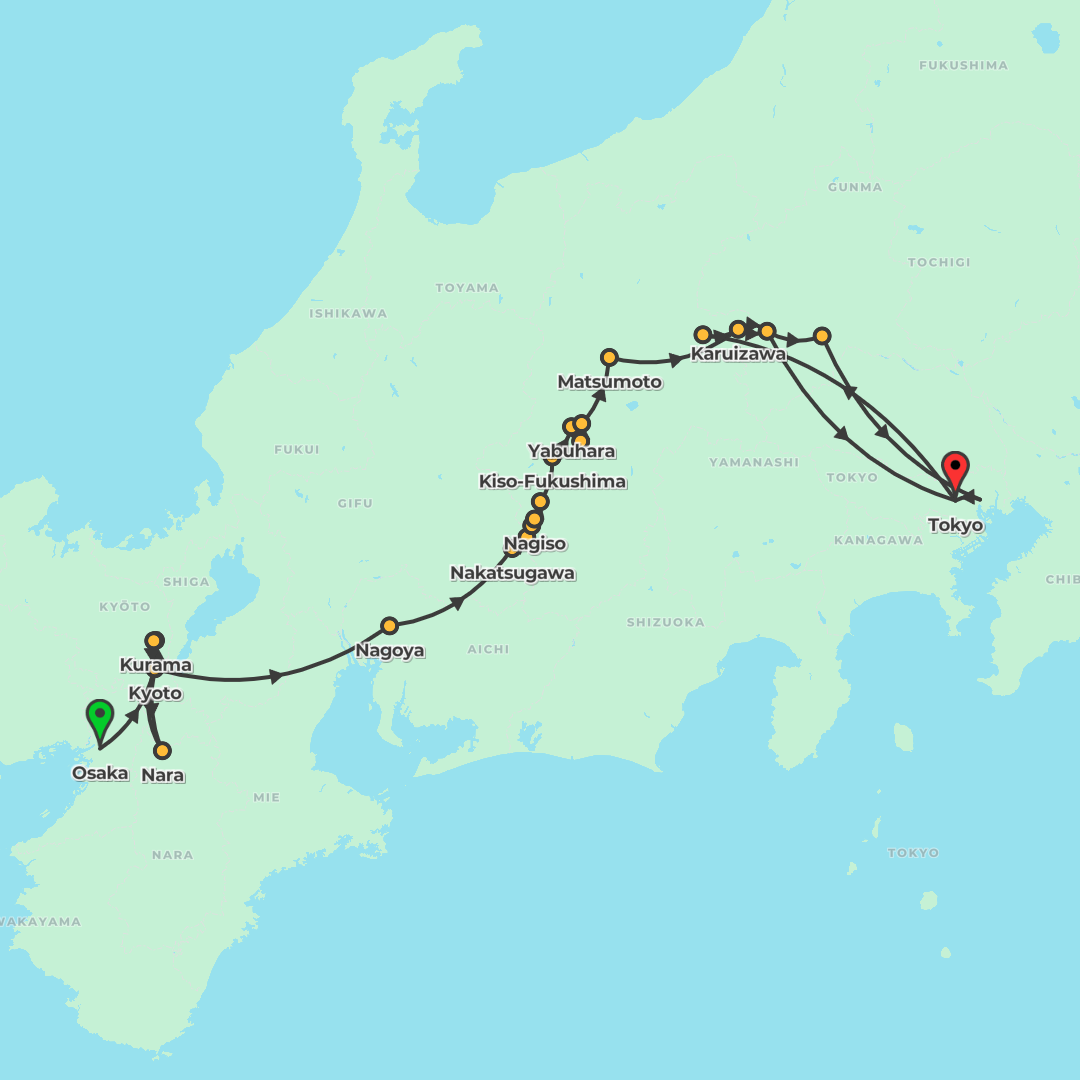
Arrive in Kyoto
Take the express train from Osaka Kansai Int. Airport to Kyoto City (approx. 70mins), then a local taxi to your first hotel. (approx. 10mins).
Overnight Kyoto.
Day 2
Explore Kyoto
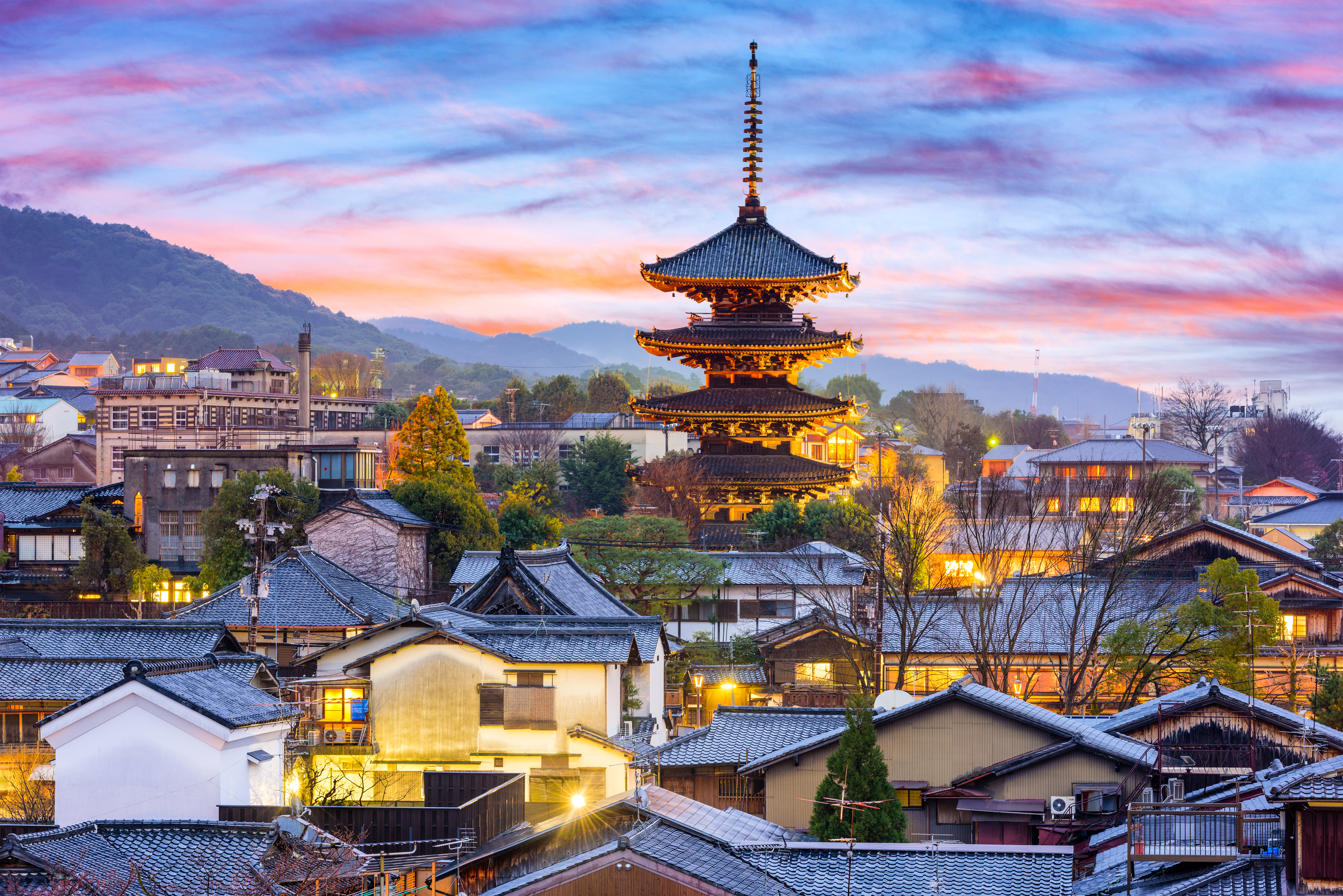
Enjoy a rest day in the incredible city of Kyoto, famous for its Buddhist temples, tranquil gardens, and traditional teahouses. We recommend visiting the historical city of Nara, full of cultural treasures and expansive parks, located approx. 1hr from Kyoto city on the train.
Overnight Kyoto.
Meals: Breakfast
Day 3
Kuramaa to Kibune
Take the train to the hills of northern Kyoto (included), on sacred Mount Kurama. Here, Samurai trained with mountain Buddhist practitioners in the 12th century. From Kurama Temple, walk to the Kifune Shrine, which is known for bringing good fortune to those seeking luck in love. The walk begins with a steep and long ascent up stone steps to the Kurama Temple. Stop to take in the beautiful scenery and spend some time at the shrines and smaller temples along the way. Return by local train to Kyoto (included). The remainder of your day is free for you to explore Kyoto.
Overnight Kyoto.
Meals: Breakfast
Day 4
Magome to Tsumago
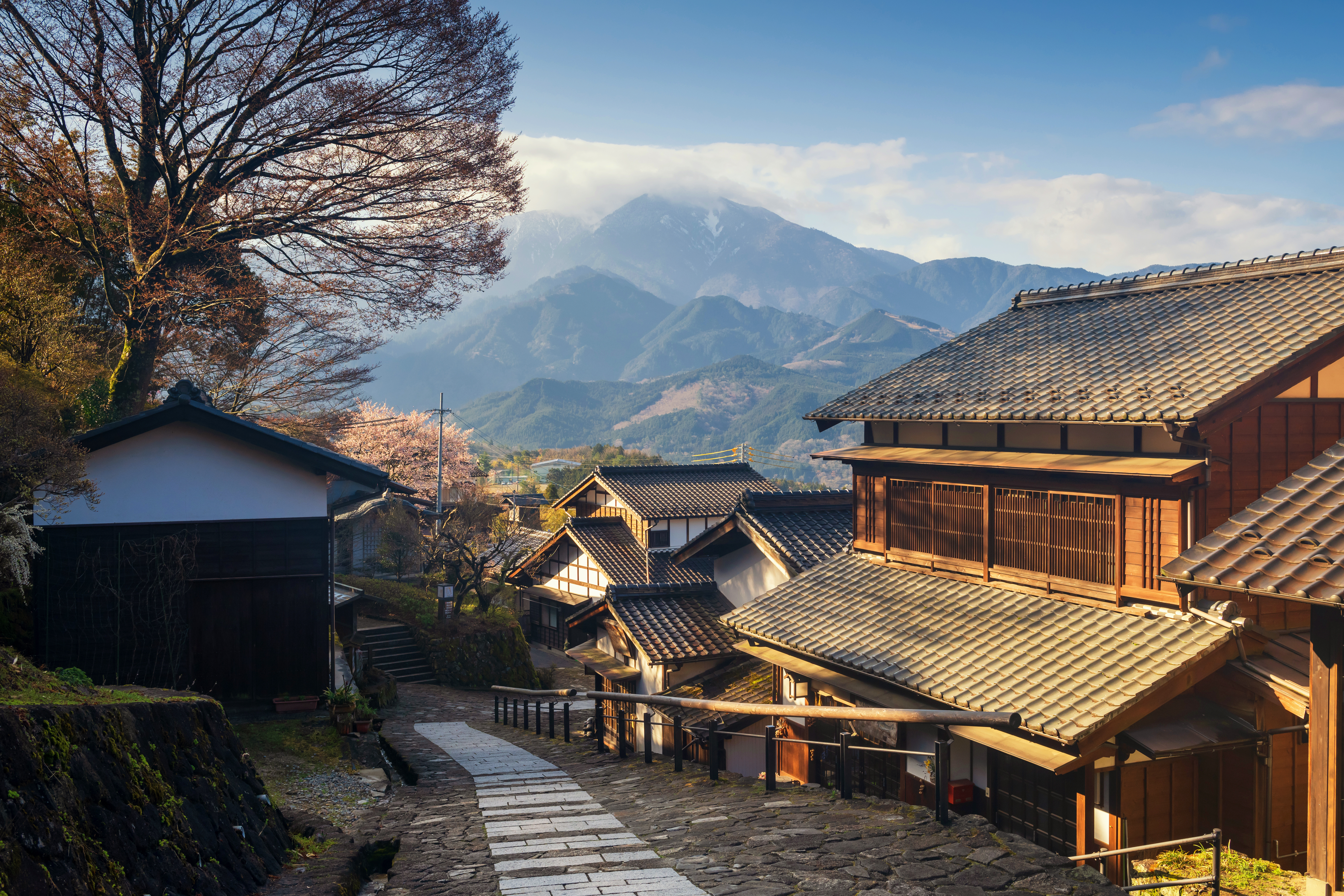
Begin with a train journey from Kyoto to Nakatsugawa, including a ride on the world-famous Shinkansen (Bullet Train) to Nagoya (included). At Nakatsugawa, you board a local bus for the short journey to Magome. Walk over Magome Pass to Tsumago, one of the best preserved and most evocative of the Nakasendo post towns. Spend the night at a family-run Minshuku in Tsumago or the nearby hamlet of O-Tsumago, with a delicious home-cooked Japanese dinner and breakfast included.
Overnight Minshuku Guesthouse, Tsumago.
Meals: Breakfast,Dinner
Day 5
Tsumago/Nagiso to Nojiri
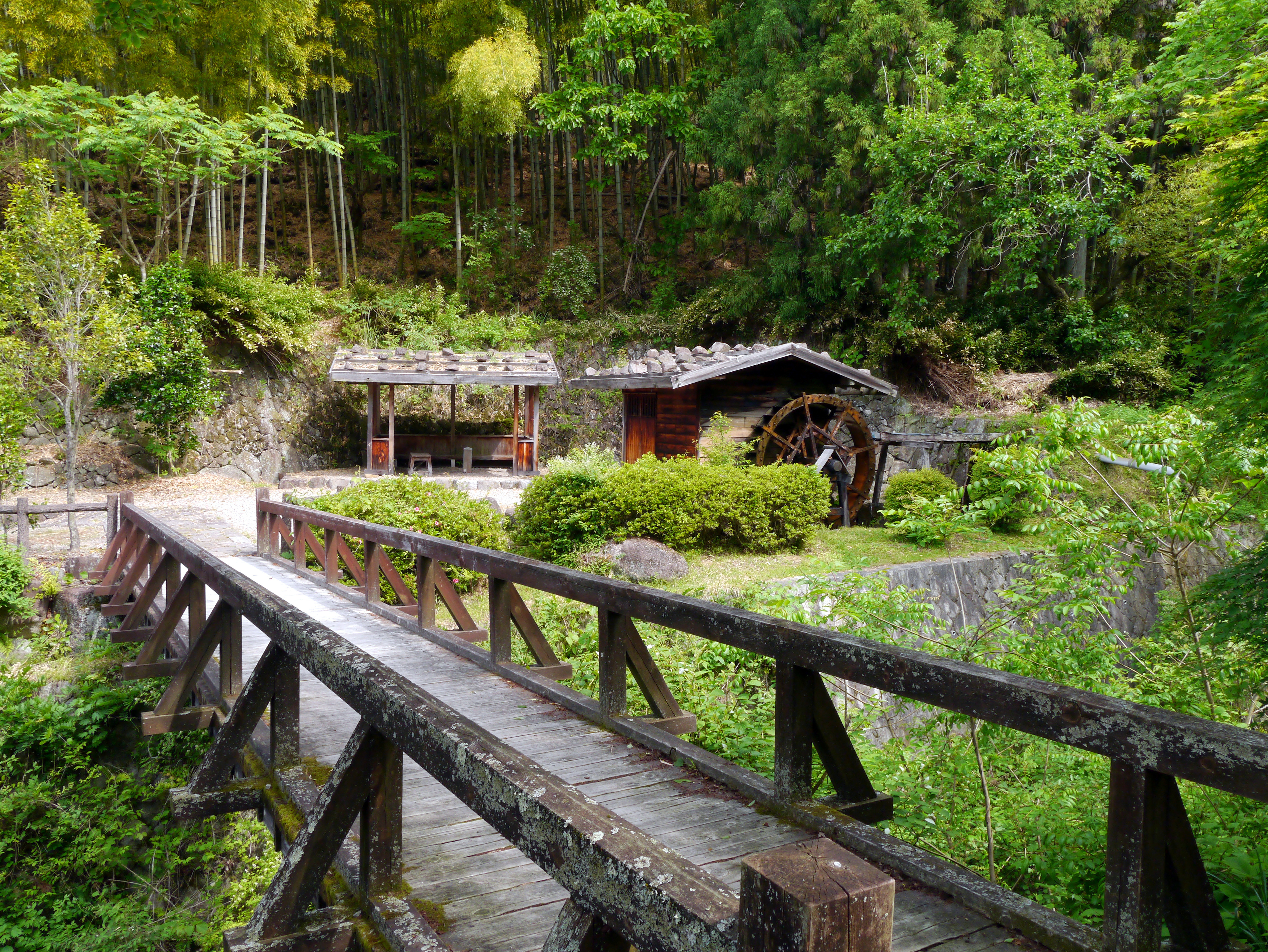
Today is your longest day on the trail and is a beautiful and varied hike from Tsumago or Nagiso to Nojiri. The trail travels through small valleys and past forests of bamboo and Japanese cedar, through some of the least-developed scenery on the tour. Continue by train to Kiso-Fukushima (included). Stay at a lovely hot-spring Ryokan set in a peaceful valley above the town. Complimentary transfer from the station is provided by the Ryokan.
Overnight Ryokan (traditional Japanese inn), Kiso-Fukushima.
Meals: Breakfast,Dinner
Day 6
Gongentaki Waterfall
If you have free time in Kiso Fukushima, you can take this optional walk from Kiso Fukushima Station to Gongentaki Waterfall. The trail combines a riverside path, a dirt trail leading up to the waterfall, and gentle descent back down through a quiet neighbourhood with good views over the town and the traditional buildings near the Nakasendo Trail.
Overnight Ryokan (traditional Japanese inn), Kiso-Fukushima.
Meals: Breakfast,Dinner
Day 7
Yabuhara to Matsumoto
The Ryokan will drive you back to Kiso-Fukushima after breakfast if you’re staying outside the village. From here, you take the train to Yabuhara (included) which is the starting point for your walk over the Torii pass to Narai. Explore this atmospheric village before you continue on today’s journey to the small town of Kiso-Hirasawa, famous for its lacquerware. There are many small shops selling beautifully crafted tableware and furniture. From Kiso-Hirasawa, take the train to the castle town of Matsumoto for your overnight stay. Your hosts will serve a home-cooked Japanese dinner and breakfast.
Overnight Minshuku Guesthouse, Matsumoto .
Meals: Breakfast,Dinner
Day 8
Free Day in Matsumoto
After breakfast, you will have free time to explore the castle town of Matsumoto. This historic town is home to the iconic artist Yayoi Kusama and the largest collection of Ukiyo-e wood blocks. With many things to see and do Matsumoto is a destination in and of itself. Be sure to visit the well-preserved Matsumoto Castle also known as the ‘Black Crow Castle’. You can enter the castle and enjoy the unique architecture, hidden nooks, and panoramic views of the castle town. This afternoon head onward to Karuizawa where you will stay this evening and enjoy a natural hot spring baths before your final walk to Yokokawa.
Your included luggage transfer ends here. To continue the service from Matsumoto to Tokyo, you can arrange this locally with your inn in the morning who will liaise with the long distance courier Takkyubin; this is paid for locally (approx. £16 per bag/20kg). Using this service, you will be without your luggage from the morning of day 8, until the evening of day 9.
Overnight Ryokan (traditional Japanese inn), Karuizawa/Komoro.
Meals: Breakfast,Dinner
Day 9
Karuizawa to Yokokawa
After breakfast, your final walk on the Nakasendo Trail is from Karuizawa to Yokokawa. Leaving Karuizawa, the trail takes you over the Usui-toge Pass and down a gentle descent along one of the most beautiful sections of the Nakasendo, and certainly the least-developed. From Yokokawa, take the local train to Takasaki and change there for your ride on the Shinkansen bullet train to Tokyo (approx. 3 hours – included).
Overnight Tokyo.
Meals: Breakfast
Day 10
Rest Day in Tokyo
You have a full day in Tokyo to explore this vibrant city. Visit the glittering Ginza area with elegant department stores and food halls crammed with all kinds of unfamiliar delicacies. Or spend time among the skyscrapers of Shinjuku and pass-through Shinjuku station, the busiest transport hub in the world. Eat and drink in one of the myriad small bars and restaurants which cluster around most railway stations or splash out on an elegant meal in an upscale restaurant.
Overnight Tokyo.
Meals: Breakfast
Day 11
Depart Tokyo
Enjoy breakfast at your hotel before walking to Hamamatsucho station (approx. 10mins) to take the monorail directly to Tokyo Haneda Airport (approx. 15mins – paid locally).
Meals: Breakfast
What’s included
What’s not included
Additional information
Magome to Tsumago Pass Walk & Minshuku Stay
On day 4, ride the Shinkansen to Nagoya and connect to Nakatsugawa before a short bus to Magome. Step onto the Nakasendo to walk over the stone-paved Magome-toge amid bamboo, streams and teahouse hamlets. This classic stretch between the post towns of the Nakasendo reveals quiet farmsteads, wayside jizo statues and views toward the Kiso mountains, ending in beautifully preserved Tsumago.
As dusk falls, stroll the lantern-lit streets of Tsumago, where wooden facades, former honjin inns and strict preservation codes keep Edo-period charm intact. Settle into a family-run minshuku for a home-cooked seasonal dinner and tatami-room comfort, tasting the valley’s heritage as surely as you’ve walked it.
Tsumago/Nagiso to Nojiri Long-Day Hike & Onsen Arrival
On day 5, tackle the longest stage of your journey, following forest lanes from Tsumago or Nagiso through bamboo groves and Japanese cedar. The path undulates across secluded valleys and farm hamlets, with the sound of ringing streams and birdsong as steady companions, before reaching Nojiri for the short train hop to Kiso-Fukushima.
Check into a mountain ryokan and soak in a hot-spring bath, letting warm mineral waters ease your legs. This was once a checkpoint town guarding the Kiso road, and you sense that centuries of travelers sought the same restorative pause. Over a locally sourced dinner, the day’s miles recede into the quiet of the mountain air.
Yabuhara to Narai via Torii Pass & Kiso-Hirasawa Lacquerware
On day 7, a short train brings you to Yabuhara to climb Torii Pass, once a noted high point for Nakasendo travelers. Crest the ridge with views toward Mount Ontake, then descend to atmospheric Narai-juku, lined with dark-lacquered townhouses. Continue to Kiso-Hirasawa to browse Kiso lacquerware workshops, where artisans craft bowls, trays and fine tableware.
Known as the “town of a thousand houses,” Narai preserves the cadence of Edo-era life, when daimyo processions moved between Kyoto and Edo. Lacquer traditions here—Kiso shikki—draw on local urushi sap and generations of skill. Stroll the wooden facades of Narai-juku and feel how trade, craft and mountain landscape shaped this valley’s identity.
Matsumoto Castle & Castle Town Stroll
On day 8, make time to visit Matsumoto Castle, a striking National Treasure whose black-lacquered walls rise above a tranquil moat. You can step inside the wooden keep, climbing steep stairs between massive beams to see displays of arms and vantage points designed for defense, with views to the Northern Alps on clear days.
Built in the late 16th century and nicknamed the “Black Crow,” the castle bridges Sengoku turbulence and Tokugawa order. Afterwards, wander Nakamachi-dori, where white-plastered storehouses and craft shops evoke the old merchant quarter. This self-guided exploration deepens your sense of central Japan’s feudal heritage and the artistry that flourished around it.
Onsen Evenings at Mountain Ryokans
After your walks on day 5 in Kiso-Fukushima and day 8 in Karuizawa/Komoro, slip into a hot-spring onsen at your ryokan. Indoor and open-air baths draw geothermally warmed, mineral-rich waters that ease muscles and invite unhurried quiet. Later, return to tatami rooms and futon, with the gentle scent of tatami straw under soft lighting.
Onsen culture is central to Japanese travel—rinse before entry, soak mindfully, and savor a multicourse seasonal dinner that often showcases mountain vegetables, river fish and regional specialties. These evenings balance the trail’s exertion with contemplation, a rhythm prized by pilgrims and poets across the centuries.
Karuizawa to Yokokawa over Usui-toge
On day 9, leave Karuizawa’s larch forests to cross the Old Usui-toge, a storied pass linking Shinano and Kozuke provinces. The path threads stone-paved sections beneath mixed woodland, opening to views of Mount Asama before a gentle descent. Near Yokokawa, the route brushes past Meiji-era brick viaducts and tunnels—remnants of the mountain railway—perfect spots to pause for photos.
This is among the Nakasendo’s quiet, least-developed sections, where birdsong and wind replace traffic. From Yokokawa, board local and Shinkansen trains to Tokyo, trading mountain hush for the capital’s bright horizons as your walking chapter closes.
Explore Kyoto: Temples, Gardens & Teahouses
On day 2, enjoy a free day to discover Kyoto’s spiritual heart. You might visit Zen gardens and temple precincts such as Kinkaku-ji’s golden pavilion, Ryoan-ji’s contemplative rock garden, or the vermilion paths of Fushimi Inari. As evening nears, wander the teahouse lanes of Gion, where latticed machiya glow softly.
For more than a millennium, Kyoto shaped courtly taste, crafts and ritual. Its shrines and gardens refine the senses—stone, water and pine arranged to slow the mind. Use your included maps and notes to set a pace that suits you, and enjoy a free afternoon lingering over matcha or browsing artisan shops.
Tokyo Free Day: Ginza, Shinjuku & Food Halls
On day 10, explore Ginza’s department stores and sample treats in depachika food halls, where lacquered bento, seasonal wagashi and regional pickles are artfully displayed. Continue to Shinjuku’s towers and, time permitting, ride up to a skyline viewpoint for a sweeping city panorama before diving into neon alleys for dinner.
From Edo castle town to global megacity, Tokyo pairs precision with play. Trains glide, streets hum, and neighborhoods reveal exquisite detail at every turn. Use your notes to pick a district that fits your mood and enjoy a free afternoon discovering the city’s rhythms—quiet shrines tucked behind glass, steam rising from ramen counters.
Gongentaki Waterfall Walk from Kiso-Fukushima
On day 6, set out on an optional walk from Kiso-Fukushima Station. Follow the riverside path before a steady dirt-trail ascent to Gongentaki Waterfall, where cool mist drifts across moss and rock. Return via a gentle lane through a quiet neighborhood to enjoy views over Kiso-Fukushima and the Nakasendo quarter.
This flexible outing adds nature time between longer trail days. It’s at additional cost (if using local transport or facilities) and is bookable on tour locally through your accommodation or agent notes. Choose your moment in the afternoon, and let the waterfall’s hush complement the valley’s historic cadence.
Nara Day Trip: Todai-ji, Deer Park & Kasuga Taisha
On day 2, take a train to Nara (about one hour) to meet Japan’s first imperial capital. Step inside Todai-ji’s Great Buddha Hall, one of the world’s largest wooden structures, and wander Nara Park with its deer. Continue beneath thousands of stone and bronze lanterns to visit Kasuga Taisha, set amid primeval forest.
Nara’s temples and shrines predate Kyoto’s ascendancy, offering a serene counterpoint to the city. This excursion is at additional cost and bookable on tour locally, with easy rail connections and clear wayfinding. Return to Kyoto by early evening to rejoin your journey.
Matsumoto Art & Ukiyo-e Museums
On day 8, add a cultural layer in Matsumoto. At the city museum, discover Yayoi Kusama’s vivid works in her hometown, then head to the Japan Ukiyo-e Museum to view masterful ukiyo-e prints spanning centuries of design and storytelling. Galleries are compact, making for a rewarding, unhurried visit.
These collections illuminate the aesthetics that shaped Edo-period life and modern art alike. The visit is at additional cost and bookable on tour locally; staff at your inn can advise on opening hours and directions. It’s a fitting complement to your add a cultural deep dive between castle ramparts and mountain paths.
Kurama-dera to Kifune Shrine Forest Walk
On day 3, leave Kyoto’s bustle behind and ride the Eizan train into the cedar-clad hills. From Kurama, you’ll join a forest walk up stone steps to Kurama-dera, a mountainside temple linked to warrior training and mountain ascetics. Descend along mossy paths to the riverside hamlet of Kibune to visit Kifune Shrine, famed for blessings of love and safe journeys, and follow its stone lantern-lined approach beside a clear stream.
Hear tales of tengu folklore and learn how this route connected sacred sites of northern Kyoto. Take time to pause for photos and reflection before returning by train for a free afternoon in the city. The contrast between temple quiet and downtown rhythm captures Kyoto’s layered spirit.