Your itinerary
Day 1
Day 1: Welcome to Rome
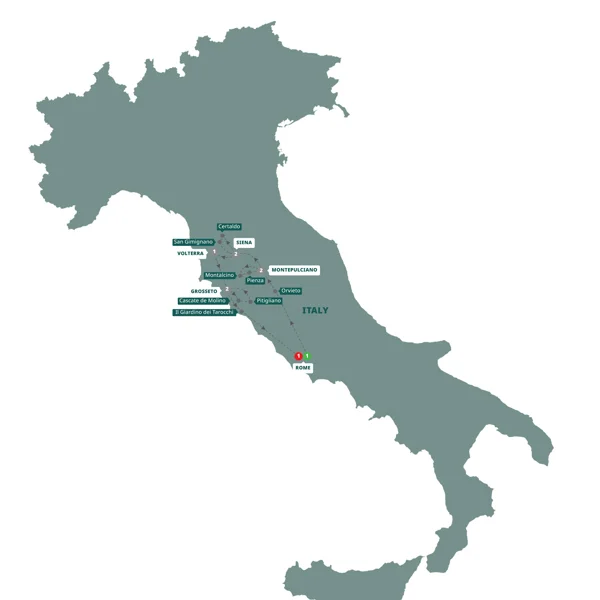
Arrive in Rome, meet your Travel Director and join an orientation visiting the Roman Forum and Trevi Fountain. Group dinner this evening.
Meals: Dinner
Day 2
Day 2: Head into the Tuscan Countryside
Ride the funicular to Orvieto’s hilltop old town for an orientation and free time. Continue through Tuscany to Montepulciano for an orientation and a local wine tasting.
Meals: Breakfast
Day 3
Day 3: Views and Tastes of Tuscany
Visit Montalcino (orientation and views over the Val d’Orcia) and Pienza (orientation and pecorino tasting), then return to Cortona for free time before dinner.
Meals: Breakfast,Dinner
Day 4
Day 4: A Day in Siena
Drive to Siena to visit the Mercato delle Merci and browse local shops. With a Local Specialist, explore the historic districts, Piazza del Campo and the Duomo.
Meals: Breakfast
Day 5
Day 5: Walls of Chianti and on to San Gimignano
Visit Certaldo (medieval walls and Chianti views), then continue to UNESCO-listed San Gimignano. Be My Guest dinner at a local agriturismo.
Meals: Breakfast,Dinner
Day 6
Day 6: Crafts of Volterra
Explore Volterra’s historic center, seeing the Roman Theatre, Cathedral and Palazzo dei Priori, and watch an alabaster carving demonstration.
Meals: Breakfast
Day 7
Day 7: South through Tuscany
Morning at leisure in Volterra. Visit the Abbey of San Galgano, then continue to Grosseto for an orientation of its walled historic center.
Meals: Breakfast,Dinner
Day 8
Day 8: Thermal Baths and Hilltowns of Tuscany
Visit Cascate del Mulino at the Saturnia thermal baths, then explore Pitigliano’s tufa-built hill town, known as Little Jerusalem, with free time.
Meals: Breakfast
Day 9
Day 9: Etruscan Legacies and Return to Rome
Visit Capalbio and Il Giardino dei Tarocchi before returning to Rome for a farewell dinner.
Meals: Breakfast,Dinner
Day 10
Day 10: Arrivederci Roma
Depart Rome; trip ends.
Meals: Breakfast
What’s included
What’s not included
Additional information
Certaldo Alto Walls & Medieval Lanes
Walk the brick ramparts of Certaldo Alto and walk the walls that frame views across the Val d’Elsa and Chianti hills. Cobbled streets lead to quiet squares, artisan workshops and red-brick towers.
Learn how the town, long linked to Giovanni Boccaccio, preserves a rhythm of medieval life behind its gates. It’s a slower side of Tuscany, where village churches and small museums reward the curious.
Il Giardino dei Tarocchi Sculpture Garden
Step into a fantastical landscape as you explore Il Giardino dei Tarocchi, the immersive creation of artist Niki de Saint Phalle near Capalbio. Wander among mosaic-clad sculptures inspired by the Tarot’s Major Arcana, each figure shimmering with colored glass and ceramic.
The garden’s playful architecture invites touch, reflection and surprise; it’s a vivid counterpoint to medieval hill towns, set amid Mediterranean shrubs and rolling Maremma hills. Art, myth and landscape converge in exuberant dialogue.
Orvieto Funicular Ascent & Old Town Stroll
Ride the hill-climbing line to the volcanic ridge and ride the funicular into Orvieto’s walled old town. Wander lanes of honey-colored tufa, pausing in the piazza to admire the lace-like facade of the Duomo di Orvieto, a masterpiece of mosaics, pinnacles and sculpted reliefs.
Hear how this clifftop outpost guarded the Umbrian plain and concealed Etruscan secrets in its cave-riddled subsoil. From the ramparts, look over vineyards and olive groves that frame the dramatic setting atop volcanic tufa cliffs.
Montepulciano Vino Nobile Tasting
Taste tradition where it’s made as you descend into historic cellars to taste Vino Nobile di Montepulciano. Learn how the local clone of Sangiovese—Prugnolo Gentile—shapes this DOCG wine’s cherry, violet and savory notes, refined through barrel aging.
Between sips, your host shares the town’s aristocratic wine heritage, from Renaissance palazzi to cool stone caves that keep barrels steady through hot Tuscan summers. The experience captures the rhythm of a hill town where grape and craft define identity.
Montalcino Hilltop Views over the Val d’Orcia
Ascend to Montalcino’s ramparts and pause for photos and reflection as the UNESCO-listed Val d’Orcia opens in a sweep of wheat fields, vineyards and sentinel cypresses. Cafés ring the main square—perfect for a cappuccino with a panorama.
From fortress walls built to guard trade routes to the neat vine rows below, see how landscape and livelihood intertwine. The view evokes film-famous vistas and the timeless Tuscan palette of ochre, green and sky blue.
Pienza Renaissance Plan & Pecorino Tasting
Walk the harmonious streets Pope Pius II commissioned as his ideal Renaissance city, set around Piazza Pio II and the elegant cathedral. In this UNESCO-listed town, symmetry and warm stone create a calming sense of order.
Sample the region’s signature cheese as you taste pecorino di Pienza, aged from buttery fresco to robust stagionato, often ripened in caves. The pairing of urban design and pastoral flavor reveals why Pienza is beloved by architects and gourmands alike.
Siena Weekly Market Visit
Immerse yourself in local life at Siena’s bustling weekly market, where neighbors chat and browse the stalls piled with seasonal produce, linens and everyday essentials. The air carries the scent of roasted porchetta and freshly cut pecorino.
Discover Sienese sweets—perhaps try panforte or ricciarelli—as your Travel Director points out regional specialties. Markets here are more than shopping; they’re a ritual of community in a city famed for contrade pride and storied piazzas.
Siena Walking Tour, Duomo & Contrada Museum
Join a guided walking tour through Siena’s tangle of medieval lanes to the shell-shaped Piazza del Campo, home to the Palio horse race. Continue to the black-and-white marble Duomo, its facade a showcase of Gothic sculpture and colored stone.
Step inside a contrada museum to see banners, costumes and trophies that embody neighborhood identity. Your Local Specialist decodes rivalries and rituals, bringing to life a civic spirit that has pulsed here for centuries.
San Gimignano Towers & Medieval Skyline
Explore a skyline of stone as you enter UNESCO-listed San Gimignano, where merchant families once competed to build ever-taller towers. Linger in Piazza della Cisterna and gaze up at Torre Grossa, the tallest of the survivors.
Hear stories of the Via Francigena pilgrimage route and the saffron trade that fueled prosperity. Frescoed churches, gelaterie and panoramic lanes make this compact hill town a photogenic study in medieval ambition.
Tuscan Agriturismo ‘Be My Guest’ Dinner & Wine
Head into the countryside for a hosted evening where you’ll meet the family behind a working agriturismo. Walk the vines and cellar, then sample regional wines paired with seasonal dishes drawn from the farm’s own produce.
As stories unfold about vintage years and village traditions, the Be My Guest experience connects glass and plate to place. It’s a convivial window onto Tuscan rural life, shared at a long table as dusk settles over the hills.
Volterra Historic Sights & Alabaster Workshop
Discover Volterra’s layered past as you view the Roman Theatre, the sober elegance of Palazzo dei Priori, and the cathedral’s quiet interior. Lanes of pale stone reveal Etruscan roots and medieval confidence.
Witness a craftsman at work as you watch alabaster artisans shape soft white stone, a skill practiced here since antiquity. The town’s light seems caught in the translucent mineral—Volterra’s signature material, turned into art by steady hands.
Abbey of San Galgano Roofless Gothic Ruin
Visit the haunting Cistercian complex where fields meet arches and a roofless nave opens directly to the sky. Grass underfoot and swallows overhead make the Abbey of San Galgano a study in serene decay.
Hear of hermit saints and the nearby Montesiepi chapel’s “sword in the stone” legend. The abbey’s austere lines and rural setting capture the contemplative spirit that once guided monastic life in Tuscany.
Grosseto Walled City Orientation
Stroll Grosseto’s star-shaped walls and enter a centro storico shaped by Medici ambition. Brick bastions, orderly streets and pale-stone palazzi frame a Tuscan city less visited yet rich in everyday rhythm.
Learn how Renaissance defenses guarded the Maremma plain and how 19th-century renewal softened a once-malaria-prone landscape. From gates to grand square, this is a living town where fortifications and market life coexist.
Cascate del Mulino at Saturnia Thermal Pools
Stop at the famed terraces of Cascate del Mulino, where mineral-rich cascades spill through chalk-white pools formed by travertine. The air carries a hint of sulfur as warm waters steam against blue Tuscan skies.
Photograph the travertine terraces and millhouse backdrop, a landscape sculpted by geology and time. Whether you dip a hand or simply take in the scene, this natural amphitheater offers a restorative pause in the Maremma countryside.
Pitigliano ‘Little Jerusalem’ Hilltown Walk
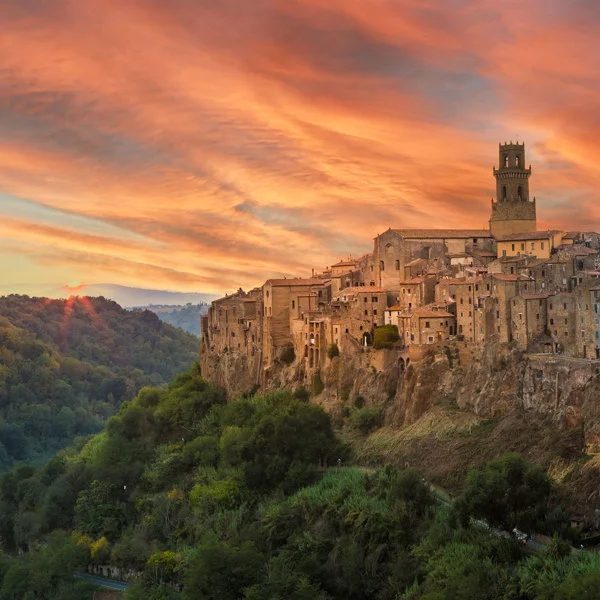
Walk lanes carved into tufa as Pitigliano rises like a fortress from living rock. Nicknamed “Little Jerusalem”, the town preserves a Jewish quarter whose bakeries and ritual spaces echo centuries of shared life.
Gaze from cliff-edge belvederes and trace arches, alleys and stone doorways that tell stories of refuge and resilience. The silhouette—town fused to cliff—makes Pitigliano one of southern Tuscany’s most arresting sights.
Rome Orientation & Historic Landmarks
Explore the Italian capital on an introductory city stroll, where classical ruins meet grand Baroque fountains. With your Travel Director, trace a line from empire to papacy as you pause by the Roman Forum and admire the theatrical flourish of the Trevi Fountain, Rome’s most flamboyant cascade of travertine and mythic sea horses.
Absorb how the city evolved from ancient power to ecclesiastical splendor, noticing layers of stone, marble and story at every turn. This gentle orientation helps you meet your Travel Director and find your bearings amid Rome’s grand piazzas and narrow vicoli.
Dining Summary
- 5 Dinner (D)
- 9 Breakfast (B)
How You'll Travel
- Deluxe coach travel
- Selected hotel dinners plus a locally hosted meal
- 4-star stays
Iconic Experience
- Rome: Take in your first views of Rome on an orientation through the Italian capital, where ancient sites, grand squares and monumental landmarks reveal the scale of the city. Along the way, see the Roman Forum, centre of public life in ancient Rome, and the Trevi Fountain, one of Rome’s most famous Baroque landmarks.
- Ride the funicular up to Orvieto’s old town, set on volcanic rock above the Umbrian plain. With your Travel Director, explore a town shaped by its strategic position, where narrow streets and historic buildings reveal a very different side of Umbria.
- Montepulciano: Explore Montepulciano with your Travel Director before tasting Vino Nobile di Montepulciano, the DOCG red produced in the vineyards around the town. Made primarily from Sangiovese, known locally as Prugnolo Gentile, it is one of Tuscany’s best-known wines and a defining part of Montepulciano’s identity, served where the wine’s story begins.
- Montalcino: Pause in Montalcino to take in views over the Val d’Orcia, the UNESCO-listed landscape seen in Gladiator. From this hilltop position, look out across the cypress-lined roads, fields and villages that have made this one of Tuscany’s most recognised landscapes.
- Pienza: Explore Pienza with your Travel Director and get to know the town Pope Pius II reshaped as his ideal Renaissance city. Its orderly streets, stone buildings and compact historic centre give it a very different feel from Tuscany’s medieval hill towns. While you’re here, taste the pecorino cheese that has long been associated with Pienza and the surrounding countryside.
- Siena: Visit the Mercato delle Merci, one of Tuscany’s biggest weekly markets, where locals come to shop for food, household goods and everyday essentials. Browse the stalls and look out for ricciarelli, the almond biscuits closely associated with the city.
- Siena: With your Local Specialist, see Siena through the shell-shaped Piazza del Campo, home of the Palio, and the black-and-white marble Duomo, one of the city’s great artistic landmarks. Then step inside a district museum linked to the Palio, where you’ll find banners, costumes and historic memorabilia connected to one of Siena’s historic districts.
- San Gimignano: Explore San Gimignano with your Travel Director, a UNESCO World Heritage Site known for the towers that still rise above the town. It was an important stop for pilgrims travelling the Via Francigena and grew wealthy through trade and passing traffic. Today, its preserved medieval centre and surviving towers make it one of Tuscany’s most recognisable hill towns.
- Volterra: See how local artisans work alabaster, one of Volterra’s best-known materials and a craft closely tied to the town. As you watch this soft white stone being shaped, you’ll get closer to a tradition that has been part of Volterra since Etruscan times and remains one of its defining local industries.
- Pitigliano: Get to know the Pitigliano’s Jewish history, which earned it the name Little Jerusalem. Built into tufa rock in southern Tuscany, the town became a place of refuge for Jews fleeing the Papal States in the 16th century. As you walk its streets, you’ll come across a story that sets Pitigliano apart from other Tuscan hilltop towns.
- Step into Il Giardino dei Tarocchi and discover a very different side of Tuscany through the large-scale sculptures of artist Niki de Saint Phalle. As you explore the garden, you’ll see colour, mosaic and symbolism brought together in a setting that stands apart from the region’s medieval towns and hilltop villages.
Operated By
Trafalgar