Your itinerary
Day 1
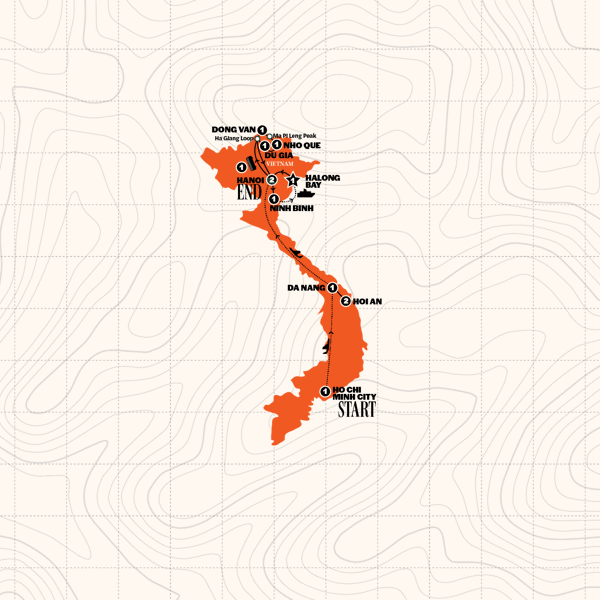
Day 1: Start Ho Chi Minh City
Meet your fellow travellers in Ho Chi Minh City for a trip kickstart meeting, then enjoy a free evening to explore.
Day 2
Day 2: Ho Chi Minh City to Da Nang
Have breakfast at the hotel, then take a sightseeing tour of Ho Chi Minh City, including a stop at the War Remnants Museum. Head to the airport and fly to Da Nang.
Meals: Breakfast
Day 3
Day 3: Da Nang to Hoi An
Spend the morning exploring Da Nang independently, then drive to Hoi An. Activities in town include bike riding, visiting an ancient house and ordering custom-made clothes from a tailor. An optional Vietnamese cooking class is available tonight, where you can make up to four traditional dishes.
Meals: Breakfast
Day 4
Day 4: Hoi An
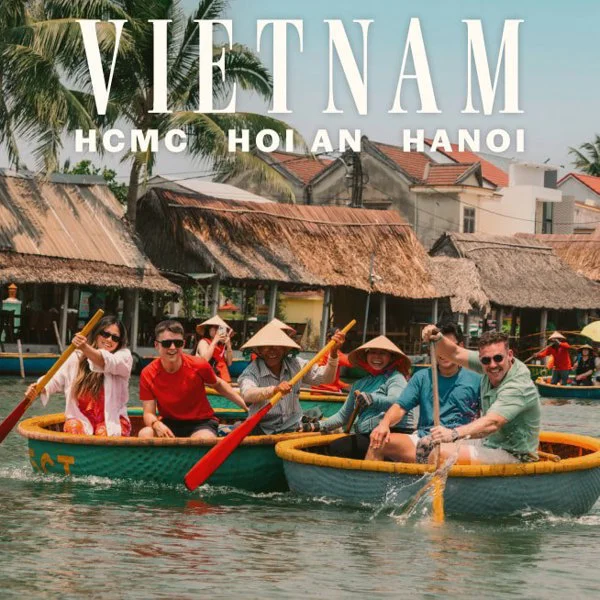
Enjoy a free day in Hoi An to explore galleries and market stalls and try local food. You could ride a Bamboo Basket Boat. Have fresh coconut water.
Meals: Breakfast
Day 5
Day 5: Hoi An to Hanoi via Da Nang
After breakfast, travel from Hoi An to Da Nang airport and fly to Hanoi. Eat at KOTO, which supports disadvantaged youth in Vietnam, then visit the Temple of Literature and the Ho Chi Minh Mausoleum. The evening is free.
Meals: Breakfast,Lunch
Day 6
Day 6: Hanoi
Spend a free day in Hanoi. Options include trying local coffees, walking around Hoàn Kiếm Lake and visiting Train Street. An optional evening bike tour offers a way to see the city after dark.
Meals: Breakfast
Day 7
Day 7: Hanoi to Ninh Binh
Travel from Hanoi to Ninh Binh. In the afternoon, you can join an optional Bike & Boat adventure in Van Long, cycling through local villages and cruising the rivers by sampan. Alternatively, spend the rest of the day enjoying the scenery and looking for birds.
Meals: Breakfast
Day 8
Day 8: Ninh Binh to Halong Bay
Climb 500 steps to the top of Mua Cave, then drive to Halong Bay and board a Chinese-style junk boat for the night. Cruise among the limestone islands of the Gulf of Tonkin, passing lagoons, forests and grottos, and spend time on Ti Top Island. Enjoy a seafood dinner and sunset at the docking spot.
Meals: Breakfast,Lunch,Dinner
Day 9
Day 9: Halong Bay To Hanoi
Have a light breakfast, explore Sung Sot Caves, then return to the boat for a final cruise through Halong Bay and an early lunch. Disembark and travel back to Hanoi by road. The evening is free, with the option to join the group for dinner and visit Ta Hien.
Meals: Breakfast,Lunch
Day 10
Day 10: Hanoi & Overnight Bus
Spend a free day exploring Hanoi and stock up on anything needed for the more remote Ha Giang leg. Board the overnight bus and sleep on board.
Meals: Breakfast
Day 11
Day 11: Overnight Bus to Dong Van via Ha Giang Loop
Walk from the bus station to a local homestay, where there is time to sleep and have breakfast. Take a van towards Dong Van along the Ha Giang Loop, seeing Heaven Gate, Twin Mountain and Tham Ma slope, and visiting an ancient palace. Stop to meet people preserving the craft of H’mong linen weaving. Finish the day with local food and an overnight stay.
Meals: Breakfast,Lunch,Dinner
Day 12
Day 12: Dong Van to Nho Que via Ma Pi Leng Peak
After breakfast, trek with a local guide towards Ma Pi Leng peak along the Sky Path, passing limestone cliffs, Hmong villages and cornfields. After lunch, see Tu San Canyon and take a boat cruise to the campsite. Stay in riverside tents overlooking the Nho Que river, with dinner and music in the evening.
Meals: Breakfast,Lunch,Dinner
Day 13
Day 13: Nho Que to Du Gia
Kayak along the turquoise river in the morning, return to the accommodation for breakfast, then take a boat back to the harbour. Have lunch at a local spot and meet a local H’mong man who plays the traditional Qeej flute. Drive past scenic viewpoints and finish the day with a dinner of local food.
Meals: Breakfast,Lunch,Dinner
Day 14
Day 14: Du Gia to Hanoi via Ha Giang Loop
Visit a waterfall, then travel through terraced rice paddies and limestone karsts. After a local lunch, arrive in Ha Giang and continue to Hanoi in reclining seats. The trip ends at 11pm.
Meals: Breakfast,Lunch
What’s included
What’s not included
Additional information
Dining Summary
- 13 Breakfast (B)
- 7 Lunch (L)
- 4 Dinner (D)
FAQs
- Bangkok: A modular trip means fellow travellers will join and leave at various locations. There’ll be some goodbyes, sure, but there’ll also be plenty of hellos with new like-minded travellers.
- Danang: Vietnam is wonderful to visit year-round. But the best time to visit depends on what you wanna do, and where in Vietnam you wanna go.Generally, April & May are thought to be the best months to visit Vietnam because of the beautifully bright weather. Between December and March is a slightly cooler period. So if hiking, or city-dwelling is what you want, that’s the best time to visit. And if you wanna avoid the crowds, off-season tends to be between April and June or September to November.
- Danang: The currency used in Vietnam (that can buy you a wholesome, delicious bowl of Pho) is the Vietnamese dong (?).
- Danang: Planning to visit Vietnam to taste all the wholesome flavours? Aren’t we all?You’ll find plenty of street food stop-offs, serving up freshly made gems including rice, noodle and battered pancake-based dishes, plus the world-famous Pho. Pork is a common feature of Vietnamese cuisine. Generally, Vietnamese food isn’t too spicy (except if your dish has fresh chillies in it!) Oh, and the best thing about the food here? It’s very very cheap.
- Danang: When you travel with Contiki, your accommodation, in-country transport and breakfasts are all included with the cost of your trip. So when it comes to budgeting, you only need to worry about your shopping! Luckily, Vietnam is heralded as an extremely affordable tourist destination too. As a rough guide, you should easily get by on US $50-80 a day.
- Danang: We’ll be visiting some traditional tourist hotspots – so don’t forget to keep your shoulders covered (it’s customary in Vietnam, and will probably be insisted). For all that beach exploration, it’s generally acceptable for tourists to dress in the swimwear of their choice.Vietnam tends to get very hot & humid, so make sure you pack lots of loose-fitting clothes made from a lightweight and breathable material. Big up the baggy shirts!
- Danang: Tipping is pretty common in Vietnam’s tourism and hospitality sectors. Usually you’ll pay 10% of the total bill, which will amount to roughly $1-5.
- Danang: On some days, the Free Time Add-Ons will be during different times. So you’ll be able to do them all! But on some days, you might have to pick just one. Don’t worry, your Trip Manager will do their best to manage all of this for you, and will be able to give you all the details you might need.
- Danang: You can bring one bag or suitcase of 73cm x 50cm x 25cm (29” x 20” x 10”), with a max weight of 20kg (44lbs) – plus one piece of hand luggage suitable as a carry-on for flights. Since our trips have included flights, your luggage needs to meet the weight & security restrictions imposed by airlines. On this trip, it’s necessary to use an overnight bag on the occasional nights when it’s not possible to access your luggage (overnight trips to Special Stays). It’s a good idea to bring an overnight bag, or hand luggage that’s big enough to double up as an overnighter when needed.
- Danang: Currently, the Golden Hands Bridge isn’t included on our itinerary. But that means, you get a free day to explore Hoi An – which you REALLY don’t wanna miss out on.The Bridge is part of a theme park called ‘Sun World Ba Na Hills’ and is about a 2-hour drive away from where we stay in Hoi An (and tends to be incredibly crowded!). But if you really wanna visit the bridge, you can always ask your Trip Manager who’ll sort it out for you!
- Ha Giang Loop: Nope. We explore Ha Giang in style and safety using mini-coaches, overnight buses, local boats, plus hikes and kayaking. This way, you still see all the epic scenery without the risks of riding a motorbike. It’s adventure, comfort, and peace of mind all in one.
Included Experience
- Ho Chi Minh City: Tick off all of the landmarks on your bucket list – Notre Dame Cathedral, General Post Office and the Presidential Palace.
- Ho Chi Minh City: A meaningful reminder of the atrocities of the Vietnam War and its impact on local people and wildlife.
- Hoi An: This 15th century port and UNESCO site is best explored on two wheels with a local expert. Don’t forget your Go-Pro!
- Da Nang: Next stop, Hanoi. But before we hit the streets, it’s time to hit the sky one more time.
- Hanoi:
Step inside KOTO Restaurant and enjoy a high-quality meal with a twist where you’re helping young, at-risk Vietnamese trainees sharpen their hospitality skills. KOTO (AKA Know One, Teach One) is Vietnam’s first social enterprise, offering a 24-month free training program for disadvantaged youth, with a special focus on empowering women.By eating here, you’re supporting more than just a meal. KOTO equips trainees with hospitality, entrepreneurship, and leadership skills, opening doors to long-term careers and breaking cycles of poverty. Each year, over 100 young people get a shot at realising their dreams—all while serving up delicious, expertly crafted dishes.
- Hanoi: Listen up culture-lovers. This shrine – dedicated to ancient philosopher Confucius – is known as ‘Vietnam’s first university’.
- Hanoi: Take a look at the resting place of Vietnamese revolutionary leader and President Ho Chi Minh. This is where he, along with his party, declared the independence of Vietnam.
- Ninh Binh: Cool tropical breeze. Lush-green landscapes. And an unforgettable view of the sunrise over the shimmery silhouette.
- Halong Bay: Grab your new BFFs and hang out in this mini paradise. The powdery sand and turquoise waters will bless you with #islandvibes
- Halong Bay: The best way to drift off into dreamy sleep? Drifting along the Gulf of Tonkin in a traditional Chinese-style Junk Boat, of course!
- Halong Bay: Yet another work of art from Mother Nature. These huge underground caves are made for exploring. But can you spot the ‘mammoth’?
- Ha Giang Loop: Check out the incredible views from Heaven Gate – a popular stop off on the Ha Giang loop.
- Ha Giang Loop: Stop by to get a view of the winding roads that resemble a massive snake making its way down the slope!
- Ha Giang Loop: Walk like a royal around this ancient palace that’s made with green pebbles, pine woods, terra-cotta tiles and even sugarcane! (Seriously.)
- Dong Van: Meet the incredible women at the Lung Tam Linen Cooperative who are working to preserve the craft of H’mong linen weaving. You’ll see all the complicated stages of weaving, learn how they make high-quality fabric here and support local communities too.
- Ma Pi Leng Peak: Lace up your boots! You’ll take a challenging but short trek towards the Ma Pi Leng peak, passing by H’mong villages on the way.
- Nho Que: Feast on a delicious lunch with incredible views of the Nho Que river. It’s a photo ops hotspot!
- Nho Que: Go with the flow on a local boat cruise as you check out one of South Asia’s largest canyons.
- Nho Que: Paddle through the turquoise waters of this beautiful river with views of scenic rice fields and mountains along the way.
- Dong Van: Ever heard of a Qeej? It’s a sacred instrument that was used to call the spirits (or at least that’s what the legends say!). Today’s your chance to witness a local man playing it.
- Dong Van: Ready? We’ll trek all the way up to ruins of the Lung Ho French Fort – a beautiful stone structure built during the French colonisation.
- Du Già: Cool off with a dip in crystal-clear waters surrounded by jungle greenery, with nothing but the sound of rushing falls and birdsong echoing through the valley. Stunning.
Nho Que River Kayaking
Kayak on the turquoise Nho Que River, paddling through a landscape of mountains and cultivated slopes. Moving under your own power gives you time to notice the water’s colour and the changing views along the riverbanks.
Unlike the broader perspective from a boat, kayaking puts you close to the surface of the river and lets the highland scenery unfold at a gentle pace. It is an active, water-level way to experience one of the Ha Giang region’s defining landscapes.
Hanoi After-Dark Motorbike Tour
See Hanoi after dark from the back of a motorbike on an organised evening tour. Experience the city at street level as traffic, lit-up shopfronts and evening activity give the capital a different rhythm.
Motorbikes are woven into daily life in Hanoi, making this an immersive way to encounter its streets beyond daytime sightseeing. Watch neighbourhood scenes unfold as you travel through the city. This is an optional experience at additional cost, bookable on tour.
Operated By
Contiki
Ho Chi Minh City Welcome Meeting
Meet your travel companions at a hosted welcome meeting in Ho Chi Minh City. Get acquainted with the group and learn what to expect from the journey across Vietnam, from its busy southern metropolis to the mountain landscapes of Ha Giang.
Formerly known as Saigon, the city is a lively starting point shaped by colonial-era architecture and modern Vietnamese street life. The meeting gives everyone a chance to connect before exploring the destination in their own way.
Ho Chi Minh City Landmarks Tour
Explore central Ho Chi Minh City on a guided sightseeing tour featuring Notre-Dame Cathedral, the Central Post Office and the Presidential Palace, also known as Independence Palace. See how grand civic buildings sit amid the traffic and commerce of contemporary Saigon.
The cathedral and post office reflect the city’s French colonial period, while Independence Palace is closely associated with the end of the Vietnam War in 1975. Together, these landmarks offer a concise introduction to the city’s layered history.
War Remnants Museum
Visit Ho Chi Minh City’s War Remnants Museum for a sobering examination of the Vietnam War and its effects on civilians. Explore exhibitions of photographs, documents and military equipment that present the conflict through Vietnamese perspectives.
The displays address the lasting human and environmental consequences of war, making this a challenging but meaningful stop. Allow time to engage with the material at your own pace; its testimony adds essential context to the places and people encountered across Vietnam.
Hoi An Cycling Tour & Ancient House
Cycle through Hoi An with a local expert, taking in the lanes and historic buildings of its UNESCO-listed Ancient Town. Visit an ancient merchant house to see how families lived and traded in this former port.
Japanese, Chinese, Vietnamese and European influences remain visible in Hoi An’s architecture, a legacy of centuries of maritime trade. The bicycle offers a close-up view of daily life, while the house visit brings the town’s commercial past down to a human scale.
KOTO Social Enterprise Meal
Enjoy a meal at KOTO in Hanoi, where young Vietnamese trainees develop practical hospitality skills while preparing and serving food. The restaurant is part of a social enterprise whose name stands for “Know One, Teach One”.
KOTO provides free training and support for disadvantaged young people, helping them build routes into employment. Dining here makes a regular meal more meaningful: it offers a direct encounter with a Vietnamese initiative centred on education, opportunity and professional pride.
Temple of Literature
Explore Hanoi’s Temple of Literature, a shrine dedicated to Confucius and the site of Vietnam’s first national university. Walk through its courtyards and traditional gateways to discover a quieter side of the capital.
Founded in the 11th century, the complex reflects the importance placed on scholarship in Vietnamese society. Stone stelae commemorating successful scholars evoke generations of study and examination, giving this visit a distinct perspective on the country’s intellectual heritage.
Ho Chi Minh Mausoleum
Visit the Ho Chi Minh Mausoleum area in Hanoi’s Ba Dinh Square to see the monumental resting place of Vietnam’s revolutionary leader. Take in the scale of the square and the formal architecture of this nationally significant site.
Ba Dinh Square is where Ho Chi Minh declared Vietnamese independence in 1945. The visit connects a familiar name with the setting of a defining historical moment, while offering insight into how his legacy is commemorated in the capital.
Mua Cave Viewpoint Climb
Climb roughly 500 steps to the viewpoint above Mua Cave in Ninh Binh. From the ridge, look out across limestone peaks, waterways and a patchwork of fields that makes this region one of northern Vietnam’s most distinctive landscapes.
The ascent is steep, but the broad view reveals why Ninh Binh is often compared with Halong Bay on land. Bring a camera for the changing light over the karsts and take time to catch your breath at the summit.
Halong Bay Junk Boat Cruise & Overnight Stay
Cruise Halong Bay aboard a Chinese-style junk boat, passing limestone islands, sheltered lagoons and forested slopes in the Gulf of Tonkin. Spend the night on the water, with time to watch the light shift across the karsts.
This UNESCO-listed seascape was formed over millions of years as water shaped its limestone formations. Staying aboard offers more than a passing view: the bay’s quieter evening atmosphere and changing silhouettes become part of the experience.
Ti Top Island Visit
Spend time on Ti Top Island during the Halong Bay cruise, stepping ashore amid the bay’s steep limestone scenery. Relax by the sandy beach and take in views of the islands rising from the surrounding water.
The island provides a different perspective from the junk boat’s deck: the karsts form a dramatic backdrop to the shoreline. It is a chance to pause in the open air and appreciate the contrasts of pale sand, green slopes and sheltered sea.
Sung Sot Cave Exploration
Explore Sung Sot Cave, one of Halong Bay’s best-known grottoes. Walk through its spacious chambers to see limestone formations shaped by water over immense spans of time.
Known in English as Surprise Cave, Sung Sot offers a look inside the geology that defines the bay’s island scenery. Its high ceilings and sculpted rock create a striking contrast with the open water outside, making the cave visit a distinctive part of the Halong Bay experience.
Ha Giang Loop Scenic Viewpoints
Travel the Ha Giang Loop by van, stopping to take in Heaven Gate, the Twin Mountains and Tham Ma Slope. Look across steep valleys and follow the bends of the mountain road as it winds through northern Vietnam’s highlands.
Near Quan Ba, the Twin Mountains rise in rounded forms from the surrounding fields; farther along, Tham Ma’s switchbacks reveal the scale of the terrain. These viewpoints make the journey itself an organised scenic experience, without requiring a motorbike ride.
H’Mong King’s Palace
Visit the H’Mong King’s Palace in the Ha Giang highlands and walk through its courtyards and rooms. Examine the stonework, pine timber and tiled roofs of a residence associated with the influential Vuong family.
The palace brings the region’s political and cultural history into focus amid the mountain scenery. Its blend of architectural influences and carefully chosen materials sets it apart from the villages along the route, offering a tangible glimpse of power and daily life in the highlands.
Lung Tam H’Mong Linen Weaving Cooperative
Meet the women of the Lung Tam Linen Cooperative and learn how H’Mong artisans produce linen using techniques passed through generations. Observe the stages involved in turning fibre into finished fabric and see the skill behind its patterns and textures.
Textile-making is both a source of livelihood and an expression of cultural identity in H’Mong communities. This visit puts the makers at the centre of the experience and supports local efforts to keep their craft alive.
Ma Pi Leng Peak & Sky Path Trek
Trek with a local guide along the Sky Path towards Ma Pi Leng Peak. This short but challenging hike passes H’Mong villages and cornfields, with views of limestone cliffs and the mountain landscape around Dong Van.
Ma Pi Leng is among the Ha Giang Loop’s most celebrated high passes. Travelling on foot brings you closer to the terrain and its communities than a roadside viewpoint can, while the exposed vistas show the dramatic scale of northern Vietnam’s karst highlands.
Lung Ho French Fort Ruins Trek
Trek to the ruins of Lung Ho French Fort and examine the remains of a stone structure dating from Vietnam’s colonial era. The walk combines a physical outing with a historic site in the Ha Giang highlands.
The fort’s surviving masonry recalls the French presence in this remote region. Set against mountain scenery, the ruins offer a different historical perspective from Vietnam’s city museums and monuments, rewarding the climb with both a sense of place and a view into the past.
Nho Que River Cruise & Tu San Canyon
Cruise the Nho Que River by local boat, taking in Tu San Canyon and its towering limestone walls. The boat journey carries you through the mountain landscape towards a riverside campsite.
From water level, the cliffs appear especially imposing, while the river’s turquoise colour contrasts with the pale rock and green slopes above. This is a close-up encounter with the terrain seen from Ha Giang’s high roads and paths, experienced at a slower pace.
Nho Que Riverside Camping & Music
Camp beside the Nho Que River in tents that open towards the water and surrounding mountains. Share dinner and music with the group in a setting far removed from Vietnam’s busy cities.
The overnight stay makes the riverside landscape part of the experience rather than a brief viewpoint. Listen to the sounds of the water and enjoy the communal atmosphere of a mountain camp, with the canyon scenery close at hand when you settle in for the night.
Traditional H’Mong Qeej Performance
Meet a local H’Mong musician and listen to the sounds of the qeej, a traditional reed instrument with an important place in community life. Hear its distinctive tones in the Ha Giang highlands where the tradition is practised.
The qeej is associated with H’Mong ceremonies and forms of cultural expression passed between generations. Encountering the instrument through a local performer adds a personal dimension to the journey, connecting the region’s scenery with its living traditions.
Du Gia Waterfall Visit
Visit a waterfall near Du Gia, where rushing water and dense greenery offer a refreshing contrast to the Ha Giang Loop’s high roads. Take in the falls and, when conditions allow, cool off in the clear water.
The setting reveals a softer side of the region’s mountain landscape: birdsong, shaded vegetation and the sound of water replace the wide-open views of the passes. It is a chance to experience Du Gia’s natural surroundings at close range.
Hoi An Vietnamese Cooking Class
Prepare up to four traditional Vietnamese dishes in a hands-on cooking class in Hoi An. Learn by doing as you work with ingredients and techniques that give the country’s cooking its fresh, balanced flavours.
Hoi An’s long trading history and central Vietnamese setting make it a fitting place to explore food culture. The class offers practical skills alongside a shared meal and conversation. This is an optional experience at additional cost, bookable on tour.
Hoi An Bamboo Basket Boat Ride
Ride in a Vietnamese bamboo basket boat during your time in Hoi An. Sit low in the round woven craft and experience a distinctive local way of moving across the water.
These boats are closely associated with coastal communities in central Vietnam, where their compact shape and woven construction make them unlike conventional fishing boats. The ride offers a playful introduction to a practical local tradition. This is an optional experience at additional cost, bookable on tour.
Van Long Cycling & Sampan Adventure
Cycle through villages near Van Long in Ninh Binh, then board a sampan for a river cruise beneath limestone karsts. The combination of bicycle and boat lets you experience rural lanes and waterways at an unhurried pace.
Van Long’s wetlands and rocky peaks help explain the region’s nickname, “Halong Bay on land”. Look out across the greenery and watch for birdlife as the scenery changes around you. This is an optional experience at additional cost, bookable on tour.