Your itinerary
Day 1
Adventure starts in Sarria
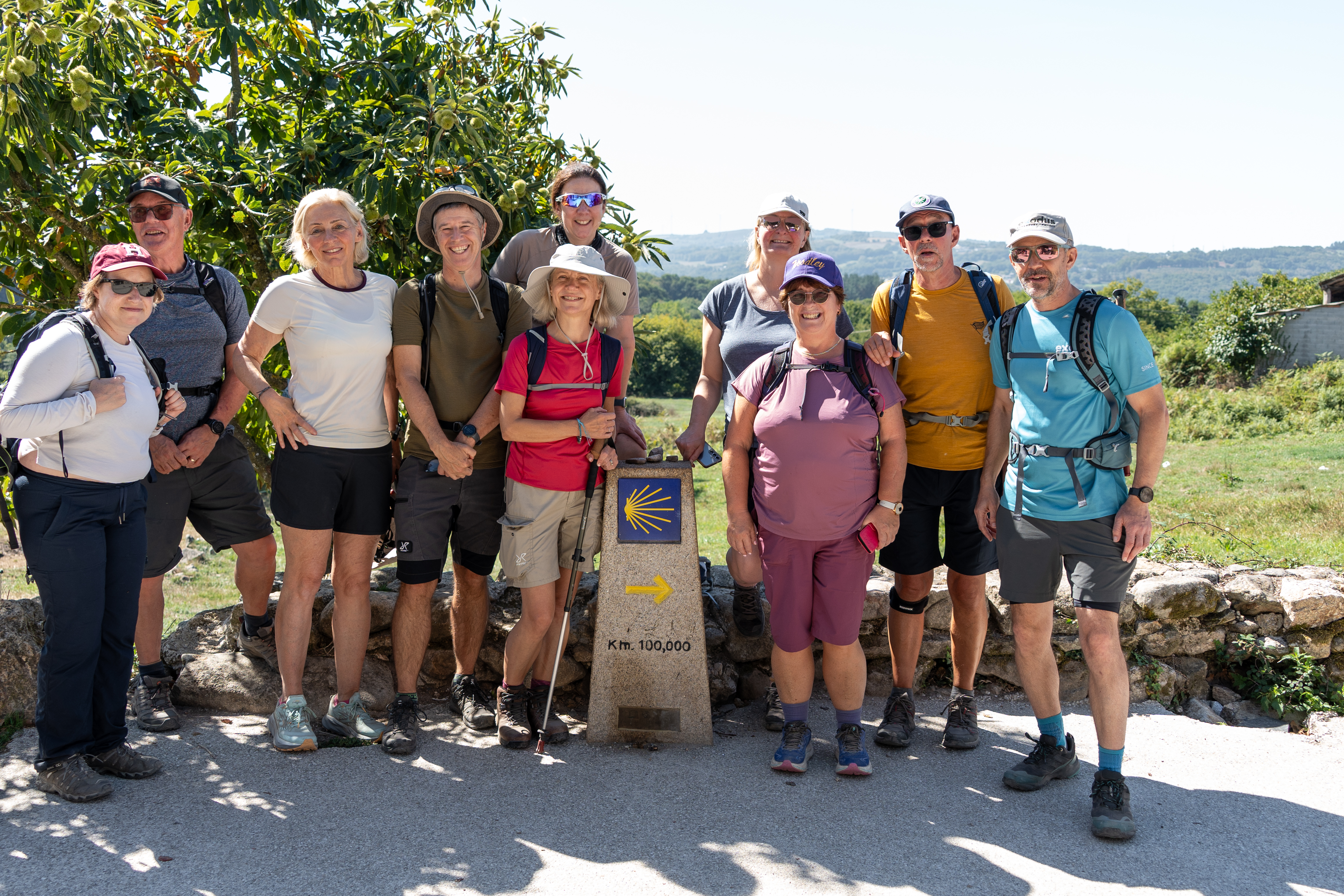
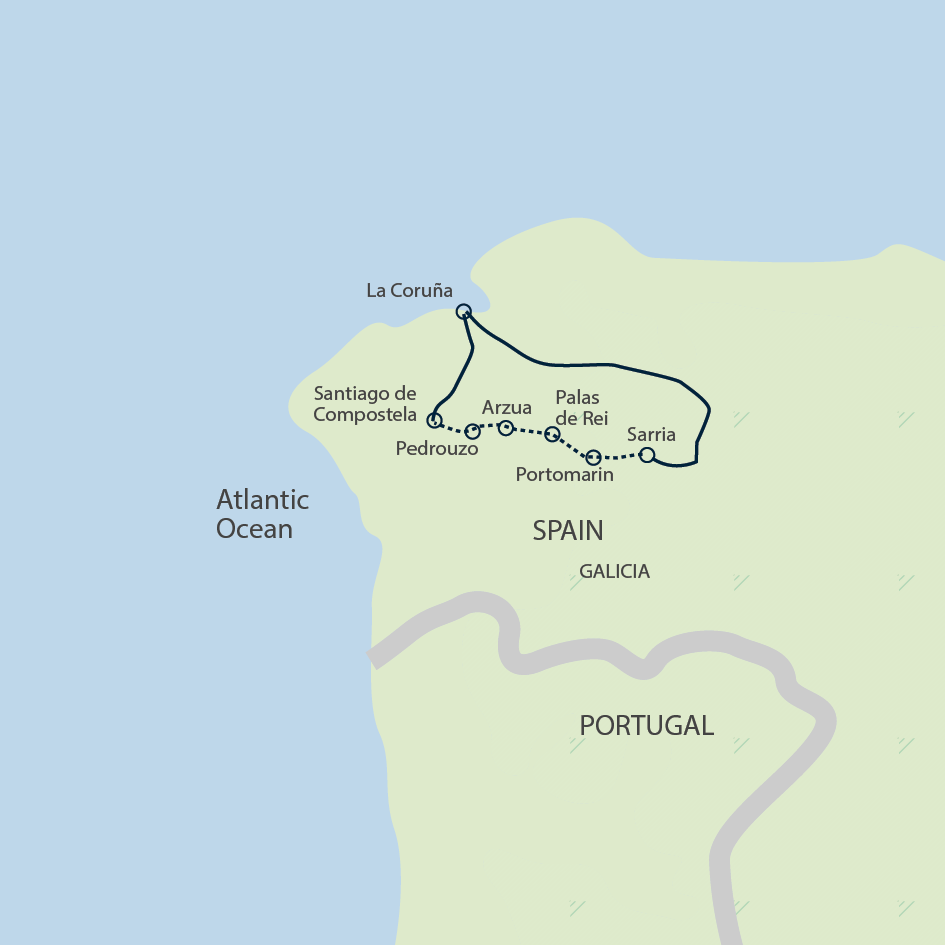
Begin your adventure in Sarria, the most popular starting point on the Camino de Santiago’s Camino Frances. At 71mi (114km) from Santiago, it lies just beyond the minimum walking distance required to earn the Compostela certificate.
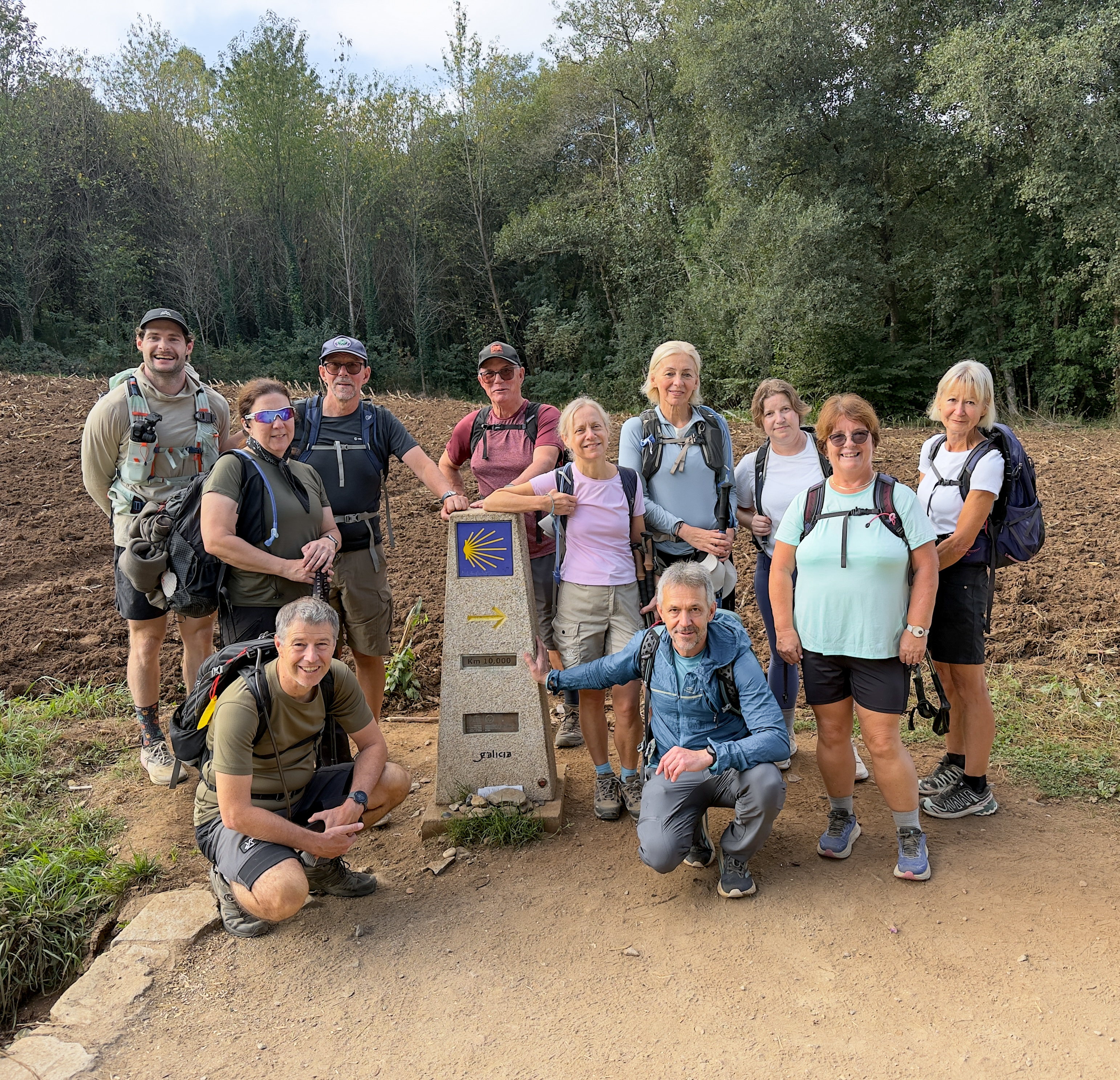
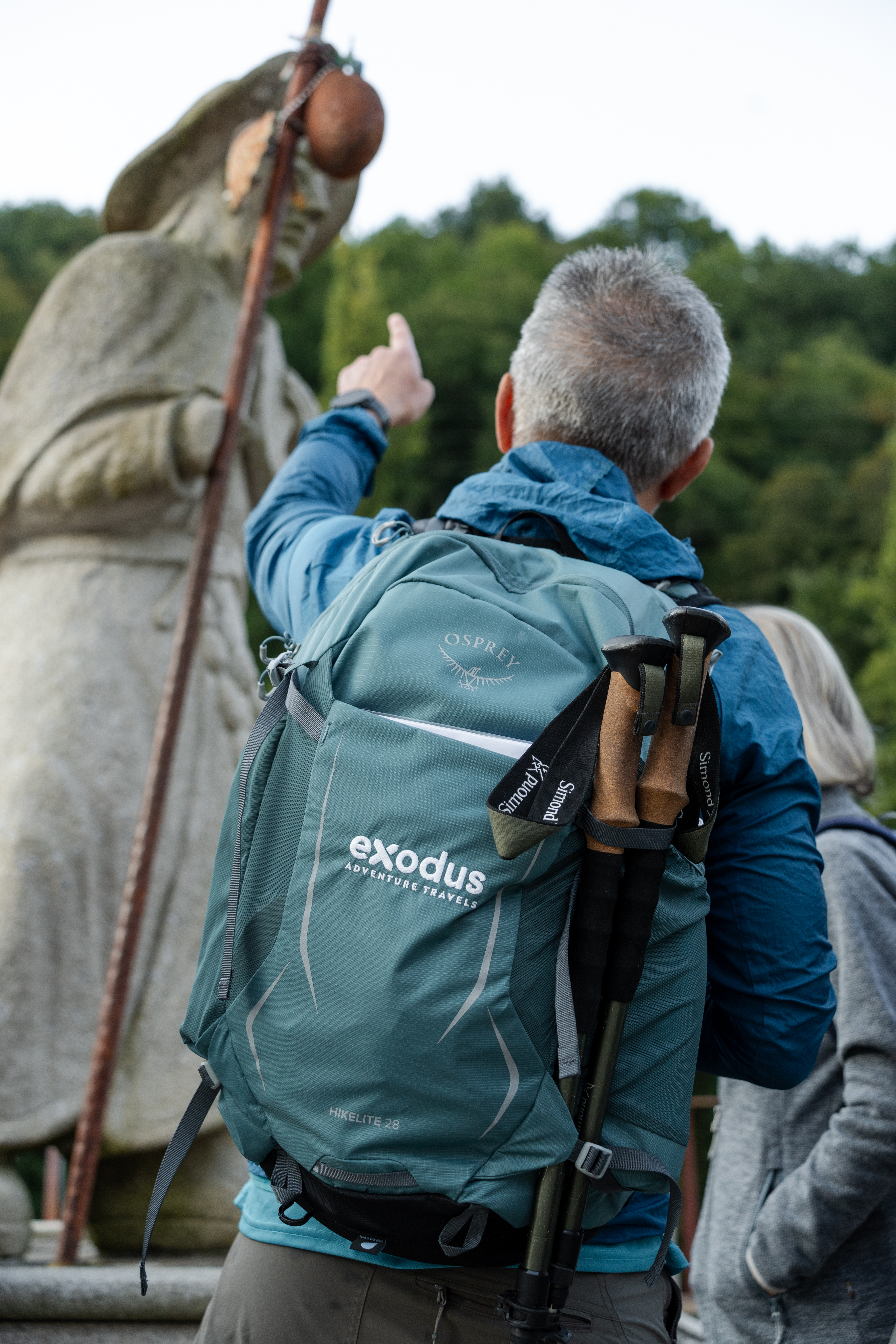
Around 6pm, say hola to your tour leader and fellow travellers, when we gather as a group for the first time to get to know each other and learn more about the adventures ahead.
Want more time in Sarria? Secure pre-tour hotel nights through your sales representative.
Day 2
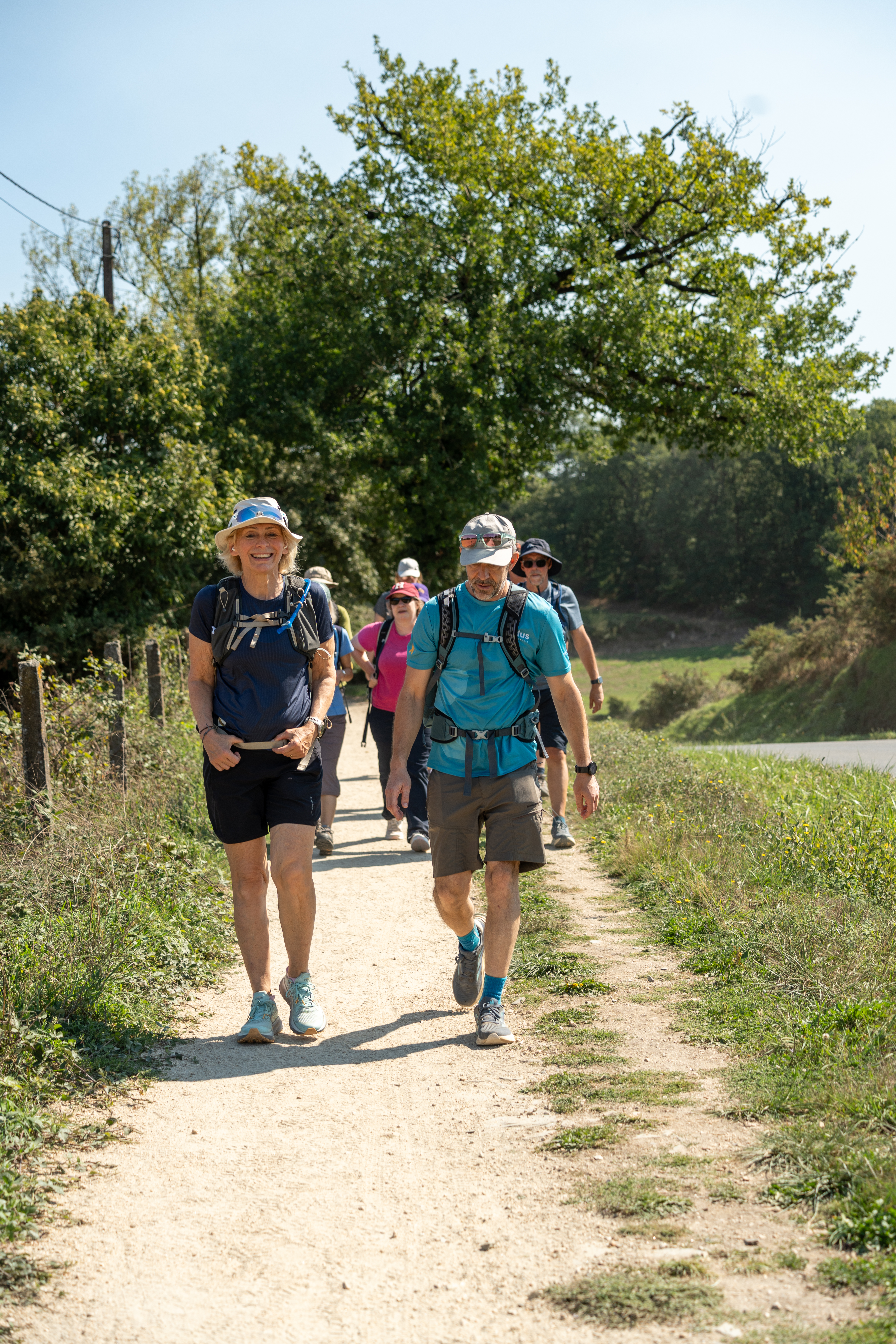
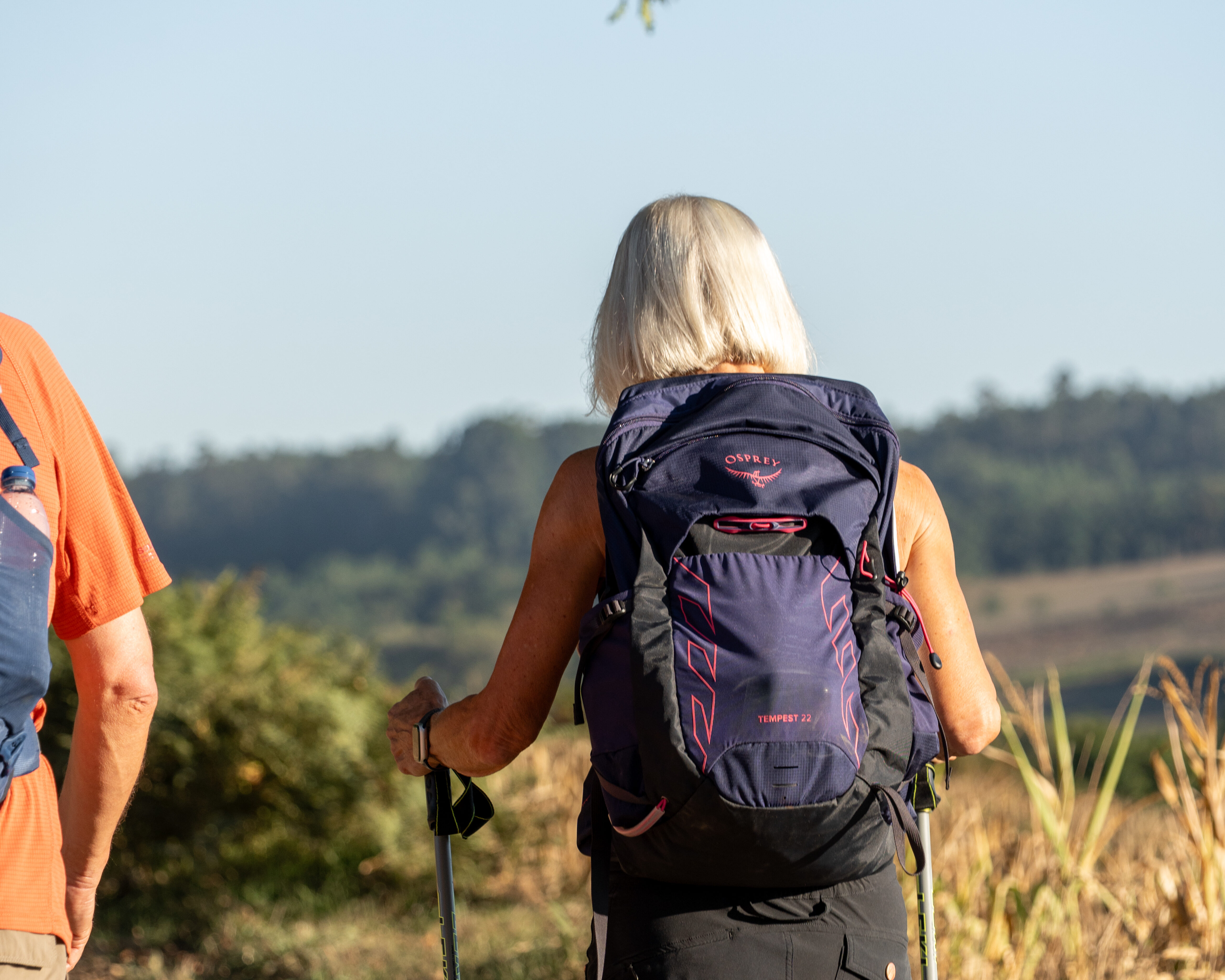
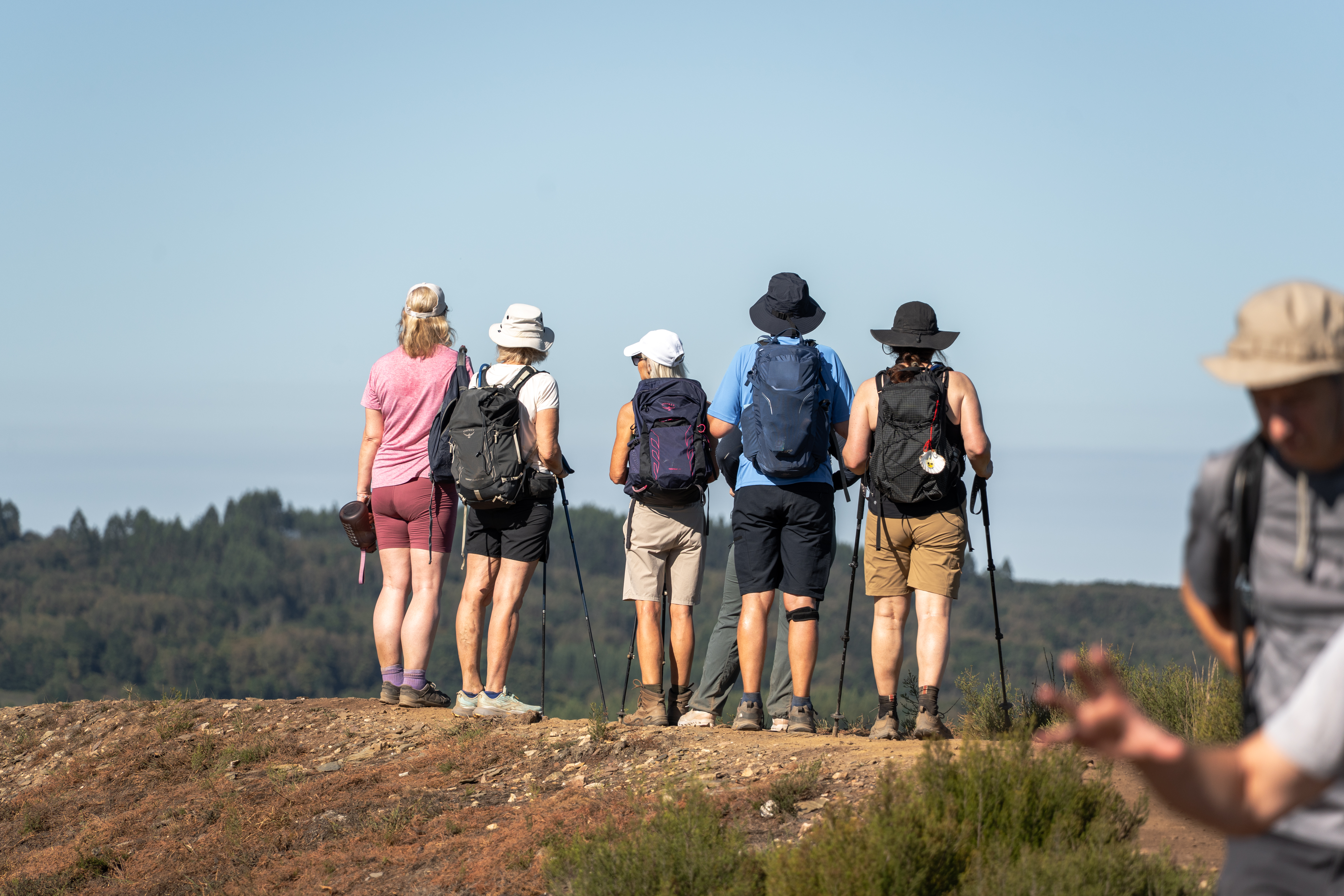
Walk through the hills of the Galician countryside to Portomarin
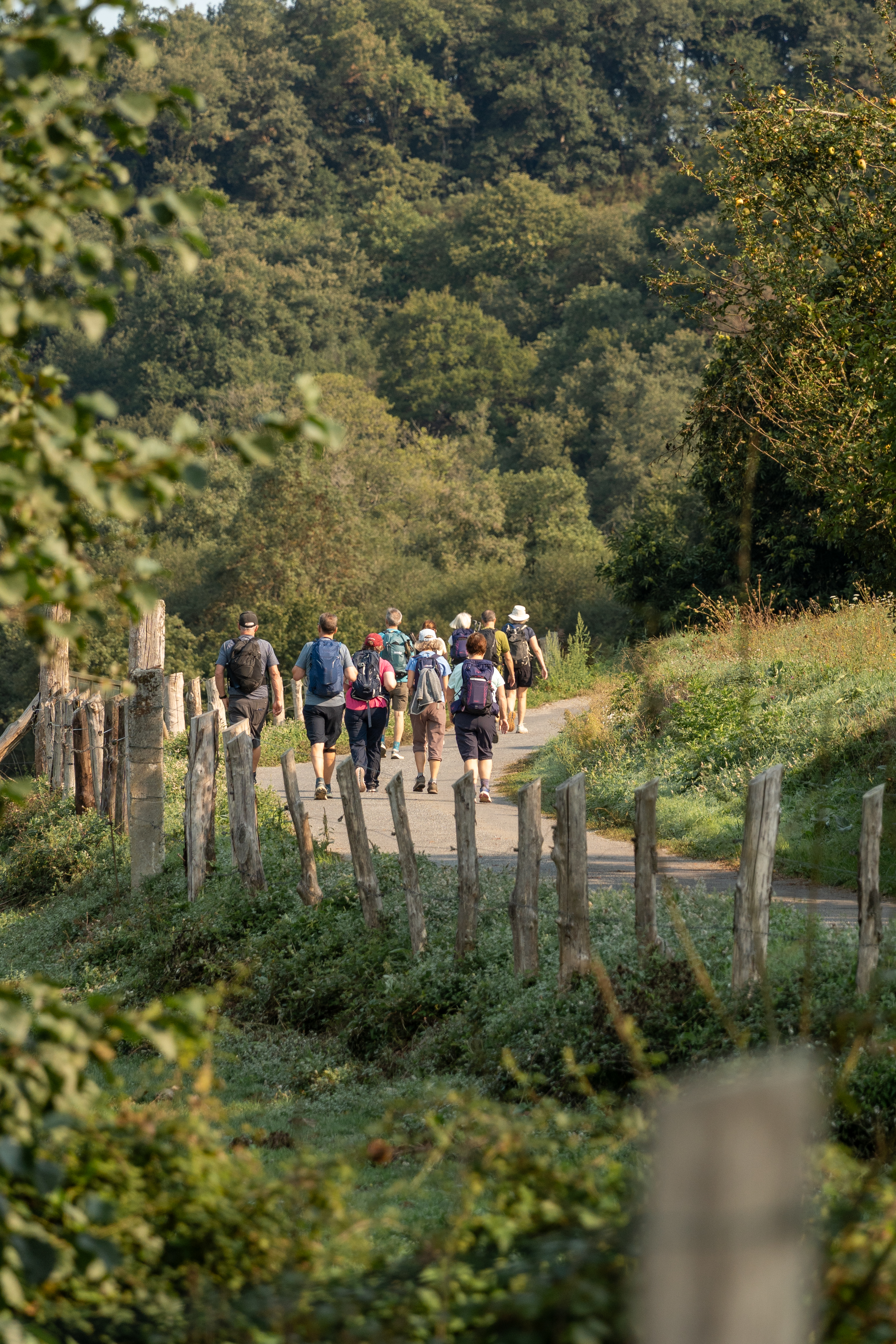
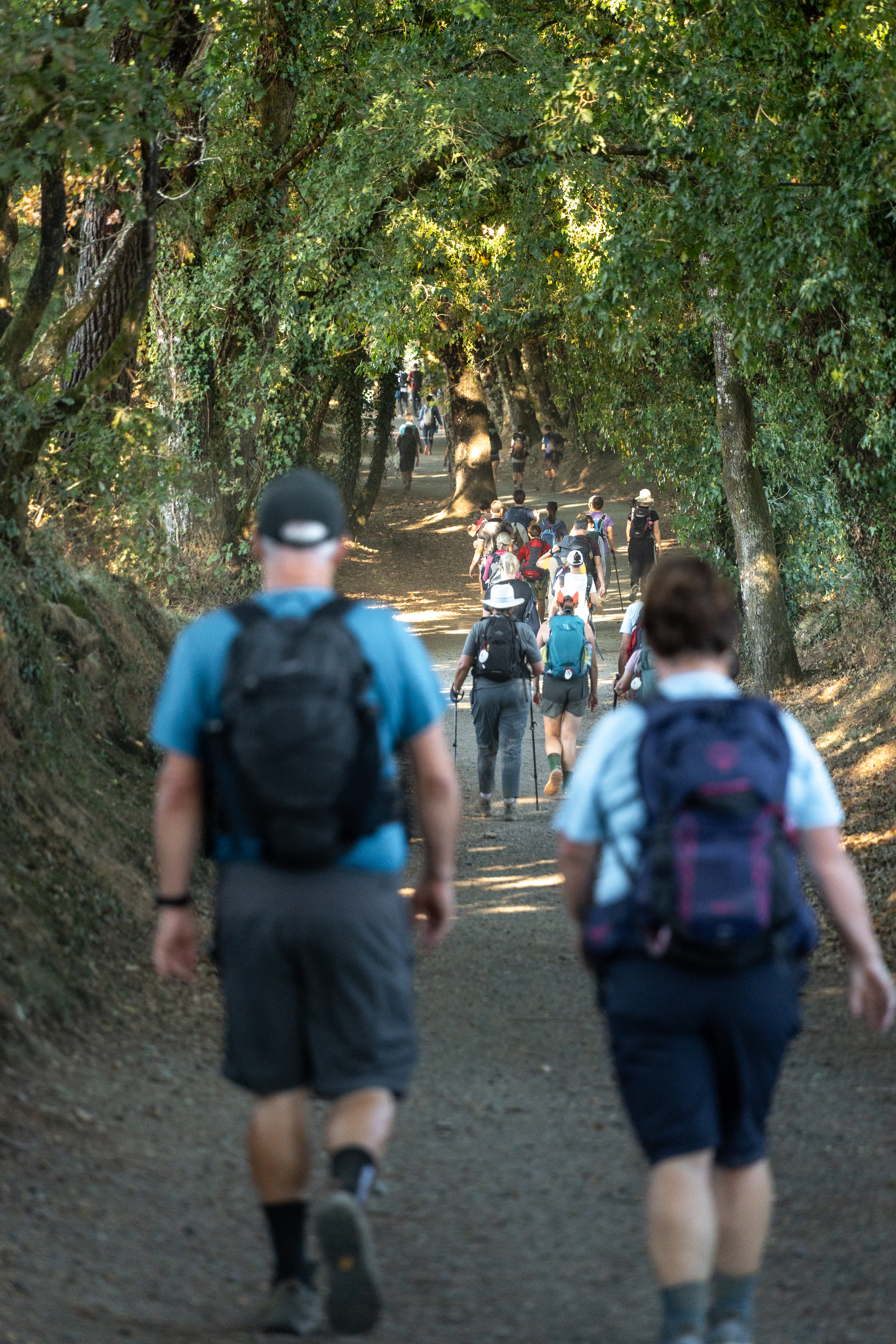
Leaving Sarria, we take a mostly rural route today, walking up and down the hills of Galicia, and through a picturesque oak grove, to the town of Portomarin. Our destination, which was originally located in the River Mino valley, was rebuilt on a hilltop to escape flooding when a reservoir was constructed in 1962. As we cross the modern bridge to enter Portomarin, we may be able to see an older bridge beneath it, depending on where the water level sits.
Meals: Breakfast
Day 3
To the village of Ventas de Naron; continue to Palas de Rei
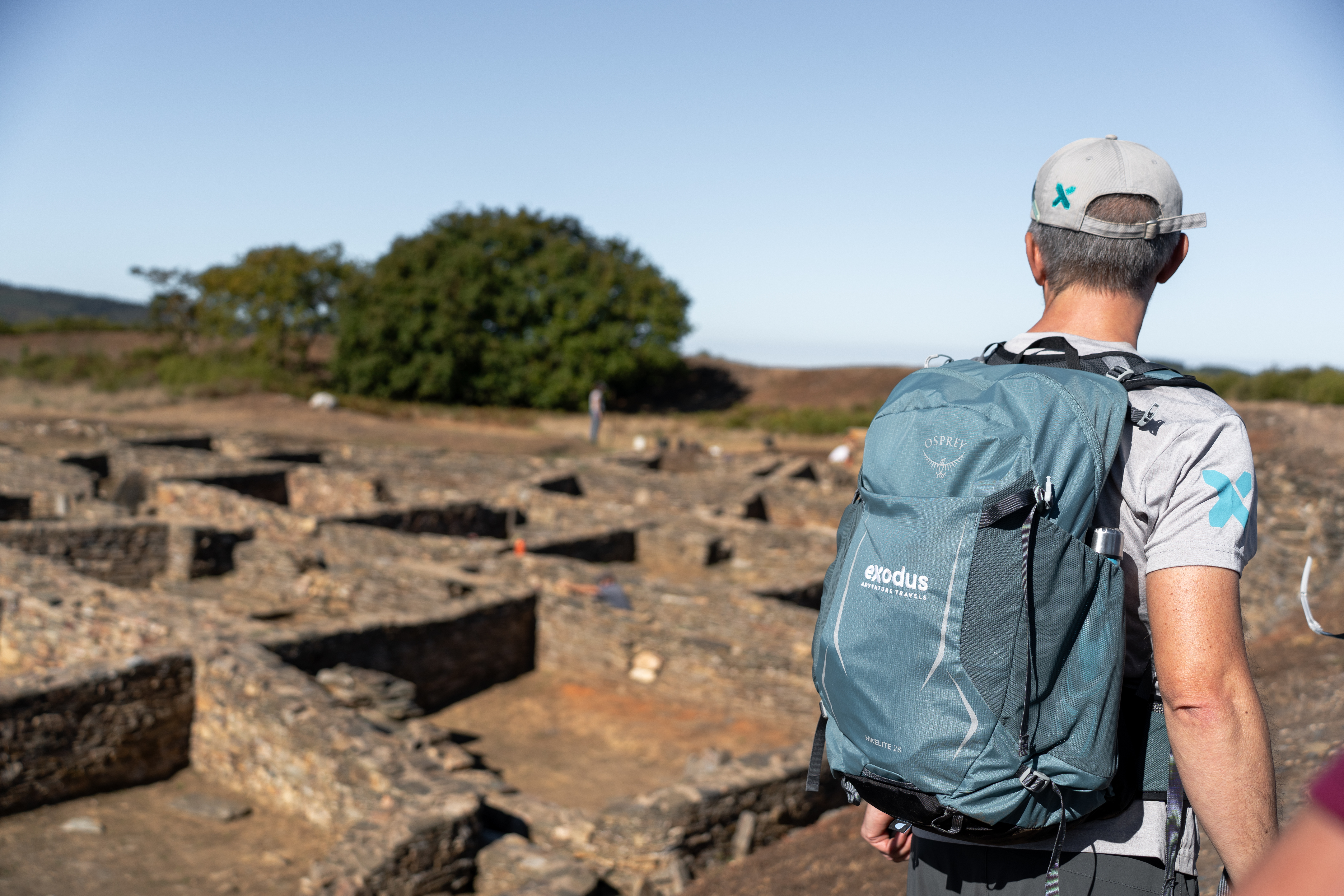
Start with a steady ascent to the village of Ventas de Naron, where the terrain levels out. Before the top of the climb though, we can visit the ruins of an Iron Age fort at Castromaior, one of the best preserved in the northwest of the Iberian Peninsula.
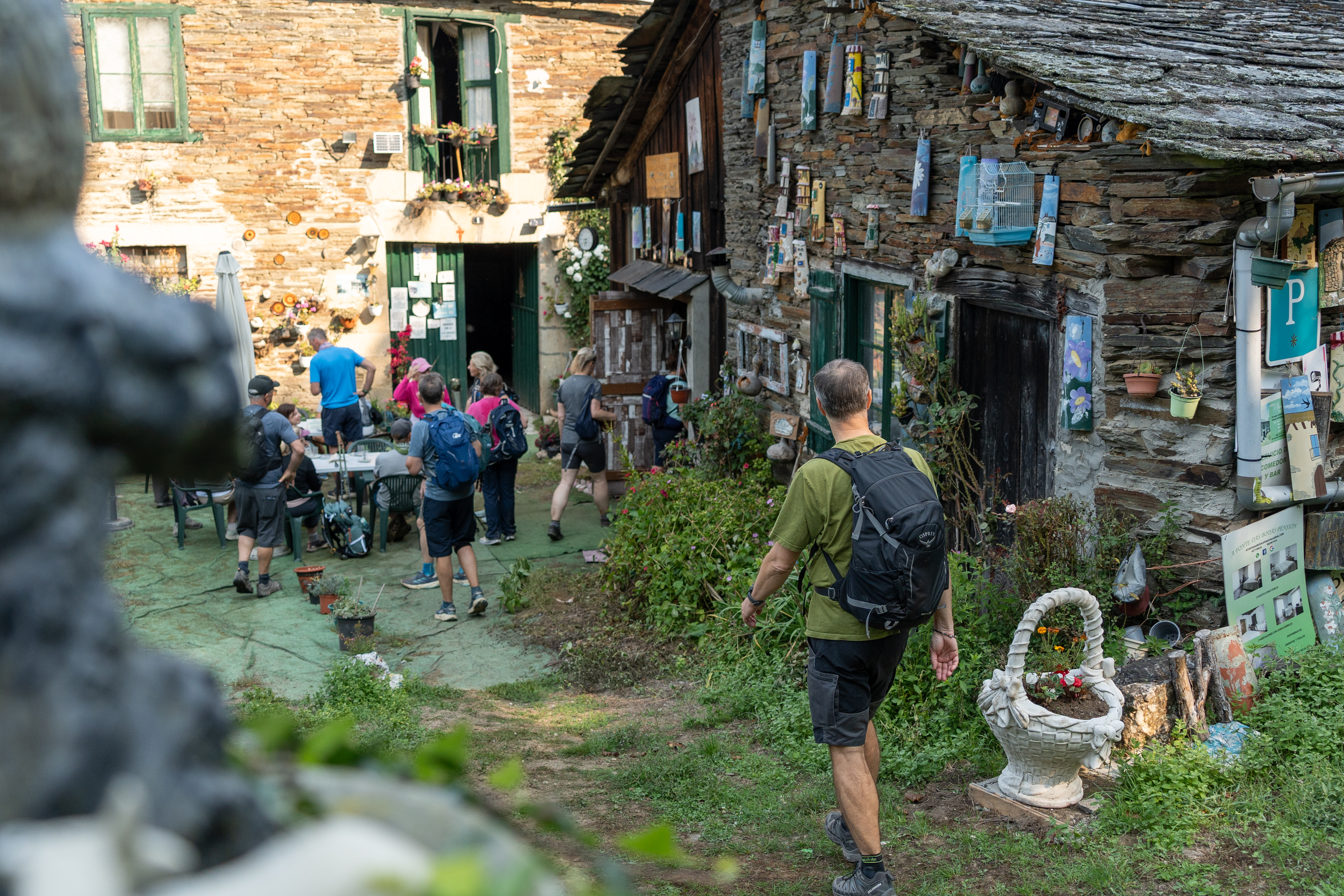
It’s then on to Palas de Rei, though there are plenty of cafes en route where we can enjoy a break. Palas de Rei marks the halfway point of our trek, and we spend the night in a hotel, where we can really feel the Camino spirit, since many walkers stop here.
We also take the chance to visit a small dairy farm of just 35 cows. Here, they specialise in creating cheese and yoghurt through ancestral techniques combined with modern innovations and we each get to make our own cheese and learn about the farm and the owners’ values.
Meals: Breakfast
Day 4
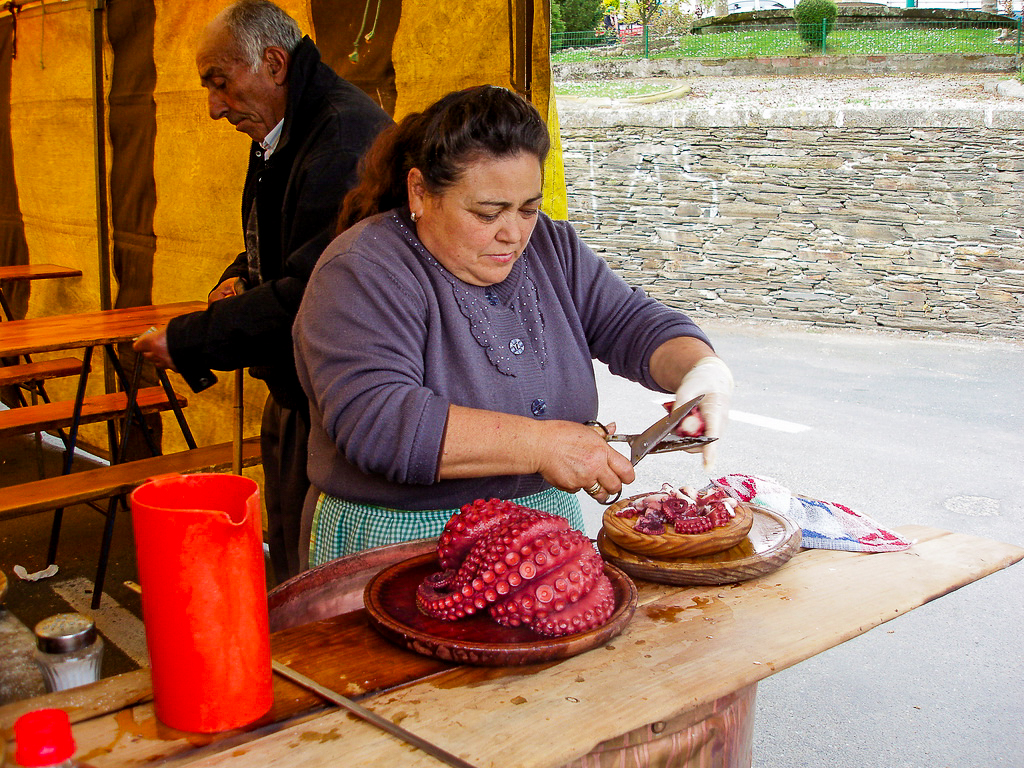
Walk to the town of Melide, renowned for its octopus with potato dish; continue to Arzua
We begin our longest day with a walk along a picturesque stretch, crossing several Roman bridges and walking past medieval churches. As we continue, we cross the Lugo-A Coruña border and see ancient horreos (granaries), a rectangular construction seen across rural Galicia.
For lunch, we stop in the small town of Melide, renowned for its delicious octopus with potatoes. You may notice an increase in pilgrims, as two other strands of El Camino meet here: the Northern and Primitivo.
After lunch, we continue to Arzua, well-known for its cheeses. Along the way, we pass through picturesque landscapes and the riverside village of Ribadiso. The 12th-century bridge here is the oldest in the region.
Meals: Breakfast
Day 5
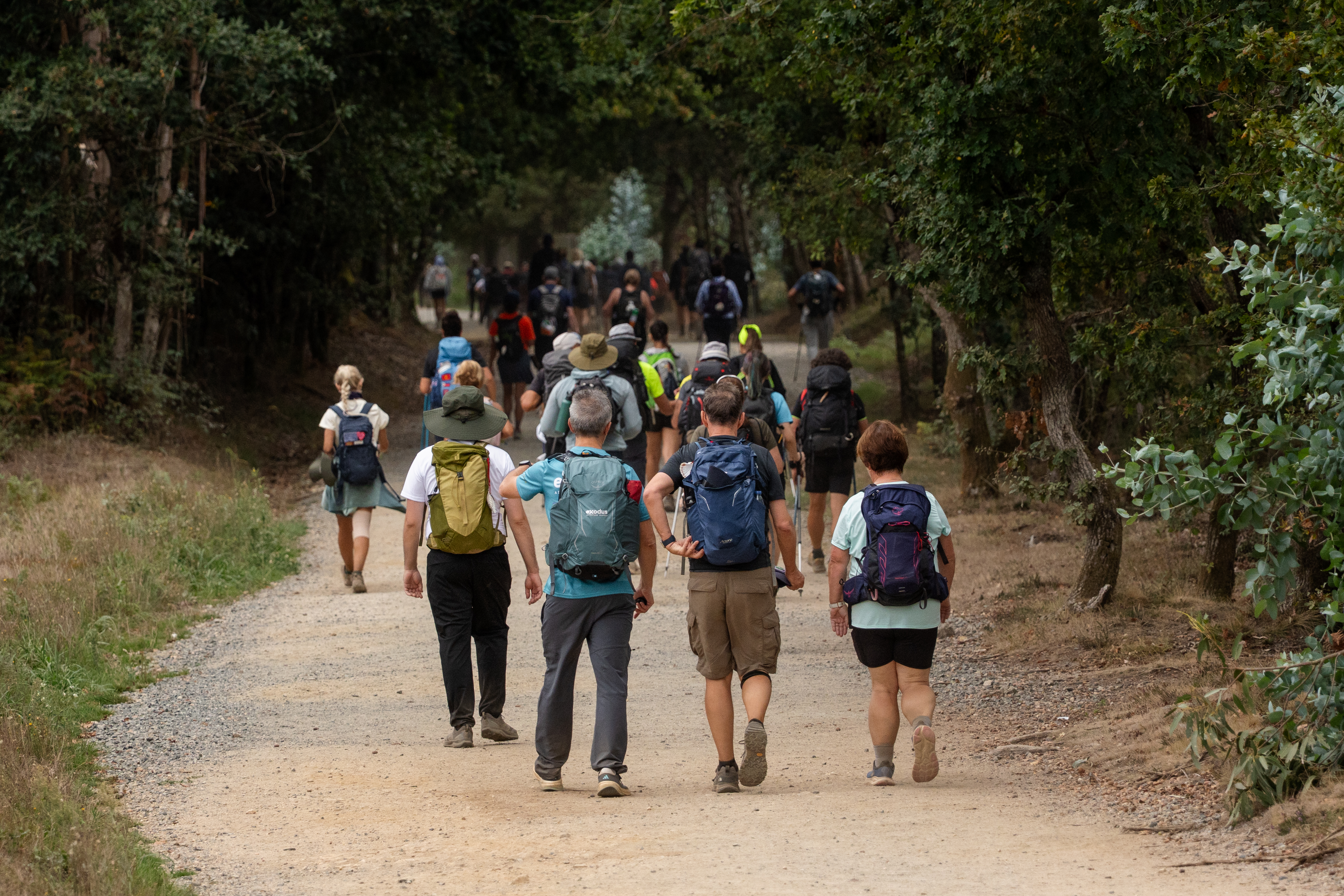
Meet many more pilgrims on the final section to Pedrouzo
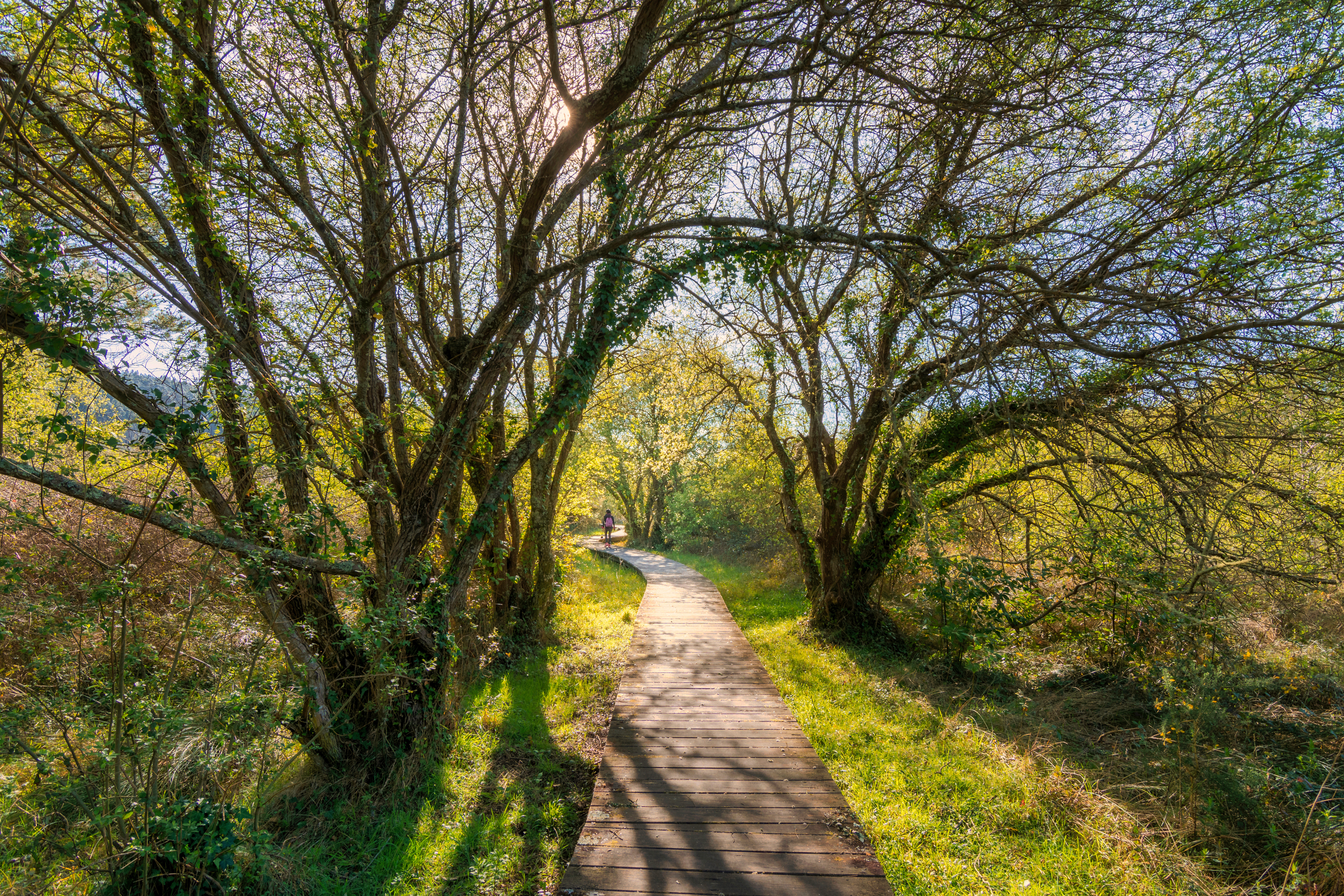
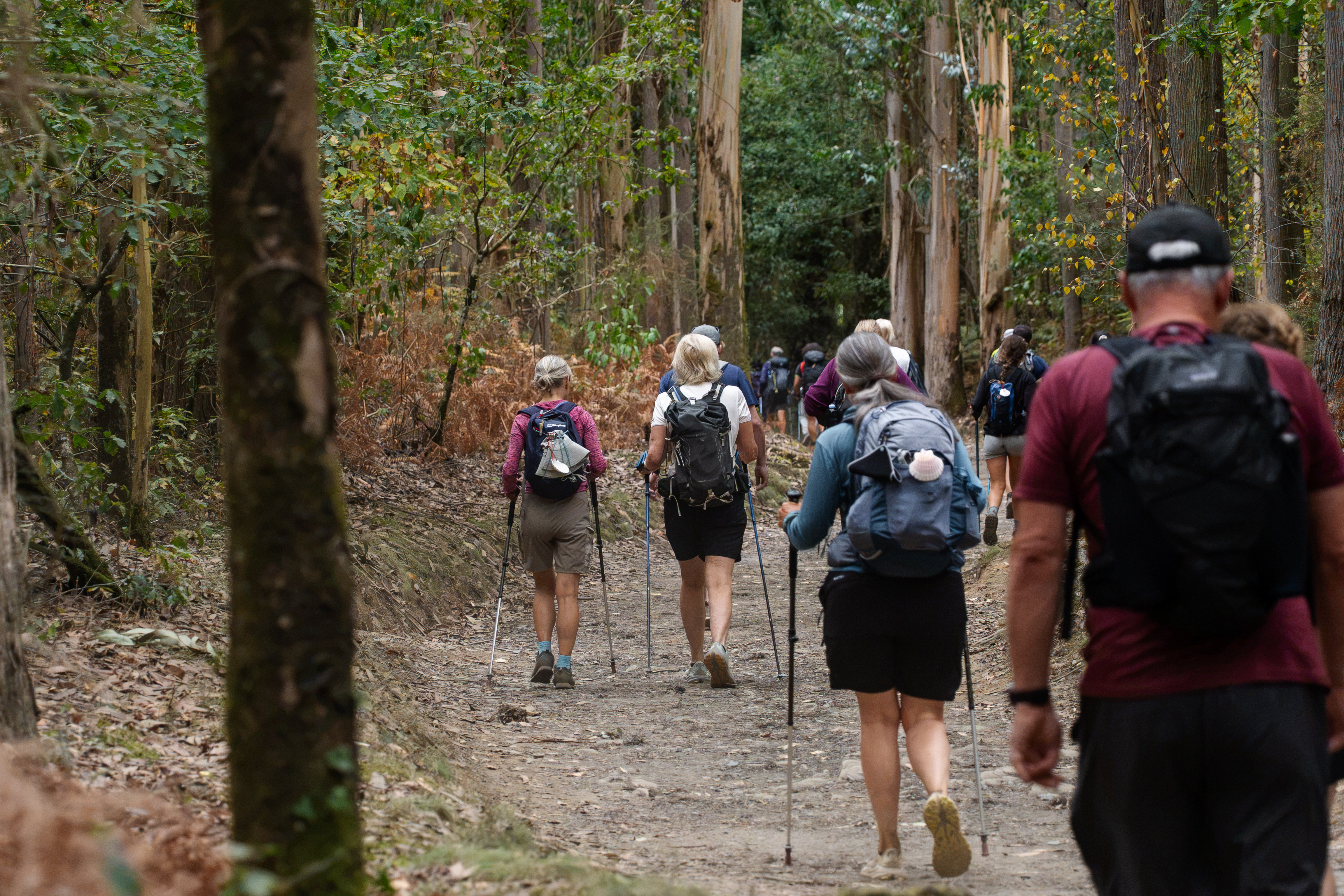
Today’s relatively short walk to the village of Pedrouzo – considered among the most picturesque on our journey – involves several short ascents and descents through woods, fruit fields and eucalyptus. As Santiago draws ever closer, more pilgrims cross our path, adding to the anticipation of reaching our goal: the Cathedral of Santiago de Compostela.
Meals: Breakfast
Day 6
Walk to Santiago de Compostela
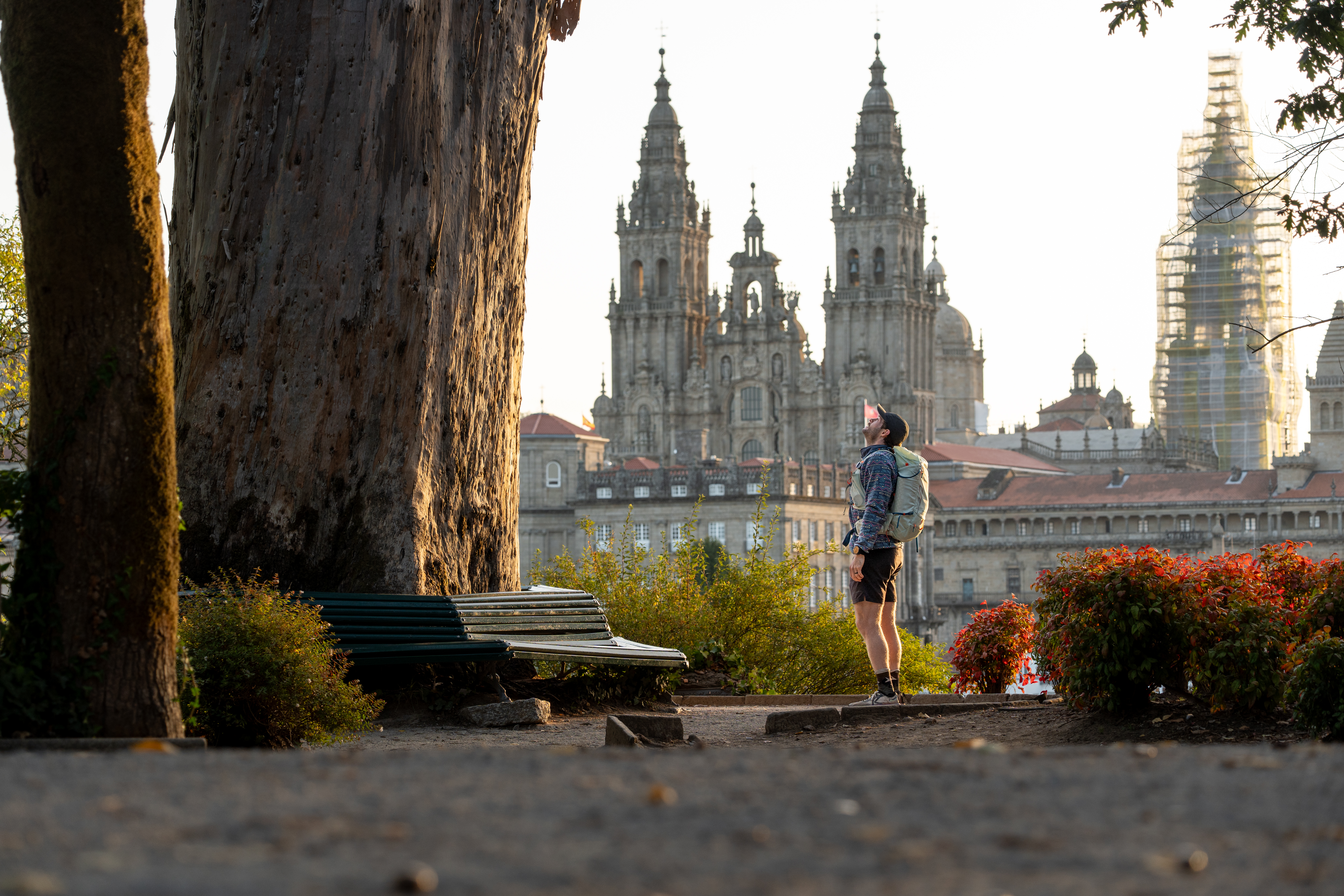
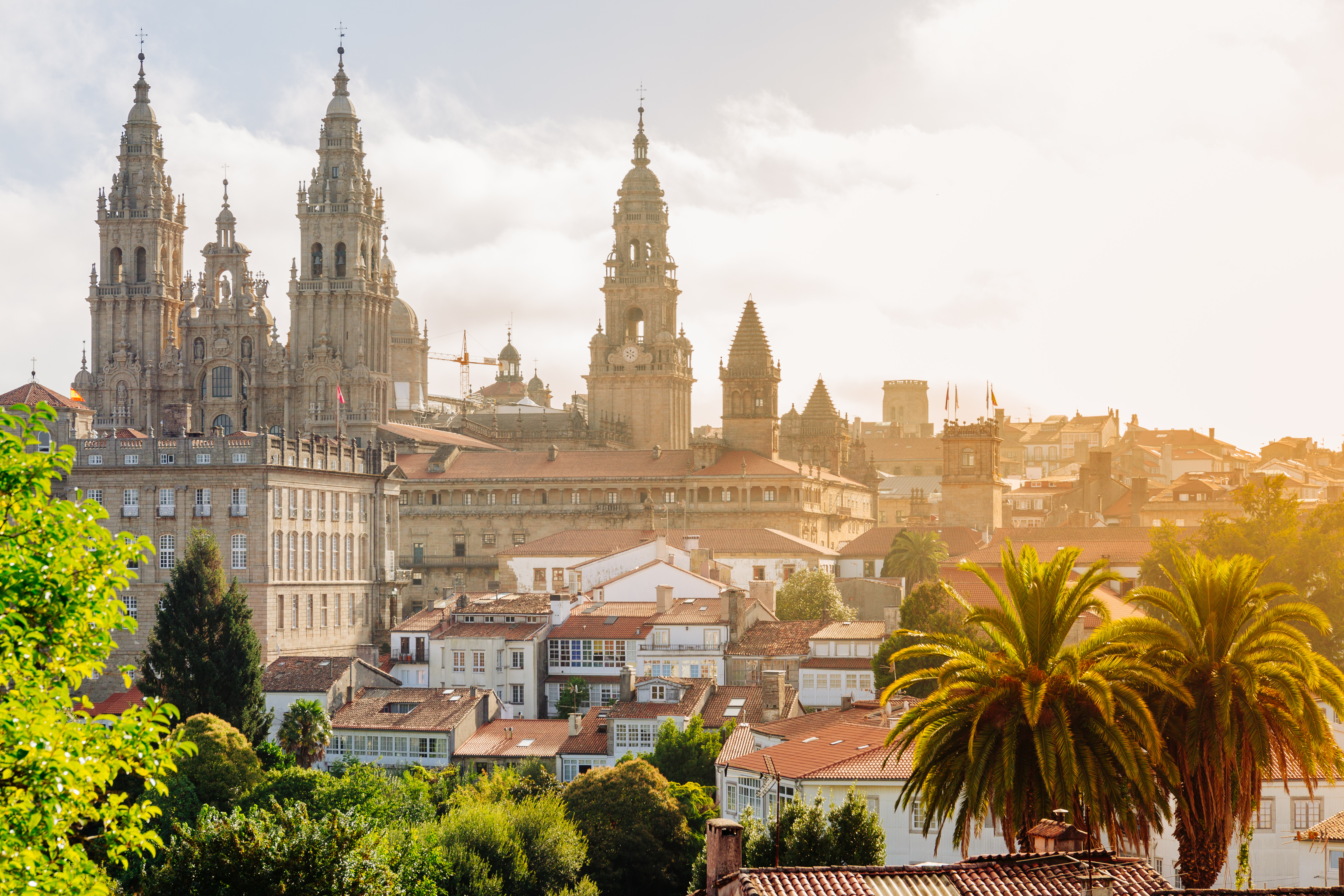
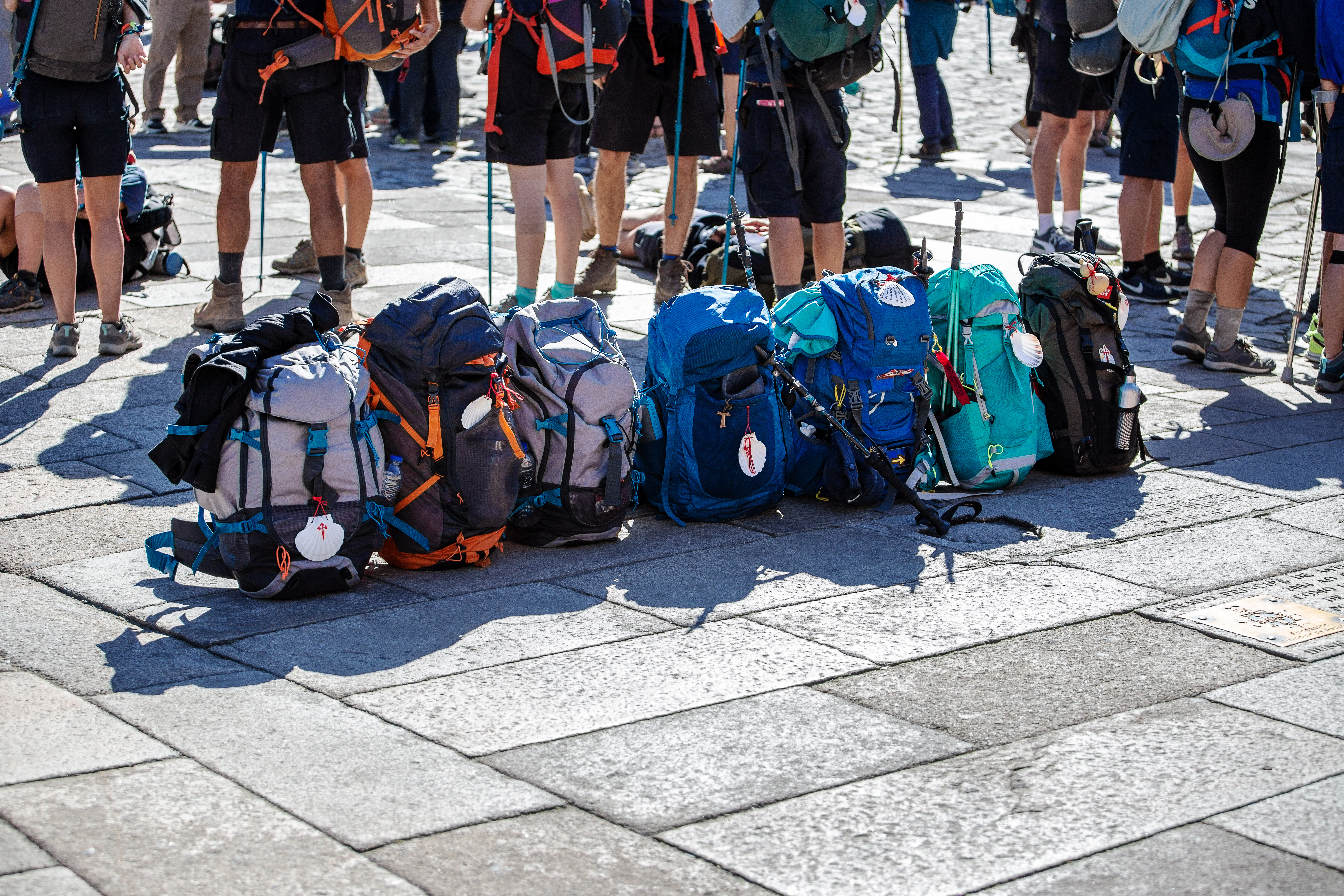
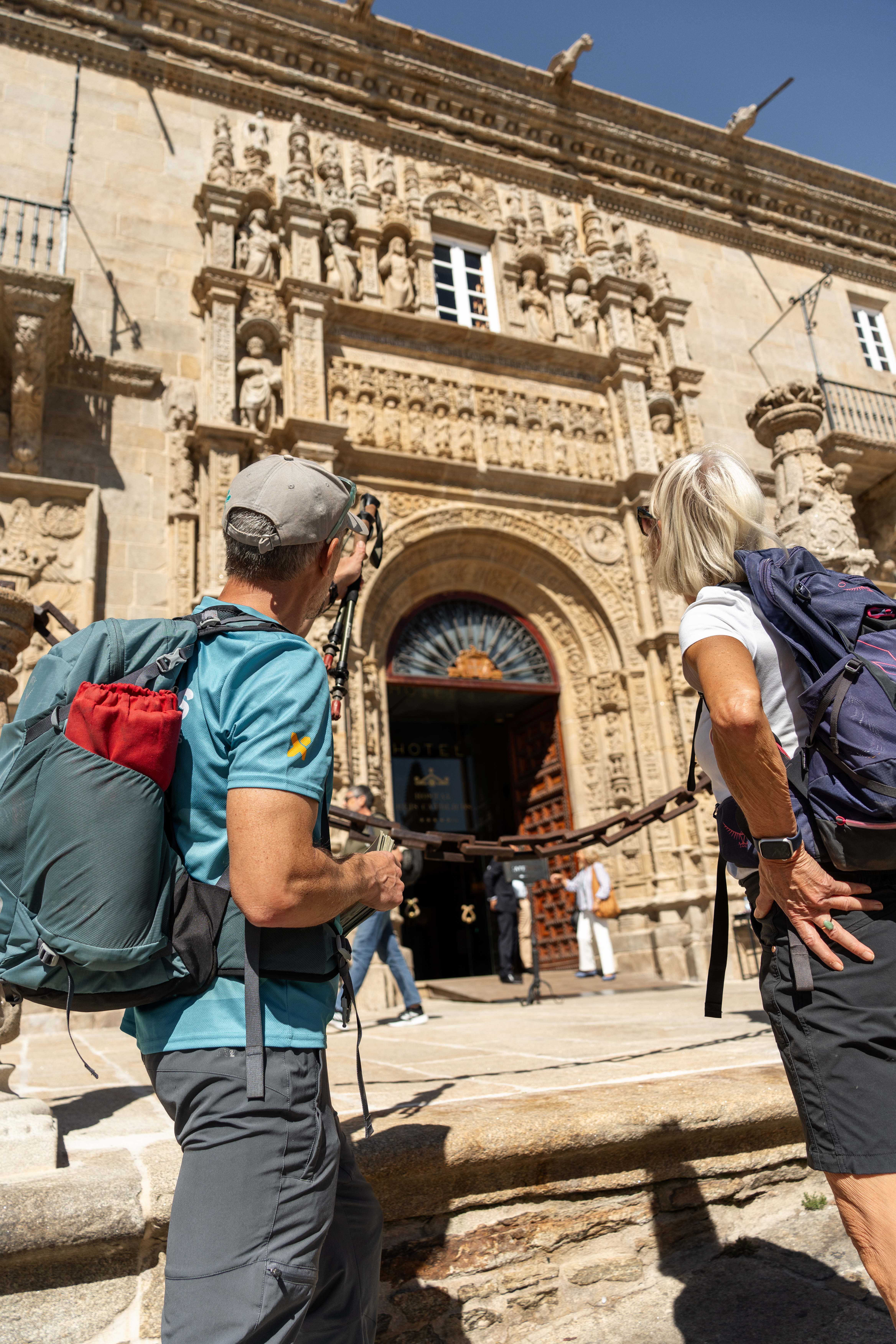
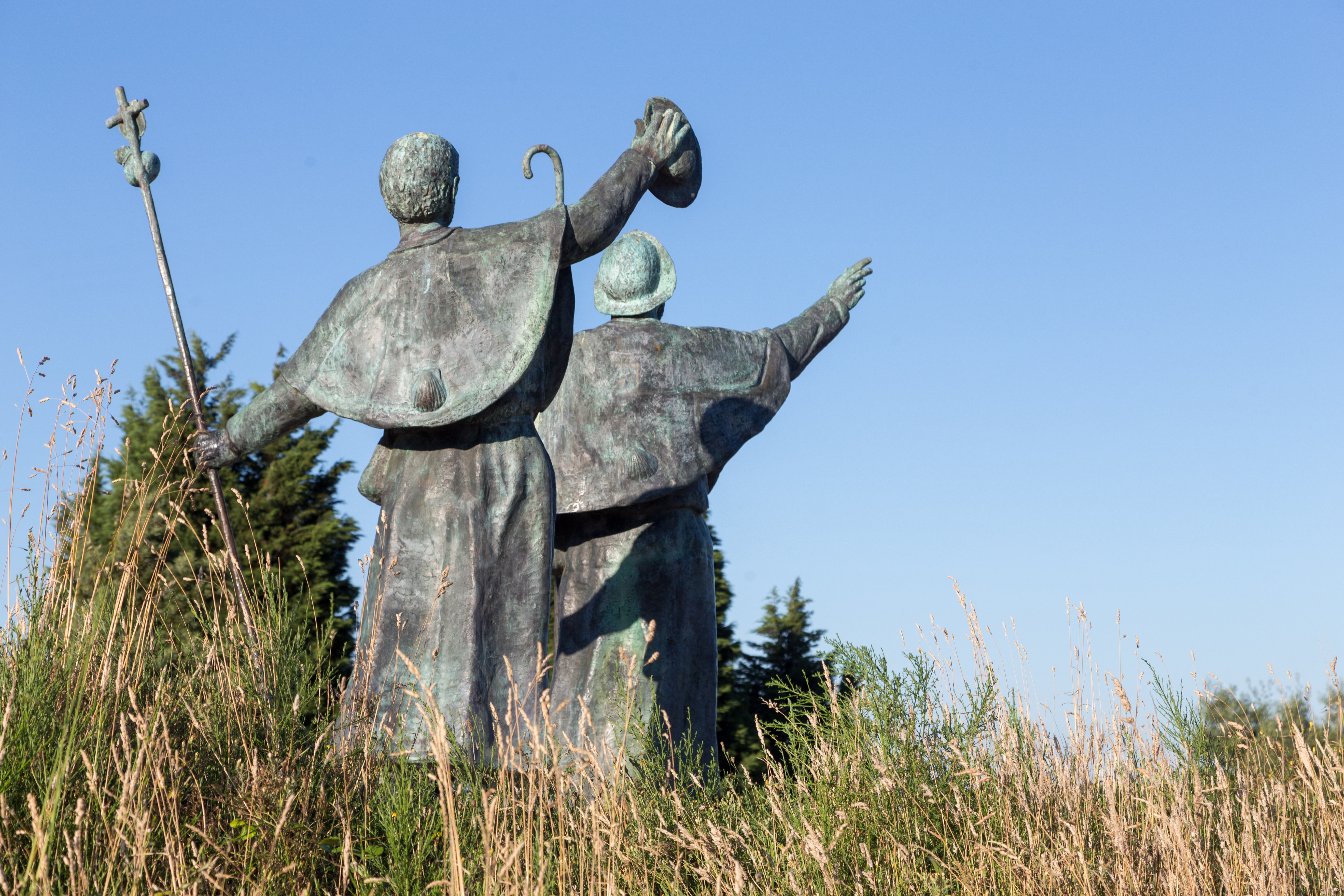
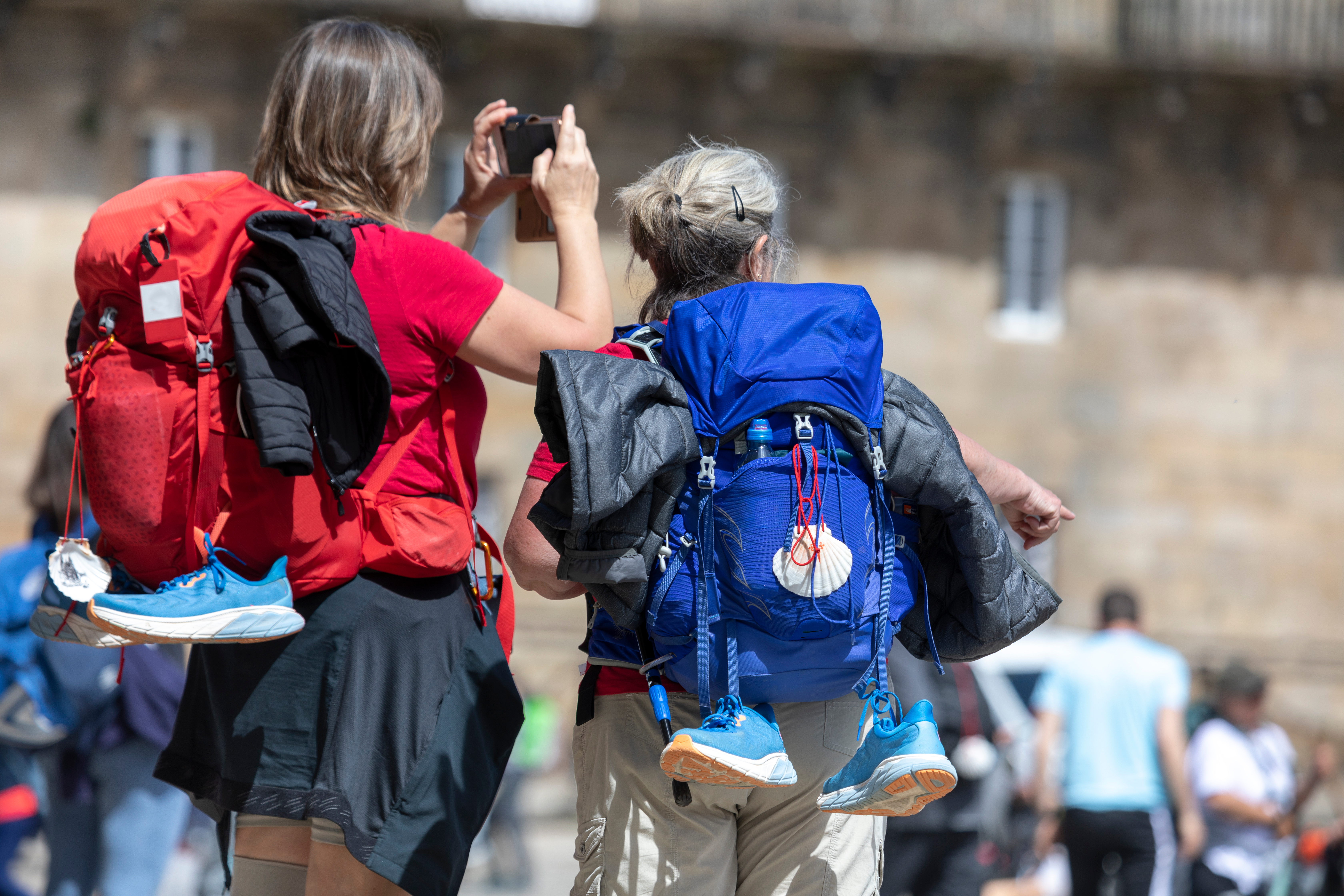
Our final day’s walk sees us climbing up to Monte do Gozo, where pilgrims traditionally first saw the towers of the Cathedral of Santiago de Compostela. As part of the centuries-old tradition, we make our way through the city streets and crowds to Plaza del Obradoiro. The square is dominated by the cathedral, making a spectacular culmination to our trek – take a moment or two to congratulate each other on completing El Camino! We can observe a mass service that may include the impressive Botafumeiro incense swinging, although it cannot be guaranteed.
To save time, our tour leader can gather the Pilgrim Passports and collect everyone’s Compostela certificates – allowing the group to avoid the often-lengthy lines at the office and spend more time reflecting on the journey together.
Typically, our groups gather tonight for a celebratory dinner, when we relive our adventures and bid farewell to our tour leader.
Meals: Breakfast
Day 7
Free day in Santiago de Compostela
Rather than dashing straight home after our pilgrimage, we have a free day to explore the historic city. There are plenty of things to do: visit the spectacular cathedral and stroll around the narrow streets of the World Heritage-listed Old Town with its diverse architecture.
Alternatively, visit the museum of Galician Life, home to interesting exhibits on Galician traditions and art. You can also join a day excursion to Cape Finisterre, which was believed to be the end of the known world in Ancient Roman times. The Cape is also the final destination for many pilgrims on El Camino.
Meals: Breakfast
Day 8
End Santiago de Compostela
The trip ends this morning after breakfast. Say your final goodbyes and start your return journey home, one Compostela heavier.
If you’d prefer to explore the town a little longer, speak to us about booking extra nights in the holy town of Santiago de Compostela, there are plenty more pilgrims to meet!
Meals: Breakfast
What’s included
What’s not included
Additional information
Food
All breakfasts are included. A typical breakfast in Spain might consist of coffee with milk, toast with ham, olive oil, tomatoes, cheese and butter and jam. Bakery items, fruit and juice are also popular. Expect different variations of breakfast at our chosen hotels and pensions, but they all include at least some of the standard breakfast items popular in Spain.
On El Camino, restaurants and bars offer a set menu called the Menu del Peregrino, which offers a choice of five starters, five mains and dessert, coffee and drink for about €15-€18. You can also try the delicacy pulpo a la feira, which is sliced octopus with paprika, olive oil and sea salt. Sometimes it is also served with grelos (boiled sliced potatoes).
Mealtimes in Spain are later than in many other countries; dinner is usually taken between 8pm and 9.30pm.
Vegetarians can be catered for, as can other dietary requirements, although there may not be the same choice or variety as you have at home. Please advise us upon booking.
Sarria–Portomarín Walk & Miño River Crossing
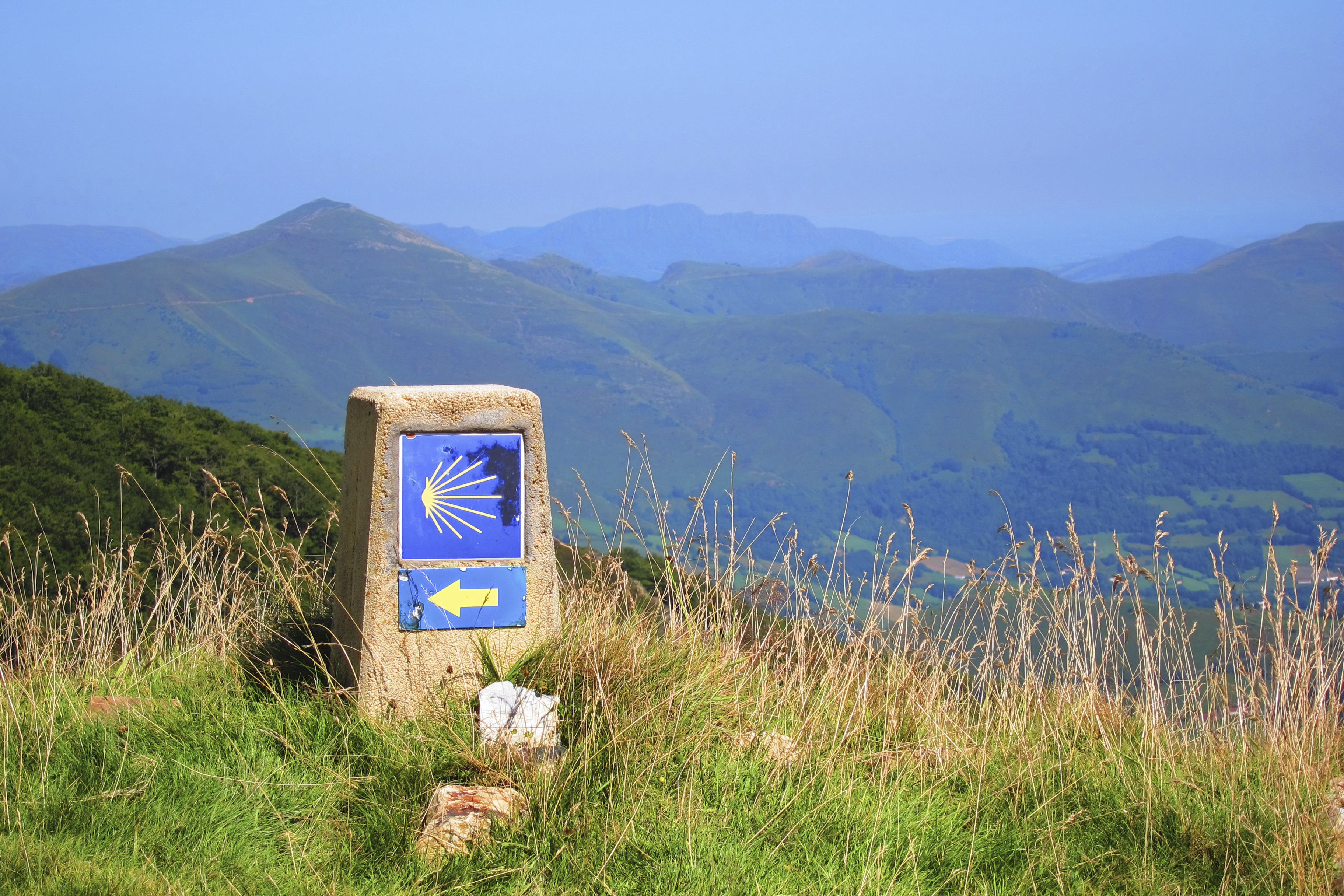
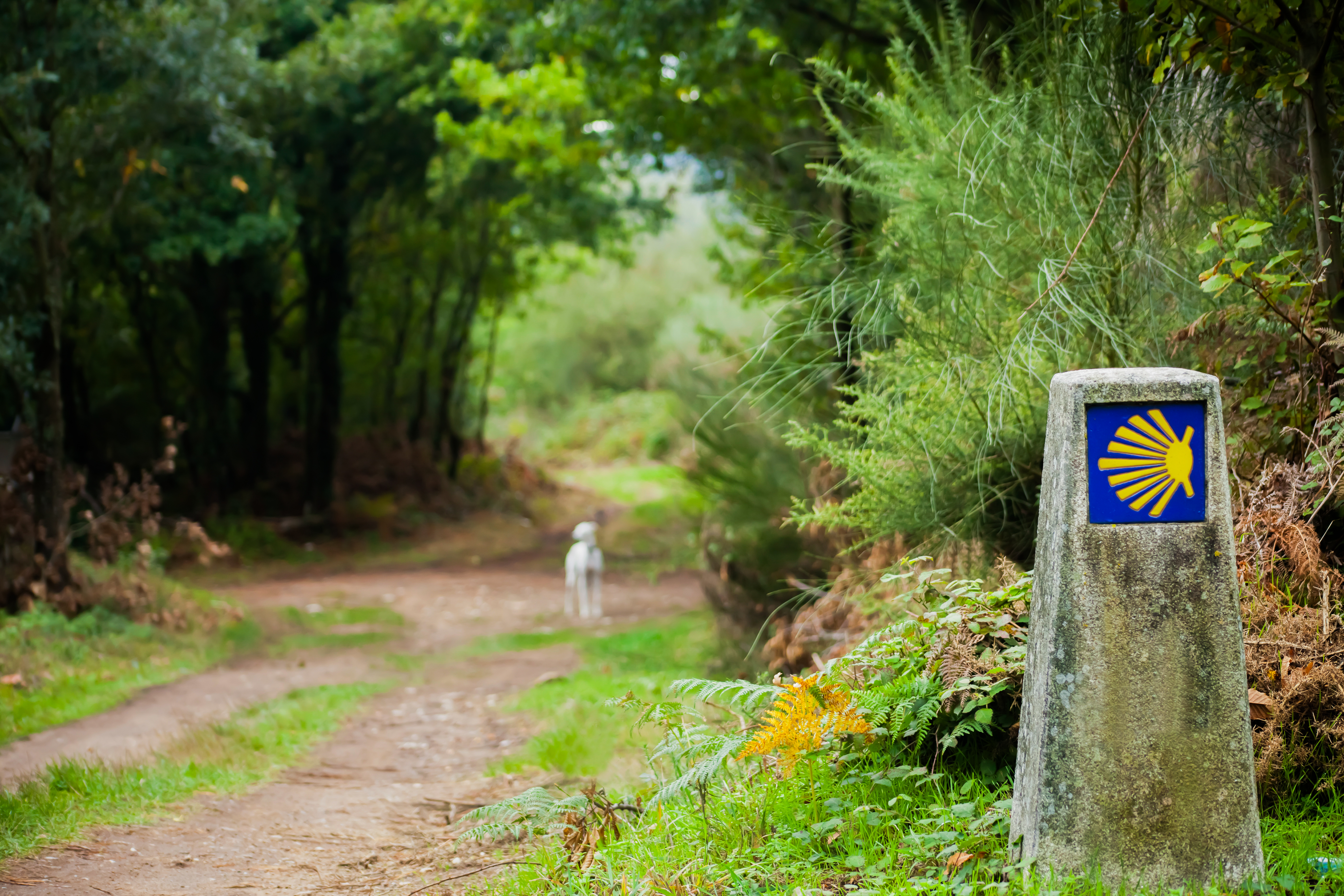
Join a guided walk through rolling Galician farmland and oak groves, following scallop shells toward the Miño valley. Cross the River Miño on the modern bridge—on low-water days you may glimpse the older span below—before ascending to town.
End in the hilltop town of Portomarín, relocated in the 1960s when the Belesar reservoir was created. Romanesque stones, including those of San Nicolás church, were moved block by block—an enduring testament to local devotion.
Castromaior Iron Age Hillfort near Ventas de Narón
Visit the ruins at Castromaior, an Iron Age hillfort set above the Camino, where circular house foundations and stone ramparts trace a fortified settlement on a scenic ridge.
Step into pre-Roman Galicia as you examine the masonry and imagine everyday life long before pilgrims passed this way. The castro culture adds archaeological depth and a quiet, contemplative pause to your day’s walk.
Artisanal Cheesemaking at a Galician Dairy Farm
Pause at a small family-run dairy to meet the makers and see how Galicia’s lush pastures become delicate soft cheeses. Under gentle guidance, make your own cheese during a hands-on workshop that connects technique with taste.
Hear how ancestral practices pair with modern standards to protect quality and animal welfare. Learn about the region’s celebrated styles, including the creamy Arzúa-Ulloa, and the values that keep rural foodways thriving.
Roman Bridges, Medieval Churches & Ribadiso Riverside Walk
Trace age-old lanes to cross Roman bridges and pass medieval churches, as the Camino threads through hamlets and farmland. Spot ancient hórreos—stone granaries on pillars—still guarding the harvest against damp and pests.
Pause in Ribadiso to admire the 12th-century bridge at Ribadiso and its clear stream, a cherished milestone for generations of walkers. The route blends simple rural beauty with layers of history at every bend.
Melide Pulpo Tradition Lunch Stop
Enter Melide, a bustling market town famed for its traditional pulperías, where octopus is simmered in copper pots and served with oil, sea salt and paprika. Choose to taste pulpo a la feira and savour Galicia’s emblematic dish.
Here the meeting point of Camino routes—Frances, Primitivo and del Norte—adds lively energy to the streets and paprika-scented plates. Food is at your own expense, while the stop itself is part of the day’s cultural journey.
Monte do Gozo Viewpoint: First Glimpse of Santiago
Reach Monte do Gozo, the Mount of Joy, and feel anticipation crest as you take in your first glimpse of the cathedral towers rising above Santiago’s rooftops.
Share the ridge with fellow pilgrims and pause for photos and reflection. The sweeping views and sense of arrival make this hillside a beloved prelude to the shrine at journey’s end.
Santiago de Compostela Arrival Walk & Cathedral Plaza
Walk into Santiago de Compostela on pilgrim-worn streets and emerge into the vast Plaza del Obradoiro, framed by the granite baroque of Santiago Cathedral. Celebrate amongst flags, backpacks and wide smiles.
When available, attend the Pilgrim’s Mass, where centuries of devotion echo beneath the soaring vaults. On select days, the Botafumeiro censer swings in dramatic arcs—a moving finale to the road you have walked.
Pilgrim Passport Stamps & Compostela Certificate Assistance
Collect stamps in your Pilgrim Passport at chapels, cafés and albergues, watching the pages fill with inky mementos of places and people met along the trail.
At journey’s end, your leader coordinates documentation so you receive your Compostela certificate and avoid the lengthy lines at the pilgrim office. This meaningful keepsake acknowledges both the distance covered and the spirit with which you walked.
Cape Finisterre & Costa da Morte Day Excursion
Journey to Cape Finisterre along the rugged Costa da Morte, where the Atlantic pounds granite headlands and fishing villages shelter in wind-carved coves. Stand by the lighthouse as waves thunder at the land’s far edge.
Known to the Romans as the end of the known world, Finisterre is a powerful coda to the Camino story—an elemental meeting of sea and sky. This experience is at additional cost and bookable on tour.
Meet Your Tour Leader & Camino Briefing in Sarria
Gather in Sarria to meet your tour leader and fellow pilgrims for a clear, practical orientation to the Camino: route highlights, terrain, trail etiquette and daily tips. Receive your Pilgrim Passport and learn where to collect stamps at chapels, cafés and albergues along the way.
Sarria anchors the Camino Francés at the final 114km, where walkers from around the world converge. Set intentions, share stories and feel the shared Camino spirit that has welcomed travelers for centuries.