Your itinerary

Day 1
Adventure starts in Delhi
Our adventure begins in Delhi, a colourful and chaotic city full of architectural masterpieces.Around 6pm, say namaste to your tour leader and fellow travellers, when we gather as a group for the first time to get to know each other and learn more about the adventures ahead.Your tour leader then ensures a big welcome by arranging a group dinner at a nearby restaurant.Want more time in Delhi? Secure pre-tour hotel nights through your sales representative.
Meals: Dinner
Day 2
Fly to Bagdogra; drive to Gangtok
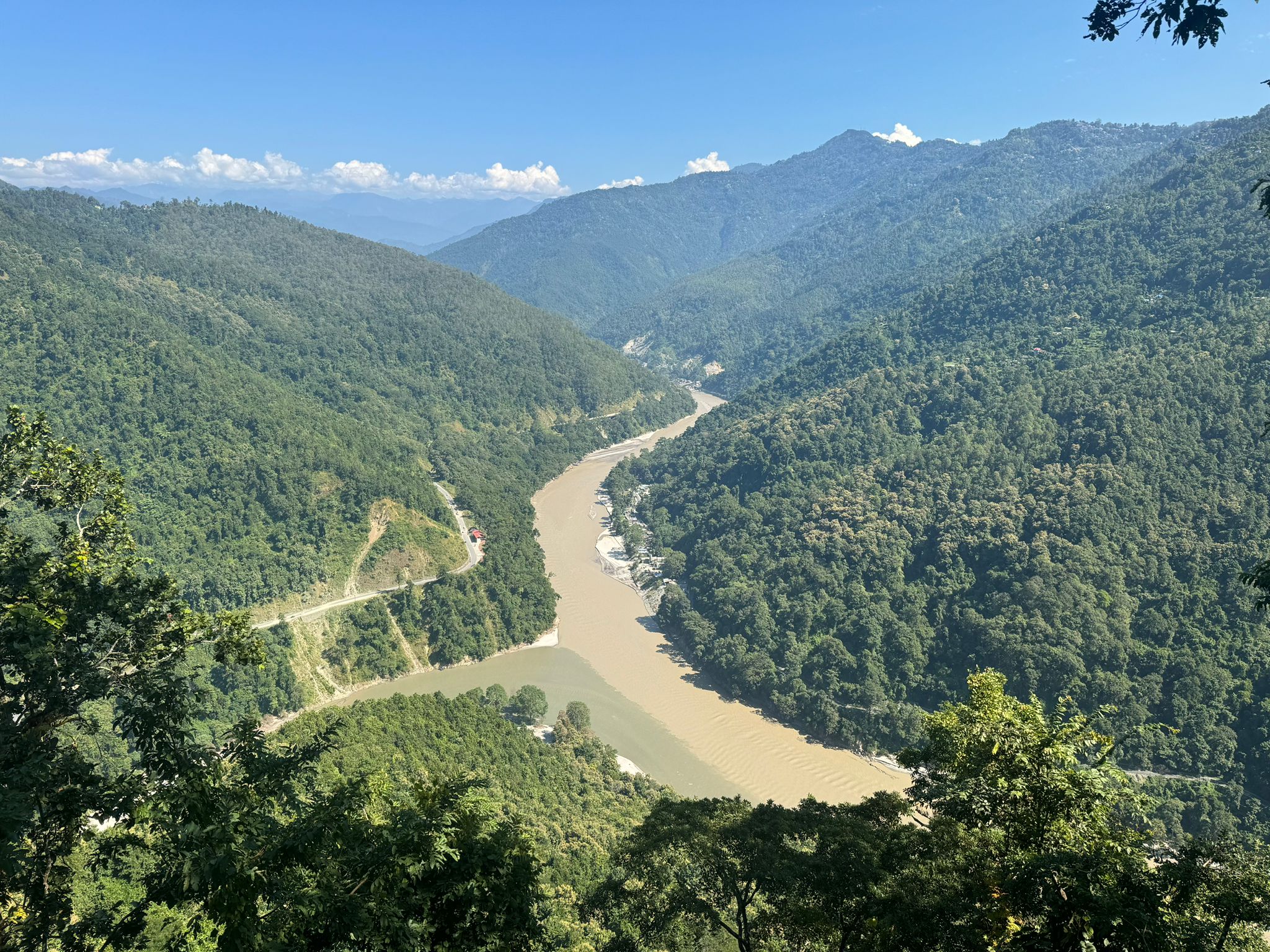
We transfer to the domestic airport terminal and fly to Bagdogra. On arrival, we join our vehicles and drive to Gangtok. The road soon leaves the plains and at Sevoke we cross the Teesta River and climb into the Doar Hills. At Rangpo, we take a break as we enter Sikkim. Border formalities take time – you need your passport and one photograph. Climbing further, we reach Gangtok, the capital of Sikkim, set at an elevation of 5,510ft (1,680m). The drive usually takes about five hours (78mi/125km) but has been known to take up to 10 hours in instances where landslides have occurred from heavy rain along the route. Your leader will advise if your journey is likely to be affected.
Meals: Breakfast,Dinner
Day 3
Drive to Martam village visiting Rumtek Monastery en route
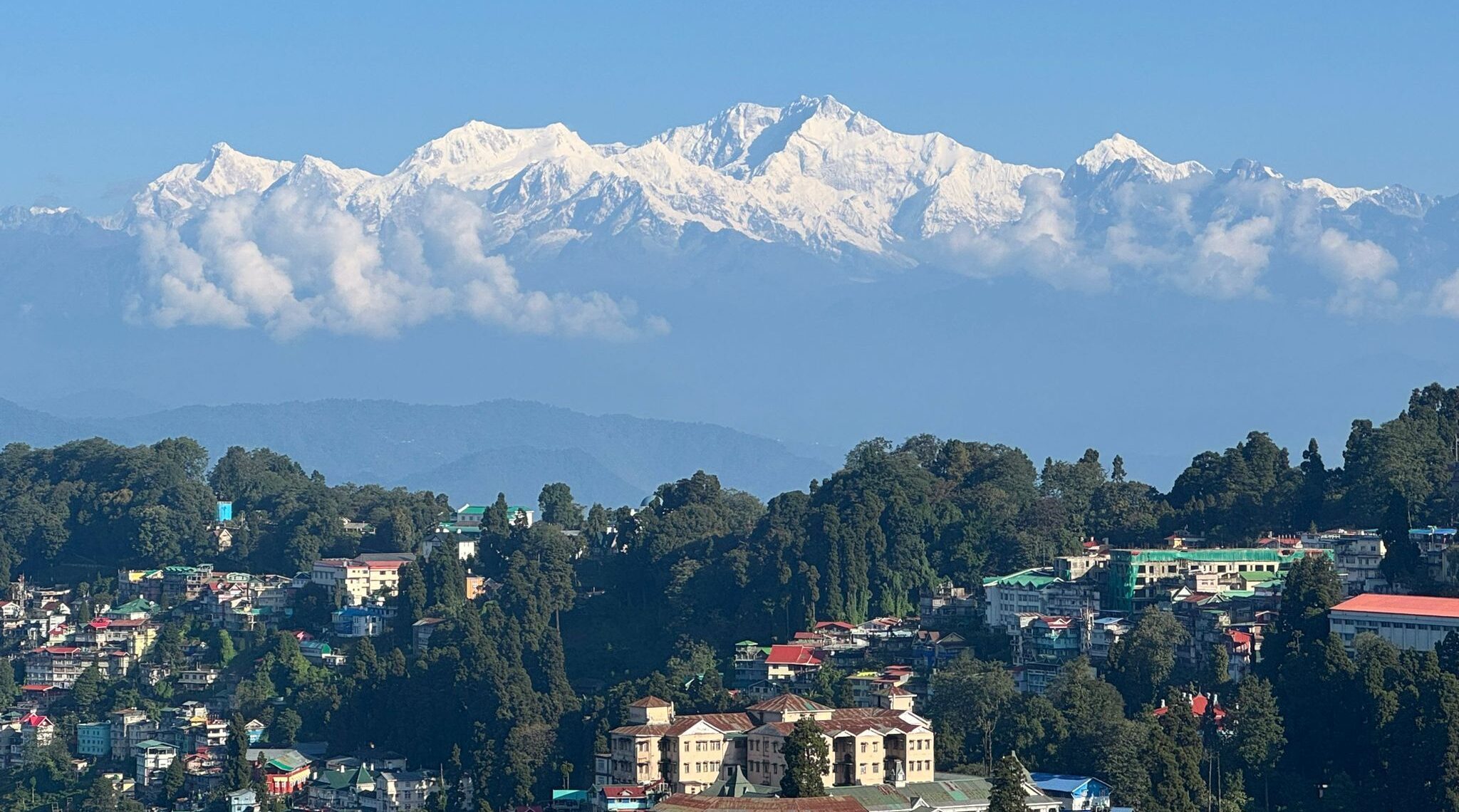
Gangtok is set among the hills and, on a clear day, we can see Kanchenjunga from the hotel. We have the morning for exploration. The Mall Road is the centre of Gangtok and the nearby indoor vegetable market makes for an interesting wander. Either explore Gangtok solo or your leader can take you to see some of the sights. About an hour’s walk from the hotel there is the small Enchey monastery. Overlooking the town, it was founded in 1840 by Lama Drubthob Karpo and was rebuilt in 1908 by the 10th chogyal (king) of Sikkim. From the monastery, walk back to town via the Flower Show, a small exhibition of orchids and other local flowers. There is a handicraft centre close by, which is a government enterprise offering community training in traditional handicrafts such as carpet weaving and wood carving.After lunch, we have an hour’s drive to Rumtek monastery. Founded in the mid-1700s by the 12th Karmapa, it fell into ruins. When the 16th Karmapa came from Tibet, he rebuilt the monastery as the main seat in exile of the Karmapa sect. It is the largest monastery in Sikkim and contains a golden stupa with the remains of the 16th Karmapa. A 30-minute drive brings us to Martam, a scenic Himalayan village in a quiet corner of East Sikkim.
Meals: Breakfast,Dinner
Day 4
Sightseeing in Martam
We spend today in the pretty village of Martam, which was known for producing butter and other dairy products (mar means butter and tem means spread). The population is about 10,000, made of Bhutia and Nepali communities. In the morning, we go for a hike around the village. We can visit the interesting Nyingma Institute, which provides education in higher Buddhist studies and philosophy to many monks. There is also another small monastery and a Krishna Mandir in the village. We return to our hotel for lunch and the afternoon is free.
Meals: Breakfast,Lunch,Dinner
Day 5
Drive to Darjeeling and visit the Himalayan Mountaineering Institute
Leaving Sikkim, we drive to Darjeeling. The road winds all the way to the Testa River, where we enter the state of West Bengal. It then weaves back into the hills to Darjeeling. We arrive by lunchtime; this afternoon, we explore one of the most famous hill stations of the British Raj. The region originally belonged to the chogyals of Sikkim, before it was annexed by the Gurkhas. By the early 1800s, it was in the control of the British East India Company who returned it to Sikkim rule. Stumbling across Dorje Ling Monastery, situated on a quiet forested ridge, two British soldiers thought it would make a great location for a sanatorium and with the permission of the Sikkim king, a hill station was born. Today, Darjeeling is a bustling town but the Mall still retains Victorian charm. Our stay includes a visit to the Himalayan Mountaineering Institute, where many famous Sherpa climbers trained in mountaineering skills. There are interesting displays and photographs from some of the early Everest climbs.Today’s drive is 50mi (80km) and will take approximately four hours; however, there may be delays due to landslides caused by heavy rain. Your leader will advise if this is the case.
Meals: Breakfast,Dinner
Day 6
Ride the toy train; drive to Rimbik and trek to Manedara
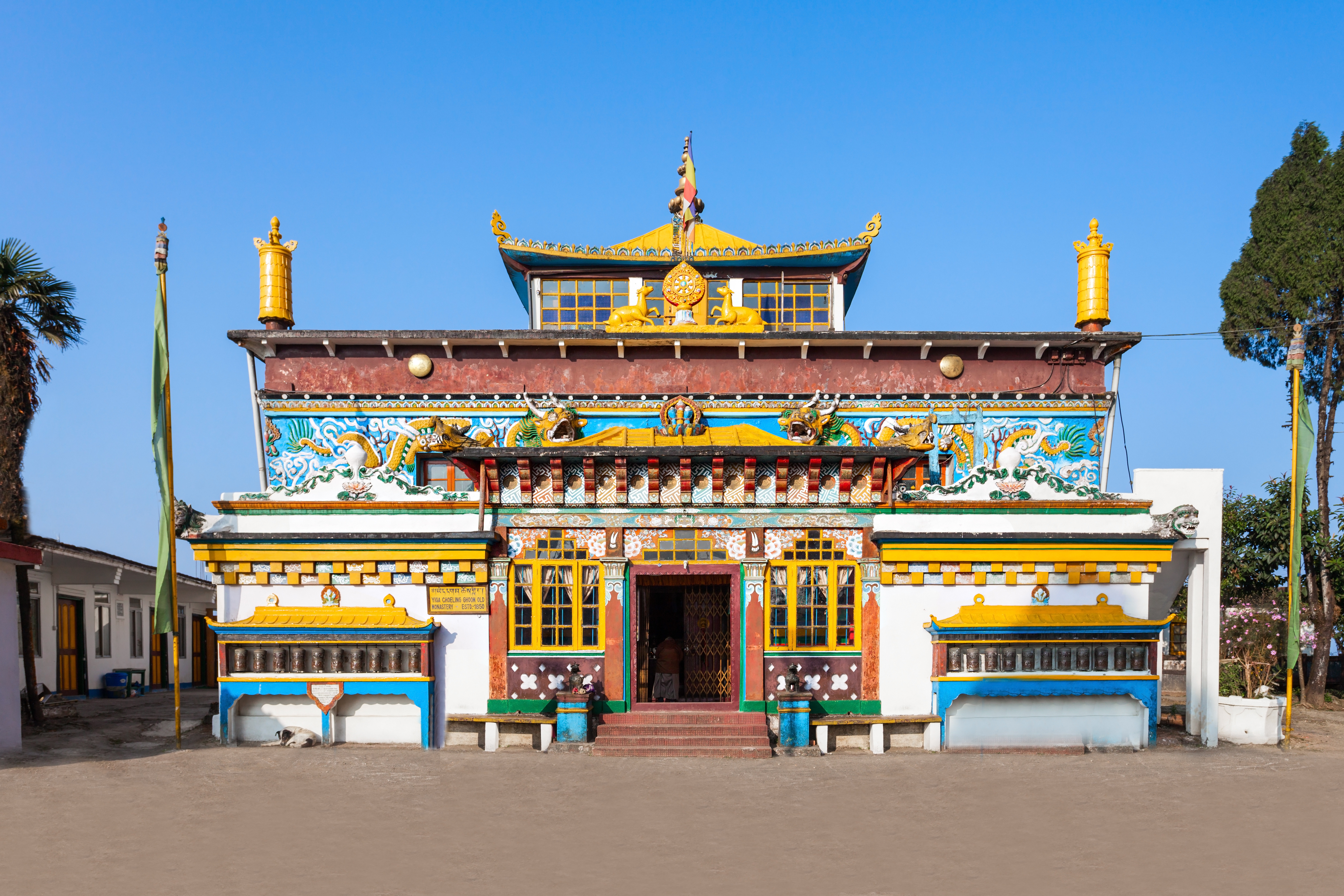
On a clear day, wake early for beautiful sunrise views of Kanchenjunga from the roof of our hotel. After breakfast, we have a 40-minute ride on the toy train to Ghoom (subject to running, see Day 13 for another opportunity if not running today). The train chugs out of Darjeeling, stopping to take on water and to allow passengers to photograph the Batasia Loop. At Ghoom, we meet our cars and drive for around four hours to Rimbik, the trailhead of our trek at 7,500ft (2,286m). We have a 45-minute gentle uphill walk through magnificent rhododendron forests (a blaze of reds in spring) to our camp at Manedara, where we spend our first night under canvas. As we approach the village, we have stunning views of Kabru Dome and Kabru South peaks.Please note: Any baggage not needed during the trek can be left at our hotel in Darjeeling until we return on Day 12.
Meals: Breakfast,Lunch,Dinner
Day 7
Trek through forest and villages to Gurdum
Today we start our trek with an easy trail passing small houses and fields. It is about two hours’ gradual walk through beautiful forest to Shepi village. We then descend to the Gurdum Khola river, which we cross by bridge and after a steep one-hour climb to Gurdum village, we arrive at our camp for the evening.
Meals: Breakfast,Lunch,Dinner
Day 8
Trek through forest ascending through Sandakhphu to Chandu
It’s a fairly tough but rewarding day as we finish our ascent to the Singalila Ridge. The trail climbs steeply in places until we emerge at a forest clearing. From here, it undulates through rhododendron forest to the ridgetop at Sandakhphu (11,929ft/3,636m), the highest point of our trek. On a clear day, the climb is well worth the effort as we are rewarded with a magnificent Himalayan panorama. The views from here are truly amazing – the towering slopes of Kanchenjunga lie ahead and Everest, Lhotse and Makalu come into view in the distance. After lunch at Sandakhphu, it is a gradual walk on a rough jeep track to our camp at Chandu.
Meals: Breakfast,Lunch,Dinner
Day 9
Trekking along the Singalila Ridge to Sabargam taking in Himalaya views
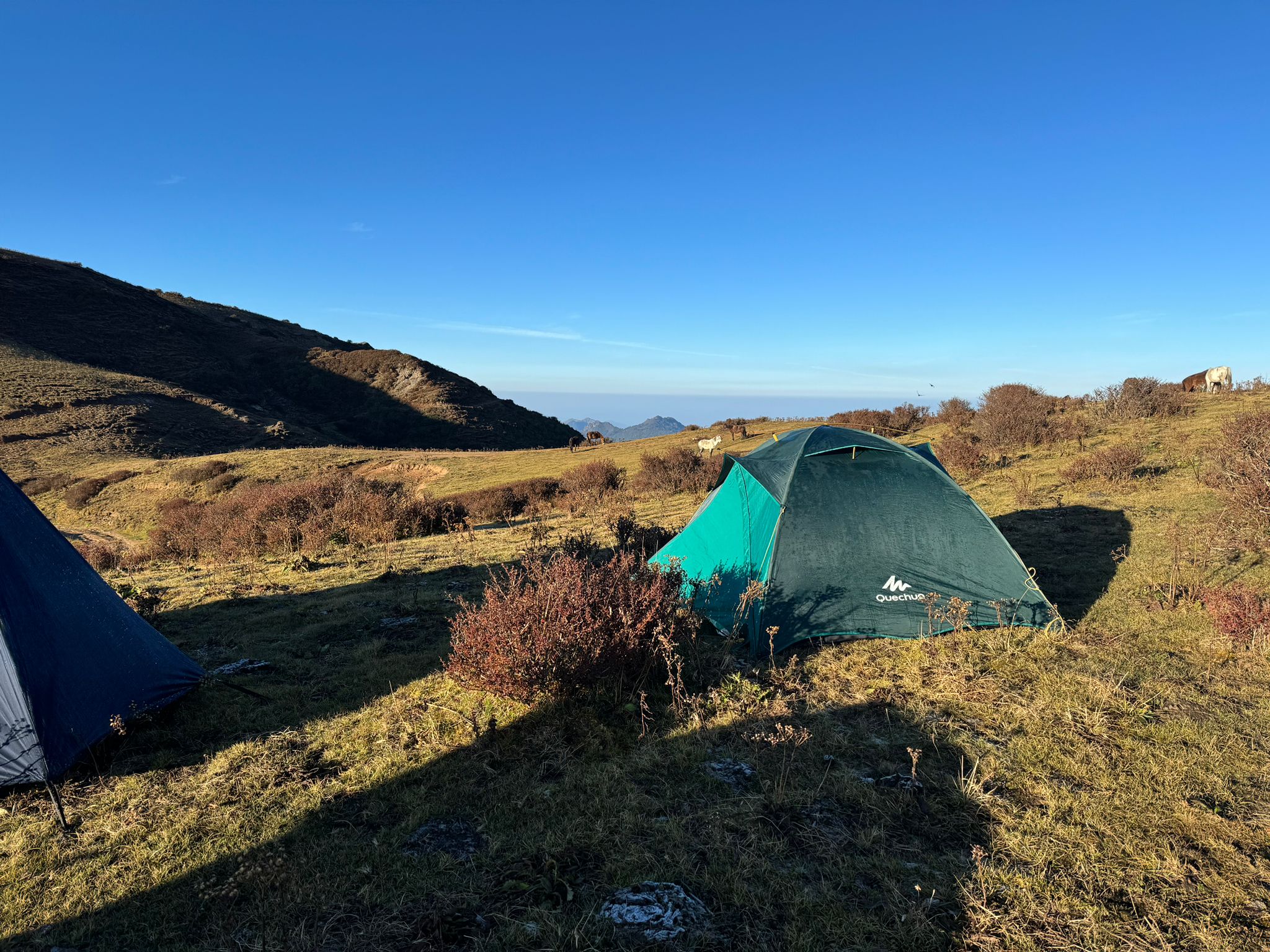
We are now on the Singalila Ridge, the border between Nepal and India, which means at times we are walking in each country. This is a great day for views. The trail undulates, following the ridge through chestnut, oak and silver fir trees with commanding panoramic views of the Himalaya all day. Dwarf rhododendrons and primulas colour the landscape in spring. Tonight, we have a spectacular wild camp at Sabargam. The views from here are sublime and we hope to see a magnificent sunset and sunrise over Kanchenjunga, Everest, Lhotse and Makalu and a whole host of other Himalayan peaks.
Meals: Breakfast,Lunch,Dinner
Day 10
Trek to the end of the Singalila Ridge at Phalut then descend to Samaden
We enjoy a full day of trekking along an undulating trail to the end of the ridge at Phalut, where we descend to Samaden. On a clear day, we get breathtaking views of Kanchenjunga as we continue along the ridge. The Everest range is further away but Kanchenjunga rears up over us. Phalut is at 11,810ft (3,600m) and just behind the lodge there is a viewpoint where we are surrounded by Himalayan giants. The trail down to Samaden is glorious and takes us through forests of oak, conifers, pine and rhododendrons, an explosion of colour in spring. We camp tonight in Samaden, a small settlement with excellent views.
Meals: Breakfast,Lunch,Dinner
Day 11
Trek through small settlements to Rimbik
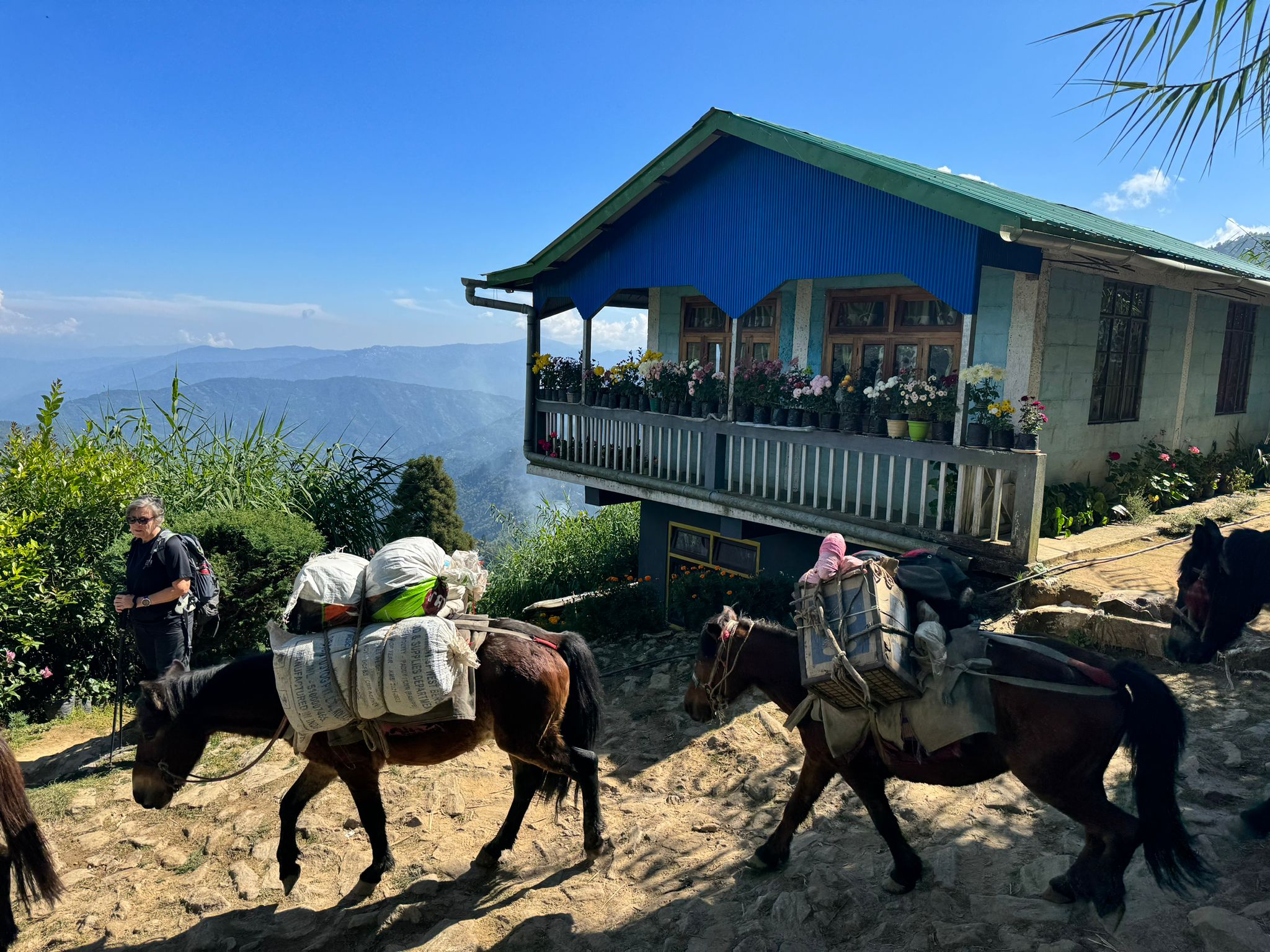
Our final trek winds through a collection of small settlements (inhabited by Rais, Sherpas and Tamangs) to Ramman, where terraced fields and villages dot the landscape. We descend along a jeep track to Sri Khola for lunch, after which we cross a suspension bridge and continue for another 2hr 30min along a road, passing through more villages to Rimbik, a large Sherpa village among the forest landscapes of Singalila National Park. We stay in a small lodge with great views across the valley.Please note, the guest house is a basic home-stay property. Although all bedrooms offer attached bathrooms (including toilets), those with shower facilities are limited and some bedrooms may only provide a sink and “bucket” wash option.
Meals: Breakfast,Lunch,Dinner
Day 12
Drive to Darjeeling, visiting a tea estate en route
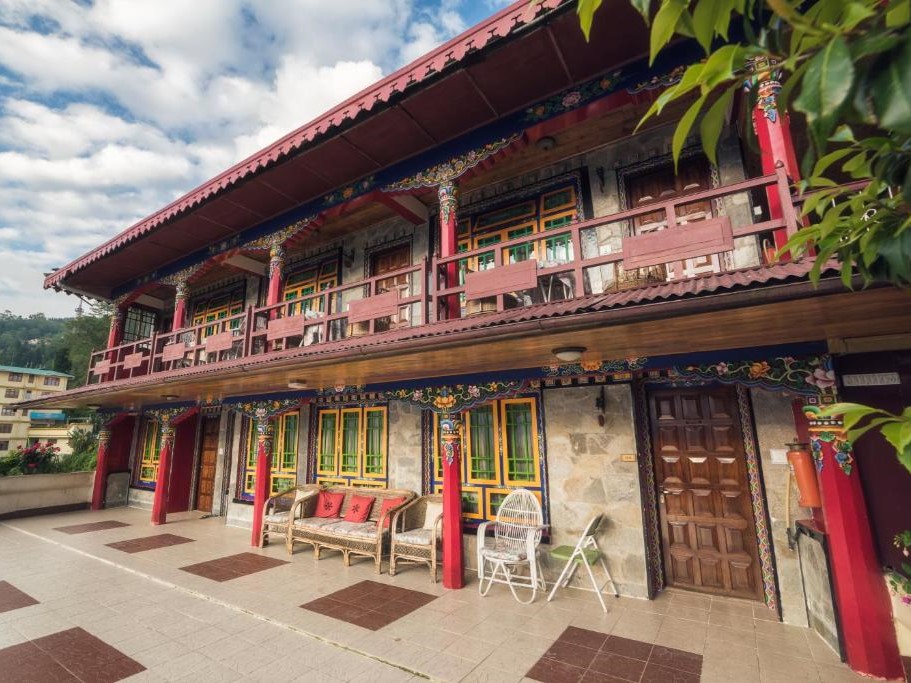
Today we drive back to Darjeeling along a road that winds up and down ridges through picturesque landscapes. En route, we visit a tea estate and learn how this famous drink is grown and processed. We arrive in Darjeeling midafternoon and the rest of the day is free to further explore this historic hill station. Our hotel is close to the Mall, which is a great place to wander in the evening.
Meals: Breakfast
Day 13
Morning to explore Darjeeling, drive to Siliguri, overnight train to Kolkata
We have the morning to explore further. If we missed the ride on the toy train and Ghoom monastery, there is time this morning. In the afternoon, we set off for the drive to Siliguri (two to three hours) where we board the overnight train to Kolkata. Train times in India change regularly, although it usually departs around 8pm or 9pm.
Meals: Breakfast
Day 14
Arrive Kolkata; free time to explore
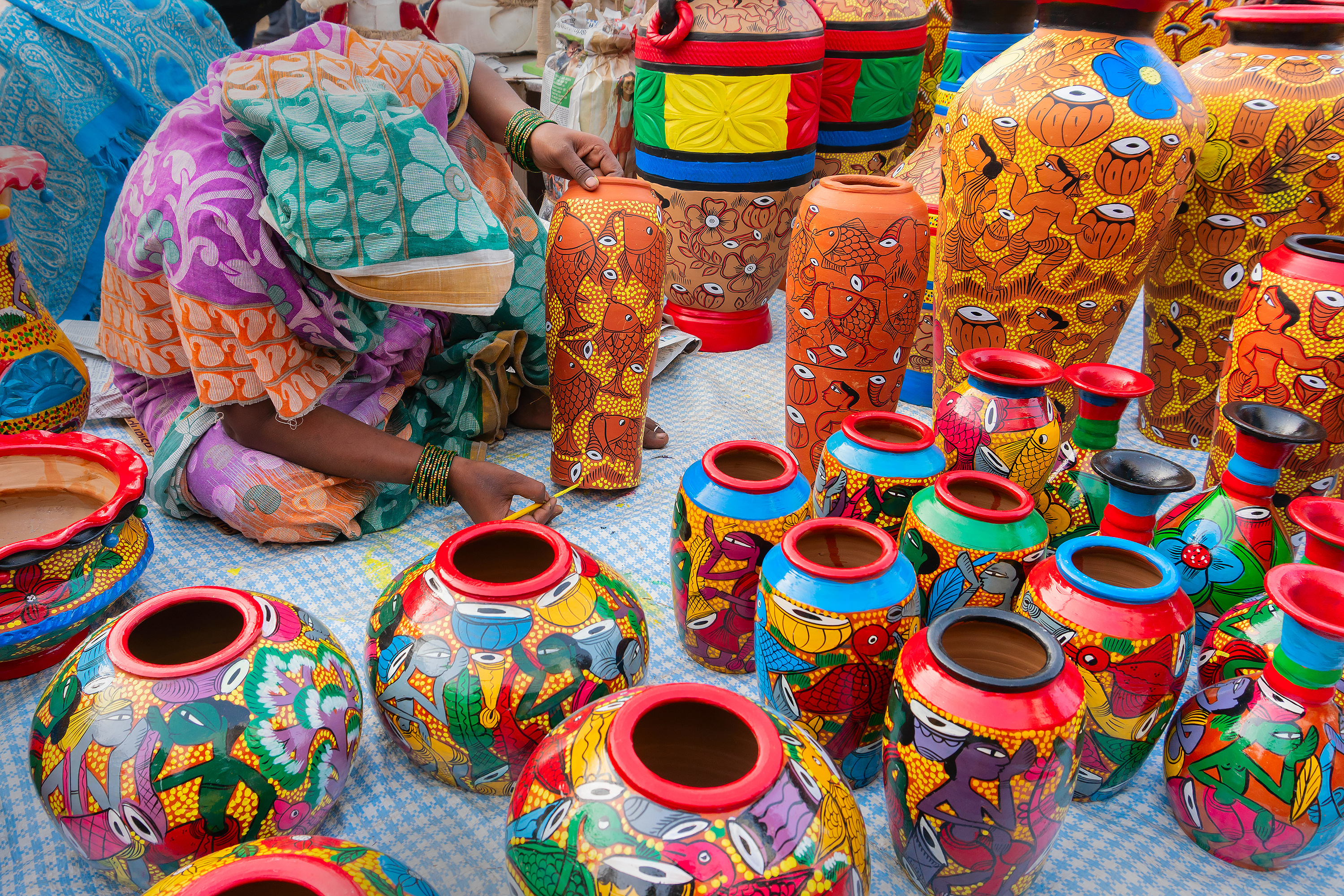
We arrive in Kolkata in the early hours of the morning and have the day to explore this fascinating city. Once the capital of British India, Kolkata has a turbulent past. It was central to the struggle for Indian independence and thousands of Bengali refugees came here at the start of the 1900s. It is a city of striking contrasts and the unusual sights, pungent smells and cacophony of sounds are an experience unique to India.If you would rather not navigate Kolkata alone, your leader can usually arrange a short guided city tour for you (pay locally).
Meals: Breakfast
Day 15
Adventure ends in Kolkata
The adventure ends in Kolkata after breakfast. If you’d like a little more adventure, however, consider joining our five-day Golden Triangle extension. Encompassing Delhi, Jaipur and Agra, the trip is a whirlwind of culture, taking in the Taj Mahal, Red Fort of Akbar and much more. Speak to your sales representative about extending your stay.
Meals: Breakfast
What’s included
What’s not included
Additional information
Food
Allow at least 1,600-2,000 rupees (approximately US$20-US$25) per day for lunch and dinner (where not included). You can eat out cheaply in India, but if you go to the more expensive restaurants most of the time, you will spend the upper limits of the suggested amount. Please note, service in restaurants can be quite slow. Tea and soft drinks are reasonably priced. A (large) bottle of beer is approximately 400 rupees (approximately US$5).
While camping, we have a cook and assistants who prepare simple but plentiful nutritious food. Breakfasts will be porridge, cereals, eggs and toast with plenty of tea, coffee or hot chocolate. Lunches will usually be a picnic lunch with soup, various kinds of local breads, cheese, eggs, tinned fish, and meat and fruit where available. There is afternoon tea and biscuits on arrival at camp followed later by dinner, which is usually soup, a pasta, rice or potato-based main course with fresh vegetables, followed by dessert, tea, coffee or hot chocolate.
Drinking water
Staying hydrated is important when undertaking any physical activity. However, we strongly encourage you not to buy bottled water as this contributes to the growing problem of plastic pollution in India
On trek, the cooks collect and boil drinking water from the mountain streams and fill up your water bottles for you, but you may need to collect water during the day and may wish to use your own water purification treatment as well. Purification tablets can be an economical way to treat your water, most taking between 30 minutes to one hour to purify one litre of water and are easy to used in water bladders/hydration packs. Purification tablets which contain chlorine dioxide are reported not to leave an obvious taste as other tablets may.
We suggest you may like to bring a reusable bottle with a wide opening and use a Steripen to treat any non-boiled water. A Steripen is a handheld UV water purifier – small, lightweight and battery powered, so easy to pack. It’s quick to use, far more effective than purification tablets, and the water is ready immediately. It’s fine to use a Steripen on non-boiled water so long as it isn’t cloudy or full of sediment (which is uncommon in these regions).
Steripens are widely stocked on Amazon, outdoor shops and other online retailers; look for the latest models but avoid USB charging ones. Models that take lithium batteries are best as they last longer, especially in cold conditions.
Martam Village Hike & Nyingma Institute Visit
Walk through terraced fields and quiet lanes in Martam, a Sikkimese village long linked with dairy produce, meeting Bhutia and Nepali communities along the way. The rural setting offers views of forested ridges and slate-roofed houses threaded with prayer flags.
Call at the Nyingma Institute for insights into Buddhist philosophy, then pause at a small monastery and Krishna Mandir. Simple shrines, butter lamps and temple bells convey a gentle rhythm of village life and faith.
Darjeeling Tea Estate Tour & Tasting
Visit a tea estate to see how tender leaves become the ‘Champagne of teas’. Walk the contour-planted slopes, learn about withering, rolling and oxidation, and meet the people whose skilled hands define these prized batches.
Conclude with a guided tasting, comparing bright first-flush aromas with deeper, muscatel-rich summer teas. The hillside setting, cool mists and low hum of processing rooms anchor a sensory portrait of Darjeeling’s world-famous terroir.
Gangtok Orientation Walk: Enchey Monastery, Orchid Exhibition & Handicrafts
Join a guided orientation walk through hillside Gangtok, pausing at the serene Enchey Monastery, founded in 1840 and rebuilt in 1908 by the chogyal of Sikkim. Incense curls through timber halls as prayer flags ripple above the city, framing distant hints of Kanchenjunga.
Continue to the Flower Exhibition Centre for Sikkim’s famed orchids, then browse a government-run emporium supporting traditional handicrafts such as carpet weaving and wood carving. It’s a gentle cultural immersion into Sikkimese life and artistry.
Rumtek Monastery: Seat of the Karmapa in Exile
Visit the hilltop Rumtek Monastery, rebuilt by the 16th Karmapa as the principal Karma Kagyu seat in exile. Walk past gilded roofs and painted porticos into assembly halls lined with thangkas, drums and conch shells that mark the rhythm of monastic life.
In a side chapel, contemplate the golden stupa associated with the 16th Karmapa. Murals glow with vibrant pigments, while courtyards echo with the low chant of mantras—an intimate window into Tibetan Buddhism’s living traditions.
Darjeeling Himalayan Railway: Toy Train to Ghoom & Batasia Loop
Ride the Darjeeling Himalayan Railway, a Unesco-listed narrow-gauge line that climbs through misty pines and tea slopes. As the engine whistles, the track spirals around the Batasia Loop, revealing arresting views toward Kanchenjunga when skies are clear.
Arriving at Ghoom, India’s highest railway station, step onto a platform steeped in Raj-era atmosphere. The rhythmic chuff of steam or hum of diesel, timber carriages and crisp mountain air make this a nostalgic Himalayan journey.
Himalayan Mountaineering Institute, Darjeeling
Explore the Himalayan Mountaineering Institute, founded in the wake of the 1953 Everest ascent. Exhibits trace historic Everest expeditions with ice axes, oxygen gear and summit photographs that chart the evolution of high-altitude climbing.
Galleries honour Tenzing Norgay’s legacy and the ethos of Himalayan exploration. Maps, pitons and weathered canvas evoke the grit of early teams, while training grounds remind visitors that the mountains’ allure is matched by discipline and respect.
Rhododendron Forest Approach to the Singalila Ridge
Trek through rhododendron forests and terraced hamlets from Rimbik toward Manedara and Gurdum. In spring, scarlet blooms flare beneath oak and silver fir, while village paths carry scents of woodsmoke and cardamom.
Cross the Gurdum Khola by bridge and climb steadily to ridge-cut clearings, where Kabru’s snowy shoulders appear between trees. This forested approach blends gentle gradients with rich birdlife, easing you into higher altitudes and quieter horizons.
Sandakhphu Summit Panorama of the ‘Sleeping Buddha’
Reach Sandakhphu (3,636m), the high point of the route, for a grandstand view of the Kanchenjunga massif—often called the ‘Sleeping Buddha’. To the northwest, the distant white pyramid of Everest, Lhotse and Makalu lines the horizon.
Prayer flags snap in a high, dry wind as the ridge opens to a Himalayan panorama of ice-fluted ridges and hanging glaciers. On the clearest days, the entire skyline reads like an atlas of the world’s loftiest summits.
Singalila Ridge Traverse to Sabargam: Sunset & Sunrise
Walk the border crest between India and Nepal, an undulating path through chestnut, oak and silver fir. Dwarf rhododendrons and spring primulas fleck the turf as the ridge repeatedly reveals the multi-peak crown of Kanchenjunga.
Camp at Sabargam for a golden sundown and rose-lit dawn over snowfields. The twin show—sunset and sunrise—turns serrated summits into silhouettes, then porcelain. It’s a rare, camera-ready sequence framed by the stillness of the high hills.
Phalut Viewpoint & Descent to Samaden
Trek to Phalut (3,600m), where a short spur behind the lodge opens to a circular theatre of Himalayan giants. Kanchenjunga feels close enough to trace its ribs and icefalls with your eyes.
Begin the long, glorious descent through forests of oak, conifer, pine and rhododendron. Birdsong replaces wind on the ridge as the trail threads toward Samaden, a small settlement with big views and a feeling of arrival after a high-level traverse.
Village Trails to Rimbik & Sherpa Homestay
Follow terraced trails through Rais, Sherpa and Tamang settlements to Ramman, watching field patterns stitch the hillsides. After crossing the Sri Khola on a suspension bridge, continue past kitchen gardens and hillside chapels toward Rimbik.
Settle into a simple guesthouse in this large Sherpa village within Singalila National Park. Conversations over tea, valley views and the unhurried pace of mountain life make this a gentle cultural counterpoint to the high ridges.
Overnight Indian Sleeper Train to Kolkata
Board the overnight sleeper train across the plains to Kolkata, settling into a two-tier berth behind privacy curtains. Vendors drift through with snacks and chai-wallahs call out as the carriage settles to the rhythmic rails.
This classic journey is an icon of Indian travel, offering an unfiltered slice of everyday life. Watch station platforms slide past, trade stories with fellow passengers, and wake to Bengal’s dawn light outside your window.
Kolkata Heritage City Tour
Join a guided city tour taking in colonial-era facades around Dalhousie Square, the sweep of the Howrah Bridge, and the marble-domed Victoria Memorial. Lanes around Kumartuli reveal artisan studios sculpting clay deities for festival processions.
Your local guide layers history—from Company Raj commerce to cultural renaissance—while suggesting street-food stops for kathi rolls or jhal muri. This experience is at additional cost and bookable on tour, ideal if you prefer curated sightseeing.
Meet Your Tour Leader & Welcome Dinner in Delhi
Begin your Indian Himalaya journey by meet your Tour Director and fellow travellers over a convivial welcome dinner in Delhi. Share first impressions and practical tips while sampling North Indian flavours—think tandoor-grilled breads, aromatic curries and bright chutneys—chosen to set the tone for days of discovery ahead.
Your leader outlines the route to Sikkim and Darjeeling, weaving in advice on trek etiquette and local customs. This warm, hosted start helps the group connect and clarifies what to expect on the mountain trails to come.