Your itinerary
Day 1
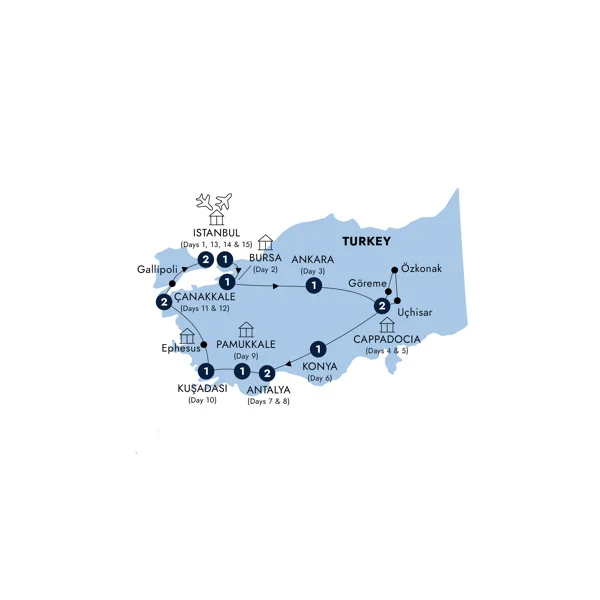
Day 1: Welcome to Istanbul
Arrive in Istanbul, where a representative will pick you up from the airport and transfer you to the hotel. Settle in before joining your Travel Director and fellow travelers for dinner.
Meals: Dinner
Day 2
Day 2: Bosphorus Cruise and Bursa
Cruise along the Bosphorus past fishing villages, Ottoman palaces and fortresses. Travel to Bursa, the former Ottoman capital, and visit the Green Mosque, Grand Mosque and Mausoleum Complex. Enjoy free time to explore the bazaars, silk markets and historic monuments, then have a meal at a local restaurant.
Meals: Breakfast,Dinner
Day 3
Day 3: Cumalikizik and Gordion
Visit Cumalıkızık, with its traditional wooden houses and cobblestone streets, then travel to Gordion, once the capital of ancient Phrygia, on the way to Ankara. Spend the evening at leisure at the hotel.
Meals: Breakfast
Day 4
Day 4: Sophisticated Ankara
Explore Ankara, including the Hittite Museum and the Mausoleum of Atatürk. Travel to Avanos in Cappadocia and visit the underground city of Özkonak, carved into volcanic rock.
Meals: Breakfast,Dinner
Day 5
Day 5: Cappadocia
Rise early to watch hot air balloons drift above Cappadocia at sunrise. Visit the rock-hewn churches of Göreme, then enjoy a MAKE TRAVEL MATTER® experience and Anatolian food at Uçhisar Kadineli Restaurant, which supports local women’s employment. Continue to Paşabağ Valley and visit a local Cappadocian’s cave house to learn about local traditions and family life. In the evening, see the Whirling Dervishes before dining at a local restaurant.
Meals: Breakfast,Lunch,Dinner
Day 6
Day 6: Konya
Learn about traditional pottery-making in Avanos, then travel along the Silk Road to visit a 13th-century caravanserai. Continue to Konya, the former capital of the Anatolian Seljuk Empire.
Meals: Breakfast,Dinner
Day 7
Day 7: Through the Taurus Mountains
See the Karatay Medrese and Ince Minaret Medrese and visit the Mevlana Museum. Drive through the Taurus Mountains to Aspendos and explore its well-preserved Roman theater.
Meals: Breakfast,Dinner
Day 8
Day 8: Antalya's Old Town
Visit Antalya’s Old Town, including its souvenir markets and sea views. The rest of the day is free to relax at the hotel or explore at your own pace; you could stroll around the harbor or take a boat trip.
Meals: Breakfast
Day 9
Day 9: The Pools of Pamukkale
Cross the Taurus Mountains to visit the remains of Hierapolis, an ancient Roman spa city, and explore Pamukkale’s white travertine terraces with your Travel Director. Later, return to the hotel, where you can use its thermal pools, steam room and Turkish bath complex.
Meals: Breakfast,Dinner
Day 10
Day 10: Ancient Ephesus
Explore Ephesus, walking along the Arcadian Way and seeing the Library of Celsus and Great Theater. Visit the House of the Virgin Mary, then learn about Anatolia’s leather-making heritage. In Selçuk, visit the Archaeological Museum and see artifacts from the Ephesus excavations.
Meals: Breakfast,Dinner
Day 11
Day 11: Troy and Çanakkale
Explore the archaeological site of Troy and see the replica Trojan Horse beside the city walls. Continue to Çanakkale, gateway to the Gallipoli WWI battlefields. An optional evening experience offers a city-center walk and local food, including a Biga-style Turkish meatball sandwich and traditional cheese dessert.
Meals: Breakfast,Dinner
Day 12
Day 12: Çanakkale
Attend the annual Dawn Service to honor the fallen soldiers. Then pay your respects at Lone Pine and Chunuk Bair Cemeteries and learn about the Anzac troops’ campaign to control the Dardanelles Strait. Return to the hotel for the afternoon at leisure.
Meals: Breakfast
Day 13
Day 13: Gallipoli and ANZAC Cove
Cross the Dardanelles Strait by ferry to the Gallipoli Peninsula. Visit Anzac Cove and Lone Pine Cemetery, then return to Istanbul for a two-night stay.
Meals: Breakfast
Day 14
Day 14: Istanbul and the Ottoman Empire
Visit the Blue Mosque and Hippodrome, then choose between the Hagia Sophia Digital Experience and a visit to Hagia Sophia. Visit Topkapi Palace and bargain in the Grand Bazaar. In the evening, toast the trip over dinner at a local restaurant.
Meals: Breakfast,Dinner
Day 15
Day 15: Farewell Istanbul
A transfer takes you to the airport for your onward flight. If extending your stay, ask your Travel Director for recommendations.
Meals: Breakfast
What’s included
What’s not included
Additional information
Özkonak Underground City
Descend into Ozkonak Underground City in Cappadocia and explore rooms and narrow passages carved from soft volcanic rock. See how spaces below ground could provide shelter and be defended when communities faced danger.
Cappadocia’s landscape is remarkable above ground, but its subterranean settlements reveal an equally resourceful response to the terrain. Moving through the interconnected spaces gives a direct sense of the planning involved in living beneath the hills.
Aspendos Roman Theater
Explore the Roman theater at Aspendos near Antalya, renowned for its exceptionally well-preserved seating and stage building. Stand within the vast performance space and take in the scale of a venue created for an ancient audience.
Built in the Roman period, the theater survives with much of its architectural form intact. Its stone tiers and imposing stage facade make it possible to imagine public entertainment as a shared experience rather than an abstract chapter of history.
Dining Summary
- 10 Dinner (D)
- 14 Breakfast (B)
- 1 Lunch (L)
Insight Experiences
- Cappadocia: Step inside a traditional cave house and meet a local Cappadocian who has lived there for decades. Hear how the home was shaped, how it has changed over time and what it means to remain rooted in this landscape.
Operated By
Insight Vacations
Bosphorus Strait Cruise
Cruise the Bosphorus Strait between Istanbul’s European and Asian shores. Watch ferries, fishing boats and cargo ships share the water as waterfront neighbourhoods, Ottoman palaces and historic fortresses come into view.
This busy channel links the Black Sea with the Sea of Marmara and has shaped Istanbul’s trade and daily life for centuries. From the water, the city’s two-continent setting becomes tangible rather than simply a point on a map.
How You'll Travel
- Business class coach with extended leg room
- Top-rated dining, from farm-to-table to local restaurants
- 4 & 5-star stays
Istanbul Welcome Dinner
Meet your Travel Director and fellow travellers over dinner at a local Istanbul restaurant. Taste traditional Turkish flavours while getting acquainted in the city that spans Europe and Asia.
Istanbul’s food reflects centuries of exchange across the Bosphorus, with ingredients and cooking traditions drawn from Anatolia and beyond. This hosted meal offers a welcoming introduction to the places and people you will discover across Turkey.
Bursa Mosques and Silk Market
Explore Bursa with your Travel Director, visiting the Green Mosque, Grand Mosque and a mausoleum complex. See how monumental religious buildings sit alongside the bazaars and silk markets of this former Ottoman capital.
Bursa was the empire’s first major capital, and its early Ottoman architecture remains central to the city’s identity. Its trading streets recall the commerce that made silk an important part of local life, giving this orientation both architectural and cultural depth.
Gordion, Ancient Phrygian Capital
Visit Gordion, once the capital of ancient Phrygia, and encounter a place associated with both Anatolian history and the legend of the Gordian knot. Its setting on the central Anatolian plain gives a sense of the landscape in which the kingdom developed.
Gordion’s archaeological remains speak to a civilisation that flourished long before the Ottoman era. The visit broadens the journey’s historical perspective, revealing another layer of the cultures that shaped Turkey.
Ankara’s Museum of Anatolian Civilizations
Explore the Museum of Anatolian Civilizations in Ankara, also referred to as the Hittite Museum. Examine objects that illuminate the peoples and cultures of Anatolia across thousands of years.
Set in historic buildings near Ankara’s old citadel, the museum provides valuable context for the ancient sites visited across Turkey. Its collections help connect individual ruins and artefacts to the wider story of settlement, craftsmanship and belief on the Anatolian peninsula.
Cappadocia Sunrise Balloon Viewpoint
Watch sunrise from a Cappadocia viewpoint as hot air balloons lift above valleys, fairy chimneys and sculpted volcanic formations. The rising light brings out the changing colours and contours of the rock.
This is a viewing experience rather than a balloon flight. From the ground, you can take in the scale of the landscape and photograph the balloons drifting across it, with the rock formations providing a distinctive Cappadocian backdrop.
Göreme Rock-Cut Churches
Explore Goreme’s rock-cut churches, shaped from Cappadocia’s soft volcanic stone. Step inside to see surviving frescoes and learn how early Christian communities worshipped in these sheltered spaces.
The paintings bring religious stories into focus against the muted colours of the surrounding rock. Together, the carved interiors and their artwork show how people adapted this unusual landscape for communal and spiritual life over many centuries.
Uçhisar Kadineli Restaurant Experience
Taste homemade Anatolian dishes at Uchisar Kadineli Restaurant in Cappadocia. This included dining experience introduces regional flavours while supporting a women-owned enterprise that provides employment for more than 65 women from the village.
The restaurant’s work extends beyond its kitchen, helping local women develop skills and earn income through cooking, crafts and other roles. Your visit connects a meal to the people sustaining it and to an initiative focused on women’s economic opportunity.
Whirling Dervishes Sema Ceremony
Witness a Sema ceremony in Cappadocia, watching whirling dervishes perform the measured movements of the Mevlevi Sufi tradition. Music, costume and rotation come together in a ritual form that remains part of Turkish spiritual life.
The ceremony is more than a dance: its gestures carry religious meaning within a tradition closely associated with the teachings of Rumi. An included dinner at a local restaurant accompanies this cultural evening.
Avanos Pottery Studio
Visit an Avanos pottery studio to watch craftspeople shape clay at the wheel. See how the material is prepared, formed and decorated in a town known for its long-standing ceramics tradition.
Avanos stands beside the Kizilirmak River, whose red clay has supplied local potters for generations; pottery-making in the area reaches back to Hittite times. The studio visit makes that heritage tangible through the tools, techniques and practiced movements of working artisans.
Sultanhani Caravanserai
Step inside Sultanhani Caravanserai, a 13th-century roadside inn built to shelter travellers and traders crossing Anatolia. Explore its courtyard and the spaces designed to accommodate people, goods and animals.
Built in 1229 during the Seljuk period, the caravanserai reflects the importance of overland trade routes through the region. Its substantial stone architecture offers a clear picture of what a protected stopping place could mean on a demanding journey across the plain.
Konya’s Mevlana Museum and Seljuk Landmarks
Visit Konya’s Mevlana Museum with a Local Expert for insight into the Mevlevi tradition associated with the whirling dervishes. See the Karatay Medrese and Ince Minaret Medrese, important reminders of the city’s Seljuk past.
Konya was a capital of the Anatolian Seljuk Empire and remains closely identified with the poet and mystic Rumi, known as Mevlana. Its religious and educational landmarks reveal how scholarship, architecture and spiritual life became intertwined here.
Antalya Old Town
Explore Antalya’s Old Town, where narrow streets and market stalls lead towards views of the Mediterranean coast. Wander through the historic quarter and take in the contrast between its enclosed lanes and open sea vistas.
Known as Kaleici, this part of Antalya preserves the feel of an old port city shaped by successive periods of settlement. Its streets offer a different perspective on Turkey’s southern coast: one rooted in everyday urban life as well as scenery.
Hierapolis and Pamukkale Travertines
Explore the remains of ancient Hierapolis and walk beside the white travertine terraces of Pamukkale with your Travel Director. See the mineral-rich thermal water that continues to deposit pale calcium across the hillside.
Hierapolis developed as a spa city in antiquity, linking the archaeological remains to the springs that still define this place. Roman history and an active natural process sit side by side, creating one of Turkey’s most distinctive cultural landscapes.
Ephesus and the House of the Virgin Mary
Walk through ancient Ephesus with a Local Expert, following the Arcadian Way to the Library of Celsus and the vast Great Theater. Visit the House of the Virgin Mary, a revered pilgrimage site in the hills above the ruins.
Once a major Roman city in Asia Minor, Ephesus retains streets and monuments that convey its former scale. The hillside shrine adds another dimension to the visit, showing how the surrounding landscape holds significance for later generations of pilgrims.
Ephesus Archaeological Museum
Visit the Ephesus Archaeological Museum in nearby Selcuk to see objects recovered from the ancient city. Examine statues, mosaics and household artefacts that reveal details beyond Ephesus’s monumental streets.
Displayed together, these finds help bring the city’s inhabitants into view alongside its temples, library and theater. The museum provides a closer look at craftsmanship and domestic life, adding human scale to one of Turkey’s most significant archaeological sites.
Troy Archaeological Site
Explore the archaeological site of Troy with your Travel Director and see a reconstructed Trojan Horse. Hear how the settlement’s long history became entwined with stories of the Trojan War, Paris and Helen.
Troy was occupied across many centuries, making it more than the setting of a single legend. Its remains invite you to consider both the evidence of a real ancient settlement and the enduring power of the myths told about it.
Gallipoli ANZAC Day Dawn Service and Cemeteries
Attend the ANZAC Day Dawn Service on the Gallipoli Peninsula alongside fellow visitors and official representatives. At first light, join the commemoration of those who died during the First World War campaign.
Pay respects at Lone Pine and Chunuk Bair Cemeteries and learn about the fighting connected to the attempt to control the Dardanelles Strait. The service and memorial visits place remembrance at the centre of this Gallipoli experience.
ANZAC Cove and Lone Pine
Visit ANZAC Cove on the Gallipoli Peninsula, where Australian and New Zealand forces landed on 25 April 1915. See the shoreline and pay respects at Lone Pine Cemetery while learning about the nine-month campaign.
Standing at these sites gives geographical context to events often encountered through memorials and written accounts. The narrow coastal setting and nearby battlefield cemeteries underline the human cost of the fighting around the Dardanelles.
Istanbul Historic Peninsula: Blue Mosque, Hippodrome and Topkapi Palace
Explore Istanbul’s historic peninsula with a Local Expert, visiting the Blue Mosque, Hippodrome and Topkapi Palace. See the mosque’s tiled interior, encounter the former site of Roman chariot races and discover the palace complex of Ottoman sultans.
These landmarks trace the city’s changing role from Byzantine Constantinople to Ottoman capital. Set close together, they make centuries of religious, political and public life visible within a walkable part of modern Istanbul.
Hagia Sophia Insight Choice
Choose how to discover Hagia Sophia: visit the landmark with a Local Expert or select the Hagia Sophia Digital Experience for an immersive interpretation of its past. Both choices focus on one of Istanbul’s defining monuments.
Completed in the sixth century, Hagia Sophia has served as a Byzantine church and an Ottoman mosque, and it functions as a mosque today. The choice lets you engage with its layered architectural and religious history in the way that most interests you.
Istanbul Grand Bazaar
Explore Istanbul’s Grand Bazaar and try your hand at bargaining among its covered shopping lanes. Browse a vast network of shops selling goods from textiles and ceramics to jewellery and spices.
Trading has shaped this historic market for centuries. Its vaulted passages, lively conversations and closely packed stalls offer a vivid encounter with the city’s commercial traditions, quite different in atmosphere from Istanbul’s imperial monuments nearby.
Istanbul Farewell Dinner
Share a farewell dinner with your fellow travellers at a local Istanbul restaurant. Toast your time in Turkey over a hosted meal and enjoy another opportunity to savour the country’s culinary traditions.
Back in the city where Europe and Asia meet, the dinner offers a setting for conversation and reflection. It is a social experience rather than simply a scheduled meal, bringing the group together around the table.
The Flavors of Çanakkale
Walk through central Canakkale and sample local bites on this optional food experience. The gentle city-centre stroll includes a Biga-style Turkish meatball sandwich and a traditional cheese dessert.
Tasting these specialities offers a close-up look at everyday regional food in a city known to many travellers as the gateway to Gallipoli. This experience is at additional cost and bookable on tour; ask your Travel Director for availability and details.
Cumalikizik Ottoman Village
Walk the cobbled lanes of Cumalikizik, a village more than 700 years old near Bursa. Traditional timber-framed houses and closely spaced streets offer a glimpse of Ottoman village life beyond the former capital.
The village’s preserved layout makes its history easy to read at street level. Notice the texture of the old stone paving and the houses rising on either side: a quieter, domestic counterpart to the mosques and markets of Bursa.
Anitkabir and Ankara Orientation
Discover modern Turkey’s capital with your Travel Director and visit Anitkabir, the mausoleum of Mustafa Kemal Ataturk. Walk through the ceremonial complex and enter the Hall of Honor dedicated to the Republic’s founder and first president.
Its monumental architecture expresses Ataturk’s place in Turkish national memory. The wider Ankara orientation also introduces the city’s Roman and Byzantine heritage, setting the modern capital within a much longer urban history.
Pasabag Valley and Cappadocian Cave House
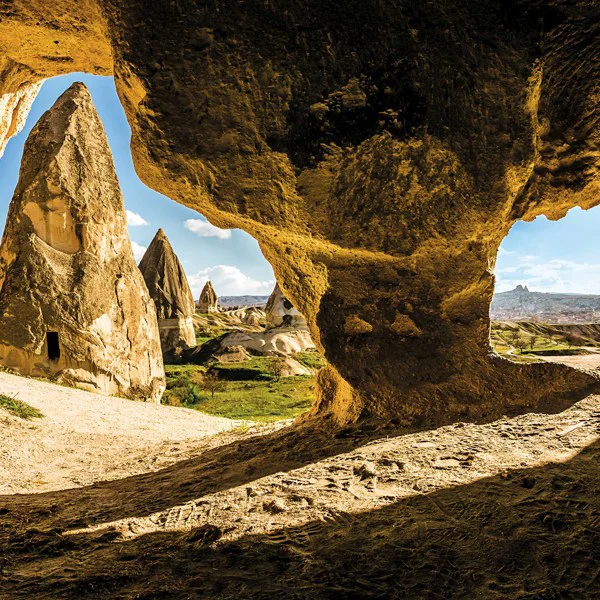
Explore Pasabag Valley’s sculpted rock formations and step inside a traditional Cappadocian cave house. Meet a local resident to hear how the home was shaped and what daily family life is like within this distinctive landscape.
The valley reveals the effects of erosion on Cappadocia’s volcanic rock; the cave-house visit shows how people have lived with that geology rather than simply admired it. A personal account adds lived experience to the region’s striking scenery.