Your itinerary
Day 1
DAY 1
Departure
Day 2
Arrival in Tashkent
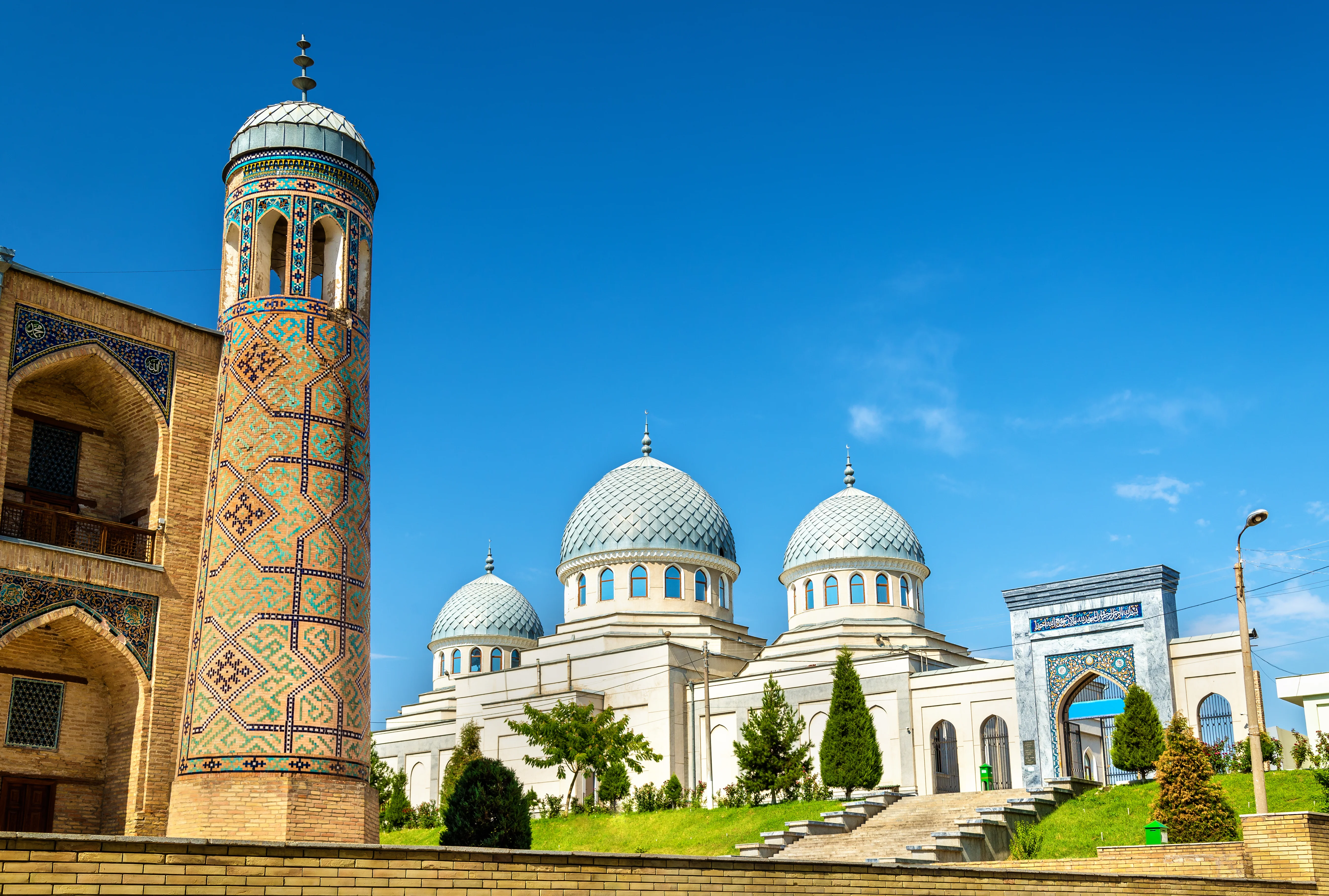
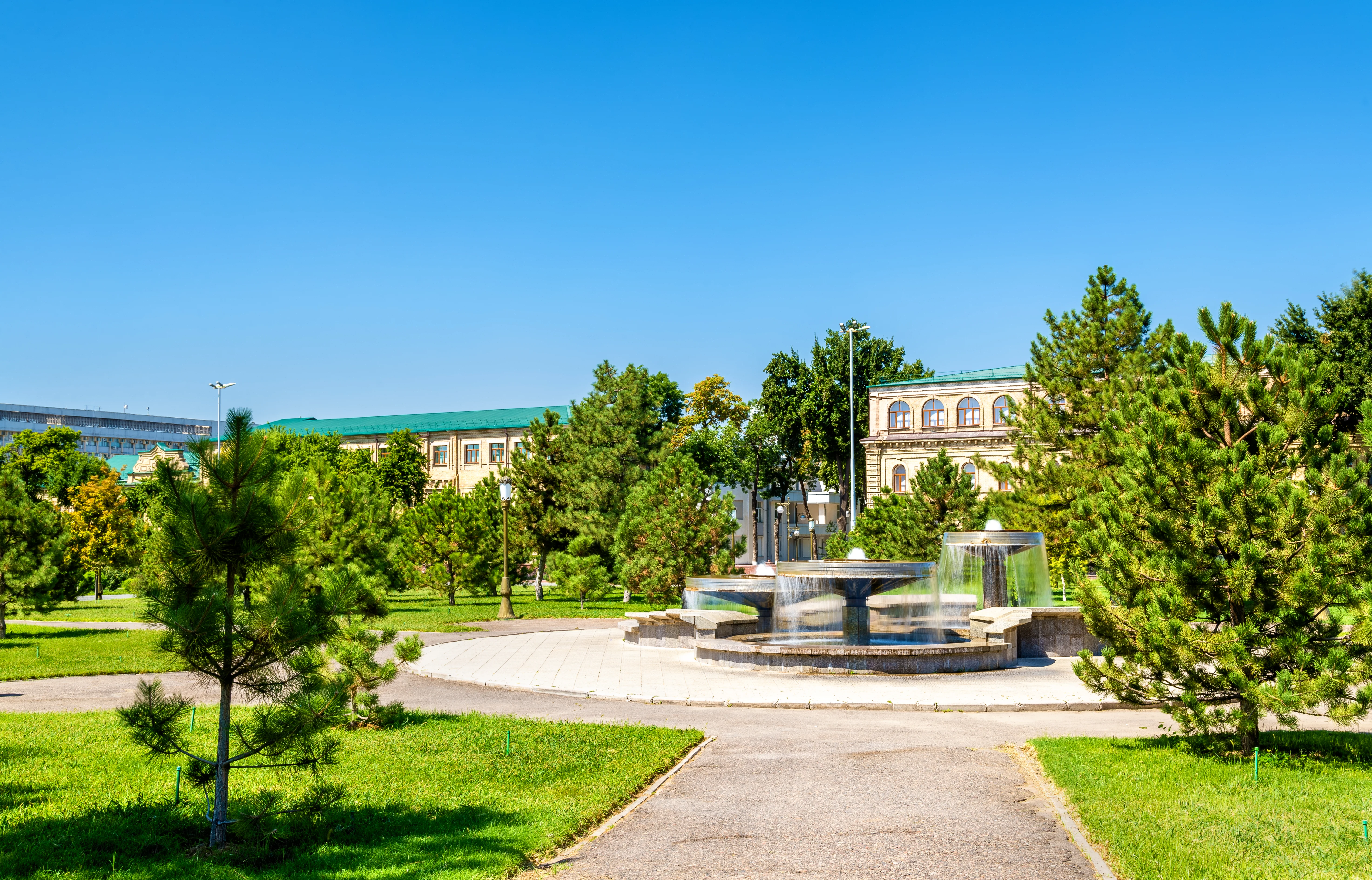
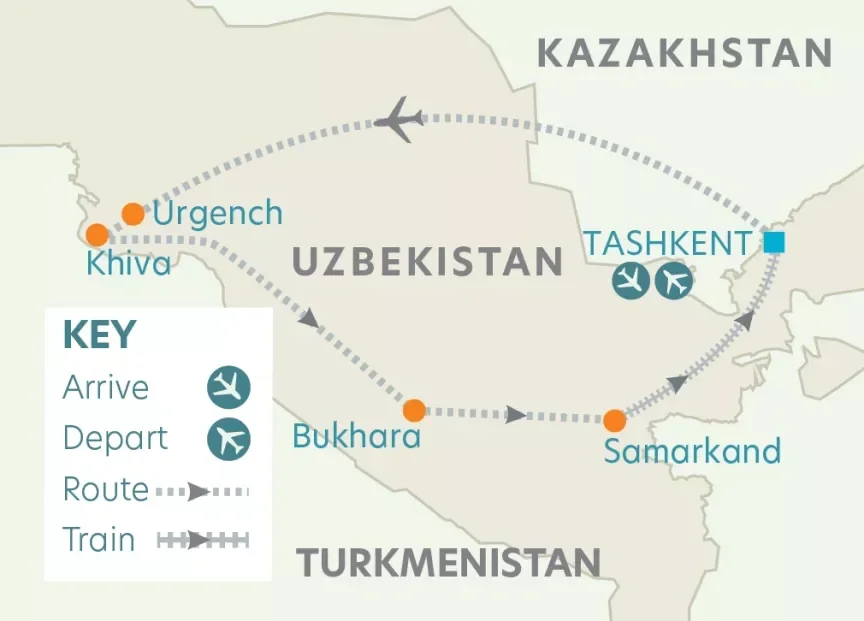
Arrival in Tashkent – After our morning arrival to Tashkent, we drop our luggage at our hotel, the excellent four-star superior Lotte City Palace, and have a spot of breakfast. We continue with our first taste of Uzbekistan with a stop at the Amir Temur Square, overlooked by one of the most iconic buildings of the Soviet era, the Uzbekistan Hotel. Tashkent was hit by a devastating earthquake in the 1960s, so most of the city was rebuilt with more ‘modern’ blocks of apartments and wide, tree-lined avenues, and there’s only a small area left of the old city, which we visit.
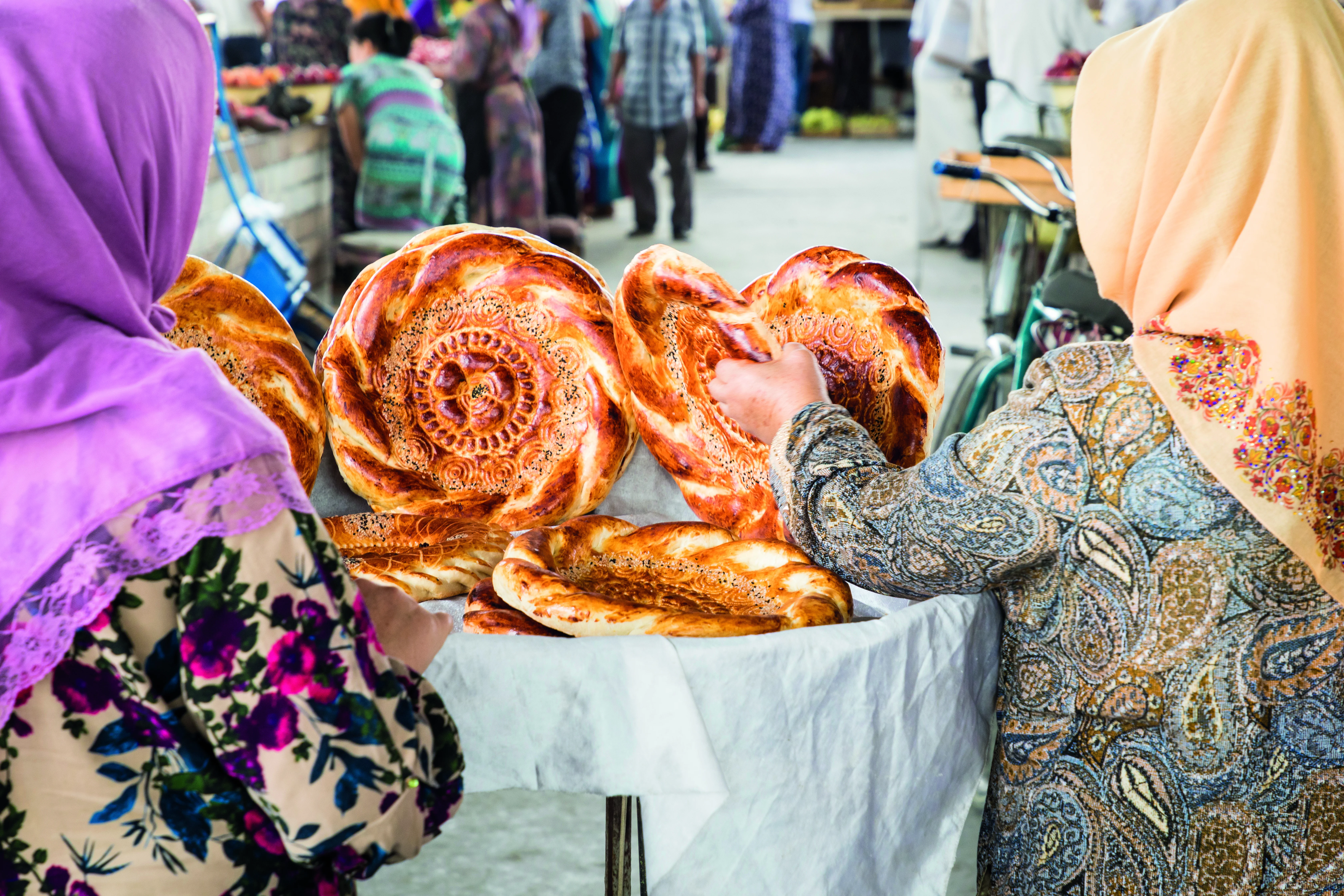
In the afternoon we’ll have a guided walk through the Chorsu bazaar, the largest in the country – a perfect introduction to the foods, smells and exotic produce of Uzbekistan.
Signature experience –
Scratch Tashkent’s surface and discover the hidden secrets below ground; the oldest underground system in Central Asia, you’ll be taken on a fascinating journey with a local expert to discover some of its most magnificent architectural treasures. You’ll be wowed by a creative blend of iconic 1960’s styles imaginatively blended with beautiful mosaics, stunning ceramic murals, vaulted Mosque-like high ceilings and shimmering panels as you travel between the most exceptional stations.
Meals: Breakfast
Day 3
Fly to Urgench & Ayaz Qala Desert Fortress
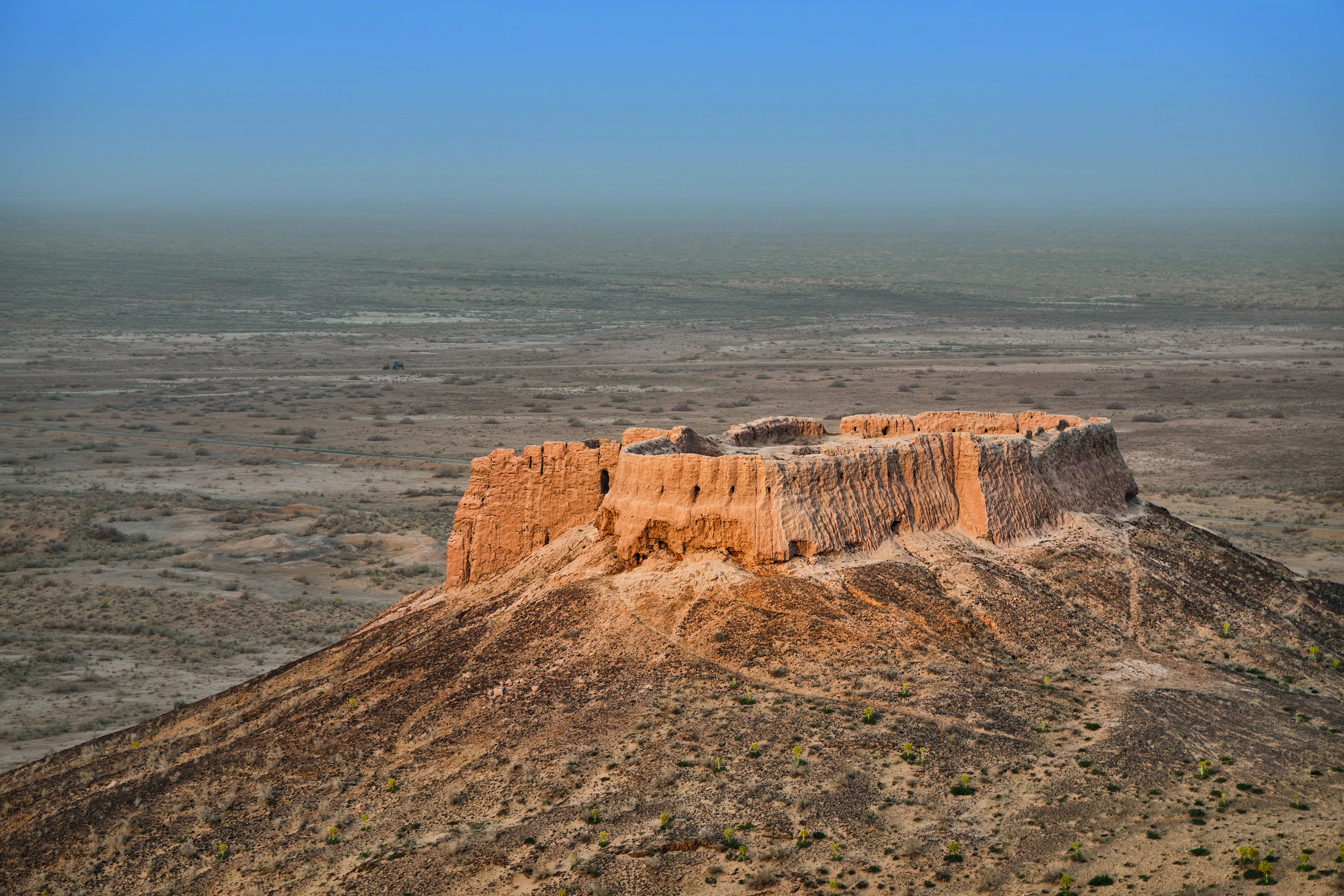
Fly to Urgench & Ayaz Qala Desert Fortress – After breakfast we catch the short flight to the city of Urgench in the far west of the country. On arrival we drive out to the vast plains of the Khorezm desert. This will give us a glimpse into the seemingly never-ending distances and inhospitable country that Silk Road caravans had to cross. The Ayaz Qala is just one of a series of castles that were built to protect these trade routes until they were destroyed by the Mongol invasions of the 12th-century.
Signature Experience –
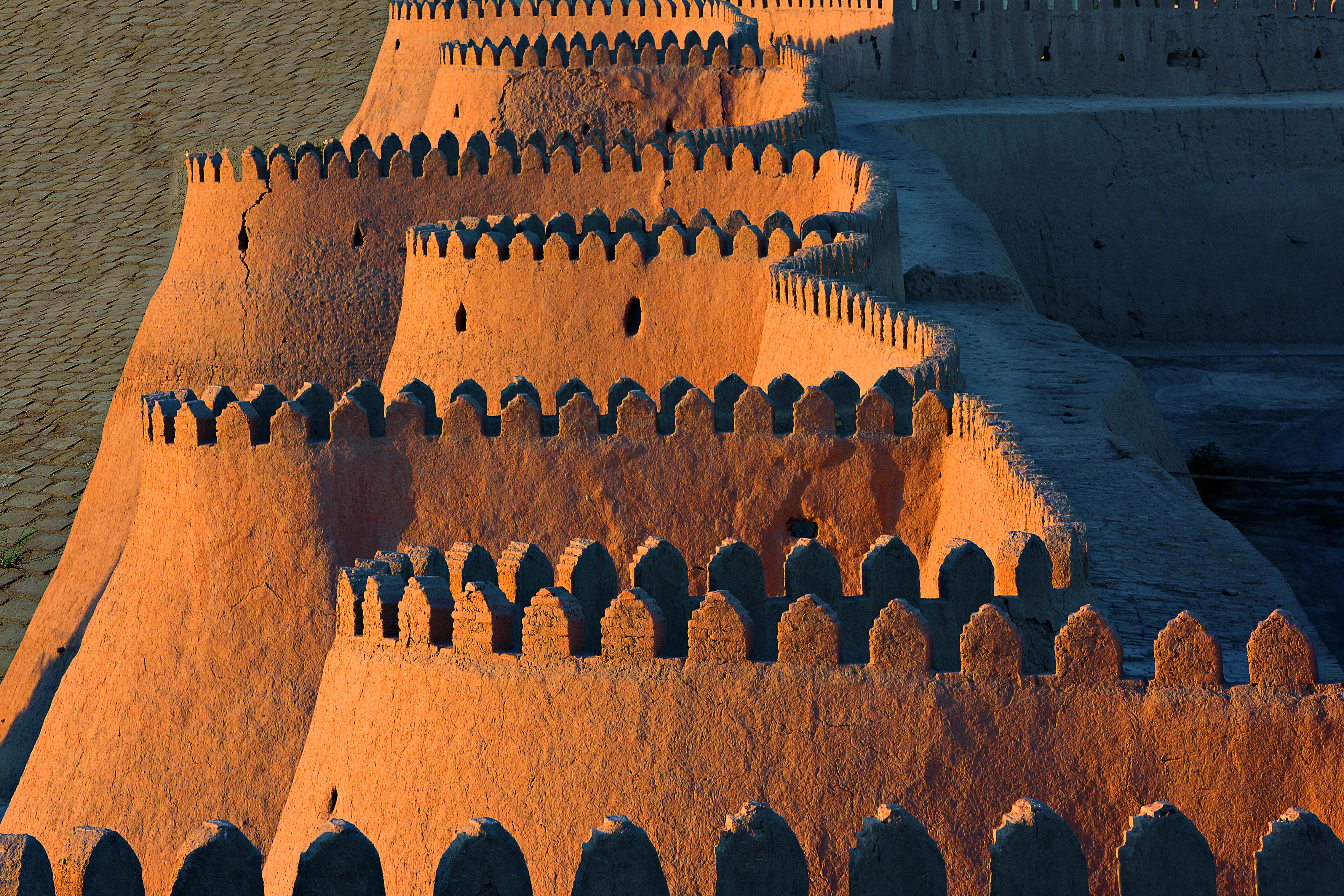
Immerse yourself in two millennia of history as you stroll amongst the atmospheric ruins, palaces, mausoleums and madrasas of Khiva’s ancient walled town, Itchan Kala. An oasis where once caravans rested on their desert trail to Iran, soak up the ambience as you imagine what a vibrant and exciting place this once was; admire its incredible Djuma Mosque and mighty walls, some towering ten metres above!
Meals: Breakfast
Day 4
Khiva & free afternoon
Khiva & free afternoon – This morning we explore the amazing living museum that is the UNESCO World Heritage city of Khiva. Fully enclosed by its spectacularly buttressed mud-brick walls, this is the best-preserved of the country’s Silk Road cities, and as soon as you pass through its fortified gates, you’ll really start to understand what it must have been like in its heyday. Surprisingly compact, all the incredible sights are conveniently close together and, since no cars are allowed, it’s the perfect place to walk around. Amongst many of the highlights visited, we’ll see the Khan’s palace, the Tosh-Hovli Palace, and harem, the great, beautifully tiled Kalta minaret, which would have been the highest in the country, had it been completed. Close by is the current holder of that title, the Islam Hodja minaret, which is an incredible 56m tall. Khiva was also infamous for its slave market – many slaves were from Persia but surprisingly from Russia as well. Astoundingly, the trade was only officially abolished after the Russian Revolution of 1917, when the Bolsheviks finally gained full control over the region.
This afternoon is free to explore at your leisure. Perhaps take a walk around the historic city walls of the old town, Ichon Qala, which date back to the 18th-century. Some of the impressively high mud stone walls, with over a mile of preserved wall nearby the North Gate, where you can take in some memorable views. For a small entry fee, you can access the viewing platform, best visited in the evening for unbelievable sunsets.
Day 5
Drive to Bukhara
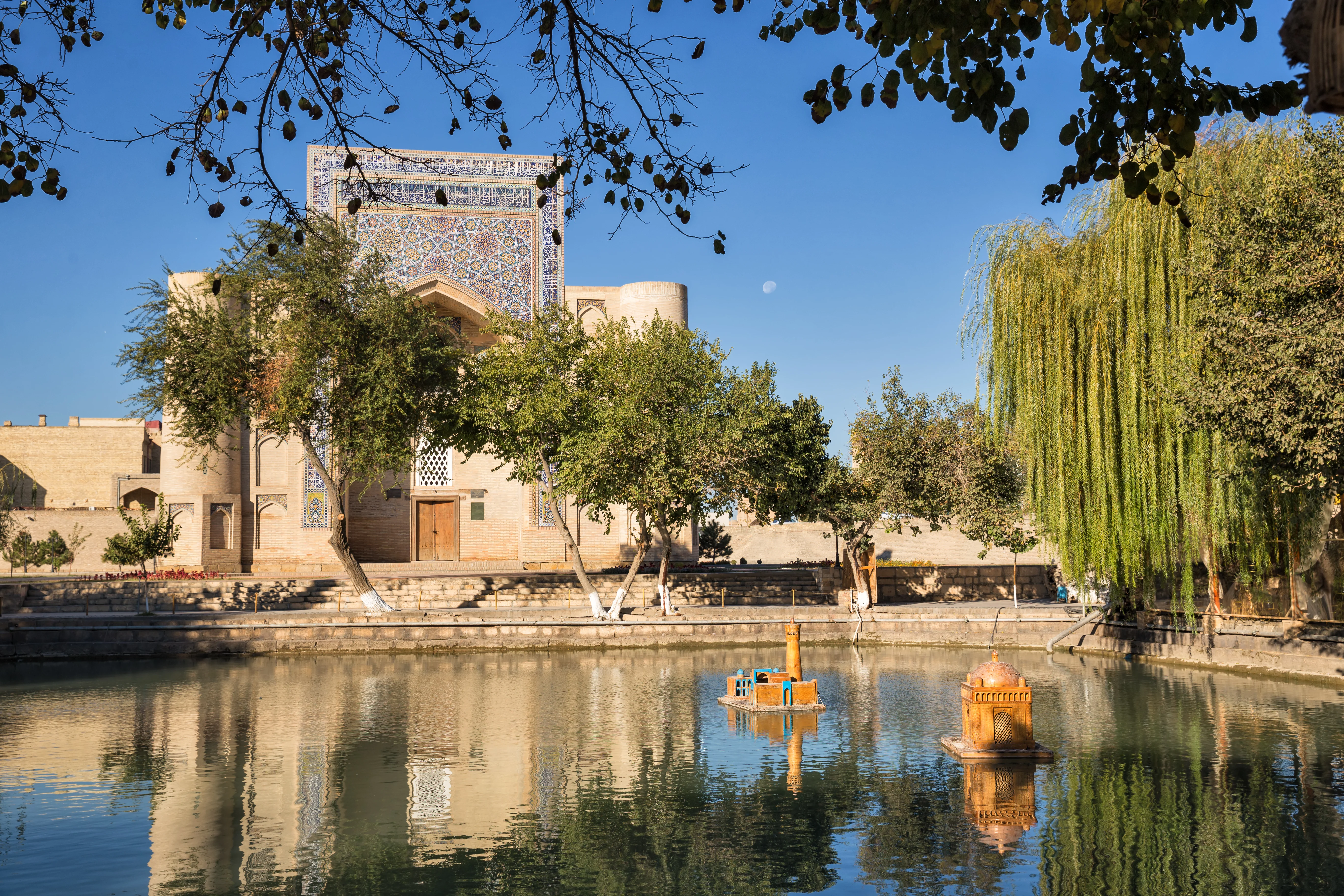
Drive to Bukhara – Today we have a long drive to the city of Bukhara, a spiritual city with ancient architecture and a grand royal fortress. On the way we’ll cross the fabled River Oxus, which was also crossed by Alexander the Great and his army over 2,000 years ago. On arrival in Bukhara we’ll check into our hotel for the next three nights. One of the first places we’ll see is the Lyab-i Khauz complex, with some of the finest 16th-century buildings in the city constructed around a water reservoir. It’s now surrounded by popular open-air tea houses.
Day 6
Bukhara
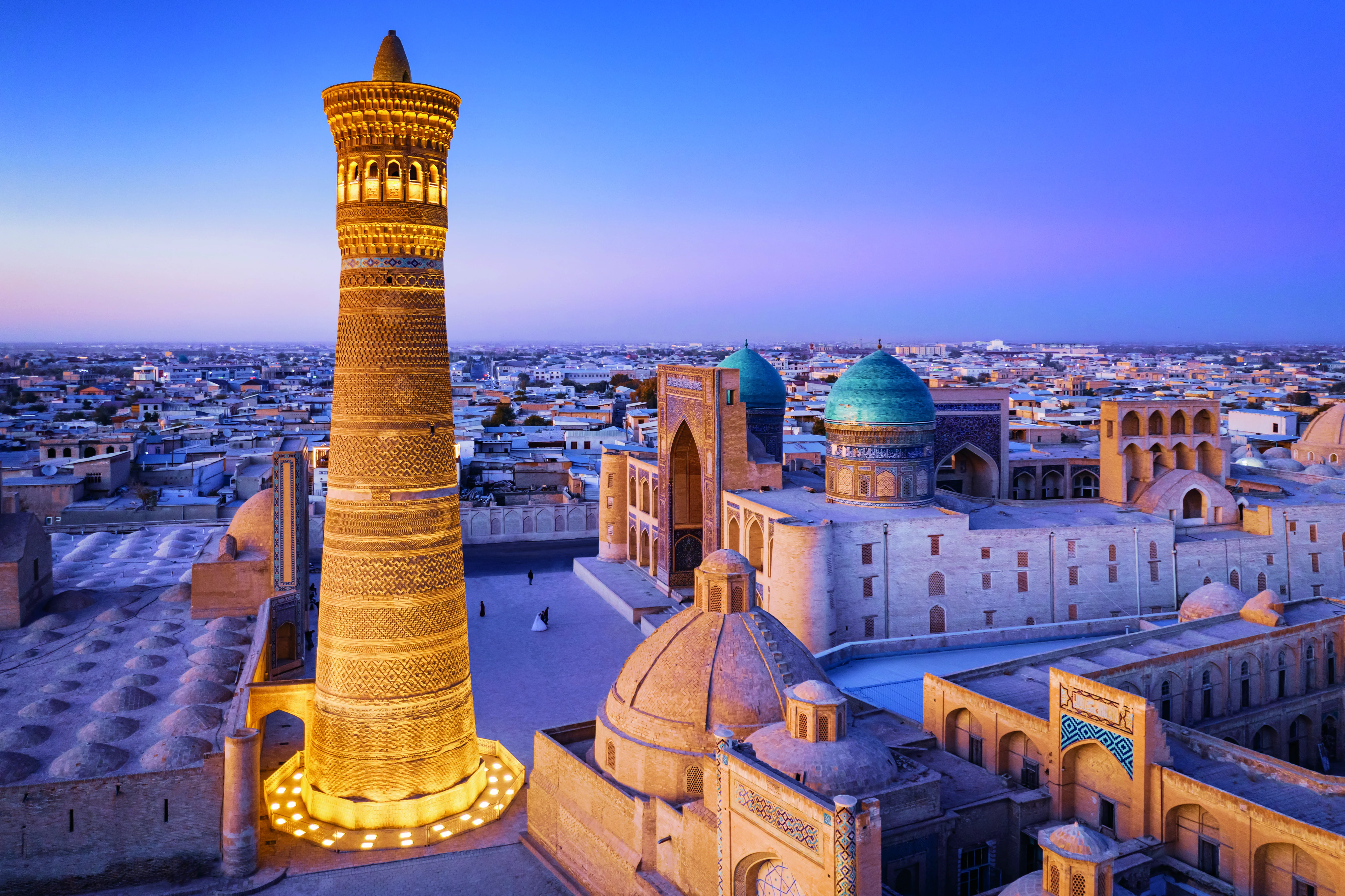
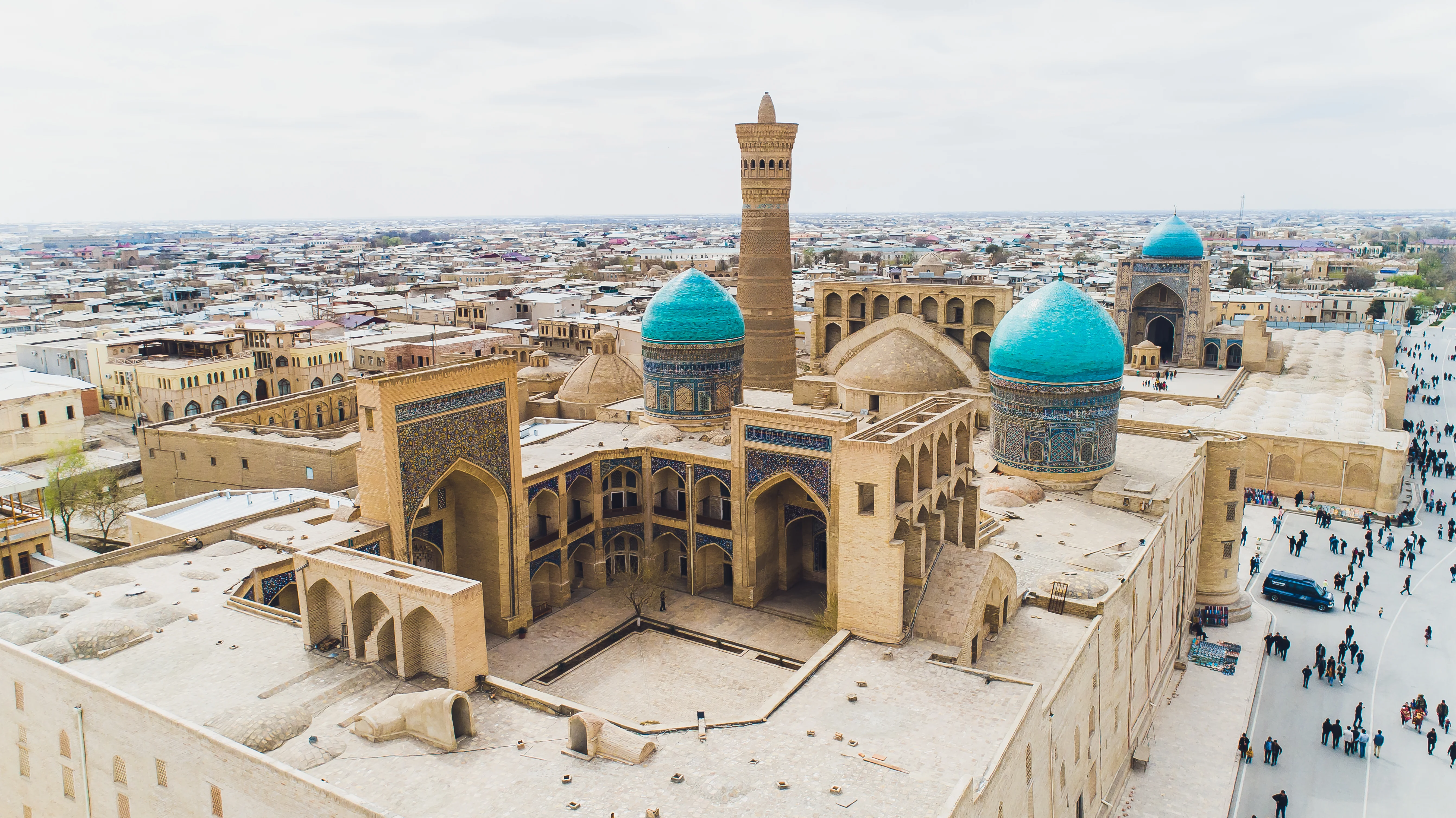
Bukhara – Larger in scale than Khiva, Bukhara was a richer city and it still shows, with hundreds of fascinating monuments. We’ll have two full days to explore it in depth, with plenty of free time on your own as well. Bukhara was also one of the cities involved in the ‘Great Game’ and is the place where two unfortunate British officers, Stoddart and Connelly, were imprisoned and ultimately executed by the local Emir. We’ll visit the Arc fortress, the Emir’s palace, set high above the city walls, as well as the prison where the officers were held. The most prominent landmark in the city is the Kalyan minaret, with its intricate decorative brickwork, rising 47 metres into the sky, it would have been the tallest building in Central Asia when it was completed in the 12th-century.
Signature experience –
Before tonight’s dinner we will be treated to a vibrant performance honouring Uzbek tradition. Enjoy traditional songs and dancing, and a rainbow of colourful costumes showcasing Uzbekistan’s musical and artistic heritage.
Meals: Dinner
Day 7
Bukhara
Bukhara – Today we’ll visit the old summer palace of the last Emir, just outside town, which was built in the early 20th-century. It’s an intriguing mix of Russian imperial design and local craftsmanship, and now houses many fascinating artefacts from that time. The Emir’s harem was said to have contained 400 wives and concubines and he even had his own personal zoo, with a pet elephant!
This afternoon, you’ll have time to browse in the many local dome-roofed bazaars. Look out for the market bakers making traditional bread from scratch, traditionally eaten warm and fresh with kaymak, more familiar to us as clotted cream.
Day 8
Drive to Samarkand
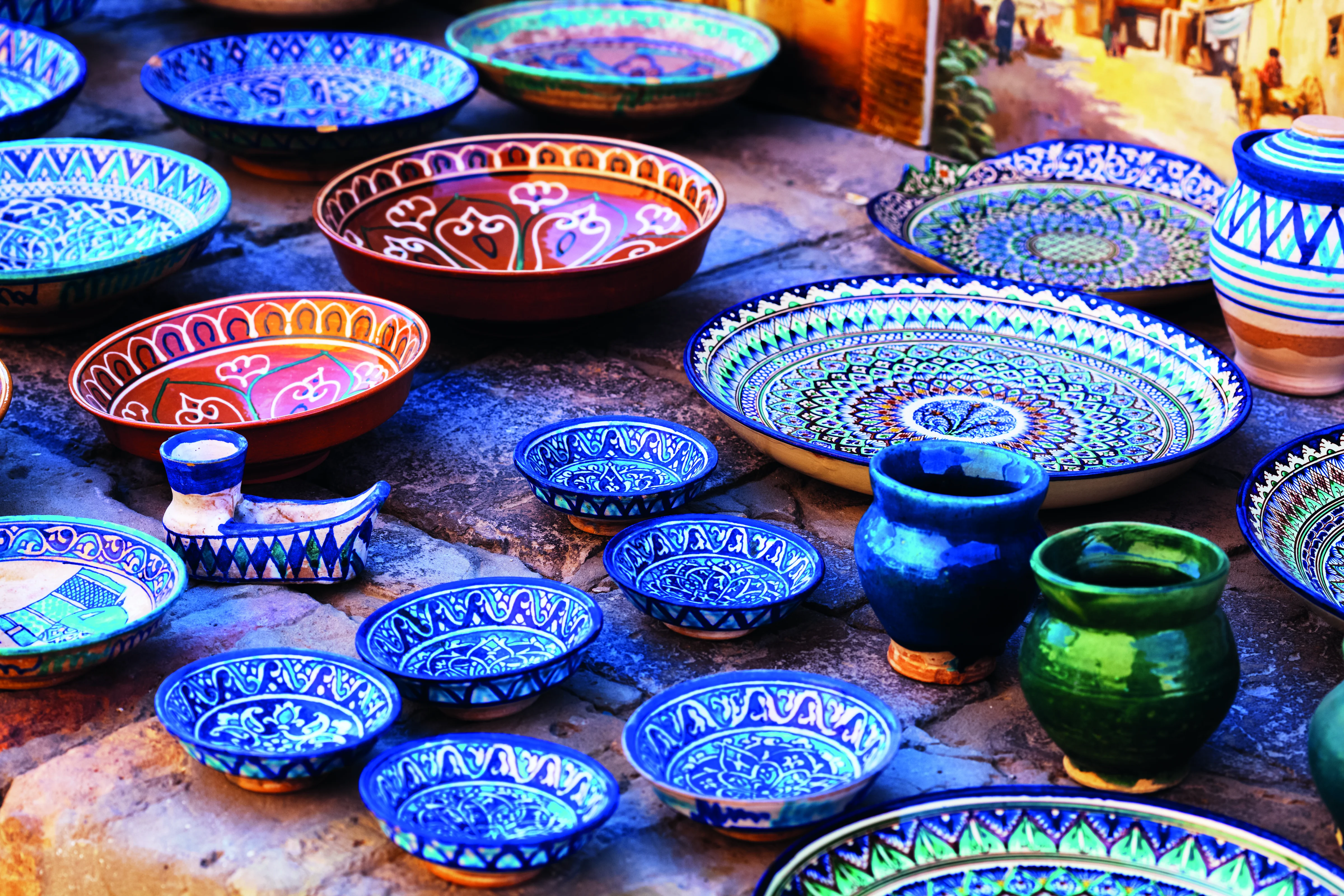
Drive to Samarkand – We say goodbye to Bukhara and set off on the road to the greatest of all the central Asian cities, Samarkand. On the way there, we’ll stop by the little village of Gijduvan, famed for its master potters. We’ll visit a family who have perfected their craft over seven generations, still producing superb pieces on traditional foot-powered potters’ wheels and mud-brick kilns. We stay two nights in Samarkand.
Day 9
Samarkand
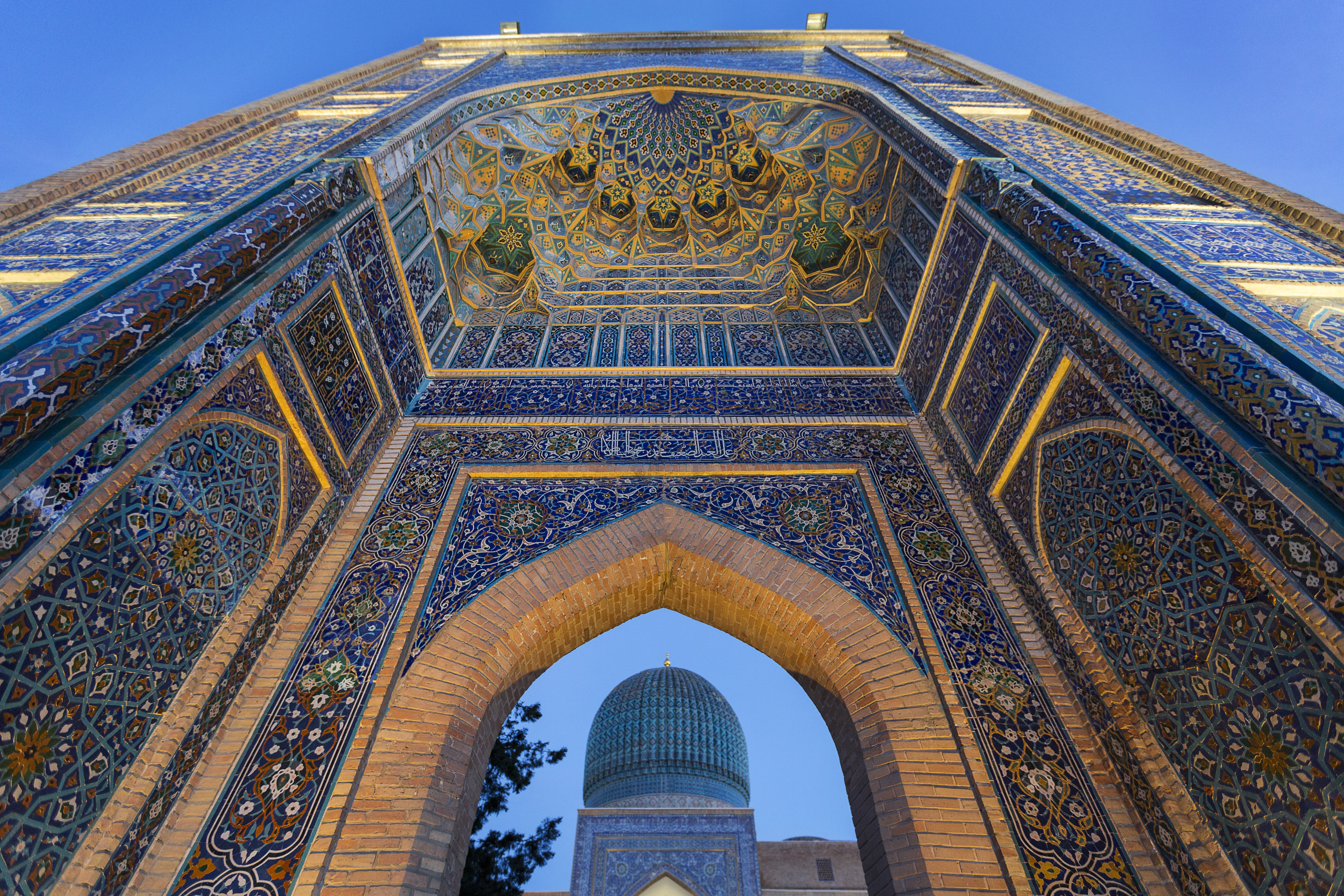
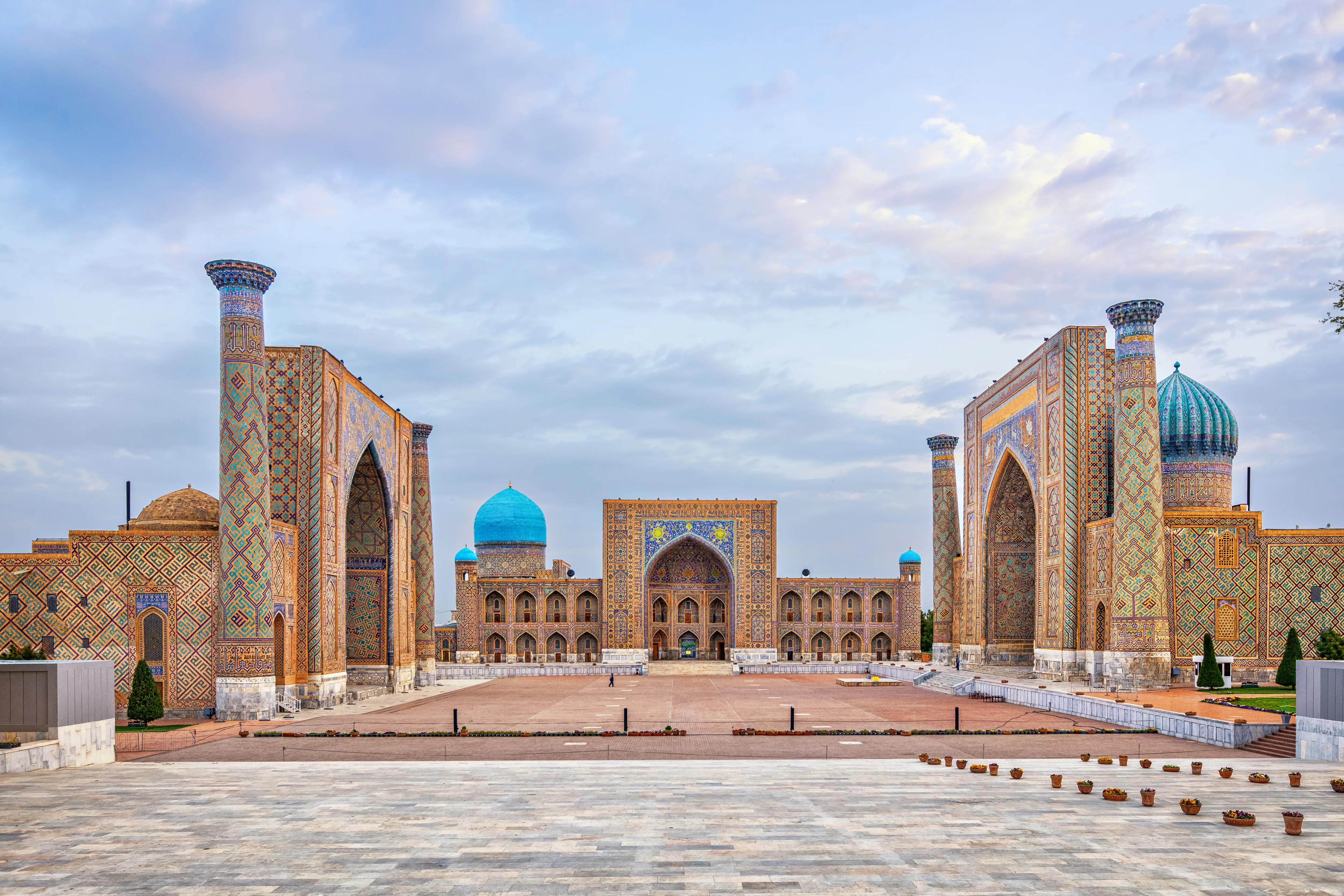
Samarkand – Samarkand’s extraordinary Registan Square is the crowning jewel of Islamic architecture in Central Asia. Just the sheer scale of the place is staggering! As the capital of Tamerlane’s empire, it benefitted from a huge building programme, supported by the very best artisans from his numerous conquests. You won’t miss the 14th-century mausoleums of Samarkand either, which are said to have inspired the Taj Mahal. The Gur-e-Amir in particular is a sight to behold, with its striking turquoise dome and beautiful floral-patterned tiles. Fittingly, Tamerlane himself was interred here, and we will visit his mausoleum which is still impressive after all these years.
Day 10
Tashkent
Tashkent – Today we head slightly out of town to visit the small community of Koni Ghil where the ancient craft of producing paper from mulberry tree bark has been revived. We’ll also stop at the Afrosiyob museum which contains a remarkable series ancient frescoes discovered nearby. In the afternoon we transfer to the railway station to catch the fast train back to Tashkent and our final night back at the Lotte City Palace Hotel, with breakfast.
Meals: Breakfast
Day 11
DAY 11
Return home
What’s included
What’s not included
Additional information
Chorsu Bazaar Guided Walk
Stroll on a guided walk through Chorsu Bazaar, Tashkent’s vast turquoise-domed market hall where butchers, bakers and spice merchants bustle beneath vaults of glazed tiles. Pyramids of saffron, apricots and almonds glow beside rows of freshly baked non bread.
Absorb the aromas of cumin and coriander as your guide decodes regional produce, shared recipes and bargaining customs. This is where daily life meets Silk Road trade, and where Uzbek hospitality is measured in smiles and generous portions.
Ayaz Qala Desert Fortress
Trace the ramparts of Ayaz Qala, a windswept citadel rising from the Khorezm steppe. Scramble onto earthen walls for views across the misty horizon of the Kyzylkum, where caravans once threaded between oases on the road to Khiva and beyond.
Unpack the story of the Khorezm desert fortresses, a chain of outposts guarding trade routes until the Mongol conquests. Weathered towers, sun-baked bricks and silence combine to evoke the peril and persistence of Silk Road caravans.
Khiva Itchan Kala Walking Tour: Palaces, Minarets & Mosques
Enter the car-free, mud-brick maze of Itchan Kala, Khiva’s UNESCO-listed inner town encircled by monumental walls. Wander lanes of wood-carved doors and turquoise tiles to the lavish Tosh-Hovli Palace and its former harem.
Pause at the shimmering Kalta Minor—a stout, tile-clad minaret unfinished yet unforgettable—then admire the slender Islam Khodja Minaret and historic Friday Djuma Mosque with its forest of carved columns. Hear tales of khans, merchants and the city’s once-notorious slave markets.
Bukhara Lyab-i Hauz Ensemble Walk
Walk the mulberry-shaded plaza around Lyab-i Hauz, where a tranquil pool reflects domes and portals. Tea houses hum with conversation as locals gather beside the water, a tradition dating to caravan days.
Admire the facade of the Nadir Divan-Begí madrasa and khanaka, and note the blend of religious and civic buildings that define Bukhara’s public life. Sit for a moment to soak in the lakeside atmosphere before exploring nearby craft stalls and courtyards.
Bukhara Ark Fortress, Zindan & Po-i-Kalyan Complex
Visit the seat of emirs at the Ark Fortress, a citadel of sun-baked walls and royal courts. Step into the Zindan prison, linked to the Great Game and the fate of British officers Stoddart and Conolly.
Continue to the Po-i-Kalyan ensemble where the 12th-century Kalyan Minaret soars above mosque and madrasa. Intricate brickwork, turquoise domes and the echo of call to prayer reveal Bukhara’s spiritual and political stature across a thousand years.
Uzbek Traditional Music & Dance Performance
Enjoy an evening of traditional songs and dancing that showcases the rhythms, elegance and storytelling of Uzbek culture. Costumed performers whirl through regional styles, a rainbow of colourful costumes set to lilting melodies.
Listen for the rhythms of the doira frame drum and the bright timbre of long-necked lutes as choreographies evoke caravan courts and harvest feasts. This celebratory showcase pairs artistry with warm hospitality for a vivid cultural encounter.
Sitorai Mokhi-Khosa: Emir’s Summer Palace
Explore Sitorai Mokhi-Khosa, the early-20th-century retreat of Bukhara’s last rulers, where Russian imperial elegance blends with Central Asian craftsmanship. Pavilions, mirrored salons and landscaped courtyards reveal a taste for spectacle.
Admire carved cedar, painted ceilings and intricate ganch stucco while exhibits of robes, porcelain and photos animate courtly life under the last Emir of Bukhara. Stories of lavish entertainments and a storied harem speak to a world on the cusp of change.
Gijduvan Ceramics Workshop with Master Potters
Visit a renowned family workshop in Gijduvan to see Gijduvan ceramics shaped on foot-powered wheels and fired in mud-brick kilns. Watch clay transform into bowls and platters glazed in mustard yellows, deep blues and emerald greens.
Hear how mineral pigments, inherited techniques and geometric motifs define this regional style. From drying courtyards to kilns warm with embers, each stage reveals the patience and precision behind heirloom pottery prized across Uzbekistan.
Samarkand Registan Square & Gur-e-Amir Mausoleum
Stand within Registan Square, framed by the madrasas of Ulugh Beg, Sher-Dor and Tilya-Kori, a masterpiece of azure tiles, muqarnas vaults and gilded prayer halls. The ensemble embodies Timurid ambition and the artistry of master craftsmen.
Pay respects at Gur-e-Amir, Tamerlane’s tomb crowned by a fluted turquoise dome, then admire the luminous tilework along Shah-i-Zinda’s avenue of mausoleums. History, science and empire converge in a city that once mapped the heavens and ruled the steppe.
Konigil Traditional Paper-Making from Mulberry Bark
Discover how artisans craft paper from mulberry bark at Konigil village, reviving techniques of medieval Samarkand. Watch fibers soak, pound and press before sheets are hand-burnished with agate for a silky sheen prized by calligraphers.
Learn how this heritage craft revived supports local livelihoods and sustainable forestry. In leafy workshops beside water channels, conversations with makers reveal a meticulous process that marries utility, beauty and tradition in the heart of Konigil village.
Afrosiyob Museum & Ancient Frescoes
Explore the Afrosiyob Museum beside the ruins of ancient Marakanda, revealing Samarkand before the Timurids. The celebrated Sogdian frescoes—a royal reception with delegations and boats—offer a rare window into 7th-century court life and trade.
Study artifacts spanning Achaemenid, Hellenistic and early Islamic eras to grasp the city’s strategic significance. Pottery, ossuaries and inscriptions trace layers of empire long preceding Registan’s glory, completing a deeper picture of Samarkand’s past.
Tashkent Metro Art & Architecture Tour
Descend into the Tashkent Metro with a local expert to discover stations adorned with ceramic murals, marble pillars and vaulted mosque-like ceilings. Each platform reveals a distinct aesthetic, blending late-Soviet design with Central Asian motifs.
Admire the blue-hued portraits of cosmonauts at Kosmonavtlar, poetic ornament at Alisher Navoiy, and grand symmetry at Mustaqillik Maydoni. This underground gallery charts the city’s resilience and artistic ambition after the 1966 earthquake, turning public transport into a civic showcase.
Tashkent Orientation: Amir Temur Square & Old City
Explore Uzbekistan’s capital on a guided orientation, beginning at Amir Temur Square where the equestrian statue of Tamerlane faces the landmark Uzbekistan Hotel. Wide boulevards and leafy parks reflect the city’s confident post-earthquake rebuild and Soviet-era urban planning.
Continue into the surviving old city quarter, a web of mahallas, courtyard houses and neighborhood mosques that hints at Tashkent’s Silk Road past. Hear how earthquakes, empires and independence reshaped the metropolis while you take in contrasting snapshots of modernity and tradition.