Your itinerary

Day 1
Arrive Almaty, Kazakhstan • Half-day city tour
Our tour of the Five Stans starts in Almaty. The former Kazakh capital has the Tien Shan mountains as its backdrop and is the most European city in Central Asia with leafy streets and a cafe culture.
After an early check-in to our hotel, we have time for rest before meeting around 12.30pm. Say hi to your leader and fellow travellers, when we gather as a group to get to know each other and learn more about the adventures ahead.
We’ll set off for our city tour afterwards. Visit a number of sites, including Panfilovs Park, home to the Piously-Voznesenskiy Orthodox Cathedral (1907), which was built without any nails; a memorial to victims of the Second World War and the Republic Square, plus the National History Museum and the Museum of National Instruments.
This evening your tour leader ensures a big welcome by arranging a group dinner together.
Want extra time in Almaty? Secure pre-tour hotel nights through your sales representative.
Meals: Breakfast,Dinner
Day 2
Visit Medeo Gorge and enjoy cable car trips for panoramic views of Almaty
After breakfast, we transfer to Medeo Gorge, around 15mi (25km) from Almaty at 2,000m (6,560ft) above sea level, which hosts the world’s highest mountain skating rink and the largest ski resort in the region. Along the way, we stop by a well-known dam that protects the city from avalanches and mudslides, which commonly cascade from the slopes. We also take a cable car to the top to enjoy a panoramic view of the Tien Shan mountains (sometimes the cable car is closed for maintenance; when this occurs, we’re usually able to travel up to the base station by electric vehicle but not get to the top).
After, we return to Almaty and take another cable car at Kok-Tobe recreational area to the top of Kok-Tobe hill to enjoy panoramic views of Almaty and the city’s surroundings.
After returning to our hotel mid-afternoon, we have free time to relax before an early start for the next leg of our tour tomorrow.
Meals: Breakfast
Day 3
Black Canyon and Charyn River, into Kyrgyzstan to Karakol
After an early start, we head towards the Black Canyon and Charyn River, where the dramatic erosion caused by the river has created an impressive landscape. We have some time to observe the beginning of Charyn and Moon Canyons from different viewpoints, as well as a short walk and time for photographs. We’ll eat a picnic lunch in the canyon (you can buy your picnic from a supermarket earlier in the day).
We cross the Kazakh-Kyrgyz border, a checkpoint that may take up to two hours for processing. After border formalities, we proceed to Karakol along the picturesque Karkara valley, famous for its mountain flowers that attract many beekeepers. We expect to check into our hotel in Karakol around 5pm. There are about six hours of driving today.
Meals: Breakfast
Day 4
Tour Karakol • Issyk Kul Lake and eagle-hunting demonstration • End in the Chon-Kemin
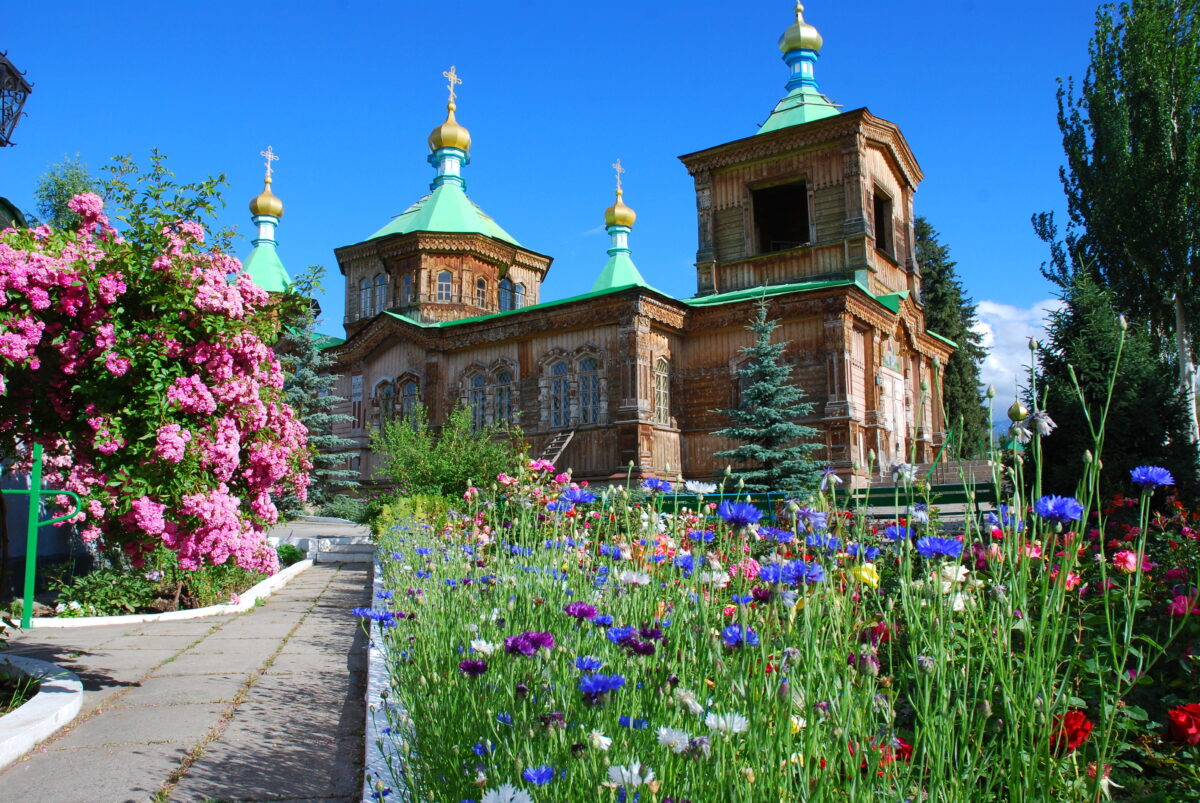
Begin the day in Karakol, where timber houses and wide streets recall the era of Tsarist Russia, and our tour leader guides us to the 1886 Holy Trinity Church, the nail-free Dungan mosque (1899), and the local bazaar for a glimpse of everyday life.
We then travel west (five to six hours total driving today), skirting the southern shore of Issyk Kul Lake. This vast body of water – 43mi by 112mi (70km by 180km) and close to 2,300ft (700m) deep – never freezes thanks to a mix of salinity and geothermal activity.
Partway around the shore, we stop in Bokonbaev for a demonstration of berkutchi, the traditional art of hunting with golden eagles. This centuries-old skill is passed between generations, and your tour leader interprets the techniques and significance of this partnership between bird and handler. A little farther on, in Kyzyl Tuu village, we meet craftspeople who specialise in making yurts; here we watch how the wooden frame is assembled – an intricate process still used by nomadic families.
Our day ends in the Chon-Kemin Valley, a quiet stretch of farmland and forested slopes, where we settle into our guesthouse and enjoy the mountain setting.
Meals: Breakfast,Dinner
Day 5
Drive to Bishkek • Visit the 11th-century Burana Tower
After breakfast, we head to Bishkek, the modern capital city and industrial centre of Kyrgyzstan. Along the way we stop at an 11th-century Karakhanid minaret – Burana Tower, a UNESCO World Heritage site and the first minaret of its kind in Central Asia. You can climb to the top of the tower. Take care, it’s quite dark inside and the stairs are steep and narrow. We visit the museum complex, including the tower itself, reconstructions of mausoleums found on the site, remains of a citadel, balbals (gravestones used by nomadic Turkic peoples) and petroglyphs.
After arriving in Bishkek, we check into our hotel.
Meals: Breakfast
Day 6
Bishkek sightseeing
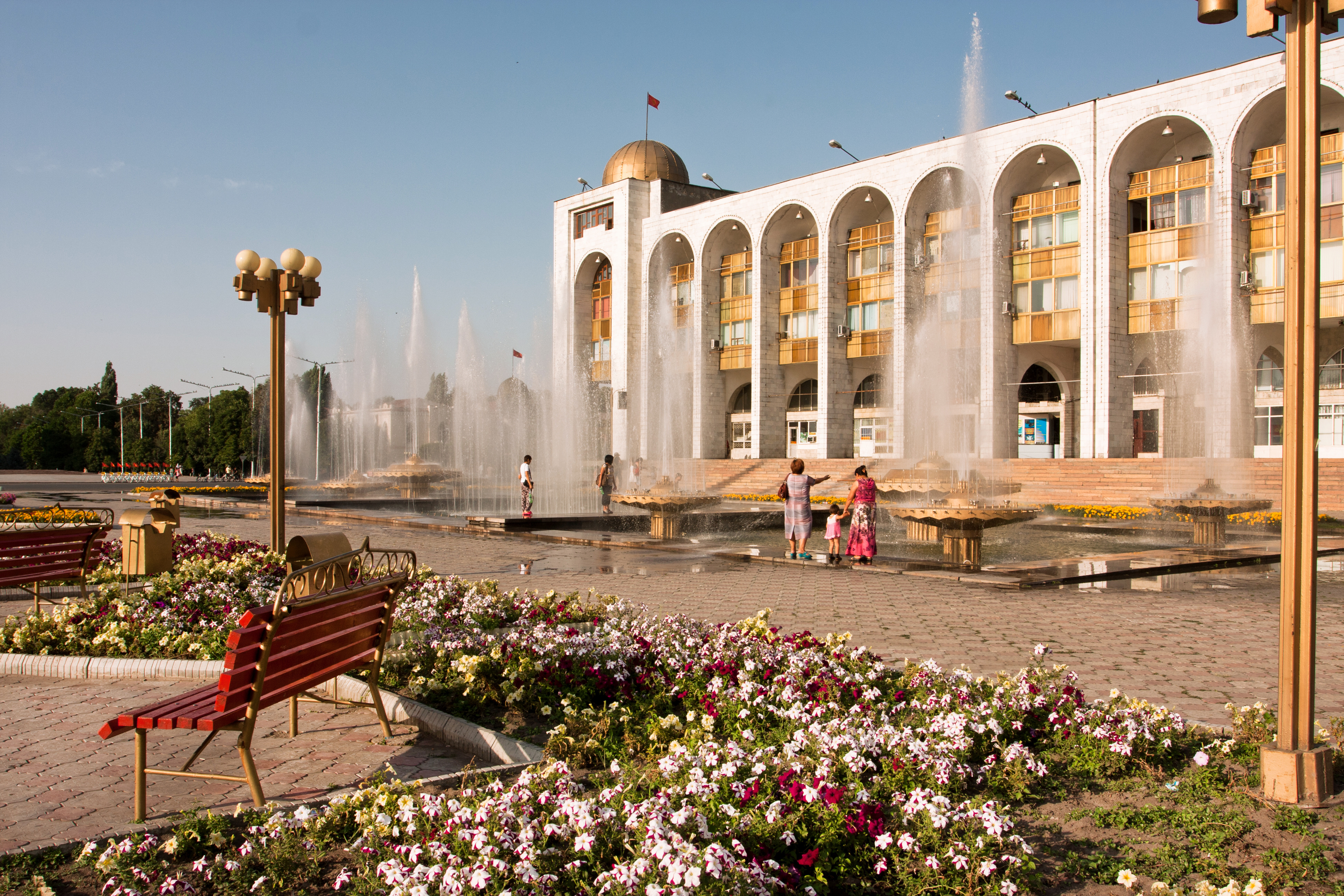
Bishkek, at the foothill of the magnificent Kyrgyz Ala-Tau mountains, is a city of many green parks and marble-faced public buildings combined with numerous Soviet heritage buildings and houses. It is laid out in a grid pattern, with most streets flanked on both sides by narrow irrigation channels that water the innumerable trees. The city is believed to be the greenest in Central Asia with more trees per head of population than any other.
After breakfast, set out on a sightseeing tour that takes us to the main city sites, including the State History Museum; the Kyrgyz National Museum of Fine Arts; Ala-Too Square, the most important square in the country; and Oak Park, one of the oldest parks in Bishkek.
Meals: Breakfast
Day 7
To Jalal Abad in Fergana Valley of Kyrgyzstan through scenic mountain passes
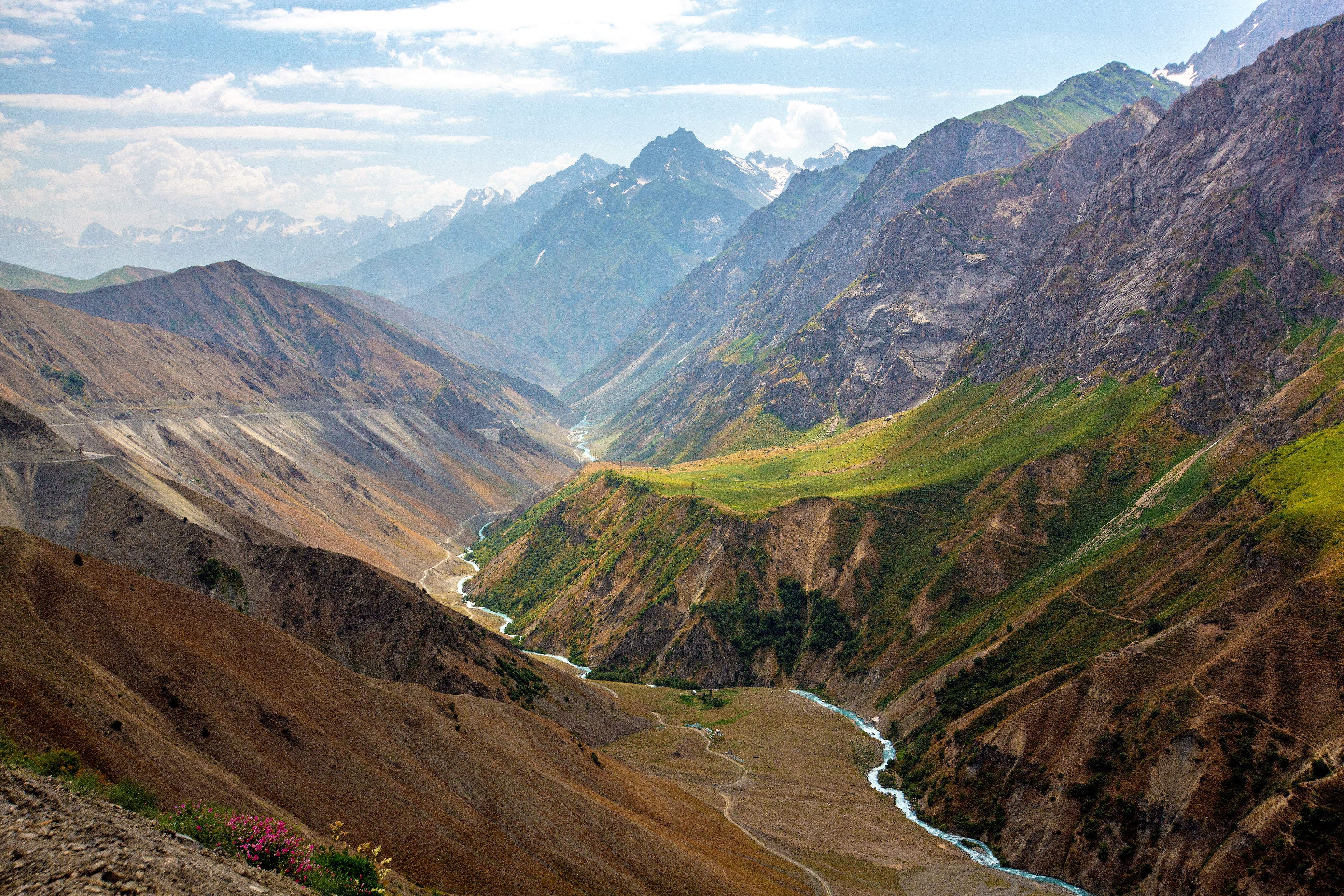
We have an early start today before a long but scenic drive along the spectacular Bishkek-Osh highway through the central Tien Shan mountains to Jalal-Abad. We drive through picturesque canyons and gorges and around Toktogul Reservoir with its cascade of hydroelectric power stations.
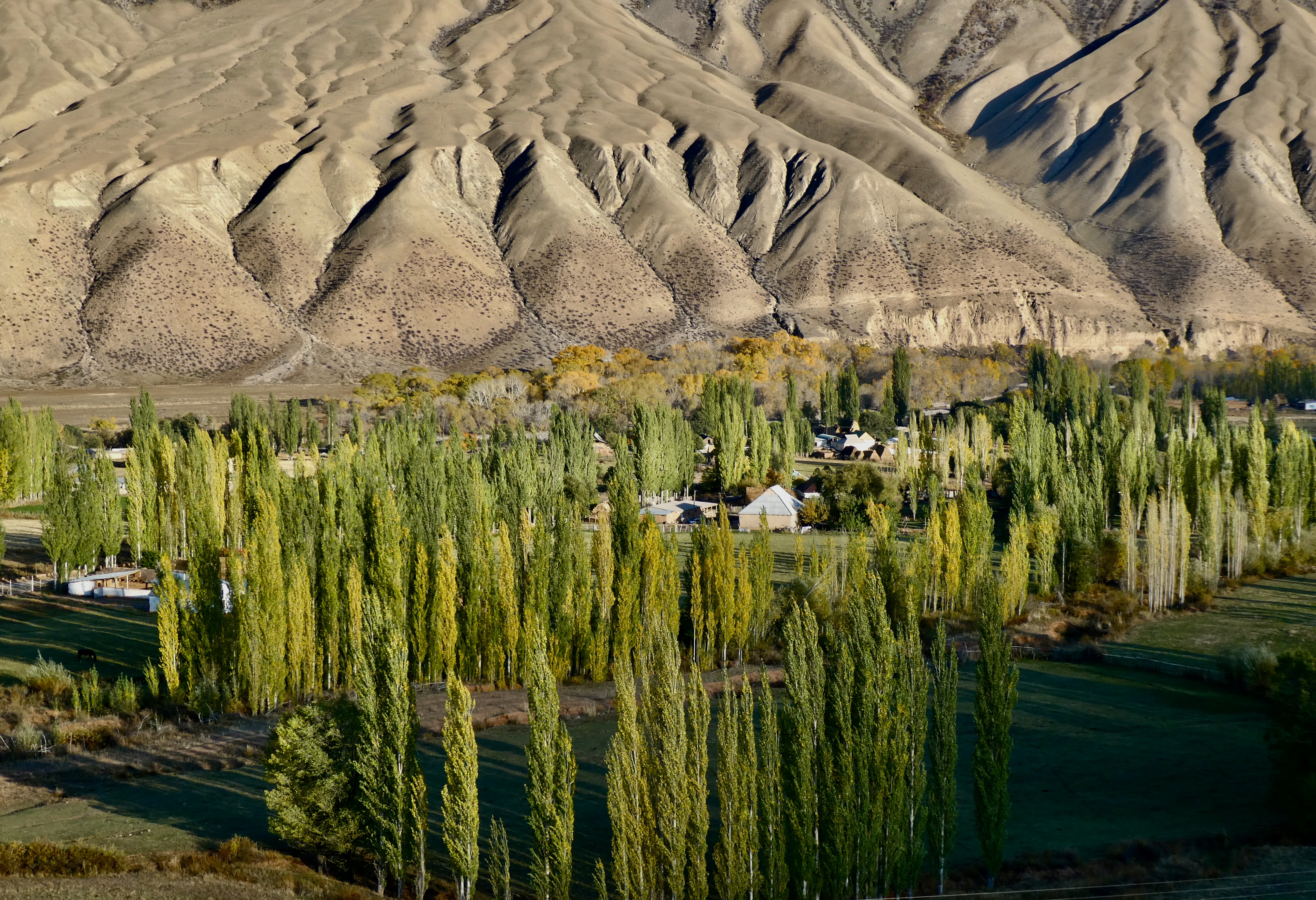
We continue over Ala-Bel (3,120m/10,235ft) and Tyua-Ashuu (3,050m/10,005ft) mountain passes, along the picturesque Suusamyr mountain valley. In summer, the valley is dotted with hundreds of yurts, and serves as a pasture for countless herds of cattle. Here, local people produce Kyrgyz national drink, kumus (fermented mare’s milk), sour cheese and butter that they sell along the road. There are about nine hours of driving today.
Meals: Breakfast
Day 8
Full day exploring Arslanbob
We leave the city and head for Arslanbob Nature Reserve (approximately 1hr 30min drive). The village of Arslanbob is in the mountains at around 1,600m (5,250ft) – though the top and bottom of the village vary considerably in altitude – and is surrounded by an ancient walnut forest believed to be the largest in the world.
We go for a walk and picnic lunch in the surrounding countryside. The walk takes around four hours (including lunch and stops) and requires walking shoes/boots. The pace is leisurely but if anyone prefers not to join, you are free to opt out.
Afterwards, we head back to our guesthouse (approximately 1hr 30min drive) in Jalal-Abad for the night.
Meals: Breakfast
Day 9
Explore Osh in Fergana Valley • Visit sacred Sulayman Mountain • Border crossing to Uzbekistan • Fergana
Head to Osh, Kyrgyzstan’s second largest city. Along the way, we make a sightseeing stop at Uzgen, with a history dating back over 2,000 years — it is claimed to be a site of numerous citadels built at various times since the 1st century BCE. It was an important centre of trade routes between the Fergana and the northern territories of Central Asia. Uzgen became a highly developed town in the Karakhanid’s epoch and developed into a large trading and handicraft centre. We visit an old minaret, nearby mausoleums, and a rice bazaar.
We continue to Osh and visit the sacred Sulayman Mountain, a holy Muslim site and burial place of the prophet Sulayman (Solomon), and the central point on the Silk Road. The walk to the top of Sulayman Mountain is paved with some steps and can be tiring in the heat but the views over the city and valley below, small museum and 15th-century church are worth the effort.
A short drive gets us to our next border crossing to Uzbekistan, and country number three on our tour. We arrive at the Dustlik border crossing point at approximately 2pm-3pm. After crossing the border, we meet our Uzbek tour leader on the other side and continue to Margilan, where we visit a silk factory. Afterwards, we drive to Fergana town, where we check into our hotel and spend the night.
Meals: Breakfast
Day 10
Rishtan and Kokand • Cross into Tajikistan to Khujand
Transfer from Ferghana to Khujand (approximately a five-hour drive), making several stops along the way. Our first is the small village of Rishtan, famous for its potter dynasties and ceramics masters. We visit a ceramics studio and witness a demonstration of the craft before having the opportunity to buy some of the earthenware.
We then continue to Kokand, which was the capital of the 19th-century Kokand Khanate. We visit the Khudoyar-Khan Palace (1871), home to a museum, the Norbuta-Biy Madrassah and the Modarikhon Mausoleum.
From Kokand, we transfer to the Uzbekistan-Tajikistan border; after border formalities, we meet our Tajik guide and drive to Khujand, where we check into our hotel.
Meals: Breakfast
Day 11
Uncover Khujand’s layered history • To Penjikent via Istaravshan
Journey four hours into the agricultural heartland around Khujand, a city with a long and eventful past. Thought to be among the oldest in Central Asia, it has seen Alexander the Great, Arab armies, and Genghis Khan pass through.
Our tour includes the Museum of Archaeology, the Sheikh Maslikhiddin Mosque and the lively Payshanba bazaar. If time allows, we also call in at the Arbob Palace – once the Urumkhodjaev family estate and inspired by the grandeur of Peterhof near St Petersburg.
We then drive (five to six hours) to Penjikent via Istaravshan. Founded by the Persian king Kier in the sixth century, Istaravshan is known for traditional crafts and old-town layout. We stop at the bazaar before continuing to Penjikent for the night.
Meals: Breakfast
Day 12
Explore the Seven Lakes in the Fann Mountains
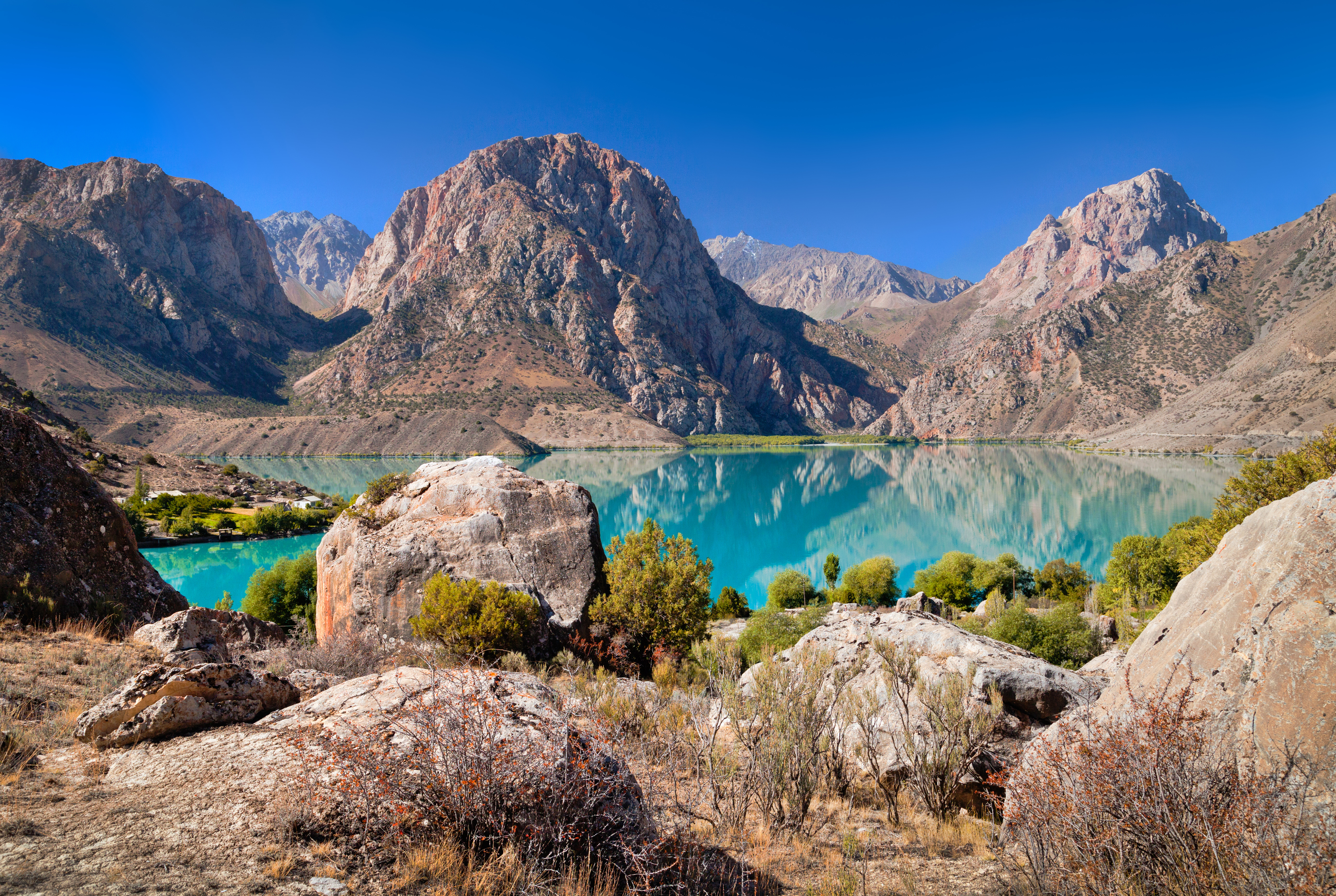
Make a trip into the heart of the Fann Mountains. We drive (50mi/80km) to Seven Lakes (or Haf Kul in Tajik) in the Shing Valley, taking a sometimes bumpy and narrow road. The high mineral content in the water gives the lakes an unusual colour. We have time to enjoy the mountains, with a walk to Hazorchashma lake and a picnic lunch in Nofin village before driving back to Penjikent.
Meals: Breakfast,Lunch
Day 13
Penjikent sightseeing tour, Sarazm • Cross border to Uzbekistan • Drive to Samarkand
In Penjikent, we set out on a tour (three to four hours) that takes us to the Museum of Rudaki (Rudaki is considered by many to be the father of Persian poetry and he was born in Penjikent) and ancient Penjikent – ruins of old Sogdian town founded in the fifth century and abandoned in the eighth century. We also explore the remains of houses, a citadel with Zoroastrian fire temples and a bazaar in the excavated ruins.
After, we drive to Sarazm, one of Central Asia’s ancient settlements, dating back 5,500 years and now a World Heritage site. Next, we travel to the Uzbek border, re-enter Uzbekistan and drive to Samarkand where we check into our hotel for the evening.
Meals: Breakfast
Day 14
Samarkand tour and sightseeing
Spend the day exploring Samarkand. Samarkand is steeped in history, dating back 2,500 years and impacted by Alexander the Great, Genghis Khan and Tamerlane, who made it the capital of his empire in the 14th century. Its central position on the Silk Road meant it was an important stop on the route from Istanbul to Peking (now Beijing).
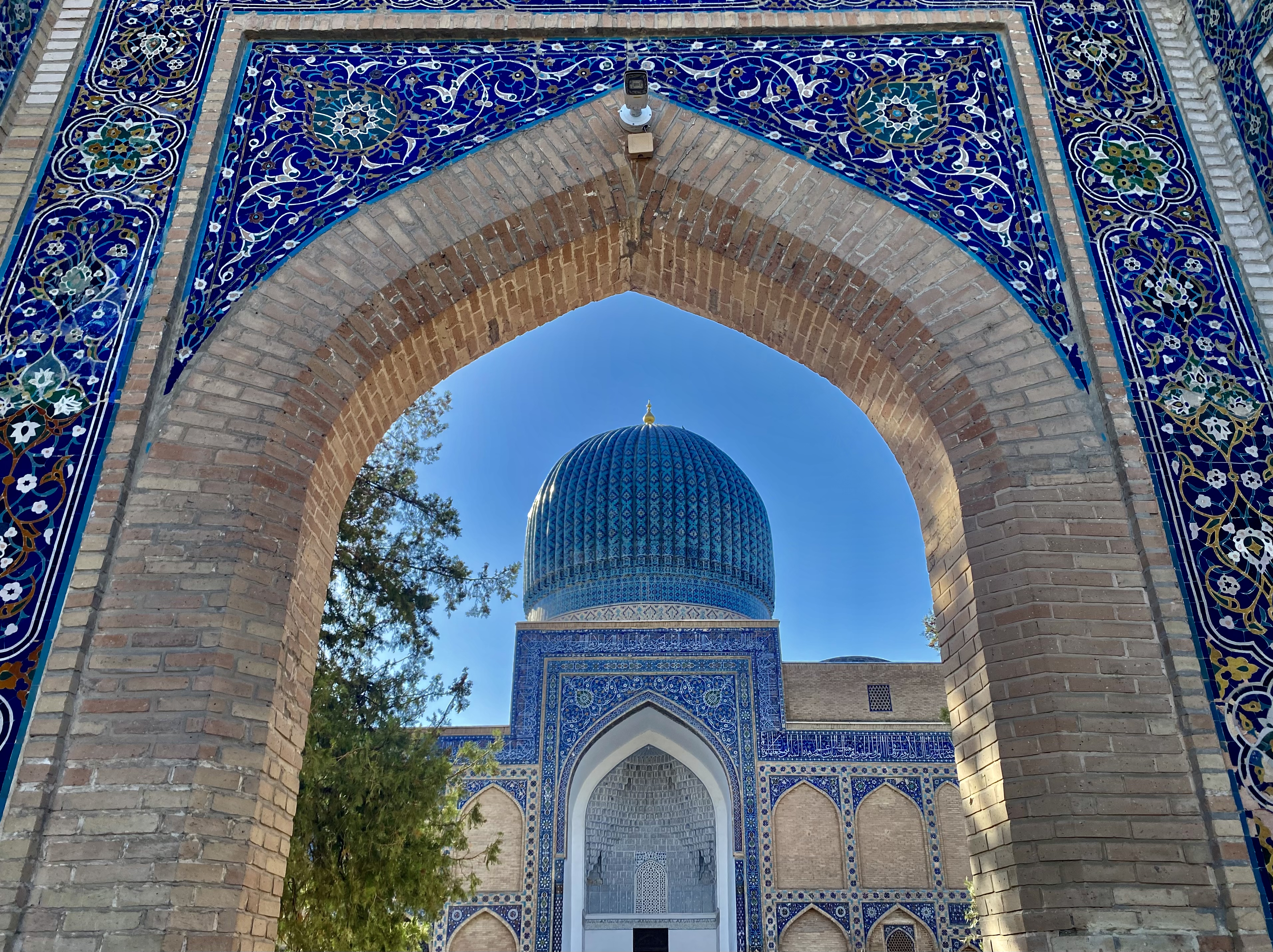
At its heart is the grand Registan Square flanked by the three grand madrasahs of Ulughbeg, Sherdor and Tilya Qori. We visit the grand square and the Gur Emir Mausoleum, burial place of Tamerlane, his sons and his grandson, Ulughbek. The Ulugbek Observatory was built in 1420 by Tamerlane’s grandson who was not just a ruler but also a well-known astronomer. We move onto the oversized Bibi Khanum Mosque and Shakhi Zinda – the ‘Living King’ necropolis – with its series of mausoleums dating back to the 14th and 15th centuries.
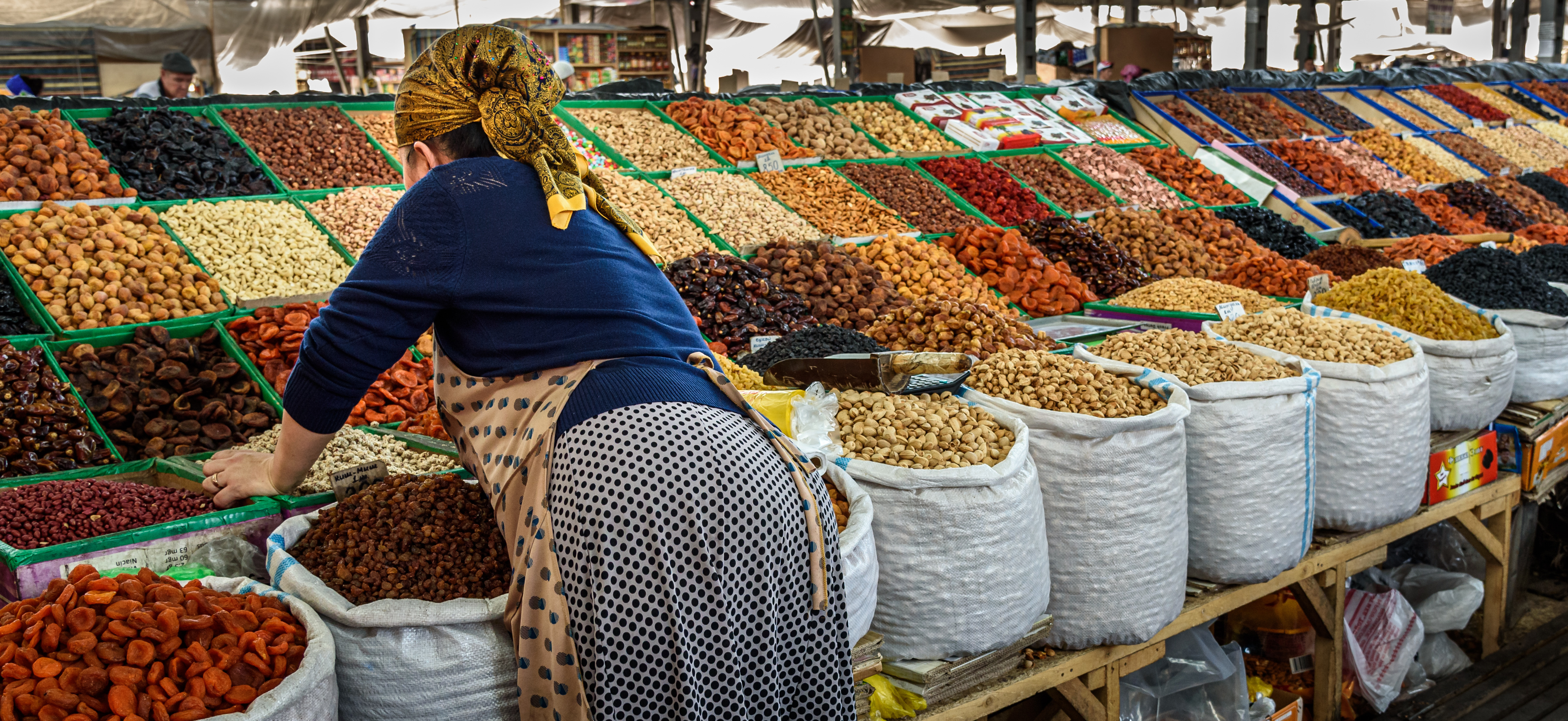
Our final visit is to the exotic Siab Bazaar with its fresh and dried fruit and nuts and other local food produce, and a paper factory. The exact order of visits may vary.
Meals: Breakfast
Day 15
Train to Bukhara • Visit the Sitora-i-Mokhi Khosa in Bukhara
Board the train to Bukhara this morning, travelling on the Afrosiyob high-speed service when schedules permit (just under two hours). It’s a smooth introduction to one of the Silk Road’s most storied cities.
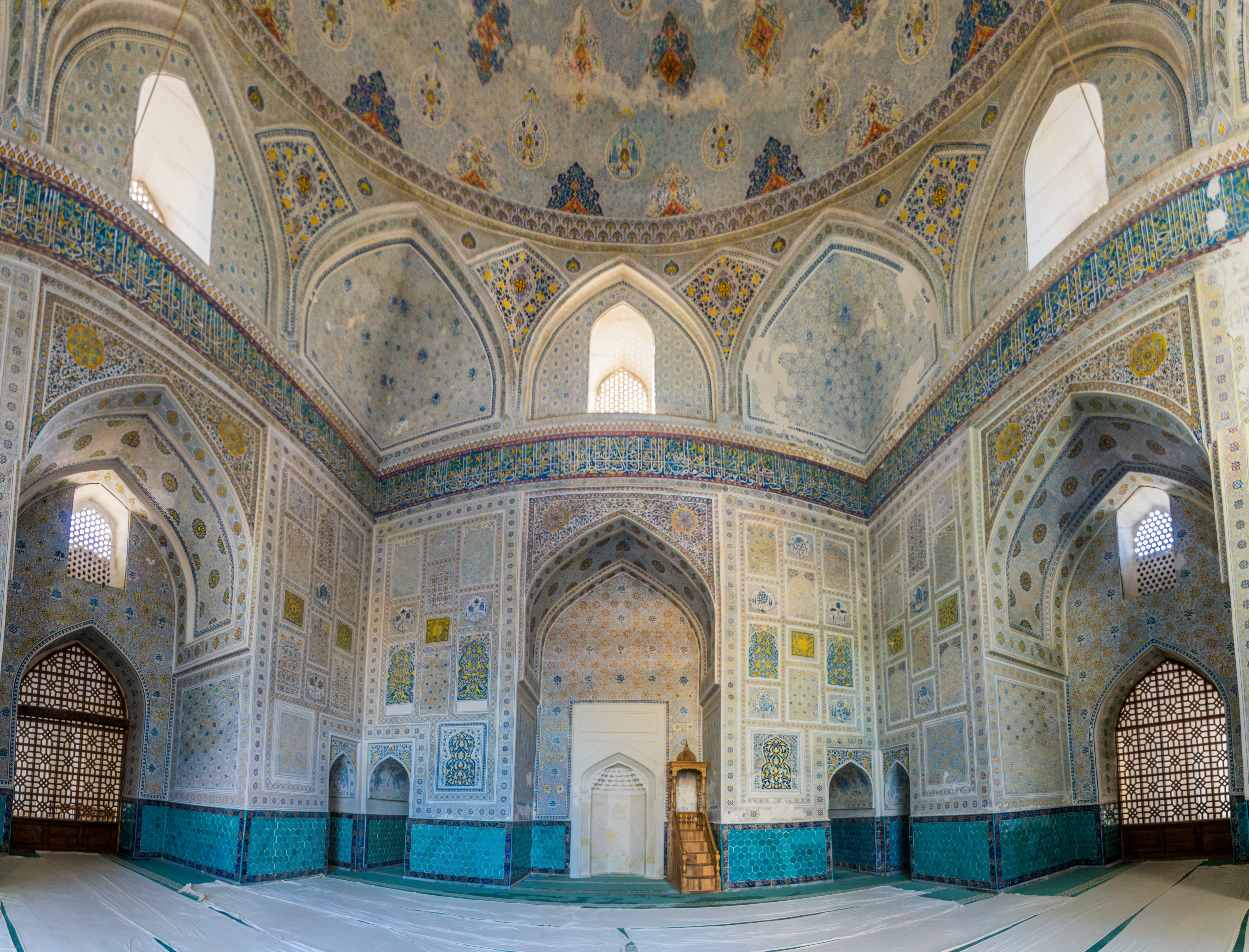
On arrival, we visit the Sitorai-Mokhi-Khosa Palace, once the summer retreat of the emirs of Bukhara. Its reception halls and private rooms are decorated with elaborate frescoes, stucco panels and finely carved woodwork, reflecting a period when local craftsmanship blended with Russian influences in surprising ways.
Meals: Breakfast
Day 16
Bukhara
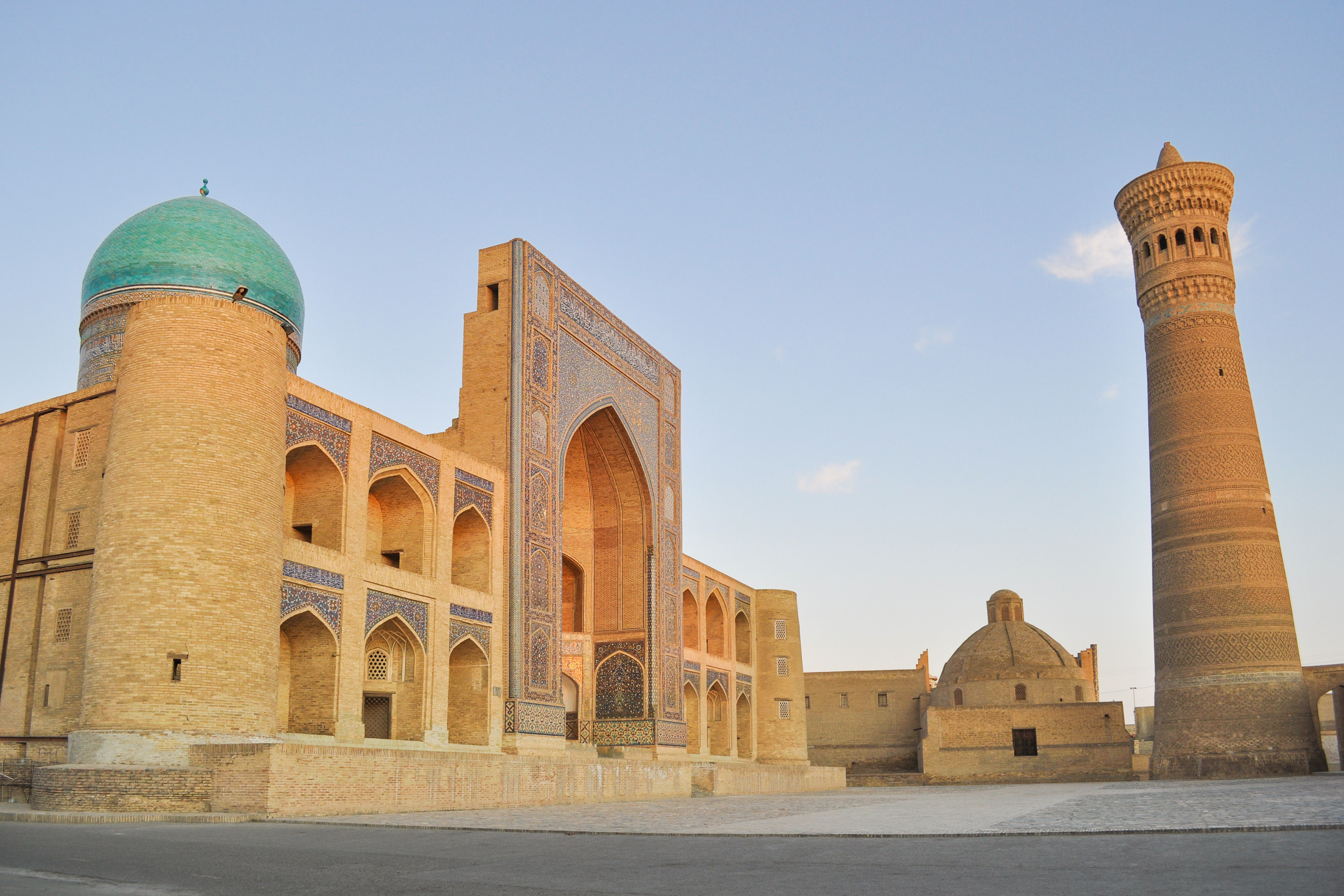
Today is spent exploring Bukhara. The best-preserved medieval city in Central Asia, this World Heritage site dates back more than 2,000 years. Our tour takes us to the Samanid Mausoleum, the oldest piece of Islamic architecture in Central Asia and burial site of the 10th-century emir; Mazar Chashma Ayub mausoleum, a sarcophagus over an ancient sacred spring; Ark Fortress, a fifth-century citadel and the oldest building in Bukhara.
Next is the Poi-Kalyan religious complex with its 48m (157ft) Kalyan minaret dating to the 12th century and the symbol of Bukhara, and the only active madrasah in the city, Bukhara Miri-Arab; the large Kalyan Mosque (15th century) with its galleries topped by 288 domes.
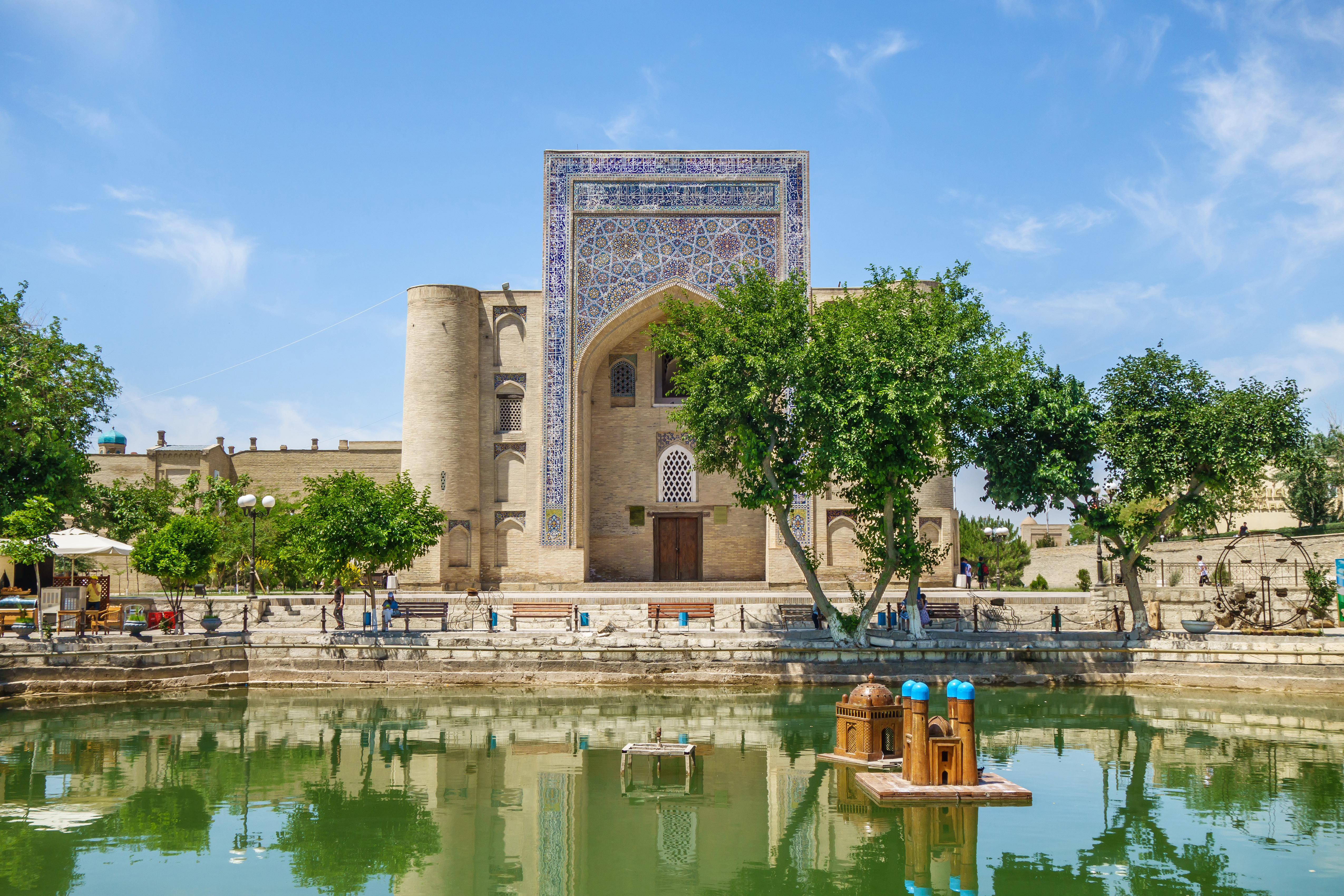
We then visit Lyabi Khauz complex, built in the 16th and 17th centuries, home to the oldest pool of its kind in Central Asia. The pool is surrounded by madrasahs and a khanaka (lodging house for travelling sufis), including the largest madrasah in Bukhara, the 15th-century Kukeldash Madrasah.
Meals: Breakfast
Day 17
To Khiva via the Kyzylkum desert and the Desert Castles of Khorezm
Drive through the Kyzylkum desert to the arid plains of Khorezm, a drive of about six to seven hours. These were once densely populated marshland, inhabited by Messagetae Scythians, nomadic horseback archers who fought to retain the land, even defeating Cyrus the Great, a Persian emperor in 529 BCE.
Along the way, we stop at Ayaz-Qala, an imposing hilltop fortress from the sixth century; if time allows, we also visit some of the other castles in the area before heading to Khiva, a further two hours away.
Meals: Breakfast
Day 18
Step into the wonders of Khiva
The walled Itchan Kala is Khiva’s meticulously preserved old city. Here, our tour leader takes us to: the tiled base of the never-completed Kalta Minar; the Kunya-Ark, the 12th-century fortress that once housed the Khiva khans; and the serene mausoleum of Pakhlavan Makhmud, Khiva’s patron poet-saint.
We continue to the Islam Khoja minaret and madrasah and the atmospheric Juma Mosque, whose roof is carried by 218 carved wooden columns. Further highlights include the richly decorated Tash Khauli palace complex and Allakuli Khan Madrassah.
Along the way, we step into artisan workshops to see how Khiva’s crafts endure today, learning about the techniques behind wool and silk carpets, embroidery, ceramics and intricate wood inlay.
Meals: Breakfast
Day 19
Cross the border to Turkmenistan • To Kunya Urgench
We travel north to the Shavat border post (approximately one hour), where we say goodbye to our Uzbek tour leader before beginning the border formalities. After Uzbek exit procedures, a short bus ride across no-man’s land (five minutes; please bring US$1 to pay for the bus) brings us to the Turkmen checkpoint. Entry fees are also payable here, and the overall process typically takes around two hours.
On the Turkmen side, we continue by road for about two hours to Kunya Urgench via Dashoguz. Known as Old Urgench, this was once the capital of Khorezm and an important centre within the Achaemenid Empire. Today, it preserves an extraordinary collection of monuments from the 11th to 16th centuries: elegant mausoleums, the remains of a vast mosque, the gates of a caravanserai and, rising above the plain, a 200ft (60m) minaret that hints at the scale and ambition of the medieval city. Our tour leader helps trace how these structures shaped later architectural traditions in Iran, Afghanistan and Mughal India.
After visiting the site, we return (one hour) to Dashoguz for the night.
Meals: Breakfast
Day 20
Fly to Ashgabat • Drive to Mary
Catch a morning flight south to Ashgabat, swapping desert plains for the white-marble capital of Turkmenistan. On arrival, we visit the Ertogrul Gazi Mosque, one of the city’s landmark places of worship, whose four minarets and spacious interior reflect the architectural style of Ottoman-era mosques. From here, we continue to the national museum, where our tour leader helps piece together the region’s long and layered history through archeological finds from ancient Merv, Nisa and the wider Khorezm world.
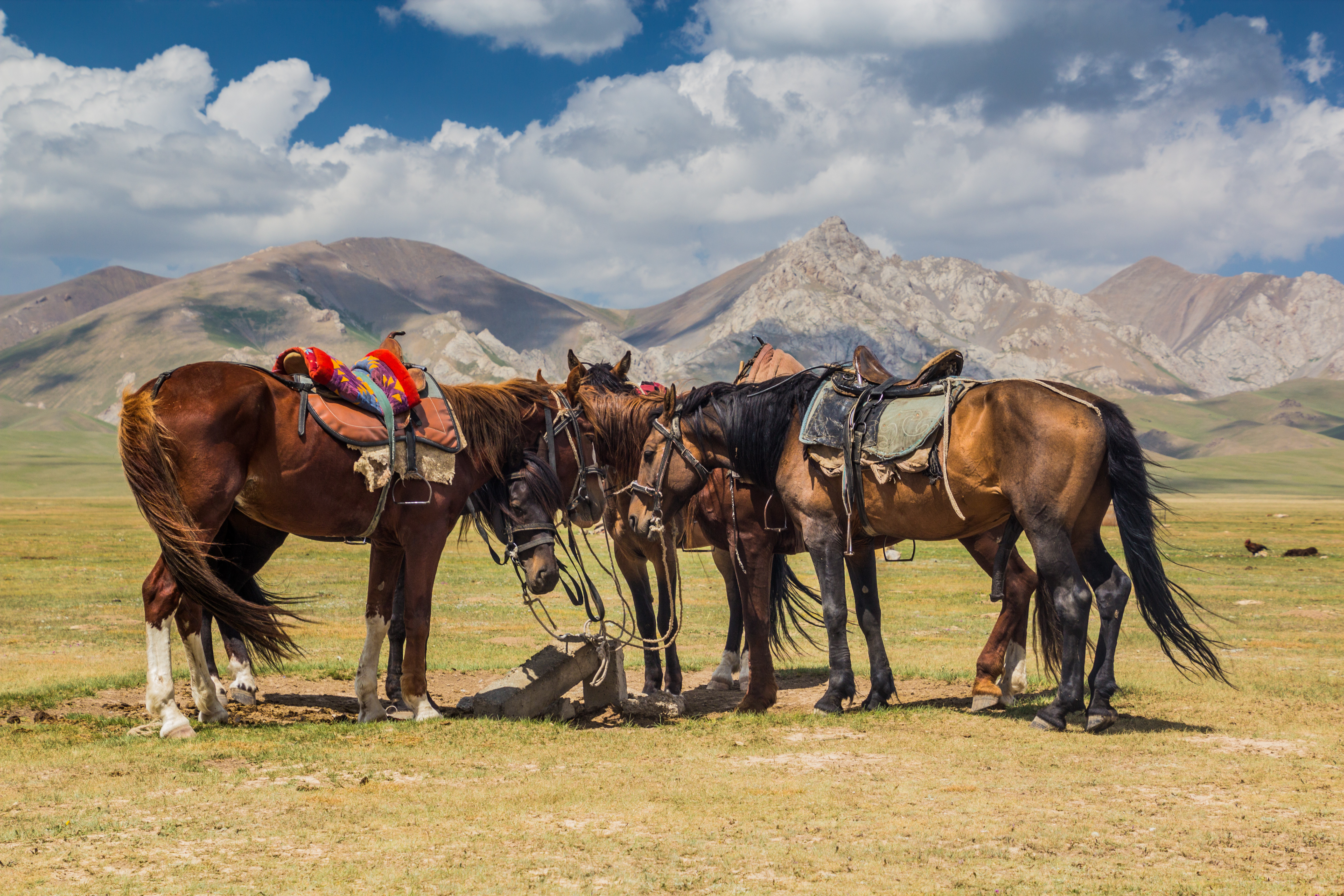
Our final visit is a local farm known for breeding Akhal-Teke horses. Celebrated for their distinctive metallic sheen and long-distance stamina, they remain an enduring emblem of Turkmen national heritage.
After, we drive (up to four hours) to Mary, a contemporary city that serves as the gateway to ancient Merv.
Meals: Breakfast
Day 21
Explore the ruins of Merv • To Ashgabat
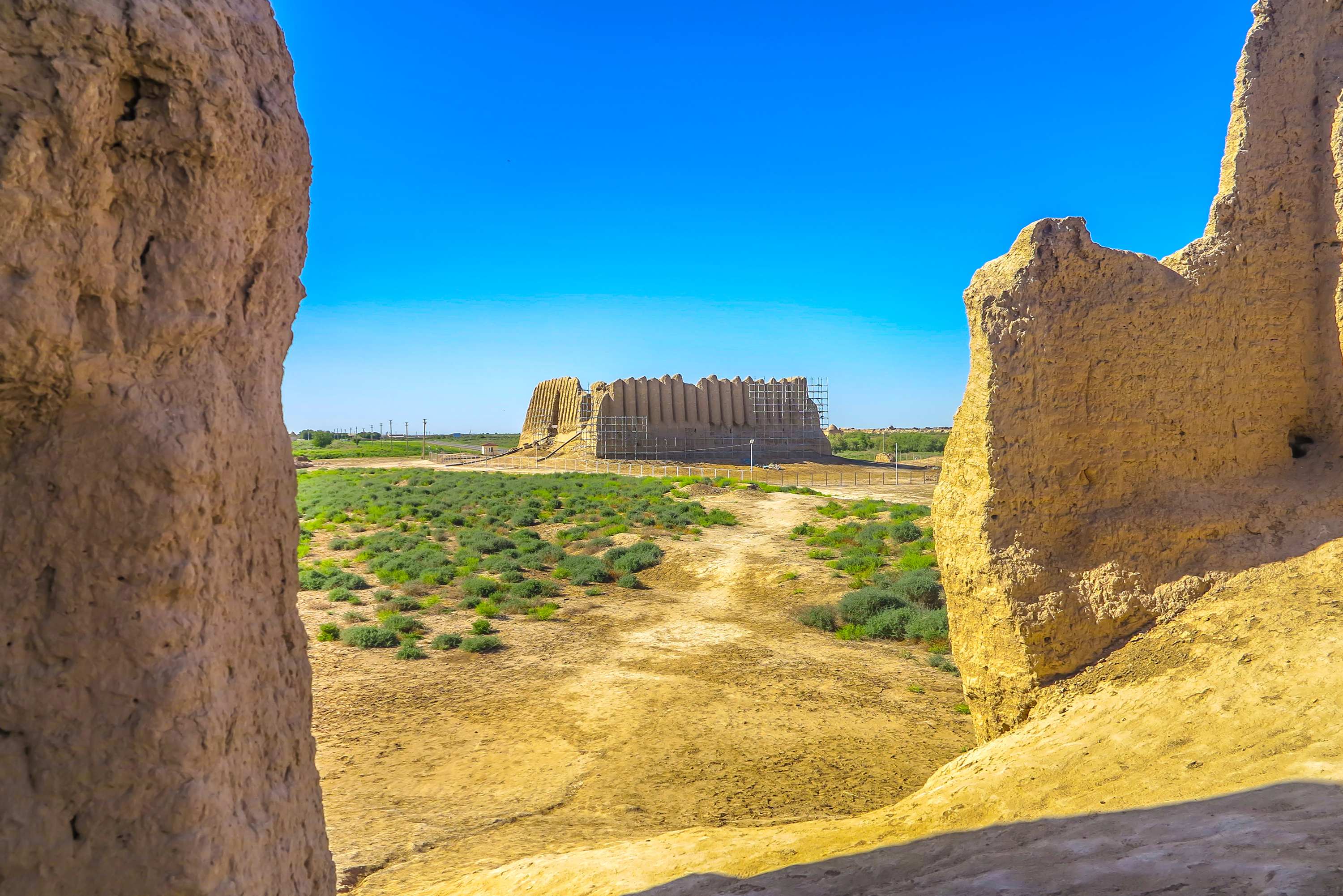
After breakfast, we visit the World Heritage site of Merv, once among the largest cities on Earth. We move between key surviving areas, including the windswept remains of crumbling towers and walls, to gain a sense of the scale that so impressed medieval travellers.
Later, we return to Mary to look around the modern town, including the Juma Mosque and the small Russian Orthodox Church, before driving back to Ashgabat.
Meals: Breakfast
Day 22
Ashgabat and Nisa (Turkmenistan)
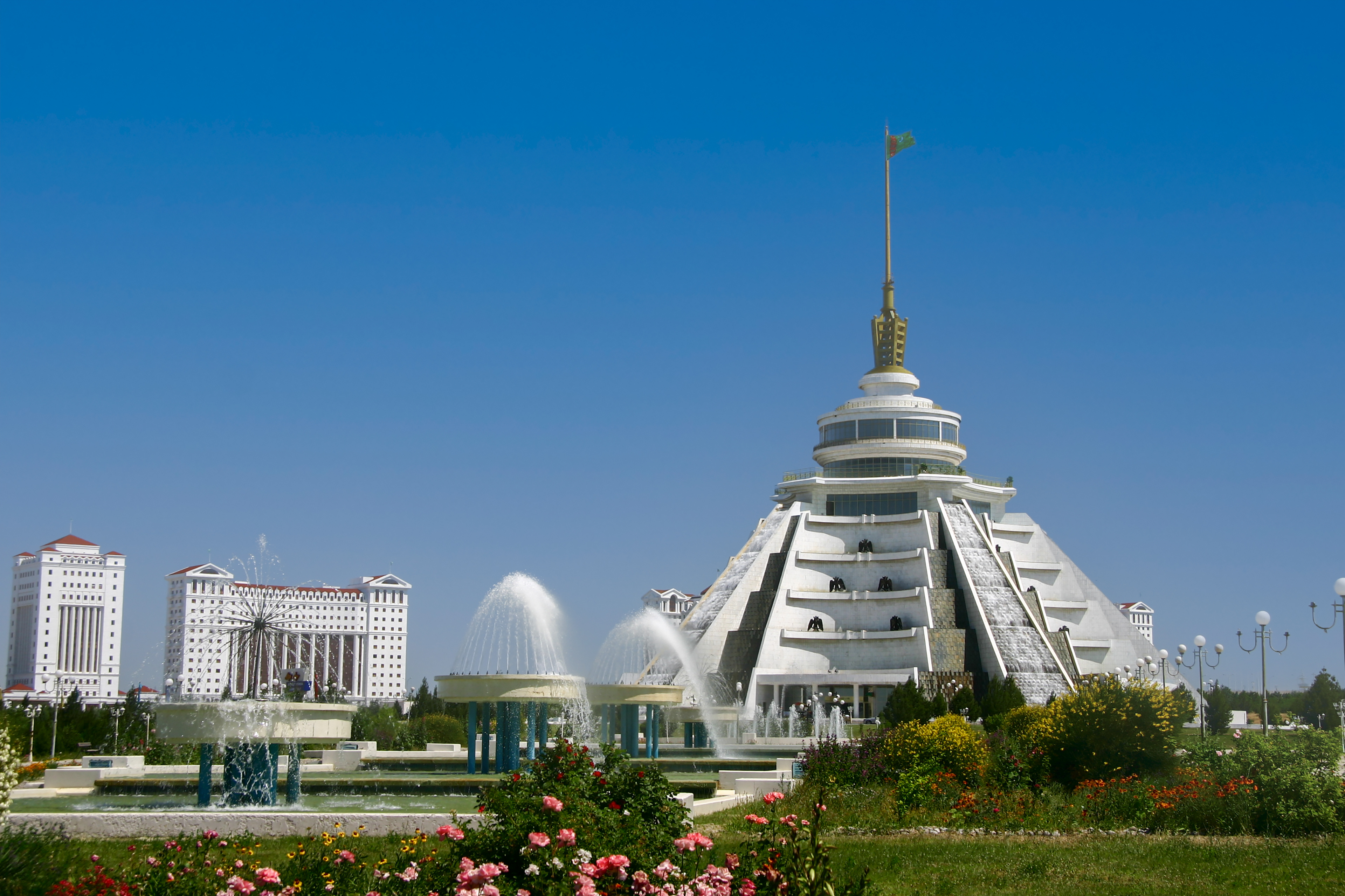
Explore Ashgabat today, where much of the city was rebuilt in the post-Soviet era, creating a surreal skyline often described as “Pyongyang meets Las Vegas”.
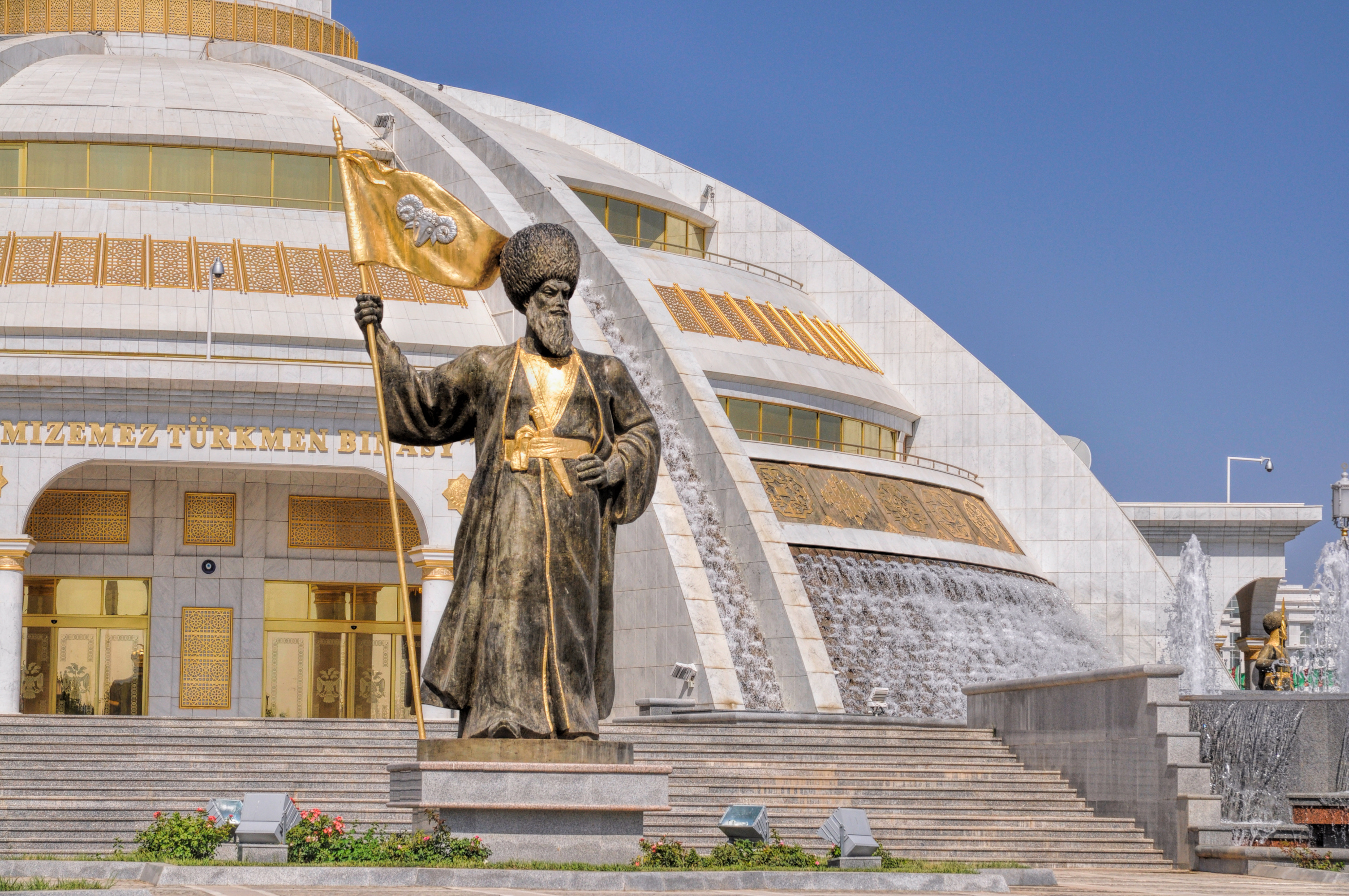
Our daytime visits include Turkmenbashi Mosque, the Magtymguly Monument, the Earthquake Memorial, the Alem Ferris Wheel, the Neutrality Arch and the Constitution Monument. We stroll through Independence Park before stopping at the Wedding Palace viewpoint for a wide look over the city.
In the afternoon, we travel to Nisa (Turkmenistan), capital of the Parthian Empire 2,000 years ago, where the excavated mudbrick complex hints at its former power.
We then return to Ashgabat for a short night tour (40 minutes) to see the city lit up after dark.
Meals: Breakfast
Day 23
Adventure ends in Ashgabat
Our adventure comes to an end in Ashgabat. If you’d like a bit longer to explore, speak to your sales representative about extending your stay.
Meals: Breakfast
What’s included
What’s not included
Additional information
Food
Common dishes in the region include shish-kebabs and plov (rice usually with mutton, onions, carrots, spices, raisins and peas). The kebabs can be from different meats, including lamb and beef, while plov is a rice-based dish (variants elsewhere are known as pilaf or pilau rice).
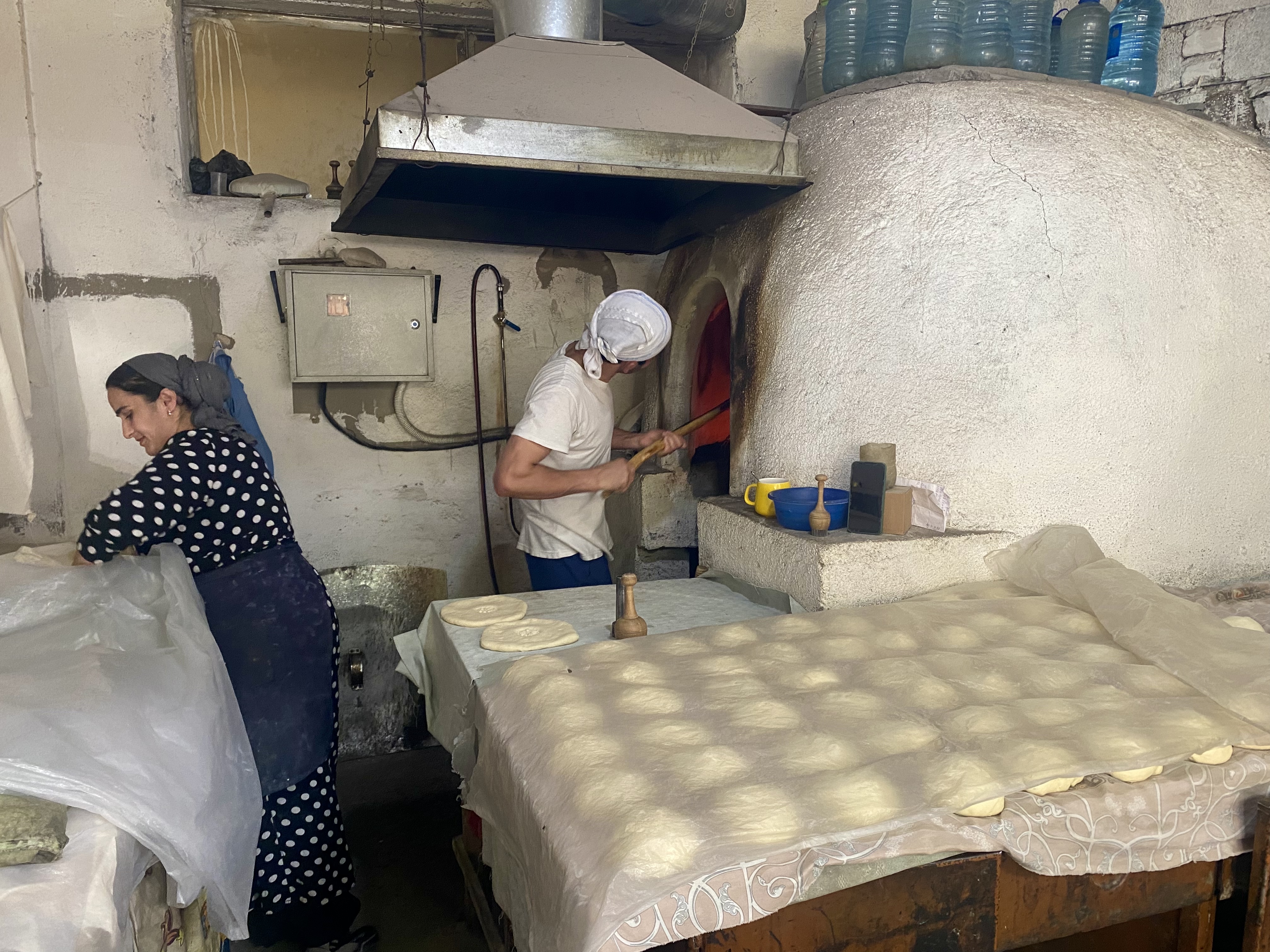
Another main staple is bread, especially in Uzbekistan where it is freshly baked and sold everywhere; in Turkmenistan, churek is a flat, round bread baked in clay ovens. Other traditional dishes include chorba, a meat and vegetable soup; manty, steamed dumplings filled with lamb; qu’urma, a lamb dish; ichlekli, a meat and onion pie; and gutap, a pie filled with meat, potatoes, spinach and pumpkin. There are normally a couple of opportunities to try home-cooked meals. Tea is also plentiful, both black and green, and drunk with most meals and throughout the day.
Please note, vegetarian food choices are limited. If you are vegetarian or have any special dietary requirements, please notify us well in advance. In this region, the availability of certain specialised products for restricted diets, eg gluten-free or dairy-free, is minimal or non-existent and we strongly recommend you bring such specialised dietary items from home.
Drinking water is included and where possible will be provided in large containers for you to refill your bottle from – please bring a reusable bottle with you.
Uzgen Minaret, Mausoleums & Rice Bazaar
Visit Uzgen’s Karakhanid minaret and adjoining brick mausoleums, whose patterned facades narrate a golden chapter of medieval Ferghana. Your leader interprets inscriptions and motifs that link courtly patronage to the caravan trade.
At the local market, explore stalls piled with spices and devzira rice, the aromatic grain behind celebrated Uzbek plov. This compact stop balances architectural detail with living culinary traditions along one of Central Asia’s oldest corridors.
Burana Tower & Open-Air Museum Complex
Visit the 11th-century Burana Tower, a Karakhanid minaret rising from the ruins of medieval Balasagun. Those who wish can climb the steep interior stair for sweeping views across the Chuy Valley’s fields and foothills.
Explore the small site museum and outdoor exhibits of balbal stone figures, petroglyphs and foundations of mausoleums. The ensemble places Central Asia’s early Islamic architecture within a living landscape, where caravan routes once threaded between orchards and distant passes.
Ashgabat National Museum & Ertogrul Gazi Mosque
Survey Turkmenistan’s past at the National Museum, where artefacts from Merv and Nisa connect Bronze Age settlements to medieval polities and desert trade routes. Curators highlight coins, ceramics and statuary that bridge eras.
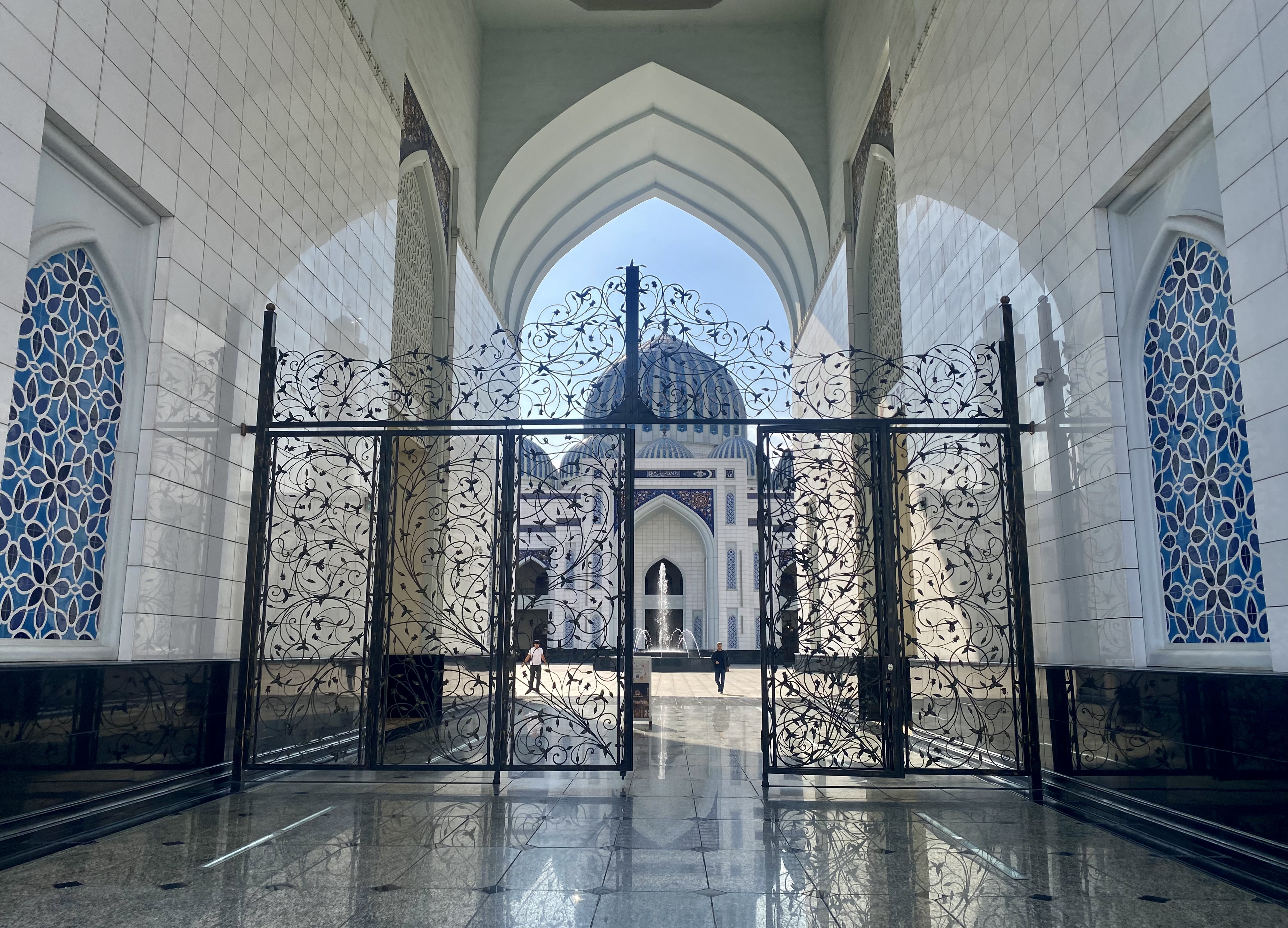
Nearby, step into the Ertogrul Gazi Mosque, an Ottoman-inspired sanctuary whose white facades and four minarets contrast with the capital’s futuristic skyline. The pairing sets archaeology beside living faith in the modern city.
Medeu Gorge & Kok-Tobe Cable Cars: Panoramas of the Tien Shan
Ride high above Almaty to glide by cable car over the spruce-lined slopes of Medeu and the ski runs that climb into the Zailiysky Alatau range. Pause to view the city’s mudflow defences and the legendary high-altitude skating rink nestled in a dramatic glacial valley.
Later, soar to Kok-Tobe Hill for sweeping views across Almaty and the steppe beyond. The crisp mountain air and broad skyline offer superb vantage points to pause for photos and reflection on the region’s meeting of alpine nature and urban energy.
Charyn Canyon Viewpoints & Short Walk
Explore the wind-carved galleries of Charyn Canyon, where ochre ramparts and hoodoos line the course of the Charyn River. Wander marked viewpoints and take a gentle walk for close-up textures of rock, sage and steppe light in a landscape often compared to Utah’s canyon country.
From the “Moon Canyon” spurs to silent side gorges, the scenery reveals the slow choreography of erosion. Expect sculpted cliffs, misty mountain passes on the horizon, and time to pause for photos and reflection amid the silence of the Kazakh badlands.
Karakol Heritage Walk: Dungan Mosque, Holy Trinity Church & Bazaar
Walk Karakol’s wide, Tsarist-era streets to join a guided panoramic tour of its multi-faith landmarks. Admire the nail-free, Chinese-styled Dungan Mosque and the log-built Holy Trinity Russian Orthodox Church whose painted iconostasis glows with local craftsmanship.
At the bustling bazaar, traders hawk nuts, spices and mountain honey. Your leader shares how merchants, settlers and nomads shaped this Issyk-Kul crossroads, where timber architecture and communal courtyards preserve the atmosphere of a frontier town on the Silk Road’s rim.
Issyk-Kul South Shore: Eagle-Hunting Demo & Yurt-Making in Kyzyl-Tuu
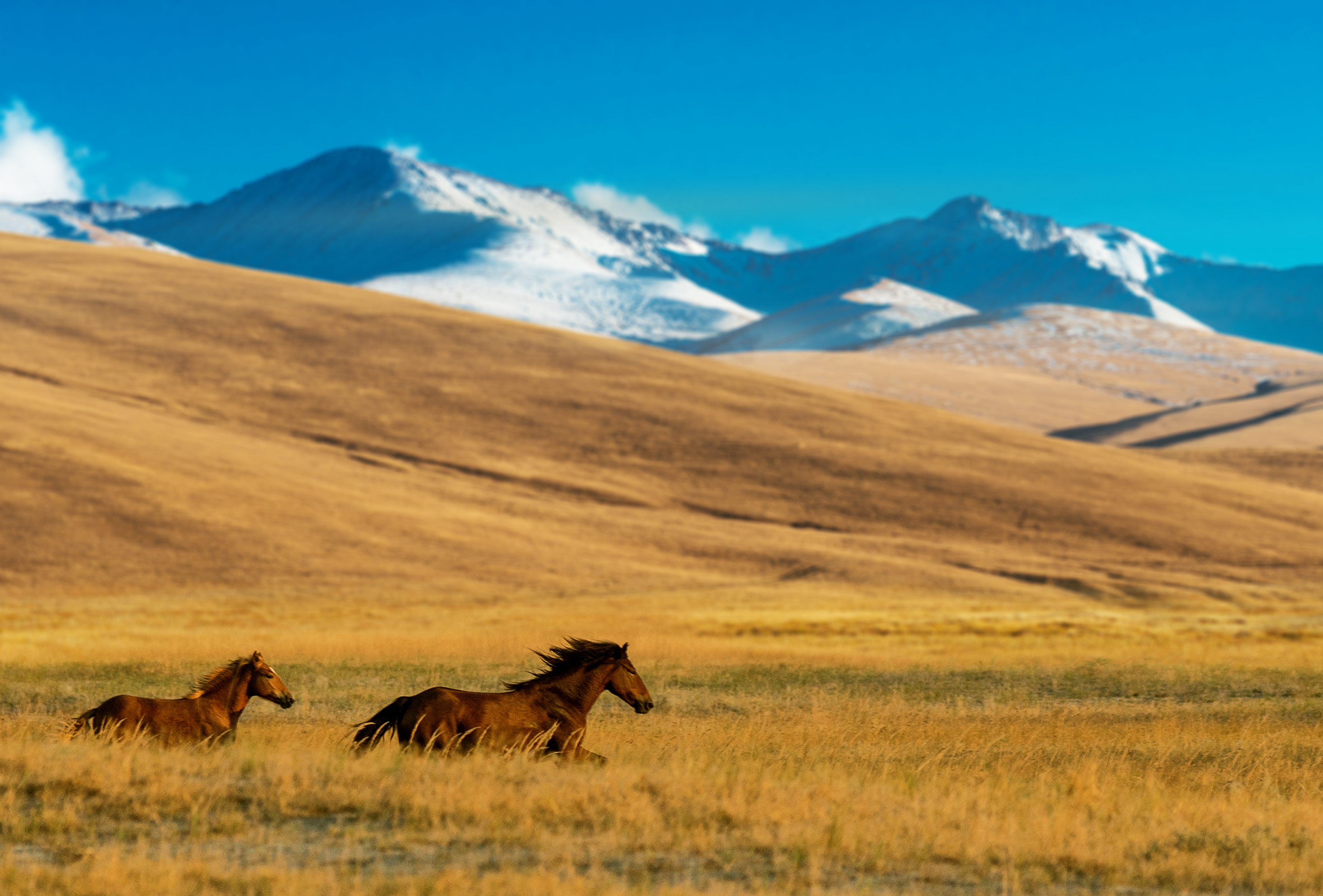
Skirt the cobalt waters of Issyk-Kul to witness a traditional eagle-hunting demonstration in Bokonbaev. Learn how berkutchi train golden eagles, the craft’s role in nomadic life, and the precise signals between handler and bird.
Continue to Kyzyl-Tuu village to watch artisans assemble a yurt’s wooden frame, steam-bending lattice and crown in time-honoured fashion. Against a mountain backdrop, this cultural double-bill reveals Kyrgyz heritage through skilled hands, close partnerships with animals, and portable homes designed for the open steppe.
Bishkek City Highlights: Museums, Ala-Too Square & Oak Park
Set out to join a guided panoramic tour of Kyrgyzstan’s leafy capital. Stand on Ala-Too Square amid marble-clad ministries and civic monuments, then stroll the irrigation-lined avenues where shade trees cool the city grid.
Call at the State History Museum and National Museum of Fine Arts to connect nomadic heritage with socialist-era iconography. In Oak Park, sculpture and quiet paths add a contemplative note to a city where mountain views and modern life meet.
Arslanbob Walnut Forest Walk & Picnic
Walk through the ancient groves of the Arslanbob walnut forest, believed to be among the world’s largest. Follow gentle village paths and orchard tracks with views of limestone ridges and terraced fields.
During the outing, pause for a simple picnic and stories of how seasonal harvests, traditional irrigation, and transhumance shape local life. The scent of crushed leaves and the click of shepherds’ staffs bring an alpine rhythm to this Fergana Valley foothold.
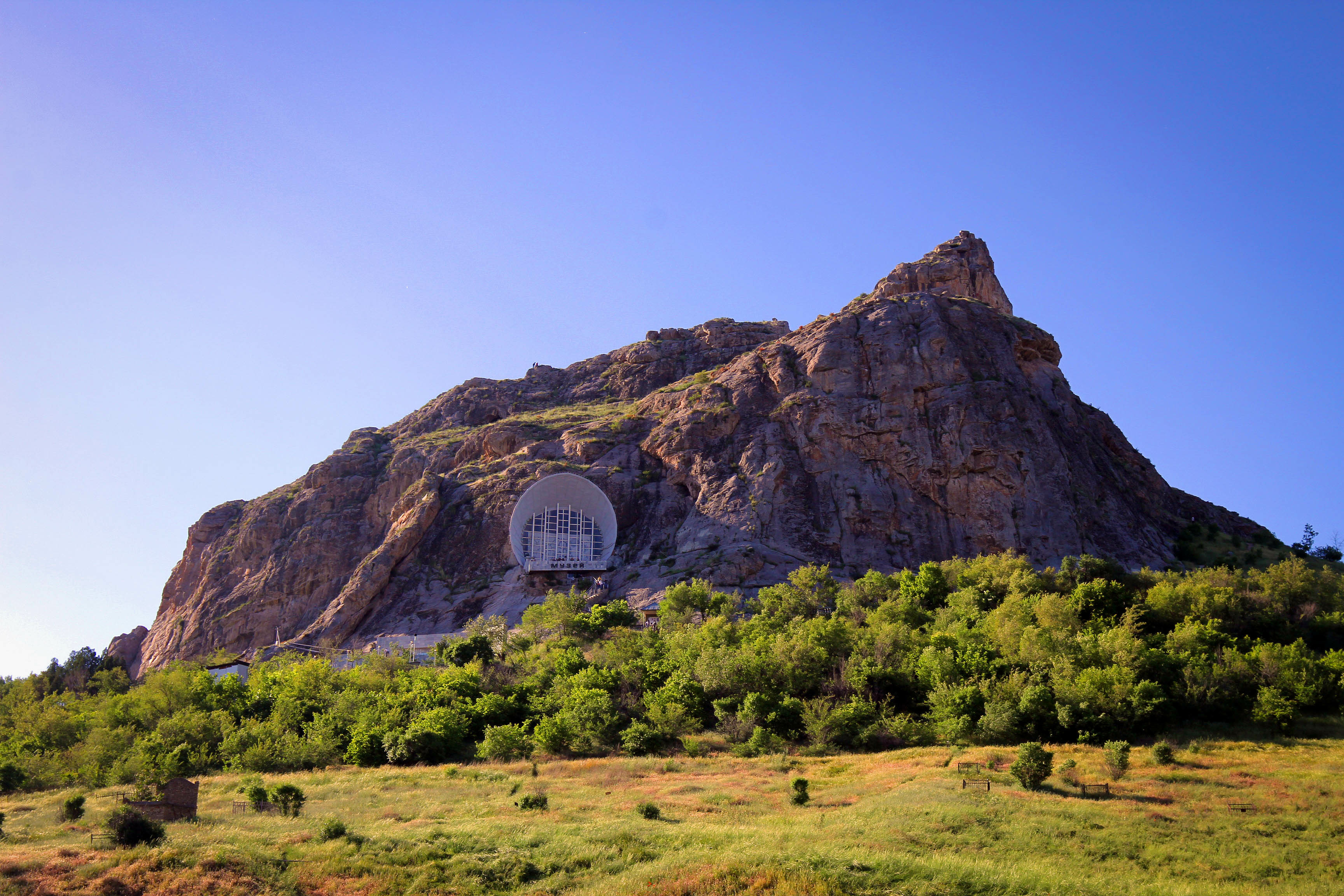
Sulayman-Too Sacred Mountain & Museum, Osh
Ascend Sulayman-Too Sacred Mountain, a UNESCO-listed pilgrimage site rising over Osh. A paved path and steps lead to panoramic viewpoints over the city and the Fergana Valley’s cultivated patchwork.
Visit the small cave museum to learn why saints, scholars and travellers have venerated this limestone outcrop for centuries. Rock niches, wish ribbons and distant call-to-prayer combine into a resonant portrait of faith on the Silk Road’s spine.
Margilan Silk Factory: Ikat Weaving & Dyeing
Step inside a working atelier to see ikat silk come to life, from mulberry cocoons to hand-tied resist patterns and natural dyes. Craftspeople guide you through pattern design, warping, and the rhythmic shuttle of the loom.
Margilan’s workshops preserve techniques that once clothed khans and merchants. The soft rustle of fabric and bright skeins reveal how Central Asian atlas and adras textiles continue to define regional identity and pride.
Rishtan Ceramics Studio Visit
Meet master potters in Rishtan, famed for tableware glazed with the turquoise-green hues of local ishkor. Watch wheel-throwing, carving and the brushwork of pomegranate and floral motifs that recur across Ferghana homes.
As kilns fire and shelves fill, discuss clay sources and centuries-old exchanges along the Silk Road. This hands-on look at living craftsmanship offers the chance to handle pieces fresh from the studio and understand the heritage behind their glow.
Kokand Khanate Monuments: Khudoyar-Khan Palace & Madrassahs
Explore the ornate halls of Khudoyar-Khan’s Palace, where painted ceilings and carved portals reflect Kokand’s 19th-century ascendancy. Your visit continues to Norbuta-Biy Madrassah and Modari Khan’s mausoleum, weaving together scholarship, power and piety.
From palace courtyards to tiled facades, the ensemble illustrates how the Kokand Khanate asserted style and sovereignty on the cusp of Russian imperial expansion, leaving a distinctive architectural signature across the Ferghana oasis.
Khujand Heritage Tour: Fortress Museum, Sheikh Muslihiddin & Payshanba Bazaar
Discover Khujand’s layered past at the Fortress Museum of Archaeology, where finds trace routes from Alexander to the Samanids. Visit the Sheikh Muslihiddin Mosque complex before wading into the colour and clamour of Payshanba Bazaar.
Stalls brim with melons, walnuts and zestful spices, while domed halls echo the footsteps of traders. If time permits, pass by the neoclassical Arbob Palace, a reminder of early Soviet ambition amid orchards and canals.
Istaravshan Old Town & Crafts Bazaar
Stroll Istaravshan’s old quarter—known for knife-making and woodcarving—to meet artisans in their workshops. Under mudbrick arches, you’ll see how steel is tempered and handles are inlaid with horn and bone.
In the local bazaar, fruit sellers and spice merchants animate lanes planned since Sogdian and Persian times. The close-knit lanes, domed stalls and courtyards sketch a small but telling chapter of Tajik town life on a historic route.
Seven Lakes of the Fann Mountains: Valley Drive & Lakeside Walk
Head into the Shing Valley to explore the Seven Lakes, where mineral-rich waters shift from jade to cobalt. Walk along lakeside paths toward Hazorchashma, taking in scree slopes, junipers and stone hamlets tucked against the hills.
A simple picnic and village encounters reveal mountain rhythms: spring torrents, summer pastures and winter quiet. It’s a day of Alpine light and reflection pools in the storied Fann range.
Ancient Penjikent Ruins & Rudaki Museum
Walk the excavated streets of Ancient Penjikent, a Sogdian city of merchants, citadels and Zoroastrian fire temples. Mudbrick walls, street plans and fresco fragments hint at a cosmopolitan centre lost after the Arab conquests.
At the Museum of Rudaki, discover the life and verses of the Persian poet born nearby, placing Penjikent within a literary heritage that still shapes language and identity from Tajikistan to Iran.
Sarazm Archaeological Site: Proto-Urban Origins
Visit Sarazm, a UNESCO-listed settlement dating back more than five millennia. Among protective shelters, learn how early farmers and metallurgists built one of Central Asia’s earliest townscapes, long before the Silk Road thrived.
Artifacts and site plans sketch trade in obsidian, copper and tin, revealing a deep-time crossroads on the Zarafshan plain. The low walls and platformed rooms are quiet, but the story they tell is vast.
Registan Square & Gur-Emir: Timurid Splendour in Samarkand
Stand in the heart of Samarkand at Registan Square, framed by the madrasahs of Ulugh Beg, Sher-Dor and Tilya-Kori, their facades alive with turquoise domes and starry mosaics. Your leader unpacks the astronomy, theology and power encoded in these portals.
Continue to Gur-Emir Mausoleum, where Timur rests beneath carved onyx and a shimmering ribbed dome. Here, Timurid ambition and artistry meet in an intimate, contemplative space of dynastic memory.
Shah-i-Zinda Necropolis & Bibi-Khanym Mosque
Walk the glazed-ceramic corridor of Shah-i-Zinda, a hillside chain of mausoleums whose lapis and teal tiles glow even in shade. Each portal reveals calligraphy and floral arabesques of remarkable delicacy.
Nearby, step into the courtyards of the once-colossal Bibi-Khanym Mosque, restored in fragments that still convey its scale. The interplay of ruin and revival frames Samarkand’s enduring role as a pole of Islamic learning and art.
Ulugh Beg Observatory, Siab Bazaar & Traditional Paper Workshop
Visit the 15th-century Ulugh Beg Observatory to see the remnant of a vast sextant and hear how a scholar-king mapped the skies with startling precision. The site anchors Samarkand’s blend of science and statecraft.
At the lively Siab Bazaar, sample the scent of non bread and dried apricots before a stop at a paper workshop where mulberry bark becomes smooth sheets. The craft connects today’s artisans to manuscripts that once filled Timurid libraries.
Sitorai-Mokhi-Khosa: Summer Palace of the Emirs of Bukhara
Wander through Sitorai-Mokhi-Khosa, the emirs’ summer retreat where painted salons, mirrored niches and filigreed woodwork mix Central Asian aesthetics with Russian influence. Halls and courtyards reveal a taste for spectacle and seclusion.
From porcelain displays to lacquered ceilings, the palace presents a late royal world at ease, poised between tradition and empire. Gardens, pools and pavilions set a languid rhythm away from the bustle of Bukhara’s old town.
Bukhara Foundations: Ark Fortress, Samanid Mausoleum & Chashma Ayub
Enter the clay ramparts of the Ark Fortress, Bukhara’s royal citadel where khans ruled and caravans paid tribute. Nearby, the brick-banded Samanid Mausoleum showcases early Islamic geometry in perfect, compact form.
Visit Chashma Ayub (“Job’s Spring”), a shrine built over a sacred source, to explore the city’s blend of folklore and faith. Together, these sites capture Bukhara’s 1,000-year arc of authority, artistry and devotion.
Poi-Kalyan Complex & Kalyan Minaret
Stand within the vast courtyard of the Kalyan Mosque and take in the brick latticework and domed arcades that ring this sacred space. Gaze up at the Kalyan Minaret, the 12th-century “Tower of Death” spared even by Genghis Khan.
Across the square, the Miri-Arab Madrassah anchors living scholarship. The ensemble evokes medieval Bukhara at its contemplative height, where prayer, teaching and civic pride converged.
Lyabi-Hauz Ensemble Stroll & Kukeldash Madrassah
Unwind by the mulberry-shaded pool of Lyabi-Hauz, a 17th-century oasis ringed by khanakas and caravanserais. Teahouses ripple with conversation as locals linger over green tea and samsa.
Nearby, the brick bulk of Kukeldash Madrassah and the ornamented Nadir Divan-Begi structures present Bukhara’s urban theatre at a human scale—a place to watch city life flow as it has for centuries.
Desert Castles of Khorezm: Ayaz-Qala
Traverse the Kyzylkum to climb the ramparts of Ayaz-Qala, a windswept stronghold guarding the Khorezm oasis. From the walls, survey dunescapes and salt flats that once hid canals, fields and frontier watchposts.
The fort’s mudbrick battlements and eroded bastions evoke borderlands defended by horseback archers and merchants under wide skies—an arid stage for empire and trade on the Amu Darya’s northern reach.
Khiva Itchan Kala Highlights: Kalta Minor, Kunya-Ark & Pakhlavan Makhmud
Enter the walled city of Itchan Kala to stand by the tiled base of the Kalta Minor, then step through the courtyards of the Kunya-Ark, residence of the khans. The blue-domed mausoleum of Pakhlavan Makhmud adds a serene, devotional counterpoint.
Tilework glints, carved columns creak, and alleys reveal woodcarvers at work. This curated walk frames Khiva as a compact time capsule where craftsmanship, faith and authority still shape the urban stage.
Juma Mosque, Islam Khoja Minaret & Tash Khauli Palace
Step into the cool interior of Juma Mosque, its roof borne by 218 carved pillars—some ancient, some newly hewn. Climb (if open) the Islam Khoja Minaret for a city panorama of domes and mud-plastered lanes.
At Tash Khauli Palace, examine tile-clad harems and festooned reception halls that speak to royal ceremony and domestic etiquette. The trio shows Khiva’s range—from communal prayer hall to vertical landmark to palatial art.
Kunya-Urgench Archaeological Park
Roam the scattered monuments of Kunya-Urgench, medieval Khorezm’s onetime capital. The slender Kutlug-Timur Minaret rises over mausoleums attributed to sultans and Sufi masters, hinting at a city once famed across Persia and India.
Brickwork patterns, stalactite cornices and austere domes speak of architectural ideas that travelled with conquerors and craftsmen. In this open-air archive, silence and horizon are part of the experience.
Akhal-Teke Horse Stud Farm Visit
Meet the legendary Akhal-Teke horses, celebrated for their metallic sheen and endurance. Handlers introduce the breed’s lineage, training and role in Turkmen identity, often tracing stories to caravan guards and royal stables.
Up close, observe the fine coat and long, graceful lines that define the “golden horses of the steppe.” This is a proud encounter with a living emblem of national heritage and horsemanship.
Ancient Merv UNESCO Site & Mary City Sights
Traverse Ancient Merv, from the walled ovals of Erk and Gyaur Kala to the monumental Mausoleum of Sultan Sanjar. Vast earthen ramparts and crumbling towers sketch a metropolis that astonished medieval travellers.
Back in Mary, view the Juma Mosque and a small Orthodox church to sense the region’s pluralist fabric. The day contrasts imperial scale with contemporary town life on the edge of the Karakum.
Ashgabat Monuments Walk: Ruhy Mosque, Neutrality Arch & Independence Park
Survey the capital’s emblematic sites, from the gleaming Turkmenbashi Ruhy Mosque to the Neutrality Arch and Independence Park. Broad avenues, marble facades and fountains stage a city rebuilt with theatrical ambition.
Pausing by the Earthquake Memorial and monumental statues, trace the narrative of disaster, recovery and statehood that shapes Ashgabat’s skyline. A viewpoint near the Wedding Palace offers a wide-angle finale of white stone and gold trim.
Nisa: Parthian Fortress & Royal Compound
Explore the mudbrick ramparts and vaulted halls of Nisa, a UNESCO-listed Parthian capital. Excavated storerooms and audience spaces hint at banquets, diplomacy and worship in a cosmopolitan court 2,000 years ago.
Amid shattered wine rhyta and column bases, your leader links Nisa’s power to trade flowing between Iran and Central Asia. The echoing fortress channels an empire that once matched Rome.
Ashgabat Night Illuminations Drive
Take an evening circuit to see Ashgabat lit up after dark, when white marble, gilded domes and fountains turn theatrical under spotlights. Landmarks from the Alem Ferris Wheel to monumental arches glow against the desert sky.
This short drive reframes the daytime city as a luminous stage set, inviting you to photograph reflections, neon hues and symmetrical vistas that define the capital’s nocturnal personality.
Welcome Dinner in Almaty
Gather to meet your Tour Director and fellow travellers over a hosted Kazakh dinner. Sample dishes such as beshbarmak, grilled kebabs and pillowy baursak, alongside salads, pickles and fragrant tea poured in generous tradition.
Between toasts and introductions, hear an overview of the route from the Tien Shan to the Karakum. The evening sets a convivial tone, pairing regional flavours with stories of Silk Road exchange and contemporary Central Asian hospitality.
Almaty City Tour: Panfilov Park, Zenkov Cathedral & Museums
Join a guided panoramic tour of Almaty, framed by the snow-lined Tien Shan. Stroll the leafy promenades of Panfilov Park to see its moving war memorial and the wooden Ascension (Zenkov) Cathedral, built without nails. Continue past Republic Square and the city’s grand boulevards that echo its late–Imperial and Soviet chapters.
Visit national history collections and the intimate Museum of Folk Musical Instruments to hear stories of the dombra and kobyz. This orientation blends architecture, memory and music, tracing Almaty’s evolution from Russian Turkestan to Soviet Almaty and today’s cultural capital.