Your itinerary
Day 1
Day 1: Welcome to Hobart
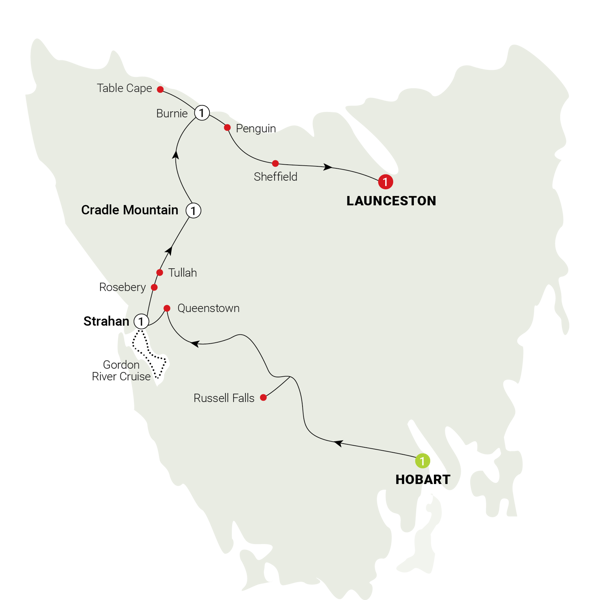
Take a city tour including views from Mt. Nelson, Salamanca Place, Constitution Dock and the Royal Tasmanian Botanical Gardens. Join your Travel Director for dinner. Flights should arrive at Hobart Airport before 12:30pm.
Meals: Dinner
Day 2
Day 2: Hobart - Strahan
Travel west to Mount Field National Park to see its tall eucalypts and Russell Falls, then visit Lake St. Clair, Australia’s deepest freshwater lake. Continue to Strahan, gateway to Franklin-Gordon Wild Rivers National Park.
Meals: Breakfast,Dinner
Day 3
Day 3: Strahan - Cradle Mountain
Cruise the Gordon River to Sarah Island, passing Hells Gates and temperate rainforest with Huon pines, myrtle beeches, leatherwood, mosses and fungi. Continue north to Cradle Mountain.
Meals: Breakfast,Lunch,Dinner
Day 4
Day 4: Cradle Mountain - Burnie
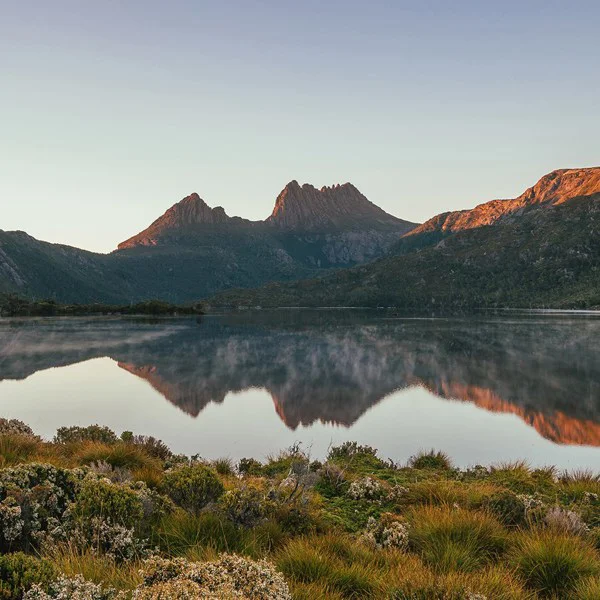
Explore Dove Lake beneath Cradle Mountain and visit Devils@Cradle for a Day Keeper tour supporting threatened-species conservation. Travel to the north-west coast for the overnight stay.
Meals: Breakfast,Lunch
Day 5
Day 5: Burnie - Launceston
Visit Table Cape Lookout near Wynyard, then travel along the north-west coast through Penguin, Ulverstone and Sheffield, the Town of Murals. Stop at Ashgrove Cheese Dairy Door for a cheese tasting; locally made ice cream is available to purchase.
Meals: Breakfast
Day 6
Day 6: Farewell from Launceston
Visit Cataract Gorge, with the option to take a scenic chairlift across the basin. Alternatively, explore the Tamar Valley or Launceston’s historic streets, cafes and waterfront at your own pace. Flights should depart from Launceston Airport after 2:00pm.
Meals: Breakfast
What’s included
What’s not included
Additional information
Dining Summary
- 3 Dinner (D)
- 5 Breakfast (B)
- 2 Lunch (L)
Fitness Requirement
- Medium level of fitness required. The Russell Falls Walk is an easy, flat 1.4 km trail taking approximately 25mins return For those choosing to walk round Dove Lake, this is considered a Moderate 6km loop. Track has short steep hill sections, some rough surface and many steps. Not suitable for all guests. Alternate shorter walks are available which your Tour Director will advise. The Cataract Gorge circuit is a short easy walk however there are some steps and uneven surfaces.
Flight information
- Day 1: Flights to arrive prior to 12.30pm into Hobart AirportDay 6: Flights to depart after 2.00pm from Launceston Airport Airport to Hotel transfers are available to purchase on request. Flights to and from your tour are not included in the tour price.
What to Bring
- Comfortable walking shoes Warm layers in cooler months Sunglasses, sunscreen and hat Water bottle Camera
Cataract Gorge Scenic Chairlift
Ride the scenic chairlift across Cataract Gorge’s First Basin for an elevated view of the water, gardens and steep-sided landscape close to central Launceston. The open-air crossing offers a different perspective from the gorge’s walking paths and lookout areas.
This optional experience is at additional cost and bookable on tour. It suits travellers who want to appreciate the scale of the chasm from above, with time to look across the basin and the surrounding bushland.
Operated By
AAT Kings
Welcome Dinner with Your Travel Director
Join your Travel Director for a welcome dinner in Hobart and meet the travellers sharing your Tasmanian journey. It is a hosted occasion rather than a routine meal, with an opportunity to talk through the places and landscapes that make this island distinctive.
Settle into the group over dinner in Tasmania’s waterfront capital, where the River Derwent and a long maritime history give the city its character. Your Travel Director provides a local point of connection for the travels ahead.
Mount Field National Park & Russell Falls
Walk beneath towering eucalypts in Mount Field National Park and visit Russell Falls, where water descends in broad, tiered curtains through cool, green forest. The easy Russell Falls walk is approximately 1.4 kilometres return, offering a close view of one of Tasmania’s best-known waterfalls.
Established in 1916, Mount Field is one of Australia’s oldest national parks. Its forests form part of the Tasmanian Wilderness World Heritage Area, protecting landscapes that range from temperate rainforest to alpine terrain.
Lake St Clair Visit
Visit Lake St Clair and take in the still water and forested mountain scenery of Tasmania’s Central Highlands. At around 160 metres deep, it is Australia’s deepest freshwater lake and a striking contrast to the waterfalls and tall forests elsewhere on the route.
Known as leeawuleena to the Aboriginal people of the area, the lake lies within Cradle Mountain–Lake St Clair National Park and the Tasmanian Wilderness World Heritage Area. Its glacial origins help explain the scale and shape of this highland landscape.
Cradle Mountain & Dove Lake Exploration
Explore the surroundings of Dove Lake with the rugged profile of Cradle Mountain rising above its shores. Alpine moorland, stands of native forest and changing mountain light make this one of Tasmania’s most recognisable wilderness settings.
The area lies within Cradle Mountain–Lake St Clair National Park and the Tasmanian Wilderness World Heritage Area. Travellers who choose to walk around Dove Lake should expect a moderate six-kilometre circuit with steps, rough ground and short steep sections; shorter walks are available.
Devils@Cradle Day Keeper Tour
Join a Day Keeper tour at Devils@Cradle, a wildlife sanctuary near Cradle Mountain, to learn about its care and conservation work. See Tasmanian devils and gain insight into the behaviour of this elusive native marsupial and the threats facing its survival.
This MAKE TRAVEL MATTER® Experience directly supports the sanctuary’s work with devils and other threatened species. Hearing how the sanctuary operates gives the wildlife encounter a purpose beyond observation: a clearer understanding of conservation in Tasmania.
Table Cape Lookout
Take in coastal views from Table Cape Lookout above Wynyard. The broad headland rises around 180 metres over Tasmania’s north-west coast, offering a vantage point across the shoreline and, in clear conditions, towards distant mountain ranges.
Table Cape is the remnant of a volcano formed roughly 12 million years ago. Its flat-topped shape stands apart from the surrounding coast, making the lookout as much a chance to appreciate Tasmania’s geological story as its expansive scenery.
Ashgrove Cheese Dairy Door Tasting
Sample local cheeses at Ashgrove Cheese Dairy Door, a family-owned Tasmanian dairy celebrating paddock-to-plate production. Taste varieties that may include cheddar, red Leicester and Tasmanian blue, and discover the flavours produced from the region’s dairy milk.
The stop brings Tasmania’s food reputation into focus through a working local producer rather than a standard meal. Cheese lovers can compare different styles and textures, while locally made ice cream is available for those who would like to purchase a sweet treat.
Launceston’s Cataract Gorge
Visit Cataract Gorge, where a rocky river chasm and bushland sit remarkably close to central Launceston. Explore the basin’s surroundings and see the contrast between rugged stone, flowing water and Victorian-era gardens planted with ferns and exotic species.
The gorge is one of the city’s defining natural landmarks, offering a sense of wilderness within minutes of its historic streets. Its walking paths provide different views of the river and cliffs; some sections have steps or uneven surfaces.
Tamar Valley Exploration
Explore the Tamar Valley, the river landscape extending north from Launceston through rural Tasmania. The region is known for its vineyards, farmland and waterside scenery, offering a gentler contrast to the island’s mountain and rainforest country.
This optional experience is at additional cost and bookable on tour. The itinerary does not specify particular winery visits, tastings or a set route, so its appeal lies in discovering the valley’s landscapes and wine-growing character rather than a guaranteed cellar-door activity.
Hobart City Tour, Mount Nelson & Botanical Gardens
Explore Tasmania’s capital on a Hobart city tour, taking in the harbour at Constitution Dock and the sandstone warehouses of Salamanca Place. From the summit of Mount Nelson, look across the River Derwent and the city’s surrounding hills.
Stroll through the Royal Tasmanian Botanical Gardens, established in 1818 and among Australia’s oldest. Together, Hobart’s waterfront, historic streets and gardens reveal a city shaped by its maritime past and contemporary food and arts scene.
Gordon River Cruise, Sarah Island & Rainforest
Cruise the Gordon River from Strahan through the World Heritage-listed wilderness of Franklin-Gordon Wild Rivers National Park. Watch dark, tannin-stained water reflect the surrounding forest, and see Sarah Island and the narrow harbour entrance known as Hells Gates.
The cruise reveals a landscape of ancient Huon pines, myrtle beech, mosses and fungi. Sarah Island’s former convict settlement adds a stark human history to the scenery: prisoners laboured here in an isolated place that also became known for boatbuilding.
Penguin & Sheffield’s Murals
Discover two distinctive north-west Tasmanian towns: Penguin, whose streets feature playful penguin sculptures, and Sheffield, the Town of Murals. Look out for Penguin’s large penguin statue and Sheffield’s outdoor paintings depicting local people, history and rural life.
These stops offer a different perspective on the region from its wilderness landscapes. Penguin’s coastal-town character and Sheffield’s more than 100 murals show how local communities have made their stories visible in everyday public spaces.