Your itinerary
Day 1
Arrive in Helsinki, Finland
Arrive in the Finnish capital and make your way to the group hotel located right at Helsinki airport—included in your Charter Flight and Hotel Package.
You will have the rest of the day to explore explore the many museums, galleries and restaurants, relax at a Finnish sauna or wander the vibrant Design District. If you do plan to visit Helsinki city centre, take advantage of the convenient 40-minute rail service from the airport.
Day 2
Fly to Longyearbyen, Svalbard, and embark
After breakfast, the group will transfer to the Helsinki airport and board our private charter flight to Longyearbyen, as part of the Charter Flight & Hotel Package.
Our journey to the High Arctic now truly begins. You will see the coastal and birch forests of southern Scandinavia give way to taiga and tundra environments, the mountains of Norway and northern Sweden, and the convergence of the Norwegian and Barents seas.
Approaching Svalbard, you may get your first views of a pure, snow-capped wilderness, complete with ridgelines, glaciers, and perhaps even sea ice in the distance. We land in Longyearbyen, Svalbard’s largest settlement, and transfer to the harbor where we will embark on our ship.
Meals: Dinner
Day 3
Summer in the Svalbard Wilderness
Svalbard is a true Arctic environment, where many iconic species spend their entire lives, entwined with the winter and spring sea ice. But with the arrival of summer—brief as it is—the archipelago bursts to life as countless migratory species settle in to take advantage of the season’s endless daylight and abundant food.
Chief among Svalbard’s summer migrants are seabirds, waterfowl, and other birds, joined by marine visitors such as baleen whales—including the mighty blue whale. Though wildlife sightings aren’t guaranteed, these giants are sometimes observed foraging in the rich Arctic waters.
Under the midnight sun, plant life also flourishes. While less diverse than in southern regions, Svalbard hosts hundreds of plant, lichen, and moss species, from hardy grasses to vibrant wildflowers. For a few brief months, snow and ice are replaced by pockets of green and splashes of colour, framed by snowcapped peaks —a fleeting transformation of the High Arctic landscape.
Throughout the summer, sea ice fractures, melts and disperses. Many species that depend on it shift north and east where ice lingers, or remain ashore until it returns in late fall. While ice may be less frequent, the open water offers greater access to the archipelago’s northern and eastern reaches. If we do encounter ice, we’ll pause to explore it.
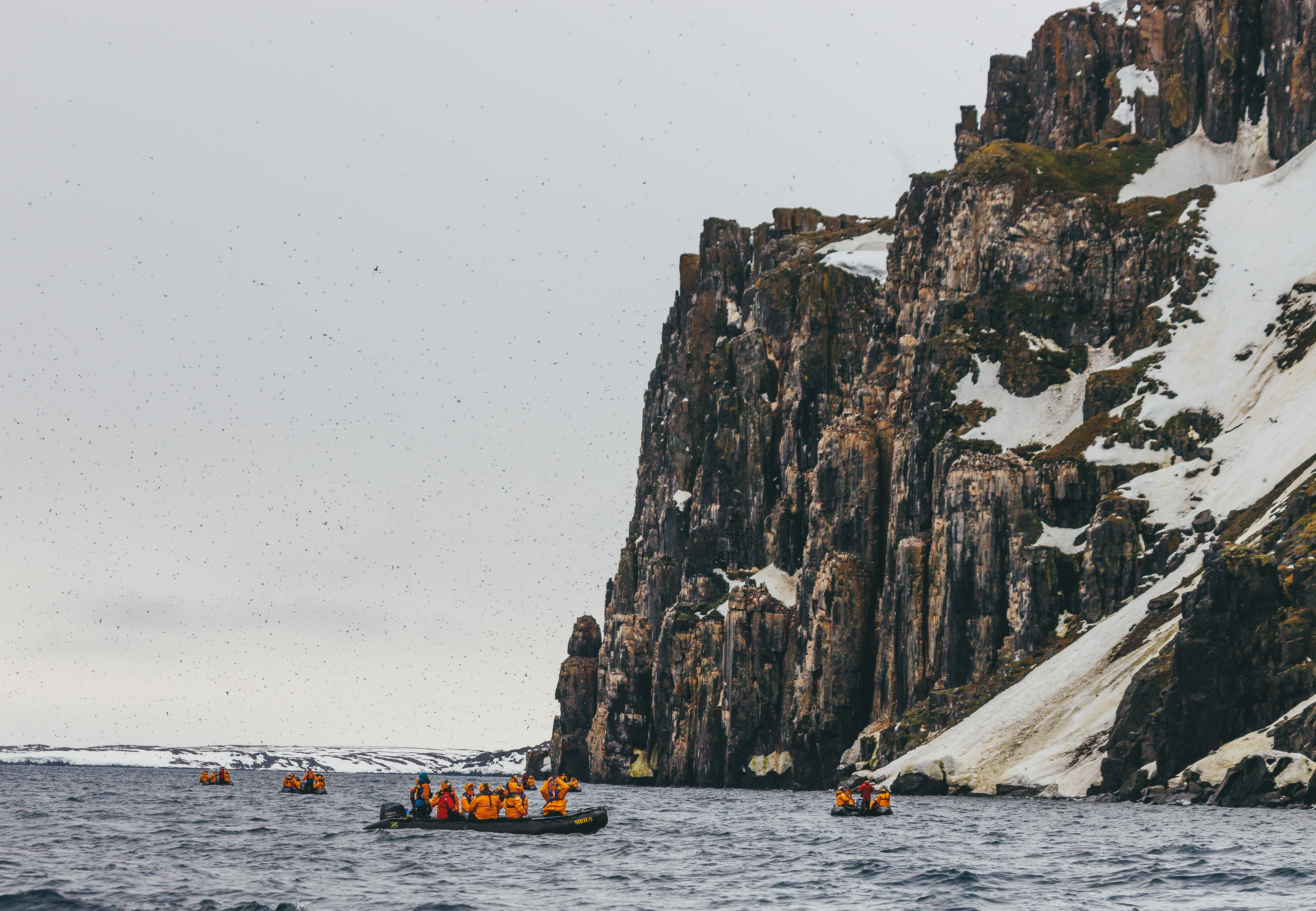
At this time of year, wildlife is more often spotted in the water, along shorelines, or gathered in bustling bird colonies clinging to the cliffs. Some terrain here is nearly vertical, with seabirds colonizing every possible ledge. Little auks, guillemots, and puffins nest in rocky crevices, spending the brief summer flying back and forth to feed themselves and their chicks before their first flights and plunges. Looking upward while seated in a Zodiac, the sky may seem alive with more birds than you can count, and sometimes we’ll explore near these cliffs on foot. Keep watch for other iconic species too, such as Arctic terns, common eiders, and the occasional king eider. The sounds are astonishing—an Arctic “silence” feels alive with nature’s calls. Standing beneath towering seabird cliffs renders visitors speechless.
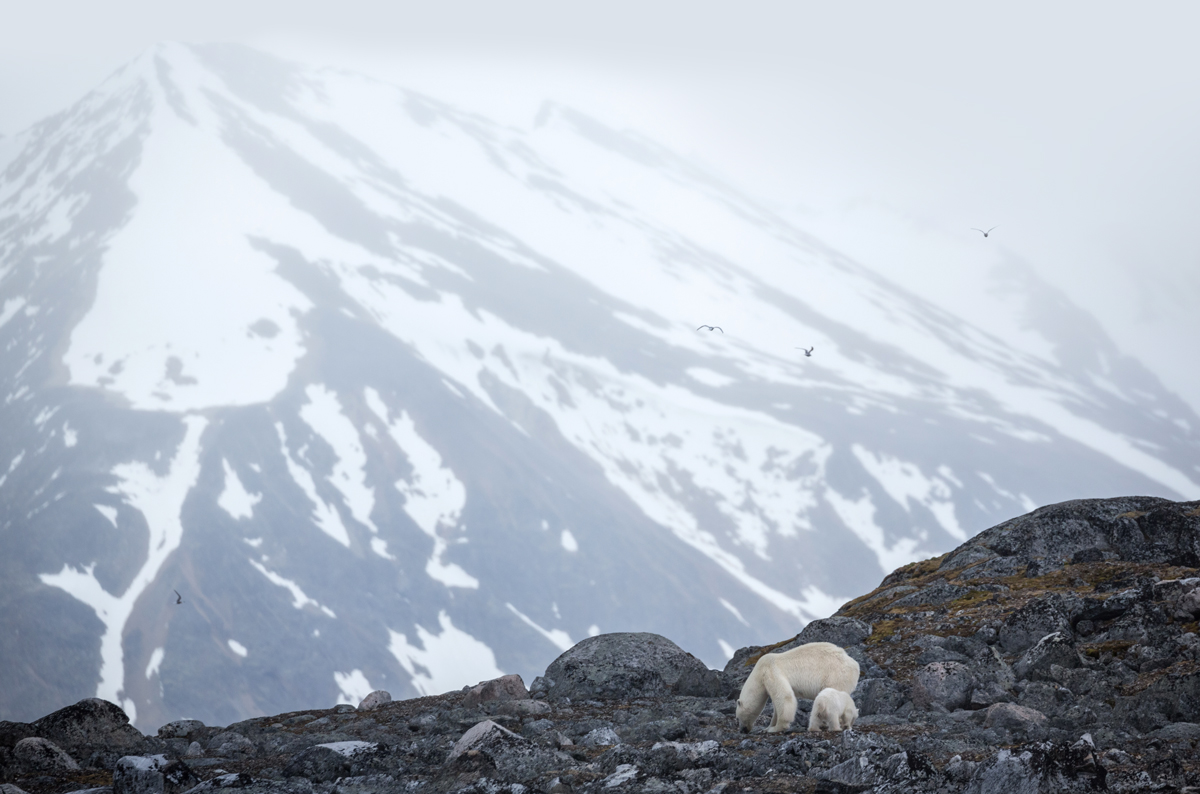
Summer offers the chance to step ashore and walk on bare ground, though patches of snow can linger. We may hike into foothills, valleys, and Arctic beaches— land shared with polar bears. While sightings are farther inshore, their paw prints in sand or mud tell their story. Take time to look around and underfoot, where hardy vascular plants and wildflowers bloom. You might also spot driftwood—not from ancient Svalbard forests, but carried here by Arctic currents from Siberia, where tree trunks and branches are swept up in the Arctic currents, ultimately coming to rest here.
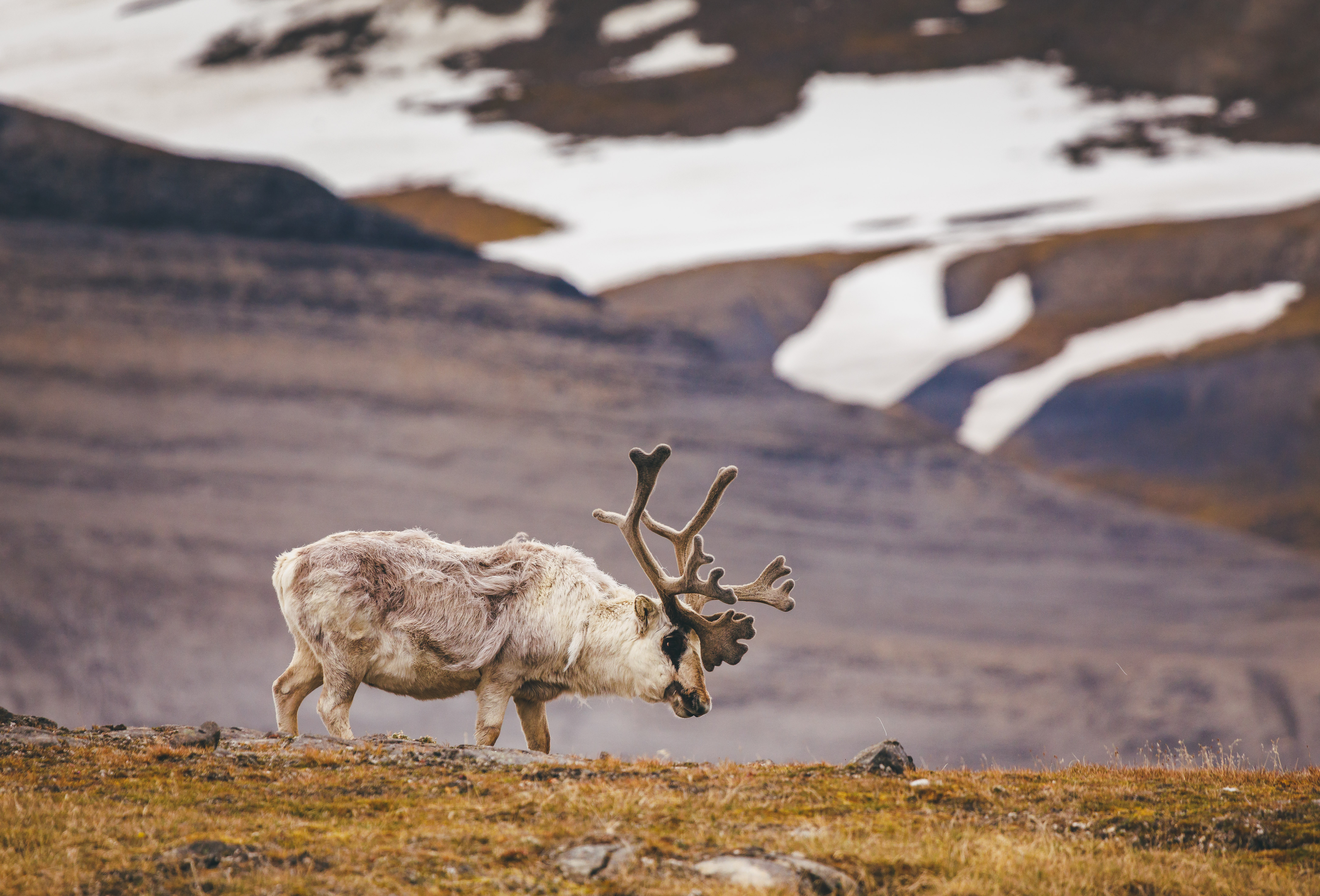
Additionally, we may see reindeer, as they busily forage on the bountiful summer plant life. Although the weather in midsummer is often cool—even crisp—in midsummer, it’s possible to enjoy reasonably warm days in Svalbard. It’s a surreal experience—feeling the warmth of the summer sun knowing you’re less than 700 nautical miles from the North Pole. As summer warms and sea ice recedes, glaciers come alive—meltwater hastening erosion, tidewater glaciers calving ice with thunderous force. From a Zodiac amid icebergs and brash ice, listen for the crackle of melting ice, the lap of currents, and Arctic terns calling overhead.
During summer, if conditions align, it might also be possible to visit some of Svalbard’s residents, be they trappers or researchers. There are a number of trappers’ cabins dotted across the archipelago, and the stories their occupants tell bring forth a life wrapped in resourcefulness, grit, humor, and hints of something approaching the magic of nature.
With seven full expedition days in Svalbard, we aim to explore a wide range of locations. The order of our journey will be shaped by sea ice conditions, which vary daily. Potential destinations include the spectacular fjord systems of Hornsund, Bellsund, Isfjorden, Krossfjorden, Smeerenburgfjorden, Raudfjorden, Woodfjorden, Sorgfjorden, and others. These fjords feature dramatic mountains rising directly from the sea, folding into endless layers. Glaciers spill from the highlands, many reaching the water’s edge where they calve into the sea. Throughout Svalbard, we may find previously mentioned seabird colonies and other wildlife, as they are distributed throughout the archipelago of islands.
Meals: Breakfast,Lunch,Dinner
Day 4
Summer in the Svalbard Wilderness
Svalbard is a true Arctic environment, where many iconic species spend their entire lives, entwined with the winter and spring sea ice. But with the arrival of summer—brief as it is—the archipelago bursts to life as countless migratory species settle in to take advantage of the season’s endless daylight and abundant food.
Chief among Svalbard’s summer migrants are seabirds, waterfowl, and other birds, joined by marine visitors such as baleen whales—including the mighty blue whale. Though wildlife sightings aren’t guaranteed, these giants are sometimes observed foraging in the rich Arctic waters.
Under the midnight sun, plant life also flourishes. While less diverse than in southern regions, Svalbard hosts hundreds of plant, lichen, and moss species, from hardy grasses to vibrant wildflowers. For a few brief months, snow and ice are replaced by pockets of green and splashes of colour, framed by snowcapped peaks —a fleeting transformation of the High Arctic landscape.
Throughout the summer, sea ice fractures, melts and disperses. Many species that depend on it shift north and east where ice lingers, or remain ashore until it returns in late fall. While ice may be less frequent, the open water offers greater access to the archipelago’s northern and eastern reaches. If we do encounter ice, we’ll pause to explore it.
At this time of year, wildlife is more often spotted in the water, along shorelines, or gathered in bustling bird colonies clinging to the cliffs. Some terrain here is nearly vertical, with seabirds colonizing every possible ledge. Little auks, guillemots, and puffins nest in rocky crevices, spending the brief summer flying back and forth to feed themselves and their chicks before their first flights and plunges. Looking upward while seated in a Zodiac, the sky may seem alive with more birds than you can count, and sometimes we’ll explore near these cliffs on foot. Keep watch for other iconic species too, such as Arctic terns, common eiders, and the occasional king eider. The sounds are astonishing—an Arctic “silence” feels alive with nature’s calls. Standing beneath towering seabird cliffs renders visitors speechless.
Summer offers the chance to step ashore and walk on bare ground, though patches of snow can linger. We may hike into foothills, valleys, and Arctic beaches— land shared with polar bears. While sightings are farther inshore, their paw prints in sand or mud tell their story. Take time to look around and underfoot, where hardy vascular plants and wildflowers bloom. You might also spot driftwood—not from ancient Svalbard forests, but carried here by Arctic currents from Siberia, where tree trunks and branches are swept up in the Arctic currents, ultimately coming to rest here.
Additionally, we may see reindeer, as they busily forage on the bountiful summer plant life. Although the weather in midsummer is often cool—even crisp—in midsummer, it’s possible to enjoy reasonably warm days in Svalbard. It’s a surreal experience—feeling the warmth of the summer sun knowing you’re less than 700 nautical miles from the North Pole. As summer warms and sea ice recedes, glaciers come alive—meltwater hastening erosion, tidewater glaciers calving ice with thunderous force. From a Zodiac amid icebergs and brash ice, listen for the crackle of melting ice, the lap of currents, and Arctic terns calling overhead.
During summer, if conditions align, it might also be possible to visit some of Svalbard’s residents, be they trappers or researchers. There are a number of trappers’ cabins dotted across the archipelago, and the stories their occupants tell bring forth a life wrapped in resourcefulness, grit, humor, and hints of something approaching the magic of nature.
With seven full expedition days in Svalbard, we aim to explore a wide range of locations. The order of our journey will be shaped by sea ice conditions, which vary daily. Potential destinations include the spectacular fjord systems of Hornsund, Bellsund, Isfjorden, Krossfjorden, Smeerenburgfjorden, Raudfjorden, Woodfjorden, Sorgfjorden, and others. These fjords feature dramatic mountains rising directly from the sea, folding into endless layers. Glaciers spill from the highlands, many reaching the water’s edge where they calve into the sea. Throughout Svalbard, we may find previously mentioned seabird colonies and other wildlife, as they are distributed throughout the archipelago of islands.
Meals: Breakfast,Lunch,Dinner
Day 5
Summer in the Svalbard Wilderness
Svalbard is a true Arctic environment, where many iconic species spend their entire lives, entwined with the winter and spring sea ice. But with the arrival of summer—brief as it is—the archipelago bursts to life as countless migratory species settle in to take advantage of the season’s endless daylight and abundant food.
Chief among Svalbard’s summer migrants are seabirds, waterfowl, and other birds, joined by marine visitors such as baleen whales—including the mighty blue whale. Though wildlife sightings aren’t guaranteed, these giants are sometimes observed foraging in the rich Arctic waters.
Under the midnight sun, plant life also flourishes. While less diverse than in southern regions, Svalbard hosts hundreds of plant, lichen, and moss species, from hardy grasses to vibrant wildflowers. For a few brief months, snow and ice are replaced by pockets of green and splashes of colour, framed by snowcapped peaks —a fleeting transformation of the High Arctic landscape.
Throughout the summer, sea ice fractures, melts and disperses. Many species that depend on it shift north and east where ice lingers, or remain ashore until it returns in late fall. While ice may be less frequent, the open water offers greater access to the archipelago’s northern and eastern reaches. If we do encounter ice, we’ll pause to explore it.
At this time of year, wildlife is more often spotted in the water, along shorelines, or gathered in bustling bird colonies clinging to the cliffs. Some terrain here is nearly vertical, with seabirds colonizing every possible ledge. Little auks, guillemots, and puffins nest in rocky crevices, spending the brief summer flying back and forth to feed themselves and their chicks before their first flights and plunges. Looking upward while seated in a Zodiac, the sky may seem alive with more birds than you can count, and sometimes we’ll explore near these cliffs on foot. Keep watch for other iconic species too, such as Arctic terns, common eiders, and the occasional king eider. The sounds are astonishing—an Arctic “silence” feels alive with nature’s calls. Standing beneath towering seabird cliffs renders visitors speechless.
Summer offers the chance to step ashore and walk on bare ground, though patches of snow can linger. We may hike into foothills, valleys, and Arctic beaches— land shared with polar bears. While sightings are farther inshore, their paw prints in sand or mud tell their story. Take time to look around and underfoot, where hardy vascular plants and wildflowers bloom. You might also spot driftwood—not from ancient Svalbard forests, but carried here by Arctic currents from Siberia, where tree trunks and branches are swept up in the Arctic currents, ultimately coming to rest here.
Additionally, we may see reindeer, as they busily forage on the bountiful summer plant life. Although the weather in midsummer is often cool—even crisp—in midsummer, it’s possible to enjoy reasonably warm days in Svalbard. It’s a surreal experience—feeling the warmth of the summer sun knowing you’re less than 700 nautical miles from the North Pole. As summer warms and sea ice recedes, glaciers come alive—meltwater hastening erosion, tidewater glaciers calving ice with thunderous force. From a Zodiac amid icebergs and brash ice, listen for the crackle of melting ice, the lap of currents, and Arctic terns calling overhead.
During summer, if conditions align, it might also be possible to visit some of Svalbard’s residents, be they trappers or researchers. There are a number of trappers’ cabins dotted across the archipelago, and the stories their occupants tell bring forth a life wrapped in resourcefulness, grit, humor, and hints of something approaching the magic of nature.
With seven full expedition days in Svalbard, we aim to explore a wide range of locations. The order of our journey will be shaped by sea ice conditions, which vary daily. Potential destinations include the spectacular fjord systems of Hornsund, Bellsund, Isfjorden, Krossfjorden, Smeerenburgfjorden, Raudfjorden, Woodfjorden, Sorgfjorden, and others. These fjords feature dramatic mountains rising directly from the sea, folding into endless layers. Glaciers spill from the highlands, many reaching the water’s edge where they calve into the sea. Throughout Svalbard, we may find previously mentioned seabird colonies and other wildlife, as they are distributed throughout the archipelago of islands.
Meals: Breakfast,Lunch,Dinner
Day 6
Summer in the Svalbard Wilderness
Svalbard is a true Arctic environment, where many iconic species spend their entire lives, entwined with the winter and spring sea ice. But with the arrival of summer—brief as it is—the archipelago bursts to life as countless migratory species settle in to take advantage of the season’s endless daylight and abundant food.
Chief among Svalbard’s summer migrants are seabirds, waterfowl, and other birds, joined by marine visitors such as baleen whales—including the mighty blue whale. Though wildlife sightings aren’t guaranteed, these giants are sometimes observed foraging in the rich Arctic waters.
Under the midnight sun, plant life also flourishes. While less diverse than in southern regions, Svalbard hosts hundreds of plant, lichen, and moss species, from hardy grasses to vibrant wildflowers. For a few brief months, snow and ice are replaced by pockets of green and splashes of colour, framed by snowcapped peaks —a fleeting transformation of the High Arctic landscape.
Throughout the summer, sea ice fractures, melts and disperses. Many species that depend on it shift north and east where ice lingers, or remain ashore until it returns in late fall. While ice may be less frequent, the open water offers greater access to the archipelago’s northern and eastern reaches. If we do encounter ice, we’ll pause to explore it.
At this time of year, wildlife is more often spotted in the water, along shorelines, or gathered in bustling bird colonies clinging to the cliffs. Some terrain here is nearly vertical, with seabirds colonizing every possible ledge. Little auks, guillemots, and puffins nest in rocky crevices, spending the brief summer flying back and forth to feed themselves and their chicks before their first flights and plunges. Looking upward while seated in a Zodiac, the sky may seem alive with more birds than you can count, and sometimes we’ll explore near these cliffs on foot. Keep watch for other iconic species too, such as Arctic terns, common eiders, and the occasional king eider. The sounds are astonishing—an Arctic “silence” feels alive with nature’s calls. Standing beneath towering seabird cliffs renders visitors speechless.
Summer offers the chance to step ashore and walk on bare ground, though patches of snow can linger. We may hike into foothills, valleys, and Arctic beaches— land shared with polar bears. While sightings are farther inshore, their paw prints in sand or mud tell their story. Take time to look around and underfoot, where hardy vascular plants and wildflowers bloom. You might also spot driftwood—not from ancient Svalbard forests, but carried here by Arctic currents from Siberia, where tree trunks and branches are swept up in the Arctic currents, ultimately coming to rest here.
Additionally, we may see reindeer, as they busily forage on the bountiful summer plant life. Although the weather in midsummer is often cool—even crisp—in midsummer, it’s possible to enjoy reasonably warm days in Svalbard. It’s a surreal experience—feeling the warmth of the summer sun knowing you’re less than 700 nautical miles from the North Pole. As summer warms and sea ice recedes, glaciers come alive—meltwater hastening erosion, tidewater glaciers calving ice with thunderous force. From a Zodiac amid icebergs and brash ice, listen for the crackle of melting ice, the lap of currents, and Arctic terns calling overhead.
During summer, if conditions align, it might also be possible to visit some of Svalbard’s residents, be they trappers or researchers. There are a number of trappers’ cabins dotted across the archipelago, and the stories their occupants tell bring forth a life wrapped in resourcefulness, grit, humor, and hints of something approaching the magic of nature.
With seven full expedition days in Svalbard, we aim to explore a wide range of locations. The order of our journey will be shaped by sea ice conditions, which vary daily. Potential destinations include the spectacular fjord systems of Hornsund, Bellsund, Isfjorden, Krossfjorden, Smeerenburgfjorden, Raudfjorden, Woodfjorden, Sorgfjorden, and others. These fjords feature dramatic mountains rising directly from the sea, folding into endless layers. Glaciers spill from the highlands, many reaching the water’s edge where they calve into the sea. Throughout Svalbard, we may find previously mentioned seabird colonies and other wildlife, as they are distributed throughout the archipelago of islands.
Meals: Breakfast,Lunch,Dinner
Day 7
Summer in the Svalbard Wilderness
Svalbard is a true Arctic environment, where many iconic species spend their entire lives, entwined with the winter and spring sea ice. But with the arrival of summer—brief as it is—the archipelago bursts to life as countless migratory species settle in to take advantage of the season’s endless daylight and abundant food.
Chief among Svalbard’s summer migrants are seabirds, waterfowl, and other birds, joined by marine visitors such as baleen whales—including the mighty blue whale. Though wildlife sightings aren’t guaranteed, these giants are sometimes observed foraging in the rich Arctic waters.
Under the midnight sun, plant life also flourishes. While less diverse than in southern regions, Svalbard hosts hundreds of plant, lichen, and moss species, from hardy grasses to vibrant wildflowers. For a few brief months, snow and ice are replaced by pockets of green and splashes of colour, framed by snowcapped peaks —a fleeting transformation of the High Arctic landscape.
Throughout the summer, sea ice fractures, melts and disperses. Many species that depend on it shift north and east where ice lingers, or remain ashore until it returns in late fall. While ice may be less frequent, the open water offers greater access to the archipelago’s northern and eastern reaches. If we do encounter ice, we’ll pause to explore it.
At this time of year, wildlife is more often spotted in the water, along shorelines, or gathered in bustling bird colonies clinging to the cliffs. Some terrain here is nearly vertical, with seabirds colonizing every possible ledge. Little auks, guillemots, and puffins nest in rocky crevices, spending the brief summer flying back and forth to feed themselves and their chicks before their first flights and plunges. Looking upward while seated in a Zodiac, the sky may seem alive with more birds than you can count, and sometimes we’ll explore near these cliffs on foot. Keep watch for other iconic species too, such as Arctic terns, common eiders, and the occasional king eider. The sounds are astonishing—an Arctic “silence” feels alive with nature’s calls. Standing beneath towering seabird cliffs renders visitors speechless.
Summer offers the chance to step ashore and walk on bare ground, though patches of snow can linger. We may hike into foothills, valleys, and Arctic beaches— land shared with polar bears. While sightings are farther inshore, their paw prints in sand or mud tell their story. Take time to look around and underfoot, where hardy vascular plants and wildflowers bloom. You might also spot driftwood—not from ancient Svalbard forests, but carried here by Arctic currents from Siberia, where tree trunks and branches are swept up in the Arctic currents, ultimately coming to rest here.
Additionally, we may see reindeer, as they busily forage on the bountiful summer plant life. Although the weather in midsummer is often cool—even crisp—in midsummer, it’s possible to enjoy reasonably warm days in Svalbard. It’s a surreal experience—feeling the warmth of the summer sun knowing you’re less than 700 nautical miles from the North Pole. As summer warms and sea ice recedes, glaciers come alive—meltwater hastening erosion, tidewater glaciers calving ice with thunderous force. From a Zodiac amid icebergs and brash ice, listen for the crackle of melting ice, the lap of currents, and Arctic terns calling overhead.
During summer, if conditions align, it might also be possible to visit some of Svalbard’s residents, be they trappers or researchers. There are a number of trappers’ cabins dotted across the archipelago, and the stories their occupants tell bring forth a life wrapped in resourcefulness, grit, humor, and hints of something approaching the magic of nature.
With seven full expedition days in Svalbard, we aim to explore a wide range of locations. The order of our journey will be shaped by sea ice conditions, which vary daily. Potential destinations include the spectacular fjord systems of Hornsund, Bellsund, Isfjorden, Krossfjorden, Smeerenburgfjorden, Raudfjorden, Woodfjorden, Sorgfjorden, and others. These fjords feature dramatic mountains rising directly from the sea, folding into endless layers. Glaciers spill from the highlands, many reaching the water’s edge where they calve into the sea. Throughout Svalbard, we may find previously mentioned seabird colonies and other wildlife, as they are distributed throughout the archipelago of islands.
Meals: Breakfast,Lunch,Dinner
Day 8
Summer in the Svalbard Wilderness
Svalbard is a true Arctic environment, where many iconic species spend their entire lives, entwined with the winter and spring sea ice. But with the arrival of summer—brief as it is—the archipelago bursts to life as countless migratory species settle in to take advantage of the season’s endless daylight and abundant food.
Chief among Svalbard’s summer migrants are seabirds, waterfowl, and other birds, joined by marine visitors such as baleen whales—including the mighty blue whale. Though wildlife sightings aren’t guaranteed, these giants are sometimes observed foraging in the rich Arctic waters.
Under the midnight sun, plant life also flourishes. While less diverse than in southern regions, Svalbard hosts hundreds of plant, lichen, and moss species, from hardy grasses to vibrant wildflowers. For a few brief months, snow and ice are replaced by pockets of green and splashes of colour, framed by snowcapped peaks —a fleeting transformation of the High Arctic landscape.
Throughout the summer, sea ice fractures, melts and disperses. Many species that depend on it shift north and east where ice lingers, or remain ashore until it returns in late fall. While ice may be less frequent, the open water offers greater access to the archipelago’s northern and eastern reaches. If we do encounter ice, we’ll pause to explore it.
At this time of year, wildlife is more often spotted in the water, along shorelines, or gathered in bustling bird colonies clinging to the cliffs. Some terrain here is nearly vertical, with seabirds colonizing every possible ledge. Little auks, guillemots, and puffins nest in rocky crevices, spending the brief summer flying back and forth to feed themselves and their chicks before their first flights and plunges. Looking upward while seated in a Zodiac, the sky may seem alive with more birds than you can count, and sometimes we’ll explore near these cliffs on foot. Keep watch for other iconic species too, such as Arctic terns, common eiders, and the occasional king eider. The sounds are astonishing—an Arctic “silence” feels alive with nature’s calls. Standing beneath towering seabird cliffs renders visitors speechless.
Summer offers the chance to step ashore and walk on bare ground, though patches of snow can linger. We may hike into foothills, valleys, and Arctic beaches— land shared with polar bears. While sightings are farther inshore, their paw prints in sand or mud tell their story. Take time to look around and underfoot, where hardy vascular plants and wildflowers bloom. You might also spot driftwood—not from ancient Svalbard forests, but carried here by Arctic currents from Siberia, where tree trunks and branches are swept up in the Arctic currents, ultimately coming to rest here.
Additionally, we may see reindeer, as they busily forage on the bountiful summer plant life. Although the weather in midsummer is often cool—even crisp—in midsummer, it’s possible to enjoy reasonably warm days in Svalbard. It’s a surreal experience—feeling the warmth of the summer sun knowing you’re less than 700 nautical miles from the North Pole. As summer warms and sea ice recedes, glaciers come alive—meltwater hastening erosion, tidewater glaciers calving ice with thunderous force. From a Zodiac amid icebergs and brash ice, listen for the crackle of melting ice, the lap of currents, and Arctic terns calling overhead.
During summer, if conditions align, it might also be possible to visit some of Svalbard’s residents, be they trappers or researchers. There are a number of trappers’ cabins dotted across the archipelago, and the stories their occupants tell bring forth a life wrapped in resourcefulness, grit, humor, and hints of something approaching the magic of nature.
With seven full expedition days in Svalbard, we aim to explore a wide range of locations. The order of our journey will be shaped by sea ice conditions, which vary daily. Potential destinations include the spectacular fjord systems of Hornsund, Bellsund, Isfjorden, Krossfjorden, Smeerenburgfjorden, Raudfjorden, Woodfjorden, Sorgfjorden, and others. These fjords feature dramatic mountains rising directly from the sea, folding into endless layers. Glaciers spill from the highlands, many reaching the water’s edge where they calve into the sea. Throughout Svalbard, we may find previously mentioned seabird colonies and other wildlife, as they are distributed throughout the archipelago of islands.
Meals: Breakfast,Lunch,Dinner
Day 9
Summer in the Svalbard Wilderness
Svalbard is a true Arctic environment, where many iconic species spend their entire lives, entwined with the winter and spring sea ice. But with the arrival of summer—brief as it is—the archipelago bursts to life as countless migratory species settle in to take advantage of the season’s endless daylight and abundant food.
Chief among Svalbard’s summer migrants are seabirds, waterfowl, and other birds, joined by marine visitors such as baleen whales—including the mighty blue whale. Though wildlife sightings aren’t guaranteed, these giants are sometimes observed foraging in the rich Arctic waters.
Under the midnight sun, plant life also flourishes. While less diverse than in southern regions, Svalbard hosts hundreds of plant, lichen, and moss species, from hardy grasses to vibrant wildflowers. For a few brief months, snow and ice are replaced by pockets of green and splashes of colour, framed by snowcapped peaks —a fleeting transformation of the High Arctic landscape.
Throughout the summer, sea ice fractures, melts and disperses. Many species that depend on it shift north and east where ice lingers, or remain ashore until it returns in late fall. While ice may be less frequent, the open water offers greater access to the archipelago’s northern and eastern reaches. If we do encounter ice, we’ll pause to explore it.
At this time of year, wildlife is more often spotted in the water, along shorelines, or gathered in bustling bird colonies clinging to the cliffs. Some terrain here is nearly vertical, with seabirds colonizing every possible ledge. Little auks, guillemots, and puffins nest in rocky crevices, spending the brief summer flying back and forth to feed themselves and their chicks before their first flights and plunges. Looking upward while seated in a Zodiac, the sky may seem alive with more birds than you can count, and sometimes we’ll explore near these cliffs on foot. Keep watch for other iconic species too, such as Arctic terns, common eiders, and the occasional king eider. The sounds are astonishing—an Arctic “silence” feels alive with nature’s calls. Standing beneath towering seabird cliffs renders visitors speechless.
Summer offers the chance to step ashore and walk on bare ground, though patches of snow can linger. We may hike into foothills, valleys, and Arctic beaches— land shared with polar bears. While sightings are farther inshore, their paw prints in sand or mud tell their story. Take time to look around and underfoot, where hardy vascular plants and wildflowers bloom. You might also spot driftwood—not from ancient Svalbard forests, but carried here by Arctic currents from Siberia, where tree trunks and branches are swept up in the Arctic currents, ultimately coming to rest here.
Additionally, we may see reindeer, as they busily forage on the bountiful summer plant life. Although the weather in midsummer is often cool—even crisp—in midsummer, it’s possible to enjoy reasonably warm days in Svalbard. It’s a surreal experience—feeling the warmth of the summer sun knowing you’re less than 700 nautical miles from the North Pole. As summer warms and sea ice recedes, glaciers come alive—meltwater hastening erosion, tidewater glaciers calving ice with thunderous force. From a Zodiac amid icebergs and brash ice, listen for the crackle of melting ice, the lap of currents, and Arctic terns calling overhead.
During summer, if conditions align, it might also be possible to visit some of Svalbard’s residents, be they trappers or researchers. There are a number of trappers’ cabins dotted across the archipelago, and the stories their occupants tell bring forth a life wrapped in resourcefulness, grit, humor, and hints of something approaching the magic of nature.
With seven full expedition days in Svalbard, we aim to explore a wide range of locations. The order of our journey will be shaped by sea ice conditions, which vary daily. Potential destinations include the spectacular fjord systems of Hornsund, Bellsund, Isfjorden, Krossfjorden, Smeerenburgfjorden, Raudfjorden, Woodfjorden, Sorgfjorden, and others. These fjords feature dramatic mountains rising directly from the sea, folding into endless layers. Glaciers spill from the highlands, many reaching the water’s edge where they calve into the sea. Throughout Svalbard, we may find previously mentioned seabird colonies and other wildlife, as they are distributed throughout the archipelago of islands.
Meals: Breakfast,Lunch,Dinner
Day 10
Disembark in Longyearbyen and fly to Helsinki
The time to say goodbye has come. Your adventure ends as it began, in the frontier settlement of Longyearbyen. From here, we’ll transfer you to the airport for your charter flight to Helsinki, and group hotel night. Both are included in your Charter Flight & Hotel Package.
Meals: Breakfast
Day 11
Depart Helsinki
After breakfast at your included hotel, make your way independently to the Helsinki airport for your onward flight home, or spend more time exploring the Finnish capital as prearranged.
Meals: Breakfast
What’s included
What’s not included
Additional information
Food
All meals while on the ship are included.
Typical meals
The ship’s galley offers good-quality service and cuisine throughout, with excellent chefs preparing international menus, including vegetarian dishes. If there is one constant on board, it is that you’ll enjoy delicious meals. While meal times may change due to landings and wildlife sightings, you’ll always be served three well-prepared meals per day. Vegetarians and vegans can be well catered for on this adventure – please inform us before departure of any special dietary requests so our local team can be well prepared.
Breakfast: Buffet style – unlimited tea and coffee, a selection of fruit juices, hot options including bacon and eggs or omelettes, a selection of bread and toast and jam/honey/marmalade, fruit and cereal.
Lunch: Three-course set meal or the occasional buffet or barbecue.
Dinner: Three courses with a starter of soup, salad or anti-pasto, a choice of three mains with at least one vegetarian and one seafood option and a dessert of sweet pudding or ice cream or fruit, tea and coffee.
Drinks: Complimentary coffee, tea, cocoa and water stations are available around the clock, while soft drinks and juices are available during meals and when the bar is open—all included in the cost of your package. Enjoy complimentary select beer, wines and select cocktails during bar service hours and dinner as part of the “Raise a Glass and Stay Connected Free” program. Premium wines and champagne are available at extra cost and can be billed to your shipboard account. The well-stocked bars on the ship are open late morning, afternoon and evening, though hours may occasionally change to accommodate the expedition schedule.
Seabird Cliffs Zodiac Ride & Shore Walk
Glide by Zodiac beneath basalt walls to witness tens of thousands of cliff-dwelling birds. Little auks, guillemots and puffins pour from ledges in a living cloud while kittiwakes stitch white arcs over the sea.
Land nearby to feel the atmosphere of these echoing colonies and learn how seabirds exploit Svalbard’s short, intense summer. Your naturalists spotlight behavior—from frantic chick-feeding flights to the first plunges of fledglings.
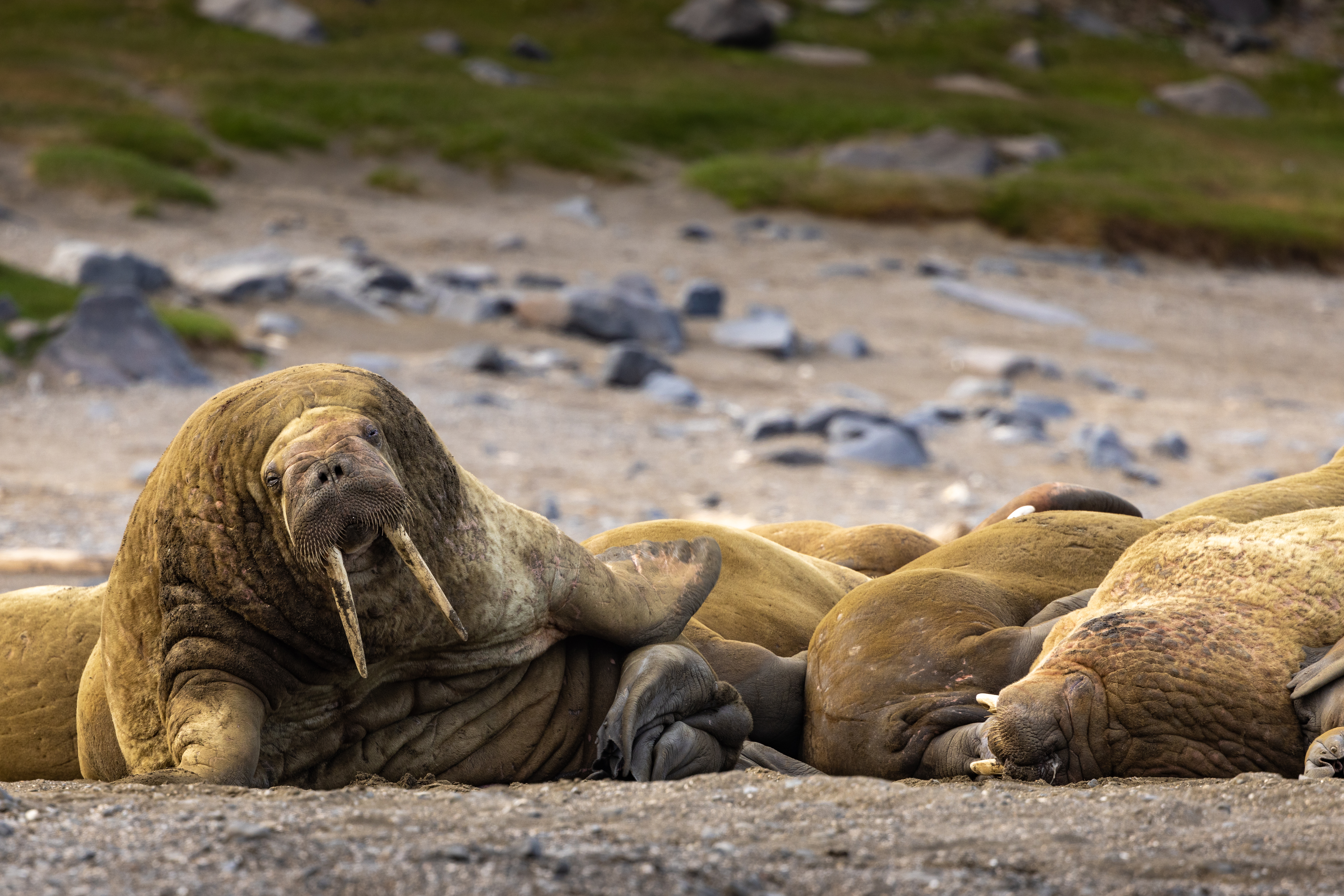
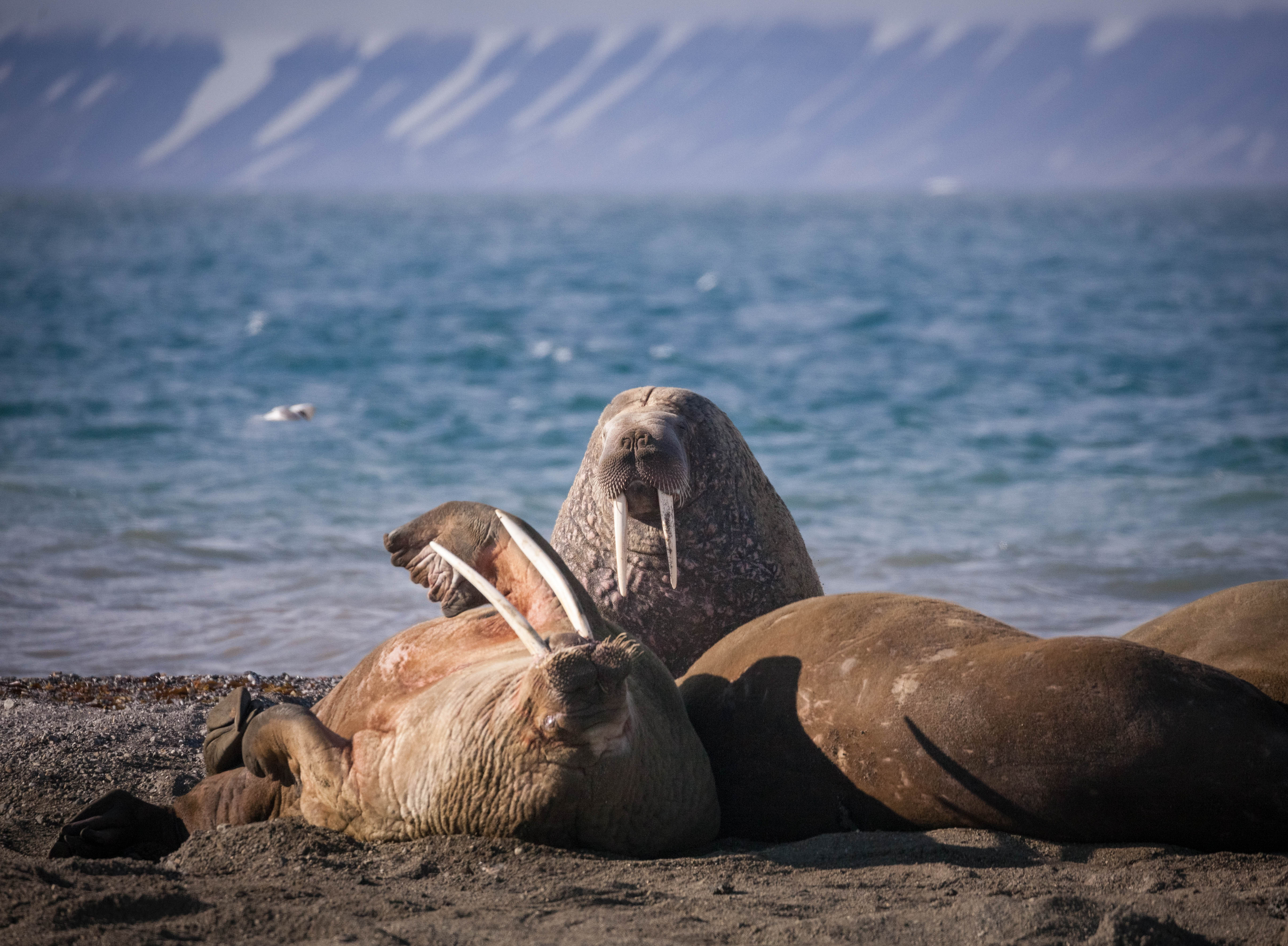
Walrus Haul-Out Viewing (Landing or Zodiac, Conditions Permitting)
Approach a coastal spit or low island to observe walrus haul-outs, their whiskered muzzles and oversized tusks unmistakable. Listen to grunts and shuffles across the shingle while keeping a safe, guided distance for both animal welfare and superb viewing.
Learn how the protected Atlantic walrus has rebounded in Svalbard and how sea-ice and benthic clams drive their seasonal movements. This encounter blends raw presence with conservation insight.
Polar Bear Watch from Ship & Pack-Ice Margins
Join your naturalists on deck to scan shorelines and floe edges for the elusive polar bear. Using binoculars and spotting scopes, the team reads tracks, wind and drift to maximize chances while maintaining a safe and respectful distance.
Discover how this apex hunter depends on sea-ice ecology and why sightings vary with season and ice distribution. Moments of silence as everyone searches the white expanse are part of the experience.
On-Deck Whale Watching under the Midnight Sun
Keep binoculars close for spontaneous call-outs as the team identifies blows and tail flukes to help you spot baleen whales—from fin and humpback to the occasional mighty blue—feeding where rich Arctic waters meet fjord mouths.
Guides explain how currents of the Norwegian and Barents seas concentrate plankton and krill, drawing marine giants. The low golden arc of the midnight sun turns calm seas into a mirror for unforgettable silhouettes.
Historic Trappers’ Cabins & Field Stations Visit
When conditions and permissions allow, step ashore to visit Svalbard trappers’ cabins or meet researchers at simple field outposts. Weathered timber, seal-skin remnants and tools hint at winters of ingenuity and grit.
Hear stories of survival, resourcefulness and scientific inquiry that animate this high-latitude frontier. The contrast between past subsistence and today’s conservation priorities offers context for human life in the High Arctic.
Midnight Sun Scenic Cruising & Photography Session
Walk the outer decks as the sun circles the horizon in a soft amber loop, using the long golden hour to frame glaciers, peaks and sea ice. Capture soft Arctic light on mirror-calm water and practice low-ISO, tripod-free shooting.
Expedition staff highlight vantage points and compositional cues so you can pause for photos and reflection. The phenomenon of the midnight sun turns every quiet sail into a private gallery.
Expert-Led Natural History Talks & Daily Recaps
Meet your Expedition Team for concise lectures on sea-ice dynamics, Arctic geology, wildlife behavior and responsible travel. Short, engaging sessions deepen what you see from Zodiacs and decks.
Evening recaps connect the day’s sightings to larger themes—migration, food webs and glacial change—so you can join a guided discussion and prepare for tomorrow’s options with a richer sense of place and purpose.
Sea Kayaking in Fjords and Brash Ice
Slip into stable sea kayaks to paddle among brash ice and along sculpted shorelines, feeling the micro-scale textures of Svalbard at water level. Guides set an easy pace, watching conditions and wildlife as you glide beneath glacier-cut walls.
This small-group adventure emphasizes quiet exploration and close-to-the-water perspectives. Offered at additional cost and bookable on tour, kayaking is weather-dependent and space-limited for maximum serenity and safety.
Zodiac Cruise to Tidewater Glaciers
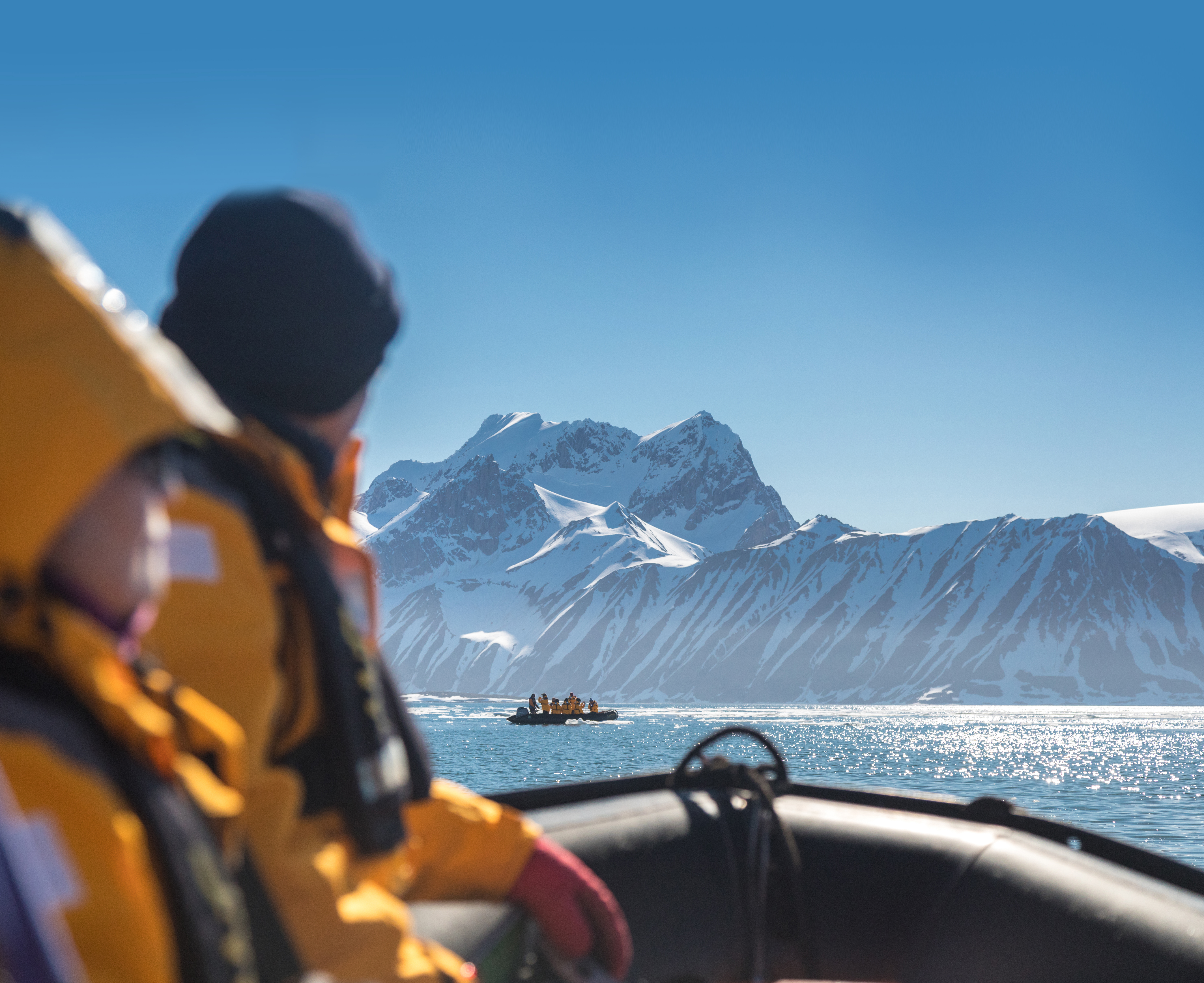
Board nimble Zodiacs to cruise tidewater glaciers at a respectful distance, drifting among brash ice and electric-blue bergy bits. Hear the low thunder of calving ice walls and feel the chill rolling off the face as Arctic terns wheel and call overhead.
Your guides interpret glacial forces shaping the archipelago—how freshwater melt, currents and weather sculpt the coast. Listen for the crackle of melting ice, a sensory soundtrack to Svalbard’s living icescapes.
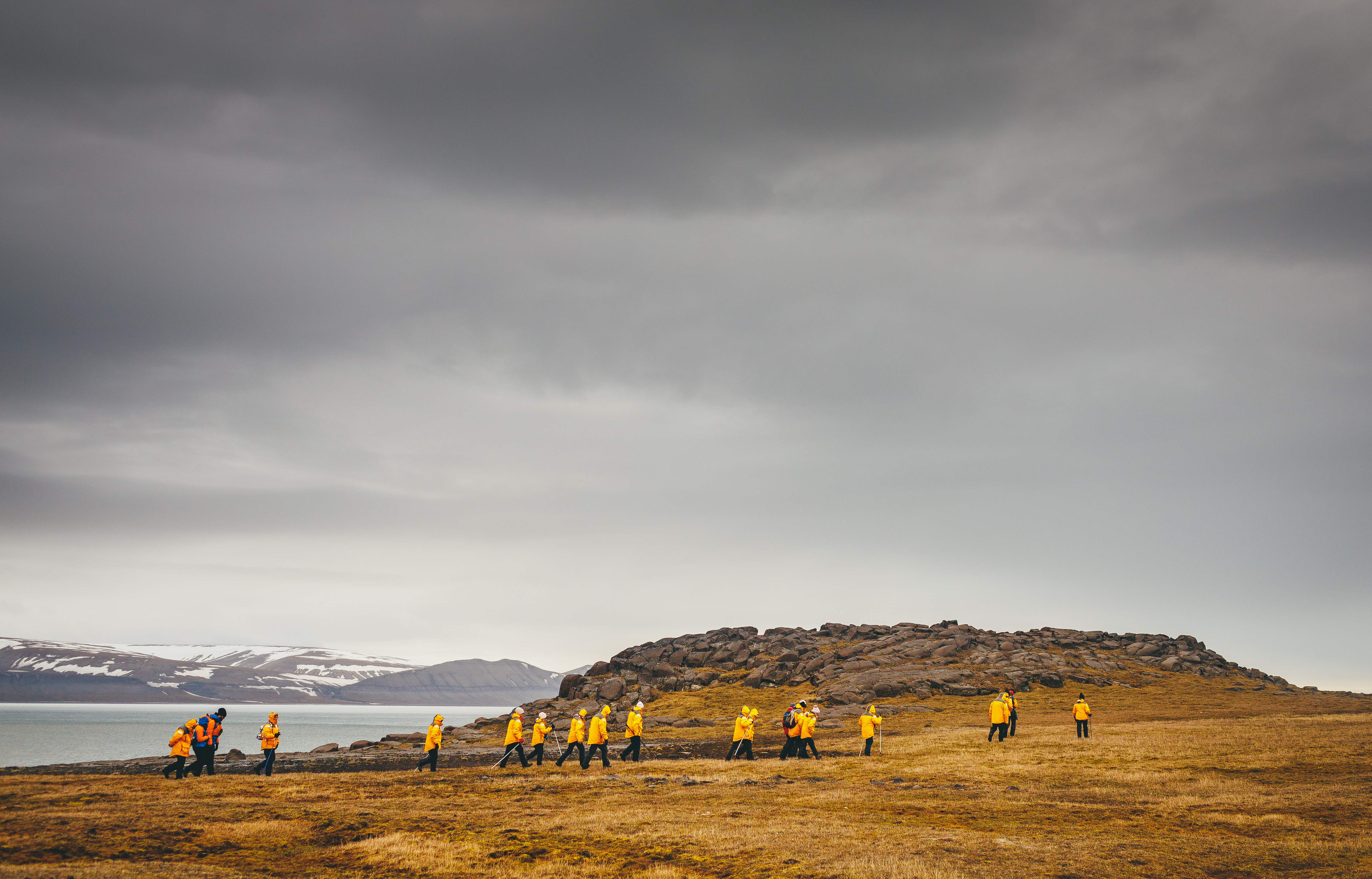
Guided Tundra Hikes & Shore Landings
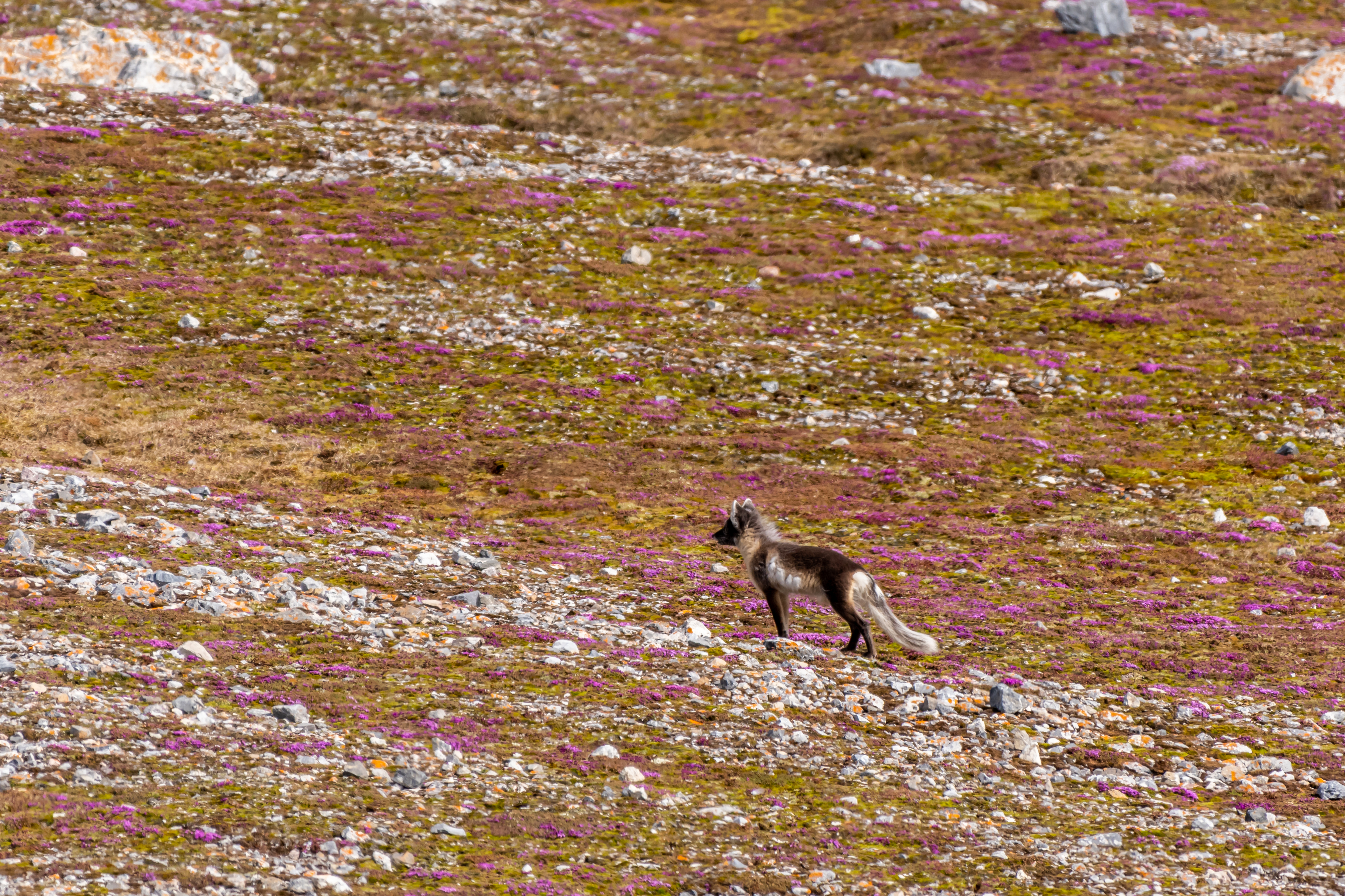
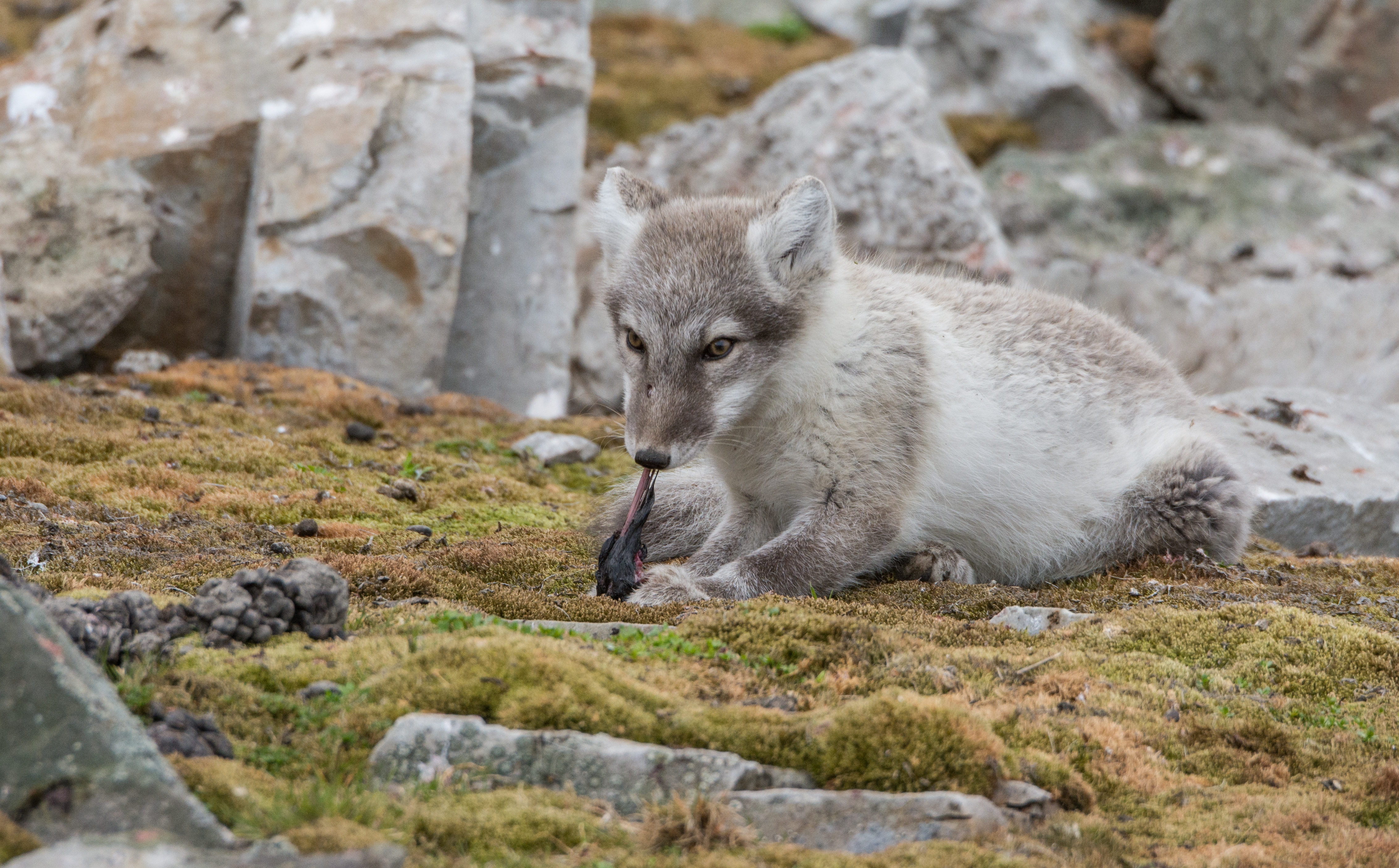
Step ashore with your expedition team to hike the tundra across Arctic beaches, valleys and gentle ridgelines. Look for delicate blooms—purple saxifrage, moss campion—and the neat prints of reindeer and fox along the strandline.
Guides brief you on polar bear safety protocols before exploring permafrost-patterned ground and ancient driftwood carried from Siberia. These unhurried walks reveal the small-scale beauty that survives under Svalbard’s vast skies.
Svalbard Ice-Class Expedition Cruising through Fjords
Explore Svalbard aboard an ice-class polar vessel, weaving into dramatic fjords such as Hornsund and Isfjorden where saw-toothed peaks fall straight to the sea. Under the midnight sun, watch glacier tongues pour from the highlands while the bridge team selects the day’s route according to sea-ice and wildlife opportunities.
Gain sweeping vantage points from open decks to pause for photos and reflection as blue ice, bird cliffs and sculpted mountains unfold. The constantly changing conditions make each fjord entry a one-of-a-kind exploration.