Your itinerary
Day 1
Arrive in Helsinki, Finland
Arrive in the Finnish capital and make your way to the group hotel located right at Helsinki airport, included in your Charter Flight & Hotel Package.
You will have the rest of the day to explore explore the many museums, galleries and restaurants, relax at a Finnish sauna or wander the vibrant Design District. If you do plan to visit Helsinki city centre, take advantage of the convenient 40-minute rail service from the airport.
Day 2
Fly to Longyearbyen, Svalbard, and embark
After breakfast, the group will transfer to the Helsinki airport and board our private charter flight to Longyearbyen, included in your Charter Flight & Hotel Package.
Our journey to the High Arctic now truly begins. You will see the coastal and birch forests of southern Scandinavia give way to taiga and tundra environments, the mountains of Norway and northern Sweden, and the convergence of the Norwegian and Barents seas.
Approaching Svalbard, you may get your first views of a pure, snowcapped wilderness, complete with ridgelines, glaciers, and perhaps even sea ice in the distance. We land in Longyearbyen, Svalbard’s largest settlement, and transfer to the harbor where we will embark on our ship.
Meals: Dinner
Day 3
Springtime in the Svalbard Wilderness
Spring in Svalbard is characterized by a beautiful combination of snow, ice and Midnight Sun. A fascinating contrast unfolds with the arrival of spring: majestic polar landscapes illuminated by continuous daylight. Sea ice is at or near its annual maximum, drawing us north. If experiencing Arctic sea ice is on your bucket list, you have chosen the perfect time to visit.
Your Expedition Team and Bridge Officers will consult the latest ice charts daily—sea ice is incredibly dynamic and can drift dozens of kilometers in a day. Our route will depend on where sea ice offers the best opportunities for exploration and wildlife encounters. Sea ice is the primary hunting, resting, and travelling platform for iconic Arctic species—and spring offers the best chance to see it all.
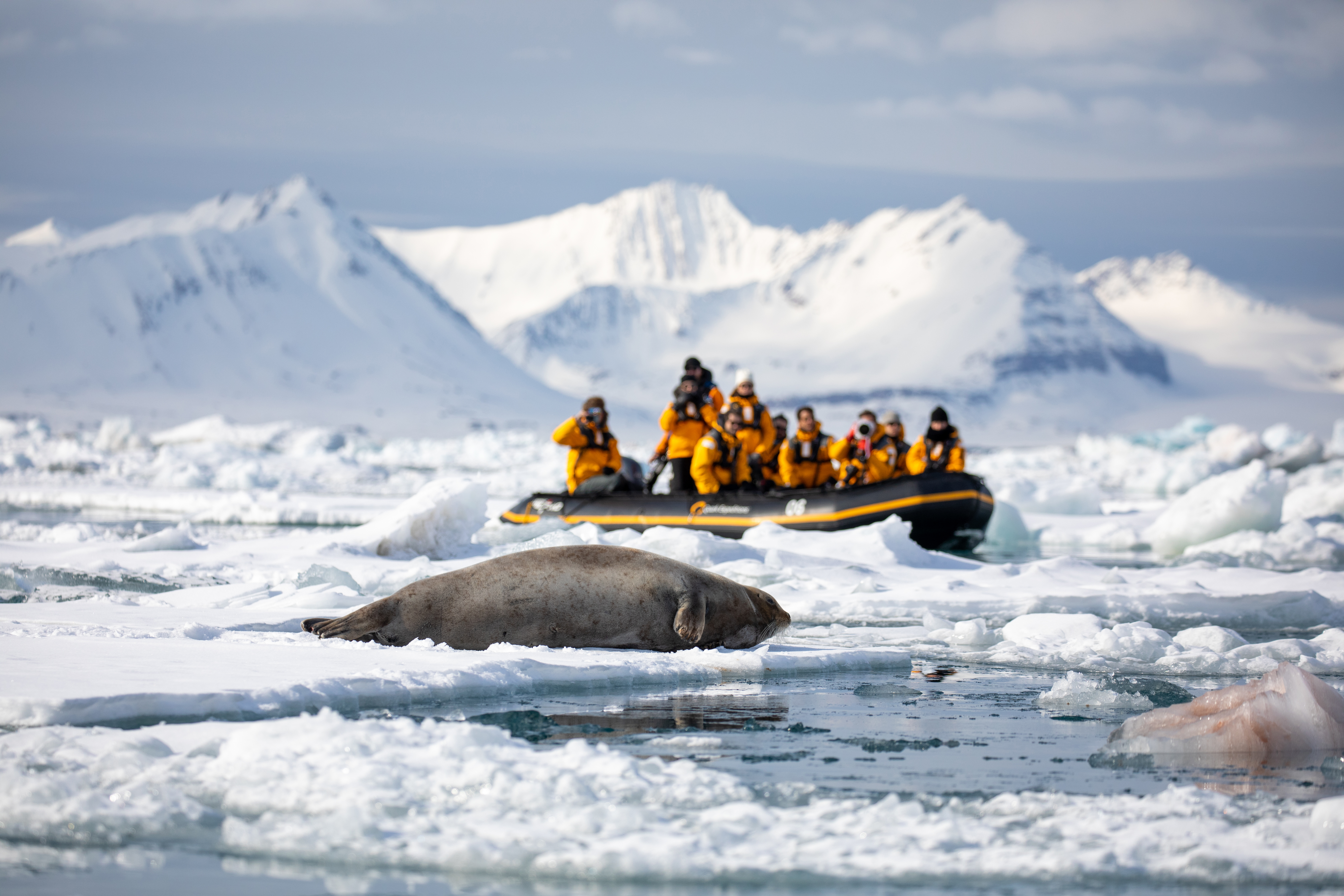
As we navigate the ice edge—or even through it—spend time on deck with your binoculars at the ready. Somewhere in the maze of marooned icebergs and pressure ridges, wildlife may be present—perhaps even polar bears who are lured to the ice edge by the presence of seals, a primary food source. Watch for clues, shapes, and shadows that could signal something special. And while polar bears may be the main goal, you may also spot walruses, Arctic foxes, and ivory gulls—in addition to ringed and bearded seals.
On shore, spring landscapes remain blanketed in snow, with many bays still filled with ice—habitat crucial to Arctic wildlife for food and survival. It’s the kind of scenery that embodies the word “pristine.” On sunny days, snowcapped ridges against cobalt skies are electric in their beauty. On cloudy days, the Arctic’s muted palette of whites, greys, and blues creates moody, powerful vistas. Photography tip: try switching your camera to black-and-white mode—textures become dramatic, and light behaves differently.
Alongside drifting sea ice, you may see icebergs and bergy bits—fragments of glacial ice whose origins lie deep in mountain valleys. Spring in the Arctic is also a time of awakening. As we travel, we’ll witness this seasonal transformation firsthand. Some slopes, beaches, and valleys begin to melt faster than others, revealing bare ground untouched for months. Grasses and mosses emerge, seizing every opportunity to photosynthesize in the returning sunlight. Meltwater trickles grow into fast-flowing runoff, adding sound and motion to the awakening landscape.
Yet spring remains cold. In fact, these areas may go through multiple freeze-thaw cycles, especially farther north and east. In Svalbard, this mesmerizing transition is vivid and inspiring—a reminder to all of us of the powerful rhythms of Arctic life.
Spring also welcomes migratory birds and whales. As the season unfolds, cliffsides will become busy with seabirds, such as little auks, guillemots and kittiwakes, returning to breed. Each day brings new arrivals. Nest-building, courting, and bird calls fill the air in a sensory-rich spectacle. When we encounter these colonies, take time to pause. Put down your camera. Simply observe the vibrant pulse of life and imagine the sheer abundance of food required to feed so many birds—and the chicks that will soon arrive.
Whales, too, may appear. While sightings can never be guaranteed, some large migrators—such as blue whales—begin arriving in coastal waters by late spring. Others, like belugas, live here year-round and may be spotted threading through sea ice. Each encounter, however brief, reminds us of the interconnectedness of Arctic ecosystems.
With seven full expedition days in Svalbard, we aim to explore a wide range of locations. The order of our journey will be shaped by sea ice conditions, which vary daily. Potential destinations include the spectacular fjord systems of Hornsund, Bellsund, Isfjorden, Krossfjorden, Smeerenburgfjorden, Raudfjorden, Woodfjorden, Sorgfjorden, and others. These fjords feature dramatic mountains rising directly from the sea, folding into endless layers. Glaciers spill from the highlands, many reaching the water’s edge where they calve into the sea.
Throughout Svalbard, we’ll look for thriving seabird colonies and hope to make regular landings along the coasts and within fjords. Some outings may take place on exposed rocky terrain, but most will involve walking on snow. And if conditions are safe and suitable, we may even set foot on the sea ice itself—an unforgettable moment that truly feels like walking on water.
Meals: Breakfast,Lunch,Dinner
Day 4
Springtime in the Svalbard Wilderness
Spring in Svalbard is characterized by a beautiful combination of snow, ice and Midnight Sun. A fascinating contrast unfolds with the arrival of spring: majestic polar landscapes illuminated by continuous daylight. Sea ice is at or near its annual maximum, drawing us north. If experiencing Arctic sea ice is on your bucket list, you have chosen the perfect time to visit.
Your Expedition Team and Bridge Officers will consult the latest ice charts daily—sea ice is incredibly dynamic and can drift dozens of kilometers in a day. Our route will depend on where sea ice offers the best opportunities for exploration and wildlife encounters. Sea ice is the primary hunting, resting, and travelling platform for iconic Arctic species—and spring offers the best chance to see it all.
As we navigate the ice edge—or even through it—spend time on deck with your binoculars at the ready. Somewhere in the maze of marooned icebergs and pressure ridges, wildlife may be present—perhaps even polar bears who are lured to the ice edge by the presence of seals, a primary food source. Watch for clues, shapes, and shadows that could signal something special. And while polar bears may be the main goal, you may also spot walruses, Arctic foxes, and ivory gulls—in addition to ringed and bearded seals.
On shore, spring landscapes remain blanketed in snow, with many bays still filled with ice—habitat crucial to Arctic wildlife for food and survival. It’s the kind of scenery that embodies the word “pristine.” On sunny days, snowcapped ridges against cobalt skies are electric in their beauty. On cloudy days, the Arctic’s muted palette of whites, greys, and blues creates moody, powerful vistas. Photography tip: try switching your camera to black-and-white mode—textures become dramatic, and light behaves differently.
Alongside drifting sea ice, you may see icebergs and bergy bits—fragments of glacial ice whose origins lie deep in mountain valleys. Spring in the Arctic is also a time of awakening. As we travel, we’ll witness this seasonal transformation firsthand. Some slopes, beaches, and valleys begin to melt faster than others, revealing bare ground untouched for months. Grasses and mosses emerge, seizing every opportunity to photosynthesize in the returning sunlight. Meltwater trickles grow into fast-flowing runoff, adding sound and motion to the awakening landscape.
Yet spring remains cold. In fact, these areas may go through multiple freeze-thaw cycles, especially farther north and east. In Svalbard, this mesmerizing transition is vivid and inspiring—a reminder to all of us of the powerful rhythms of Arctic life.
Spring also welcomes migratory birds and whales. As the season unfolds, cliffsides will become busy with seabirds, such as little auks, guillemots and kittiwakes, returning to breed. Each day brings new arrivals. Nest-building, courting, and bird calls fill the air in a sensory-rich spectacle. When we encounter these colonies, take time to pause. Put down your camera. Simply observe the vibrant pulse of life and imagine the sheer abundance of food required to feed so many birds—and the chicks that will soon arrive.
Whales, too, may appear. While sightings can never be guaranteed, some large migrators—such as blue whales—begin arriving in coastal waters by late spring. Others, like belugas, live here year-round and may be spotted threading through sea ice. Each encounter, however brief, reminds us of the interconnectedness of Arctic ecosystems.
With seven full expedition days in Svalbard, we aim to explore a wide range of locations. The order of our journey will be shaped by sea ice conditions, which vary daily. Potential destinations include the spectacular fjord systems of Hornsund, Bellsund, Isfjorden, Krossfjorden, Smeerenburgfjorden, Raudfjorden, Woodfjorden, Sorgfjorden, and others. These fjords feature dramatic mountains rising directly from the sea, folding into endless layers. Glaciers spill from the highlands, many reaching the water’s edge where they calve into the sea.
Throughout Svalbard, we’ll look for thriving seabird colonies and hope to make regular landings along the coasts and within fjords. Some outings may take place on exposed rocky terrain, but most will involve walking on snow. And if conditions are safe and suitable, we may even set foot on the sea ice itself—an unforgettable moment that truly feels like walking on water.
Meals: Breakfast,Lunch,Dinner
Day 5
Springtime in the Svalbard Wilderness
Spring in Svalbard is characterized by a beautiful combination of snow, ice and Midnight Sun. A fascinating contrast unfolds with the arrival of spring: majestic polar landscapes illuminated by continuous daylight. Sea ice is at or near its annual maximum, drawing us north. If experiencing Arctic sea ice is on your bucket list, you have chosen the perfect time to visit.
Your Expedition Team and Bridge Officers will consult the latest ice charts daily—sea ice is incredibly dynamic and can drift dozens of kilometers in a day. Our route will depend on where sea ice offers the best opportunities for exploration and wildlife encounters. Sea ice is the primary hunting, resting, and travelling platform for iconic Arctic species—and spring offers the best chance to see it all.
As we navigate the ice edge—or even through it—spend time on deck with your binoculars at the ready. Somewhere in the maze of marooned icebergs and pressure ridges, wildlife may be present—perhaps even polar bears who are lured to the ice edge by the presence of seals, a primary food source. Watch for clues, shapes, and shadows that could signal something special. And while polar bears may be the main goal, you may also spot walruses, Arctic foxes, and ivory gulls—in addition to ringed and bearded seals.
On shore, spring landscapes remain blanketed in snow, with many bays still filled with ice—habitat crucial to Arctic wildlife for food and survival. It’s the kind of scenery that embodies the word “pristine.” On sunny days, snowcapped ridges against cobalt skies are electric in their beauty. On cloudy days, the Arctic’s muted palette of whites, greys, and blues creates moody, powerful vistas. Photography tip: try switching your camera to black-and-white mode—textures become dramatic, and light behaves differently.
Alongside drifting sea ice, you may see icebergs and bergy bits—fragments of glacial ice whose origins lie deep in mountain valleys. Spring in the Arctic is also a time of awakening. As we travel, we’ll witness this seasonal transformation firsthand. Some slopes, beaches, and valleys begin to melt faster than others, revealing bare ground untouched for months. Grasses and mosses emerge, seizing every opportunity to photosynthesize in the returning sunlight. Meltwater trickles grow into fast-flowing runoff, adding sound and motion to the awakening landscape.
Yet spring remains cold. In fact, these areas may go through multiple freeze-thaw cycles, especially farther north and east. In Svalbard, this mesmerizing transition is vivid and inspiring—a reminder to all of us of the powerful rhythms of Arctic life.
Spring also welcomes migratory birds and whales. As the season unfolds, cliffsides will become busy with seabirds, such as little auks, guillemots and kittiwakes, returning to breed. Each day brings new arrivals. Nest-building, courting, and bird calls fill the air in a sensory-rich spectacle. When we encounter these colonies, take time to pause. Put down your camera. Simply observe the vibrant pulse of life and imagine the sheer abundance of food required to feed so many birds—and the chicks that will soon arrive.
Whales, too, may appear. While sightings can never be guaranteed, some large migrators—such as blue whales—begin arriving in coastal waters by late spring. Others, like belugas, live here year-round and may be spotted threading through sea ice. Each encounter, however brief, reminds us of the interconnectedness of Arctic ecosystems.
With seven full expedition days in Svalbard, we aim to explore a wide range of locations. The order of our journey will be shaped by sea ice conditions, which vary daily. Potential destinations include the spectacular fjord systems of Hornsund, Bellsund, Isfjorden, Krossfjorden, Smeerenburgfjorden, Raudfjorden, Woodfjorden, Sorgfjorden, and others. These fjords feature dramatic mountains rising directly from the sea, folding into endless layers. Glaciers spill from the highlands, many reaching the water’s edge where they calve into the sea.
Throughout Svalbard, we’ll look for thriving seabird colonies and hope to make regular landings along the coasts and within fjords. Some outings may take place on exposed rocky terrain, but most will involve walking on snow. And if conditions are safe and suitable, we may even set foot on the sea ice itself—an unforgettable moment that truly feels like walking on water.
Meals: Breakfast,Lunch,Dinner
Day 6
Springtime in the Svalbard Wilderness
Spring in Svalbard is characterized by a beautiful combination of snow, ice and Midnight Sun. A fascinating contrast unfolds with the arrival of spring: majestic polar landscapes illuminated by continuous daylight. Sea ice is at or near its annual maximum, drawing us north. If experiencing Arctic sea ice is on your bucket list, you have chosen the perfect time to visit.
Your Expedition Team and Bridge Officers will consult the latest ice charts daily—sea ice is incredibly dynamic and can drift dozens of kilometers in a day. Our route will depend on where sea ice offers the best opportunities for exploration and wildlife encounters. Sea ice is the primary hunting, resting, and travelling platform for iconic Arctic species—and spring offers the best chance to see it all.
As we navigate the ice edge—or even through it—spend time on deck with your binoculars at the ready. Somewhere in the maze of marooned icebergs and pressure ridges, wildlife may be present—perhaps even polar bears who are lured to the ice edge by the presence of seals, a primary food source. Watch for clues, shapes, and shadows that could signal something special. And while polar bears may be the main goal, you may also spot walruses, Arctic foxes, and ivory gulls—in addition to ringed and bearded seals.
On shore, spring landscapes remain blanketed in snow, with many bays still filled with ice—habitat crucial to Arctic wildlife for food and survival. It’s the kind of scenery that embodies the word “pristine.” On sunny days, snowcapped ridges against cobalt skies are electric in their beauty. On cloudy days, the Arctic’s muted palette of whites, greys, and blues creates moody, powerful vistas. Photography tip: try switching your camera to black-and-white mode—textures become dramatic, and light behaves differently.
Alongside drifting sea ice, you may see icebergs and bergy bits—fragments of glacial ice whose origins lie deep in mountain valleys. Spring in the Arctic is also a time of awakening. As we travel, we’ll witness this seasonal transformation firsthand. Some slopes, beaches, and valleys begin to melt faster than others, revealing bare ground untouched for months. Grasses and mosses emerge, seizing every opportunity to photosynthesize in the returning sunlight. Meltwater trickles grow into fast-flowing runoff, adding sound and motion to the awakening landscape.
Yet spring remains cold. In fact, these areas may go through multiple freeze-thaw cycles, especially farther north and east. In Svalbard, this mesmerizing transition is vivid and inspiring—a reminder to all of us of the powerful rhythms of Arctic life.
Spring also welcomes migratory birds and whales. As the season unfolds, cliffsides will become busy with seabirds, such as little auks, guillemots and kittiwakes, returning to breed. Each day brings new arrivals. Nest-building, courting, and bird calls fill the air in a sensory-rich spectacle. When we encounter these colonies, take time to pause. Put down your camera. Simply observe the vibrant pulse of life and imagine the sheer abundance of food required to feed so many birds—and the chicks that will soon arrive.
Whales, too, may appear. While sightings can never be guaranteed, some large migrators—such as blue whales—begin arriving in coastal waters by late spring. Others, like belugas, live here year-round and may be spotted threading through sea ice. Each encounter, however brief, reminds us of the interconnectedness of Arctic ecosystems.
With seven full expedition days in Svalbard, we aim to explore a wide range of locations. The order of our journey will be shaped by sea ice conditions, which vary daily. Potential destinations include the spectacular fjord systems of Hornsund, Bellsund, Isfjorden, Krossfjorden, Smeerenburgfjorden, Raudfjorden, Woodfjorden, Sorgfjorden, and others. These fjords feature dramatic mountains rising directly from the sea, folding into endless layers. Glaciers spill from the highlands, many reaching the water’s edge where they calve into the sea.
Throughout Svalbard, we’ll look for thriving seabird colonies and hope to make regular landings along the coasts and within fjords. Some outings may take place on exposed rocky terrain, but most will involve walking on snow. And if conditions are safe and suitable, we may even set foot on the sea ice itself—an unforgettable moment that truly feels like walking on water.
Meals: Breakfast,Lunch,Dinner
Day 7
Springtime in the Svalbard Wilderness
Spring in Svalbard is characterized by a beautiful combination of snow, ice and Midnight Sun. A fascinating contrast unfolds with the arrival of spring: majestic polar landscapes illuminated by continuous daylight. Sea ice is at or near its annual maximum, drawing us north. If experiencing Arctic sea ice is on your bucket list, you have chosen the perfect time to visit.
Your Expedition Team and Bridge Officers will consult the latest ice charts daily—sea ice is incredibly dynamic and can drift dozens of kilometers in a day. Our route will depend on where sea ice offers the best opportunities for exploration and wildlife encounters. Sea ice is the primary hunting, resting, and travelling platform for iconic Arctic species—and spring offers the best chance to see it all.
As we navigate the ice edge—or even through it—spend time on deck with your binoculars at the ready. Somewhere in the maze of marooned icebergs and pressure ridges, wildlife may be present—perhaps even polar bears who are lured to the ice edge by the presence of seals, a primary food source. Watch for clues, shapes, and shadows that could signal something special. And while polar bears may be the main goal, you may also spot walruses, Arctic foxes, and ivory gulls—in addition to ringed and bearded seals.
On shore, spring landscapes remain blanketed in snow, with many bays still filled with ice—habitat crucial to Arctic wildlife for food and survival. It’s the kind of scenery that embodies the word “pristine.” On sunny days, snowcapped ridges against cobalt skies are electric in their beauty. On cloudy days, the Arctic’s muted palette of whites, greys, and blues creates moody, powerful vistas. Photography tip: try switching your camera to black-and-white mode—textures become dramatic, and light behaves differently.
Alongside drifting sea ice, you may see icebergs and bergy bits—fragments of glacial ice whose origins lie deep in mountain valleys. Spring in the Arctic is also a time of awakening. As we travel, we’ll witness this seasonal transformation firsthand. Some slopes, beaches, and valleys begin to melt faster than others, revealing bare ground untouched for months. Grasses and mosses emerge, seizing every opportunity to photosynthesize in the returning sunlight. Meltwater trickles grow into fast-flowing runoff, adding sound and motion to the awakening landscape.
Yet spring remains cold. In fact, these areas may go through multiple freeze-thaw cycles, especially farther north and east. In Svalbard, this mesmerizing transition is vivid and inspiring—a reminder to all of us of the powerful rhythms of Arctic life.
Spring also welcomes migratory birds and whales. As the season unfolds, cliffsides will become busy with seabirds, such as little auks, guillemots and kittiwakes, returning to breed. Each day brings new arrivals. Nest-building, courting, and bird calls fill the air in a sensory-rich spectacle. When we encounter these colonies, take time to pause. Put down your camera. Simply observe the vibrant pulse of life and imagine the sheer abundance of food required to feed so many birds—and the chicks that will soon arrive.
Whales, too, may appear. While sightings can never be guaranteed, some large migrators—such as blue whales—begin arriving in coastal waters by late spring. Others, like belugas, live here year-round and may be spotted threading through sea ice. Each encounter, however brief, reminds us of the interconnectedness of Arctic ecosystems.
With seven full expedition days in Svalbard, we aim to explore a wide range of locations. The order of our journey will be shaped by sea ice conditions, which vary daily. Potential destinations include the spectacular fjord systems of Hornsund, Bellsund, Isfjorden, Krossfjorden, Smeerenburgfjorden, Raudfjorden, Woodfjorden, Sorgfjorden, and others. These fjords feature dramatic mountains rising directly from the sea, folding into endless layers. Glaciers spill from the highlands, many reaching the water’s edge where they calve into the sea.
Throughout Svalbard, we’ll look for thriving seabird colonies and hope to make regular landings along the coasts and within fjords. Some outings may take place on exposed rocky terrain, but most will involve walking on snow. And if conditions are safe and suitable, we may even set foot on the sea ice itself—an unforgettable moment that truly feels like walking on water.
Meals: Breakfast,Lunch,Dinner
Day 8
Springtime in the Svalbard Wilderness
Spring in Svalbard is characterized by a beautiful combination of snow, ice and Midnight Sun. A fascinating contrast unfolds with the arrival of spring: majestic polar landscapes illuminated by continuous daylight. Sea ice is at or near its annual maximum, drawing us north. If experiencing Arctic sea ice is on your bucket list, you have chosen the perfect time to visit.
Your Expedition Team and Bridge Officers will consult the latest ice charts daily—sea ice is incredibly dynamic and can drift dozens of kilometers in a day. Our route will depend on where sea ice offers the best opportunities for exploration and wildlife encounters. Sea ice is the primary hunting, resting, and travelling platform for iconic Arctic species—and spring offers the best chance to see it all.
As we navigate the ice edge—or even through it—spend time on deck with your binoculars at the ready. Somewhere in the maze of marooned icebergs and pressure ridges, wildlife may be present—perhaps even polar bears who are lured to the ice edge by the presence of seals, a primary food source. Watch for clues, shapes, and shadows that could signal something special. And while polar bears may be the main goal, you may also spot walruses, Arctic foxes, and ivory gulls—in addition to ringed and bearded seals.
On shore, spring landscapes remain blanketed in snow, with many bays still filled with ice—habitat crucial to Arctic wildlife for food and survival. It’s the kind of scenery that embodies the word “pristine.” On sunny days, snowcapped ridges against cobalt skies are electric in their beauty. On cloudy days, the Arctic’s muted palette of whites, greys, and blues creates moody, powerful vistas. Photography tip: try switching your camera to black-and-white mode—textures become dramatic, and light behaves differently.
Alongside drifting sea ice, you may see icebergs and bergy bits—fragments of glacial ice whose origins lie deep in mountain valleys. Spring in the Arctic is also a time of awakening. As we travel, we’ll witness this seasonal transformation firsthand. Some slopes, beaches, and valleys begin to melt faster than others, revealing bare ground untouched for months. Grasses and mosses emerge, seizing every opportunity to photosynthesize in the returning sunlight. Meltwater trickles grow into fast-flowing runoff, adding sound and motion to the awakening landscape.
Yet spring remains cold. In fact, these areas may go through multiple freeze-thaw cycles, especially farther north and east. In Svalbard, this mesmerizing transition is vivid and inspiring—a reminder to all of us of the powerful rhythms of Arctic life.
Spring also welcomes migratory birds and whales. As the season unfolds, cliffsides will become busy with seabirds, such as little auks, guillemots and kittiwakes, returning to breed. Each day brings new arrivals. Nest-building, courting, and bird calls fill the air in a sensory-rich spectacle. When we encounter these colonies, take time to pause. Put down your camera. Simply observe the vibrant pulse of life and imagine the sheer abundance of food required to feed so many birds—and the chicks that will soon arrive.
Whales, too, may appear. While sightings can never be guaranteed, some large migrators—such as blue whales—begin arriving in coastal waters by late spring. Others, like belugas, live here year-round and may be spotted threading through sea ice. Each encounter, however brief, reminds us of the interconnectedness of Arctic ecosystems.
With seven full expedition days in Svalbard, we aim to explore a wide range of locations. The order of our journey will be shaped by sea ice conditions, which vary daily. Potential destinations include the spectacular fjord systems of Hornsund, Bellsund, Isfjorden, Krossfjorden, Smeerenburgfjorden, Raudfjorden, Woodfjorden, Sorgfjorden, and others. These fjords feature dramatic mountains rising directly from the sea, folding into endless layers. Glaciers spill from the highlands, many reaching the water’s edge where they calve into the sea.
Throughout Svalbard, we’ll look for thriving seabird colonies and hope to make regular landings along the coasts and within fjords. Some outings may take place on exposed rocky terrain, but most will involve walking on snow. And if conditions are safe and suitable, we may even set foot on the sea ice itself—an unforgettable moment that truly feels like walking on water.
Meals: Breakfast,Lunch,Dinner
Day 9
Springtime in the Svalbard Wilderness
Spring in Svalbard is characterized by a beautiful combination of snow, ice and Midnight Sun. A fascinating contrast unfolds with the arrival of spring: majestic polar landscapes illuminated by continuous daylight. Sea ice is at or near its annual maximum, drawing us north. If experiencing Arctic sea ice is on your bucket list, you have chosen the perfect time to visit.
Your Expedition Team and Bridge Officers will consult the latest ice charts daily—sea ice is incredibly dynamic and can drift dozens of kilometers in a day. Our route will depend on where sea ice offers the best opportunities for exploration and wildlife encounters. Sea ice is the primary hunting, resting, and travelling platform for iconic Arctic species—and spring offers the best chance to see it all.
As we navigate the ice edge—or even through it—spend time on deck with your binoculars at the ready. Somewhere in the maze of marooned icebergs and pressure ridges, wildlife may be present—perhaps even polar bears who are lured to the ice edge by the presence of seals, a primary food source. Watch for clues, shapes, and shadows that could signal something special. And while polar bears may be the main goal, you may also spot walruses, Arctic foxes, and ivory gulls—in addition to ringed and bearded seals.
On shore, spring landscapes remain blanketed in snow, with many bays still filled with ice—habitat crucial to Arctic wildlife for food and survival. It’s the kind of scenery that embodies the word “pristine.” On sunny days, snowcapped ridges against cobalt skies are electric in their beauty. On cloudy days, the Arctic’s muted palette of whites, greys, and blues creates moody, powerful vistas. Photography tip: try switching your camera to black-and-white mode—textures become dramatic, and light behaves differently.
Alongside drifting sea ice, you may see icebergs and bergy bits—fragments of glacial ice whose origins lie deep in mountain valleys. Spring in the Arctic is also a time of awakening. As we travel, we’ll witness this seasonal transformation firsthand. Some slopes, beaches, and valleys begin to melt faster than others, revealing bare ground untouched for months. Grasses and mosses emerge, seizing every opportunity to photosynthesize in the returning sunlight. Meltwater trickles grow into fast-flowing runoff, adding sound and motion to the awakening landscape.
Yet spring remains cold. In fact, these areas may go through multiple freeze-thaw cycles, especially farther north and east. In Svalbard, this mesmerizing transition is vivid and inspiring—a reminder to all of us of the powerful rhythms of Arctic life.
Spring also welcomes migratory birds and whales. As the season unfolds, cliffsides will become busy with seabirds, such as little auks, guillemots and kittiwakes, returning to breed. Each day brings new arrivals. Nest-building, courting, and bird calls fill the air in a sensory-rich spectacle. When we encounter these colonies, take time to pause. Put down your camera. Simply observe the vibrant pulse of life and imagine the sheer abundance of food required to feed so many birds—and the chicks that will soon arrive.
Whales, too, may appear. While sightings can never be guaranteed, some large migrators—such as blue whales—begin arriving in coastal waters by late spring. Others, like belugas, live here year-round and may be spotted threading through sea ice. Each encounter, however brief, reminds us of the interconnectedness of Arctic ecosystems.
With seven full expedition days in Svalbard, we aim to explore a wide range of locations. The order of our journey will be shaped by sea ice conditions, which vary daily. Potential destinations include the spectacular fjord systems of Hornsund, Bellsund, Isfjorden, Krossfjorden, Smeerenburgfjorden, Raudfjorden, Woodfjorden, Sorgfjorden, and others. These fjords feature dramatic mountains rising directly from the sea, folding into endless layers. Glaciers spill from the highlands, many reaching the water’s edge where they calve into the sea.
Throughout Svalbard, we’ll look for thriving seabird colonies and hope to make regular landings along the coasts and within fjords. Some outings may take place on exposed rocky terrain, but most will involve walking on snow. And if conditions are safe and suitable, we may even set foot on the sea ice itself—an unforgettable moment that truly feels like walking on water.
Meals: Breakfast,Lunch,Dinner
Day 10
Disembark in Longyearbyen and fly to Helsinki
The time to say goodbye has come. Your adventure ends as it began, in the frontierstyle settlement of Longyearbyen. From here, we’ll transfer you to the airport for your return group charter flight to Helsinki, and hotel night. Both are included in your Charter Flight & Hotel Package.
Meals: Breakfast
Day 11
Depart Helsinki
After breakfast at your included hotel, make your way independently to the airport for your onward flight home, or spend more time exploring the Finnish capital as prearranged.
Meals: Breakfast
What’s included
What’s not included
Additional information
Food
All meals while on the ship are included.
Typical meals
The ship’s galley offers good-quality service and cuisine throughout, with excellent chefs preparing international menus, including vegetarian dishes. If there is one constant on board, it is that you’ll enjoy delicious meals. While meal times may change due to landings and wildlife sightings, you’ll always be served three well-prepared meals per day. Vegetarians and vegans can be well catered for on this adventure – please inform us before departure of any special dietary requests so our local team can be well prepared.
Breakfast: Buffet style – unlimited tea and coffee, a selection of fruit juices, hot options including bacon and eggs or omelettes, a selection of bread and toast and jam/honey/marmalade, fruit and cereal.
Lunch: Three-course set meal or the occasional buffet or barbecue.
Dinner: Three courses with a starter of soup, salad or anti-pasto, a choice of three mains with at least one vegetarian and one seafood option and a dessert of sweet pudding or ice cream or fruit, tea and coffee.
Drinks: Complimentary coffee, tea, cocoa and water stations are available around the clock, while soft drinks and juices are available during meals and when the bar is open—all included in the cost of your package. Enjoy complimentary select beer, wines and select cocktails during bar service hours and dinner as part of the “Raise a Glass and Stay Connected Free” program. Premium wines and champagne are available at extra cost and can be billed to your shipboard account. The well-stocked bars on the ship are open late morning, afternoon and evening, though hours may occasionally change to accommodate the expedition schedule.
Sea-Ice Edge Exploration & Polar Bear Search
Venture north aboard an ice-capable vessel to navigate the sea-ice edge, where ocean meets frozen wilderness. Scan leads and white horizons with your guides to scan for polar bears roaming the floes in the long daylight of spring.
Understand how pressure ridges and floe leads shape Arctic ecosystems and why ringed and bearded seals concentrate here. While sightings can never be guaranteed, this is prime habitat—an elemental stage where predator and prey leave tracks across wind-etched snow.
Walrus Haul-Out Visit, Svalbard
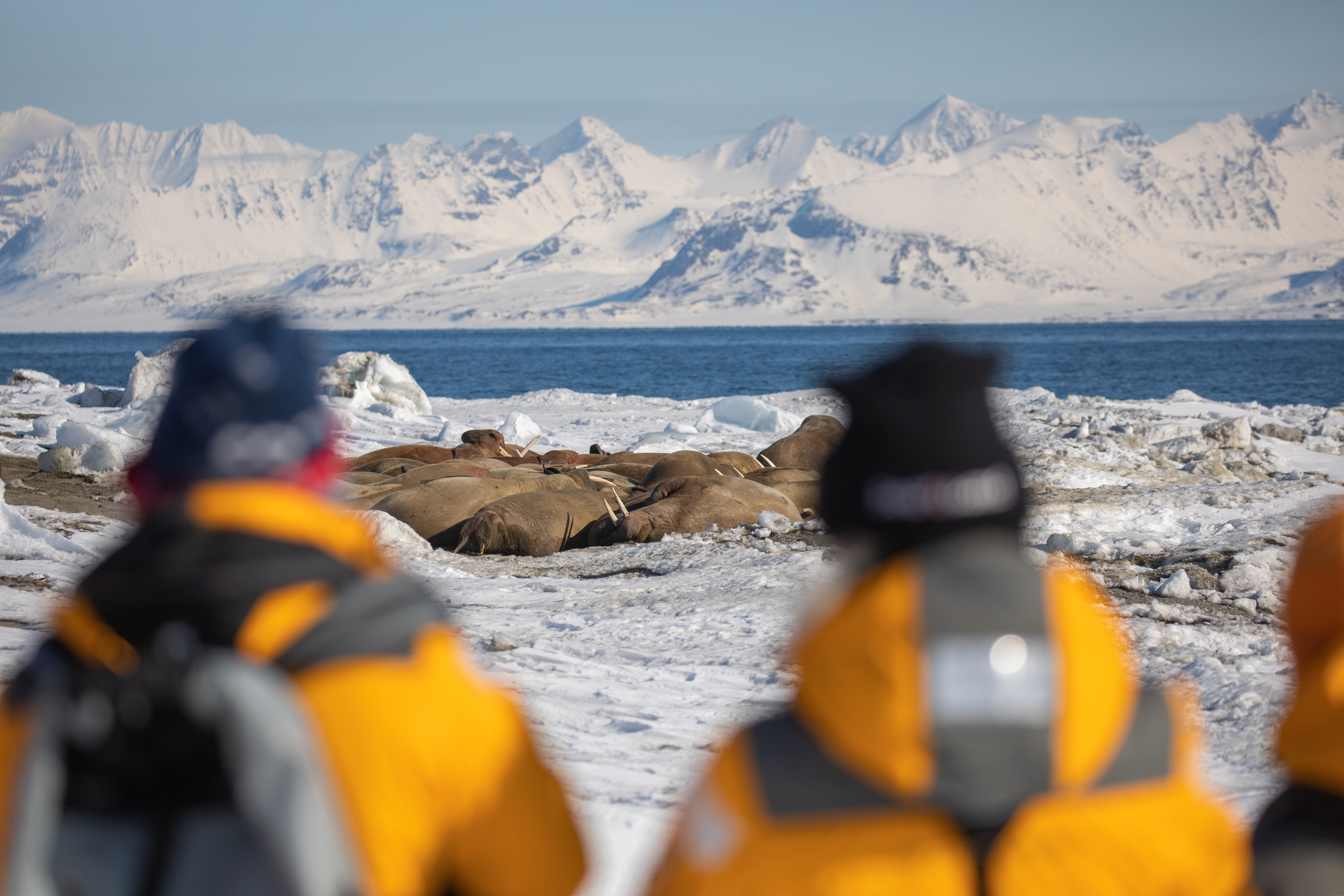
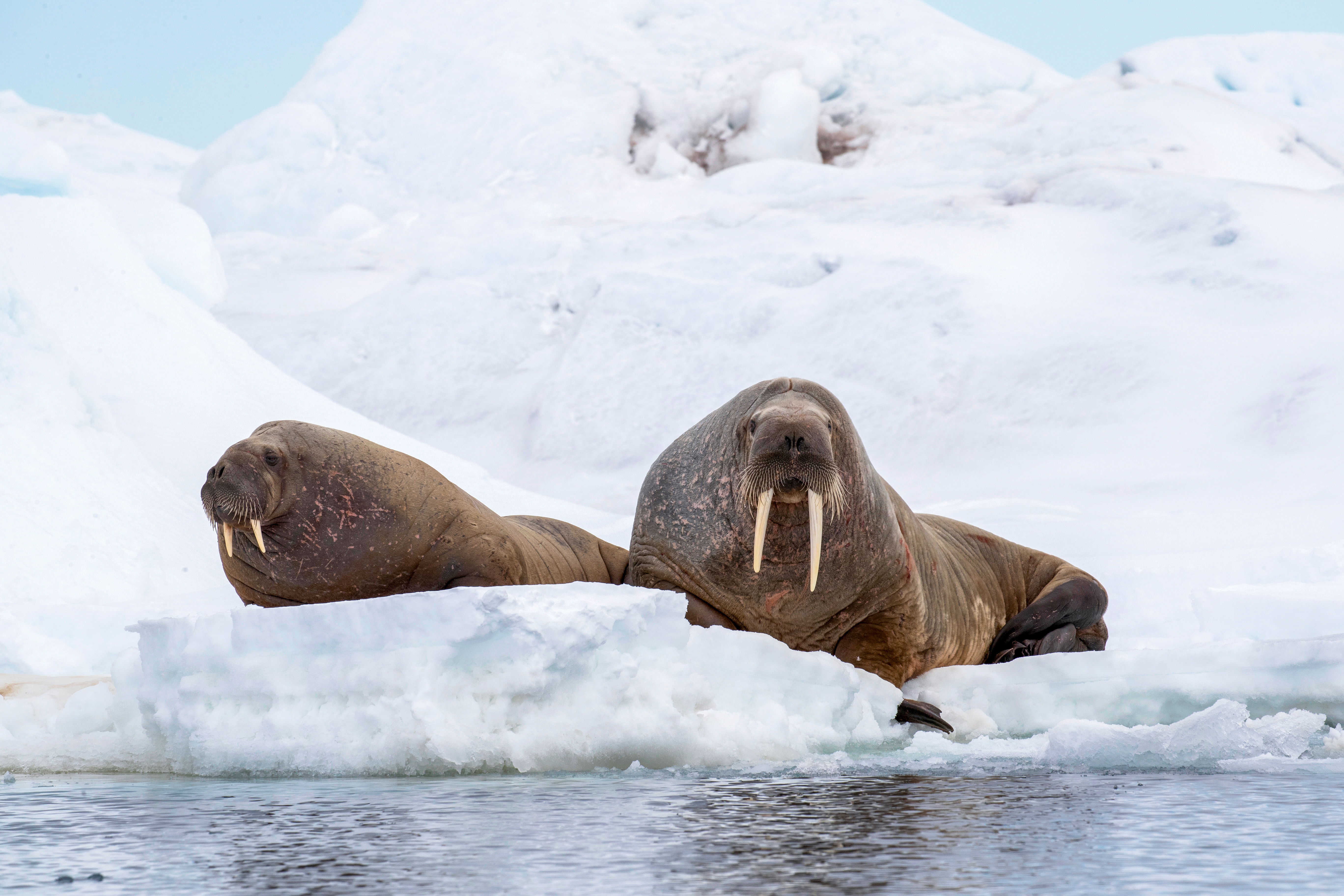
Approach by Zodiac and land carefully to visit a walrus haul-out with your Expedition Team. Watch the beach stir as massive tusked bulls jostle for space, steam rising in the chill air while whiskered faces lift to scent the breeze.
Guides explain centuries of hunting and modern protections that helped walrus rebound in Svalbard. At sites such as Poolepynten (conditions permitting), keep a respectful distance, listen to the basso grunts, and pause for photos and reflection on this Arctic conservation story.
Arctic Seabird Cliffs & Colonies
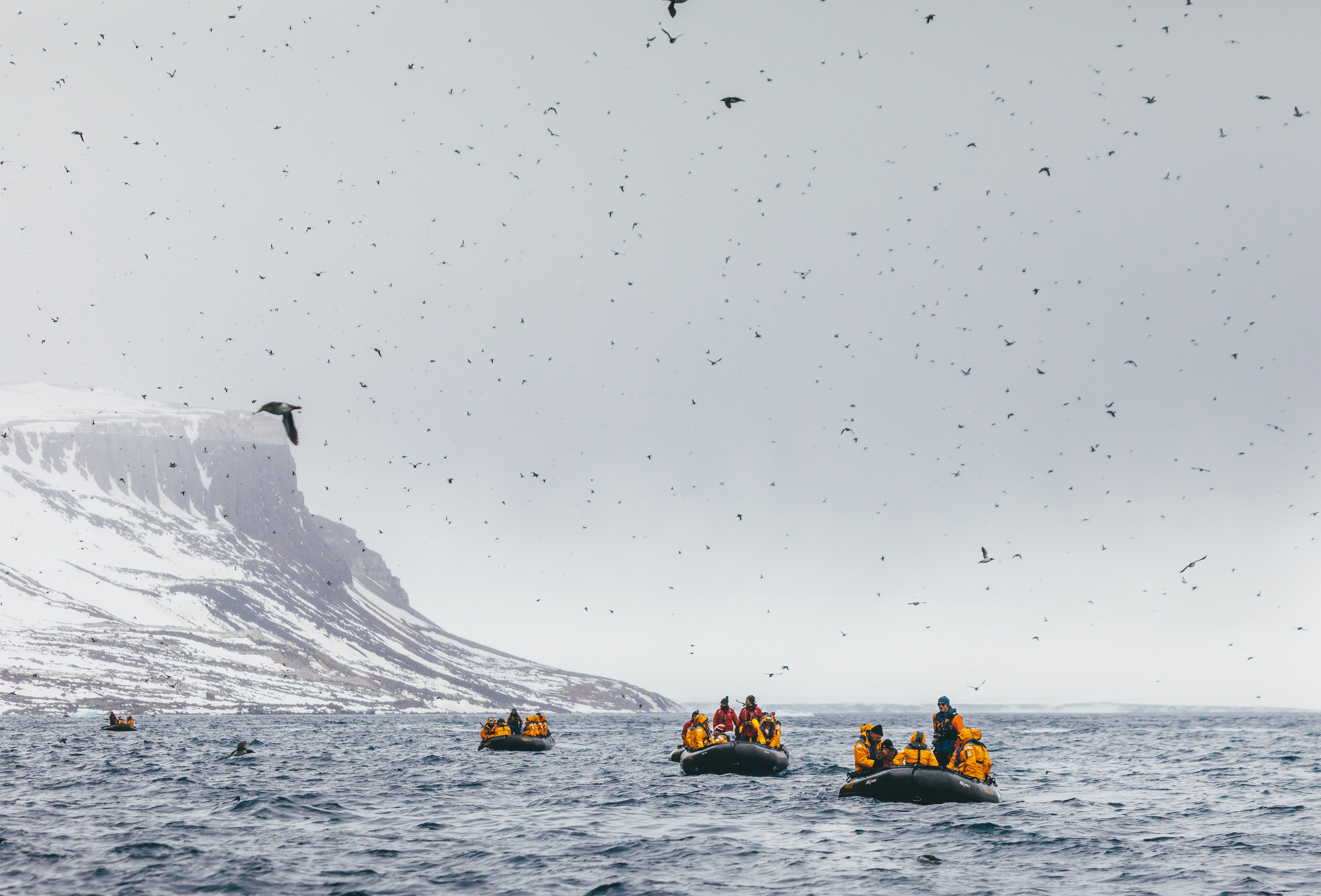
Ride the Zodiacs below towering headlands to approach seabird cliffs alive with motion. In spring, the air fills with Brunnich’s guillemots and little auks banking across the fjord, with kittiwakes tracing the updrafts in bright, continuous daylight.
Hear about the return of migratory species and the rich marine food web that sustains them. At well-known sites like Alkhornet (conditions permitting), the soundtrack of wings and calls merges with the sea—an immersive lesson in Arctic ecology and endurance.
Guided Shore Landings on Snow
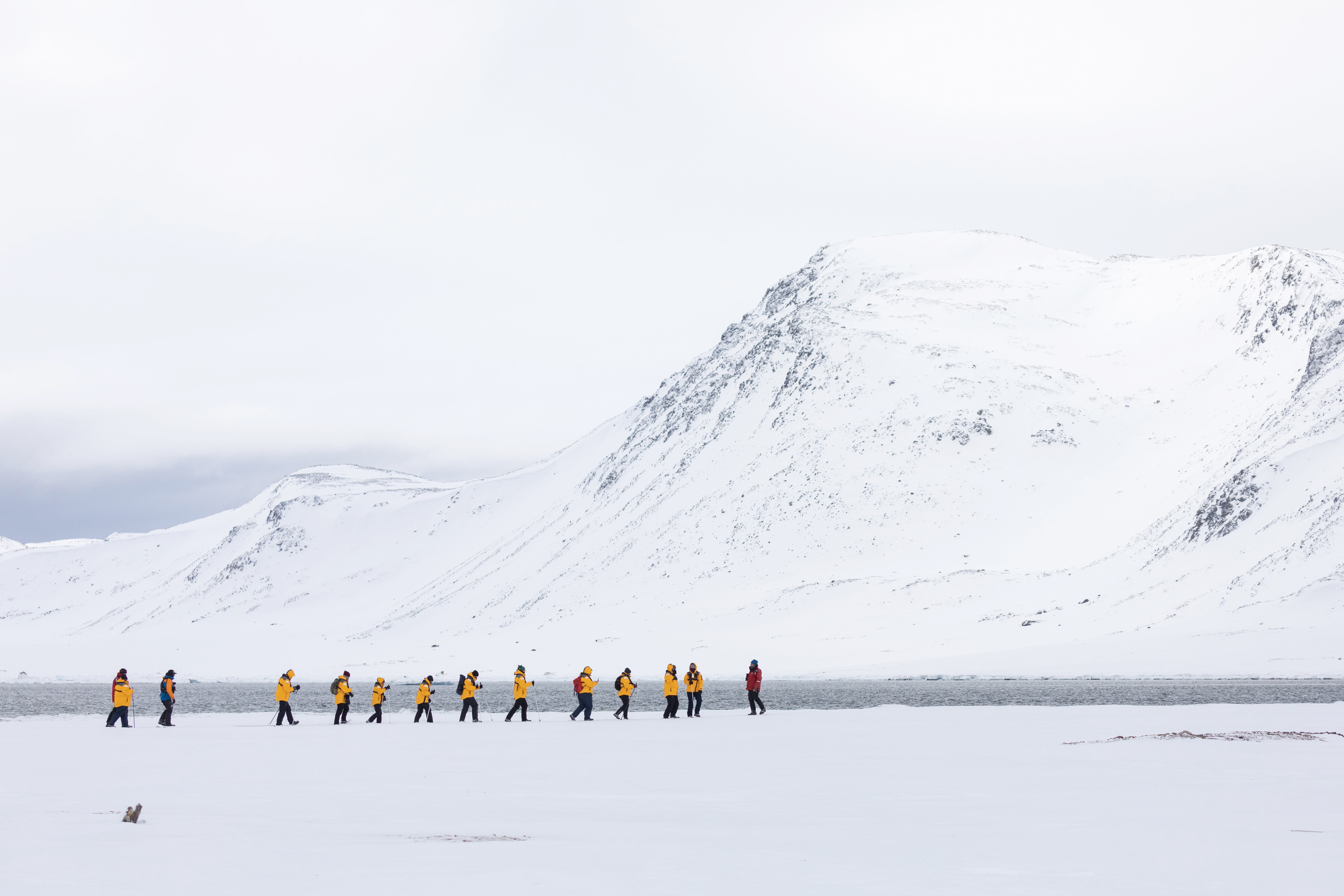
Disembark by Zodiac to step ashore with your Expedition Team and walk on pristine snow along beaches and low hills. Learn safe travel techniques on frozen terrain while reading the landscape for wind patterns, sea-ice traces, and wildlife sign.
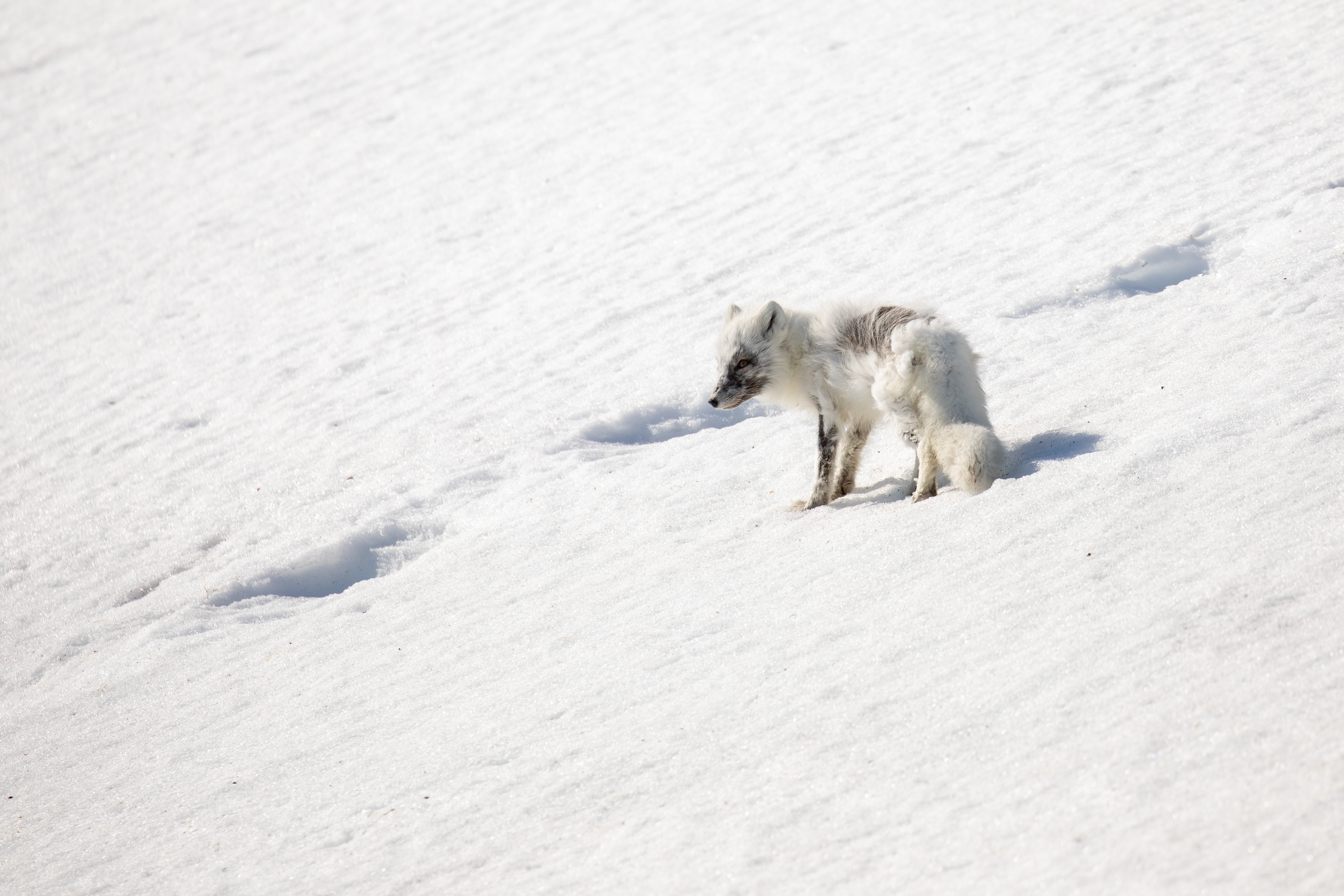
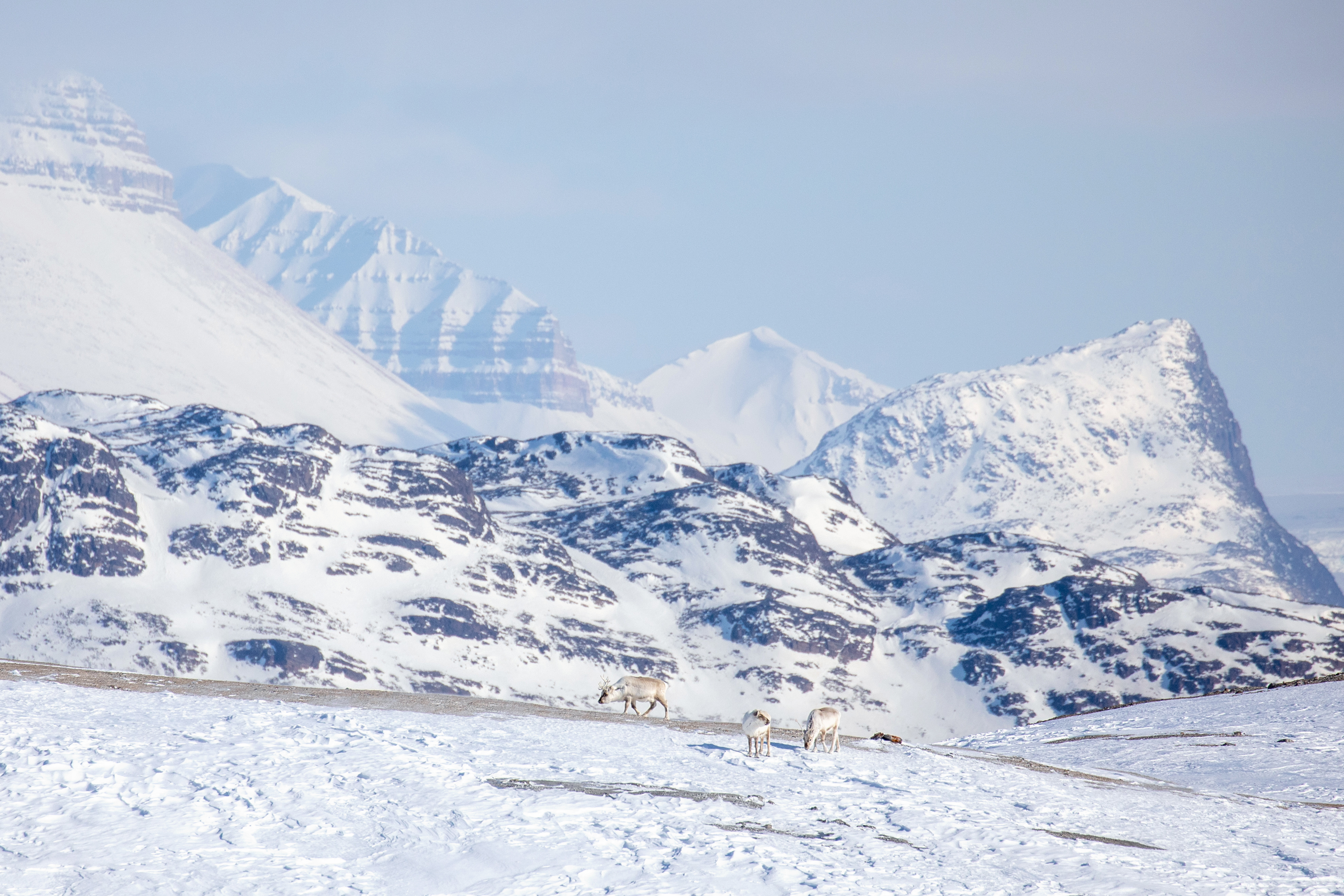
Spot delicate tracks of Svalbard reindeer and Arctic fox and, where history lingers, examine whaling-era remains at Smeerenburg (conditions permitting). Guides share stories of trapping, exploration, and today’s protected wilderness as you absorb the silence and Arctic light.
Scenic Fjord Cruising Under the Midnight Sun
Settle on deck as you cruise Svalbard’s great fjords—Isfjorden, Raudfjorden, or Bellsund—while ridgelines rise straight from the sea. Under the Midnight Sun, snowfields blush gold and glacier fronts shine glass-blue in lucid Arctic air.
Your team interprets glacial geomorphology and sea-ice patterns as wildlife patrols the margins. The ship slows at scenic corridors such as Isfjorden and Raudfjorden for photography, allowing time to frame sunlit glacier fronts and layered mountains reflected in calm water.
Onboard Expert Lectures & Daily Recaps
Between landings, meet your Expedition Team of naturalists, historians, and polar specialists to join engaging polar lectures. Sessions cover geology, glaciology, marine mammals, seabirds, and human stories of exploration and survival in the High Arctic.
Evenings bring curated photo shares and science highlights from sea-ice dynamics to wildlife ecology. During the daily recap, decode the day’s sightings and preview tomorrow’s plan, building a deeper appreciation for Svalbard’s living systems and the decisions that shape expedition travel.
Sea-Ice Landing: Walk on the Floes (Conditions Permitting)
When ice and weather align, clip into safety lines to step onto the sea ice with your guides. The horizon opens, footsteps whisper on drifted snow, and the floe’s subtle motion makes it feel as if you walk on water.
Learn how guides assess stability, leads, and wind before any landing, emphasizing safety-first briefings. Soak in the silence of the High Arctic and the austere beauty of pressure ridges and crystalline sastrugi under endless daylight.
Sea Kayaking in Polar Waters
Slip into stable expedition kayaks and paddle among brash ice at the edge of glaciers or along sheltered bays. With guides setting an unhurried pace, you skim glass-smooth leads, close enough to hear the fizz of ancient air escaping meltwater.
Learn cold-water paddling techniques and how to maneuver near ice safely. This small-group experience in stable expedition kayaks is at additional cost and bookable on tour; spaces are limited and departures are weather and ice dependent.
Zodiac Cruising at Glacier Fronts of Svalbard
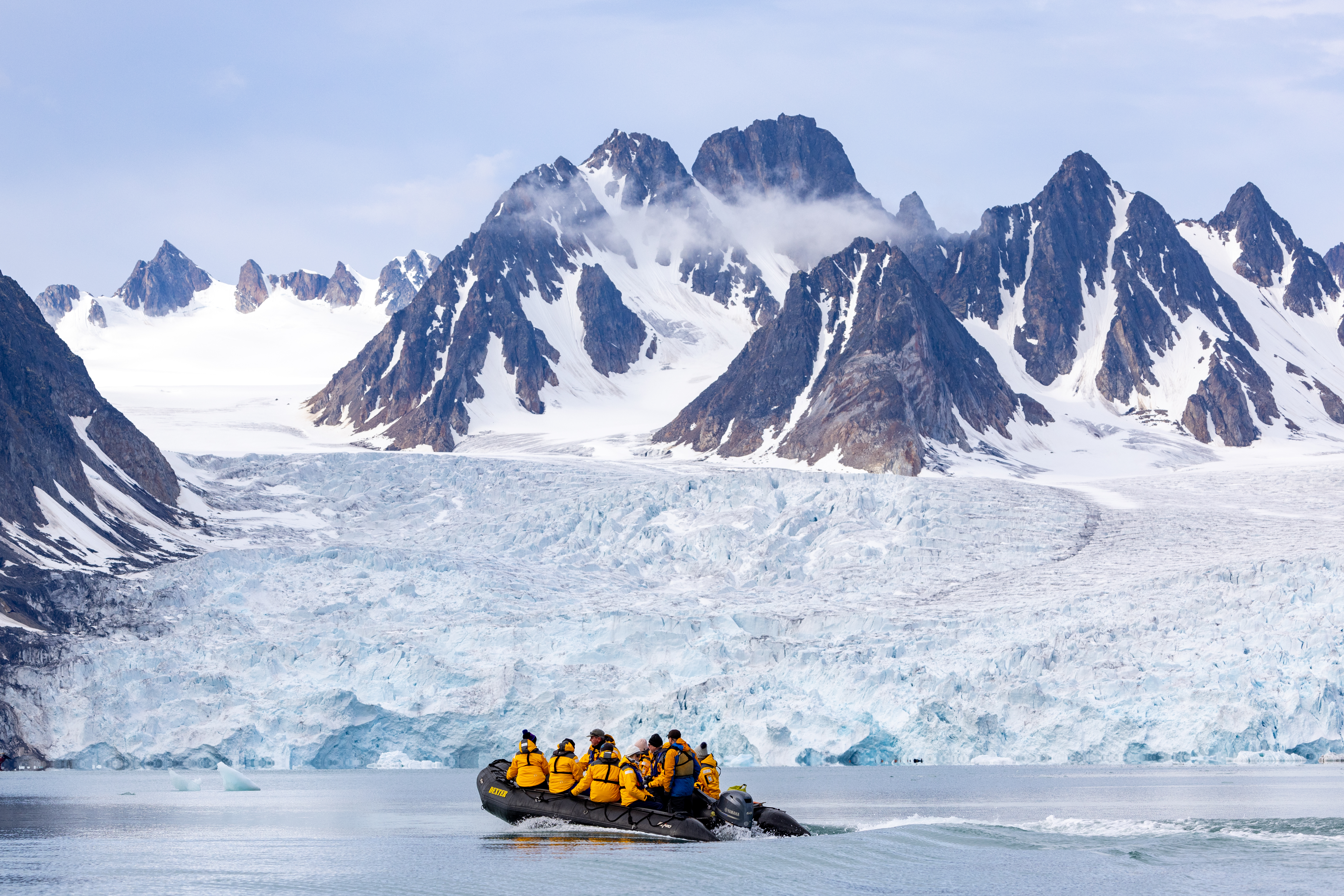
Explore by inflatable boat as you join a Zodiac cruise to the edge of calving glacier faces in fjords such as Krossfjorden and Hornsund. Glide through brash ice and “bergy bits,” listening for the crack and roar of ice as it tumbles into steel-blue water, while your Expedition Team positions you for intimate views.
Learn how fjord glaciers drain the high icefields and why compressed ice glows blue. Keep watch for ringed or bearded seals hauled out on floes and pause for photos and reflection amid sculpted ice and mirrored peaks.