Your itinerary
Day 1
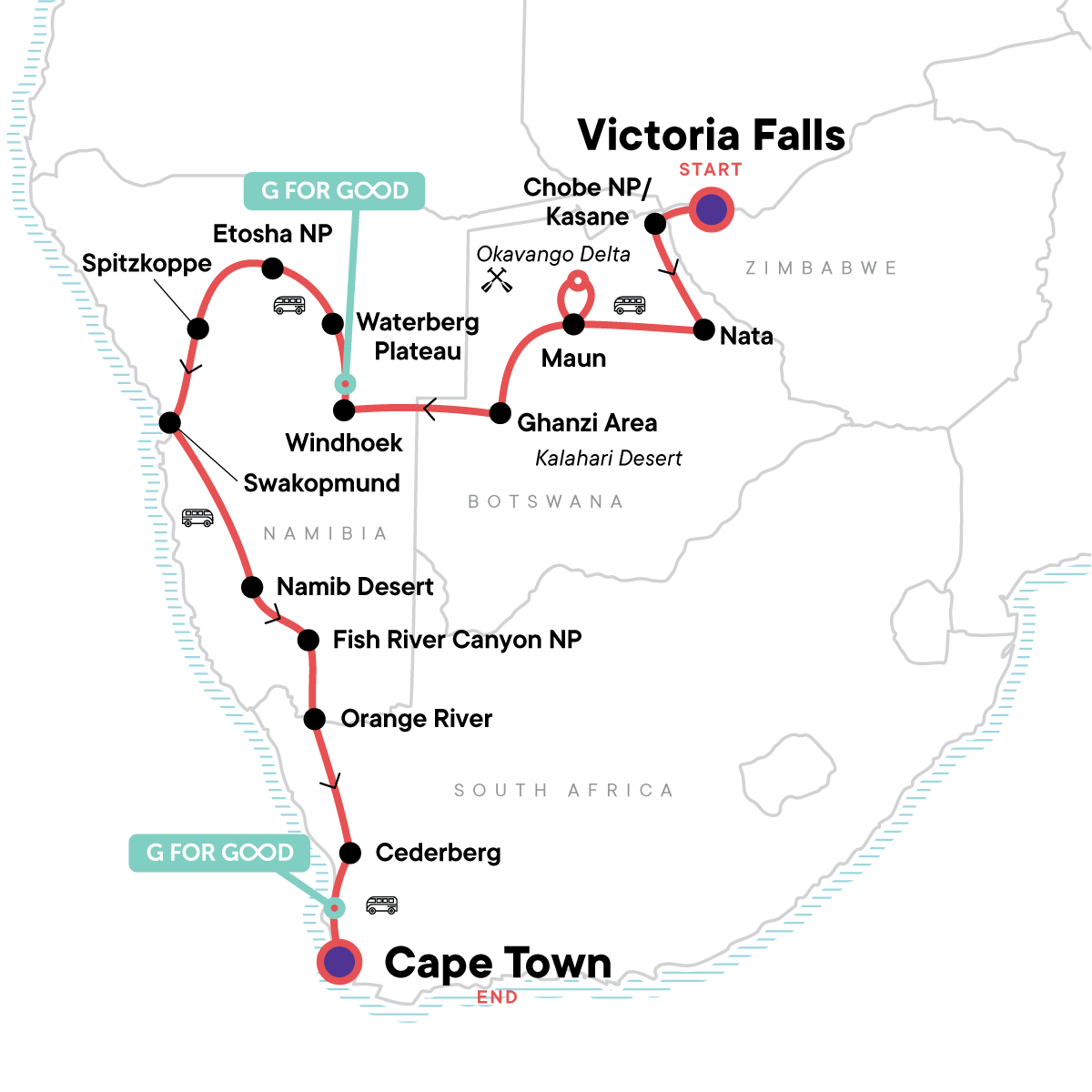
Day 1: Victoria Falls
Arrive at any time. Meet your CEO and group at the time and place posted in the accommodation lobby or provided by reception. Join the group for an optional local meal, then head out together to explore Victoria Falls and have a drink at Shearwater Village. Accommodation is in Victoria Falls, Zimbabwe, not Livingstone, Zambia; ensure you have the required visas.
Day 2
Day 2: Victoria Falls
Free day to explore Victoria Falls. Optional activities include whitewater rafting on the Zambezi, a scenic helicopter flight over the falls, bungee jumping, and a Zambezi River Sunset Cruise. Activities can be booked in advance or on arrival.
Day 3
Day 3: Victoria Falls/Kasane
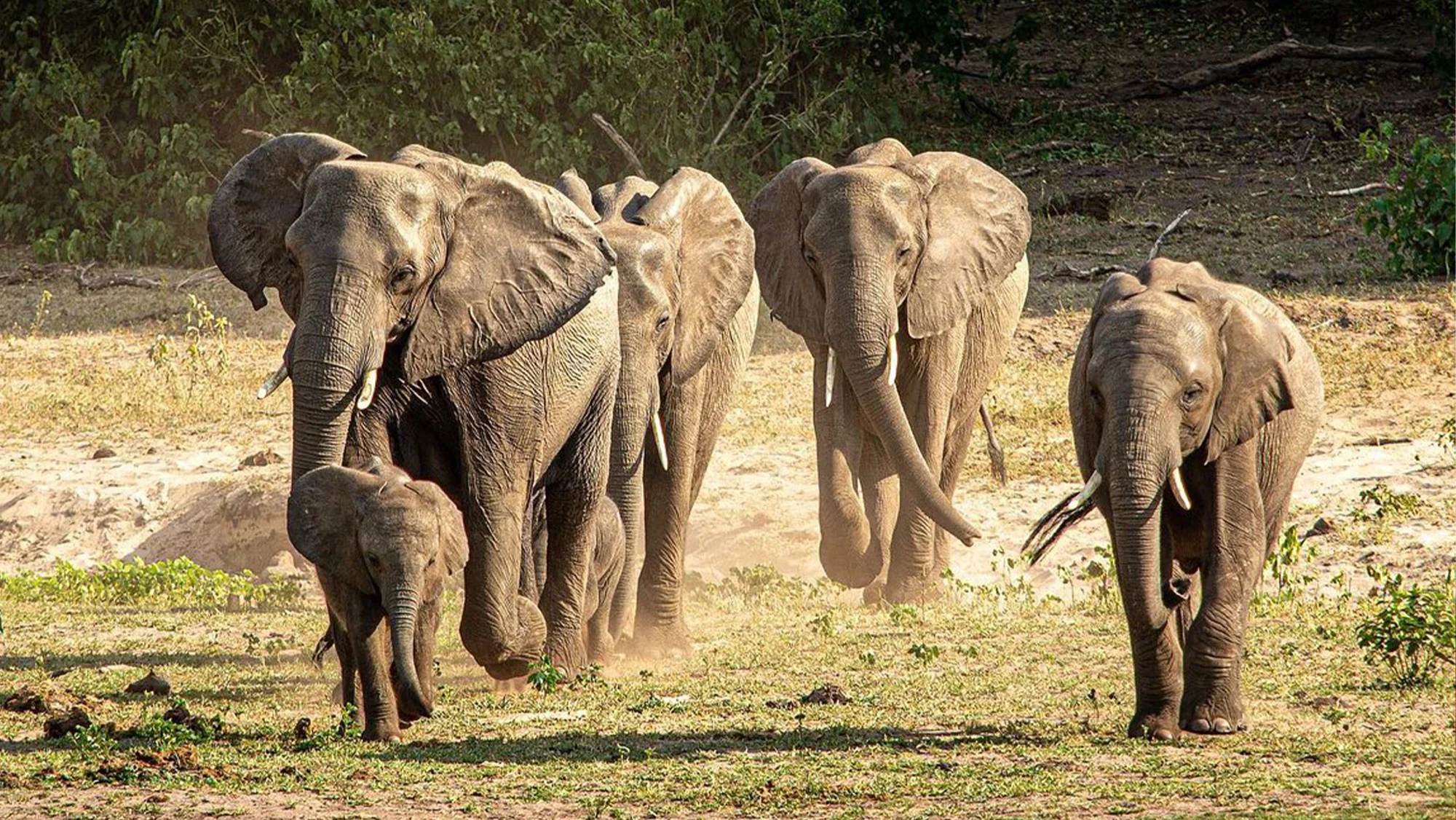
Travel by overland vehicle across the border from Zimbabwe into Botswana and stay just outside Chobe National Park near Kasane. Optional activities include a wildlife safari drive in an open vehicle or an afternoon sunset boat cruise on the Chobe River, where hippos, crocodiles and elephants may be seen.
Meals: Breakfast,Lunch
Day 4
Day 4: Kasane/Nata
Travel south from Kasane to Nata by overland vehicle, through grasslands and landscapes around the pans. Camp beneath ancient baobab trees.
Meals: Breakfast,Lunch,Dinner
Day 5
Day 5: Nata/Maun
Travel by overland vehicle from Nata to Maun. Set up camp and relax, or opt for a scenic helicopter flight over the Okavango Delta.
Meals: Breakfast,Lunch
Day 6
Day 6: Maun/Okavango Delta
Travel from Maun to a bush camp in the Okavango Delta in an open 4×4 safari vehicle. Explore the waterways in a traditional mokoro canoe with local polers, go birdwatching and take a guided walking safari to learn about plants, animal tracks and wildlife. Relax around the campfire in the evening.
Meals: Breakfast,Lunch,Dinner
Day 7
Day 7: Maun/D'kar
Return from the Okavango Delta toward Maun, then travel across western Botswana to D’kar. An optional bushman walk offers a chance to learn wilderness survival skills from local San Bushmen. Stay at Dqae Qare San Lodge & Camp, with an opportunity to learn about Naro San history and culture, join a bush walk and watch a dance around the campfire.
Meals: Breakfast,Lunch,Dinner
Day 8
Day 8: D'kar/Windhoek
Travel by overland vehicle from D’kar to Windhoek, crossing the border from Botswana into Namibia. An evening meal with the group is optional.
Meals: Breakfast,Lunch
Day 9
Day 9: Windhoek/Waterberg Plateau
Travel from Windhoek to the Penduka Village Restaurant & Shop, tour the facilities and pick up a packed lunch supporting the centre. Continue to Waterberg Plateau. Free time in the afternoon to relax, hike or opt for a wildlife safari drive; trails offer chances to see plunge pools, buffalo and giraffe.
Meals: Breakfast,Lunch,Dinner
Day 10
Day 10: Waterberg Plateau/Etosha National Park
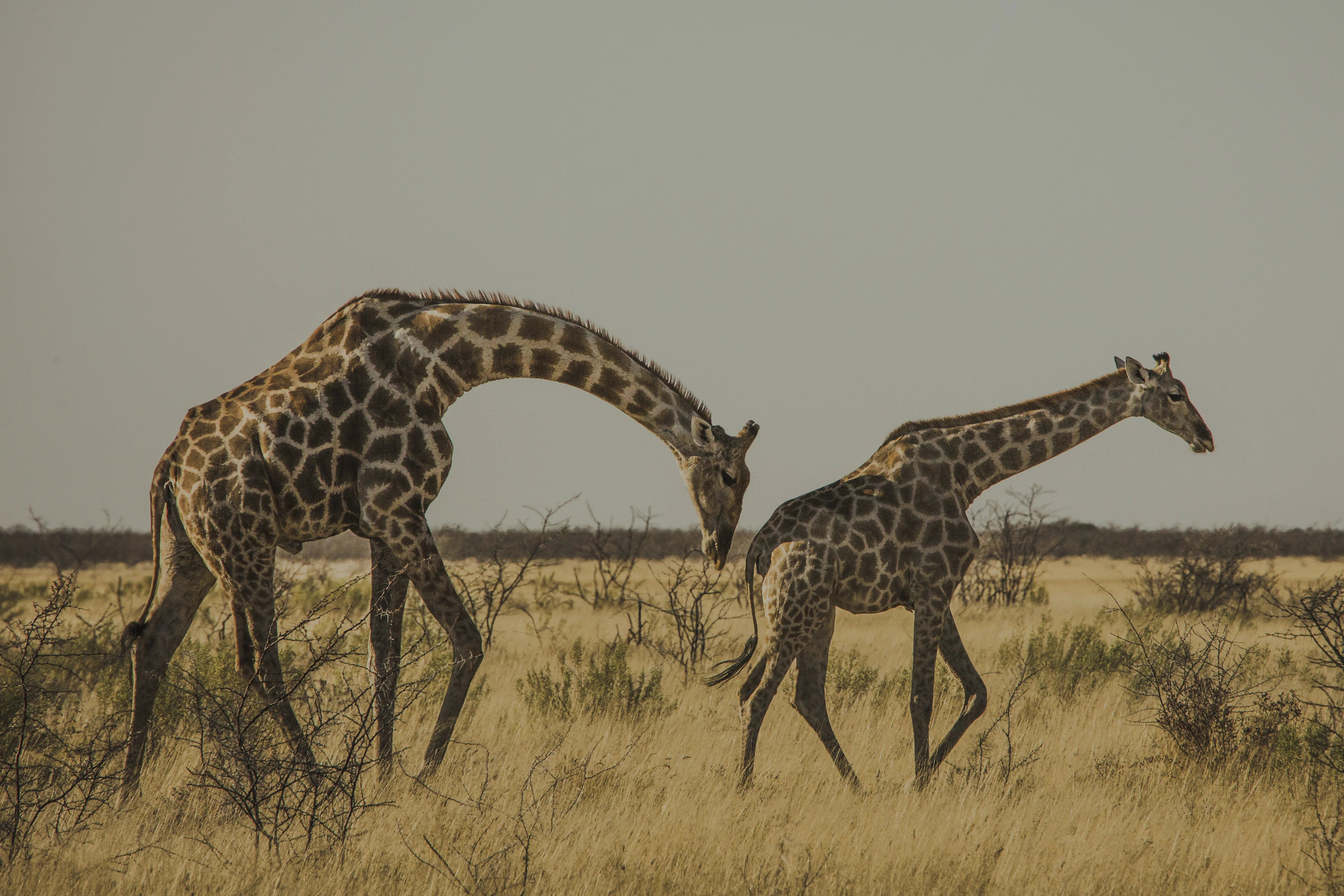
Travel by overland vehicle toward Etosha National Park, taking a short wildlife safari drive in the park en route to camp. The park is home to mammals including lions, rhinos, elephants, giraffes, wildebeest, springbok, zebra and hyenas, as well as birds such as pelicans and flamingos. Relax at camp or take a dip in the pool.
Meals: Breakfast,Lunch,Dinner
Day 11
Day 11: Etosha National Park
Take a full-day wildlife safari drive in Etosha National Park, searching for its mammals and birds. During the dry season, animals gather around waterholes.
Meals: Breakfast,Lunch,Dinner
Day 12
Day 12: Etosha National Park/Spitzkoppe
Travel south by overland vehicle to Spitzkoppe. Explore the area on foot, with opportunities for climbing, hiking, stargazing and viewing the natural rock arch. The basic bush camp has long-drop toilets and no running water.
Meals: Breakfast,Lunch,Dinner
Day 13
Day 13: Spitzkoppe/Swakopmund
Travel through Namibia’s coastal region to Swakopmund, between the Atlantic Ocean and the Namib Desert. The town has German-influenced architecture; the group stays for two nights.
Meals: Breakfast,Lunch
Day 14
Day 14: Swakopmund
Free day in Swakopmund. Optional activities include skydiving, sandboarding and a scenic flight over the Skeleton Coast. Skydiving can be pre-booked.
Day 15
Day 15: Swakopmund/Namib Desert
Travel south by overland vehicle to camp on the edge of the Namib Desert. Set up camp and opt to join a local expert for a walk and stories about the desert.
Meals: Breakfast,Lunch,Dinner
Day 16
Day 16: Namib Desert
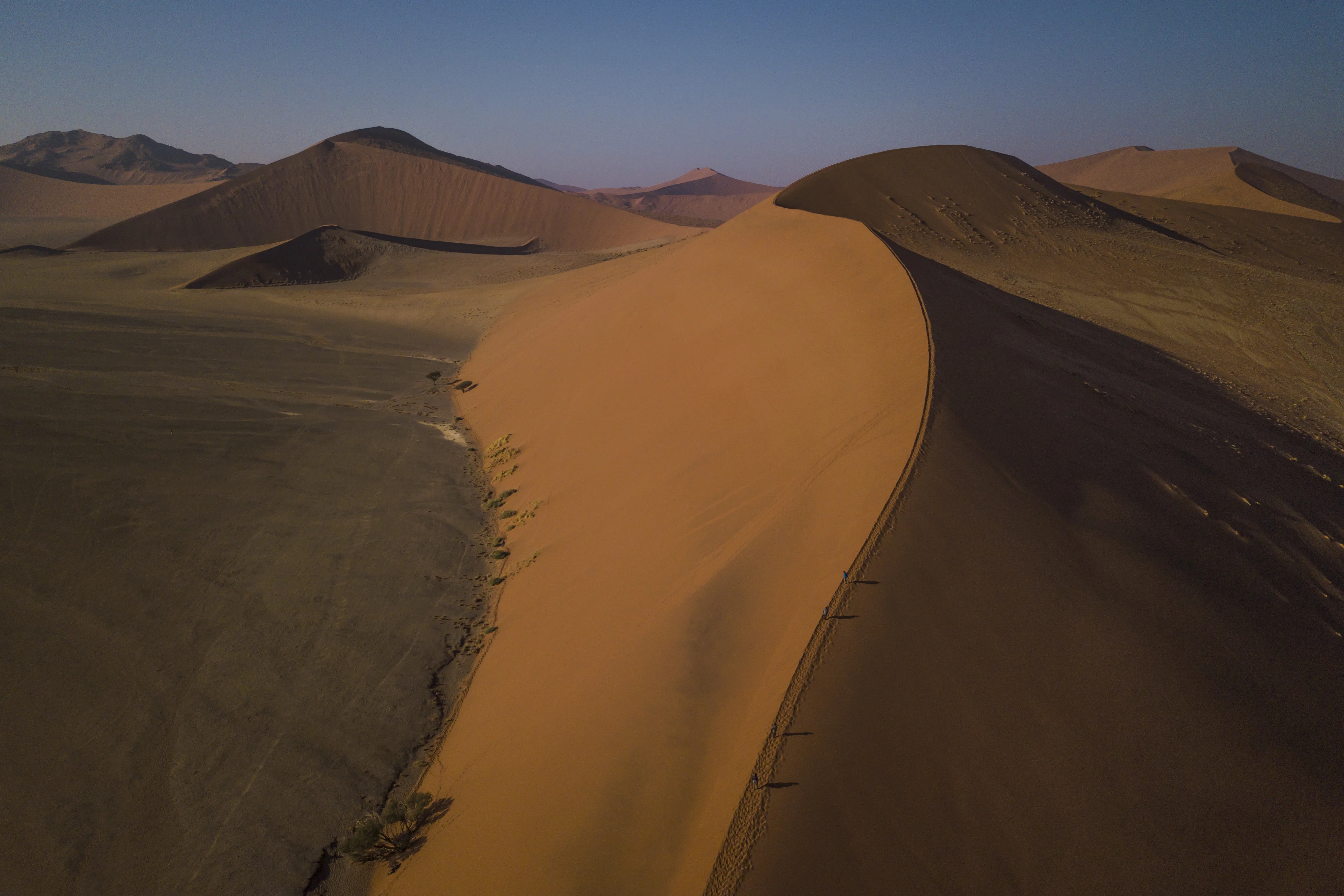
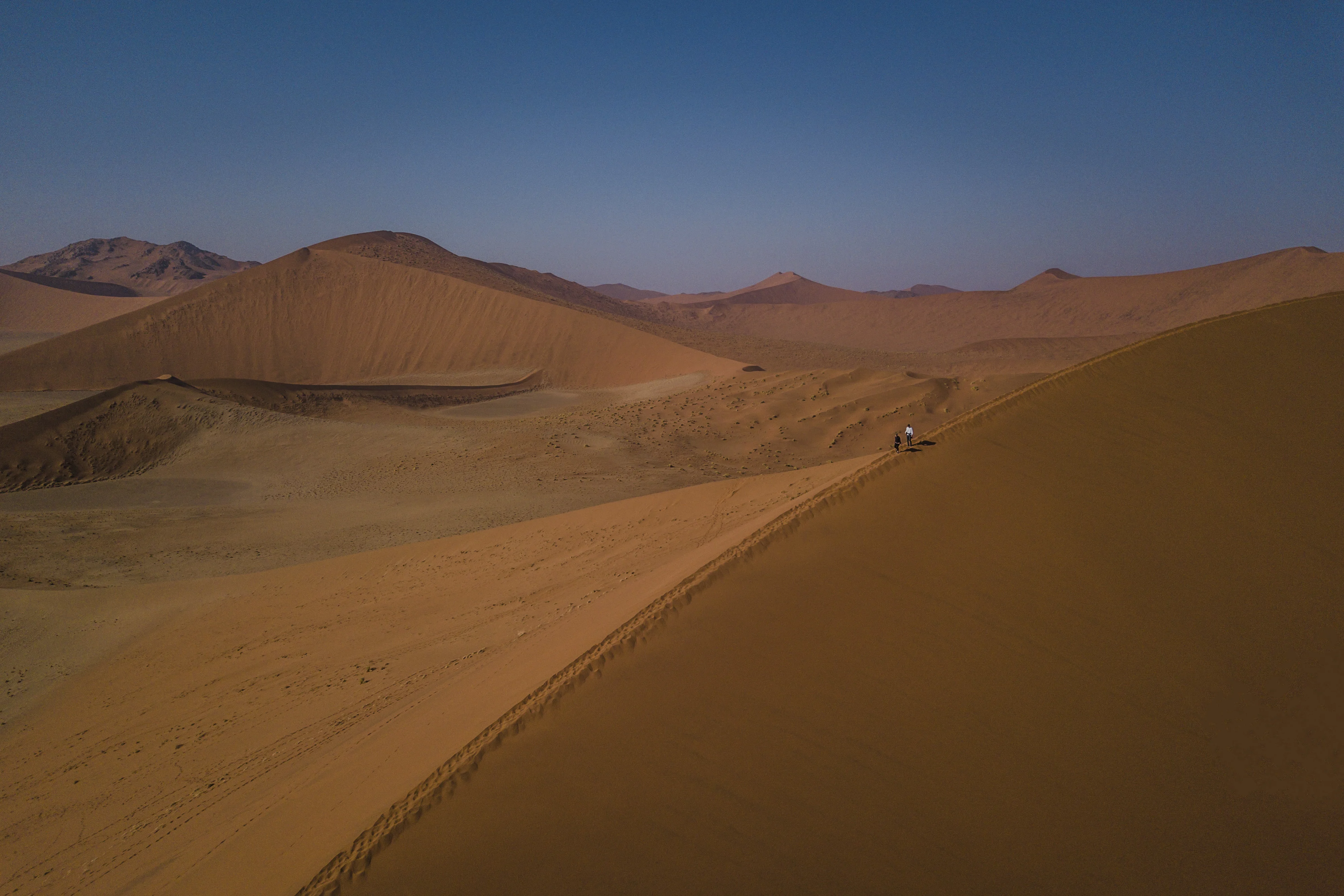
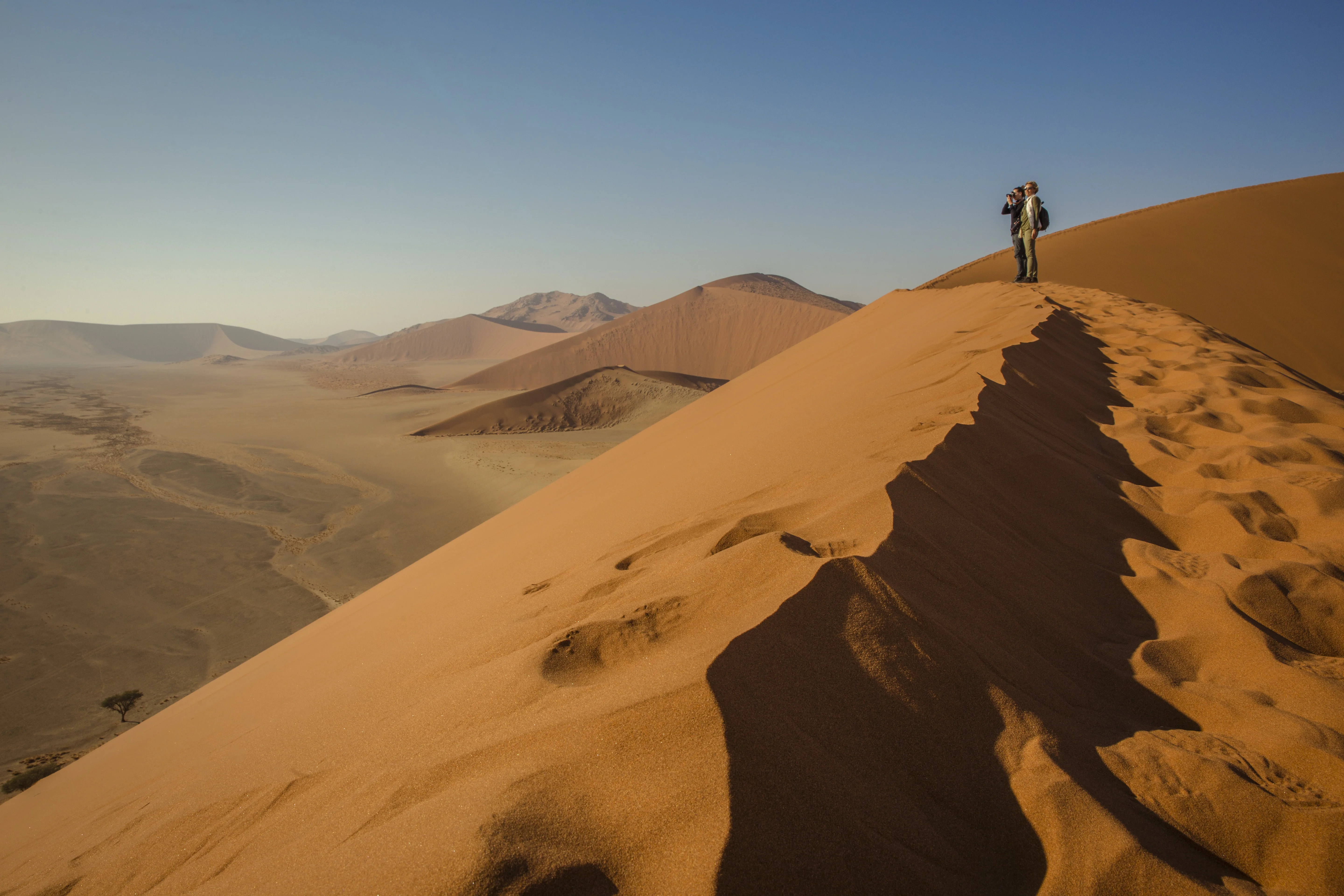
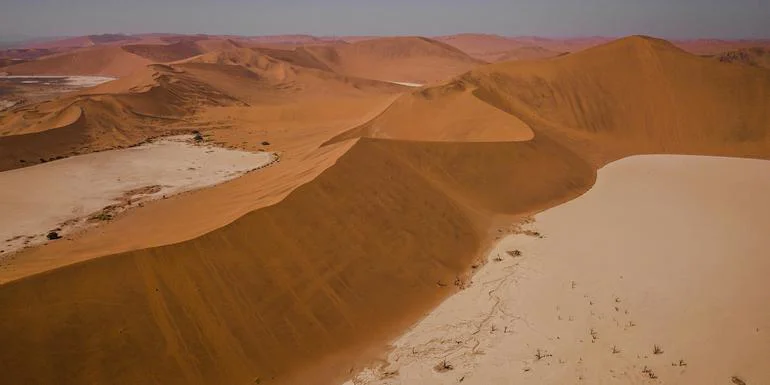
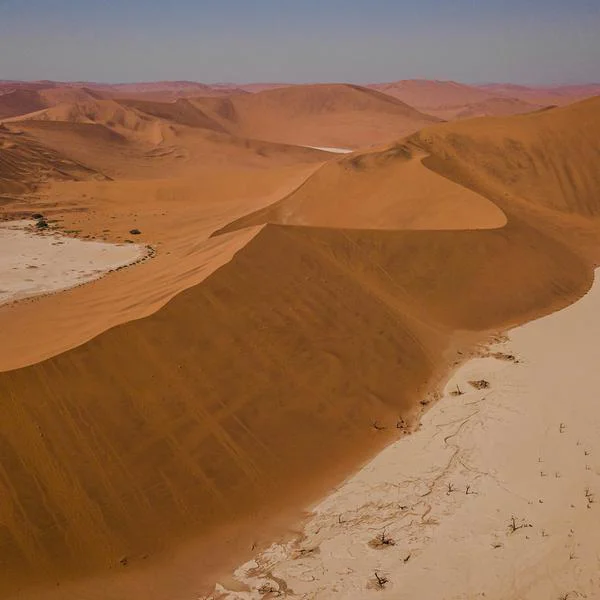
Visit Sesriem Canyon and explore its rock formations and pools. Continue to the Sossusvlei clay pan, enclosed by sand dunes, and climb Dune 45. Return to camp for dinner on the braai.
Meals: Breakfast,Lunch,Dinner
Day 17
Day 17: Namib Desert/Fish River Canyon
Travel by overland vehicle to Fish River Canyon. Visit the canyon rim and watch the sunset over the canyon before continuing to camp.
Meals: Breakfast,Lunch,Dinner
Day 18
Day 18: Fish River Canyon/Orange River
Cross the border from Namibia into South Africa and travel to the Orange River. Relax at camp and swim in the river, or book an optional canoe excursion.
Meals: Breakfast,Lunch,Dinner
Day 19
Day 19: Orange River/Cederberg
Travel south past rooibos tea plantations through the Western Cape to the Cederberg mountains. Options at the overnight stop include wine tasting, relaxing by the pool and sitting around a campfire.
Meals: Breakfast,Lunch,Dinner
Day 20
Day 20: Cederberg/Cape Town
Travel by overland vehicle to Cape Town, stopping at the !Khwa ttu San Culture and Education Centre to learn about San culture and history and visit its interpretive museum. Arrive in Cape Town in the early afternoon, with views of Table Mountain. Optional final night out with the group.
Meals: Breakfast,Lunch
Day 21
Day 21: Cape Town
Depart at any time. The CEO can help arrange an extension to your trip.
Meals: Breakfast
What’s included
What’s not included
Additional information
Meals Included
18 breakfasts, 17 lunches, 12 dinners
Group Size
22
Solo Travellers
Meals
As mentioned above, most of the meals on this tour are included in the tour price. When a meal is not included, this is because there are often many options available – we would like to give you the opportunity to explore a bit and test the local cuisine yourself. In these cases, your CEO will be able to suggest some good local restaurants or options for you to choose from.
All included meals will be prepared from fresh local produce. The majority of the shopping for foodstuffs will be done before the trip departs, and fresh goods, such as meats, fruits, vegetables, and dairy products, will be bought en route during the trip from supermarkets, local shops and markets. Breakfasts will generally consist of breads and cereals, if time allows a warm breakfast may be prepared. Many lunches will be provided en-route and will be light meals such as sandwiches and/or salads. All evening meals will be freshly-prepared hot meals, and will consist of a variety of continental and local dishes.
Our cook will organize the meal preparation and lead the way here, but will prepare a duty schedule for ensuring a fair, rotating participation from you and your group members in the meal preparation and dish washing duties.
Vegetarian meals and other dietary requirements need to be specified prior to arrival.
Minimum Age
Minimum age of 18 years for this trip.
Local Dress
Important Notes
1. Please note that this tour combines with other G Adventures tours. As such, the staff and some travel companions on your tour may have previously been traveling together with G Adventures, prior to Day 1 of your tour. Likewise, some staff and travel companions may be continuing together on another G Adventures tour, after your trip concludes
2. This is not a physically demanding journey; however, travelling can be difficult, with long drives and poor road conditions at times. Despite this, most clients feel that the diversity of the African landscape, countries, culture and wildlife are all well worth the experience. We use a comfortable and safe customized safari truck for the long drives.
3. YELLOW FEVER: COUNTRY DETAIL
There is no risk of Yellow Fever transmission in Botswana, Kenya, Malawi, Namibia, South Africa, Tanzania, Uganda, Zambia, or Zimbabwe. However, all of these countries require proof of vaccination under International Health Regulations to prevent importation of the virus. It is compulsory to show a valid Yellow Fever vaccination certificate if you are travelling to any of the above countries from a Yellow Fever endemic country, or have recently transited through one (12 hours or more in airport). Endemic countries include: Angola, Benin, Bolivia, Brazil, Burkina Faso, Burundi, Cameroon, Central African Republic, Chad, Colombia, Democratic Republic of the Congo, Republic of the Congo, Côte d’Ivoire, Ecuador, Equatorial Guinea, Ethiopia, French Guiana, Gabon, Gambia, Ghana, Guinea, Guinea-Bissau, Guyana, Kenya, Liberia, Mali, Mauritania, Niger, Nigeria, Panama, Paraguay, Peru, Rwanda, São Tomé and Príncipe, Senegal, Sierra Leone, Somalia, South Sudan, Sudan, Suriname, Tanzania, Togo, Trinidad and Tobago, Uganda, Venezuela. We advise all travellers on Southern and East Africa itineraries to carry a valid Yellow Fever vaccination certificate regardless of their country of origin. Given the multi-country nature of these itineraries, travellers will cross borders into countries that require the certificate as a condition of entry from preceding destinations. A traveller entering the itinerary from a non-endemic country may not require the certificate to enter the first country, but will almost certainly require it by the time they cross into a subsequent one. Yellow Fever vaccinations must be administered at least 10 days prior to entry into the first country visited. Under WHO regulations (effective 11 July 2016), certificates are valid for the lifetime of the person vaccinated, there is no 10-year expiry on the certificate itself, though some border officials may be unaware of this. Travellers should carry their original International Certificate of Vaccination or Prophylaxis (yellow card) at all times during the tour. Travellers without a valid certificate run the risk of being denied entry and will not be able to continue with the tour. Any additional travel expenses incurred will be at the traveller’s own account.
4. It is compulsory to show a valid Yellow Fever Certificate if you are travelling to Botswana from a Yellow Fever endemic country. Entry into Botswana when travelling from the following countries (but not limited to) will require a Yellow Fever Certificate: Angola, Benin, Burkina Faso, Burundi, Cameroon, Central African Republic, Chad, Congo, Democratic Republic of the Congo, Republic of the Cote d’Ivoire (Ivory Coast) Equatorial Guinea, Ethiopia, Gabon, Gambia, Ghana, Guinea Zambia, Guinea-Bissau, Kenya, Liberia, Mali, Mauritania, Niger, Nigeria, Rwanda, São Tomé and Príncipe, Senegal, Sierra Leone, Somalia, Sudan, Tanzania, Togo, Uganda, Argentina, Bolivia, Brazil, Colombia, Ecuador, French Guiana, Guyana, Panama, Paraguay, Peru, Suriname, Trinidad and Tobago, Venezuela
5. An essential part of your safari is participation. The group is usually divided into small groups and given different tasks which change on a day to day basis, from kitchen duty group (helping in prepare meals and clean up afterwards), the packing group (sets up all tables and chairs outside) and the cleaning group (which cleans the truck by emptying the rubbish bin and brooming). it is all part of your adventure and when everyone puts in a little effort the trip will run smoothly. Your CEOs will do all the meal preparation, but we do ask the clients to help with the washing up. Team spirit is part of the fun! All camping equipment (with the exception of your sleeping bag and pillow) is supplied. We supply dome tents and assembly/disassembly takes only 5 minutes. All tents have built-in insect nets. Mattresses are also available, which are approximately 4cm thick, warm and comfortable.
6. Sleeping bags can not be rented on any of our Africa overland or safari
7. Your CEO aims to provide you with the best service possible during your tour. They will be joining you in the back of the truck for a maximum of approximately 50% during driving, to answer questions and provide more information about the areas that you visit. They will spend the remainder of the driving time in front with the driver to enable them to make bookings, do planning and to fulfil other organizational requirements of the tour. During wildlife safari drives, your CEO will ensure to accompany you in the passenger area of the truck. This is of course because they have a lot of knowledge to share with you during these exciting wildlife safari drives. Please do not hesitate to ask your CEO any questions.
8. Please note that on all our Overland adventure vehicle (OAV) safaris there is a maximum of 22 people per vehicle.
9. VISAS. Please read the Visa section very carefully. Visas are your own responsibility. Always double check with the embassies what each countries requirement are.
10. RAMADAN. According to the lunar cycle, Ramadan will fall between Feb 28th – Mar 29th 2025, and Feb 17th – Mar 19th 2026. Please note that Ramadan is a month of fasting observed by Muslims throughout the world, during which time the followers of Islam should not eat or drink between sunrise and sunset. In Zanzibar and other Muslim areas in Africa, it is important to note that there may be some limitations to services and disruptions to schedules during Ramadan. Generally our tours still operate effectively during this period and food is available to non-muslims throughout the day. It is important to display increased cultural sensitivity during Ramadan, particularly in Zanizbar. Please wear loose fitting clothes, that cover knees and shoulders, and try to avoid eating, drinking or smoking in public out of respect for those who can’t at that time.
11. Water-wise tips when visiting Cape Town:
– Bring a reusable water bottle, that you can fill with Cape Town’s tasty tap water.
– Reuse your towels in the hotel, for at least two days, before getting new ones.
– Keep your laundry until you have a full load to do, rather than just doing a handful of items.
– Turn off the tap when brushing your teeth, or shaving.
– Keep your showers to two minutes or less, and don’t use the bath.
– Use hand sanitizer, instead of washing hands.
12. MONEY EXCHANGE
We strongly advise that you bring ZAR or USD from your home country or exchange money before the start of the tour, to avoid delays on tour. Please see the Money Exchange section for more details.
13. DRONES
The use of drones in national parks in Southern Africa is prohibited.
Group Leader
2 CEOs (Chief Experience Officers) throughout as head guide/cook and driver, local guides.
About Accommodation
Camping in Africa is truly an adventure. You will be able to get off the beaten track to get a first-hand experience of the beautiful wilderness and nature. While camping, we stay at designated campsites in national parks and outside towns. Campsite facilities in southern Africa are generally good, but can be basic in certain places. There are generally small restaurants and/or bars, washing facilities and occasionally telephones available.
The camps have flush toilets, and showers at some camps are outdoors, having simple reed enclosures for privacy. Additionally, warm water is available at most sites, but it is not guaranteed to always be warm when you take your shower; the warm water may be used up others who also use the camp. We usually set-up camp within close proximity to the toilet facilities, though occasionally to reach them you may to walk a short distance.
All camping equipment (with the exception of your sleeping bag and pillow) is supplied, including camp mattresses, which are warm and comfortable. We supply dome tents and assembly/disassembly takes only 5 minutes. They are good quality, durable, industry-standard 2-person safari canvas tents. Please note that most adults will not be able to fully stand up inside the tents, though most travellers find these more than adequate, as they have a base area of approximately 4 square meters. These tents are regularly treated with a waterproofing agent, but under certain rainy conditions, the tent fabric may become saturated to the point where seepage or leakage may occur. All tents have built-in mesh insect netting on the windows and doors.
We travel with our own portable camp chairs with a comfortable back-rest, and we utilize our own cooking equipment to provide the group good quality camp meals.
In camping within the national parks and conservation areas, some camp sites are enclosed for keeping the resident wildlife out. Other camps are open to the natural environment – care must be taken, especially at night, when a torch/flashlight is recommended when walking around the camp area.
Your camping experience in the Okavango Delta is fondly called “bush camping”. This will be the most basic two nights of our trip, as there is no running water, no showers, nor toilets facilities. You will be truly camping in the wild, away from civilization and its comforts, and completely surrounded by nature – an unbelievable experience some in fact feel is the highlight of the trip.
Despite the challenge that a few days “roughing it” may pose to some, the experience of being that close to nature, camping under the African stars, and seeing incredible wildlife at your tent door-step is not just gratifying but ultimately an experience of a lifetime.
In Swakopmund, we stay in backpacker’s (hostels) or small guest houses, which will give us a break from camping and to be better located than the campgrounds in the area. Here, the accommodation is based on several people sharing dormitory-style rooms, with possibly 6 to 8 people sharing a room. Although we will try, we cannot guarantee to be able to divide the group into different dormitories based on gender lines. As such, males and females may have to share the same sleeping quarters for these nights. The bathrooms and showers are private, but may also be shared between both males and females.
Please note that due to the high demand for accommodation in the parks, sometimes we will arrange alternative accommodation outside of the park.
Please be note that where we use multi-share accommodations, rooming requests of any kind cannot be taken. For private accommodation please see tours in our Classic Travel Style.
What to Take
You will be on the move a lot, so our advice is to pack as lightly as possible. Your baggage should be clearly labelled and restricted to one soft compact suitcase (please avoid a hard-top case), or sports bag, maximum 15kg, plus a daypack. Luggage limits on airlines are strictly enforced and space on vehicles is limited. Porters are not often available, so be prepared to carry your own bags.
For our camping style tours you will need to provide your own sleeping bag, small pillow and sleeping sheet (if you would like). We provide the tent and the sleeping pads.
It is important to pack clothes for warm days and cool evenings, as well as a warm jacket for early morning wildlife safari drives.
Please note that the seasons in Africa is quite extreme. Winters (especially South Africa, Namibia and Botswana) can be really cold and summers will be really hot.
If you travel during winter months(May to October) please ensure that you bring warm clothing and a suitable sleeping bag.
A set of smart casual clothes is also advisable.
Please be advised that if you plan to bring a drone with you, the use of drones in national parks in Southern Africa is prohibited.
Spending Money
Every traveller is different and therefore spending money requirements will vary. Some travellers may drink more than others while other travellers like to purchase more souvenirs than most. Please consider your own spending habits when it comes to allowing for drinks, shopping and tipping. Please also remember the following specific recommendations when planning your trip.
Etosha National Park Wildlife Safari Drives
Set out across Etosha National Park, where shimmering mirages rise from the vast Etosha Pan. Scan savanna, mopane woodland, and salt flats as springbok, zebra, giraffe, and big cats converge near life-giving waterholes.
From your overland vehicle, your CEO helps spot movement and interpret behavior—elephants dusting, antelope sparring, birds flocking after summer rains. Pause to appreciate waterhole wildlife dramas that make Etosha one of Southern Africa’s most rewarding game-viewing destinations.
San Bushman Guided Walk (D’kar)
Head into the Kalahari on a San bushman guided walk to learn time-honed survival skills: tracking small game, reading wind and spoor, and finding moisture in a sparse landscape.
Guides share plant uses, hunting traditions, and the social significance of story and song in community life. This insightful cultural add-on is at additional cost and bookable on tour.
Swakopmund Sandboarding on the Namib Dunes
Ride the slipfaces as you try sandboarding on the sculpted dunes outside Swakopmund. Instructors coach technique before you carve or toboggan down perfect gradients with the Namib Desert dunes rolling to the horizon.
Between runs, catch your breath in an Atlantic breeze and photograph knife-edged crests rippling like waves. This exhilarating desert sport is at additional cost and bookable on tour.
G for Good: !Khwa ttu San Culture & Education Centre
Explore the acclaimed !Khwa ttu San Culture and Education Centre on South Africa’s West Coast. Guided by San trainees, discover San culture and history through immersive exhibits that amplify Indigenous voices.
Learn about traditional tracking, foodways, and languages with distinctive click consonants, while your visit helps fund skills development and cultural preservation. The coastal fynbos setting offers reflective views as you engage with one of Southern Africa’s deepest-rooted heritages.
Okavango Delta Mokoro & Bush Walk (Overnight Bush Camp)
Glide through reed-lined channels of the Okavango Delta in a traditional mokoro, steered by skilled polers who read the waterways by instinct. Watch for jacanas, herons, and the ripple of hidden life as you drift by waterlilies.
Later, set out on a guided walking safari to read tracks and learn about medicinal plants, before returning to a fly camp alive with night sounds. Under star-filled skies, the Delta’s quiet drama becomes the soundtrack to an unforgettable wilderness overnight.
Waterberg Plateau Visit & Trails
Walk beneath russet cliffs on the Waterberg Plateau, a sandstone escarpment cloaked in bushveld and fig-draped ravines. Follow marked paths to viewpoints where raptors ride thermals over the plains.
Your CEO highlights local ecology—rare antelope in the reserve and endemic flora—alongside echoes of the Herero history of 1904 near this dramatic outcrop. Cool plunge pools and shaded groves offer pauses as sweeping vistas unfold across central Namibia.
Spitzkoppe Granite Peaks & Stargazing
Explore the burnished domes of Spitzkoppe, an otherworldly granite inselberg rising from the desert. Scramble to viewpoints, frame photos beneath the natural rock arch, and feel the stillness of ancient stone warmed by the sun.
As evening falls, lie back to watch the Milky Way sweep across an ink-black sky. This remote community campsite offers raw desert beauty, with optional local-guided walks revealing San rock art sites and hidden folds in the landscape.
Sesriem Canyon Walk & Dune 45 Climb (Namib Desert)
Descend into Sesriem Canyon, carved by the Tsauchab River into cool, shadowed narrows where ephemeral pools sustain life in the Namib. Observe rock textures, nesting swallows, and the way light ricochets across sculpted walls.
Later, tackle the iconic Dune 45, cresting a ridge of apricot sand for panoramic views of the Namib Desert. The wind etches ripples underfoot as shifting light paints the dune sea in bronze and gold.
Fish River Canyon Sunset at the Rim
Stand at the edge of Fish River Canyon, a serpentine chasm carved through ancient bedrock. Watch shadows lengthen across layered cliffs as the evening breeze cools the desert and the landscape settles into silence.
Photograph the immense bend of the river far below and savor the sunset over the rim. It’s a contemplative moment that places Southern Africa’s raw geology—and your journey—into humbling perspective.
Chobe River Sunset Cruise
Cruise the floodplains on a Chobe River sunset cruise, drifting past reedbeds where kingfishers flash and buffalo graze. As the light softens, watch elephant herds wade to drink alongside hippos and crocodiles.
Your guide positions the boat for unobstructed views and photographs of this wildlife-rich frontier between Botswana and Namibia. This experience is at additional cost and bookable on tour, a favorite way to end a golden Chobe afternoon.
Chobe National Park Open-Top Game Drive
Join a classic open 4×4 game drive across Chobe National Park, famed for huge elephant populations and productive riverine habitats. Track wildlife through acacia thickets and open pans as guides read fresh signs.
Listen for francolins calling, scan for big cats at first or last light, and appreciate the patchwork of savanna and riverine woodland that sustains such diversity. This activity is at additional cost and bookable on tour.
Victoria Falls Helicopter Flight (“Flight of Angels”)
Lift off for a helicopter flight over Victoria Falls, tracing the Zambezi’s broad approach before it plunges into the basalt chasm. From above, appreciate the mist plume, rainbows, and the sinuous Batoka Gorge.
Witness why locals call the falls Mosi-oa-Tunya, “the smoke that thunders”, and capture sweeping photographs of one of the planet’s great natural spectacles. This experience is at additional cost and bookable on tour.
Zambezi Whitewater Rafting (Batoka Gorge)
Tackle the Zambezi’s world-class rapids as you whitewater raft the Zambezi below the falls. Between surges, float through towering cliffs, spotting raptors and studying the gorge’s volcanic geology.
Seasonal water levels shape the intensity, with stretches that can reach Grade III–V. Professional river guides brief you thoroughly and lead the run. This adrenaline-charged experience is at additional cost and bookable on tour.
Zambezi River Sunset Cruise
Unwind on a serene Zambezi River sunset cruise, watching the upstream flow shimmer in golden light. Glide past river islands while hippos surface and fish eagles call from overhanging branches.
Drinks and snacks set an easy mood as your crew shares river lore and wildlife facts. This relaxed, scenic outing is at additional cost and bookable on tour.
Okavango Delta Doors-Off Scenic Helicopter
Soar over the waterways on a doors-off scenic helicopter flight, tracing Okavango Delta channels that mosaic into lagoons and fan palms. With no glass between you and the view, every meander and animal track becomes photo-ready.
Pilot commentary reveals seasonal flooding patterns and island ecology as elephants, red lechwe, and wading birds appear below. This aerial perspective is at additional cost and bookable on tour.
Swakopmund Tandem Skydive: Desert Meets Sea
Leap into a panoramic freefall on a tandem skydive above Swakopmund, where the dune sea and Atlantic meet in a crisp horizon line. After canopy opens, savor wide-angle views impossible from the ground.
Professional tandem masters handle the technicals while you ride the adrenaline rush and float down over Namibia’s famed coast. This experience is at additional cost and bookable on tour.
Skeleton Coast Scenic Flight (from Swakopmund)
Trace the Skeleton Coast by light aircraft to witness shipwreck-strewn shoreline, seal colonies, and dune fields colliding with the sea. The aerial vantage reveals ancient riverbeds and desert patterns etched by wind.
Pilot-guides narrate geology, fog cycles, and maritime lore as you frame dramatic photos where the dune sea meets the Atlantic. This flight is at additional cost and bookable on tour.
Sossusvlei & Deadvlei 4x4 Shuttle and Guided Walk
Join a specialist guide and 4×4 shuttle to reach Sossusvlei and Deadvlei, where skeletal, petrified camel thorn trees rise from white clay against apricot dunes. Walk the pans to appreciate form, texture, and silence.
Learn how the Tsauchab River’s rare floods shape these basins and how plants and insects endure heat and drought beneath towering apricot dunes. This experience is at additional cost and bookable on tour.
Orange River Canoe Excursion
Paddle the Orange River on a relaxed canoe outing along reed-fringed banks and quiet channels. The scene shifts between granite hills and vineyards as the river traces the border between Namibia and South Africa.
Guides share river ecology and local history while you watch for waterbirds and dragonflies skimming mirrored pools. This calm-water adventure is at additional cost and bookable on tour.
Cederberg Wine Tasting
Taste cool-climate expressions on a wine tasting hosted in the foothills of the Cederberg mountains. Learn how altitude, sandstone soils, and mountain winds shape fruit purity and minerality.
Sample South African varietals—think Chenin Blanc, Shiraz, or Pinotage—while your host unveils cellar stories and regional character. This flavorful pause is at additional cost and bookable on tour.
Victoria Falls Bungee Jump (Victoria Falls Bridge)
Take the plunge on a bungee jump from the historic Victoria Falls Bridge, leaping toward the Zambezi as mist billows from the gorge below. Heart racing, legs tingling—this is Southern Africa’s most famous jump.
Staff brief thoroughly before you step to the platform and count down. The rush, the rebound, the view—this high-adrenaline option is at additional cost and bookable on tour.
Welcome Moment: Meet Your CEO & Group (Victoria Falls)
Meet your fellow travellers and meet your CEO and group in the adventure hub of Victoria Falls. Get a clear overview of the journey, safety guidelines, and how life on the road works, while building rapport with your small group from the outset.
Pick up local tips on where to eat, what to see, and how to make the most of your time near the world’s largest curtain of falling water, known locally as Mosi-oa-Tunya, “the smoke that thunders”. This hosted gathering sets a relaxed, collaborative tone for the days ahead.
First Night Out: Victoria Falls Social
Head out together to connect with new friends on your first night out in town. Swap travel stories over a drink and soak up the buzz of one of Africa’s most iconic adventure bases.
Feel the energy of Victoria Falls after dark as you settle into the rhythm of overland travel. Your CEO highlights laid-back venues and live-music spots so you can share a toast and ease into the journey with good company.
G for Good: Dqae Qare San Lodge & Camp Cultural Encounter
Experience meaningful exchange at Dqae Qare San Lodge & Camp, a rare community-owned reserve supporting the Naro San of the Kalahari. Meet hosts who share insight into traditions, crafts, and stories shaped by desert life.
Learn how tourism revenue sustains local projects—from a preschool and art program to water initiatives—while celebrating Naro San culture. Evening campfire moments and optional demonstrations offer respectful, first-hand context on tracking, foraging, and music in this arid landscape.
G for Good: Penduka Village Restaurant & Shop Visit (Windhoek)
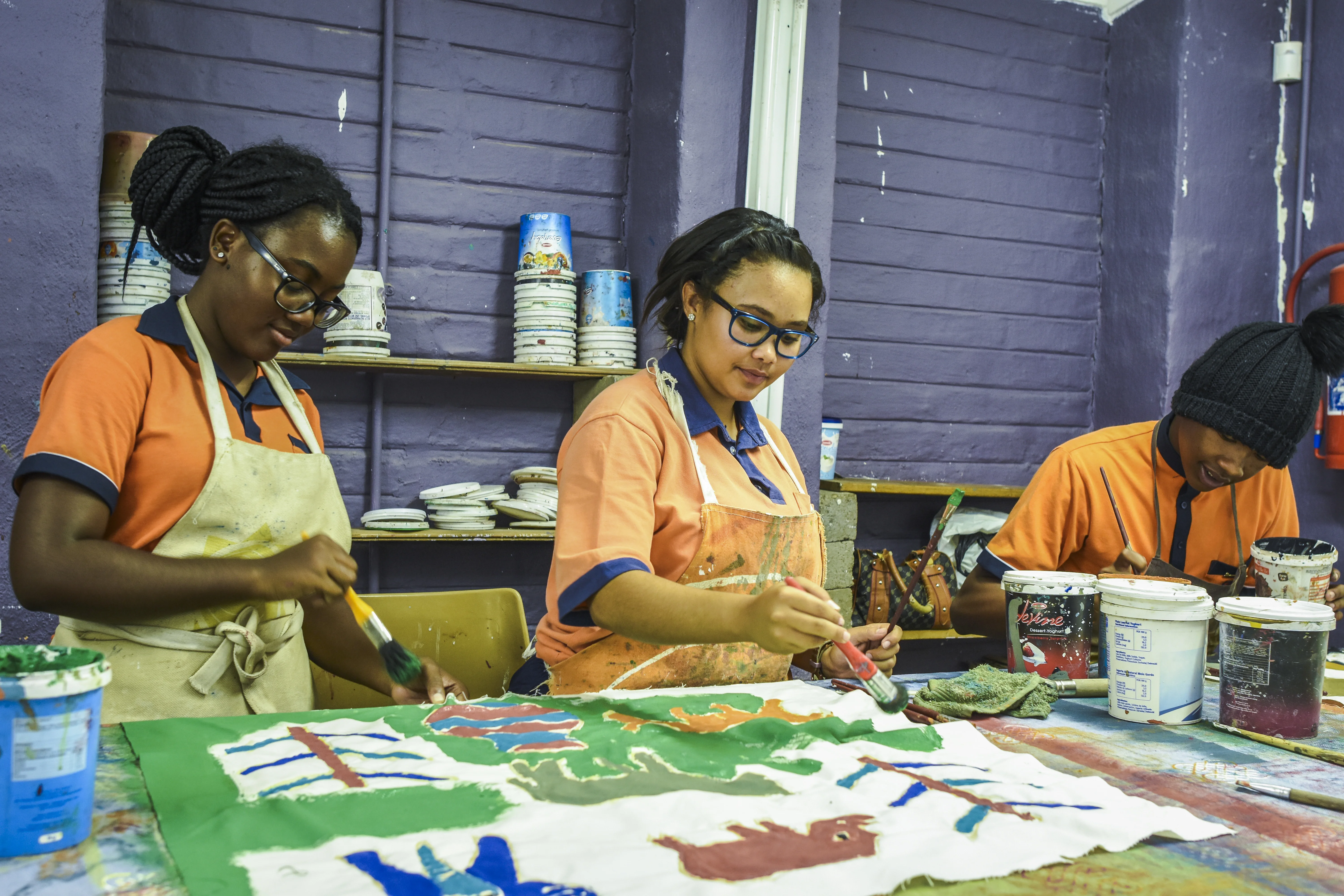
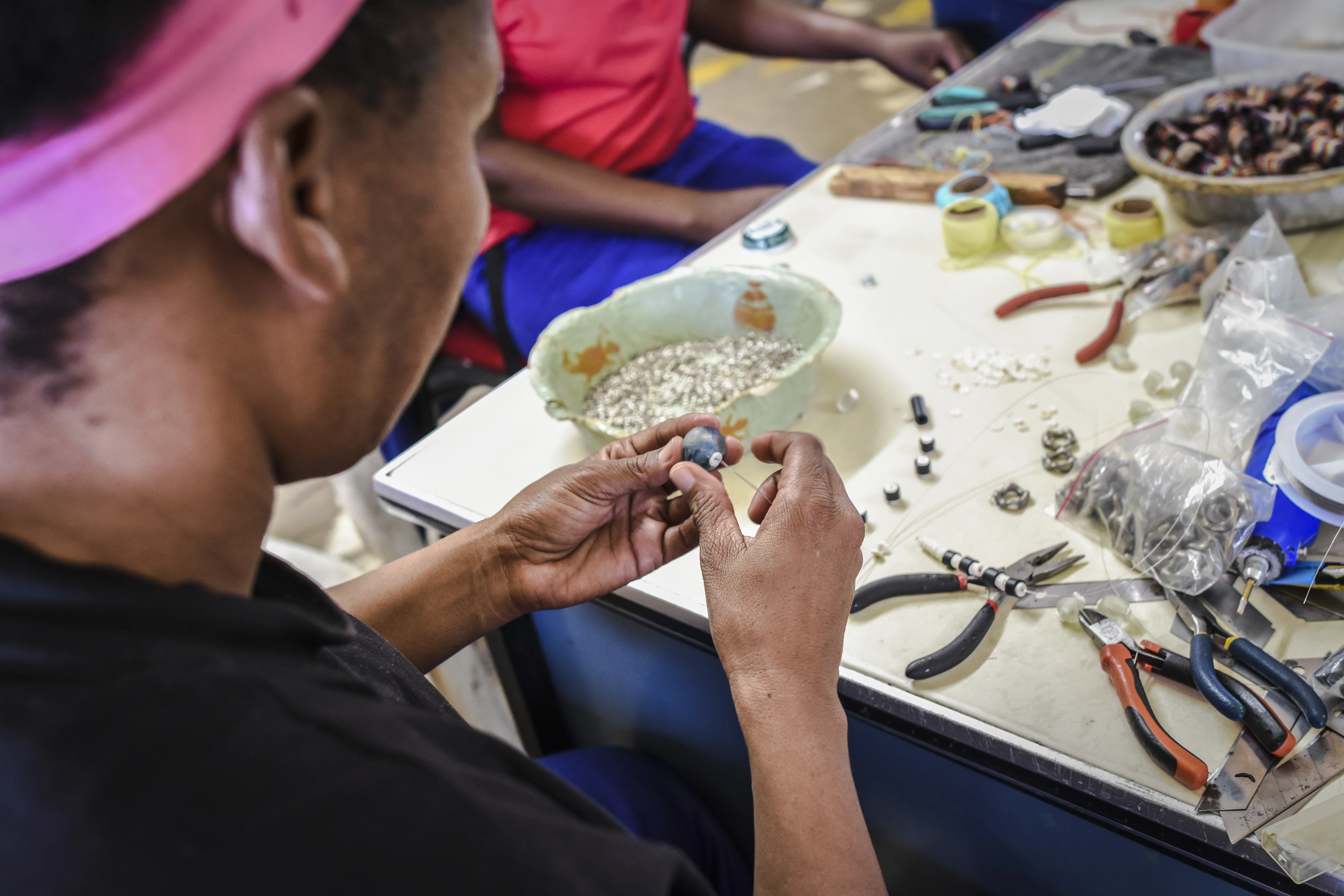
Visit the Penduka Village Restaurant & Shop on the outskirts of Windhoek, where women from the Katutura township and rural areas create textiles, beadwork, and ceramics that sustain livelihoods.
Tour the workshops to see techniques in action and understand the social enterprise model behind each item. Your stop directly supports training, fair wages, and community resilience, while a fresh takeaway lunch keeps the journey moving with purpose.