Your itinerary

Day 1
Adventure begins in Delhi
Our adventure begins in Delhi, a colourful and chaotic city full of architectural masterpieces. You are free today to explore this buzzing city or rest after your flight.Around 6pm, say namaste to your tour leader and fellow travellers, when we gather as a group for the first time to get to know each other and learn more about the adventures ahead.Your tour leader then ensures a big welcome by arranging a group dinner at a nearby restaurant.Want more time in Delhi? Secure pre-tour hotel nights through your sales representative.
Meals: Dinner
Day 2
Fly across the Himalaya to Leh
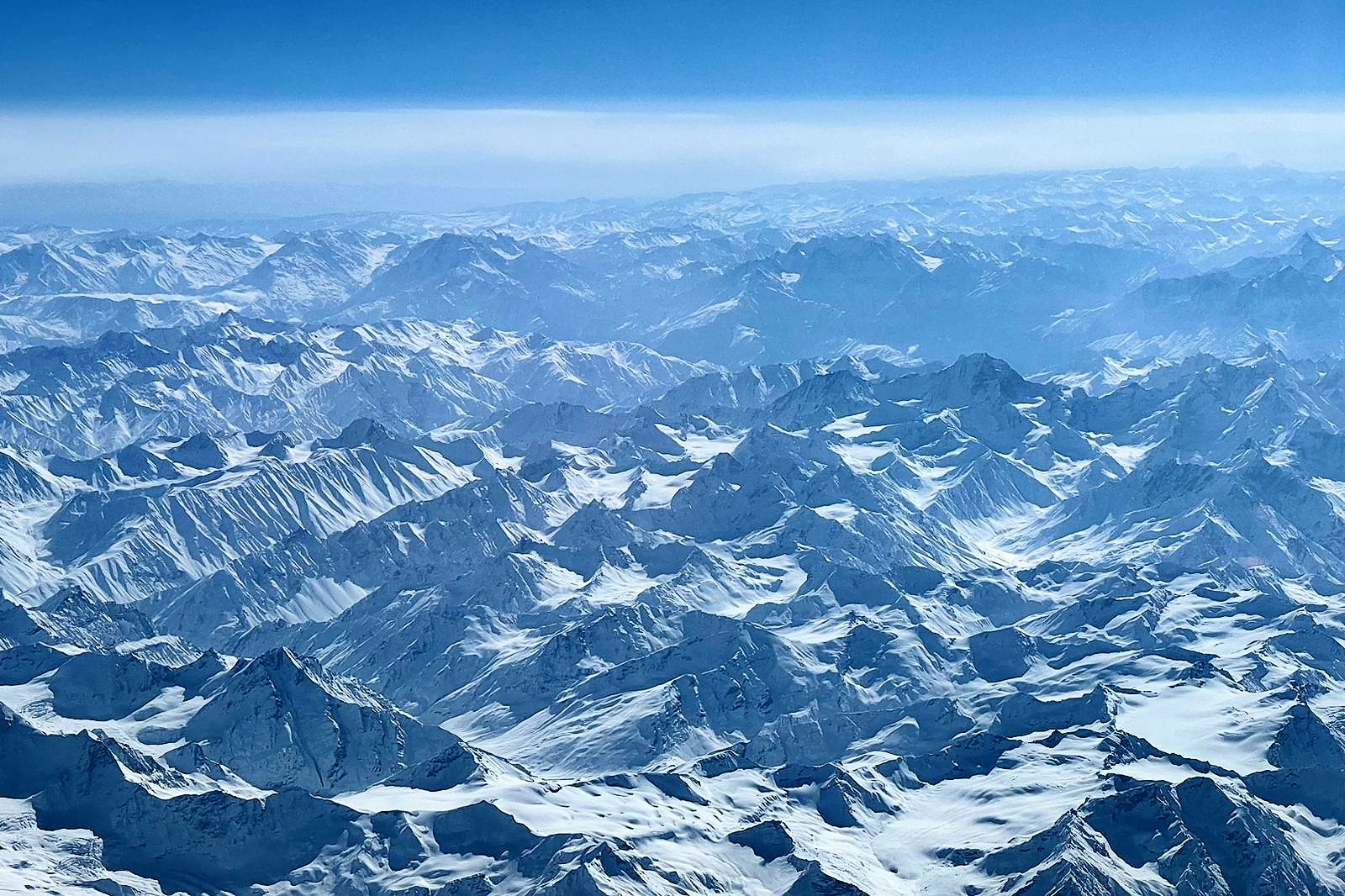
Usually, we have an early start for the flight to Leh. We may have to leave the hotel around 3am and drive to the airport for the very early morning (but highly spectacular) flight over the snow-capped peaks of the Himalaya, which are incredibly beautiful in winter. Landing in Leh, the temperature drops dramatically and we need our down jackets at the airport. If the weather is good and the flight goes on time, we should be in Leh for breakfast. The rest of the day is free to relax and acclimatise to the altitude (11,485ft/3,500m). In the morning, we rest and catch up on sleep. In the afternoon, we have a gentle orientation walk around Leh and its bazaars.
Meals: Breakfast,Lunch,Dinner
Day 3
Visit the Shey and Tikse monasteries
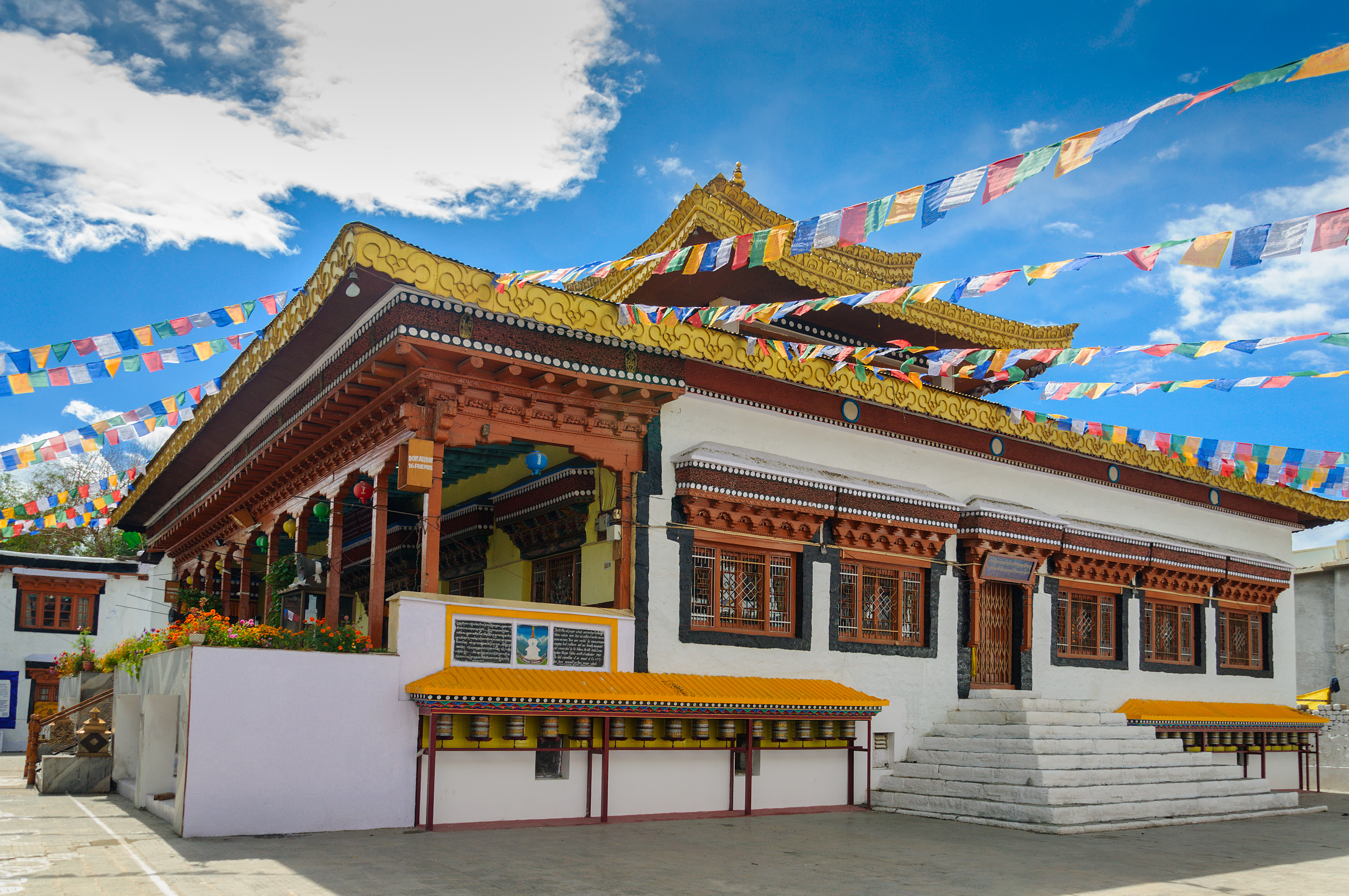
Today we visit the most important monasteries in the Indus Valley. First, we drive just over 30 minutes to Shey, once the residence of the Ladakhi royal family. Below the old palace ruins is a small temple containing a two-storey gilded statue of Buddha. From Shey, we walk across the fields to Tikse, spotting birds en route. Set on a hill, it is one of the most impressive gompas in Ladakh. It has several temples, one of which contains a superb statue of the Future Buddha.In the late afternoon, we return to Leh.There may be the opportunity to attend a local monastic festival depending on the lunar calendar. Usually, we time the trips so we can visit a festival on either Day 3 or Day 11, keeping plans flexible. Valerie and our local team will advise what’s possible on the day.
Meals: Breakfast,Lunch,Dinner
Day 4
Drive to Jinchen; trek to Rumbak Sumdo
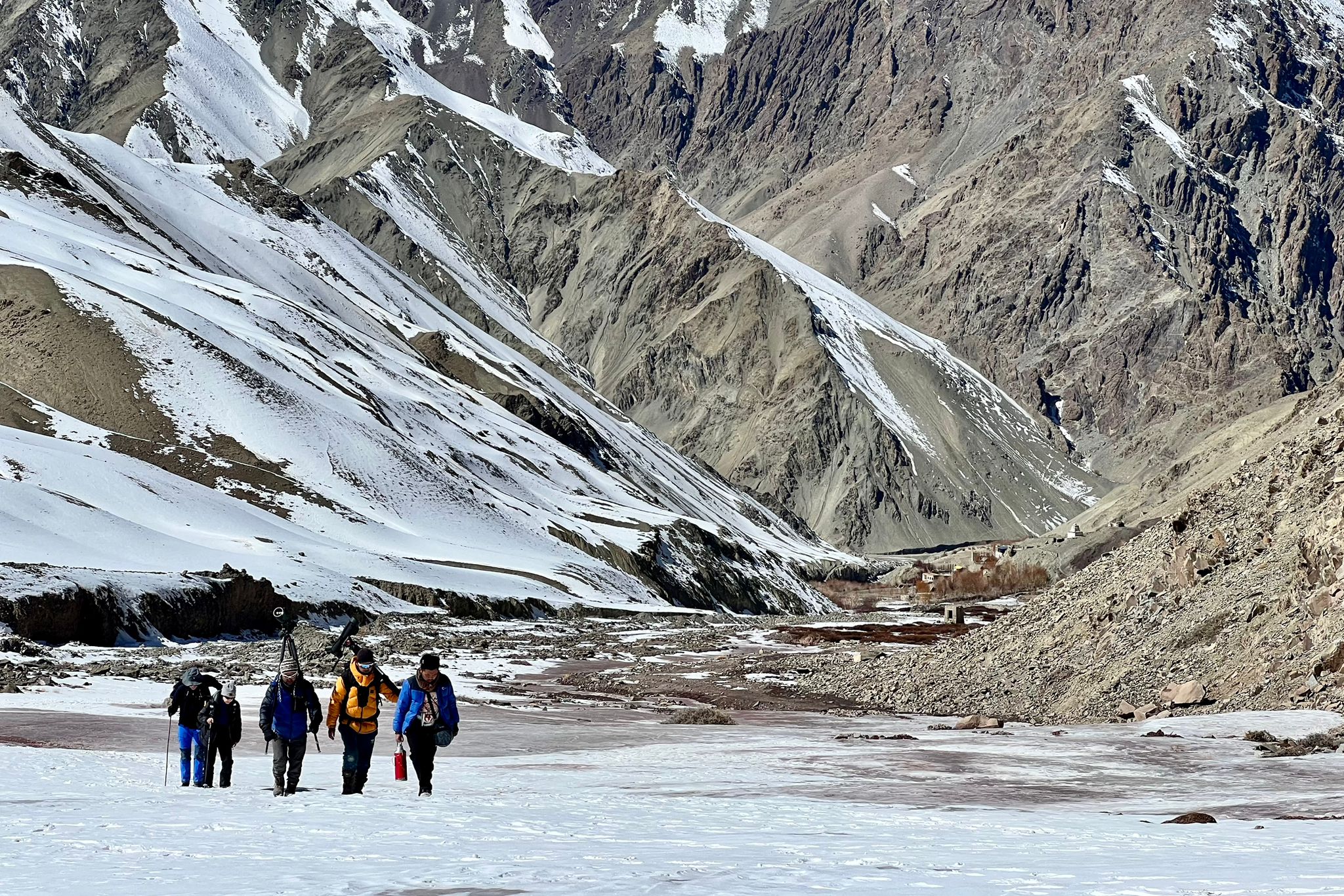
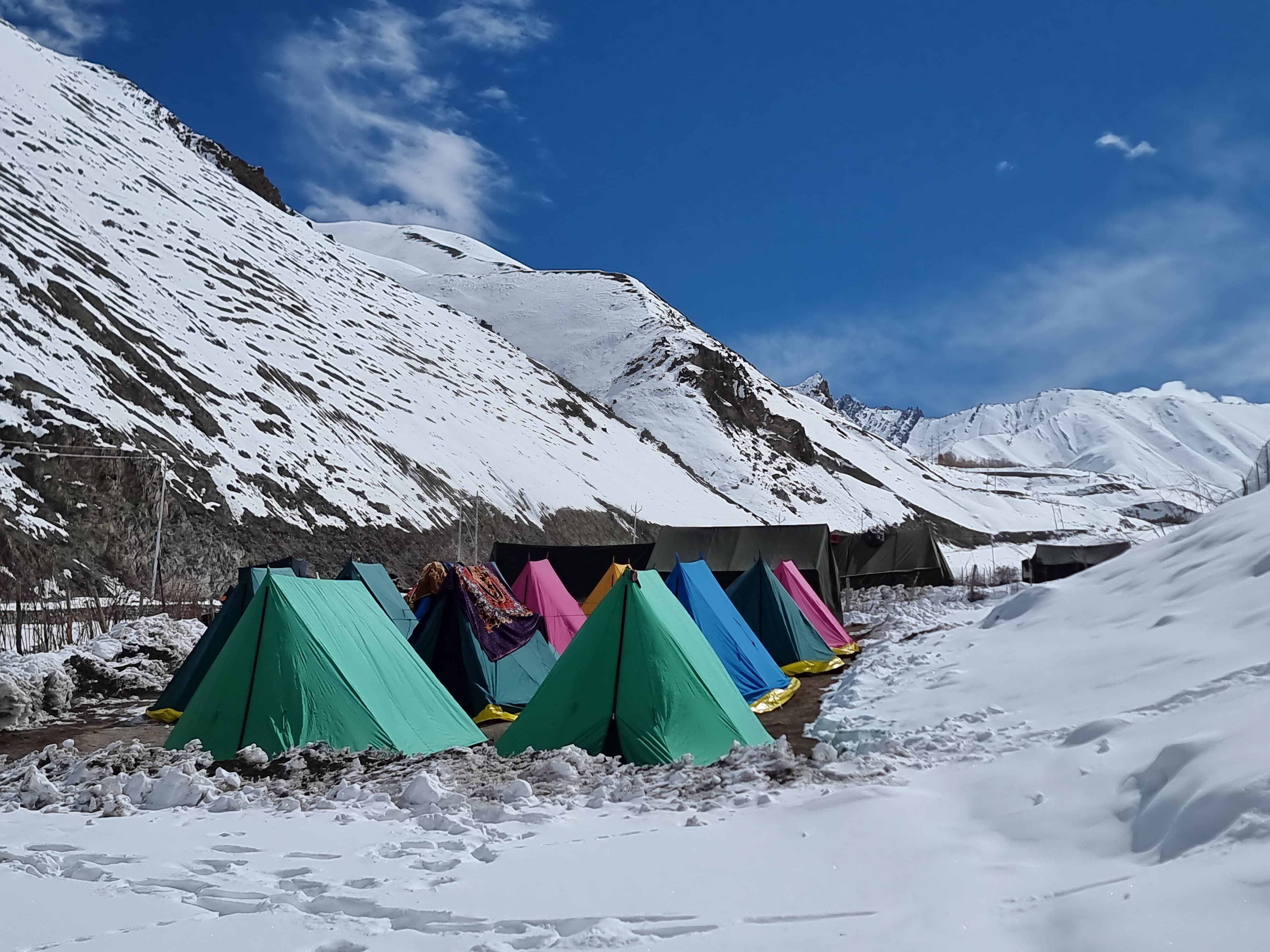
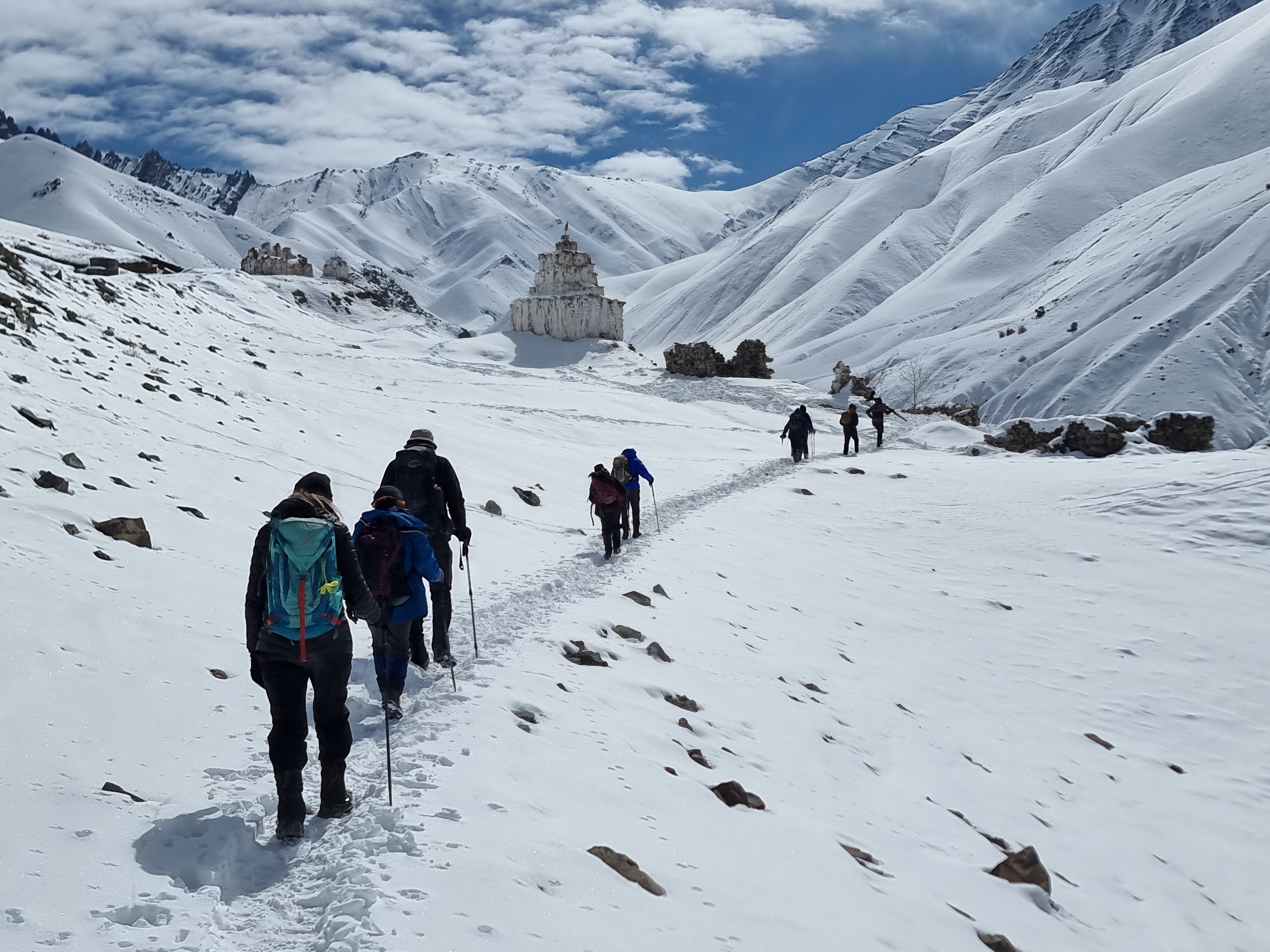
Leave Leh and drive across the Indus towards Jinchen. We follow the road past Phe to the entrance of the impressive Rumbak Gorge. We leave the cars near a bridge and our trail takes us up into the narrow gorge and we start our search for evidence of snow leopards and blue sheep. We camp tonight at our base camp at Rumbak Sumdo (12,470ft/3,800m).
Meals: Breakfast,Lunch,Dinner
Day 5
Five days of wildlife spotting in Hemis National Park
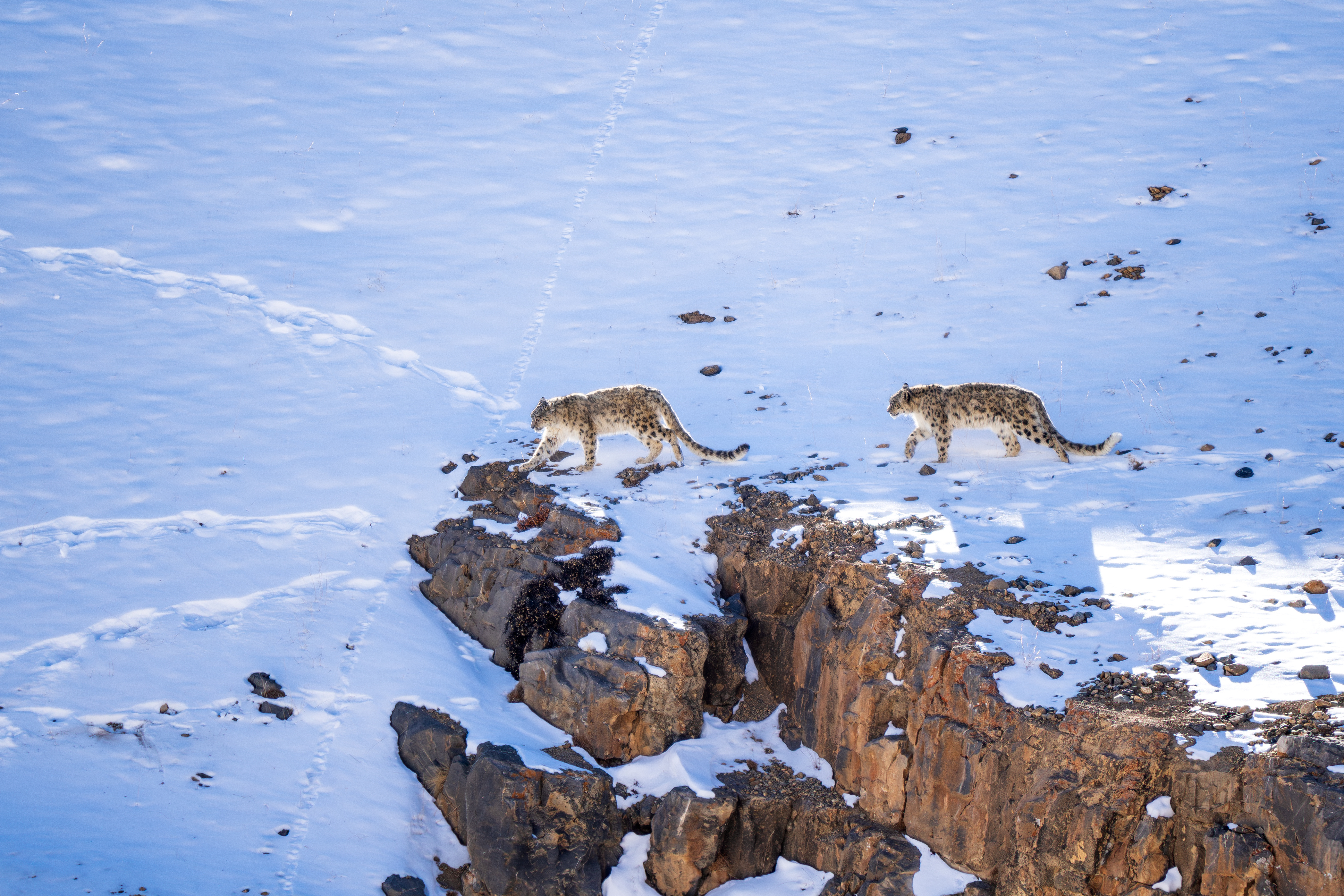
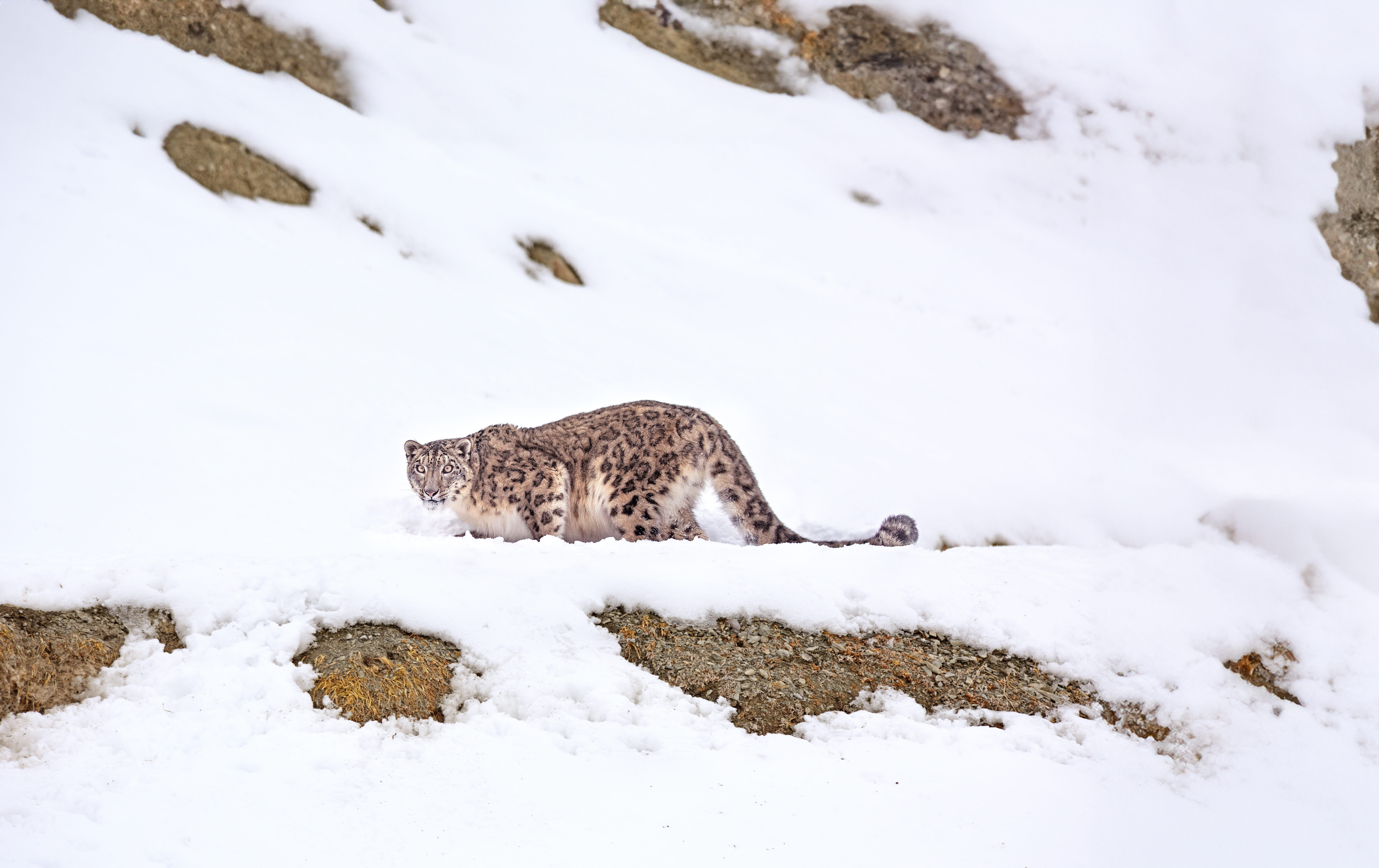
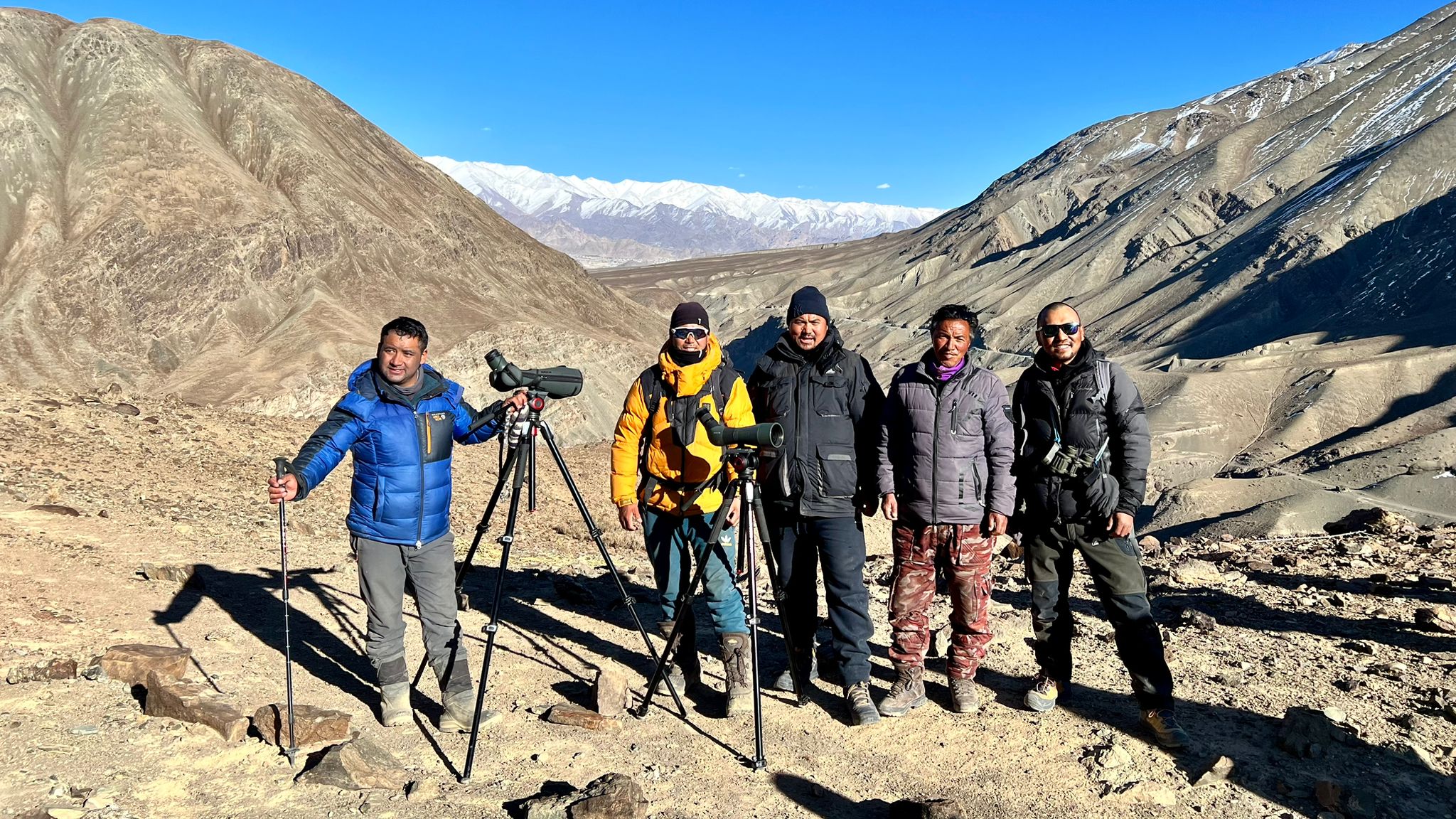
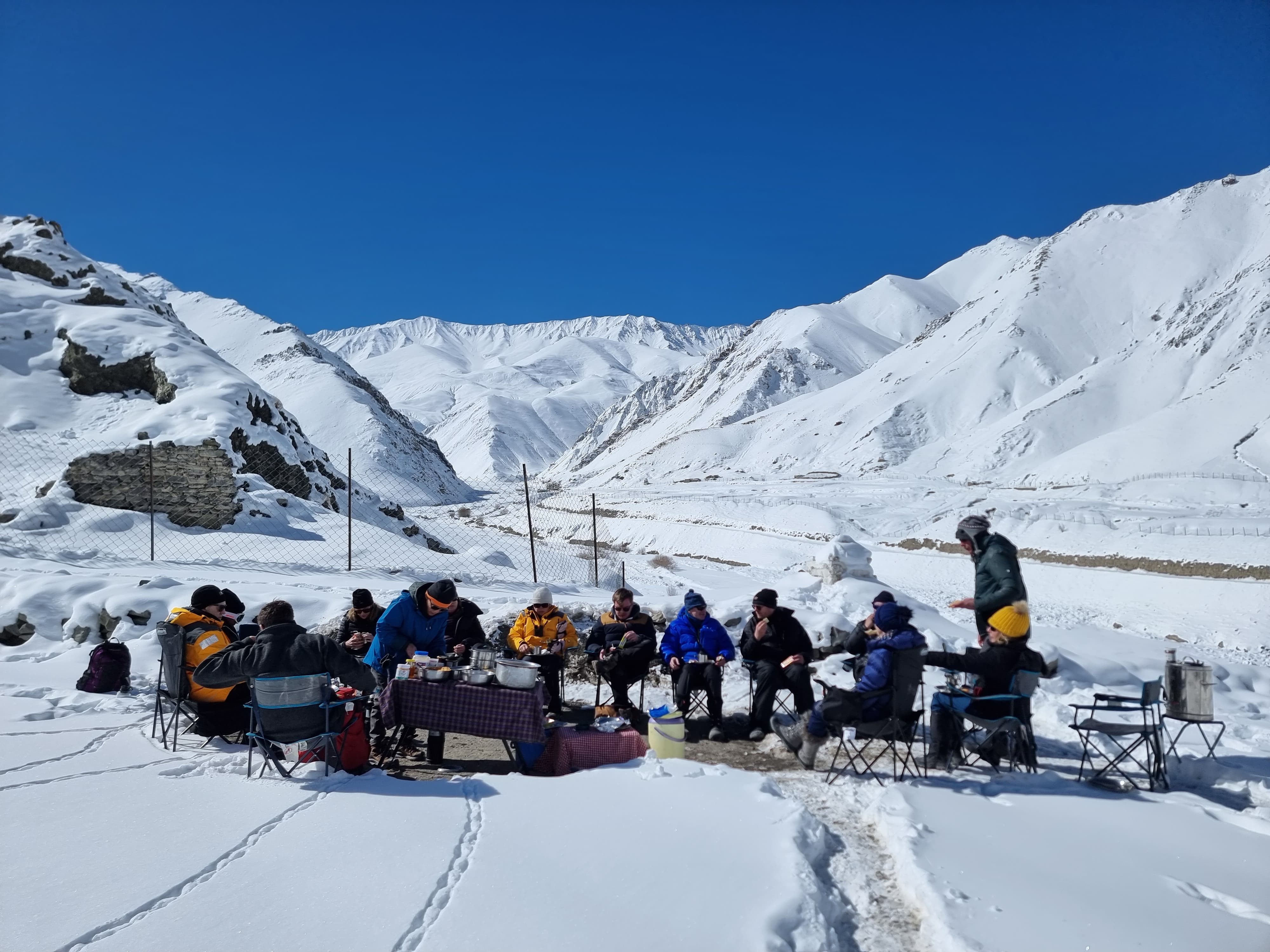
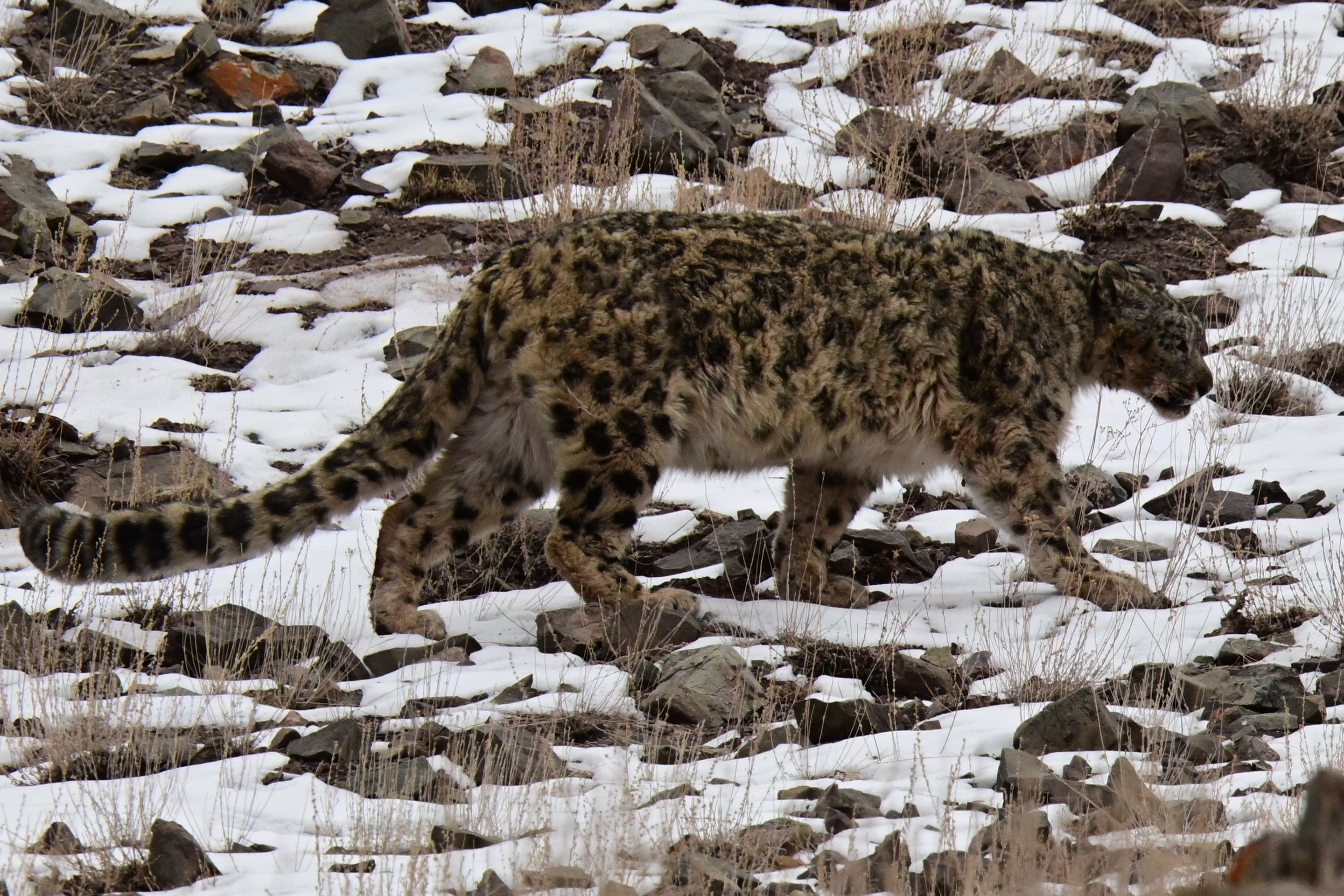
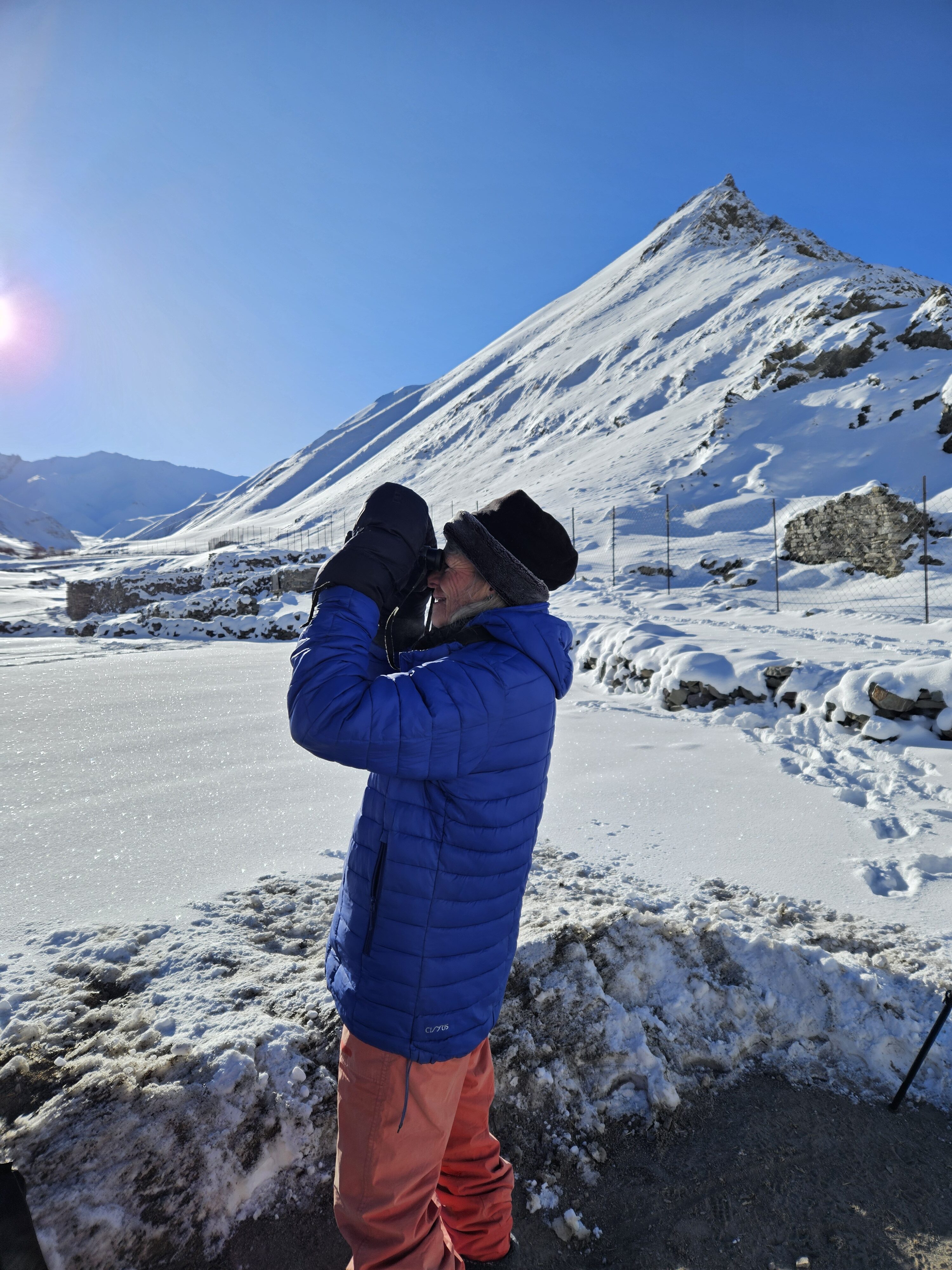
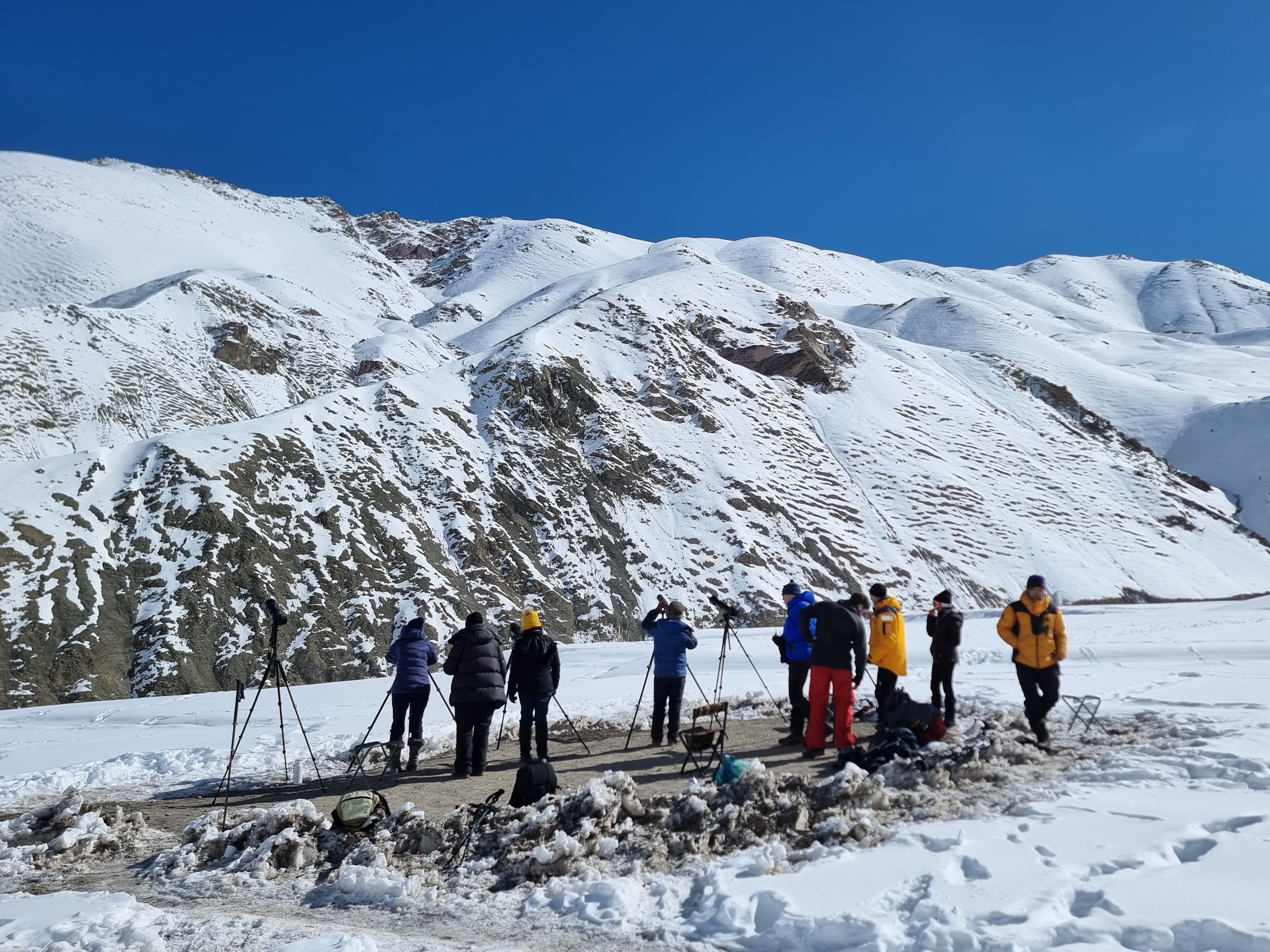
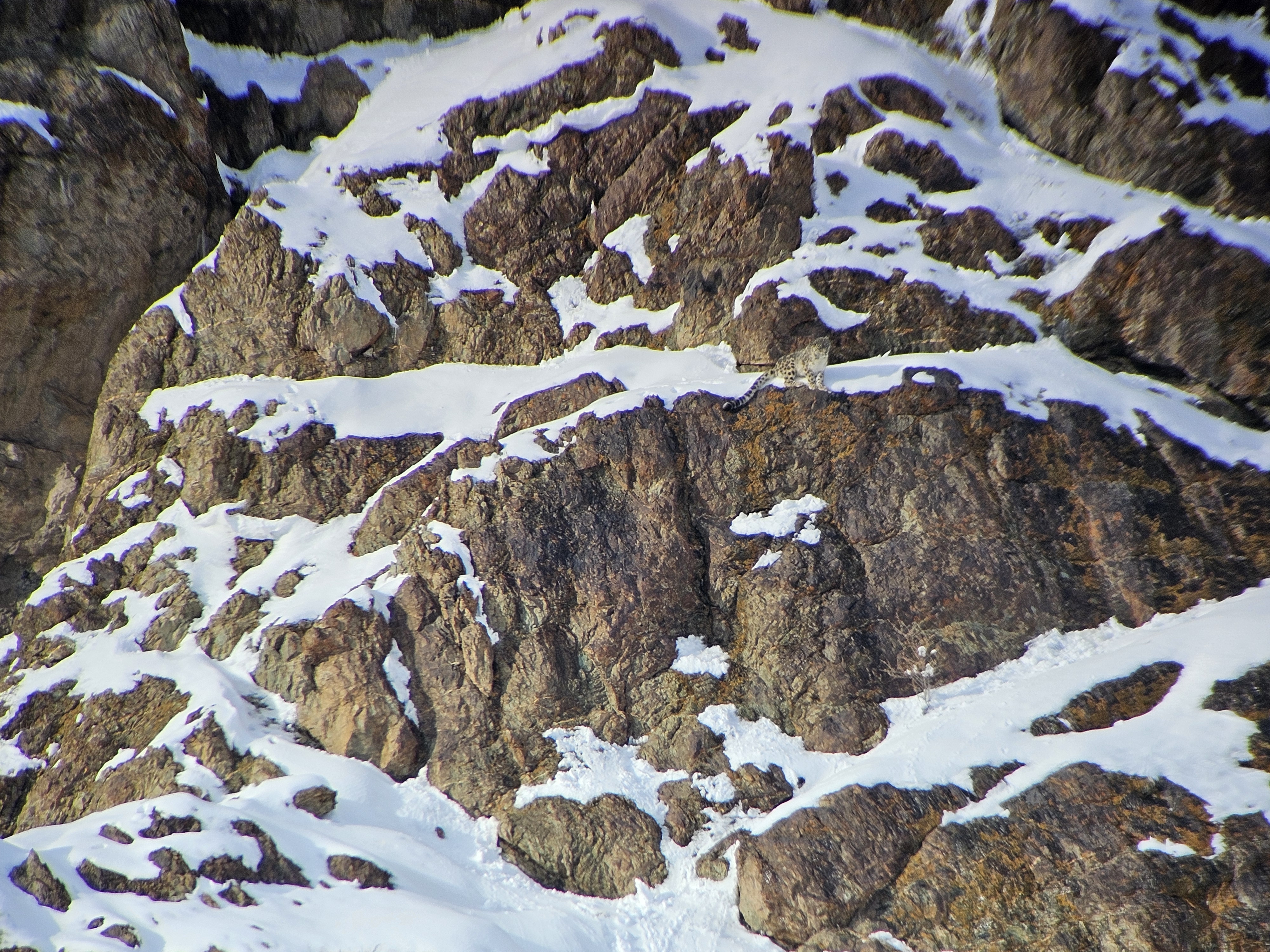
The next five days are dedicated to searching for snow leopards. The itineraries are flexible and set by our expert wildlife guides. They are in touch with other local spotters, who share recent sightings and maximise our chances of seeing a snow leopard – in 2025, we saw seven snow leopards, lots of blue sheep and a lynx.We usually spend most of the time at our base camp at Rumbak Sumdo, while walks take us into the Rumbak Valley and further towards Yurutse and the Ganda La. We can also explore the Husing and Tarbuns valleys, all well-known haunts of the snow leopard.Bring a good pair of binoculars to scan the slopes, though we also have wildlife spotters (one per five group members), who carry spotting scopes, which they set up at camp and on ridges on the walks. They also go out in the early mornings and late evenings to search for evidence of any animal movement.We also have a full trekking crew with us, including guides, assistant guides, cook, kitchen assistants and porters. Lunch and hot drinks are brought to us by our camp crew. If you have a heavy camera bag, it is possible to hire a private porter to carry this for you.We camp every night, except for one, which is spent in a traditional Ladakhi homestay. Food at the homestay is traditional local fare and you get the chance to interact with the villagers.
Meals: Breakfast,Lunch,Dinner
Day 6
Five days of wildlife spotting in Hemis National Park
The next five days are dedicated to searching for snow leopards. The itineraries are flexible and set by our expert wildlife guides. They are in touch with other local spotters, who share recent sightings and maximise our chances of seeing a snow leopard – in 2025, we saw seven snow leopards, lots of blue sheep and a lynx.We usually spend most of the time at our base camp at Rumbak Sumdo, while walks take us into the Rumbak Valley and further towards Yurutse and the Ganda La. We can also explore the Husing and Tarbuns valleys, all well-known haunts of the snow leopard.Bring a good pair of binoculars to scan the slopes, though we also have wildlife spotters (one per five group members), who carry spotting scopes, which they set up at camp and on ridges on the walks. They also go out in the early mornings and late evenings to search for evidence of any animal movement.We also have a full trekking crew with us, including guides, assistant guides, cook, kitchen assistants and porters. Lunch and hot drinks are brought to us by our camp crew. If you have a heavy camera bag, it is possible to hire a private porter to carry this for you.We camp every night, except for one, which is spent in a traditional Ladakhi homestay. Food at the homestay is traditional local fare and you get the chance to interact with the villagers.
Meals: Breakfast,Lunch,Dinner
Day 7
Five days of wildlife spotting in Hemis National Park
The next five days are dedicated to searching for snow leopards. The itineraries are flexible and set by our expert wildlife guides. They are in touch with other local spotters, who share recent sightings and maximise our chances of seeing a snow leopard – in 2025, we saw seven snow leopards, lots of blue sheep and a lynx.We usually spend most of the time at our base camp at Rumbak Sumdo, while walks take us into the Rumbak Valley and further towards Yurutse and the Ganda La. We can also explore the Husing and Tarbuns valleys, all well-known haunts of the snow leopard.Bring a good pair of binoculars to scan the slopes, though we also have wildlife spotters (one per five group members), who carry spotting scopes, which they set up at camp and on ridges on the walks. They also go out in the early mornings and late evenings to search for evidence of any animal movement.We also have a full trekking crew with us, including guides, assistant guides, cook, kitchen assistants and porters. Lunch and hot drinks are brought to us by our camp crew. If you have a heavy camera bag, it is possible to hire a private porter to carry this for you.We camp every night, except for one, which is spent in a traditional Ladakhi homestay. Food at the homestay is traditional local fare and you get the chance to interact with the villagers.
Meals: Breakfast,Lunch,Dinner
Day 8
Five days of wildlife spotting in Hemis National Park
The next five days are dedicated to searching for snow leopards. The itineraries are flexible and set by our expert wildlife guides. They are in touch with other local spotters, who share recent sightings and maximise our chances of seeing a snow leopard – in 2025, we saw seven snow leopards, lots of blue sheep and a lynx.We usually spend most of the time at our base camp at Rumbak Sumdo, while walks take us into the Rumbak Valley and further towards Yurutse and the Ganda La. We can also explore the Husing and Tarbuns valleys, all well-known haunts of the snow leopard.Bring a good pair of binoculars to scan the slopes, though we also have wildlife spotters (one per five group members), who carry spotting scopes, which they set up at camp and on ridges on the walks. They also go out in the early mornings and late evenings to search for evidence of any animal movement.We also have a full trekking crew with us, including guides, assistant guides, cook, kitchen assistants and porters. Lunch and hot drinks are brought to us by our camp crew. If you have a heavy camera bag, it is possible to hire a private porter to carry this for you.We camp every night, except for one, which is spent in a traditional Ladakhi homestay. Food at the homestay is traditional local fare and you get the chance to interact with the villagers.
Meals: Breakfast,Lunch,Dinner
Day 9
Five days of wildlife spotting in Hemis National Park
The next five days are dedicated to searching for snow leopards. The itineraries are flexible and set by our expert wildlife guides. They are in touch with other local spotters, who share recent sightings and maximise our chances of seeing a snow leopard – in 2025, we saw seven snow leopards, lots of blue sheep and a lynx.We usually spend most of the time at our base camp at Rumbak Sumdo, while walks take us into the Rumbak Valley and further towards Yurutse and the Ganda La. We can also explore the Husing and Tarbuns valleys, all well-known haunts of the snow leopard.Bring a good pair of binoculars to scan the slopes, though we also have wildlife spotters (one per five group members), who carry spotting scopes, which they set up at camp and on ridges on the walks. They also go out in the early mornings and late evenings to search for evidence of any animal movement.We also have a full trekking crew with us, including guides, assistant guides, cook, kitchen assistants and porters. Lunch and hot drinks are brought to us by our camp crew. If you have a heavy camera bag, it is possible to hire a private porter to carry this for you.We camp every night, except for one, which is spent in a traditional Ladakhi homestay. Food at the homestay is traditional local fare and you get the chance to interact with the villagers.
Meals: Breakfast,Lunch,Dinner
Day 10
Return to Leh
Today we trek back to Jinchen, where we meet our transport and drive back to the relative comforts of our hotel in Leh.
Meals: Breakfast,Lunch,Dinner
Day 11
Full day at a monastic festival
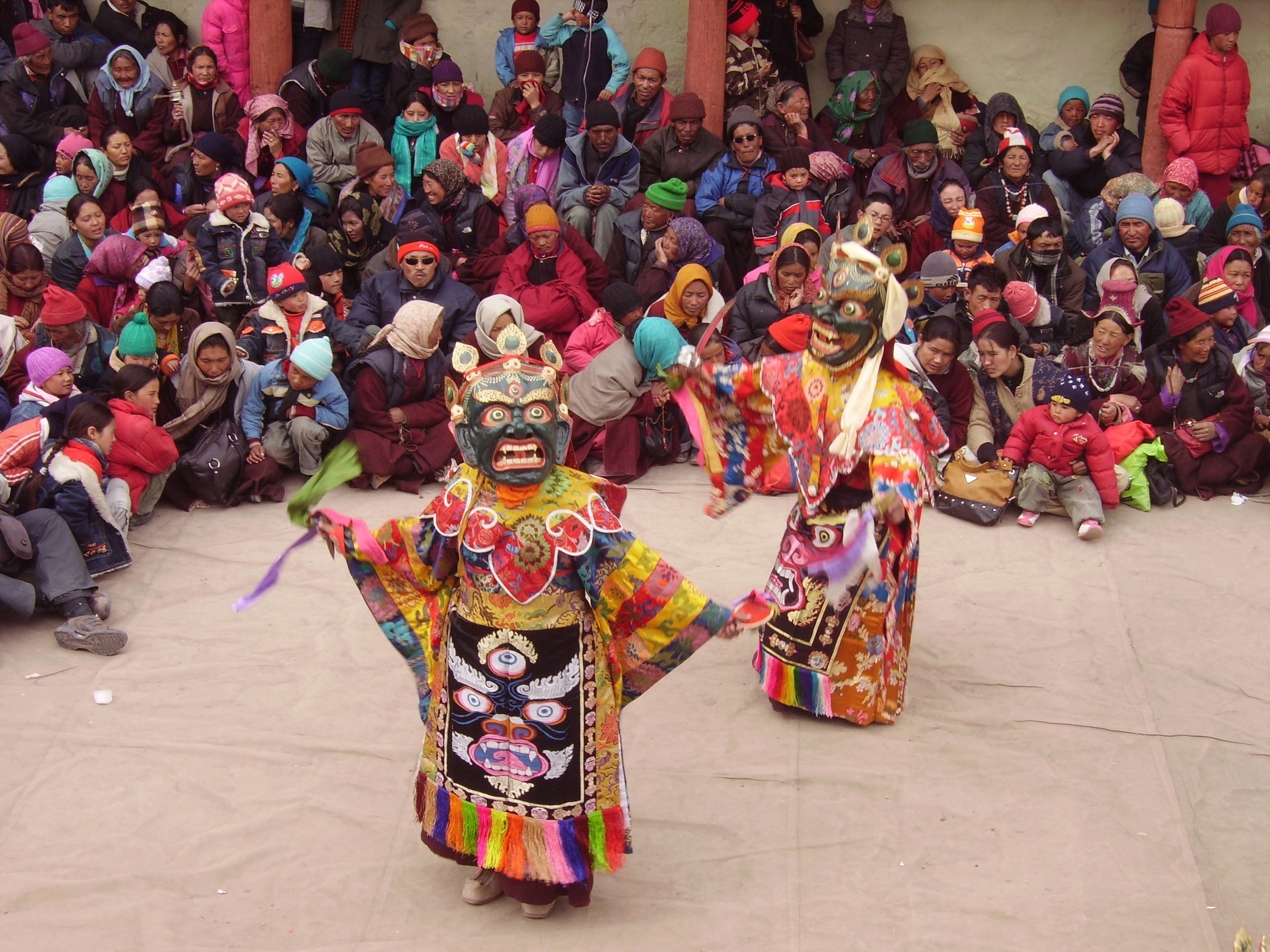
Once a year, every monastery in Ladakh has a festival where the monks dress in elaborate brocade and silk costumes and re-enact century-old stories of the Tibetan Buddhist religion. Valerie and the local team will be able to make arrangements locally if it is possible to attend a festival for those interested.People come from all over Ladakh to the festivals and these are a great social as well as religious occasion. The whole day is spent at the festival; in the evening, we return to our hotel in Leh.Please note: the masked dance festivals run on the Tibetan calendar. Dates can and do change. Festivals can be a day earlier or later than advertised due to the moon. We do our utmost to ensure you have the opportunity to visit a festival either on Day 3 or Day 11 where possible.
Meals: Breakfast,Lunch,Dinner
Day 12
Fly to Delhi
We fly back to Delhi. The rest of the day is free in Delhi for individual shopping or sightseeing.
Meals: Breakfast
Day 13
Free day in Delhi for individual sightseeing
We have a free day in Delhi in case of any delays to the flight from Leh. If we fly to Delhi on schedule, today is free for individual sightseeing. You may want to visit Old Delhi with the magnificent Red Fort and Jami Masjid. Humayun’s Tomb (a forerunner to the Taj Mahal) is worth a visit. In New Delhi, there is India Gate and Parliament House. Delhi also has a wealth of interesting shops and markets.For those interested, your tour leader can organise a walk around the old part of Delhi. An optional day trip to Agra to see the Taj Mahal can be arranged by your tour leader who will provide details and prices (not available on Fridays, as the Taj Mahal is closed).
Meals: Breakfast
Day 14
Adventure ends in Delhi
The tour ends after breakfast today and we begin our return journeys home. Alternatively, if you’d like a little more adventure, consider joining our five-day Golden Triangle extension. Encompassing Delhi, Jaipur and Agra, the trip is a whirlwind of culture, taking in the Taj Mahal, Red Fort of Akbar and much more.
Meals: Breakfast
What’s included
What’s not included
Additional information
Food
All breakfasts are included and all food is included in Ladakh. In Leh, the food is a mix of Indian, Tibetan, Chinese and Continental. On trek, we provide a full breakfast including porridge, cereals, eggs and toast and a choice of hot drinks. Lunch is a packed hot lunch consisting of rice and chapattis, vegetables, tuna and cheese, which is carried for us. Dinners are mostly pasta, rice or potato based and a mixture of Indian, Continental and Chinese cuisines. In the afternoon, hot drinks and biscuits are served and, in the daytime, camp staff bring us hot drinks while we are out spotting.
Drinking water
Staying hydrated is important when undertaking any physical activity. However, we strongly encourage you not to buy bottled water as this contributes to the growing problem of plastic pollution in India
On trek, the cooks collect and boil drinking water from the mountain streams and fill up your water bottles for you, but you may need to collect water during the day and may wish to use your own water purification treatment as well. Purification tablets can be an economical way to treat your water, most taking between 30 minutes to one hour to purify one litre of water and are easy to used in water bladders/hydration packs. Purification tablets which contain chlorine dioxide are reported not to leave an obvious taste as other tablets may.
We suggest you may like to bring a reusable bottle with a wide opening and use a Steripen to treat any non-boiled water. A Steripen is a handheld UV water purifier – small, lightweight and battery powered, so easy to pack. It’s quick to use, far more effective than purification tablets, and the water is ready immediately. It’s fine to use a Steripen on non-boiled water so long as it isn’t cloudy or full of sediment (which is uncommon in these regions).
Steripens are widely stocked on Amazon, outdoor shops and other online retailers; look for the latest models but avoid USB charging ones. Models that take lithium batteries are best as they last longer, especially in cold conditions.
Delhi Welcome Briefing & Hosted Dinner
Meet your group and meet your tour leader at a convivial hosted welcome dinner in Delhi. Settle in over fragrant North Indian dishes as you get to know fellow travellers and the expert leading your Himalayan adventure.
Gain practical tips on cold-weather trekking and wildlife etiquette during a concise briefing for the journey into Ladakh’s winter mountains. Expect guidance on layering, altitude awareness and how best to maximise wildlife sightings in the high, dry air of the trans-Himalaya.
Leh Orientation Walk & Bazaar Stroll
Explore Leh on a gentle guided orientation walk, winding through Leh Main Bazaar and the lanes of the old town. Spin Buddhist prayer wheels and soak up crisp mountain light as snow peaks frame mud-brick houses and fluttering prayer flags.
Hear how Leh prospered as a Silk Road junction linking Kashmir, Tibet and Central Asia. Pause for views toward Leh Palace and the snow-dusted Stok range while your leader shares acclimatisation tips for life at 3,500m.
Shey Palace & Tikse Monastery
Visit the Indus Valley’s spiritual landmarks, beginning at Shey Palace, former seat of Ladakh’s kings. Step into a serene chapel housing a remarkable two-storey gilded Buddha that glows against painted mandalas and butter-lamp light.
Continue to hilltop Tikse Monastery, its whitewashed tiers recalling Lhasa’s Potala. Marvel at the towering Future Buddha (Maitreya) and view monk quarters, assembly halls and temple courtyards that overlook poplar-lined fields and the silver ribbon of the Indus below.
Rumbak Gorge Trek, Hemis National Park
Trek into the sculpted chasms of the Rumbak Gorge, gateway to Hemis National Park. Walk frozen streambeds and narrow spurs beneath ochre cliffs while scanning snowy slopes for blue sheep—the prey that lures apex predators into view.
Learn to recognise track and sign in the snow—scrapes, scat and paw prints—guided by specialists who reveal how terrain, wind and winter light shape daily wildlife movement in Ladakh’s high valleys.
Snow Leopard Tracking with Expert Spotters
Join professionals to search for the rare and elusive snow leopard across the ridges and side-valleys of Hemis National Park. Move between vantage points as expert trackers and spotters coordinate intel from local networks.
Watch for bharal (blue sheep), red fox and Eurasian lynx while spotting scopes are set up on ridgelines to scan sunlit slopes. Winter concentrates wildlife at lower elevations, sharpening your chances of ethical, well-managed sightings amid stark, beautiful Himalayan light.
Ladakhi Homestay Evening & Shared Meal
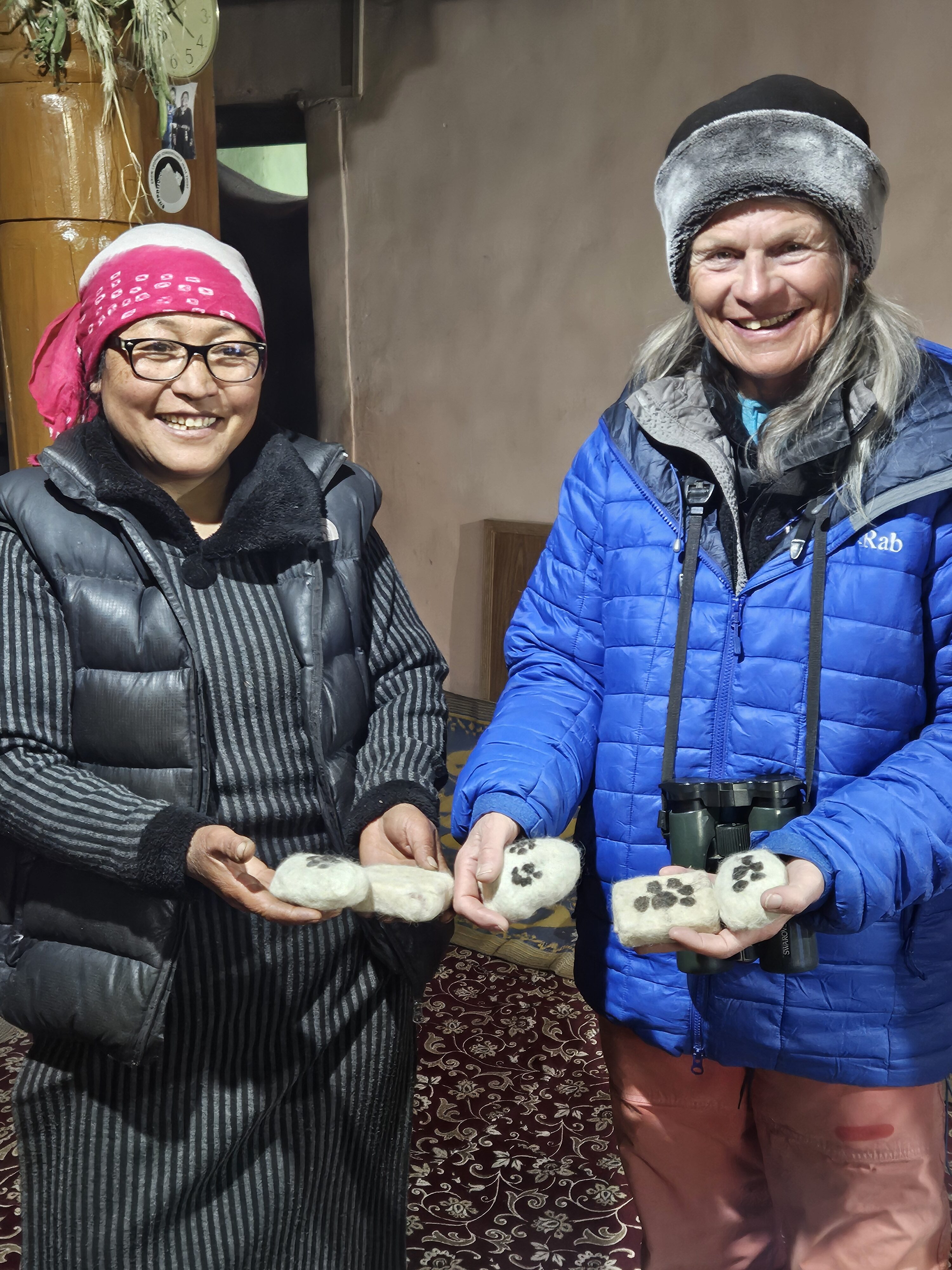
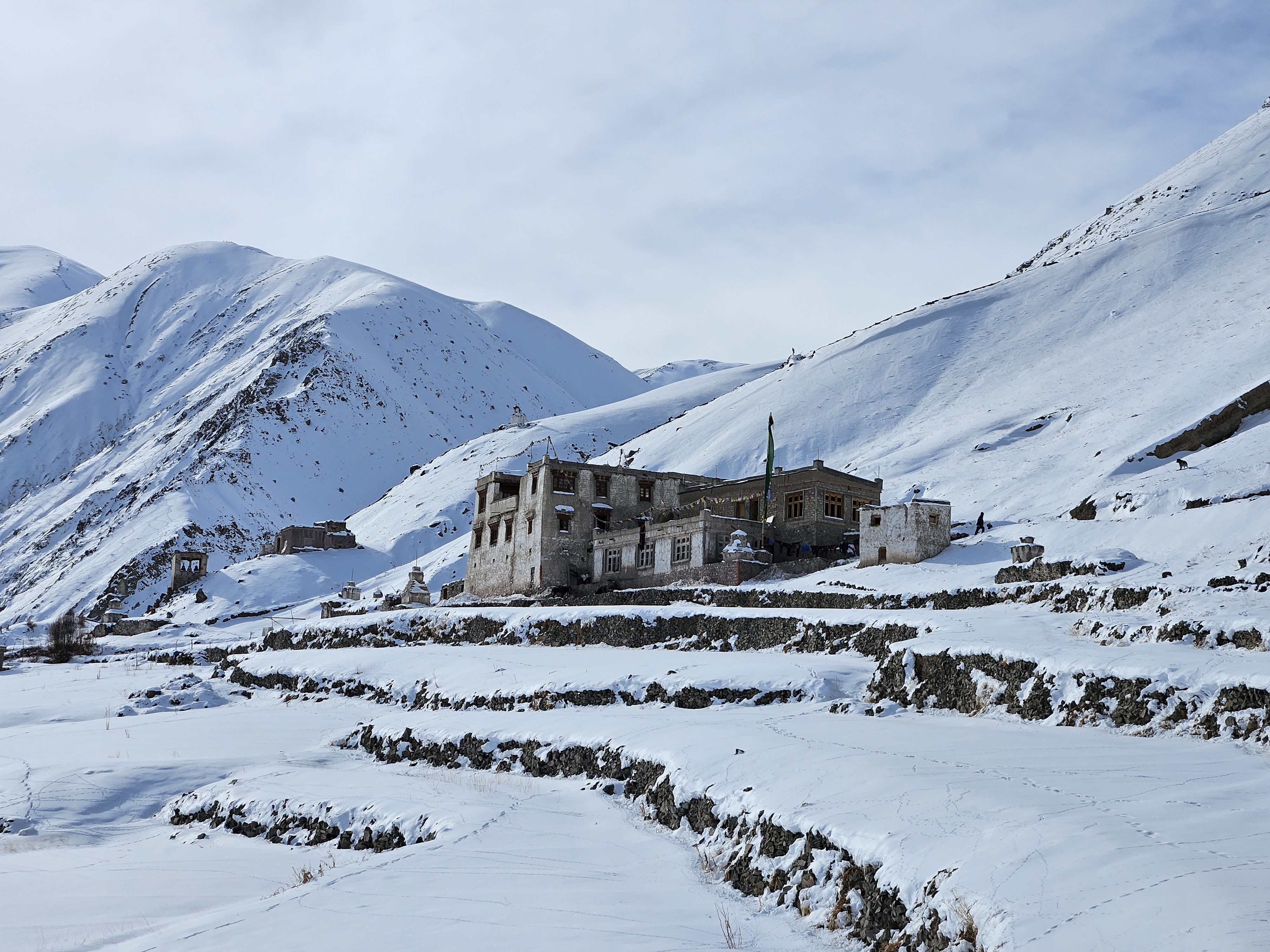
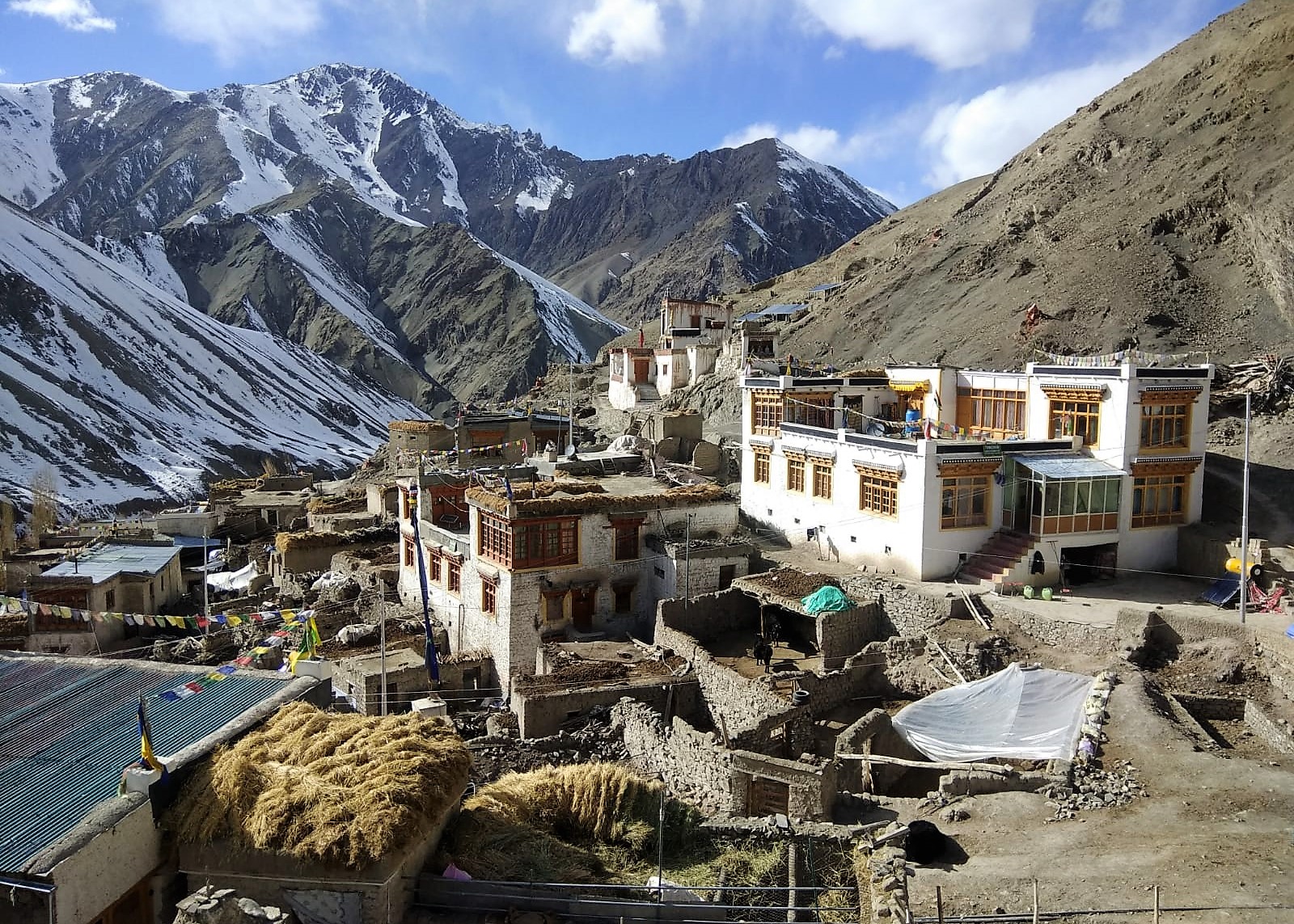
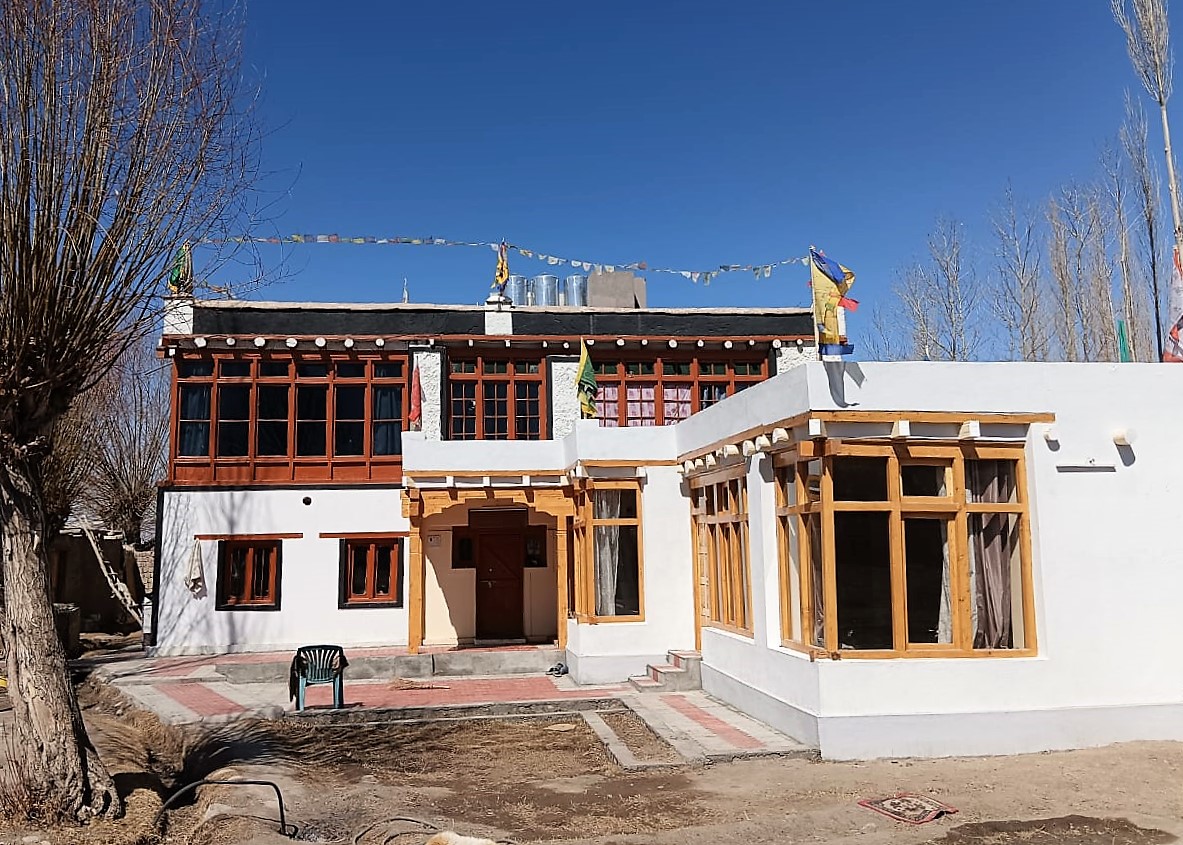
Spend a night in a traditional Ladakhi homestay, where thick walls and warm stove-heated rooms keep the winter chill at bay. Settle onto floor cushions for a shared meal with your hosts, tasting simple, hearty dishes made for high-altitude life.
Conversations illuminate village rhythms—farming terraces, prayer rituals, winter festivals—and the resilience required to thrive in the trans-Himalaya. It’s a rare, quietly moving window into contemporary Ladakhi culture and hospitality.
Ladakhi Monastic Festival (Seasonal Attendance)
Attend a Buddhist celebration alive with masked cham dances, swirling robes and ritual pageantry. Monks perform sacred stories to the blast of long horns and drums, while villagers gather in bright woollens to share food, news and blessings.
Guided by your leader, learn how brocade costumes and choreographed steps express Buddhist teachings on compassion and the triumph of wisdom. Attendance is included on most departures, typically on day 3 or day 11, subject to the Tibetan lunar calendar.
Old Delhi Heritage Walk & Spice Bazaar (Optional)
Join an optional guided walk through Old Delhi, where tangled lanes brim with brassware, silks and spice-laden air. Navigate Chandni Chowk by foot and cycle-rickshaw, and pause at the vast courtyard of Jama Masjid, India’s largest mosque.
Stories of Mughal emperors, havelis and street-food traditions bring the quarter to life, contrasting powerfully with New Delhi’s colonial boulevards. This experience is at additional cost and bookable on tour with your leader.
Agra Day Trip: Taj Mahal & Agra Fort (Optional)
Opt for a full-day excursion to Agra to admire the Taj Mahal, its marble surfaces shimmering with intricate pietra dura inlay. Continue to the UNESCO-listed Agra Fort, a red-sandstone citadel overlooking the Yamuna River.
Hear tales of emperors, artisans and the monument’s luminous symmetry, with time for photos and reflection from classic viewpoints. This experience is at additional cost and bookable on tour; note the Taj Mahal is closed on Fridays.