Your itinerary
Day 1
Start in Aberdeen, United Kingdom
Arrive any time on Day 1 and make your way to the group hotel, which is included in your Charter Flight & Hotel Package. The Scottish city of Aberdeen, your gateway for this adventure, is known as the Granite City, as it was once the granite capital of the world. You’ll understand as soon as you see the grey Victorian buildings—that sparkle in the sunlight. A bustling cultural hub, Aberdeen also offers a range of museums, galleries, theaters, shops, cafés and restaurants to explore.
Day 2
Embarkation Day
Today you will have free time before being transferred to the port to board your ship. Upon boarding the ship, you will be welcomed by the expedition team and crew who will provide ship orientation and an introductory briefing of the voyage to come.
Meals: Breakfast,Dinner
Day 3
Orkney: Neolithic sites, birds, and close-knit communities
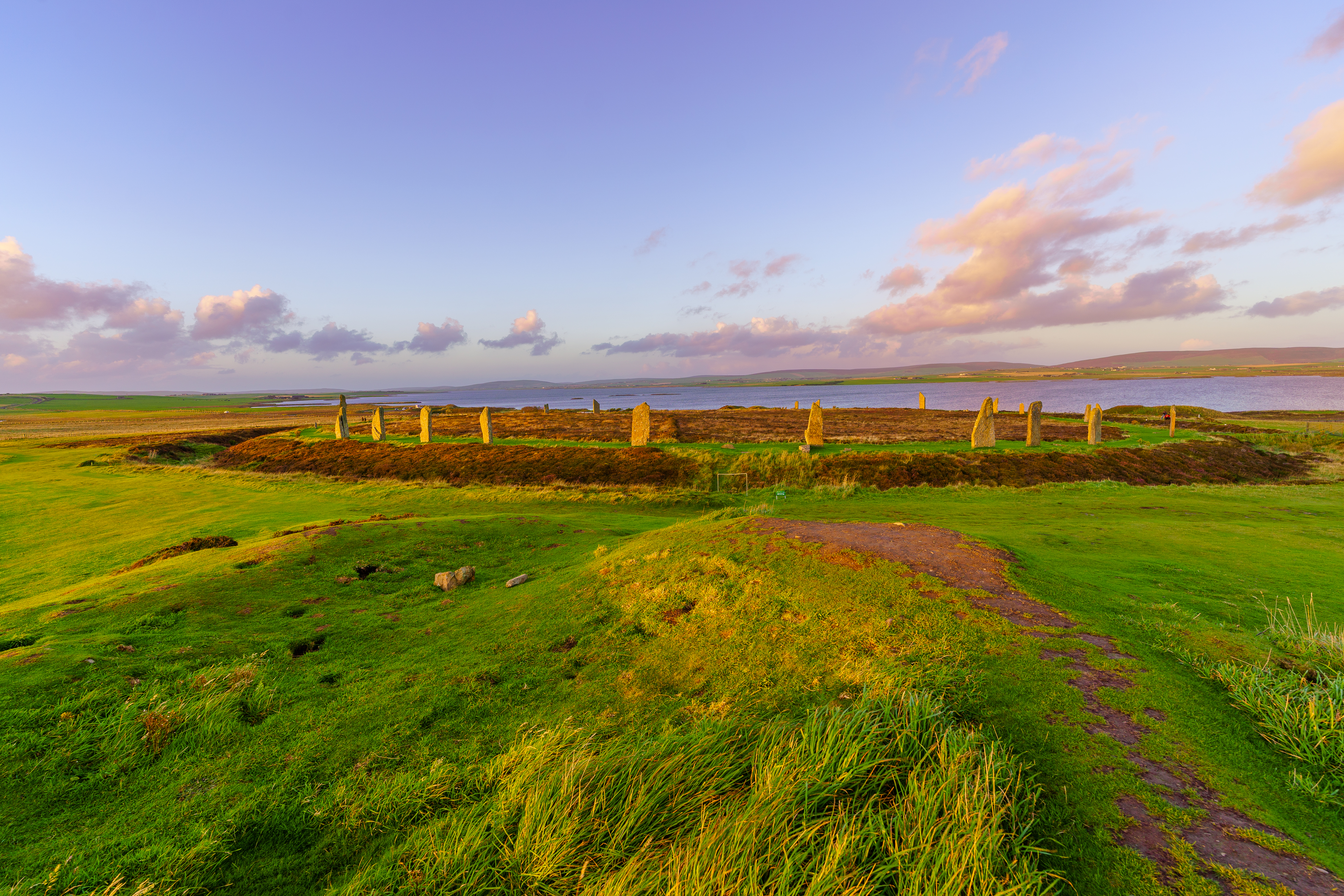
Situated just north of mainland Scotland, Orkney is an archipelago of islands steeped in history. Some of Europe’s most intact Neolithic ruins are found here, dating back 5,000 to 8,000 years.
Chief among them is Skara Brae, a small community of ten stone homes, situated within earthen dams, that dates to 3180 BCE. Skara Brae is part of the Heart of Neolithic Orkney World Heritage Site, and is considered one of the most important Neolithic sites in all of Europe. Walking among these ancient homes and looking out toward the sea in the Bay of Skaill provides a sense of connection to humans who lived before the Egyptian pyramids were constructed. Papa Westray, a more remote island just north of Skara Brae—and more difficult to access—is also home to an ancient farmstead dating back to 3700 BCE. The surrounding farmlands are peaceful and quiet.
The sounds of summer and migratory birds, combined with waves from the North Atlantic Ocean crashing against the shoreline below, seem to transcend time—offering a fleeting glimpse into what life may have looked and sounded like thousands of years ago. Home to more than 70 islands, 20 of Situated just north of mainland Scotland, Orkney is an archipelago of islands steeped in history. Some of Europe’s most intact Neolithic ruins are found which are inhabited, Orkney is a unique region with strong connections to the polar regions.
Dr. John Rae, the famous Arctic explorer who helped map the Northwest Passage in the 1830s and 1840s, was Orcadian, and a monument to his achievements stands in the village of Stromness. Several Orcadian place names can be found in the Antarctic, including the South Orkney Islands and the Stromness whaling station in South Georgia. The region is a network of pastoral green islands framed by rugged coastlines and occasional white sandy beaches. These islands—with cliffs ideal for nesting seabirds—are perfectly situated for both seasonal bird colonies and migratory species en route to the Arctic. Birders will find Orkney an excellent place to spot species like Atlantic puffins, northern gannets, razorbills, kittiwakes, Arctic terns, Arctic skuas, and many others. Guests can explore off-ship—as conditions allow—by joining Zodiac, kayak, and paddling excursions, as well as guided and self-guided walks.
Meals: Breakfast,Lunch,Dinner
Day 4
Shetland: Sheer cliffs, white sandy beaches, and 5000 year-old ruins
Further north, Shetland is another archipelago with a truly unique culture and feel. A fusion of Norse and Scottish history and culture—and a visceral connection to the wind, weather, and sea—Shetland feels like no other place in the UK.
Here, we intend to explore the bird colonies of Sumburgh Head, 100-meter (328 feet) cliffs that descend into the rich marine environment below, framed by jagged rocky outcroppings that pierce through the sea. Common species spotted here include Atlantic puffins, guillemots, razorbills, and kittiwakes. Additional marine wildlife in the vicinity includes white-beaked dolphins, minke whales, and occasionally orca and humpback whales. The cliffs themselves are impressive in their rugged beauty, marked by a picturesque lighthouse that serves as an important beacon for mariners transiting the area.
Not far from Sumburgh Head, and deeper into the West Voe of Sumburgh, is the world-famous Jarlshof—an archaeological site considered to be among Europe’s most important. Situated among soft green pastoral farmland, and just above a beautiful sandy Scottish beach, the area showcases thousands of years of human history, with Neolithic, Bronze Age, Iron Age, and Viking sites all immediately visible and within close proximity to one another. Roundhouses from the Iron Age, circa 400–800 BCE, are well-excavated, as are longhouses and stone walls from the Viking Age.
Additionally, the Old House of Sumburgh—dating to the 15th century, when Shetland passed from Norse to Scottish control—stands among ruins that are thousands of years older. Jarlshof is a true tapestry of history, with many layers and eras woven together. There are plenty of opportunities to be active on this journey. We’ll take to the Zodiacs to explore the coastal shorelines for cruising as well as shore landings. If weather permits, we’ll deploy our sea kayak and paddle programs. And whenever you’re back on the ship, head to the outer decks—especially as we approach our excursion sites—for birds and marine mammals.
Meals: Breakfast,Lunch,Dinner
Day 5
At Sea: Sailing toward the Norwegian High Arctic
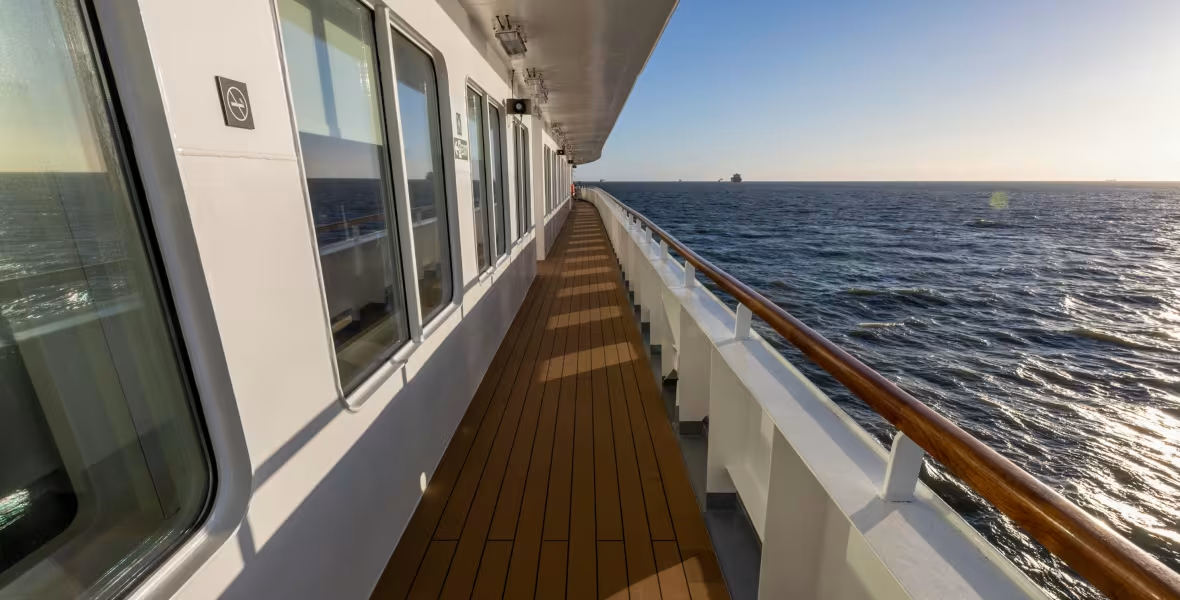
While at sea, be sure to spend time on the outer decks to watch for resident seabirds and migrating birds, or enjoy the views through the floor-to-ceiling windows. We will ride the relatively warm current north—the same current that helps keep the Norwegian coast and west coast of Svalbard relatively temperate.
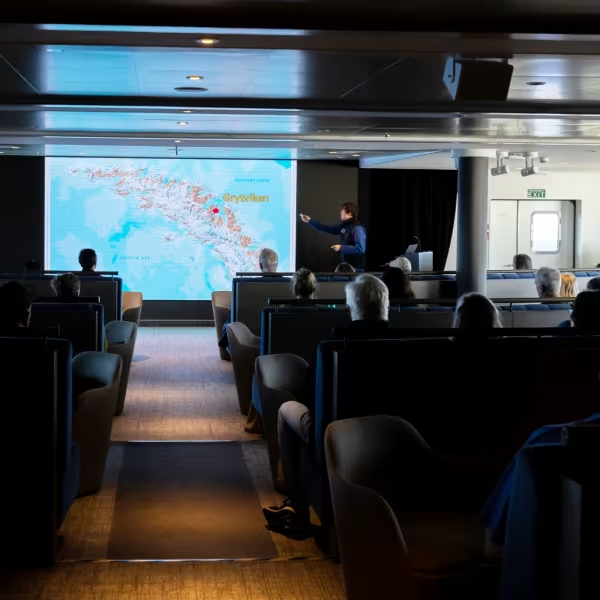
While onboard, your Expedition Team will share their knowledge and expertise through scheduled presentations on ornithology, biology, history, and geology, as well as through informal interactions throughout the voyage. Your at-sea days provide ample opportunity to enjoy the amenities onboard Ultramarine: the Tundra Spa & Sauna, the fitness centre, the library, or one of several lounges where you can enjoy a drink with fellow travelers.
Meals: Breakfast,Lunch,Dinner
Day 6
At Sea: Sailing toward the Norwegian High Arctic
While at sea, be sure to spend time on the outer decks to watch for resident seabirds and migrating birds, or enjoy the views through the floor-to-ceiling windows. We will ride the relatively warm current north—the same current that helps keep the Norwegian coast and west coast of Svalbard relatively temperate.
While onboard, your Expedition Team will share their knowledge and expertise through scheduled presentations on ornithology, biology, history, and geology, as well as through informal interactions throughout the voyage. Your at-sea days provide ample opportunity to enjoy the amenities onboard Ultramarine: the Tundra Spa & Sauna, the fitness centre, the library, or one of several lounges where you can enjoy a drink with fellow travelers.
Meals: Breakfast,Lunch,Dinner
Day 7
At Sea: Sailing toward the Norwegian High Arctic
While at sea, be sure to spend time on the outer decks to watch for resident seabirds and migrating birds, or enjoy the views through the floor-to-ceiling windows. We will ride the relatively warm current north—the same current that helps keep the Norwegian coast and west coast of Svalbard relatively temperate.
While onboard, your Expedition Team will share their knowledge and expertise through scheduled presentations on ornithology, biology, history, and geology, as well as through informal interactions throughout the voyage. Your at-sea days provide ample opportunity to enjoy the amenities onboard Ultramarine: the Tundra Spa & Sauna, the fitness centre, the library, or one of several lounges where you can enjoy a drink with fellow travelers.
Meals: Breakfast,Lunch,Dinner
Day 8
Bear Island: Spectacular Seabird habitat
Situated more than 400 kilometers north of mainland Norway, where the Greenland, Norwegian, and Barents sea converge, Bear Island is the gateway to Svalbard—and home to prolific bird populations. Visiting is a special privilege, as the island is rarely accessed due to its isolation. But it’s well worth the effort.
More than 1.5 million birds flock to Bear Island each year. Hundreds of thousands nest on its near-vertical cliffs, where they can forage in the rich marine environment. If wind and waves allow, it’s possible we’ll offer a Zodiac cruise here along cliffs teeming with birds, with a constant procession coming and going from their nest sites. Little auks, Brünnich’s guillemots, common guillemots, kittiwakes, and northern fulmars are found in prolific numbers, alongside smaller colonies of Atlantic puffins. Many more migratory birds use the island as a critical stopover on their annual journey to the Arctic.
On a map, Bear Island appears small. But by Zodiac, its cliff walls—some rising more than 400 meters (1,310 feet) from the sea—feel colossal. Shorelines are fully exposed to the open ocean, with waves crashing in an astounding display of nature’s power. A few sheltered coves— used by whalers, sealers, explorers, and researchers from the 16th to 21st centuries—may offer us a chance to explore this wild outpost at the gates of Svalbard.
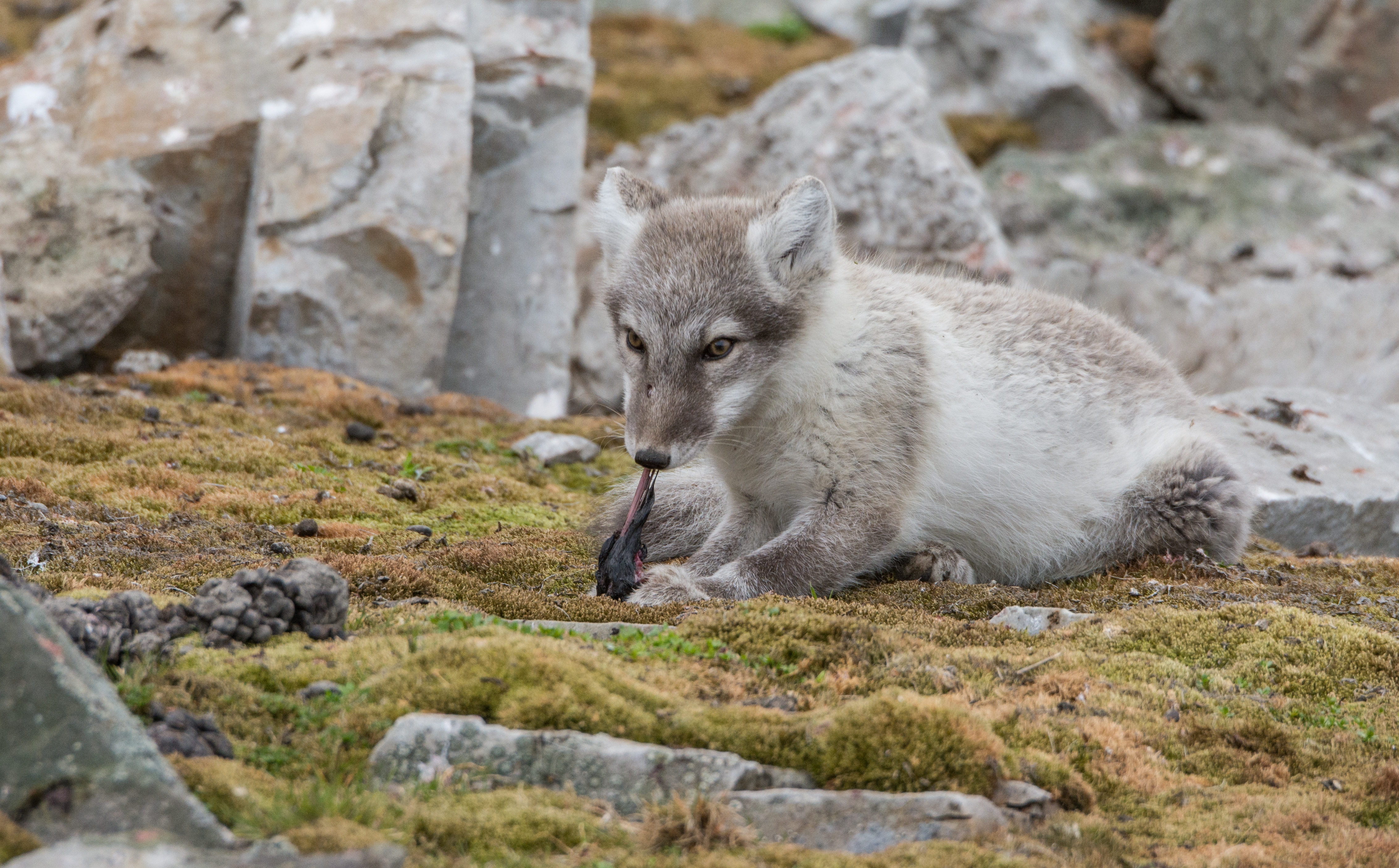
In early May, we may see hints of green emerging from an otherwise snowy landscape. Arctic foxes may be spotted on shore, eagerly awaiting the return of birds and their eggs. If conditions allow, we’ll make landfall, walking where few humans ever do. Remnants of whaling history from the early 17th century, along with more recent traces of meteorological and military activity, can be found here. Still, despite any human presence, the island retains a powerful sense of wilderness.
Meals: Breakfast,Lunch,Dinner
Day 9
Storfjorden: Into the realm of Ice
Our introduction to Svalbard begins in Storfjorden, a wide fjord in southern Svalbard that is often dense with sea ice in May. How far we travel will depend on current ice conditions. Sea ice is dynamic, capable of shifting dozens of kilometers in a day, and we’ll adapt accordingly to find the best opportunities to explore this keystone feature of the Arctic.
We may spend considerable time here, navigating by ship and Zodiac along the ice edge in search of iconic wildlife such as polar bears and walrus, both drawn to the life-giving sea ice. Wildlife movements are unpredictable, so keep your binoculars close—you never know when something may appear.
Your Expedition Team will share insights into the region’s features and history as we explore. If conditions allow, we may even step onto the sea ice itself. Whether on foot or by Zodiac, encountering Your Expedition Team will share insights into the region’s features and history as we explore. If conditions allow, we may even step onto the sea ice itself. Whether on foot or by Zodiac, encountering
Meals: Breakfast,Lunch,Dinner
Day 10
Storfjorden: Into the realm of Ice
Our introduction to Svalbard begins in Storfjorden, a wide fjord in southern Svalbard that is often dense with sea ice in May. How far we travel will depend on current ice conditions. Sea ice is dynamic, capable of shifting dozens of kilometers in a day, and we’ll adapt accordingly to find the best opportunities to explore this keystone feature of the Arctic.
We may spend considerable time here, navigating by ship and Zodiac along the ice edge in search of iconic wildlife such as polar bears and walrus, both drawn to the life-giving sea ice. Wildlife movements are unpredictable, so keep your binoculars close—you never know when something may appear.
Your Expedition Team will share insights into the region’s features and history as we explore. If conditions allow, we may even step onto the sea ice itself. Whether on foot or by Zodiac, encountering Your Expedition Team will share insights into the region’s features and history as we explore. If conditions allow, we may even step onto the sea ice itself. Whether on foot or by Zodiac, encountering
Meals: Breakfast,Lunch,Dinner
Day 11
Hornsund: Mountains, glaciers, and icebergs
After excitedly exploring the open sea ice, we’ll continue toward Svalbard’s west coast for a closer, more intimate encounter with the wilderness of the archipelago. Our first day will be spent in and around Hornsund, a region of striking landscapes, mountains, glaciers and icebergs. Sea ice may still be present, and if so, we’ll watch for wildlife whose lives depend on it for food and survival.
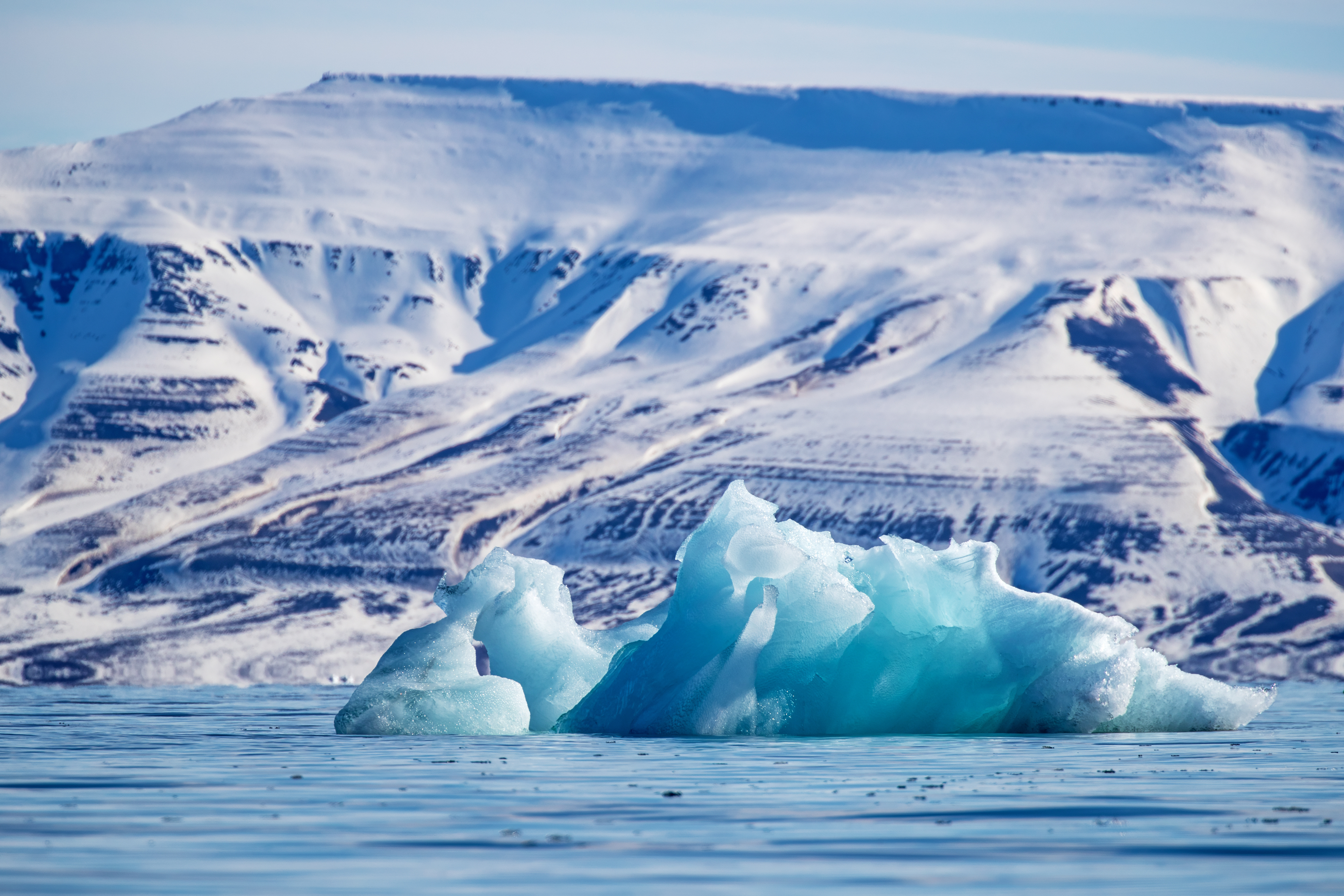
Our aim is to explore the fjord by Zodiac and on foot, though you should expect plenty of snow underfoot. Hornsund is home to several tidewater glaciers, which we hope to approach by Zodiac. Icebergs mix with brash and sea ice, creating a unique crackling soundscape that echoes the rhythm of the Arctic.
Surrounding us, 800 to 1,400-meter (2,625 to 4,593 feet) peaks rise beneath Midnight Sun skies, the kind of scene many envision when dreaming of the High Arctic. Watch for Arctic fox, often seen in the area. Seabird colonies thrive here too, a reminder of the epic migrations these species undertake each spring to reach Svalbard—and again each fall as they return south.
Meals: Breakfast,Lunch,Dinner
Day 12
Bellsund: Fjords, glaciers, birds and snow-capped mountains
Moving north up the coast, we enter another large fjord with many smaller branches, each worth exploring. Bellsund, much like Hornsund, features several tidewater glaciers, which we aim to visit as conditions allow. It’s also home to a remarkable little auk colony, which we’ll approach by Zodiac to observe the early summer activity. Birder or not, it’s hard not to admire these small, resilient birds, perfectly adapted to this seemingly harsh environment.
By late spring, skies over the colony are thick with birds, and we hope to witness the start of this seasonal spectacle. Reindeer are often spotted here too, and we’ll be watching for them. The landscape is iconic—snowcapped peaks layered in all directions, jagged rocky outcrops, and soft, snow-covered plains. If conditions allow, we’ll go ashore, though even in May, snow is likely.
Meals: Breakfast,Lunch,Dinner
Day 13
Krossfjorden: Dramatic tidewater glaciers
Overnight, we’ll push far up the coast to Krossfjorden, just 660 nautical miles from the North Pole. We aim to explore as much of the west coast as possible, as this dramatic fjord lies along a stretch of coastline shaped by a relatively warm current flowing from south to north—creating a surprisingly temperate environment compared to the harsher conditions farther north and east.
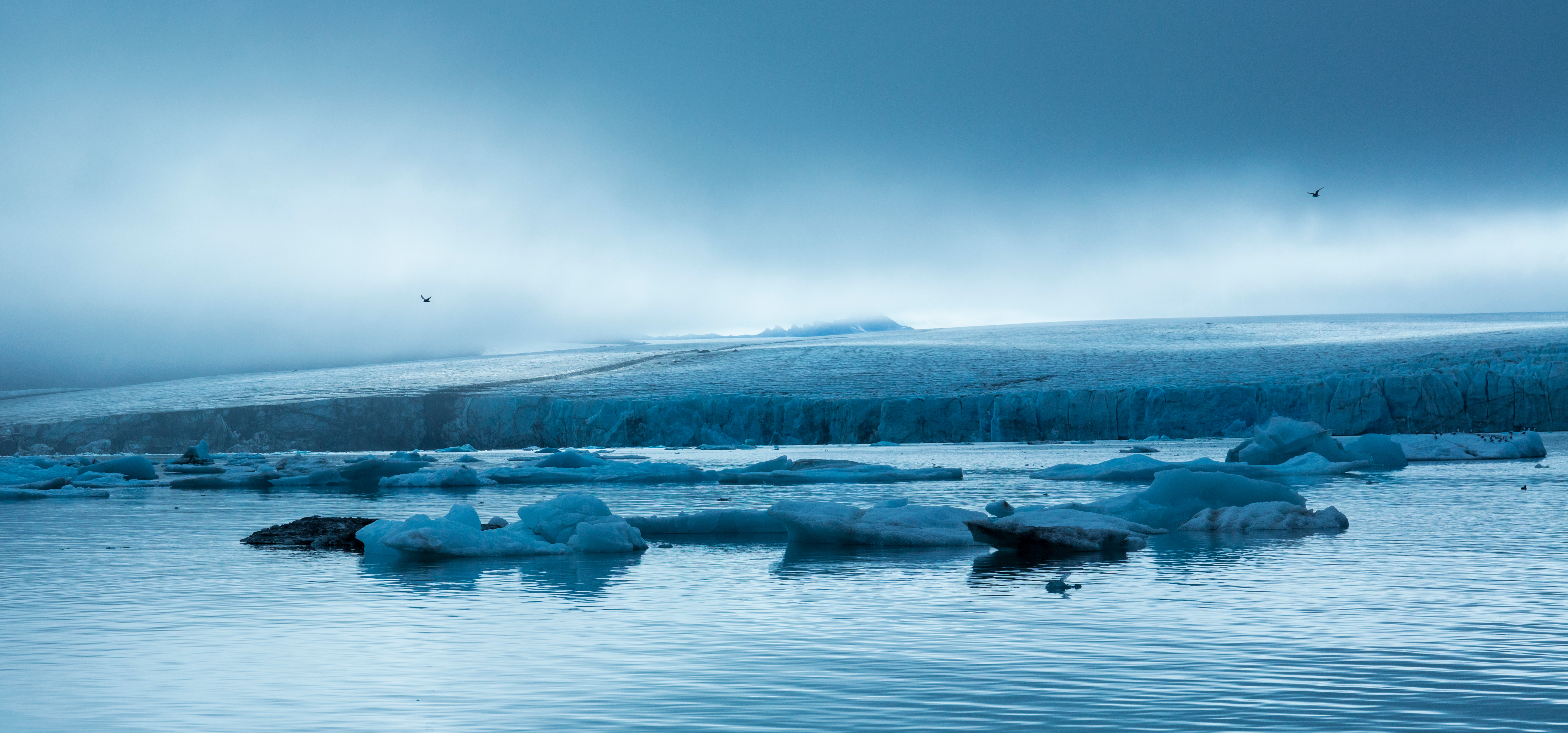
Depending on ice and weather conditions, we hope to venture deep into the fjord to iconic sites such as Lilliehookbreen—a stunning tidewater glacier where seals often haul out on floating ice. The landscapes here blend the gentle and the dramatic—a picture-perfect scene of northern wilderness. To add variety to your photographs, consider experimenting with black and white photography, as the textures of mountains, valleys, snow, ice, and clouds can create striking images.
You may also spot Arctic foxes, whether out on the ice or along the hillsides above, and seabird colonies occupy several of the cliffs deeper in the fjord. Avid birders should keep an eye out for king eiders. While Longyearbyen holds the title of northernmost city in the world, the northernmost settlement—Ny-Ålesund— lies in Kongsfjorden, a southern offshoot of Krossfjorden. Originally a coal mining outpost over a century ago, it now serves as an important year-round research station.
Take a moment to soak in the surroundings and imagine what life must be like when the sun doesn’t set for months. Conversely, consider the challenges of staffing a research station through the long polar night, when the sun doesn’t rise for months.
Meals: Breakfast,Lunch,Dinner
Day 14
Smeerenburgfjorden: Sea ice, walruses, and ghosts of a whaling past
Today marks the northernmost point of our journey—just over 1300 kilometers (800 miles) from the North Pole. That’s comparable to a day-long road trip from St. Louis, Missouri, to Washington, (or Berlin to Milan or Brisbane to Canberra, Australia) yet here, it leads straight into the heart of the Arctic.
As we look north from Smeerenburgfjorden, a striking fjord in northwest Svalbard, we can envision a wilderness covered in sea ice, stretching across the cap of the northern hemisphere all the way to Alaska. It’s theoretically possible to travel in a straight line to Greenland, Canada, Siberia or Alaska without encountering any land in between.
Sea ice may lie just north of the coastline—or dozens of nautical miles offshore—depending on the currents and how the ice is moving at the time. Deeper into the fjord, we hope to land at a known walrus haulout: a sandy beach often covered in snow but used by walruses throughout the year. Arctic terns, among the world’s most impressive migratory species, nest in the fjord, and we may see them flying overhead as we travel by foot or Zodiac. From the walrus haulout, mountain ranges stretch across the fjord, evoking a sense of standing at—or beyond—the frontier.
Evidence of human activity remains: relics of whaling and sealing industries dating back to the 1600s are still visible onshore. Not full-scale factories, but trypots—used to render whale blubber into oil—remain scattered about the area.
Meals: Breakfast,Lunch,Dinner
Day 15
Isfjorden: Mountains, bird cliffs, and wildlife
Our final expedition day will likely be spent in or around Isfjorden, the fjord system where Longyearbyen is located. The mountainous, glaciated scenery continues here, and we’ll spend much of the day exploring the coastlines—likely among seabirds. Isfjorden can also be an excellent place to spot whales, some of which may have arrived at their summer feeding grounds by now.
Spend time on the outer decks taking in the scenery— you may spot various species of marine life. Our main goal today is to visit Alkhornet, the iconic seabird colony and also a good place to look for reindeer and Arctic fox. If conditions allow, we’ll make landfall, giving ourselves one last chance to set foot in this far northern wilderness. As we prepare to leave, we can appreciate the little auks, perfectly at home beneath the horn-shaped mountain overlooking the fjord, and the reindeer patiently awaiting summer’s abundant vegetation. They’ll remain here for a while, going about their daily lives in a vast wilderness that stretches in all directions for hundreds—if not thousands—of nautical miles.
Meals: Breakfast,Lunch,Dinner
Day 16
Disembark in Longyearbyen
The moment has come to say farewell. Time permitting, you may be able to explore the frontier-style settlement of Longyearbyen before the group transfer to the airport for the charter flight to Helsinki. Upon arrival in Helsinki, you’ll be transferred to your hotel for the night. Both are included in the Charter Flight & Hotel Package.
Meals: Breakfast
Day 17
Depart Helsinki
After breakfast, make your way independently to the airport for your onward flight home, or stay to explore Finland’s culturally-rich capital on your own.
Meals: Breakfast
What’s included
What’s not included
Additional information
Food
All meals while on the ship are included.
Typical meals
The ship’s galley offers good-quality service and cuisine throughout, with excellent chefs preparing international menus, including vegetarian dishes. If there is one constant on board, it is that you’ll enjoy delicious meals. While meal times may change due to landings and wildlife sightings, you’ll always be served three well-prepared meals per day. Vegetarians and vegans can be well catered for on this adventure – please inform us before departure of any special dietary requests so our local team can be well prepared.
Breakfast: Buffet style – unlimited tea and coffee, a selection of fruit juices, hot options including bacon and eggs or omelettes, a selection of bread and toast and jam/honey/marmalade, fruit and cereal.
Lunch: Three-course set meal or the occasional buffet or barbecue.
Dinner: Three courses with a starter of soup, salad or anti-pasto, a choice of three mains with at least one vegetarian and one seafood option and a dessert of sweet pudding or ice cream or fruit, tea and coffee.
Drinks: Complimentary coffee, tea, cocoa and water stations are available around the clock, while soft drinks and juices are available during meals and when the bar is open—all included in the cost of your package. Enjoy complimentary select beer, wines and select cocktails during bar service hours and dinner as part of the “Raise a Glass and Stay Connected Free” program. Premium wines and champagne are available at extra cost and can be billed to your shipboard account. The well-stocked bars on the ship are open late morning, afternoon and evening, though hours may occasionally change to accommodate the expedition schedule.
Jarlshof: Prehistoric and Norse Settlement
Walk through layered time at Jarlshof, a coastal complex revealing Neolithic to Viking layers side by side. Trace circular broch foundations, peer into Iron Age roundhouses, and step by Viking longhouse walls set above a sandy bay.
Hear how shifting shorelines and storm-driven sands preserved this extraordinary tapestry, and see the Old House of Sumburgh—a 15th-century laird’s residence—rising amid ruins thousands of years older, linking power, trade, and seafaring across the North Atlantic.
Bear Island Zodiac Cruise beneath Seabird Cliffs
Cruise by Zodiac along Bear Island (Bjørnøya), gateway to Svalbard, where near-vertical walls host an estimated 1.5 million seabirds. Glide beneath echoing ledges as little auks and Brunnich’s guillemots shuttle to the open sea, and surf combers detonate against cathedral-high buttresses.
When conditions permit, pause in sheltered coves once used by whalers and meteorological teams, reading the island’s austere history in scattered artifacts and the raw geology of a lone rock fortress in three converging seas.
Storfjorden Sea-Ice Edge Navigation & Wildlife Watch
Navigate along the shifting white frontier of Storfjorden’s pack, where Zodiacs and ship position at the sea-ice edge to search for polar bears and walrus drawn by the ice’s bounty. Your guides interpret leads, floes, and wind-pressed pressure ridges.
When safe and feasible, you may step onto the sea ice (weather permitting) to feel the frozen surface underfoot. Learn how sea ice underpins Arctic life, from algae on its underside to seals, ivory gulls, and roaming bears above.
Hornsund Glacier-Front Exploration
Explore Hornsund by Zodiac and on guided shore walks amid tidewater glaciers, where bergs calve into teal bays and belts of crackling brash ice whisper against the hull. Snow-draped peaks rise into Midnight Sun skies.
Naturalists explain the flow of Svalbard’s valley glaciers, the glacier-fjord ecology that attracts Arctic fox, and the acoustic signatures of melting, popping ice—an otherworldly soundtrack to a high-latitude landscape shaped by frost and time.
Bellsund Little Auk Colony & Reindeer Country
Venture into Bellsund to approach a bustling little auk colony by Zodiac, where smoky flocks zip between nesting scree and open water. Scan snow-streaked valleys for Svalbard reindeer browsing emerging tundra patches.
Your team reveals why these compact seabirds thrive in cool upwelling zones and how reindeer adapt to sparse forage and deep winter snows, thriving across a fjordscape of rocky outcrops, braided meltwater, and lingering sea ice.
Krossfjorden & Lilliehöökbreen Tidewater Glacier
Cruise deep into Krossfjorden to the dramatic front of Lilliehookbreen, where a serrated ice wall calves into a lagoon mottled with floes. Look for seals hauled out on ice floes and cliff-nesting seabirds dotting shadowed crags.
Expedition photographers share tips for rendering textures of snow and rock—from slate-dark ridges to veined blue seracs—while guides unpack the ocean current that keeps this coast relatively mild despite its latitude.
Smeerenburgfjorden Walrus Haulout & Whaling Relics
Come ashore in Smeerenburgfjorden at a known walrus haulout, observing hulking tusked bulls piled on snowy sand. Keep respectful distance as animals stir, snort, and shuffle between rest and sea.
Walk with your guides to scattered trypots from the 1600s, stark reminders of the Spitsbergen whaling era. The juxtaposition of living giants and abandoned industry frames a conversation about conservation, climate, and the shifting human footprint in the Arctic.
Isfjorden’s Alkhornet Bird Cliffs & Wildlife Landing
Land below Alkhornet, the horn-shaped limestone massif that anchors a thriving seabird colony. Follow your guide across tundra where Arctic fox and Svalbard reindeer often forage under towering cliffs and looping kittiwakes.
Learn how guano enriches meadows and why cliff geometry funnels wind and snow, shaping micro-habitats. The broad vistas of Isfjorden—Svalbard’s largest fjord system—offer a final, sweeping sense of scale at the edge of the High Arctic.
Expert Lectures & Naturalist Briefings
Learn from polar experts in engaging talks on ornithology, glaciology and Arctic history, complemented by on-deck spotting and informal Q&A. Sessions are tailored to the regions you explore—from Scottish Neolithic heritage to Svalbard’s sea-ice ecology.
Evening daily recap gatherings synthesize wildlife sightings, weather patterns, and next-day plans, connecting scientific insight to what you’ve just experienced on shore and by Zodiac.
On-Deck Wildlife Watching & Photography Sessions
Spend focused time on outer decks to photograph massive bird colonies, ice-fringed peaks, and marine mammals alongside your expedition team. Receive pro tips on composition and exposure to capture fast-moving birds and shifting light over sea ice.
Guides help identify distant silhouettes and reading of sea state, clouds, and light—skills that elevate your images and deepen your understanding of Arctic and North Atlantic wildlife behavior.
Sea Kayaking & Paddling Program
Slip into sheltered bays and along glacier-carved shores on a guided sea kayaking or sit-on-top paddling excursion, moving quietly as seabirds wheel and bergy bits chime in the swell. This low-impact activity reveals intimate angles of cliffs, beaches, and ice.
Available at additional cost and bookable on tour, this program is weather- and ice-dependent, with expert guides managing group size, safety, and routing to make the most of calm windows and scenic waters.
Orkney’s Neolithic Heart: Skara Brae & Bay of Skaill
Discover the Atlantic-facing antiquity of Orkney as you visit Skara Brae, a perfectly preserved village dating to 3180 BCE within the Heart of Neolithic Orkney World Heritage Site. Trace stone passages between dwellings and gaze toward the surf-lined Bay of Skaill, where seabirds wheel over low dunes and green pastures.
Unpack daily life in these stone-built homes from before the Egyptian pyramids as your Expedition Team reveals ingenious hearths, storage cells, and sea-buffeted settlement patterns that endured for millennia in the islands’ cool, windy climate.
Orkney Seabird Colonies & Coastal Walks
Explore Orkney’s rugged headlands on a guided coastal walk or Zodiac cruise, scanning cliffs and sea stacks to watch for Atlantic puffins, kittiwakes, razorbills, and Arctic terns. Waves of the North Atlantic boom below as fulmars ride the wind and gannets spear the water.
Your naturalists decode flight patterns, breeding cycles, and migration routes that draw these species north each spring, explaining how nutrient-rich currents and kelp forests feed a living web from plankton to apex birds and marine mammals.
Shetland’s Sumburgh Head Bird Cliffs & Lighthouse
Stand atop or cruise beneath Sumburgh Head, where 100-metre cliffs drop to a churn of tide lines and feeding flocks. Scan ledges alive with puffins and guillemots, while kittiwakes etch white arcs across the wind. A historic lighthouse crowns the headland.
Guides illuminate Shetland’s meeting of Norse and Scottish cultures and why these basalt ramparts host such dense colonies. Keep watch for minke whales or white-beaked dolphins drawn close by bait-rich currents.