Your itinerary
Day 1
Day 1: Siem Reap
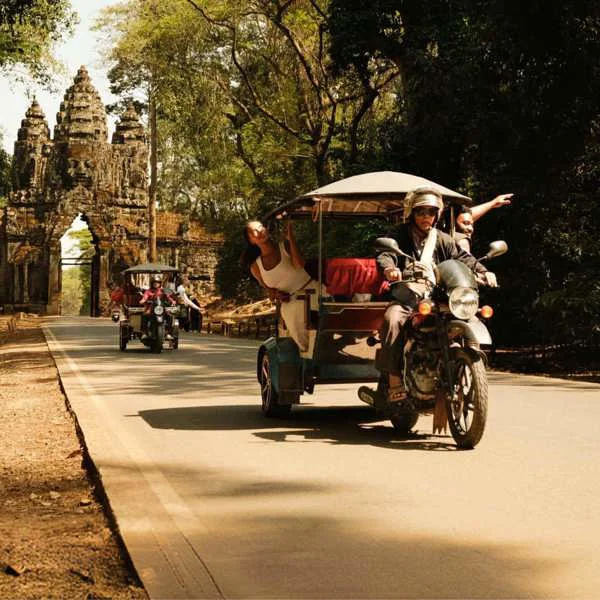
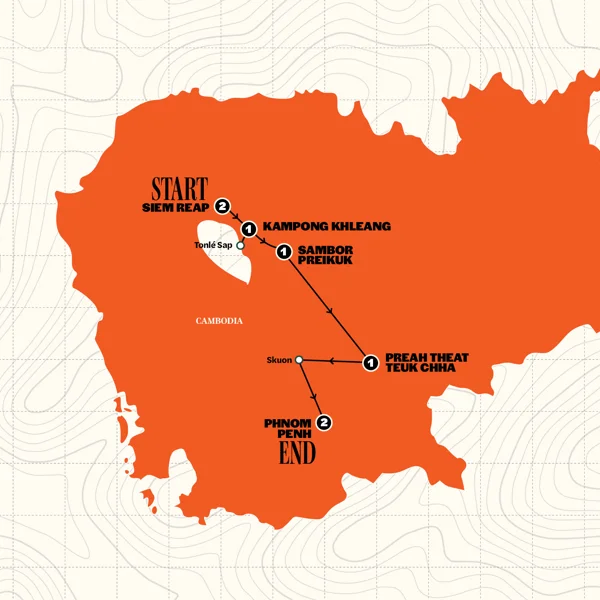
Meet your crew and Trip Manager, then ride tuk-tuks (remorques) past rice fields to a local Khmer home for a BBQ dinner and sunset. Return to Siem Reap by tuk-tuk.
Meals: Dinner
Day 2
Day 2: Siem Reap
Ride to Angkor Wat for sunrise and eat a packed breakfast. Continue by tuk-tuk to Ta Prohm. The rest of the day is free in Siem Reap.
Meals: Breakfast
Day 3
Day 3: Siem Reap to Kampong Khleang
Ride tuk-tuks along back-country roads from Siem Reap to Kampong Khleang. Explore the stilt-house village with a Local Guide, meet locals, and learn about the community’s connection to Tonlé Sap Lake. In the afternoon, take a boat ride across the lake past the floating village as the sun sets. Return to the homestay for dinner and an evening by the water.
Meals: Breakfast,Lunch,Dinner
Day 4
Day 4: Kampong Khleang to Sambor Prei Kuk
Visit the local fish market at 4:00, then have breakfast at the homestay and ride about 80 km by tuk-tuk. Stop at Kampong Kdei Bridge (Spean Praptos), then visit Sambor Prei Kuk’s ancient pre-Angkorian temples. Visit a noodle-making village to see how Khmer noodles are made and sample them; stop at local markets and, if time allows, a school or pagoda. Back at the homestay, you can help prepare dinner before an evening around the bonfire.
Meals: Breakfast,Dinner
Day 5
Day 5: Sambor Prei Kuk to Preah Theat Teuk Chha
After breakfast, explore Sambor Prei Kuk, a UNESCO World Heritage site and former capital of the Chenla Kingdom, on forest paths among the ancient ruins. Have lunch at Santuk Silk Farm and learn about local silk weaving. Swim, then explore the forest-hidden Preah Theat Teuk Chha temple. In the evening, have dinner at the guesthouse and join a tuk-tuk party.
Meals: Breakfast,Lunch,Dinner
Day 6
Day 6: Preah Theat Teuk Chha to Phnom Penh via Skuon
Start at 7:00 with a light breakfast, then travel toward Phnom Penh. Detour to Skuon (Spider Village), where you can see exotic fruits and local snacks and optionally try deep-fried tarantulas. Arrive in Phnom Penh in the evening and be dropped at your accommodation.
Meals: Breakfast,Lunch
Day 7
Day 7: Phnom Penh
Explore Phnom Penh, starting at Wat Phnom, then visit Tuol Sleng Prison and Choeng Ek (the Killing Fields) before returning to the city. The evening is free.
Meals: Breakfast
Day 8
Day 8: Phnom Penh
Have breakfast, say goodbye to the crew, and depart.
Meals: Breakfast
What’s included
What’s not included
Additional information
Dining Summary
- 4 Dinner (D)
- 7 Breakfast (B)
- 3 Lunch (L)
FAQs
- Siem Reap: This trip goes very local — tuk tuks, dusty roads, rural stays and Cambodia up close. You’ll travel with experienced tuk tuk drivers (one of whom will be our local guide), a Contiki Trip Manager and historical guides at key sites such as Angkor Wat. Expect simple homestays with fans, mosquito nets, shared facilities, no air con and no hot water. Some stays step up with private rooms, private facilities and air con.
It’s not the polished private-vehicle version. It’s more real, more local, and made for travellers who are up for the adventure. - Siem Reap: You’re welcome to bring one suitcase with a max limit of 20kgs.Your main bag travels separately by van. We recommend bringing a small backpack to use as a daypack whilst on tuk tuks. Overnight bag needed for Kampong Khleang homestay.
- Siem Reap: Your safety is our top priority. All drivers are fully licensed and complete comprehensive safety training. Your guides will also provide a detailed pre-tour safety briefing and are trained in safety management and first aid.
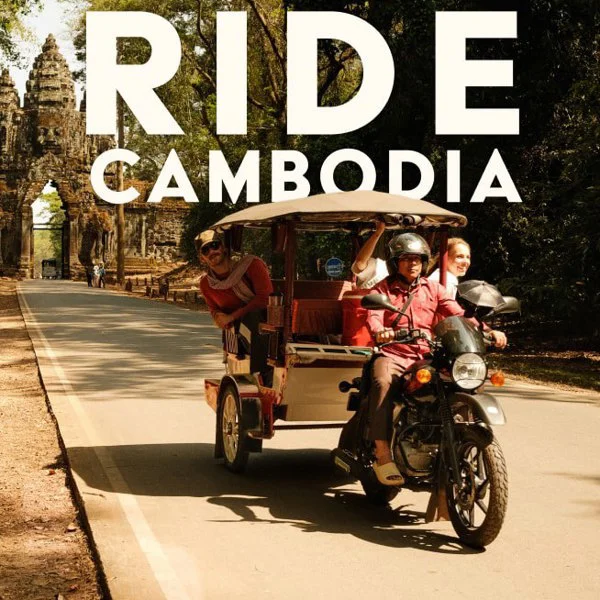
- Siem Reap: You’ll travel by tuk tuk (or remorque, as they’re commonly known in Cambodia). Expect open-air rides, local roads and a proper street-level view of the country.
- Siem Reap: Simple, traditional and a great way to experience local life. In Kampong Khleang, you’ll stay in a stilted homestay above the water, sleeping in a large shared room with mattresses, mosquito nets and curtained-off spaces for privacy. There’s no hot water or air con, but the cold showers are usually welcome in the heat. Meals are served family-style, and there’s a large front deck with hammocks and village views where you can relax.
In Sambor Prei Kuk, you’ll stay across several neighbouring family-run homestays in the village. These stilted homes are built on land and have smaller room set-ups, with shared group meals hosted together at one homestay. Bathroom facilities vary by house, and hot water may or may not be available and there’s no air con. So, expect a more rustic stay than a hotel — but one that’s warm, welcoming and full of character. - Siem Reap: Yep, except on nights 3 and 4. Because these nights are in local homestays, single and twin room supplements don’t apply. Accommodation will be shared and set up in the local homestay style.
- Siem Reap: Pack light, loose clothing for the heat, plus comfy shoes for exploring temples and village paths. You’ll also want sun protection, mosquito repellent, a reusable water bottle, earplugs (to block out the early morning homestay buzz), and a scarf or mask for those dusty tuk tuk rides. A light layer or modest clothing for temple visits is a smart move too — shoulders and knees covered, easy win.
Included Experience
- Siem Reap: Kick things off tuk-tuk style as we cruise through local markets, rice fields, and rural scenery on the way to dinner. This first open-air ride sets the tone for the journey ahead.
- Siem Reap: Dinner comes with a warm welcome at a local Khmer home. We’ll tuck into freshly prepared BBQ favourites, crack open a cold local drink, and watch the sun dip over the fields — an easy, authentic intro to Cambodian hospitality.
- Siem Reap: Yes, it’s an early start — and yes, it’s worth it. We’ll head straight inside Angkor Wat as the sun rises, then head into Ta Prohm while it’s still quiet, where jungle roots wrap around ancient stone and the atmosphere does all the talking.
- Kampong Khleang: Step into village life in Kampong Khleang, one of the largest stilted communities on Tonlé Sap Lake. With a Local Guide, you’ll meet fishermen, see traditional fishing gear, and learn how daily life shifts with the seasons and the water.
- Kampong Khleang: Golden hour on the sparkling water? Yup. We’ll head out on a boat across Tonlé Sap Lake, gliding past floating fishing houses as the sun sets over the rice fields. Wanna level it up? Grab a drink from the homestay and settle in for a seriously relaxing few hours in the countryside.
- Kampong Khleang: Get up with the village and head straight to the fish market, where the freshest catches are traded in a fast-moving local ritual. Early start, big energy, and a proper glimpse into daily life here.
- Kampong Khleang: Take a quiet moment as we stop by at a peaceful Buddha temple in a Tonlé Sap village. Best place to learn about the role temples play in everyday Cambodian life.
- Kampong Khleang: Step onto one of the last remaining stone bridges from the Khmer Empire. Built centuries ago, Spean Praptos is an impressive reminder of Cambodia’s ancient engineering and enduring history.
- Kampong Khleang: Visit a rural Khmer village where noodle-making is a way of life. You’ll be welcomed into a family home, learn how noodles are made from scratch, get hands-on, and of course, taste the results — simple, local, and seriously good.
- Sambor Prei Kuk: Explore the ancient temple complex of Sambor Prei Kuk, once the capital of the Chenla Kingdom. Get ready to be surrounded by forest, far from the crowds.
- Preah Theat Teuk Chha: Lunch comes with a story at Santuk Silk Farm, where local women weave silk using traditional techniques. So, chomp down on delish local cuisine and learn how this craft supports the surrounding community.
- Preah Theat Teuk Chha: After a day on the road, it’s time to reset. Take a refreshing swim surrounded by nature and soak up a slower moment before the next stop.
- Preah Theat Teuk Chha: Forest paths, ancient walls, and a whole lot of calm — discover this serene temple is well off the tourist trail.
- Skuon: Welcome to Spider Village. Check out local snacks, exotic fruits, and the famous deep-fried tarantulas. Totally optional. Do it for the bragging rights?
- Wat Phnom: We’ll head to Wat Phnom, the hilltop temple at the heart of the capital. Calm, meaningful, and a key part of Phnom Penh’s story.
- Phnom Penh: Step inside Tuol Sleng, a former school turned prison during the Khmer Rouge regime. It’s confronting, but it matters — and it adds important context to everything you’ve seen so far.
- Phnom Penh: Just outside the city, we’ll visit Choeng Ek. A space to pause, reflect, and better understand Cambodia’s recent history before returning to the rhythm of Phnom Penh.
Operated By
Contiki
Preah Theat Teuk Chha Nature Swim
Take a refreshing swim near Preah Theat Teuk Chha, surrounded by the area’s natural scenery. It is a chance to cool off and enjoy a slower, more relaxed side of rural Cambodia.
The swim adds a welcome change of pace to days spent exploring villages and temples by tuk-tuk. Bring swimwear if you would like to get in the water, or simply enjoy the peaceful setting with the group.
Siem Reap Tuk-Tuk Ride & Khmer Home BBQ
Ride an open-air Cambodian tuk-tuk past local markets, rice fields and rural homes to a Khmer family’s house near Siem Reap. Share a freshly prepared BBQ dinner with your hosts and settle in as the light softens over the fields.
Known locally as a remorque, the tuk-tuk offers a street-level view of everyday life. The home-cooked meal and rural sunset make this a personal introduction to Cambodian hospitality.
Angkor Wat Sunrise Visit
Enter Angkor Wat at sunrise and watch the first light reach its towers, with reflections gathering in the temple pools. Explore this vast Khmer monument with the historical insight of a local guide.
Built in the 12th century and originally dedicated to the Hindu god Vishnu, Angkor Wat later became a Buddhist place of worship. Its galleries, carved reliefs and distinctive towers reveal the ambition of the Khmer Empire.
Ta Prohm Jungle Temple
Explore Ta Prohm while the temple grounds are still quiet. Walk among stone corridors and courtyards where tree roots clasp ancient walls and the surrounding forest is never far from view.
Founded in the late 12th century as a Buddhist monastery, Ta Prohm preserves a striking relationship between Khmer architecture and the jungle. Its weathered doorways and root-wrapped masonry offer a different perspective on the Angkor temples.
Kampong Khleang Guided Village Visit
Explore Kampong Khleang with a Local Guide, meeting residents and seeing the fishing gear used by this Tonlé Sap community. Walk among towering stilt houses built to accommodate the lake’s changing water levels.
Daily routines here are closely tied to the seasons: waterways, livelihoods and the space beneath homes transform as the water rises and recedes. Conversations with local people give the village visit its depth.
Tonlé Sap Sunset Boat Ride
Cruise Tonlé Sap Lake by boat near Kampong Khleang, passing floating fishing houses as evening light spreads across the water. From the boat, take in the scale of Cambodia’s great freshwater lake and the communities built around it.
Tonlé Sap’s seasonal rise and fall shapes fishing, housing and travel throughout the region. The sunset over the lakeside landscape brings a quieter view of that close relationship between people and water.
Kampong Khleang Early-Morning Fish Market
Visit Kampong Khleang’s fish market before sunrise, when the day’s catch is bought, sold and carried away. Watch traders at work and experience the brisk pace of a market serving a lakeside community.
Fishing is central to life around Tonlé Sap, and the market offers a direct glimpse of the work behind local meals and livelihoods. The early hour is part of the experience: this trade is well underway while the village is waking.
Tonlé Sap Village Buddha Temple
Visit a village Buddhist temple near Tonlé Sap and spend a quiet moment in a place woven into local life. Learn about the role temples play in Cambodian communities, beyond their architecture and religious images.
For many families, the local pagoda is a place for worship, festivals and gathering together. This small-scale visit offers a thoughtful contrast to the region’s grand ancient monuments and a closer look at living traditions.
Spean Praptos Khmer Bridge
Step onto Spean Praptos, also known as Kampong Kdei Bridge, a surviving stone bridge from the Khmer Empire. Take in its long row of arches and the craftsmanship that has allowed it to endure for centuries.
The bridge formed part of the historic route linking Angkor with territories to the southeast. Its laterite construction makes this a tangible encounter with Khmer engineering beyond the better-known temples.
Khmer Noodle-Making Village Experience
Visit a rural Khmer family home to learn how traditional noodles are made. See the work involved in preparing them from scratch, try your hand at the process and taste the finished noodles.
Khmer rice noodles are a familiar part of everyday Cambodian cooking. Watching the technique in a home rather than a restaurant puts the skill, repetition and shared knowledge behind this staple into focus.
Sambor Prei Kuk Temple Exploration
Walk forest paths through Sambor Prei Kuk, discovering brick temples and ancient ruins among the trees. Explore this UNESCO World Heritage site at a pace that leaves room to notice its carvings, weathered walls and woodland setting.
Dating from the pre-Angkorian period, Sambor Prei Kuk was associated with Isanapura, a capital of the Chenla Kingdom. Its relatively quiet grounds offer a distinctive view of Cambodian history before Angkor’s rise.
Santuk Silk Farm Visit & Lunch
Visit Santuk Silk Farm to see local women weaving silk using traditional techniques. Learn about the craft and its connection to the surrounding community while enjoying a lunch of local food.
Silk weaving calls for patient, precise work, from preparing threads to building patterns on the loom. Seeing the makers at work gives the finished cloth a human story and makes the meal more than a roadside lunch stop.
Preah Theat Teuk Chha Forest Temple
Explore the forest-hidden Preah Theat Teuk Chha temple, following paths toward ancient walls set away from Cambodia’s busiest visitor sites. Spend time with the details of the ruins and the stillness of their wooded surroundings.
This quieter temple visit offers space to appreciate historic Khmer stonework without the crowds associated with Angkor. The walk through the forest is part of its appeal, bringing the landscape into the experience of the site.
Skuon Spider Village Food Stop
Explore the food stalls of Skuon, nicknamed Spider Village, where vendors display local snacks, exotic fruits and the town’s famously crisp-fried tarantulas. Look around at your own pace and decide whether to try a taste.
Skuon’s distinctive street-food reputation makes this a memorable introduction to a local market tradition. Tasting a tarantula is entirely your choice; any snacks you choose to buy are at your own expense.
Wat Phnom Temple Visit
Visit Wat Phnom, the hilltop temple at the heart of Cambodia’s capital. Explore this place of worship and observe a quieter side of Phnom Penh amid the surrounding city streets.
The temple is closely linked to the city’s founding story and remains an important place for local devotion. Its leafy hill and religious setting offer context for Phnom Penh’s name as well as its continuing spiritual life.
Tuol Sleng Genocide Museum
Step inside Tuol Sleng Genocide Museum, housed in a former school that became the Khmer Rouge’s S-21 prison. Explore the site and its exhibits to understand the experiences of people imprisoned there.
This is a confronting visit, approached with care and respect. The preserved classrooms and documented histories bear witness to Cambodia’s recent past and provide essential context for understanding the country today.
Choeung Ek Genocidal Center
Visit Choeung Ek, the memorial site outside Phnom Penh often called the Killing Fields. Walk through the grounds and take time to reflect on the people killed there during the Khmer Rouge period.
The memorial and the site’s history make this a solemn, important experience rather than conventional sightseeing. Visiting with respect offers a deeper understanding of Cambodia’s recent history and the enduring significance of remembrance.