Your itinerary

Day 1
Adventure starts in Porto
Begin your adventure in Porto, the UNESCO-listed city where the River Douro meets the Atlantic and port wine was born. Depending on the time of your arrival in Porto, your leader will arrange a short orientation tour in the historic centre.Around 6pm, say olá to your tour leader and fellow travellers, when we gather as a group to learn more about the adventures ahead.Your tour leader then ensures a big Portuguese welcome by arranging a group dinner.Want to explore Porto further? Secure pre-tour hotel nights through your sales representative.
Meals: Dinner
Day 2
Transfer to Matosinhos • Walk until Vila do Conde • To Viana de Castelo
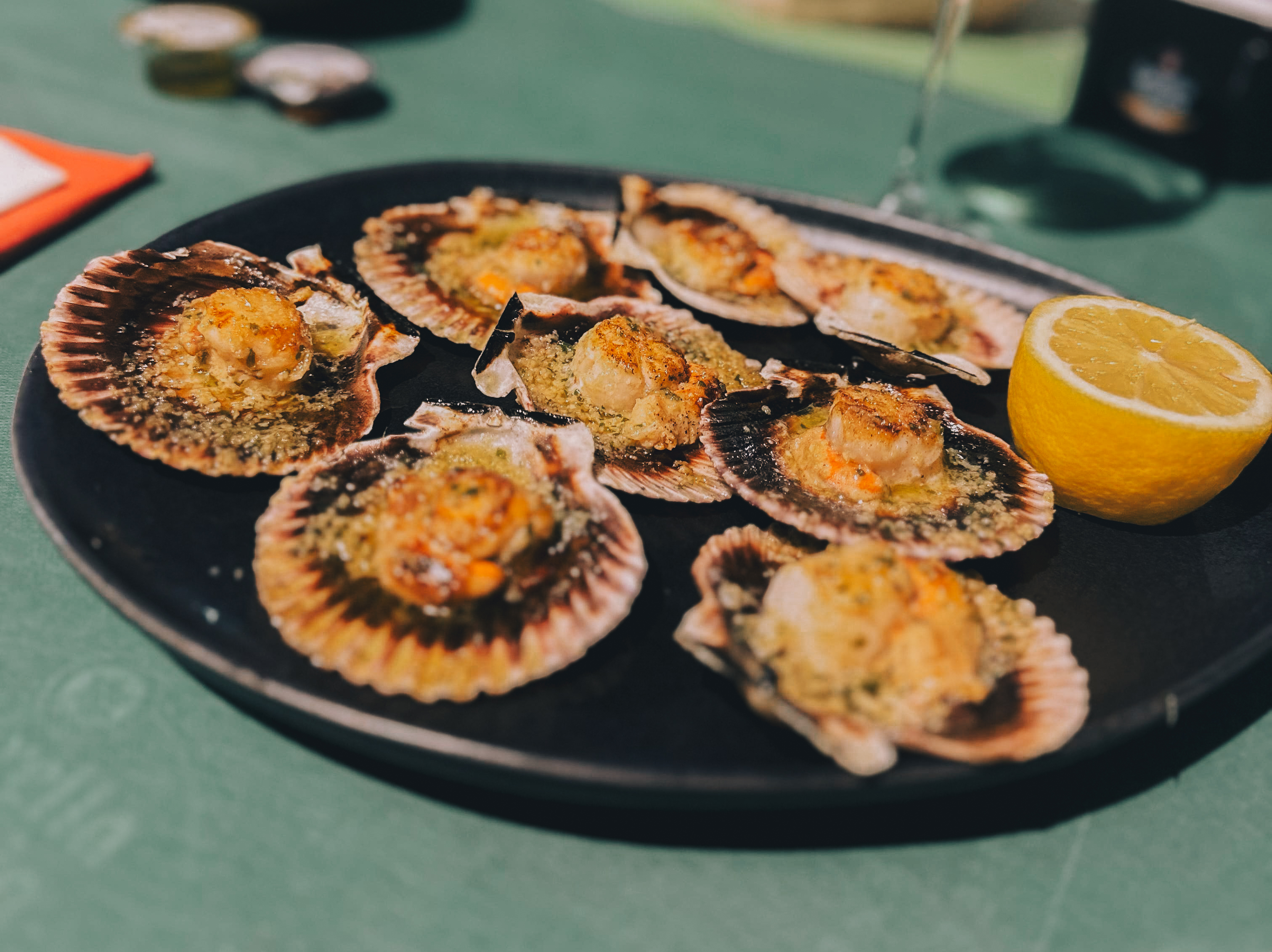
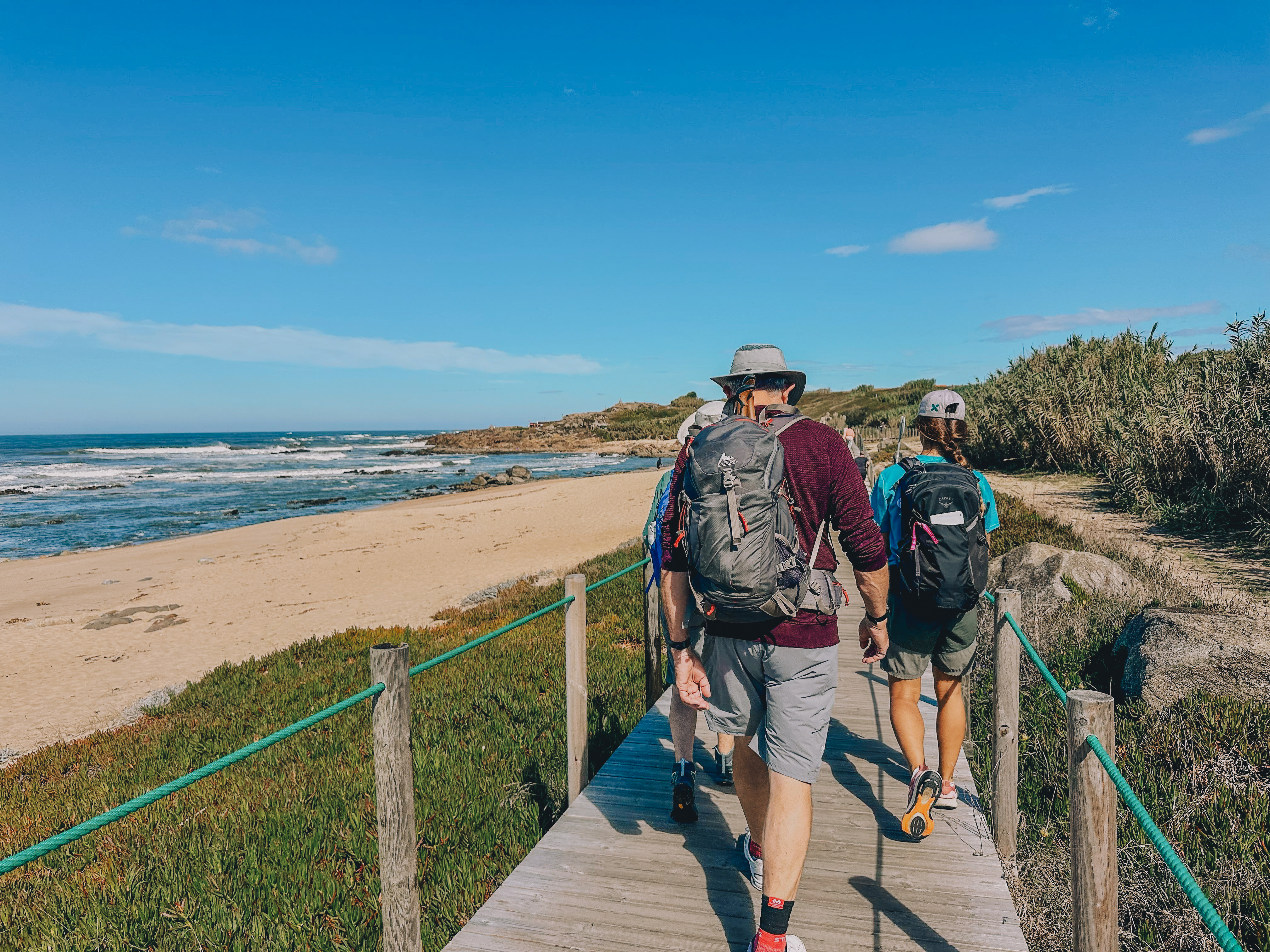
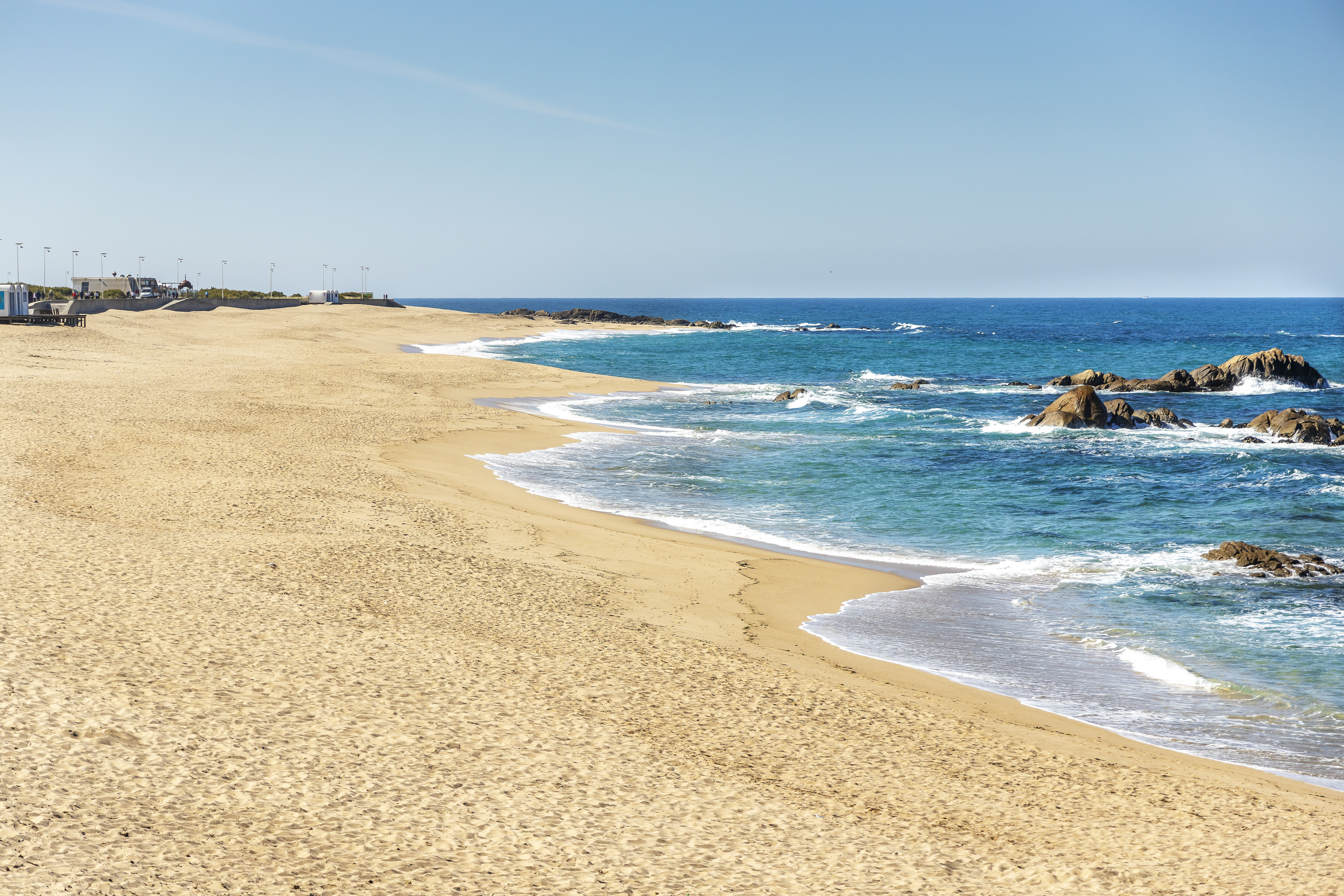
After breakfast, we transfer (approximately 30 minutes) up the coast and begin our walk in the fishing town of Matosinhos.This section is part of the Litoral Camino, which follows the Atlantic coastline along a series of boardwalks and promenades. We stop for lunch along the coast with a chance to try the local fish.After, we carry on walking next to the sea until we reach the coastal town of Vila do Conde where we finish walking and have a transfer (approximately 45 minutes) to the picturesque medieval city of Viana de Castelo, our destination for the night.We can walk around the medieval city centre where we see the cathedral and church and enjoy a drink by the old port.
Meals: Breakfast
Day 3
Walk to Caminha • To Valenca
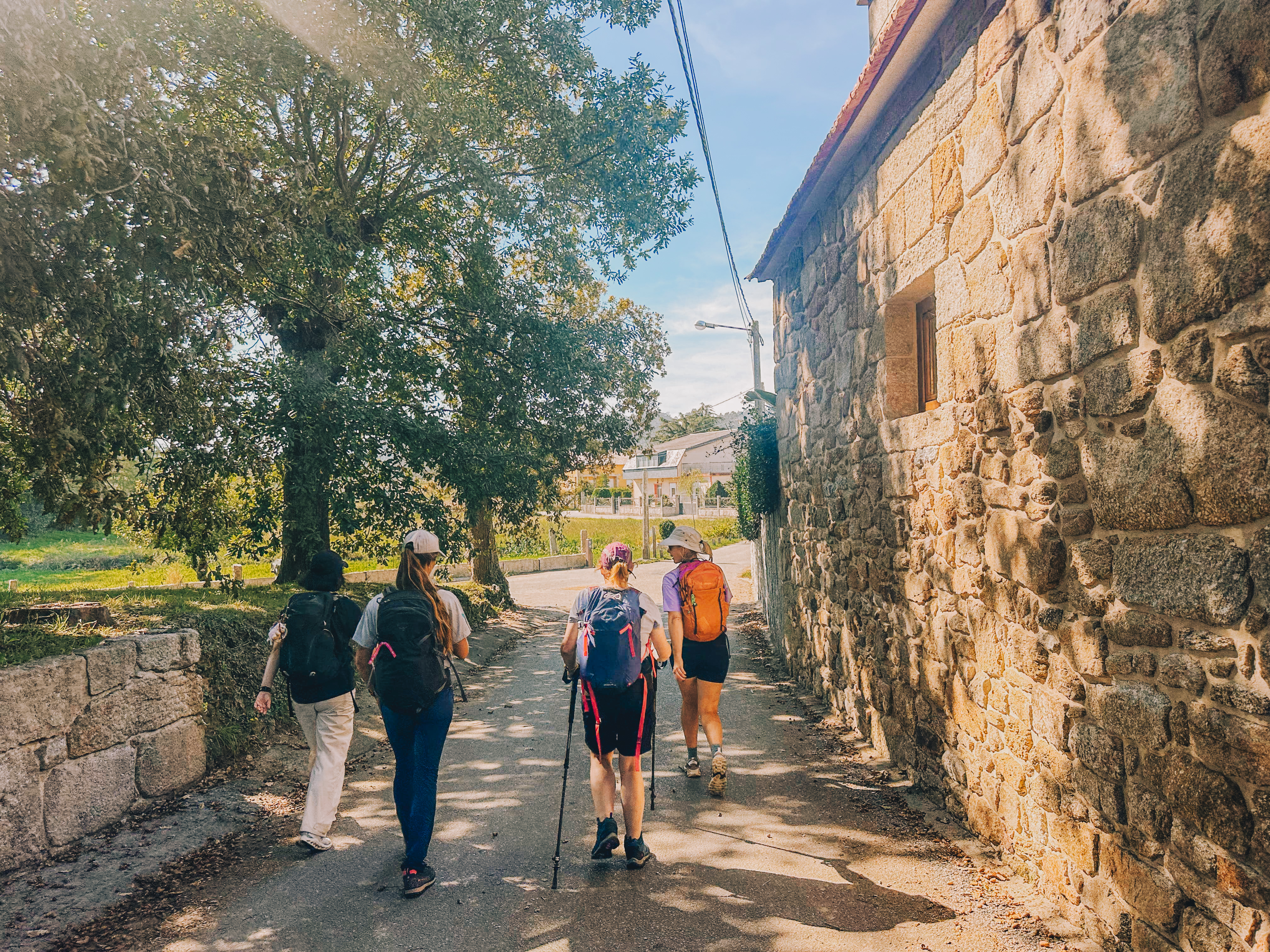
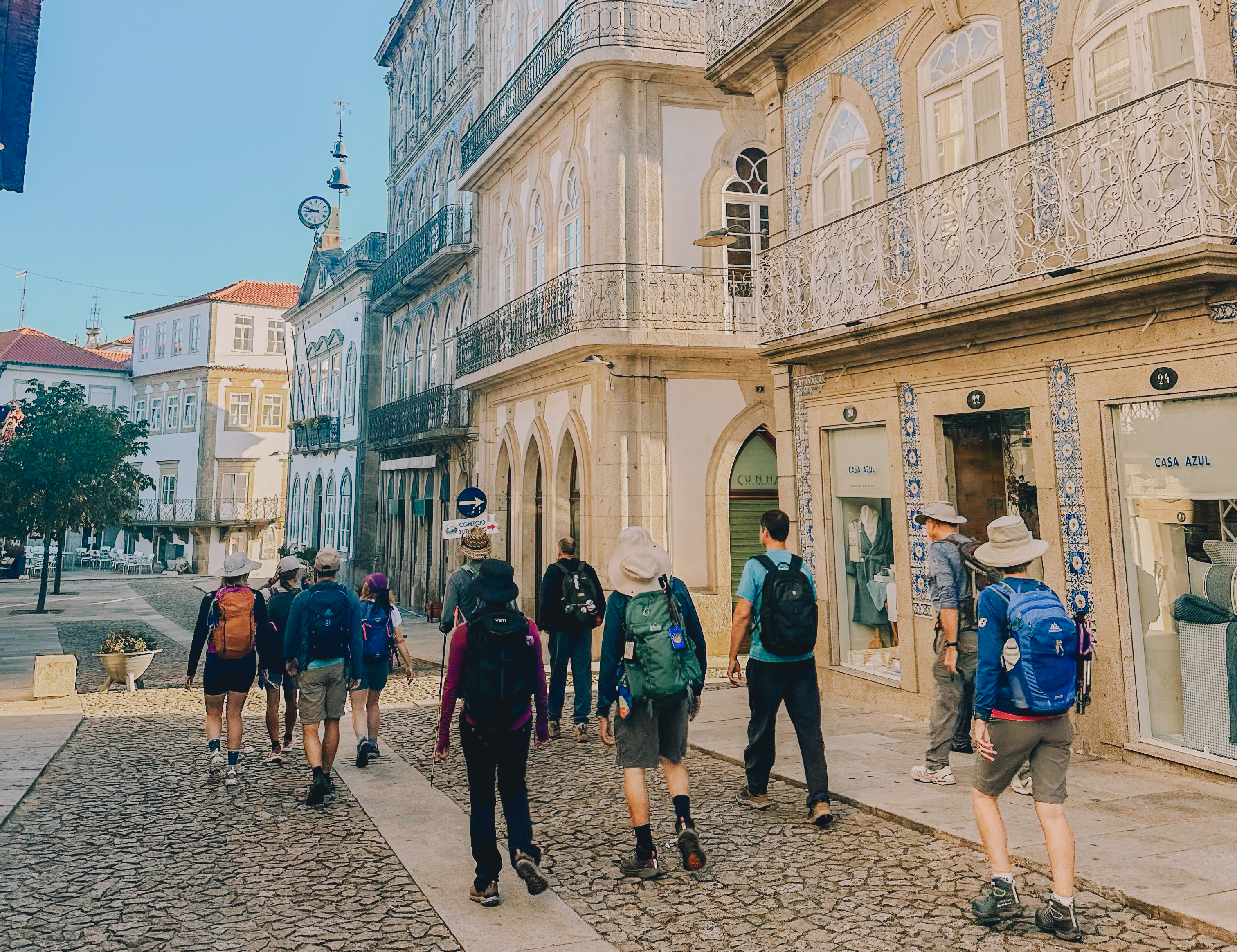
This morning, we walk directly from our hotel on winding country lanes and forest trails, enjoying sea and mountain views. We walk through sleepy Portuguese villages on the hills parallel to the coast enjoying ocean views from time to time.We have a forested stretch to a high point, then we descend to Vila Praia de Ancora where we stop for lunch. Vila Praia de Ancora is a former fishing village and has become a popular seaside resort with a 17th century fort, stunning sandy beaches and dunes.After, we walk parallel to the sea on flat terrain to Moledo do Minho railway station. From here, we transfer (approximately 35 minutes) to Valenca, another walled city which is now a shopping town known for producing linen, towels and handcrafted souvenirs.
Meals: Breakfast
Day 4
Walk along the Louro river to San Campio chapel
After breakfast, we walk directly from the hotel and say goodbye to Portugal by crossing the Ponte Rodo bridge into Spain. We first explore the Spanish border town of Tui, home to a magnificent Romanesque-Gothic cathedral, before heading to San Campio chapel.We pass the Pilgrim monument in Tui, depicting a large stone carving of a pilgrim, before we follow the scenic Louro river through pretty woodlands and along the river paths to the chapel.On arrival, we have time for lunch before a transfer (approximately 45 minutes) to Pontevedra and enjoy time to walk around the old centre. This evening, we can enjoy dinner in one of the many restaurants with terraces.
Meals: Breakfast
Day 5
Walk to Armenteira • To O Grove
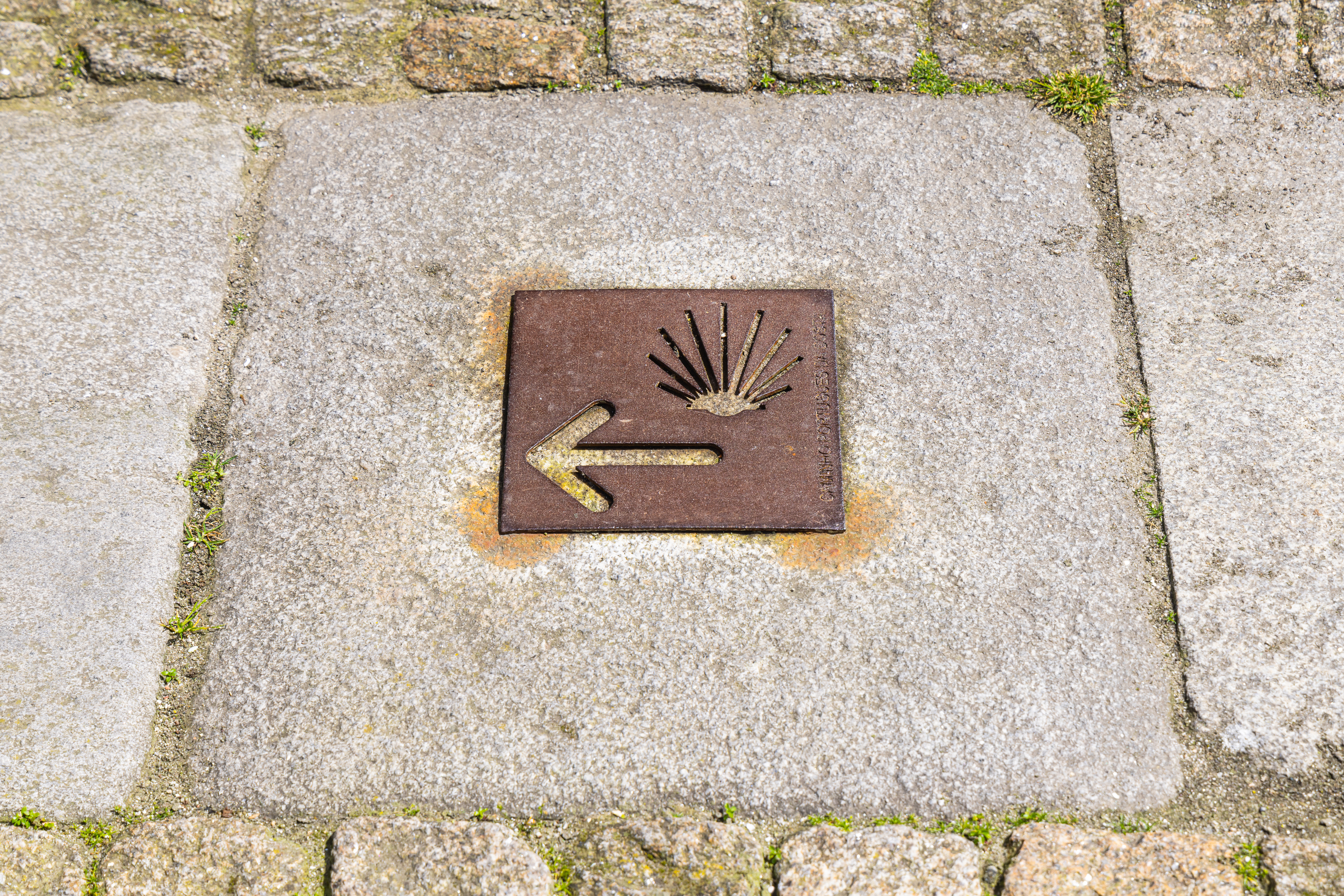
Today we start our special detour on a partly coastal section of the Portuguese Camino, named the Spiritual Variant. This pilgrimage route is considered by many to be the original path of Saint James, and therefore the origin of all the Caminos de Santiago.After breakfast, we leave the hotel and head west towards the sea, where we walk through the pretty landscapes of O Salnés, crossing the village of Poio, home to a 17th-century Benedictine monastery, and the compact fishing village of Combarro.We finish the day walking through the forest to Armenteira where there is a 12th-century monastery still fully running today. From here, we have a transfer to our hotel for the evening.
Meals: Breakfast
Day 6
To Armenteira • Walk to Vilanueva de Arousa
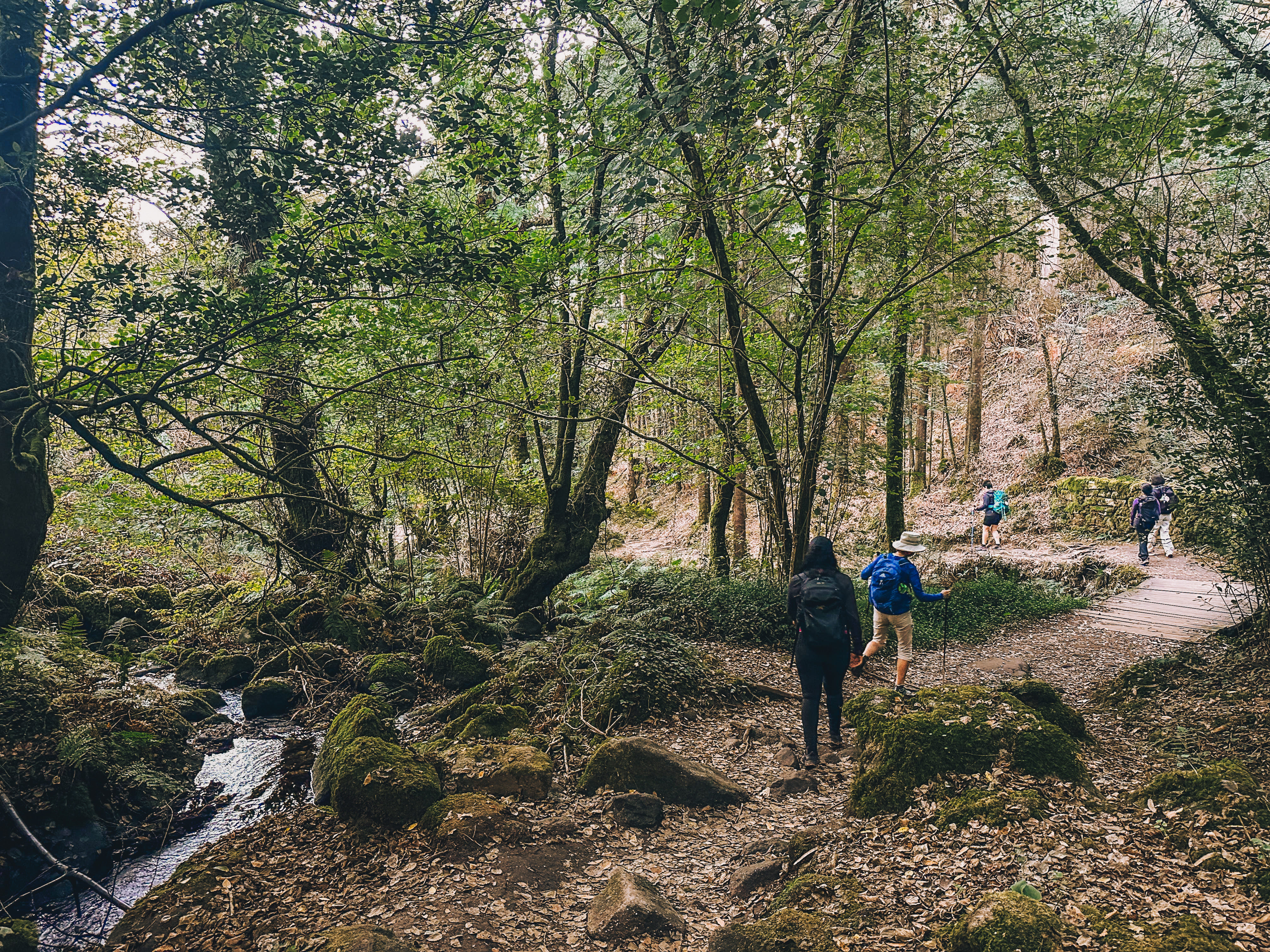
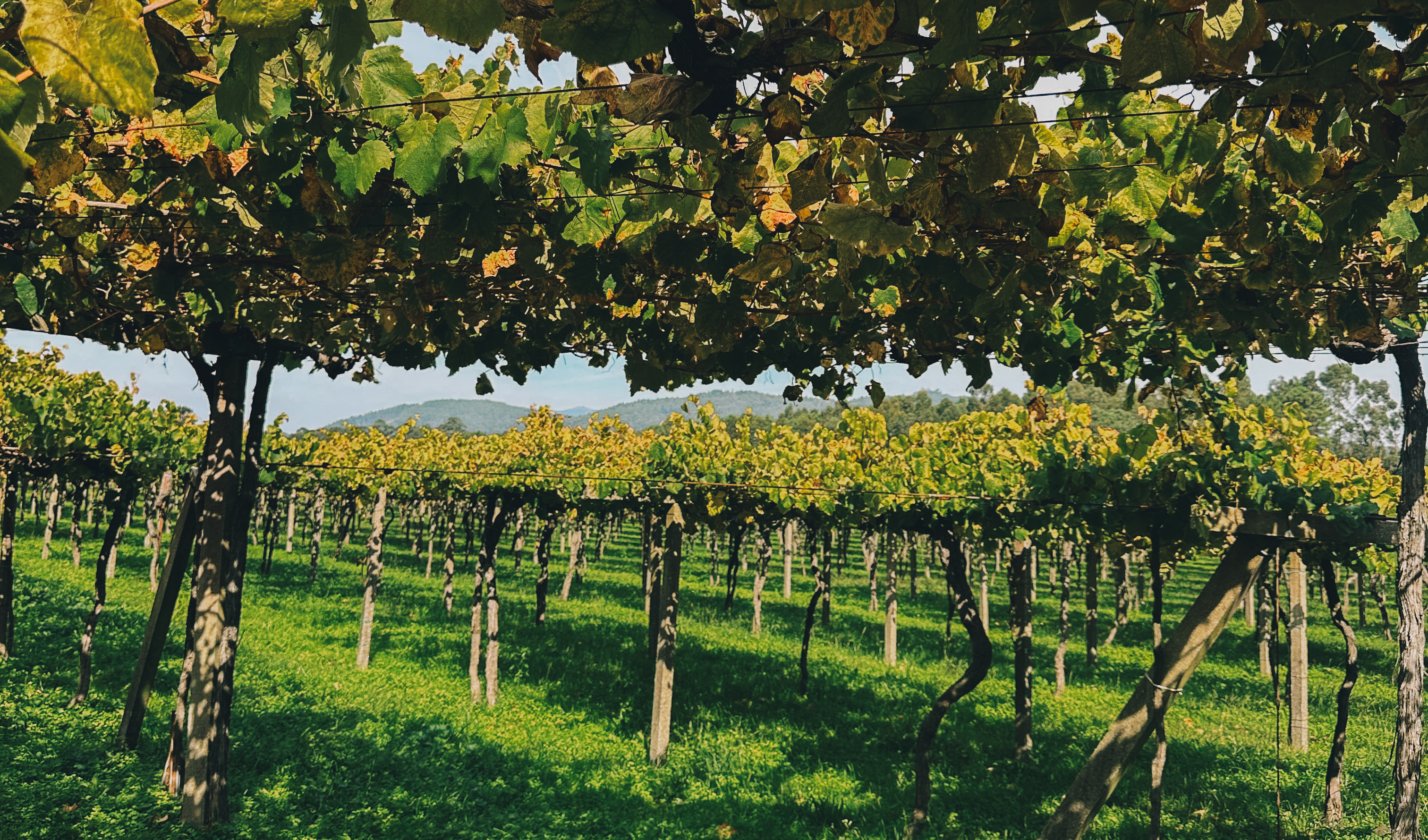
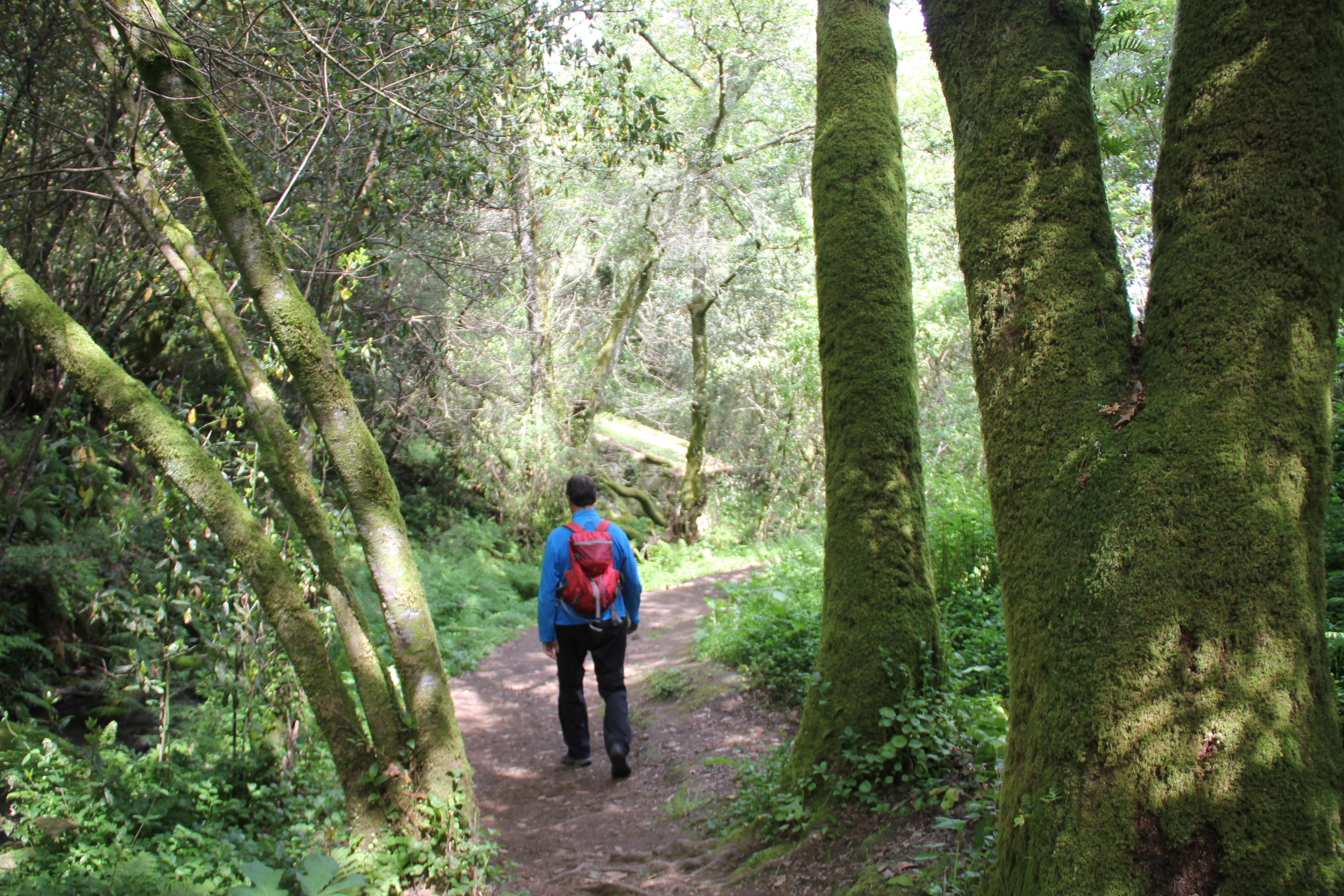
After breakfast, we take a transfer (approximately 30 minutes) to Armenteira. From here, we start one of the most beautiful stages of the Camino, taking a trail parallel to the River Armenteira called the Stone and Water Route (named for the 51 ancient mills and waterfalls it passes).The lush green of the forest, the gushing cascades, flowing river, and ancient mills combine to make a particularly scenic stretch. In the afternoon, we take a path alongside the Rivier Umia passing Albariño grapevines and fields and finishing by the sea.
Meals: Breakfast
Day 7
Boat to Pontecesures • Walk to Padron • Afternoon at leisure
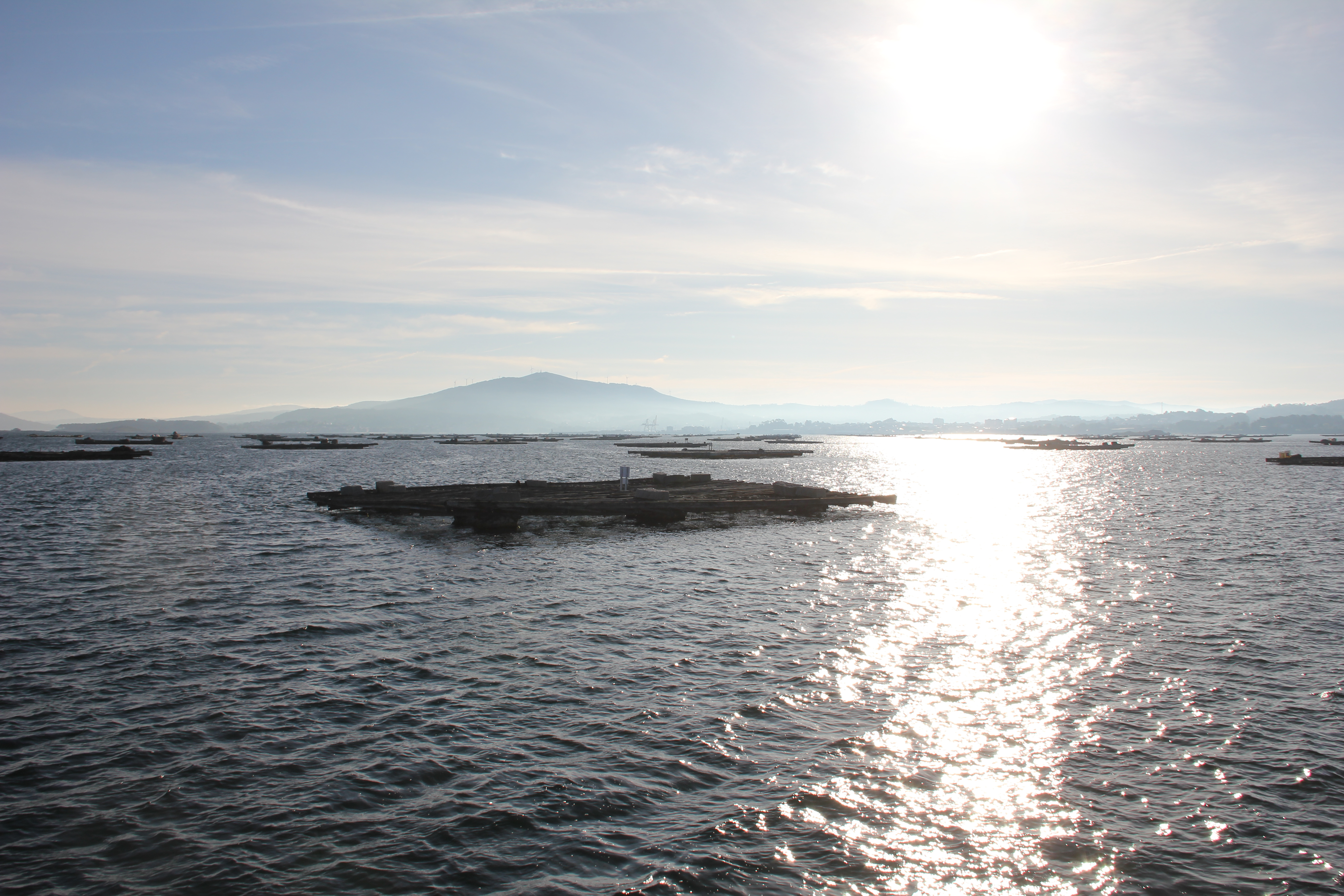
Start with a short walk to the harbour in Vilanueva de Arousa, where we board our boat to enjoy one of the only water-based pilgrimage trails in the world, the Translatio, which is also our last stretch of the Spiritual Variant.This waterway route consists of 17 stone crosses that mark the Apostle’s final journey – the captain will point these out, while also highlighting mussel farms and the ninth-century Oeste Fortress, built to defend against Viking invaders.Once we reach the town of Pontecesures, we walk the final stretch of the day, passing the statues of Padron’s most famous residents, Nobel Prize-winning novelist Camilo Jose Cela and poet Rosalia de Castro. We arrive just in time for lunch – we recommend trying Padron peppers, a local speciality.
Meals: Breakfast
Day 8
Walk to Santiago de Compostela
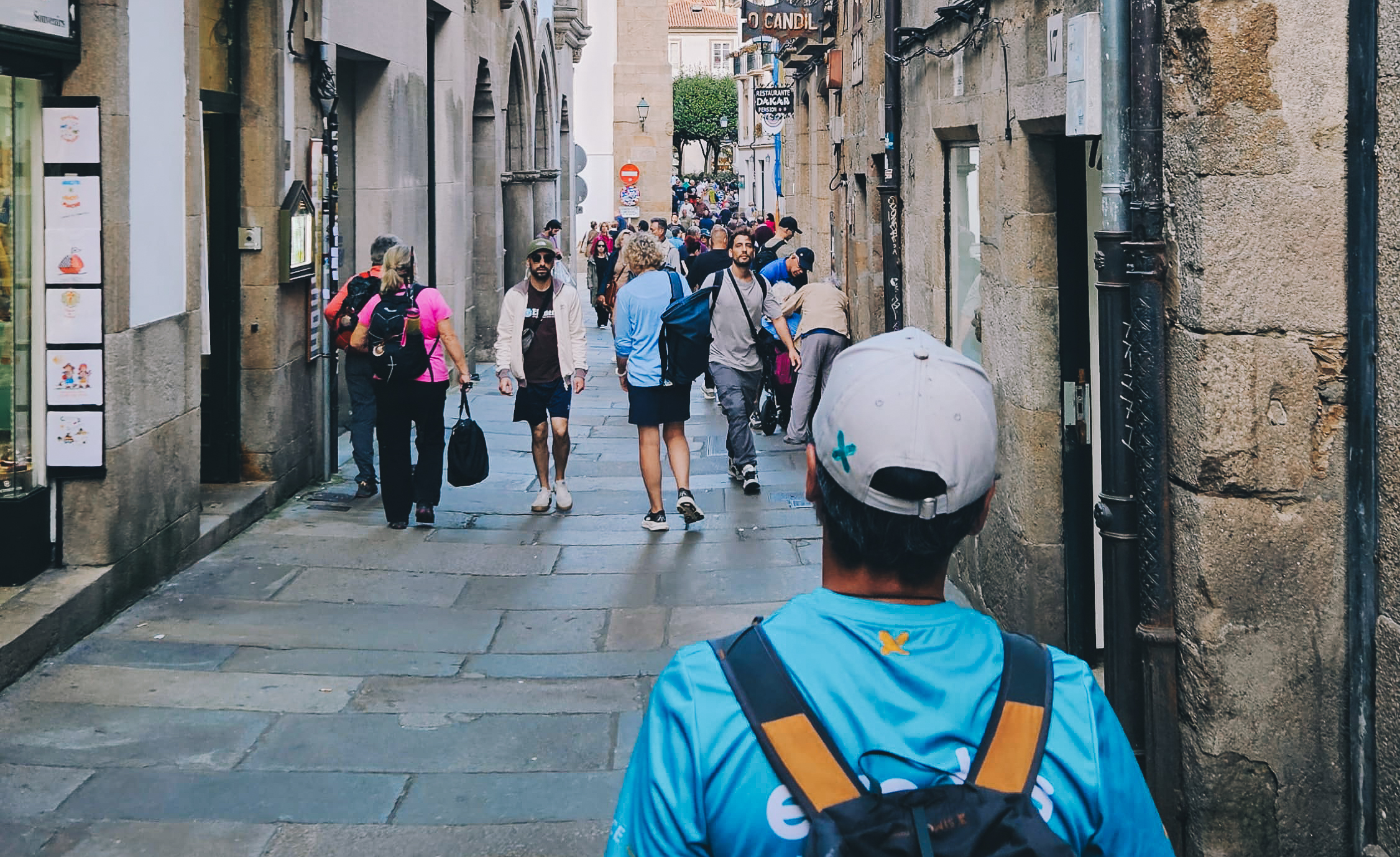
On our last day of walking, we pass through typical Galician villages and woodland before arriving in Santiago de Compostela. Our route passes the Igrexa de Santa Maria de Iria, a church destroyed in the 10th century by the Andalusi military leader Almanzor, before being rebuilt two centuries later. It is also where Camilo Jose Cela is buried.Upon arrival in Santiago, as part of the centuries-old tradition, we make our way through the city streets and crowds to Plaza del Obradoiro, which is dominated by the cathedral, where we can observe a mass service that may include the impressive Botafumeiro incense swinging, although it cannot be guaranteed.In the afternoon, we enjoy a walking tour of the town, which includes a visit to the cathedral where Saint James is said to have been buried. In the evening, we have our farewell group dinner in a nice restaurant in Santiago centre, an excellent chance to relive our adventures together.Upgrade to a room with a terrace today – speak to your sales representative for more details
Meals: Breakfast
Day 9
Adventure ends in Santiago de Compostela
The trip ends after breakfast. Say goodbye to the group and start your return journey home. If you’ve still got the appetite for more exploration, speak to your sales representative to book further nights in our Santiago de Compostela or Porto hotels.
Meals: Breakfast
What’s included
What’s not included
Additional information
Food
A typical breakfast in Portugal and Spain might consist of coffee with milk, toast with ham, olive oil, tomatoes, cheese and butter and jam. Bakery items, fruit and juice are also popular. During this trip, expect different variations of breakfast at our chosen hotels, but they will all include at least some of the standard breakfast items popular in Portugal and Spain.
Northern Spain produces a wide range of delicious food, from fish and seafood to quality meat, vegetables and fruit. Your leader will recommend good places to eat. Sometimes it will be tapas, sharing raciones (literally portions) as a group, and sometimes you can choose from the menu.
On the Portuguese Camino, restaurants and bars offer set menus, which usually include a choice of five starters, five mains and dessert, coffee and drink for about €12-€15. You can also try pulpo a la feira, a delicacy in Galicia, which is sliced octopus with paprika, olive oil and sea salt. Sometimes it is also served with grelos (sliced boiled potatoes).
Mealtimes in Portugal and Spain are later than in many other countries; dinner is usually taken between 8pm and 9.30pm.
Please note, meat and fish are staples in Portugal and Spain. Vegetarians can be catered for, as can other dietary requirements, although there may not be the same choice or variety as you have at home. Please advise us upon booking.
Welcome Briefing & Portuguese Dinner in Porto
Meet your group and meet your Tour Director for a relaxed welcome briefing that outlines the Camino highlights, practical tips, and the spirit of pilgrimage. Settle in and get to know fellow travellers before sharing a convivial table in a favourite local restaurant.
Savour a hosted Portuguese dinner featuring regional flavours—perhaps bacalhau, petiscos, and crisp Vinho Verde—and raise a toast with port to the journey ahead. It’s an atmospheric introduction to northern Portugal’s cuisine and warm hospitality.
Portuguese Coastal Camino: Matosinhos Boardwalks to the Atlantic Villages
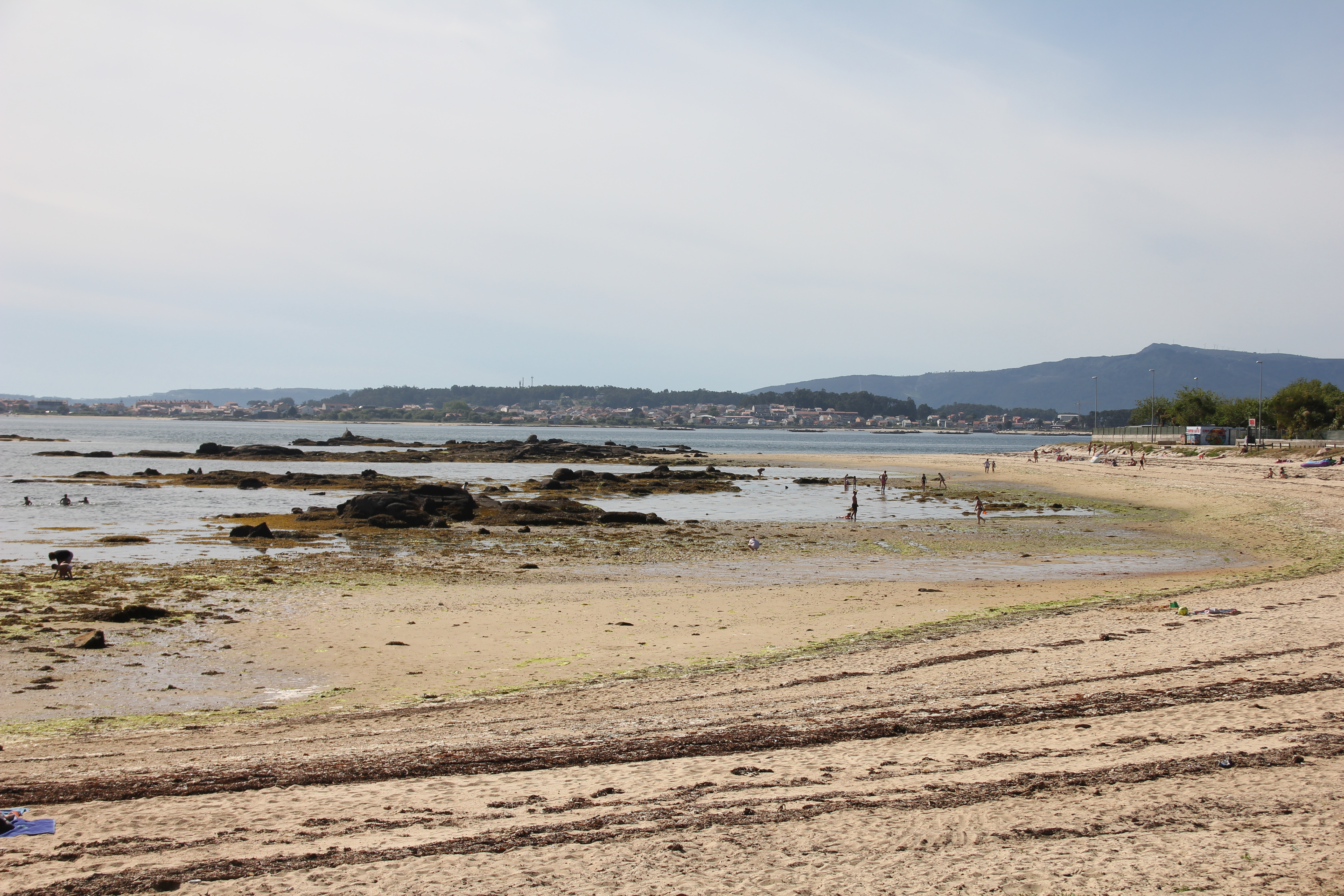
Walk the Litoral Camino on wooden boardwalks skirting Atlantic dunes, fishing harbours, and long sandy beaches. This sea-breeze stage traces the shoreline from Matosinhos past surf breaks and villages to the historic town of Vila do Conde, where shipyards and riverside facades frame the estuary.
Continue along easy coastal paths toward Vila Praia de Âncora and Moledo, with the ocean on one side and pine-scented hills on the other. Expect sea birds, salt on the air, and photogenic moments from beach chapels to distant fortresses along Portugal’s northwest coast.
Viana do Castelo Medieval Centre Stroll
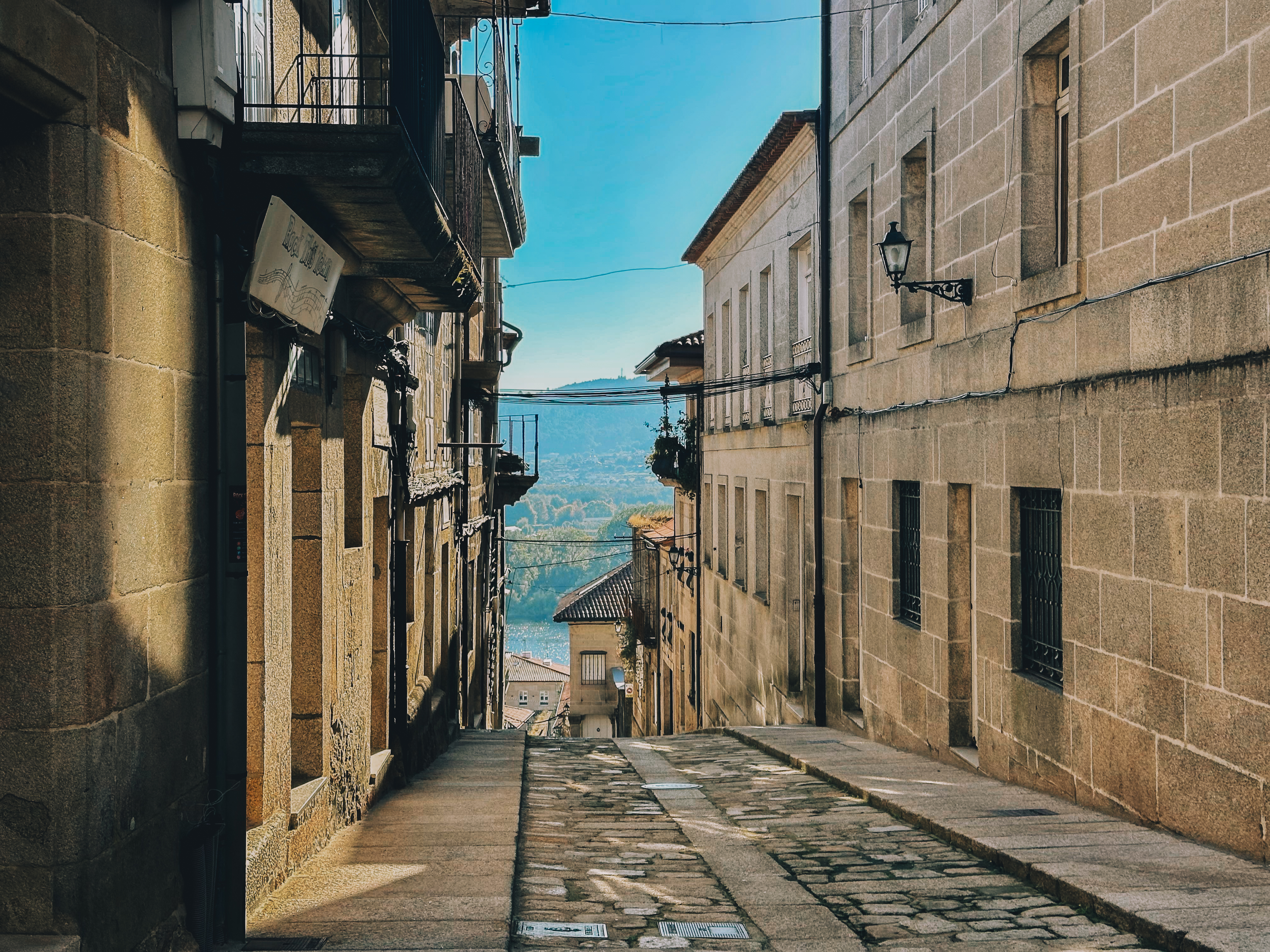
Wander the handsome streets of Viana do Castelo, pausing in Praca da República and visiting the compact Sé Cathedral with its granite arches and sober, maritime spirit. Cafés spill onto cobbles near the old port, where caravels once departed for cod fisheries.
Discover Manueline stonework, tile-fronted townhouses, and artisan linen shops linked to the Minho’s centuries-old textile traditions. Glimpse the hilltop silhouette of the Santa Luzia basilica above the rooftops as you enjoy the city’s blend of river, sea, and medieval heritage.
Tui Cathedral Visit & Louro River Path to San Campio Chapel
Cross the Minho into Spain to explore the Cathedral of Santa María de Tui, a fortress-like Romanesque-Gothic landmark guarding the frontier. Stroll its ramparts and stone lanes before tracing shaded paths along the Louro River through woodlands alive with birdsong.
Walk past the town’s pilgrim monument and quiet river meadows to the San Campio chapel, a rural sanctuary with a contemplative ambience. This stage blends borderland history with gentle nature walking, revealing how faith and landscape shape the Camino’s rhythm here.
Spiritual Variant: Poio Monastery, Combarro & Armenteira
Begin the Spiritual Variant, said by many to echo Saint James’s original path. Visit the Benedictine Monastery of Poio, noted for cloisters and an azulejo mural of the Camino, then walk to Combarro, a fishing village famed for stone granaries (hórreos) and granite cross-shrines along the tide.
Continue inland through vineyard-dotted countryside to the Monastery of Armenteira, a 12th-century Cistercian retreat nestled in forested hills. The day’s contrasts—salt air, sacred art, and monastic calm—capture Galicia’s coastal spirituality.
Stone and Water Route Hike: Armenteira to Vilanueva de Arousa
Follow the Ruta da Pedra e da Auga beside the Armenteira River, tracing mossy trails past ferns, gushing cascades, and a chain of 51 restored watermills. Wooden footbridges and birdsong add to an almost storybook woodland atmosphere.
As the valley opens, paths thread between Albariño vineyards and hamlets, with the light of the Ría de Arousa drawing you toward the coast. It’s a scenic, gently undulating stage prized by pilgrims for its beauty and meditative tempo.
Translatio Boat Pilgrimage: Vilanueva de Arousa to Pontecesures
Board a boat to follow the Translatio, one of the Camino’s few waterborne stages, crossing the Ría de Arousa and ascending the Ulla estuary guided by 17 stone crosses that commemorate the Apostle’s legendary journey.
Hear the crew’s commentary on floating mussel rafts and the ninth-century Torres de Oeste fortress, built against Viking raids, before landing at Pontecesures to continue on foot. The blend of maritime lore and river scenery gives this variant its quietly epic character.
Padrón Literary & Pilgrim Heritage Walk
Walk into Padrón, pausing by statues of Rosalía de Castro and Camilo José Cela, two giants of Galician letters. Cobbled lanes, market arcades, and the aroma of blistered green peppers shape the town’s lively streetscape.
Learn the legend of the pedrón—the ancient stone mooring linked to Saint James—enshrined beneath the Church of Santiago. This short stage weaves literary memory with pilgrim tradition, setting an intimate tone for the approach to Santiago.
Santiago de Compostela Old Town Walk & Cathedral Visit
Arrive at the Praza do Obradoiro, where the baroque facade of the Cathedral of Santiago de Compostela crowns a maze of arcaded squares and granite lanes. Join a guided stroll through the UNESCO-listed old town’s monasteries, markets, and cloisters.
Step inside to reflect at the Apostle’s shrine and admire chapels layered with Romanesque, Gothic, and Baroque artistry. Time permitting, attend a pilgrim Mass that may feature the soaring swing of the Botafumeiro, a centuries-old ritual that fills the nave with incense.
Porto Historic Centre Orientation Walk
Explore Porto’s riverfront heart on a guided orientation walk through the UNESCO-listed Ribeira. Take in tiled townhouses, the vaulting iron of the Dom Luís I Bridge, and the storytelling panels of São Bento’s azulejos as your leader points out landmarks, cafés, and vantage points along the Douro.
Absorb how maritime trade and port wine shaped the city’s steep lanes and baroque churches. This compact introduction helps you navigate with confidence while leaving time to savour the atmosphere of Porto’s quay, arcades, and artisan shops at your own pace later on.