Your itinerary

Day 1
Arrival in Porto
A UNESCO World Heritage City and best European City destination for 2013, 2014, and again for 2017, Porto is considered one of the most beautiful cities in Europe. The old centre boasts more than 1500 listed monuments, and the history of the traditional Port Wine can be explored by visiting many of the Port cellars which are open to the public.
Meals: Breakfast
Day 2
Porto - Vila do Conde
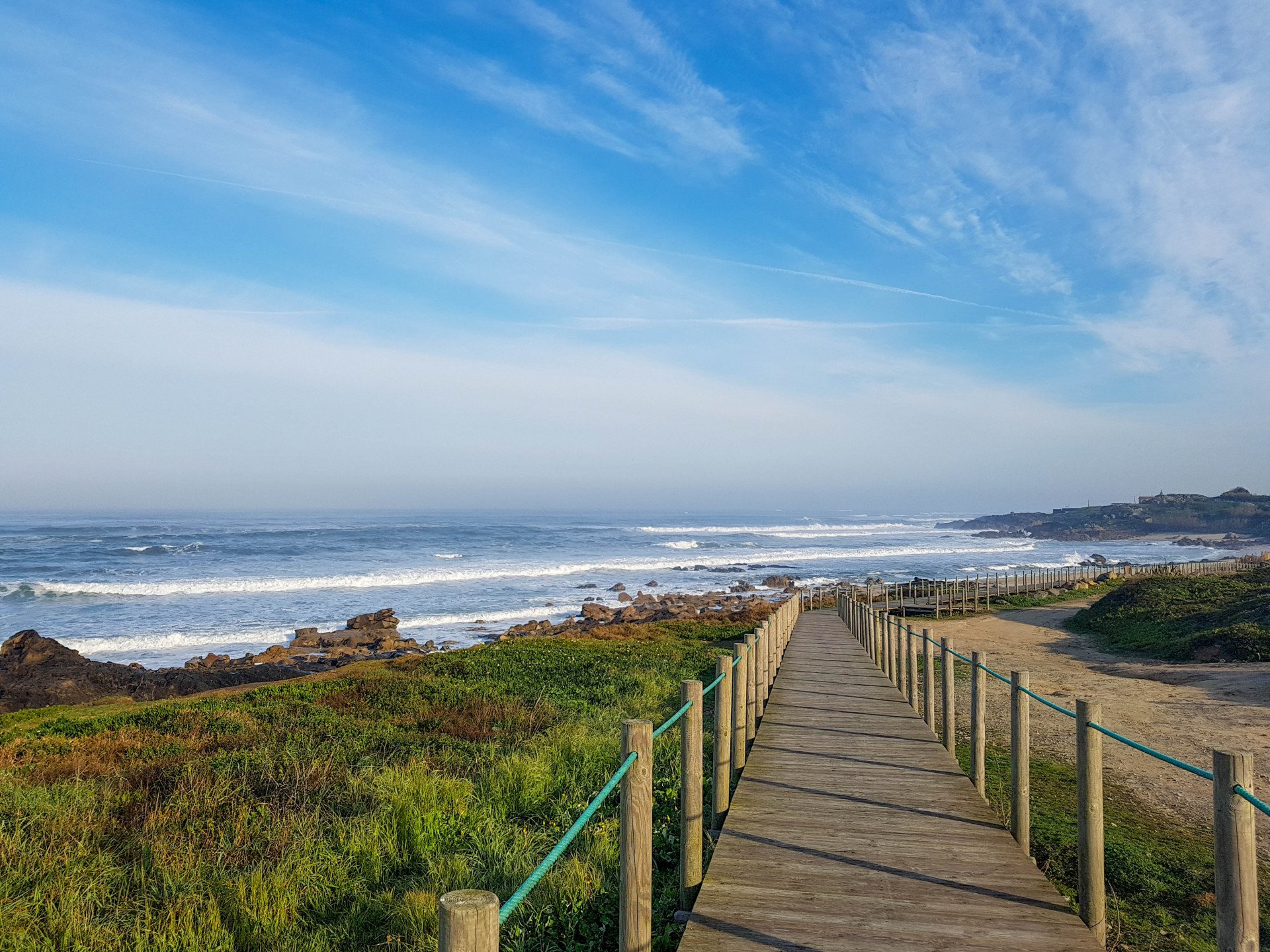
Walking transfer in the morning to Matosinhos Wooden boardwalks and pavements will lead you along the coastline via a series of wide sandy beaches, natural reserves and fishing villages to the historical coastal town of Vila do Conde.
Meals: Breakfast
Day 3
Vila do Conde - Esposende
Walk alongside the coast between flowers and sand dunes and across beaches. Then head north crossing the Coastal Natural Park in direction of Esposende, an old fishing village with a great setting on the estuary of the River Cavado.
Meals: Breakfast
Day 4
Esposende - Viana do Castelo
Pass through various villages and some delightful sections of woodland and rivers. Discover Viana do Castelo, an attractive town famous for its ancient and contemporary architecture, offers magnificent views over the Lima valley and estuary with views of distant mountain ranges.
Meals: Breakfast
Day 5
Viana do Castelo - Ancora
Today’s journey is mostly inland, with occasional coastal views from hillside villages. Enjoy the shade of the eucalyptus forest as you make your way uphill before descending to the low-key beachside resort town of Vila Praia de Ancora.
Meals: Breakfast
Day 6
Ancora - Aguarda
Follow the coastal path to Moleda. Then continues to the charming town of Caminha. Option to walk through the pine forest beside the beach. Continue with a scenic ferry journey takes you across the Minho River to the fishing town of A Guarda in Spain.
Meals: Breakfast
Day 7
A Guarda - Oia
Before leaving A Guarda, do not miss the Santa Tegra Celtic settlement – the views are spectacular. Follow the Camino on the coastal way, going through the forest before reaching the seaside village of Oia, dominated by its 12th century monastery.
Meals: Breakfast
Day 8
Oia - Baiona
Start your day along fields, coastal villages before a total change of scenery and terrain as you reach the mountains. Continue through countryside before arriving at the medieval center of via two ancient churches.
Meals: Breakfast
Day 9
Baiona- Vigo
From Santa Maria church, walk through the countryside offering peaceful paths and rivers. As your way climb, admire wonderful views before entering to Vigo via a park.
Meals: Breakfast
Day 10
Vigo - Arcade
Start your day with peaceful hillside villages with beautiful views over the estuary and port. Then, head down to Arcade, a riverside town famous for its oysters.
Meals: Breakfast
Day 11
Arcade - Pontevedra
Leave Arcade via its iconic bridge. Follow ancient stone paths up through the forest. Enjoy a scenic detour along the River Tomeza to approach Pontevedra surrounded by birdsong and greenery. Explore the historical city centre, its vibrant squares and enjoy some tapas at a local bar.
Meals: Breakfast
Day 12
Pontevedra - Caldas de Reis
Walk through the lovely countryside and peaceful forest to the riverside spa town of Caldas de Reis. This place is known for its thermal waters and for healing properties. Enjoy the thermal spring on the main square.
Meals: Breakfast
Day 13
Caldas de Reis - Padron
Cross a luxuriant landscape alongside the Valga River. Several impressive churches and stone crosses line the route to Padron, the riverside town where St. James’s body is said to have been laid to rest by his faithful followers.
Meals: Breakfast
Day 14
Padron - Santiago
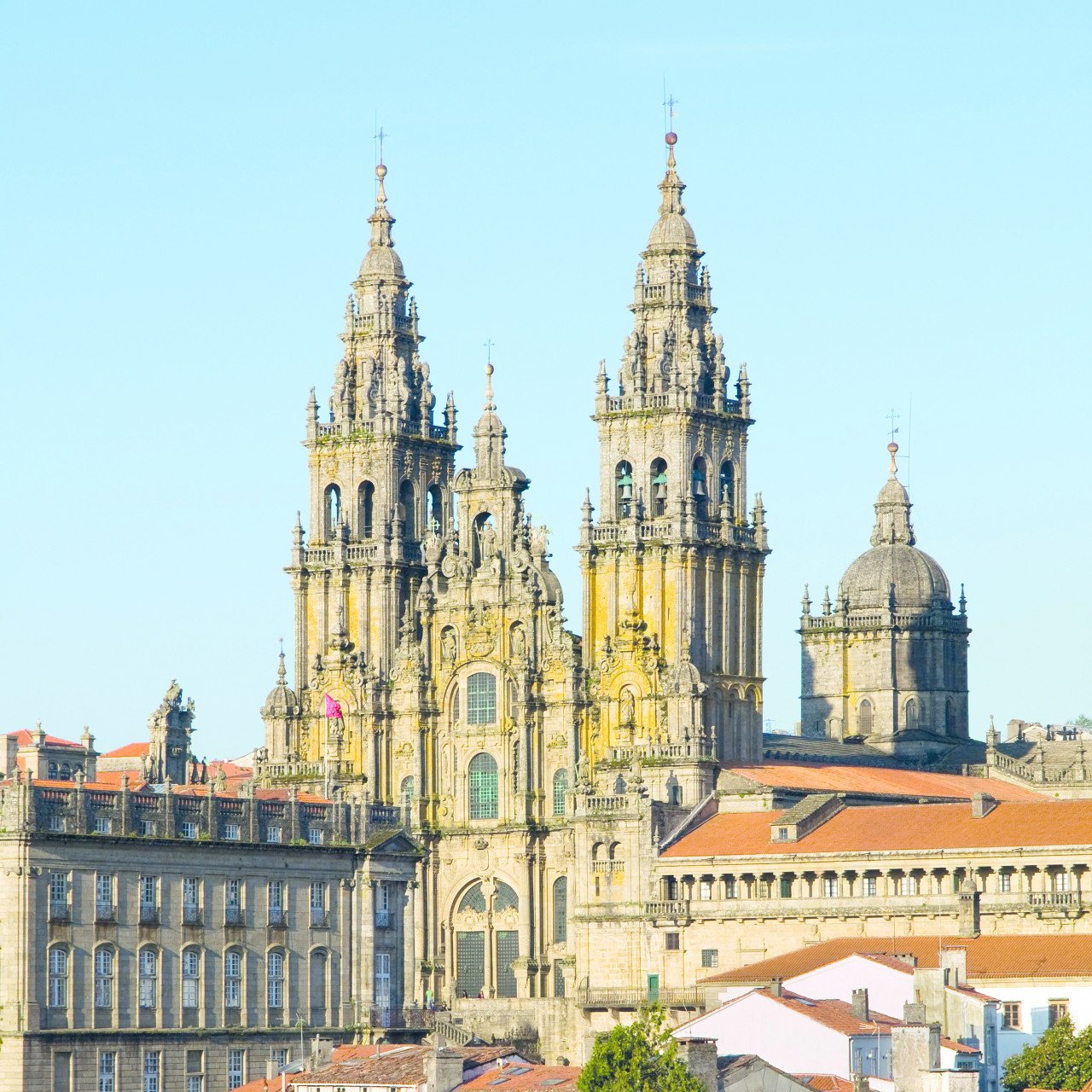
The final stage of the Camino is going through Galician villages. Once you enter the medieval narrow streets of Santiago, the atmosphere changes while reaching the cathedral square.
Meals: Breakfast
Day 15
Leave Santiago
Explore the old city of Compostela before airport transfer.
Meals: Breakfast
What’s included
What’s not included
Additional information
Food
Along the Camino Portugués, here are local specialties you should add to your list of things to taste:
You can’t get more traditional in terms of Portuguese cuisine than salted cod or ‘bacalhau’ or grilled sardines.
Try Portugal’s classic ‘sopa de caldo verde’. Originally from the North of the country and similarly to its Galician ‘cousin’, ‘caldo verde’ basic ingredients are collard greens, potatoes, and onion, with many also adding sausage or other pork meat.
For the sweet tooth do not miss Pastel de Nata : The most famous one with custard tart. A crunchy pastry with exquisitely sweet custard.
Viana do Castelo Old Town & Lima Valley Views
On day 4, walk into Viana do Castelo, an attractive town framed by river and sea. Explore Praca da República with its Manueline fountain and arcades, then wander cobbled streets lined with granite facades and wrought-iron balconies.
Climb or taxi to the hilltop for sweeping views across the Lima estuary and distant mountains, crowned by the Sanctuary of Santa Luzia. This mix of Renaissance squares and belle-époque architecture reveals a port that prospered on Atlantic trade. It’s a perfect place to enjoy a free afternoon soaking up the town’s maritime character.
Hillside Villages & Forest Shade to Vila Praia de Âncora
On day 5, the Camino swings inland through hillside villages and eucalyptus groves, offering intermittent blue slashes of sea far below. The path rolls gently upward, cicadas buzzing, then descends toward the coast as Atlantic breezes return.
Arriving in Vila Praia de Âncora, you’ll hear gulls and the low clatter from fishing boats. This stage captures the Camino’s quieter pulse—country lanes, kitchen-garden plots, and forest scents—before rejoining the beachside promenade. It’s a day to soak in the lakeside atmosphere—here, the “lake” is the ocean, wide and glittering at sunset.
Caminha to A Guarda: Minho River Ferry Crossing
On day 6, reach the handsome square of Caminha and its clock tower, then cross the Minho River by ferry—a brief, scenic passage from Portugal into Spain. The misty mountain passes of the Serra d’Arga recede as the ridge of Monte Santa Tegra rises ahead.
Landing in the Galician fishing town of A Guarda, the Camino becomes a cultural bridge as well as a geographic one. Listen for the shift in language and taste; cafés now serve pulpo a feira and Albariño. The ferry underscores the route’s maritime identity and the long, shared history of both banks of the Minho.
A Guarda to Oia: Santa Tegra Castro & Monastery Coast
On day 7, start by ascending to the Santa Tegra Celtic hillfort, where circular stone dwellings crown the ridge above the estuary. Pause for photos and reflection on a panorama that sweeps from Portugal’s north shore to Galicia’s rugged coast.
Rejoining the trail, walk forest lanes and cliff-edge paths to the seaside hamlet of Oia, dominated by the 12th-century Monastery of Santa María de Oia. Waves hammer the seaward walls, monks’ chants now replaced by surf and gulls. The day links ancient castro culture and medieval Cistercian austerity with the raw Atlantic as a constant companion.
Oia to Baiona: Country Lanes & Medieval Harbor
On day 8, fields and hamlets give way to uplands with changing terrain and mountain views before the path descends toward the sea. Enter Baiona via its medieval heart, a tangle of lanes anchored by arcaded squares and granite churches.
Stroll the waterfront to the stout walls of the Fortaleza de Monterreal and the harbor museum housing the replica Carabela Pinta, the ship that first brought news of the New World to Europe in 1493. Baiona’s mix of maritime legend, fortifications, and small-town rhythm offers an evening rich in coastal atmosphere.
Baiona to Vigo: Ridge Vistas & O Castro Park Descent
On day 9, climb through countryside to high viewpoints over the Ría de Vigo, where the Cíes Islands float on the horizon. The route then threads parks and neighborhoods, bringing you gently into the city.
Enter Vigo via O Castro Park, whose hilltop fortress ruins survey shipyards and estuary sunsets. This urban approach reveals Galicia’s largest city as a blend of maritime industry and leafy lookout points, a satisfying transition from medieval Baiona’s stone alleys to Vigo’s lively tapas streets.
Vigo to Arcade: Hillside Villages & Estuary Views
On day 10, leave Vigo among hillside villages with estuary panoramas, following quiet country lanes shaded by chestnut and oak. As the path drops toward sea level, the scent of brine and woodsmoke returns.
Arrive in Arcade, a riverside town renowned for its oysters and stone quays. The afternoon is perfect to enjoy a free evening by the waterfront, listening to rigging clink while you plan tomorrow’s crossing of the historic bridge that once checked Napoleon’s advance.
Arcade to Pontevedra: Ponte Sampaio Bridge & Tomeza Riverside Approach
On day 11, leave town over the Ponte Sampaio Bridge, scene of an 1809 victory in the Peninsular War. Climb ancient stone Camino paths where water murmurs in rills and oaks lace the light.
A scenic detour along the River Tomeza guides you into Pontevedra’s historic center, a maze of plazas—Praza da Leña, Praza da Ferrería—and the scallop-shaped Iglesia da Virxe Peregrina. This is a city scaled to walkers, with arcades built for conversation and shade. Enjoy a free afternoon to explore and, if you wish, sample a tapa or two.
Caldas de Reis Thermal Springs & River Walk
On day 12, the Camino softens into peaceful forest and farmland before arriving in the spa town of Caldas de Reis. Steam curls from fountains where locals have soaked for centuries.
Visit the town’s central spring to bathe your feet in warm mineral water and feel the Camino in your calves ease. Roman-era use of these waters gave Caldas its name; the tradition persists in quiet corners and formal balnearios alike, reinforcing the route’s theme of care for body as well as spirit.
Padrón: Jacobean Lore & Herbón Pepper Country
On day 13, walk beside the Valga River’s greenery to Padrón, where legend holds that the apostle’s body was moored to a stone—the Pedrón—beneath the altar of the Church of Santiago. Wayside crosses and chapels lend cadence to the approach.
This riverside town is also home to Padrón (Herbón) peppers, a staple of Galician kitchens. The intertwining of sacred narrative and everyday flavor captures the Camino’s essence: stories rooted in place, sustained by hospitality and the simple rituals of a shared table.
Arrival in Santiago: Cathedral, Praza do Obradoiro & Compostela
On day 14, the Camino threads Galician villages and oak lanes before the medieval streets of Santiago de Compostela gather around you. Step into Praza do Obradoiro and take in the cathedral’s baroque facade.
Inside, you may attend the Pilgrim Mass when schedule allows and embrace the apostle’s shrine. Later, visit the Pilgrim’s Office to collect your Compostela, recognition of a journey stamped in chapels and cafés since Porto. Day 15 offers time to revisit cloisters, note the echoing cathedral nave, and simply stand in the square as bells fold the city in sound.
Port Wine Cellar Tour & Tasting in Vila Nova de Gaia
On day 1 evening, cross the bridge to Vila Nova de Gaia’s port wine lodges for a guided visit explaining the Douro terroirs, aging in oak, and the craft behind ruby, tawny, and vintage styles. Sample regional wines in cool, aromatic cellars.
The experience layers Porto’s riverside views with the city’s most storied export, connecting merchants’ warehouses to today’s tasting rooms. This optional activity is at additional cost and bookable on tour; non-drinkers are welcome to join the tour and savor the history.
Santa Luzia Funicular & Basilica Interior (Viana do Castelo)
On day 4, ride the Elevador de Santa Luzia up the hill for a close look at the Sanctuary of Santa Luzia, inspired by Sacré-Cœur. Step inside to admire the soaring dome and stained glass before circling the terrace for spectacular Lima Valley views.
This visit deepens your understanding of Viana’s blend of devotion and Belle Époque style, set between river mouth and Atlantic breakers. This optional activity is at additional cost and bookable on tour.
Vigo Bay Sunset Cruise
On day 9 evening, cast off on a short sunset cruise on the Ría de Vigo, gliding past mussel rafts and fishing skiffs as the sun dips behind the Cíes Islands. The city’s lights kindle along the shore.
From the water, Vigo’s maritime life comes into focus—shipyards, old warehouses, and modern marinas shaped by centuries of Atlantic trade. This optional experience is at additional cost and bookable on tour, weather permitting.
Arcade Oyster Tasting
On day 10, celebrate your arrival in Arcade—a town famed for shellfish—with a guided stop to sample local oysters freshly shucked at a waterside bar. Learn how tides, estuary currents, and granite shores shape their briny sweetness.
Galicia’s seafood culture is inseparable from its rías, and Arcade’s spring festival honors this delicacy. This optional tasting is at additional cost and bookable on tour; pair with a crisp Albariño or a glass of local cider.
Matosinhos to Vila do Conde Coastal Boardwalk Walk
On day 2, a morning walking transfer to Matosinhos sets you on wooden passarelas skimming dunes and beaches. You’ll follow the Atlantic on broad boardwalks past fishing boats at Angeiras and the shorebird haven of the Mindelo Ornithological Reserve, with salt on the breeze and the low boom of surf.
Villages give way to wide sands and lighthouses before you reach the elegant riverfront of Vila do Conde. En route, pause to stamp your pilgrim passport in seaside chapels and feel how the Camino here is shaped by wind, light, and tide—a coastal rhythm that will guide many days to come.
Esposende Dunes & Cávado Estuary Crossing
On day 3, stride through the Parque Natural do Litoral Norte, where paths thread dunes and wildflowers between ocean and estuary. The air smells of sea fennel and pine; terns flicker over sandbars as you approach the broad mouth of the Cávado River.
Finishing in the old fishing town of Esposende, look for the red-topped lighthouse and tiled churches that speak to centuries of maritime life. The day blends coastal ecology and human history, inviting you to pause for photos and reflection on how settlement and shoreline have evolved together along Portugal’s north coast.
Porto Riverside Orientation & Pilgrim Credential Pickup
On day 1, settle into UNESCO-listed Ribeira and join a self-guided riverside stroll along the Douro’s quay, past arcaded houses and rabelos, with the iron arcs of the Dom Luís I Bridge overhead. If time allows, pause at São Bento Station’s azulejo hall to read Portugal’s history in blue and white tiles.
Later, your host materials include the Pilgrim Passport and scallop shell. Learn how and where to stamp your pilgrim passport at chapels and cafés as you walk north. This easy introduction sets the tone: a city steeped in Port wine heritage facing the Atlantic, and you poised to begin the Camino’s coastal chapter the next morning.