Your itinerary

Day 1
Adventure starts in Amman
Welcome to Amman, Jordan’s vibrant capital, where your adventure begins. Complimentary transfers are provided today from Queen Alia International Airport (AMM) to our start hotel. As many flights arrive later in the evening, no activities are scheduled today, allowing you time to get some rest for the experiences ahead.
Want more time in Amman? Secure pre-tour hotel nights through your sales representative.
Day 2
Visit Jerash • Ride/drive through olive groves and villages to Madaba
After breakfast, say salaam (hi) to your tour leader and fellow travellers, when we gather as a group to get to know each other and learn more about the adventures ahead.
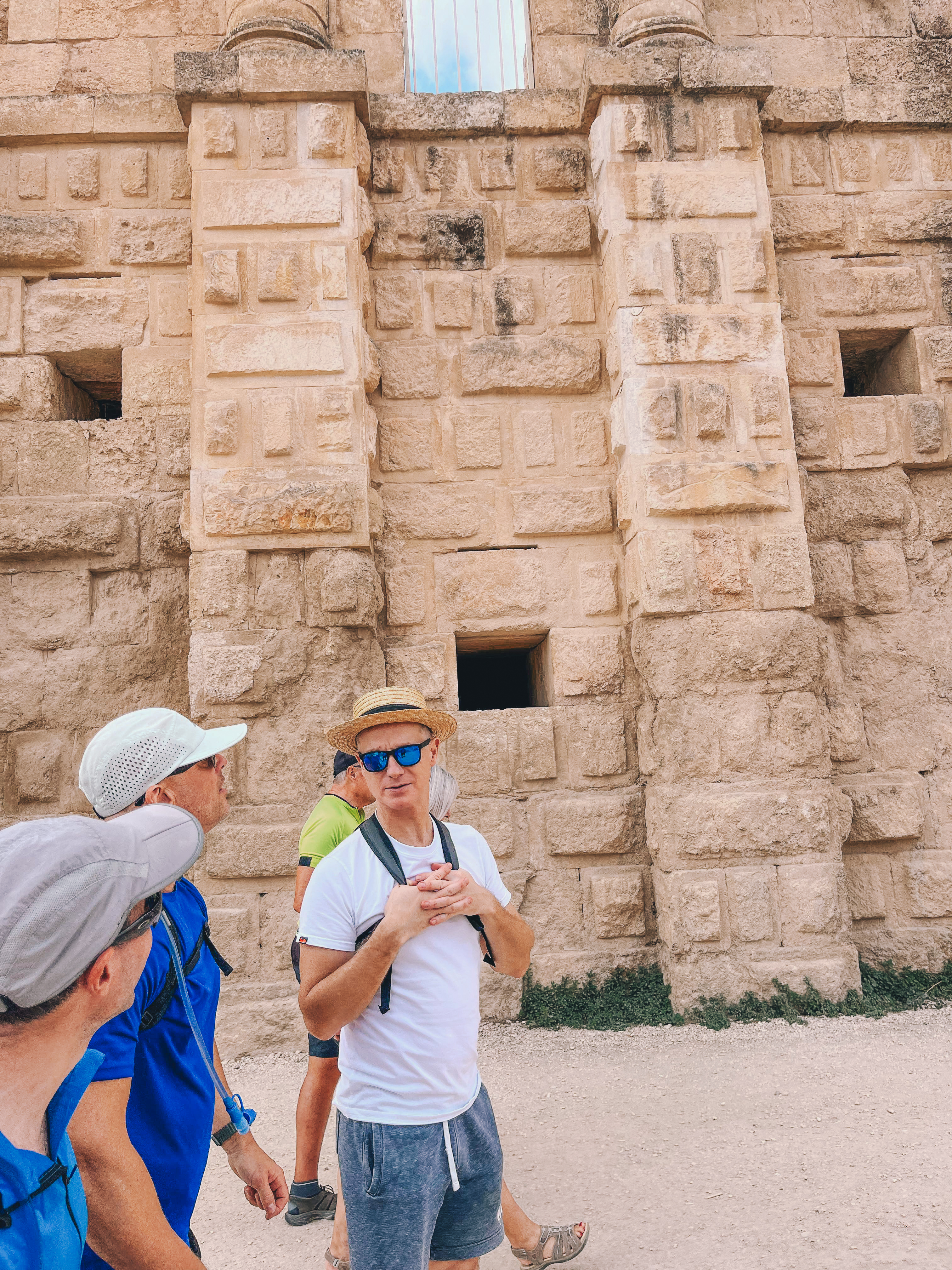
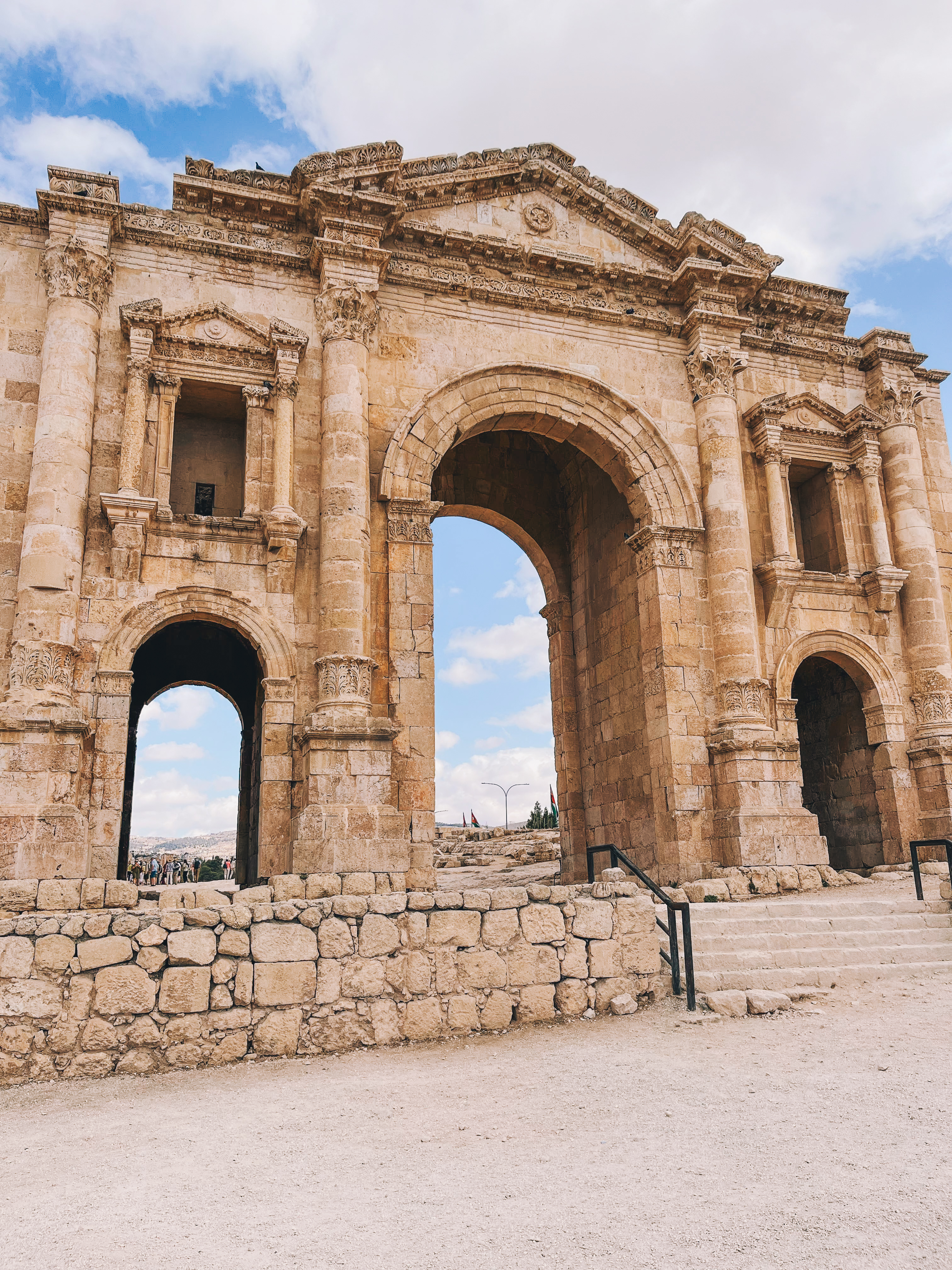
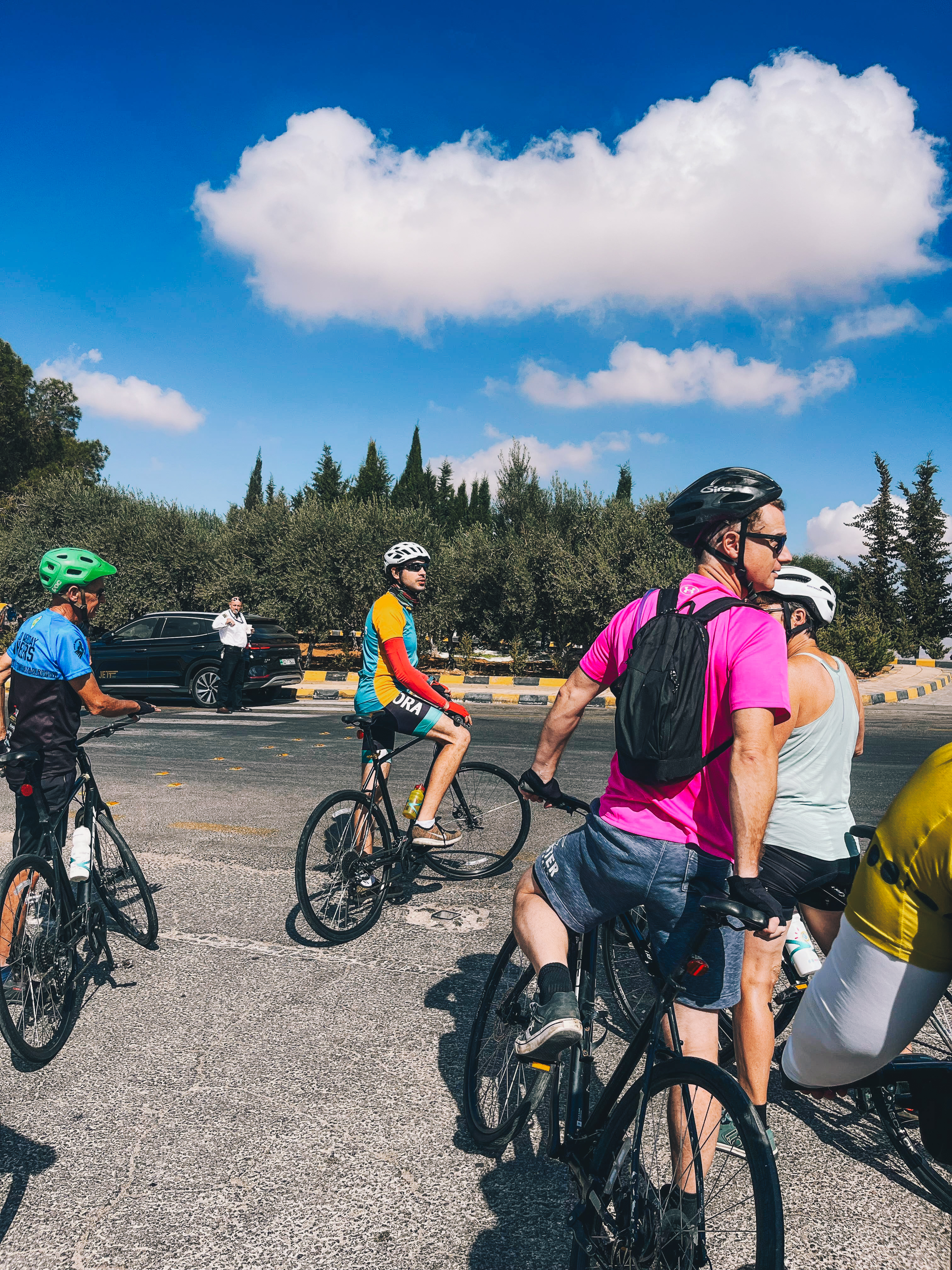
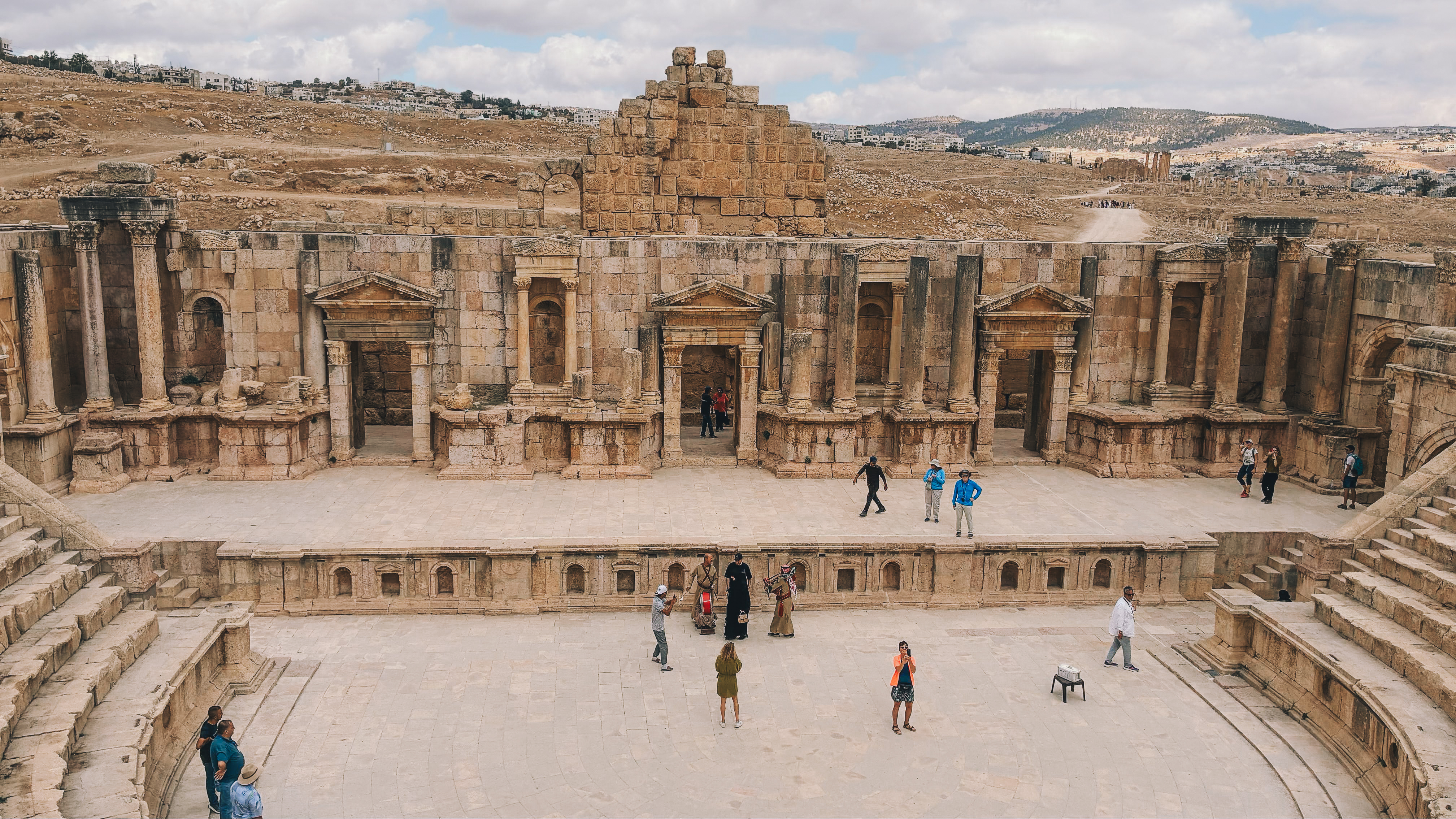
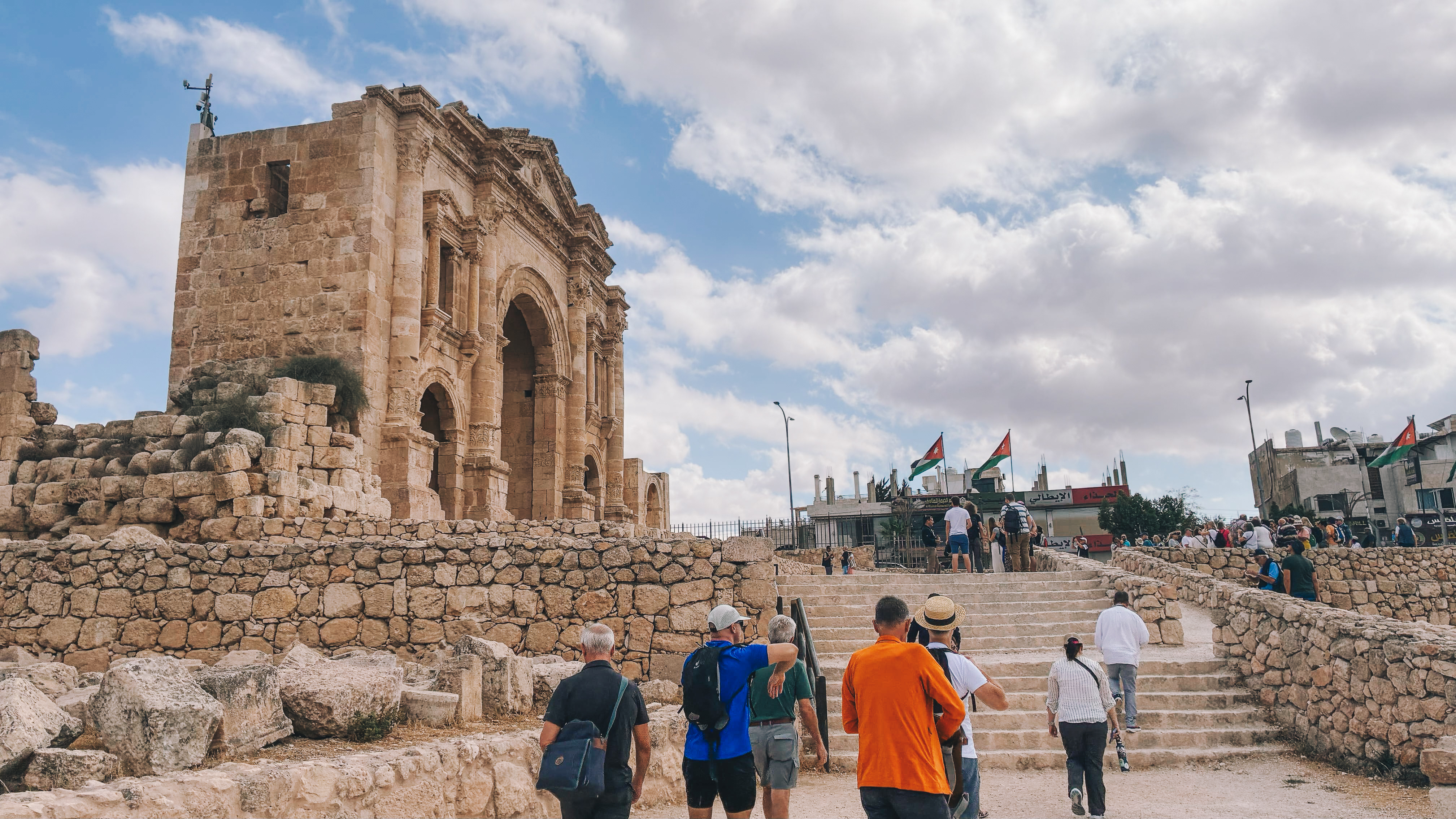
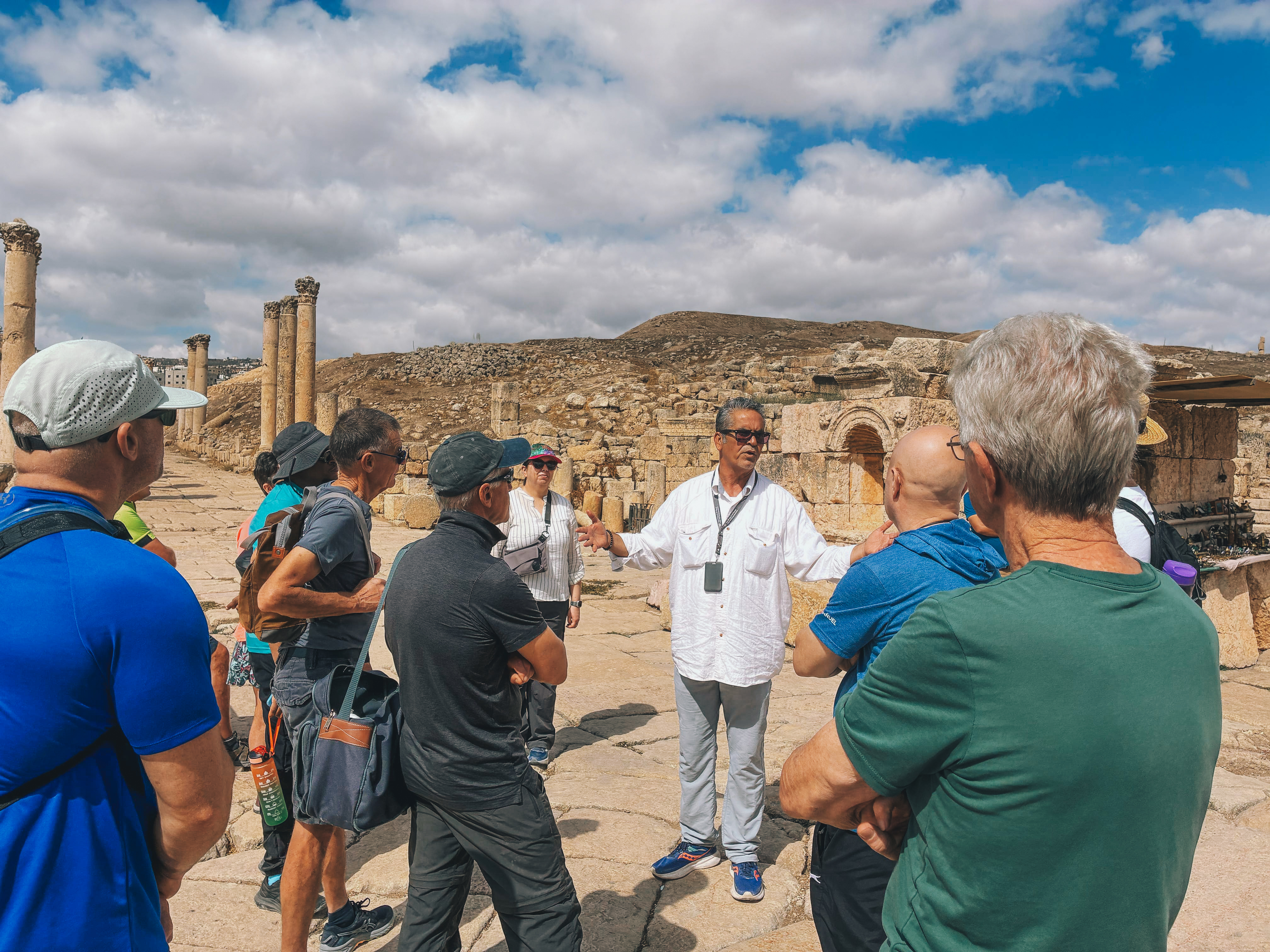
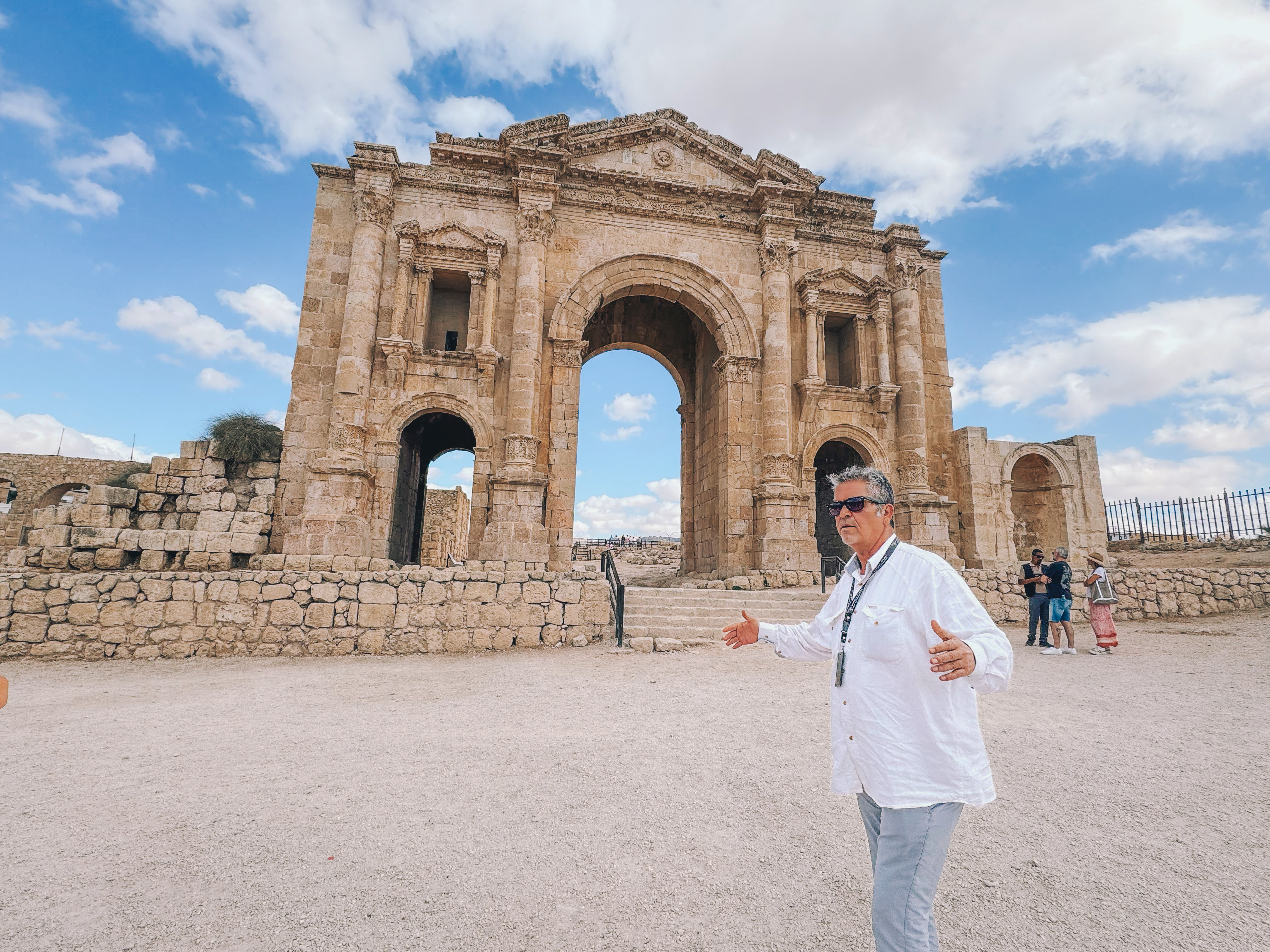
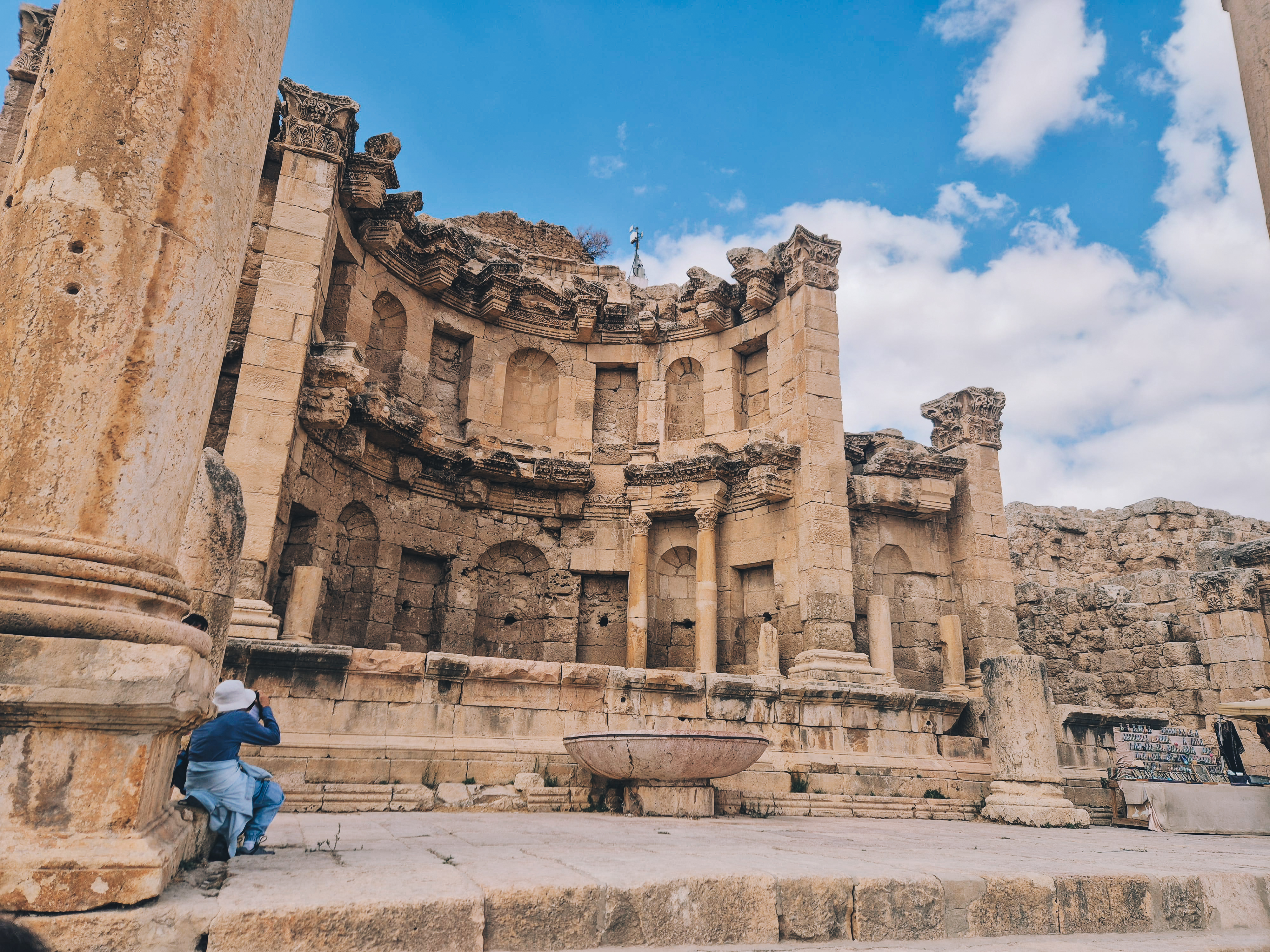
After this briefing, we transfer by bus for approximately 45 minutes to the ancient city of Jerash. Known in Roman times as Gerasa, Jerash is one of the best-preserved examples of a Roman provincial town in the Middle East. It is a vast site with incredible ruins that enable you to almost visualise Roman life there, from the dramatic chariot races to the everyday bartering along the colonnaded streets. After a couple of hours absorbing the atmosphere of this incredible site, we return to the bus for a short transfer to the beginning of our ride, having lunch en route. When we arrive we will be introduced to the cycling team and our bikes.
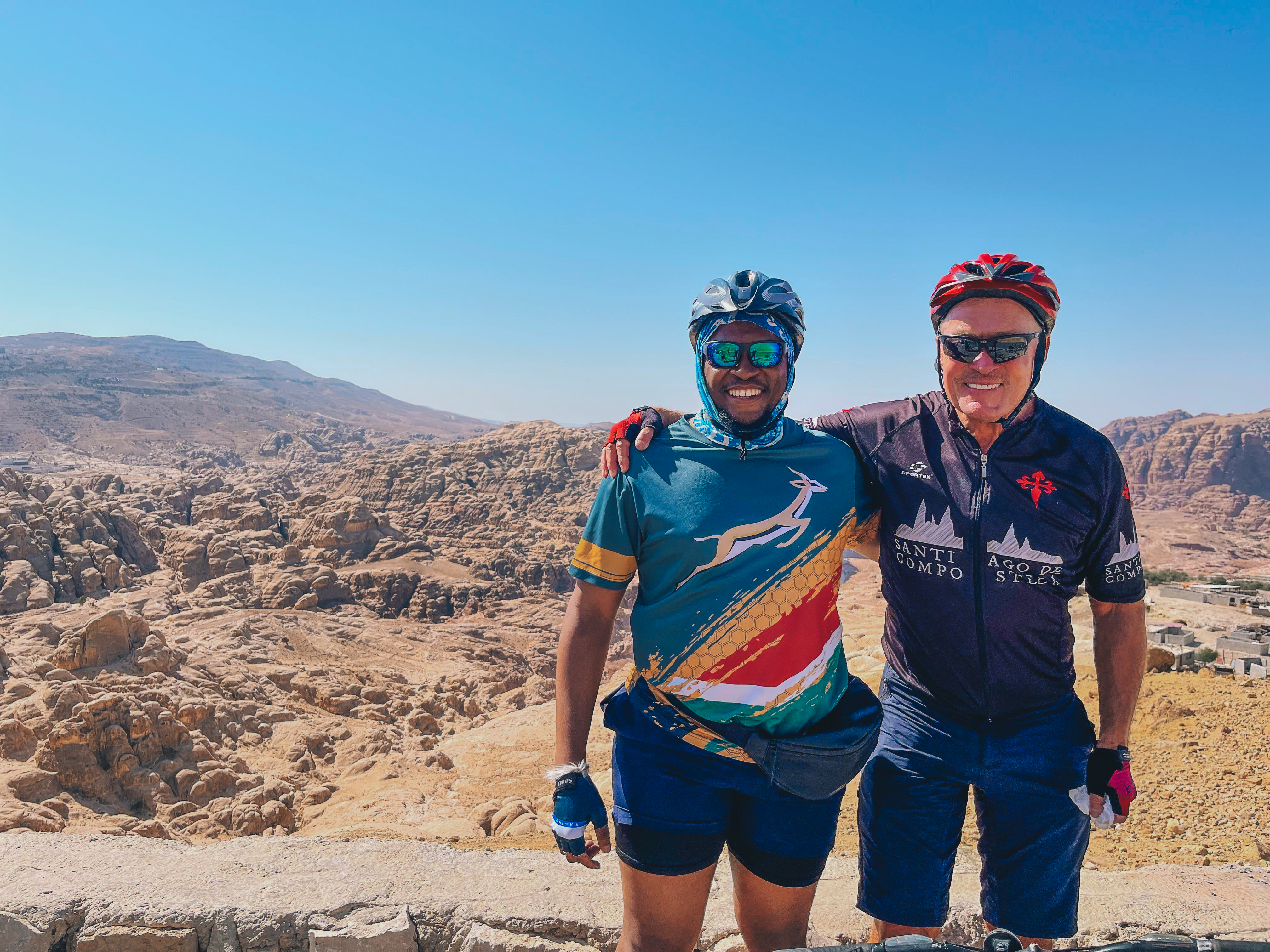
This afternoon we will cycle for approximately 3hr 30min through the foothills of the Jordan Rift Valley. This is the most fertile region in the country and also the most populated. We will wind our way down quiet roads and through small villages taking in the landscapes. The cycling is on good roads and much of the time you will be descending. In places, there may be some loose gravel that you will need to watch out for and there is one fairly long ascent. You will be briefed about the ride before you set off and the support vehicles will always be on hand. At the end of the ride we will leave the bikes for the day and transfer to Madaba, the City of Mosaics. The bus journey will take approximately two hours. There are several nice restaurants in Madaba, plus cafes and shops selling excellent baklava.
Meals: Breakfast,Lunch
Day 3
Petra via Mount Nebo and the Dead Sea
This morning we will wake up in Madaba, the City of the Mosaics. Madaba is the most important Christian centre in Jordan and best-known for its Byzantine mosaics. The most important of these is the sixth-century mosaic of Jerusalem and the Holy Land, which covers the floor of the Greek Orthodox church of St George. This morning we can marvel at its detail and natural colour. We then have a short transfer out of the town centre to be reunited with our bikes.
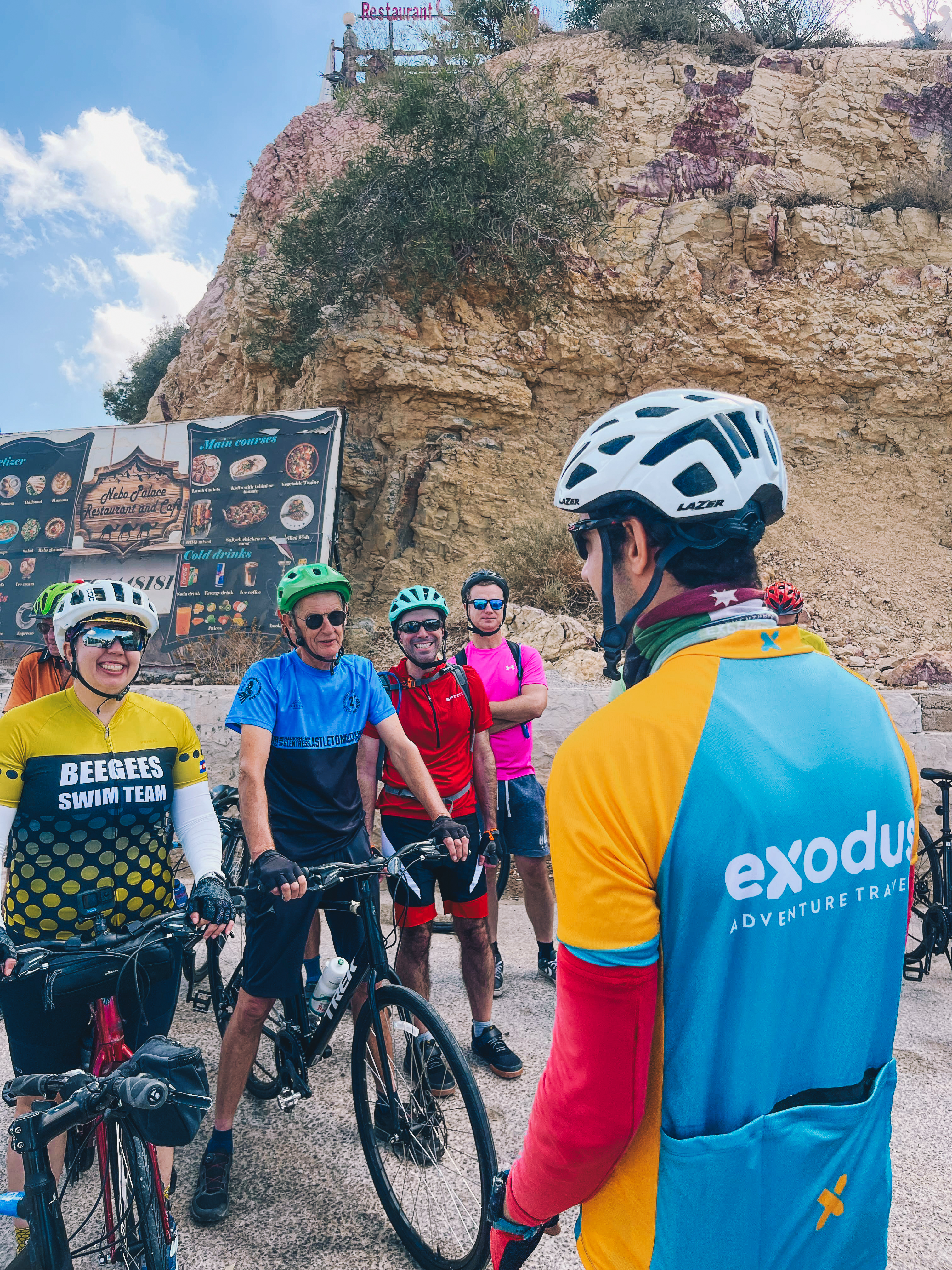
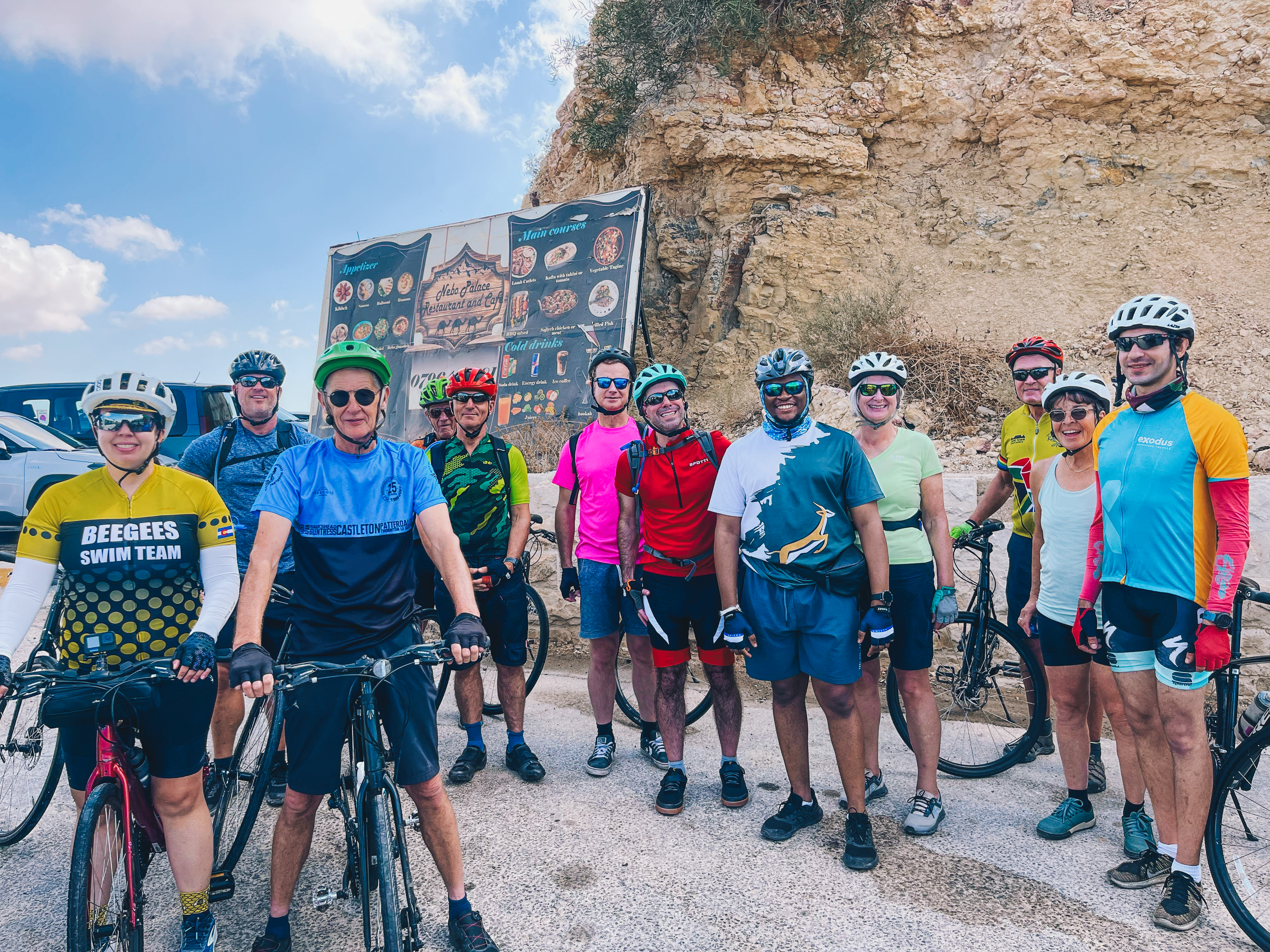
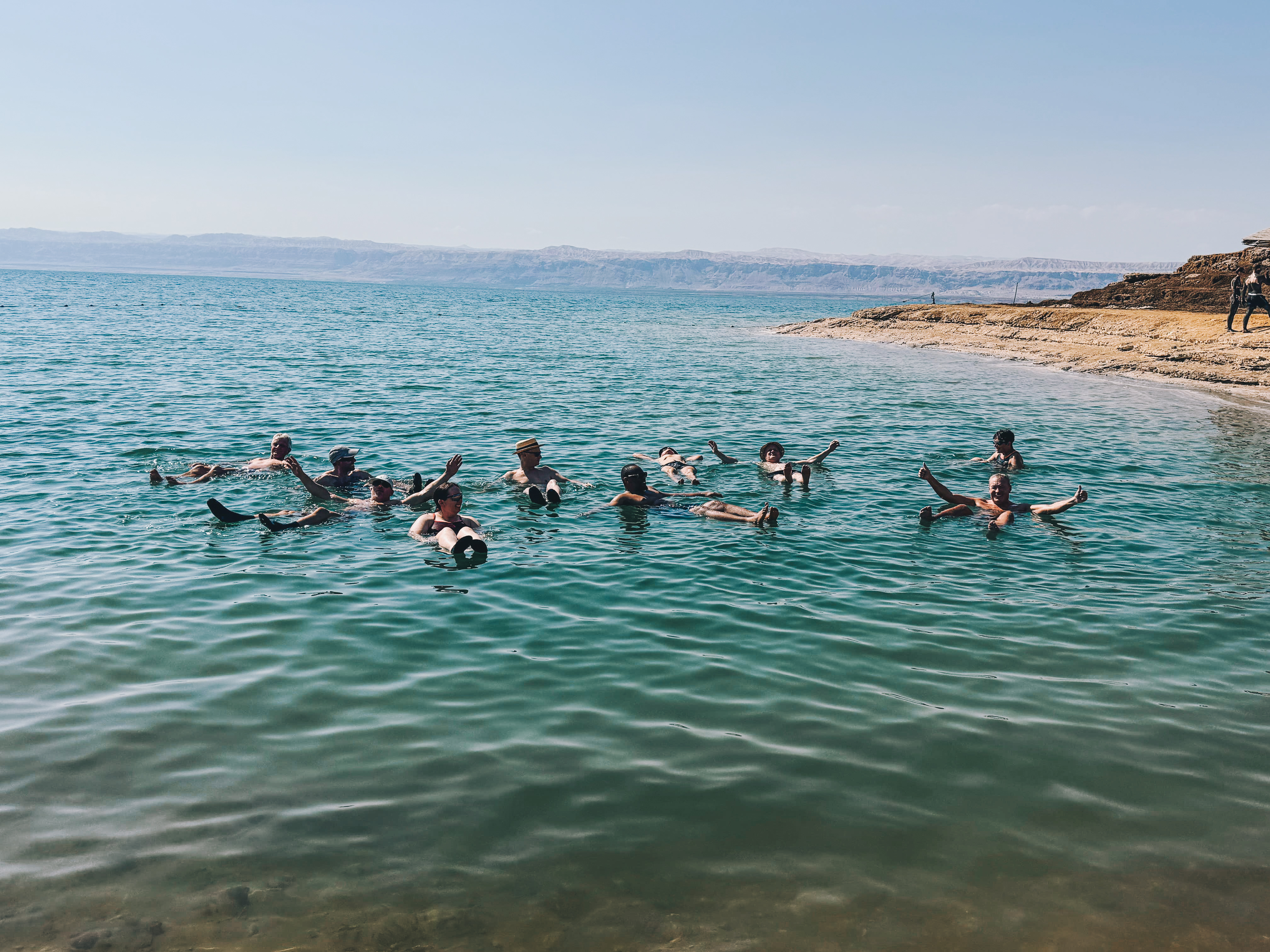
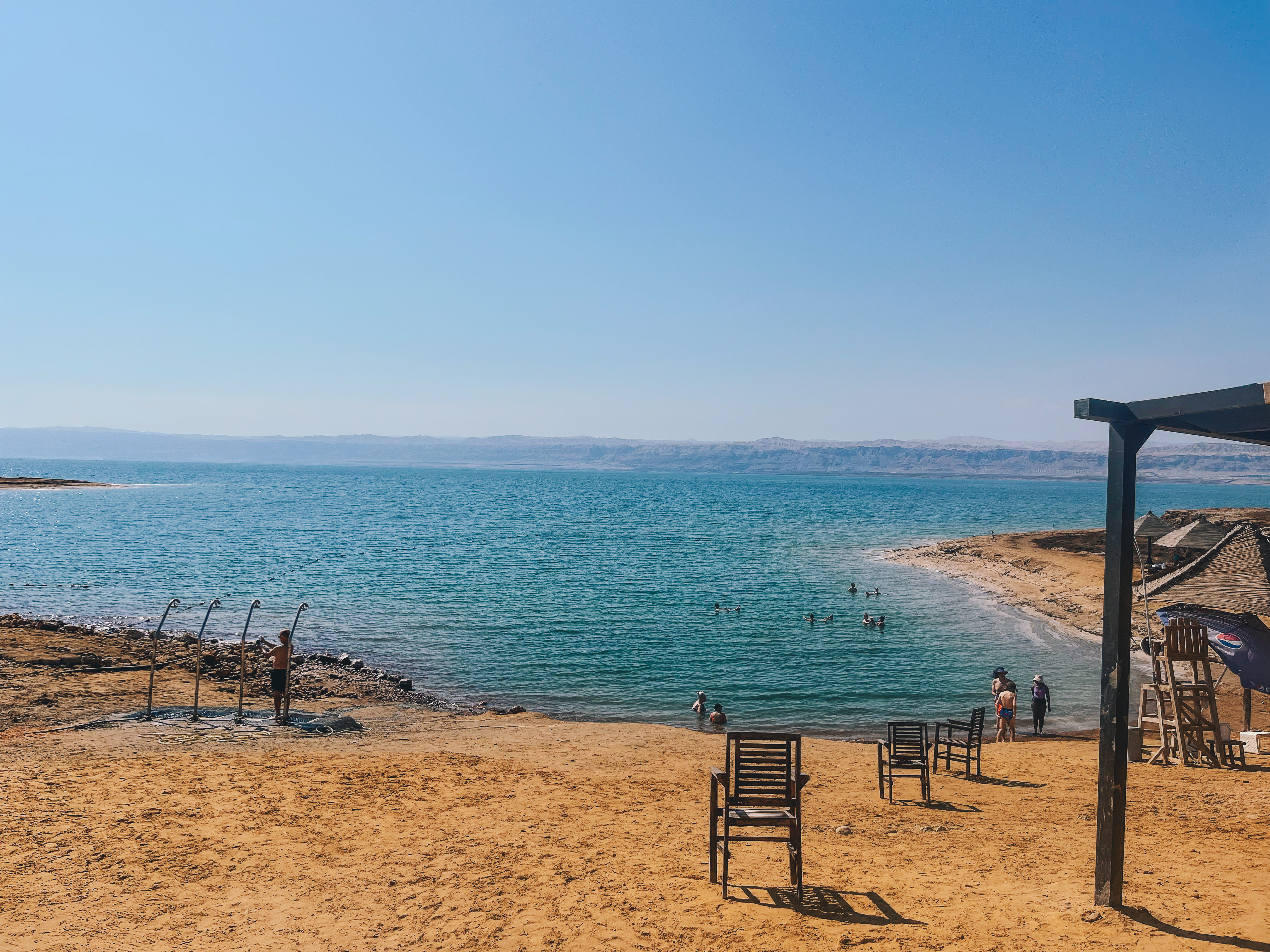
Today’s ride starts with a 4.3mi (7km) mild ascent up Mount Nebo, reputedly the burial site of Moses. We take a pitstop at the top for a spectacular view over the valley below. From here it’s a fantastic descent to the shores of the Dead Sea. Parts of this descent are quite steep but support will be at hand and you can take your time. We follow the coast on a smooth, paved surface to Suwaima where we can change and take a float in the waters. After a shower, it’s back on the bus for the long drive south (approximately three hours) along the Kings Highway towards Petra. In many places, the route is spectacular and there will be a couple of stops to admire the view on the way.
Meals: Breakfast,Lunch
Day 4
Explore the fascinating Unesco-listed city of Petra
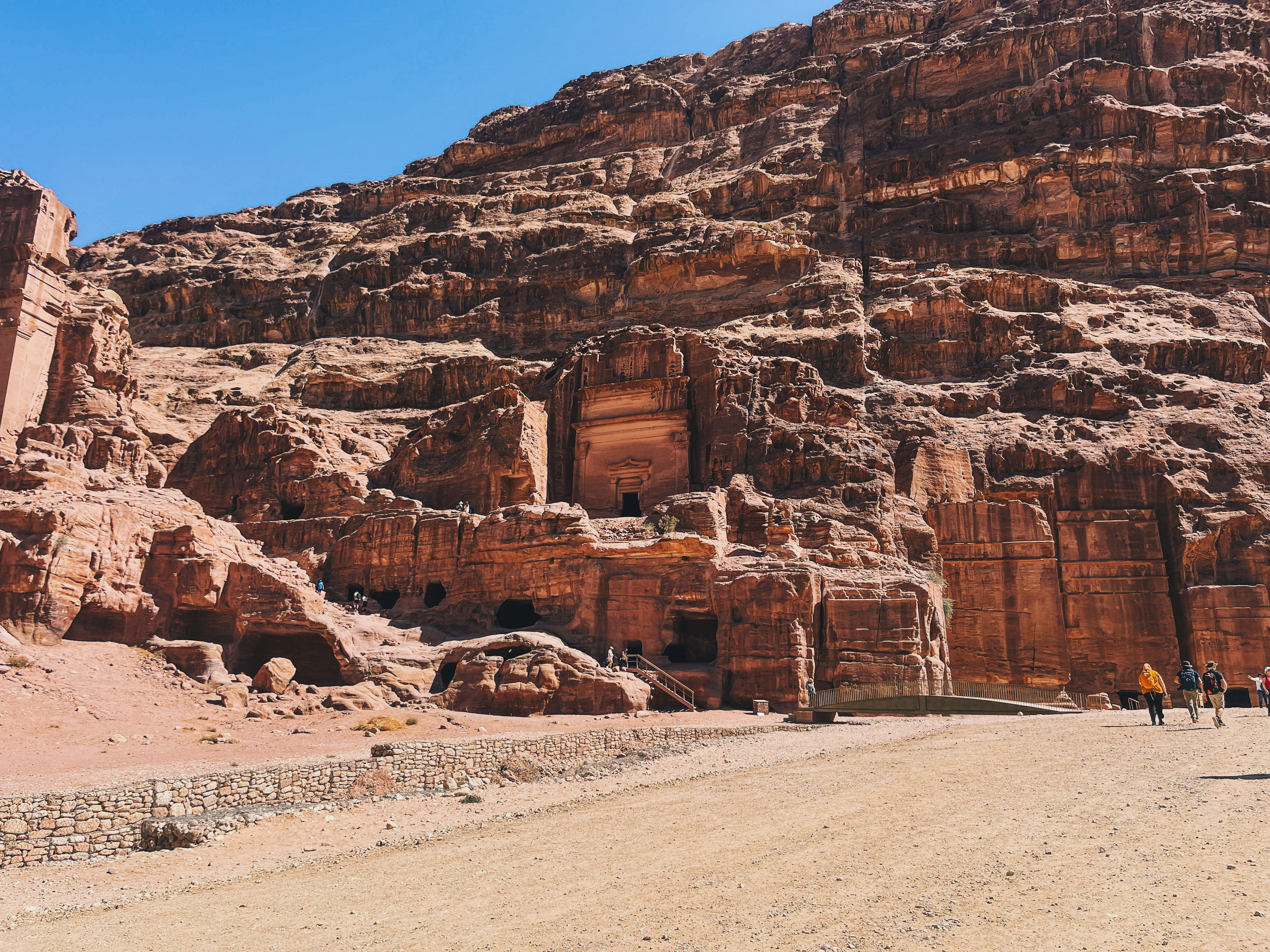
The so-called Red Rose City was hidden for centuries until the Swiss explorer Johann Ludwig Burckhardt rediscovered it in 1812. It was founded by the Nabateans, an Arab tribe that arrived here in the sixth century BCE. Building at Petra began in the third century BCE and continued through the Roman period, financed by taxes levied on the desert caravans. Two features of Petra are unique: firstly, it is a city made defensible by being built down a series of chasms, rather than on a hilltop. Secondly, it is built directly into the rock – beautiful red-and-yellow sandstone carved into the most impressive facades, which glow in the sunlight.
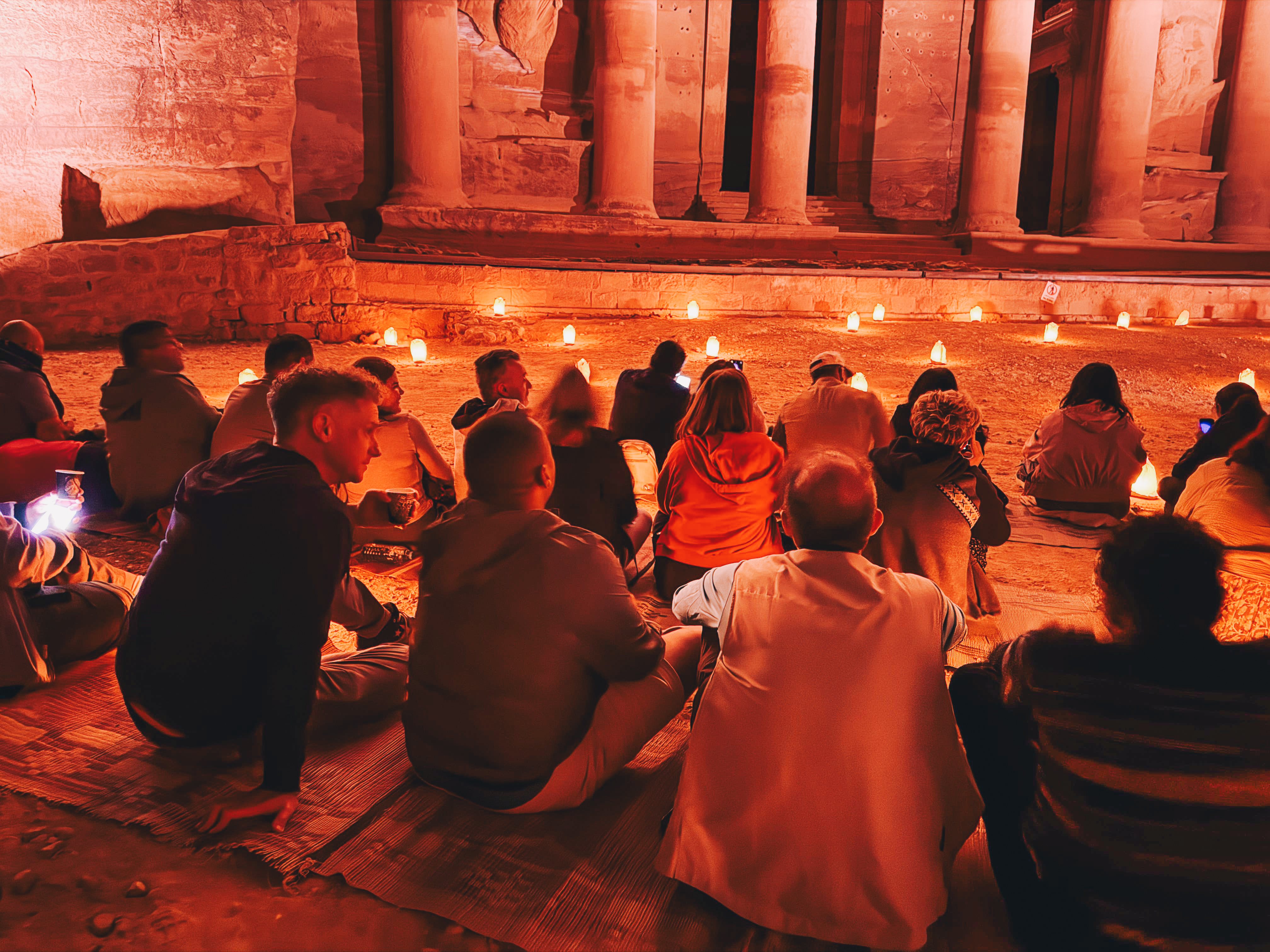
During our time in Petra we will have the opportunity to explore the site from all angles. We will walk down the narrow Siq, where a sandstone chasm rises 260ft (80m) either side of us and reveals El Khazneh (the Treasury) as we reach its end. There will also be an opportunity to explore the higher caves and the High Place of Sacrifice for a fantastic panorama of the whole site. At ground level, we pass the houses and tombs of the rich citizens, and the amphitheatre. A long walk beyond the centre is El Deir (the Monastery) with its superb facade topped by a huge urn. The Monastery is set in a more remote location of the site and there is the option to climb around 800 steps to reach it, but it is well worth it.
Meals: Breakfast
Day 5
Cycle to Little Petra
In the morning we cycle to the north of the main city to Little Petra and the Siq Al-Barid. A classical temple stands guard outside the miniature siq, which is believed to have been an important suburb to the city of Petra itself. The narrow file, only some 1,148ft (350m) long, is crammed with triclinia, water channels and cisterns. Of particular note are the remains of painted frescoes on plaster dating from the first century CE, which are to be found in one of the biclinia. Overnight in Petra.
Meals: Breakfast
Day 6
Ride via Wadi Araba to Aqaba on the Red Sea
It’s an early start today to avoid the heat for our first real desert experience. After a short transfer to Tayba village, we begin riding mostly on paved surfaces to Ar-Rajif. The road cuts through traditional Bedouin territory and is a seasonal stop for the nomadic shepherds of south Jordan so the chance of a local tea break is high. The road is in a good state of repair, with some sections having been recently resurfaced. However, parts are quite heavily potholed and there is a chance that sand and stones have blown across the road and make for a loose surface, so care should be taken. We head into the desert and follow the road down to Gharandal via Dilagha to Wadi Araba.
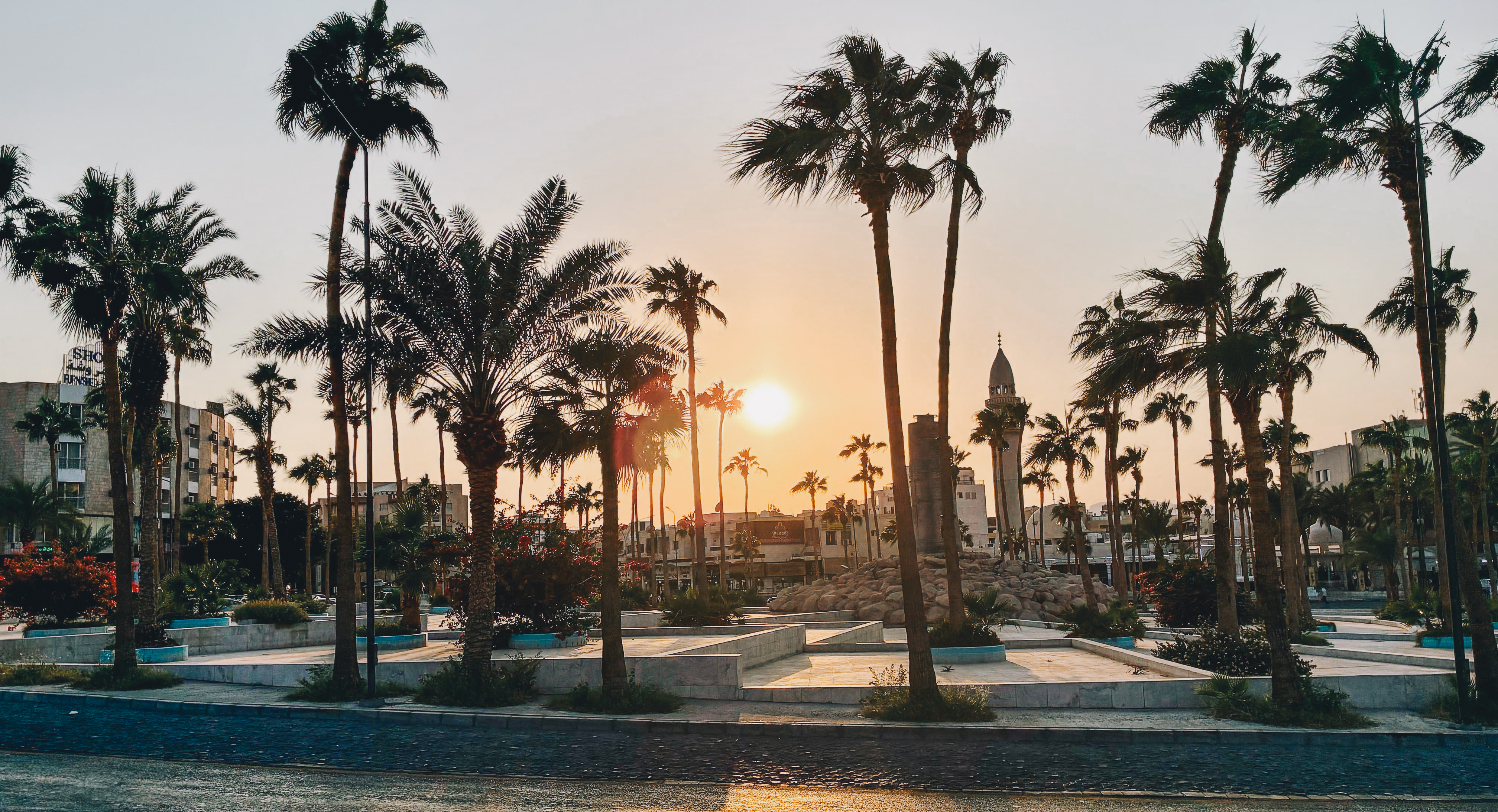
There are a few ascents and descents and it is our longest and hardest day of riding. However, it is also the most spectacular and rewarding. The road takes you on an amazing journey through the desert and makes for a very satisfying day of riding. This day is all about the cycling allowing us to immerse ourselves in the landscape. After our desert crossing, it’s a short drive to Aqaba on the Red Sea.
Meals: Breakfast
Day 7
Free morning • Drive/ride to Wadi Rum
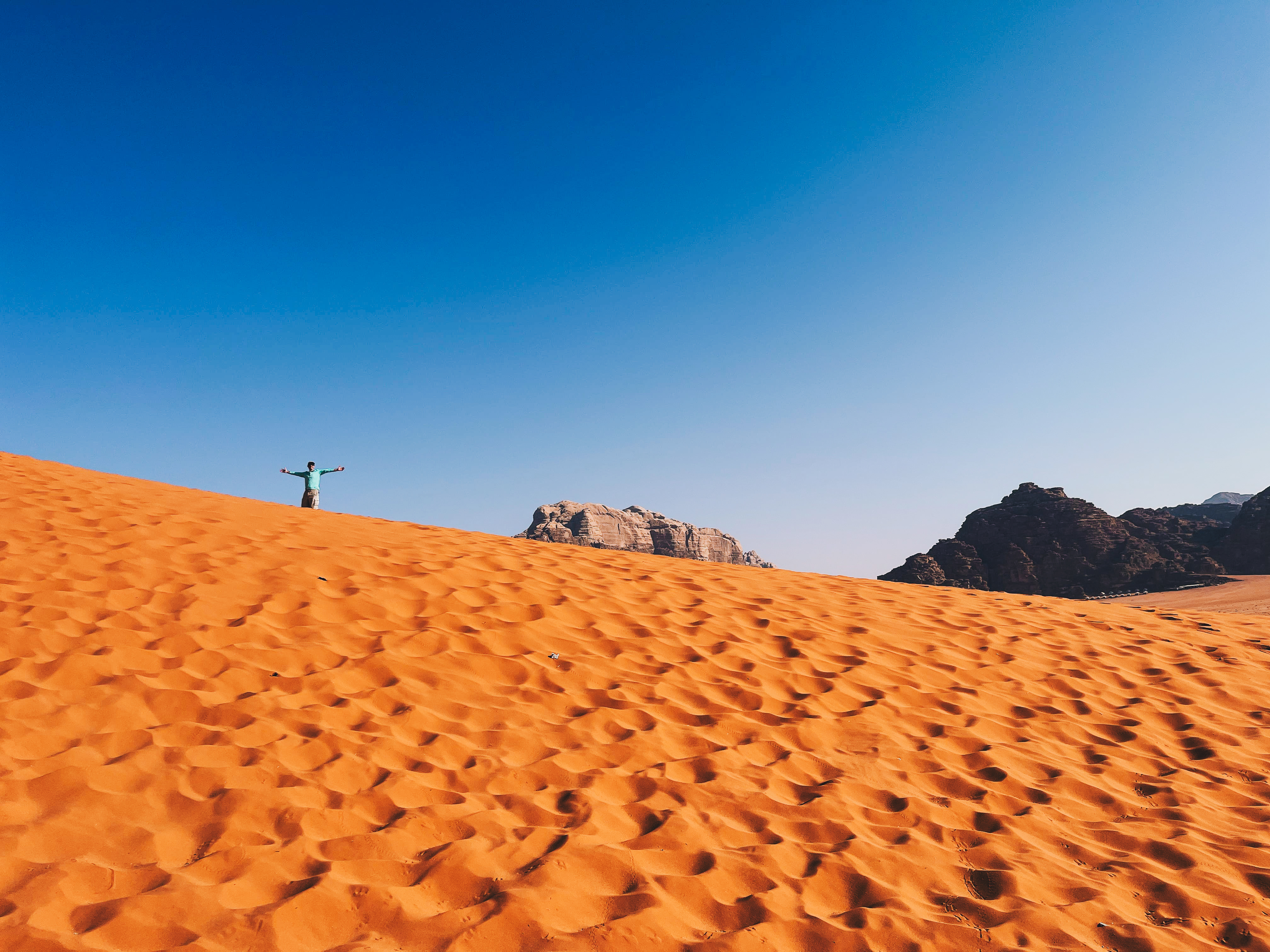
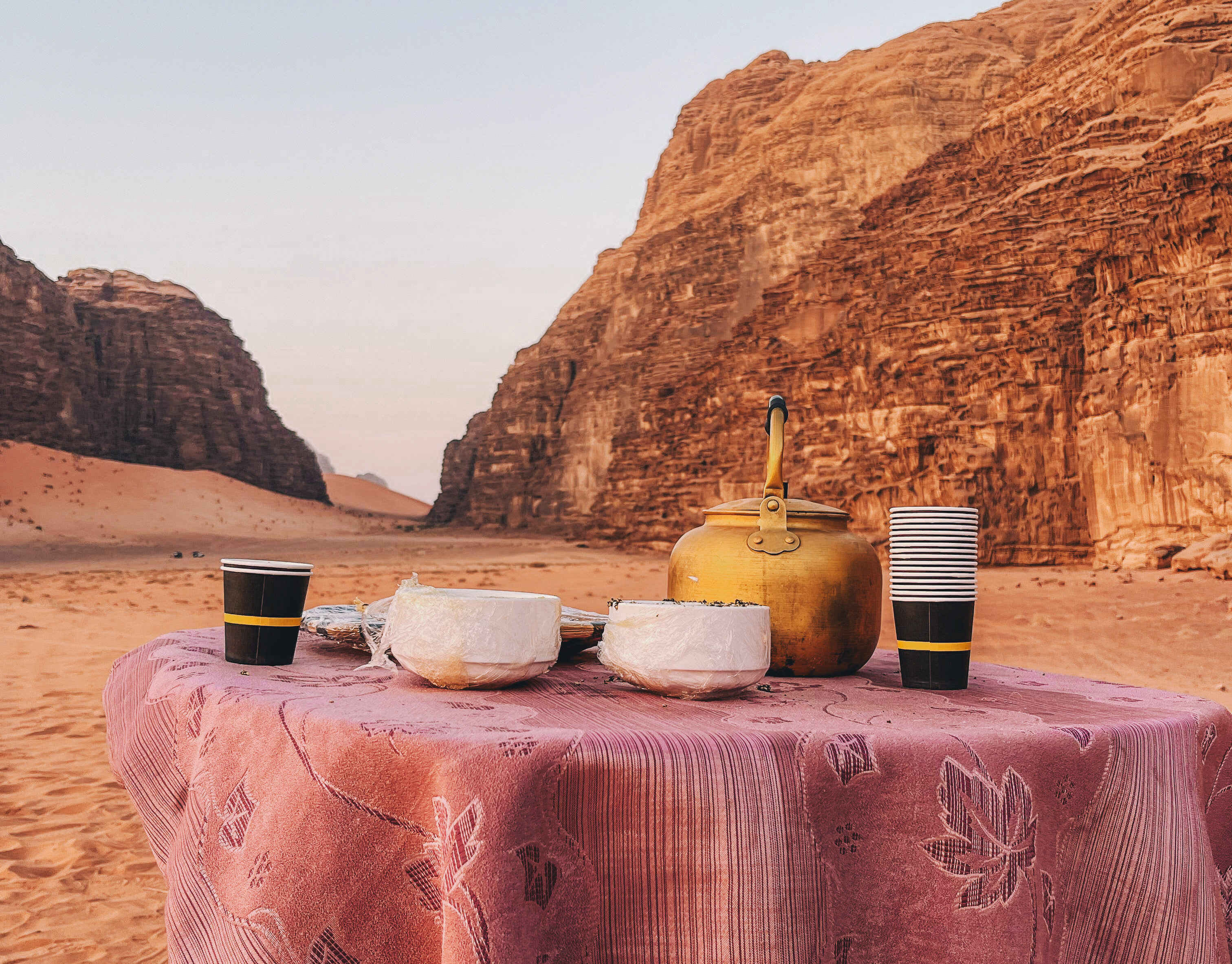
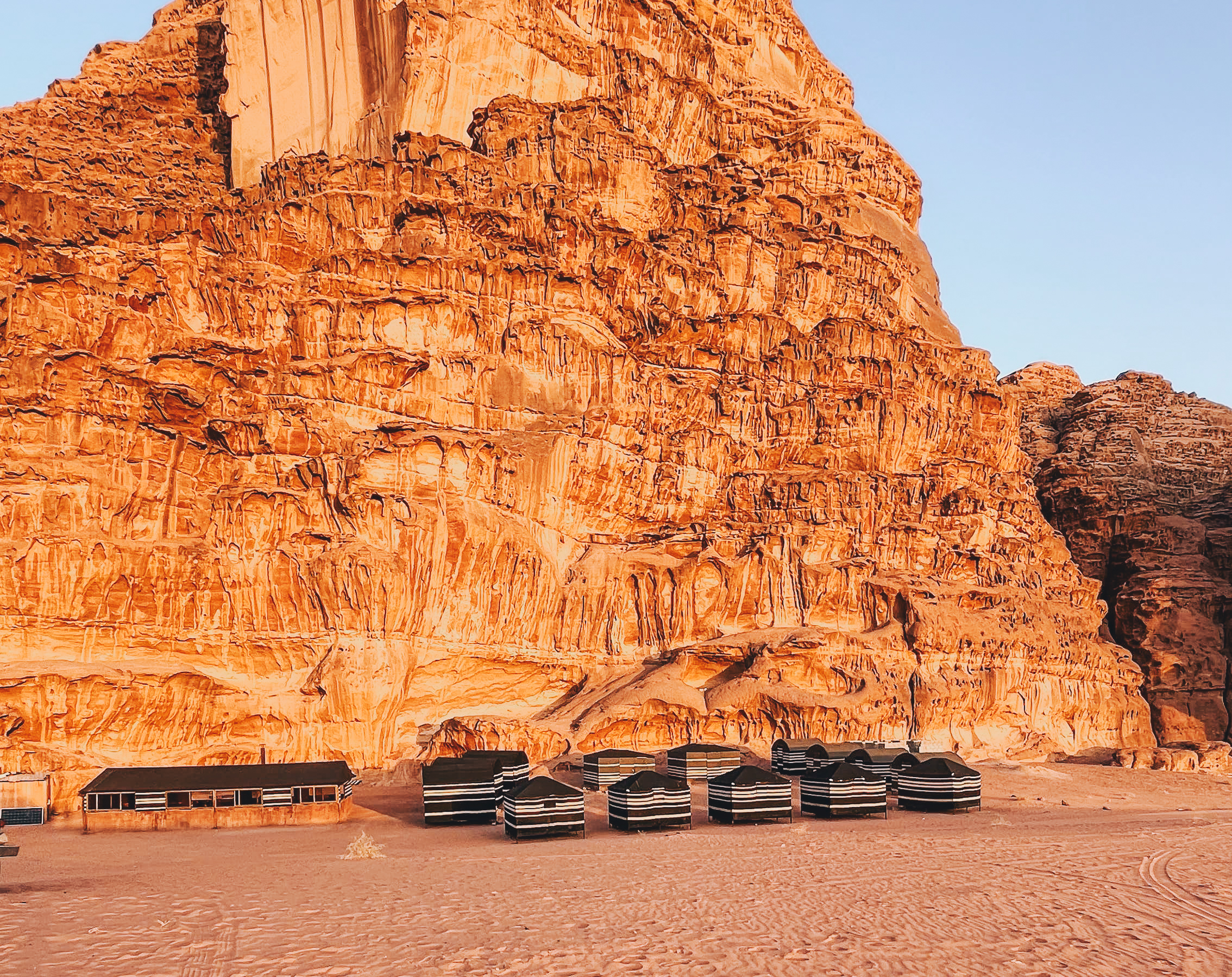
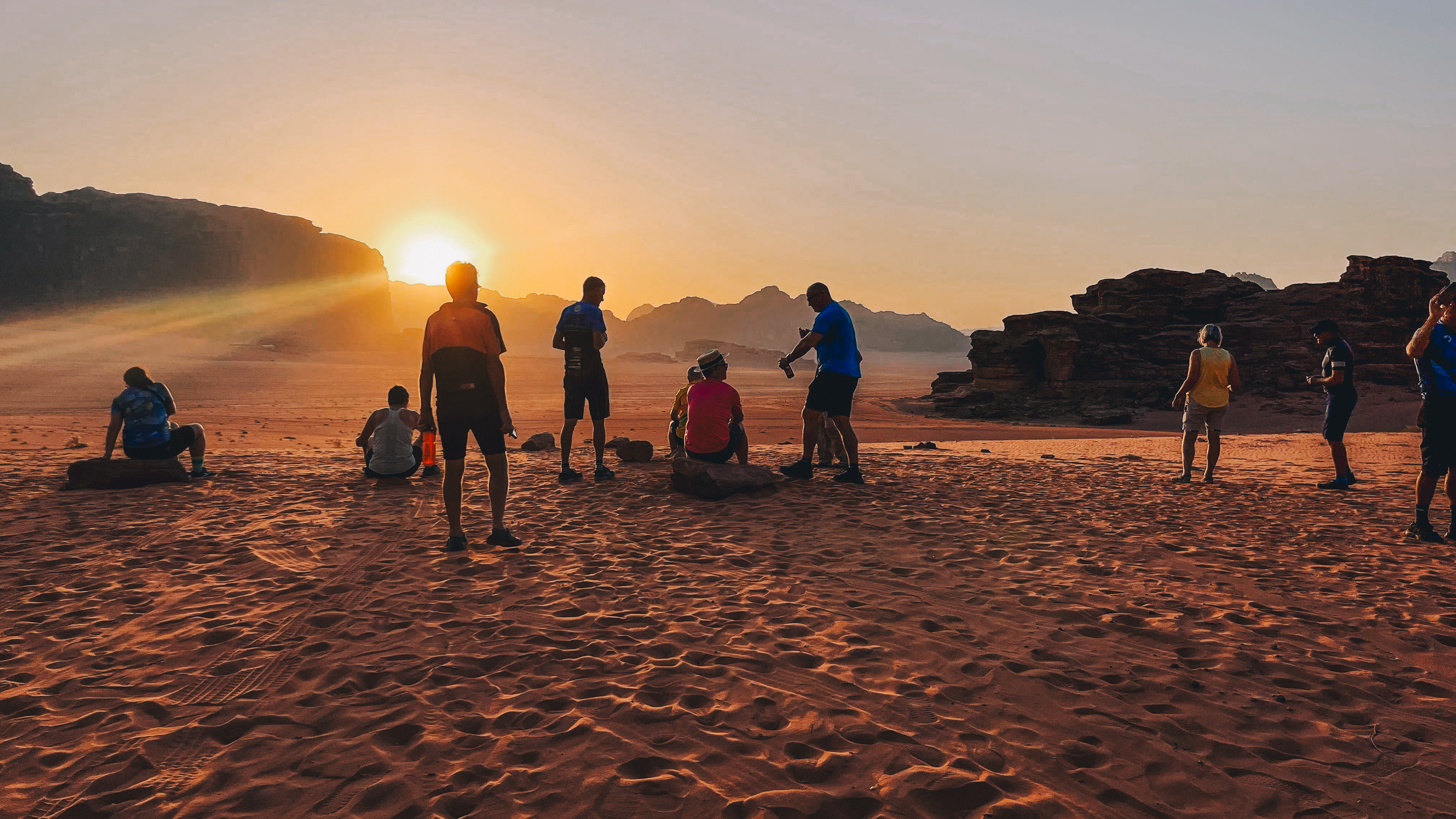
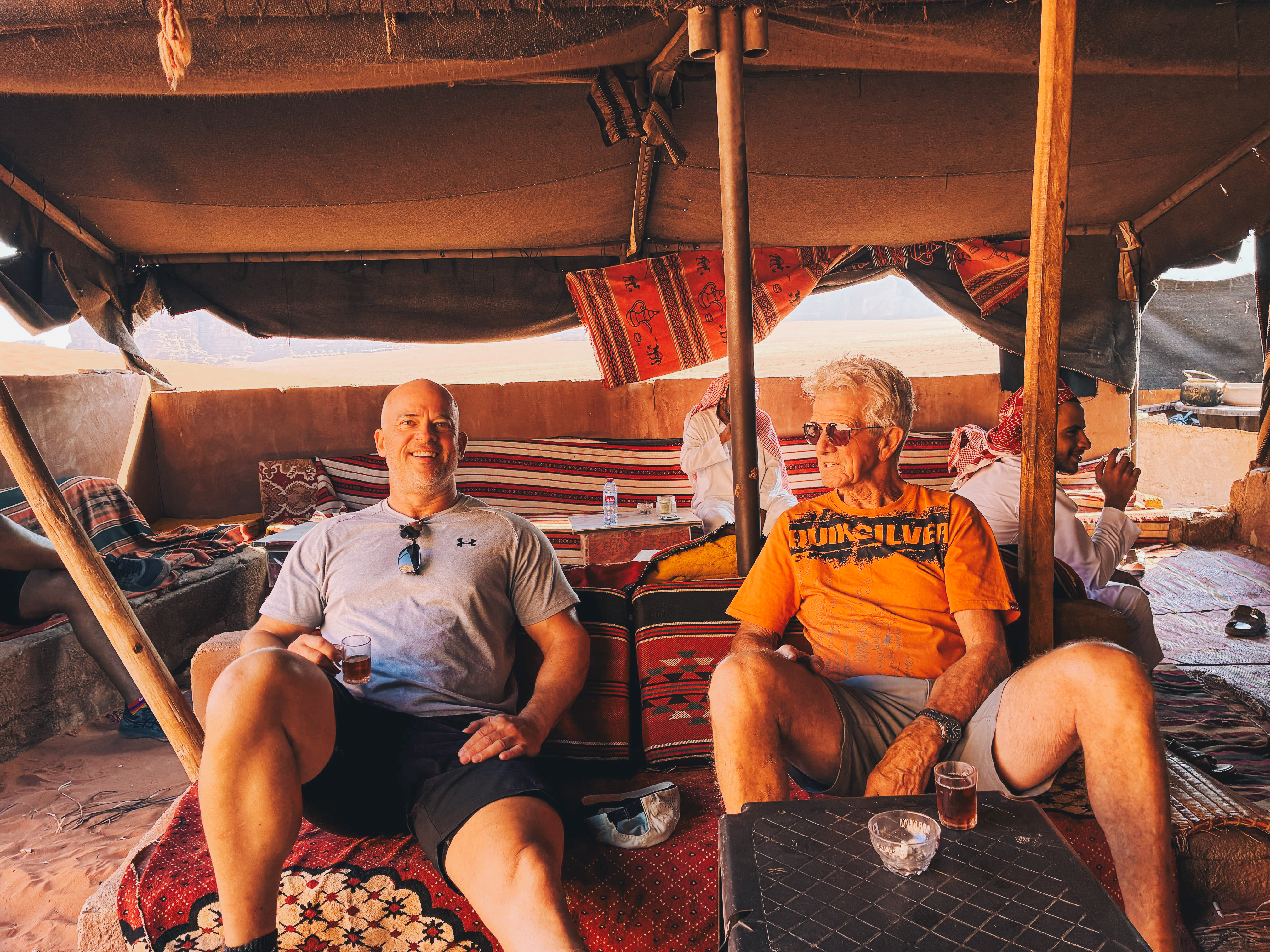
This morning we have free time to lounge on the beach, swim, or snorkel. The transport and entrance to one of the private beaches is included in your trip. The hire of snorkelling equipment is extra to be paid on the day. In the early afternoon, we will transfer out of town for around 45 minutes and then we will get on the bikes for the last time. This ride will take us into Wadi Rum on a relatively flat desert road. The desert scenery today is quite different to that experienced yesterday and will evoke a sense of more recent history than what we have been experiencing until now. This is where Lawrence of Arabia and Prince Faisal assembled the Arab tribes for the attack on Aqaba in the first world war and also where sections of the film Lawrence of Arabia (1962) were shot. Tonight we will experience Bedouin hospitality with a traditional meal, sweet tea and desert camping in goat-hair tents. We will be able to contemplate our week of adventure as we gaze up at the star-lit sky, warmed by a fire. If you like you can pull your mattress outside and sleep under the stars.
Meals: Breakfast,Dinner
Day 8
Jeep safari • Drive to Amman
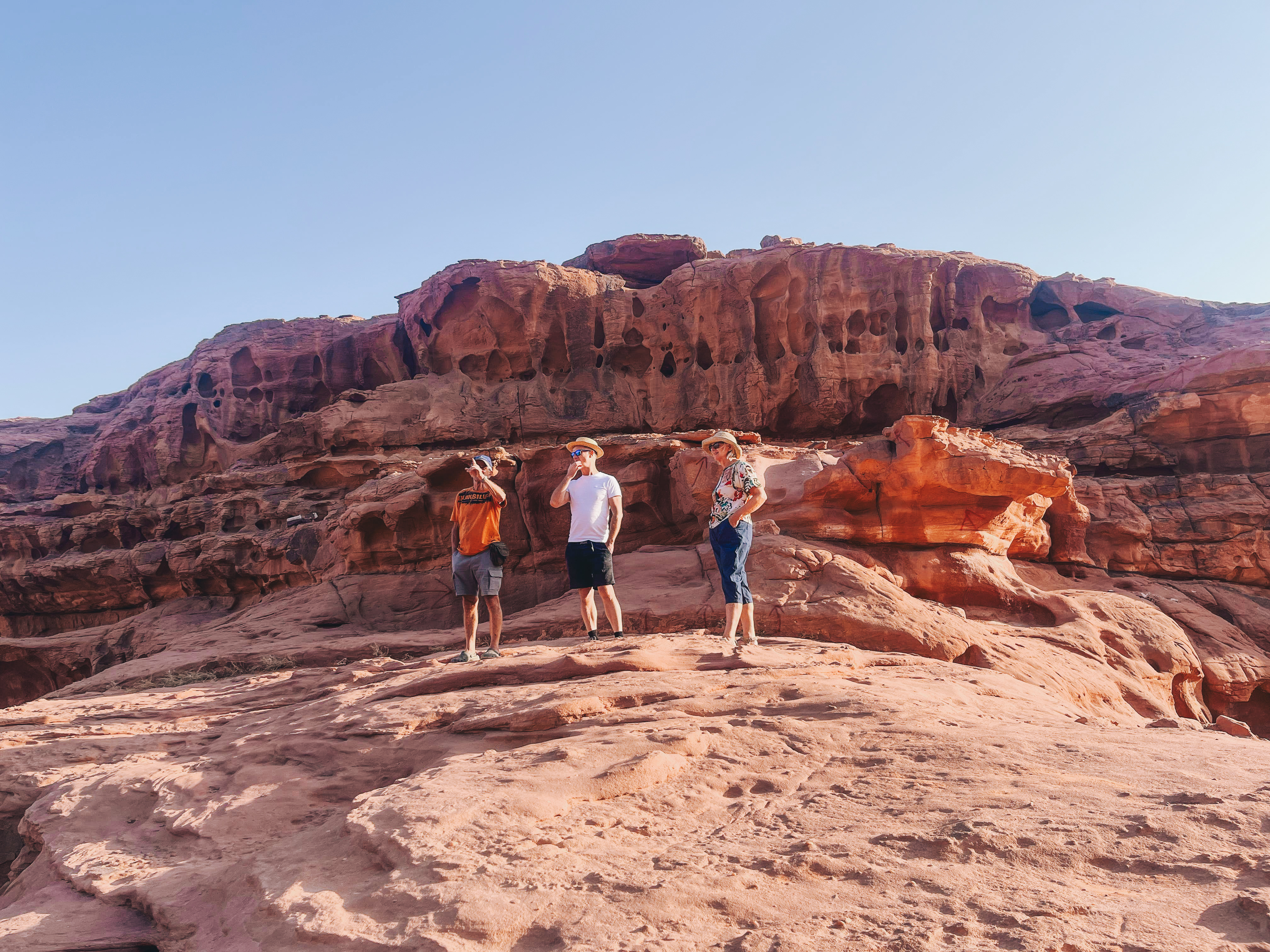
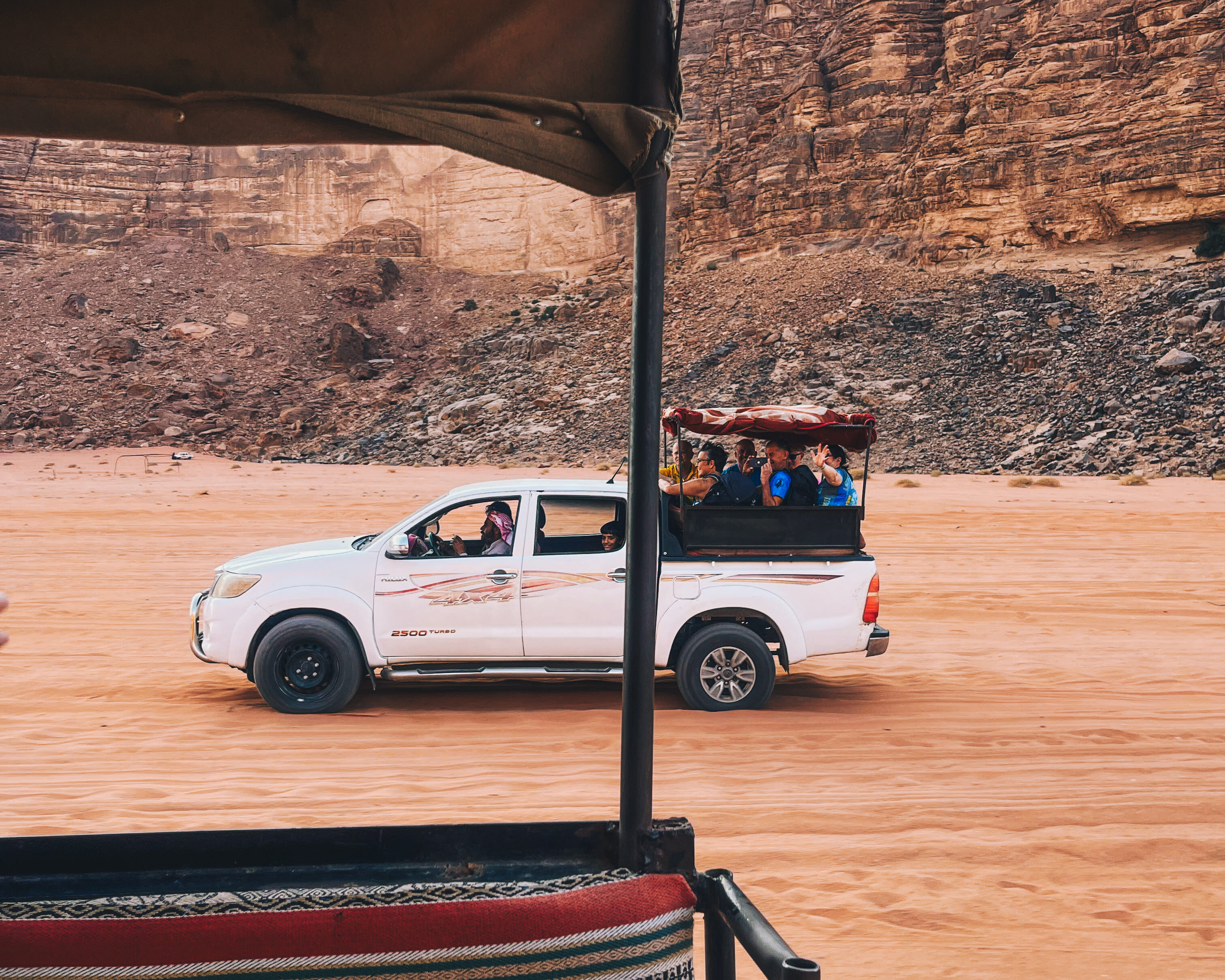
After breakfast we take a 4×4 into the desert for around two hours. Following lunch, surrounded by the vastness of the desert and towering rocky outcrops, we transfer back to Amman, a journey of approximately four hours with a stop en route.
Meals: Breakfast
Day 9
Adventure ends in Amman
Breakfast marks our final meal, an excellent chance to reminisce about an adventure packed with excitement. To make your return journey home easier, there’s a free shared transfer back to the airport.
Alternatively speak to your sales representative about our range of extensions, including time at the Dead Sea.
Meals: Breakfast
What’s included
What’s not included
Additional information
Food
While staying in hotels we usually eat in local restaurants and on some occasions the leader will take those who wish to a restaurant for a meze-style meal. A meze is made of lots of small dishes, eaten as a starter before a larger main course – a great way to taste lots of different regional foods in one sitting. These allow fast service and a good quality of food for the group and usually cost 10-15 Jordanian dinars per person. If you are vegetarian, please note that main meals are limited in choice; however meze is almost always available in restaurants and is a good, filling option. There is also a good choice of seafood available at the Red Sea. Meals are nearly always served with bread or in wraps so we recommend bringing some of your own snacks if your diet is more limited.
Alcoholic drinks: Alcohol is available in Jordan, but not widely. Many hotels do not sell alcohol and do not allow it to be brought in from elsewhere. It is best to plan ahead if you’ll want a drink, your tour leader will be able to tell you what’s possible and may be able to arrange a stop at a supermarket or liquor store (depending on location). In Petra, the unique Cave Bar in Petra Guesthouse is open to the public. A less expensive option is the bar in the Petra Palace Hotel which is also open to all.
Wadi Rum 4x4 Desert Safari
Switch gears and venture by 4×4 deep into Wadi Rum, crossing ochre dunes and gravel plains framed by monolithic cliffs. Your driver navigates to viewpoints and quiet corners where wind-carved stone tells of time and sand.
Expect stops amid towering rock formations and sand valleys to explore on foot and pause for photos and reflection. This short, exhilarating journey reveals the sculpted drama of Jordan’s most storied desert.
Madaba St George’s Church & Mosaic Map
Step into history as you step inside St George’s Church to view the sixth-century Mosaic Map of the Holy Land. This intricate floor mosaic charts biblical towns and trade routes, offering a vivid cartographic window onto the region as pilgrims once knew it.
Madaba’s tradition of Byzantine craftsmanship endures in the city’s workshops and churches. Your visit reveals why this “City of Mosaics” became a crossroads of faith and artistry, where tiny tesserae tell expansive stories.
Mount Nebo Ascent & Panorama by Bike
Pedal steadily to climb to Mount Nebo, cresting the ridge for sweeping horizons. From the summit, savor panoramic views over the Jordan Valley and Dead Sea, with the Judean Hills often visible on a clear day. The ascent rewards with cool air and a sense of achievement.
Linked in tradition to the site associated with Moses, Mount Nebo blends biblical resonance with highland serenity. The ride and viewpoint together showcase Jordan’s layered landscapes and spiritual heritage.
Dead Sea Float & Shore Break at Suwaima
Pause at the shores of the world’s saltiest lake and float in the Dead Sea with effortless buoyancy. Smooth on the famed mud, rinse, and relax by the waterline, where sunlight glints on mineral crystals and desert hills fall away toward the basin.
Bask in mineral-rich waters at the lowest point on earth. The sensation of weightlessness and the stillness of the Rift Valley make this a uniquely soothing interlude in your active journey.
Petra: Siq, Treasury & Monastery Exploration
Walk the canyon corridor to walk the narrow Siq as rose and ochre walls close in, emerging before El-Khazneh (the Treasury). Continue among facades and tombs carved by the Nabataeans, where steps and pathways weave through an ancient city hewn from stone.
Learn how Petra’s wealth flowed from caravan trade and water engineering, and consider the optional climb to the Monastery (El-Deir) for epic views. Every turn reveals artistry carved into rose-red sandstone and the ingenuity of a desert capital.
Cycle to Little Petra (Siq al-Barid) & Painted House
Spin out of Wadi Musa to cycle to Little Petra, a secluded enclave once hosting caravan merchants. Enter the cool chasm of Siq al-Barid, where facades, triclinia and water channels hint at social life beyond the main city’s bustle.
Seek out the rare Painted House frescoes, where delicate vines and figures survive from the first century CE. The ride’s gentle pace and archaeological richness make this a rewarding complement to Petra’s grand monuments.
Wadi Araba Desert Ride to the Red Sea
Settle into a steady rhythm to ride across Wadi Araba, where rust-red escarpments yield to shimmering plains. Expect desert roads and sweeping descents punctuated by gentle climbs, with support on hand as you trace the long corridor south toward the coast.
The scenery shifts from highland edges to open sands in the Bedouin heartlands. Occasional tea stops and wide horizons turn this longest ride into a meditative journey that culminates by the Red Sea.
Red Sea Private Beach Visit with Optional Snorkeling
Unwind by the Gulf of Aqaba and relax on a private Red Sea beach. With access included, find a shady spot, wade into calm shallows, or swim or snorkel in clear, warm waters alive with flickering reef fish close to shore.
Snorkeling equipment is available to book on tour for a small fee. The combination of desert backdrop and translucent sea creates an easygoing coastal pause amid your cycling adventures.
Cycle into Wadi Rum Desert Landscapes
Follow a quiet approach to ride into Wadi Rum, where red sands and granite massifs form natural amphitheatres. The route’s gentle gradients invite you to linger over views of towering sandstone jebels and long sightlines under high, desert skies.
Nicknamed the “Valley of the Moon,” Wadi Rum’s story spans petroglyphs, caravan tracks and landscapes linked to Lawrence of Arabia. The cycling adds a contemplative cadence to this cinematic terrain.
Bedouin Camp Overnight with Zarb Dinner & Stargazing
Arrive to a private camp and share a traditional zarb dinner, slow-cooked underground and served with fresh salads and breads. Sip sweet tea as cliffs catch the last light and embers glow.
Later, sleep in goat-hair tents sheltered by rock walls or pull a mattress outdoors to stargaze under desert skies. Stories, music and the scent of woodsmoke make this an intimate window onto Bedouin hospitality.
Meet Your Tour Leader & Bike Fitting Orientation
Start strong as you meet your tour leader and cycling crew for a concise briefing on safety, terrain and local riding customs. Get hands-on as mechanics get fitted to your bike, adjusting saddle height, reach and controls for comfort and efficiency.
Familiarize yourself with the support vehicle, water refills and daily route notes, and learn the support plan designed to keep the group moving smoothly. A short test spin settles nerves before the adventures begin.
E-Bike Upgrade for Jordan’s Hills and Deserts
Enhance your ride and upgrade to an e-bike for steady assistance on climbs and headwinds. Power-assist lets you keep cadence on longer ascents while still enjoying the flow of desert descents and highland flats.
This is an optional add-on at additional cost, subject to availability. It helps you tackle climbs with power-assist and maximize sightseeing energy. Speak with your leader to book on tour at additional cost.
Snorkeling Equipment Rental in Aqaba
Make the most of Aqaba’s shallows and rent snorkel gear to explore coral bommies just off the beach. Glide over soft corals while butterflyfish and damselfish flicker in and out of the reef.
This is an optional, locally payable extra. It’s an easy way to spot Red Sea corals and reef fish without a boat trip and can be booked on tour for a small fee via your leader.
Jerash Roman City: Oval Plaza, Cardo & Theatres
Discover a guided visit to Jerash, the Decapolis city famed for its limestone streets and grand civic spaces. Pass beneath Hadrian’s Arch, stride across the Oval Plaza and Cardo Maximus, and take in the acoustics of the South Theatre while learning how traders and legionaries once animated this provincial hub.
Explore temples and forums that reveal a fusion of Hellenistic and Roman taste, including the hilltop Temple of Artemis. Intricate paving, colonnades and intact city planning make Jerash one of the Middle East’s most evocative classical sites.