Your itinerary

Day 1
Adventure starts in Delhi
Our adventure begins in Delhi, a colourful and chaotic city full of architectural masterpieces.Around 6pm, say namaste to your tour leader and fellow travellers, when we gather as a group for the first time to get to know each other and learn more about the adventures ahead.Your tour leader then ensures a big welcome by arranging a group dinner at a nearby restaurant.Want more time in Delhi? Secure pre-tour hotel nights through your sales representative.
Meals: Dinner
Day 2
Fly to Leh; afternoon orientation walk
We start very early for the flight to Leh. We often have to leave the hotel around 2am and drive to the airport for the very early morning (but highly spectacular) flight over the Himalaya to Leh. If the weather is good and the flight goes on time, we should be in Leh early. The rest of the day is free to relax and acclimatise to the altitude (11,485ft/3,500m). In the morning, we rest and catch up on sleep; in the afternoon, we have a gentle orientation walk around Leh and its bazaars.
Meals: Breakfast
Day 3
Sightseeing in and around Leh
Today there is a sightseeing tour to two of the major gompas (Tibetan Buddhist temples) in the area. We first drive to Shey, a former royal palace of the Ladakh kings. Inside is a small temple containing a 350-year-old Buddha statue made of copper and gold. From Shey, we walk across fields to Tikse (about 1hr 30min), where we visit a hilltop monastery whose red and white buildings can be seen for miles. A recently built temple contains a magnificent image of the Future Buddha. We have lunch at Tikse and return to Leh. The rest of the afternoon is free to explore. There is a full trek briefing and gear check today.
Meals: Breakfast
Day 4
Acclimatisation walk; optional jeep ride to Khardung Pass
Today we have an acclimatisation walk round the Leh Valley. Set above Leh on the Namgyal Hill are the ruins of the Old Royal Palace. From here, a winding path takes us to Tsemo Monastery, where we can see the whole of Leh and the surrounding villages. We continue the walk via Sankar to the recently built Japanese Peace Pagoda. This huge stupa (Buddhist shrine) overlooks Leh and we can see the Stok mountain range across the valley. Today there is an optional jeep safari to the Khardung Pass; at 18,379ft (5,602m), one of the highest motorable roads in the world. The trip to the top and back takes roughly four to five hours and can be booked and paid for locally. Your leader will have details. If you do the jeep safari, this will be in the morning and you can do a walk in the afternoon.
Meals: Breakfast
Day 5
Drive to Stok; trek to Mankarmo
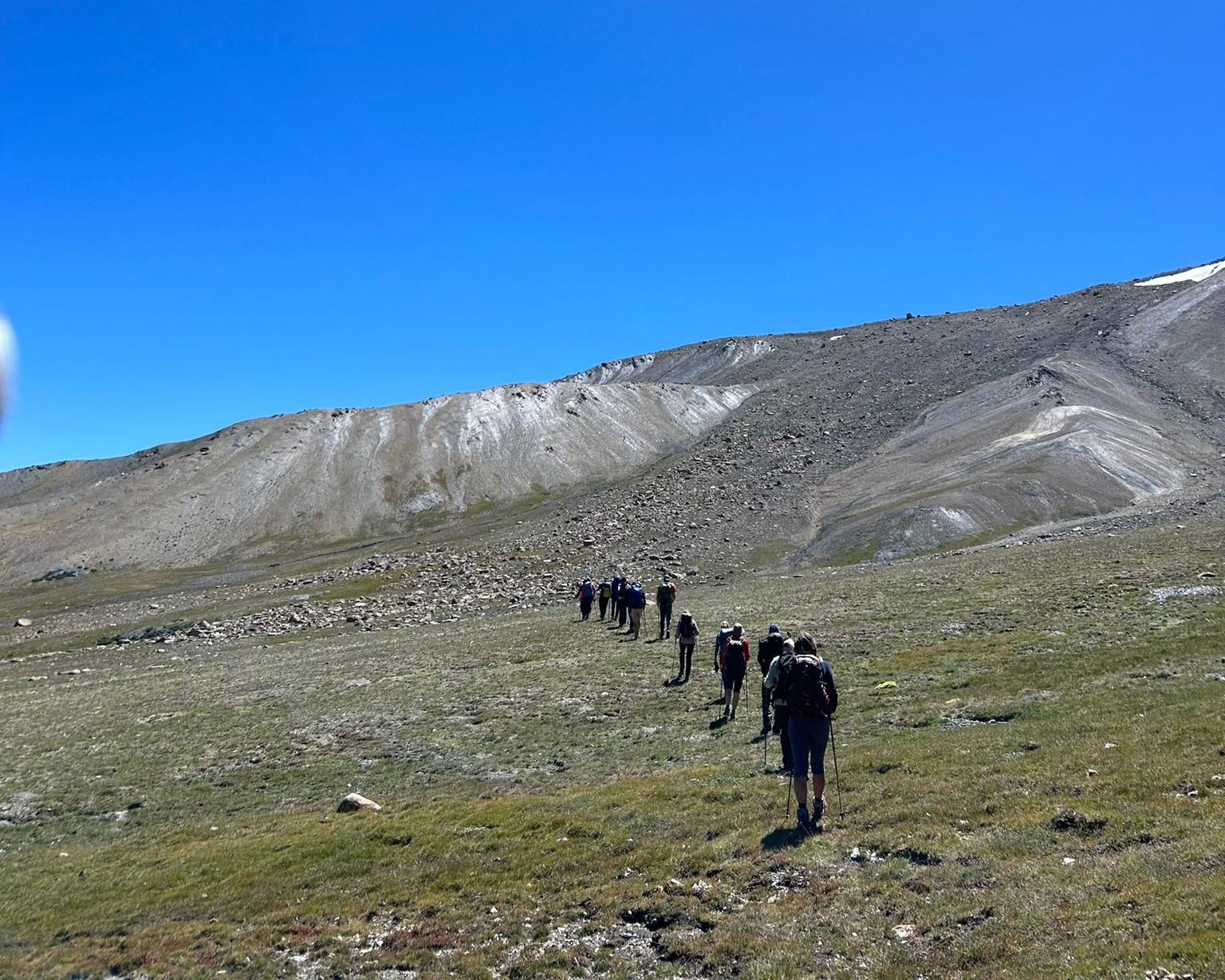
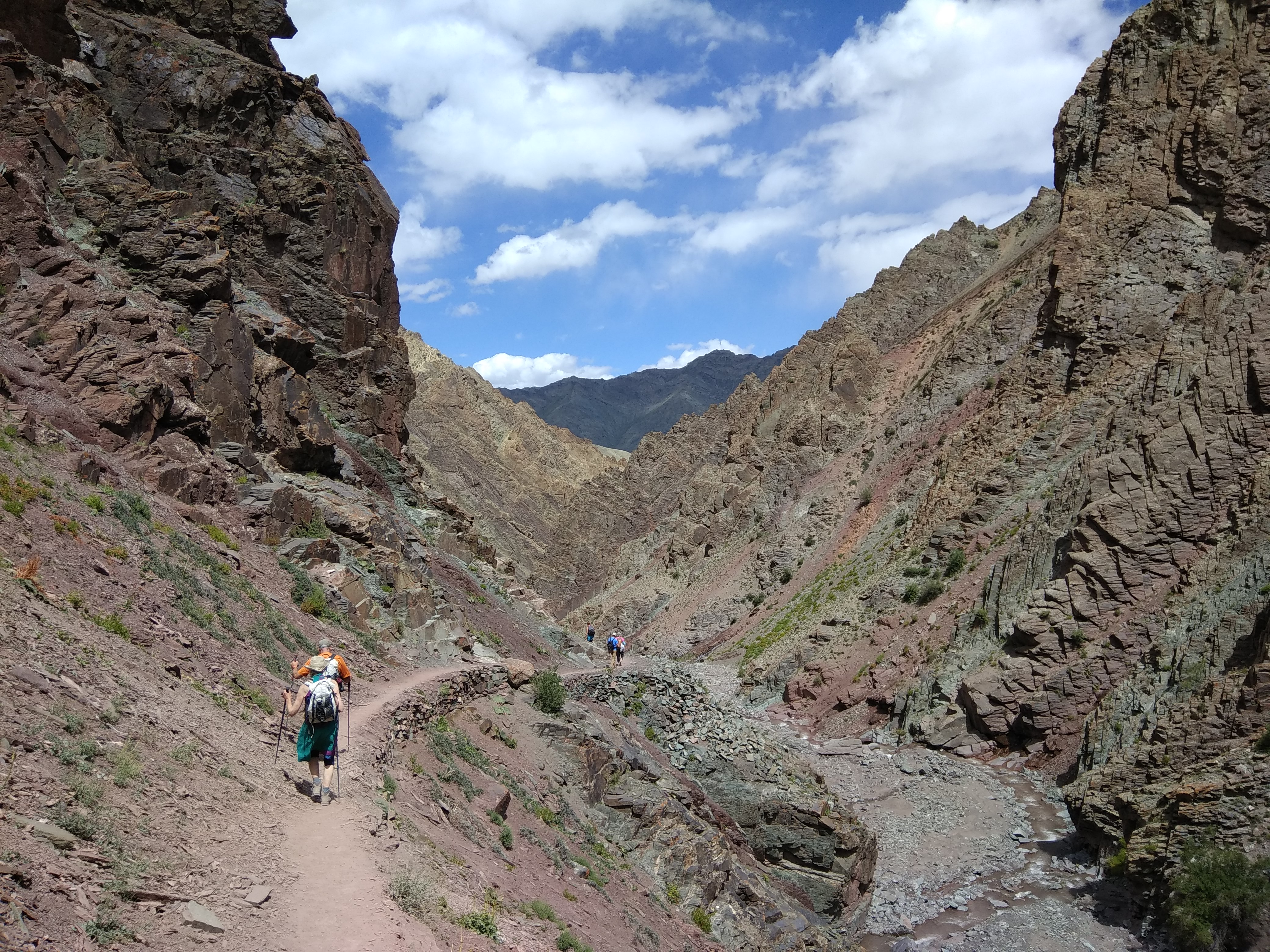
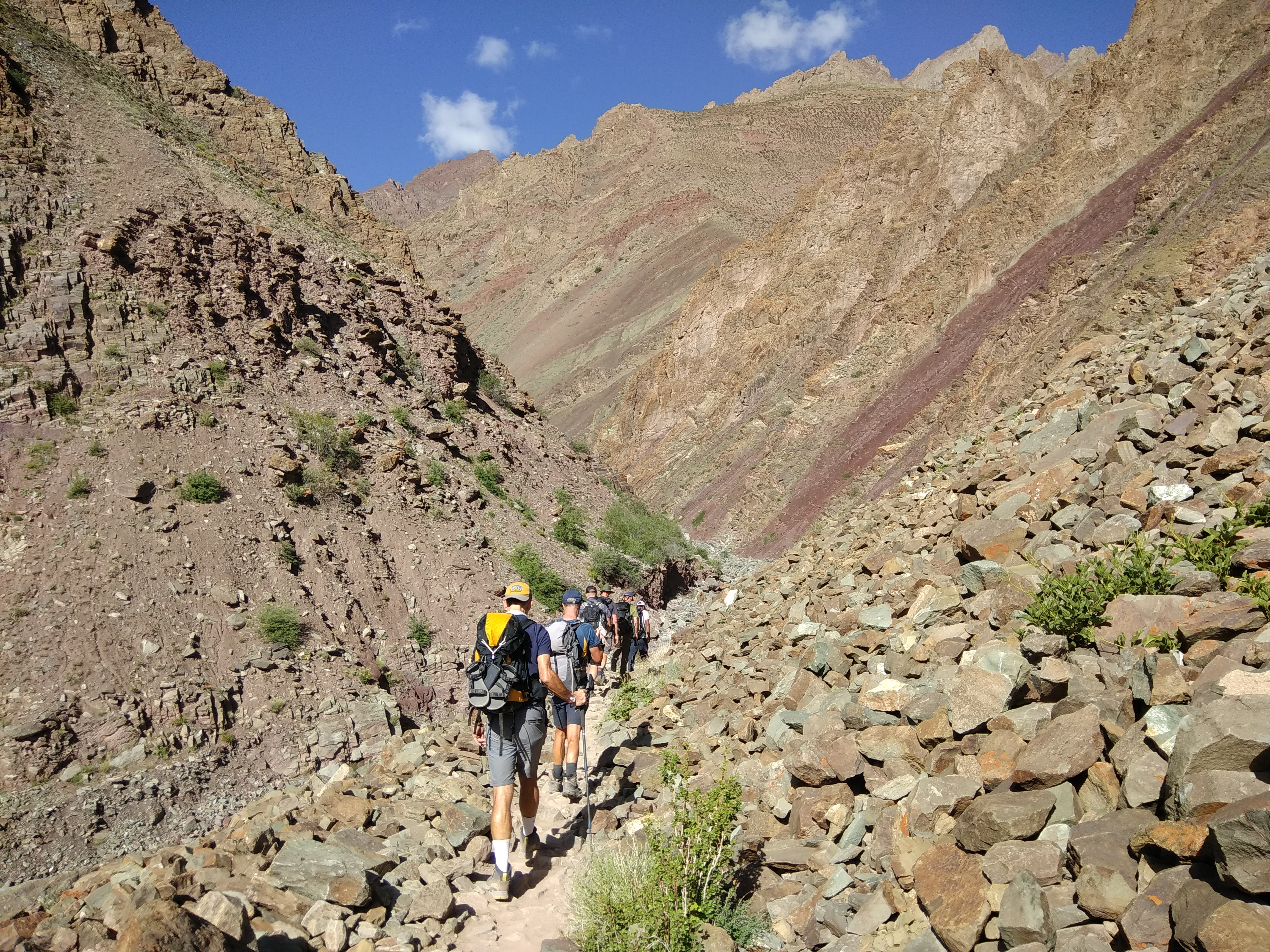
We leave Leh this morning and drive to the start point of our trek. The road follows the Indus River for a short while through Choglamsar before crossing the river and then climbing on a side road to Stok. We start trekking at the end of Stok village, taking an easy trail that winds up a spectacular valley. We follow the Stok River most of the way (and may have to cross it once or twice), with multi-coloured rocks towering above us as we ascend. The walking is easy and not steep; it takes five to six hours to reach our first camp at Mankarmo. Look for herds of blue sheep that graze on the hillsides here.
Meals: Breakfast,Lunch,Dinner
Day 6
Cross the Matho La to Ganpoche
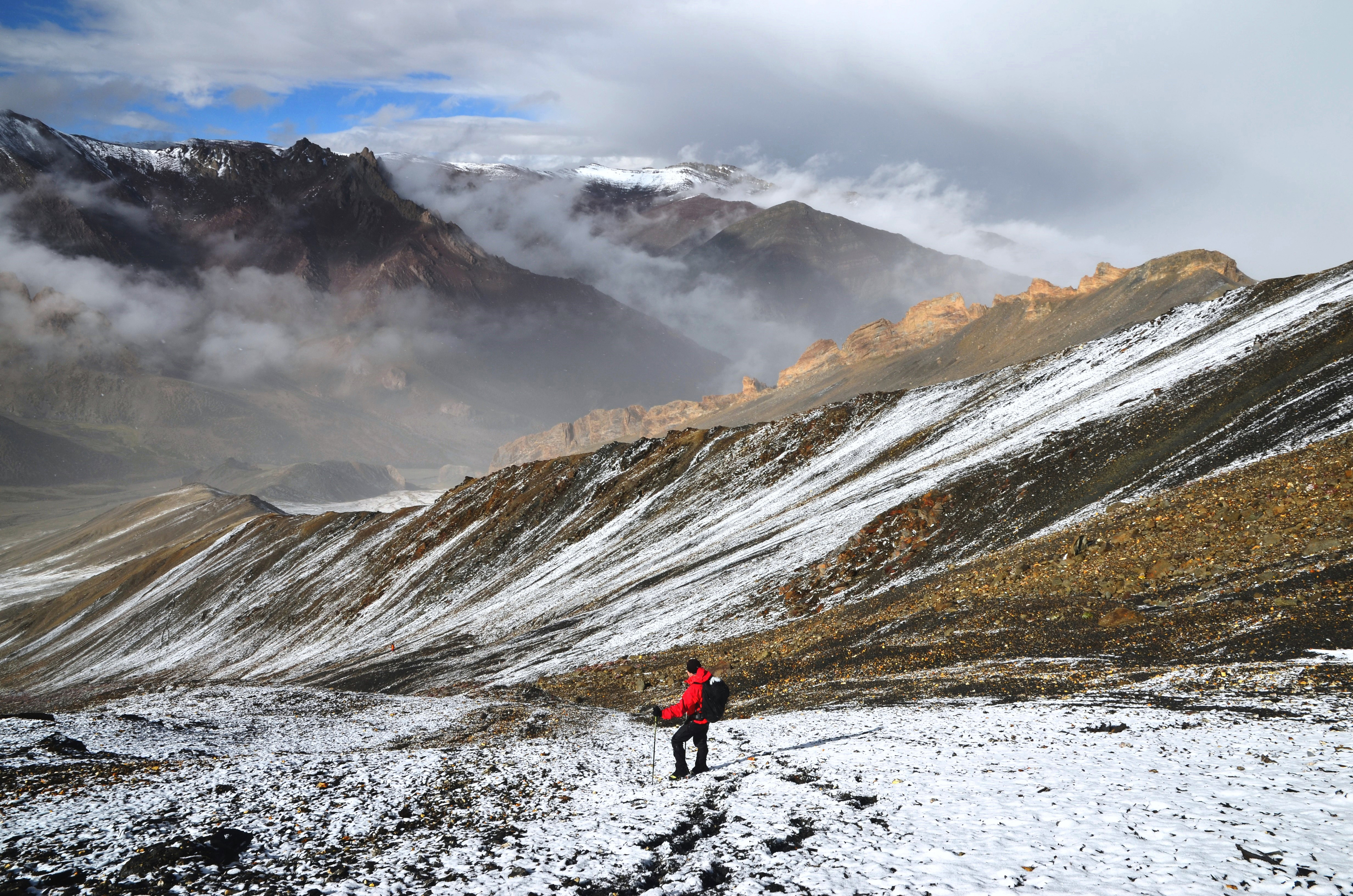
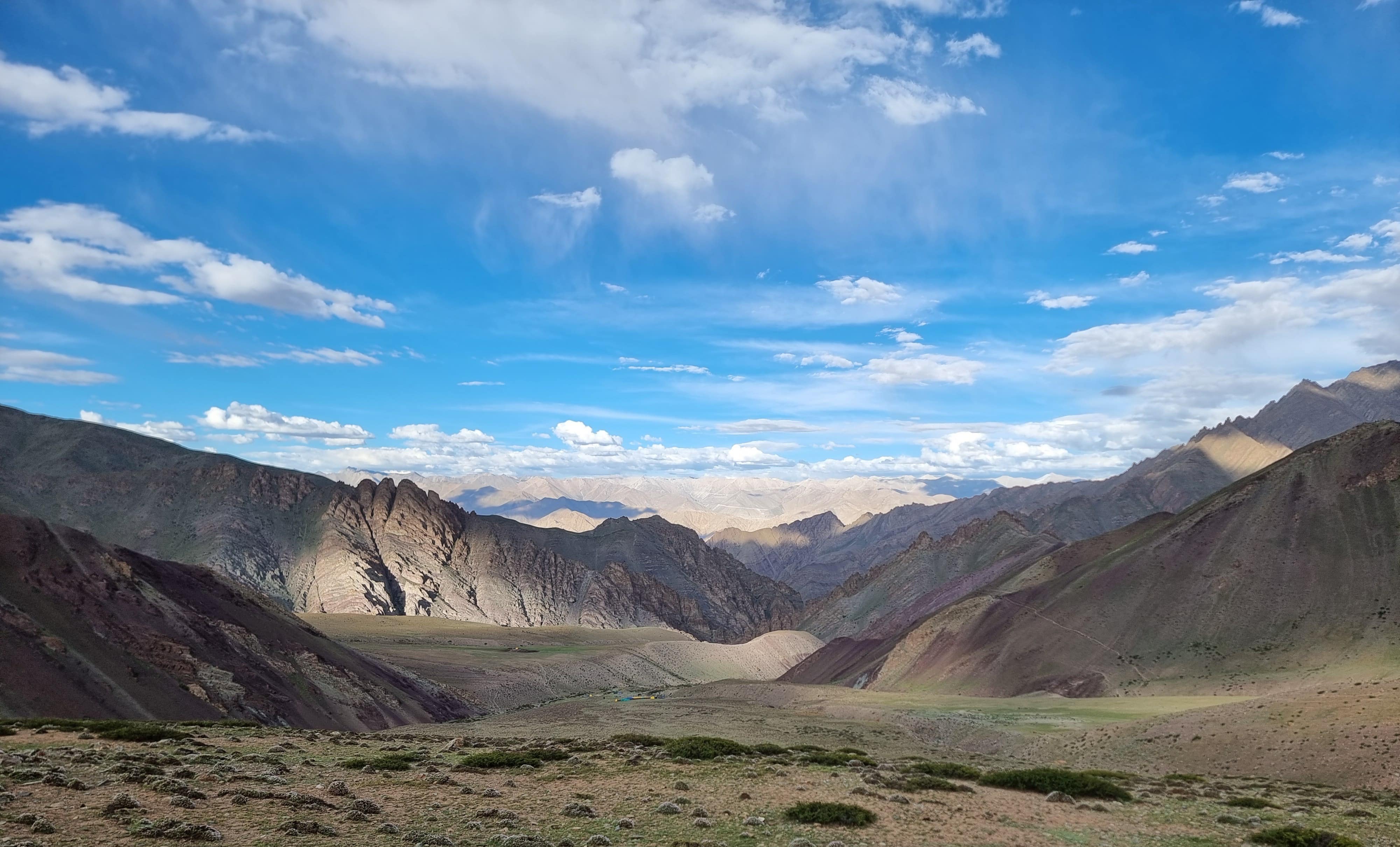
We cross our first pass today. The trail takes us gradually to the top of the pass, the Matho La, at 16,275ft (4,960m). The ascent is long but not too steep and, as we ascend, the views become more and more spectacular with the magnificent rock formations of the Ladakh mountains surrounding us. The dramatic mountains in various shades of purples, greens and browns can be seen for miles in every direction. From the pass, we descend easily to our campsite at Gangpoche, which is located by some shepherd huts, with views up to the Matho mountains.
Meals: Breakfast,Lunch,Dinner
Day 7
Cross the Shang La to Shang Phu
We leave camp and have a long climb to our second pass, the Shang La (16,240ft/4,950m). The trail climbs out of camp to a low ridge and then contours round and down into the next valley, from where we have a long but gentle climb to the pass. From the top, we are greeted with more fantastic views of the Matho range to the north. We then descend into the valley below and camp near shepherd houses at Shang Phu.
Meals: Breakfast,Lunch,Dinner
Day 8
Cross the Gyuncho La to Chuskurmo
Another day, another pass! This morning, we turn into a side valley to the right and climb through barren landscape to the Gyuncho La (15,479ft/4,718m). Descending a short way, we cross a stream and then climb up again to a second col at 15,397ft (4,693m). We now descend on a rocky trail into a large barren valley that brings us down to Chokdo village, which is on the Markha Valley trek. We arrive in a spectacular gorge with wonderful, purple-coloured rocks. From Chokdo we turn up the valley towards to Gongmaru La and camp at Chuslurmo at the entrance of the gorge.
Meals: Breakfast,Lunch,Dinner
Day 9
Cross the Gongmaru La to Nimaling
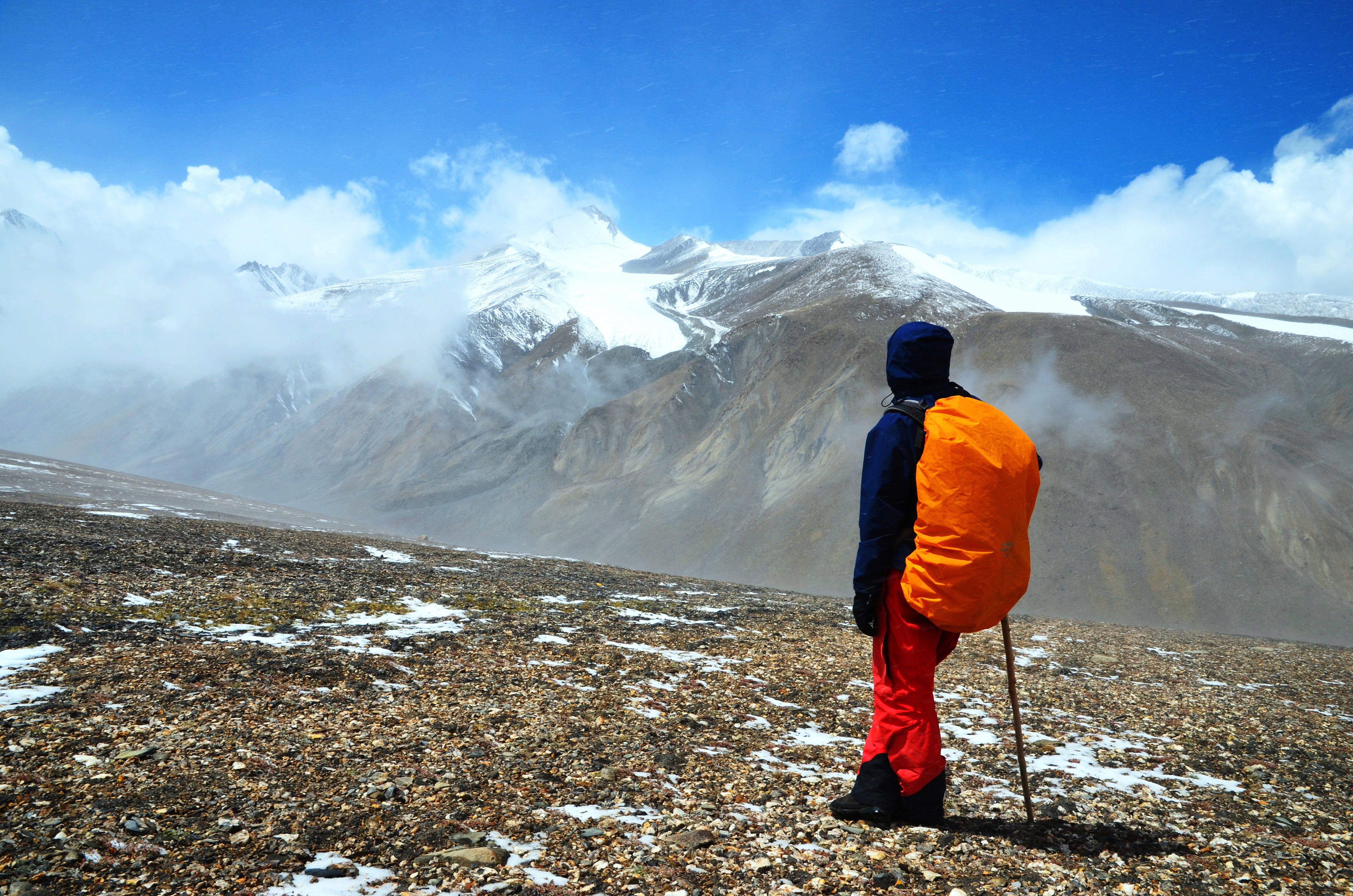
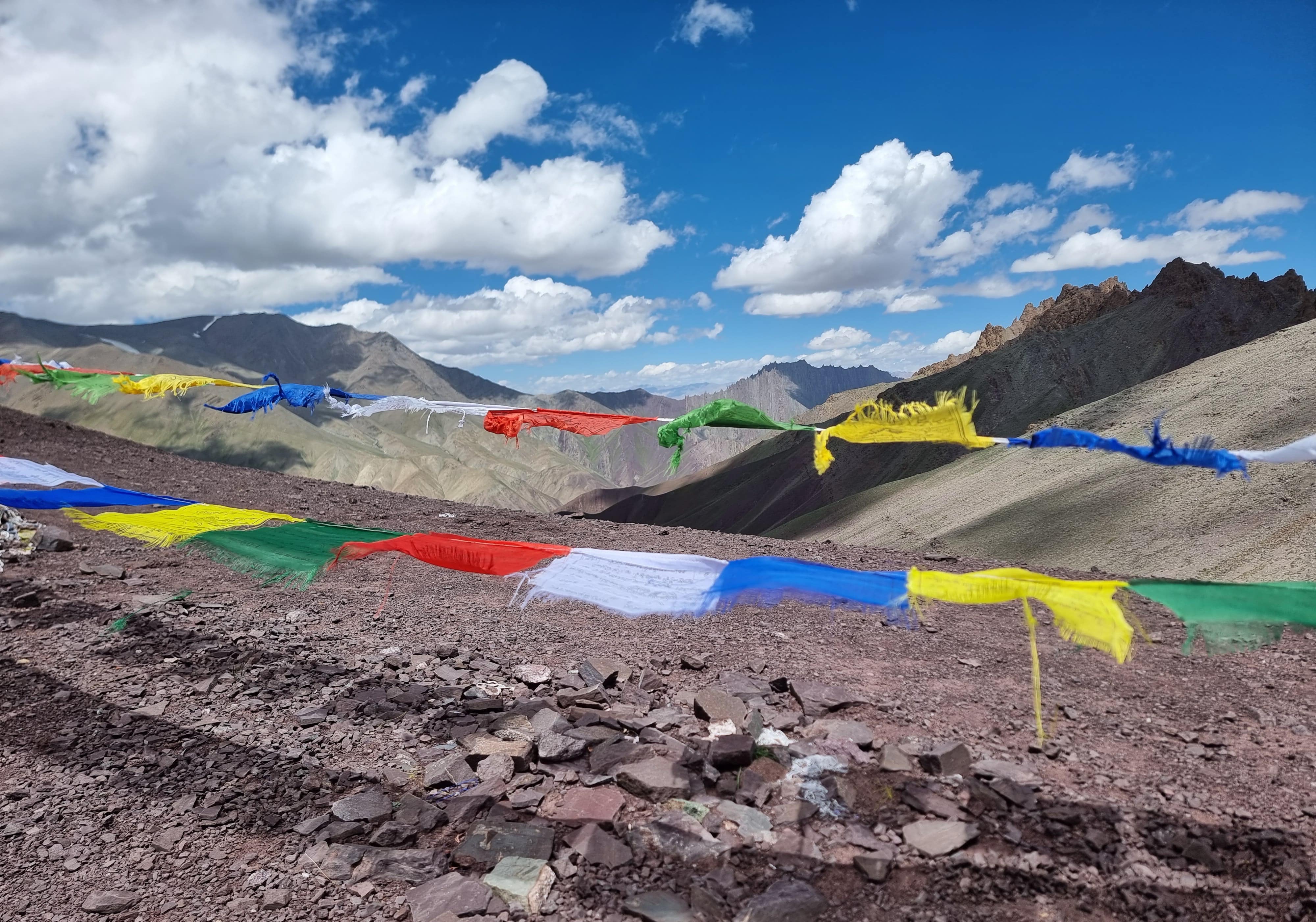
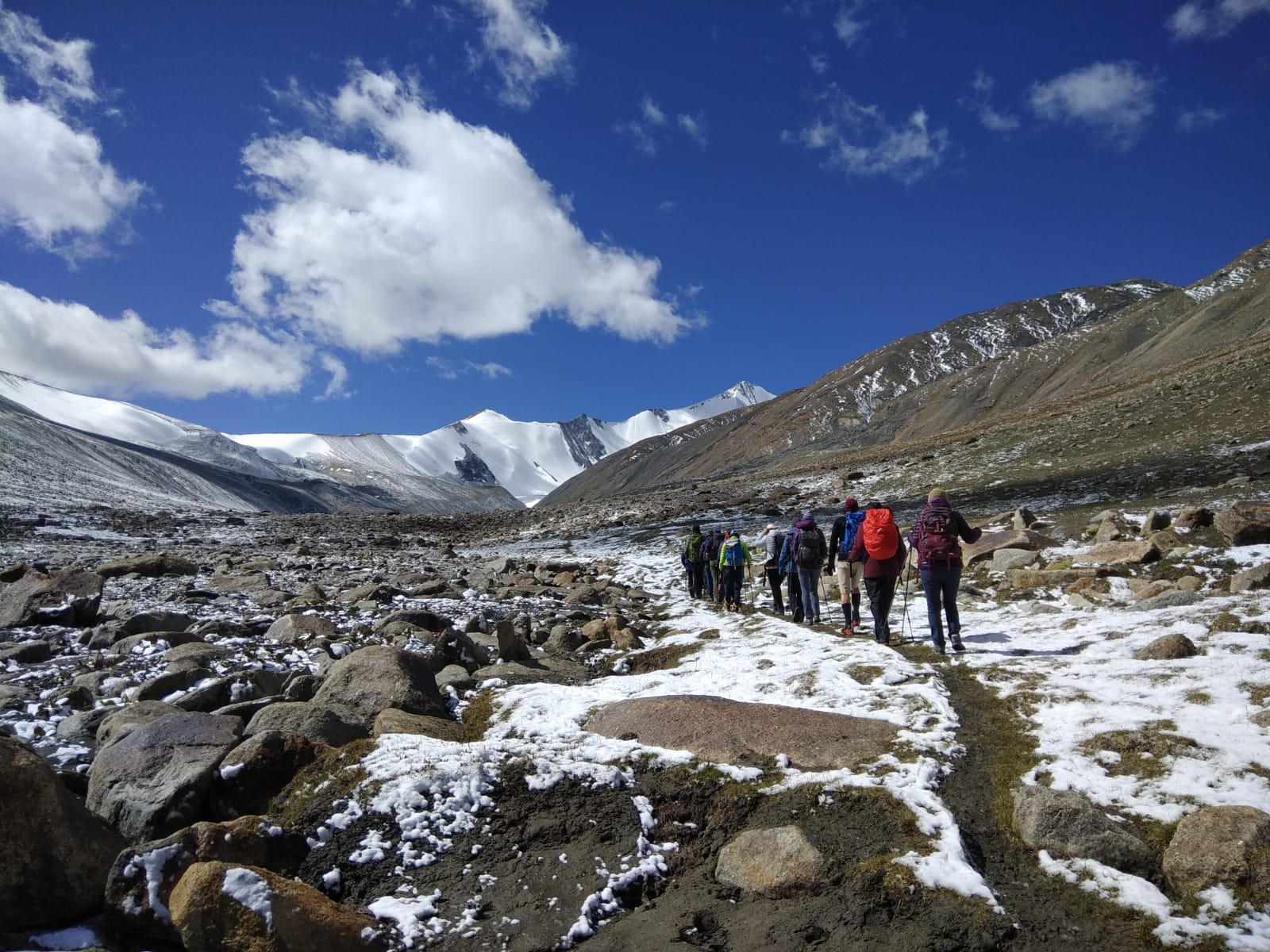
We have a tough day as we cross our highest pass yet. The trail follows a small stream as we climb, tracking the riverbed and sometimes climbing above it. Wonderful multi-coloured mountains surround us as we head to the pass. The final ascent zig zags steeply up a barren slope and we finally reach the string of prayer flags that marks the top of the Gongmaru La (17,178ft/5,236m). From the pass, we are rewarded with views down to Nimaling and across to the Indian Himalaya and the Ladakh range. The most prominent peak is Kang Yangtse (20,997ft/6,400m), the highest in the Ladakh mountains, and we can pick out Dzo Jongo across the valley if it’s clear. It’s an easy descent to our camp at Nimaling. During summer, shepherds bring their sheep, goats and dzos to graze on the high-altitude pasture. The shepherds stay in stone shelters close to the grazing area for the whole summer and we can often buy yoghurt or local cheese from them. In the evenings, the animals are brought down from the hills and it is quite usual to have a lot of them wandering through the campsite. Look after your food!
Meals: Breakfast,Lunch,Dinner
Day 10
Trek to Dzo Jongo Base Camp, ascend Vatseri Peak (5,640m)
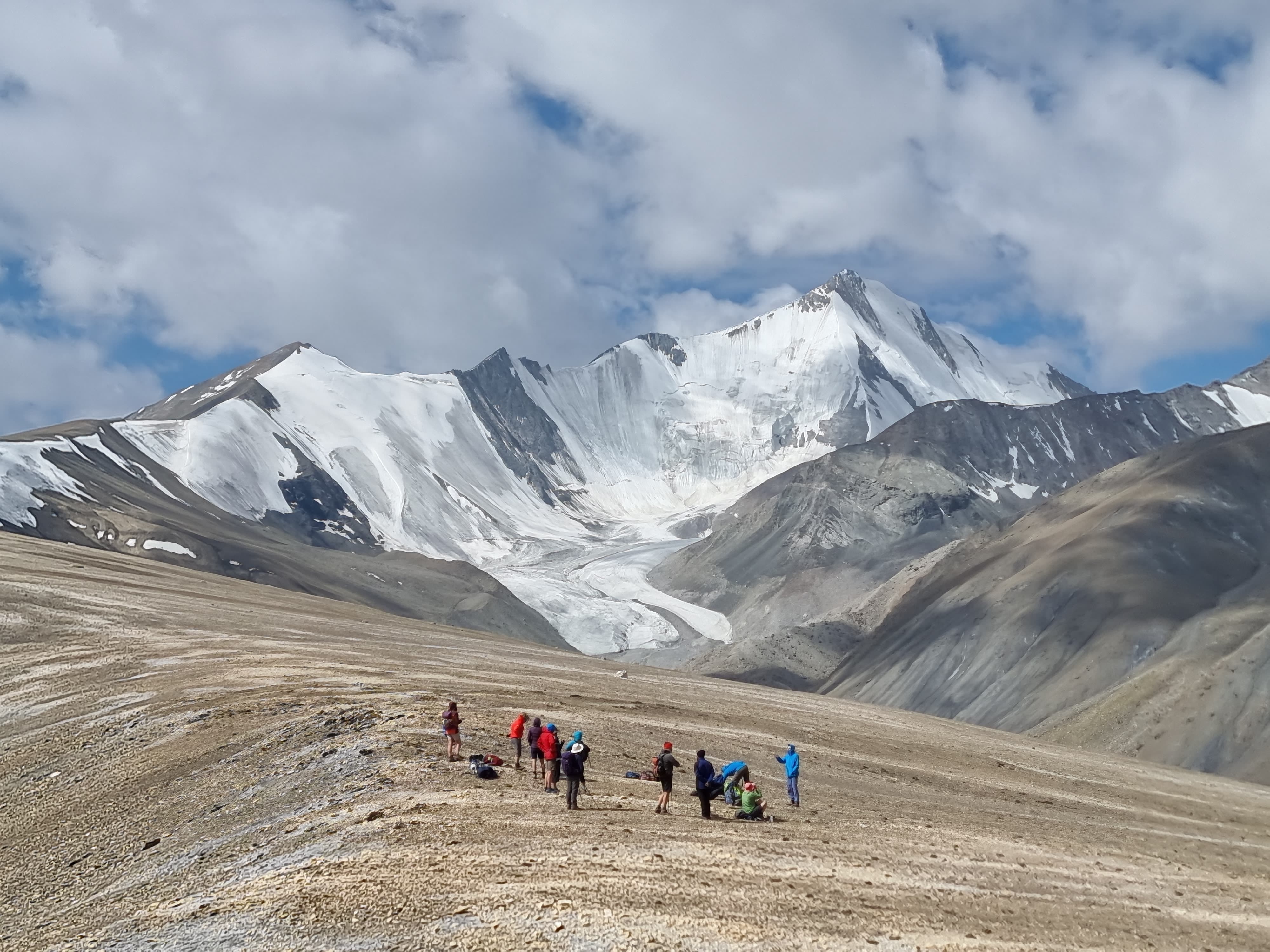
Today we ascend our warm-up peak. Vatseri (18,503ft / 5,640m) requires no technical skills and it’s an easily graded trail to the summit. The altitude makes it a tough walk but the views from the top make it all worthwhile. On a clear day, we can see Dzo Jongo East and West across the valley plus many other peaks. The trail is indistinct today and we descend on a rocky trail towards our base camp, home for the next three nights. Please note, Vatseri Peak is optional and we have several choices of hikes depending on weather and ability. Your leader will assess the conditions and discuss with you the best options on the day. The trekking crew walk directly to base camp from Nimaling, which is 1.9mi (3km) and takes two hours.
Meals: Breakfast,Lunch,Dinner
Day 11
Rest and acclimatisation day at base camp
After the exertions of yesterday, we have a day of acclimatisation at base camp. In the morning, we can have a short walk up the valley to see tomorrow’s trail and admire the scenery or we can walk to a glacial lake at the end of the valley. In the afternoon, we get the climbing gear out, check everything and prepare our backpacks for tomorrow.
Meals: Breakfast,Lunch,Dinner
Day 12
Climb Dzo Jongo East
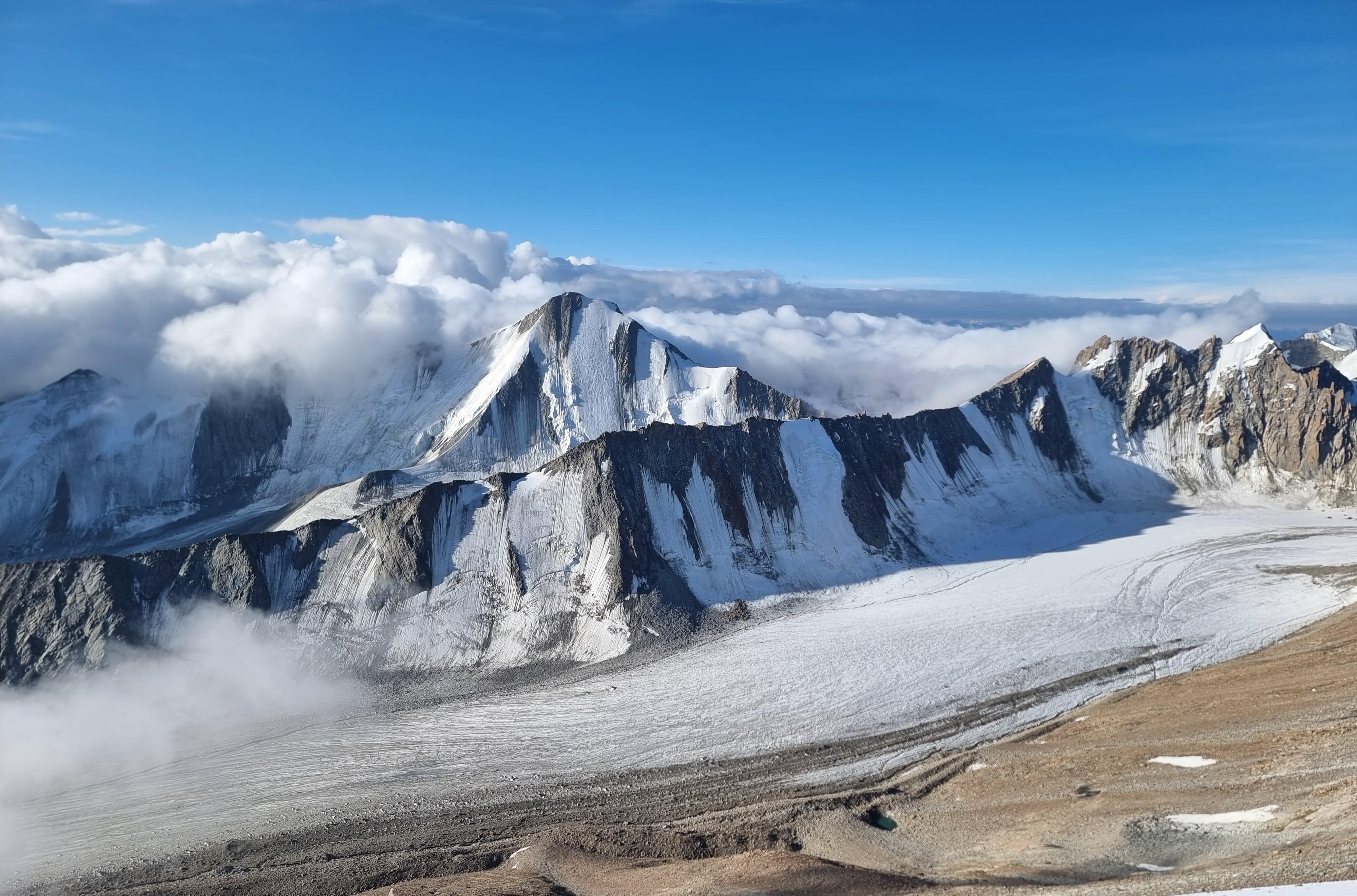
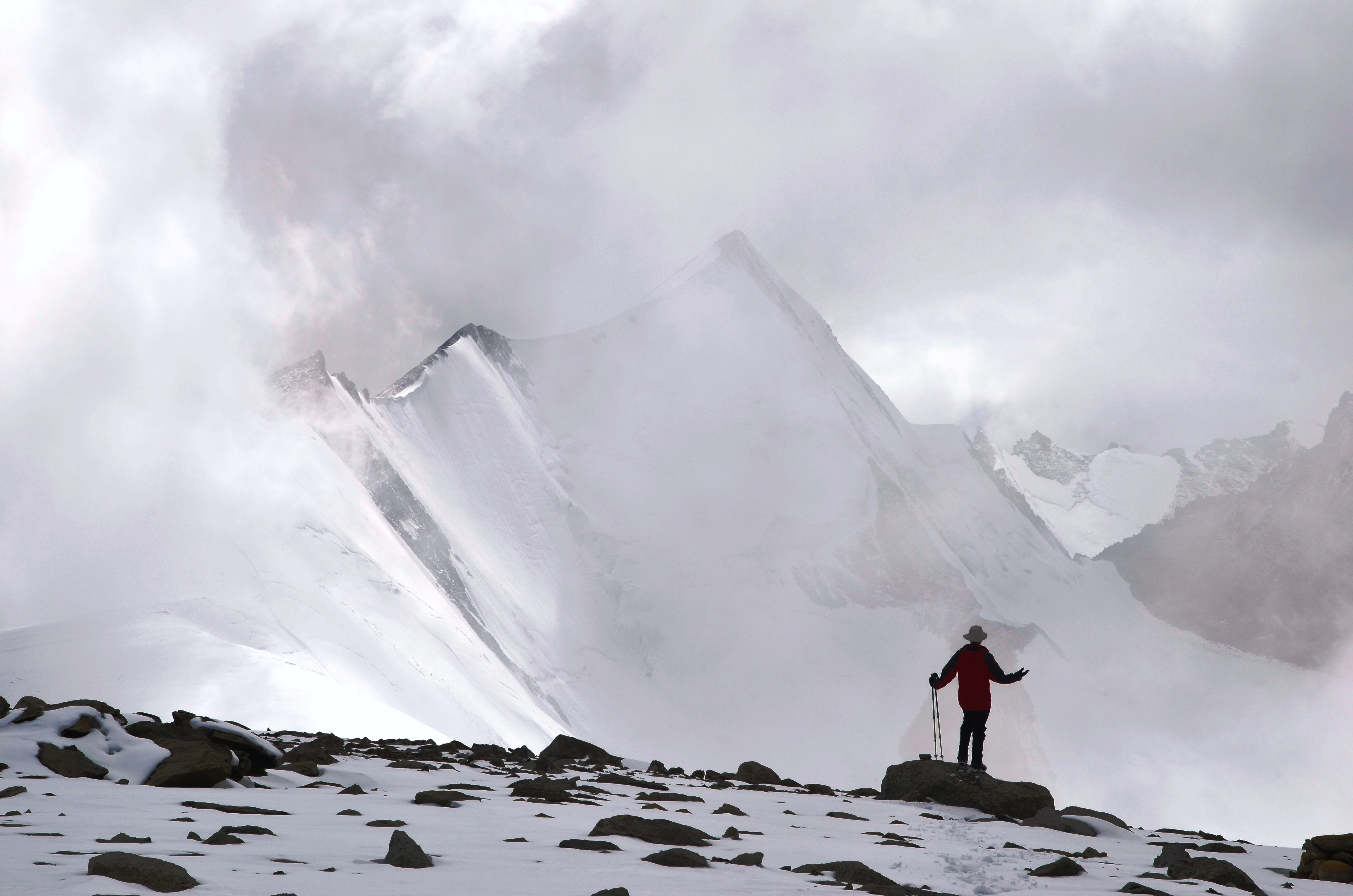
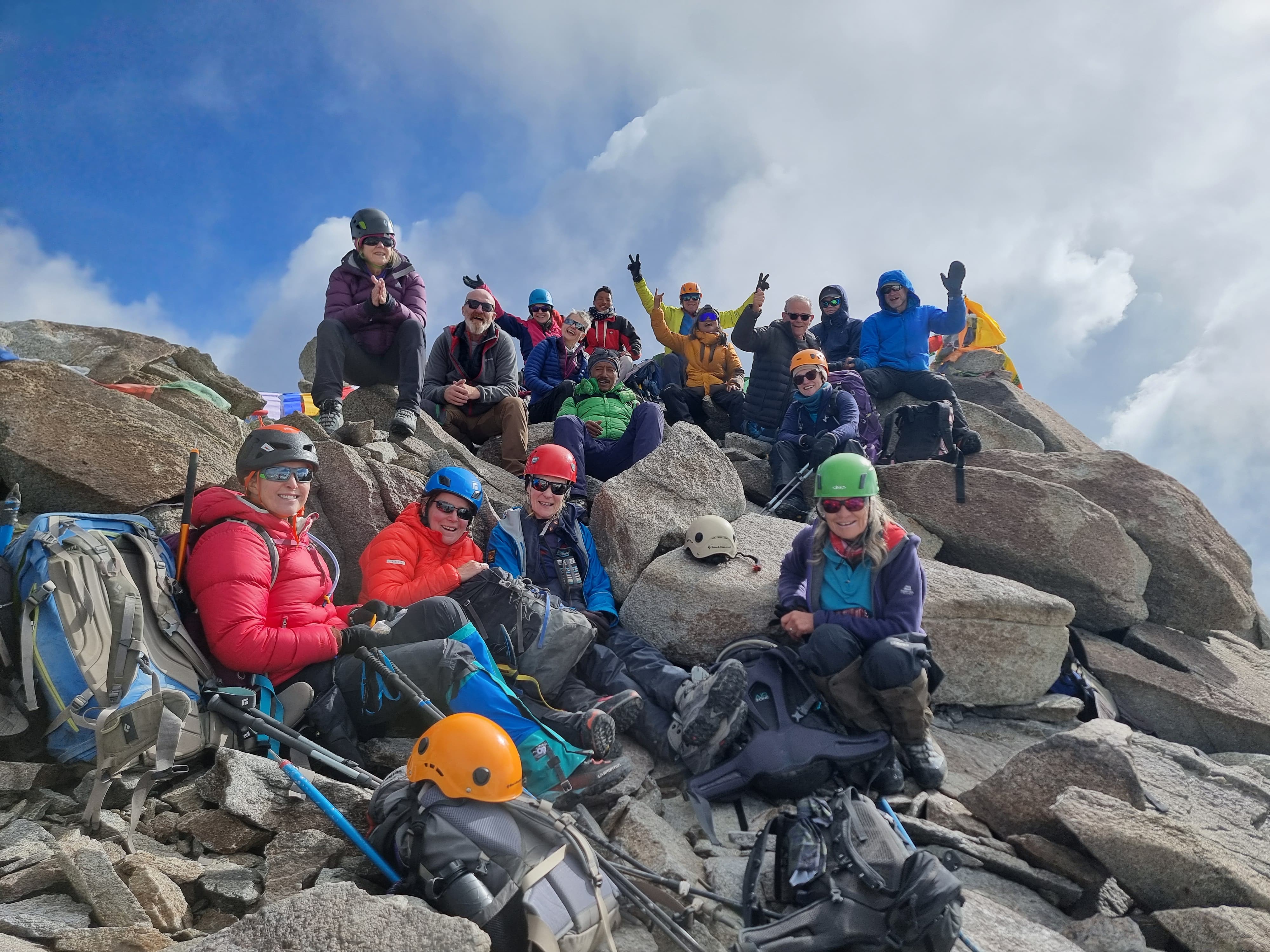
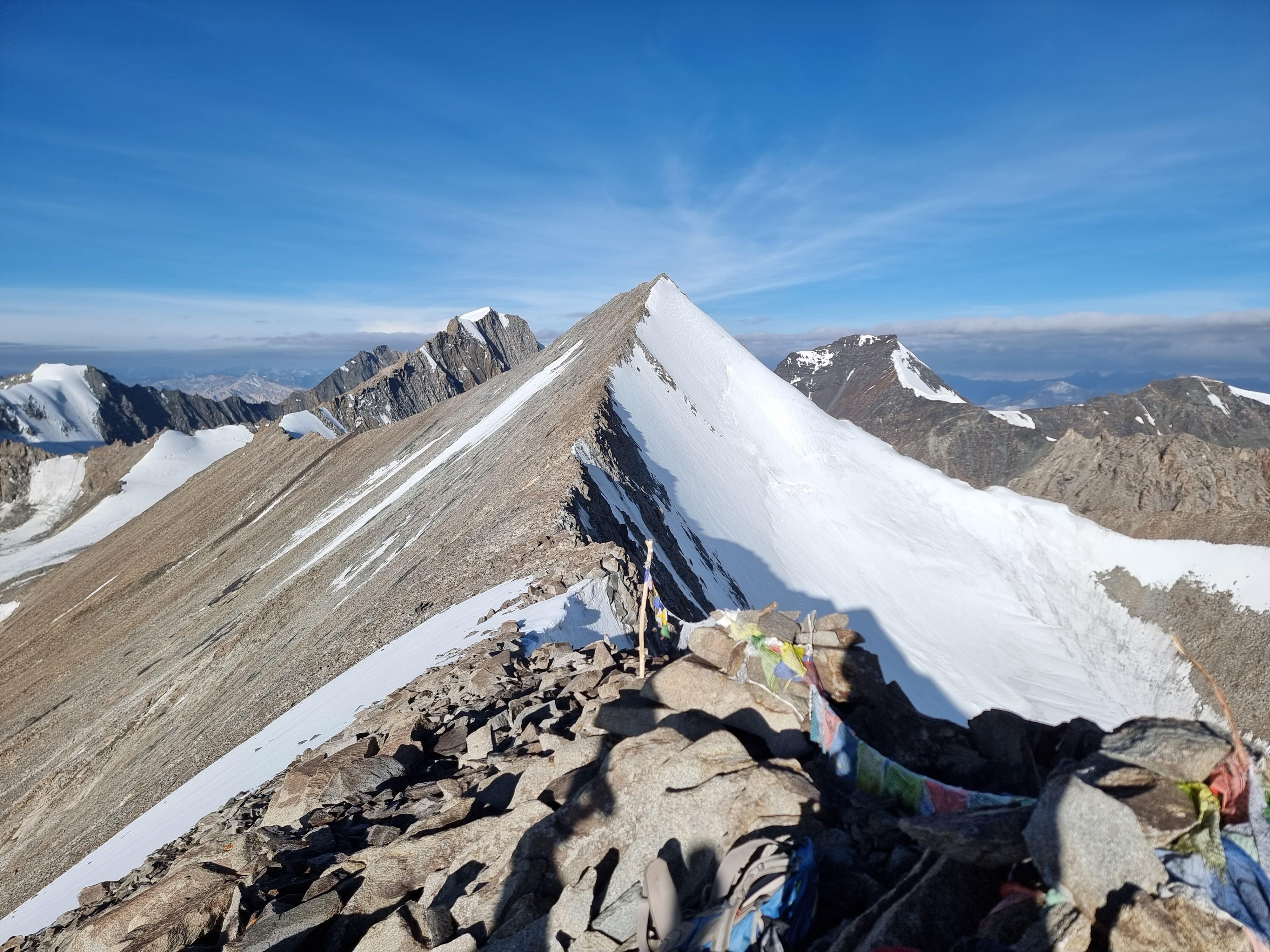
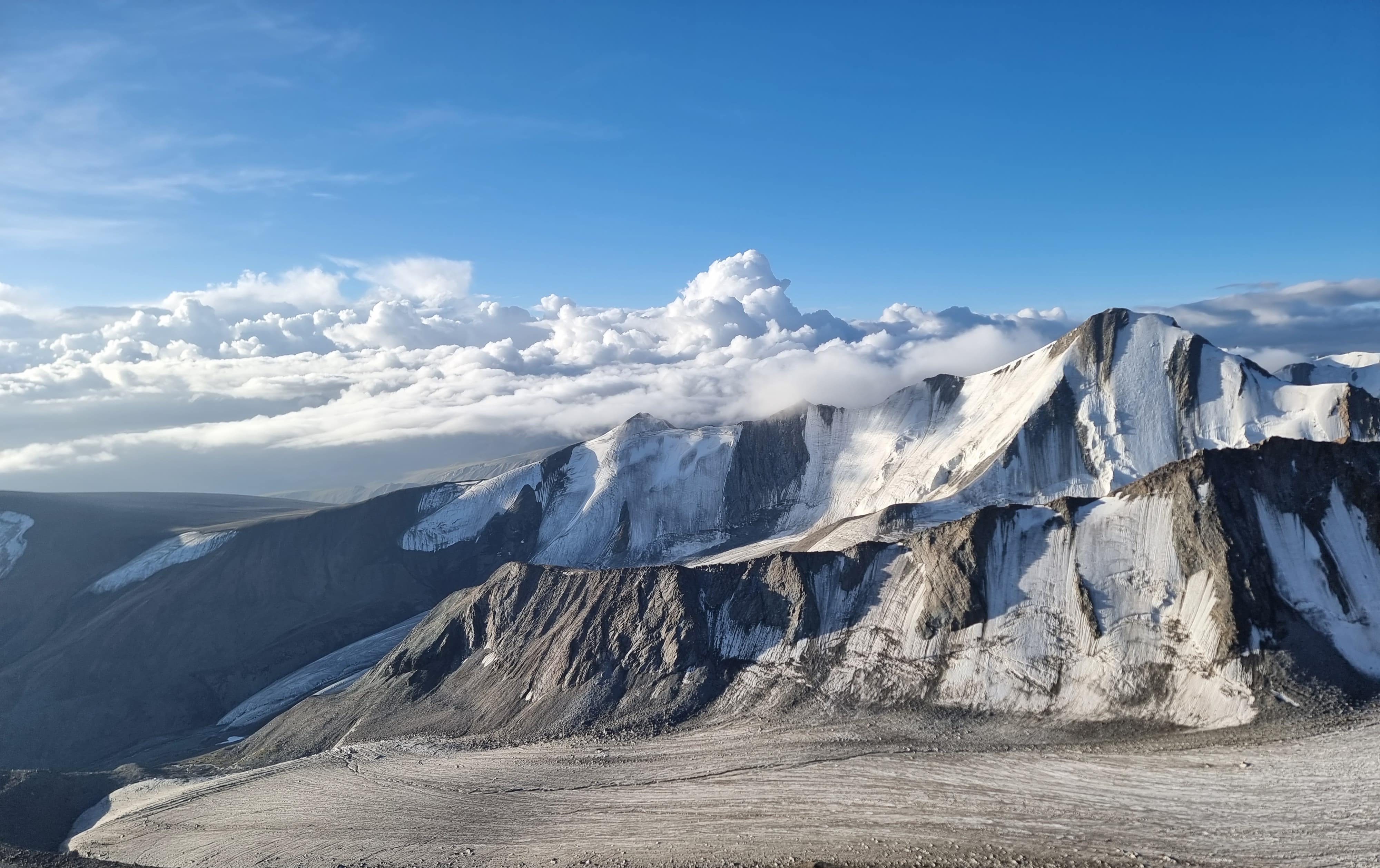
Today is summit day and starts with a very early wake-up (around 12:30am). After a quick breakfast, we set off with our headtorches (head lamps). We walk a short way up the main valley before turning into a steep gully to the right. We climb very steeply up the gully, passing a glacier on our right, and emerge onto an easy-angled slope, which leads us to a fine ridge that we follow to the top. Sometimes there is snow and, depending on conditions, we may need to use our ice axe and crampons. We should not have to rope up, but we carry a rope just in case. The summit ridge is long but technically easy. It is rocky; good balance and a head for heights are needed. There is no path and you need to have experience of scrambling on rough rocks. A small group of prayer flags marks the top with views of the Zanskar mountains and north to the Karakorum and the mountains in Tibet. We then descend slowly to base camp for a celebration.The climb is entirely optional. There is a great alternative walk further up the valley to a small glacial lake for anyone not wanting to attempt it.
Meals: Breakfast,Lunch,Dinner
Day 13
Cross the Lalung La and Chaksang La to Riyul Sumdo
We leave base camp this morning and head towards the Manali to Leh highway through a remote valley, where we are unlikely to meet other trekkers. The trail climbs away from the base camp to the Lalung La (17,455ft/5,320m), where we get wonderful views looking back to Dzo Jongo and Kang Yangste peaks. From the top we contour round the valley to the Chaksang La (17,060ft/ 5,200m). Descending from the pass the path contours gently round and down the valley before turning right into a side valley where we soon reach our camp at Riyal Sumdo.
Meals: Breakfast,Lunch,Dinner
Day 14
Trek to Lato; drive to Leh
The last two hours of our trek take us further down this beautiful valley with a few river crossings, before we emerge at the green fields of Lato village and the main Manali to Leh road. We say goodbye to our ponymen and camp crew before driving back to Leh. The drive follows the Kyamur River until it meets the Indus River at Upshi. We follow the main road back into Leh and the comforts of a hot shower at our hotel. We should get to Leh for lunch and the rest of the day is free for last-minute sightseeing or shopping in the bazaars.
Meals: Breakfast
Day 15
Fly to Delhi
We fly from Leh to Delhi and check into our hotel. The rest of the day is free for individual sightseeing and your leader can advise on what to do.
Meals: Breakfast
Day 16
Adventure ends in Delhi
The tour ends after breakfast today and we begin our return journeys home. Alternatively, if you’d like a little more adventure, consider joining our five-day Golden Triangle extension. Encompassing Delhi, Jaipur and Agra, the trip is a whirlwind of culture, taking in the Taj Mahal, Red Fort of Akbar and much more.
Meals: Breakfast
What’s included
What’s not included
Additional information
Food
India is famous for food and there is ample chance to try various Ladakhi favourites, which are often influenced by the cuisines of Tibet and China thanks to the passing Silk Road traders of yesteryear. Momos (filled dumplings) and yaks cheese are popular. Other favourites (but there are plenty more) are: thukpa, a clear vegetable soup with noodles and often mutton, chicken or yak meat; tingmo (pronounced tee-mo), a steamed bread eaten with dal; and chutagi, a thick soup of local vegetables with bow tie-shaped pieces of dough cooked in broth (also served with meat).
Allow at least 1,000-2,000 rupees (US$20-US$25) per day for lunch and dinner, where it is not included. You can eat out very cheaply in India, but if you go to the more expensive restaurants most of the time, you will spend more than the suggested amount. Please note, service in restaurants can be quite slow. Tea and soft drinks are very cheap. A large bottle of beer is approximately 300 rupees (US$4).
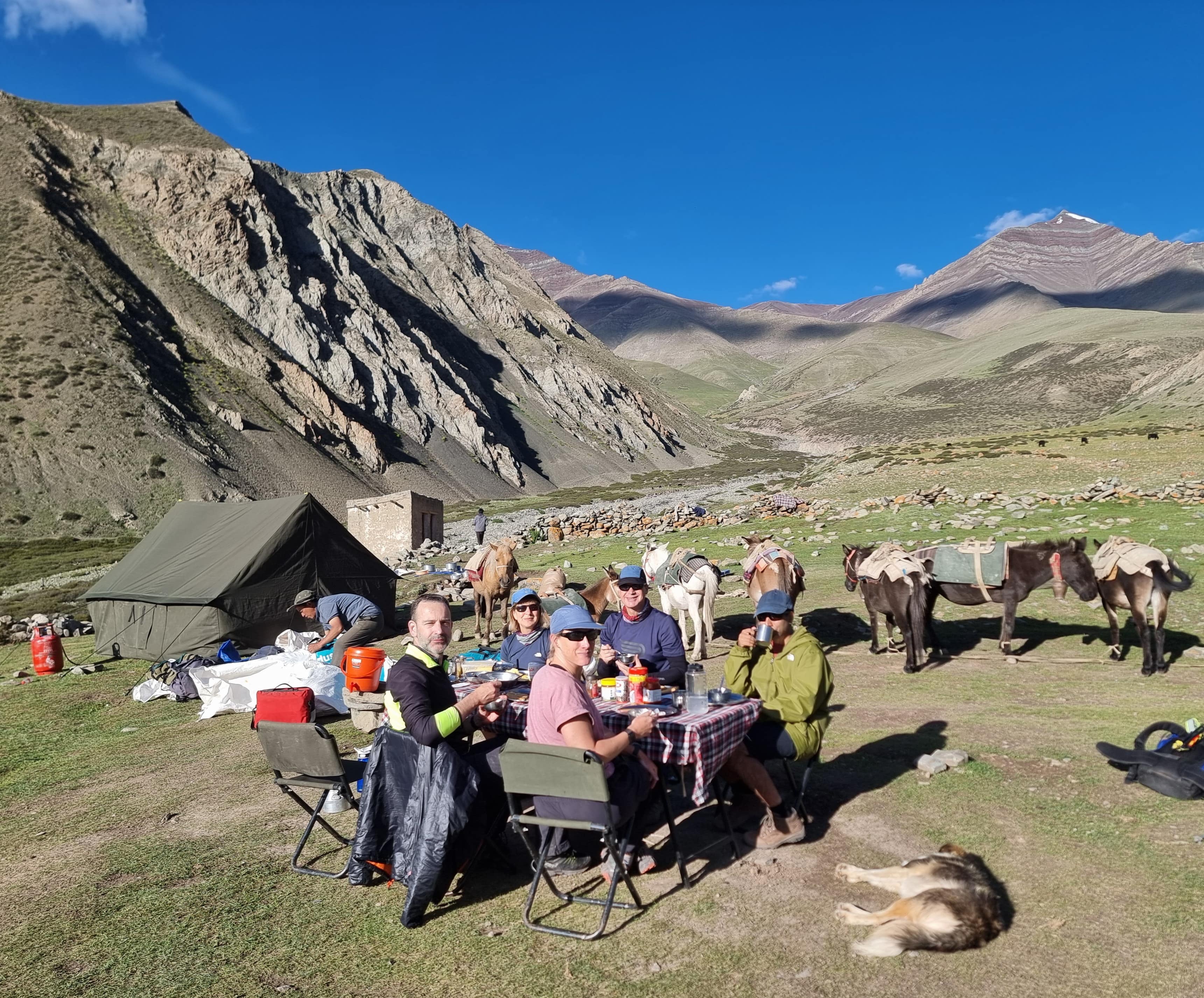
While camping, staff bring a hot drink (usually tea) to your tent each morning. When you reach camp in the afternoon, tea and biscuits are served. At breakfast, dinner and in the afternoons, there is a choice of hot drinks. Breakfasts typically include cereal, toast and jam, eggs and porridge. Lunch on trek is usually served as a picnic en route (except on shorter days when it is in camp). Lunch and dinner typically include soup to start, followed by a variety of hot dishes (both local and Western) such as potatoes, vegetables, curry, pasta, rice, dal and paneer (cottage cheese). At dinner, a dessert such as tinned fruit and custard, fritters or cake is also served.
Please note, although some meals include meat, it is not as readily available while camping.
Drinking water
Staying hydrated is important when undertaking any physical activity but particularly so at altitude where it is generally recommended to drink at least 100 floz to 135 floz (3-4 litres) per day. We strongly encourage you not to buy bottled water as this contributes to the growing problem of plastic pollution in Ladakh. In Leh, there is a shop called Dzomsa which sells safe drinking water. Your leader will show you where this is on your first day in Leh. During the trek, the cooks collect and boil drinking water from the mountain streams and fill up your water bottles for you, but you may need to collect water during the day and may wish to use your own water purification treatment too.
Vatseri Peak Warm-Up Ascent (5,640m)
Climb Vatseri Peak (5,640m) on gentle, non-technical slopes that test lungs, not ropework—an ideal shakedown for pacing, layers and footwork.
From the crest, scan a high-Himalayan panorama including Dzo Jongo East & West and serrated spurs of the Zanskar. Participation is optional and agreed with your leader according to conditions and how you feel.
Dzo Jongo East Summit Attempt
Begin a pre-dawn summit push by headtorch, climbing a steep gully beside a small glacier to gain the ridge of Dzo Jongo East.
Depending on conditions you may employ basic snow craft before moving along the summit ridge. A splash of prayer flags marks the top, opening vast views toward the Karakoram and Zanskar before a careful descent to celebratory tea.
Leh Bazaar Orientation Walk
Take a gentle orientation walk through the winding lanes of Leh Bazaar, where prayer wheels spin beside tea stalls and stalls brim with apricots and wool. Learn where to find water refills, ATMs and essentials while easing into the altitude.
Absorb mud-brick facades and carved balconies as distant glints from the Stok range frame the town. Your leader shares insights on Ladakhi Buddhism and daily life that will enrich every step of the trek.
Leh Trek Briefing & Gear Check
Join your leader for a comprehensive trek briefing covering route highlights, pass altitudes, and acclimatisation protocol tailored to local conditions.
Conduct a thorough gear check—layers, boots, headtorch, and hydration—making any final tweaks in Leh’s outfitters. The session sets expectations for trail etiquette, waste-wise travel, and mountain safety, ensuring the team starts aligned and confident.
Shey Palace & Thiksey Monastery Guided Visit
Join a guided visit to the former royal seat of Shey Palace, home to a copper-gilded Shakyamuni Buddha. Walk field paths to imposing Thiksey Monastery, whose stacked white and red buildings command the Indus Valley.
Step inside the Maitreya Temple to admire the serene Future Buddha, and hear stories of Ladakh’s kings and Gelug tradition as prayer flags crackle in the wind. Monastery entrance fees are payable locally.
Leh Ridge Walk: Leh Palace, Namgyal Tsemo & Shanti Stupa
Follow a steady ridge path to the Leh Palace ruins and Namgyal Tsemo Monastery, pausing where butter lamps flicker and chortens guard the skyline.
Continue to the gleaming Shanti Stupa, a Japanese Peace Pagoda with sweeping views across the Indus Valley and Stok range. This acclimatisation walk blends culture with elevation gain to prepare the body for higher passes.
Stok Valley Trek to Mankarmo
Trek up the Stok Valley beside the Stok Chu, weaving between willow thickets and polished boulders. Watch for sure-footed blue sheep (bharal) poised on crags above the trail.
Strata of multi-coloured rocks—ochres, purples, and greens—tower overhead as the gorge narrows. Arrive at the riverside camp of Mankarmo, a wild setting that frames Ladakh’s high-desert drama.
Matho La Pass Crossing to Gangpoche
Cross the Matho La (4,960m) on a steady ascent that follows yak paths to a wind-tossed crest ringing with silence.
At the top, prayer flags crackle as horizons open across the Ladakh Range. Descend to the shepherd hamlets of Gangpoche, where stone huts and alpine grasses sketch pastoral life above the tree line.
Shang La Pass to Shang Phu
Climb towards the Shang La (4,950m) along mellow switchbacks etched into scree. The air thins but the horizon widens across pastel-hued summits.
Traverse airy contouring trails before dropping into a secluded valley to camp near Shang Phu, sharing space with flocks and herders amid a soundscape of wind and distant bells.
Gyuncho La and the Chokdo Gorge
Ascend the Gyuncho La (4,718m) through stark, painterly slopes, then crest a second col before the terrain rolls down into wider valleys.
Enter the Chokdo Gorge, where purple-toned cliffs fold into each other and the path meets the famed Markha Valley. Camp near the gorge entrance, lulled by the chatter of small streams.
Gongmaru La High Pass & Nimaling Pastures
Tackle the highest pass of the trek, the Gongmaru La (5,236m), zig-zagging to a crest festooned with strings of prayer flags.
Savour views to Kang Yatse and the Dzo Jongo massif before descending to the summer meadows of Nimaling. Among stone shelters, shepherds graze sheep, goats and dzos—an enduring rhythm of high-altitude transhumance.
Trek to Dzo Jongo Base Camp
Leave the broad plain for glacial moraines and sun-bleached scree to establish Dzo Jongo Base Camp (5,100m), a stark amphitheatre ringed by ribs of rock and ice.
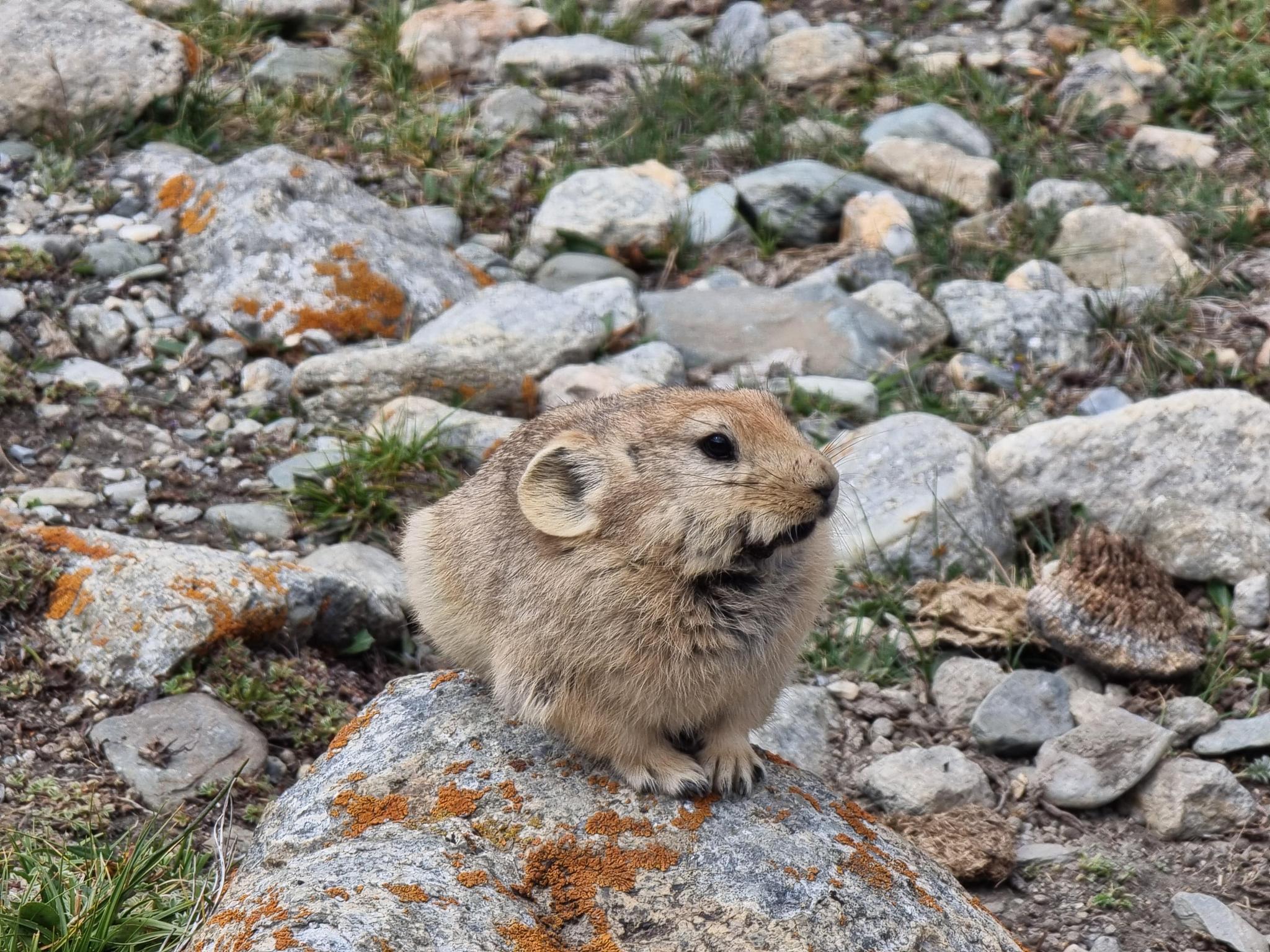
Feel the hush of altitude as marmots whistle and evening light yields to star-filled skies. Your team readies hot drinks and an early supper in preparation for the summit phase.
Base Camp Acclimatisation Walk & Skills Check
Stretch your legs to a glacial lake or terrace above camp, moving steadily to nudge acclimatisation while enjoying the stark beauty of the cirque.
Back in camp, run a hands-on kit and skills check—layering, pack weight, hydration, and, if needed, practice with crampons and an ice axe. This calm, methodical session supports a smooth summit attempt.
Lalung La & Chaksang La Remote Traverse
Strike into little-visited valleys to cross the Lalung La (5,320m) and Chaksang La (5,200m), where wind and silence define the landscape.
The path contours remote hillsides with long perspectives back to Dzo Jongo and Kang Yatse. Camp near Riyul Sumdo, immersed in big-sky Ladakh far from any road.
Lato Valley Descent to the Indus
Descend towards Lato along a broadening river valley, stepping across easy fords as geology softens from stark canyons to emerald fields.
As the trail nears the Indus corridor, encounter poplar groves, stone-walled terraces and glimpses of village life before rejoining the road for the return to Leh.
Khardung La Pass Jeep Safari
Ride a jeep safari to Khardung La (5,602m), long celebrated as one of the world’s highest motorable passes. The switchbacks open to sweeping views over the Nubra Valley and glacier-fed ranges.
Pause among fluttering prayer flags for photos and hot tea before descending to Leh. This experience is at additional cost and bookable on tour; it typically runs in the morning to suit acclimatisation.
Delhi Welcome Dinner & Trip Briefing
Meet your tour leader and fellow trekkers over a hosted group dinner in Delhi. Taste North Indian flavours—tandoori from clay ovens, buttery dals, and warm naan—as you share first impressions and expectations for Ladakh’s big-sky landscapes.
Your leader will outline the altitude strategy, cultural etiquette, and kit essentials, anchoring the adventure between Mughal Delhi and high-Himalayan Ladakh. This convivial start helps bond the team before the mountains.