Your itinerary

Day 1
Adventure begins in Muscat • Tour the city highlights
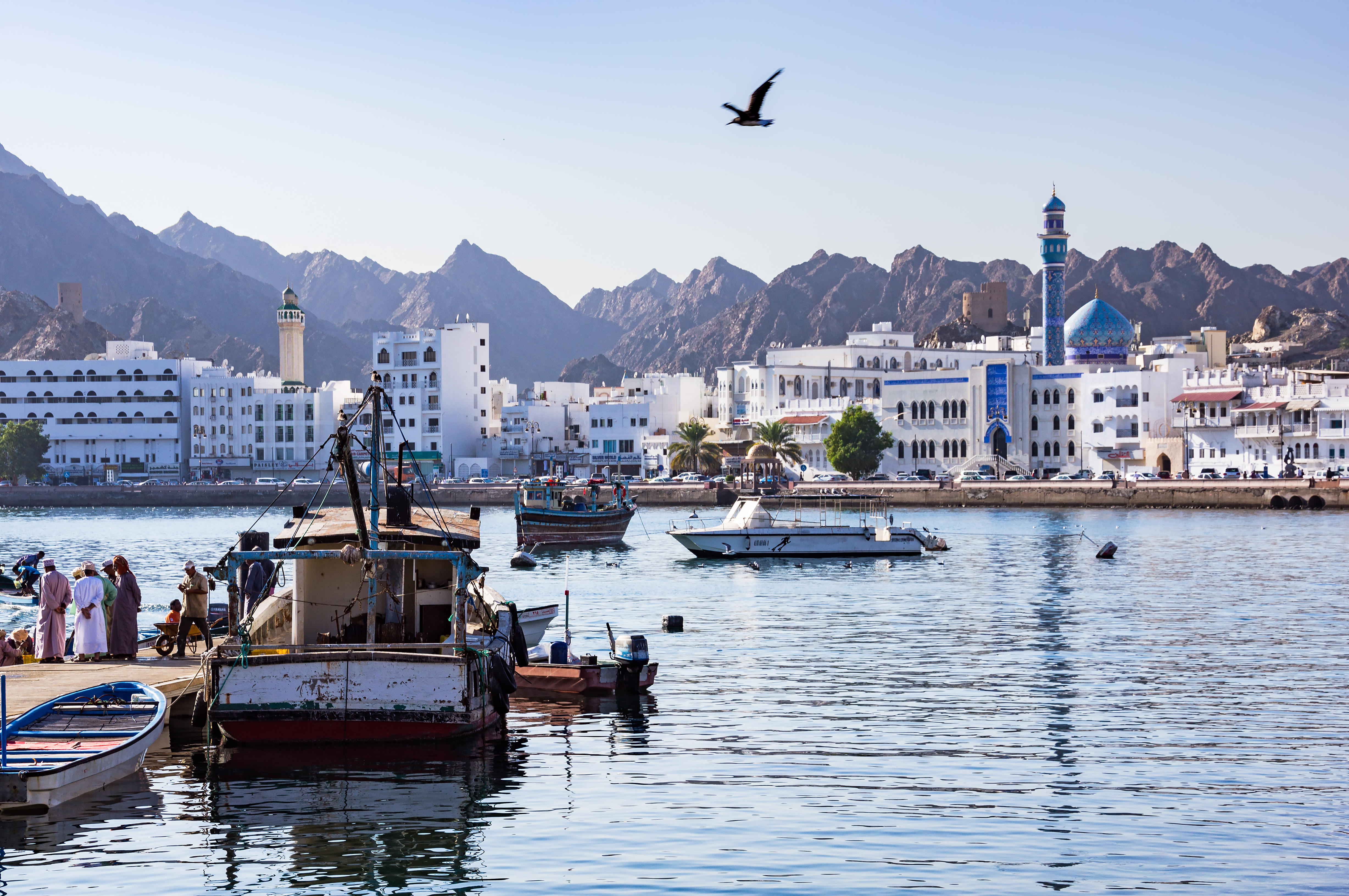
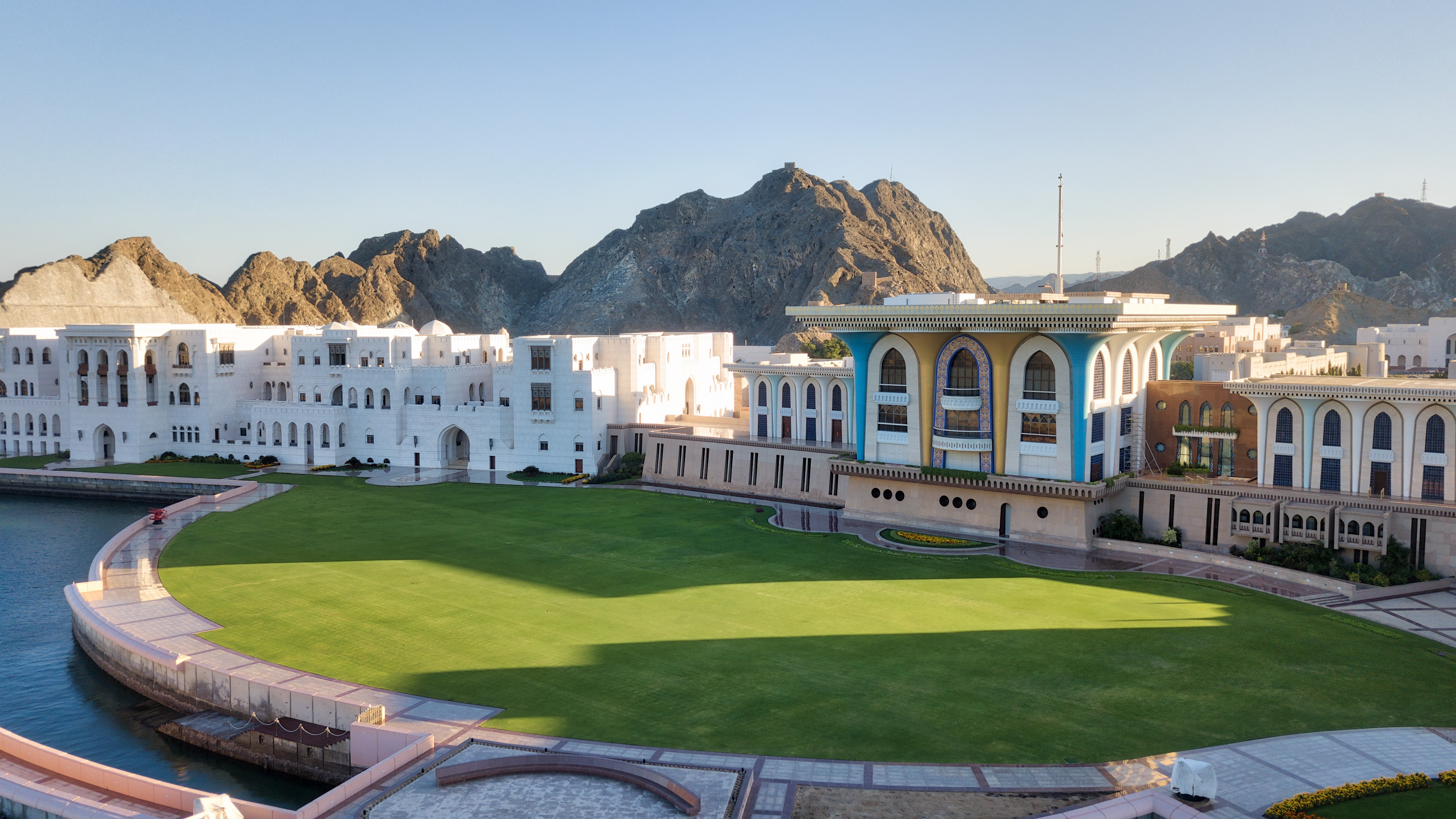
Our adventure begins in Muscat, the coastal capital of Oman. Around 1.30pm, say hi to your guide and fellow travellers, when we gather as a group to get to know each other and learn about the adventure ahead.We get straight into the action with a tour of the city highlights. It begins with a visit to the outside of the Grand Mosque and the Bait Al Zubair Museum, which introduces us to the history and development of the country.We then drive along the waterfront corniche, visiting the fish market and Muttrah Souq, before a photo stop at Al Alam Palace, official residence of the Omani royals. There may be time for a visit to the Old Muscat area, a walk along the corniche, or a sunset dhow cruise.If you arrive in Muscat early, you may wish to visit the inside of the Grand Mosque on your own, which open from 8am to 11 am.Your tour leader then ensures a big Omani welcome by arranging a group dinner.Want more time in Muscat? Secure extra hotel nights through your sales representative.
Meals: Dinner
Day 2
4x4 ride in the Hajar Mountains • Visit Nakhl hot springs
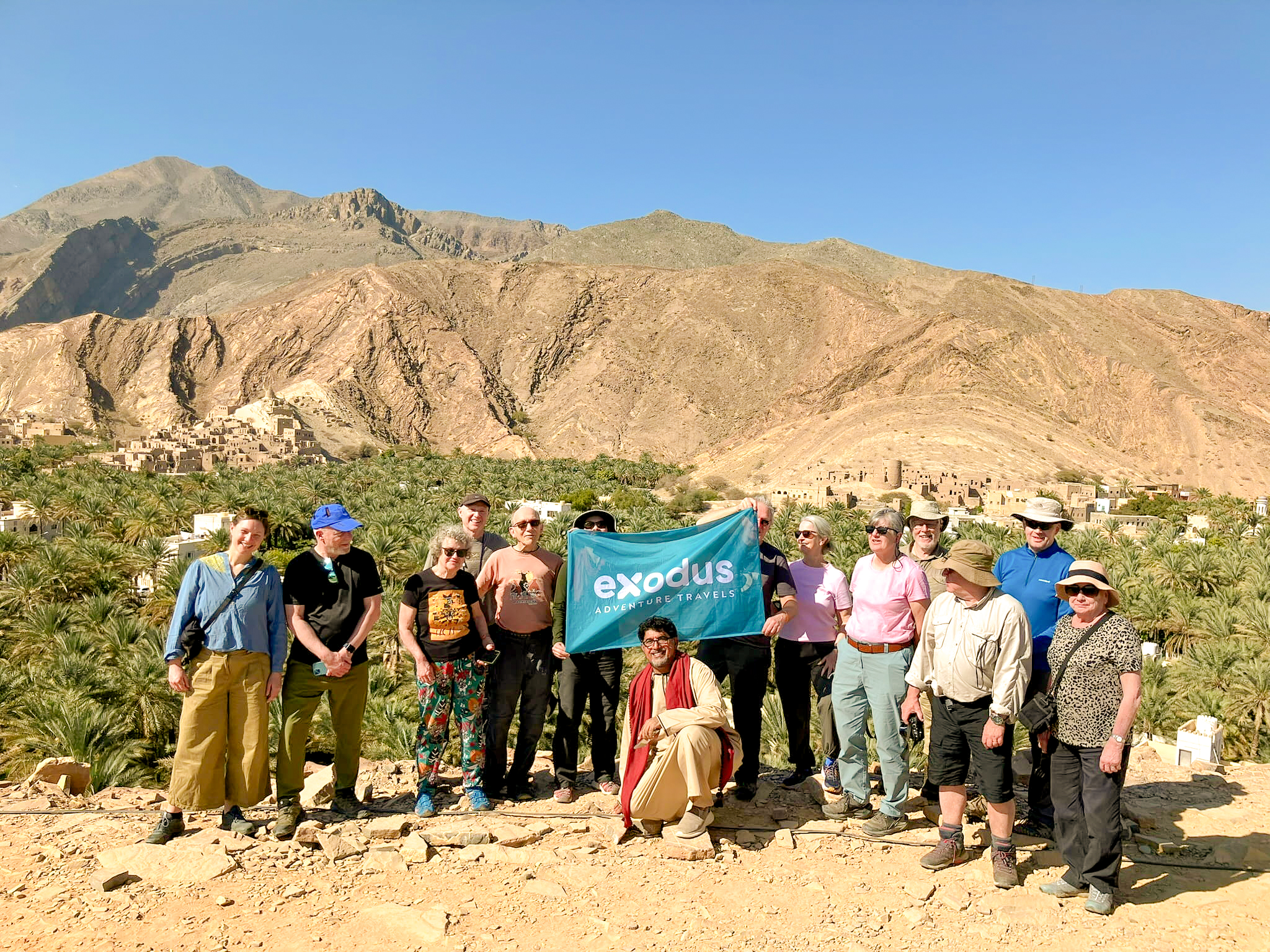
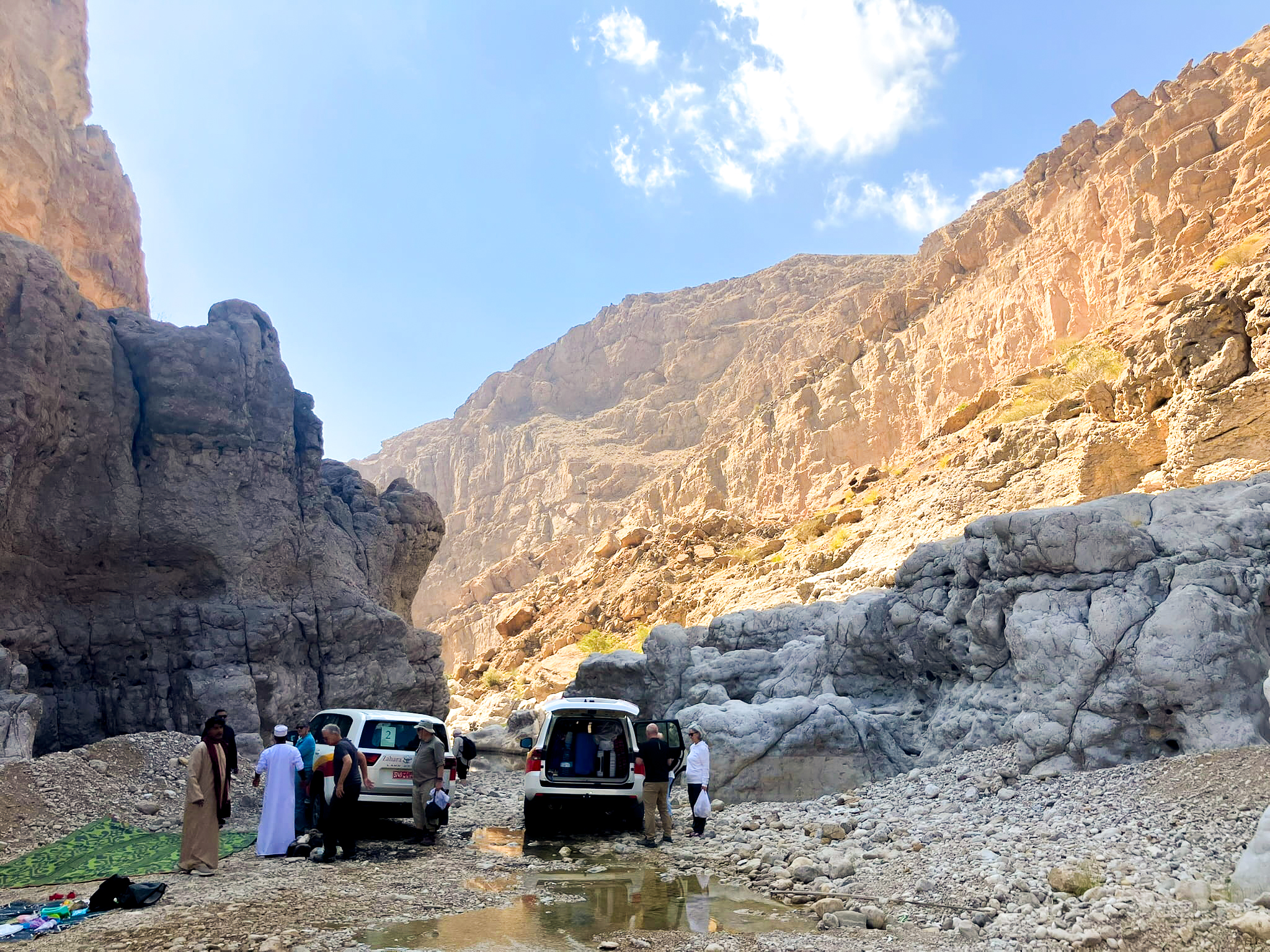
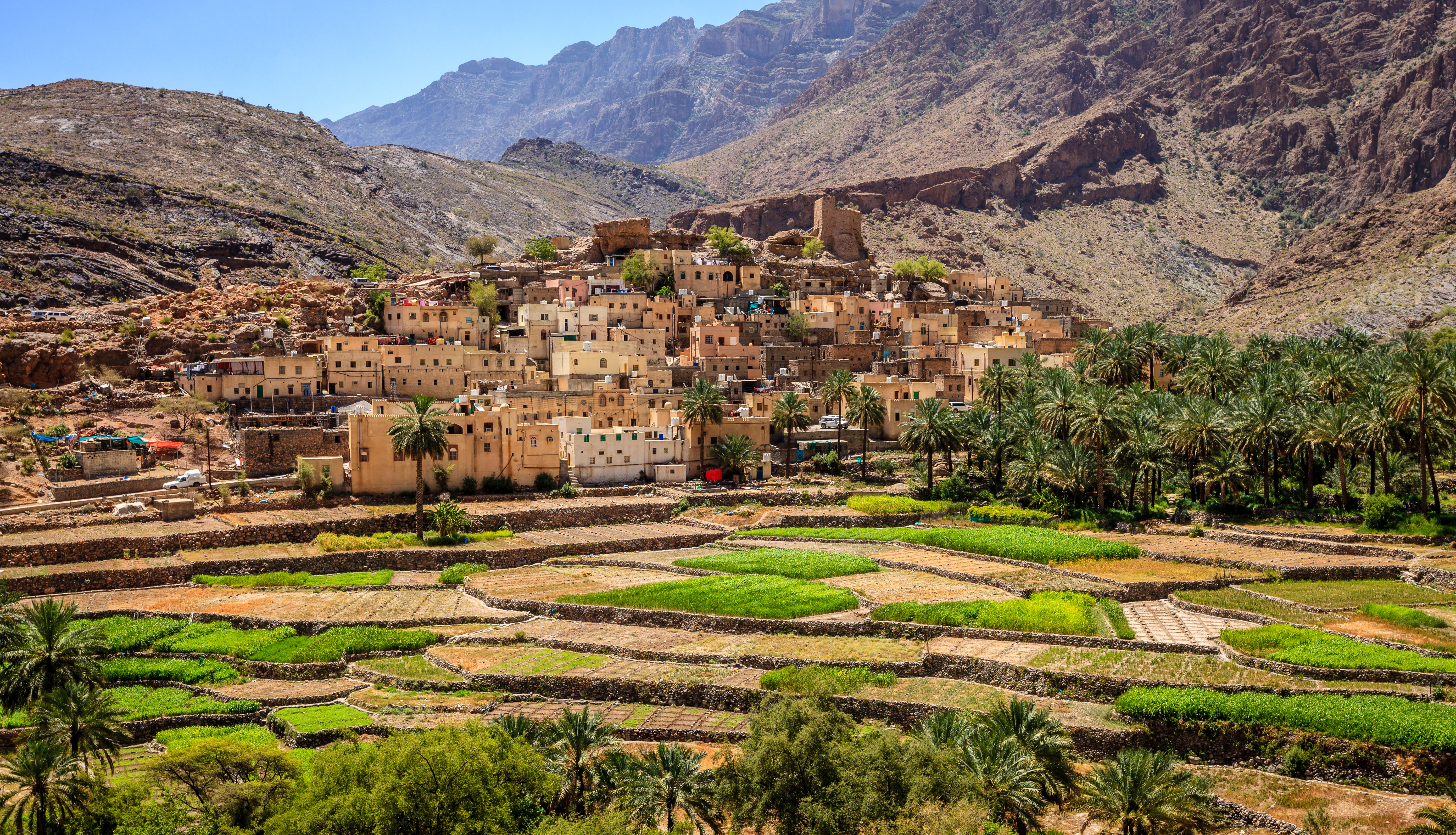
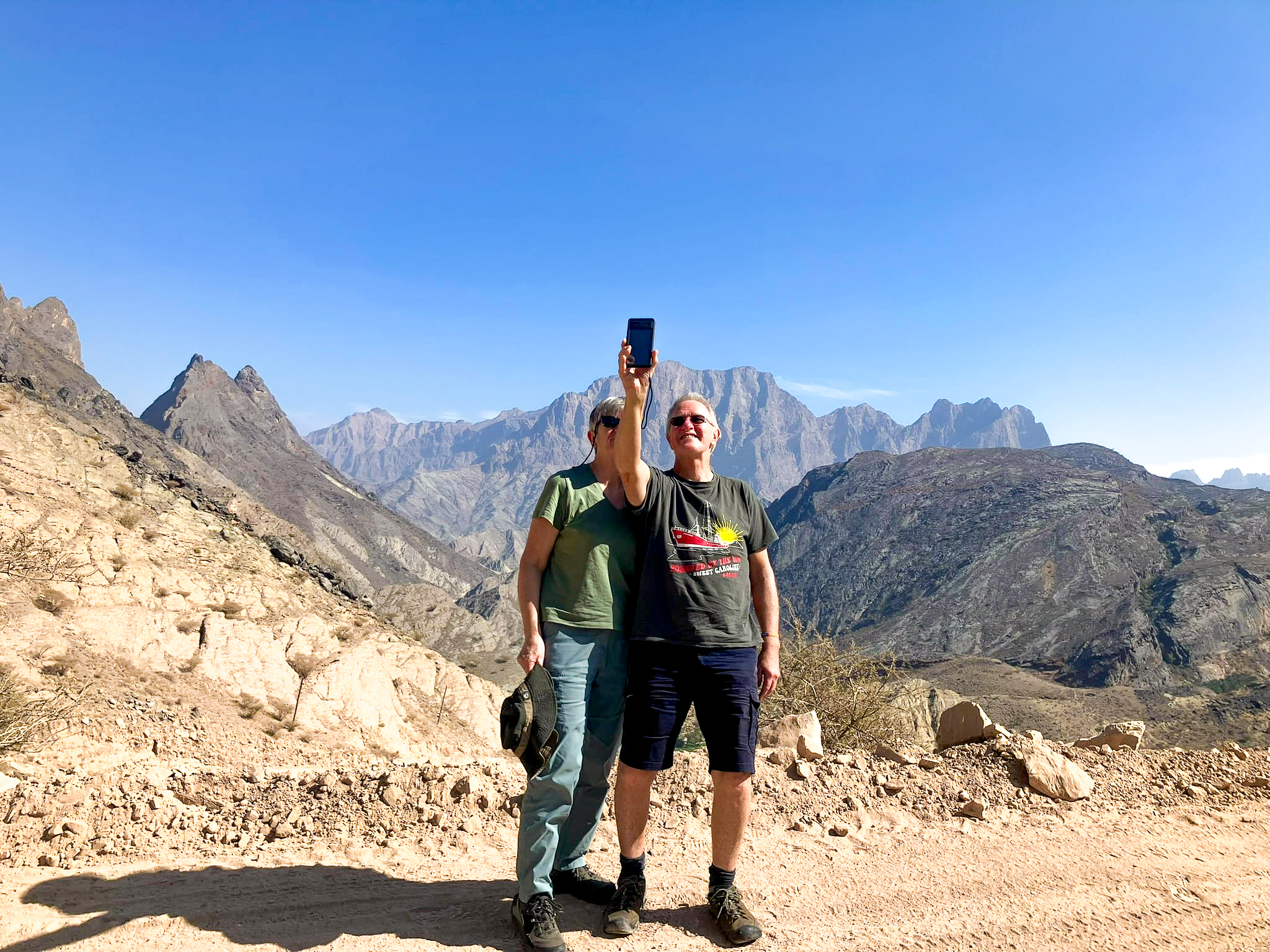
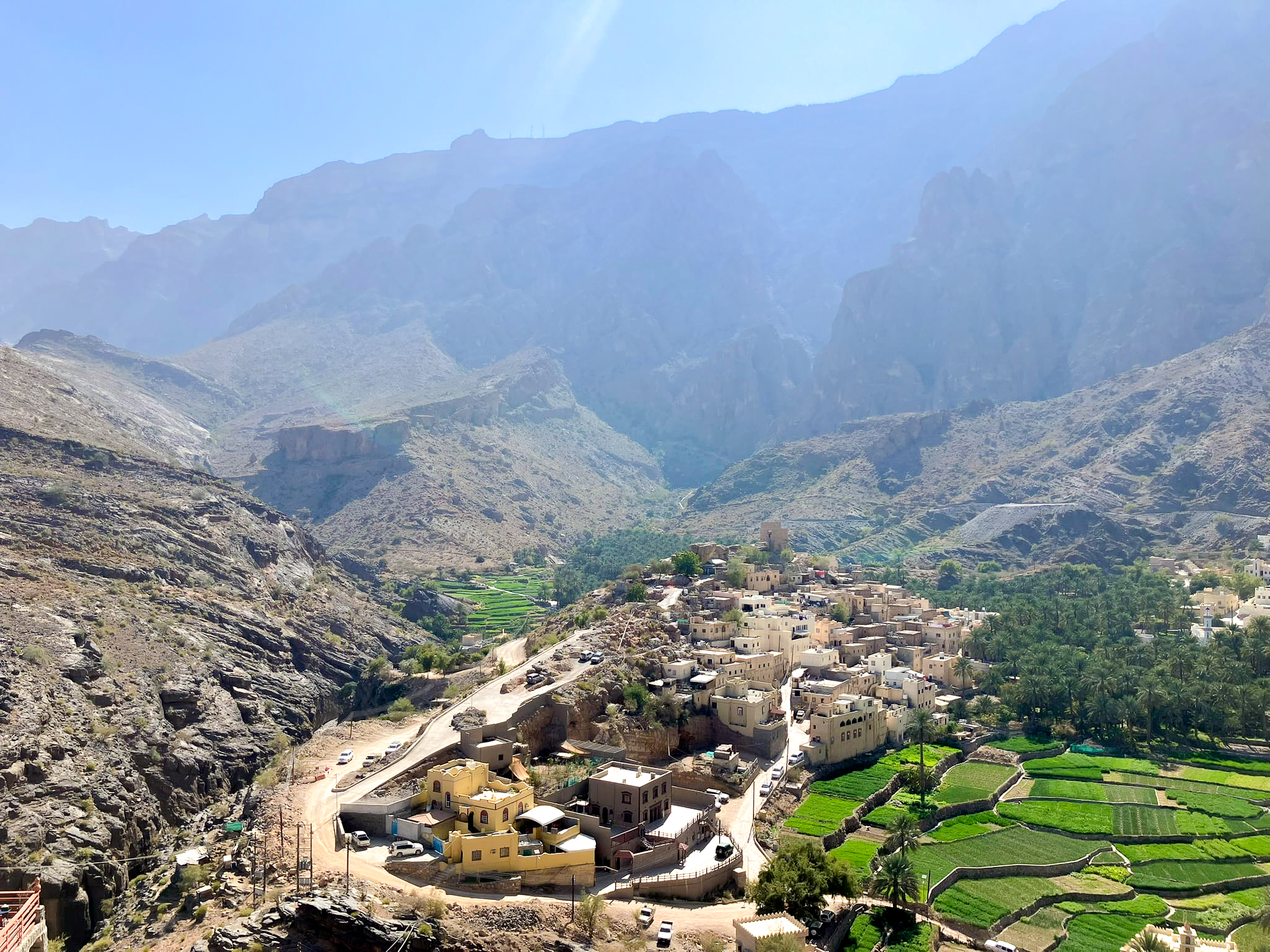
Set off this morning for a 4×4 ride (4hr 30min) through the Hajar Mountains. Our first stop is the Nakhl hot springs, where we can take photos and climb down the stairs to the water.Jump back in the 4x4s for an adventurous one-hour drive through Wadi Bani Awf, a valley where steep bends and bumpy roads lead us to Bilad Sayt, considered among the most picturesque mountain villages in Oman with terraced farms and date plantations.The road then winds through the peaks to Al Hamra at the foot of the Hajar range, a village of Yemini-style mud houses and more date plantations.
Meals: Breakfast,Dinner
Day 3
Visit Jabrin Castle • Walk in the Grand Canyon of the Middle East
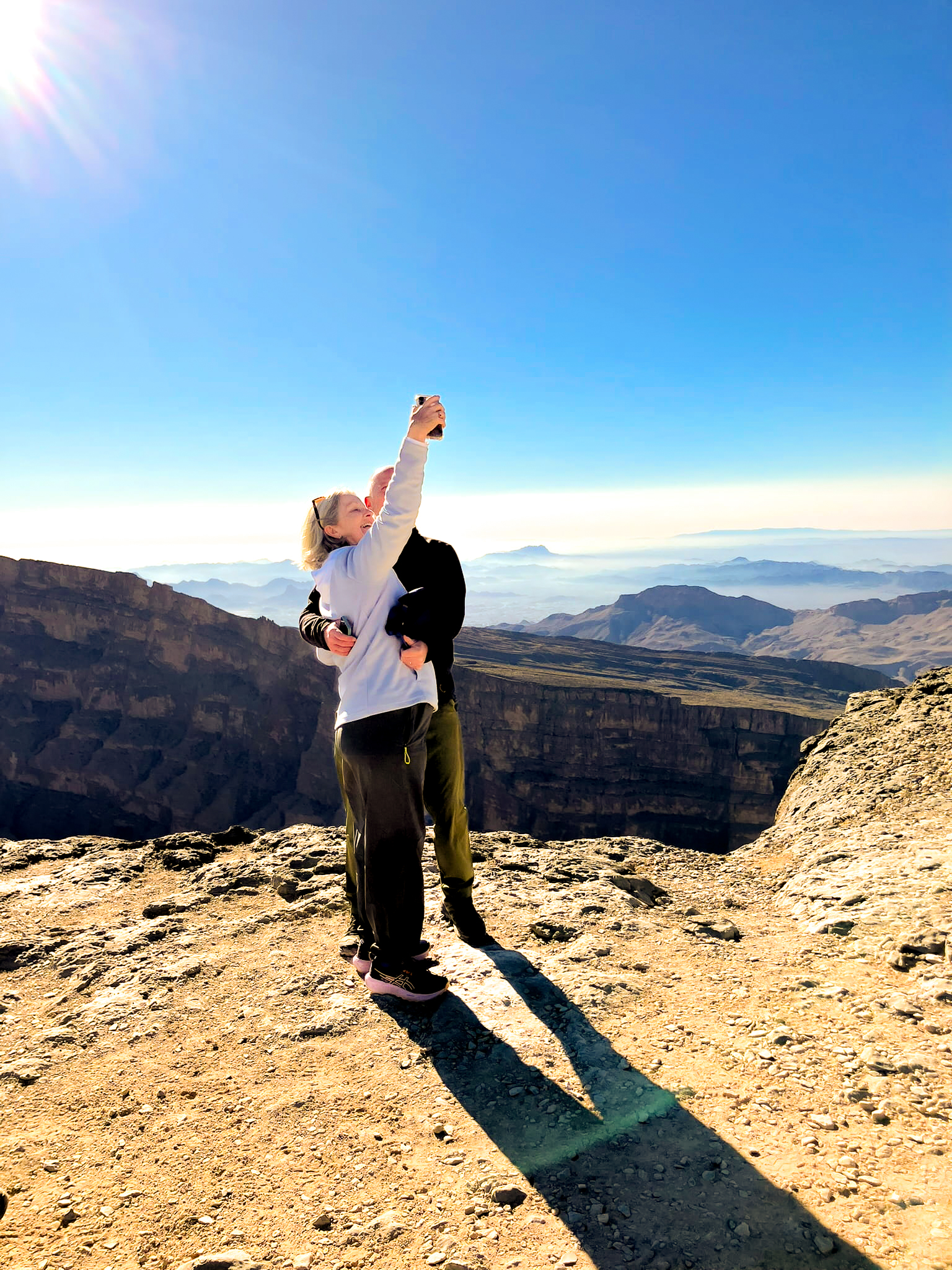
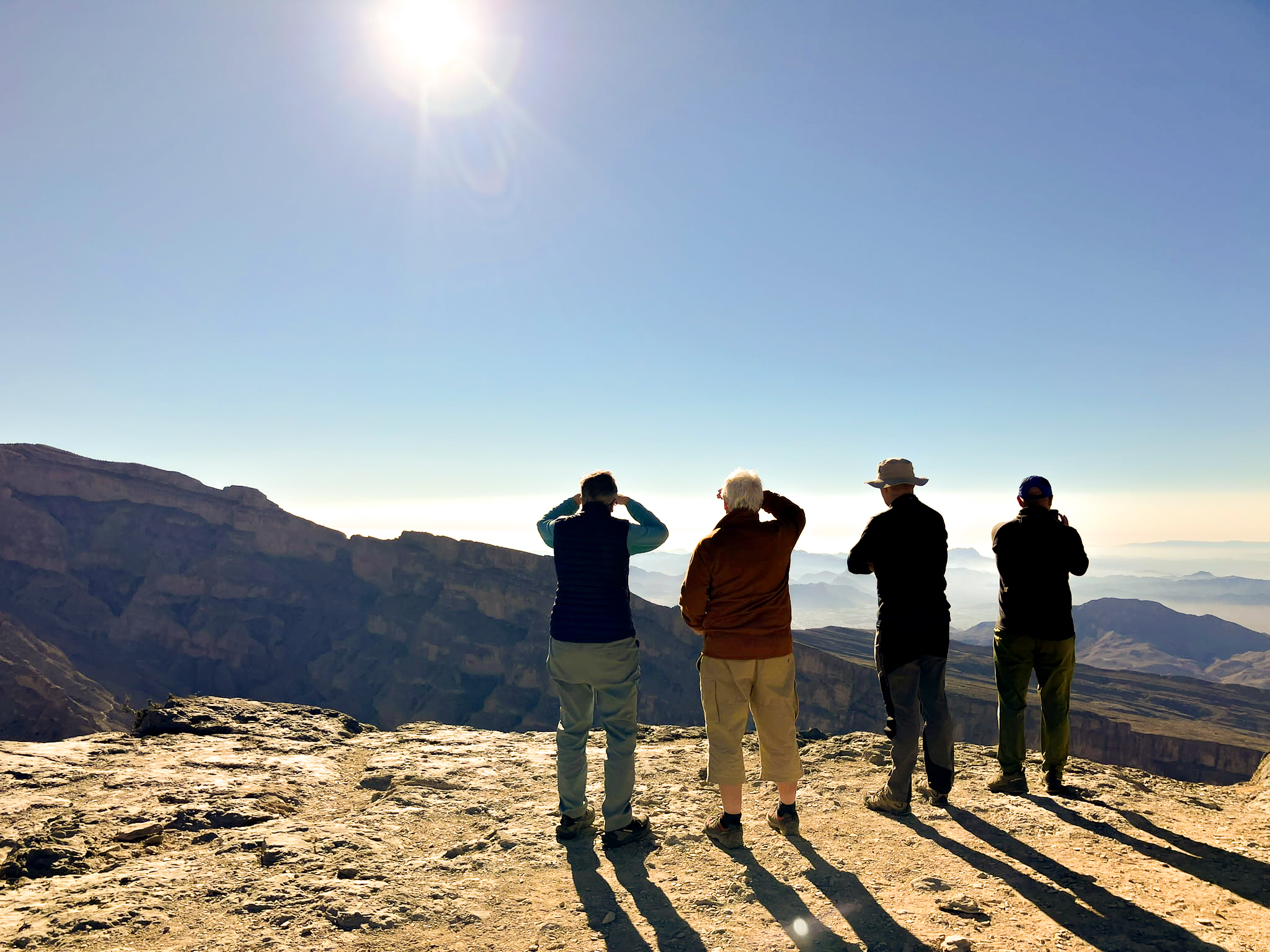
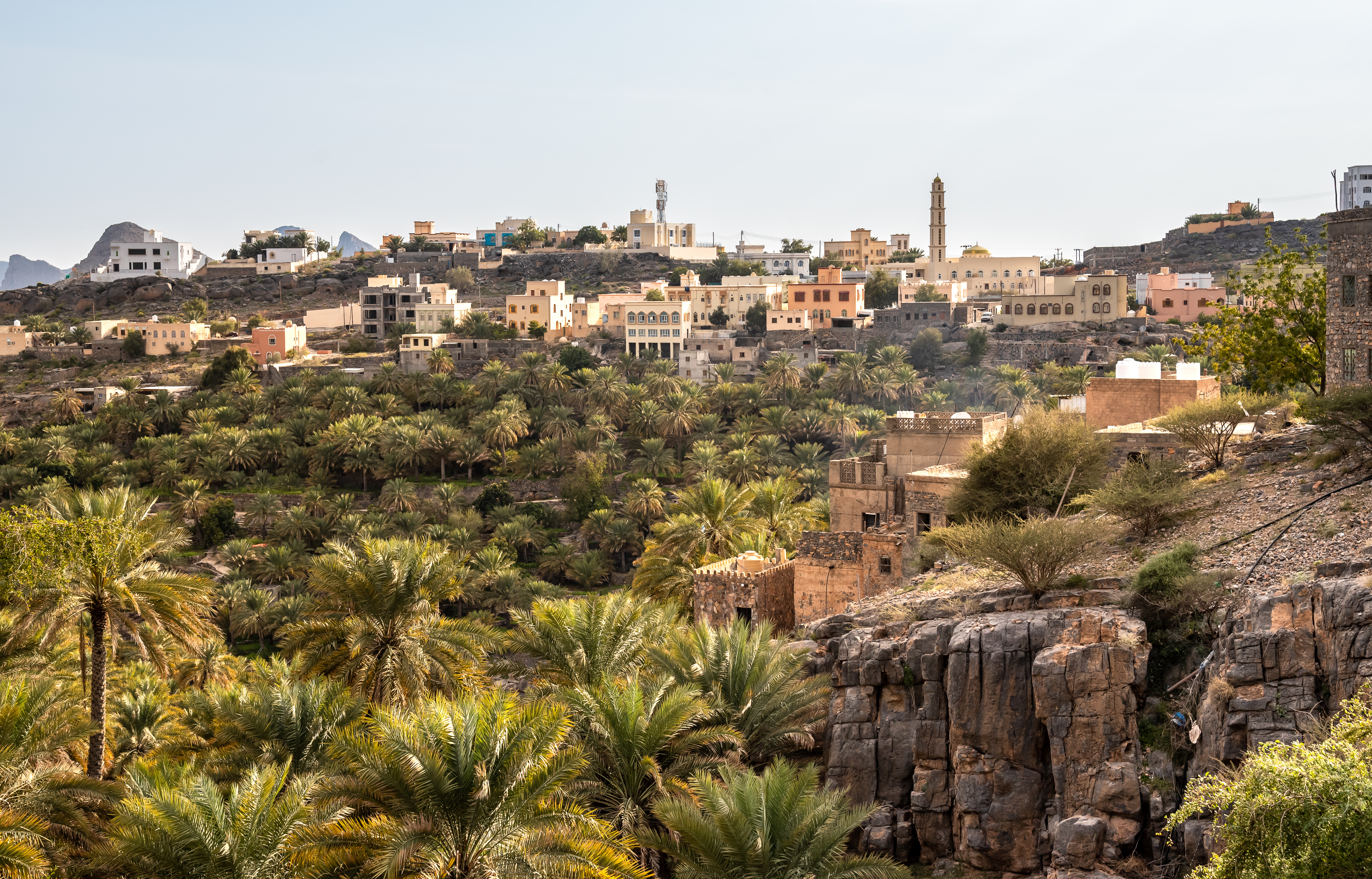
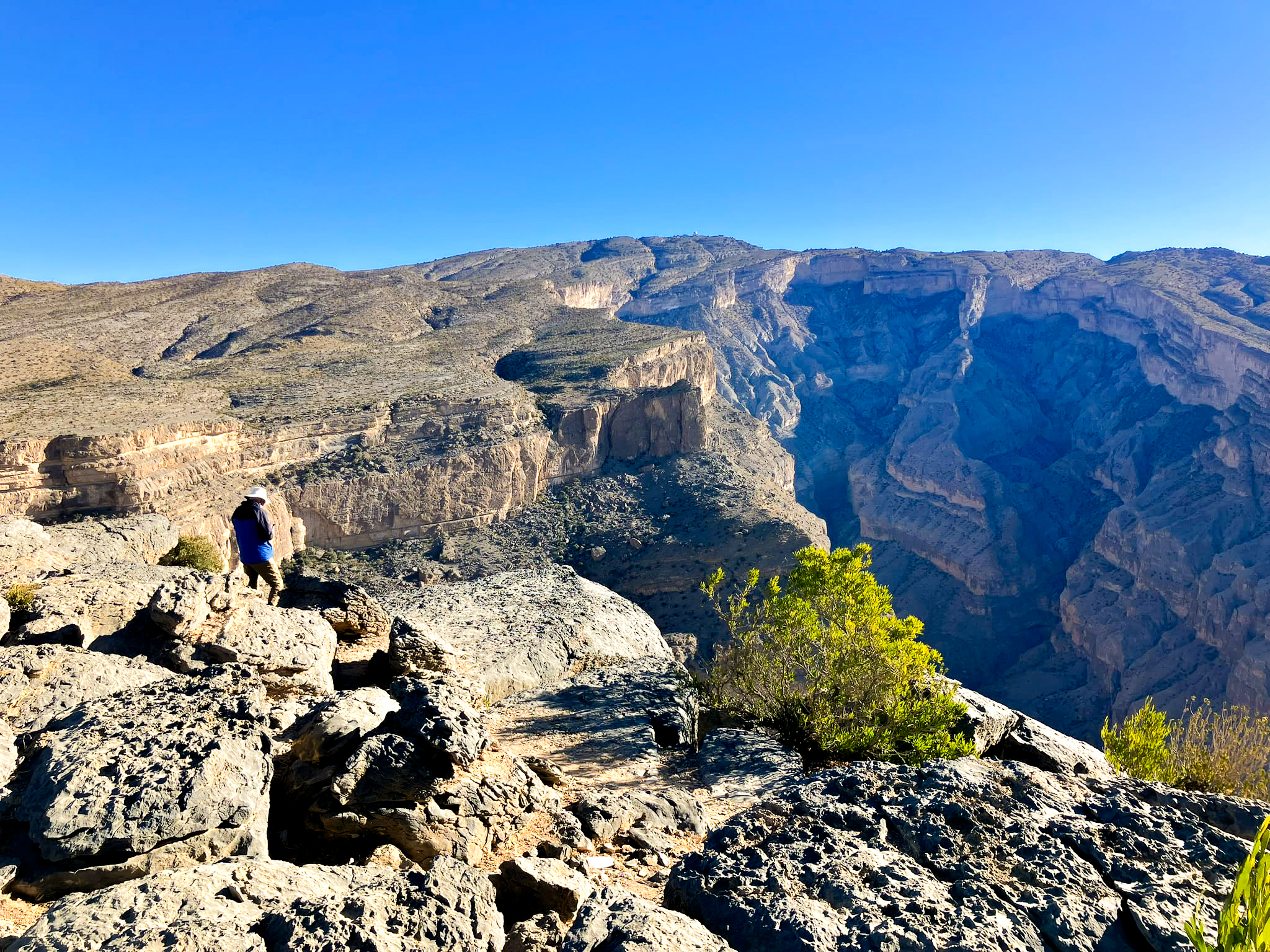
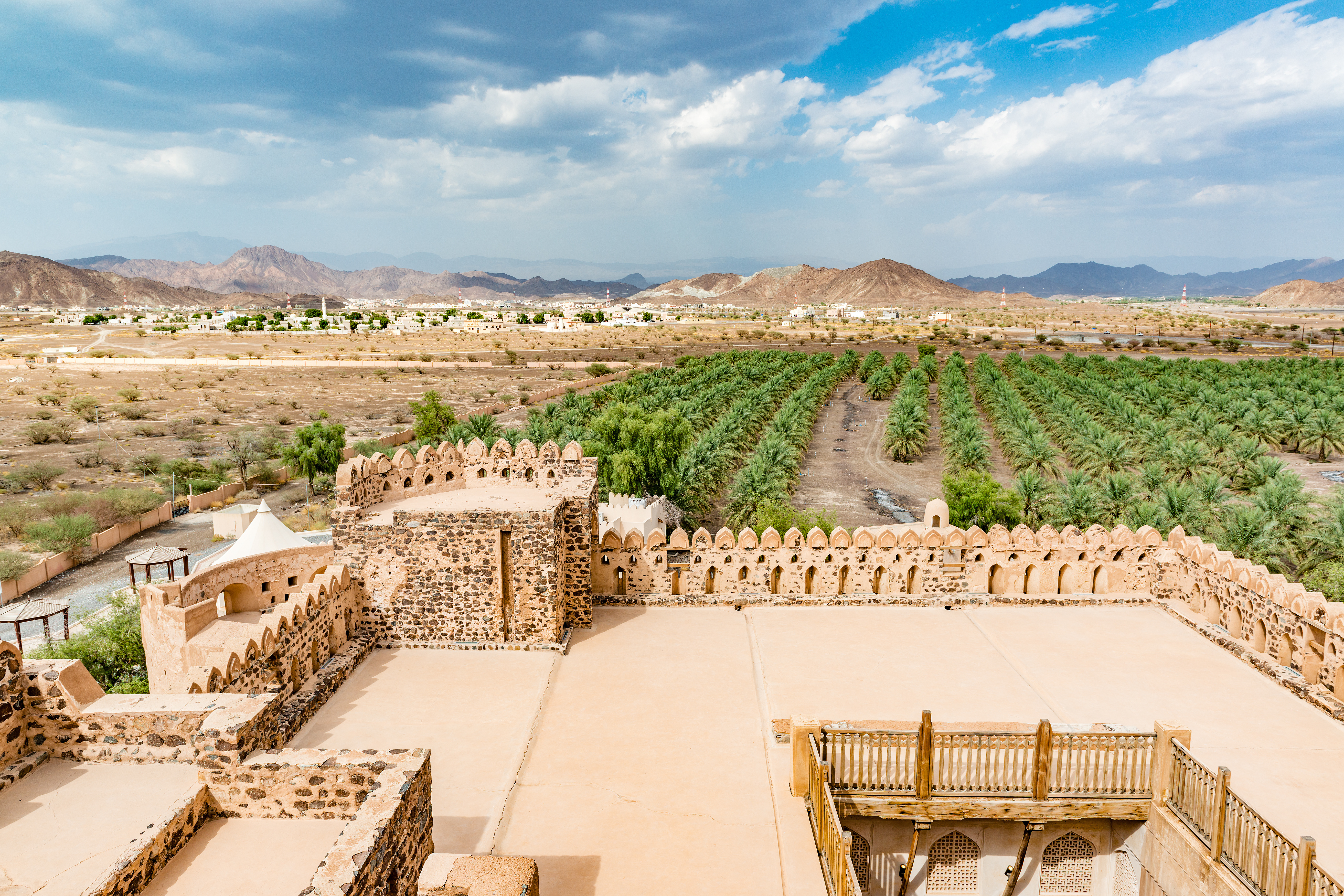
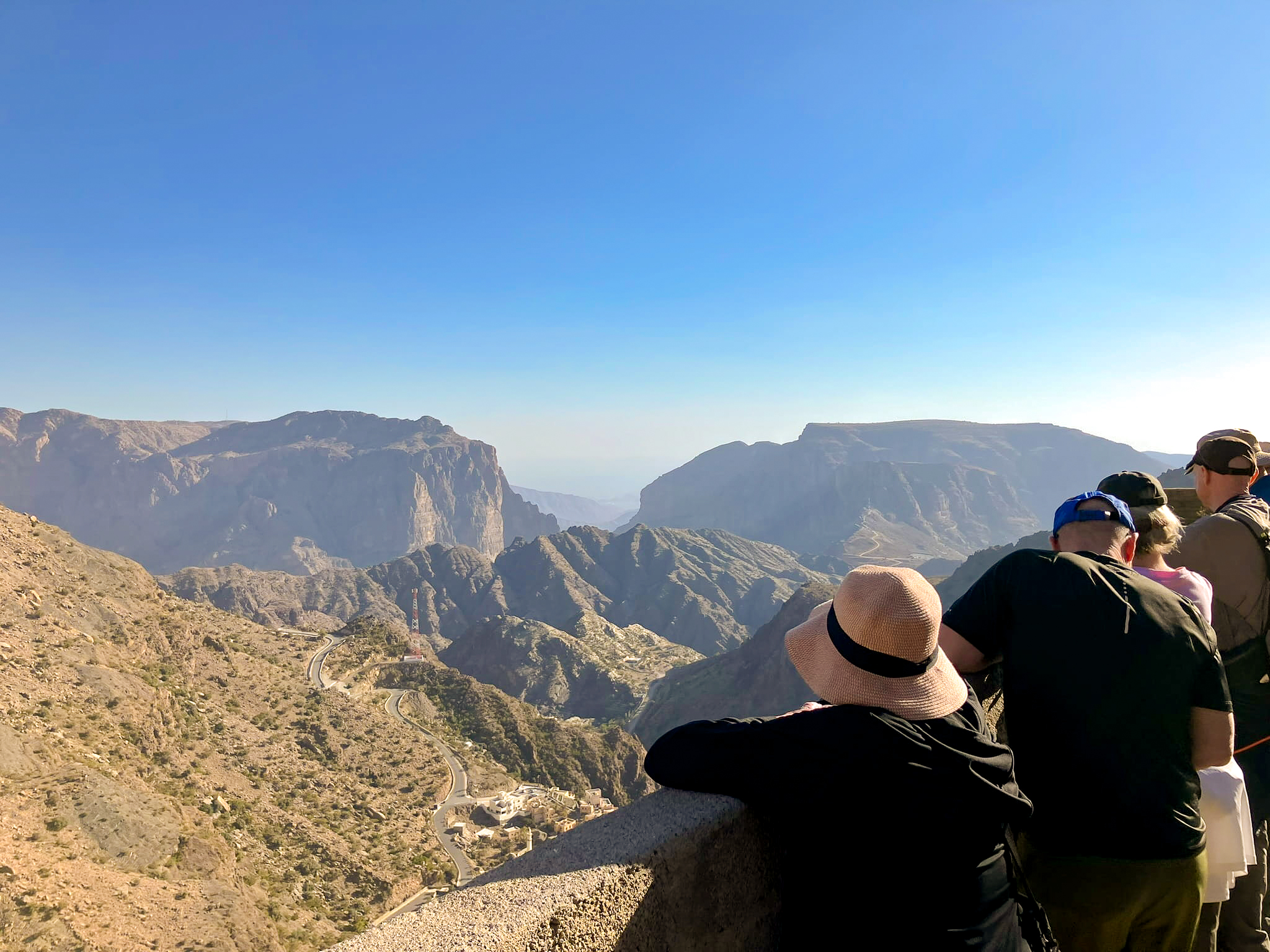
After breakfast, we visit Jabrin Castle. Built in 1675, it was once a place for the study of astrology, medicine and law, while the hand-painted ceilings are particularly impressive.Next, we head into Wadi Nakhr, an 8mi (12km) long valley through the Hajar Mountains. With towering cliffs, some more than 3,280ft (1,000m) high, it has been nicknamed the Grand Canyon of the Middle East and is undoubtedly one of the most spectacular natural wonders in Oman.After a walk through the wadi, we visit the old mountain village of Misfah, where we can see mud-and-stone dwellings and learn about traditional life in the Omani mountains.As we continue our journey, we stop in the Wadi Ghul to see the towering cliffs, before visiting Jebel Shams, the highest peak in the Jebel Akhdar range, for spectacular views.In the evening, we head to Nizwa, an ancient city that served as the capital in the sixth and seventh centuries.
Meals: Breakfast
Day 4
Visit Nizwa fort and souq • Village walk
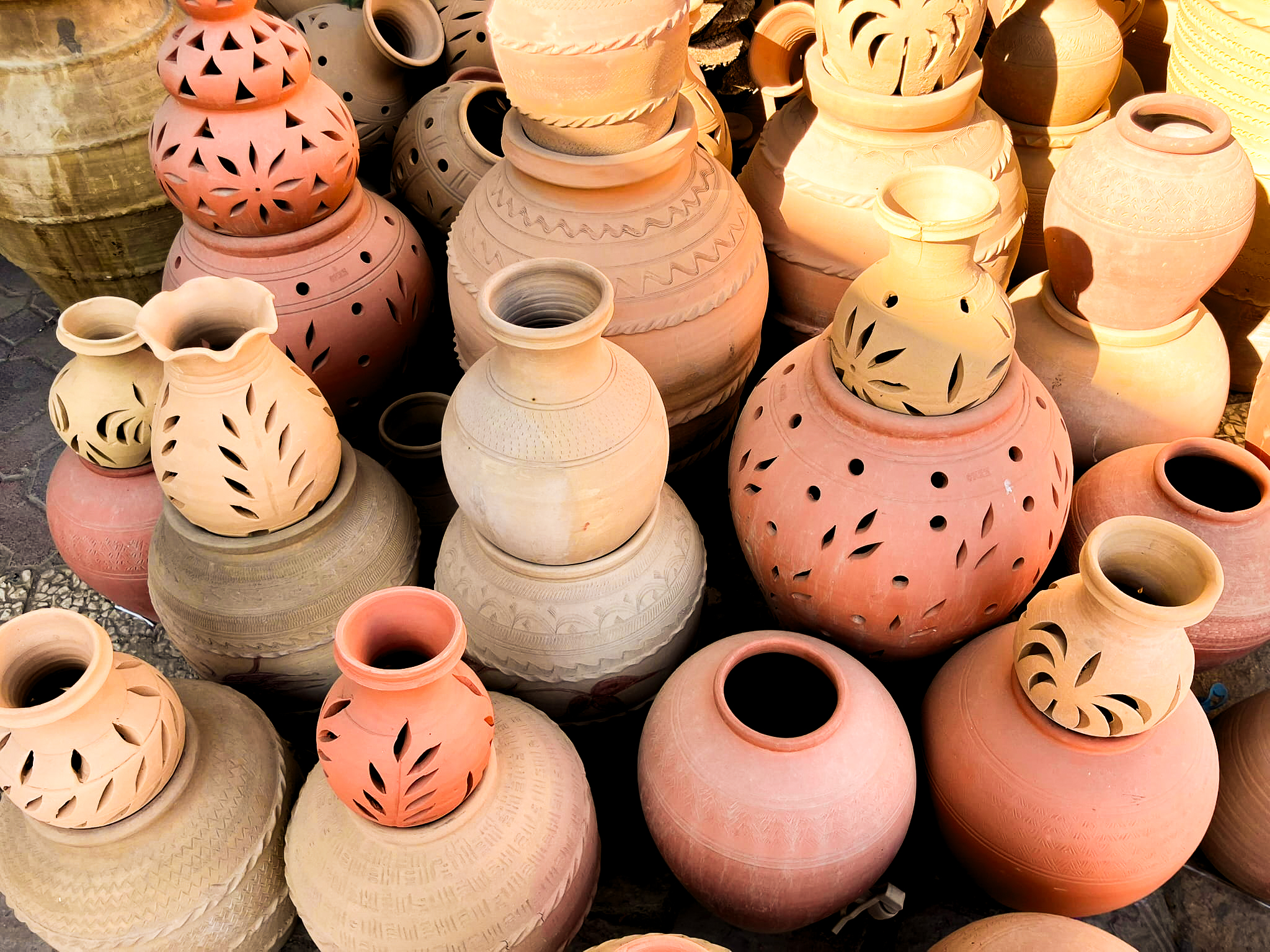
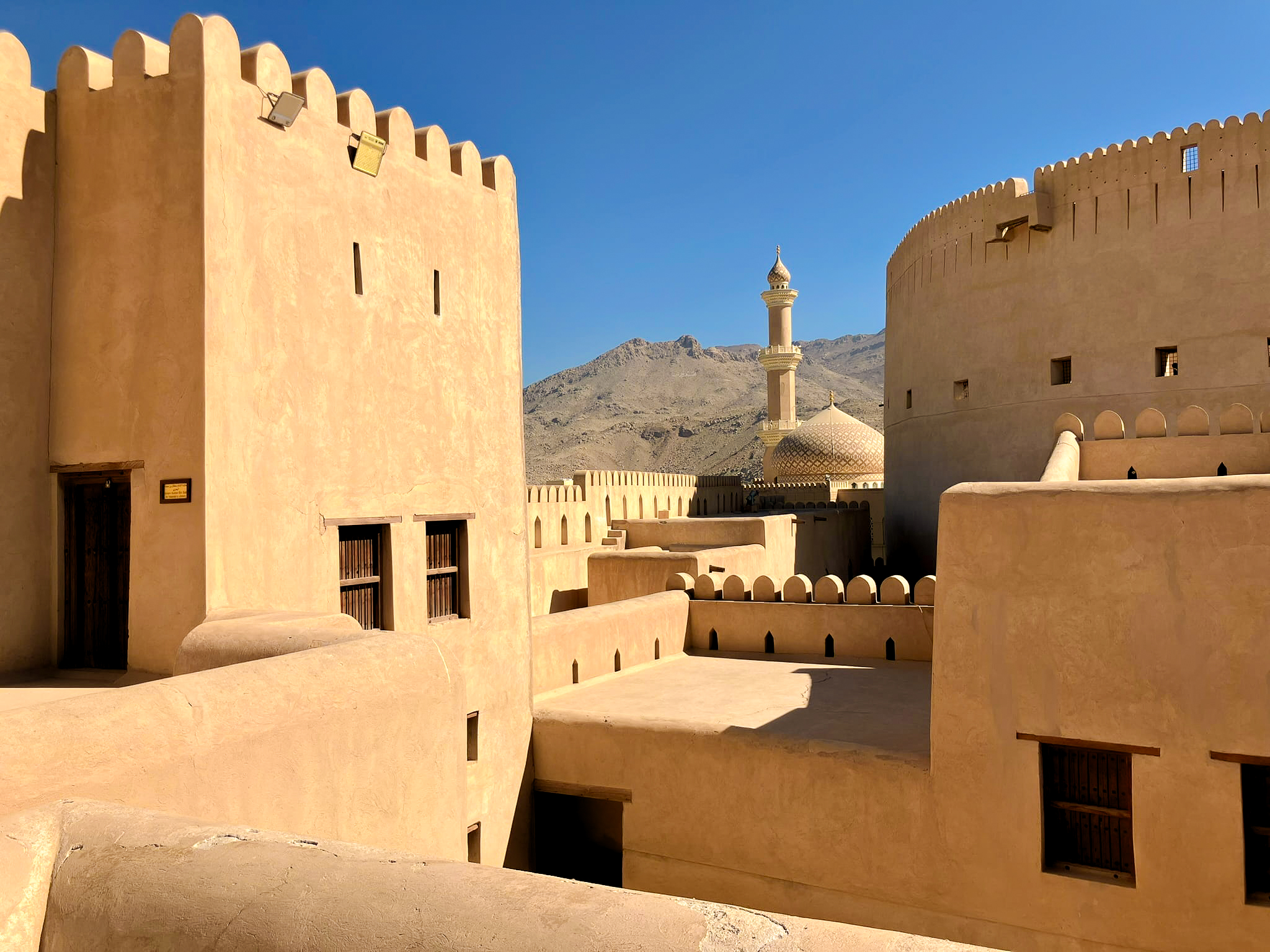
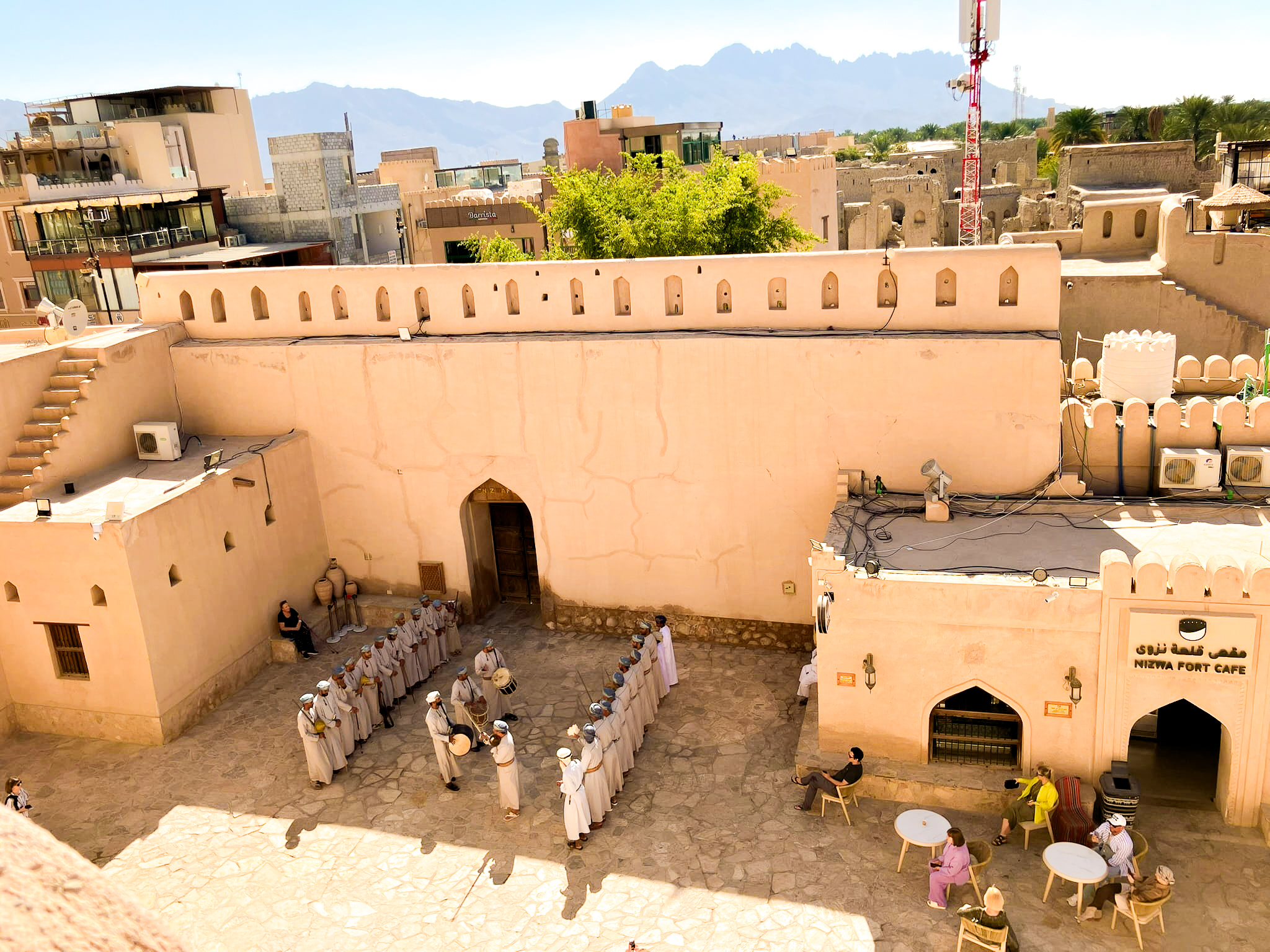
See two city landmarks this morning: the impressive Nizwa Fort, built in the 17th century to defend the natural wealth and strategic location of the city, and the renowned souq, famous for intricately hand-carved khanjars (traditional curved daggers), silver jewellery and livestock trading.After, we head to the village of Birkat Al Mouz, where we walk through lush date plantations. It’s then onto a 22mi (36km) stretch of winding road that takes us to Jebel Al Akhdar, where we can enjoy the cool climate 6,560ft (2,000m) above sea level.Reaching Al Ain, we embark on a walk through mountain villages for a chance to see traditional life and dramatic views over peaks, gorges and wadis. Come in March or April and you’ll likely see roses in full bloom; the villagers even make rose water in their homes.
Meals: Breakfast,Dinner
Day 5
See the turquoise pools of Wadi Bani Khalid • Visit a Bedouin home
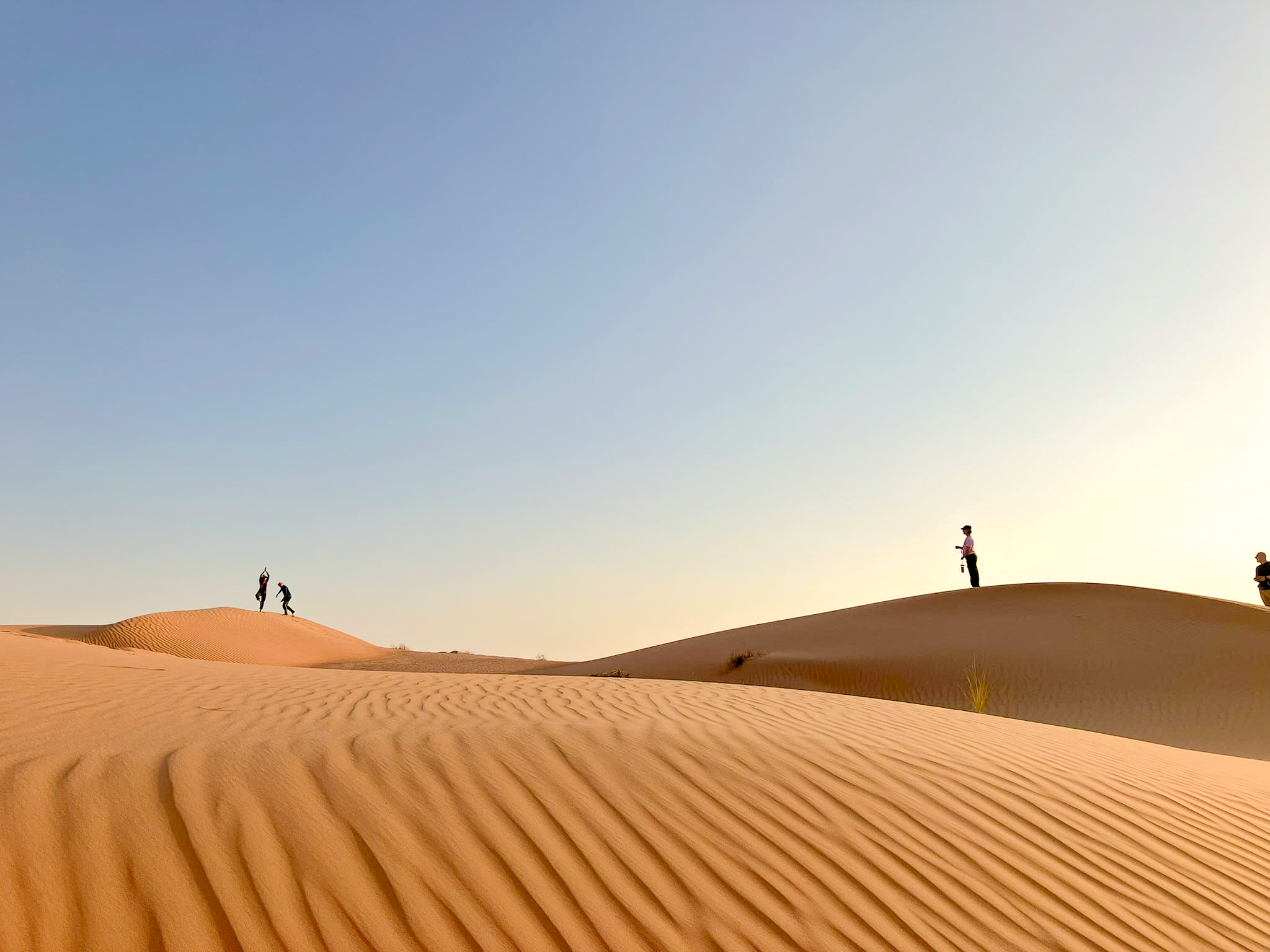
Our desert adventure begins today as we drive (four hours in total) to the golden dunes of the Wahiba Sands, also known as the Sharqiya Sands. En route, we visit the desert oasis of Wadi Bani Khalid.Arriving at our Wahiba Sands resort, we visit a Bedouin house to spend time with the hosts and learn about their customs and traditional lifestyle. We also explore the dunes on a one-hour 4×4 ride, before enjoying our first night in the Omani desert – an unforgettable adventure.
Meals: Breakfast,Dinner
Day 6
Ride across the desert • See the birds at Bar Al Hikman • Beach camping in Khaluf
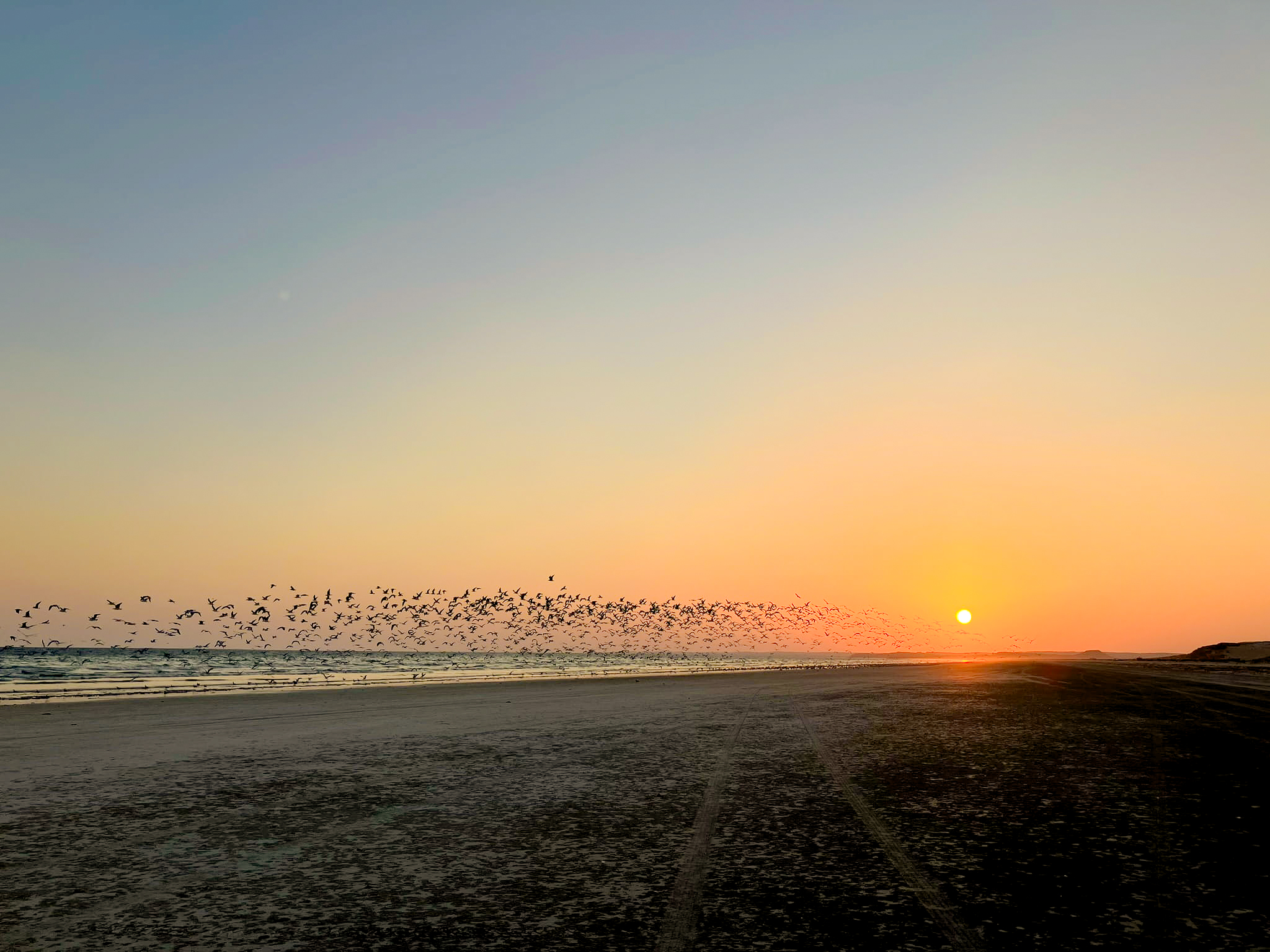
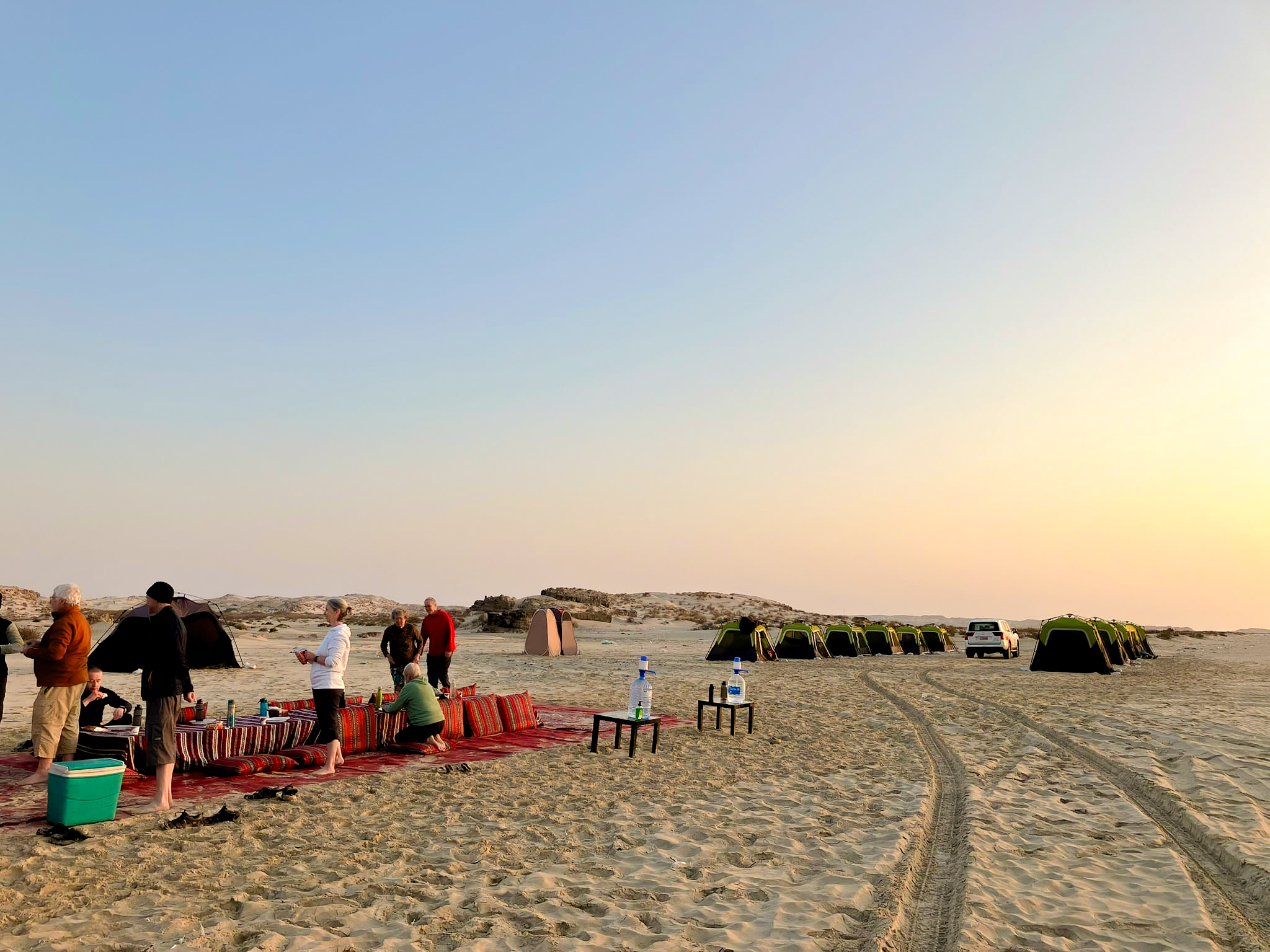
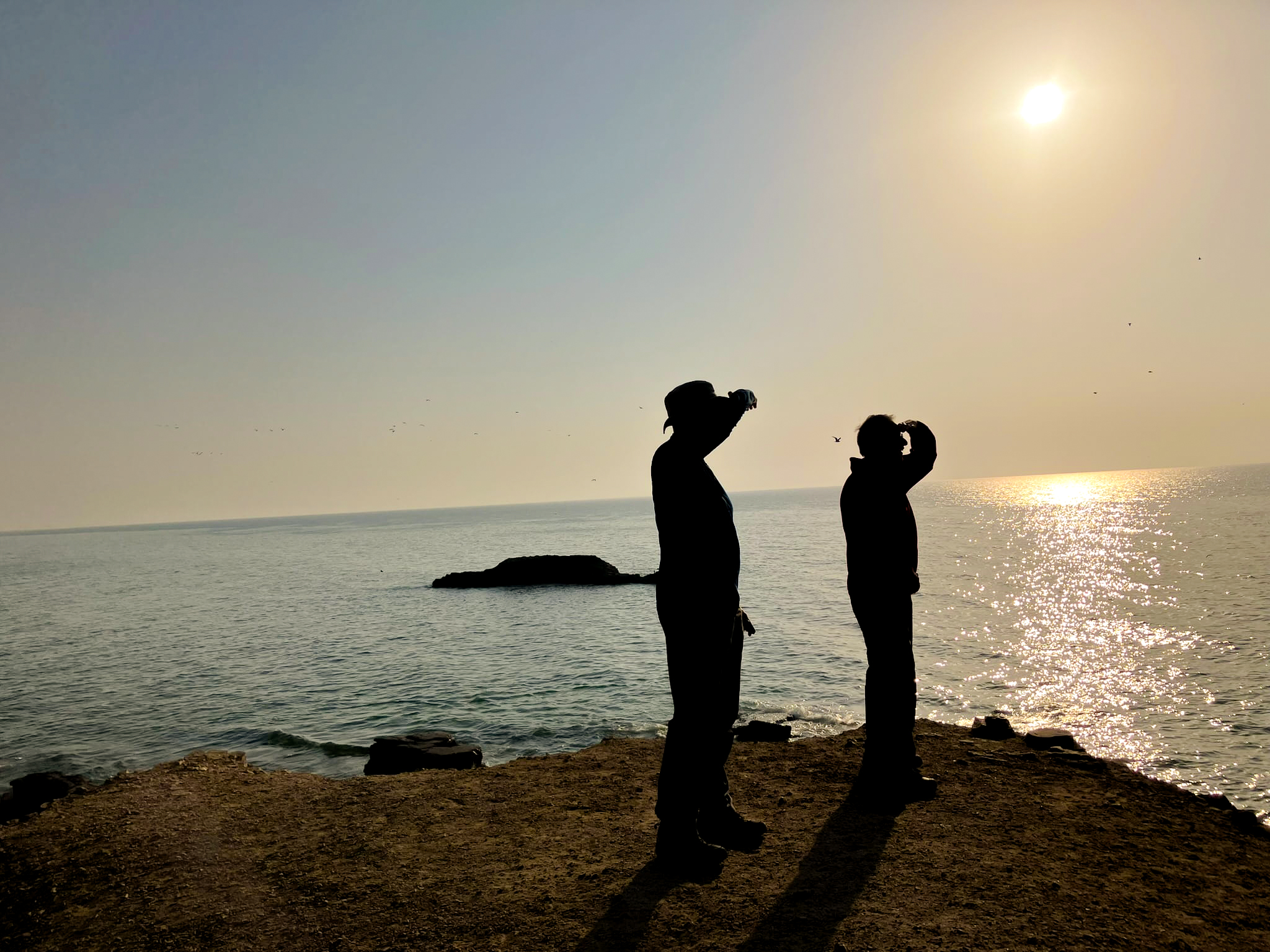
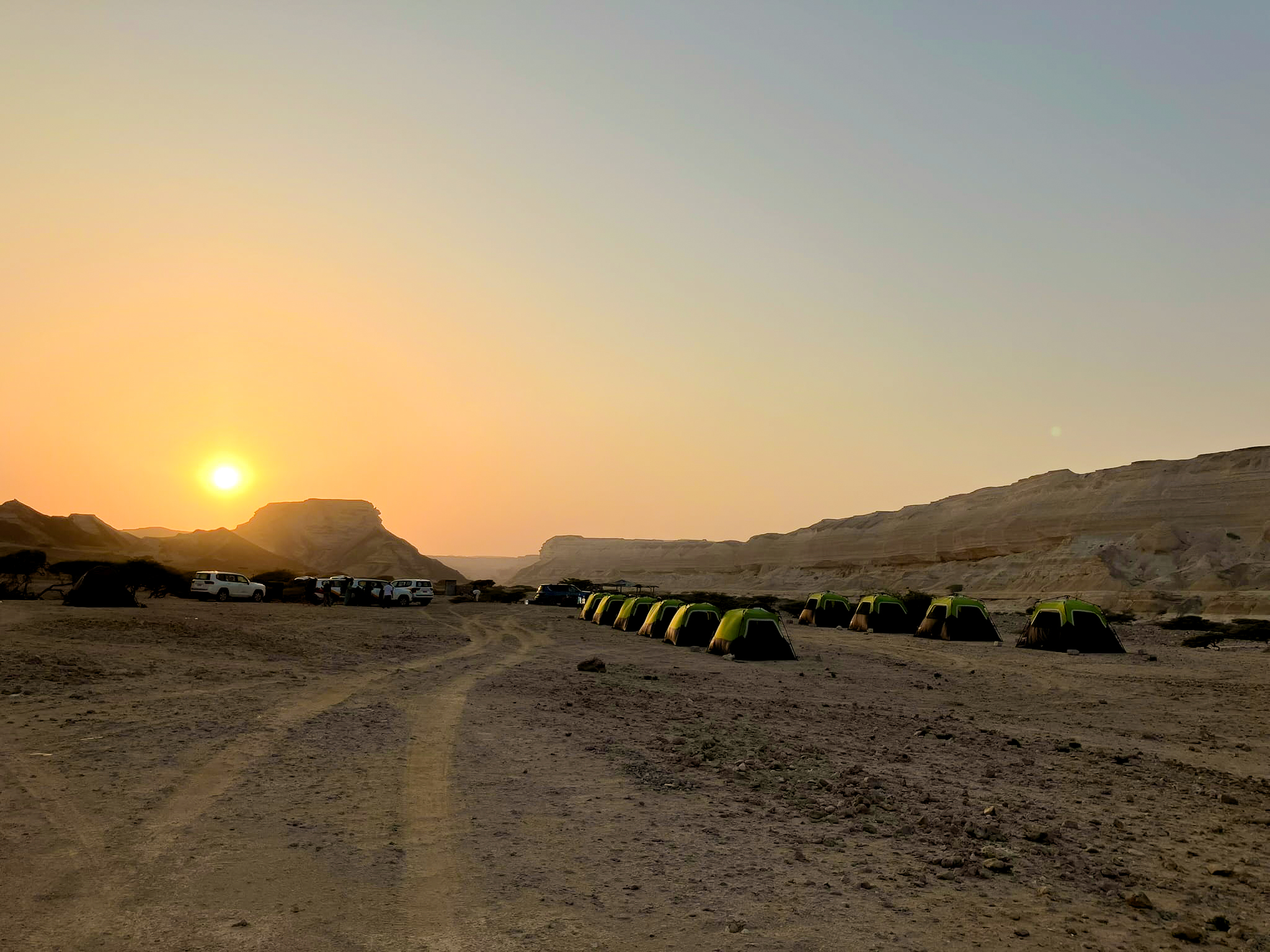
Embark on a four-hour drive across the desert after breakfast, riding the sand waves. Upon reaching Qahid, we continue to Shannah, a route that follows the Arabian Sea on one side and desert dunes on the other.After lunch, we continue to Bar Al Hikman, a birder’s paradise with thousands of small shore birds and often flamingos. We then proceed to Filin, a desalination plant, before finishing in the fishing village of Khaluf, where, if we’re lucky, we can spot dolphins out to sea. Tonight, we camp right on the beach.
Meals: Breakfast,Lunch,Dinner
Day 7
To Duqm via Wadi Shuram
Leaving Khaluf, we depart for Duqm, a port city that has grown rapidly from a fishing village. En route, we visit Wadi Shuram to see the oldest rocks in Oman, pass through a small palm tree oasis and climb a hill for 15 minutes to enjoy a stretching view over the wild desert.We reach our Duqm hotel mid-afternoon, but not before a stop at the Rock Garden, an intriguing collection of boulders cast into unique shapes by nature.
Meals: Breakfast,Dinner
Day 8
Visit Ras Madrakhah beach • See the pink lagoons at Qahal • Camp in Wadi Shuwaymiyah
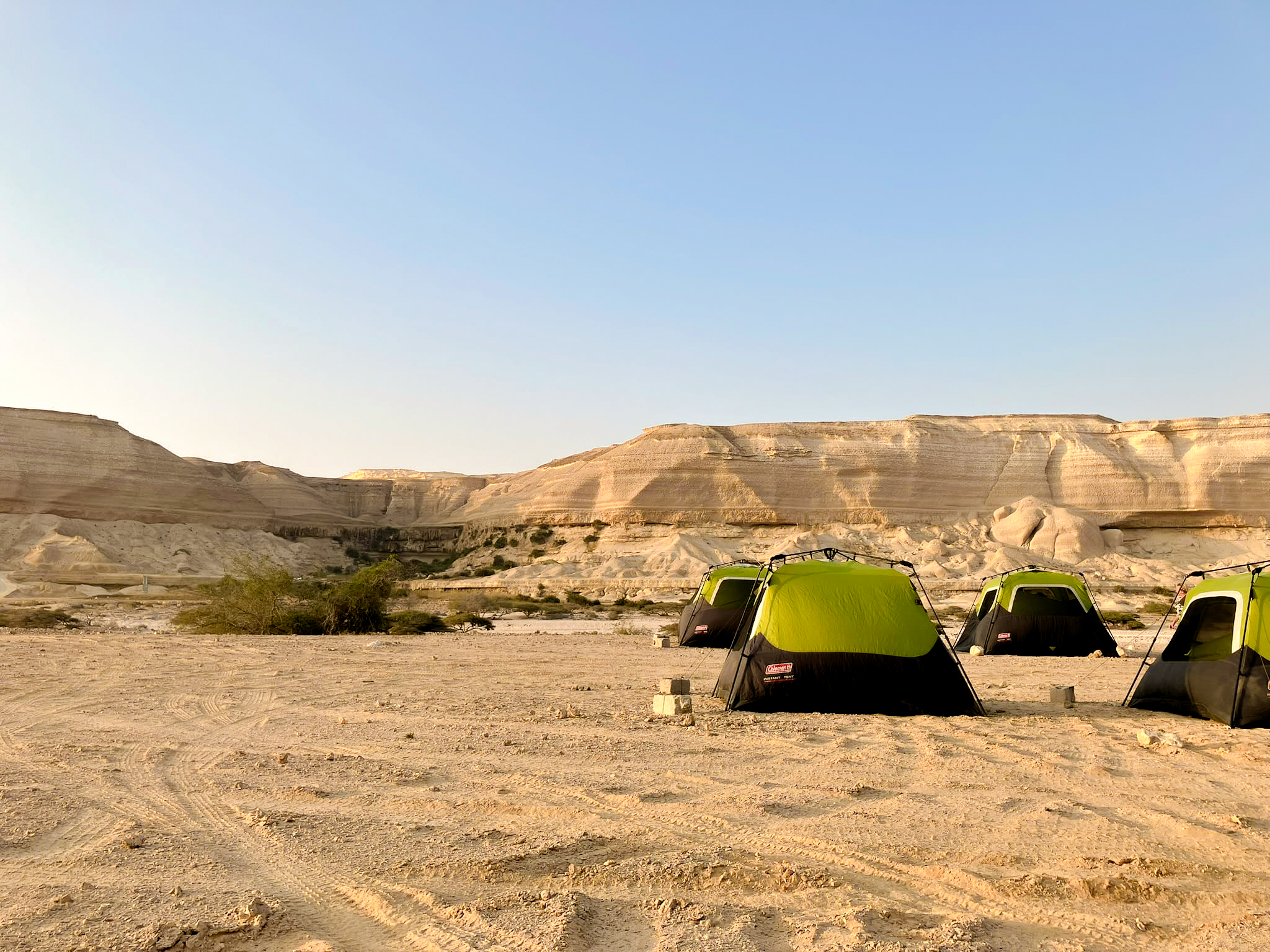
Today we drive (one hour) to Ras Madrakhah, a beach of white sands, dark rocks and blue ocean. We then transfer (two hours) to Qahal, where algae turns the lagoons pink.Finally, we head into Wadi Shuwaymiyah (2hr 30min), one the most spectacular valleys in Oman and home to hyenas, camels, ibex and gazelles. Here, we enjoy a night of wild camping.
Meals: Breakfast,Lunch,Dinner
Day 9
Head to the Empty Quarter
After breakfast, we continue our journey (five hours) to the Empty Quarter, the largest sand desert in the world, covering parts of Oman, Saudi Arabia, the UAE and Yemen.Our route takes us up the mountains to Marmul, an oil region, before heading west to Thumrait. We then drive north to Ubar, which we visit tomorrow, before arriving at our wild campsite in the Empty Quarter.
Meals: Breakfast,Lunch,Dinner
Day 10
Explore the Ubar ruins • 4x4 dune-driving experience • To Salalah
After breakfast, we drive (1hr 30min) to explore the ruins of Ubar. Labelled in classical works as the Atlantis of the Sands, a city lost to the desert, Ubar was a major trading hub for frankincense more than 5,000 years ago, connecting Oman with Mesopotamia, Rome and India.Next, we have a dune-driving experience (20 minutes) before transferring (2hr 30min) to Salalah. In the evening, you might like to join a city tour, visiting the souq and beach.
Meals: Breakfast
Day 11
Adventure ends in Salalah
The adventure ends today, and we begin our return journeys home. If you’d like to stay for longer, please speak to your sales representative about extending your stay.
Meals: Breakfast
What’s included
What’s not included
Additional information
Food
Omani cuisine is influenced by Arab, Persian, Indian, Asian, Eastern Mediterranean and African cuisine. Rice is a staple and often includes a variety of flavours and ingredients, while fish and meat, such as chicken and lamb, feature prominently. Dishes are full of rich mixtures of spices, herbs and marinades. Dates are much loved and are an essential part of the Omani diet.
Curry, soups, fresh salads and vegetable dishes are all very common. Coffee is the national beverage, but tea is also drunk. Yoghurt drinks and soft drinks are also popular. Alcohol is not readily available but can be purchased in some hotels and likely to be quite expensive.
Non-Muslims are permitted to bring in two litres of alcohol by air only. Alcohol may be purchased at Muscat airport after having cleared immigration. Care must be taken not to cause offence through the use of alcohol and should not be consumed in public places apart from licensed premises, such as hotels and restaurants. It is generally not a problem to bring your own alcohol into hotels but please always ask the hotel first out of courtesy.
Please advise at time of booking if you have any dietary requirements.
Omani Welcome Dinner in Muscat
Share a flavorful introduction to the country as you meet your Tour Director and fellow travelers over regional dishes—think saffron-scented rice, grilled meats, fresh salads, and sweet dates—paired with fragrant cardamom coffee. This relaxed evening sets an inviting tone for the days ahead.
Learn the etiquette of Omani hospitality in a setting inspired by the traditional majlis: generous plates for sharing, warm greetings, and time to connect. It’s a convivial start that helps the group gel while you sample regional dishes from Oman’s spice-laced culinary heritage.
Hajar Mountains 4×4 Traverse via Wadi Bani Awf, Bilad Sayt & Nakhl Springs
Buckle up to travel by 4×4 into the Al Hajar range, tackling the gravel tracks and hairpins of Wadi Bani Awf. Pause amid palm groves and terraced fields in Bilad Sayt, a postcard-perfect village cupped by jagged peaks.
Continue to the soothing waters of the Nakhl hot springs, where warm streams trickle through a rocky gorge. Along the way, the mountains reveal layers of ancient oceanic rock, dramatic wadis, and timeless farming hamlets that speak to Oman’s resilient highland life.
Jabrin Castle Guided Visit
Step into one of Oman’s finest forts on a guided visit to Jabrin Castle, famed for exquisitely hand-painted ceilings, carved stucco, and elegant archways surrounding a sunlit courtyard. Wander date stores, reception rooms, and defensive towers.
Built in the late 1600s by the Ya’aruba dynasty, Jabrin was more than a stronghold: it nurtured scholarship, hosting the study of astronomy, medicine and law. Its refined details and scholarly legacy reveal a cultivated chapter in Oman’s history.
Wadi Nakhr Walk & Jebel Shams Viewpoints
Walk into the shadowy gorge of Wadi Nakhr, where sheer limestone cliffs soar overhead and boulder-strewn paths invite careful exploration. Emerge to panoramic lookouts over Wadi Ghul, a dramatic chasm carved by seasonal torrents.
Climb by road toward Jebel Shams, Oman’s highest peak, to survey the epic sweep of the Grand Canyon of the Middle East. Cooler air and far-reaching views provide a powerful sense of scale across the Al Hajar escarpments.
Misfat al Abriyeen Heritage Walk
Wander the stepped lanes of Misfat al Abriyeen, a mountainside settlement of mud-and-stone dwellings framed by date palms and orchards. Paths thread between terraced gardens, shaded passageways, and village watchtowers.
Trace the burbling falaj irrigation channels that sustain the crops, an ingenious system perfected over centuries. Listen for the rustle of fronds and water as you pass gardens heavy with fruit—a living snapshot of traditional Omani highland life and terraced gardens ingenuity.
Nizwa Fort & Souq Exploration
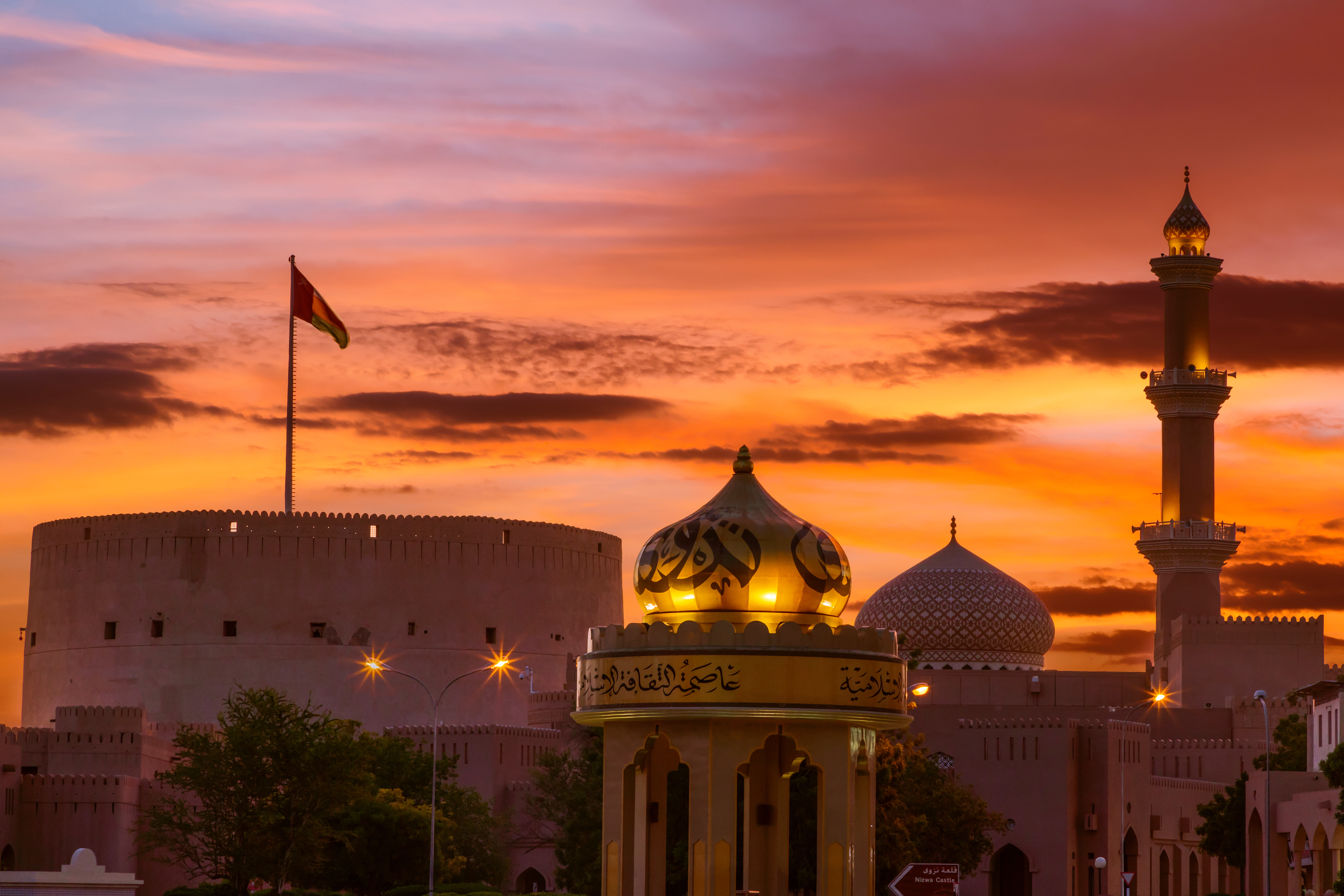
Discover the monumental round tower of Nizwa Fort, built to guard vital oases and caravan routes. Climb to the ramparts for views of palms and distant peaks, then delve into exhibits on tribal alliances and local crafts.
Continue into the souq, renowned for silverwork and khanjar daggers. This 17th-century stronghold and its vibrant market evoke Nizwa’s days as an intellectual and trading hub—where frankincense, livestock, and ideas once crossed the desert.
Birkat Al Mouz Date Plantations & Falaj Walk
Stroll beneath the shade of towering palms in Birkat Al Mouz, where crumbling mudbrick lanes open to green plots heavy with fruit. Hear the hush of water and birdsong as gardens unfurl along the hillside.
Examine the UNESCO-listed Aflaj that feed these groves, including the celebrated Falaj Al-Khatmeen. This ancient gravity-fed network reveals how Omani communities harnessed mountain springs to sustain lifelines of date plantations in the desert fringe.
Jebel Akhdar Terraces & Mountain Villages Walk
Walk along cliffside paths across Jebel Akhdar, where cool air and broad vistas frame orchards of pomegranates and apricots. Pass stone hamlets and mountain villages that cling to the escarpment above plunging wadis.
In spring, the rose terraces come alive and villagers distill fragrant waters in traditional stills. Any season, the high plateau offers tranquil routes and the chance to savor the cool high-plateau air far above the plains.
Wadi Bani Khalid Oasis Visit
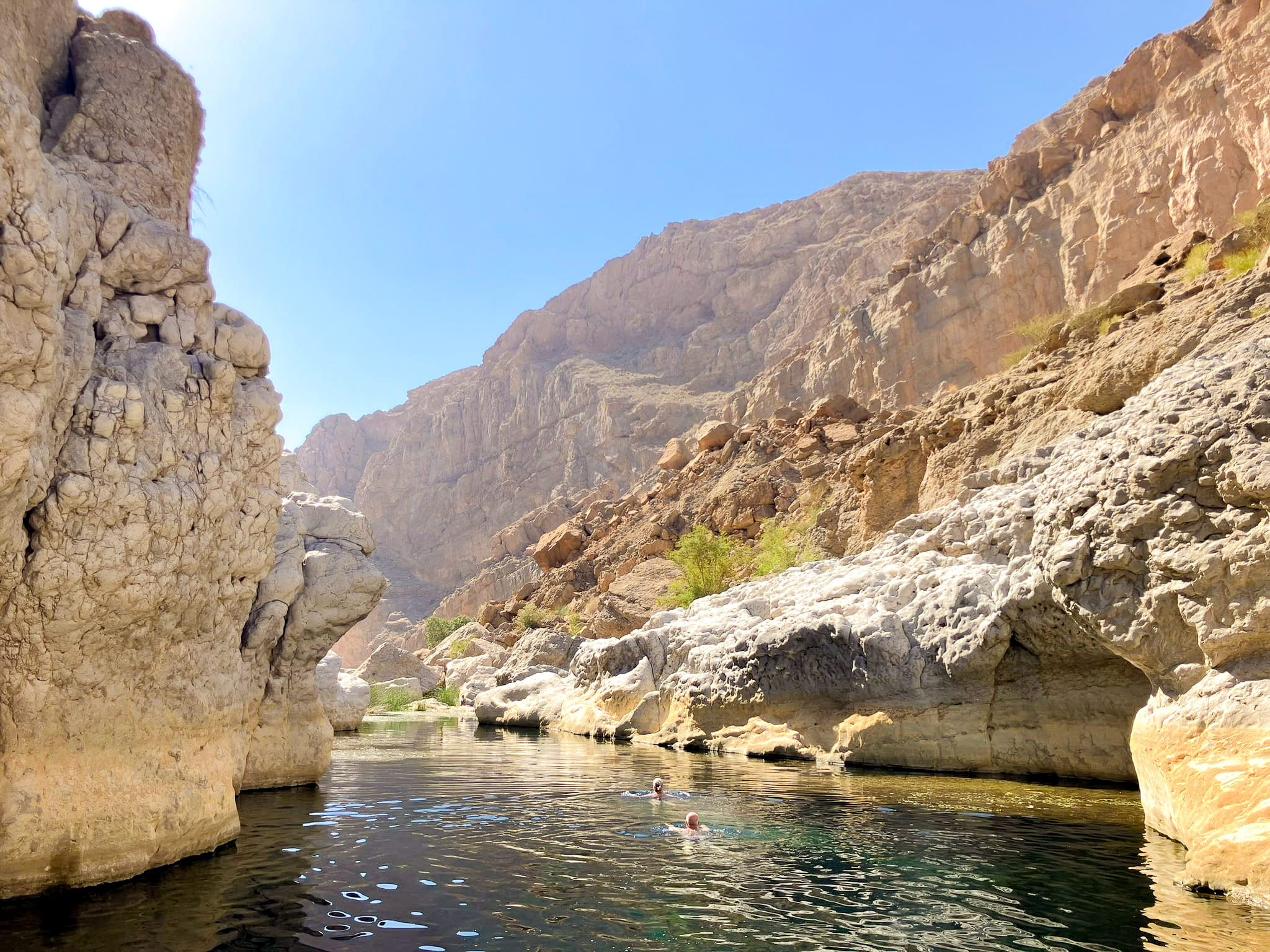
Visit the emerald pools and sculpted limestone of Wadi Bani Khalid, a palm-laced canyon whose clear waters glint beneath honey-colored cliffs. Footpaths and bridges offer gentle access to viewpoints and shaded rest spots.
Learn how seasonal flows and aflaj irrigation nourish small settlements tucked into the valley. The turquoise pools and palm-fringed canyon scenery make a serene counterpoint to the desert dunes—ideal to pause for photos and reflection.
Wahiba (Sharqiya) Sands Dune Drive & Bedouin Home Visit
Ride a dune drive across the rippling ridgelines of the Wahiba (Sharqiya) Sands, feeling the soft give of sand beneath the tires and the sweep of ochre horizons. The shifting light makes the desert a living canvas.
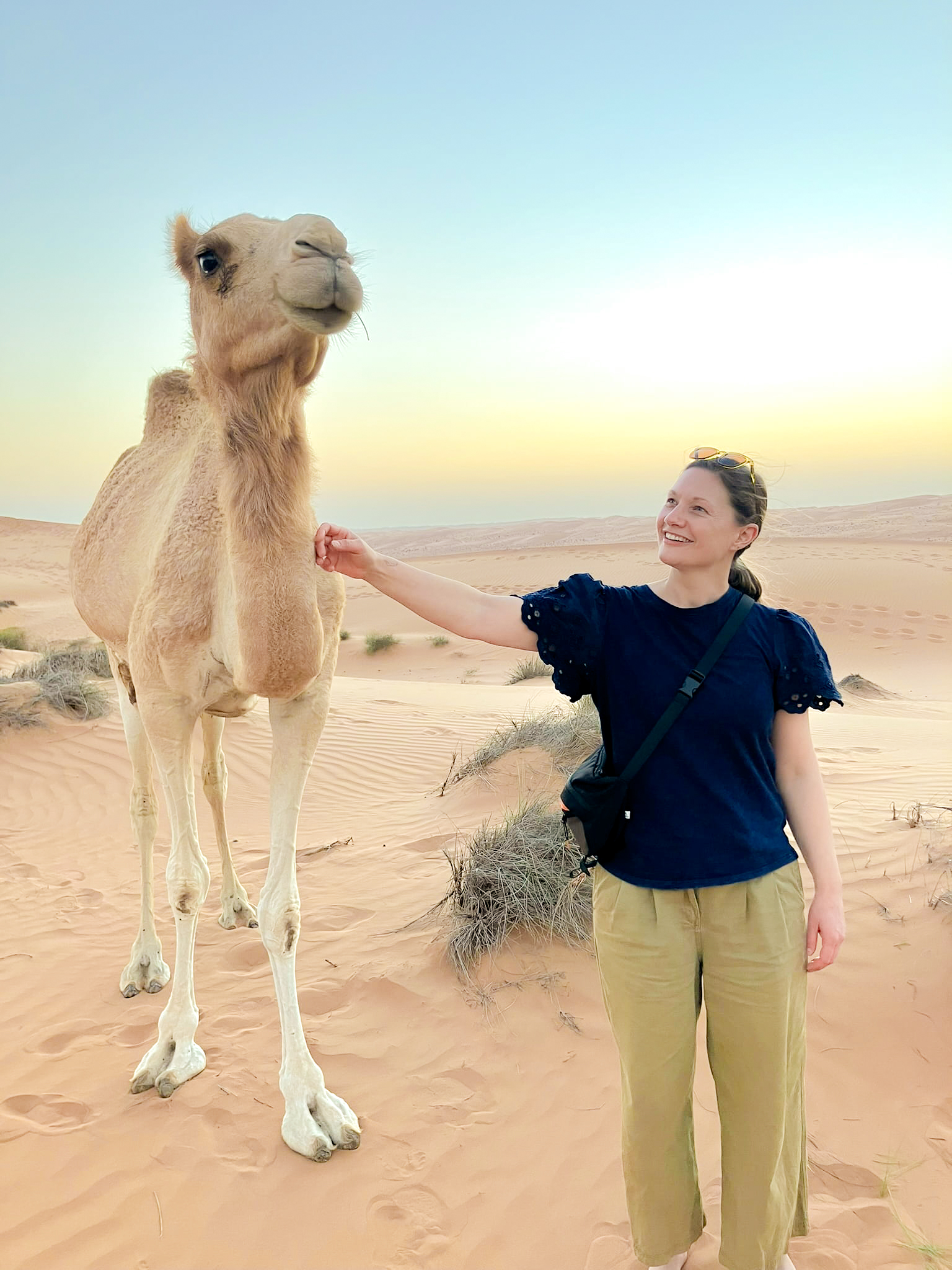
Afterward, visit a Bedouin home to learn about weaving, camel traditions, and the rhythms of nomadic life. Share Omani coffee and dates as your hosts explain this storied landscape and the customs that bind community to desert.
Bar Al Hikman Wetlands Birdwatching
Scan tidal flats and pale sandbars at Bar Al Hikman, where nutrient-rich waters draw thousands of shorebirds—plovers, sandpipers, terns—and, in season, elegant greater flamingos. The mirror-calm shallows create superb viewing conditions.
Learn how monsoon upwellings feed this marine pantry and why the area is an Important Bird Area for Oman. With vast skies and sweeping horizons, it rewards patience—be sure to bring binoculars to catch the detail.
Khaluf Beach Wild Camping by the Arabian Sea
Pitch camp on remote sands where sugar-white dunes taper to turquoise surf and fishing skiffs dot the horizon. Drift to sleep to the hush of waves as you camp right on the beach, far from settlements and lights.
Wake early to scan for dolphins offshore and trace wind-rippled ridges along the Arabian Sea. With a star-filled desert sky overhead, this is coastal wilderness distilled—simple, elemental, and deeply restorative.
Wadi Shuram Geological Walk & Duqm Rock Garden
Take a short climb amid the ancient rocks of Wadi Shuram, where a palm oasis punctuates sweeping desert views. Your leader explains how uplift and erosion sculpted these stark, beautiful layers.
Continue to the Duqm Rock Garden, a field of fantastical, wind-sculpted formations spread across the flats. Textures shift from honeycombed stone to mushroom-like boulders—an open-air gallery shaped by time, salt, and wind.
Ras Madrakhah Headlands & Qahal’s Pink Lagoons
Stroll the rugged promontories of Ras Madrakhah, where black headlands and white sand meet cobalt seas. The contrasts are striking, with wave-cut rocks framing luminous shallows and quiet coves.
Travel onward to the pink lagoons at Qahal, their blush tint linked to seasonal algae and salt. It’s a photographers’ dream: mirror-like water, wading birds, and abstract color fields shaped by wind and tide.
Wadi Shuwaymiyah Canyon Exploration & Camp
Journey deep into Wadi Shuwaymiyah, a secluded valley of towering limestone walls, palms, and clear pools. Short walks reveal hanging gardens and shaded corners alive with birdsong.
Settle into wild camping beneath sheer cliffs, where twilight lengthens and the desert silence gathers. The region shelters shy wildlife—ibex, gazelle, even hyena—hinting at the resilience of life in Oman’s far-flung wadis.
Rub’ al Khali Desert Expedition & Sunset Camp
Venture into the Rub’ al Khali (Empty Quarter), a sea of vast dunes that roll to every horizon. Feel the scale of Arabia’s great interior as you traverse amber ridgelines and broad salt flats.
As the heat eases, watch sunset over the sands paint the crests with copper and rose. At camp, the sky opens to the Milky Way, and the desert’s immense quiet turns night into a moment of awe.
Lost City of Ubar (Shisr) Archaeological Site
Explore the Ubar (Shisr) archaeological site, linked by legend to the Atlantis of the Sands. Walk among foundations of towers and storerooms that once served incense caravans threading the desert.
Part of Oman’s Land of Frankincense heritage, Ubar sits at the crossroads of ancient incense routes connecting Arabia with Rome and India. Your visit reveals the ingenuity—and fragility—of cities forged by trade in a harsh environment.
Empty Quarter 4×4 Dune-Driving Experience
Feel the thrill of 4×4 dune-driving with expert desert drivers, cresting and descending sand slopes where traction and finesse are everything. The vehicle’s climb and sweep mirror the contours of colossal dunes.
A short, safety-briefed session introduces techniques for tackling steep slipfaces and soft sands. There’s time to pause for photos on high ridgelines—vast panoramas that distill the drama of the Empty Quarter.
Muscat Sunset Dhow Cruise
Sail the coast on a traditional wooden vessel during a sunset dhow cruise, watching cliffs, mosques, and the Muttrah Corniche glow in the evening light. The silhouettes of coastal fortresses and city domes create a timeless skyline.
Tea, dates, and sea breezes set the mood as the shoreline slips by. This experience is at additional cost and bookable on tour; availability may vary by season and weather conditions.
Salalah Evening Souq & Beach Tour
Join a Salalah evening city tour to browse Haffa Souq, where stalls overflow with frankincense resin, perfumes, and colorful textiles. Continue to palm-lined sands for a relaxed stroll along Al Haffa Beach.
Hear how the khareef monsoon shapes Dhofar’s culture and landscapes as you sample the easygoing coastal atmosphere. This experience is at additional cost and bookable on tour, subject to local timings.
Muscat City Highlights: Grand Mosque, Muttrah Souq & Al Alam Palace
Explore Oman’s capital on a curated overview that takes in the exterior of the Sultan Qaboos Grand Mosque, the heritage-rich Bait Al Zubair Museum, and the bustling Muttrah Souq and fish market along the waterfront corniche. Capture a classic photo at Al Alam Palace, the ceremonial residence of the Sultan.
Absorb Muscat’s maritime character as you pass Portuguese-era forts guarding the harbor and elegant seaside districts. Exhibits of khanjars, textiles and tribal arts reveal the stories behind Oman’s traditions, trade routes and enduring desert-and-sea identity.