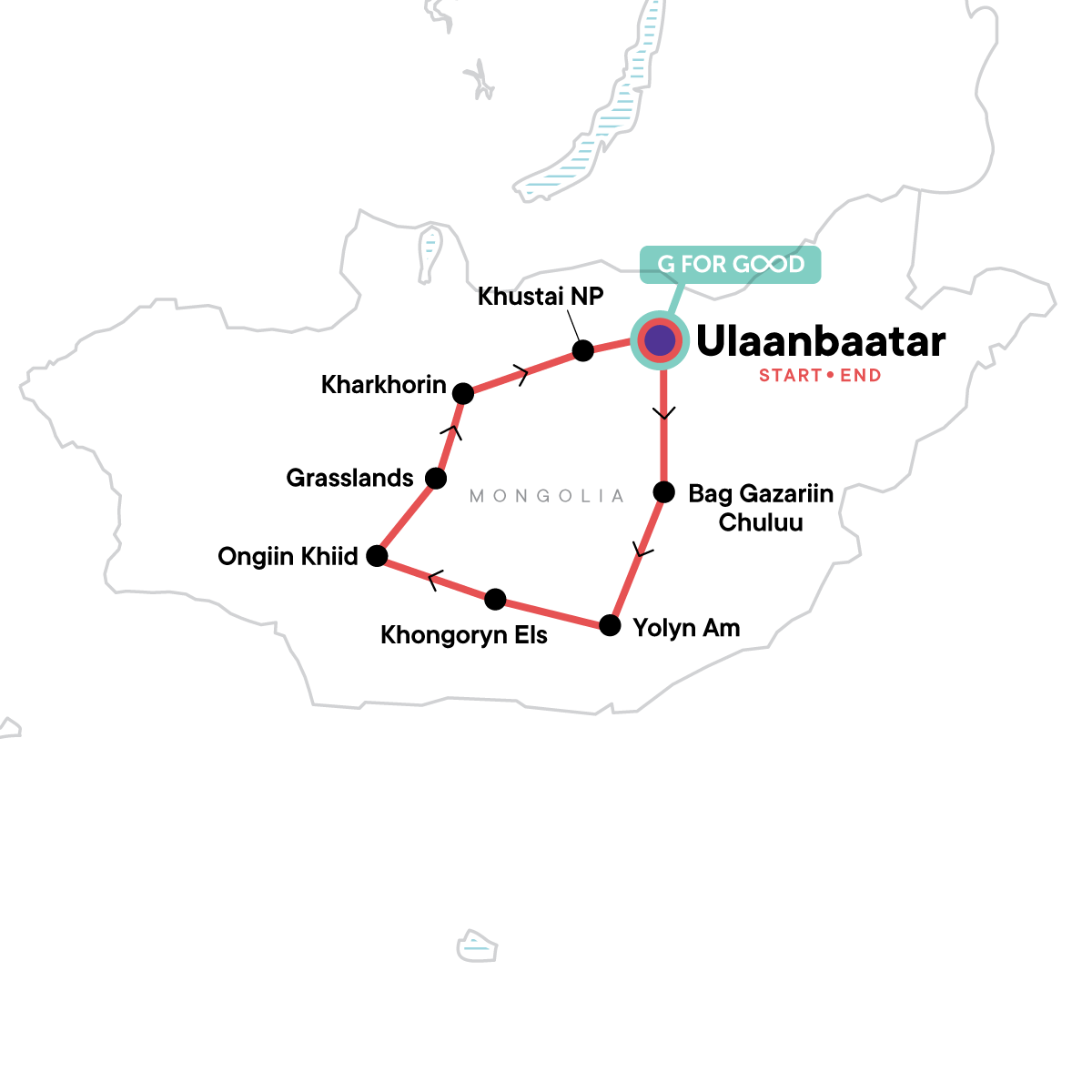
Your itinerary
Day 1
Day 1: Ulaanbaatar
Arrive at any time.
There are no activities planned until an evening welcome meeting.
ACTIVITY: Your opportunity to meet your CEO and fellow travellers, and learn more about your tour. Opt to join the group for a local meal afterwards. Don’t forget to see the notice in the lobby (or ask reception) for the official time and place to meet up with the group.
Day 2
Day 2: Ulaanbaatar
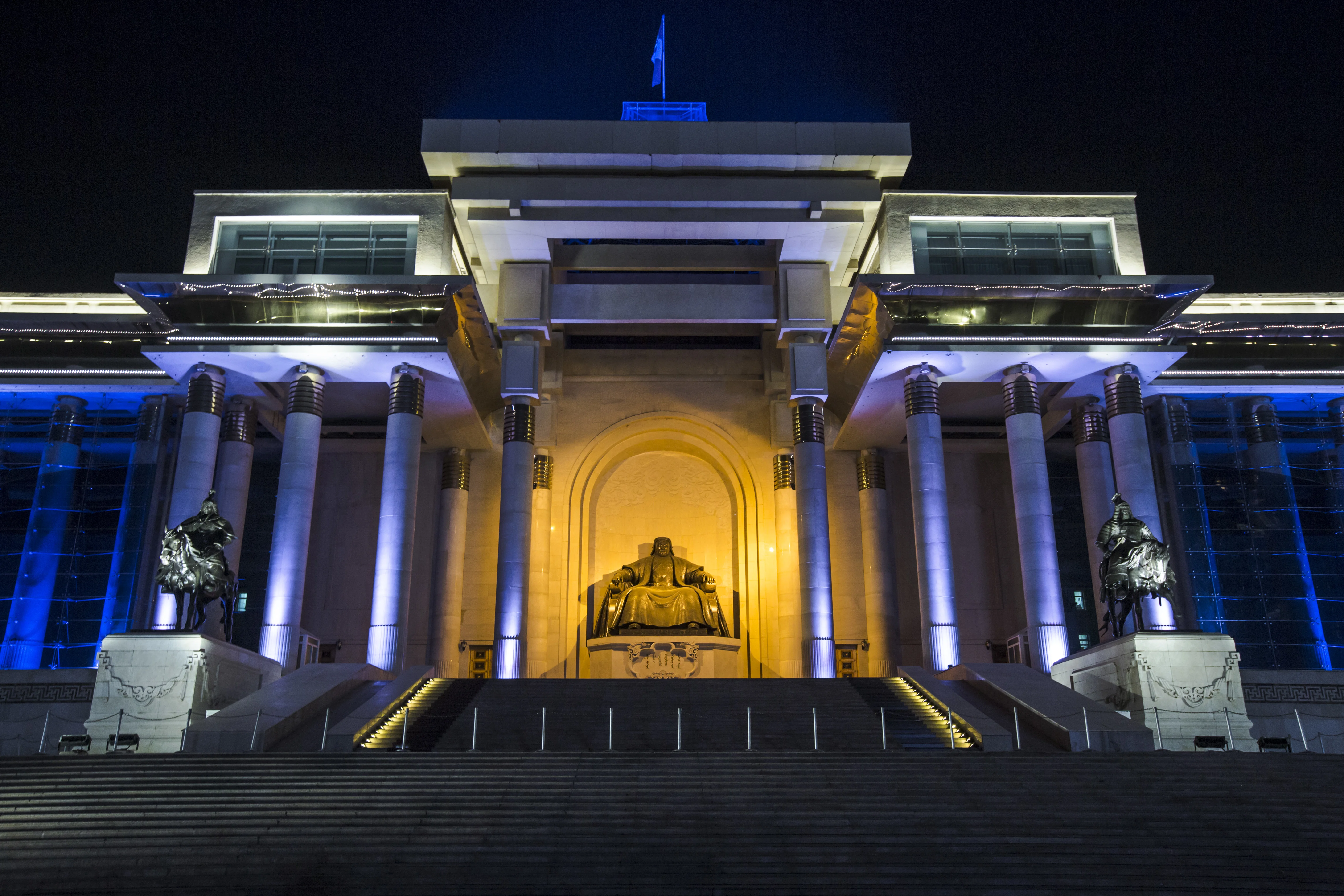
Enjoy a free day exploring the city. Opt to take a morning city tour including visits to Gandan Monastery, Bogd Khan Palace, and Zaisan Hill. Afterwards, stop for a visit to No Limits Cafe and enjoy coffee, tea, and snacks prepared and served by local youth with Down Syndrome, and their mothers.
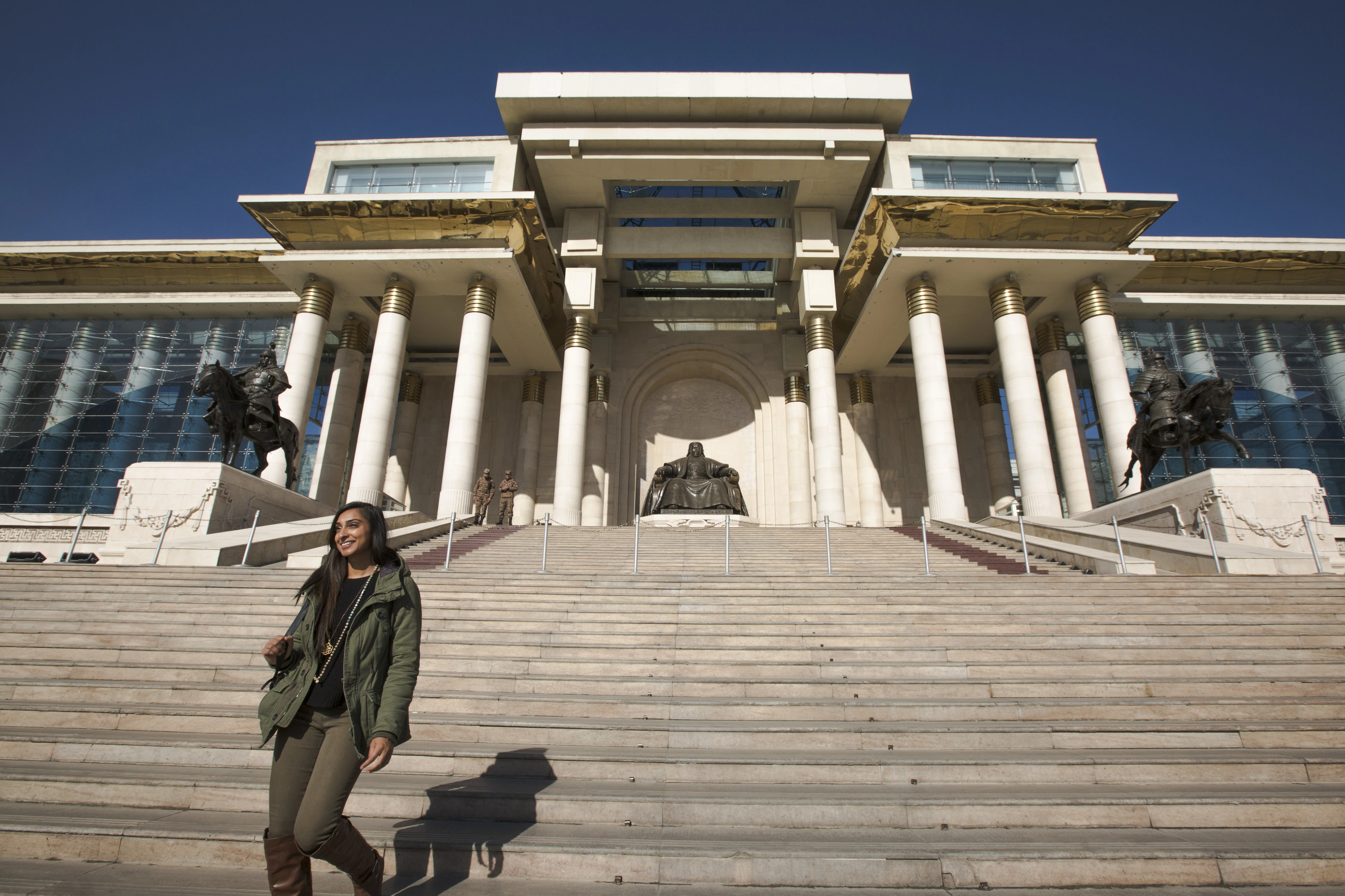
Spend a free day exploring this fascinating capital city.
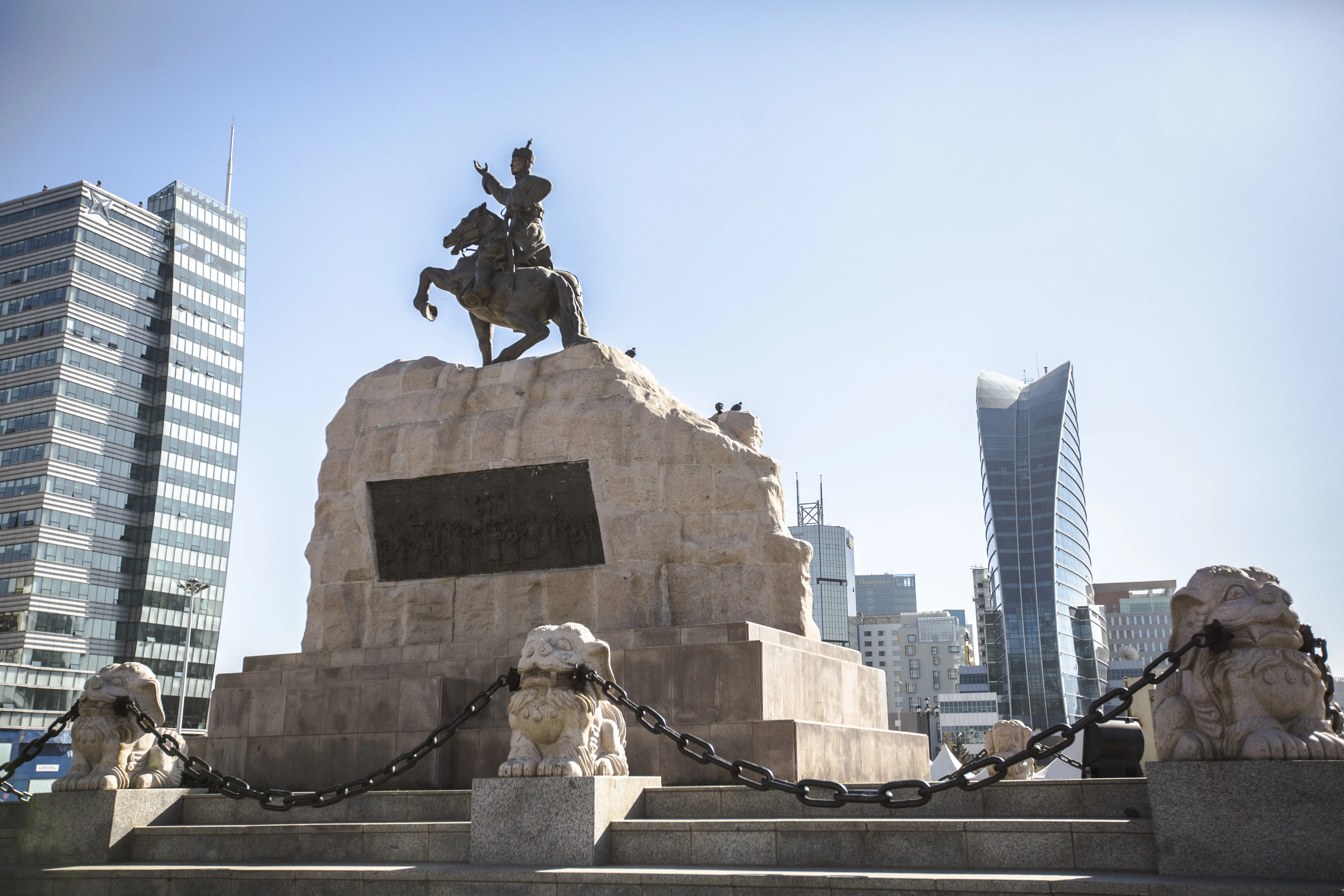
Enjoy the sights of UB and opt to visit to the Gandan Monastery, Bogd Khan Palace, and Zaisan Hill.
FREE TIME: AFTERNOON Explore the city— go shopping, drink a Chinggis beer, or visit some more museums.
ACTIVITY: Pop in for a visit to the No Limits Cafe and enjoy coffee, tea, and snacks prepared and served by local youth with Down Syndrome, and their mothers.
The Down Syndrome Association of Mongolia is a non-profit organization that supports children who live with Down syndrome, and their families. The organization focuses on creating community awareness, advocacy, and educational efforts within Mongolia. The No Limits Cafe began as an effort to create job opportunities and training for young people with Down syndrome and their mothers who are often left out of benefitting from economic opportunities. Through the cafe, the program works to break down barriers for people and families living with disabilities.
Meals: Breakfast
Day 3
Day 3: Ulaanbaatar/Baga Gadzrïn Chuluu
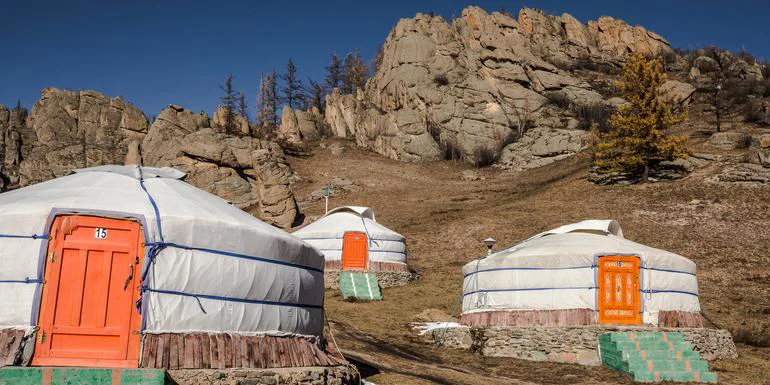
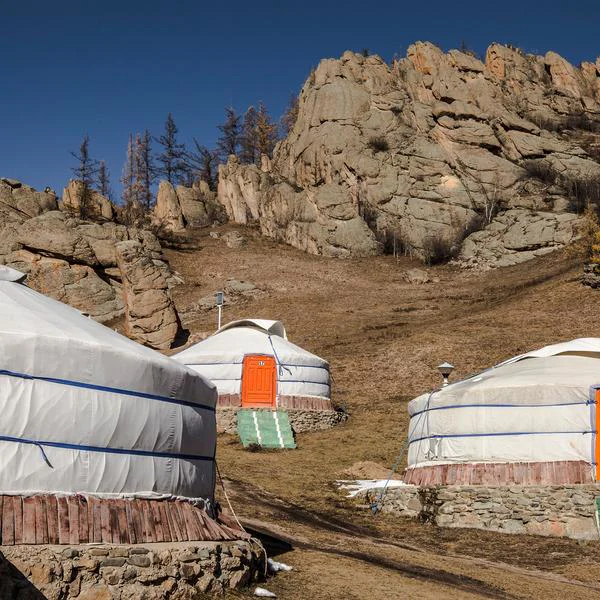
Drive to the Dungobi Aimag region – Middle Gobi – stopping at the Choir Monastery on the way. Spend the night at the first Mongolian ger camp.
Leave the capital and head south through the steppe to the Middle Gobi.
Visit the Choir Monastery before continuing on to a small ger camp not far from Mandalgovi, the regional centre.
Additional Information: Gers are traditional Mongolian tents made with wooden frames and layers of felt. The camps we stay at will have 2 beds per ger with mattresses, linens, and extra blankets. They have a central stove to keep the place cozy and a small table and chairs.
ACTIVITY: Established in 1779, the Choir Monastery had many lamas living there and was a major religious centre in the region. In the 1930s, there was a time of religious persecution in Mongolia and the monastery was destroyed. Today, its ruins are protected by the government.
TRANSPORT: Settle in and scan the scenery from the convenience of a private vehicle.
Meals: Breakfast,Lunch,Dinner
Day 4
Day 4: Baga Gadzrïn Chuluu/Yolyn Am
Arrive at Yolyn Am — a narrow gorge in the Gurvan Saikan mountains. It’s an amazing place for hiking. Bring stable shoes and warm clothes, as some places are covered in thick ice year round.
TRANSPORT: Settle in and scan the scenery from the convenience of a private vehicle.
Meals: Breakfast,Lunch,Dinner
Day 5
Day 5: Yolyn Am/Khongoryn Els
Drive to Khongoryn Els. En route, stop by a local natural history museum. Enjoy the unique activities the Gobi Desert has to offer.
TRANSPORT: Settle in and scan the scenery from the convenience of a private vehicle.
ACTIVITY: Stop by a small museum with collections of local flora & fauna in the area, along with dinosaur eggs and bones, stuffed birds and a snow leopard.
FREE TIME: Visit a local family, run around in the sand dunes, or ride a camel.
Meals: Breakfast,Lunch,Dinner
Day 6
Day 6: Khongoryn Els
Immerse yourself in the wonders of the Gobi Desert. This morning, visit the biggest sand dunes in the western Gobi, then meet a nomadic camel-herding family. Opt to hike along other nearby sand dunes, and try riding a camel.
ACTIVITY: Visit Khongoryn Els, the biggest sand dunes in the western Gobi. They also are known as “singing sands” because the sand makes a musical noise as it moves with the wind.
Meals: Breakfast,Lunch,Dinner
Day 7
Day 7: Khongoryn Els/Bayanzag
Explore the Flaming Cliffs – a world renowned archaeological site for the vast amount of dinosaur bones and eggs found here.
Made of red sandstone, these cliffs and canyons offer visitors a scene of breathtaking beauty. Take some time to explore.
ACTIVITY: Explore the Flaming Cliffs. Made of red sandstone, the cliffs and canyons where fossils were found in recent years are a beautiful place to spend some time.
Meals: Breakfast,Lunch,Dinner
Day 8
Day 8: Bayanzag/Ongiin Hiid
Drive through western parts of the Gobi Desert. In the surrounding mountains, visit the ruins of the Hoshuu and Ongiin Khiid monasteries.
Drive to the Delger Khangai Mountains area. Explore the ruins of the monasteries in the area.
ACTIVITY: Both these monasteries were important centres in the region before they were destroyed. The systematic destruction of religious sights under Communist rule was pervasive. Built in 17th century, the Ongiin Khiid monastery was among the largest temples in the country and was a home for over 1,000 monks. See the ruins and learn the sad history of the place.
TRANSPORT: Settle in and scan the scenery from the convenience of a private vehicle.
Meals: Breakfast,Lunch,Dinner
Day 9
Day 9: Ongiin Hiid/Nomad Camp
Leave the Gobi Desert and drive through the Mongolian grasslands. Spend the next two nights with a local nomadic family, observing how they live. Enjoy a traditional meal with them.
Enjoy a long drive northwest, leaving the Gobi desert area and heading into the Mongolian steppe.
The nomads here live simple lives and move their cattle along the same routes their great-grandparents travelled hundreds of years ago.
In the evening, have dinner together with your hosts. One of the best things to try is the famous Mongolian barbecue.
Additional Information: Depending on the size of the nomadic family and their gers, accommodations can be very basic, with minimal to no facilities. In case if nomads can’t provide enough space for our group, we will camp nearby (camping gear is provided).
TRANSPORT: Settle in and scan the scenery from the convenience of a private vehicle.
Meals: Breakfast,Lunch,Dinner
Day 10
Day 10: Nomad Camp
Learn more about nomadic life in the steppes. Get to know your hosts and opt to participate in traditional activities such as milking a yak and preparing fresh dairy products. Discover what it takes to handle a Mongolian horse, and if the season is right, try airag (fermented mare’s milk) – long important to cultures across Central Asia.
FREE TIME: FULL DAY Enjoy a full free day. Opt to participate in local activities, or simply relax at camp.
Meals: Breakfast,Lunch,Dinner
Day 11
Day 11: Nomad Camp/Kharkhorin
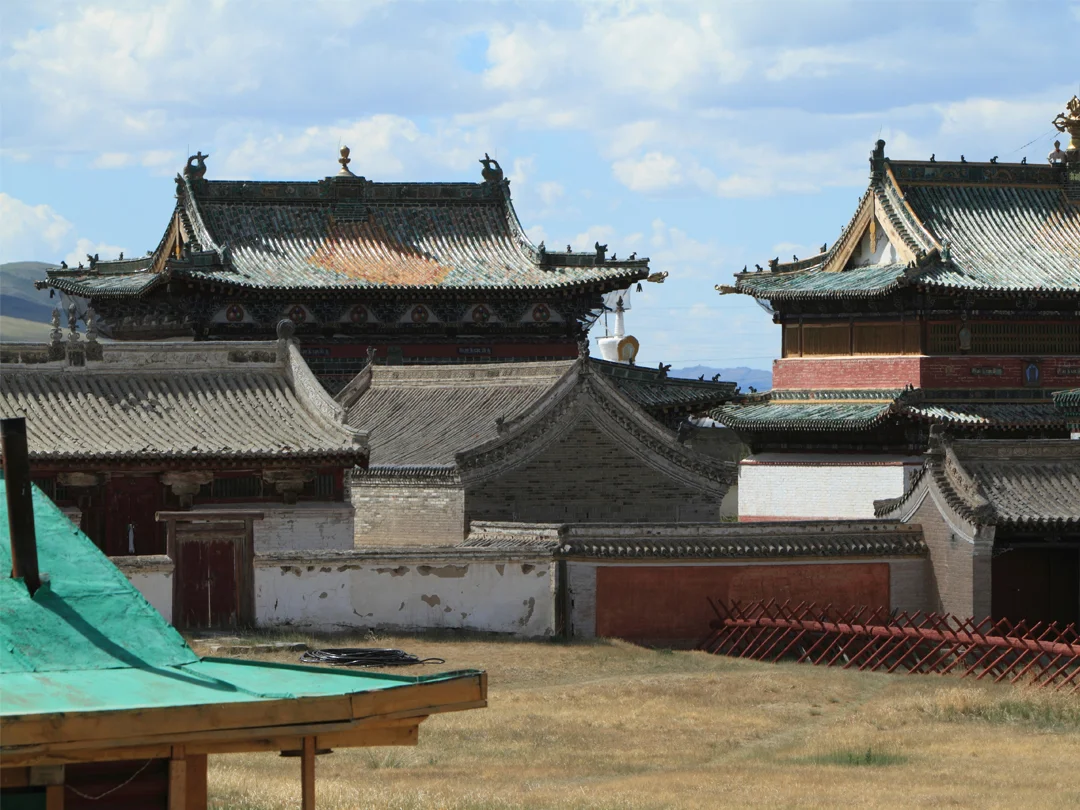
Drive to Karakorum, the ancient capital of Mongolia. Visit the Erdene Zuu Monastery, the first centre of Lama Buddhism in Mongolia. En route to tonight’s ger camp, stop by the Karakorum Museum.
Journey to Kharkhorin, stopping at the beautiful Erdene Zuu Monastery. Destroyed during the Communist era, this monastery is slowly being rebuilt.
TRANSPORT: Settle in and scan the scenery from the convenience of a private vehicle.
ACTIVITY: The beautiful Erdene Zuu Monastery began its construction in 1586 and continued for over 300 years. It was the first centre of Lama Buddhism in Mongolia. At its peak, the monastery housed over 1,000 monks and held 62 temples. In the 1930s, most of the temples were destroyed and monks killed in the Communist purges. Now, the monastery is slowly being restored.
Explore the monastery grounds and, if you’re lucky, listen to monks chanting.
ACTIVITY: Considered the best museum outside of Mongolia’s capital, the Karakorum Museum contains a treasure trove of ancient artifacts within, including pottery, metalwork and locally significant finds from the 13th and 14th centuries.
Meals: Breakfast,Lunch,Dinner
Day 12
Day 12: Kharkhorin/Khustai National Park
Stay in Khustai National Park—home of Mongolian wild horses. Here, look for Takhi horses in their natural habitat.
TRANSPORT: Settle in and scan the scenery from the convenience of a private vehicle.
ACTIVITY: Home to the last of the truly wild horses in the world, the park is a wonderful chance to see the Takhi horses in their natural environment. At one point there were none in the wild, but after a hugely successful captive breeding program in various worldwide zoos, they were reintroduced.
Meals: Breakfast,Lunch,Dinner
Day 13
Day 13: Khustai National Park/Ulaanbaatar
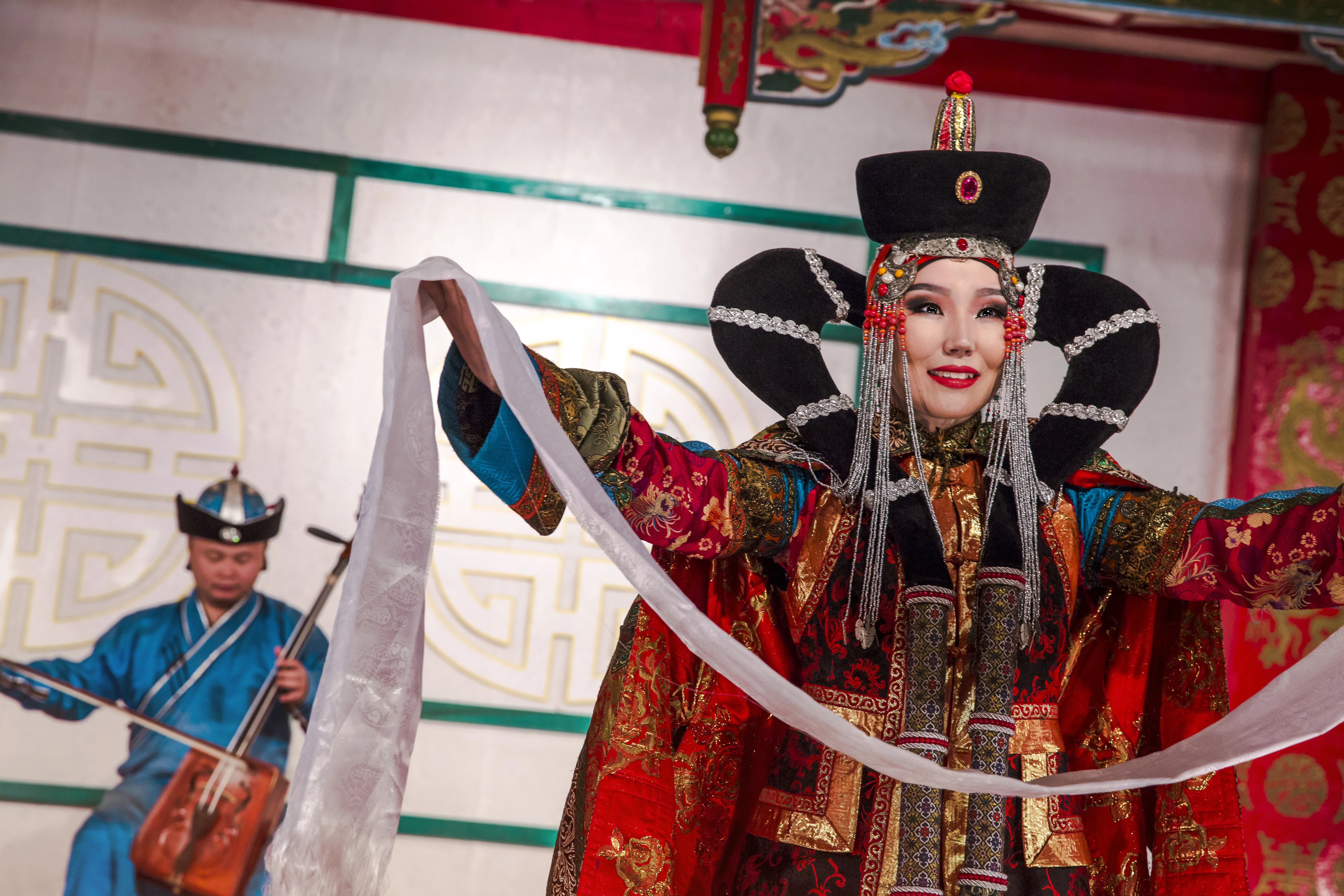
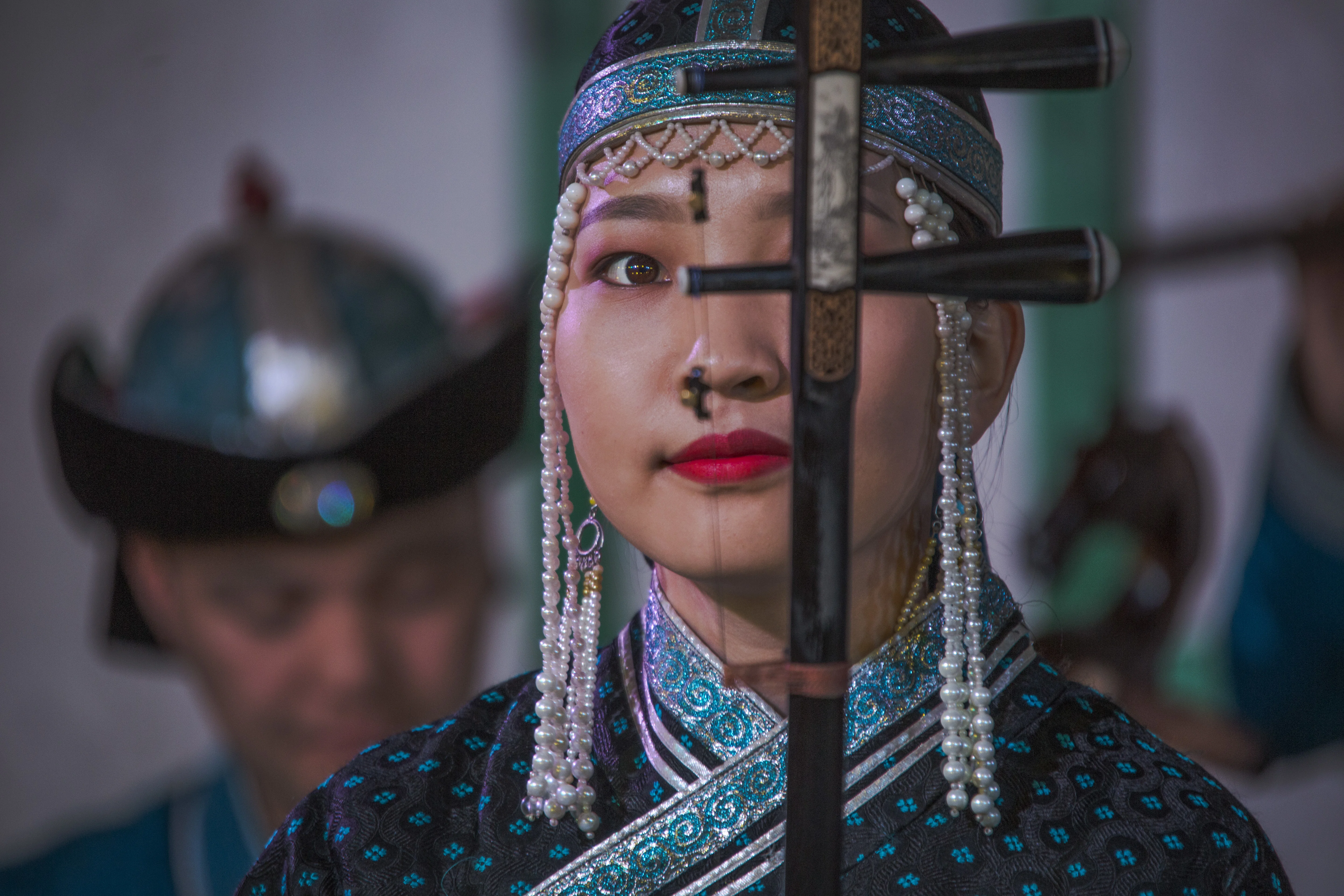
Drive back to the capital for last minute sightseeing. Opt to see a local cultural show, an excellent display of dancing and Mongolian throat singing.
TRANSPORT: Settle in and scan the scenery from the convenience of a private vehicle.
FREE TIME: AFTERNOON Explore with a few more hours in this international city.
Meals: Breakfast,Lunch
Day 14
Day 14: Ulaanbaatar
Depart at any time.
Meals: Breakfast
What’s included
What’s not included
Additional information
Meals Included
Group Size
Solo Travellers
Meals
Minimum Age
Local Dress
Important Notes
Group Leader
About Accommodation
What to Take
Spending Money
Flaming Cliffs of Bayanzag Sunset Walk
Walk the rim trails of the Flaming Cliffs (Bayanzag), where red sandstone buttes and gullies blaze in the low sun. The sculpted terrain invites unhurried steps and wide-angle photography as the sunset glow ignites the desert.
Learn how 1920s expeditions led by Roy Chapman Andrews made the area famous for the first dinosaur eggs discovery. Fossils remain protected; the deeper thrill is sensing deep time in this storied Gobi landscape.
Ongiin Khiid Monastic Ruins
Explore the twin-site ruins of Ongiin Khiid, a once-vast 17th-century monastic complex flanking the Ongi River. Wander through tumbled walls and prayer-stone fragments while desert poplars and river reeds hint at life’s resilience.
Destroyed during the Communist era, the site now includes a modest restored temple and a small museum memorializing monks who perished. The setting’s quiet gravity provides moving context to Mongolia’s religious revival.
Nomadic Family Stay & Herding Life on the Steppe
Stay in a traditional ger with a local family and experience hospitality at the heart of Mongolia’s identity. Share a home-cooked dinner by the stove and trade stories as the steppe sky fills with stars.
Join daily chores—learn to milk a yak, churn fresh dairy, or brush a sturdy Mongolian horse. When in season, taste airag (fermented mare’s milk) and discover ger etiquette that has guided nomadic life for centuries.
Karakorum: Erdene Zuu Monastery & Museum
Visit Erdene Zuu Monastery, Mongolia’s oldest Buddhist monastery, famed for its ring of 108 stupas. Step through white-walled courtyards to view ornate chapels and—when possible—listen to monks chanting in a setting reborn after 20th-century devastation.
Continue to the Karakorum Museum to trace the 13th-century rise of the Mongol Empire’s capital. Ceramics, inscriptions, and artifacts from the Orkhon Valley illuminate trade routes, imperial administration, and everyday life at the heart of a world-spanning power.
Khustai National Park Takhi Horse Tracking
Head into the hills of Khustai to seek Takhi (Przewalski’s) horses, the world’s last truly wild equines. Scan rolling steppe for small bands grazing among feather grass, with raptors circling overhead.
Learn about the 1990s reintroduction that brought captive-bred Takhi back to their native range. Keep watch for marmots and red deer, and pause for photos and quiet observation as rangers share insights on habitat protection and herd behavior.
Ulaanbaatar City Highlights Tour: Gandan, Bogd Khan Palace & Zaisan Hill
Explore Ulaanbaatar’s contrasts on a guided tour to Gandan Tegchinlen Monastery, home to the towering golden statue of Migjid Janraisig. Continue to the Bogd Khan Palace Museum to glimpse royal chambers and curios from Mongolia’s theocratic past.
Cap the outing at the Zaisan Hill Soviet memorial for sweeping views over the city and surrounding hills. This experience is at additional cost and can be booked on tour with your CEO.
Gobi Desert Camel Ride on Khongoryn Els
Saddle up to ride a Bactrian camel along the Khongoryn Els dunes, guided by local herders who know the safest routes across shifting sands. Feel the camel’s steady, swaying gait as ridge lines unfurl to the horizon.
Learn about camel care and desert navigation, dismounting for photos where the light is best. This experience is at additional cost and can be booked on tour with your CEO.
Traditional Folk Performance & Throat Singing
Spend an evening at a cultural theatre to hear Mongolian throat singing (khoomei) resonate in layered overtones. Musicians on the morin khuur (horse-head fiddle) set a stirring rhythm for dancers in embroidered deels.
Enjoy folk songs from the steppe and feats of contortion rooted in nomadic storytelling. This performance is at additional cost and can be booked on tour with your CEO.
G for Good: Café No Limits Visit
Visit Café No Limits to enjoy coffee, tea, and light bites prepared by youth with Down syndrome and their mothers. This uplifting stop showcases a G for Good initiative that opens doors to training and dignified work in the capital.
Learn how the Down Syndrome Association of Mongolia builds inclusion through hospitality and skills. Share a warm conversation, celebrate independence gained through the program, and leave with a richer sense of Ulaanbaatar’s community spirit.
Choir Monastery Ruins Stop
Explore the windswept remains of the Choir Monastery, once a major religious center on the steppe. Walk among stone bases and scattered relics, where the silence invites you to pause for photos and reflection amid the open grasslands.
Founded in 1779, the monastery was destroyed during the 1930s purges that reshaped Mongolia’s spiritual landscape. Today, protected ruins and simple memorials keep its story alive against a broad Middle Gobi horizon.
Yolyn Am Gorge Hike & Nature Museum
Hike into Yolyn Am Gorge in the Gurvan Saikhan Mountains, where narrow rock walls shelter pockets of perennial ice even in summer. Watch for lammergeiers gliding above as the light shifts across basalt and shale.
Visit the Gurvan Saikhan National Park Museum to see taxidermy specimens, desert flora displays, and evocative exhibits on Gobi geology and wildlife. This pairing brings the region’s natural drama and science together in one immersive experience.
Khongoryn Els ‘Singing Sands’ & Camel-Herder Visit
Climb the golden ridges of Khongoryn Els ‘Singing Sands’, a dune sea rising up to 300m and stretching for over 100km. In the right wind, hear the dunes’ soft, wind-borne hum while gazing across a stark desert-and-mountain panorama.
Afterward, meet a nomadic camel-herding family to learn about seasonal movements, water sources, and life with shaggy Bactrian camels. Sip suutei tsai (salty milk tea) and discover how tradition endures at the desert’s edge.
Welcome Moment: Meet Your CEO & Group
Meet your fellow travellers and meet your CEO and group in Ulaanbaatar, setting the tone for a collaborative journey across steppe and desert. Hear how small-group travel works in Mongolia and get insider tips on customs, cash, and comfort for remote ger camps.
Discuss safety, packing for quick weather changes, and useful etiquette—like how to enter a ger and accept tea with your right hand. This relaxed briefing builds confidence and community before you head into Mongolia’s wild open spaces.