Your itinerary
Day 1
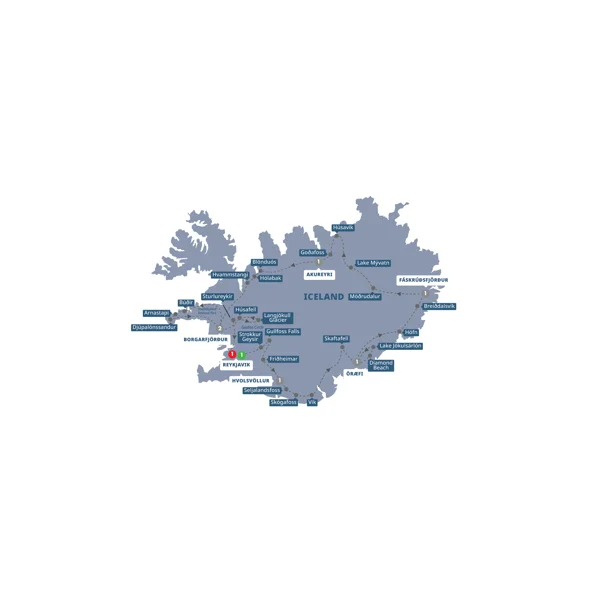
Day 1: The Smoky Bay of Reykjavík
Arrive in Reykjavík. This evening, meet your Travel Director and small group for small bites. If time allows, walk along Laugavegur or the waterfront paths by the Old Harbor.
Day 2
Day 2: Hot Springs, Waterfalls and Tomatoes
Visit a local tomato farm, learn about geothermal greenhouse growing under artificial light and taste the tomatoes. Continue to the Geysir geothermal area and Gullfoss, then travel across South Iceland, with views of Hekla and Eyjafjallajökull in clear weather and sometimes the Westman Islands. Visit the Lava Center in Hvolsvöllur, then have dinner with your small group at the hotel.
Meals: Breakfast,Dinner
Day 3
Day 3: By Glaciers and Icebergs
Travel along the south coast, stopping at Seljalandsfoss and Skógafoss, Vík and Víkurfjara Black Sand Beach. Continue through the Skaftafell area of Vatnajökull National Park, then stop at Diamond Beach and Jökulsárlón glacier lagoon. An amphibian boat tour on the lagoon is optional. Have dinner with your small group at your hotel.
Meals: Breakfast,Dinner
Day 4
Day 4: Eastern Fjords
Visit Höfn and enjoy free time around the harbourfront or in a café. Continue through the Eastfjords and their fishing villages; Papey Island may be visible in clear weather. In Breiðdalsvík, an optional experience is available at Beljandi Brewery. Continue to Fáskrúðsfjörður to see buildings and other reminders of its history as a base for French fishing fleets. Have dinner with your small group at the hotel.
Meals: Breakfast,Dinner
Day 5
Day 5: By Desert, Lakes and Divine Waterfalls to Akureyri
Cross the interior via Móðrudalur and stop at the Herðubreið viewpoint. Continue to Lake Mývatn, with time to explore Dimmuborgir or the sulfur fields and vents around Námaskarð. Travel to Húsavík for time at GeoSea Baths, then stop at Goðafoss before reaching Akureyri. The evening is at leisure.
Meals: Breakfast
Day 6
Day 6: From the Capital of the North to Borgarfjörður
Take an orientation of Akureyri, including the harbor, Akureyri Church and central streets. Visit Holabak dairy and equine farm, then the Kidka wool factory in Hvammstangi. Continue to Borgarfjörður and have dinner with your small group.
Meals: Breakfast,Dinner
Day 7
Day 7: Exploring Snæfellsjökull National Park
Travel along the Snæfellsnes Peninsula to Snæfellsjökull National Park, with views of the glacier, volcano and coastal lava fields. Stop at Búðir to see its black church, walk the sea cliffs at Arnarstapi and visit Djúpalónssandur. Return to Borgarfjörður for an evening at leisure.
Meals: Breakfast
Day 8
Day 8: Langjökull Glacier and on to Reykjavík
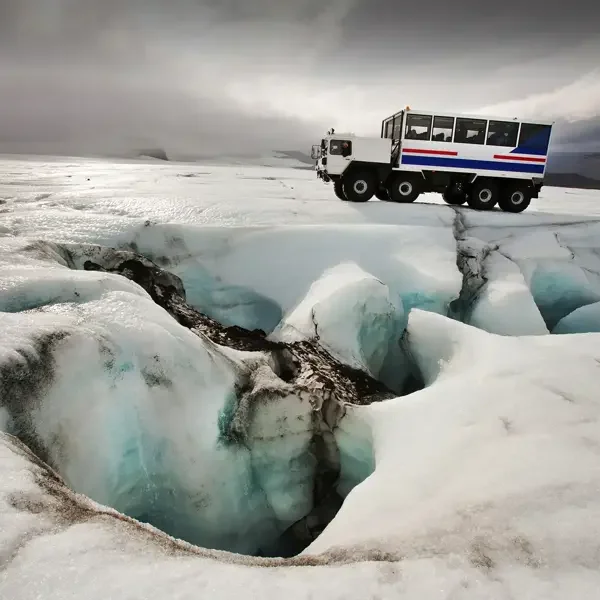
Ride modified glacier vehicles onto Langjökull and, with a Local Specialist, learn about the glacier before walking through man-made ice tunnels. Continue to Húsafell for free time, then visit Sturlureykir horse-breeding farm to meet Icelandic horses, hear about their five gaits and taste rye bread baked using a hot spring. Arrive in Reykjavík for a final dinner with your small group.
Meals: Breakfast,Dinner
Day 9
Day 9: Farewell Reykjavík
After breakfast, transfer to the airport and say goodbye to your Travel Director and small group.
Meals: Breakfast
What’s included
What’s not included
Additional information
Dining Summary
- 8 Breakfast (B)
- 5 Dinner (D)
How You'll Travel
- Business class coach with extended leg room
- Top-rated dining, from farm-to-table to local restaurants
- Premium regional accommodation
Premium Experience
- Húsavík: Bathe in naturally heated seawater drawn from coastal boreholes, collected in outdoor infinity pools on the cliff edge. Views stretch across Skjálfandi Bay and surrounding headlands, while the layout shows how Iceland uses geothermal gradients for seawater bathing in a town better known for its fishing and whale-watching harbor.
Operated By
Insight Vacations
Reykjavík Small-Group Welcome Gathering
Meet your Travel Director and fellow travellers over small bites in Reykjavík. This hosted gathering offers a chance to get acquainted with the people sharing your journey around Iceland.
Set on Faxaflói Bay, the capital is shaped by geothermal energy and a close relationship with the sea. The gathering offers a relaxed introduction to the small-group experience, with time to ask questions and settle into the rhythm of the tour.
Friðheimar Geothermal Tomato Farm
Explore a geothermal tomato greenhouse at Friðheimar and see how Iceland grows produce throughout the year. Learn how hot water and artificial lighting help sustain cultivation through the long, dark winter, and taste tomatoes grown on site.
This working farm makes Iceland’s geothermal resources tangible in an everyday setting. Its controlled growing conditions offer a close look at local food production; the visit supports responsible consumption and production.
Geysir Geothermal Area
Visit the Geysir geothermal area in southwest Iceland to see hot springs, steaming ground and erupting water. Watch for a burst from Strokkur, the active geyser that regularly sends water into the air.
This landscape sits above an active geothermal system, where underground heat meets water close to the surface. The historic Great Geysir gave the English word “geyser” its name, making this an unusually direct encounter with both Icelandic geology and its influence on language.
Gullfoss Waterfall
See Gullfoss, where the glacial-fed Hvítá River falls in two stages into a rugged canyon. From the viewing area, watch the water change direction as it plunges through the rock, throwing spray into the air.
A defining landmark of Iceland’s Golden Circle, Gullfoss shows the force of rivers fed by highland ice. Its appearance shifts with the light and seasonal flow, from a broad, pale torrent to a canyon partly veiled in mist.
Seljalandsfoss and Skógafoss Waterfalls
Visit Seljalandsfoss and Skógafoss, two striking waterfalls on Iceland’s south coast. See water drop from the highlands over steep rock faces, with each fall offering a different view of the rivers that cross this coastal plain.
The cliffs mark an older shoreline, left inland as Iceland’s coastline changed over time. At Skógafoss, a broad curtain of water meets the ground in a cloud of spray; Seljalandsfoss falls in a narrower stream against a dark, recessed cliff.
Víkurfjara Black Sand Beach
Visit Víkurfjara Black Sand Beach at Vík and take in the contrast between dark volcanic sand and the Atlantic surf. This coastal stop brings Iceland’s volcanic origins into view at the water’s edge.
The sand comes from volcanic rock broken down and carried towards the shore. With sea and sky framing the black coastline, the beach offers a distinct perspective on the forces that continue to shape southern Iceland. Keep a safe distance from the powerful waves.
Diamond Beach
Walk beside the ice at Diamond Beach, where fragments from Jokulsárlón glacier lagoon wash onto black volcanic sand. Look closely at the varied shapes and translucent surfaces of the ice, which can range from clear to deep blue.
The pieces have broken from Breiðamerkurjokull, travelled through the lagoon and reached the Atlantic before returning to shore. Their changing arrangement makes this a vivid place to see how glacier ice moves through Iceland’s coastal landscape.
Jökulsárlón Glacier Lagoon
Spend time at Jokulsárlón watching icebergs drift across the glacier lagoon towards the sea. The floating ice has calved from Breiðamerkurjokull, an outlet glacier of Vatnajokull, and forms a constantly changing scene.
As the glacier has retreated, the lagoon has expanded, leaving open water where ice once lay. Its stark contrast of blue ice and dark water has also made it a filming location, including for the James Bond film Die Another Day.
Herðubreið Volcano Viewpoint
Pause at the Herðubreið viewpoint to see the flat-topped volcano rising above northeast Iceland’s lava fields. Near Moðrudalur, one of the country’s highest settled farms, the view opens onto a broad and sparsely inhabited interior.
Herðubreið is a table mountain formed by eruptions beneath an ice sheet. Its distinctive profile makes the relationship between Iceland’s volcanic activity and glacial past especially clear, even from a distance.
Lake Mývatn Volcanic Landscapes
Explore the Lake Mývatn area, known for volcanic landforms and birdlife. Depending on the route taken locally, you may see the lava formations of Dimmuborgir, pseudocraters near the lake, or the steaming vents and sulfur-coloured ground at Námaskarð.
These contrasting features reveal different effects of volcanic heat and eruptions on northern Iceland. Around the lake, wetland habitat sits close to rugged lava, making Mývatn a place to observe both living ecosystems and the forces beneath them.
Goðafoss Waterfall
Stop at Goðafoss to see the Skjálfandafljót River spill over a curved ledge into a broad basin. Its horseshoe shape offers a clear view of water cutting through the volcanic plateau of north Iceland.
Known as the “waterfall of the gods”, Goðafoss is associated with stories surrounding Iceland’s adoption of Christianity around the year 1000. The setting brings together the power of a glacial-fed river and a significant thread of Icelandic history.
Snæfellsjökull National Park
Visit Snæfellsjokull National Park at the outer tip of the Snæfellsnes Peninsula. See coastal lava fields and views towards Snæfellsjokull, the glacier that covers the summit of a stratovolcano.
The ice-capped mountain became famous through Jules Verne’s Journey to the Center of the Earth. Along the coast, volcanic rock meets Atlantic weather and surf, creating a landscape that shows how eruptions and the sea have shaped this part of western Iceland.
Djúpalónssandur Black-Pebble Beach
Walk at Djúpalónssandur, a black-pebble bay backed by lava formations on the Snæfellsnes Peninsula. See the traditional lifting stones once used to test fishermen’s strength and the rusted remains of a British trawler wreck on the shore.
These traces of working life sit within a stark coastal landscape shaped by volcanic rock and Atlantic surf. The beach offers more than a scenic viewpoint: it preserves reminders of the risks and physical demands of fishing here.
Langjökull Glacier Vehicles and Ice Tunnels
Ride in a modified glacier vehicle onto Langjokull, one of Iceland’s largest ice caps. With a Local Specialist, learn how the glacier is monitored and how its meltwater feeds rivers, before walking through man-made ice tunnels.
Inside the glacier, see compacted snow, ash layers and blue ice at close range. The tunnels offer a perspective unavailable from the surface, turning the ice cap into a visible record of accumulation, volcanic activity and environmental change.
Jökulsárlón Amphibian Boat Tour
Take an amphibian boat onto Jokulsárlón for a closer view of the icebergs floating across the glacier lagoon. From the water, observe their changing shapes and colours against the glacier-fed setting.
The ice breaks from Breiðamerkurjokull and gradually drifts towards the sea, making every view of the lagoon different. This Optional Experience is at additional cost and bookable on tour; it offers an on-water perspective beyond the included visit to the lagoon shore.
Lava Center Interactive Museum
Explore the Lava Center in Hvolsvollur through interactive exhibits about Iceland’s volcanoes, earthquakes and tectonic forces. The displays put the island’s dramatic landscapes into context, showing how activity beneath the surface shapes the land above it.
South Iceland lies near some of the country’s best-known volcanic systems, including Eyjafjallajokull. This museum visit helps connect the waterfalls, lava fields and mountain ridges visible across the region with the geological processes that formed them.
Skaftafell in Vatnajökull National Park
Explore the Skaftafell area of Vatnajokull National Park, where views reach towards outlet glaciers descending from Europe’s largest ice cap. Take in a landscape of glacial plains, mountains and traces of earlier volcanic activity.
Here, ice and fire have worked together over time: glaciers carved valleys and left moraines, while volcanic activity helped shape the surrounding terrain. The area offers a broad view of the processes that have made Iceland’s southeast coast so distinctive.
GeoSea Geothermal Sea Baths
Bathe in GeoSea’s warm seawater pools in Húsavík, overlooking Skjálfandi Bay. Relax outdoors with views towards the bay and surrounding headlands from pools set above the coast.
The baths use naturally heated seawater drawn from coastal boreholes, giving this geothermal experience a character distinct from Iceland’s freshwater hot springs. Húsavík is also a working harbour town known for its fishing and whale-watching traditions, adding a maritime backdrop to the soak.
Akureyri Orientation
Join your Travel Director for an orientation of Akureyri, the main town of north Iceland. See its harbour, central streets and Akureyri Church, which stands above the town at the head of Eyjafjorður.
Often called the capital of the north, Akureyri serves surrounding communities through fishing, education, services and transport. The orientation offers a grounded look at urban life beyond Reykjavík, set against the long fjord and mountains of the region.
Hólabak Dairy and Equine Farm
Visit Hólabak dairy and equine farm to see how milk production and Icelandic horse breeding work side by side. Hear about grazing, herd management and the daily decisions involved in running a small Icelandic farm.
The Icelandic horse has remained isolated for over a thousand years. Horses exported from Iceland cannot return, a rule intended to protect the island’s breed from disease. Meeting the farm’s animals puts that distinctive approach to breeding in a practical setting.
Kidka Wool Factory
Visit the Kidka wool factory in Hvammstangi to see Icelandic wool transformed into knitwear. Learn how modern machinery produces garments that draw on the patterns of the lopapeysa, Iceland’s widely recognised wool sweater.
Icelandic sheep provide a dual-layer fleece suited to a cool, changeable climate. The factory visit connects that natural material with contemporary production, showing how traditional design remains part of a working industry rather than only a souvenir of the past.
Búðir Black Church and Arnarstapi Cliffs
See Búðir’s black church standing against a lava field near the shore, and walk the sea cliffs at Arnarstapi. Look for basalt formations, rock arches and nesting seabirds along this stretch of the Snæfellsnes coast.
The two stops reveal contrasting sides of the peninsula: a small landmark tied to local settlement and a coastline sculpted by Atlantic waves. At Arnarstapi, the cliff walk gives a close view of how the sea has cut into older lava.
Sturlureykir Horses and Hot-Spring Rye Bread
Visit Sturlureykir horse-breeding farm near Reykholt to meet Icelandic horses and learn about their five recognised gaits, including the smooth tolt. See a nearby hot spring used to bake rye bread and taste the bread on site.
This family-run farm brings together two local traditions: careful breeding of Iceland’s long-isolated horse and cooking with geothermal heat. The visit offers a close, practical view of how people work with animals and natural resources in rural Iceland.
Reykjavík Small-Group Farewell Dinner
Share a hosted farewell dinner with your Travel Director and small group in Reykjavík. Raise a toast together and exchange impressions of the glaciers, geothermal landscapes, farms and coastal towns encountered around Iceland.
This is a social experience rather than an independent restaurant stop. It brings the group together in the capital for conversation and a shared close to the journey, with Iceland’s food and hospitality as the setting.
Beljandi Brewery Visit
Visit Beljandi Brewery in Breiðdalsvík, an Eastfjords microbrewery housed in a former fish plant. Explore a contemporary use for a building connected to the area’s fishing industry.
The setting links a small local brewing venture with the working history of this coastal region. This Optional Experience is at additional cost and bookable on tour, offering an alternative way to connect with the Eastfjords beyond its mountain and harbour scenery.