Your itinerary

Day 1
Adventure starts in Kathmandu
Begin your adventure at the Royal Singi Hotel in Kathmandu, the start point for many of our Himalayan treks over the years.
Around 6pm, bid namaste to your tour leader and fellow travellers, when we gather as a group for the first time to get to know each other and learn more about the adventures ahead during a full trek briefing.
Your tour leader then ensures a big Nepalese welcome by arranging a group dinner.
Want to explore Kathmandu further? Secure pre-tour hotel nights through your sales representative.
Meals: Dinner
Day 2
Drive to Arket Bazaar; trek to Soti Khola
We have an early start for the long drive to Arket Bazaar (approximately seven hours). We drive out of the Kathmandu Valley and head west following the Trisuli River towards Pokhara. At Dading, we turn off the main road and drive into the hills through Dading Besi and Arughat in the Buri Gandaki Valley. From Arughat, we continue on a rough road to Arkhet Bazaar (be prepared for an adventure). From here, we walk (approximately two hours) to Soti Khola.
Meals: Breakfast
Day 3
Trek through forest and fields to Lapu Besi and onto Machha Khola
The first few days of this trek are quite long in terms of hours walked due to the lower altitudes and availability of decent lodges. It can, therefore, be very hot, especially in the spring trekking season. Our route begins by following the Buri Gandaki Valley north. There is a road being blasted out of the hillsides and we try to avoid it where possible. From Soti Khola, we drop to the river and cross to the other side of the valley where the trail climbs steeply for a while through forested areas and small villages and then undulates through farmland and finally drops to cross the river again to lunch at Lapu Besi. From Lapu Besi, we follow the undulating jeep track to Machha Khola
Meals: Breakfast
Day 4
Follow the Buri Gandaki River to Jagat
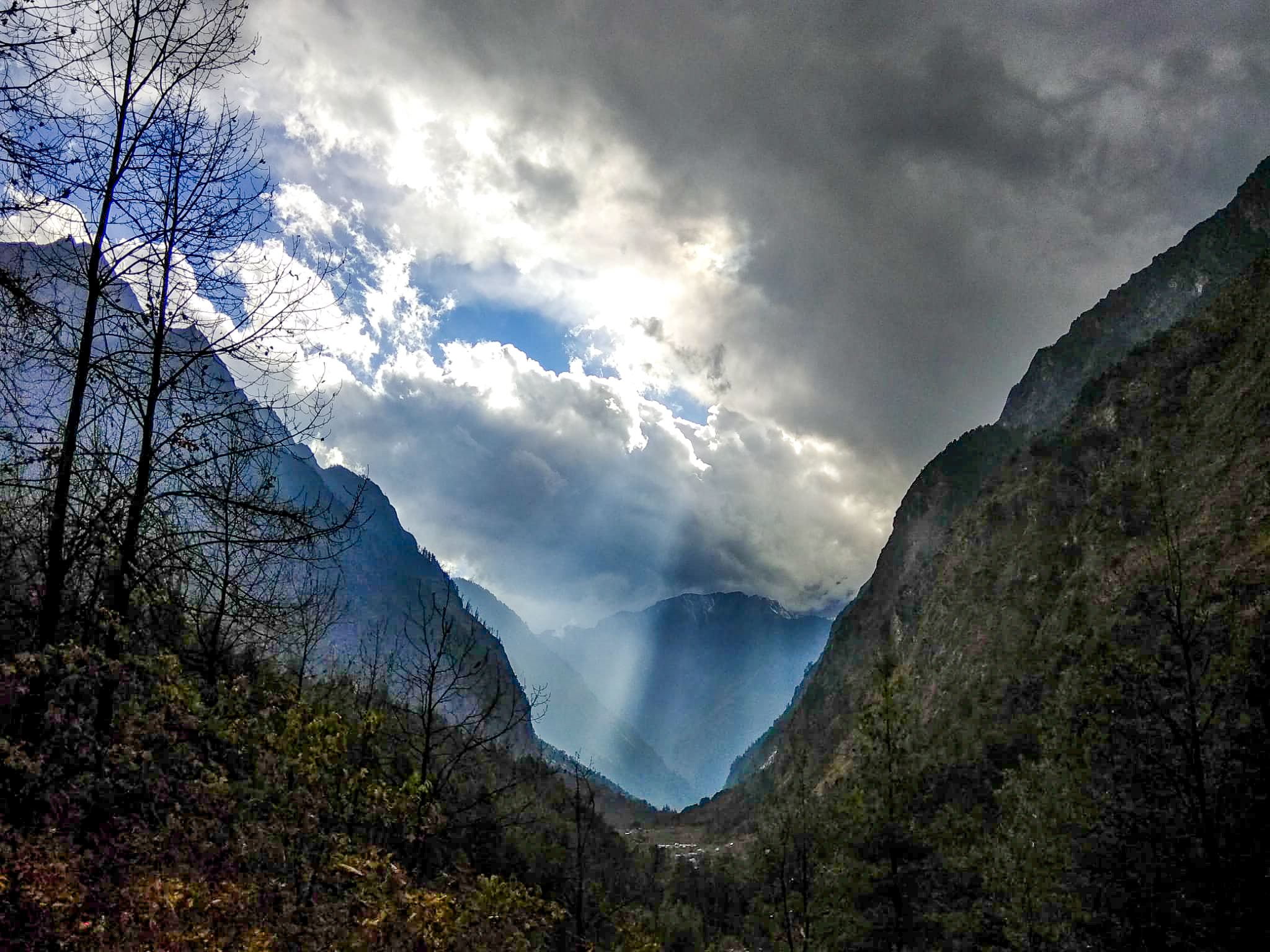
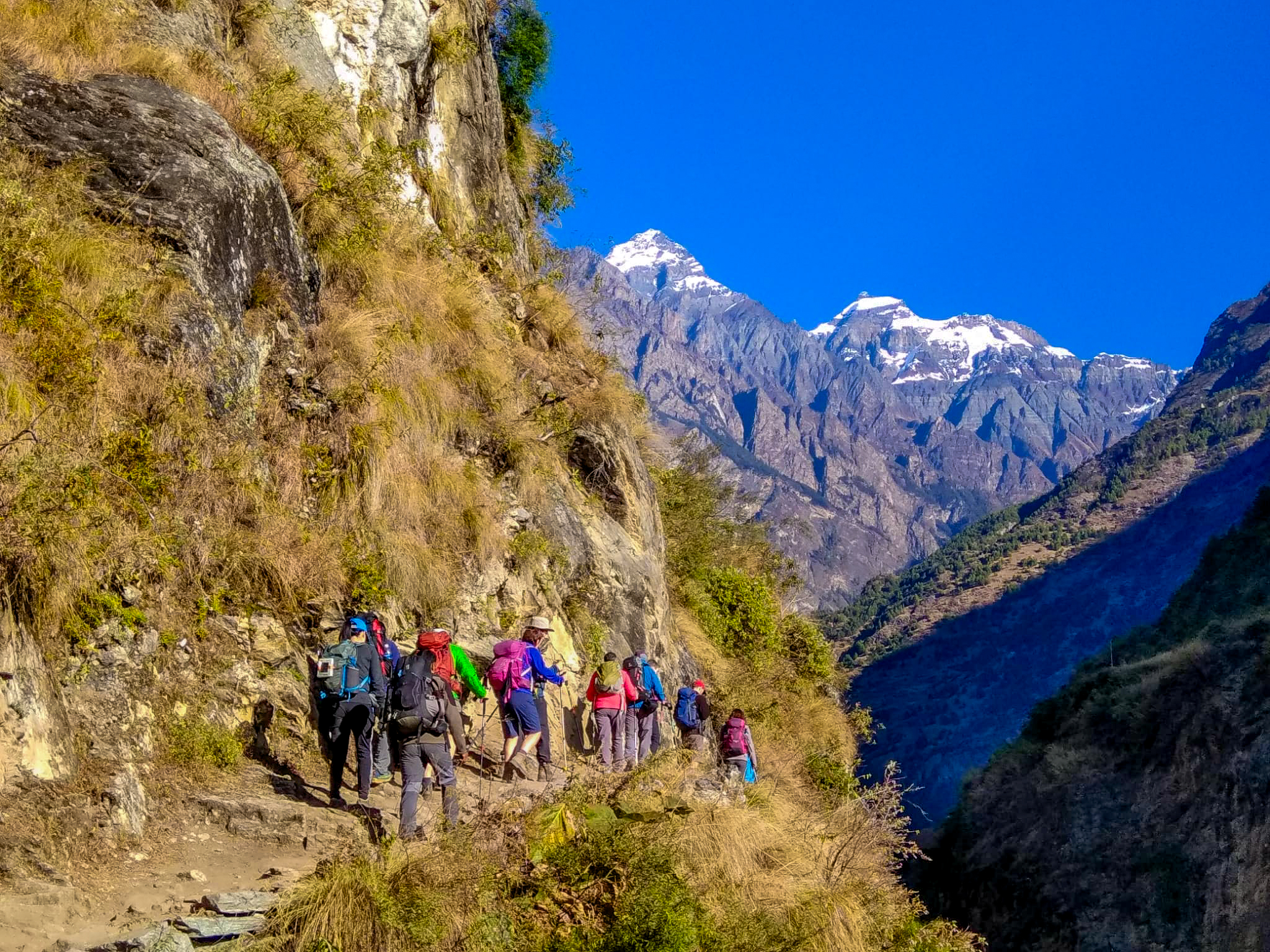
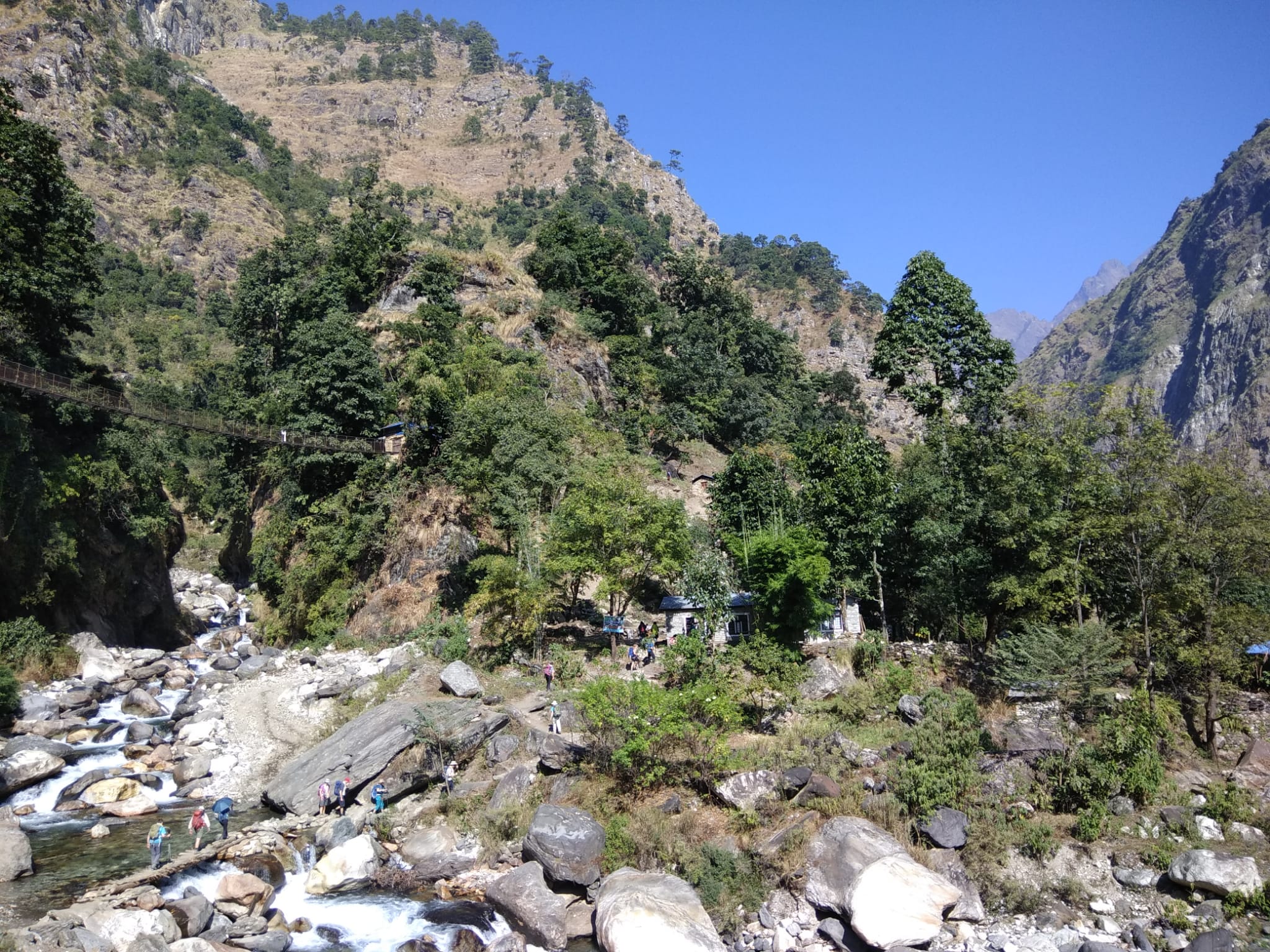
We have another quite long day as the trail undulates throughout, sometimes by the river and sometimes high above the river, passing several small hamlets and farms. The valley narrows and there are spectacular waterfalls. We start with a short climb followed by a descent to Khorla Besi. From here, we follow the wide track to Tatopani (which means hot water). The water from the natural hot springs here is funnelled through a few taps in the centre of the village. We continue up to Dovan and then to Shyauli, where we have lunch. From there, we face more ups and downs (some quite steep sections) until we drop to the river at Yaruphant. The trail levels out for a while and then we cross a suspension bridge, after which the trail undulates to Jagat, a well-kept paved village, where we see the first signs of Tibetan Buddhism.
Meals: Breakfast
Day 5
Ascend through small villages to Philim; climb to Deng
We have a long day due to the lack of decent lodges. From Jagat, the trail continues up the valley through the villages of Salleri, Sirdabas and Ghate Khola, offering great views of Chamar ahead. We then drop down to the river, cross a long suspension bridge and climb steeply up to lunch at Philim (5,135ft/1,565m). From Philim, the trail undulates spectacularly with impressive waterfalls on either side of the valley. Passing the small settlements of Chisapani and Eklabatti, where we have lunch, we descend a little and cross the river by suspension bridge. The trail splits at the bridge, the right-hand side of the valley leads to the remote Tsum Valley. We cross to the left and continue following the Buri Gandaki, climbing up at first as the trail rounds the valley, which becomes narrower. We cross the river twice more as we undulate up the valley through forest to Phewa, and further on to the small village of Deng.
Meals: Breakfast
Day 6
Cross the river and ascend via a magnificent valley to Ghap
A shorter day today. From Deng, we descend to the river and cross by bridge. After the river, our route climbs, steeply in places, up onto a spectacular trail. We pass through small settlements as we ascend the impressive valley. We see mani stones (prayer stones) carved into wayside rocks, a sign we are now in a Buddhist area. We pass through the small settlements of Rana and Bihi Phedi. The trail continues ascending (sometimes steeply) but at one point descends to cross the river. We get to Ghap by lunchtime; in the afternoon, there is an optional walk up the hill behind the lodge for spectacular views across to Prok and of the whole valley.
Meals: Breakfast
Day 7
Continue to Lho, offering fantastic views of Manaslu
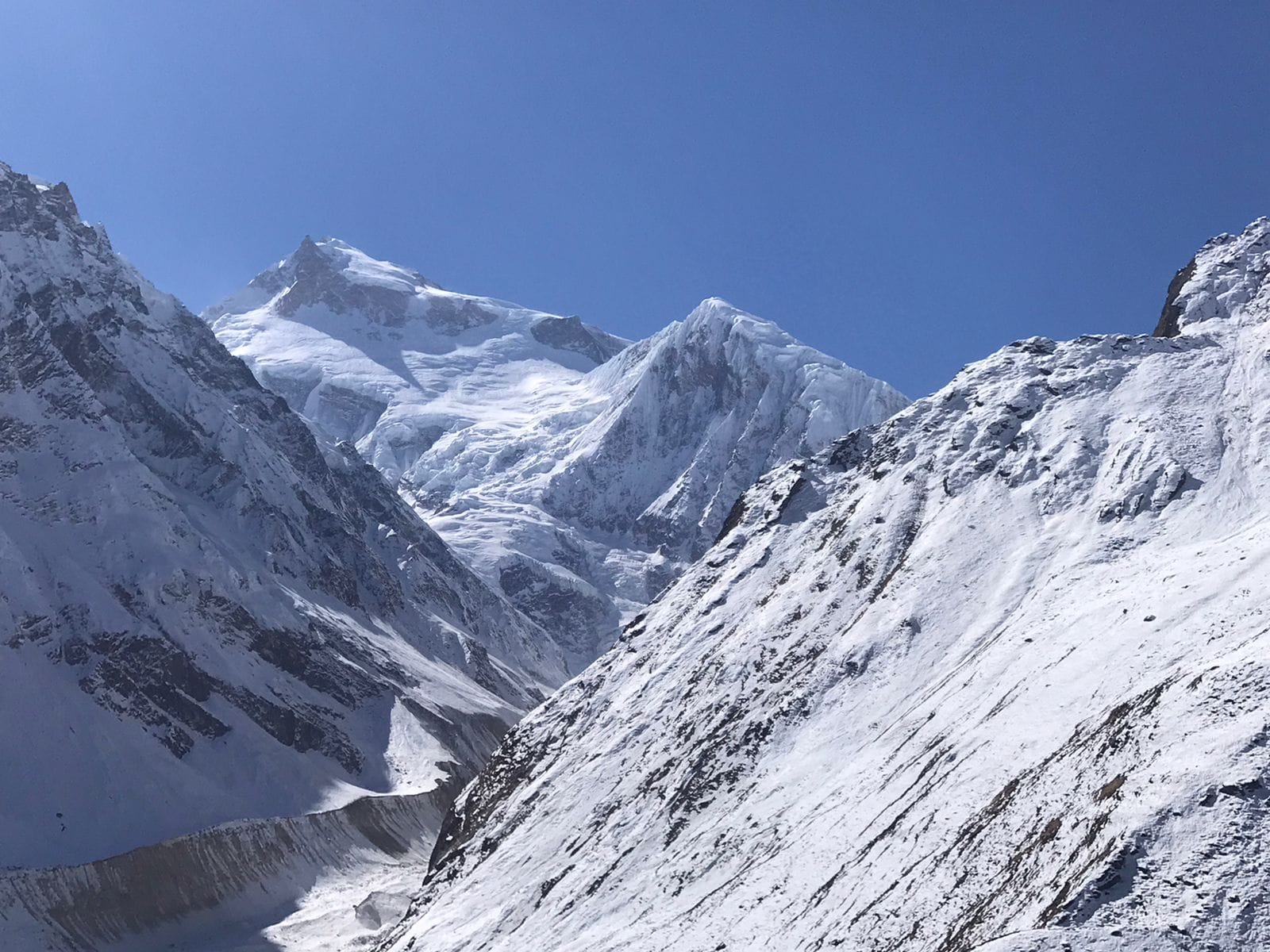
Today is quite a strenuous day with a lot of ascent. The valley widens and there is extensive farmland all around where we may see the occasional lookout platform, built to ward off bears. From Ghap, we cross the river three times and have a long steady climb through the forest (look out for langur monkeys) to Namrung. A short descent followed by another climb brings us to Lihi, where we have a simple lunch. Another descent to the river and climb brings us to Sho, after which we climb further to Lho. We are now passing through Tibetan-style villages and we start to see the magnificent mountains all around. From Lho, we get our first view of the Manaslu and Naike peaks
Meals: Breakfast
Day 8
Climb to Samagaon
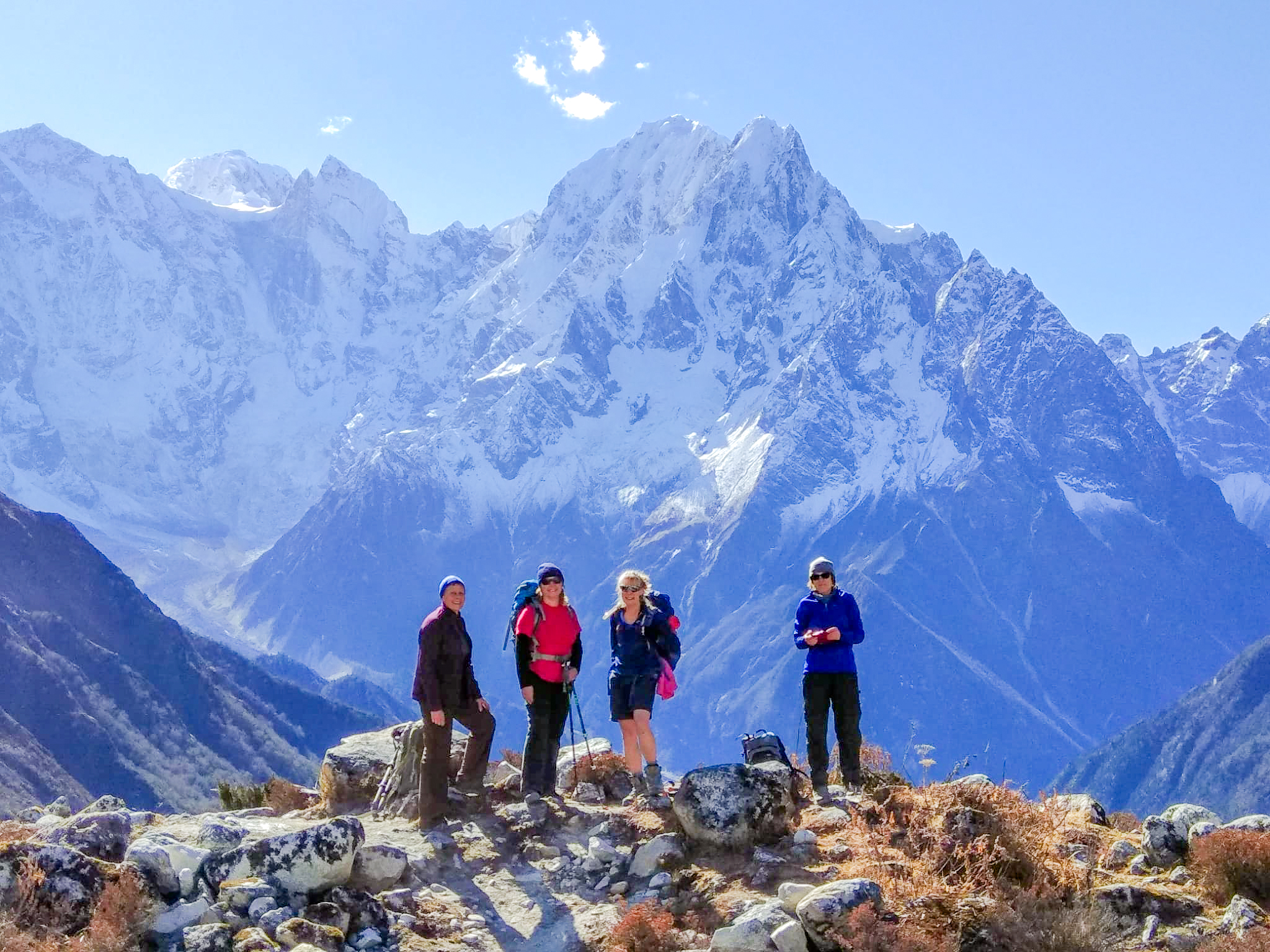
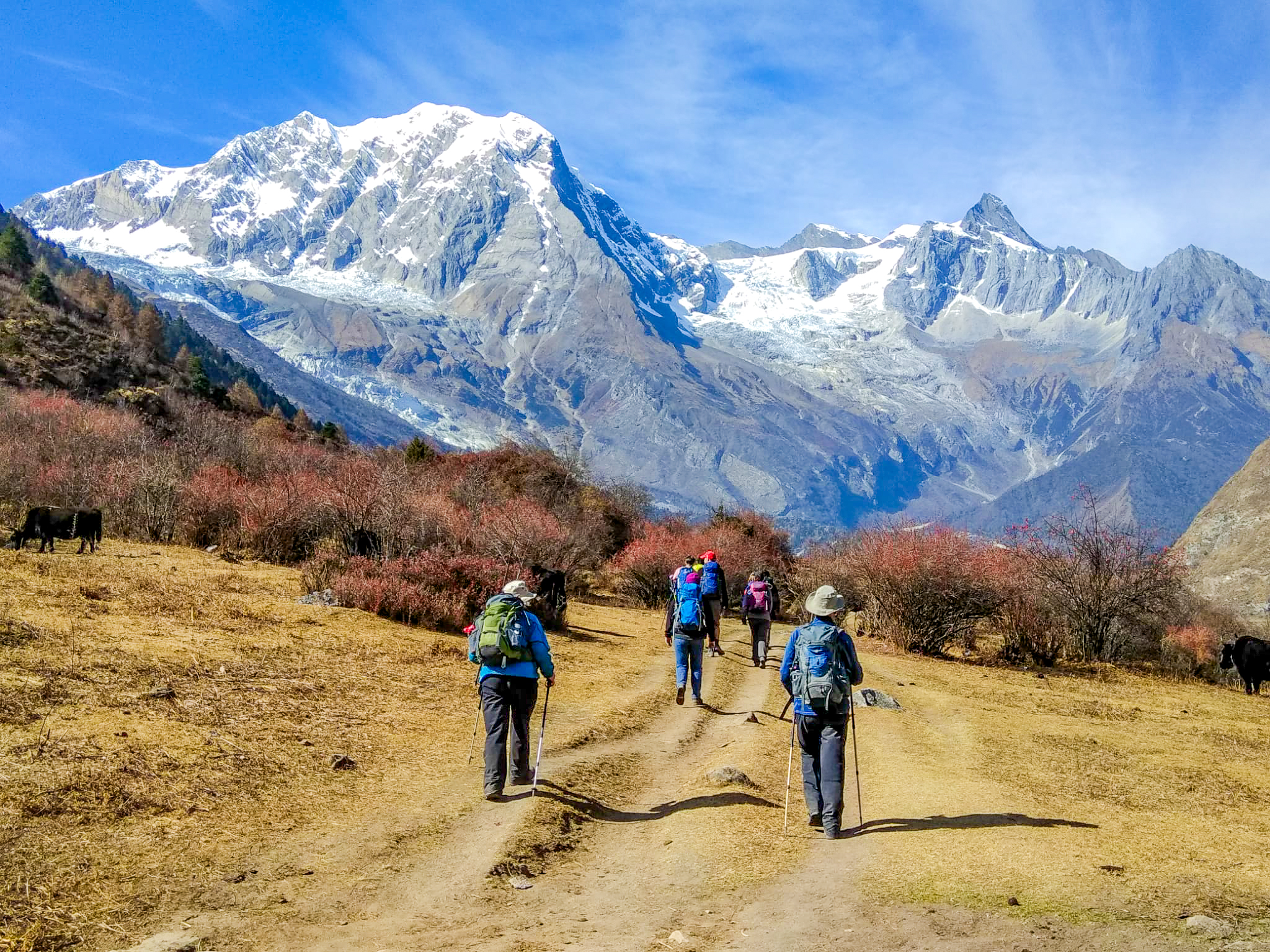
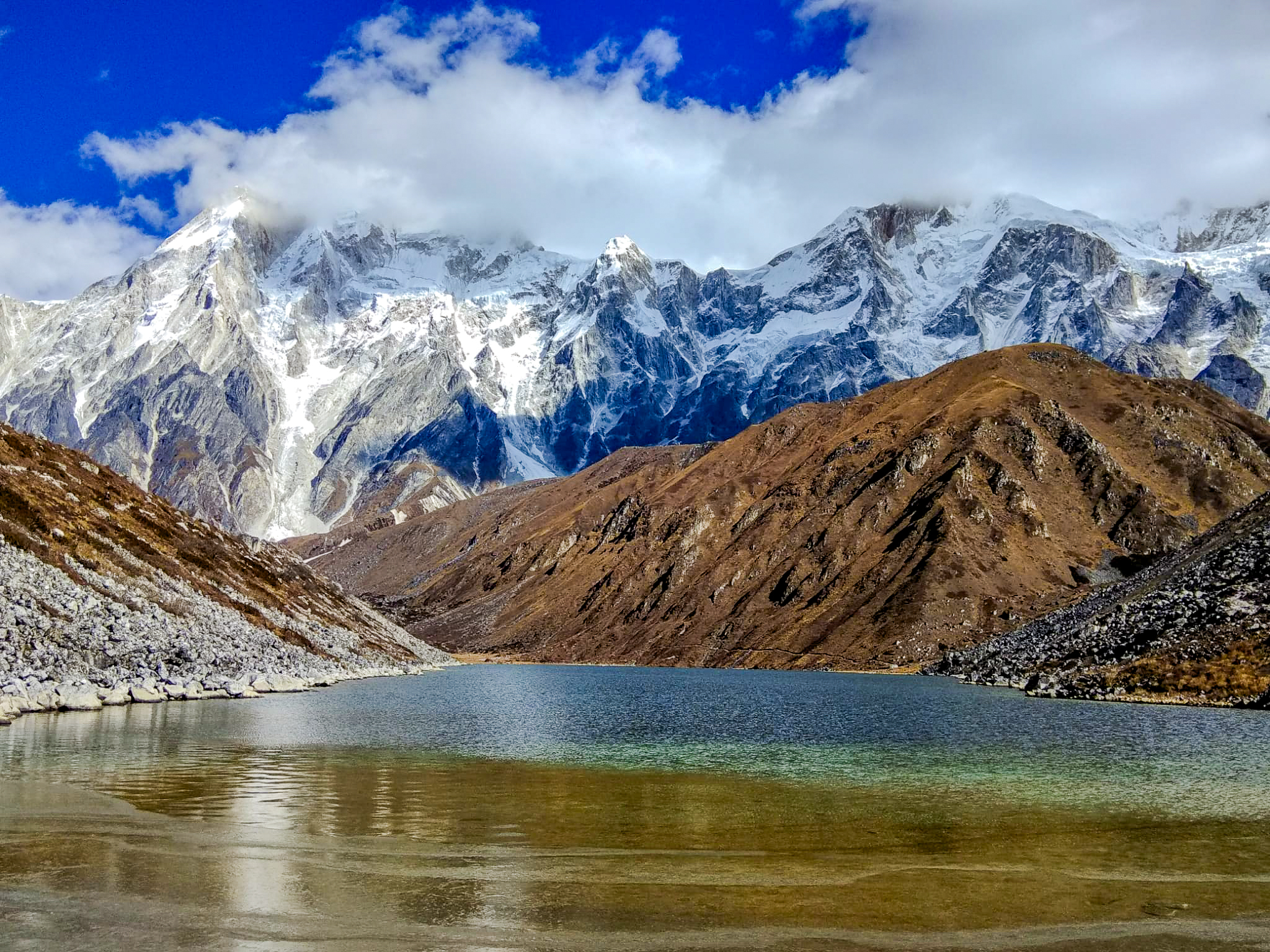
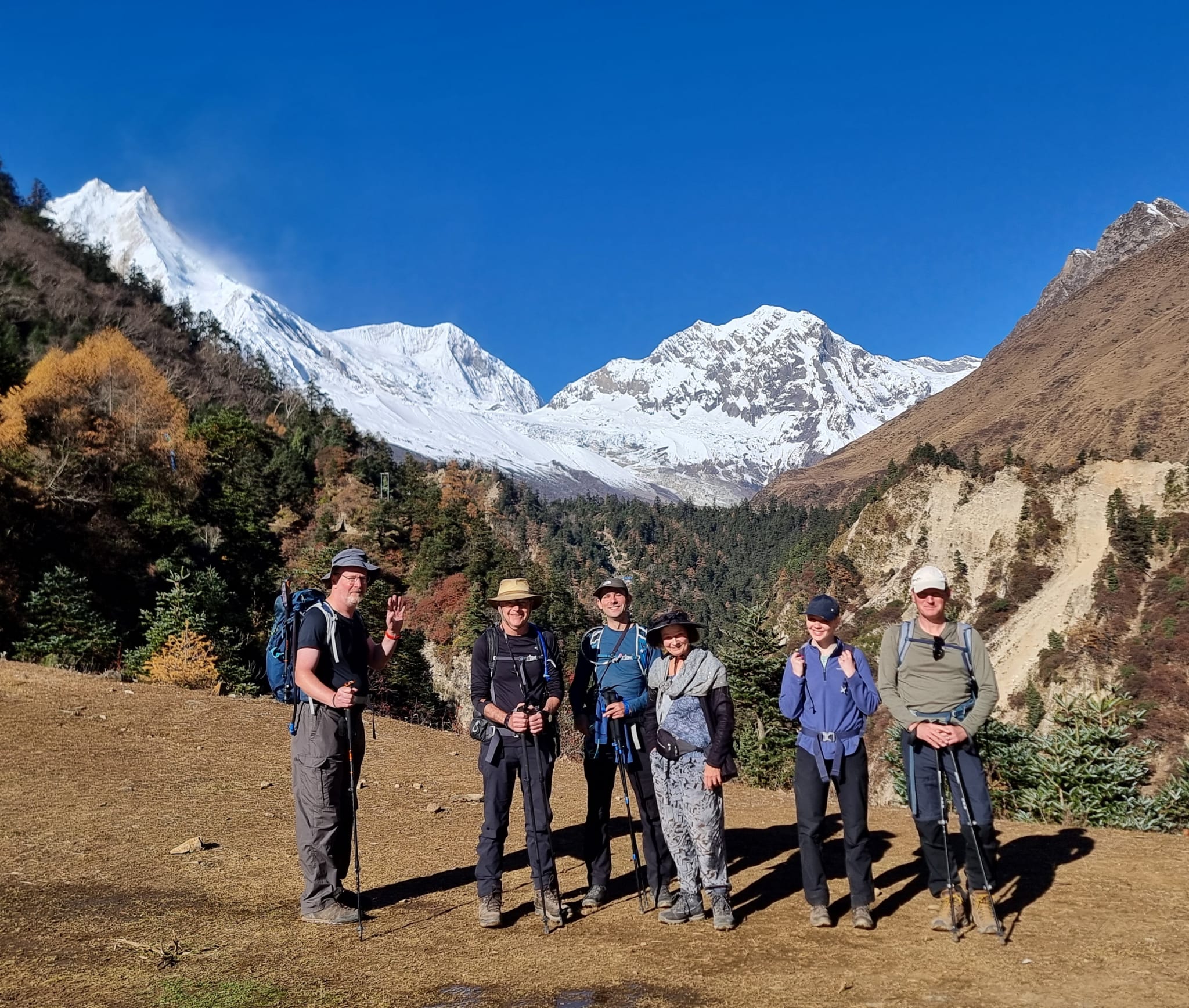
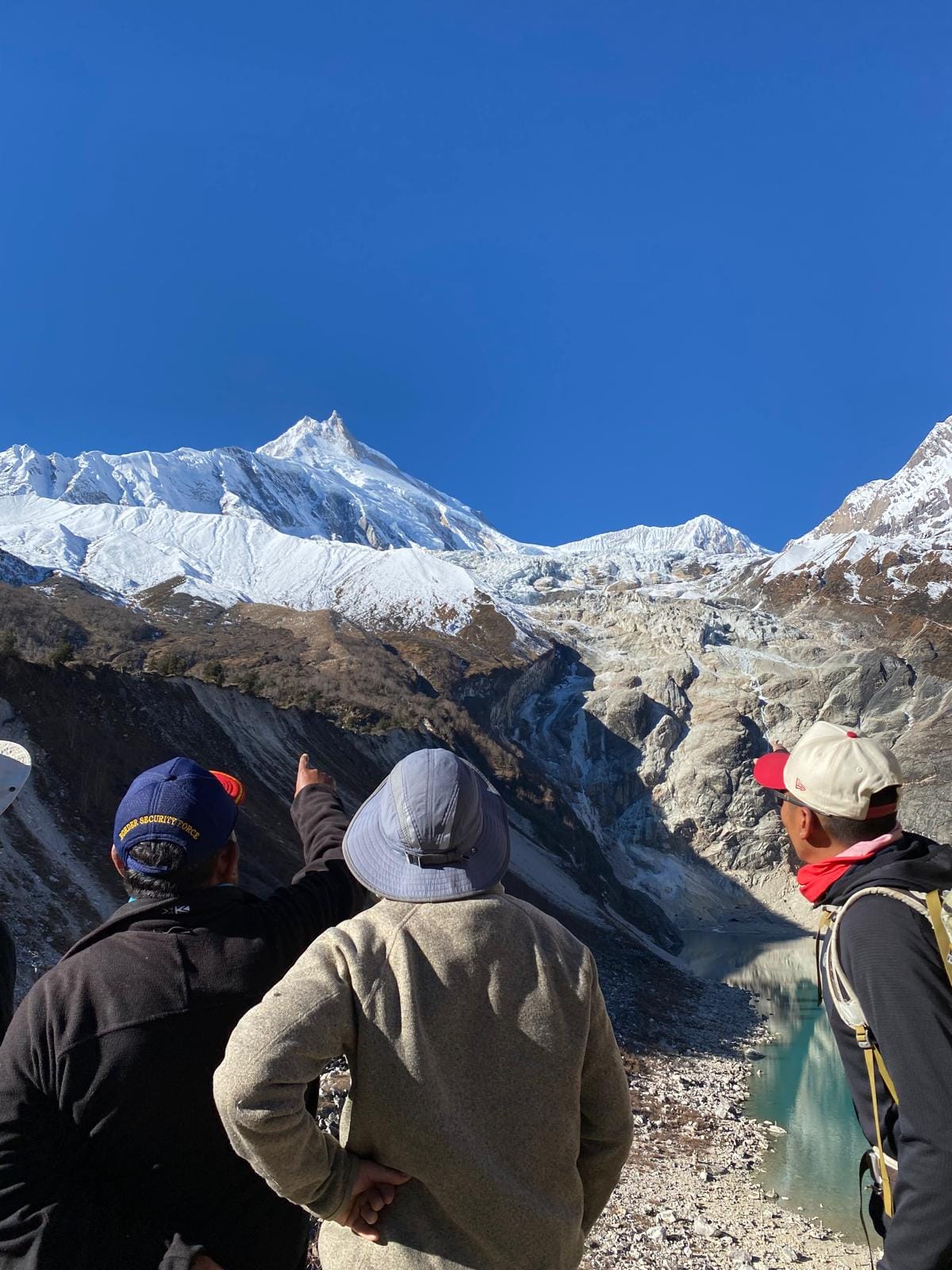
A short but magnificent walk as we continue up the valley and gain altitude. The trail climbs out of Lho to the monastery, which we can visit. We then follow the valley with great views of Manaslu ahead. The trail climbs for a couple of hours to Shyaula village, from where we are surrounded by amazing views. Manaslu is ahead and we can see Himalchuli and Naike peaks. Soon we reach the fields and stone houses of Samagaon, where we stay for the night. From the lodge, there are magnificent views of Manaslu. We should arrive at Samagaon by lunchtime so there is time to explore the village and visit the monastery and Birendra Tal, a glacial lake, in the afternoon.
Meals: Breakfast
Day 9
Trek to Samdo
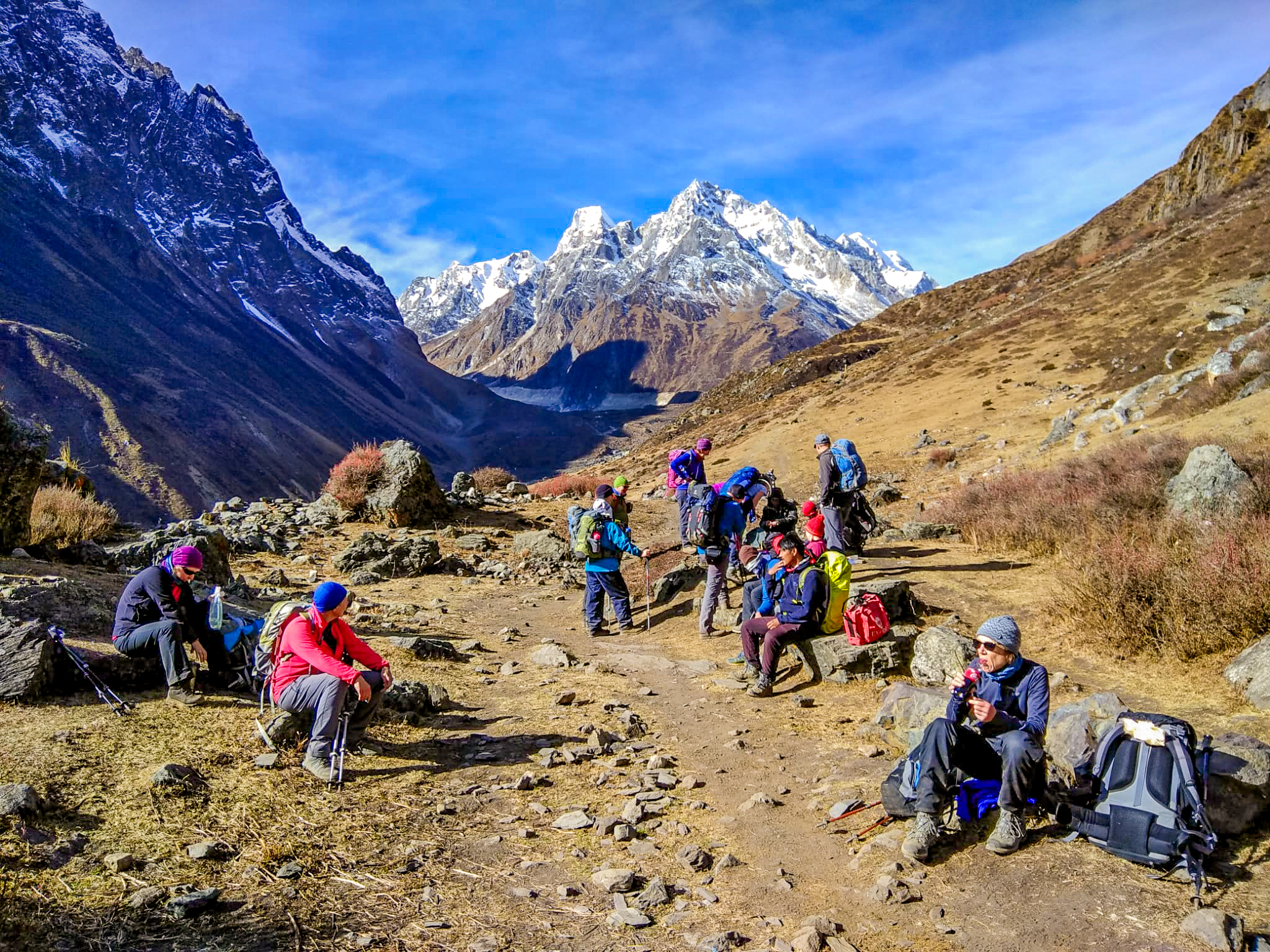
The trail crosses grazing areas and gradually climbs the valley. We have fantastic views of the mountains, especially Himalchuli, behind us. We can also still see Manaslu. As we reach our destination, Samdo Peak rears up behind us. It’s an easy half-day walk to Samdo, the last permanent settlement in the valley. This remote village is only a day’s walk from the Tibetan border. In the afternoon, there is time for an acclimatisation walk and to explore the village. Please note, the lodges in Samdo are basic.
Meals: Breakfast
Day 10
Ascend to Dharamsala
Leaving the village, we cross a stream (the last time we see the Buri Gandaki) and climb steadily to the deserted Larkya Bazaar. Years ago, this village thrived off trade with Tibet. Behind we can see Samdo Peak and, as we climb, Manaslu comes into view to our left and we can see the whole spectacular climbing route to the summit. Climbing all the time with a few steep sections, we reach a very basic lodge at Dharamsala, which is the last place to stay before the pass. Look out for blue sheep, which often come down to the small stream near the lodge. In the afternoon, the energetic can climb a hill behind the lodge for even better views of the surrounding mountains.
Please note, the accommodation at Dharamsala is extremely basic due to limited properties in this location. There are three-person prefab huts or, where available, tents are provided for those that do not wish to triple-share. Mattresses are provided in the huts and there is a basic dining room and basic toilets.
Meals: Breakfast
Day 11
Cross the Larkya La; descend to Bimthang
We have an early start (usually in the dark). Today is a long day and if there is any snow it can take us a long time to cross the pass, especially the descent. The trail leaves Dharamsala and climbs steeply at first but then more gradually by the side of the moraine of the glacier with great views of Larkya Peak.
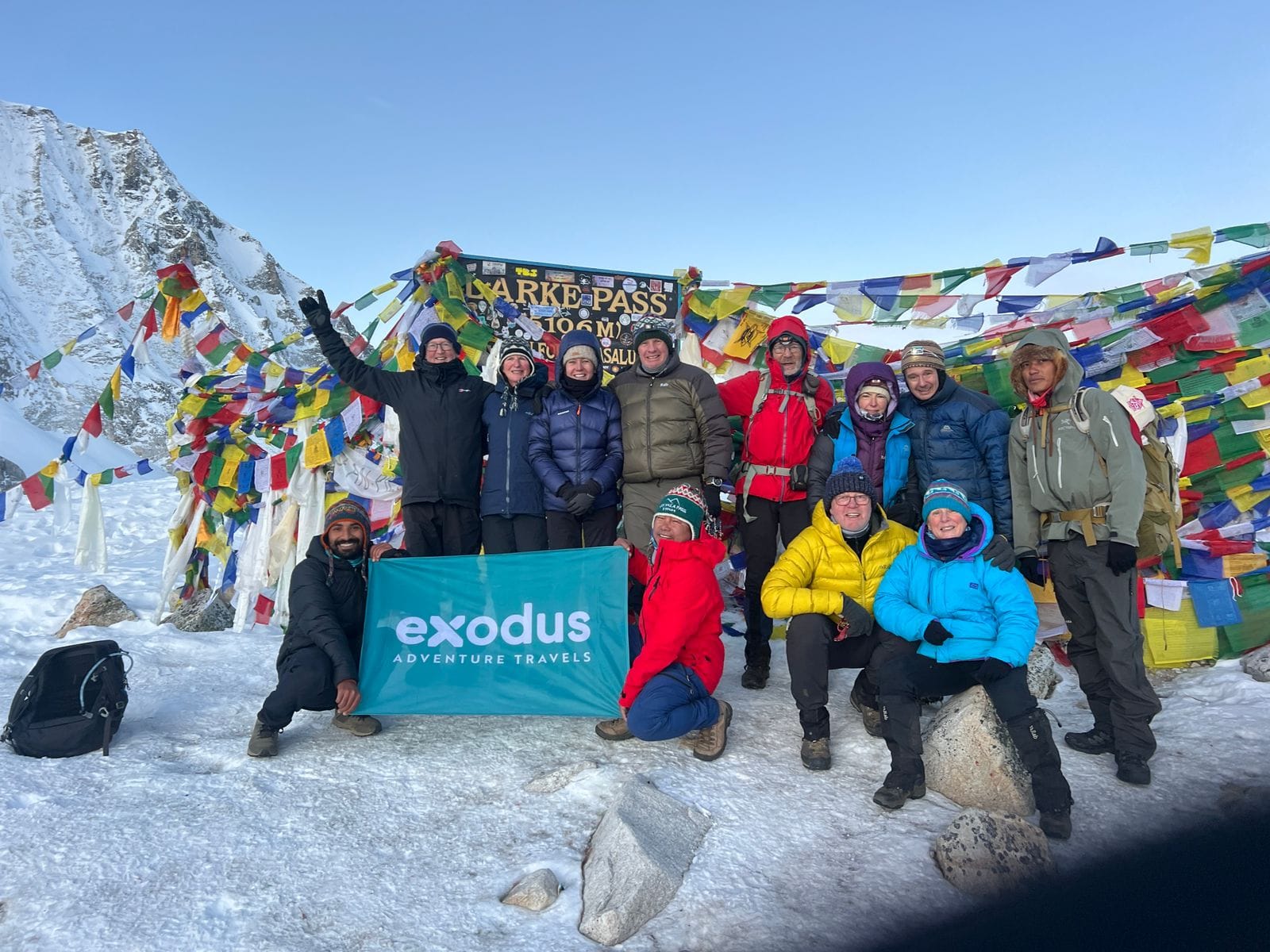
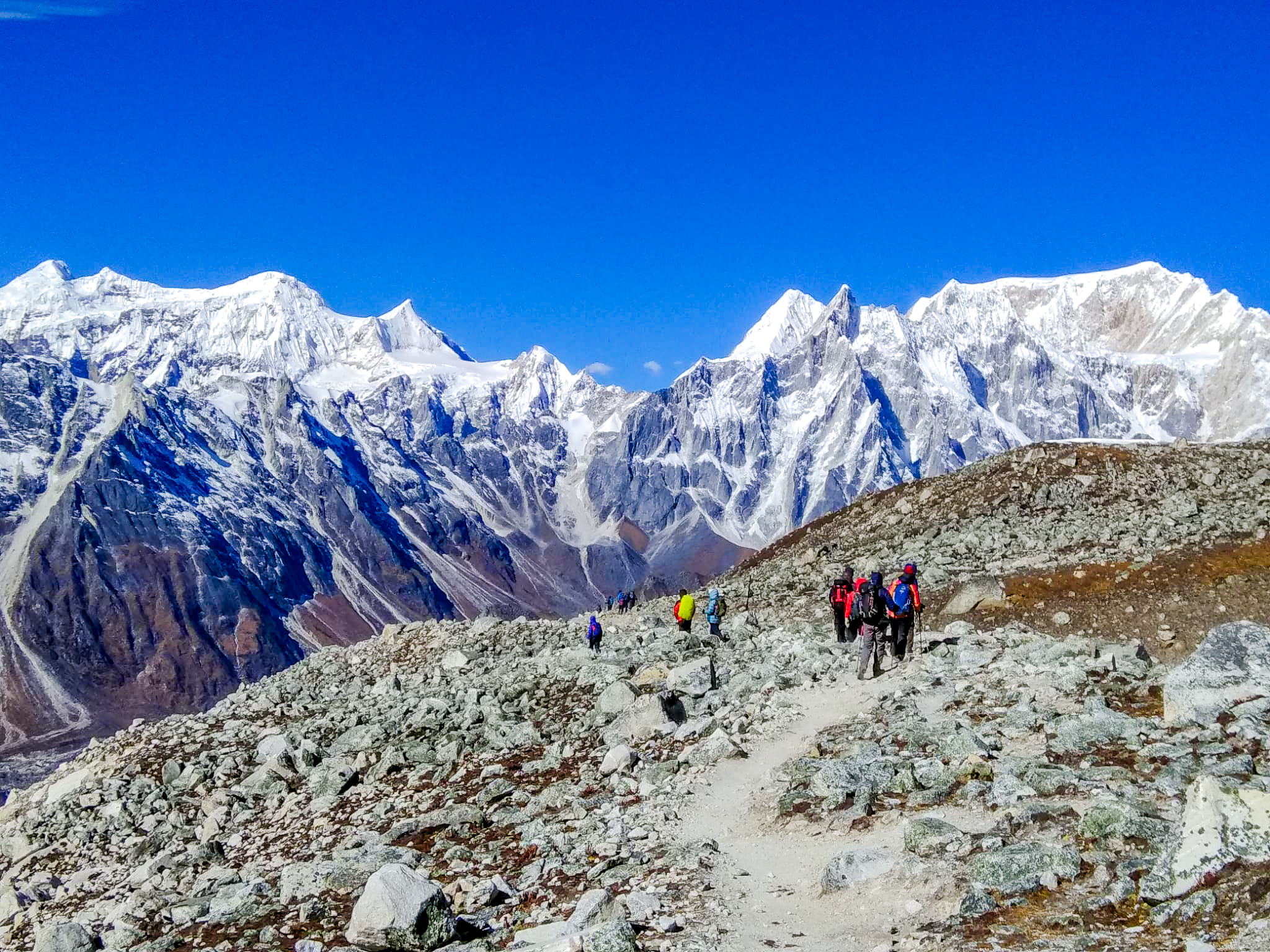
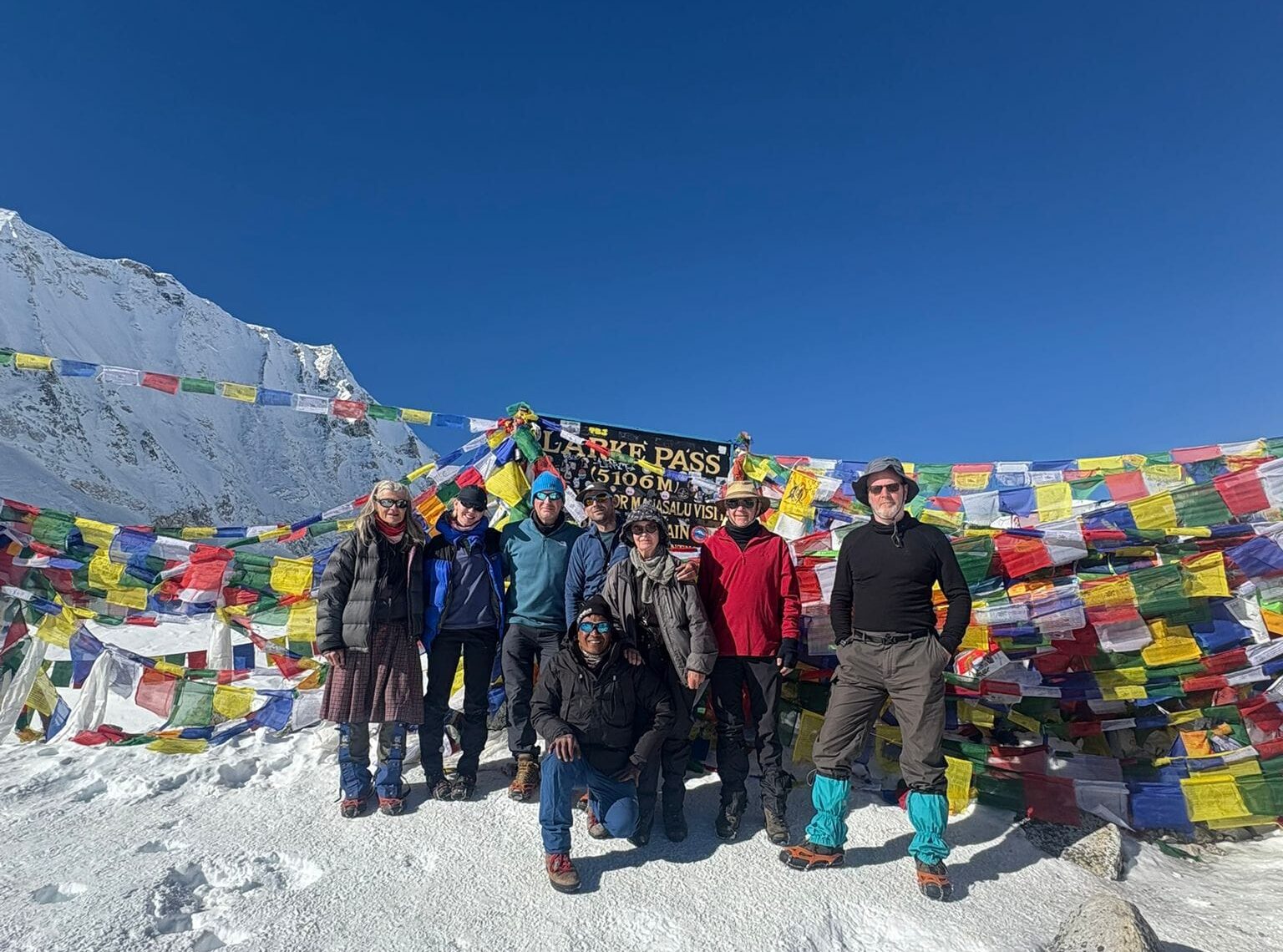
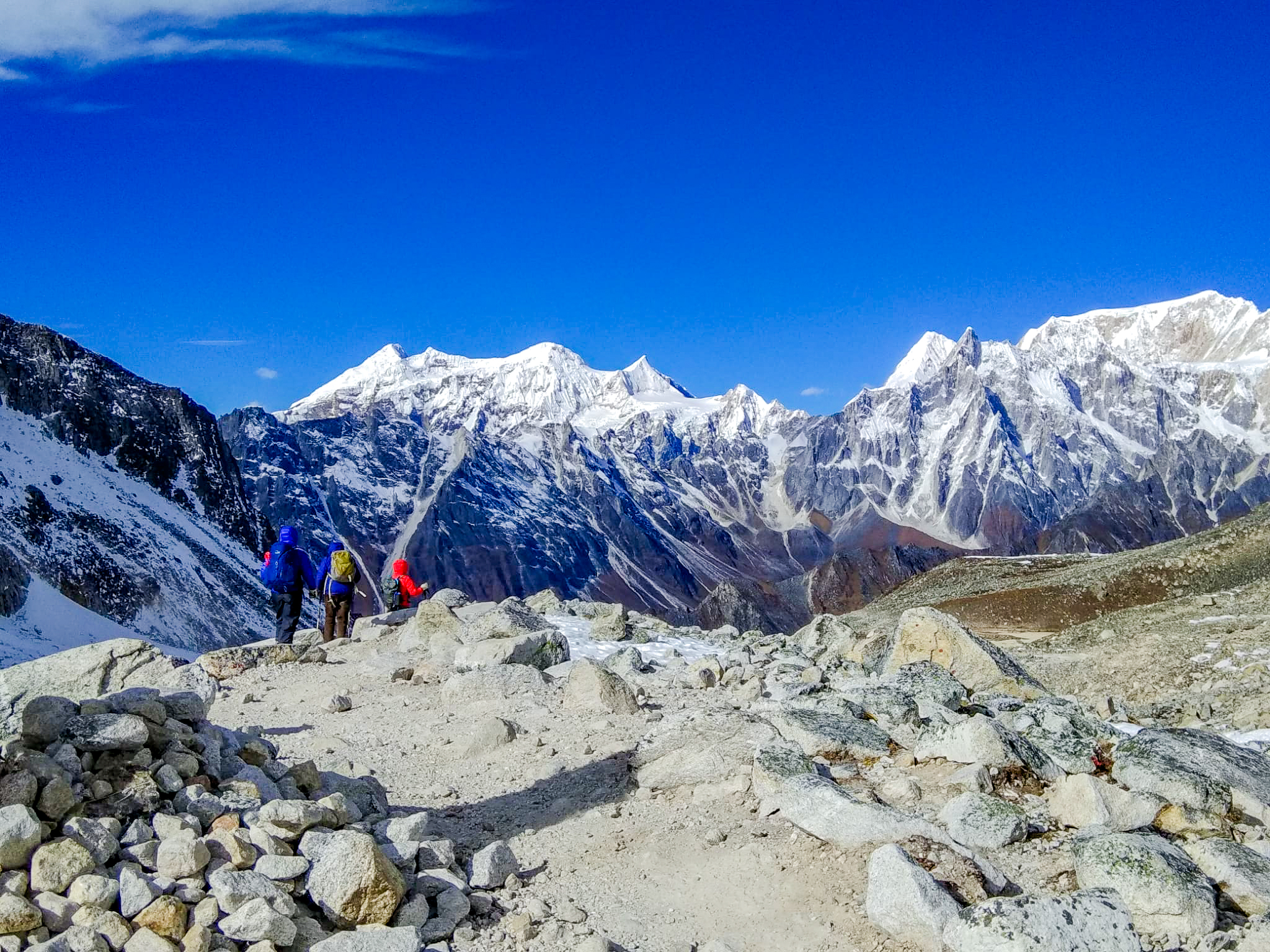
The ascent is gradual most of the way and is easy if there is no snow (if there is snow or ice it takes much longer). As dawn nears, Hindu Peak glows orange with the first sun rays. It’s a long and rocky ascent on the moraine with some short steeper sections all the way to the top of the Larkya Pass. The first area of prayer flags at 16,830ft (5,130m) is the official Larkya La from where the views are outstanding – a wonderful panorama of peaks including Larkya Peak, Cheo Himal and Hindu Peak and, in the distance, we can see the tip of Annapurna 2. From the top, there is a 10-minute almost-level walk to the second summit (which is a little higher and is also marked with a few prayer flags).
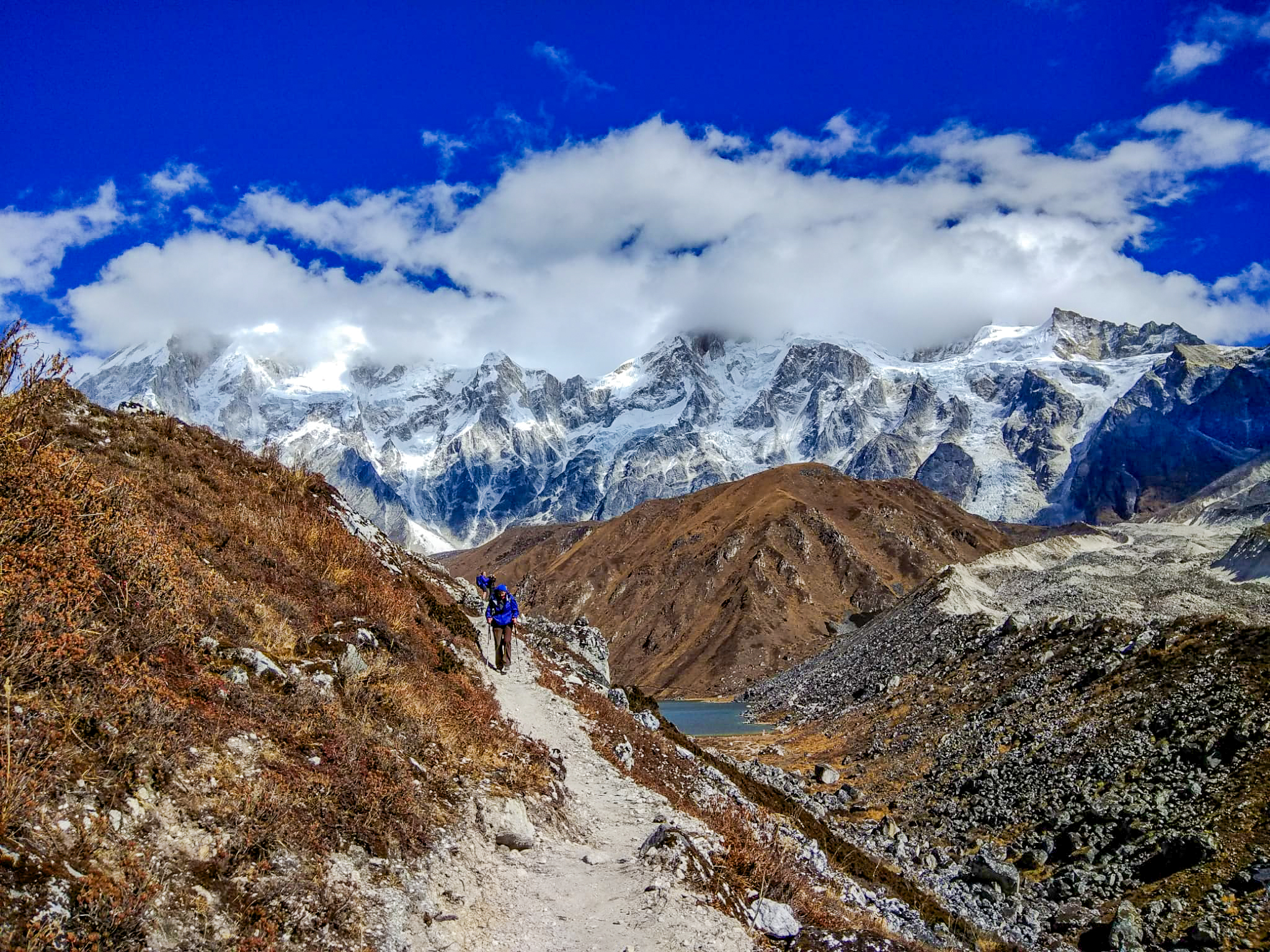
From here, the long, very steep descent starts. We need to take care as the path is steep and narrow. It is a sandy scree trail when there is no snow but if there is snow and ice, we need to take care. There is a landslide we must cross carefully. The steep part of the trail eventually eases off onto a path, which takes us down to the glacial moraine. The views are superb as we descend, and we can just spot Pongkar Lake, a brilliant-blue glacial lake amid the three glaciers below us.
We stop for a well-deserved rest at the bottom of the steep part of the descent, surrounded by immense snow-capped peaks. The descent now becomes a bit easier, but no less spectacular, as we descend the valley to Bimthang, where we stay tonight. If it’s clear, we can just see the summit of Manaslu high above.
Meals: Breakfast
Day 12
Daywalk to Pongkar Lake or spare day as required
A spare day to be used as and when required – if the weather is good and everything runs to schedule, we spend the day exploring the area around Bimthang and resting after the pass. There is a half-day walk to a beautiful glacial lake, Pongkar Lake, which we can do in the morning, then return to the lodge for lunch and have a free afternoon to rest.
If, however, there has been a delay earlier in the trek, the group needs more acclimatisation or rest before the pass, or if there is poor weather, your leader may decide to use the spare day earlier in the trek. Also, if the weather is bad at Bimthang, your leader may suggest trekking down the valley earlier. This is at the leader’s discretion.
Meals: Breakfast
Day 13
Spectacular walk to Tilje
From Bimthang, we cross high pastureland and have a magnificent walk down into the valley of the Burdin Khola. The walk from Bimthang is one of the most spectacular of the trek as a wall of mountains lies behind and in front. We pass the terminal moraine of the Cheo Himal and cross a small wooden bridge. Ahead, we have our last magnificent views of Manaslu. We now descend into rhododendron forest and follow a trail through a narrow valley to Karche and the Soti Khola. A short climb past terraced fields brings us to the Karche La, where we are in sight of the Marsyangdi River below. Descending through forest, we come to Tilje, where we spend the night.
Meals: Breakfast
Day 14
Trek to the remote Nache; descend to the main Annapurna Circuit trail
From Tilje, we walk through the village and cross the river by bridge. A small footpath then leads away from the main trail and we follow this uphill through the forest. A higher path takes us to a small monastery among pine forests. We get great views of Dharapani below and Annapurna 2 above. We then descend past terraces to a suspension bridge, which we cross. The trail then climbs up to Nache village. This old village rarely sees trekkers and has beautiful traditional Gurung houses. We can also see Manaslu and Himalchuli. We then descend quite steeply to the main Annapurna trail at Korto. Staying on the same side of the river, we follow the old trail, which climbs high above the river and undulates until we descend to Tal for the night.
Meals: Breakfast
Day 15
Descend to Syange via Chyamje and Jagat
A short climb out of Tal brings us to a long descent to cross the Marsyangdi by bridge, followed by a short climb to Chyamje. From Chyamje to Jagat, we can climb above the road and follow the old trekking trail through the forest to Jagat. From Jagat to Syange, we have to walk on the jeep track for a short while for our last night of the trek.
Meals: Breakfast
Day 16
Drive to Besishar; transfer to Kathmandu
Leaving early, we take a local private bus to Besishar on a rough road for approximately 2hr 30min. From here, we meet our next transfer for the long drive to Kathmandu (approximately five to six hours). We should arrive at our hotel in the late afternoon.
Meals: Breakfast
Day 17
Free day in Kathmandu
Today is free for sightseeing in Kathmandu. You may wish to visit the monkey temple at Swayambunath, one of the largest Buddhist stupas in the world at Boudhanath, or the most important Hindu temple in the valley at Pashupatinath. We offer a full range of sightseeing tours, which can be booked and paid for locally. Please see the Optional Excursions section of the Trip Notes or our noticeboard in the hotel in Kathmandu.
Meals: Breakfast
Day 18
Adventure ends in Kathmandu
The tour comes to an end after breakfast, so it’s time to start your return journey home. If you’d like a little more time to explore Kathmandu, speak to your sales representative about extending your stay.
Meals: Breakfast
What’s included
What’s not included
Additional information
Food
Breakfast is included throughout the trip, as well as the welcome dinner.
In teahouses, breakfast comprises a choice of bread (a slice of toast, chapatti or Tibetan bread), a choice of egg (boiled, fried or omelette), and a choice between either muesli or porridge each day. Hot tea/coffee is also served. On specific days, there will not be a choice for breakfast and either a trekkers breakfast (egg, hash brown, baked beans and toast) or a pancake with jam/honey is served – these options are not available in all teahouses and so we have only included them in locations where they can be guaranteed. You may also be able to supplement your included breakfast with additional items on the teahouse menu should you wish, additional items that are not included in the set menu should be ordered and paid for separately.
Please note, some more remote teahouses/lodges are unable to provide an extensive menu due to irregular delivery schedules and during periods of bad weather or a high volume of trekkers, there may be a more limited menu choice. Also, the higher altitude the more expenses the menus and extras generally are.
Lunch is at a teahouse en route – sometimes one of your guides will go ahead with the group’s order to make it more expedient. Dinner is in the same teahouse you sleep at (this is custom in Nepal as teahouses base their room rate on it).
Although most lodges have almost identical menus, they are reasonably extensive and offer a varied selection, ranging from traditional Nepalese dhal bhat to pizza and apple pie. Dhal bhat is the staple diet in Nepal and comes in many different forms but generally comprises some curried lentils and meat or vegetables, some rice, and a pickle/chutney. Another popular snack is momos, a Nepalese dumpling, fried or steamed and filled with meat or vegetables.
Meat is available in the teahouses but we advise against eating it on trek. The meat has often been carried in the heat from lower altitudes for several days before reaching the lodges and can cause stomach upsets or illness.
If you have a gluten-free diet, we strongly recommend you bring extra food and snacks with you to supplement the food on trek as there will be little variety available for you, particularly for breakfast. Even many of the soups are powdered and contain gluten. Gluten-free breakfast options will be limited to vegetable fried rice and a choice of egg, and on specific days only, a trekkers breakfast (without the toast/with an extra egg) will be served. Breakfast options for vegans will be limited to a choice of muesli/porridge with water each day, and on specific days only, a trekkers breakfast (without the egg), or vegetable fried rice will be served. If you are lactose intolerant, the same will apply although you will also have a choice of egg each day.
If you buy imported food and drink on trek, you will spend more than the suggested amount.
Drinking water
Staying hydrated is important when undertaking any physical activity but particularly so at altitude where it is generally recommended to drink at least 100floz-135floz (3-4 litres) per day.
However, we strongly encourage you not to buy bottled water on trek as this contributes to the growing problem of plastic pollution in Nepal.
The teahouses sell boiled water for approximately 150-300 (US$1.15-US$2.30) per litre (the price increases the higher you trek) which should not require treating. This is also perfect for a bedtime refill as it can double up as a hot-water bottle.
Alternatively, all teahouses provide free cold water. Although this should not be drunk untreated, we recommend you bring a reusable bottle/water bladder/Camelpak (ideally two) and use an effective form of water treatment. There are a wide range of products available including Steripens or purification tablets, which are the quickest and easiest options to use on trek – we recommend talking to an outdoor retailer for the latest advice as technologies are improving all the time. Make sure to check the product’s performance in cold/freezing conditions and consider battery life (lithium batteries are best in cold conditions).
Exodus has partnered with Water-to-Go, a filtration system that eliminates more than 99.99 percent of all microbiological contaminants from any non-saltwater source – visit Water-to-Go for more information. Exodus customers can claim 15 percent off their first order and, better still, 15 percent of the purchase value will be donated to the Exodus Travels Foundation. These bottles filter the water as you drink through the spout may not be the most efficient while on the go on a trek. Please note, if the water freezes it will clog up the filter. In this event, defrost before use by sitting the filter in lukewarm water for 10-15 minutes.
Kathmandu Heritage Tour: Swayambhunath, Boudhanath & Pashupatinath
Explore three of Kathmandu’s greatest UNESCO World Heritage Sites: climb to Swayambhunath for city-wide views and prayer flags, circle the immense Boudhanath stupa with pilgrims, and witness the sacred ghats of Pashupatinath on the Bagmati River.
This guided cultural tour provides deep context to Nepal’s Buddhist and Hindu traditions, enhancing the mountain journey with urban heritage. Offered at additional cost and bookable on tour, it’s a rewarding way to round off your time in the capital.
Buri Gandaki Gorge Trek & Suspension Bridges
Trek deep into the Buri Gandaki Gorge, following cliff-hugging trails that weave past thundering waterfalls, terraced fields and tiny hamlets perched high above the river. Feel the sway of long suspension bridges as you cross between valley walls and watch the landscape tighten into rock-strewn narrows.
Absorb daily life in the middle hills where mule trains, millet plots and slate-roofed homes define the scene. This section highlights Nepal’s dramatic topography and the sustained rhythm of a Himalayan approach march toward higher country.
Jagat Stone Village & Buddhist Gateways
Explore the paved lanes of Jagat, a stone-built village where the first clear signs of Tibetan Buddhism appear. Pass carved mani stones and prayer wheels, and note chortens that announce entry into a culturally Tibetan enclave of the Manaslu region.
Hear the river echo below while you admire dry-stone architecture and tidy courtyards. The village’s poised setting on a natural shelf above the Buri Gandaki frames striking glimpses of cliff and cascade.
Lho Hilltop Monastery Visit & Manaslu Outlook
Walk up to Lho’s hilltop monastery to visit a working gompa where prayer flags snap in the breeze and monks chant against a backdrop of pine forest. Step onto the terrace for wide-open views of Manaslu and the sculpted Naike Peak.
Inside the gompa, colourful thangkas and butter lamps illuminate ritual life on the mountain frontier. Outside, the panorama rewards the climb with crystalline morning light across hanging glaciers and serrated ridgelines.
Samagaon Village Walk & Birendra Tal Glacial Lake
Stroll among Samagaon’s stone houses and mani walls, then continue to Birendra Tal, a jewel-toned glacial lake tucked beneath the north face of Manaslu. Spin prayer wheels, greet yak herders and feel the cooling katabatic breeze rolling off ice.
The amphitheatre of peaks here offers textbook Himalayan scale. Moraine, pasture and village life meet in one frame, revealing how Buddhism, high-altitude agriculture and mountain geography intertwine at the edge of the Tibetan world.
Samdo High-Altitude Village & Acclimatisation Walk
Roam the austere lanes of Samdo, the last permanent settlement before the pass, and take a gentle acclimatisation walk above the rooftops. Look toward the old trade routes leading to the Tibetan border and the distinctive pyramid of Samdo Peak.
Stone houses crouch against the wind while yak caravans occasionally thread the ridge. Expect thin, dry air, big skies and a powerful sense of remoteness that heightens anticipation for the high crossing ahead.
Larkya La Pass Crossing: Himalayan Panorama
Cross the Larkya La around 16,830ft/5,130m, climbing steadily beside glacial moraine before reaching a ridge lined with prayer flags. From the crest, drink in a sweeping panorama of Cheo Himal and Himlung Himal, with Annapurna II peeking on the distant horizon.
Begin the careful steep scree descent into a cirque of icefalls and blue-shadowed slopes. The scale, silence and high-altitude light combine for one of the Himalaya’s great mountain days, etched with effort and reward.
Pongkar Lake Glacial Basin Walk (Weather-Dependent)
Take a half-day hike to Pongkar Lake, a brilliant-blue tarn set amid braided moraines and three tumbling glaciers. Trace meltwater channels, scan for wildflowers and watch seracs glow under the changing light.
This scenic outing is included when the spare day is used in Bimthang, typically on day 12, and rewards with quiet shores and wide-angle views of surrounding peaks. Conditions and leader guidance determine timing and feasibility.
Rhododendron Forest Descent to Tilije
Descend from high pasture into rhododendron forest, following a lively stream past mossy boulders and wooden bridges. Clearings reveal lingering vistas back to Manaslu and the icy bastions of Cheo Himal.
Reach the shoulder of the Karche La before winding toward Tilije’s orchards and slate roofs. In spring, crimson rhododendron blooms light the trail; in autumn, crystal air and harvest terraces add texture to the walk.
Gurung Heritage Trail to Nache & Hill Monastery
Follow a quiet footpath through pine to a hilltop monastery, then continue to the traditional Gurung village of Nache, a rarely visited settlement of stone houses and slate courtyards. Views open to Annapurna II and the Marsyangdi valley below.
This cultural interlude reveals a different Himalayan identity—Gurung customs, terraced fields and slower rhythms—before rejoining the main trail. Expect warm greetings, spinning prayer wheels and the scent of pine resin on the breeze.
Kathmandu Welcome Dinner & Trek Briefing
Meet your group and meet your Tour Director in Kathmandu for a thorough trek briefing that sets expectations for altitude, gear and trail conditions. Settle in at the hotel before sharing a warm welcome dinner featuring Nepali flavours and conversation that forges team spirit ahead of the trek.
Gain confidence as your leader outlines safety protocols, pacing and acclimatisation. The evening’s camaraderie helps turn a group of individuals into a cohesive trekking party ready for the remote valleys and high mountain passes to come.