Your itinerary
Day 1
Arrive in Funchal
Arrive in Funchal – You will be greeted at the airport by a member of the Riviera Travel team to help you check in for your flight to Funchal. Upon arrival, you will be escorted to your hotel . Settle in before rejoining the group this evening for a delicious welcome dinner: the perfect opportunity to meet your fellow travellers.
Meals: Dinner
Day 2
Funchal
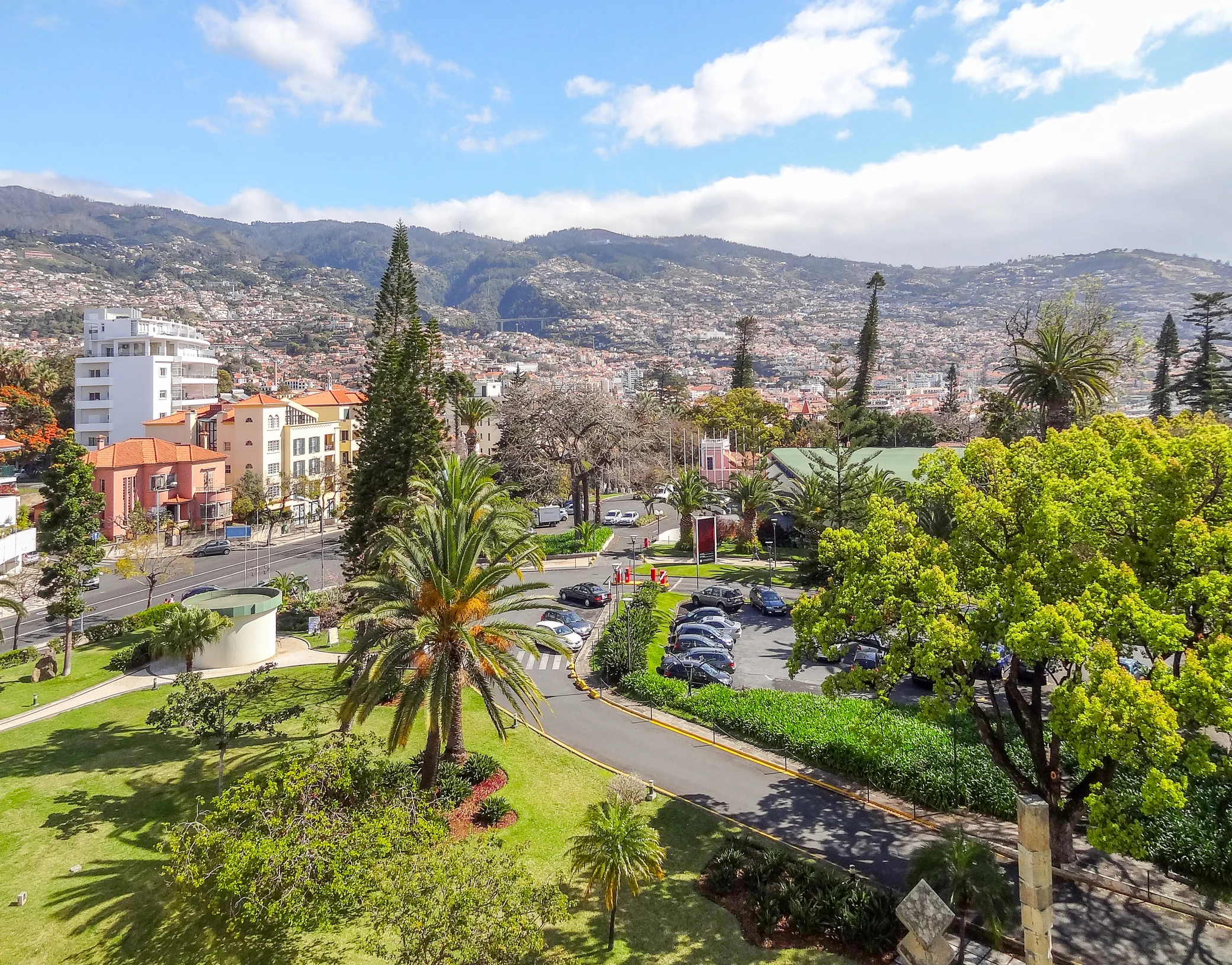
Funchal – After breakfast, a local guide takes us on a walking tour of the historic centre of Funchal, often called ‘little Lisbon’ as it overlooks a spectacular harbour and boasts grand 18th-century buildings with shaded courtyards. Narrow streets wind through its centre, broadening out onto lively squares and tree-lined walkways.
Inspiring sights include the Igreja do Colégio, a church with a plain exterior that belies its sumptuous Baroque interior, and the 15th-century Sé cathedral, one of the few buildings dating from colonial times. It is the island’s main religious building and features the original 16th-century altar, imposing arches and ornate gold-framed paintings; its ceiling, made from local wood, is one of Portugal’s most beautiful.
Devotees of modern architecture will love the Art Deco Mercado dos Lavradores or farmers’ market, a hive of activity as shoppers fill their baskets with the island’s sun-ripened produce. Look out for the patterned pavements, typically Portuguese and painstakingly pieced by hand, and for the colourful street art on the doors of buildings.
A treat is in store as we pause for a tasting of the island’s best-known export – Madeira wine. The process of heating the wine originated by accident when 16th-century sailors discovered that wines picked up in Madeira tasted richer after the casks had been heated and cooled during passage through the Tropics.
Today, the styles of this fortified wine range from dry to lusciously sweet. In between is medium Verdelho, the variety the British traditionally serve with the crumbly sponge cake named after the wine.
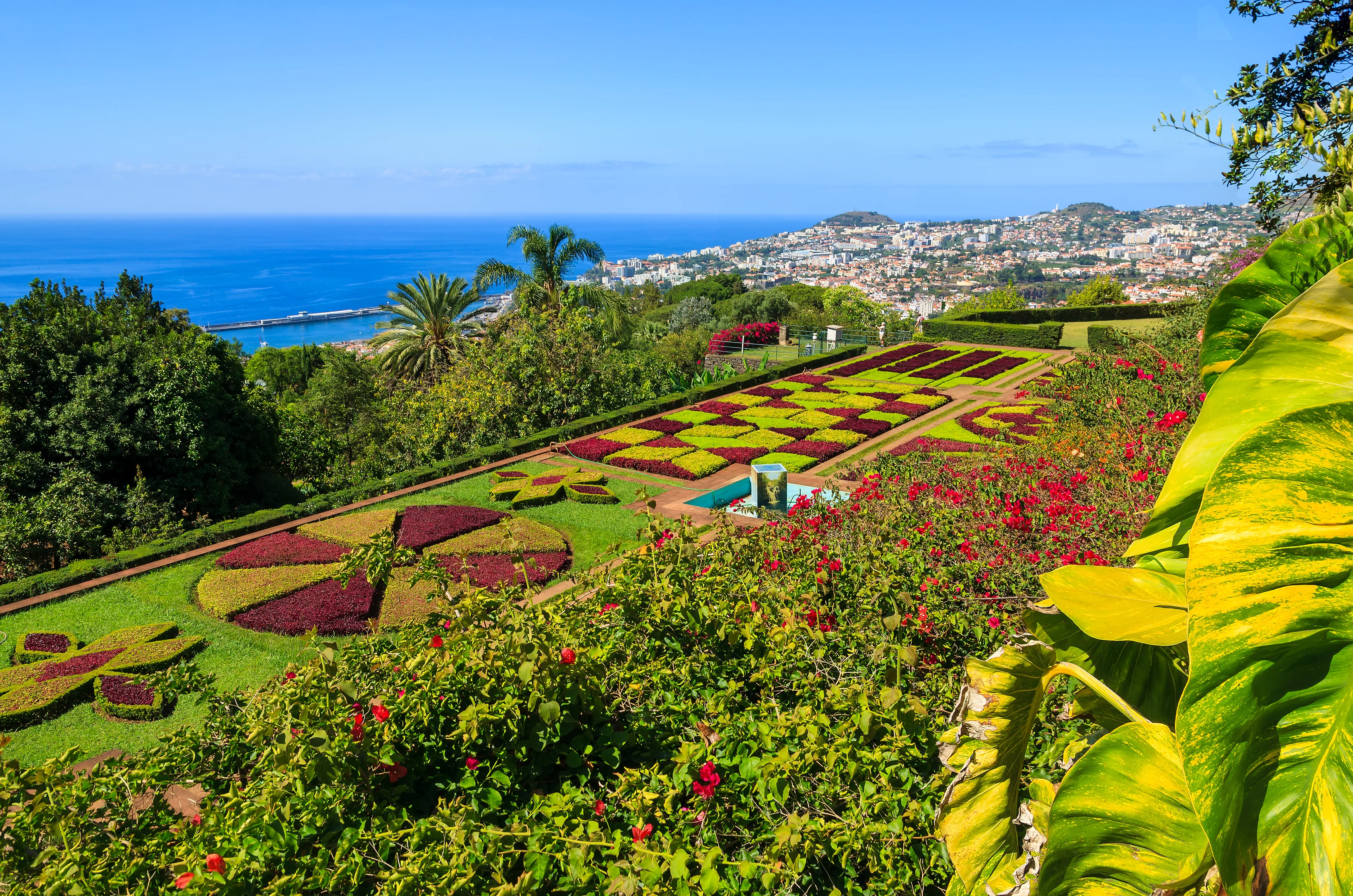
In the afternoon, we visit the Palheiro Gardens, world famous for its variety of flora and its beautiful setting in the hills overlooking Funchal. Palheiro was laid out in the early 19th century by a French landscape architect for the Count of Carvalhal before being acquired in the early 20th century by the Blandy family, famous wine producers.
Over the next decades, the gardens were populated with thousands of plants from around the world, from North American sequoia trees to South African Proteas, all flourishing in Madeira’s rich soils and clement weather. This is a blissful place to explore at your leisure, taking in all the colours and fragrances, with a chance to linger when a particular specimen catches your eye.
Meals: Breakfast
Day 3
Western Madeira
Western Madeira – Today we explore the western side of the island. Our first stop is the charming town of Ribeira Brava, a small-town set in a steep valley carved out by the ‘wild river’ that gives the settlement its name. There’s ample time to explore its picturesque streets and visit the 16th-century church of São Bento with its giant crystal chandeliers.
Madeira’s tropical climate is perfect for growing bananas and in the fishing village of Madalena do Mar you can see life on a small banana plantation, where much of the work is still carried out by hand. Turning inland, we ascend nearly 5,000 feet to the flattest part of the island, Paúl da Serra plateau. This landscape is reminiscent of Dartmoor and the North Yorkshire Moors – a surprising contrast to the mountain scenery we have enjoyed elsewhere.
In the distance you can see Porto Moniz, located at Madeira’s northwestern tip and our next destination. Remarkable enough for its edge-of-the-world feeling, Porto Moniz is also blessed with natural saltwater pools, formed from solidified volcanic rock and replenished by the waves as they break against the rocks. It’s the perfect place to stop, gaze out over the waves and drink in the invigorating ocean air from the terrace of a café or restaurant.
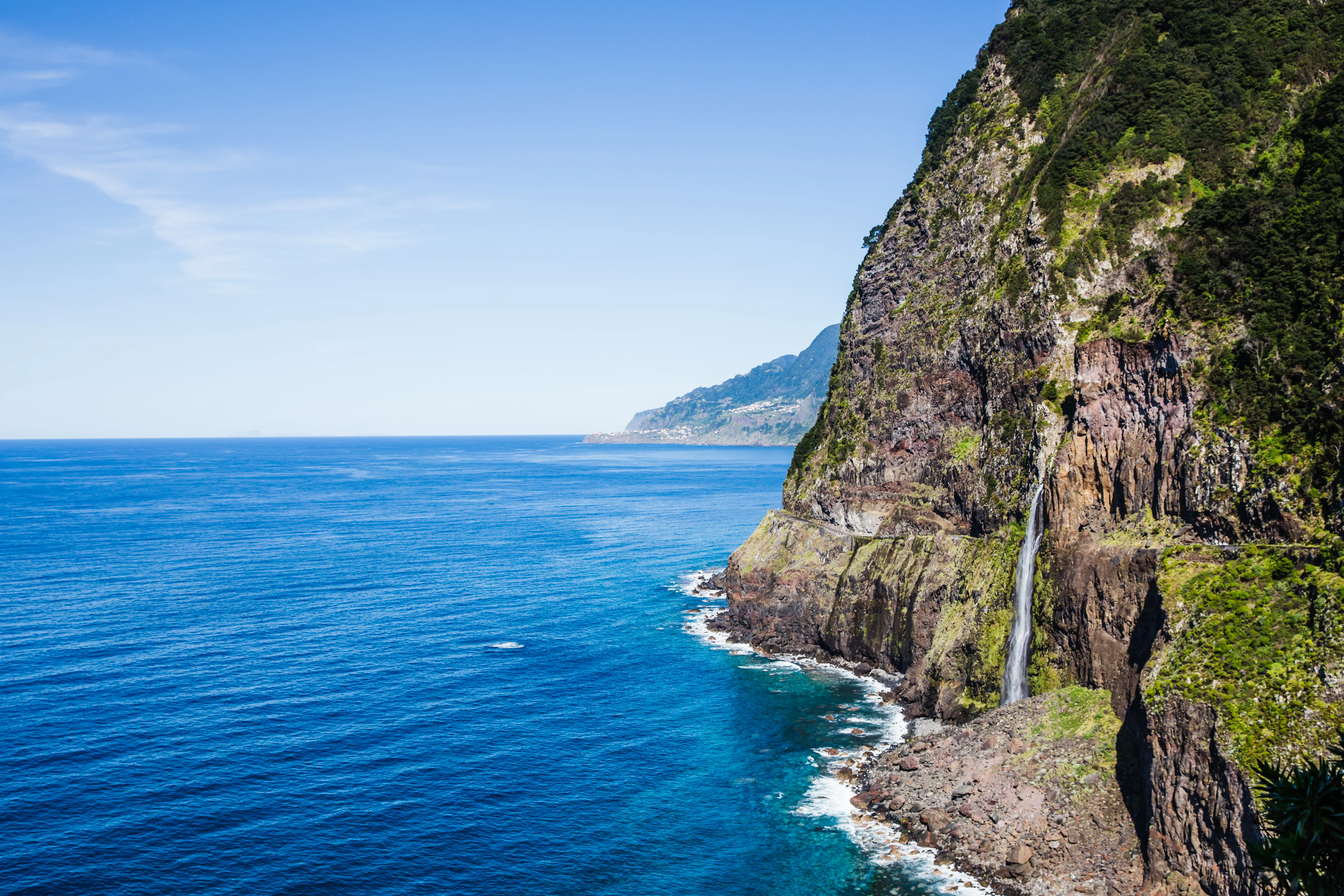
We return on the northern coastal route via the village of Seixal. Our final stop is São Vicente, a village nestling in a deep verdant valley and believed to be the volcanic birthplace of the island. At its shore is a giant basalt outcrop into which is hewn a 17th-century chapel, while the village also features a distinctive black and white church, scenic houses and a network of caves – all adding to its reputation as one of Madeira’s loveliest settlements.
After taking in so much, it’s time to return to Funchal.
Day 4
Monte
Monte – Enjoying spectacular views of the capital and the southern coast, it has long been a retreat for wealthy families. The town’s landmark is its 18th-century church, the most important pilgrimage site in Madeira, with its black and white facade and twin towers. It is also the burial place of Charles I of Austria, the last ruler of the Austro-Hungarian Empire.
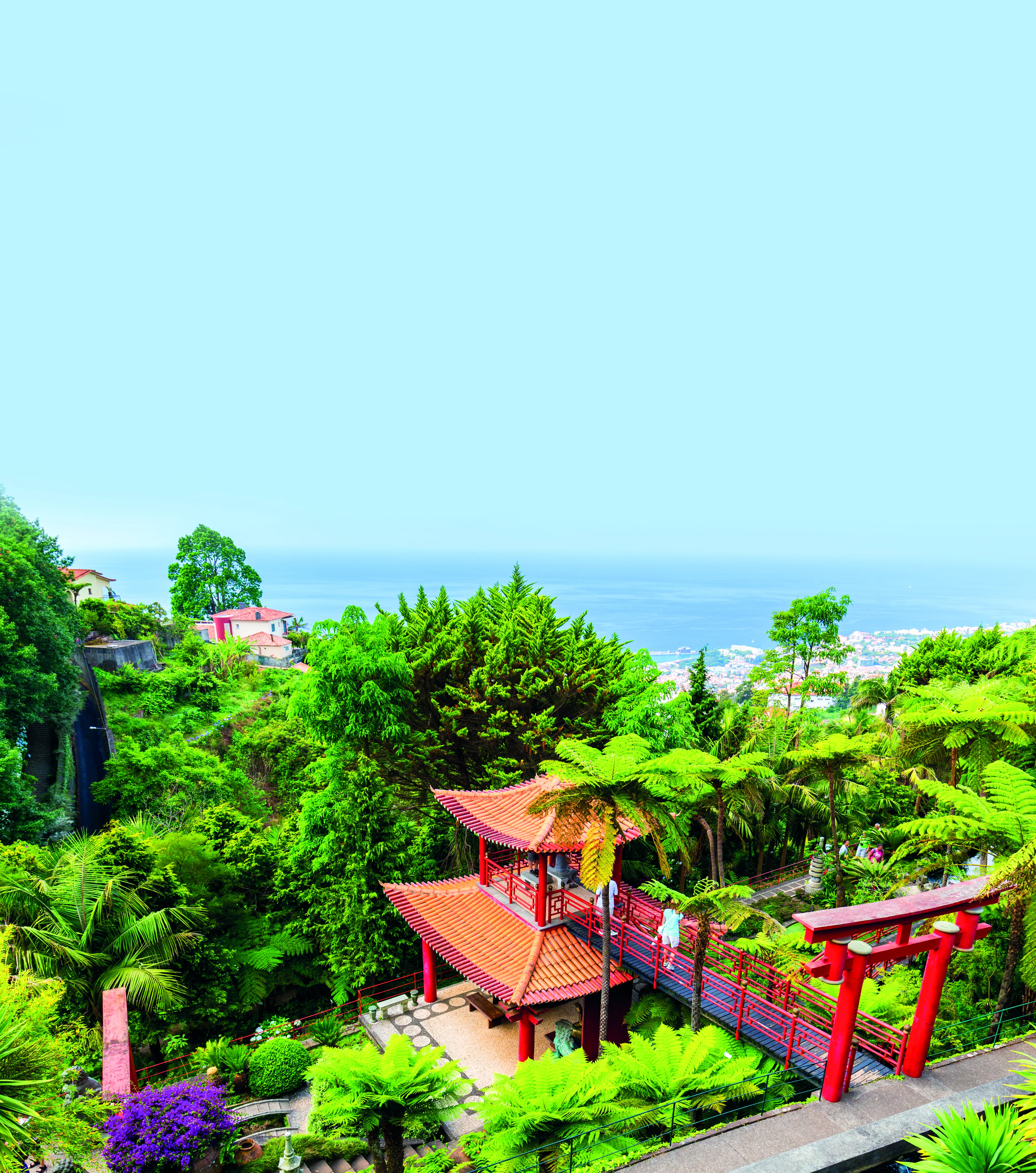
You’re free to wander at leisure or join a guided visit to the Monte Palace Tropical Garden. These oriental gardens are exquisite, complete with Asian-style bridges, arches and a pond filled with koi carp; they also house a historic tile collection gathered from Portuguese palaces, churches and private residences.
Later we return to Funchal by coach, or you may wish to take the cable car for a dramatic 15-minute descent to the capital. If you’re feeling really adventurous, you could take the famous Monte toboggan ride. This involves descending the narrow streets in a cushioned wicker basket mounted on wooden runners, steered from the rear by skilled drivers – Ernest Hemingway described the experience as exhilarating.
This afternoon is free. Why not relax at the hotel? Or perhaps visit Quinta das Cruzes, the former home of João Gonçalves Zarco, and now a museum whose exhibits offer a fascinating insight into the lifestyles of the island’s wealthy merchants over the centuries.
Day 5
Free day
Free day – For art-lovers, the Sacred Art Museum is located in the 17th-century former bishop’s palace. It houses one of the finest collections of religious art in the world, commissioned for their local churches by wealthy Madeiran merchants seeking salvation. Among the works are masterpieces by influential 15th- and 16th-century Flemish painters, such as Pieter Coeck van Aalst.
If you didn’t take the cable car at Monte, why not give it a try today? Alternatively, a steep path leads up to São João do Pico, the impressive fortress that has kept guard over Funchal since the 17th century and which offers a superb panorama over the city.
You can also experience Funchal’s traditional craft shops, many individually decorated and offering artisan tiles, wickerwork and embroidery, before a stroll along the Lido promenade and a seafood lunch. Gardeners, already spoilt by Madeira’s flora, can indulge themselves further at the Botanical Gardens.
Meals: Lunch
Day 6
Eastern Madeira
Eastern Madeira – Ponta do Rosto is Madeira’s easternmost point, on a sliver of land jutting out into the Atlantic and offers dazzling panoramas. On clear days the island of Porto Santo shimmers in the distance.
Following the northern coast, we call at sleepy Porto da Cruz, named after a large cross displayed to identify it to passing sailors. Dominated by the sheer-sided Penha d’Aguia or Eagle Rock, this 16th-century parish is renowned for producing sugar cane spirit and a dry red wine made from the Americana grape. We leave the village and track the coastline, where, incredibly, every patch of land is farmed to provide food for its isolated communities.
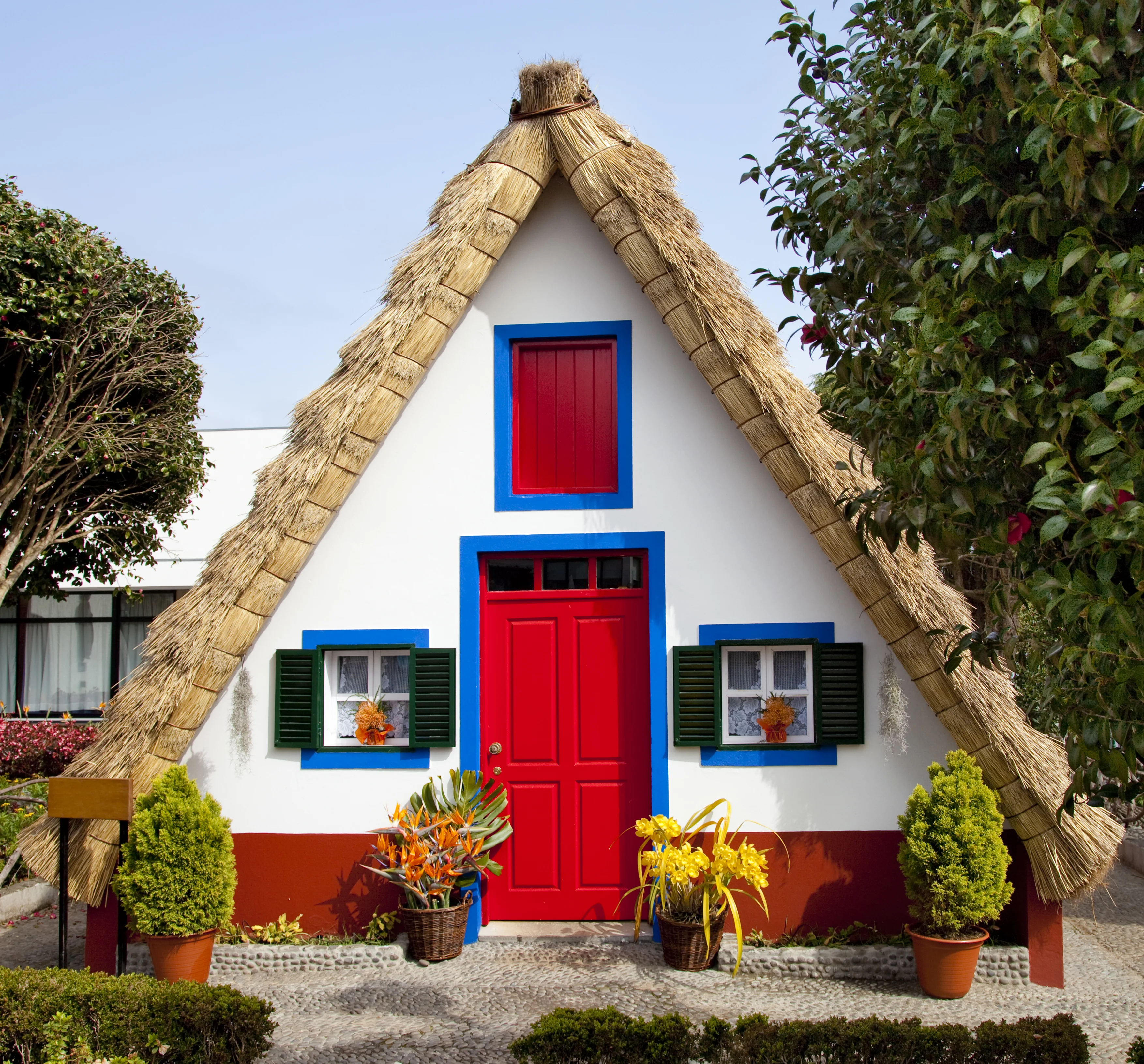
There’s further proof of Madeirans’ capacity for self-sufficiency in Santana, a town notable for its A-frame thatched houses. Made from stone, wood and anything else to hand, they have brightly painted doors and windows and each sits on its own plot of land used to grow food. As you enjoy a stroll around these well-preserved 16th-century dwellings, you get a sense of what it was like to live here when villagers relied solely on their own toil for survival.
We head towards the mountainous interior and one of the highlights of the tour – the UNESCO-listed Ribeiro Frio National Park. Around 90 per cent of the park is covered by ancient Laurisilva or laurel trees, and the area features many endemic flora and fauna, such as ferns and the trocaz pigeon. The region also plays a vital role in Madeira’s ecosystem, as moisture captured by the trees feeds into a 1,355-mile network of channels that distribute water across the island for drinking, agriculture and hydroelectric power.
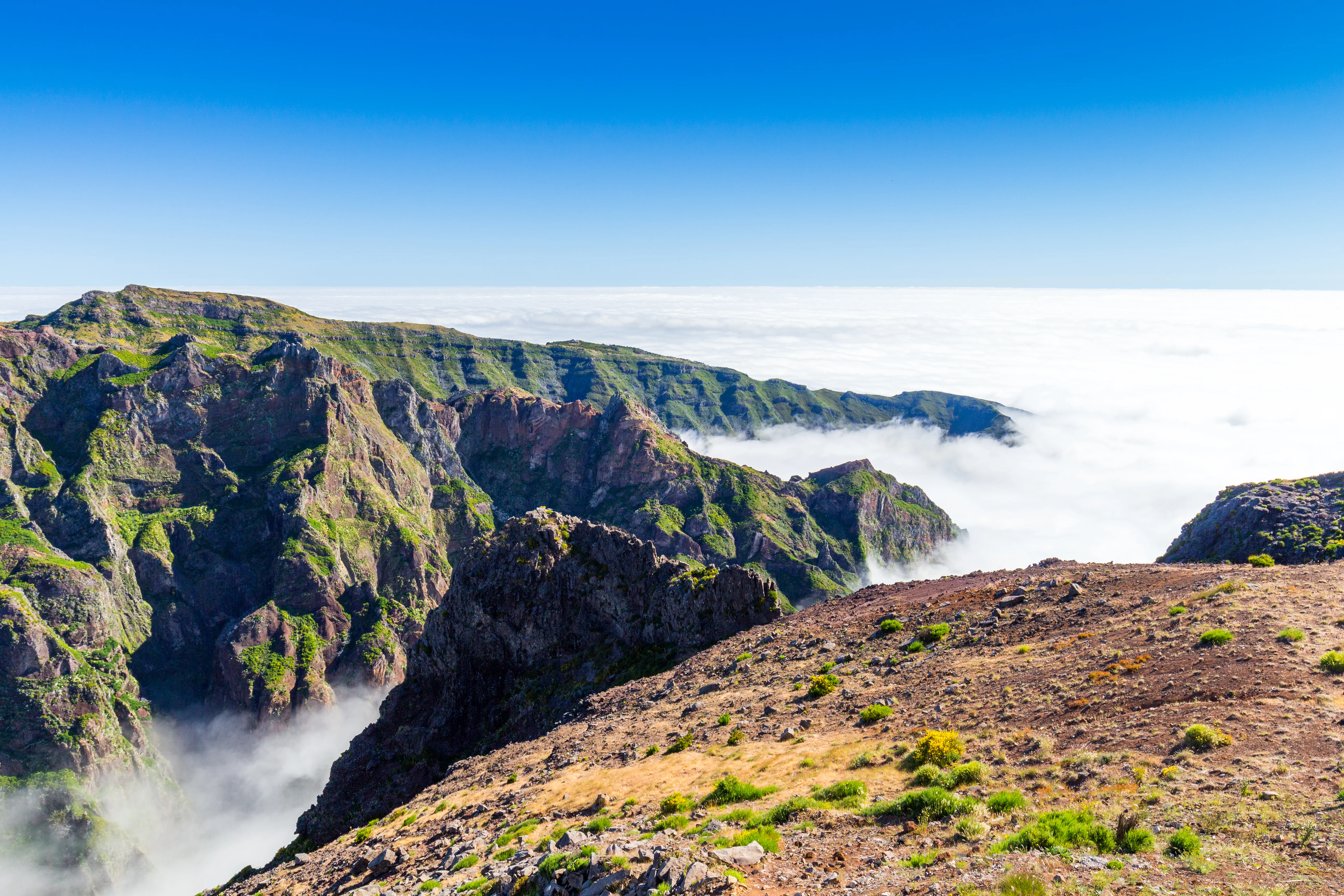
Ascending slopes cloaked in fragrant eucalyptus and swirling mists, we emerge at Pico do Arieiro, Madeira’s third-highest mountain at 5,930 feet. Here, above the treeline and sometimes even higher than the clouds, the vistas are some of the most memorable you’ll ever see. You may even spot the Valley of the Nuns way below. On clear days almost all of Madeira is visible, including its highest summit – the 6,100-foot Pico Ruivo.
Day 7
Curral Das Freiras & Câmara De Lobos
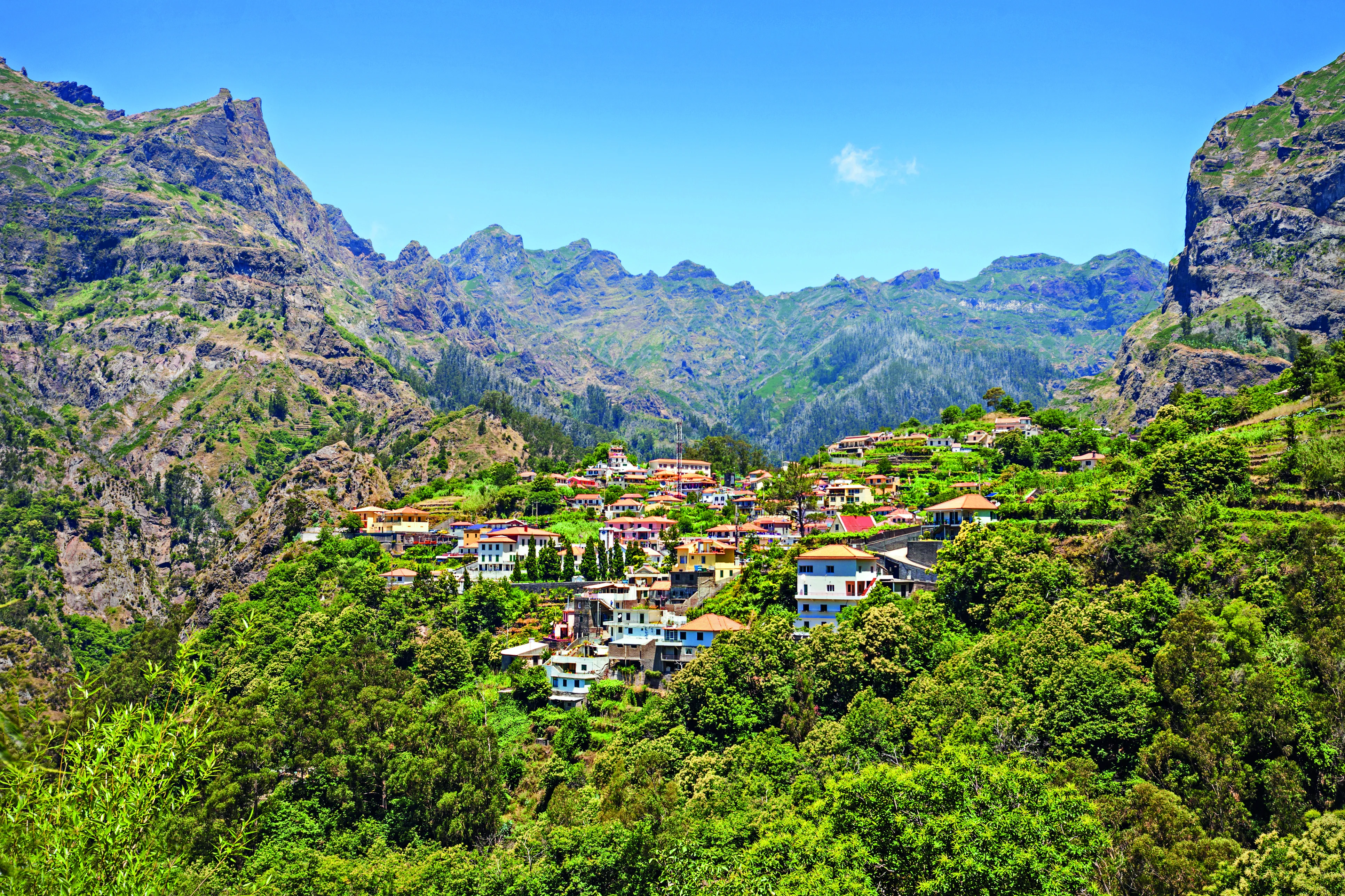
Curral Das Freiras & Câmara De Lobos – Our morning begins with a short drive north to Madeira’s dramatic interior and the Curral das Freiras or Valley of the Nuns. To appreciate the solitude of this place, we drive to Eira do Serrado, over 3,500 feet above sea level, part of a natural cauldron of jagged peaks and chasms, with time to soak up the glorious views down to the village of Curral das Freiras itself.
Descending to the village, you can see why in 1566 the nuns of Funchal’s Santa Clara convent relocated to this almost inaccessible valley to flee a pirate attack. Today it is also known for the sweet chestnuts cultivated on its terraced hillsides – you’ll enjoy sampling these tasty treats. It even hosts an annual festival celebrating this versatile nut, which is used in products from cakes to soups to liqueurs.
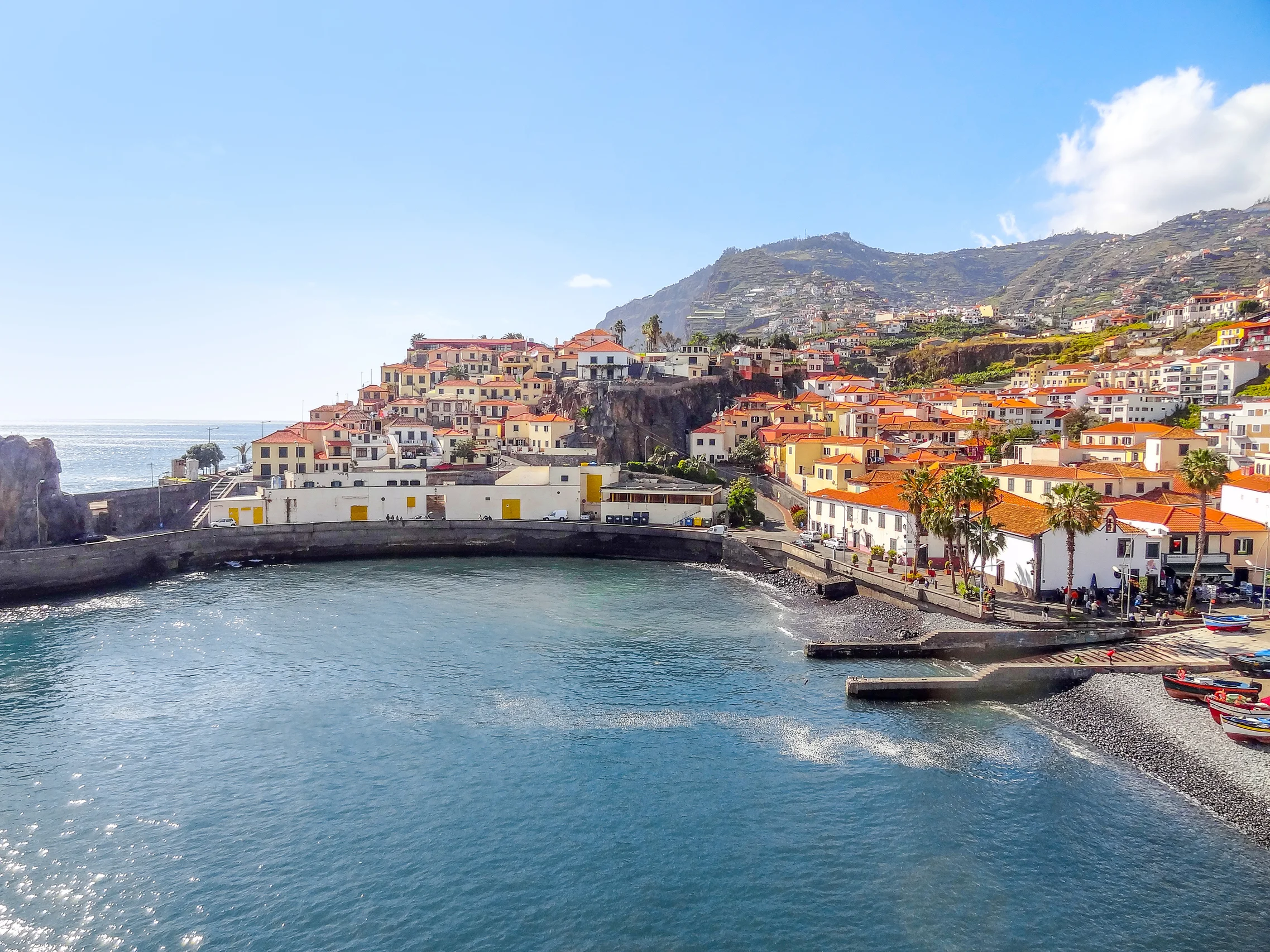
We then head to Câmara de Lobos, a fishing village built around a bay with Europe’s highest cliffs forming a breathtaking backdrop. Inspired by its location, the colourful boats and whitewashed buildings with distinctive terracotta roofs, Winston Churchill stayed here to paint the harbour during his visit to Madeira in 1950.
Câmara de Lobos is still a working port, with boats pulled up onto the beach after night fishing for the local black scabbard fish known as espada. It’s a charming village to saunter, exploring the cobbled streets and visiting the simple Saint Anthony’s Chapel, where fishermen’s wives traditionally said prayers for the safe return of their menfolk.
You will have free time here for lunch, where you can relax in a harbour café with a glass of poncha – an elixir made from sugar cane spirit, honey and lemon juice – traditionally enjoyed by fishermen returning to land their catch in the morning, and said to cure the common cold!
On our way back to our hotel, we stop at Cabo Girão, the spectacle of the island’s highest sea cliff – a sheer drop of 1,980 feet. Experiencing the views from the transparent viewing platform extending over the cliff edge is truly exhilarating.
Meals: Lunch
Day 8
DAY 8
Return home
What’s included
What’s not included
Additional information
Western Madeira Scenic Drive: Ribeira Brava, Paúl da Serra & Porto Moniz Lava Pools
Journey on a scenic coastal drive to Ribeira Brava’s 16th-century São Bento church and the banana terraces of Madalena do Mar before climbing to the windswept Paúl da Serra plateau. Moorland vistas contrast with the island’s jagged interior.
Continue to Porto Moniz to admire the natural lava pools, their inky basins refreshed by Atlantic swell. Return via Seixal and São Vicente, where a basalt outcrop and whitewashed chapel hint at Madeira’s volcanic origins.
Monte Hill Town Visit & Church of Our Lady of Monte
Visit Monte, the garden-draped hill town overlooking Funchal, known for cobbled lanes and cool mountain air. Step inside the Church of Our Lady of Monte, its black-and-white facade framing twin towers.
Reflect at the tomb of Charles I of Austria and take in panoramic views over Funchal from terraced viewpoints, where jacaranda and bougainvillea color the slopes.
Eastern Madeira Discovery: Ponta do Rosto, Santana & Laurisilva of Ribeiro Frio
Explore the island’s Atlantic edge at Ponta do Rosto, where ochre cliffs meet cobalt seas. Pause in Porto da Cruz beneath Penha d’Aguia and see terraced plots clinging to dramatic slopes.
Wander among Santana’s thatched A-frame cottages before entering the UNESCO-listed Laurisilva of Ribeiro Frio. Learn how ancient laurel forests feed the island’s levada waterways and shelter endemic birds amid cool, fragrant mist.
Ascend to Pico do Arieiro for ridge-top views that often rise above the clouds, revealing serrated peaks and distant ocean.
Curral das Freiras: Valley of the Nuns & Eira do Serrado Viewpoint
Gaze into a mountain amphitheatre from the Eira do Serrado viewpoint, where sheer walls plunge to the secluded Valley of the Nuns. Descend to Curral das Freiras to sense its remoteness amid chestnut-clad terraces.
Hear how nuns fled here from pirates in 1566, and taste sweet chestnuts when in season. Stone lanes, traditional houses and chapel bells evoke a self-sufficient highland way of life.
Câmara de Lobos Fishing Village Stroll & Cabo Girão Skywalk
Stroll the harbour of Câmara de Lobos, where colourful boats land the local espada fish and Churchill once set up his easel. Try a glass of poncha as tiled lanes thread past whitewashed chapels and terracotta roofs.
Continue to the Cabo Girão Skywalk for a glass-floored look over vineyards and sea. The sheer 580m cliff ranks among Europe’s highest, offering vertiginous views and superb photo opportunities.
Solo Travellers’ Welcome Dinner & Orientation
Gather on your first evening to meet your Tour Director and fellow solo travellers over a hosted welcome dinner. Sample regional flavours—perhaps espada with banana, bolo do caco and local desserts—paired with a glass of Madeira.
Receive helpful tips for navigating Funchal, optional activities and dining spots, all in a solo-friendly atmosphere that makes introductions easy and conversation flow.
Monte Palace Tropical Garden Guided Visit
Join a guided visit to the Monte Palace Tropical Garden, where Asian-inspired bridges, pagodas and koi-filled ponds mingle with cycads, ferns and orchids on a terraced hillside.
Admire a remarkable azulejo tile collection from Portuguese palaces and learn how Madeira’s microclimates nurture exotic species. This optional experience is at additional cost and bookable on tour.
Funchal–Monte Scenic Cable Car Ride
Glide by cable car between the bayfront and Monte, floating above terraced gardens, banana groves and red-tiled roofs. Windows frame sweeping views over Funchal and the amphitheatre of surrounding hills.
Enjoy a gentle aerial perspective before exploring Monte or returning to the seafront. This optional experience is at additional cost and bookable on tour.
Carreiros do Monte Toboggan Ride
Ride the Monte toboggan in a cushioned wicker sled guided by skilled carreiros in traditional whites and straw boaters. Slip along polished cobbled lanes as gardens and manor houses blur past.
This 19th-century tradition combines deft foot-braking, rope work and flair for a breezy descent with plenty of smiles. Optional, at additional cost and bookable on tour.
Palheiro Gardens Hilltop Visit
Roam the Palheiro Gardens high above Funchal, where camellias, proteas and towering sequoias thrive in Madeira’s mild climate. Curved hedges, lily ponds and hillside trails reveal ever-changing vistas across the bay and terraced slopes.
Created for the Count of Carvalhal and later tended by the wine-producing Blandy family, these cultivated grounds blend European formality with subtropical exuberance. Pause to breathe in citrus and eucalyptus, and admire views over the amphitheatre of Funchal.
Funchal Old Town Walking Tour & Madeira Wine Tasting
Discover Funchal’s historic lanes on a guided walking tour, taking in the graceful Sé Cathedral, the richly decorated Igreja do Colégio and the Art Deco bustle of the Mercado dos Lavradores. Hear why the capital is nicknamed ‘Little Lisbon’ as patterned calcada pavements lead between palm-lined squares and ocean views.
Conclude with a hosted tasting to sample Madeira wines, from dry Sercial to velvety Malmsey. Learn how centuries-old heated maturing methods shaped the wine’s character, once prized by seafarers and British merchants alike.