
Your itinerary
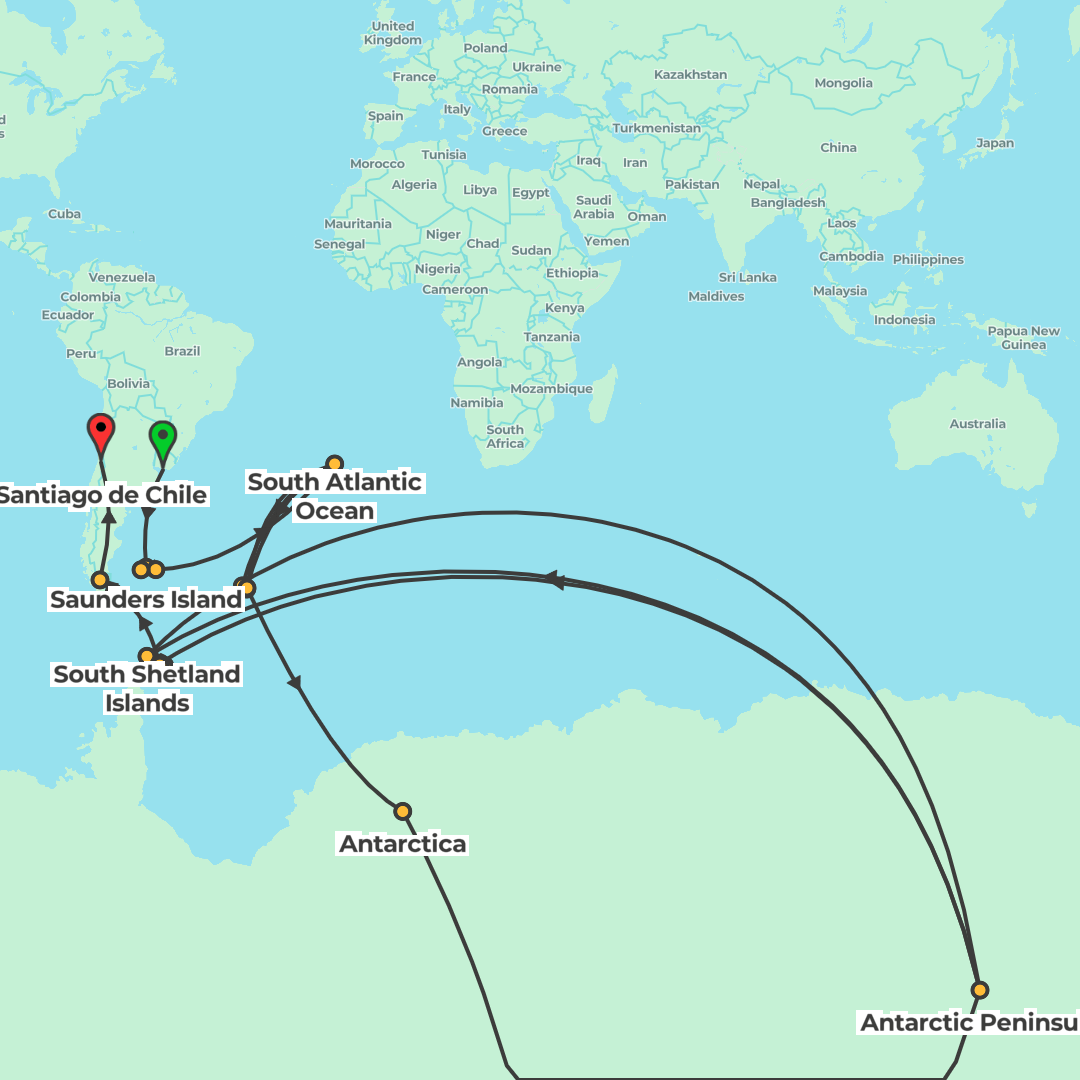
Day 1
Montevideo
Explore Montevideo’s Rambla, Ciudad Vieja and Mercado del Puerto, then embark MS Fram, settle in and meet the Expedition Team.
Day 2
Cruising
Sea days with lectures on oceanography, geology, ornithology and history; hands-on sessions in the Science Center; watch for wandering albatrosses and petrels; enjoy hot tubs, sauna and gym.
Day 3
Cruising
Cruising.
Day 4
Cruising
Cruising.
Day 5
Saunders Island
Falkland archipelago horizons and white sands rich in birdlife; community walk in Stanley (Jubilee Villas gardens, Christ Church Cathedral, Historic Dockyard Museum). Landings, hikes and excursions as conditions allow, aiming for albatross and penguin colonies alongside seals while keeping a respectful distance.
Day 6
New Island
New Island nature reserve with rookeries of Rockhopper Penguins and Blue‑eyed Shags, Black‑browed Albatross and Upland Geese; over 40 breeding bird species; see ‘Barnard’s barn’ and the wreck of Protector III.
Day 7
Port Stanley
Explore Stanley, the Falklands’ capital, with brightly painted homes and the offshore wreck of Lady Elizabeth; look for Gentoo, Magellanic and King penguins.
Day 8
Cruising the South Atlantic Ocean
Sail toward South Georgia; briefings and lectures on wildlife, polar history, geology and glaciology; guidance on IAATO environmental and sustainability practices.
Day 9
Cruising the South Atlantic Ocean
Cruising the South Atlantic Ocean.
Day 10
Right Whale Bay
South Georgia’s abundant wildlife—an Important Bird Area with albatrosses, petrels, shags, skuas and terns. Over three days we aim for landings where conditions allow and hope to reach Grytviken; plans remain flexible during peak breeding seasons, with decisions by the Expedition Team; mix of landings and ship cruising.
Day 11
Salisbury Plain
Salisbury Plain.
Day 12
Grytviken
Grytviken.
Day 13
Cruising
Sea day toward Antarctica to relax and reflect; learn about the Antarctic Treaty’s focus on peace, science and conservation; optional Citizen Science activities.
Day 14
Cruising
Cruising.
Day 15
Antarctic Sound
First views of Antarctica’s ice, seabirds and penguins (Gentoo, Chinstrap, Adélie). Possible landings on the Antarctic Peninsula and South Shetland Islands, sailing into a flooded volcanic caldera or landing in icy bays with historic whaling relics; optional kayaking and snowshoeing; lectures on protecting this habitat.
Day 16
Antarctic Sound
Antarctic Sound, named for the 1902 ship Antarctic; potential visits to Hope Bay, Paulet Island and Brown Bluff; breeding Adelie and Gentoo penguins plus Kelp Gulls, Cape and Snow Petrels and Skuas; spectacular tabular icebergs from the Larsen Ice Shelf.
Day 17
Antarctic Sound
Antarctic Sound, named for the 1902 ship Antarctic; potential visits to Hope Bay, Paulet Island and Brown Bluff; breeding Adelie and Gentoo penguins plus Kelp Gulls, Cape and Snow Petrels and Skuas; spectacular tabular icebergs from the Larsen Ice Shelf.
Day 18
Antarctic Sound
Antarctic Sound, named for the 1902 ship Antarctic; potential visits to Hope Bay, Paulet Island and Brown Bluff; breeding Adelie and Gentoo penguins plus Kelp Gulls, Cape and Snow Petrels and Skuas; spectacular tabular icebergs from the Larsen Ice Shelf.
Day 19
Antarctic Sound
Antarctic Sound, named for the 1902 ship Antarctic; potential visits to Hope Bay, Paulet Island and Brown Bluff; breeding Adelie and Gentoo penguins plus Kelp Gulls, Cape and Snow Petrels and Skuas; spectacular tabular icebergs from the Larsen Ice Shelf.
Day 20
Drake Passage Seas
Cross the Drake Passage—conditions range from ‘Drake Shake’ to ‘Drake Lake’; the ship is well equipped and the Expedition Team recaps experiences.
Day 21
Puerto Williams
Puerto Williams.
Day 22
Drake Passage Seas
Drake Passage Seas.
Day 23
Punta Arenas
End of expedition in Punta Arenas; fly to Santiago de Chile for onward travel or join an optional Post‑Programme.
What’s included
What’s not included
Additional information
Saunders & New Island Seabird Colonies Hike
Walk across tussac grass and wildflower-dotted slopes to hike to albatross and rockhopper rookeries. Watch Black-browed Albatross wheel on ocean winds while Southern Rockhopper Penguins hop cliff ledges, and scan kelp-fringed coves for Blue-eyed Shags and upland geese. Guides set a careful pace and wildlife distances to protect nesting birds.
On New Island, visit the restored 19th-century Barnard’s Barn and look out over the sandy shallows to the Protector III wreck. Conservation stories and seabird research bring meaning to every footstep amid sea-spray and open horizon.
South Georgia Wildlife Landings: Salisbury Plain & Right Whale Bay
Step ashore on beaches alive with life to step ashore amid a vast King Penguin colony at Salisbury Plain, where tens of thousands call from a backdrop of glaciers. At Right Whale Bay, fur seals and elephant seals crowd the tidal line while skuas patrol overhead in the Serengeti of the Southern Ocean.
Guides interpret breeding cycles, predator–prey dynamics, and ongoing conservation. Keep a respectful distance, pause for photos and reflection, and listen to the syncopated chorus of penguin calls and surf—a rare immersion in a protected sub-Antarctic ecosystem.
Grytviken Whaling Station, Museum & Shackleton’s Grave
Walk among weathered boilers and slipways as you visit Grytviken Whaling Station, where rust-red structures frame a quiet cove frequented by penguins and seals. Step into the South Georgia Museum to explore sealing and whaling eras, natural history, and the age of exploration.
At the nearby cemetery, pay respects at Sir Ernest Shackleton’s grave and reflect on the Endurance expedition. The austere mountains and creaking kelp beds amplify stories of courage, hardship, and the island’s journey from exploitation to conservation.
Antarctic Sound Zodiac Landings & Ice Cruising
Board expedition boats to cruise among tabular icebergs calved from the Larsen Ice Shelf, their blue seams glowing in polar light. When conditions allow, make a landing at Brown Bluff or Hope Bay and stand near penguin rookeries of Adélie and Gentoo, where chicks chatter and skuas patrol the skies.
Feel the silence crackle as brash ice nudges the hull and learn how IAATO environmental guidelines shape every step ashore. Naturalists decode seabird flight, sea-ice textures, and the geology that anchors Antarctica’s stark beauty.
Expedition Lecture Series & Science Center Workshops
Join the Expedition Lecture Series for engaging talks that link wildlife encounters with big-picture science. Expect hands-on sessions in the Science Center spanning from oceanography and geology to ornithology, plus stories of polar exploration that illuminate South Georgia and the Antarctic Peninsula.
Touch maps, view microscopic ice crystals, and discuss research with your guides. This learning-rich programme turns each landing and Zodiac cruise into deeper discovery, equipping you to read clouds, currents, and seabird behavior like a seasoned naturalist.
Citizen Science: Help Collect Real Polar Data
Take part in meaningful research as you contribute to Citizen Science—logging seabird sightings, sea-ice conditions, and cloud observations during crossings and landings. Your notes and images support climate and wildlife research while sharpening your field skills alongside the team.
Learn simple scientific methods, ensure data quality, and share observations with the Expedition Team. Daily recaps reveal how your contributions fit into global datasets, turning the voyage into a collaborative effort to understand a changing polar world.
Drake Passage Wildlife Watch
Stand on deck with binoculars to spot Wandering Albatross riding ocean updrafts and giant petrels carving low arcs over the swells. Scan whitecaps to scan the horizon for whale blows while learning to read seabird flight paths and fronts that define the open Southern Ocean.
Naturalists explain migration routes, wind systems, and the nutrient-rich waters connecting Antarctica to the sub-Antarctic. Identification tips and deckside talks turn a legendary crossing into a masterclass in pelagic wildlife.
Embarkation Briefing & Polar Safety Orientation (Montevideo)
Settle aboard your expedition ship and meet your Expedition Team for voyage expectations, route highlights, and environmental ethos. Attend the mandatory safety briefing and lifeboat drill, followed by practical guidance on Zodiac landing protocols and shore conduct.
Understand biosecurity procedures that protect fragile ecosystems, from gear cleaning to distancing around wildlife. This concise orientation equips you to travel responsibly and confidently before the ship points south into the open Atlantic.
Sea Kayaking in Antarctica
Slip into a stable sea kayak to paddle among icebergs and brash ice, tracing mirror-still coves where bergy bits glow electric blue. Glide quietly past resting floes to watch for Weddell and Crabeater seals, with guides sharing insights on ice, currents, and coastal wildlife.
This small-group adventure is weather-dependent and bookable on tour at additional cost. Dry suits and equipment are provided; your kayaking guide sets an unhurried pace for comfort, safety, and unfiltered polar silence.
Guided Snowshoe Hike on the Peninsula
Follow your guide to strap on snowshoes and traverse crisp, untracked snow to climb to a panoramic ridge above the landing site. The views take in serrated peaks and drifting pack ice while the only sounds are wind and distant penguin chatter.
Instruction, poles, and equipment are included; the route is chosen for conditions and fitness. This experience is weather-dependent and bookable on tour at additional cost, offering a serene, elevated perspective on the Antarctic landscape.
Stanley Community Walk & Historic Dockyard Museum
Explore the Falklands’ small capital on foot as you join a guided community walk along Ross Road to Christ Church Cathedral & Whalebone Arch. Stroll past tidy gardens at Jubilee Villas and brightly painted cottages overlooking the harbour, pausing to pause for photos and reflection where the South Atlantic breeze carries the scent of kelp.
Conclude at the Historic Dockyard Museum to trace maritime heritage, natural history, and the 1982 conflict. Exhibits and local insight reveal resilient island life, from early sealing to modern fisheries, framed by sea-bird calls and ever-changing southern skies.
