Your itinerary
Day 1
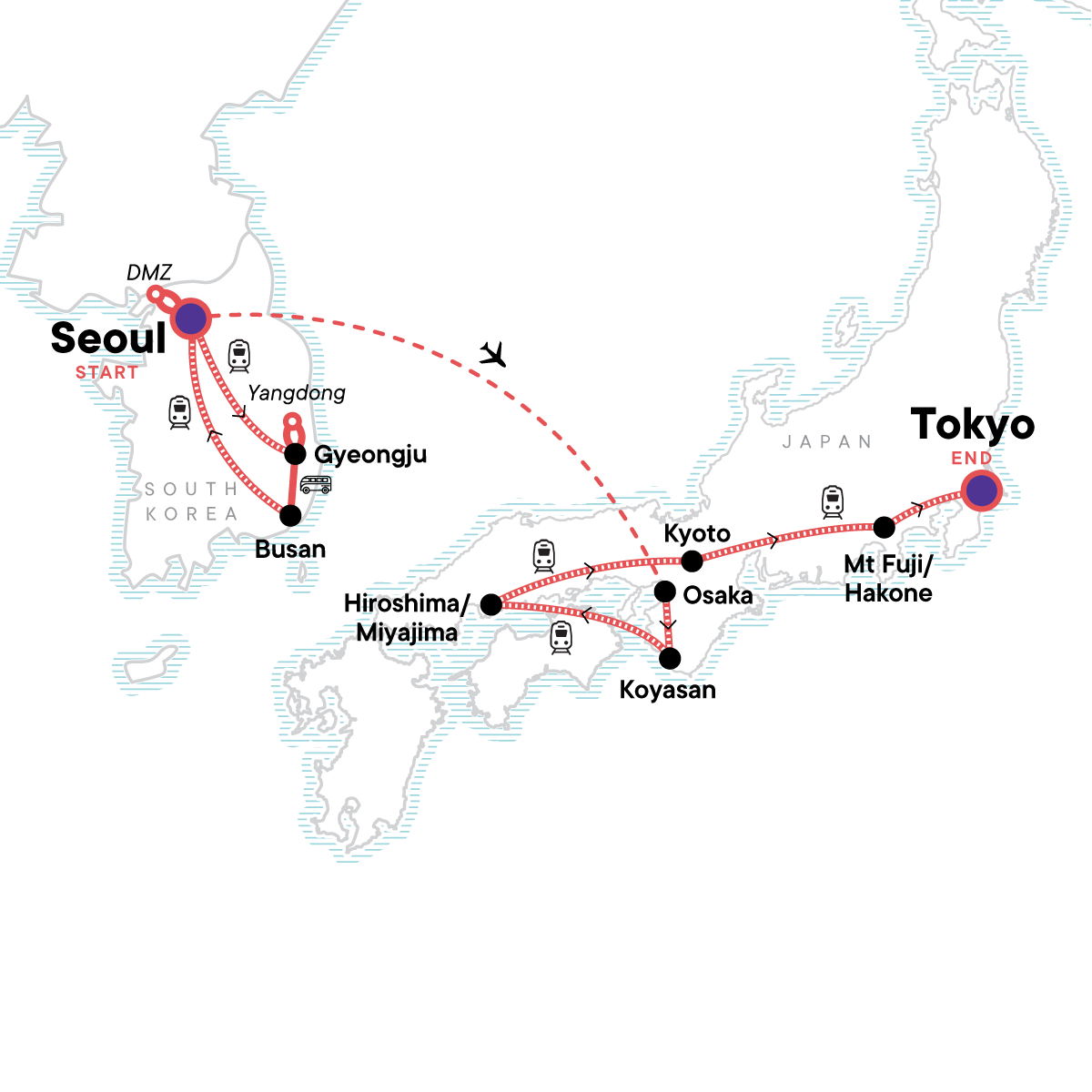
Day 1: Seoul
Arrive in Seoul; there are no planned activities until the 18:00 group meeting. Afterward, join your CEO for an orientation walk along Cheonggyecheon Stream and through Myeongdong. A group dinner is optional.
Day 2
Day 2: Seoul
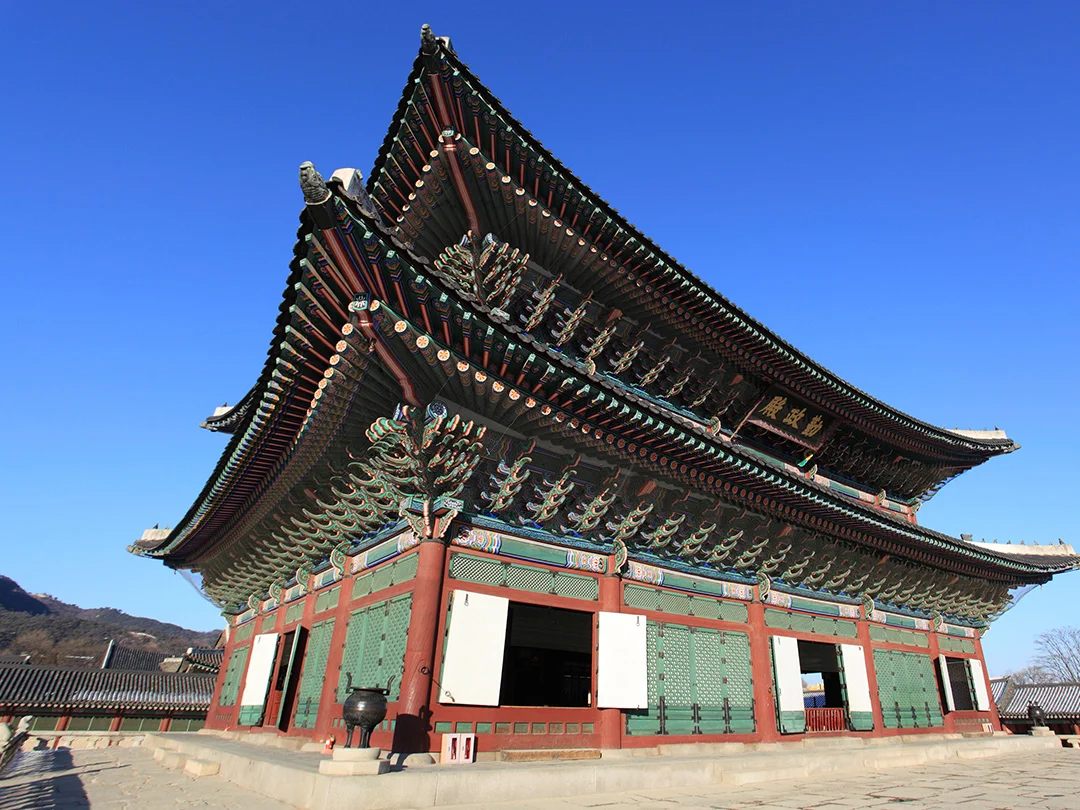
Take a private-bus city tour, visiting Gyeongbokgung Palace, the National Folklore Museum, Bukchon Hanok Village, Insadong alley and Jogyesa Temple. The afternoon is free to explore, see a show or museum, or try local food at the street markets.
Meals: Breakfast
Day 3
Day 3: Seoul/Gyeongju-si
After breakfast, travel by high-speed train through the countryside to Gyeongju. Stay overnight at Golgulsa Temple in shared Ondol rooms, with beds on the floor. Learn temple etiquette, watch a monk martial arts performance and take part in the daily prayer ritual. The stay includes a temple-style dinner and breakfast; an easy hike to Korea’s only stone cave temple for morning meditation is also mentioned.
Meals: Breakfast,Dinner
Day 4
Day 4: Gyeongju-si/Busan
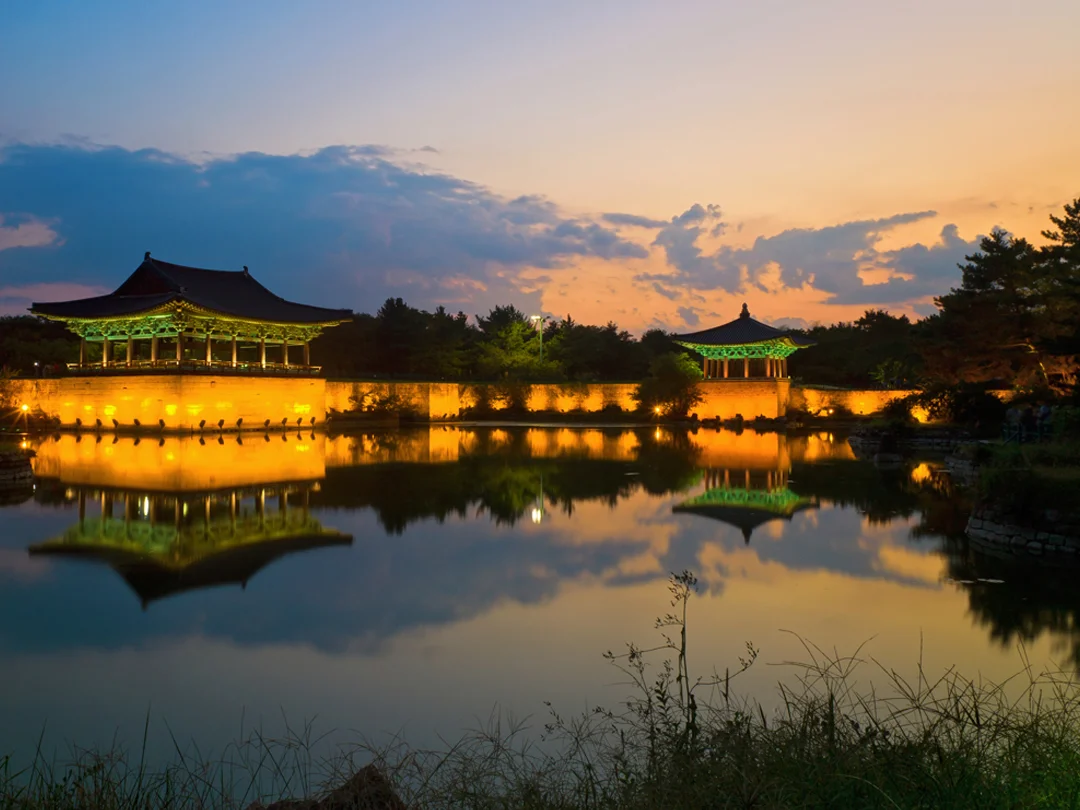
Take part in morning meditation, martial arts practice and the drum and bell ritual. Explore Gyeongju, including Bulguksa Temple, Yangdong Folk Village, Cheomseongdae Observatory and the Royal Tombs. Travel by private bus to Busan.
Meals: Breakfast
Day 5
Day 5: Busan
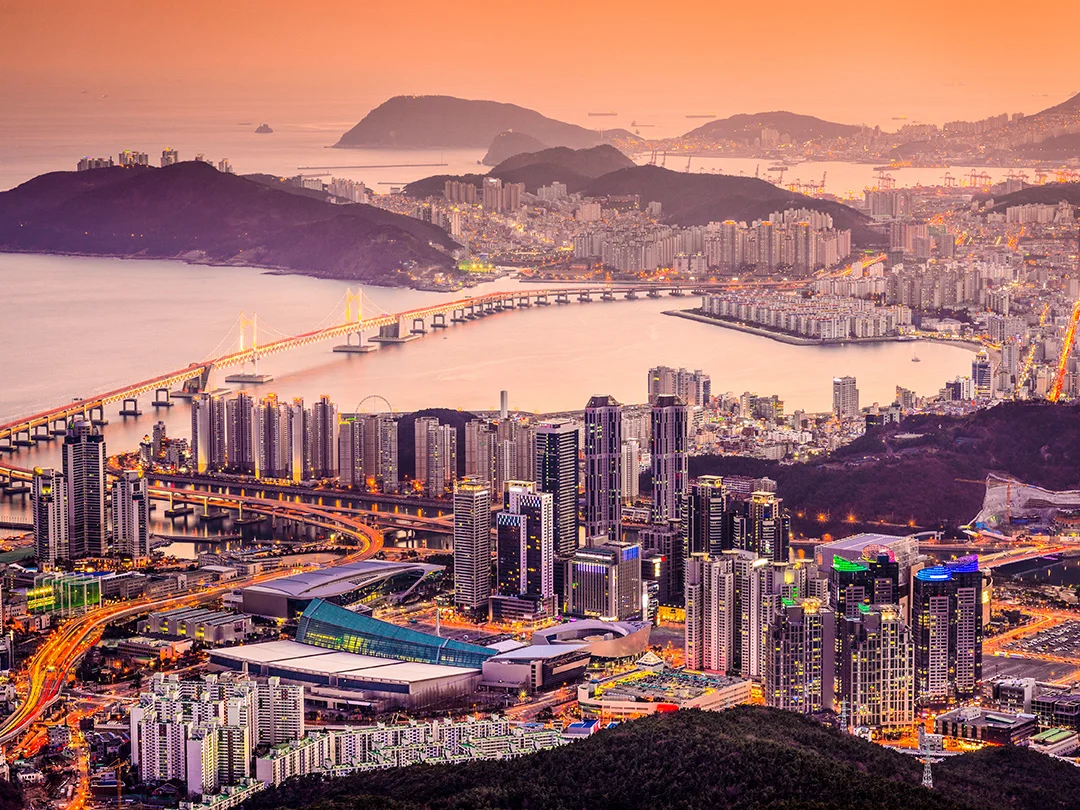
Explore Busan, visiting Haedong Yonggungsa Temple, Gamcheon Culture Village, Jagalchi fish market, Gukjesijang Market and Yongdusan Park. The evening is free; an optional nighttime yacht experience or Coastal Monorail ride is mentioned.
Meals: Breakfast
Day 6
Day 6: Busan/Seoul
Visit Haeundae Beach and Dongbaekseom Island, including APEC House, then travel by high-speed train to Seoul. Visit Namdaemun Market and take the cable car to N Seoul Tower; entry to the observation deck costs extra. The rest of the day is free to explore, with Banpo Bridge, the floating islands and Gangnam suggested.
Meals: Breakfast
Day 7
Day 7: Seoul
Visit the Demilitarized Zone (DMZ) for about 3–4 hours by private vehicle, then visit The War Memorial of Korea. Return to Seoul. Optional activities include the Samsung Leeum Contemporary Gallery, Itaewon, or a prebooked kimchi-making and Hanbok experience.
Meals: Breakfast
Day 8
Day 8: Seoul/Osaka
Fly from Seoul to Osaka. Take time to rest or explore independently; there are no planned activities until the evening Japan Welcome Meeting. Joining the group for a local meal afterward is optional.
Meals: Breakfast
Day 9
Day 9: Osaka/Kōyasan
Travel by train, funicular and bus to Mount Kōya, a Buddhist religious centre founded in 816. Explore the temples and Oku-no-in cemetery. Stay overnight in a mountain temple, observe the monks’ routines and relax in a yukata or kimono. Dinner is shojin-ryori, Buddhist vegetarian cuisine; the temple stay also includes breakfast the next morning.
Meals: Breakfast,Dinner
Day 10
Day 10: Kōyasan/Hiroshima
There is an opportunity to observe the monks praying in the morning, followed by a traditional vegetarian breakfast. Explore Kōyasan and Oku-no-in, including Torodo Hall, then descend the mountain by bus, train and funicular. Travel by high-speed train to Hiroshima.
Meals: Breakfast
Day 11
Day 11: Hiroshima
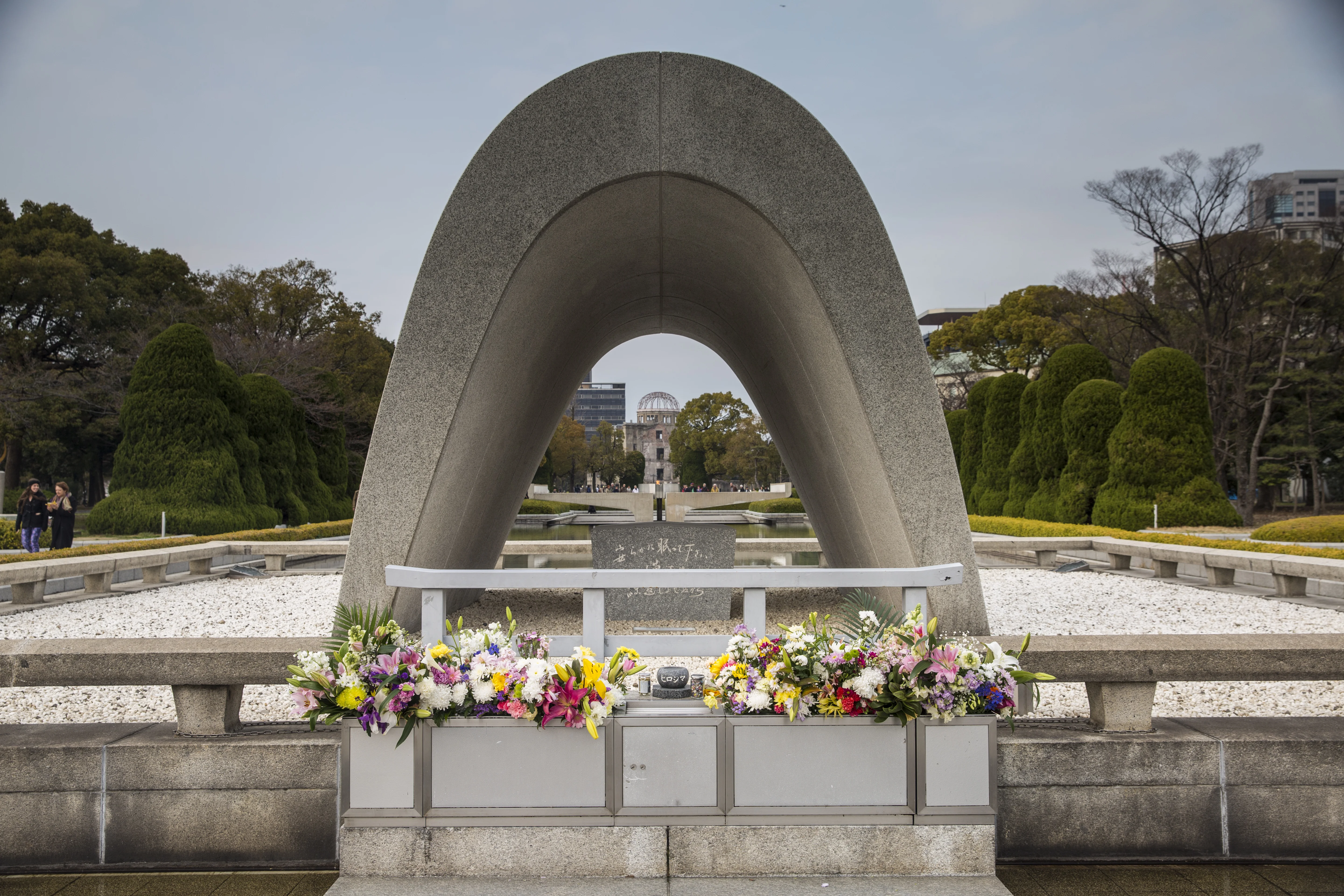
Visit Hiroshima Peace Park and Memorial Museum, including the Sadako Sasaki statue and the Gembaku Dome. In the afternoon, take a ferry to Miyajima Island to see the floating Torii Gate. The afternoon is free to explore; hiking Mt Misen is optional.
Day 12
Day 12: Hiroshima/Kyoto
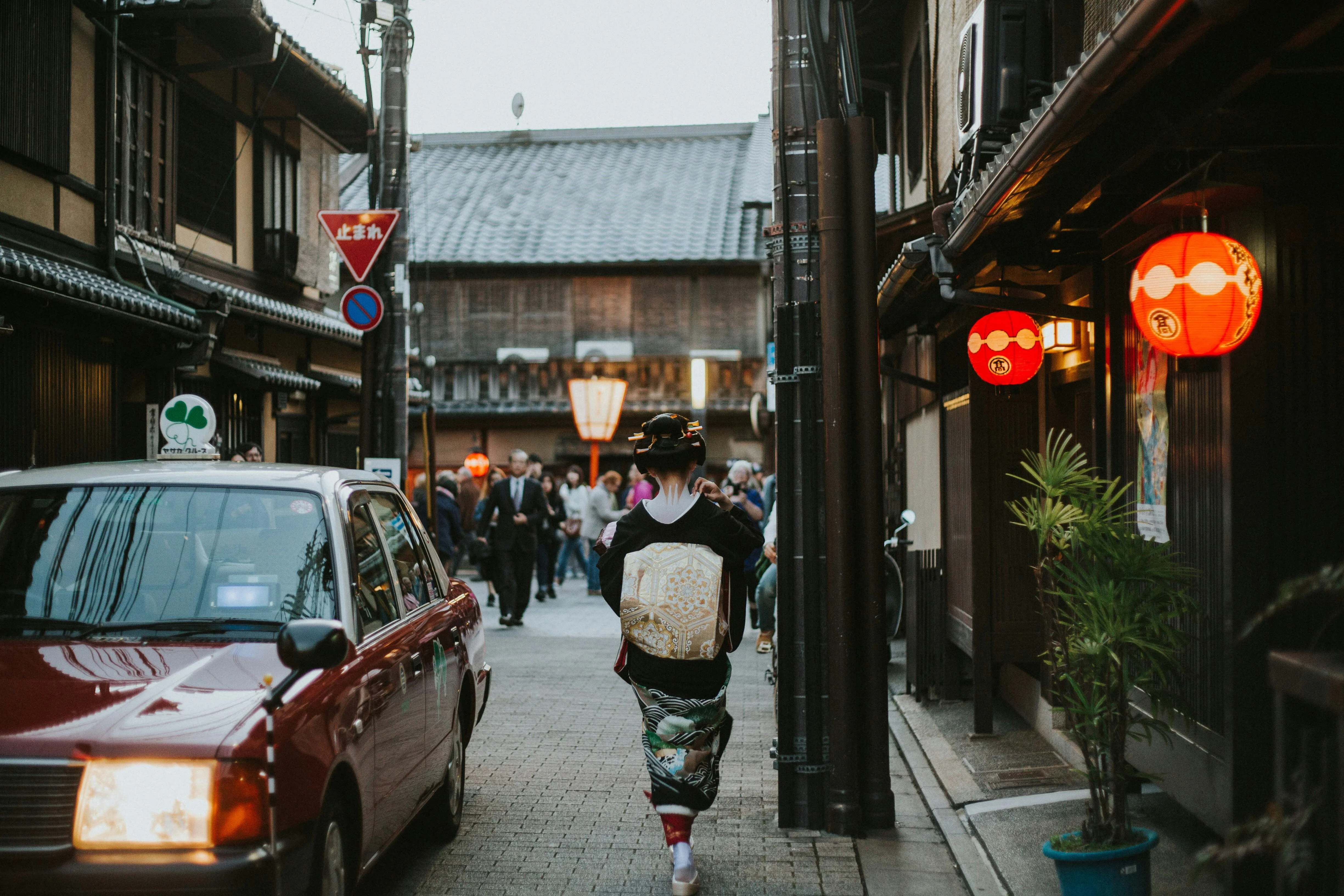
Travel by train to Kyoto. Visit Nijo Castle and its gardens; from December 26 to January 3, when Ninomaru Palace is closed, groups visit Kiyomizu-dera Temple instead. In the evening, take a CEO-led walk through Gion.
Day 13
Day 13: Kyoto
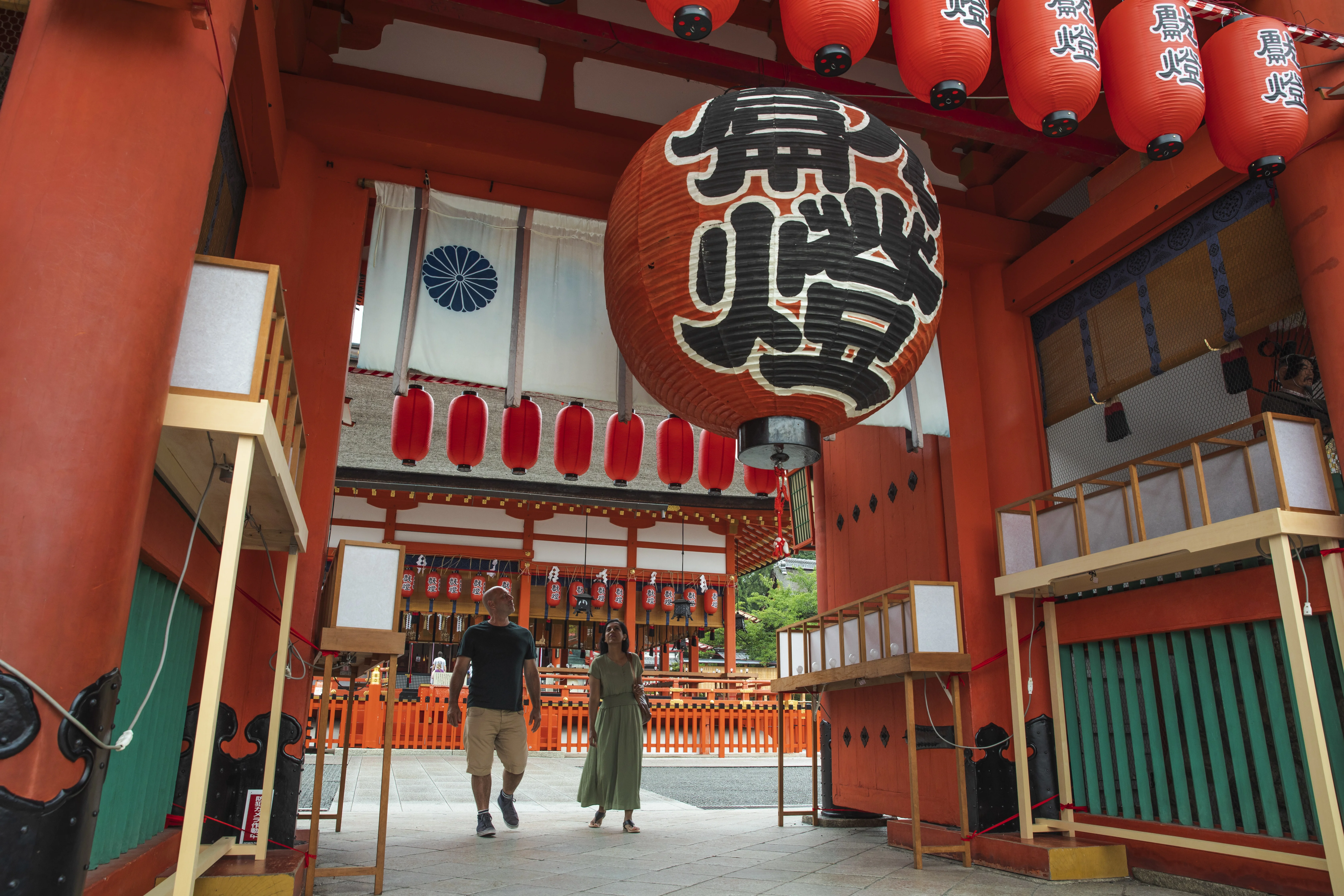
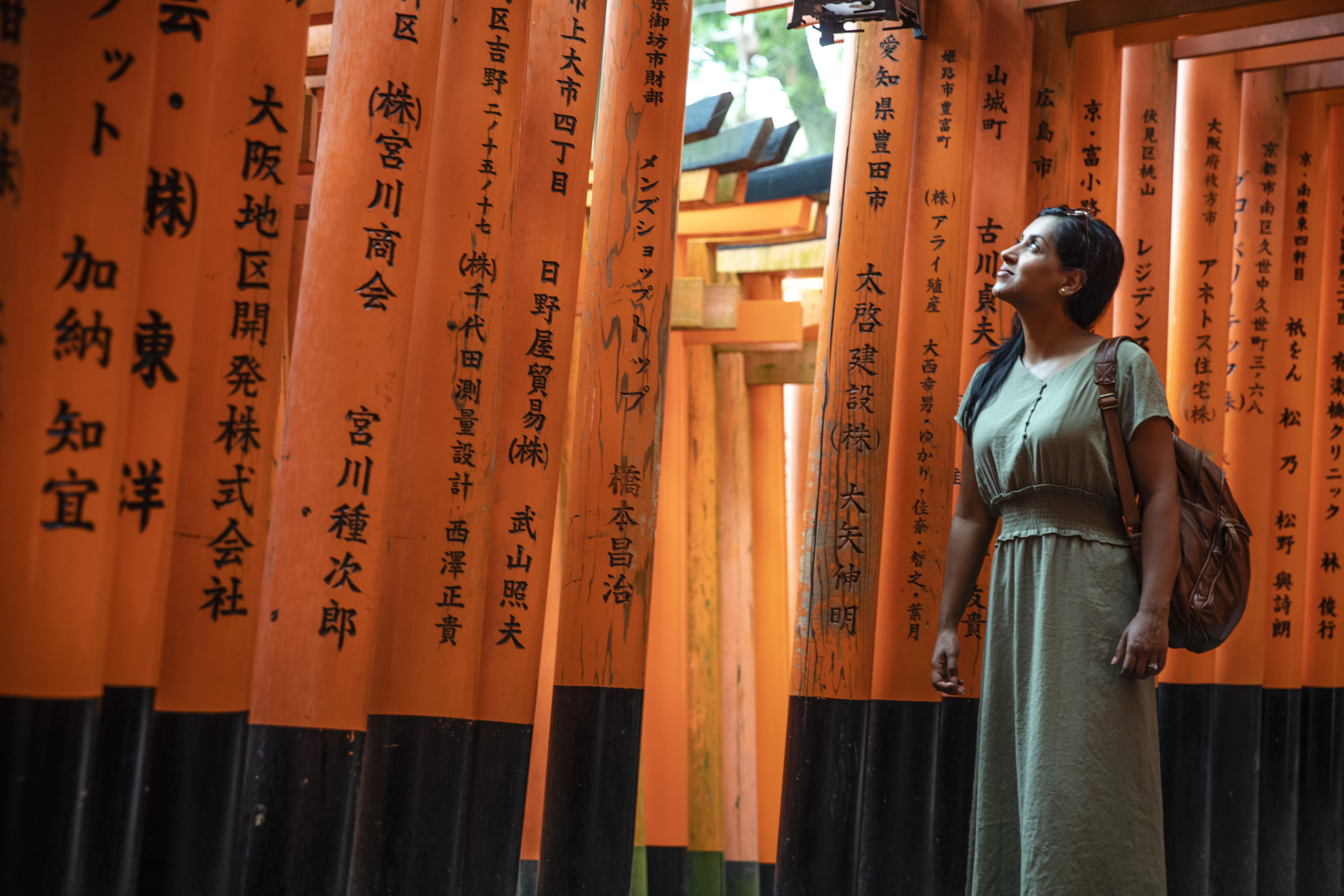
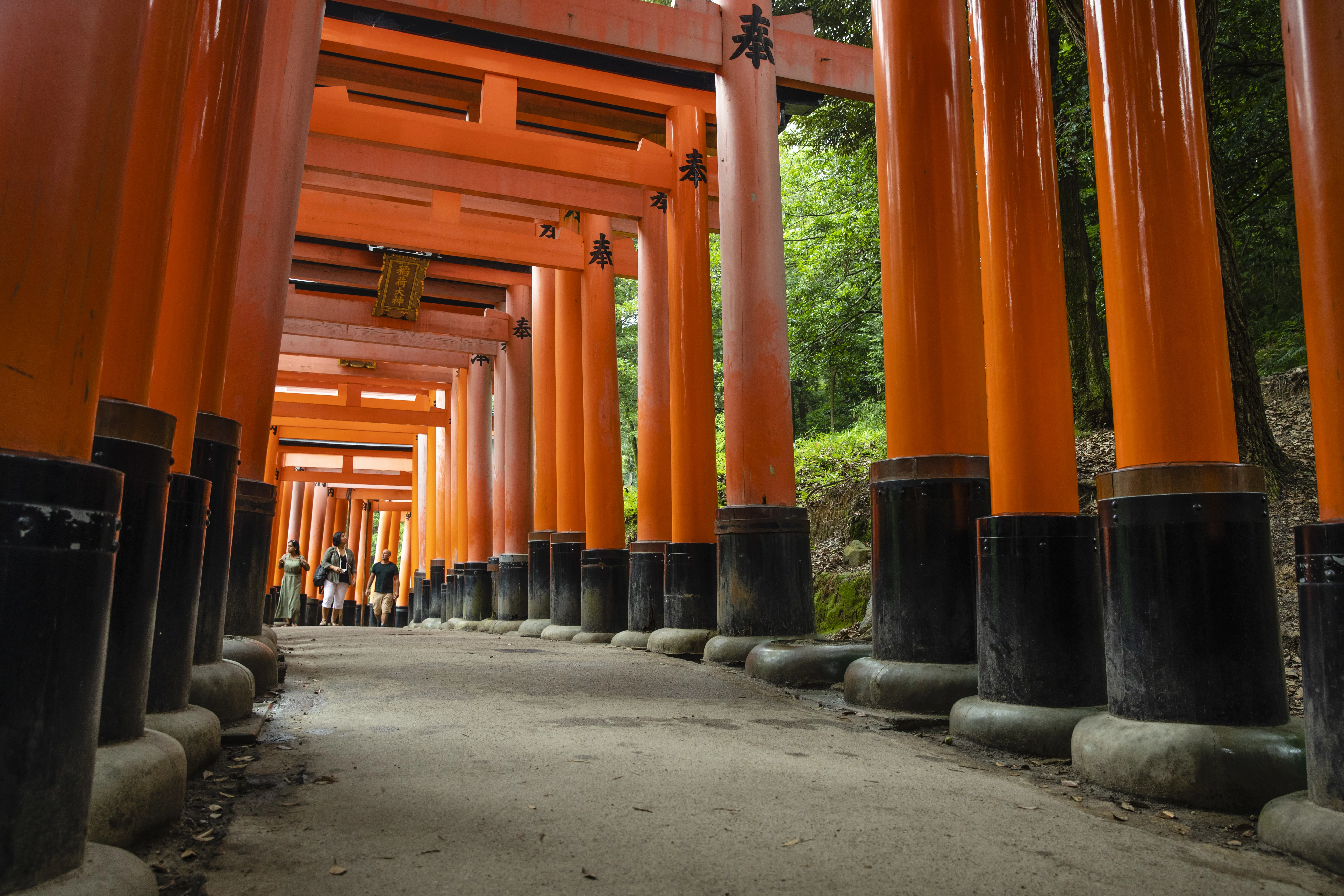
Visit Fushimi Inari Taisha shrine and walk beneath its torii gates. The afternoon is free to explore, shop, stroll along the riverbank or visit other temples.
Day 14
Day 14: Kyoto/Hakone
Travel by train to Hakone. Take a passenger boat across Lake Ashino-ko, with a chance to see Mt Fuji on a clear day. Enjoy a traditional Japanese kaiseki meal and the option to soak in an onsen.
Meals: Dinner
Day 15
Day 15: Hakone/Tokyo
Travel to Tokyo, arriving before noon. The afternoon is free for last-minute shopping or independent exploration; suggested options include Ueno Park and its museums, Akihabara, Harajuku, Ginza and the Imperial Palace East Garden.
Meals: Breakfast
Day 16
Day 16: Tokyo
Depart at any time.
What’s included
What’s not included
Additional information
Meals Included
10 breakfasts, 3 dinners
Solo Travellers
Group Size
16
Minimum Age
You must be 18 to travel unaccompanied on a G Adventures tour. For minors travelling with a guardian over 21 years old, the minimum age is 12.
Local Dress
Important Notes
1. The most convenient way to get around Japan and South Korea is by public transportation and on foot. The countries’ train system are often considered the best in the entire world so the majority of our trips utilize these efficient train networks. In this tour, you will need to be able to spend the majority of the day on your feet and carry your luggage through busy train stations and streets. On average, tours in Japan walk about 15,000 steps a day. Please ensure you are fit enough to carry your own luggage and spend most of the day on your feet.
2. COMBO TRIP
Please note that this tour combines with other G Adventures tours. As such, the staff and some travel companions on your tour may have previously been traveling together with G Adventures, prior to Day 1 of your tour. Likewise, some staff and travel companions may be continuing together on another G Adventures tour, after your trip concludes.
3. Tattoos
Tattoos are not common or widely accepted in Japan. There is no cause for concern, but do your best to cover your tattoos when possible and note that you may not be permitted to enter public spas or onsens (hot springs).
4. Luggage size restriction – Effective from May 2020 onwards
All G Adventures tours in Japan use the world-famous Shinkansen bullet trains, which have a restriction on maximum luggage size. Your luggage must be less than 160cm in total. This is roughly the size that most airline companies consider as “carry-on baggage” and allow in overhead storage compartments.
We strongly recommend bringing a day pack or backpack to use during the day, in addition to your carry-on sized luggage. Please see “What to take” under Tour details for more information.
5. ACCOMMODATION NOTE:
Please be aware that properties we stay in with only two stories may not have elevators installed and climbing the stairs with your luggage will be necessary.
Group Leader
CEO (Chief Experience Officer) throughout, local guides.
Meals
About Accommodation
ACCOMMODATION NOTE:
Please be aware that properties we stay in with only two stories may not have elevators installed and climbing the stairs with your luggage will be necessary.
Japan is one of the most populous countries in the world and space is at a premium. Therefore, hotels rooms are small! Additionally, most Japanese hotels do not have designated non-smoking rooms. Therefore, we ask hotels to deoderise rooms before check in.
Ryokan are traditional inns found across Japan. Featuring tatami floors (soft mats of woven straw), futon beds, Japanese-style baths, cotton kimono (casual robe worn to lounge around or to head to the bath), and elaborate meals (often served in the comfort of your own room), a ryokan is the perfect place to experience traditional customs and hospitality. As ryokan are usually top tier accommodations, most guests stay only one night, often to celebrate a special occasion or holiday. Don’t be intimidated by the formalities inherent to a stay at a ryokan, your hosts will welcome you the same way they do all their guests. Have fun and enjoy this relaxing opportunity to learn more about Japan’s unique customs.
Minshuku are Japan’s answer to the Western bed and breakfast. Similar to ryokan, they have traditional features like tatami floors, futon beds, and Japanese-style baths. Minshuku are often family-run, and as such they offer a great opportunity to interact with local people and learn more about the nation’s customs. More affordable and simpler than ryokan, minshuku tend to have smaller guestrooms, shared bathroom facilities, and any included meals (traditional, local, and delicious) are served in a communal dining room.
Please note that some of the traditional Japanese inns used on this tour only offer shared bathing facilities. This means that individual shower stalls will not be available, instead several shower stations are available in an open, same-sex bathing area. Shared bathhouses and onsen (hot springs) are an essential part of Japan’s culture, traditionally serving as a place for men or women to gather, relax, and discuss the days happenings.
What to Take
It’s essential to pack as lightly as possible for rail travel in Japan. All G Adventures tours use the world-famous Shinkansen bullet trains, which have a restriction on maximum luggage size.
Any luggage brought on board must be less than 160cm in total (calculated as the sum of the height + width + depth of your luggage). This is roughly the size that most airline companies consider as “carry-on baggage” and allow in overhead storage compartments. We strongly recommend bringing a day pack or backpack to use during the day (for daily essentials like water, cameras, passport, etc.).
Please note that travellers who bring luggage that exceeds this restriction will be directly penalized by the Central Japan Railway Company. Any luggage between 160–250cm will require a fee of 1,000 JPY per luggage, for each leg of your train journey, and is strictly subject to availability. Any luggage over 251cm in total is prohibited on the Shinkansen trains.
If you absolutely must bring more than what fits into a single carry-on bag plus day pack, you may bring a second carry-on bag which also must be less than 160cm in total. Please note, however, that as with all G Adventures tours, you must be able to carry your luggage unassisted.
You will also be walking with your luggage in busy public train stations to catch connecting trains, so it is highly recommended that you travel light and have easy to handle luggage and are capable of walking up and down the stairs with your luggage without any assistance.
We recommend keeping the weight of your bags between 10-15kg/22-30lb. Hard suitcases are not recommended for G Adventures trips. Most travellers carry a backpack or rolling bag of small to medium size. A large bag will be an inconvenience to you and will slow you down!
Takuhaibin – Japan’s takuhaibin service is a convenient and reliable way to transfer luggage from one location to another throughout the country. Pick-up/drop-off/delivery dates and times can be easily scheduled (usually overnight) and costs are moderate. Service can be arranged at most hotels and airports. Using Takuhaibin to send your luggage between hotels, or from hotel to airport, is a great way to travel light and avoid hauling large bags on crowded trains or up and down stairs – just be sure to pack an overnight bag with everything you’ll need until you’re reunited with your luggage the following day.
Please make sure to pack a day backpack or a small/lightweight bag for the group overnight in Koyasan.
Spending Money
Every traveller is different and therefore spending money requirements will vary. Some travellers may drink more than others while other travellers like to purchase more souvenirs than most. Please consider your own spending habits when it comes to allowing for drinks, shopping and tipping. Please also remember the following specific recommendations when planning your trip.
Hiroshima Peace Memorial Park & Museum
Visit the Peace Memorial Museum and contemplative lawns of Hiroshima’s park to trace the events of August 6, 1945. See the preserved Atomic Bomb Dome (Genbaku Dome) and the Children’s Peace Monument inspired by Sadako’s thousand cranes.
Exhibits balance personal narratives with historical context, inviting reflection on loss and the city’s renewal. Paper cranes and quiet water features underscore a message of peace carried worldwide from Hiroshima.
Namdaemun Market Visit
Wander the busy alleys of Namdaemun Market, a trading hub since 1414 and today the country’s largest traditional marketplace. Navigate stalls piled with textiles, kitchenware, and street bites while vendors call out their daily specials.
Snack your way through classic treats—savory mandu, seaweed-wrapped gimbap, or sweet hotteok—and see how this venerable bazaar powers small businesses. It’s a lively snapshot of Seoul’s entrepreneurial spirit and everyday flavors.
Seoul City Highlights: Gyeongbokgung, National Folk Museum, Bukchon & Insadong
Explore Korea’s royal legacy on a guided visit to Gyeongbokgung Palace, seat of Joseon-era power. Encounter everyday heritage at the National Folk Museum, then admire tiled roofs and wooden gates in Bukchon Hanok Village before browsing teahouses and galleries in Insadong.
Learn how Confucian ideals shaped court life, spot guardians at Gwanghwamun Gate, and trace Seoul’s evolution from walled capital to global city. The route balances headline icons with quiet lanes where tradition remains part of daily rhythm.
Korean Demilitarized Zone (DMZ) Visit
Visit the Demilitarized Zone (DMZ), the tense buffer established by the 1953 Armistice that separates North and South Korea. Take in frontier viewpoints and exhibits that explain the peninsula’s division and the human stories on both sides of the frontier.
Hear how a 4km-wide buffer zone inadvertently became a wildlife haven while remaining the most heavily militarized border in the world. This sobering visit invites reflection on conflict, resilience, and hopes for reconciliation.
War Memorial of Korea
Explore the War Memorial of Korea, where expansive indoor and outdoor galleries trace centuries of warfare and the Korean War through aircraft, armor, and personal stories. Exhibits are thoughtfully curated to illuminate strategy, sacrifice, and the cost of conflict.
With around 9,000 artefacts on display, the memorial provides context for modern Korea’s security realities and commemorates those who served. Pause at monuments and reflect on the nation’s path from war to recovery.
Namsan Cable Car & N Seoul Tower Visit
Glide up Mt Namsan by cable car to the base of N Seoul Tower, a beloved landmark rising over the city skyline. Stroll the terraces, browse love-lock fences, and enjoy panoramic city views as Seoul stretches to distant mountains.
Learn how a former broadcast mast became a symbol of the capital’s modern identity. Access to the observation deck is optional for an additional fee, offering an even higher vantage point over the cityscape.
Gyeongju Temple Stay & Seon Buddhist Rituals
Experience monastic life with an overnight temple stay in Gyeongju. Sleep on heated ondol floors, observe the drum and bell ritual, and learn basic temple etiquette that frames monastic daily rhythms.
Watch a meditative martial-arts demonstration linked to Seon (Zen) practice and join a gentle hike to a mountainside cave sanctuary for morning contemplation. The atmosphere—pine-scented air, wooden halls, and chanting—offers a rare window into Korea’s living Buddhist traditions.
Gyeongju Heritage Tour: Bulguksa, Cheomseongdae & Silla Royal Tombs
Discover the Silla Kingdom’s former capital on a guided tour of Bulguksa Temple, home to the elegant Dabotap and Seokgatap pagodas. Continue to the 7th-century Cheomseongdae Observatory, among the oldest in East Asia, and stroll amid the earthen mounds of the Silla royal tumuli.
Trace a millennium of craftsmanship in carved stone bridges, gilt-bronze Buddhas, and ancient engineering. Landscaped grounds and willow-lined paths create a contemplative setting for Korea’s most treasured relics.
Yangdong Folk Village Visit
Step into Joseon-era life at Yangdong Folk Village, a UNESCO World Heritage site tucked among forested hills and rice fields. Wander lanes lined with thatched cottages and grand timber homes once owned by scholar-official families.
See how Confucian social order shaped vernacular architecture, from courtyards to ondol-heated floors. The village’s preserved layout and living traditions provide a vivid portrait of Korea’s rural aristocratic culture.
Haedong Yonggungsa Temple Visit
Visit Haedong Yonggungsa Temple, dramatically perched on cliffs above the East Sea. Walk past stone lanterns and statues to hear waves crash below shrine terraces—a rare seaside setting for a Korean Buddhist temple.
Founded in the 14th century and rebuilt in the 20th, the complex blends ocean views with devotional halls. Pause at lookout points to pause for photos and reflection as sea breezes thread through pine groves and temple bells.
Busan City Highlights: Gamcheon, Jagalchi & Yongdusan Park
Explore colour-washed alleys in Gamcheon Culture Village, a hillside maze of murals and tiny cafés. Continue to Jagalchi Fish Market where fishmongers auction the day’s catch, and climb to Yongdusan Park and Busan Tower for breezy views over the harbour.
From village art to seafood lore, the tour captures Busan’s maritime soul and creative streak. Expect bold flavours, street chatter, and sweeping vantage points across one of Korea’s great port cities.
Haeundae Beach & Dongbaek Island (Nurimaru APEC House)
Stroll golden sands at Haeundae Beach before following the cedar-scented coastal path to Dongbaekseom (Dongbaek Island). Visit the sleek Nurimaru APEC House, built for the 2005 summit, set against wave-washed rocks and sea-stack views.
Watch ships trace the horizon and see how Busan’s resort district blends city energy with shoreline calm. Tide permitting, coastal boardwalks make photogenic stops for sea breezes and skyline panoramas.
Japan Welcome Meeting (Osaka)
Gather in Osaka to meet your Tour Director and fellow travellers for the Japan portion of your journey. Review the plan for shinkansen travel, luggage forwarding, and everyday etiquette—from shrine visits to dining customs.
Pick up local insights on neighbourhoods, seasonal snacks, and rail tips that help you move through stations like a pro. This briefing shapes a smooth start to exploring Japan’s spectrum of timeless tradition and bold modernity.
Miyajima Island & Itsukushima Shrine’s “Floating” Torii Gate
Ferry across the Seto Inland Sea to Miyajima (Itsukushima), famed for the ‘floating’ torii gate of Itsukushima Shrine. Deer wander the lanes as vermilion halls reflect in calm tidal waters.
Explore forested paths, sample maple-leaf cakes, and watch sunlit views shift with the tide. The island’s blend of Shinto architecture and sea-island scenery has inspired pilgrims and poets for over a millennium.
Gion District Evening Walk
Walk lantern-lit lanes in Gion, Kyoto’s storied entertainment quarter. Pass wooden machiya townhouses and discreet teahouses (ochaya) where geiko and maiko have long practiced the refined arts of performance and hospitality.
Your guide decodes traditions, from kimono styles to etiquette, while the Kamo River glints nearby. Subtle sounds—geta clogs on stone, sliding shoji—evoke a Kyoto where elegance thrives after dusk.
Fushimi Inari Taisha Shrine Visit
Walk beneath thousands of vermilion gates at Fushimi Inari Taisha, a hillside shrine dedicated to the deity of rice and prosperity. The tunnel of torii climbs Inari Mountain, weaving past smaller shrines and fox statues bearing keys.
As light filters through lacquered wood, learn how merchants and guilds donated torii in thanks for good fortune. Gentle ascents reward with quiet alcoves and Kyoto views between cedar and bamboo.
Lake Ashi Scenic Boat Cruise, Hakone
Cruise Lake Ashi, a caldera lake formed by ancient eruptions of Mt Hakone. On clear days, views of Mt Fuji rise beyond wooded ridgelines as the boat glides past shrine gates and bays that mirror the sky.
Hear how hot springs and volcanic geology shaped the region’s culture and healing traditions. Cool breezes, open decks, and alpine air set a restorative tone before an evening of classic Hakone hospitality.
Hakone Ryokan Kaiseki Dinner & Onsen Bathing
Savour a traditional kaiseki meal at a Hakone ryokan where seasonal courses arrive like edible art—delicate sashimi, simmered vegetables, and mountain specialties served with quiet ceremony. Slip into a yukata and embrace unhurried ryokan rhythms.
After dinner, soak in natural hot-spring baths as steam curls into the evening air. Learn simple onsen etiquette and let mineral-rich waters ease travel muscles—a quintessential Japanese ritual of relaxation and renewal.
Busan Night Yacht Cruise (Optional)
Set out on a nighttime yacht cruise to see Busan lit in colour, with reflections rippling across the bay. Sail past Marina City and the illuminated span of Gwangandaegyo Bridge as the skyline glows against the dark sea.
This atmospheric outing spotlights the city’s maritime glamour and offers superb photo angles. Optional experience at additional cost, bookable on tour, weather permitting.
Haeundae Blueline Park Coastal Monorail (Optional)
Glide above rocky coves and sandy crescents on the Haeundae Blueline Park coastal monorail. Large windows frame panoramic sea views as you trace the shoreline between Mipo and Songjeong.
Spot surfers, fishing boats, and forested headlands while the carriage hums along the old railway alignment. Optional experience at additional cost, bookable on tour; ideal for photographers and breeze-seekers.
N Seoul Tower Observatory Deck Ticket (Optional)
Elevate your cityscape with access to the N Seoul Tower observation deck. Floor-to-ceiling windows deliver panoramic views from the Han River to Bukhansan’s granite peaks, revealing Seoul’s vast urban tapestry.
Time your visit for golden hour or night lights to watch neighbourhoods sparkle into view. Optional experience at additional cost, bookable on tour.
Kimchi-Making Class & Hanbok Experience, Seoul (Optional)
Roll up your sleeves for a hands-on kimchi-making class that explains fermentation, seasoning balance, and seasonal varieties. Dress in a hanbok for photos that celebrate colour, fabric, and the elegance of Joseon-style attire.
Learn why kimchi is Korea’s daily staple and how attire signalled social cues in court and village. Optional cultural experience at additional cost, bookable on tour.
Mt Misen Ropeway & Summit Hike, Miyajima (Optional)
Ride the ropeway to Mt Misen and continue on foot through cedar and maple to the summit. From rocky lookouts, take in Seto Inland Sea panoramas as islets dot the horizon and the floating torii glows below.
Temples and viewpoints reward an unhurried pace, with benches for scenic pauses. Optional experience at additional cost, bookable on tour; moderate walking with uneven steps.
Leeum, Samsung Museum of Art, Seoul (Optional)
Explore Leeum, Samsung Museum of Art, where celadons and calligraphy share space with cutting-edge installations in striking buildings by global architects. Galleries juxtapose traditional and contemporary Korean art in thoughtful dialogue.
From Joseon porcelain to boundary-pushing media works, the collection rewards curious eyes. Optional museum visit at additional cost, bookable on tour; ideal for design and art enthusiasts.
Meet Your CEO and Group (Seoul Welcome Moment)
Meet your fellow travellers and meet your Tour Director for a relaxed kickoff in central Seoul. Get acquainted with the journey ahead, local customs, and practical tips for navigating one of Asia’s most dynamic capitals, from transit etiquette to what to try at night markets.
Gain insider suggestions for neighbourhoods to explore, key phrases in Korean, and where to sample classic dishes like bibimbap and hotteok. This orientation sets the tone for a trip that blends living tradition and cutting-edge modernity across two remarkable countries.
Cheonggyecheon Stream & Myeongdong Orientation Walk
Walk the revitalized heart of Seoul on an evening stroll beside the Cheonggyecheon Stream, passing graceful footbridges, public art, and waterfall features that cool the air in summer. Continue into neon-lit lanes to Myeongdong, a high-energy district of beauty boutiques and sizzling street-food stalls.
Hear how a once-covered waterway became a beloved urban oasis and pick up tips on where to try crispy hotteok or spicy tteokbokki. This guided orientation walk helps you map the city’s pulse while soaking up its after-dark buzz.
Mount Koya Temple Stay & Morning Prayers
Overnight in a shukubo temple lodge on sacred Mount Koya. Slip into a yukata and savour a shojin-ryori vegetarian dinner crafted from mountain produce, then unwind in tatami rooms amid cedar-forested slopes.
At dawn, observe morning prayers as sutras resonate through lacquered halls. The gentle cadence of monastic life—garden rakes on gravel, incense in the air—offers rare stillness in Japan’s spiritual heartland founded by Kobo Daishi in 816.
Oku-no-in Cemetery Walk & Torodo Hall
Walk the moss-softened paths of Oku-no-in, Japan’s largest cemetery, beneath towering cedars. Follow stone lanterns toward Kobo Daishi’s mausoleum and enter the Torodo (Hall of Lamps), where thousands of lanterns glow in perpetual light.
Between weathered steles and quiet streams, history feels tangible. Artful carvings, memorials to poets and samurai, and the scent of incense make this an affecting encounter with centuries of devotion.
Nijo Castle & Gardens, Kyoto
Enter Nijo Castle, the shogun’s Kyoto residence completed in 1603. Stroll pine-framed paths and admire lavish interiors known for Ninomaru Palace’s ‘nightingale floors’ that chirp underfoot, a clever security feature.
Landscaped ponds, stone lanterns, and seasonal blossoms frame the fortifications, illustrating Edo-period aesthetics and power. As a UNESCO World Heritage site, Nijo distils the artistry and authority of Japan’s warrior rulers.