Your itinerary
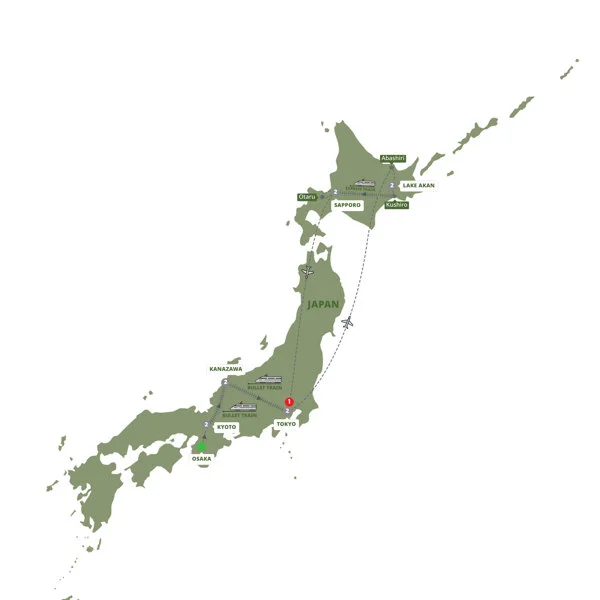
Day 1
Day 1: Welcome to Japan
Take the included transfer from Osaka to Kyoto. Meet your Travel Director and fellow travellers later this evening for dinner at the hotel and an introduction to the days ahead.
Meals: Dinner
Day 2
Day 2: Explore Kyoto’s Temples and Shrines
Explore Arashiyama Bamboo Grove and visit Tenryuji Temple. See Kinkakuji, the Golden Pavilion, then enjoy an authentic kaiseki lunch with the Nakamura family and learn about Japanese dining customs and etiquette. Continue to Fushimi Inari Shrine and its red torii gates.
Meals: Breakfast,Lunch
Day 3
Day 3: Kanazawa and Sake Tasting
Take the Thunderbird train to Kanazawa. Visit a local sake brewery to learn about the brewing process, then have a locally inspired lunch paired with selected sakes. The evening is at leisure, or you can join an optional traditional shabu shabu dinner with unlimited drinks.
Meals: Breakfast,Lunch
Day 4
Day 4: Gardens, Pottery and the Spirit of the Geisha
Visit Kenrokuen garden and Nomura Samurai House, then have free time to explore and find lunch. In the afternoon, learn about Ohi pottery at the Ohi Gallery with a Local Specialist and try matcha served in a handcrafted Ohi bowl. Explore Higashi Chaya District and visit Kaikaro teahouse.
Meals: Breakfast
Day 5
Day 5: Discover Tokyo’s Street Food Delights
Take the bullet train to Tokyo. Learn about traditional takoyaki and have a ramen lunch. Visit Meiji Jingu Shrine and see Imperial Palace Plaza on a scenic drive. Check in to the hotel and enjoy the evening at leisure.
Meals: Breakfast
Day 6
Day 6: Culture and Colour in Tokyo
Visit Sensoji, Tokyo’s oldest temple, and browse Nakamise Arcade. See the city from Tokyo Skytree, then have lunch at your own pace. In the afternoon, visit the Tokyo National Museum.
Meals: Breakfast
Day 7
Day 7: Onward to the Drift Ice of Hokkaido
Fly north to Memambetsu and visit the Okhotsk Ryu-hyo Museum to learn about drift ice. Cruise aboard the Aurora ice-breaking ship, then check in to the traditional onsen hotel for dinner and hot springs.
Meals: Breakfast,Dinner
Day 8
Day 8: Discover Indigenous Ainu Culture
Enjoy a relaxed morning. In the afternoon, visit an Ainu village, learn about Japan’s Indigenous people and try traditional wood carving. Return to the hotel for dinner, then experience Ainu dance and ceremony at the Ainu Kotan Theatre.
Meals: Breakfast,Dinner
Day 9
Day 9: Travel to Sapporo
Stop at the Akan International Crane Centre to see red-crowned cranes. Continue to Sapporo by express train and visit the Sapporo Beer Museum for a guided tasting.
Meals: Breakfast
Day 10
Day 10: From Sapporo to the Charm of Otaru
See Sapporo’s central sights, including Odori Park and the Clock Tower, and stop for photos at Okurayama Ski Jump Stadium. Visit Otaru, known for its canal, glassworks and preserved warehouses, then return to Sapporo. Take the ropeway to Mt. Moiwa and dine at The Jewels.
Meals: Breakfast,Dinner
Day 11
Day 11: Return to Tokyo
Fly to Tokyo and check in to the hotel. The rest of the day is at leisure, with the option to explore Shinjuku, visit a temple, or browse Harajuku’s boutiques and street food stalls.
Meals: Breakfast
Day 12
Day 12: Farewell Japan
After breakfast, take the included transfer to the airport and say farewell to your tour companions.
Meals: Breakfast
What’s included
What’s not included
Additional information
Tokyo Skytree Observation Deck
Rise to the Tokyo Skytree observation deck for wide views across the capital’s dense streets, rivers and distant skyline. On clear days, the panorama can extend towards Tokyo Bay and Mount Fuji.
Japan’s tallest structure is both a broadcasting tower and a modern city landmark. From above, Tokyo’s many neighbourhoods become easier to read, offering a different perspective on the scale and layout of the metropolis.
Dining Summary
- 4 Dinner (D)
- 11 Breakfast (B)
- 2 Lunch (L)
Iconic Experience
- Kyoto: Admire the beautiful golden pavilion of Kinkakuji Temple.
- Kyoto: You’ll walk beneath a seemingly endless path of red torii gates at Kyoto’s Fushimi Inari Shrine. Dedicated to the Shinto god of rice and prosperity, this sacred site invites you to follow in the footsteps of pilgrims through forested trails and striking shrines.
- Kanazawa: Savour the flavours of Kanazawa with a sake tasting and lunch. Learn how rice, water and artistry combine to make sake, then lunch on regional dishes that reflect Ishikawa’s culinary heritage.
- Kanazawa: Step back in time at the Nomura Samurai House, once home to a respected warrior family. Explore its gardens, traditional architecture and treasured artefacts. You’ll learn about samurai life and honour in feudal Japan with a rare glimpse into the elegance of Edo-period craftsmanship.
- Kanazawa: Discover the 350-year legacy of Ohi pottery in Kanazawa, where a Local Specialist will share the story behind this ceramic tradition, still crafted by hand today. You’ll sip matcha from an Ohi bowl as you join in an immersive ritual that connects art, history and hospitality.
- Tokyo: Experience a peaceful forest oasis in the heart of Tokyo at Meiji Shrine. Dedicated to Emperor Meiji and Empress Shoken, this Shinto sanctuary invites your quiet reflection beneath towering torii gates and ancient trees, a serene contrast to the city’s busy pace.
- Tokyo: Visit the Tokyo National Museum to browse collections of Japanese art and archaeological objects.
- Tokyo: Explore Tokyo’s oldest temple, Sensoji, in the historic Asakusa district. Wander through Nakamise Arcade, lined with traditional treats and crafts, before arriving at the main hall, a symbol of faith, resilience and local spirit.
- Tokyo: Rise above the skyline at Tokyo Skytree, the tallest structure in Japan. From its observation deck, you’ll take in panoramic views of the city, from Mount Fuji to Tokyo Bay. It’s a modern marvel and an unforgettable moment that will leave you awestruck.
- Tokyo: Sail across the frozen Sea of Okhotsk aboard an ice-breaking ship. When the temperature drops between late January and late March, your drift ice cruise will bring you face to face with floating ice fields and rare wildlife, like Steller’s sea eagle and spotted seals.
- Lake Akan: You’ll be transported by an evening of Ainu storytelling through traditional dance, music and ritual at the Ainu Kotan Theatre. Through this performance, learn about Japan’s Indigenous heritage, preserved with passion and shared with pride.
- Sapporo: Visit the birthplace of one of Japan’s most beloved brews at the Sapporo Beer Museum. You’ll explore the history of Hokkaido’s iconic beer brand, then enjoy a tasting that brings the story to life.
- Otaru: Wander through Otaru, a port town known for its iconic canal and glass-blown artistry. Lined with old warehouses and gas lamps, the canal district is a great place to stroll through Japan’s Meiji-era past.
- Sapporo: Celebrate your journey with a memorable dinner at The Jewels, perched atop Mt Moiwa. Ride the ropeway to the summit, then dine with panoramic views over Sapporo’s cityscape. This dinner is an unforgettable finale to your tour.
How You'll Travel
- Selected hotel dinners plus a locally hosted meal
- 4-star stays
- Deluxe coach and train travel, and select flights
Mt Moiwa Ropeway & Dinner at The Jewels
Ride the Mt Moiwa ropeway above Sapporo for sweeping views of the city, and dine at The Jewels restaurant near the summit. The elevated setting makes this included dinner an experience in its own right.
From the mountain, Sapporo’s streets spread across the Ishikari Plain, with the city lights creating a different perspective in the evening. The combination of a scenic ascent and a shared meal offers a distinctive close to the Hokkaido visit.
Ainu Village Visit & Wood-Carving Workshop
Meet members of the Ainu community at a village near Lake Akan and learn about the Indigenous heritage of Hokkaido. Take part in a hands-on wood-carving workshop, hearing about the symbols and stories expressed through the craft.
Carving is one way Ainu makers carry cultural knowledge through generations. This community encounter offers an opportunity to learn directly from local people and supports the preservation of living traditions.
Sapporo Beer Museum & Tasting
Explore the Sapporo Beer Museum to learn about Hokkaido’s brewing history, and enjoy a guided beer tasting. Discover how one of Japan’s best-known beer brands developed alongside the growth of the northern island.
The museum occupies a historic brick building whose industrial character reflects Sapporo’s brewing heritage. The tasting turns that story into a sensory experience, offering a chance to consider the flavours as well as the history of the beer.
Kinkaku-ji Golden Pavilion
Visit Kinkaku-ji, Kyoto’s Golden Pavilion, and admire its gold-leaf upper floors reflected in the surrounding pond. Follow the garden paths for changing views of one of Japan’s most recognisable landmarks, especially striking against the muted colours of winter.
Originally built as a shogun’s retirement villa, the site became a Zen temple after his death. The present pavilion was reconstructed in the 1950s, preserving the dramatic relationship between architecture, water and carefully composed gardens.
Operated By
Trafalgar
Kaiseki Lunch with the Nakamura Family
Meet the Nakamura family at a traditional restaurant near Kyoto for a hosted kaiseki lunch. Enjoy a succession of carefully presented dishes while your hosts introduce Japanese dining customs and etiquette in a welcoming local setting.
Kaiseki celebrates seasonality as much as flavour: ingredients, serving vessels and presentation all reflect the time of year. This shared meal offers a personal introduction to the thought and hospitality behind one of Japan’s most refined culinary traditions.
Fushimi Inari Shrine
Walk beneath the vermilion torii gates of Fushimi Inari Shrine as their closely spaced arches lead from the shrine grounds into Kyoto’s wooded hills. Explore the sacred setting and see how gates and smaller shrines mark the paths.
Dedicated to Inari, a Shinto deity associated with rice and prosperity, the shrine has drawn worshippers for centuries. Many torii have been donated by individuals and businesses, creating a vivid record of continuing devotion.
Kanazawa Sake Brewery Visit & Tasting Lunch
Visit a local sake brewery in Kanazawa to learn how rice, water and careful fermentation shape Japan’s traditional drink. Savour a locally inspired lunch paired with selected sakes, discovering how different styles complement regional dishes.
Brewing is a craft of closely managed temperatures and timing, with each step influencing the finished sake’s aroma and texture. The visit connects Kanazawa’s food culture with the skill behind a drink enjoyed across Japan.
Kenrokuen Garden
Explore Kenrokuen, Kanazawa’s celebrated strolling garden, where ponds, bridges, lanterns and carefully shaped trees create a succession of views. In winter, you may see the ropes of yukitsuri supporting branches against heavy snow.
Developed by the Maeda lords over generations, Kenrokuen is regarded as one of Japan’s great landscape gardens. Its design rewards unhurried observation, balancing spacious vistas with intimate scenes beside the water.
Nomura Samurai House
Step inside the Nomura Samurai House in Kanazawa’s former samurai district. Explore its traditional rooms, family artefacts and compact garden for a glimpse of the domestic world of a respected warrior family.
Kanazawa flourished under the Maeda clan during the Edo period, when samurai households formed part of the castle town’s social order. The house’s craftsmanship and garden reveal a quieter, more personal side of that history.
Ohi Pottery Gallery & Matcha Experience
Discover Kanazawa’s Ohi pottery tradition with a Local Specialist at the Ohi Gallery. Learn about the hand-crafted ceramics and sip matcha from an Ohi bowl, experiencing the work as an object made to be held and used.
Ohi ware has been associated with Kanazawa’s tea culture for roughly 350 years. Its distinctive forms and glazes show how craft, hospitality and the rituals of preparing tea remain closely connected.
Higashi Chaya District & Kaikaro Teahouse
Explore the wooden streets of Higashi Chaya, Kanazawa’s historic teahouse district, and visit Kaikaro, a chaya with a history spanning around two centuries. Its preserved setting offers a close look at the architecture associated with the district’s entertainment culture.
Chaya were places where guests gathered for conversation and traditional performance. The district’s latticed facades and narrow lanes retain the atmosphere of Kanazawa’s Edo-period past.
Tokyo Street-Food Introduction & Ramen Lunch
Learn about takoyaki, the savoury batter-and-octopus snack associated with Japanese street food, and sit down to a hearty ramen lunch in Tokyo. It is a chance to explore familiar flavours through the dishes people enjoy in everyday settings.
Takoyaki’s crisp exterior and soft centre contrast with ramen’s warming broth and noodles. Together, the two foods offer an approachable look at the variety and regional influences within casual Japanese dining.
Tokyo National Museum
Visit the Tokyo National Museum to browse collections of Japanese art and archaeological objects. Displays offer a closer look at the materials, techniques and ideas that have shaped the country’s visual culture across centuries.
Located in Ueno Park, the museum holds an extensive collection that spans ancient finds and later artistic traditions. Time among its galleries adds historical depth to the temples, shrines and craft traditions encountered elsewhere in Japan.
Aurora Drift Ice Cruise
Board the Aurora ice-breaking ship for a winter cruise on the Sea of Okhotsk. Watch the vessel move through seasonal fields of drift ice and look out across the stark meeting of frozen sea, open water and Hokkaido’s coastline.
Drift ice conditions vary with weather and currents, making each sailing different. Wildlife may be visible, including seabirds and, with luck, seals; sightings cannot be guaranteed. The cruise offers a close encounter with one of northern Japan’s most distinctive seasonal landscapes.
Lake Akan Onsen Stay
Experience a traditional onsen stay beside Lake Akan at New Akan. Unwind in the hotel’s hot-spring bathing facilities, including its open-air sky garden spa, and enjoy Hokkaido flavours during the stay.
Onsen bathing is a longstanding part of Japanese travel culture, valued as a chance to slow down and restore. The lakeside setting gives this stay a distinctly northern character, with winter air providing a sharp contrast to the warmth of the water.
Ainu Kotan Theatre Performance
Experience an evening of Ainu dance, music and storytelling at the Ainu Kotan Theatre near Lake Akan. The performance introduces traditions shared through movement, song and ceremony.
The Ainu are the Indigenous people of Hokkaido, and performance remains an important way to express cultural memory and connections with the natural world. Seeing these traditions presented by the community adds another dimension to the region’s living heritage.
Akan International Crane Centre
Visit the Akan International Crane Centre to observe red-crowned cranes and learn about the work to protect them. In winter, watch for the birds’ graceful movements and, if conditions allow, their distinctive courtship displays.
Once at risk of disappearing from Japan, the red-crowned crane has become a powerful symbol of conservation in Hokkaido. The centre provides a focused opportunity to see this remarkable species while learning about its habitat and survival.
Sapporo City Walk & Okurayama Ski Jump View
Walk through central Sapporo to see Odori Park and the Clock Tower, two landmarks at the heart of the city. Pause for photographs at Okurayama Ski Jump Stadium, a reminder of Sapporo’s winter-sport identity.
Odori Park forms a broad green corridor through the city, while the 19th-century Clock Tower recalls Hokkaido’s early modern development. Okurayama hosted ski-jumping events during the 1972 Winter Olympics, giving the stop a sporting connection.
Otaru Canal & Historic Port District
Wander beside Otaru Canal and explore the old warehouses, gas lamps and streets of this Hokkaido port town. Otaru is also known for its glasswork, adding a craft tradition to its waterfront setting.
The canal and surrounding buildings recall the town’s role as a commercial hub during Hokkaido’s development. Their preserved facades give the district a character distinct from Sapporo’s broad avenues and modern skyline.
Kanazawa Shabu-Shabu Dinner
Join an optional shabu-shabu dinner in Kanazawa, cooking thinly sliced ingredients in simmering broth at the table. The experience includes unlimited drinks and offers a sociable way to explore a popular Japanese dining style.
Named for the sound of ingredients swished through hot broth, shabu-shabu puts the cooking and conversation in guests’ hands. This experience is at additional cost and bookable on tour.
Arashiyama Bamboo Grove & Tenryu-ji Temple
Walk among the towering bamboo of Arashiyama in western Kyoto and visit Tenryu-ji Temple, a UNESCO World Heritage Site. The grove’s narrow paths offer a quiet contrast to the city, while the temple opens onto a landscaped pond garden.
Founded in the 14th century, Tenryu-ji is a centre of Zen Buddhism. Its garden draws on the surrounding hills as a backdrop, making the landscape beyond its walls part of the view.
Meiji Jingu Shrine & Imperial Palace Plaza
Visit Meiji Jingu Shrine, a Shinto sanctuary set within a wooded precinct in Tokyo. Pass its imposing torii gates and take in the calm of the grounds. A scenic drive also brings you past Imperial Palace Plaza for a view of the palace surroundings.
Meiji Jingu honours Emperor Meiji and Empress Shoken, figures associated with Japan’s modernisation. The palace occupies the former site of Edo Castle, linking today’s capital to its earlier history.
Senso-ji Temple & Nakamise
Explore Senso-ji in Tokyo’s historic Asakusa district and walk along Nakamise, the approach lined with stalls selling traditional treats and crafts. The busy shopping street leads towards the temple’s gates and main hall.
Senso-ji is Tokyo’s oldest temple and a longstanding place of Buddhist worship. Its lively surroundings show how a sacred landmark remains woven into the everyday life of the neighbourhood.
Okhotsk Ryuhyo Museum
Visit the Okhotsk Ryuhyo Museum in eastern Hokkaido to learn about the drift ice that reaches this coast each winter. Exhibits introduce the conditions behind the phenomenon and the marine environment of the Sea of Okhotsk.
The ice forms farther north and is carried south by currents, making Hokkaido one of the few places at this latitude where visitors can encounter it. The museum provides context for the changing seascape and the wildlife associated with it.