Your itinerary
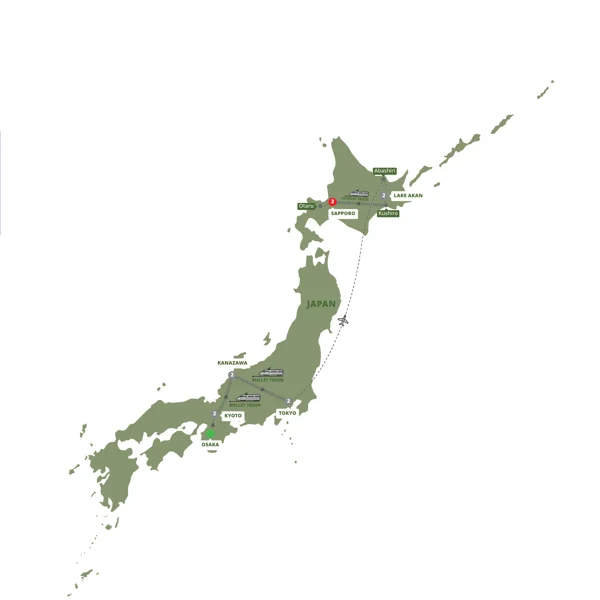
Day 1
Day 1: Welcome to Japan
Take the included transfer from Osaka to Kyoto. Meet your Travel Director and fellow travellers in the evening, followed by dinner at your hotel and an introduction to the days ahead.
Meals: Dinner
Day 2
Day 2: Explore Kyoto’s Temples and Shrines
Visit Arashiyama Bamboo Grove, Tenryuji Temple and Kinkakuji, the Golden Pavilion. Have an included kaiseki lunch with the Nakamura family and learn about Japanese dining customs and etiquette. Continue to Fushimi Inari Shrine and its red torii gates.
Meals: Breakfast,Lunch
Day 3
Day 3: Kanazawa and Sake Tasting
Travel by Thunderbird train from Kyoto to Kanazawa. Visit a local sake brewery to learn about the brewing process, followed by an included lunch with sake tasting. Check in to your hotel and enjoy the evening at leisure, or join an optional shabu shabu dinner with unlimited drinks.
Meals: Breakfast,Lunch
Day 4
Day 4: Gardens, Pottery and the Spirit of the Geisha
Visit Kenrokuen garden and Nomura Samurai House, with time to explore and find lunch at your own expense. At Ohi Gallery, learn about Ohi pottery and try matcha served in a handcrafted Ohi bowl. Explore Higashi Chaya District and visit the Kaikaro teahouse.
Meals: Breakfast
Day 5
Day 5: Discover Tokyo’s Street Food Delights
Travel by bullet train to Tokyo. Learn about traditional takoyaki and have an included ramen lunch. Visit Meiji Jingu Shrine and see Imperial Palace Plaza on a scenic drive. Check in to your hotel and enjoy the evening at leisure.
Meals: Breakfast,Lunch
Day 6
Day 6: Culture and Colour in Tokyo
Visit Sensoji Temple and browse Nakamise Arcade. Take in the city views from Tokyo Skytree, then have lunch at your own pace. Visit the Tokyo National Museum.
Meals: Breakfast
Day 7
Day 7: Onward to the Drift Ice of Hokkaido
Fly north to Memambetsu and visit the Okhotsk Ryu-hyo Museum to learn about drift ice. Cruise aboard the Aurora ice-breaking ship, then check in to your traditional onsen hotel, where dinner and hot springs await.
Meals: Breakfast,Dinner
Day 8
Day 8: Discover Indigenous Ainu Culture
Enjoy a relaxed morning. In the afternoon, visit an Ainu village, learn about Japan’s Indigenous people and try traditional wood carving. Return to the hotel for dinner, then experience Ainu dance and ceremony at the Ainu Kotan Theatre.
Meals: Breakfast,Dinner
Day 9
Day 9: Travel to Sapporo
Stop at the Akan International Crane Centre to see red-crowned cranes. Continue to Sapporo by express train and visit the Sapporo Beer Museum for a guided tasting.
Meals: Breakfast
Day 10
Day 10: From Sapporo to the Charm of Otaru
See Sapporo’s Odori Park and Clock Tower, with a photo stop at Okurayama Ski Jump Stadium. Travel to Otaru to explore its canal, glassworks and preserved warehouses, then return to Sapporo. Take the ropeway to Mt. Moiwa and have dinner at The Jewels.
Meals: Breakfast,Dinner
Day 11
Day 11: Farewell Japan
After breakfast, take the included transfer to the airport.
Meals: Breakfast
What’s included
What’s not included
Additional information
Tokyo Skytree Observation Deck
Ascend Tokyo Skytree for broad views over the capital from its observation deck. Look across the dense cityscape towards Tokyo Bay and, when conditions are clear, the distant outline of Mount Fuji.
At 634 metres, Skytree is Japan’s tallest structure and a striking feature of Tokyo’s contemporary skyline. Seeing the city from above reveals the scale of its neighbourhoods and waterways in a way that is difficult to grasp at street level.
Dining Summary
- 4 Dinner (D)
- 10 Breakfast (B)
- 2 Lunch (L)
Iconic Experience
- Kyoto: Admire the beautiful golden pavilion of Kinkakuji Temple.
- Kyoto: You’ll walk beneath a seemingly endless path of red torii gates at Kyoto’s Fushimi Inari Shrine. Dedicated to the Shinto god of rice and prosperity, this sacred site invites you to follow in the footsteps of pilgrims through forested trails and striking shrines.
- Kanazawa: Savour the flavours of Kanazawa with a sake tasting and lunch. Learn how rice, water and artistry combine to make sake, then lunch on regional dishes that reflect Ishikawa’s culinary heritage.
- Kanazawa: Step back in time at the Nomura Samurai House, once home to a respected warrior family. Explore its gardens, traditional architecture and treasured artefacts. You’ll learn about samurai life and honour in feudal Japan with a rare glimpse into the elegance of Edo-period craftsmanship.
- Kanazawa: Discover the 350-year legacy of Ohi pottery in Kanazawa, where a Local Specialist will share the story behind this ceramic tradition, still crafted by hand today. You’ll sip matcha from an Ohi bowl as you join in an immersive ritual that connects art, history and hospitality.
- Tokyo: Experience a peaceful forest oasis in the heart of Tokyo at Meiji Shrine. Dedicated to Emperor Meiji and Empress Shoken, this Shinto sanctuary invites your quiet reflection beneath towering torii gates and ancient trees, a serene contrast to the city’s busy pace.
- Tokyo: Visit the Tokyo National Museum to browse collections of Japanese art and archaeological objects.
- Tokyo: Explore Tokyo’s oldest temple, Sensoji, in the historic Asakusa district. Wander through Nakamise Arcade, lined with traditional treats and crafts, before arriving at the main hall, a symbol of faith, resilience and local spirit.
- Tokyo: Rise above the skyline at Tokyo Skytree, the tallest structure in Japan. From its observation deck, you’ll take in panoramic views of the city, from Mount Fuji to Tokyo Bay. It’s a modern marvel and an unforgettable moment that will leave you awestruck.
- Tokyo: Sail across the frozen Sea of Okhotsk aboard an ice-breaking ship. When the temperature drops between late January and late March, your drift ice cruise will bring you face to face with floating ice fields and rare wildlife, like Steller’s sea eagle and spotted seals.
- Lake Akan: You’ll be transported by an evening of Ainu storytelling through traditional dance, music and ritual at the Ainu Kotan Theatre. Through this performance, learn about Japan’s Indigenous heritage, preserved with passion and shared with pride.
- Sapporo: Visit the birthplace of one of Japan’s most beloved brews at the Sapporo Beer Museum. You’ll explore the history of Hokkaido’s iconic beer brand, then enjoy a tasting that brings the story to life.
- Otaru: Wander through Otaru, a port town known for its iconic canal and glass-blown artistry. Lined with old warehouses and gas lamps, the canal district is a great place to stroll through Japan’s Meiji-era past.
- Sapporo: Celebrate your journey with a memorable dinner at The Jewels, perched atop Mt Moiwa. Ride the ropeway to the summit, then dine with panoramic views over Sapporo’s cityscape. This dinner is an unforgettable finale to your tour.
How You'll Travel
- Selected hotel dinners plus a locally hosted meal
- 4-star stays
- Deluxe coach and train travel, and select flights
Mt Moiwa Ropeway & Dinner at The Jewels
Ride the Mt Moiwa ropeway above Sapporo and dine at The Jewels restaurant near the summit. Take in sweeping views across the city while enjoying a hosted dinner in an elevated setting.
Mt Moiwa is a favourite vantage point for seeing Sapporo’s urban grid against the surrounding hills. In winter, the illuminated city and cold night air give this dining experience a distinctively Hokkaido atmosphere.
Nomura Samurai House
Step inside the Nomura Samurai House in Kanazawa’s former samurai district. Explore traditional rooms, family artefacts and an intimate garden that offers a glimpse of domestic life behind the district’s historic walls.
The residence preserves the atmosphere of a household connected to the Maeda clan, which governed the region during the Edo period. Its architecture and possessions bring the social standing, craftsmanship and everyday surroundings of a samurai family into focus.
Tokyo National Museum
Visit the Tokyo National Museum to browse collections of Japanese art and archaeological objects. Explore displays that may include sculpture, ceramics, textiles and works connected to religious and daily life across different eras.
Founded in the 19th century, the museum is a major repository of Japan’s cultural heritage. Its galleries provide historical context for the temples, shrines and craft traditions encountered elsewhere on the journey, all within Tokyo’s Ueno Park.
Operated By
Trafalgar
Arashiyama Bamboo Grove & Tenryu-ji Temple
Walk through Arashiyama Bamboo Grove in western Kyoto, where tall green stalks frame the path, and visit nearby Tenryu-ji Temple. Explore a temple setting whose garden brings together a reflective pond, carefully placed rocks and the wooded hills beyond.
Founded in the 14th century, Tenryu-ji is part of Kyoto’s UNESCO-listed Historic Monuments. Its landscaped grounds offer a different perspective on Arashiyama’s natural scenery and the long relationship between Zen Buddhism and Japanese garden design.
Kinkaku-ji Golden Pavilion
Visit Kinkaku-ji, Kyoto’s Golden Pavilion, and admire its gold-covered upper floors reflected in the surrounding pond. Follow the garden paths for views of the pavilion from different angles, with winter foliage lending the scene a quieter character.
Originally associated with the retirement villa of a 14th-century shogun, the site became a Zen temple. The present pavilion was rebuilt in 1955, preserving one of Kyoto’s most recognisable expressions of Japanese architecture and landscape design.
Nakamura Family Kaiseki Lunch
Meet the Nakamura family at a traditional restaurant near Kyoto for a hosted kaiseki lunch. Enjoy a succession of carefully presented dishes while learning about Japanese dining customs and etiquette from your hosts.
Kaiseki places value on seasonality, balance and the way food is served as well as prepared. This Be My Guest experience makes those traditions personal, offering conversation and local hospitality alongside a meal rooted in Japan’s culinary culture.
Fushimi Inari Shrine
Walk beneath the vermillion torii gates of Fushimi Inari Shrine in Kyoto. The gates form winding passages towards the wooded slopes of Mount Inari, creating a vivid contrast between the shrine structures and the surrounding trees.
Dedicated to Inari, a Shinto deity associated with rice and prosperity, the shrine has drawn worshippers for centuries. Its many donated gates speak to continuing devotion, making this a living place of worship as well as a celebrated Kyoto landmark.
Kanazawa Sake Brewery Visit & Tasting Lunch
Visit a local sake brewery in Kanazawa to learn how rice, water and skilled brewing techniques shape Japan’s signature drink. Taste selected sakes alongside a locally inspired lunch featuring regional flavours.
Brewing is both a craft and a part of everyday food culture in Ishikawa Prefecture. Hearing about the process where sake is made adds depth to the tasting, while the paired dishes show how different styles can complement a meal.
Kenrokuen Garden
Explore Kenrokuen, one of Japan’s most celebrated landscape gardens, in the heart of Kanazawa. Follow its paths past ponds, bridges and carefully tended trees, taking time to appreciate how each view has been composed.
Developed over generations by the Maeda family, the garden is renowned for its changing seasonal character. In winter, its open spaces and sculptural branches reveal a more restrained beauty, reflecting the Japanese appreciation of nature throughout the year.
Ohi Pottery Gallery & Matcha
Visit Kanazawa’s Ohi Gallery with a Local Specialist to discover a pottery tradition with a history of around 350 years. Learn about the handcrafted ceramics and sip matcha from an Ohi bowl, experiencing the work as it was intended to be used.
Ohi ware is closely linked to Japanese tea culture. The bowl’s shape and feel matter as much as its appearance, making the matcha tasting a direct encounter with Kanazawa’s enduring relationship between craft and hospitality.
Higashi Chaya District & Kaikaro Teahouse
Explore Kanazawa’s Higashi Chaya District, where narrow streets and wooden facades preserve the character of a historic entertainment quarter. Visit Kaikaro, a chaya teahouse with a history stretching back roughly two centuries.
Chaya were places where guests were entertained through music, dance and conversation by geisha. Seeing the district and stepping into a teahouse offers a closer look at the artistry and social traditions behind Kanazawa’s carefully preserved streetscape.
Tokyo Street-Food Introduction & Ramen Lunch
Learn about takoyaki, Japan’s popular savoury snack, during a food-focused introduction in Tokyo, and sit down to a hearty ramen lunch. Discover two approachable sides of Japanese food culture, from street-food preparation to the comfort of a bowl of noodles.
Takoyaki is especially associated with Osaka, while ramen has developed many regional styles across Japan. This experience provides an introduction to familiar dishes and the everyday eating traditions that surround them.
Meiji Jingu Shrine
Visit Meiji Jingu Shrine, a Shinto sanctuary set within a broad wooded precinct in Tokyo. Walk beneath its imposing torii gates and experience a quieter atmosphere within one of the world’s busiest cities.
The shrine honours Emperor Meiji and Empress Shoken, figures associated with Japan’s transformation in the late 19th and early 20th centuries. Its forested setting invites reflection while offering insight into the continuing place of Shinto worship in Japanese life.
Tokyo Imperial Palace Plaza View
See Tokyo’s Imperial Palace Plaza on a scenic drive through the capital’s central district. Take in the open space beside the palace grounds and the contrast between historic stone walls and the surrounding modern city.
The Imperial Palace occupies the former site of Edo Castle, the seat of the Tokugawa shoguns. Although the palace itself is not part of this visit, the view connects present-day Tokyo with the fortified city from which it grew.
Aurora Drift Ice Cruise
Board the Aurora ice-breaking ship for a cruise on the Sea of Okhotsk off Hokkaido. Watch the vessel move through winter waters and look for floating drift ice and the stark coastal scenery that make this a rare seasonal experience.
The extent and position of the ice depend on weather and sea conditions. Keep watch for wildlife too: birds such as Steller’s sea eagles and marine animals may be seen in the region, though sightings cannot be guaranteed.
Lake Akan Onsen Experience
Soak in the hot springs at New Akan, a lakeside onsen hotel overlooking Lake Akan. Experience the open-air sky garden spa and the contrast between warm mineral water and Hokkaido’s cool winter air.
Communal bathing is a longstanding part of Japanese culture, with its own customs of washing before entering the bath and relaxing quietly in the water. The lakeside setting gives this traditional practice a particular sense of place.
Ainu Village Visit & Wood-Carving Workshop
Meet members of the Ainu community during a visit to an Ainu village near Lake Akan. Learn about the Indigenous people of Hokkaido and take part in a hands-on wood-carving workshop inspired by their artistic traditions.
Hear how carved designs can express stories, beliefs and relationships with the natural world. This MAKE TRAVEL MATTER® experience centres living culture and local voices, while supporting efforts to sustain and share community heritage.
Ainu Kotan Theatre Performance
Experience traditional Ainu dance, music and storytelling at the Ainu Kotan Theatre near Lake Akan. Watch a performance that brings cultural practices and shared stories to the stage through movement, sound and ceremony.
The Ainu are Indigenous to Hokkaido and neighbouring regions. This evening experience offers a chance to engage with expressions of their heritage as presented by Ainu performers, beyond what can be learned from objects or written displays alone.
Akan International Crane Centre
Visit the Akan International Crane Centre to observe and learn about Hokkaido’s red-crowned cranes. Watch for the birds’ distinctive movements, including the courtship displays for which they are known.
Revered in Japanese culture and once brought close to extinction in Japan, these cranes are the focus of long-running conservation efforts. The centre offers insight into their habitat and survival; as with any wildlife experience, particular behaviours and sightings depend on conditions.
Sapporo Beer Museum & Tasting
Explore the Sapporo Beer Museum and enjoy a guided tasting connected to one of Japan’s best-known brewers. Learn how beer production became part of Hokkaido’s story and discover more about the brand associated with the city.
The museum’s historic setting recalls Sapporo’s development during the Meiji era, when new industries took root on the island. Tasting the beer adds a flavour-led dimension to that regional history.
Sapporo City Sights & Okurayama Ski Jump
Walk through central Sapporo to see Odori Park and the Clock Tower, and make a photo stop at Okurayama Ski Jump Stadium. These landmarks reveal different sides of the city, from its broad public spaces to its winter-sports heritage.
The Clock Tower dates from Sapporo’s early development in the 19th century, while Okurayama was a venue for the 1972 Winter Olympics. Together, the sights provide a compact introduction to Hokkaido’s capital.
Otaru Canal District
Wander through Otaru’s canal district, where old warehouses and gas lamps line the waterfront. Explore the character of this Hokkaido port town, also known for its glasswork traditions.
Otaru grew as a commercial and shipping centre, and its preserved buildings recall the years when goods moved through the harbour and along the canal. The waterside streets offer a tangible glimpse of that trading past.
Traditional Shabu-Shabu Dinner
Join an optional shabu-shabu dinner in Kanazawa, with unlimited drinks as described for this on-tour experience. Cook thin slices of meat and vegetables in simmering broth at the table, making the meal as participatory as it is social.
Shabu-shabu takes its name from the swishing motion used to cook the ingredients. It offers a relaxed introduction to Japanese hot-pot dining. This experience is at additional cost and bookable on tour.
Senso-ji Temple & Nakamise Arcade
Explore Senso-ji Temple in Tokyo’s historic Asakusa district, walking along Nakamise Arcade towards the temple grounds. Browse stalls selling traditional crafts and treats while taking in the lively approach to this much-visited place of worship.
Senso-ji traces its origins to the seventh century and remains an important Buddhist site. Its gates, incense and busy pedestrian streets offer a sense of how religious practice and neighbourhood life meet in modern Tokyo.
Okhotsk Ryuhyo Museum
Visit the Okhotsk Ryuhyo Museum in Hokkaido to learn about the seasonal drift ice of the Sea of Okhotsk. Discover how winter conditions bring ice southwards and shape the region’s marine environment.
The floating ice is one of eastern Hokkaido’s defining winter phenomena. A museum visit provides scientific and regional context for the changing seascape, helping you understand why this stretch of coast has such a distinctive cold-season character.