Your itinerary
Day 1
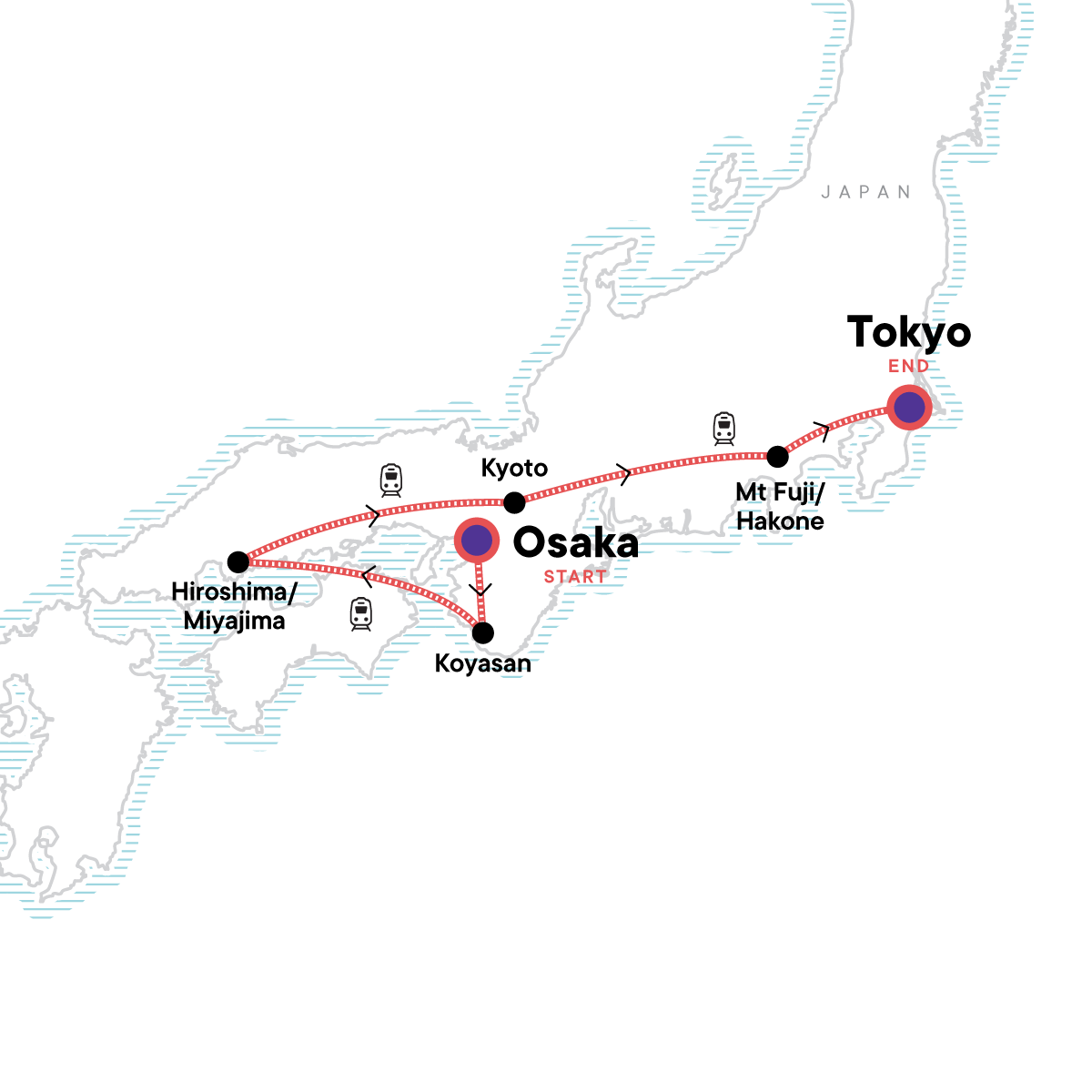
Day 1: Osaka
Arrive before 15:00. Evening welcome meeting (~18:00) with your CEO to review the tour and collect passport details for train tickets, followed by an optional group meal and a brief orientation walk.
Day 2
Day 2: Osaka/Kōyasan
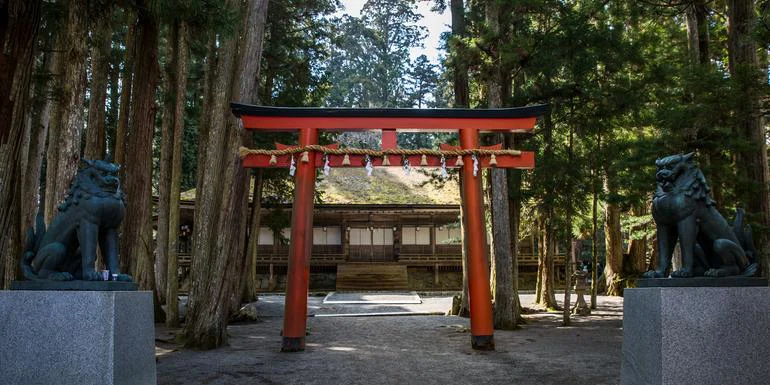
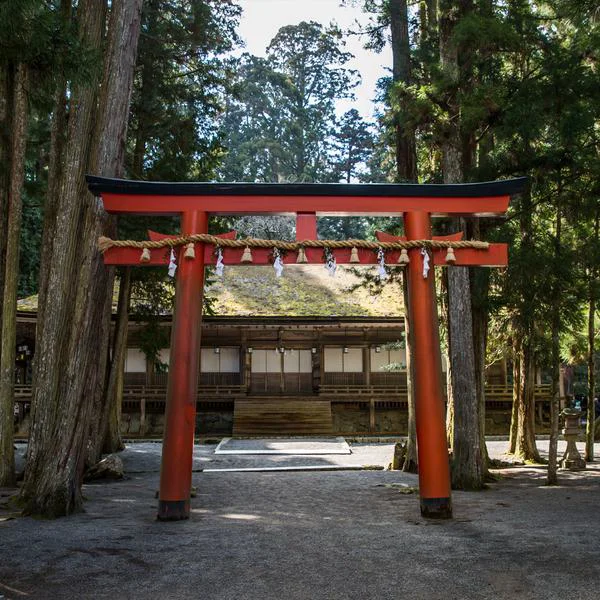
Travel by train, funicular, and bus to Mt Koya (Kōyasan) and stay overnight in a temple. Explore temples and the moss-covered Oku-no-in cemetery; dine on shojin-ryori and relax in a yukata/kimono. Main luggage is forwarded; pack an overnight bag.
Meals: Breakfast,Dinner
Day 3
Day 3: Kōyasan/Hiroshima
Observe morning prayers and enjoy a vegetarian breakfast at the temple, then descend by bus/train/funicular. Take the shinkansen to Hiroshima, a city marked by the 1945 atomic bombing. Learn about Oku-no-in, Kobo Daishi, and Torodo Hall.
Meals: Breakfast
Day 4
Day 4: Hiroshima
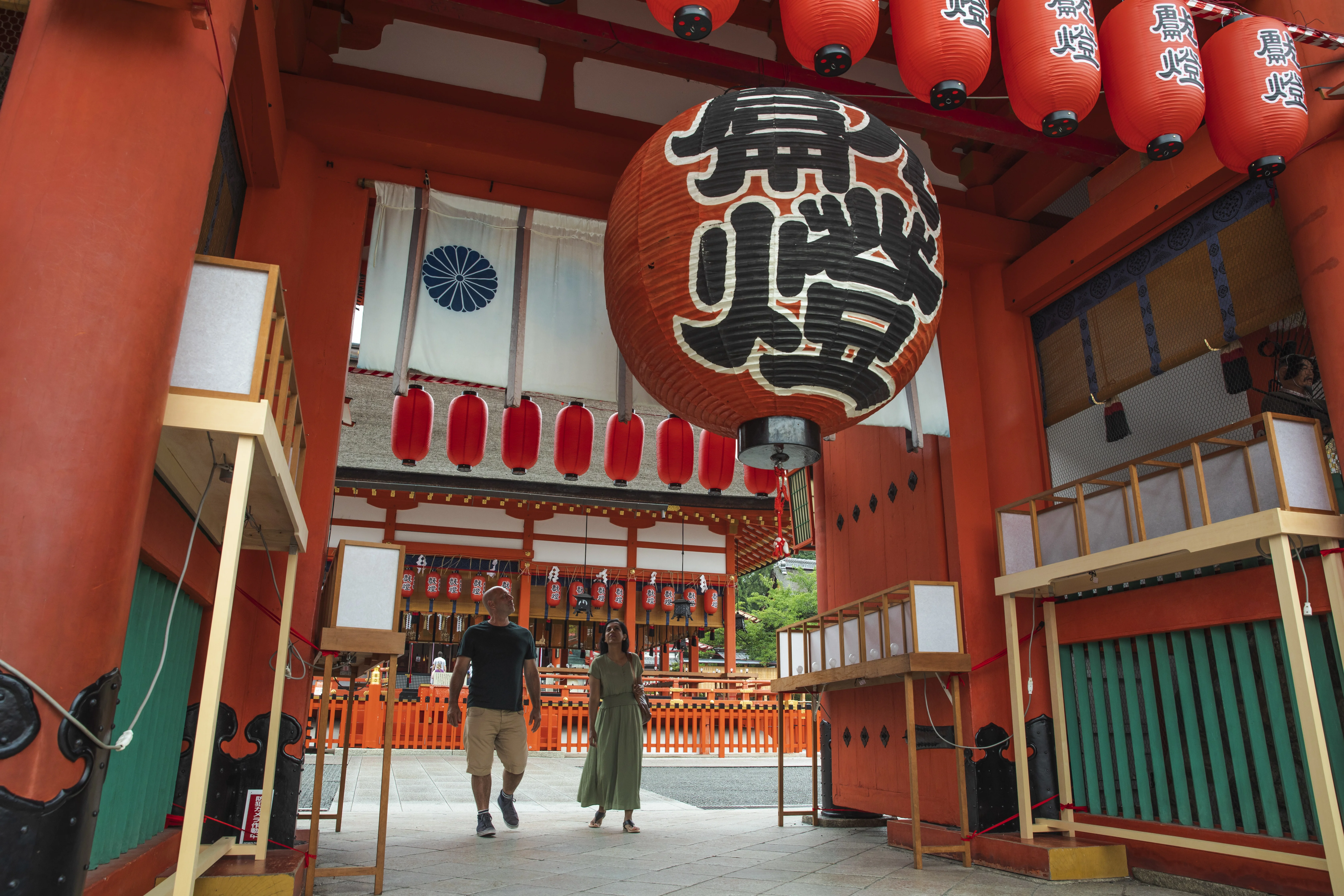
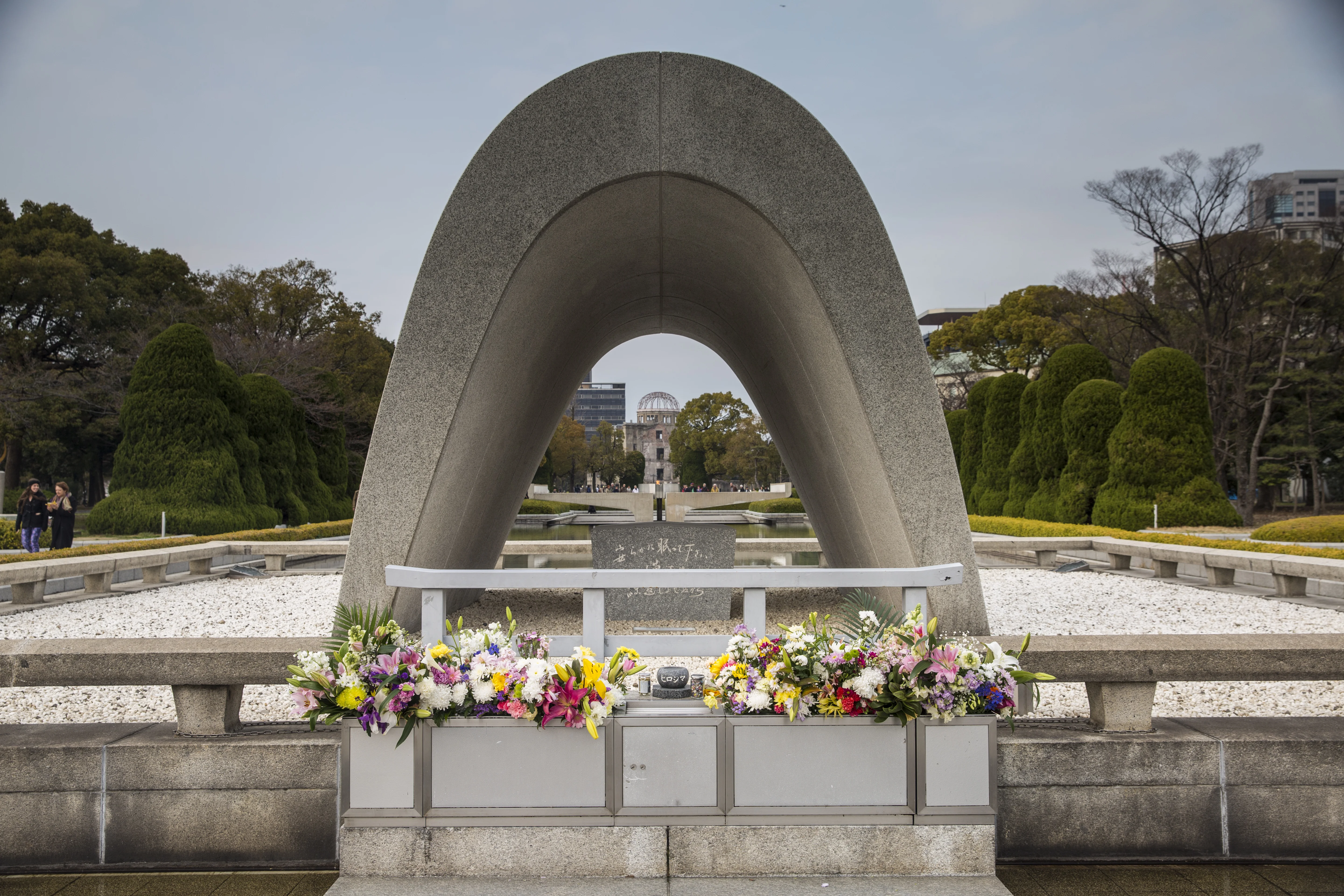
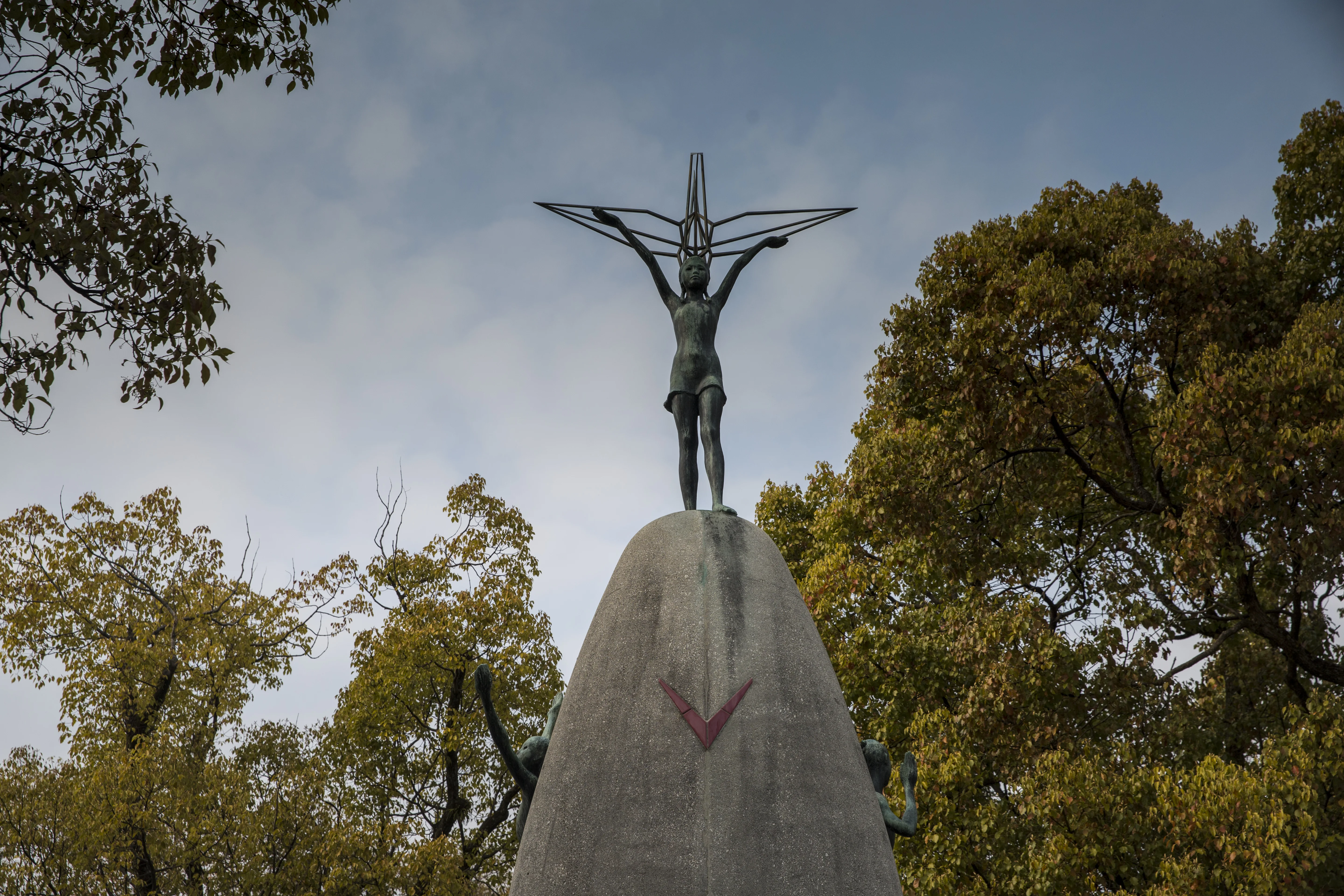
Visit the Peace Park and Memorial Museum. Ferry to Miyajima Island to see the famed floating Torii Gate; enjoy free time with the option to hike Mt Misen.
Day 5
Day 5: Hiroshima/Kyoto
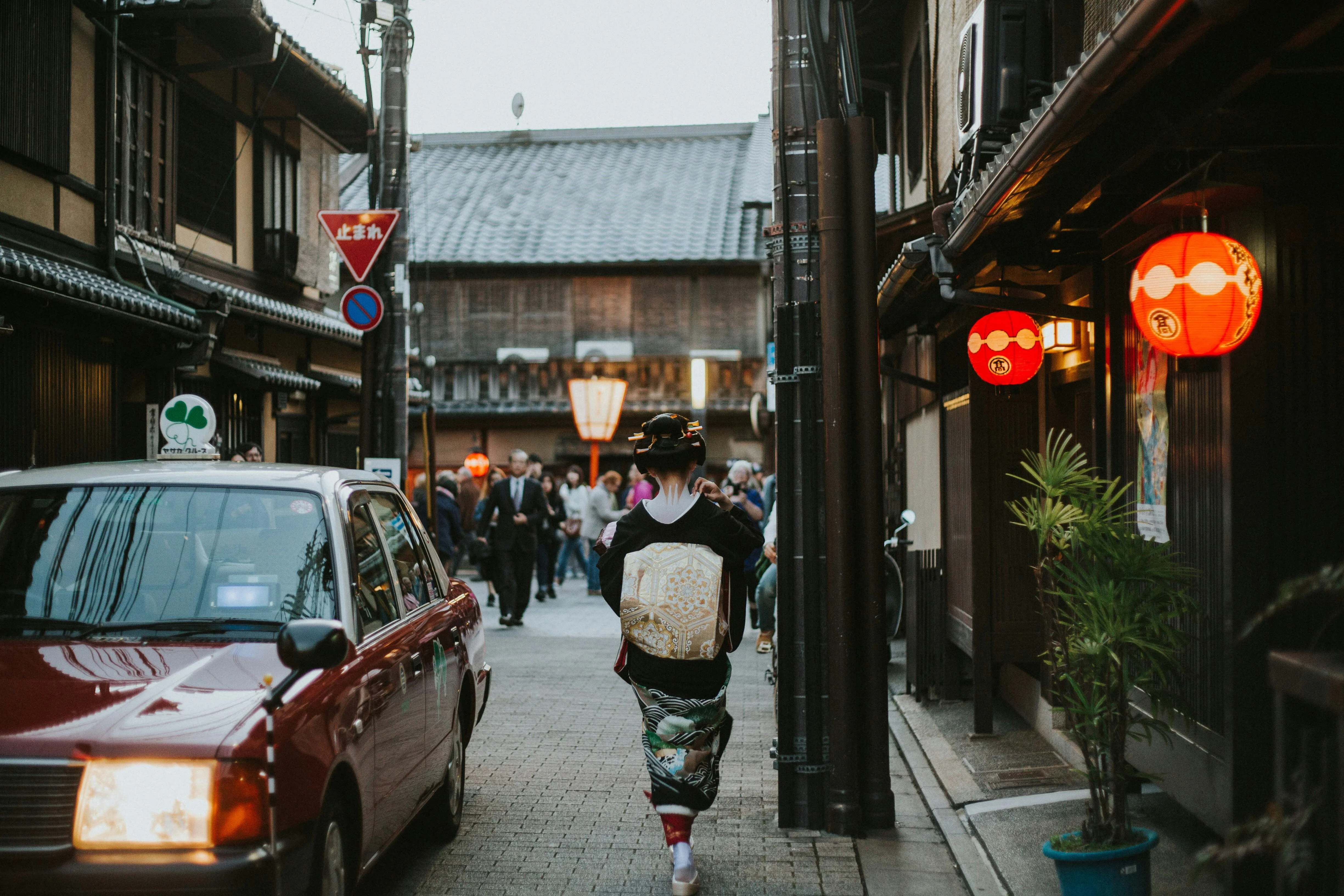
Shinkansen to Kyoto. Visit Nijo Castle and gardens, then join a CEO-led evening walk through Gion, Kyoto’s geisha district. Note: When Ninomaru Palace is closed (Dec 26–Jan 3), visit Kiyomizu-dera instead.
Day 6
Day 6: Kyoto
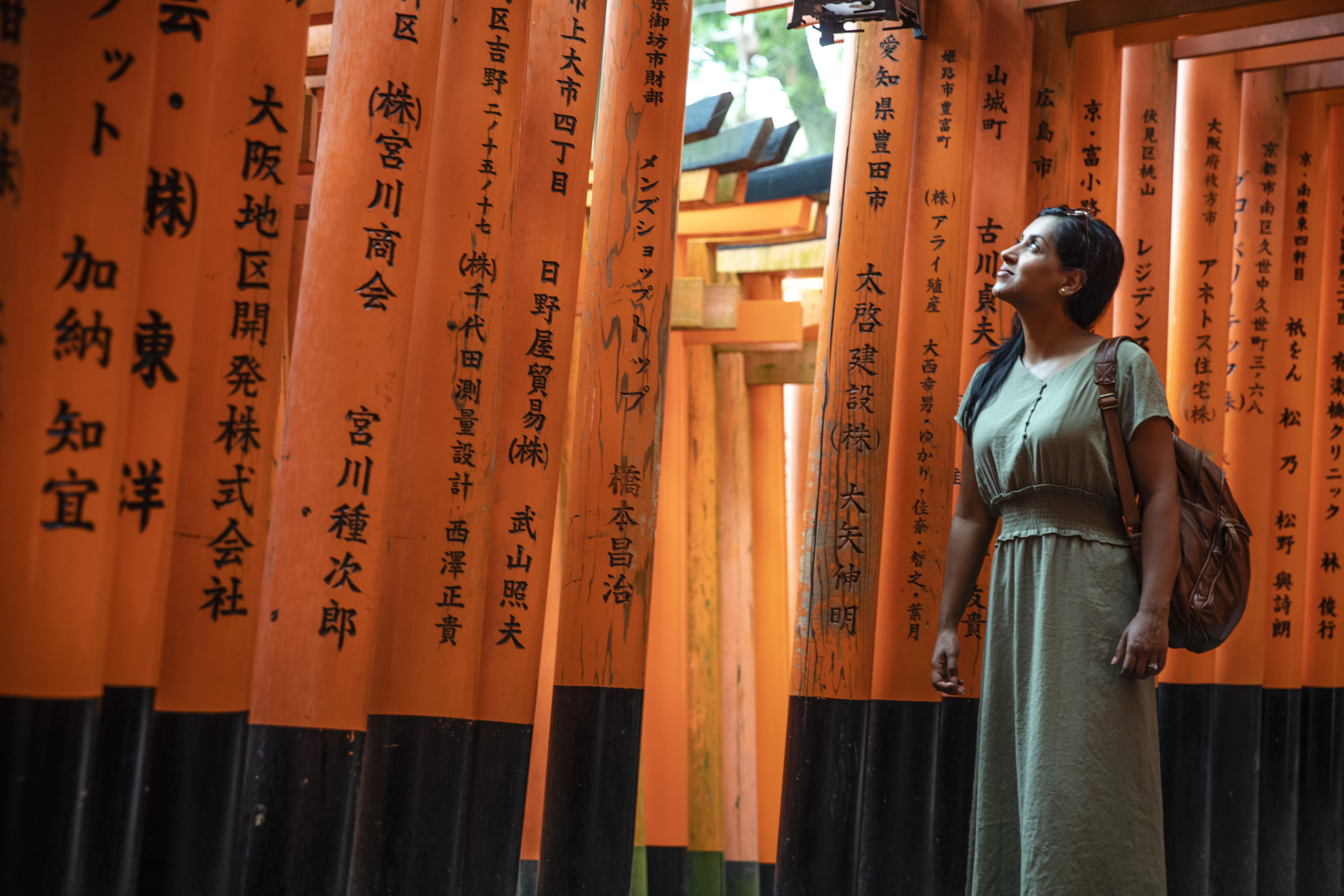
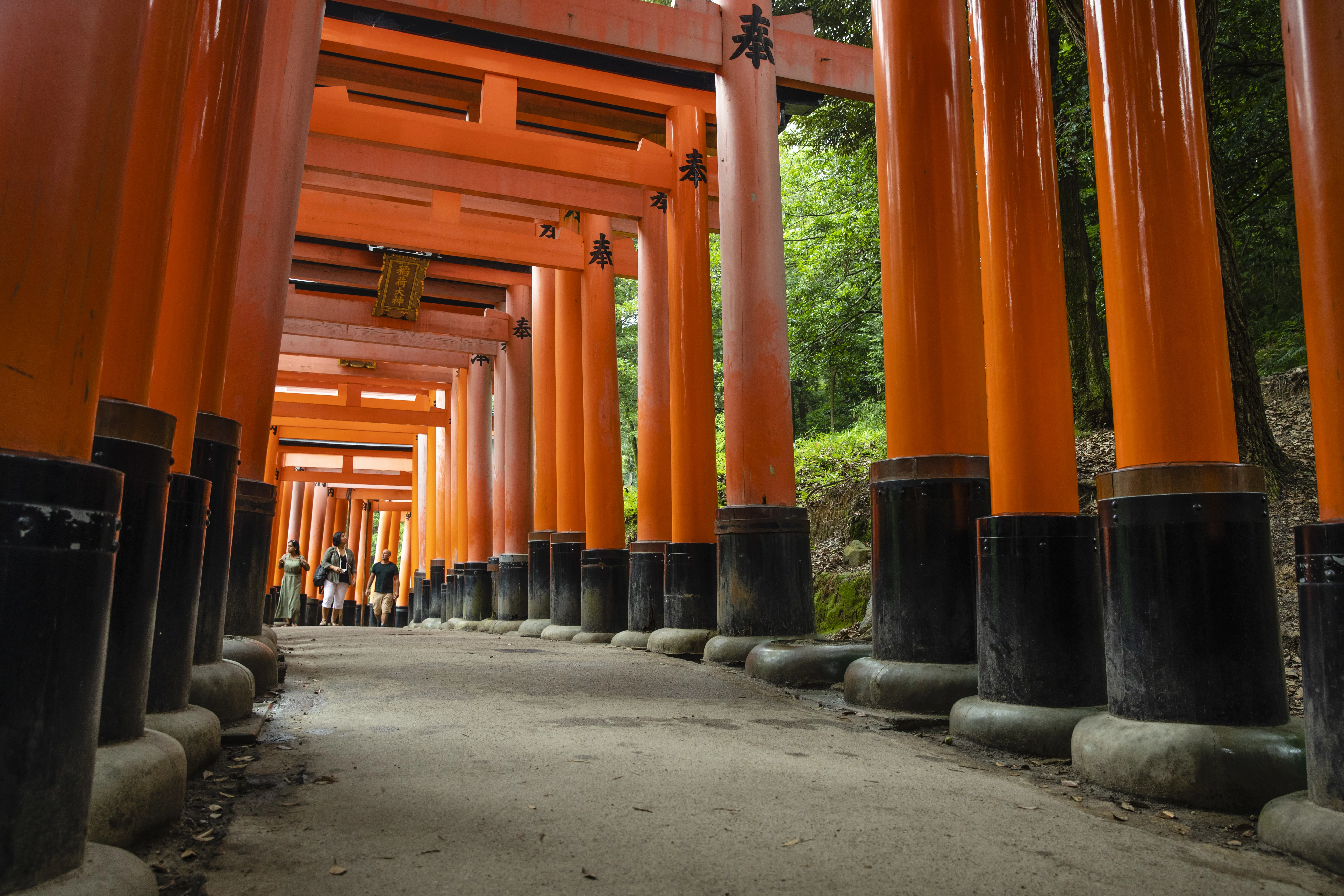
Visit Fushimi Inari Taisha and walk beneath thousands of torii gates. Free afternoon to explore Kyoto.
Day 7
Day 7: Kyoto/Hakone
Shinkansen to Hakone. Cruise on Lake Ashino-ko with potential views of Mt Fuji. Enjoy a traditional kaiseki dinner and unwind in an onsen. Main luggage is forwarded; pack an overnight bag.
Meals: Dinner
Day 8
Day 8: Hakone/Tokyo
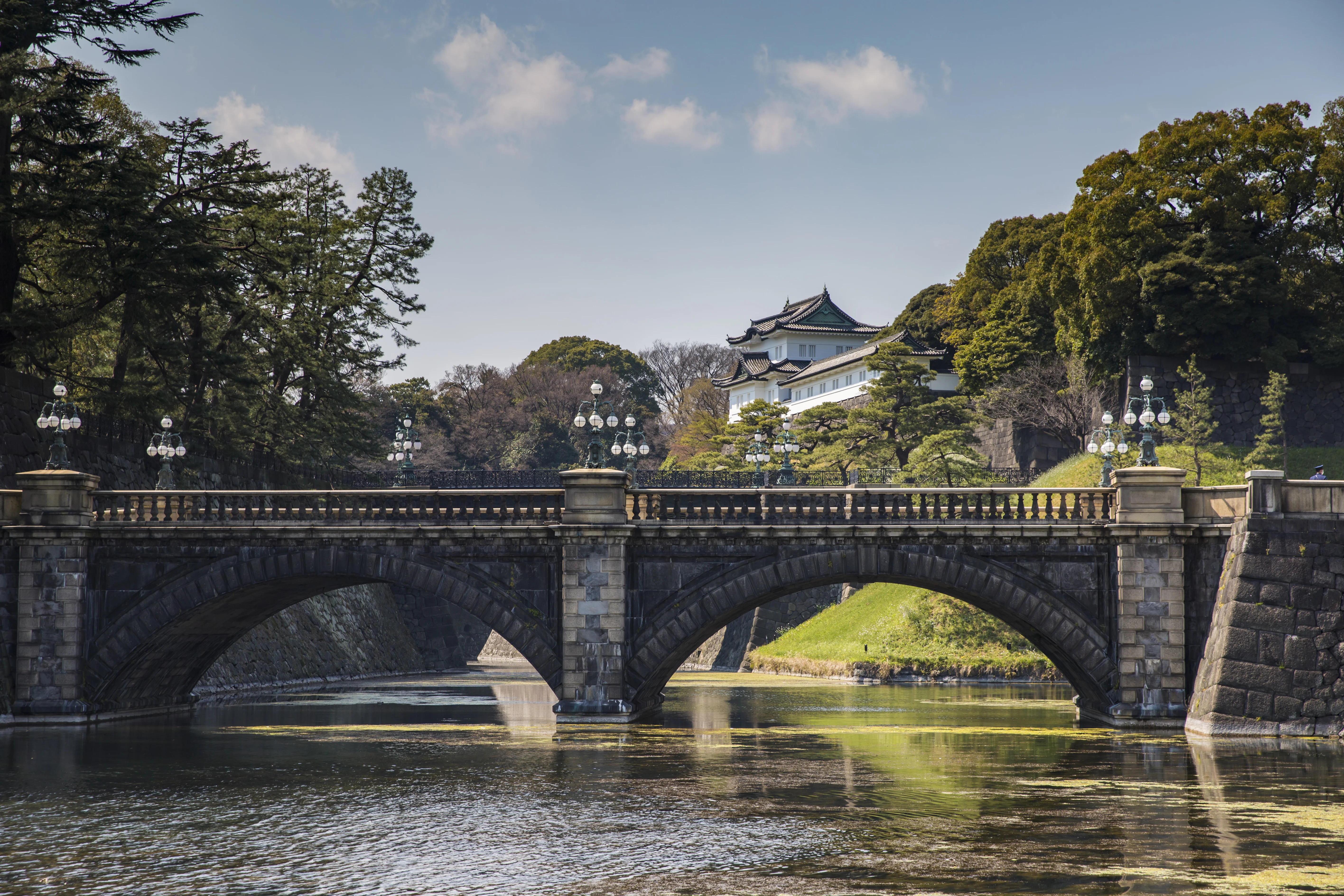
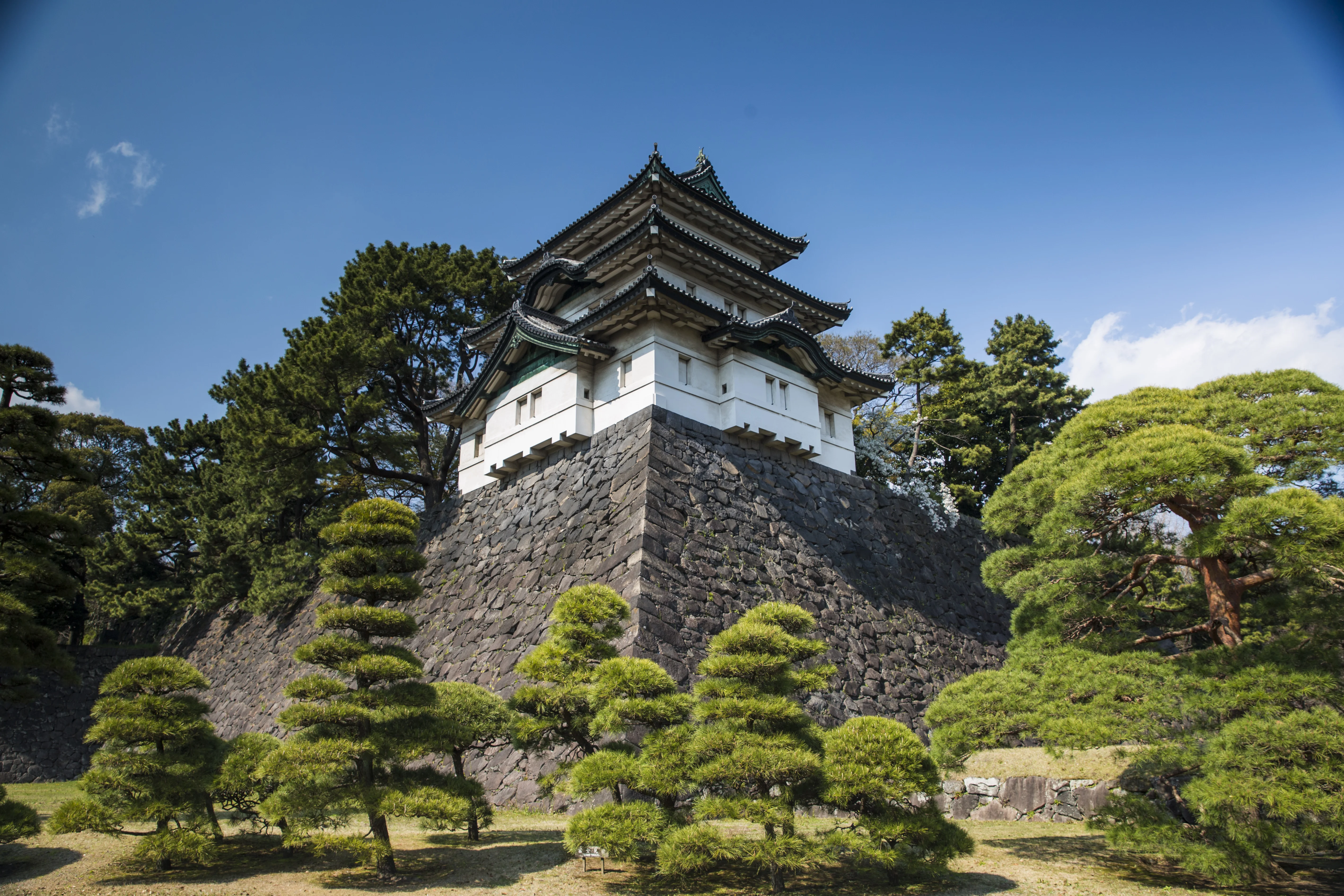
Travel to Tokyo, arriving before noon. Free time to explore: Ueno Park and museums, Akihabara, Harajuku, Ginza, or the Imperial Palace East Garden; get around by public transit.
Meals: Breakfast
Day 9
Day 9: Tokyo
Depart at any time. Consider booking post-tour accommodation to experience more of Tokyo.
What’s included
What’s not included
Additional information
Meals Included
3 breakfasts, 2 dinners
Group Size
15
Solo Travellers
Meals
Eating is a big part of traveling. G Adventures knows that worldwide, local cuisines define the cultures. We think sampling regional delicacies are intrinsic to truly experiencing the country. We want you to be able to try foods according to your individual tastes, comforts, and budgets.
Generally meals are not included in the trip price when there is a choice of eating options, to give you the maximum flexibility in deciding where, what and with whom to eat. It also gives you more budgeting flexibility. At times, meals will be taken together as a group. Other times, your CEO will point you in the direction of several delicious options, and you will have free time to pick and choose at will. Often in Japan it is fun to get some snacks and beverages with the salarymen in the evenings at small restaurants, and other times it is fun to sit with a few friends at a sushi train.
Your CEO will always strive to cater for all dietary requirements/preferences, but please keep in mind that Vegetarianism/Veganism is very uncommon in Japan so this may mean a more limited selection for you.
Please refer to the Meals Included and Budget Information for information regarding included meals on your trip. Japan’s kitchen is at your fingertips!
Minimum Age
You must be 18 to travel unaccompanied on a G Adventures tour. For minors travelling with a guardian over 21 years old, the minimum age is 12.
Local Dress
Important Notes
1. The most convenient way to get around Japan is by public transportation and on foot. The country’s train system is often considered one of the best in the entire world so the majority of our trips utilize this efficient train network. In this tour, you will need to be able to spend the majority of the day on your feet and carry your luggage through busy train stations and streets. On average, tours in Japan walk about 15,000 steps a day. Please ensure you are fit enough to carry your own luggage and spend most of the day on your feet.
2. COMBO TRIP
Please note that this tour combines with other G Adventures tours. As such, the staff and some travel companions on your tour may have previously been traveling together with G Adventures, prior to Day 1 of your tour. Likewise, some staff and travel companions may be continuing together on another G Adventures tour, after your trip concludes.
3. Tattoos
Tattoos are not common or widely accepted in Japan. There is no cause for concern, but do your best to cover your tattoos when possible and note that you may not be permitted to enter public spas or onsens (hot springs).
4. Luggage size restriction – Effective from May 2020 onwards
All G Adventures tours in Japan use the world-famous Shinkansen bullet trains, which have a restriction on maximum luggage size. Your luggage must be less than 160cm in total. This is roughly the size that most airline companies consider as “carry-on baggage” and allow in overhead storage compartments.
We strongly recommend bringing a day pack or backpack to use during the day, in addition to your carry-on sized luggage. Please see “What to take” under Tour details for more information.
5. ACCOMMODATION NOTE:
Please be aware that properties we stay in with only two stories may not have elevators installed and climbing the stairs with your luggage will be necessary.
6. Kansai Hiroshima Area Pass
Please note that only foreigners traveling as a tourist are able to use a Kansai Hiroshima Area Pass. If you are a Japanese citizen
esident or traveling on a student/business/military/diplomatic visa, please advise us at time of booking as you will not be able to take advantage of the rail pass.
7. Overnight Bag
While we ride the bullet train, your main luggage will be sent on Japan’s takkyubin service (luggage transfer) to the next destination. Please note, you will NOT have access to your main luggage for approximately 24 hours. You must pack an overnight bag with everything you’ll need until you’re reunited with your luggage the following day. Only one bag per passenger is permitted on the luggage transfer. If you have more, there will be an additional charge at the traveler’s expense.
Group Leader
CEO (Chief Experience Officer) throughout.
About Accommodation
Japan is one of the most populous countries in the world and space is at a premium. Therefore, hotels rooms are small! Additionally, most Japanese hotels do not have designated non-smoking rooms. Therefore, we ask hotels to deoderise rooms before check in. Please note rooms for couples usually still have two twin beds in Japan. Rooms with one large Queen or King bed are not common.
Ryokan are traditional inns found across Japan. Featuring tatami floors (soft mats of woven straw), futon beds, Japanese-style baths, cotton kimono (casual robe worn to lounge around or to head to the bath), and elaborate meals (often served in the comfort of your own room), a ryokan is the perfect place to experience traditional customs and hospitality. As ryokan are usually top tier accommodations, most guests stay only one night, often to celebrate a special occasion or holiday. Don’t be intimidated by the formalities inherent to a stay at a ryokan, your hosts will welcome you the same way they do all their guests. Have fun and enjoy this relaxing opportunity to learn more about Japan’s unique customs.
Minshuku are Japan’s answer to the Western bed and breakfast. Similar to ryokan, they have traditional features like tatami floors, futon beds, and Japanese-style baths. Minshuku are often family-run, and as such they offer a great opportunity to interact with local people and learn more about the nation’s customs. More affordable and simpler than ryokan, minshuku tend to have smaller guestrooms, shared bathroom facilities, and any included meals (traditional, local, and delicious) are served in a communal dining room.
Please note that some of the traditional Japanese inns used on this tour only offer shared bathing facilities. This means that individual shower stalls will not be available, instead several shower stations are available in an open, same-sex bathing area. Shared bathhouses and onsen (hot springs) are an essential part of Japan’s culture, traditionally serving as a place for men or women to gather, relax, and discuss the days happenings.
What to Take
It’s essential to pack as lightly as possible for rail travel in Japan. All G Adventures tours use the world-famous Shinkansen bullet trains, which have a restriction on maximum luggage size. You are expected to carry your own luggage, and though you will not be required to walk long distances with your luggage (max 30 minutes) we recommend keeping the weight under 10kg/22lb.
Any luggage brought on board must be less than 160cm in total (calculated as the sum of the height + width + depth of your luggage). This is roughly the size that most airline companies consider as “carry-on baggage” and allow in overhead storage compartments. We strongly recommend bringing a day pack or backpack to use during the day (for daily essentials like water, cameras, passport, etc.).
Please note that travellers who bring luggage that exceeds this restriction will be directly penalized by the Central Japan Railway Company. Any luggage between 160–250cm will require a fee of 1,000 JPY per luggage, for each leg of your train journey, and is strictly subject to availability. Any luggage over 251cm in total is prohibited on the Shinkansen trains.
If you absolutely must bring more than what fits into a single carry-on bag plus day pack, you may bring a second carry-on bag which also must be less than 160cm in total. Please note, however, that as with all G Adventures tours, you must be able to carry your luggage unassisted.
You will also be walking with your luggage in busy public train stations to catch connecting trains, so it is highly recommended that you travel light and have easy to handle luggage and are capable of walking up and down the stairs with your luggage without any assistance.
We recommend keeping the weight of your bags between 10-15kg/22-30lb. Suitcases are not recommended for G Adventures trips. Most travellers carry a backpack or rolling bag of small to medium size. A large bag will be an inconvenience to you and will slow you down!
Please note, you will NOT have access to your main luggage for approximately 24 hours on this trip, as we utilize Japan’s takkyubin service to conveniently and reliably transfer luggage from one location to another throughout the country and avoid hauling large bags on crowded trains. You must pack an overnight bag with everything you’ll need until you’re reunited with your luggage the following day.
Please make sure to pack a day backpack or a small/lightweight bag for the group overnight in Koyasan.
Spending Money
Every traveller is different and therefore spending money requirements will vary. Some travellers may drink more than others while other travellers like to purchase more souvenirs than most. Please consider your own spending habits when it comes to allowing for drinks, shopping and tipping. Please also remember the following specific recommendations when planning your trip.
Hiroshima Peace Memorial Park & Museum
Visit Hiroshima Peace Memorial Park, a green expanse dedicated to remembrance. Stand before the skeletal Genbaku Dome, preserved as a stark witness to the 1945 atomic blast.
Inside the Memorial Museum, artifacts and testimony trace the human story behind world events. Pay respects at the Children’s Peace Monument, where colorful origami cranes speak to resilience and a shared hope for peace.
Miyajima Island Ferry & Itsukushima Shrine
Sail the Seto Inland Sea to Miyajima Island, a wooded sanctuary where tame deer roam and sea breezes carry the scent of pine.
Visit Itsukushima Shrine and behold the celebrated floating torii gate, its vermilion pillars seeming to rise from the tide. Wander artisan streets for regional snacks like momiji manju before the ferry ride back.
Kyoto’s Gion District Evening Walk
Explore Gion, Kyoto’s historic entertainment quarter of wooden townhouses and lantern-lit lanes steeped in tradition.
Learn how geiko and maiko perfect classical arts, decode seasonal attire and hair ornaments, and pass discreet ochaya teahouses where performances unfold behind sliding screens. The neighbourhood’s hush contrasts beautifully with modern Kyoto.
Nijo Castle and Gardens, Kyoto
Step inside Nijo Castle, the Kyoto seat of the early Tokugawa shoguns and a UNESCO World Heritage Site.
Admire painted screens and stroll gardens after hearing the soft chirp of the nightingale floors, designed to signal intruders. When palace interiors are closed seasonally, your visit focuses on grounds or shifts to Kiyomizu-dera.
Fushimi Inari Taisha Shrine Walk
Walk beneath thousands of vermilion torii gates at Fushimi Inari Taisha, dedicated to the kami of rice and prosperity.
Trace shaded Inari mountain trails past fox statues and pocket shrines, hearing bamboo rustle and the tap of ema wish tablets. The rhythmic corridor of gates creates an otherworldly, meditative pace.
Lake Ashi Cruise with Views of Mt Fuji
Cruise Lake Ashi (Ashinoko), a serene caldera formed by ancient eruptions of Mount Hakone.
On clear days, look for Mt Fuji cresting above forested ridges, and glimpse lakeside torii and steaming valleys. The gentle voyage offers wide-open views ideal for photographs and quiet contemplation.
Kaiseki Dinner & Onsen Bathing in Hakone
Savour a traditional kaiseki meal, a multi-course celebration of seasonality where each dish is plated with artistry and precision.
After dinner, slip into mineral-rich onsen hot springs, observing simple bathing etiquette for a calm, restorative soak. The pairing of cuisine and bathing encapsulates Japan’s refined sense of balance and hospitality.
Mount Misen Hike & Ropeway, Miyajima (Optional)
Climb Mount Misen on Miyajima for quiet temples, primeval forest, and sweeping views over the Seto Inland Sea.
Opt to ride the ropeway partway (ticket at additional cost) and hike stone paths to scenic overlooks. This optional activity is bookable on tour and depends on weather and trail conditions.
Mount Koya Temple Stay: Shojin Ryori Dinner & Morning Prayers
Experience an overnight in a Buddhist temple on sacred Mount Koya. Sleep on tatami with futon bedding, slip into a yukata, and savour delicate shojin ryori—seasonal vegetarian cuisine rooted in monastic practice.
At dawn, listen as morning prayers and sutras echo across cedar-lined courtyards. The calm setting and respectful rituals offer a rare window into Japan’s living Buddhism and the contemplative pace of mountain life.
Oku-no-in Cemetery & Torodo Hall Walk, Koyasan
Walk the lantern-lined approach through Oku-no-in, Japan’s largest cemetery, beneath towering cryptomeria and soft moss.
Follow the 2km path to the mausoleum of Kobo Daishi, revered founder of Shingon Buddhism, and step into Torodo Hall where thousands of lamps glow continuously—a powerful invitation to quiet reflection.
Welcome Meeting & Osaka Orientation
Meet your CEO and group in Osaka for a relaxed orientation that sets the tone for the journey. Get practical guidance on tickets, packing for overnights, and how to navigate Japan’s rail network with confidence.
Receive cultural tips on onsen etiquette and dining customs, plus insider suggestions for eateries amid Dotonbori’s neon-lit canals. Ideal for questions and expectations, this hosted session helps you connect with fellow travellers from the start.