Your itinerary
Day 1
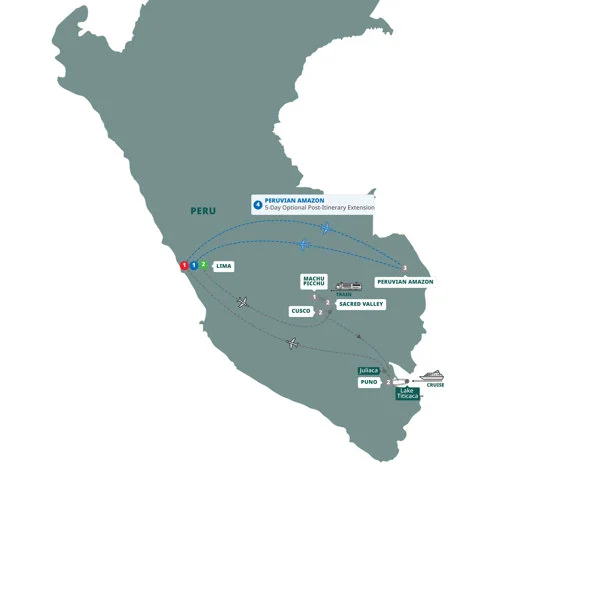
Day 1: Arrive Lima
Meet your local host on arrival and transfer to your hotel in Miraflores. In the evening, join your Travel Director and fellow travelers for dinner.
Meals: Dinner
Day 2
Day 2: Lima Sightseeing
Visit Casona San Marcos, enjoy a snack from a local vendor, and learn about the building’s history from Local Specialists. Take a workshop to learn to play the cajón and try basic steps of musica negra. Continue to Lima’s Main Square. Free time to explore Miraflores, including Kennedy Park or Pasaje de Ramón, or join an optional walking tour with a Local Specialist that includes Larcomar shopping center.
Meals: Breakfast
Day 3
Day 3: Lima – Cusco – Sacred Valley
Take a morning flight to Cusco. Enjoy lunch with views of the Sacred Valley, then meet a Shaman for a welcome ceremony.
Meals: Breakfast,Lunch
Day 4
Day 4: Sacred Valley
Meet farmers who grow Giant White Corn and learn how their methods combine ancestral knowledge with modern innovation. Watch a Marinera dance performance, take part in a hands-on cooking class, and learn to make a Pisco Sour with a Local Specialist.
Meals: Breakfast,Lunch
Day 5
Day 5: Sacred Valley – Machu Picchu
Visit Ollantaytambo and its Inca ruins, including stone terraces on a hillside. Travel aboard the Vistadome train along the Inca Trail to Machu Picchu; a light snack is included. Explore Machu Picchu’s temples, palaces and terraces with a Local Specialist.
Meals: Breakfast,Dinner
Day 6
Day 6: Machu Picchu – Cusco
Spend time exploring Machu Picchu independently. Return by train to the Sacred Valley, then continue toward Cusco. Stop to learn about native weaving and natural dyeing techniques, watch a weaving demonstration, and sample chicha at a family-run chichería.
Meals: Breakfast
Day 7
Day 7: Cusco Sightseeing
Visit the UNESCO-listed Sacsayhuamán fortress with a Local Specialist, then take a guided city tour and visit Korikancha. The afternoon is free to explore or join an optional experience, such as visiting the Choco Museum, Maras Salt Mines and Moray terraces, taking a Cusco walking tour after dark, or joining a Peruvian cooking class.
Meals: Breakfast
Day 8
Day 8: Cusco – Puno
Travel from Cusco toward Puno, crossing La Raya Pass and visiting the archaeological site of Raqchi. Share lunch and stories at a local family home, then paint a torito de Pucará, a traditional ceramic bull.
Meals: Breakfast,Lunch
Day 9
Day 9: Lake Titicaca Excursion
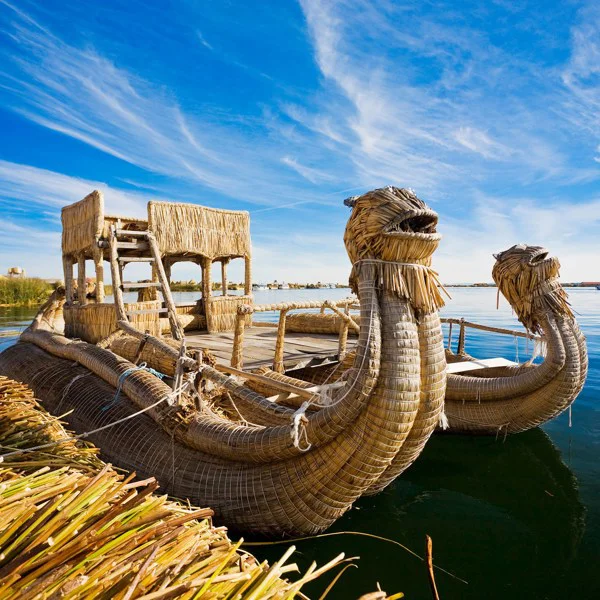
Cruise Lake Titicaca past the Uros people’s floating islands. Visit Taquile Island for a private tour of local knitting and weaving traditions. Return to Puno for an evening at leisure.
Meals: Breakfast,Lunch,Dinner
Day 10
Day 10: Lake Titicaca – Juliaca – Lima
Travel from the Lake Titicaca area to Juliaca and fly to Lima. The afternoon is at leisure to explore the capital.
Meals: Breakfast
Day 11
Day 11: Traverse the Inkaterra Forest
Fly to Puerto Maldonado, then travel by boat along the Madre de Dios River to the jungle lodge. Meet the guides for the Inkaterra Field Station and learn about the forest from a Local Specialist. Before dinner, take a boat expedition to look for caiman.
Meals: Breakfast,Lunch,Dinner
Day 12
Day 12: Step Into the Mystical Amazon
Walk the Inkaterra Canopy Walkway, then take a short boat ride into Tambopata National Reserve for a jungle hike to Sandoval Lake. Look for birds, monkeys, giant river otters, black caimans and anacondas, and watch the sunset over the lake before returning to the lodge for dinner.
Meals: Breakfast,Lunch,Dinner
Day 13
Day 13: Encounter the Biodiversity of the Amazon
Explore aguajales rainforest swampland on a MAKE TRAVEL MATTER® experience and learn how its vegetation has adapted to the habitat and wildlife. Visit an organic bio-orchard to see tropical plants and learn about their healing uses. At night, take a guided walk to look for nocturnal wildlife and hear the sounds of birds, mammals, insects and amphibians.
Meals: Breakfast,Lunch,Dinner
Day 14
Day 14: Back to Lima via Puerto Maldonado
After breakfast, return to Puerto Maldonado and fly to Lima. A local guide meets you on arrival and walks with you to the hotel beside the airport. The rest of the day is at leisure.
Meals: Breakfast
Day 15
Day 15: Depart from Lima
International flight departure at leisure.
Meals: Breakfast
What’s included
What’s not included
Additional information
Dining Summary
- 6 Dinner (D)
- 14 Breakfast (B)
- 7 Lunch (L)
Iconic Experience
- Lima: Take in the highlights of Lima, the ‘City of the Kings,’ including a panoramic view of the ancient districts. Join a local specialist for a visit to the UNESCO-listed Historic Center. Learn how before it was destroyed by earthquakes in the mid-18th century, observing how the historic buildings display a collaboration between local craftspeople and others from the Old World. Then drive along the coastline as you learn more about the fascinating history of Peru’s capital city.
- Lima: Dive into the rich history of Casona San Marcos, an ancient building in Lima now part of the property of a university. Learn to play the “cajón” (meaning “box” or drawer”) box-shaped percussion instrument played by slapping the faces with the hands, fingers, or sometimes implements. Continue your musical discovery trying the basic steps of “musica negra”, a dance that originated in Chincha (near Paracas) that is popular during over the Christmas season. Over your lesson, try a snack from a “pregonero”, a vendor who specializes in selling a typical snack through boisterous advertising in the city streets.
- Sacred Valley: We’ll Dive into Culture and meet a Quechua Shaman who will perform a ceremony welcoming you to Peru.
- Machu Picchu: Discover how Peru’s most famous cocktail, the Pisco Sour, is prepared with a Local Specialist. You’ll explore the ingredients, techniques and secrets behind the drink, as well as its cultural importance in Peru.
- Cusco: Visit the mystical Incan stronghold of Ollantaytambo. These famous ruins are a massive Inca fortress made of large stone terraces stretching out across a hillside. Walk among the stone platforms, the sun temple of six monoliths and the Princess Baths fountain ? the Baño de la Nusta at the base of the ruins flowing from carved stone into a pool. Over your exploration, learn how the old town is an Inca-era grid of cobblestoned streets and adobe buildings.
- Machu Picchu: Soak in every moment of your Machu Picchu tour in style as you descend to the Lost City in the clouds aboard the Vistadome train. Traveling the Inca Trail, you’ll traverse dramatic landscapes with a panoramic view of the soaring peaks, river, and ruins. Sit back and relax as you enjoy this multi-sensory journey complete with background music, an informative audio commentary highlighting interesting sites, and an included light snack.
- Machu Picchu: Take a shuttle to the top of the mountain where you’ll meet your local specialist for a guided hike of Machu Picchu. You’ll learn about Machu Picchu’s history and the use of each section of including ceremonial, storage, agriculture, temples, astronomical, and observatory as well as the possible reasons why the Incas left Machu Picchu.
- Cusco: Enjoy the flavors of chicha, a Peruvian corn beer. Hear about how chicha is brewed by the local indigenous women and its history dating back to the time of the Incas as a favorite drink of the Andes. Learn about the two types of chicha, alcoholic sour chicha de jora made from fermented jora corn and the non-alcoholic, sweet chicha morada.
- Machu Picchu: The ruins of Machu Picchu beckon yet again and we enjoy one final opportunity to reconnect with its story. Journey to take in the ruins at sunrise spending some time on your own to explore the hill-top fortress. Soak in every moment at this iconic site, making stops at points of interest while your guide shares their insights on the archaeological sites.
- Cusco: Join your Local Specialist for a guided walk through Cusco’s colonial center, including the nearby 13th-century Incan settlement of Koricancha. Here in Cusco’s Golden Temple of the Sun dedicated to the Sun God Inti, view the trapezoidal and irregular shapes and rounded edges. Note how the stones fit together and were built simply by placing them on top of each other without using any mortar. This staggered placement also enables them to withstand earthquakes.
- Cusco: Begin your day at the ruins of the UNESCO-listed Sacsayhuamán fortress overlooking Cusco. With zig zagging walls and ruins of giant stones, see how the shape and harmony of the landscape is similar to Machu Picchu. Stroll through this Incan architecture of sacred buildings such as residential buildings, towers, shrines, warehouses, roads and aqueducts. And while you may not be able to take in the grand scale, the complex design is based on the shape of the head of a puma, a sacred animal in Inca spirituality.
- Puno: Bring Peru’s culture to life as you decorate your own torito de Pucará – a colorful ceramic bull steeped in Andean tradition. Found on rooftops across the region, these painted icons symbolize protection and prosperity, offering a hands-on way to connect with local heritage through creativity.
- Lake Titicaca: Cruise the deep blue waters of Lake Titicaca with a Local Specialist, discovering its floating islands constructed from reeds by the Uros Indians.
- Lima: Join a local specialist for a gentle hike to explore jungle trails that snake between the roots of towering trees for an immersive introduction to the rich ecosystems of the rainforest. Here in the Amazon, you’ll find a staggering 540 bird species, 362 ant species (a world record you have to see to believe) and over 100 mammal species that have been registered within Inkaterra’s ecological reserve.
- Lima: Under the cloak of night, cruise the Madre de Dios River at night in search of wildlife that roams the riverbanks under darkness. Keep on the lookout for the likes of nightjars, owls, capybaras and caimans as you learn about the curious behavior and characteristics of this nocturnal world.
- Puerto Maldonado: Take a short boat ride to an uninhabited river island, where you can see the striking contrast of vegetation within the transition rainforest. Walk through jungle trails on this floodplain which provides the island with an ecosystem rich in birdlife, including the Amazonian umbrellabird, one of the most sought-after species by birdwatchers.
- Cusco: Climb the exhilarating Inkaterra Canopy Walkway for an unforgettable opportunity to observe the rainforest from its rooftop. Follow a sophisticated network of seven suspension bridges originally designed for scientific research strung between eight treetop observation platforms over 30 meters (100 feet) above the forest floor. This half-day, medium difficulty exploration is an immersive and colorful way to experience the jungle stretching out beneath you.
- Sandoval Lake: Embark on a half-day hike on a boardwalk jungle trail to Lake Sandoval, a glassy ox-bow lake tucked inside the protected Tambopata National Reserve. Board a dug-out canoe to paddle through eerie mangroves and glide out onto the palm-flanked lake, home to thousands of bird species as well as anacondas, black caimans, yellow spotted side-neck turtles, red howler monkeys and two endangered (and elusive) families of giant river otters.
- Sacred Valley: Discover the Amazon’s otherworldly realm of aguajales rainforest swampland on a gentle hike along a –200 meter (656 feet) walkway through this diverse ecosystem. Learn how vegetation has adapted to this atmospheric natural habitat and the exotic species of amphibians, reptiles, snakes, birds and mammals that are drawn here.
- Sacred Valley: Boldly venture out at night to discover some of the strange species that come alive under deep darkness in the Amazon. Wildlife activity greatly differs between day and night, as some creatures curl up and sleep while others employ ingenious adaption mechanisms to emerge. Enjoy a gentle, quiet stroll as your senses heighten to the mysterious nocturnal sounds of birds, mammals, insects, and amphibians wandering close by.
How You'll Travel
- Selected hotel dinners plus a locally hosted meal
- 4-star stays
- Deluxe coach, cruise and train travel, and select flights
Operated By
Trafalgar
Lima Welcome Dinner
Meet your Travel Director and fellow travellers over a welcome dinner in Lima. Share the table with the people who will accompany you through Peru, and hear an introduction to the places and traditions featured on the tour.
This hosted gathering offers a first taste of the capital’s dining culture and an opportunity to ask questions before exploring the Andes, Lake Titicaca and the Amazon.
Lima Historic Centre & City Tour
Explore Lima with a Local Specialist, taking in the Main Square and the UNESCO-listed Historic Centre. See the colonial buildings at the heart of the former Spanish viceroyalty and gain a broader view of the capital on a panoramic drive.
Known as the City of Kings, Lima layers Indigenous and Spanish histories beside the Pacific. Its historic architecture reflects the work of local craftspeople and builders from the Old World, as well as centuries of rebuilding after earthquakes.
Casona San Marcos, Cajón Music & Dance Workshop
Visit Casona San Marcos in Lima and learn about the historic building from Local Specialists. Try a snack from a street vendor before playing the cajón, Peru’s box-shaped percussion instrument, and practising introductory steps of música negra.
The workshop brings Lima’s Afro-Peruvian heritage into focus through rhythm and movement. Música negra has roots in coastal communities, including Chincha, while the cajón’s distinctive beat remains central to Afro-Peruvian performance.
Sacred Valley Shaman Welcome Ceremony
Meet a Quechua shaman in Peru’s Sacred Valley and take part in a special ceremony welcoming you to the country. Set among the Andean landscapes surrounding Cusco, the encounter offers an introduction to a living spiritual tradition.
In Andean communities, ceremonial practices express respect for the natural world and relationships between people, place and ancestry. Hearing from a local practitioner adds a cultural perspective to the mountains and valley communities you encounter.
Giant White Corn Farm & Be My Guest Lunch
Meet Sacred Valley farmers who cultivate Peru’s Giant White Corn during a hosted Be My Guest experience. Learn how ancestral growing methods sit alongside newer agricultural techniques, and share lunch while hearing directly from your local hosts.
The Sacred Valley’s fertile fields produce the unusually large-kernelled corn for which the region is known. This visit connects an ingredient found in Peruvian kitchens with the knowledge and work of the families who grow it.
Marinera Dance Performance
Watch a Marinera performance in the Sacred Valley, following the dancers’ poised footwork and sweeping handkerchiefs. This partnered dance uses gesture and movement to convey a playful courtship without words.
Associated with Peru’s coastal culture, the Marinera reflects Spanish, Indigenous and African influences. Seeing it performed offers a vivid contrast to the valley’s Inca heritage and a closer look at the many traditions that shape Peruvian identity.
Sacred Valley Cooking Class
Roll up your sleeves in a hands-on cooking class in Peru’s Sacred Valley. Work with local ingredients and techniques as you prepare food rather than simply sample it, gaining a practical introduction to the flavours of the region.
The fertile valley has long supplied Andean kitchens with crops such as corn and potatoes. Preparing a dish here connects those ingredients to the surrounding farmland and to the everyday skills that keep Peruvian food traditions alive.
Pisco Sour Workshop
Learn to make a Pisco Sour with a Local Specialist during your time in the Sacred Valley. Explore how the ingredients are combined and practise shaking Peru’s best-known cocktail.
Made with pisco, citrus and a frothy finish, the drink is closely associated with Peruvian hospitality. The workshop gives you a chance to understand the preparation behind a familiar menu staple and to hear why it holds a special place in the country’s food and drink culture.
Ollantaytambo Inca Fortress
Explore the Ollantaytambo ruins in the Sacred Valley, walking among monumental stone terraces that climb the hillside above the village. Look for the Sun Temple’s great monoliths and the carved-stone fountain known as the Princess Baths.
Ollantaytambo preserves both an Inca stronghold and a town whose street grid dates to Inca times. Its steep terraces and carefully fitted stonework reveal the scale of construction achieved in this mountain landscape.
Vistadome Train to Machu Picchu
Ride the Vistadome train through the Urubamba Valley towards Machu Picchu, with broad views of the river, mountain slopes and changing vegetation. Settle in for the scenic rail journey with an included light snack and onboard commentary.
This route traces the valley below the Inca Trail as the high Andean landscape gives way to cloud forest. The train’s panoramic windows make the journey an experience in its own right, revealing the dramatic setting of the archaeological site.
Machu Picchu Guided Visit & Return Exploration
Explore Machu Picchu with a Local Specialist, walking among its terraces, temples and ceremonial spaces high above the Urubamba Valley. Hear how different parts of the Inca citadel may have been used, from agriculture and storage to ritual and observation.
A further visit gives you time to take in the stonework and mountain setting at your own pace. Built in the 15th century, the UNESCO-listed site remains distinctive for its precise construction and its position between Andean peaks and cloud forest.
Sacred Valley Weaving & Natural Dyes
Meet local weavers in the Sacred Valley for a demonstration of traditional textile-making. See how natural materials are used to dye fibres and learn about techniques passed down through Andean communities.
Colour and pattern can carry meaning in Andean textiles, connecting a finished piece to its maker and place of origin. This community-focused visit brings attention to the skill behind the cloth and to the people sustaining the craft today.
Family-Run Chichería Visit
Visit a family-run chichería in the Sacred Valley and sample chicha while learning how this corn-based drink is prepared and shared. Hear about its place in Andean life from people who continue the tradition.
Chicha has roots stretching back to Inca times. Varieties include fermented chicha de jora and sweet, non-alcoholic chicha morada. Tasting it in a local establishment connects the drink’s long history with an everyday social space.
Sacsayhuamán Archaeological Site
Walk through Sacsayhuamán with a Local Specialist, examining the enormous fitted stones and zigzagging walls above Cusco. From this elevated archaeological site, look across the former Inca capital while learning about the complex’s design and uses.
Part of Cusco’s UNESCO-listed heritage, Sacsayhuamán demonstrates Inca stoneworking on a monumental scale. Its surviving walls suggest the size of a site that once included a wider network of buildings and ceremonial spaces.
Cusco Guided Tour, Qorikancha & Cathedral
Walk through Cusco’s historic centre with a Local Specialist, visiting Qorikancha, the Inca Temple of the Sun, and Cusco Cathedral. See how Inca stone foundations and Spanish colonial buildings occupy the same city streets.
Qorikancha was among the Inca Empire’s most important sacred sites; its closely fitted masonry remains a testament to Inca engineering. At the Plaza de Armas, the cathedral offers another perspective on Cusco’s layered religious and artistic history.
Raqchi Archaeological Site
Explore the archaeological site of Raqchi in the Andean highlands between Cusco and Puno. Walk through the remains of a settlement linked to the Inca road network and consider its role in travel and life across the empire.
Raqchi is especially known for the remains of the Temple of Wiracocha and its extensive storage structures. The site reveals a different side of Inca achievement: the organisation needed to connect distant communities across difficult terrain.
Andean Family Lunch & Torito de Pucará Painting
Share lunch and stories in a local family home on the route to Puno, and decorate your own torito de Pucará. Painting the small ceramic bull offers a hands-on introduction to a symbol seen throughout the southern Peruvian highlands.
Often placed in pairs on rooftops, these brightly coloured bulls are associated with protection and prosperity. The hosted meal and workshop bring a regional custom into focus through conversation and the chance to make one yourself.
Lake Titicaca Cruise & Uros Floating Islands
Cruise Lake Titicaca with a Local Specialist and see the floating islands made by Uros communities. Learn how totora reeds are used to construct and maintain these distinctive islands on the deep-blue waters of the high-altitude lake.
Lake Titicaca sits on the border of Peru and Bolivia and holds an important place in Andean traditions. The Uros islands show how local communities have adapted natural materials to life on the water across generations.
Taquile Island Textile Traditions
Visit Taquile Island on Lake Titicaca for a private introduction to its renowned weaving and knitting traditions. Meet Indigenous residents, learn how textiles express identity and social status, and share a home-cooked lunch with the community.
Taquile’s textile art is recognised by UNESCO as intangible cultural heritage. Seeing the work in the place where it is made reveals the roles of both men and women in preserving these skills, while the visit directly supports the local community.
Inkaterra Rainforest Introduction
Explore forest trails near Inkaterra’s Amazon Field Station with a Local Specialist. Walk beneath towering trees, observe the roots and vegetation around you, and learn how the rainforest supports its varied wildlife.
Near Puerto Maldonado, this part of the Peruvian Amazon is known for its birdlife and other species. A guided walk helps you notice the smaller details of the ecosystem, from changes in plant growth to the calls coming through the canopy.
Madre de Dios Nocturnal Wildlife Cruise
Cruise the Madre de Dios River after dark with a guide, scanning the banks for caimans and other wildlife active at night. Listen for birds and watch how the river changes as daylight fades over the Amazon.
Nightjars, owls and capybaras are among the animals that may be encountered, though sightings depend on conditions and wildlife behaviour. The boat expedition offers a quiet way to experience the rainforest’s nocturnal rhythms.
Amazon River Island Nature Walk
Walk the trails of an uninhabited river island near Puerto Maldonado and observe the changing vegetation of its floodplain environment. A short boat ride provides access to this quieter corner of the Amazon.
The island’s transitional habitat attracts varied birdlife, making it a rewarding place to pause and look closely. Species may include the striking Amazonian umbrellabird, though wildlife sightings are never guaranteed in the rainforest.
Inkaterra Canopy Walkway
Climb the Inkaterra Canopy Walkway near Puerto Maldonado and cross suspension bridges between treetop observation platforms. From above the forest floor, look into a layer of the rainforest that is difficult to appreciate from ground level.
Originally designed to support scientific observation, the walkway offers a different perspective on the Amazon’s vegetation and wildlife. The bridges rise more than 30 metres in places, opening views across the canopy while keeping you immersed in the forest.
Sandoval Lake & Tambopata Reserve
Hike through Tambopata National Reserve to Sandoval Lake, following a jungle trail towards the palm-fringed oxbow lake. Take in the birdcalls and dense vegetation, and explore the lake environment while looking for wildlife.
Sandoval is habitat for species including monkeys, black caimans and giant river otters, although sightings cannot be promised. Its still water and surrounding forest make it a distinctive setting for observing the Amazon, particularly as the light softens towards sunset.
Aguajales Swamp & Organic Bio-Orchard
Explore an Amazonian aguajal, a swamp ecosystem associated with aguaje palms, and learn how its plants and animals have adapted to wet ground. Visit an organic bio-orchard to see tropical plants up close.
With a local guide, hear about the uses of plants in Indigenous communities, including traditional medicinal knowledge. Together, the swamp and orchard reveal two ways of understanding rainforest biodiversity: observing how species live and learning how people have worked with them.
Amazon Palmetum Conservation Visit
Explore an Amazonian Palmetum devoted to rainforest restoration and conservation. Discover a collection of 19 Amazonian palm species within a 30-hectare plot and learn to distinguish plants that can otherwise blend into the forest.
Palms contribute to the structure of the rainforest and provide resources for wildlife and people. This visit turns attention to the plant diversity behind the Amazon’s green canopy and the work involved in protecting it.
Amazon Nocturnal Forest Walk
Walk quietly through the Amazon at night with a Local Specialist, listening for insects, amphibians, birds and mammals beyond the trail. Your guide helps interpret the sounds and signs of a forest that feels different after dark.
Many rainforest creatures are more active at night, while others retreat from view. Moving at a gentle pace gives you time to notice the layers of sound and understand how animals adapt to this changing daily cycle.
Miraflores Guided Walking Tour
Discover Miraflores on a guided walking tour with a Local Specialist, exploring highlights of Lima’s coastal district, including the Larcomar shopping centre. Hear local insights as you get to know a neighbourhood of lively streets and Pacific-facing viewpoints.
Miraflores shows a contemporary side of Peru’s capital, distinct from the colonial centre. This Optional Experience is at additional cost and bookable on tour for travellers who prefer a hosted introduction to the area.
Cusco Choco Museum Visit
Visit Cusco’s Choco Museum to explore a flavour closely associated with Peru’s wider cultural and agricultural story. Browse the exhibits and learn more about cacao and its transformation into chocolate.
Cacao has a long history in the Americas, while chocolate remains a familiar way to encounter it today. This Optional Experience offers a food-focused alternative to archaeological sightseeing. It is at additional cost and bookable on tour.
Maras Salt Mines & Moray Terraces
Explore the Maras Salt Mines and Moray terraces on an optional excursion from Cusco. See the patterned salt pools at Maras and the concentric agricultural terraces cut into the earth at Moray.
Families have harvested salt at Maras for generations, while Moray offers a striking example of Inca landscape design. The two sites provide contrasting views of how people have used the Sacred Valley’s terrain and resources. This experience is at additional cost and bookable on tour.
Cusco After-Dark Walking Tour
Walk through Cusco after dark on an optional guided tour, experiencing the historic centre when its plazas and stone streets take on an evening atmosphere. A local guide adds context to the city’s Inca and colonial layers.
Once the capital of the Inca Empire, Cusco remains a place where different eras are visible side by side. This walk offers a fresh perspective on familiar landmarks and is at additional cost and bookable on tour.
Peruvian Cooking Class in Cusco
Prepare classic Peruvian recipes during an optional cooking class in Cusco. Practise local techniques and learn about the ingredients used to build the flavours of the dishes you make.
Cusco’s kitchens draw on Andean crops and a broader mix of Peruvian culinary influences. A hands-on class offers a different way to engage with that heritage and take a practical skill home. This Optional Experience is at additional cost and bookable on tour.