Your itinerary
Day 1
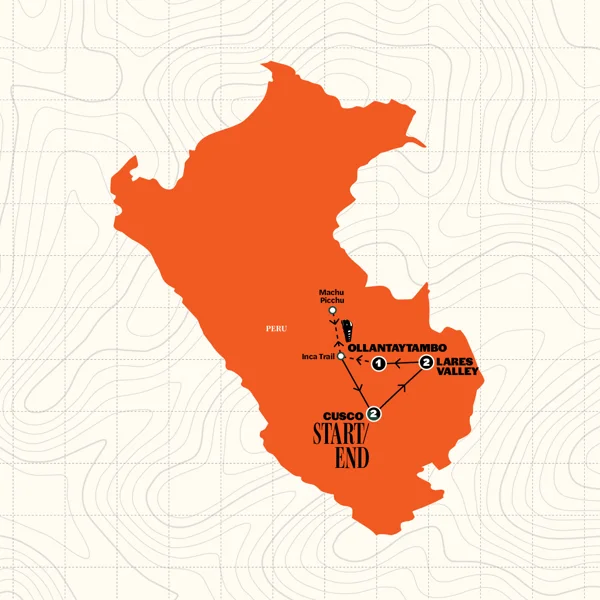
Day 1: Start Cusco
Meet your fellow Inca Trail adventurers and take a morning city walking tour, including San Pedro Markets, Cusco Cathedral, San Blas and Coricancha. The rest of the day is free to explore Cusco, visit artisan shops and colonial architecture, try local cuisine or pick up last-minute trekking items.
Day 2
Day 2: Cusco to Lares Valley Trek
Leave Cusco bright and early and trek to Cancha Cancha, stopping for lunch by the river, prepared by the trekking chef. Visit this isolated community, more than 12,000 feet high, where there are no roads. After pitching tents, visit a local family and learn about traditional Andean village life, with interpretation from your guide. After dinner, see the Inca constellations.
Meals: Breakfast,Lunch,Dinner
Day 3
Day 3: Lares Valley Trek
Hike for about 7 hours through glaciers, lakes, rugged valleys and mountain scenery, with alpacas, llamas, Caracara falcons and Andean geese along the way. Reach the summit, then visit Q’oalay village, where local indigenous people welcome visitors and there is a chance to learn Quechua. Camp beside Q’oalay Lake.
Meals: Breakfast,Lunch,Dinner
Day 4
Day 4: Lares Valley Trek to Ollantaytambo
Head to Quiswarani community for views of the seven waterfalls and Colquecruz mountains. Meet local indigenous children and have the opportunity to visit their school. Spend one hour at Lares Hot Springs, bathing in the natural volcanic springs at 3,100 m (10,170 ft). Travel to Ollantaytambo for dinner and an overnight stay at a hotel.
Meals: Breakfast,Lunch,Dinner
Day 5
Day 5: Ollantaytambo to Cusco via Machu Picchu and Inca Trail Trek
Travel to the train station and take the Inca Express to Km 104, where the hike begins at about 6,000 feet above sea level. Cross the Urubamba River on a footbridge and visit the Inca site, arriving at the Sun Gate for views of Machu Picchu. Explore the site in the afternoon on a guided tour. Take the bus to Aguas Calientes, then travel back to Cusco via Ollantaytambo.
Meals: Breakfast,Lunch,Dinner
Day 6
Day 6: End Cusco
The Inca adventure ends in Cusco.
Meals: Breakfast
What’s included
What’s not included
Additional information
Operated By
Contiki
Dining Summary
- 5 Breakfast (B)
- 4 Lunch (L)
- 4 Dinner (D)
FAQs
- Lima: Flexibility is key when you’re travelling in Peru. The itinerary will give you a good idea of what your trip is gonna look like. But routes, schedules, hotels & modes of transportation may be subject to change without prior notice because of local circumstances or events beyond Contiki’s control.
- Mexico City: You’ll now book and pay for your Free Time Add-Ons through WeTravel — a simple website link where you can browse all the FTAs, pick what you’re keen on, and pay directly by card, in any currency. You’ll get the link in your Welcome Email, usually 3–5 days before your trip starts. Once you’re in, it’s easy: check out the pics, descriptions and prices, add your chosen experiences to your cart, then check out online. You can book before your trip starts or while you’re on the road, up until each activity’s booking deadline.Missed the link? No stress. Your Trip Manager can share it with you on trip too.
- Iguazú Falls: You’ll need to bring USD cash with you, as it’s the only way to pay for the Free Time Add-Ons on this trip. You’ll receive the cost of each option in your Welcome Email. Plus, we recommend you bring Visa and/or Master Card (American Express or Discover cards aren’t widely accepted).
- Iguazú Falls: You’ll usually receive a 10% service charge on your restaurant bill. But tipping isn’t a requirement. Either way, if you’re pleased with your service, a tip will always be appreciated! We recommend tipping 12% of the total bill.
- Lima: It depends on where you’re travelling to. Cities in Peru have lots of ATMs (just be careful of those sneaky fees). But you’re better off carrying cash when visiting rural places.
- Lima: Peru’s climate varies by region – subtropical desert on the coast (AKA la Costa), rainy and tropical in the Amazon forest (AKA la Selva), and temperate in the Andes (AKA la Sierra), with cold peaks. Summers are wet in the mountains and dry on the coast. Annual temperatures range from 83°F (28°C) in the rainforest to 45°F (7°C) in the highlands. So pack accordingly!
- Lake Titicaca: Please check the latest travel info from the Centers for Disease Control and Prevention if you’re travelling to Peru. We also recommend that you consult your local health clinic or doctor for more details.
- Iguazú Falls: Drinking tap water isn’t recommend. So, please stick to bottled water (even when brushing your teeth). There will be plenty of opportunities to purchase bottled water during the trip.
- Parts of this trip go above 2800 metres (9200 feet) where it’s common for some travellers to experience shortness of breath, nausea or light-headedness. While it’s usually not severe in most cases, it’s always best to be prepared. That’s why we recommend that you carry your own medication and read a trusted health advisory for tips on how to combat altitude sickness. Plus, your Trip Managers will give you loads of helpful advice and before and during the trip.
- Iguazú Falls: Most places use similar plugs to the US and Europe, but it’s a good idea to bring a circular two-prong adapter just in case. No voltage converter is needed for devices like phones and laptops, but you may need one for high-powered devices (e.g., hairdryers).
- Machu Picchu: Keep it light but essential: comfy hiking boots, moisture-wicking clothes, layers for all conditions, a rain poncho, a small daypack, sun protection, water, energy snacks, a basic first aid kit, and any personal medications. Don’t worry tho, your Trip Manager will send a full list of things you should pack before your trip starts.
- Cusco: You can bring 1 hand luggage + 1 suitcase or backpack per person. The maximum suitcase size is 73cm x 50cm x 25cm (29” x 20” x 10”) & weight of 20kg (44lbs). Remember to keep it light as you’ll have to carry and lift your own luggage at times and even walk short distances with it. For this trip, we’ll sort you out with a duffle bag to pack your essentials (including your sleeping bag). Just be sure to keep it all under 6kg. You’ll only access your duffel bag at campsites (porters will carry it for you!). Your main luggage will be at the Cusco hotel storage while you conquer the trail. After your Machu Picchu moment, you’ll head back to Cusco to repack and return the duffle on your final night.
- Lima: Safety: You’ll stay in expert-picked areas that are safe and convenient. While you’re on your own, it’s best to stick to safe areas, follow your gut & of course, use your common sense (avoid dark alleys, don’t leave valuables unattended, use crosswalks). Water & Food: It’s best to avoid drinking tap water in any of these countries. Stick to bottled water (even for brushing your teeth!). You’ll have plenty of opportunities to purchase them on your trip. Toilets: We’ll make a service stop along the way where you can use a toilet. But remember to toss used toilet paper in the trash, not the toilet (don’t wanna clog it up!) WiFi/Cell Service: WiFi is available at most accommodations and restaurants, but it can be slow. It’s best to check with your phone provider about international plans.
Included Experience
- Cusco: Your chance to pick up some mementos at San Pedro Markets and then see Cusco Cathedral, San Blas and Coricancha.
- Cusco: It’s always best to hang out with someone who knows the trail inside out. That way, we can concentrate on taking epic pics.
- Cusco: Woo hoo! We’re getting all starry-eyed as we talk to the rest of the Contiki crew about the life-changing moment we’re about to experience. So get your Inca Trail Permit from your Trip Manager and let’s get started!
- Cusco: We’ve got your back when it comes to organising all the camping stuff. So just bring your fabulous self and a cozy sleeping bag (not included with the rest of the equipment). And maybe some Pringles?
- Machu Picchu: It’s the moment you’ve been waiting for! Time to explore the Incan citadel with your new Contiki fam. #travelgoals
Lares Hot Springs
Soak in the Lares Hot Springs, natural geothermal pools set among the mountains at approximately 3,100 metres above sea level. An hour in the warm water offers a welcome pause from hiking the Lares Valley’s high-altitude trails.
The springs draw on the region’s volcanic activity, creating a distinctive bathing experience amid crisp Andean air. Enjoy the contrast of mineral-rich warmth and mountain surroundings while taking time to rest your legs.
Cusco Walking Tour
Explore Cusco on a guided walking tour, taking in the cathedral, the San Blas neighbourhood, Coricancha and the bustle of San Pedro Market. Stone lanes and artisan workshops offer a close-up introduction to the former Inca capital.
Discover how Inca foundations and Spanish colonial architecture share the city’s streets. At Coricancha, once a major Inca temple, the layers of Cusco’s history are especially tangible.
Lares Valley Trek & Cancha Cancha Community Visit
Hike into the Lares Valley with a trail guide, following mountain paths toward Cancha Cancha, a remote Andean community more than 12,000 feet above sea level. A riverside lunch prepared by the trekking chef is part of the experience.
Visit a local family with your guide interpreting to learn about daily life in a roadless mountain village. Camping beneath the high-altitude sky brings a chance to hear how Inca constellations still inform local agricultural traditions.
High-Andes Hike, Q’oalay Village & Lakeside Camp
Take on a seven-hour guided hike through the high Andes, with views of glaciers, lakes and rugged valleys. Watch for alpacas, llamas, caracara falcons and Andean geese along the mountain trails.
Visit Q’oalay village, where local residents welcome the group and offer a chance to learn a little Quechua, the language spoken across the Inca world. The route reaches a campsite beside Q’oalay lake, surrounded by expansive mountain scenery.
Quiswarani Waterfalls & Community Visit
Walk toward the Quiswarani community for views of its seven waterfalls and the Colquecruz mountains. The trail provides a close look at the streams and steep terrain that shape this part of the Lares Valley.
Meet local children, with an opportunity to visit their school and learn more about life in a high-Andean settlement. The visit adds a human perspective to the mountain landscape beyond its dramatic scenery.
Km 104 Inca Trail Hike & Sun Gate
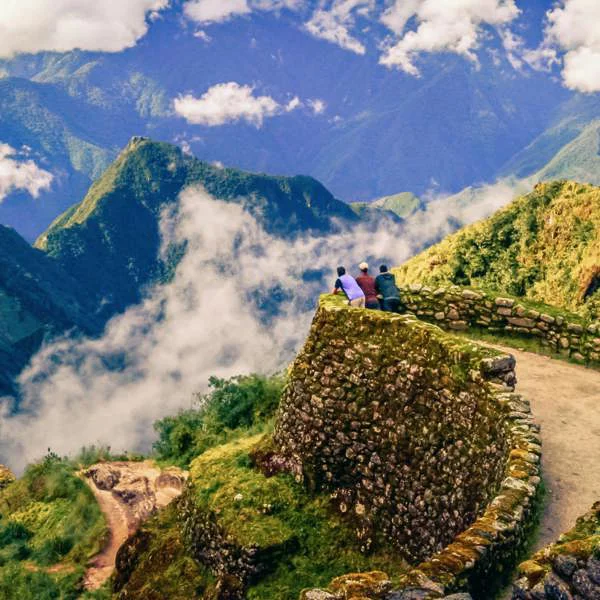
Hike the Inca Trail from Km 104 with a guide, crossing the Urubamba River by footbridge and passing an Inca archaeological site along the route. Stone paths and mountain scenery make this a rewarding approach to Machu Picchu on foot.
Reach the Sun Gate, or Intipunku, for a view of the citadel framed by Andean peaks. Historically an entrance on the Inca road into Machu Picchu, it gives the first sight of the site a sense of arrival.
Guided Tour of Machu Picchu
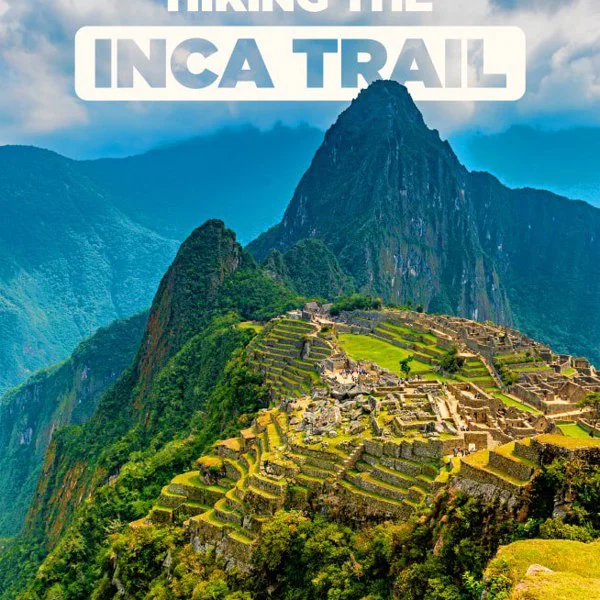
Explore Machu Picchu with a guide and see the principal features of the Inca citadel set above the Urubamba Valley. Learn how its terraces, stone buildings and carefully fitted masonry relate to the site’s mountain setting.
Built in the 15th century, Machu Picchu is a UNESCO World Heritage Site celebrated for the way Inca engineering works with the surrounding landscape. The guided visit gives context to the ruins while leaving room to absorb the scale of the setting.