Your itinerary

Day 1
Adventure starts in Marrakech
Buzzy Marrakech is a whirlwind of tradition and culture, an invigorating introduction to Morocco. However, today is a relaxing one, a chance for our group to congregate and settle in.Usually around 6pm, you’ll say hello to your tour leader and fellow travellers at the hotel, where we gather as a group for the first time to get to know each other and learn more about the adventures ahead.Your tour leader then ensures a big Moroccan welcome over dinner together.Want to explore further? Secure pre-tour nights through your sales representative.Upgrade to a suite today – speak to your sales representative for more details
Meals: Dinner
Day 2
Explore the enormous Hassan II Mosque in Casablanca • To the capital, Rabat
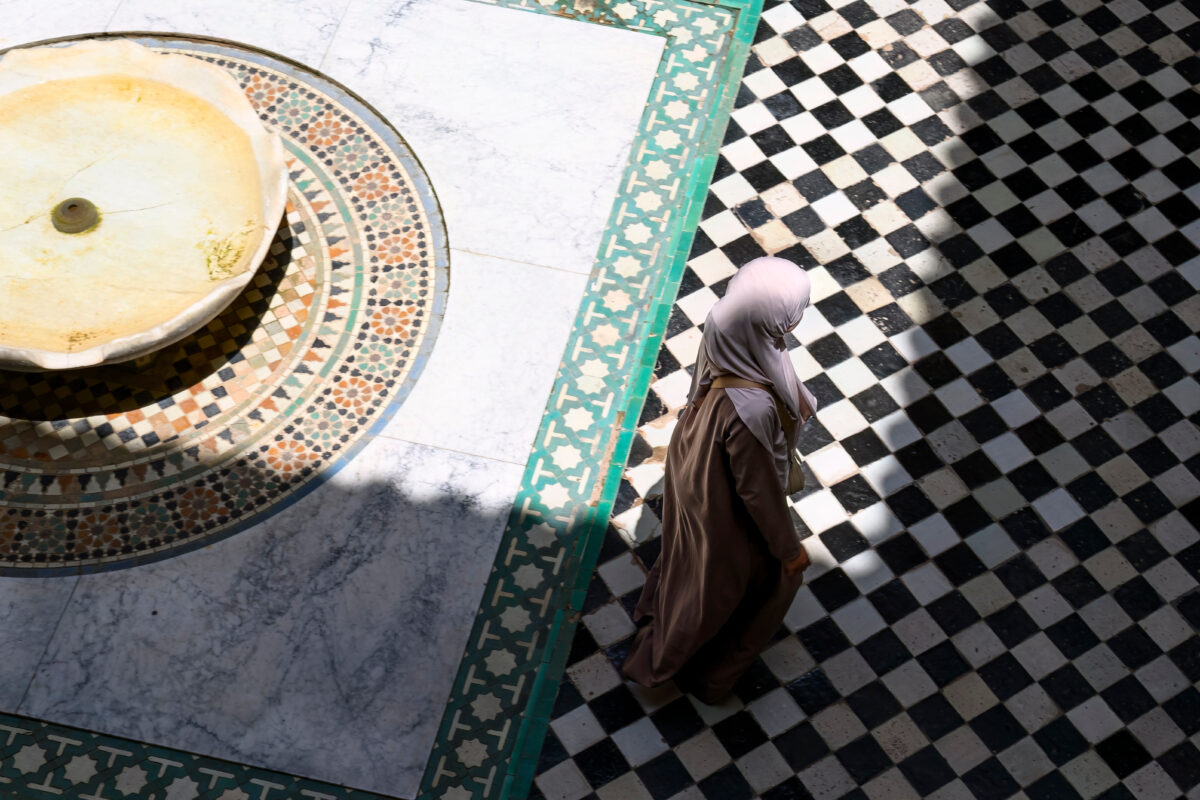
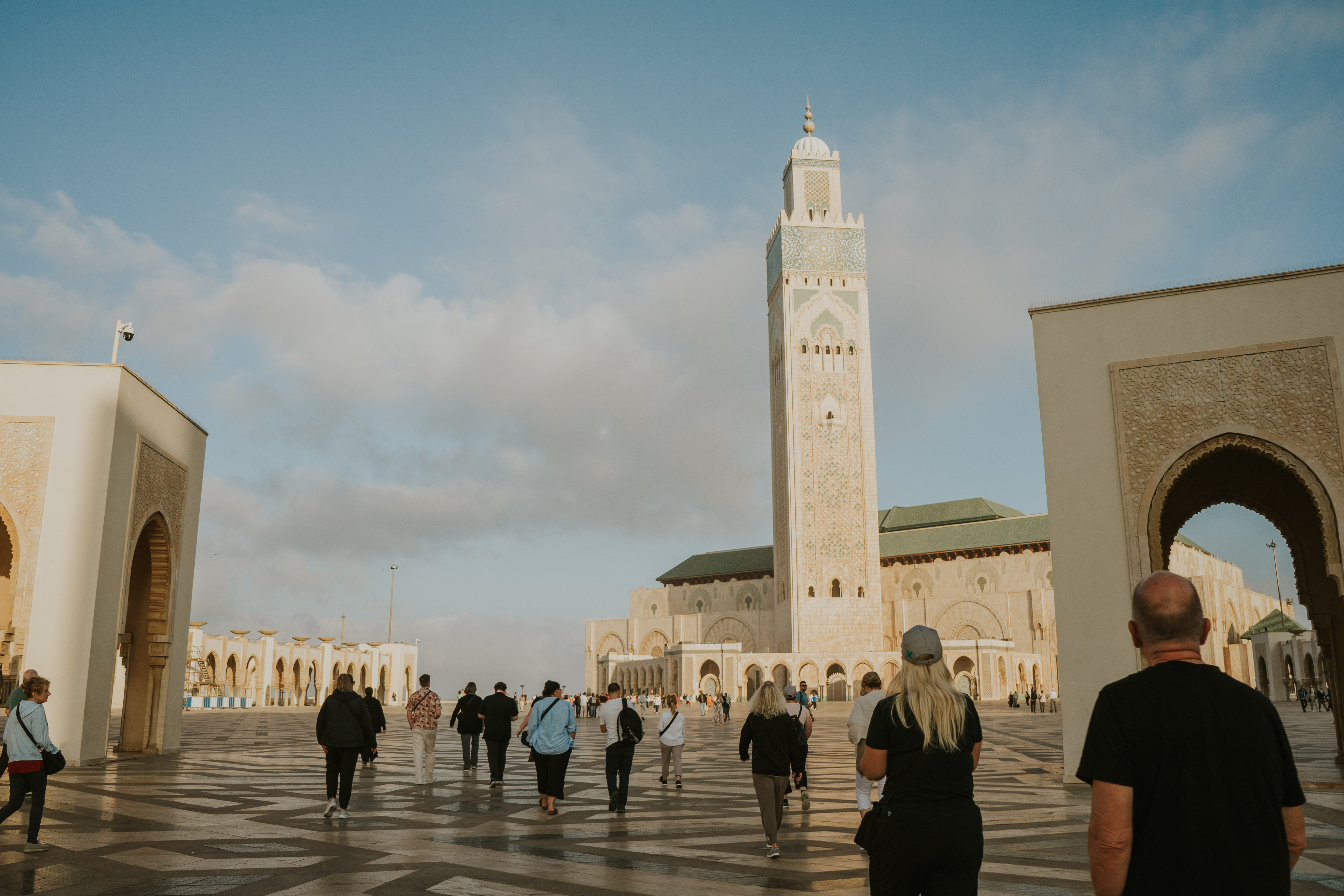
We drive (3hr 30min, including a coffee stop) to Casablanca this morning, a modern and commercial seaport. Here, we visit the Hassan II Mosque, one of the largest in the world, which has a soaring 655ft (200m) minaret and a sliding ceiling to enable the sea breeze to cool the building. We have a guided tour of the mosque and the stunning ablutions hall with a local specialist. Please note: knees and upper arms must be covered.After, we drive (1hr 30min) to Rabat, the political capital of Morocco, but second to Casablanca in importance. Here, we have free time to explore. Although mostly modern, Rabat has an excellent old town, where you can see distinctive buildings with Moorish and Andalusian designs. Also visit the Jewish Quarter (Mellah) before continuing to the busy souk to sample locally made treats, such as harsha (a semolina bread) with the special almond paste, amlou.
Meals: Breakfast
Day 3
Explore Meknes old town and the ancient Roman ruins of Volubilis • To Fez
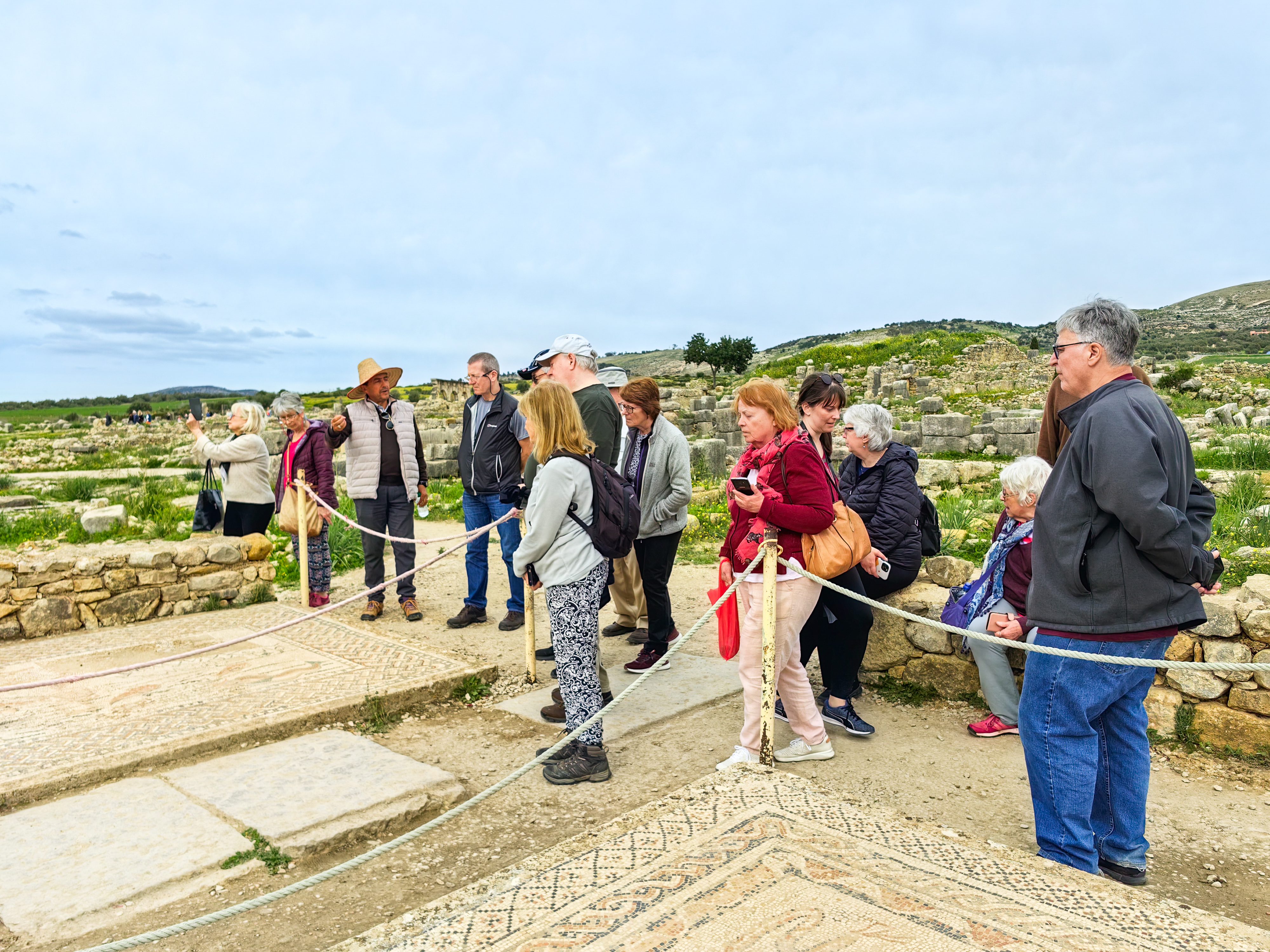
Strike out from Rabat on a 2hr 30min drive (with a stop in Khemisset) over the northern plain towards Meknes. The scenery changes as the land becomes more cultivated, this being one of the most fertile areas of Morocco. In Meknes, we meet our local guide for an exploratory walk in the old town. Built in the Spanish-Moorish style, the medina has crumbling ramparts with nine immense gates. We plunge into a busy local market, where vendors vie for attention and craftsmen sharpen their tools, before walking to El Hedim square, a scaled-down version of Djemaa El Fna in Marrakech. Then, we stand before the monumental Bab El Mansour gate, which was built in 1732.In the afternoon, we take a 45-minute drive to the largest and best-kept Roman ruins in Morocco: Volubilis, once a large Roman town and now a World Heritage site. Under the Romans, it was an affluent city. This can be seen in the beautiful second-century forum, the basilica and the capitol. We wander through the streets, discovering remains of townhouses with mosaic floors and see baths, oil presses, aqueducts and shops, all of which reveal the daily lives of the inhabitants.After exploring this site with a local guide, we continue our drive (approximately two hours) to the ancient city of Fez, where we spend two nights.
Meals: Breakfast
Day 4
Tour the medina and tanneries of Fez
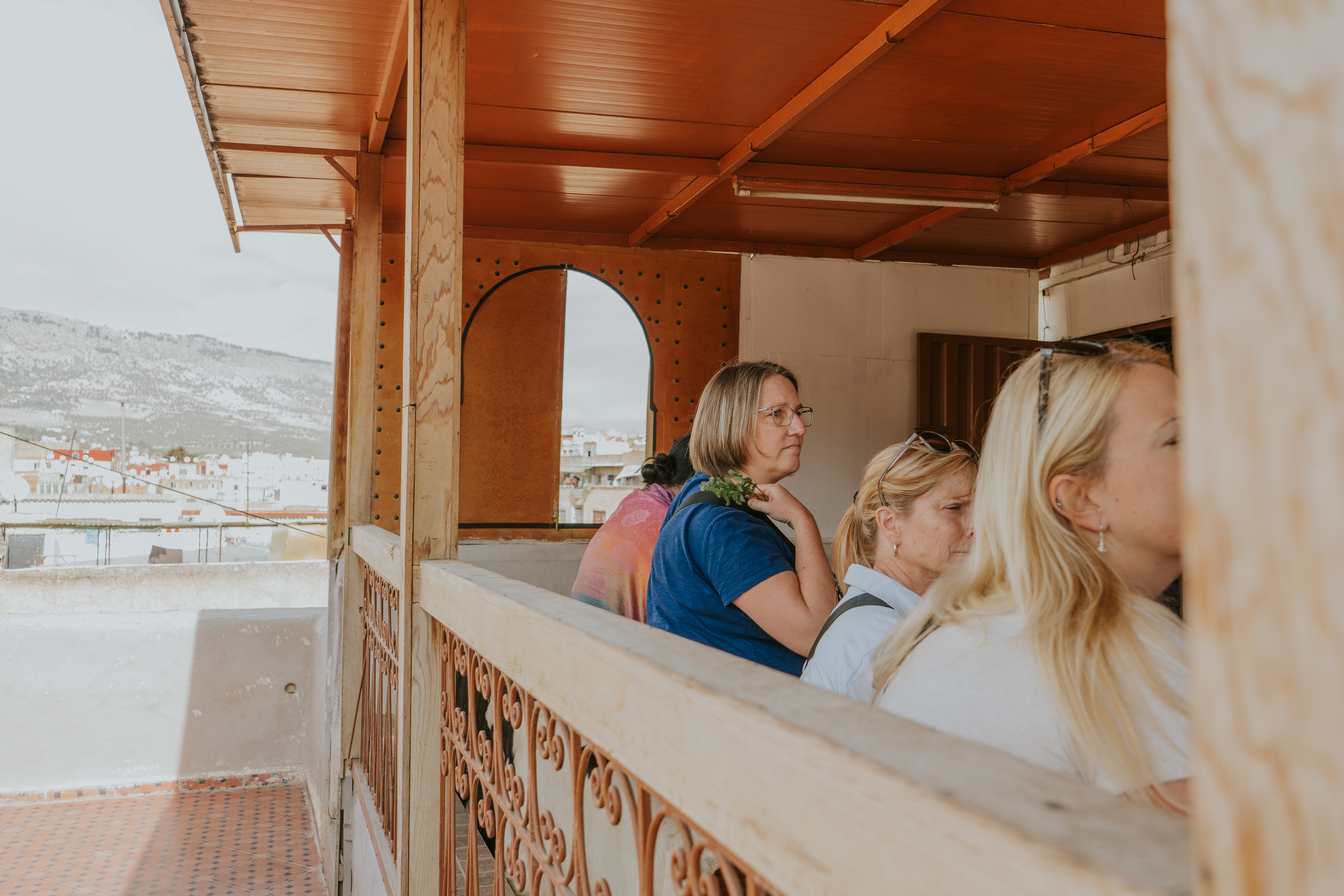
The fascinating city of Fez is the intellectual and religious centre of Morocco. Founded more than 1,000 years ago, it has many mosques and medersas (theological colleges), including the ninth-century al-Karaouine University, whose architecture is very similar to that seen in Moorish Spain. Fez medina is one of the largest in the world, an immense warren of souks, home to thousands of craftsfolk with their tiny shops opening onto the narrow alleyways. Noisy and pungent, the medina is an absorbing experience. Our city guide walks us through different sections of the souk, including those selling leather, brass and copper. No visit to Fez is complete without a visit to the tanneries. Outside the medina, we visit the Jewish District (mellah), the exterior of the Royal Palace and drive up to a panoramic viewpoint over the city.
Meals: Breakfast
Day 5
To Merzouga, on the edge of the Sahara
Today, we travel to the edge of the Sahara, the largest hot desert in the world. It’s a nine-hour journey but with frequent stops and beautiful scenery along the way. We travel over the stunning Middle Atlas, down through the picturesque Ziz Valley and to the spectacular site of the golden dunes of Erg Chebbi. We stay in a small and welcoming auberge (inn) by the dunes. Tonight is a good time to pack your overnight bag for the Sahara.Total drive time: Nine hours
Meals: Breakfast,Dinner
Day 6
Walk in the sand sea • Camel trek through the dunes • Camp in the Sahara
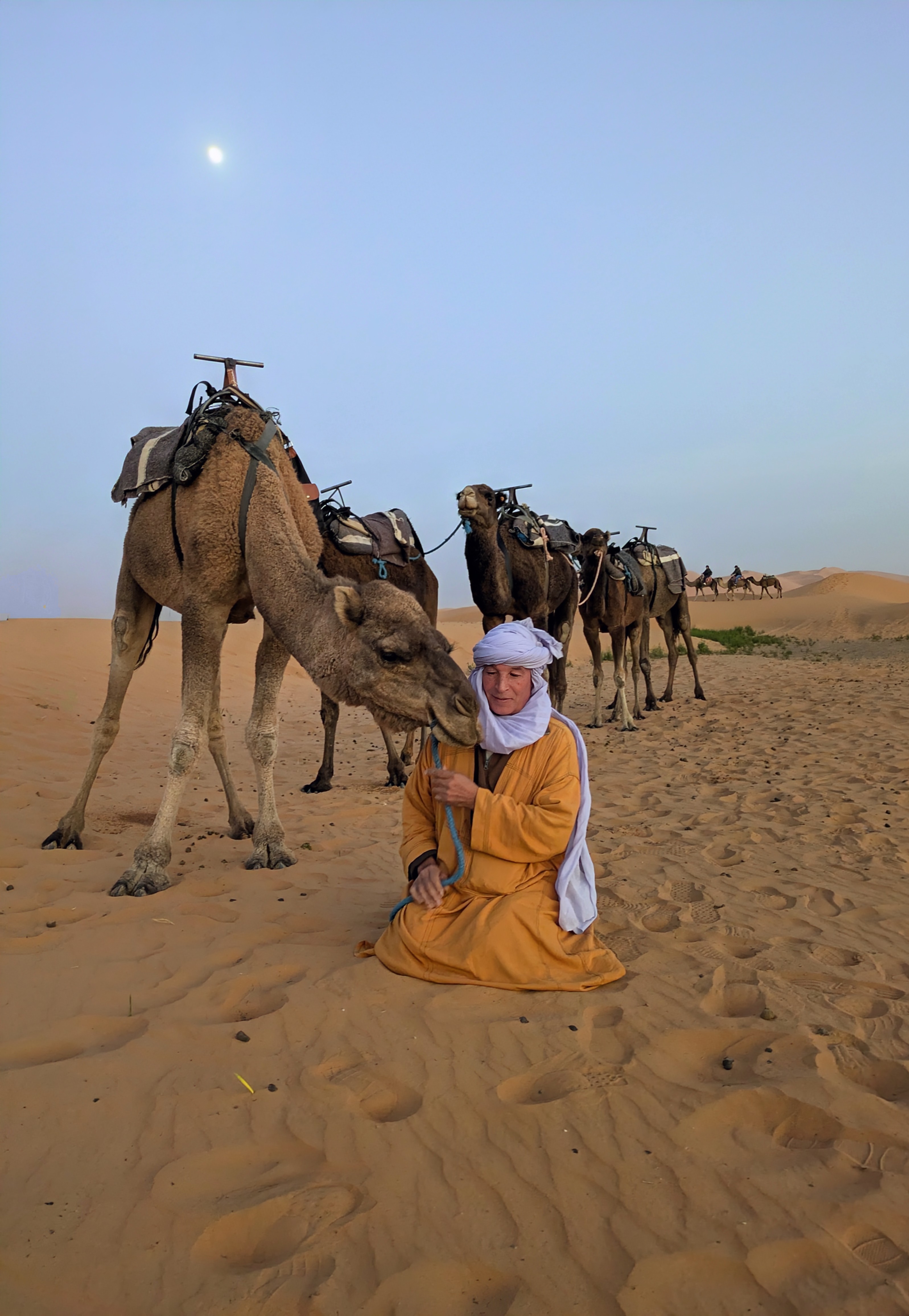
A free morning means we have time to explore the largest erg (sand sea) in Morocco, or to relax in the shade of a palm tree by the dunes. The sand sea is famed for its pink tones that take on a spectacular rose colour at sunset.In the late afternoon, we take part in a classic Saharan experience – a 45-minute camel trek through the dunes, where we watch the sunset (it is also possible to walk). We then return to the edge of the desert to spend the night in a camp. This evening, we enjoy a home-cooked meal and sit under the stars.
Meals: Breakfast,Dinner
Day 7
To Skoura • Stop to explore the Todra Gorge
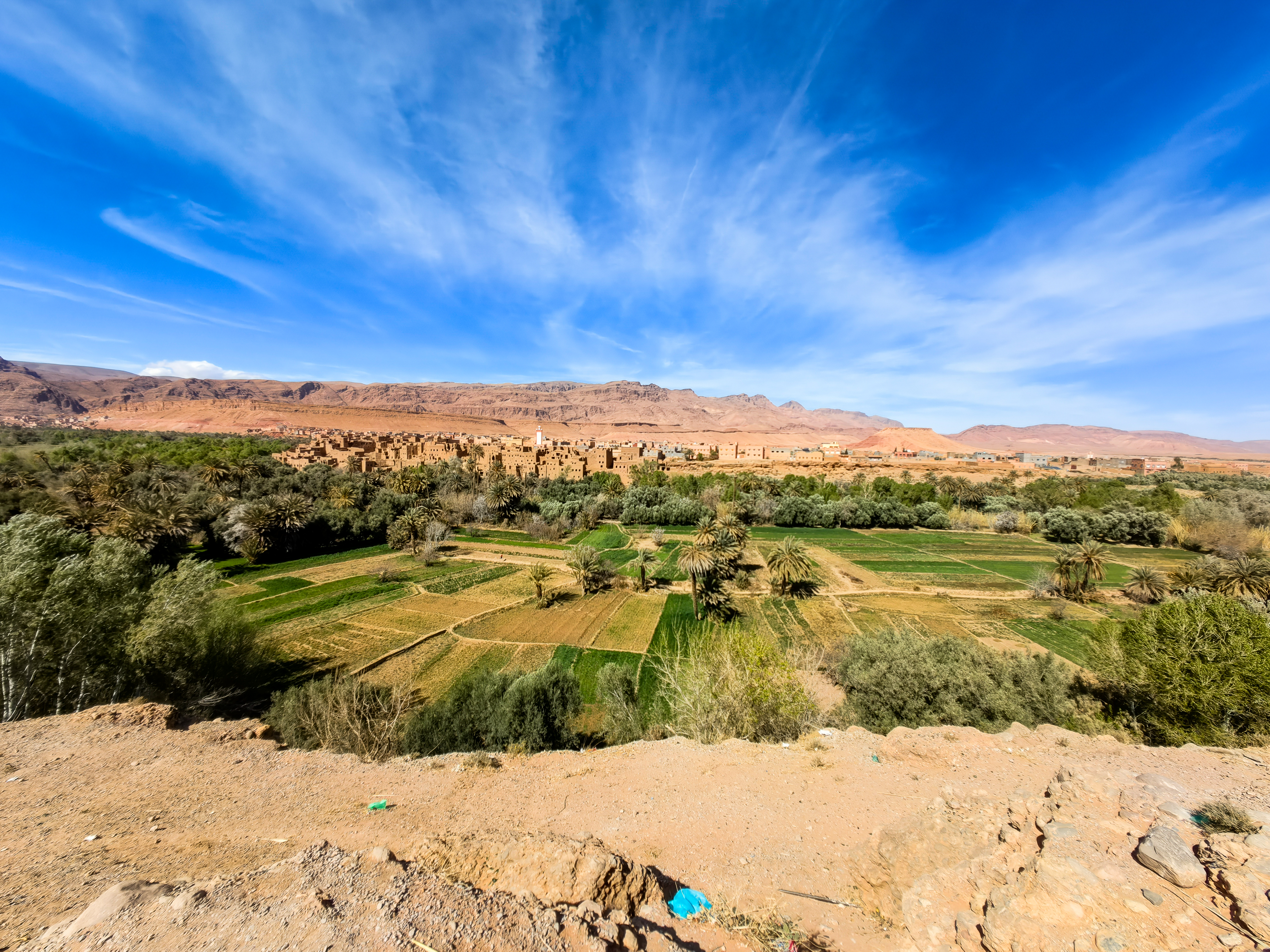
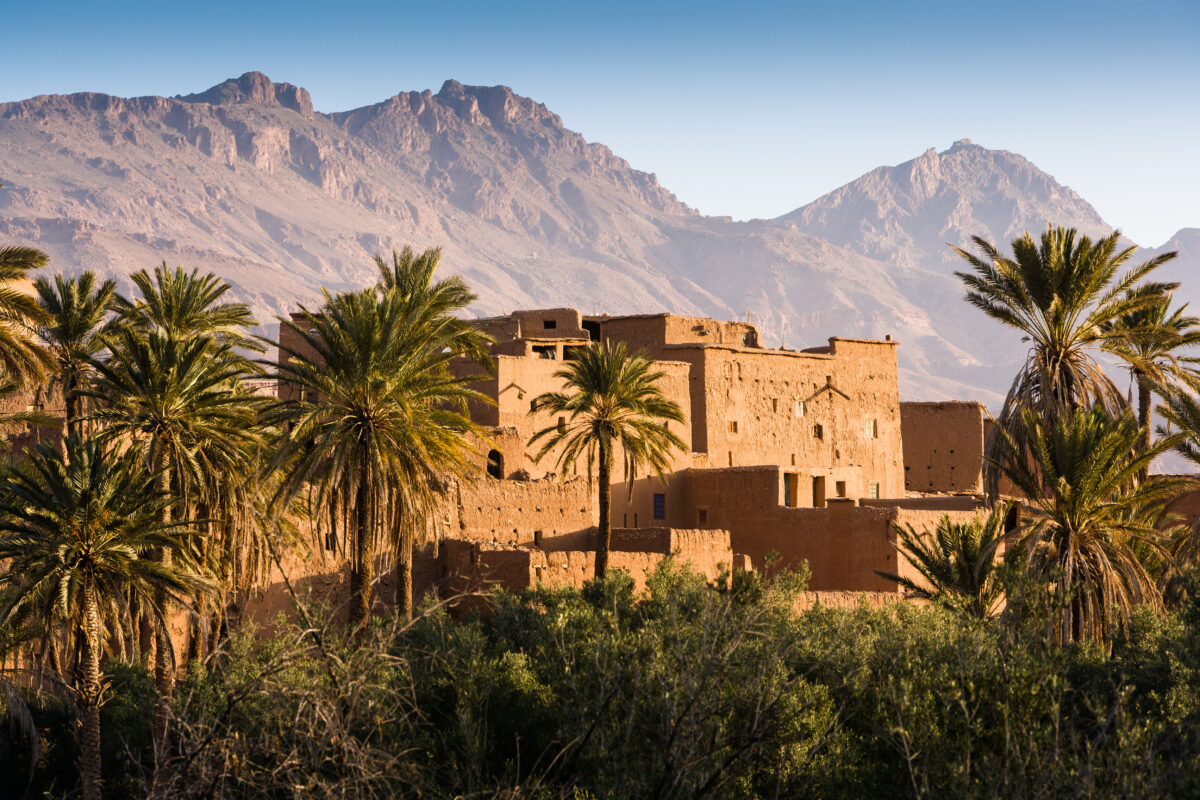
After sunrise, we leave our desert camp and head towards the little city of Skoura, which is nestled on a beautiful palm grove near Ouarzazate. Following the Road of 1,000 Kasbahs, we have vistas of ancient kasbahs nestled in lush palm groves.After around four hours of driving, we stop to explore Todra Gorge. We take a short walk along a narrow road through the gorge and have time to take photos. Of course, there is also the usual pop-up souvenir stalls to tempt you.Total drive time: 7hr 30min with three stops
Meals: Breakfast
Day 8
Optional hike through an Amazigh village • Enjoy Skoura, the palm grove capital of Morocco
There is the opportunity to take a one-hour drive to Toundout Valley and enjoy a four-hour guided hike through an Amazigh village, where you learn a little of their culture. Alternatively, relax in and around the lodge, walking through the lush palm groves. Considered the palm grove capital of Morocco, Skoura offers peace and relaxation through its various walks discovering multiple palm groves and kasbahs.
Meals: Breakfast
Day 9
To the mountain village of Tighza • Stop to explore the earthen clay alleys of Ait Benhaddou
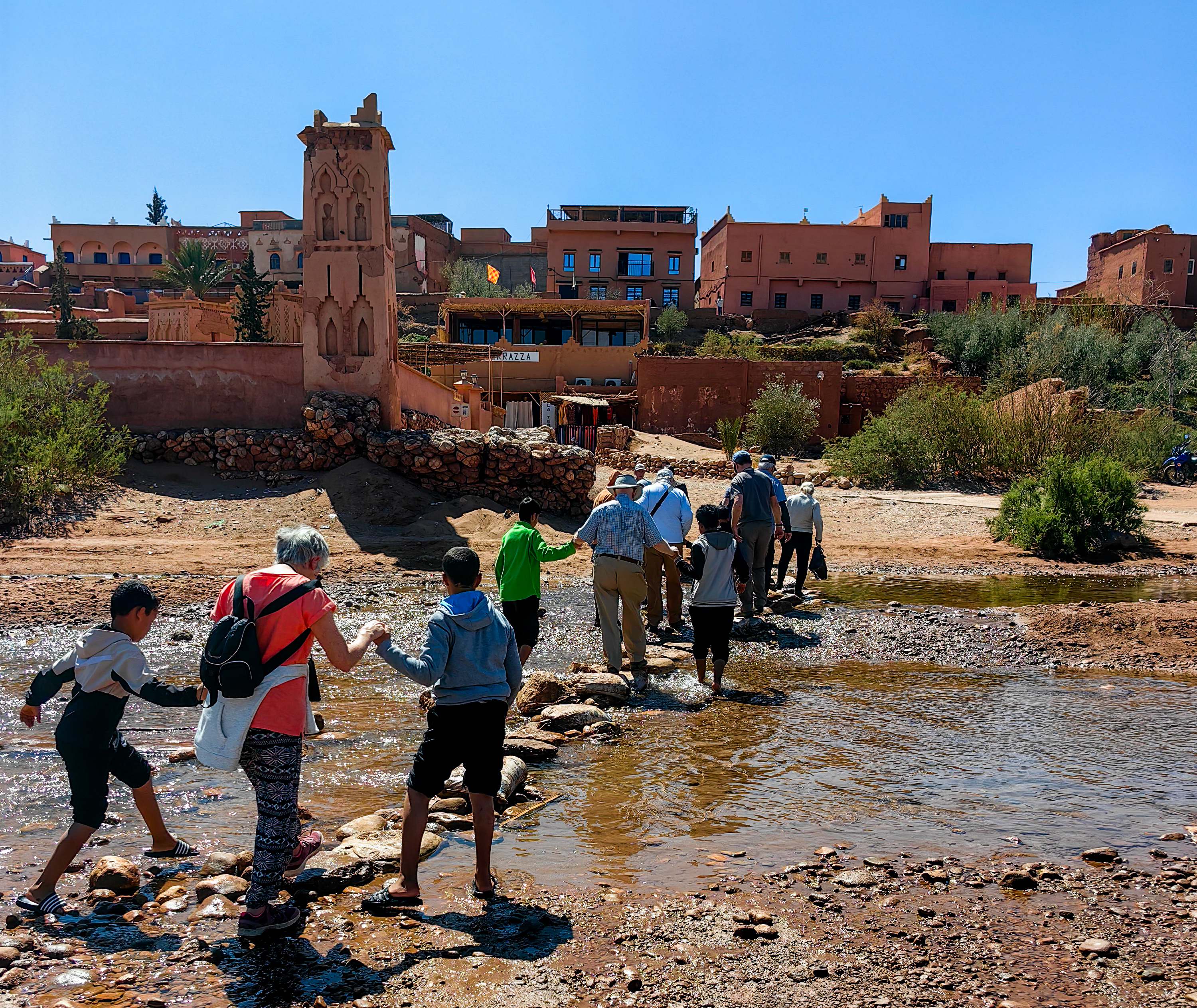
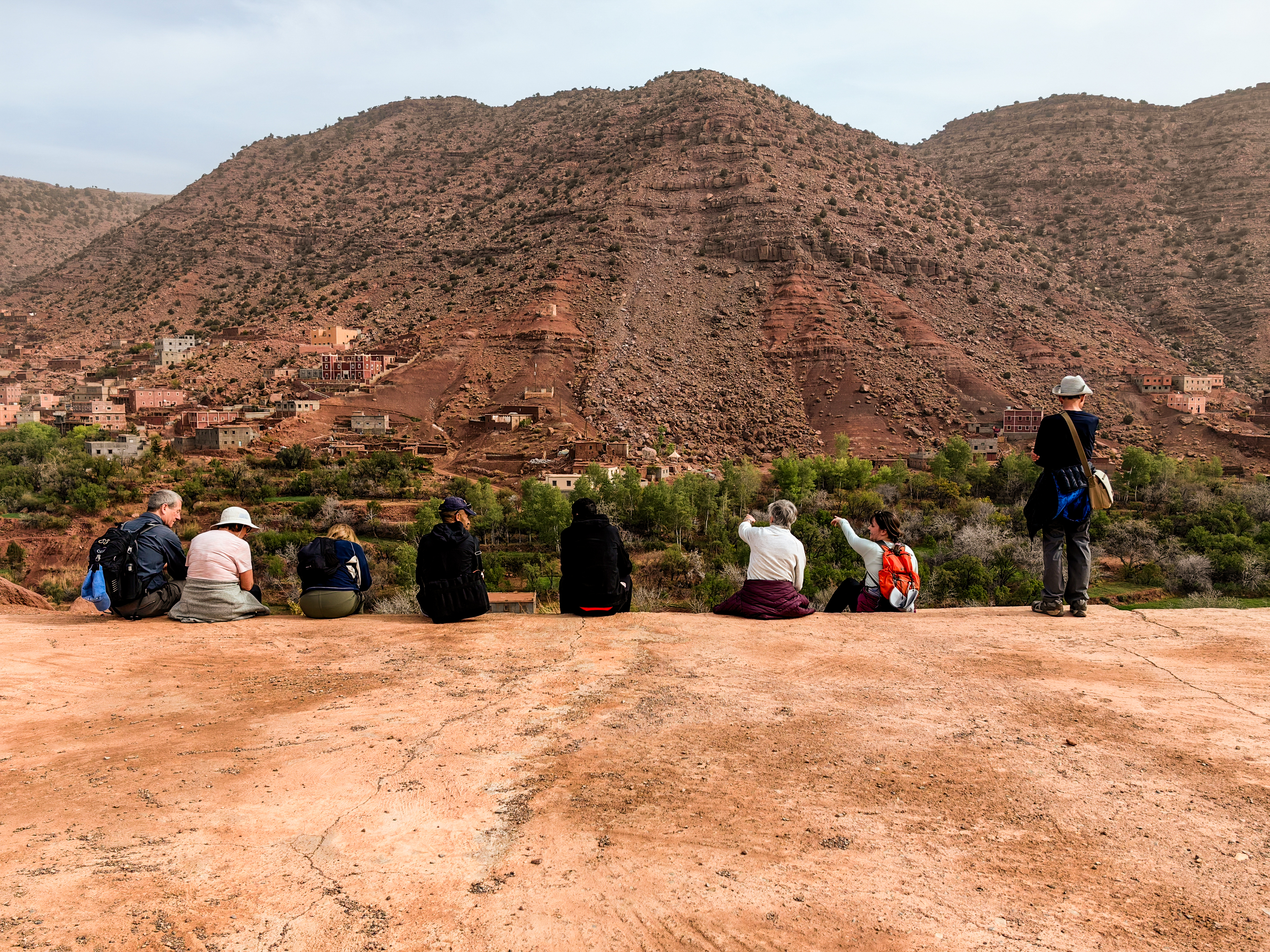
Leaving Skoura, we rejoin the main road and drive west along the Road of 1,000 Kasbahs via the desert city of Ouarzazate and to the well-preserved ksar (fortified village) of Ait Benhaddou. This UNESCO World Heritage site is one of the most spectacular in the Atlas range, and the location of several Hollywood films including Gladiator (2000). Here we tour atmospheric alleys and see the earthen walls of the dwellings.Continuing into the mountains, we branch east through a wide flat mountain valley, finally arriving at Anmiter, where we leave our bus and take a 1hr 30min to 2hr walk on an uphill gradient to the Amazigh village of Tighza, where we spend the next two nights. Tighza is a rural village set in the Atlas mountains. From the terrace of our Riad you can look down into the valley and enjoy the sunset over the surrounding mountains. It is a peaceful retreat and provides the opportunity to meet local villagers and share their way of life. Our luggage is transported to the village for us. For those who do not want to walk, mules are available (170 dirhams, payable locally).We’re greeted with a mint tea on arrival at the village.Total drive time: 1hr 30min
Meals: Breakfast,Dinner
Day 10
Half-day of walking in the High Atlas • Authentic hammam experience
We start our day with an optional walk through the villages of the Tighza Valley, heading into the hills on mule tracks with the High Atlas peaks as our backdrop. The length of our trek depends on the group’s ability, but it is likely to be approximately four hours. The afternoon is free to relax with a book, enjoy the mountain views, take a stroll through the beautiful landscape or challenge the village children to a game of football.Tighza is one of just four villages in this remote valley and has been supported by us for more than 10 years through various responsible tourism projects. We visit the village hammam, built with money raised by our clients. This is an authentic experience and terrific fun. It is very much a traditional hammam and you are likely to get the opportunity to mix with the villagers, which further adds to the experience. A standard treatment is included, but you need to purchase a scrubber and soap for 20 dirhams (US$1.90) plus a customary tip of 20 dirhams. Refreshed, we return to the accommodation for our final dinner in the mountains.Total drive time: 1hr 30min
Meals: Breakfast,Dinner
Day 11
Over the High Atlas Mountains to the seaside town of Essaouira
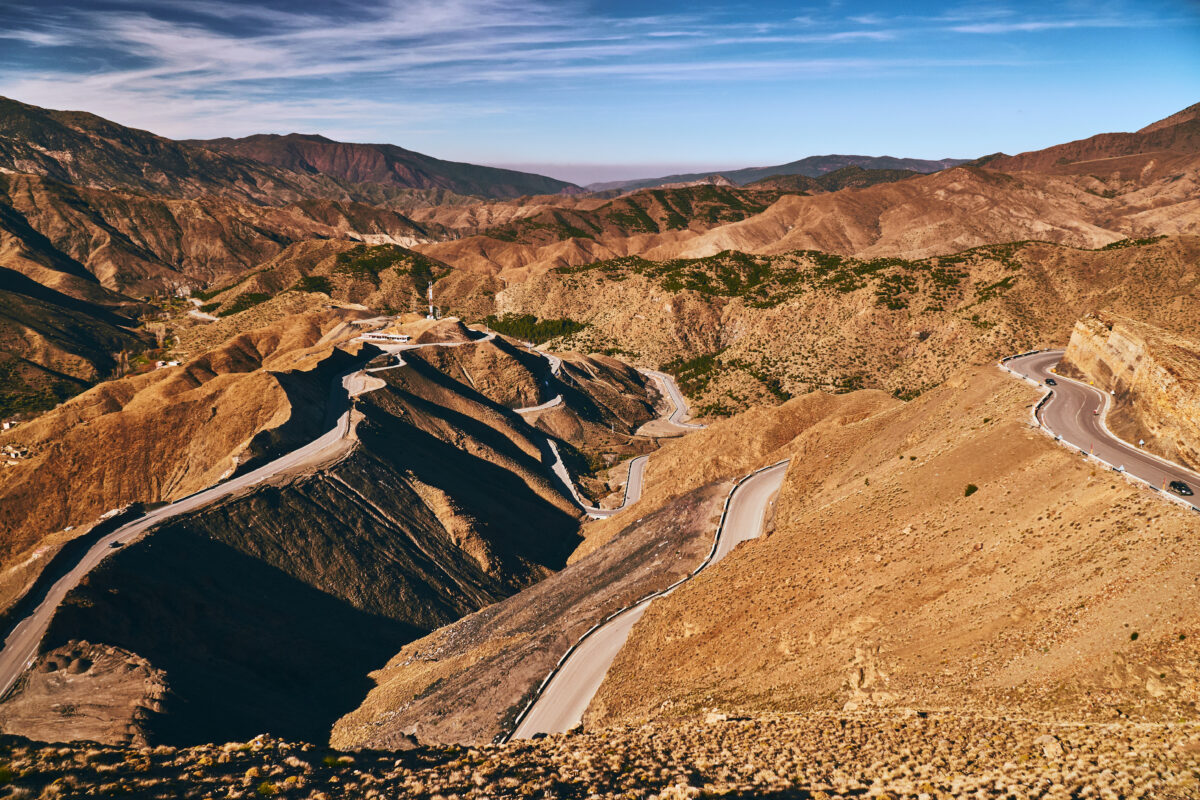
Leaving the riad, we take a 2.5mi (4km) walk back to our bus on an unpaved road for a short drive to the palace of Telouet. This once-grand building stands abandoned and crumbling and we have deemed it unsafe to enter; however, we can walk around the outside and take photographs. We continue our scenic drive over the High Atlas Mountains to Marrakech, via the Tizi n’Tichka pass, which at 7,415ft (2,260m) above sea level is the highest road in Morocco. The scenery is spectacular and there are some wonderful views of the mountains. We also stop at a women’s cooperative argan oil farm, where you can see the trees, get a demonstration of the production process, and purchase products if you’d like. Our journey finally brings us to the flat arid plains of Marrakech, and then onwards to the pretty seaside town of Essaouira.Total drive time: 7hr 30min
Meals: Breakfast
Day 12
Free day to explore relaxed Essaouira
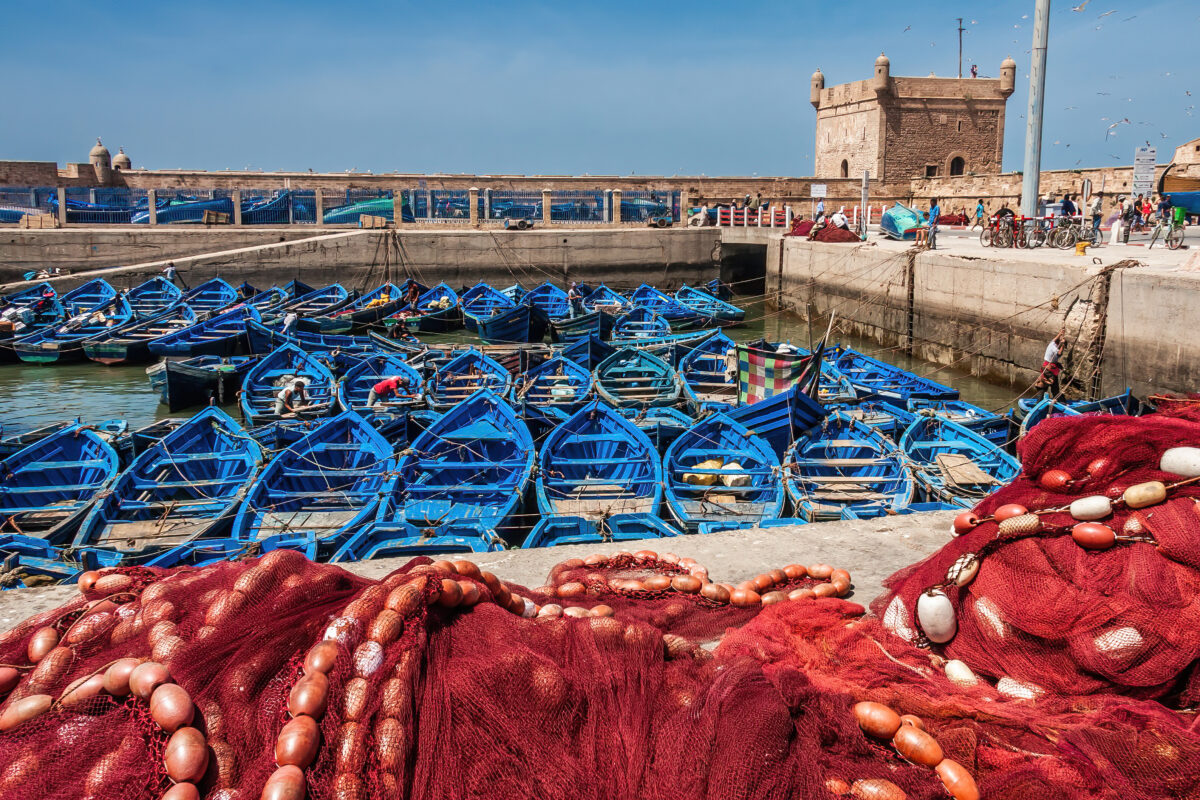
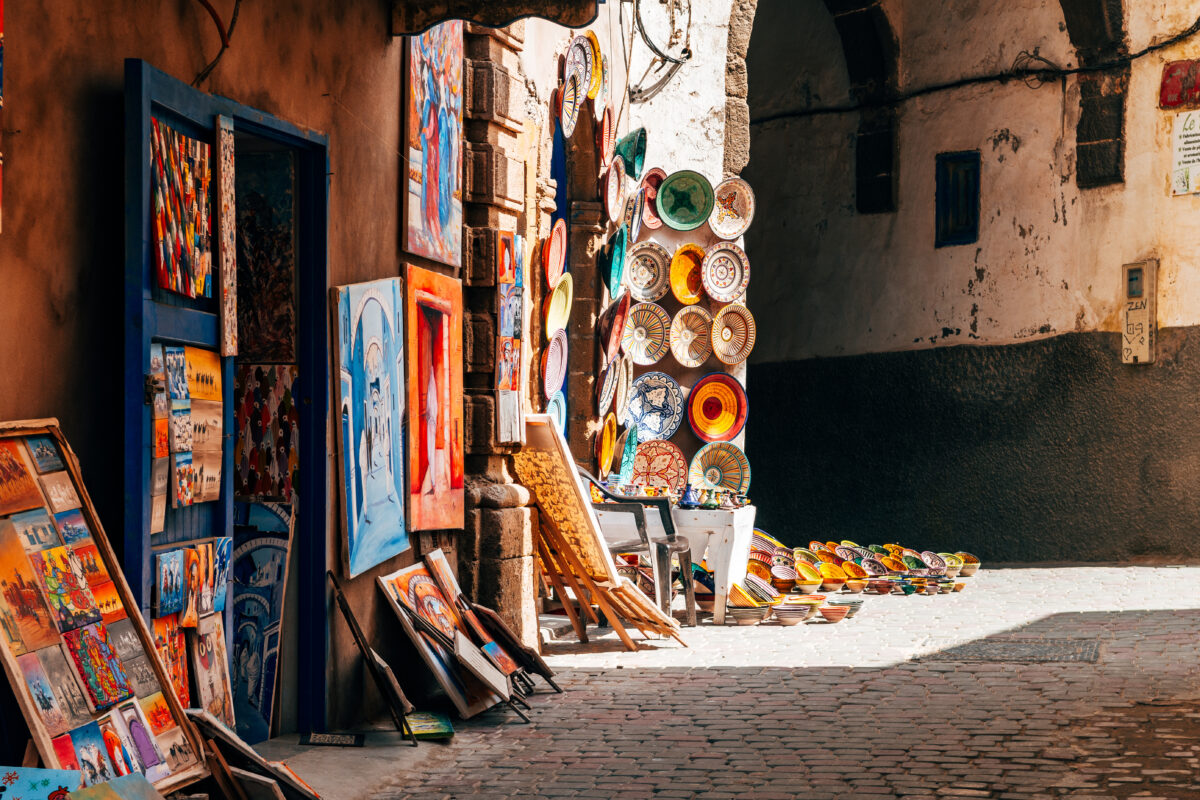
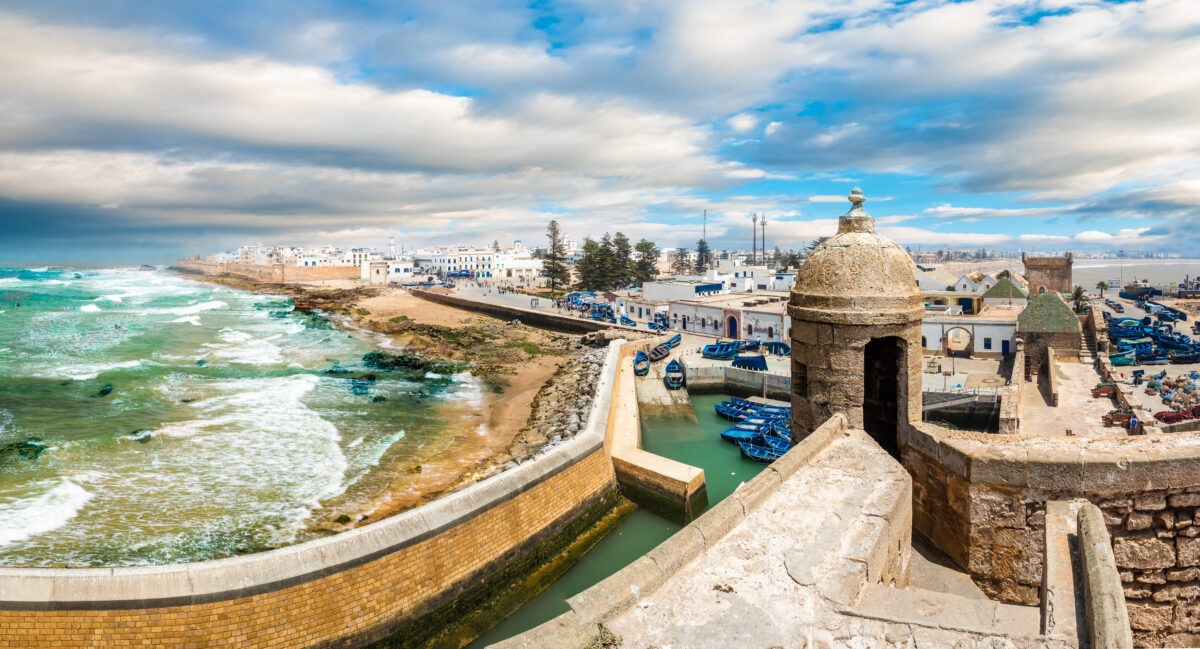
Enjoy a free day in Essaouira, an old Portuguese fishing port overlooking the Atlantic. The settlement dates to the 15th century but the present town was constructed around 1760 by Sidi Mohammed ben Abdullah, who needed a base from which to suppress a revolt from Agadir. Today, the town is extremely relaxed and its whitewashed houses with painted shutters, artisan workshops, boatyards and fishermen provide a marked contrast to the desert, kasbahs and cities we have so far visited. Our hotel is situated in the heart of the old walled city, where we have plenty of time for shopping in the souks or strolling along the beach. With many pleasant cafes and some outstanding seafood restaurants, there is plenty of choice for our evening meal.
Meals: Breakfast
Day 13
To Marrakech • Tour the city highlights including the Bahia Palace and Djemaa el Fna
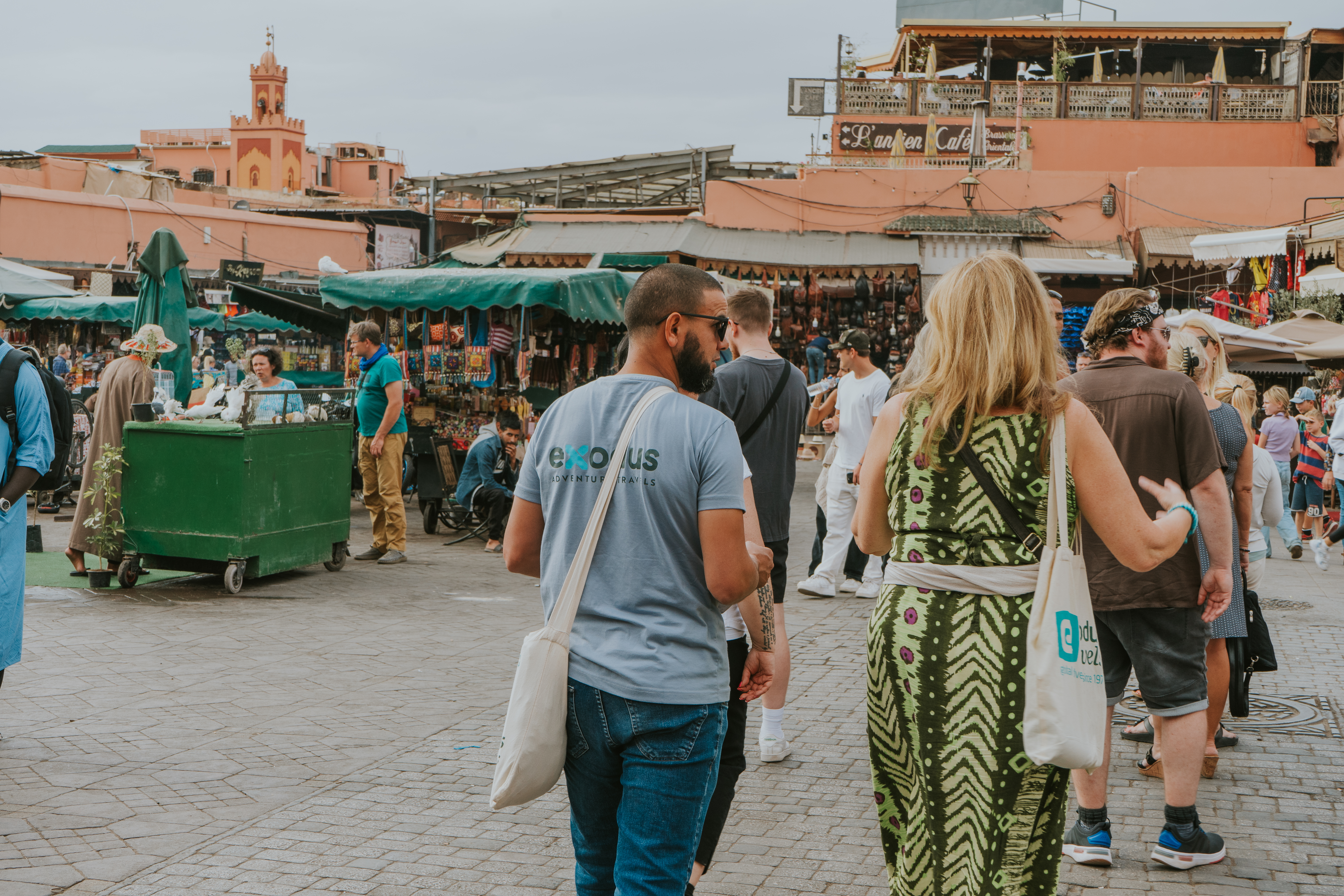
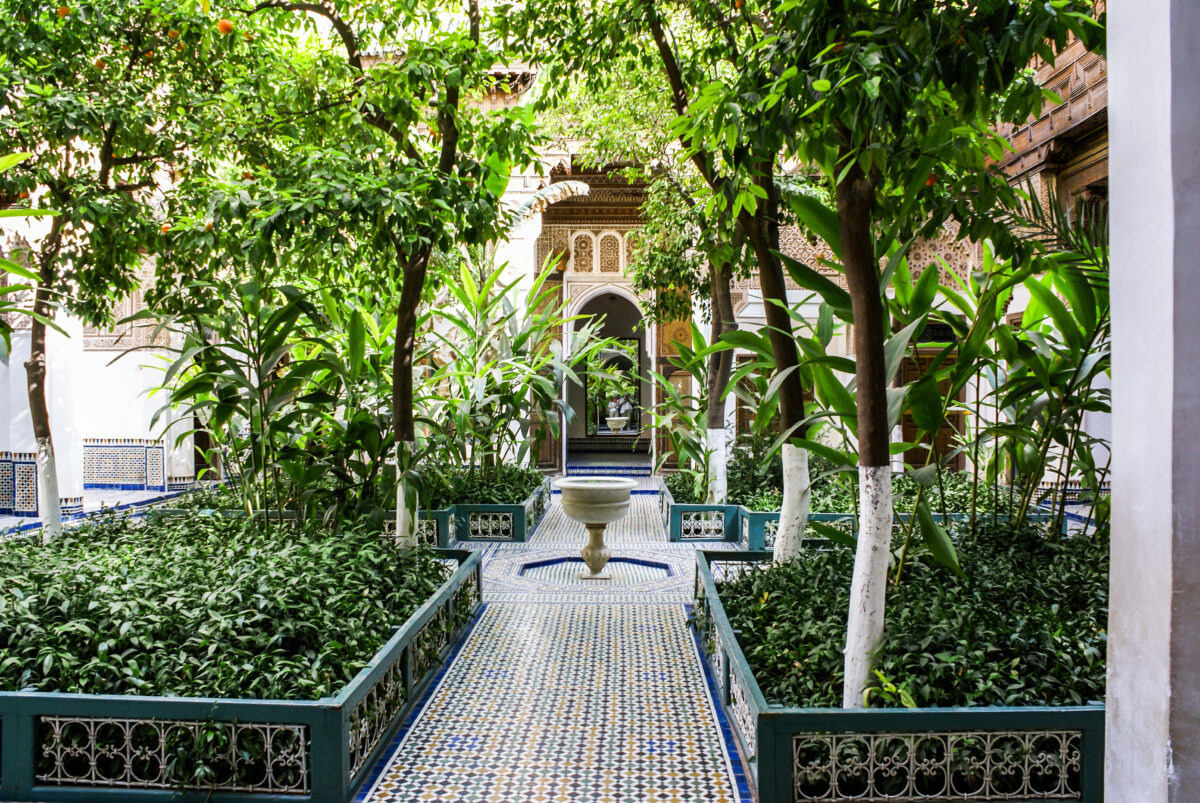
After breakfast, we drive back to Marrakech. In the afternoon, we enjoy a guided tour to find our bearings and soak up the atmosphere of this amazing city. Our guide takes us to the opulent Bahia Palace, a one-time royal residence, and ends the adventure in the Djemaa el Fna square, where the town becomes a maze of bustling bazaars, palaces and mosques. It is worth seeing this renowned landmark in the evening, as Marrakech revolves around this open-air central square, with food stalls, juice sellers and acrobats. It is a place of night-time entertainment for both local people and tourists.Upgrade to a suite today – speak to your sales representative for more detailsTotal drive time: Three hours
Meals: Breakfast
Day 14
Free day to explore Marrakech
Today is free in Marrakech and there is no shortage of things to do. You might wish to visit the largest mosque in the city, Koutoubia, or venture through the souks and old streets of the medina. After bartering for souvenirs, we have time for a short visit to the Koranic School and Museum of Marrakech. After, you could take a 30-minute calèche ride (a bright green horse-drawn carriage) to the Jardin Majorelle. These gardens are decorated throughout in indigo blue and were once owned by Yves Saint Laurent.For lunch, we recommend the Amal Women’s Training Centre and Moroccan Restaurant, which we support in their cause to empower women from disadvantaged backgrounds. They are a non-profit organisation dedicated to training students to become self-sufficient and improving their quality of life through acquiring new skills in a professional restaurant setting. For a superb traditional Moroccan meal and the opportunity to support this worthy cause, do pay them a visit. This evening, it’s common for the group to enjoy a final meal together on Djemaa el Fna.Upgrade to a suite today – speak to your sales representative for more details
Meals: Breakfast
Day 15
Adventure ends in Marrakech
Enjoy your final breakfast this morning and take the chance to reflect on your unforgettable Morocco adventure. You’ve navigated lively medinas, ridden a camel in the Sahara and experienced a traditional hammam in the Atlas Mountains. Now, however, is the time to start your journey home and start planning your next adventure.
Alternatively, if you would like to extend your time in Morocco please speak to your sales representative who will be happy to advise.
Meals: Breakfast
What’s included
What’s not included
Additional information
Food
Moroccan food is, generally speaking, excellent. Breakfasts usually consist of bread and jam with coffee or tea. Where meals are not included, budget for the following approximate prices.
Lunches: 60-100 dirhams (US$6-US$10)
Dinners:
In cities: 80-250 dirhams (US$8-US$25)
In small towns and villages: 60-120 dirhams (US$6-US$12)
Drinks in restaurants
Soft drinks: 10-20 dirhams (US$1-1.90)
Beer: 40-80 dirhams (US$4-US$8)
Wine: 180 dirhams (US$18) and more
Vegetarians can be catered for but there is a fairly limited choice of vegetarian couscous, tajine or omelettes. This is particularly the case during the more rural sections of the trip. If you have special dietary requirements, inform us prior to the trip. If you have a specific medical/dietary need (eg coeliac or vegan), you may find it helpful to bring some food with you from home.
Fez Medina, Tanneries & Panoramic Viewpoint
Explore the labyrinth of the Fez el-Bali medina, where metalworkers, woodcarvers and weavers fill narrow lanes with colour and sound. Witness the dye pits of the Chouara Tannery and see the scholarly heart of the city around al-Qarawiyyin University, founded over a millennium ago.
Outside the walls, visit the mellah and the Royal Palace’s gilded gates before ascending to a panoramic viewpoint over rooftops and minarets. This immersive walk balances sensory bustle with rich historical context and superb city vistas.
Erg Chebbi Sunset Camel Trek & Sahara Desert Camp
Ride on a classic camel trek as the Erg Chebbi dunes blush gold and rose in the late light. Sand ridges ripple to the horizon, offering silence and space as you pause to watch the sunset over the dunes.
At a comfortable desert camp, share a home-cooked meal and stories beneath a constellation-bright sky. Far from city lights, you’ll stargaze under desert skies and savour the gentle cadence of Amazigh hospitality.
Marrakech Guided Tour: Bahia Palace & Djemaa el Fna
Join a guided tour of Marrakech to step inside the Bahia Palace, a 19th-century residence adorned with shimmering zellige and carved cedar ceilings. Courtyards perfumed by orange blossoms offer moments of calm amid the city’s energy.
Continue into the spectacle of Djemaa el Fna, where food stalls, juice sellers and performers create a theatre of everyday life. As the light fades, the square’s hum intensifies, making an atmospheric finale to your city exploration.
Meknes Medina Walk & Volubilis Roman City
Discover Meknes, an imperial capital of Sultan Moulay Ismail. Wander to lively El Hedim Square, pass market stalls and artisans, and pause before the monumental Bab el-Mansour, a masterpiece of zelij and green-tiled arches guarding the old city.
Nearby, the Volubilis Roman ruins reveal basilicas, forums and mosaic-floored villas. Stand by Caracalla’s triumphal arch, trace ancient streets and oil presses, and picture a prosperous outpost that linked Rome to the riches of Mauretania Tingitana.
Casablanca’s Hassan II Mosque Guided Visit
Explore the monumental Hassan II Mosque with a local specialist. Step into the vast prayer hall, admire the soaring 200m minaret and intricate zellige tilework, and descend to the elaborate ablutions hall where marble columns reflect in serene pools.
Set dramatically on the Atlantic, the complex features a remarkable sliding roof and masterful cedar and marble craftsmanship completed in 1993. Dress modestly (knees and shoulders covered) as you gain insight into one of the Islamic world’s most impressive modern sanctuaries.
Todra Gorge Short Walk
Walk beneath the sheer flanks of Todra Gorge, where a ribbon of river threads between towering limestone walls. Feel the canyon’s cool air and listen for the echo of footsteps and the trickle of water as climbers tackle the rock faces above.
The gorge nourishes the Tinghir oasis, its date palms and gardens flourishing against stark cliffs. This accessible stroll rewards with dramatic geology, quiet moments, and superb photography from the canyon floor.
Ait Benhaddou Ksar Exploration
Explore Ait Benhaddou, an UNESCO World Heritage earthen ksar on the old trans-Atlas trade route. Wander mud-brick alleys, gaze up at turreted kasbahs, and admire how sun-baked walls glow amber against the mountain light.
Caravans once sheltered here carrying salt, gold and spices along the caravan route. From viewpoints above the ksar, survey the Ounila valley and understand why filmmakers are drawn to this timeless Saharan gateway.
Amazigh Village Welcome Tea in Tighza
Arrive in a High Atlas village to share mint tea with your hosts, an emblem of Amazigh hospitality. From rooftop terraces, look across terraced fields and stone homes tucked into the mountainside.
Learn how the tea ritual frames conversation and welcome across Morocco—poured high for a fragrant foam, sweetened just so, and served with warmth. A simple exchange that opens a window onto daily life in the mountains.
Traditional Community Hammam in Tighza
Unwind in a traditional hammam, following local bathing customs with buckets of warm water, steam and exfoliation using black olive soap (savon beldi) and a kessa mitt. Emerge refreshed and relaxed.
This community-built bathhouse reflects responsible tourism at work and offers a sociable, authentic insight into village life. A standard treatment is included; you’ll purchase simple items like soap and a scrubber locally.
Kasbah of Telouet Exterior Visit
Pause at the storied Kasbah of Telouet for a scenic photography stop. Ornate yet weathered facades frame the High Atlas, their carved cedar and zellige hinting at a lavish past now softened by time.
Once the seat of the Glaoui pashas on the trans-Saharan salt route, Telouet controlled trade through the Ounila valley. Current conditions allow exterior viewing only, which still conveys the kasbah’s powerful history and mountain setting.
Argan Oil Women’s Cooperative Demonstration
Visit a women’s cooperative to see how precious argan oil is crafted by hand—from cracking the hard kernels to stone-grinding paste into a rich, golden oil used in cuisine and skincare.
Endemic argan trees sustain communities across Morocco’s Atlantic foothills. Your visit supports fair employment and helps preserve a time-honoured craft that empowers rural women and protects a unique ecosystem.
Toundout Valley Amazigh Village Hike
Set out on a guided hike through the Toundout Valley, crossing terraced fields and winding past mud-brick hamlets backed by the High Atlas foothills. Expect wide views, almond and pomegranate groves, and friendly greetings on the trail.
Meet villagers, learn about irrigation channels and seasonal crops, and enjoy varied terrain on a four-hour route. This optional experience is bookable on tour at additional cost and is led by knowledgeable local guides.
Tighza Valley Guided Walk
Follow mule paths above Tighza on a half-day guided walk, with sweeping views of the High Atlas, juniper-dotted slopes and patchwork fields below. Hear birdsong and glimpse everyday rural life along the mountainside.
Routes are tailored to the group’s ability, balancing gentle gradients with rewarding viewpoints and cultural encounters. This optional experience is bookable on tour at additional cost.
Marrakech Welcome Dinner & Tour Briefing
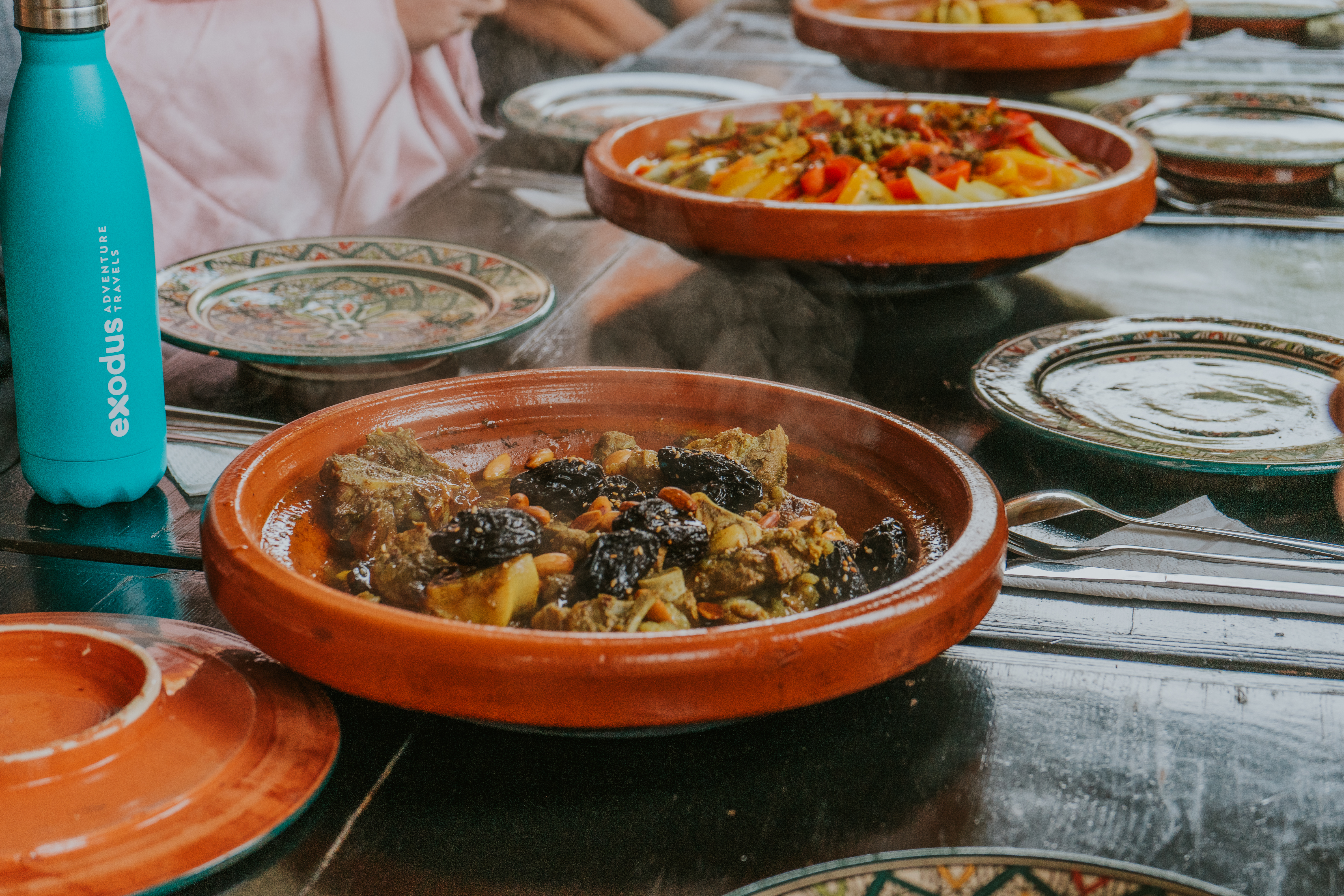
Begin your journey as you meet your Tour Director and travelling companions over a traditional Moroccan dinner. Share first impressions of the Red City while sampling fragrant tagines, warm khobz bread and refreshing mint tea—a warm Moroccan welcome that sets a convivial tone for the adventure ahead.
Amid Marrakech’s red ramparts and distant Atlas peaks, your host outlines the days to come and answers questions. This relaxed evening introduces local dining customs, flavours and etiquette, easing you into Morocco’s renowned hospitality and lively cultural rhythm.