Your itinerary
Day 1
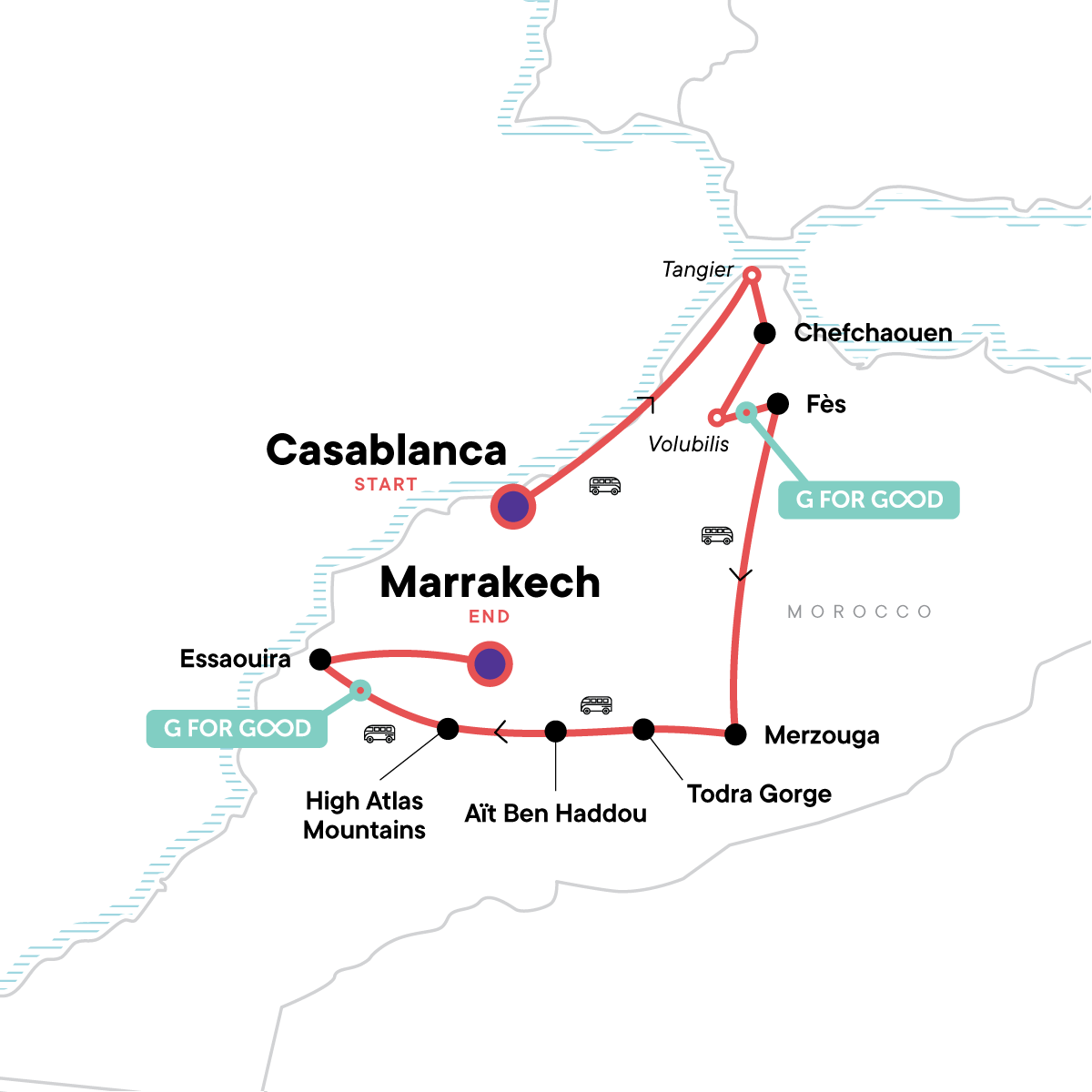
Day 1: Casablanca
Arrive at any time. The tour does not spend time exploring Casablanca. Meet your CEO and fellow travellers and learn about the tour; joining the group for a local meal afterwards is optional. Hassan II Mosque and other Casablanca sights may be visited independently before the tour.
Day 2
Day 2: Casablanca/Chefchaouen
Travel by private vehicle to Tangier for a guided tour of the medina, kasbah, Grand Socco, Petit Socco and souks, with panoramic views toward Gibraltar, Tarifa and the meeting point of the Atlantic Ocean and Mediterranean Sea. Continue by private vehicle to Chefchaouen.
Meals: Breakfast
Day 3
Day 3: Chefchaouen
Free day to explore Chefchaouen. An optional Rif Valley Mountains Hike can be pre-booked; at sunset, you may visit the Spanish Mosque for panoramic city views.
Meals: Breakfast
Day 4
Day 4: Chefchaouen/Fès
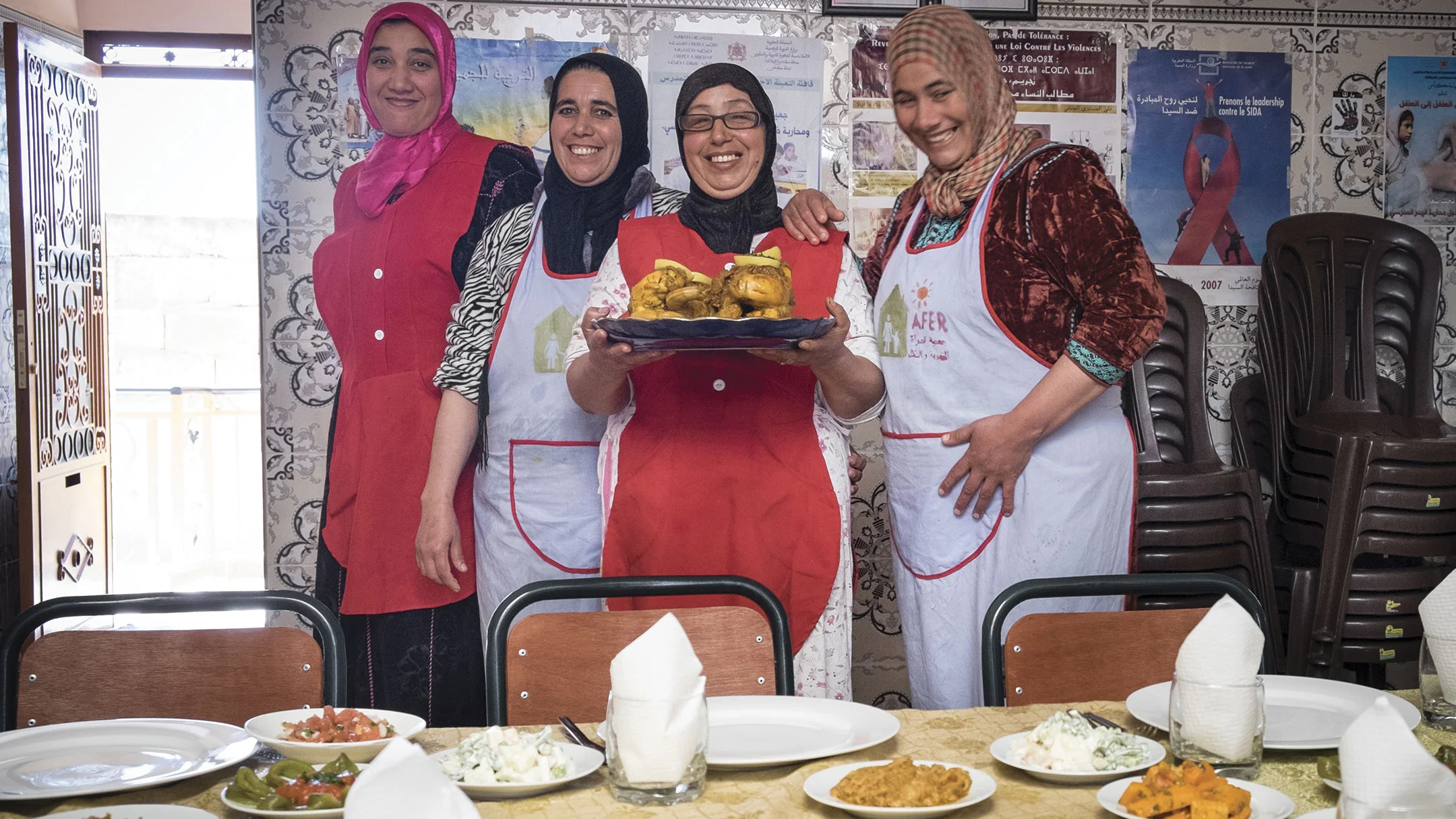
Enjoy a traditional G Adventures-supported lunch with the AFER Association, then travel by private vehicle through the hills to Volubilis for a guided tour of its Roman ruins, including bathhouses, mosaics and marble pillars. Continue to Fès; the evening is free.
Meals: Breakfast,Lunch
Day 5
Day 5: Fès
Take a guided tour of the Fès medina, exploring the artisans’ quarters, Al Qarawiyin University and the mausoleum, and viewing the tannery from a leather shop balcony. The afternoon is free to explore the medina or new city.
Meals: Breakfast
Day 6
Day 6: Fès/Merzouga
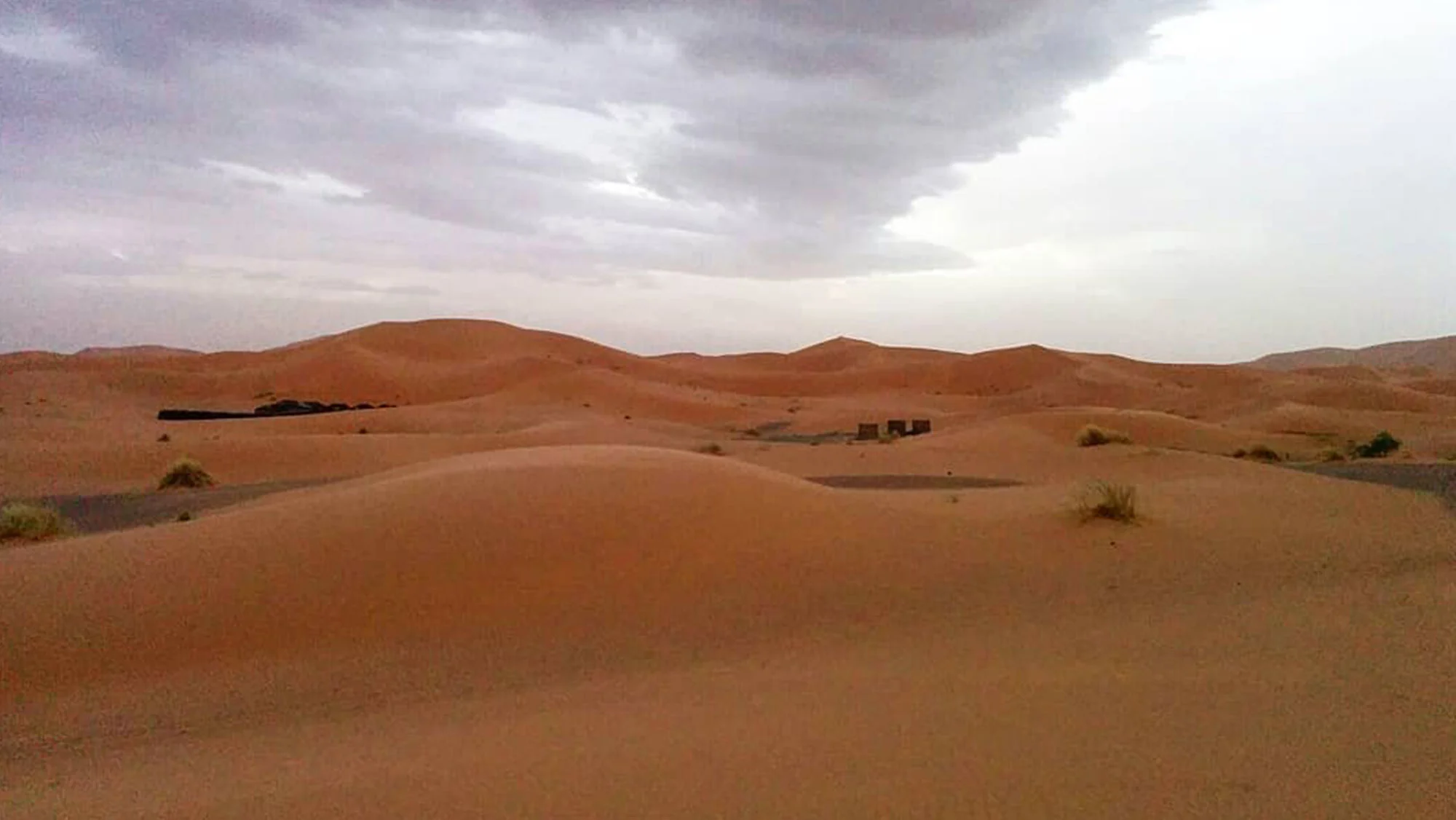
Travel by private vehicle across Morocco, passing cedar and pine forests, the Middle Atlas Mountains and pre-desert countryside with gorges and palm groves, to the Sahara dunes at Merzouga. Stay in a desert auberge by the dunes and have a local-style dinner.
Meals: Breakfast,Dinner
Day 7
Day 7: Merzouga
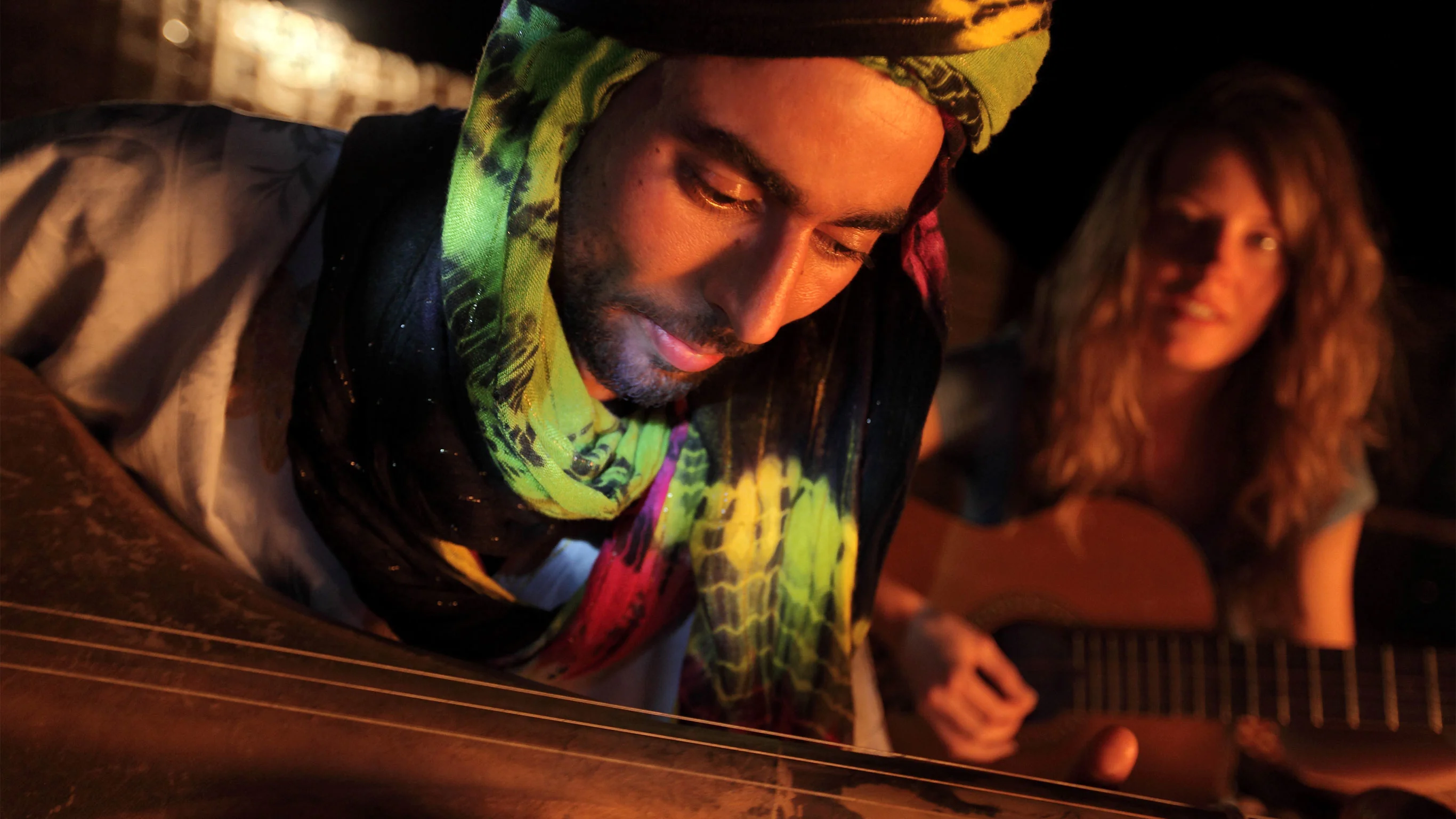
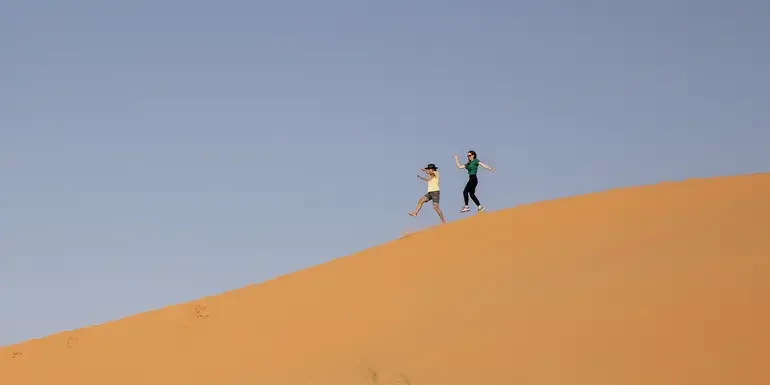
Explore the dunes on foot or take an optional 4×4 excursion. In the afternoon, ride a camel into the dunes to watch the sunset; walking is an alternative for those who cannot or prefer not to ride. Learn to tie a turban, then enjoy a traditional dinner and a campfire near the hotel, with stories and possibly traditional drum music.
Meals: Breakfast,Dinner
Day 8
Day 8: Merzouga/Todra Gorge
Rise early to watch the sunrise, then travel by private vehicle through a stone desert to Todra Gorge. Walk, relax by the river or sample local Amazigh delicacies in the gorge and its palm oasis.
Meals: Breakfast
Day 9
Day 9: Todra Gorge/Aït Ben Haddou
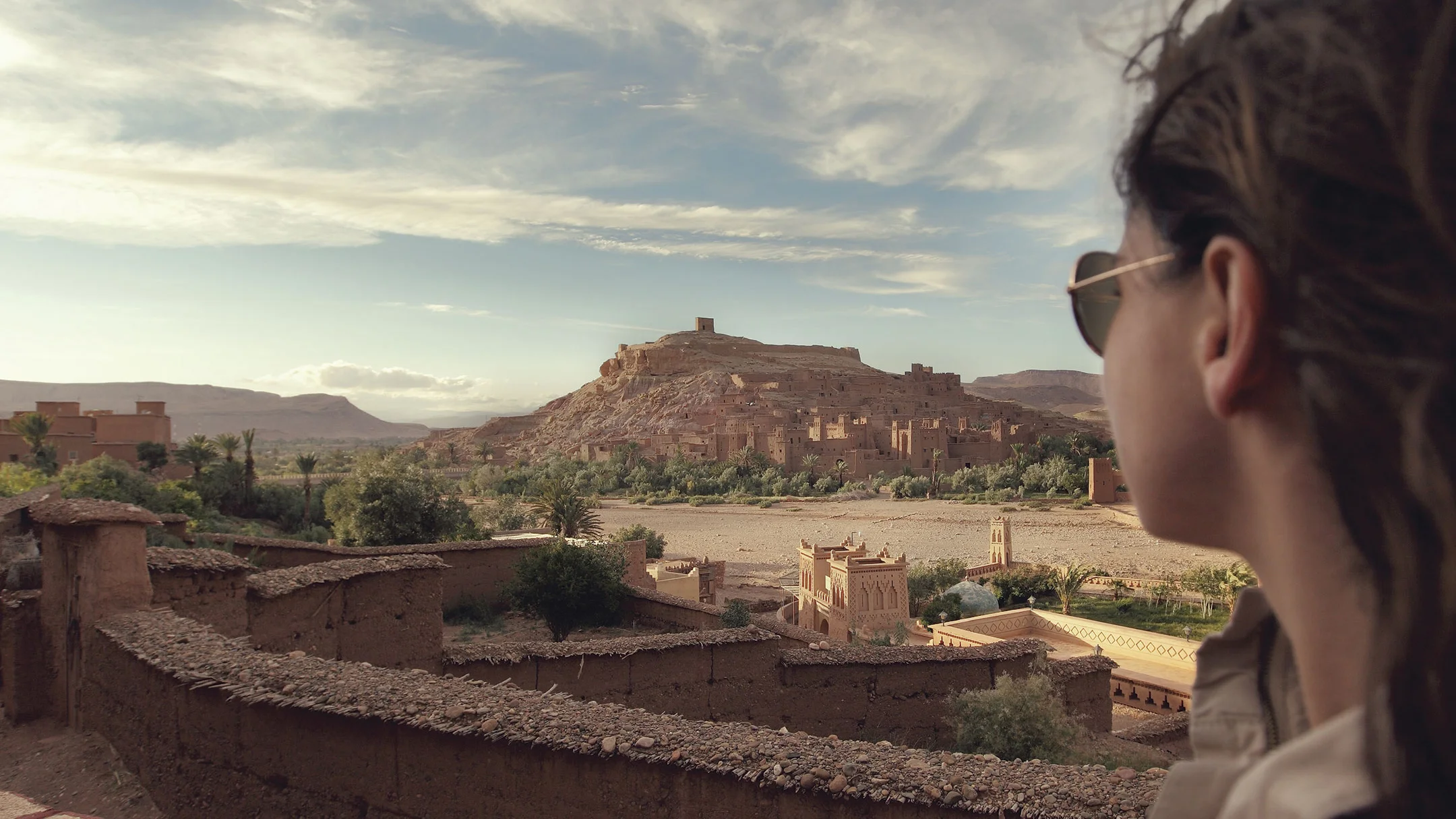
Travel by private vehicle along the Route of 1000 Kasbahs, stopping for lunch in Ouarzazate, home to Atlas Film Studios. Continue to Aït Ben Haddou for a tour of its UNESCO-listed kasbah. An optional evening tagine cooking class may be available, with dinner to sample the food prepared.
Meals: Breakfast
Day 10
Day 10: Ait Benhaddou / High Atlas Mountains
Travel across the Tizi n’Tichka pass at 2,260 metres into Toubkal National Park and continue by vehicle to Imlil. Hike uphill for about one hour to Aroumd (Aremd) and stay in a mountain gîte. Enjoy views of Mt Toubkal and a home-cooked dinner made with local produce.
Meals: Breakfast,Dinner
Day 11
Day 11: High Atlas Mountains / Essaouira
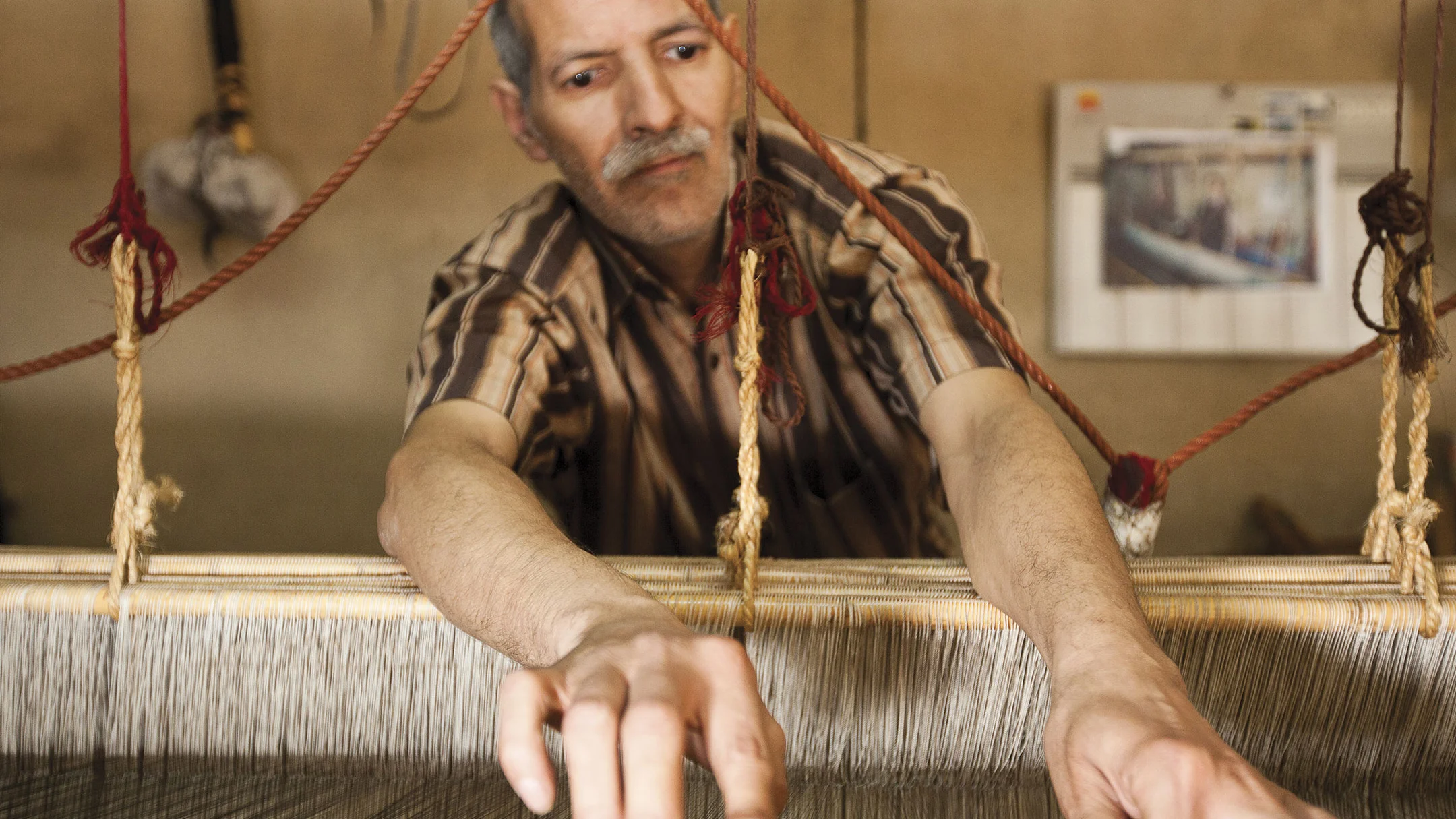
After breakfast, hike downhill from Aroumd to Imlil and continue by vehicle to Essaouira, arriving mid-afternoon. Stop at the Zarbiat Achbarou Cooperative for a carpet-weaving demonstration and tea. The rest of the day is free to explore the shops, harbour and beach.
Meals: Breakfast
Day 12
Day 12: Essaouira
Enjoy a free day to explore Essaouira. A Traditional Hammam Experience can be pre-booked.
Meals: Breakfast
Day 13
Day 13: Essaouira/Marrakech
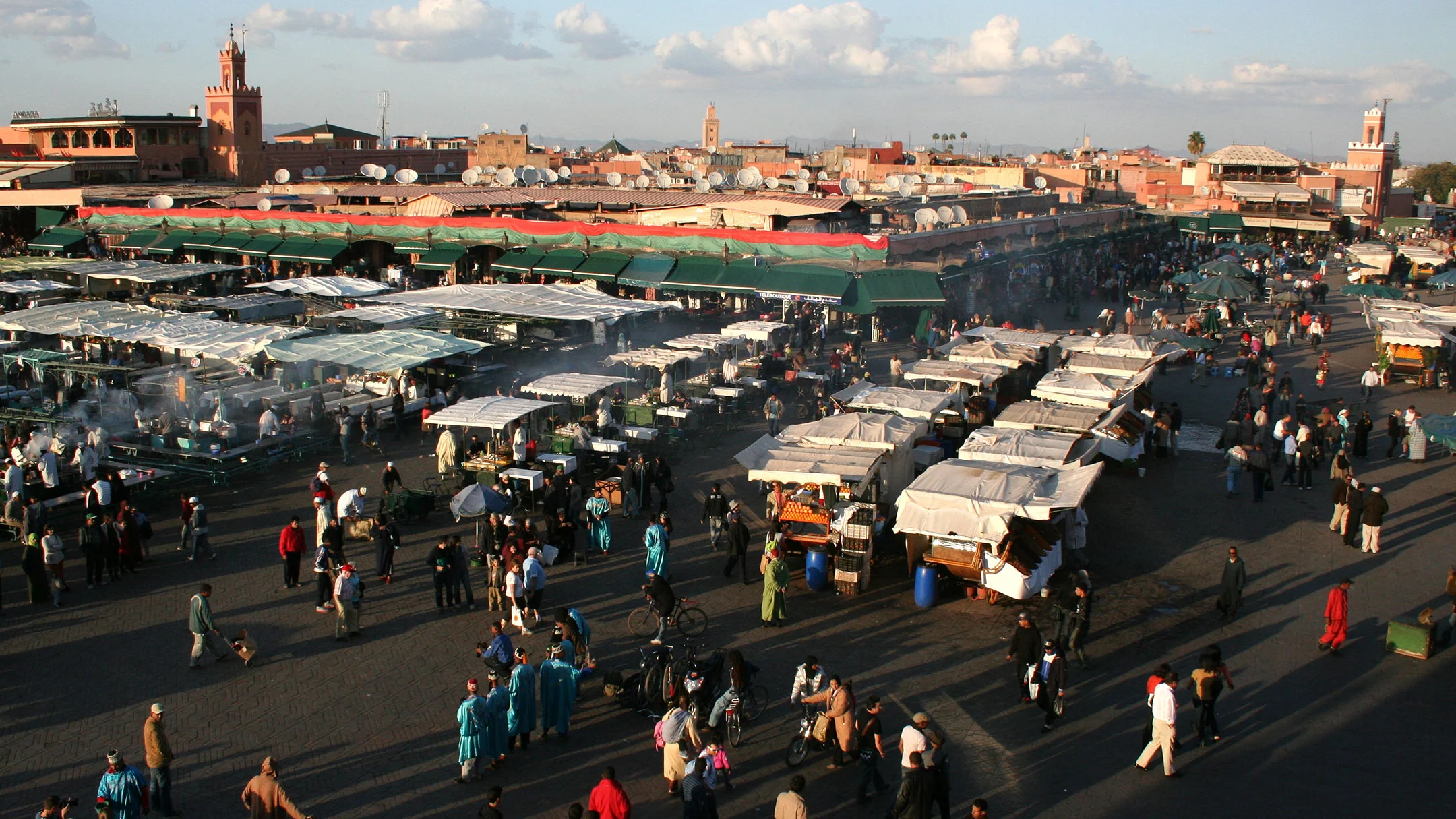
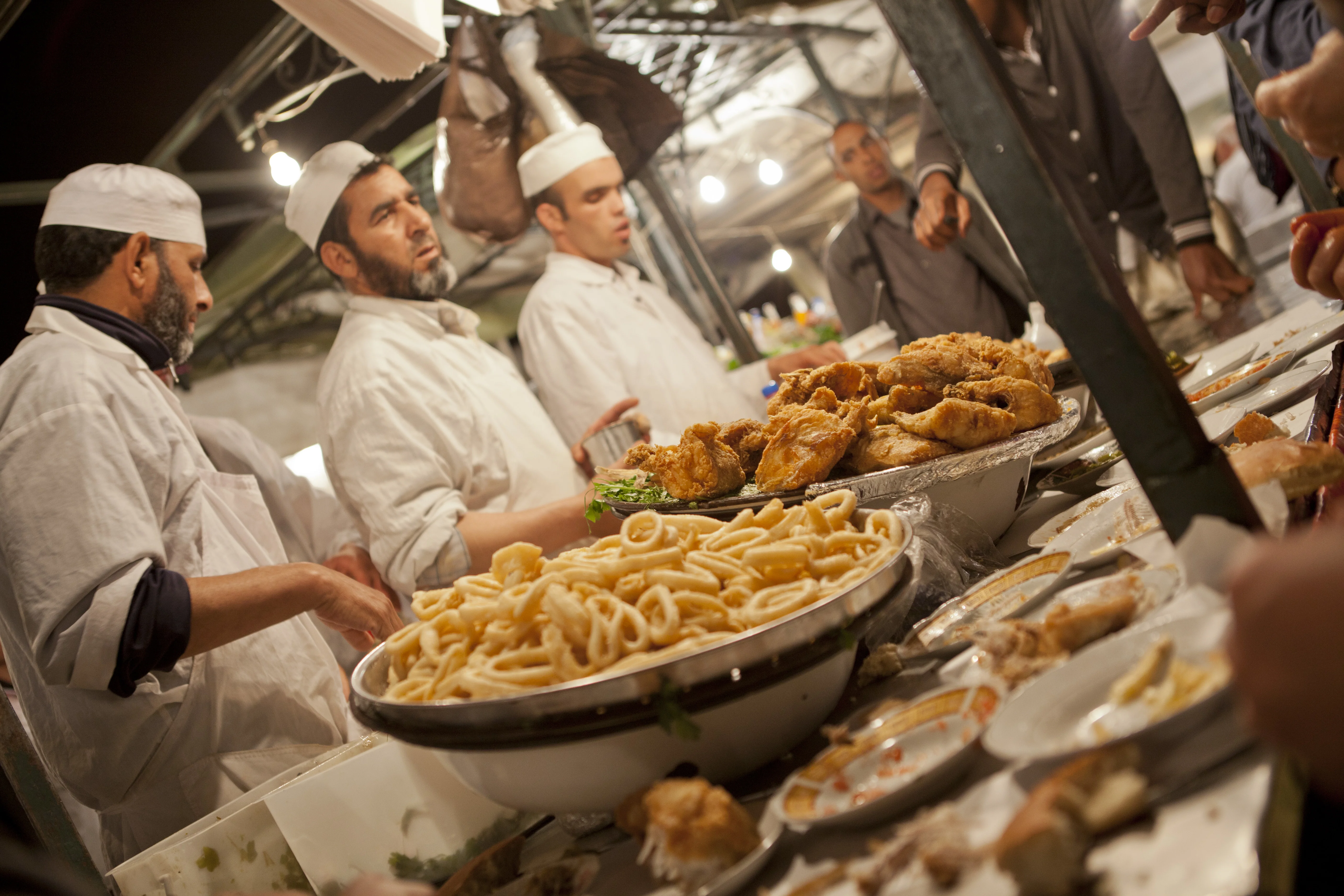
Travel by private vehicle to Marrakech and take a guided tour of the medina and souks. Later, you can visit Djemaa el Fna Square and its tea houses; an optional group dinner is available at the square’s food stalls.
Meals: Breakfast
Day 14
Day 14: Marrakech
Free day to explore Marrakech, including Djemaa el Fna Square, the medina or the modern part of the city. A hot-air-balloon excursion at sunrise can be pre-booked.
Meals: Breakfast
Day 15
Day 15: Marrakech
Depart at any time.
Meals: Breakfast
What’s included
What’s not included
Additional information
Meals Included
14 breakfasts, 1 lunch, 3 dinners
Group Size
15
Solo Travellers
Meals
Generally meals are not included in the trip price when there is a choice of eating options, to give you the maximum flexibility in deciding where, what and with whom to eat. It also gives you more budgeting flexibility, though generally food is cheap. Our groups tend to eat together to enable you to taste a larger variety of dishes and enjoy each other’s company. There is no obligation to do this though. Your CEO will be able to suggest favourite restaurants during your trip. For all trips please refer to the meals included and budget information for included meals and meal budgets.
Breakfasts
Moroccan breakfasts tend to be different from your usual cereal and toast morning fare – most will be very simple – a croissant or sweet roll with jam and instant coffee and some hotels will have buffets where you will have more variety. While you are experiencing what a Moroccan family would eat, some travellers do find the provided breakfasts a bit “bread heavy” and enjoy buying fruit the day before to supplement their breakfast.
Lunches and Dinners
Moroccan cuisine is world famous and your CEO will be taking the chance to show you the best of it. Staples include cous cous, a type of grain topped with stew, tagine which is actually the name of the pot this tasty dish is cooked in, and brochette, bbq skewers of meat. These meals will generally cost between 10-15 USD per meal depending on the type of restaurant and which part of the country you are in. Other tastes not to be missed include pastilla, a sweet pasty with a savoury filling which is traditionally pigeon and harira, a delicious soup based on chick peas and filling enough when teamed with fresh bread to be a whole lunch. If you are heading to the coast the fresh seafood cooked at one of the local markets is a must eat!
Snacks
Morocco’s fresh orange juice is highly recommended and you should not leave without trying a glass. The brave can try the tiny snails which are perhaps the local’s favourite snack but you might prefer a cone of piping hot bite-size fried cake donuts.
Minimum Age
You must be 18 to travel unaccompanied on a G Adventures tour. For minors travelling with a guardian over 21 years old, the minimum age is 12.
Local Dress
Important Notes
ACCOMMODATION NOTE:
Please be aware that properties we stay in with only two stories may not have elevators installed and climbing the stairs with your luggage will be necessary.
ITINERARY PACE
This is a very fast paced itinerary which covers lots of ground. While this is great as it allows us to see a huge amount in the available time, it also means some early starts, some long drives in the mini van and less free time than many other G Adventures. We feel that if you enter this trip with this knowledge and expectation, you will appreciate even more the variety of locations we are able to include in this itinerary.
TRANSPORT
The legroom in the minivan is possibly smaller than you may be used to and taller passengers may find space a little cramped. It is important to be aware that as it is not a legal requirement in buses in Morocco, your vehicle may not be equipped with seat belts.
CAMEL RIDE
It is not possible to reach the middle of the dunes, where we watch the sunset, by 4WD or any other vehicle. There is the option to walk (can be very hot and tiring) for those who cannot/prefer not to ride a camel.
WEATHER
Please note that the climate in Morocco can be both very hot during the day in summer months (up to 50°C) and cold at night in the mountains in autumn, early spring and winter (down to -6°C). Summer months, from April to September are very hot throughout Morocco. Winter months November to March can be cool to cold, especially in the Atlas Mountains, with high probability of snowfall. Most Moroccan buildings are not equipped with heating, so without proper layers you will be cold at night. Please bring appropriate clothing for the months in which you are travelling and check temperatures before you leave. Bedding is provided in the desert camp and the gîte, but in winter months if you feel the cold you may wish to bring a sleeping bag, too.
RAMADAN
According to the lunar cycle, Ramadan will fall between Feb 8 – Mar 8, 2027. Please note that Ramadan is a month of fasting observed by Muslims throughout the world, during which time the followers of Islam should not eat or drink between sunrise and sunset. There may be some limitations to services and disruptions to schedules during Ramadan, but generally our tours still operate effectively during this period and food is available to non-Muslims throughout the day. It is very important to display increased cultural sensitivity during Ramadan. Please wear loose fitting clothes, that cover knees and shoulders, and try to avoid eating, drinking or smoking in public out of respect for those who can’t at that time.
AID AL-ADHA
During your visit to this country, we would like to inform you about an important celebration called Aid Al-Adha. This holiday may impact your travel experience, as most shops and restaurants are closed during the celebration. Some of the historical places we visit might also be closed during this time. There will be a shorter number of staff at the hotels and less crowded streets on the day of the celebration.
**Please see the FAQs for My Own Room exception nights**
Group Leader
CEO (Chief Experience Officer) throughout, driver.
About Accommodation
On this trip you can expect to stay in local hotels or pensions (with the exception of the start and finish hotels, which are often larger city hotels), which will vary a little in standard and facilities: some may not have elevators, air-conditioning or English-speaking staff, but most importantly all are locally-run, with some traditional character, and in excellent central locations to give you maximum time for exploring the sights.
Please note that Morocco is a developing country and as such the infrastructure is not as reliable as you would expect at home. Expect quirky plumbing and the odd cold shower!
While in the mountains our accommodation will be basic refuge-style multi-share with shared unisex facilities. In Merzouga we will stay in a traditional desert auberge (guesthouse).
What to Take
You will be on the move a lot, so our advice is to pack as lightly as possible. We highly recommend using a backpack or light sports bag, whichever you find easiest to carry, plus a small daypack. Luggage space on transport is limited. You must be prepared to carry your own bags and be comfortable carrying them between transport and hotels (max. 15-20 mins walking), hopping on and off trains and public buses and up and down stairs.
Please note that for the overnight stay in Aremd, you will need to prepare a small backpack with essential items for one night only.
Your main suitcase will remain safely in the vehicle and will not need to be carried. No mules are used for luggage transport in this case. We recommend bringing only important personal items for the overnight stay in a light and easy-to-carry bag.
Spending Money
Every traveller is different and therefore spending money requirements will vary. Some travellers may drink more than others while other travellers like to purchase more souvenirs than most. Please consider your own spending habits when it comes to allowing for drinks, shopping and tipping. Please also remember the following specific recommendations when planning your trip.
Todra Gorge Oasis Walk & Village Visit
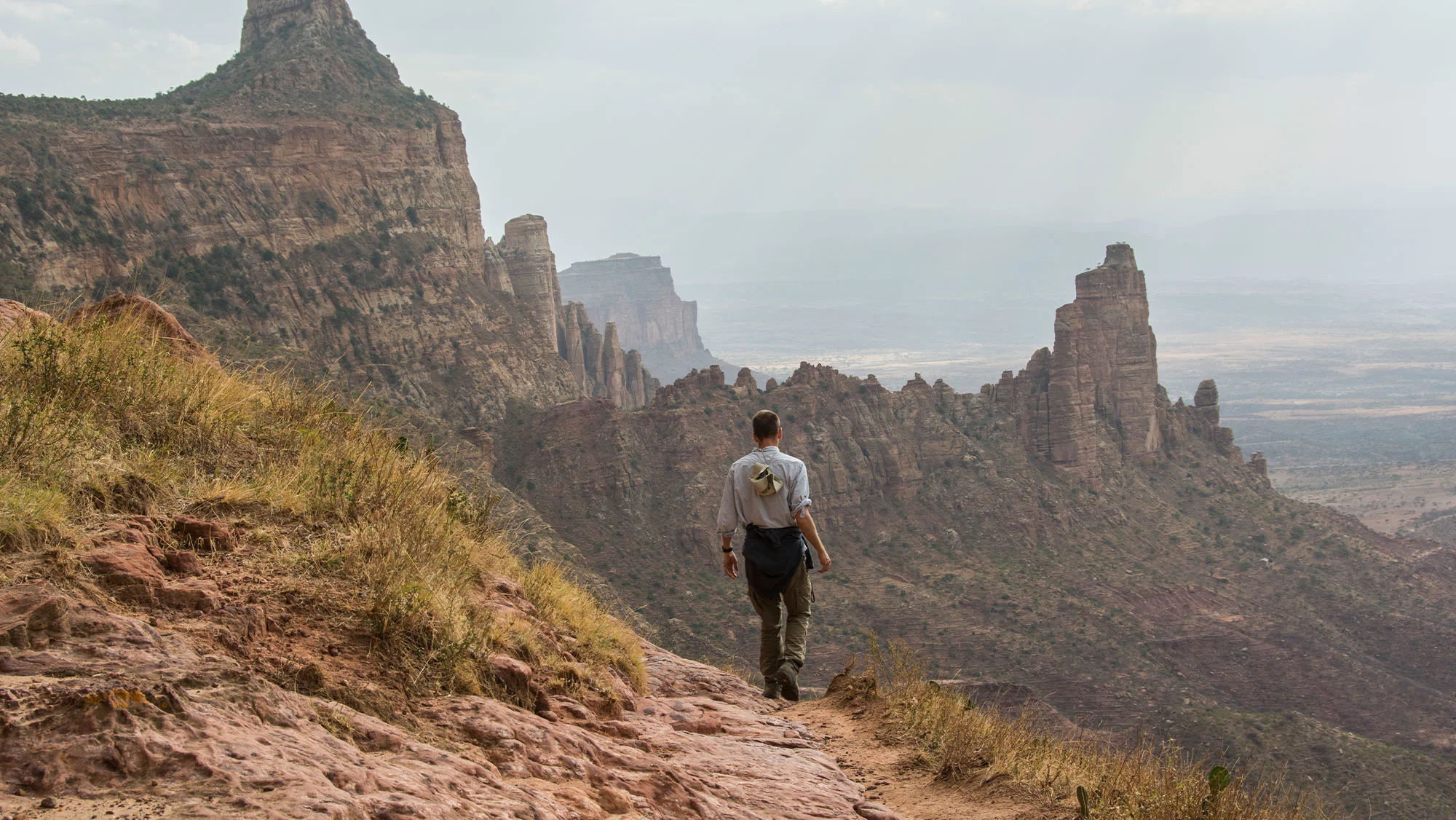
Walk beneath the towering walls of the Todra Gorge, where a cool river threads between sheer limestone cliffs. Follow palm-shaded paths through a palm-filled oasis and tidy garden plots nourished by ancient irrigation channels.
Meet residents in nearby Amazigh villages and learn how seasonal rhythms shape life in the High Atlas foothills. The interplay of rock, water, and green terraces reveals Morocco’s timeless ingenuity in desert-edge landscapes.
High Atlas Hike to Aroumd & Mountain Gîte Dinner
Hike mule paths in Toubkal National Park to the stone-built village of Aroumd (Aremd), where terraces cling to the valley beneath North Africa’s highest peak. Settle into a traditional mountain gîte and savor a hearth-warmed welcome.
Share a home-cooked dinner featuring tagines and freshly baked bread, and learn about Amazigh customs and mountain life. Evening skies clear to constellations, and mornings reveal jagged ridgelines in crisp mountain light.
AFER Association Community Lunch, Meknès
Taste the generosity of rural Morocco during an AFER Association Community Lunch, a G for Good initiative supporting women and children with disabilities in the Meknès region. Enjoy a seasonal spread—perhaps vegetable tagine, couscous, and fresh salads—prepared with local ingredients.
Learn how training programs create livelihoods and dignity while preserving culinary heritage. Share stories over mint tea as hosts explain traditions of hospitality and the role of community associations in Morocco’s social fabric.
Volubilis Roman Ruins Guided Tour
Visit the Roman ruins of Volubilis on a scholarly walk through a UNESCO World Heritage site set amid rolling olive groves. Wander avenues of toppled columns and intact townhouses showcasing intricate mosaics of Orpheus, Bacchus, and sea creatures.
Stand by the triumphal arch and imagine traders crossing from Mauretania to the Mediterranean world. With the forum, capitol, and basilica around you, sense how Rome’s frontier outpost once pulsed with civic life and provincial power.
Fès Medina Guided Tour & Tanneries View
Navigate Fès with a specialist guide through the maze of Fès el-Bali medina, past spice-laden souks, copper workshops, and bread ovens. Glimpse scholarly courtyards near Al-Qarawiyyin University, believed to be one of the world’s oldest continuously operating institutions.
Climb to a balcony to overlook the Chouara Tannery and its dye pits, a craft unchanged for centuries. Pass ornate gateways like the Blue Gate (Bab Bou Jeloud) as you absorb the sound of artisans’ hammers and the scent of cedar and leather.
Sahara Sunset Camel Ride, Erg Chebbi
Ride across wind-carved ridges on a sunset camel ride into the Erg Chebbi dunes, where saffron light ignites the sands. Guides show how to tie a cheche headscarf and share practical tips for the journey.
As the sun dips, sand shifts from gold to copper and the horizon glows. Pause to capture the dune silhouettes and listen for desert quiet after dusk—an elemental scene that distills the vastness of the Sahara.
Aït Ben Haddou Ksar & Kasbah Exploration
Explore Aït Ben Haddou, a fortified UNESCO World Heritage ksar whose tawny ramparts and granaries rise above the Ounila Valley. Stroll alleys of packed-earth homes, merchants’ quarters, and sentinel towers that once guarded caravan routes.
Learn about earthen architecture—adobe, palm timber, and lime—perfected to beat desert heat. From film sets to living heritage, the ksar’s hilltop views frame oases, red hills, and the Atlas beyond, revealing a crossroads of trade and storytelling.
Zarbiat Achbarou Cooperative Visit with Tea
Experience grassroots craftsmanship at the Zarbiat Achbarou Cooperative, where artisans share techniques in a carpet weaving demonstration. Hear how cooperative membership fosters income, preserves patterns, and passes skills to younger generations.
Break for mint tea and local cookies while discussing symbols woven into tribal designs. This encounter highlights Morocco’s living heritage and the role of social enterprise in sustaining rural communities.
Marrakech Medina Guided Walk & Jemaa el-Fnaa
Discover the Red City on a guided walk through spice-scented alleys to souks and Jemaa el-Fnaa. See the minaret of the Koutoubia Mosque and browse stalls piled with brass lamps, woven baskets, and saffron.
Absorb the medina’s rhythm—gnawa beats, storytellers’ circles, and herbal apothecaries—while learning how dynasties shaped Marrakech’s palaces and gardens. End amid the square’s shifting theatre of food vendors, musicians, and dusk-lit smoke.
Chefchaouen Rif Valley Mountains Hike (Pre-bookable)
Hike above blue-washed Chefchaouen on the Rif Valley Mountains Hike, following goat tracks and pine-scented ridgelines to wide views of the medina and surrounding peaks.
Learn about local flora used for cooking and remedies while pausing at scenic overlooks for photos and water breaks. This experience is at additional cost and bookable on tour; terrain is moderate and rewarding for active travellers.
Merzouga 4x4 Desert Excursion
Venture by 4×4 desert excursion around Erg Chebbi to explore fossil-studded hamadas, dry lakebeds, and nomadic encampments the camels won’t reach. Stops are tailored to light, wind, and sand conditions for the best perspectives.
Hear about Saharan geology and oasis life while you pause for photos and reflection on the edge of sweeping dunes. This experience is at additional cost and bookable on tour.
Essaouira Traditional Hammam Experience
Restore mind and body in a traditional hammam, moving from warm to hotter chambers as attendants apply black olive soap and exfoliating kessa for deeply cleansed, glowing skin.
Finish with rinses and fragrant oils before stepping back into the sea breeze of Essaouira’s medina. This cultural ritual offers unhurried calm amid travel’s bustle. Experience is at additional cost and bookable on tour.
Aït Ben Haddou Tagine Cooking Class & Dinner
Learn Morocco’s slow-cooking secrets in an tagine cooking class near Aït Ben Haddou. Chop seasonal produce, master spice-blending, and layer ingredients into clay pots for gentle simmering.
Savor your handiwork with salads and warm bread while discussing culinary traditions shaped by caravans and oases. This hands-on experience is at additional cost and bookable on tour.
Marrakech Sunrise Hot Air Balloon
Soar on a sunrise hot air balloon over palm groves and fields with the Atlas Mountains rising in the distance. Watch ochre light sweep across villages and desert scrub as the city wakes below.
Post-flight tea and views provide a serene contrast to the day’s medina energy. This scenic flight is at additional cost and bookable on tour; weather may affect operation.
Jemaa el-Fnaa Night Market Tasting Dinner
Taste Marrakech at its liveliest with a guided wander through the Jemaa el-Fnaa night market. Settle at street-food stalls for skewers, harira soup, zaalouk, and hot breads, with freshly squeezed orange juice on the side.
Hear how recipes travel from mountain villages and Saharan outposts to the Red City’s great square. This hosted dinner is at additional cost and bookable on tour; dietary preferences can be accommodated.
Tangier Medina & Kasbah Guided Tour
Explore Tangier with a local expert on a guided tour through the Tangier Medina and Kasbah, where whitewashed lanes open onto lively squares. Pause in the Grand Socco and Petit Socco and feel the city’s mix of North African and Andalusian influences.
Hear stories of writers and spies who once haunted Tangier’s cafés as you admire views toward the Strait of Gibraltar. The kasbah’s ramparts and museum courtyards reveal a maritime city shaped by trade, migration, and layered history.
Welcome Moment: Meet Your CEO and Group
Meet your fellow travellers and meet your Tour Director in Casablanca for a relaxed briefing that sets the tone for your Moroccan journey. Get practical tips, learn about the journey ahead, and discover how to make the most of bustling medinas, mountain paths, and desert sunsets.
Gain cultural insights on customs, bargaining etiquette, and regional dishes so you arrive in each city with confidence. This warm, informative session helps the small group connect and plan shared moments in Morocco’s imperial cities, mountains, and desert.