Your itinerary
Day 1
DAY 1
Arrival in Venice & Castelfranco Veneto
Meals: Dinner
Day 2
Bassano Del Grappa & Villa Sandi
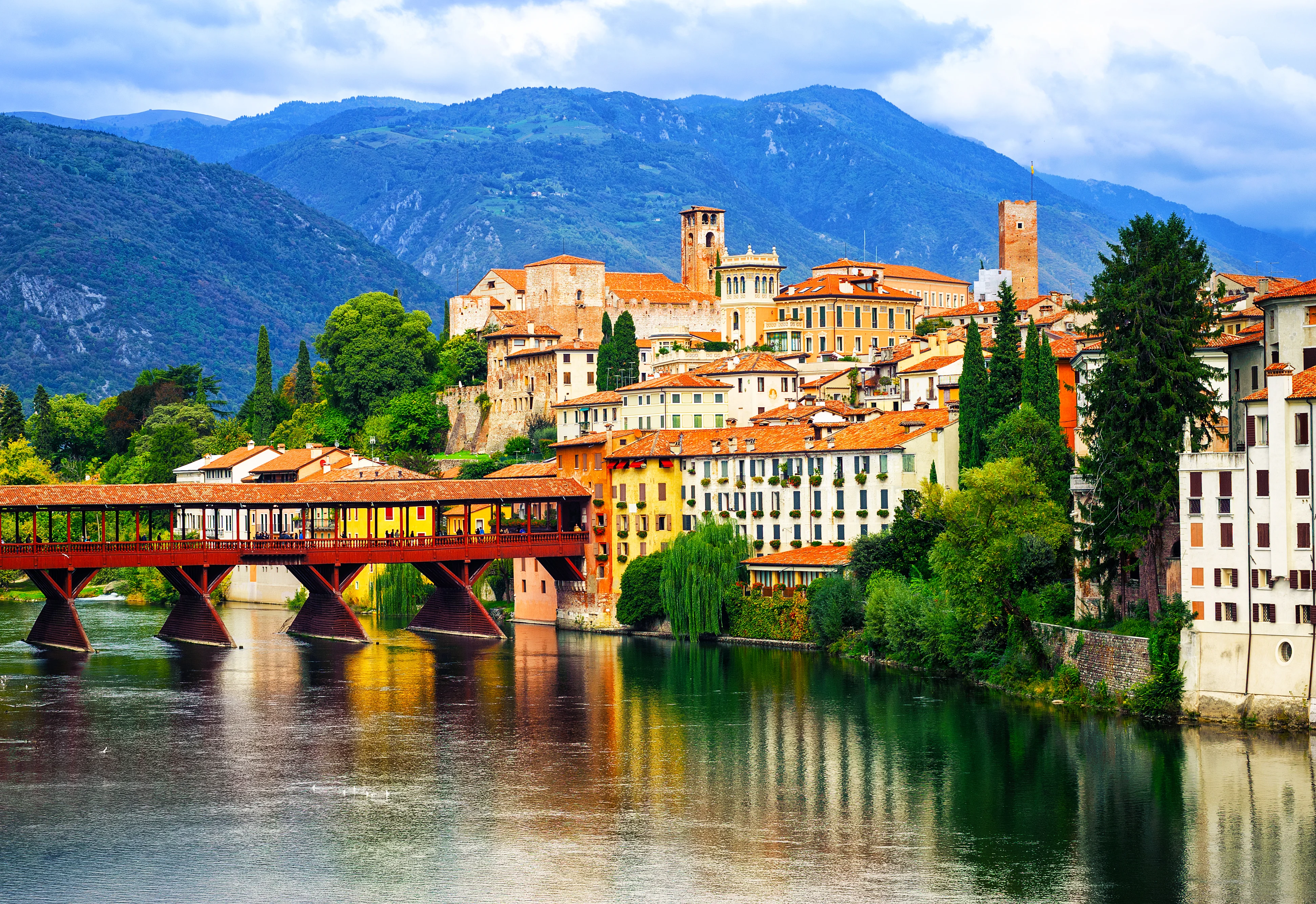
Bassano Del Grappa & Villa Sandi – After breakfast, we’ll visit the enchanting town of Bassano del Grappa, nestled serenely in the foothills of Monte Grappa from which the river Brenta flows free. Connecting the halves of the town is the wooden Ponte degli Alpini bridge, cleverly designed to withstand the meltwaters in spring.
Bassano is known for its superb, glazed earthenware, but perhaps more so for the Italian after-dinner drink, grappa, which you’ll have the opportunity to taste on our guided visit to a local artisan museum.
Here, you’ll experience this fragrant, grape-based brandy with all five of your senses: listen to the story of how it’s made, observe the distillation process, feel the fresh pomace with your own hands, and even smell the different varieties. Of course, you’ll also have the opportunity to taste a few varieties of this warming digestif too.
After our visit to the museum, there’s free time for lunch at one of the town’s many excellent restaurants before we continue to Valdobbiadene, one of the most prestigious Prosecco-producing areas in the heart of the Treviso region.
Here, we’ll visit the prestigious wine producer, Villa Sandi. This vast valley of vineyards is ideally located with naturally endowed soil and sun-kissed rolling hills which provide the optimum conditions for cultivating some of the finest grapes.
Snaking below the palatial 17th-century villa is a centuries-old network of tunnels. Once used covertly by the Italian army during World War I, today they provide the perfect environment for aging wine. We’ll tour these underground cellars, home to a million bottles of wine including some of the best Prosecco, which we sample afterwards.
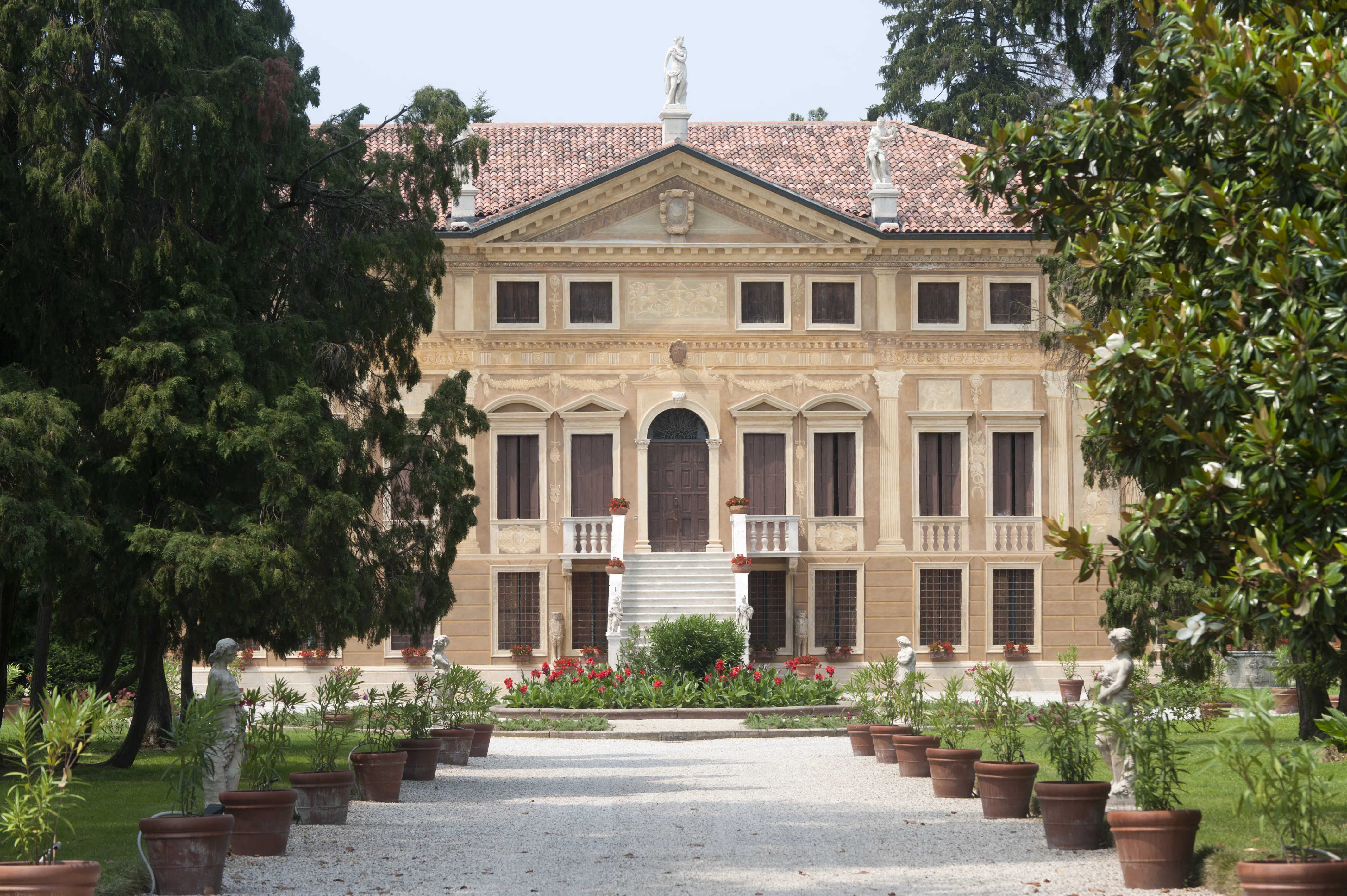
Our guide then takes us through the Palladian villa, its spacious rooms a luxurious combination of pastel colours, stuccoes and bas-reliefs, dominated by resplendent Murano glass chandeliers. It’s easy to imagine a time when important figures such as Napoleon Bonaparte once wined and dined here.
Meals: Breakfast
Day 3
Vicenza
Vicenza – Today we’ll head southwest to Vicenza, situated at the northern base of the cypress-clad Monte Berico astride the Bacchiglione river. This sophisticated city is wonderfully cosmopolitan yet doubles as an open-air museum dedicated to the legacy of Palladio, a miller’s son who became the most prominent architect of the Italian High Renaissance and gave rise to the Classical style of Palladianism. The local gentry, eager to decorate their city with grand new buildings, gave him plenty of opportunities to realise his vision; as a result, many of central Vicenza’s streets are graced by a Palladian mansion.
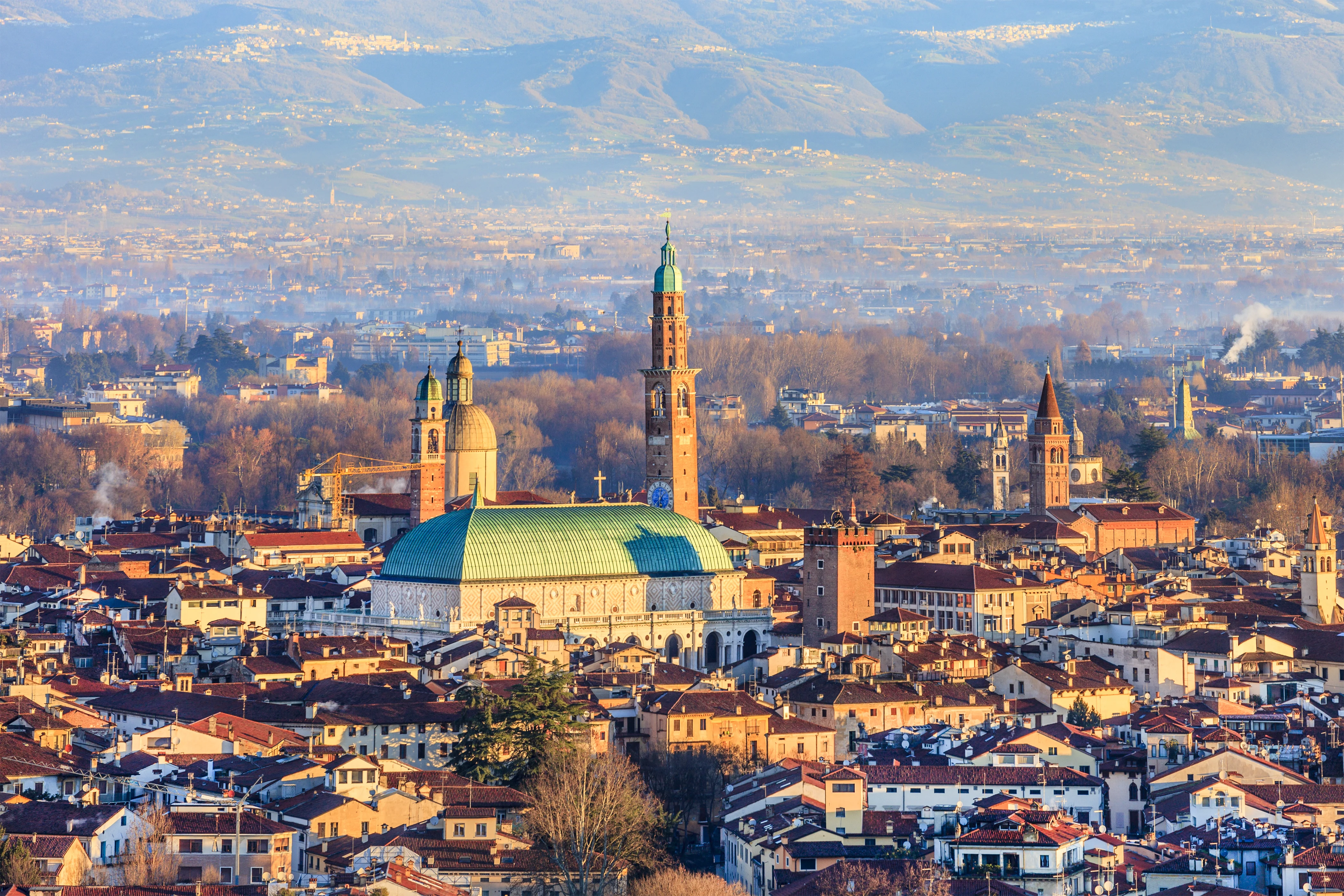
We’ll see many of these on our guided tour this morning through the historic centre. At the heart of Vicenza is the Piazza dei Signori, dominated by the Basilica with its marvellous clock tower and distinctive, green roof surrounded by statues of Greek and Roman gods. Not a church but a remodelling of a Gothic courthouse, the basilica’s most notable feature is the loggia, one of the earliest examples of the Palladian window.
Nearby is the renowned Teatro Olimpico, Europe’s oldest surviving indoor theatre, seemingly constructed from marble but upon closer inspection, you’ll discover masterfully painted wood and plaster. Its atmospheric auditorium is simply stunning, intended to resemble the outdoor theatres of ancient Greece and Rome. This astounding landmark, together with the Palladian Villas of the Veneto in the surrounding area, is a designated UNESCO World Heritage Site.
There is time to explore these wonderful sights this afternoon should you wish. You will receive a complimentary museum card, granting free entry to the city’s various world-class attractions.
Meals: Breakfast
Day 4
Mantua and Palazzo Ducale
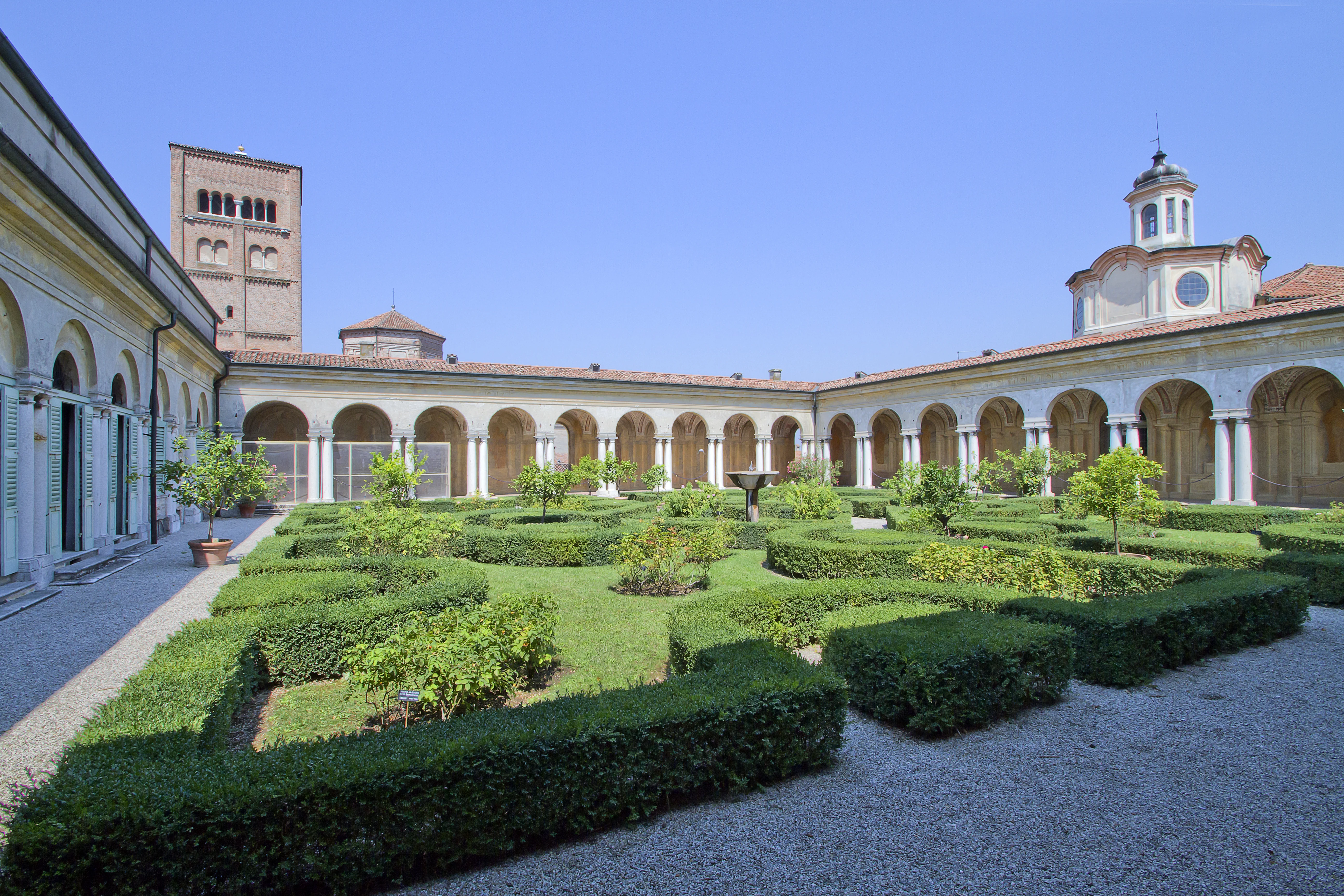
Mantua and Palazzo Ducale – Our journey today will take us west. As the dramatic skyline of ancient towers, domes and cupolas comes into view, it’s easy to see why the city features in two well-loved tragedies: it is the setting for Verdi’s Rigoletto and Shakespeare had an impassioned Romeo exiled here.
Stepping back in time, our destination today is the sleepy yet achingly beautiful Mantua. This medieval city is often overlooked, despite its proximity to Lake Garda, thanks in part to the three surrounding lakes, which form a natural fortification, keeping Mantua a secret from the world. It has remained virtually untouched for centuries.
As we explore the old town on our guided tour it’s easy to see why it’s listed as a UNESCO World Heritage site. And, although compact in size, Mantua has more than its share of artistic, cultural and architectural treasures.
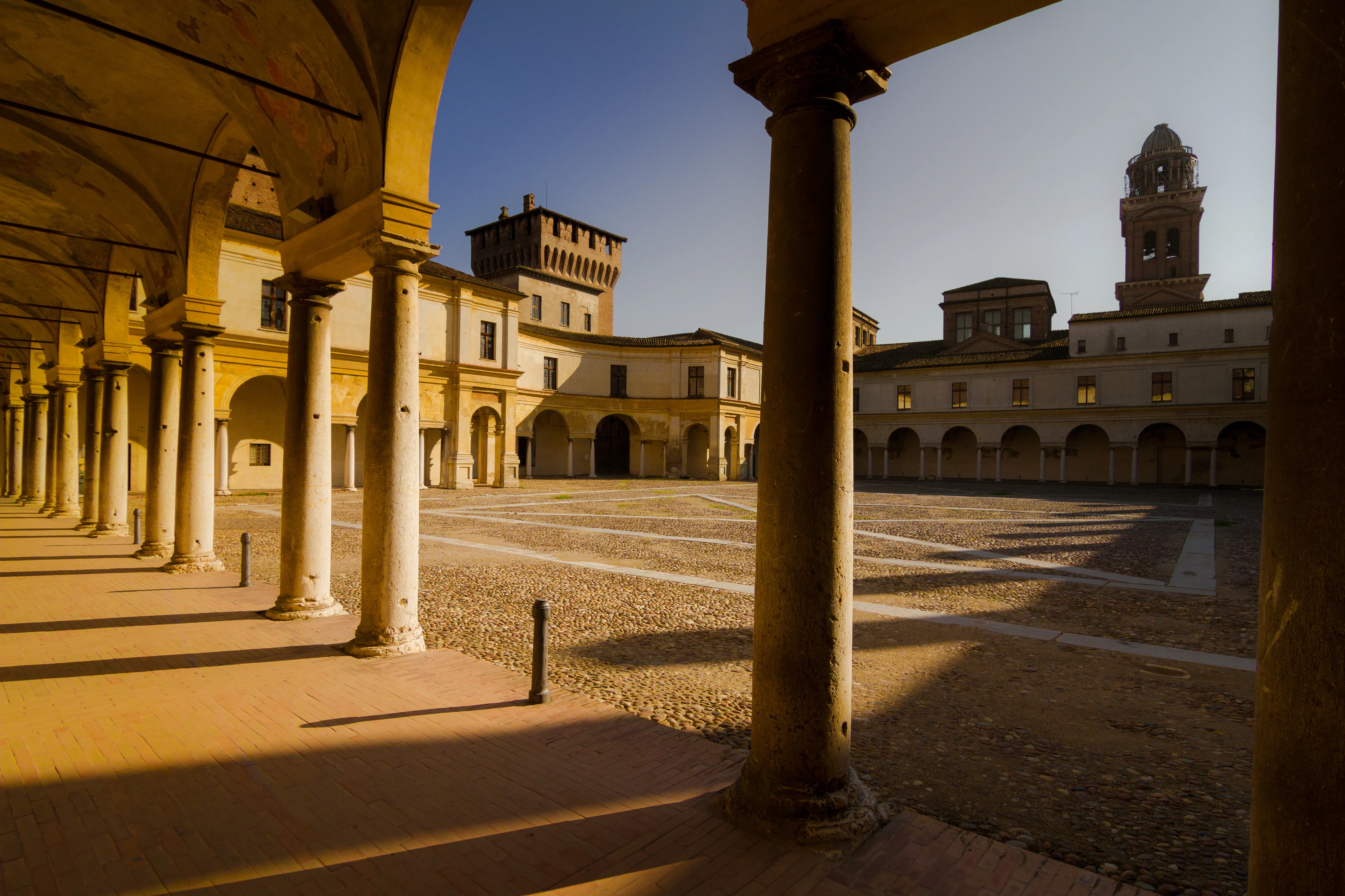
The city reached its zenith in the 14th century when it came under Gonzaga rule. As one of the greatest Renaissance families of Italy, it was a court-city of great opulence and echoes of its grandeur can be seen in the courtyards, small squares and porticoes.
This afternoon, we’ll visit the epicentre of Gonzaga rule, the sumptuous Palazzo Ducale. The vast architectural complex covers an area of 35,000 square meters with almost 1,000 rooms, decorated and furnished by some of the greatest artists of their time – all called to service by the power of the Gonzaga family. Among the masterpieces are the late-gothic frescos by Pisanello, The Gonzaga Family in Adoration of the Holy Trinity by Rubens, and Camera degli Sposi (bridal chamber) by Mantegna – the latter which is said to have led the way for Michelangelo’s Sistine ceiling.
Meals: Breakfast
Day 5
Padua
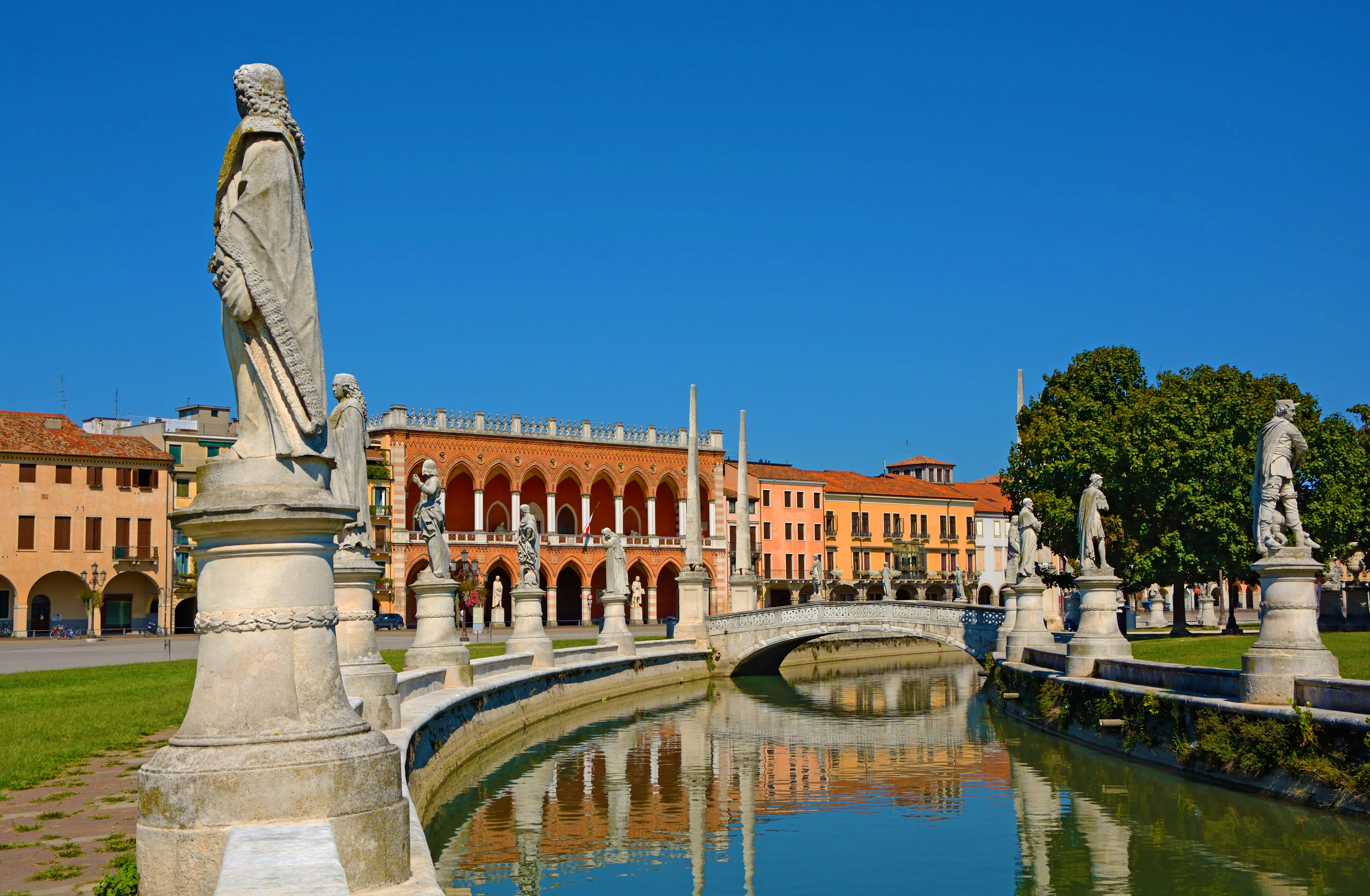
Padua – This morning, we’ll travel south to Padua, a dynamic city which deserves to be recognised for more than its remarkable university, founded in 1222 and Italy’s second oldest.
Our visit starts with entry to see a paragon of Medieval art. Built in the 14th century, the Scrovegni Chapel stands atop a 60 B.C.E. Roman amphitheatre – hence its second name, the ‘Arena Chapel’.
While the outside seems fairly unassuming, the inside is utterly breathtaking. The walls and ceiling are adorned with frescos by the Tuscan maestro Giotto, depicting events in the lives of the Virgin Mary and Christ and, on the wall opposite the altar, is a grand depiction of the Universal Judgement. The entire series of frescos is linked by the intense blue colour of the vault, creating a seamless masterpiece. Giotto’s work marks the beginning of a revolutionary development in the history of mural paintings. It is now part of the UNESCO World Heritage Site of 14th century fresco cycles, composed of eight historical buildings in Padua city centre.
The rest of the day will be at your leisure. You could explore the fine piazzas of the historic centre and marvel at the diverse architectural styles: the Baptistry of the Duomo contains one of the country’s most complete medieval fresco cycles; the Renaissance Loggia della Gran Guardia once housed the Council of Nobles; and bustling Caffè Pedrocchi, ever popular with students and intellectuals, was built to resemble a Classical temple.
Particularly outstanding is the exotic Basilica di Sant’Antonio, one of the most popular pilgrimage sites in Italy. Beneath its distinctive Byzantine domes rests the tomb of Padua’s patron saint.
Or you may choose to visit the museum complex which occupies a group of 14th-century monastic buildings attached to the church of the Eremitani, a reclusive Augustinian order.
Meals: Breakfast
Day 6
DAY 6
Return home
Meals: Breakfast
What’s included
What’s not included
Additional information
Bassano del Grappa Walk & Artisan Grappa Tasting
Explore Bassano del Grappa on a guided stroll across the Ponte degli Alpini with views of the River Brenta and Monte Grappa. Visit an artisan museum to learn the craft of distillation and enjoy a tutored grappa tasting that engages all five senses.
Originally designed by Palladio and rebuilt by Alpine troops, the wooden bridge anchors a town famed for ceramics and mountain traditions. Hear how fresh pomace becomes crystal-clear spirit, compare aromatic styles, and appreciate Bassano’s alpine-meets-Venetian character.
Villa Sandi Prosecco Estate & Underground Cellars
Tour Villa Sandi, a stately 17th-century residence in Valdobbiadene, and walk through its cool underground cellars where a million bottles quietly mature. Sample premium Prosecco DOCG and learn how hillside vineyards and careful blending shape the wine’s lively finesse.
Admire Palladian proportions, pastel salons and glittering Murano chandeliers, then hear stories of the tunnels’ World War I role and the estate’s links to notable guests. The visit pairs architectural elegance with the region’s signature sparkle.
Vicenza Walking Tour & Museum Pass for Palladian Masterpieces
Join a guided walking tour through Vicenza’s refined centre to see Piazza dei Signori, the graceful arches of the Basilica Palladiana and the stage-set perfection of the Teatro Olimpico. Trace Palladio’s classical language in streets lined with luminous stone palazzi.
A complimentary city museum pass is included, granting access to headline sights for your independent exploration later. Recognised as a UNESCO World Heritage site, Vicenza rewards close looking—spot harmonious proportions, elegant loggias and facades that shaped architecture across Europe.
Mantua Old Town & Palazzo Ducale with Camera degli Sposi
Explore Mantua on a guided walk, encircled by tranquil lakes and crowned by domes and towers that inspired composers and poets. Step inside the vast Palazzo Ducale to admire Mantegna’s Camera degli Sposi and grand rooms once animated by the Gonzaga court.
From late-Gothic frescoes to works by Rubens, the palace complex reveals a dynasty’s taste for spectacle and learning. As a UNESCO World Heritage city, Mantua’s intimate squares and porticoes offer a living portrait of Renaissance power and urban grace.
Padua’s Scrovegni Chapel: Giotto’s Frescoes
Step inside the Scrovegni Chapel, also known as the Arena Chapel, to encounter Giotto’s frescoes glowing beneath an intense blue vault. Follow scenes from the lives of Mary and Christ rendered with human feeling, spatial depth and luminous colour.
Built beside the remains of a Roman amphitheatre, the 14th-century cycle marks a turning point in European art and forms part of Padua’s UNESCO-listed fresco complex. Timed entry preserves the microclimate, ensuring a calm, contemplative viewing.
Welcome Dinner & Drinks in Castelfranco Veneto
Discover Castelfranco Veneto over a convivial welcome dinner where you meet your Tour Manager and fellow solo travellers. Toast local Prosecco and sample Veneto specialities as the walled old town glows at dusk, framed by medieval ramparts and the Torre Civica.
Founded by the commune of Treviso in 1195, Castelfranco’s brick walls guard quiet lanes and the birthplace of Renaissance painter Giorgione. The setting makes this more than a meal—an easy social icebreaker in a characterful small city.