Your itinerary
Day 1
Day 1: Quito to Isabela Island
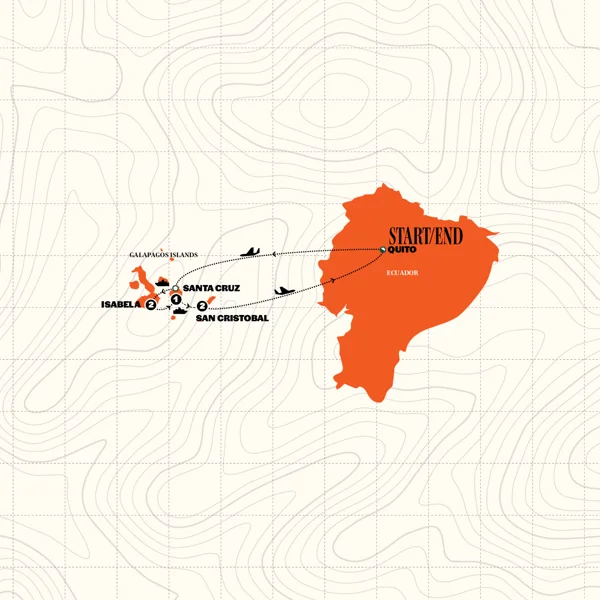
Fly from Quito to the Galapagos Islands. On Santa Cruz Island, see giant tortoises in their natural surroundings and explore old lava tunnels. After lunch, travel by boat to Isabela Island for the night.
Meals: Lunch,Dinner
Day 2
Day 2: Isabela Island
Go wildlife kayaking off Isabela Island, keeping watch for green sea turtles.
Meals: Breakfast
Day 3
Day 3: Isabela Island to Santa Cruz Island
Travel to Santa Cruz Island and stroll to Tortuga Bay. Look out for sharks, rays, turtles, great blue herons, blue-footed boobies and marine iguanas. There is also time to explore the streets and cafés.
Meals: Breakfast
Day 4
Day 4: Santa Cruz Island to San Cristobal Island
Sail to San Cristobal Island, looking out for sea lions. Cycle through the island’s volcanic highlands, pass through El Progreso and cross five vegetation zones on the way to La Loberia beach.
Meals: Breakfast
Day 5
Day 5: San Cristobal Island
Begin with bird-watching, then cruise to the 143-metre Kicker Rock. A local guide introduces the wildlife above and below the water before you get in to explore, keeping watch for chocolate chip starfish and Galapagos sharks while avoiding contact with the coral. Continue to Puerto Grande beach, eat lunch on board, enjoy a final afternoon in the Galapagos and finish with a feast.
Meals: Breakfast,Lunch,Dinner
Day 6
Day 6: San Cristobal Island to Quito
Relax on San Cristobal Island in the morning before flying back to Quito. The trip ends on arrival.
Meals: Breakfast
What’s included
What’s not included
Additional information
Dining Summary
- 2 Dinner (D)
- 5 Breakfast (B)
FAQs
- Lima: A modular trip means fellow travellers will join and leave at various locations. There’ll be some goodbyes, sure, but there’ll also be plenty of hellos with new like-minded travellers.
- Mexico City: You’ll now book and pay for your Free Time Add-Ons through WeTravel — a simple website link where you can browse all the FTAs, pick what you’re keen on, and pay directly by card, in any currency. You’ll get the link in your Welcome Email, usually 3–5 days before your trip starts. Once you’re in, it’s easy: check out the pics, descriptions and prices, add your chosen experiences to your cart, then check out online. You can book before your trip starts or while you’re on the road, up until each activity’s booking deadline.Missed the link? No stress. Your Trip Manager can share it with you on trip too.
- Baños: Flexibility is key when you’re travelling in Ecuador. The itinerary will give you a good idea of what your trip is gonna look like. But routes, schedules, hotels & modes of transportation may be subject to change without prior notice because of local circumstances or events beyond Contiki’s control.
- It really depends on where you’re travelling to. Ecuador has lots of ATMs (just be wary of those sneaky fees). While in more rural places and the Galapagos islands you’re better off carrying cash.
- You’ll need to bring USD cash with you, as it’s the only way to pay for the Free Time Add-Ons on this trip. You’ll receive the cost of each option in your Welcome Email. Plus, we recommend you bring Visa and/or Master Card (American Express or Discover cards aren’t widely accepted).
- Iguazú Falls: You’ll usually receive a 10% service charge on your restaurant bill. But tipping isn’t a requirement. Either way, if you’re pleased with your service, a tip will always be appreciated! We recommend tipping 12% of the total bill.
- Iguazú Falls: You can bring 1 hand luggage + 1 suitcase or backpack per person. Internal flights are included in this trip (your Trip Manager will have your tickets ready for you). Each traveller is allowed 1 checked bag & 1 carry-on bag/personal item (eg: small backpack/handbag or laptop bag). Our suitcase restriction above means that the checked bag will be within the limitation for this flight. The carry-on bag must not exceed 114 cm (45”). Extra or overweight bags will incur a fee by the airline which is the traveller’s responsibility. Fees range from US$25.00-US$100.00.
- It’s best to keep it light when you’re visiting the Galápagos islands. A small backpack or average-sized duffel bag would be perfect (cuz you’ll loading your luggage on & off boats). Here are some things you should considering packing:
– Comfortable walking shoes with good traction
– Teva-style sandals (thongs or flip-flop sandals are not suitable for hikes)
– Swimming (bathing) suit & towel
– Light to medium fleece jacket
– Gore-Tex (or similar) rain jacket
– Shorts, T-shirts, Long pants, Long-sleeve shirt, Hat or cap
– Sunglasses (preferably polarised)
– Socks (athletic style socks for walking & hiking)
– First aid & medication – aloe vera gel, sunblock or sunscreen of the highest SPF possible, insect repellent, hand sanitiser or gel, moisturising cream, pain relief (e.g. aspirin etc for headaches or muscle pain) motion sickness medication
– Water bottle – ideal for island hikes in the hot sun
– Plastic Ziplock bags (to protect valuables from drizzle, rain, salt water & sand) - Iguazú Falls: Drinking tap water isn’t recommend. So, please stick to bottled water (even when brushing your teeth). There will be plenty of opportunities to purchase bottled water during the trip.
- South Plaza Island: Please check the latest travel info from the Centre for Diseases Control and Prevention if you’re travelling to Ecuador. We also recommend that you consult your local health clinic or doctor for more details.
- The Galápagos Islands are always warm, ranging from a comfortable heat to sweltering humidity. Temperatures are typically around 30°C (85°F), with highs from 25°C (77°F) in August – September to 31°C (89°F) in March – April. But tbh, anytime is a great time to visit!
- The Galápagos Islands have a compulsory US$200 entrance fee to the Galápagos National Park, a US$20 INGALA fee & a US$10 Isabela Island tax that are only payable in cash on arrival (subject to increase). So, please have US$230 cash ready to secure your entry to these locations.
Contiki sometimes uses ground handlers or third parties to assist with the full or partial operation of our products. The ground handler for this trip is Adventure Journeys. - Iguazú Falls: Your Trip Manager brings the group together with all the info, fun facts and food recommendations you’ll ever need. Plus, they’ll ensure everything runs smoothly and address any issues. They’ll be there with you throughout the trip and will be your go-to person if you need anything. They’ll also fill you in on the cultural and historical context of the places you visit with some informal talks when relevant.
- Iguazú Falls: Most places use similar plugs to the US and Europe, but it’s a good idea to bring a circular two-prong adapter just in case. No voltage converter is needed for devices like phones and laptops, but you may need one for high-powered devices (e.g., hairdryers).
Included Experience
- Quito: Swoop into the phenomenal Galápagos Islands and start your expedition of these natural wonders. #explore
- Isabela Island: Look out for sea turtles, penguins, sea lions and more as you glide over to the largest island in the Galapagos.
- Santa Cruz Island: You can’t visit the Galapagos without popping by to say hello to its most famous residents.
- Santa Cruz Island: Take a walk inside these incredible tunnels, made from solidified lava.
- Isabela Island: Your chance to get up close with turtles, angelfish, parrotfish and more at one of the world’s best snorkeling spots.
- Isabela Island: Get set for the adventure of a lifetime. Float around the turquoise waters surrounded by penguins, turtles and sea lions.
- Isabela Island: A once-in-a-lifetime chance to get up close with endangered Galápagos Giant Tortoises – and see the work that’s being done to save them.
- Santa Cruz Island: Marvel at the beauty. Then hike to a secluded beach with only the iguanas for company (and your Contiki crew, obvs).
- Santa Cruz Island: Support the crucial conservation, restoration and sustainable development work of the Galapagos scientists.
- San Cristobal Island: Grab your camera and get some pics with these charming locals.
- San Cristobal Island: On the surface, this may look like a giant red rock shaped like a shoe. But under the water, it’s a rainbow utopia of marine life.
- San Cristobal Island: Stretch out on the pristine sands with your Contiki crew and take in the peace and tranquility.
- Quito: We’ll jump on a plane and soar back to where all the magic began – Quito.
Operated By
Contiki
Santa Cruz Giant Tortoises in the Wild
Visit the highlands of Santa Cruz to observe giant tortoises roaming in their natural surroundings. Watch these slow-moving animals graze amid the island’s green vegetation, with space to appreciate their size and distinctive shells.
Galápagos tortoises became central to the islands’ story of evolution: populations on different islands developed different characteristics over time. Seeing them in the wild offers a perspective distinct from a breeding centre visit.
Santa Cruz Lava Tunnels
Walk inside Santa Cruz’s lava tunnels, passages left behind when flowing lava drained away beneath a hardened outer crust. Their solidified walls reveal the volcanic processes that built the Galápagos Islands.
Exploring beneath the highlands brings the archipelago’s geology into close view. These formations are more than a scenic curiosity: volcanic activity created the varied island habitats that Galápagos wildlife occupies today.
Isabela Island Wildlife Kayaking
Kayak along Isabela Island’s coast, scanning the water for green sea turtles as you paddle. Travelling close to the surface gives you a quiet way to observe the meeting of volcanic shoreline and clear Pacific water.
Isabela is the largest island in the Galápagos, with coastal waters that support a rich variety of marine life. Wildlife sightings vary, making each stretch of paddling an exercise in patient observation.
Isabela Island Snorkelling
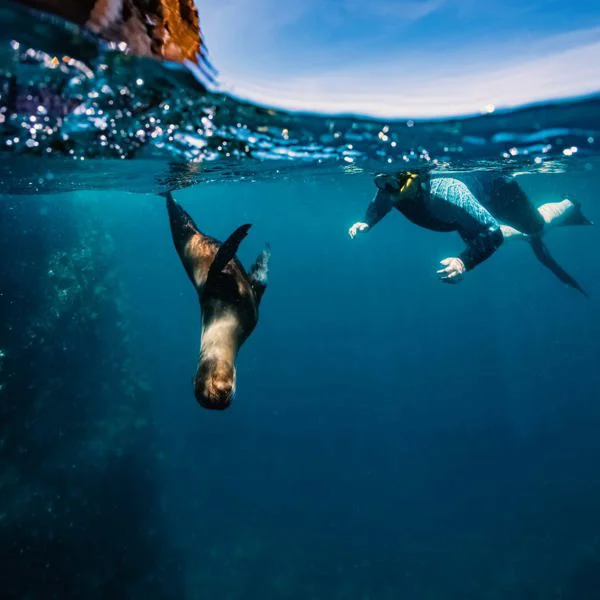
Snorkel in Isabela Island’s turquoise waters for a close look at the Galápagos beneath the surface. Watch for sea turtles and reef fish, including angelfish and parrotfish, with the possibility of spotting sea lions or Galápagos penguins.
The islands’ marine life is shaped by the meeting of ocean currents, which bring nutrients to waters around the volcanic coast. Sightings cannot be guaranteed, but the chance to share this habitat with wildlife makes snorkelling especially compelling.
Isabela Giant Tortoise Conservation Visit
See endangered Galápagos giant tortoises up close on Isabela Island and learn about efforts to protect them. This conservation-focused visit offers a different perspective from watching tortoises roam freely in the Santa Cruz highlands.
Introduced species and past human activity have threatened tortoise populations across the archipelago. Seeing the work involved in their recovery connects an encounter with these animals to the continuing challenge of safeguarding island ecosystems.
Tortuga Bay Coastal Walk
Walk to Tortuga Bay on Santa Cruz Island, where pale sand meets the Pacific and wildlife can be spotted along the shore. Keep watch for marine iguanas and coastal birds while taking in the broad beach landscape.
The bay’s setting makes it a rewarding place to slow down and observe. Marine iguanas are found only in the Galápagos and are unusual among lizards for feeding in the sea.
Santa Cruz Conservation Research Visit
Explore Galápagos conservation work on Santa Cruz Island and learn how scientists help protect the archipelago’s wildlife. This visit brings research, habitat restoration and sustainable development into focus beyond the animals encountered in the wild.
The islands’ species evolved in relative isolation, leaving many vulnerable to introduced plants and animals. Learning about the people working to protect them adds context to the landscapes and wildlife seen throughout the Galápagos.
San Cristóbal Highlands Cycling
Cycle through San Cristóbal’s volcanic highlands, travelling through changing vegetation zones and the small settlement of El Progreso. The route offers a view of the island beyond its beaches, with much of the riding described as downhill.
San Cristóbal’s extinct volcanoes have helped shape its varied terrain. Moving from the greener highlands towards the coast makes the shifts in landscape especially clear and gives this island exploration an active, open-air character.
La Lobería Sea Lion Encounter
Visit La Lobería beach on San Cristóbal Island and look for the sea lions that give this coastal spot its name. Bring your camera and watch their behaviour from a respectful distance along the shore.
Sea lions are among the most visible residents of the Galápagos, resting on beaches and moving easily between land and water. La Lobería offers a chance to observe them in their own habitat rather than behind barriers.
Kicker Rock Wildlife Cruise & Snorkelling
Cruise to Kicker Rock, a towering offshore formation near San Cristóbal, and join a Local Guide to learn about its wildlife. Look for seabirds above the water before snorkelling around the rock to explore its marine habitat.
Also known as León Dormido, Kicker Rock rises dramatically from the Pacific and is one of the Galápagos’ most recognisable sights. Marine sightings vary; keeping clear of coral helps protect the delicate underwater ecosystem.
Puerto Grande Beach Visit
Spend time at Puerto Grande beach on San Cristóbal Island, taking in its quiet shoreline and the surrounding Galápagos seascape. The beach visit provides a chance to enjoy the coast as a destination in its own right.
Accessible by boat, this stretch of sand offers a contrast to the offshore rock formations and wildlife-rich waters nearby. Its appeal lies in the simple details of the setting: open views, sea air and time beside the Pacific.