Your itinerary

Day 1
Adventure starts in Kathmandu
Begin your adventure in Kathmandu, a brief stop on our way to Bhutan. You’re free to arrive at any time as there are no activities planned today.Want to explore Kathmandu further? Secure pre-tour hotel nights through your sales representative.
Day 2
Fly to Paro
Today we fly to Paro. Our route takes us over the eastern Himalaya and, if the weather is clear, we should get a fantastic view of magnificent peaks including Everest, Lhotse, Nuptse, Makalu and Kanchenjunga. The Paro Valley is considered one of the most beautiful in Bhutan, with blue pine-covered hills and attractive solidly built houses among the paddy fields.Say hello to your tour leader and fellow travellers, when we gather as a group to get to know each other and learn more about the adventures ahead. If there is time in the afternoon, we can visit the museum and Rinpung Dzong before heading to Thimphu (approximately one hour drive). Your tour leader then ensures a big welcome over dinner together.
Meals: Breakfast,Lunch,Dinner
Day 3
Thimphu
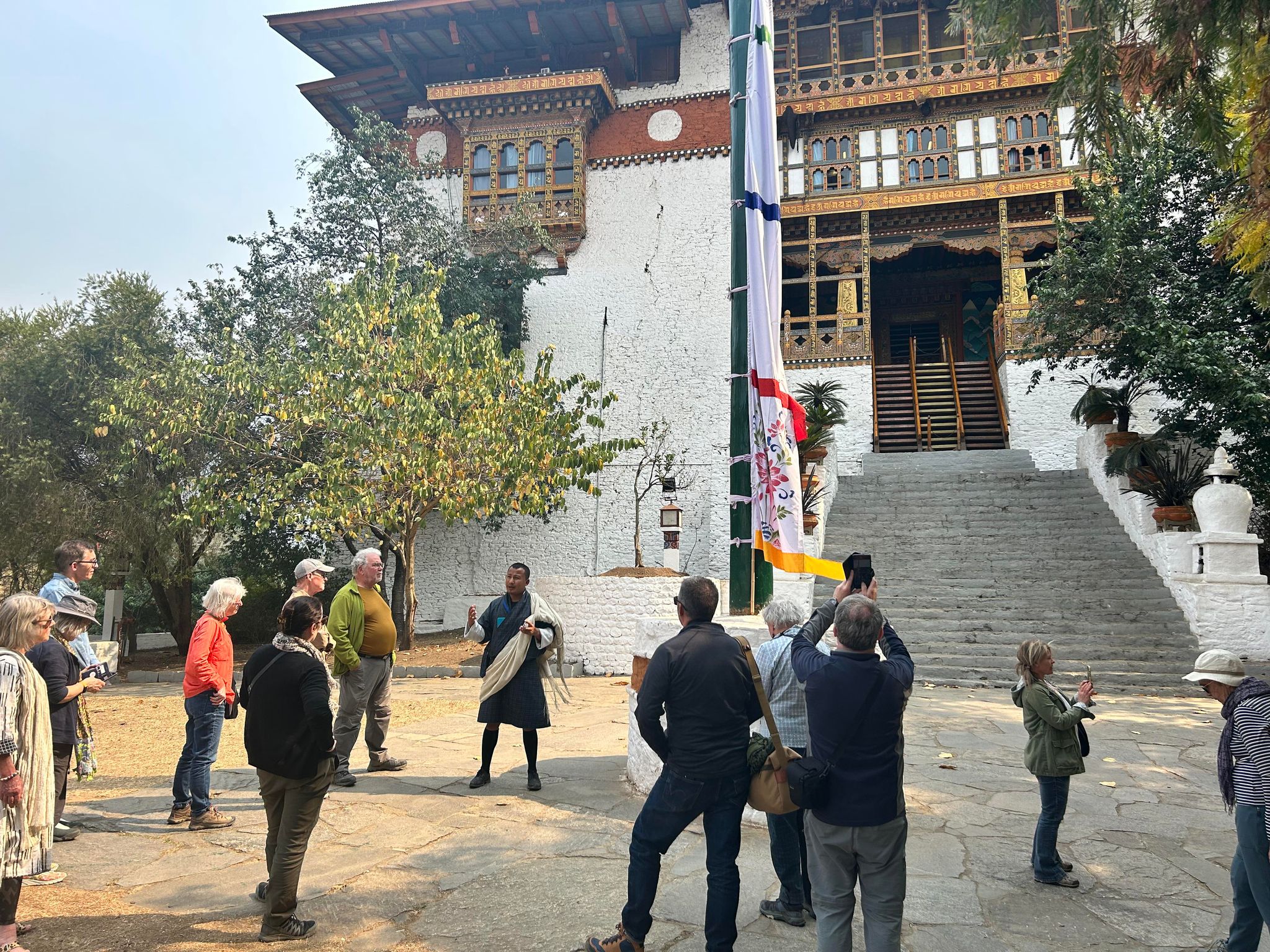
This morning, we explore the relatively new capital of the Kingdom of Bhutan. The ancient city of Punakha was replaced as the capital by Thimphu in 1961 by the third king, Druk Gyalpo Jigme Dorji Wangchuck. The main sights include Kuensel Phodrang, known locally as Buddha Point, where there is a huge statue of Buddha overlooking the whole valley. Simtokha Dzong, the oldest dzong (fortified monastery) in Bhutan, built in 1629, now serves as the Institute of Language and Cultural Studies. It houses numerous statues and paintings of various religious figures and deities.This afternoon, we drive to the subtropical Punakha, which may take about three hours. En route, we visit the Chimi Lhakhang, built in 1499 to honour Drukpa Kuenley. Nicknamed the Divine Madman or Mad Saint, he was a maverick spiritual leader, who subdued a demon controlling the Dochu La. He built a chorten where the monastery stands and was reputed to have unorthodox ways of teaching Buddhism – he advocated for phallic symbols to be painted on walls and houses, which were intended to drive away the evil eye. Most of the houses in this area are decorated with highly ornate phallic paintings. We walk through the village to the monastery with a chance to see traditional Bhutanese-style farmhouses.We then continue to Punakha, which, at 3,940ft (1,200m), is warmer than Paro or Thimphu. Punakha was once the capital of Bhutan and is still the winter residence of the monastic body. We visit the dzong, one of the most beautiful in Bhutan. This remarkable fortress between the Mo and Po Chhu rivers has survived many fires, an earthquake and several floods.
Meals: Breakfast,Lunch,Dinner
Day 4
Punakha to Trongsa
After breakfast, we walk over the suspension bridge to Punakha Dzong, one of the most beautiful dzongs in Bhutan, which is located between two rivers, Phochu and Mochu.Returning to our hotel, we check out and then continue our journey to Trongsa (approximately a six-hour drive). The drive takes us through Wangdiphrodrang Dzong, which is perched on a hill, offering breathtaking views of terraced fields, lush valleys and traditional Bhutanese villages. While we climb gradually over the Pelela Pass (10,990ft/3,350m), we stop at Chendebji Chorten, a stupa 26mi (42km) from Trongsa.Upon arrival in Trongsa, we visit a viewpoint with the most impressive and largest dzong in Bhutan, strategically located on ridge.
Meals: Breakfast,Lunch,Dinner
Day 5
Trongsa Festival
The Trongsa Tshechu is one of Bhutan’s most significant and vibrant festivals.Held annually at the majestic Trongsa Dzong, it pays tribute to the Buddhist master Guru Rinpoche. A series of sacred mask dances, it also serves as a social gathering, bringing people together from various walks of life to celebrate and enjoy the festive spirit.The Taa Dzong Museum, also known as the Tower of Trongsa, is a fascinating museum with a rich history. Originally built in 1652 by Chogyal Minjur Tempa, the first Governor of Trongsa, it served as a watchtower to guard the Trongsa Dzong from internal rebellion. The structure has four observation points resembling a tiger, lion, garuda and dragon.
Meals: Breakfast,Lunch,Dinner
Day 6
Drive to Gangtey Valley
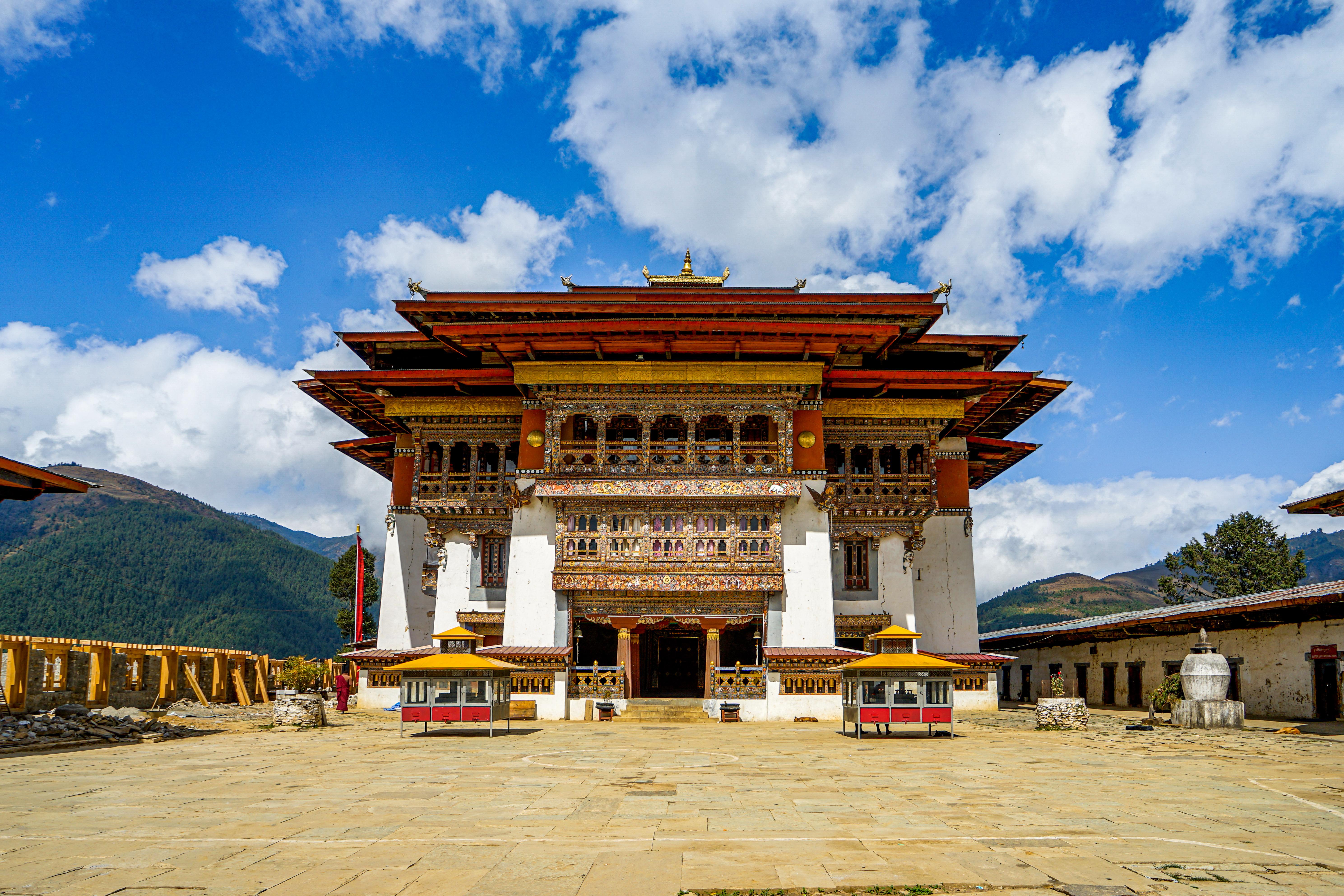
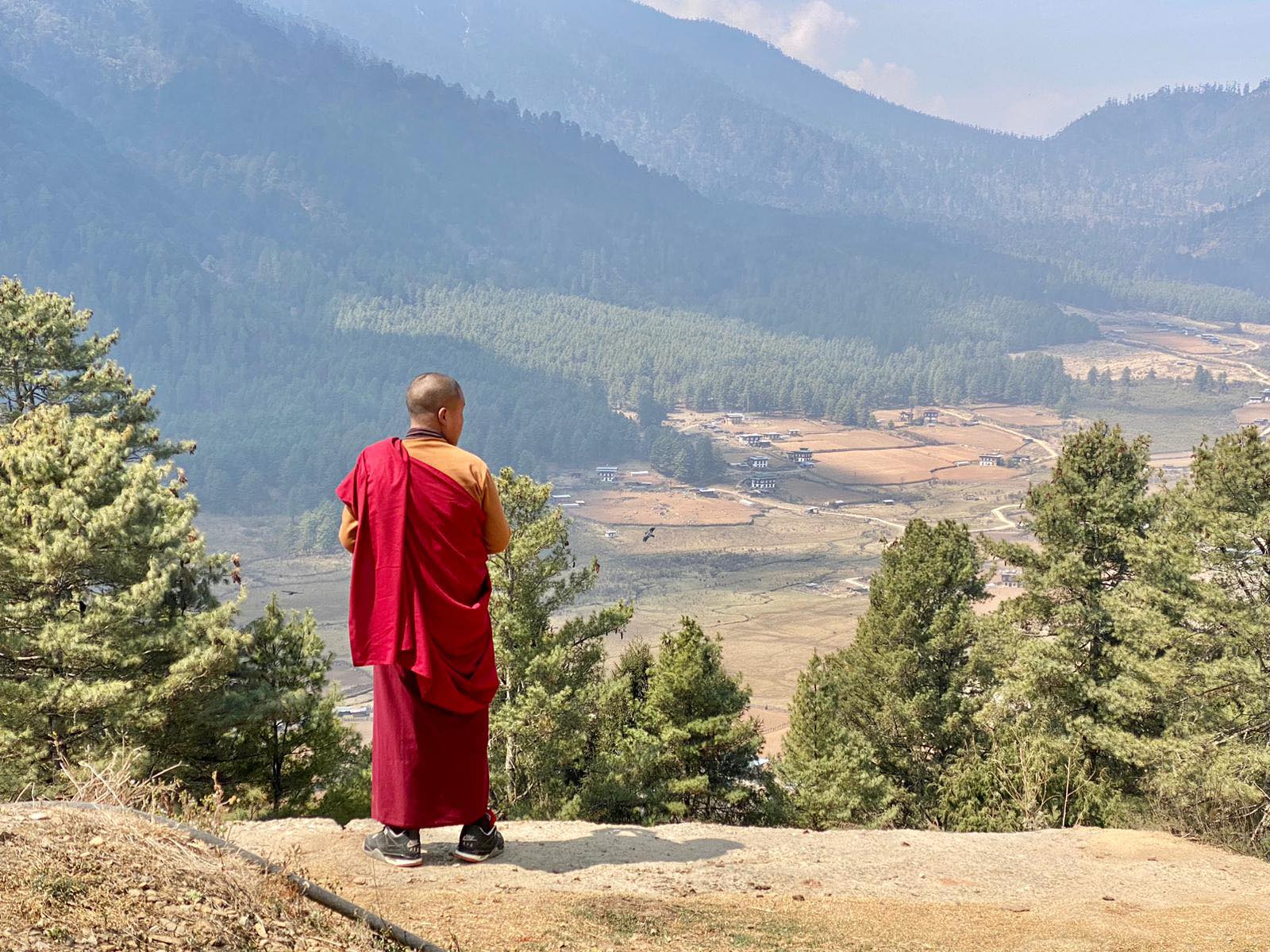
Our three to four-hour drive to the Phobjikha Valley is a scenic journey through the heart of Bhutan, offering breathtaking views of lush landscapes and traditional Bhutanese villages.Also known as Gangtey, it is a U-shaped glacial valley at an elevation of about 9,800ft (3,000M), home to endangered black-necked cranes, which migrate from the Tibetan Plateau in the winter.We visit the Gangtey Monastery and the crane centre, witnessing black-necked cranes in the fields.
Meals: Breakfast,Lunch,Dinner
Day 7
Drive to Thimphu
This morning, we set off on foot from our hotel for a hike (approximately 3mi/5km, two to three hours) through the valley – the climb up to the monastery involves around 1,640ft (500m) ascent.Later, we drive (four hours) to Thimphu, passing through green fields and traditional Bhutanese villages into Wangdi phrodrang and back via the Dochula Pass (10,005ft/3,050m)
Meals: Breakfast,Lunch,Dinner
Day 8
Drive to Paro, visiting Tachogang Lhakhang Bridge, Dzongdrakha Goemba and Kyichu Lhakhang monastery
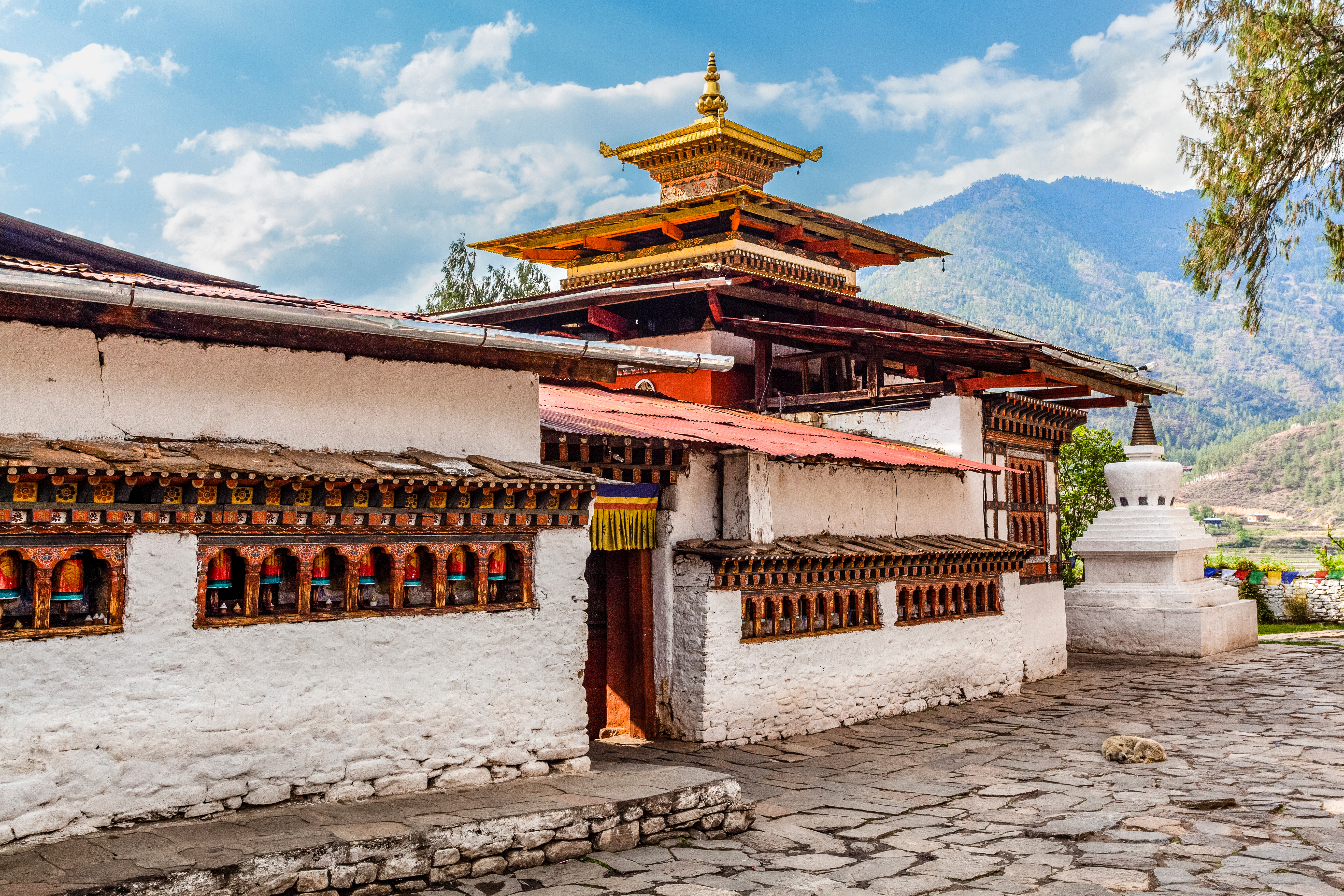
In the morning, we drive for about three hours back to Paro. En route, we visit the 600-year-old Tachogang Lhakhang Bridge, which crosses the Paro Chhu. It is popularly known as the Iron Chain Bridge, and was built by Thangtong Gyalpo in the late 1300s, who is said to have built 108 bridges in Tibet and Bhutan. Made of wood and iron, this is the first bridge to have ever been built in Bhutan.We continue our drive and come to the Dzongdrakha Goemba, also known as Mini Taktsang, a serene site above the village of Bondey on the western side of the Paro Valley. Often overlooked by tourists because of its rather old facade, this divine place comprises four shrines, while stories related to spirits, saints and magic are narrated here.Before arriving at our hotel, we stop at Kyichu Lhakhang. Built in the seventh century, it is said to be the oldest temple in Bhutan and therefore holds great spiritual significance. Legend says a king built it in one night on an ogre’s foot.
Meals: Breakfast,Lunch,Dinner
Day 9
Daywalk to Taktsang, Tiger’s Nest Monastery
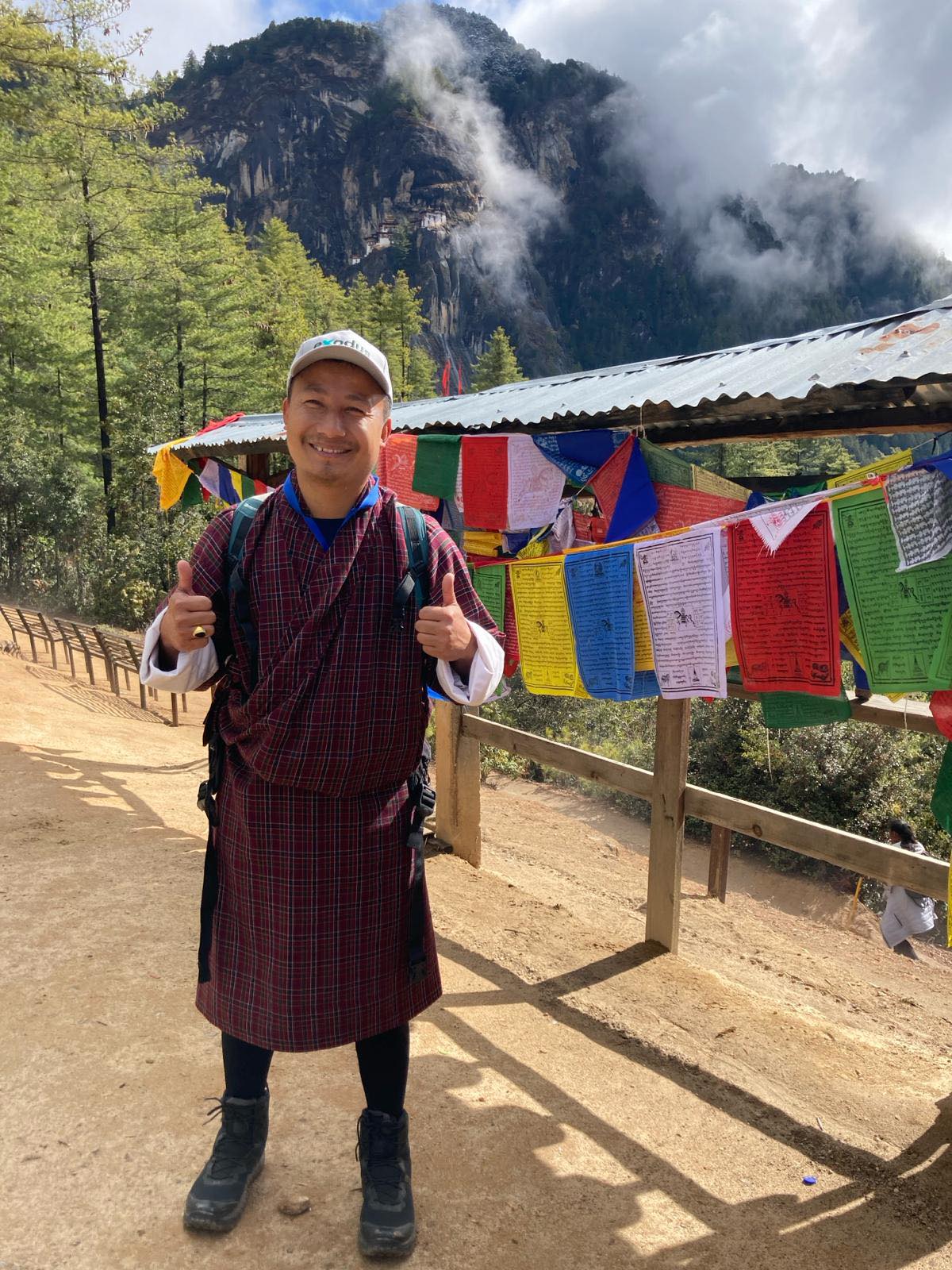
Today, we hike (approximately 7mi/11km round trip with an elevation of approximately 3,000ft/915m) to Taktsang Monastery, also known as the Tiger’s Nest. This spectacular building is perched on the ledge of a cliff high above the Paro Valley.Partly destroyed by fire in 1998, it has now been completely restored to its former magnificence. From the car park to the cafeteria viewpoint is about two hours’ uphill walk through the forest. From here, we have incredible views of the monastic buildings that cling to the cliff. For the energetic, there is the chance to walk even higher to the actual monastery. This takes another two hours and involves walking up and down stone steps. We highly recommend a trekking pole or you can buy a wooden stick at the car park. There are horses available up to the cafeteria for those who do not wish to hike but please note this is an unregulated activity and helmets are not available. We spend about an hour at the monastery looking around the temples (photography is not allowed inside) before descending to the cafeteria for lunch. After lunch, we return to the car park and drive back to our hotel. There should be some time to have a look round Paro before dinner.
Meals: Breakfast,Lunch,Dinner
Day 10
Fly to Kathmandu
We transfer to the airport to check in for our flight back to Kathmandu. The rest of the day is free for individual sightseeing or shopping. You may want to visit Durbar Square in the heart of the old city, the monkey temple at Swayambhunath, the largest Buddhist stupa on earth at Boudhanath or the Hindu temple at Pashupathinath. Another option is to take a taxi to Bhaktapur, the medieval city 10.5mi (17km) east of the capital. Bhaktapur has its own Durbar Square with many temples and statues and a maze of narrow streets, which are generally quieter than the capital.The Exodus representative in Kathmandu can give you more information on what there is to see.
Meals: Breakfast
Day 11
Adventure ends in Kathmandu
Your journey ends in Kathmandu after breakfast. If you’d like to spend more time in the Nepalese capital, speak to your sales representative about extending your stay.
Meals: Breakfast
What’s included
What’s not included
Additional information
Food
Breakfast is included throughout the trip plus eight lunches and eight dinners while in Bhutan.
During your adventure in Bhutan, prepare to savor a delightful array of flavors that blend Bhutanese and Western cuisines. While Bhutanese dishes are traditionally seasoned with chilies, often tempered for foreign palates, the local cuisine boasts rich and varied tastes. Enjoy a diverse selection of meat, vegetable, rice, and potato dishes, alongside iconic specialties like ema datshi—featuring chilies and cheese. If you desire a more authentic or spicier culinary experience, don’t hesitate to share your preferences with your trip leader, who will endeavor to tailor meals to your liking.
Breakfasts are an assortment of cereals, eggs, toast, fruit and often some Bhutanese dishes. Lunches are taken in a restaurant and dinners are either in the hotel or at a local restaurant.
Please allow approximately 2,500-3,350 ngultrums (US$30-US$40) per day for other main meals in Kathmandu.
Punakha Dzong via Suspension Bridge
Cross a long suspension bridge above the turquoise Po Chhu to approach the great Punakha Dzong, one of Bhutan’s most photogenic fortresses. Whitewashed ramparts, carved balconies and jacaranda trees frame the stronghold at the confluence of the Mo Chhu and Pho Chhu.
Founded in 1637 and still the winter residence of the monastic body, the dzong safeguards sacred relics and richly painted chapels. Notice the fine woodwork, guardian deities and river breezes that animate this storied seat of power.
Hike to Taktsang (Tiger’s Nest) Monastery
Hike to Taktsang (Tiger’s Nest) Monastery along a prayer-flag-lined trail through blue pine forest, gaining roughly 915m. From a viewpoint, gaze at cliff-hugging temples suspended above the Paro Valley, then continue via stone steps and a waterfall bridge.
Inside the restored complex (after the 1998 fire), chapels honor the Guru Rinpoche legend of arrival on a flying tigress. Monks’ chants drift through incense as you move quietly between dim sanctuaries—no photography allowed—before descending for a well-earned meal.
Chimi Lhakhang Pilgrimage Walk & Village Visit
Walk through terraced paddies and hamlets to the hilltop shrine of Chimi Lhakhang, the “fertility temple” founded in 1499 to honor Drukpa Kunley, the Divine Madman. The gentle approach reveals farmhouse life, from drying chilies to timber storehouses.
Inside the small lhakhang, monks offer fertility blessings while stories of the saint’s unconventional teachings echo in the murals. Stroll back through lanes lined with painted phallic symbols, a folkloric protection meant to ward off the evil eye.
Trongsa Tshechu Festival & Tower of Trongsa Museum
Experience the Trongsa Tshechu festival within the vast courtyards of Trongsa Dzong. Masked monks perform sacred dances (cham) to the beat of drums and long horns, honoring Guru Rinpoche while townsfolk gather in vibrant silk and brocade.
Climb to Taa Dzong (Tower of Trongsa), the 17th-century watchtower with four projecting turrets said to evoke a tiger, lion, garuda and dragon. Exhibits trace royal and spiritual history, while terraces offer commanding views across the Mangde Chhu gorge.
Dochu La Pass Panoramas & 108 Chortens
Pause at Dochu La Pass (3,050m), where the crest is crowned by the 108 Druk Wangyal chortens. On clear days the Himalayan panorama unfurls—snow peaks on the horizon, pines below, and prayer flags fluttering in alpine air.
Learn how these memorial stupas—commissioned in 2003—reflect Bhutan’s modern history and living spirituality. If open, the striking Druk Wangyal Lhakhang nearby displays murals that link warrior kings, mountain deities and contemporary Bhutan.
Gangtey Valley Hike & Monastery Visit
Walk the gentle trail across the Phobjikha (Gangtey) Valley, an alpine U-shaped glacial valley of meadows, blue pine forest and farmsteads. The path skirts marshlands favored by wintering cranes, with crisp mountain air and wide-open views.
Visit Gangtey Goenpa Monastery, a hilltop complex of creaking timber floors, courtyards and incense. Monks chant in a butter-lamp-lit assembly hall as you learn of the Pema Lingpa lineage and the monastery’s role in valley life.
Black-Necked Crane Centre & Field Viewing
Visit the Black-necked Crane Centre to understand the conservation story of these revered birds. From observation points with spotting scopes, you may observe endangered black-necked cranes feeding in the fields and hear their bugling calls on the wind.
Discover how the cranes migrate in winter from the Tibetan Plateau and are welcomed by local communities—who say the birds circle the monastery on arrival. Exhibits, videos and rangers share ecology, folklore and protection efforts.
Tachogang Lhakhang Iron Chain Bridge
Walk the Tachogang Lhakhang Iron Chain Bridge, a 600-year-old span by Thangtong Gyalpo, the “Iron Bridge Builder.” The Paro Chhu rushes beneath as you step across the gently swaying span toward the hillside temple.
Hear legends of the Buddhist engineer who forged dozens of chain bridges across Bhutan and Tibet to link remote valleys. The simple lhakhang above shelters protective deities, while the river’s silver thread glints through prayer flags.
Dzongdrakha Goemba Cliffside Shrines (“Mini Taktsang”)
Explore Dzongdrakha Goemba, a cluster of cliffside shrines above Bondey known as “Mini Taktsang”. Footpaths wind between chapels tucked into rock ledges, prayer wheels spin lazily, and the Paro Valley opens wide below.
Discover sanctuaries dedicated to Guru Rinpoche and local protector deities, where caretakers share tales of miracles and spirit lore. This seldom-visited site rewards with quiet contemplation and far-ranging views untroubled by crowds.
Kyichu Lhakhang: Bhutan’s Oldest Temple
Visit Kyichu Lhakhang, a seventh-century sanctuary and one of the holiest sites in Bhutan. Orange trees fruit year-round in its courtyard as pilgrims circle the temple, murmuring mantras and turning lines of brass prayer wheels.
Learn how King Songtsen Gampo founded Kyichu as part of a network of 108 temples to pin down a demoness across the Himalaya. Inside, ancient statues glow in butter-lamp light at this ancient pilgrimage site.
Paro Rinpung Dzong & National Museum (Ta Dzong)
Walk the traditional bridge and ascend to Rinpung Dzong, Paro’s imposing riverside fortress with painted wooden galleries and courtyards alive with monastic life. Carved doorways and guardian murals reveal layers of artistry and belief.
Continue uphill to the National Museum of Bhutan, housed in the circular Ta Dzong watchtower. Exhibits range from temple textiles and masks to thangkas and natural history, offering a compact journey through Bhutan’s culture, crafts and sacred symbolism.
Welcome Dinner & Trip Briefing in Paro
Meet your Tour Director and fellow travelers at a convivial welcome dinner in Paro. Sample comforting Bhutanese flavors—from red rice to cheese-laced ema datshi—while getting to know your group in a relaxed setting.
During the trip briefing, learn practical tips on dzong etiquette, festival customs and hiking expectations, with time for questions. This shared table sets the tone for a culturally rich journey across valleys, passes and sacred sites.
Thimphu’s Buddha Dordenma & Simtokha Dzong
Discover the hilltop sanctuary of Kuensel Phodrang, where the gilded Buddha Dordenma presides over Thimphu. Take in sweeping views over the Thimphu Valley as prayer flags ripple in the wind and the capital stretches below.
Continue to Simtokha Dzong, a compact fortress said to be the oldest dzong in Bhutan (1629). Step inside to admire intricate murals and carved lintels, and learn how this stronghold nurtured language and culture as a center of learning.