Your itinerary

Day 1
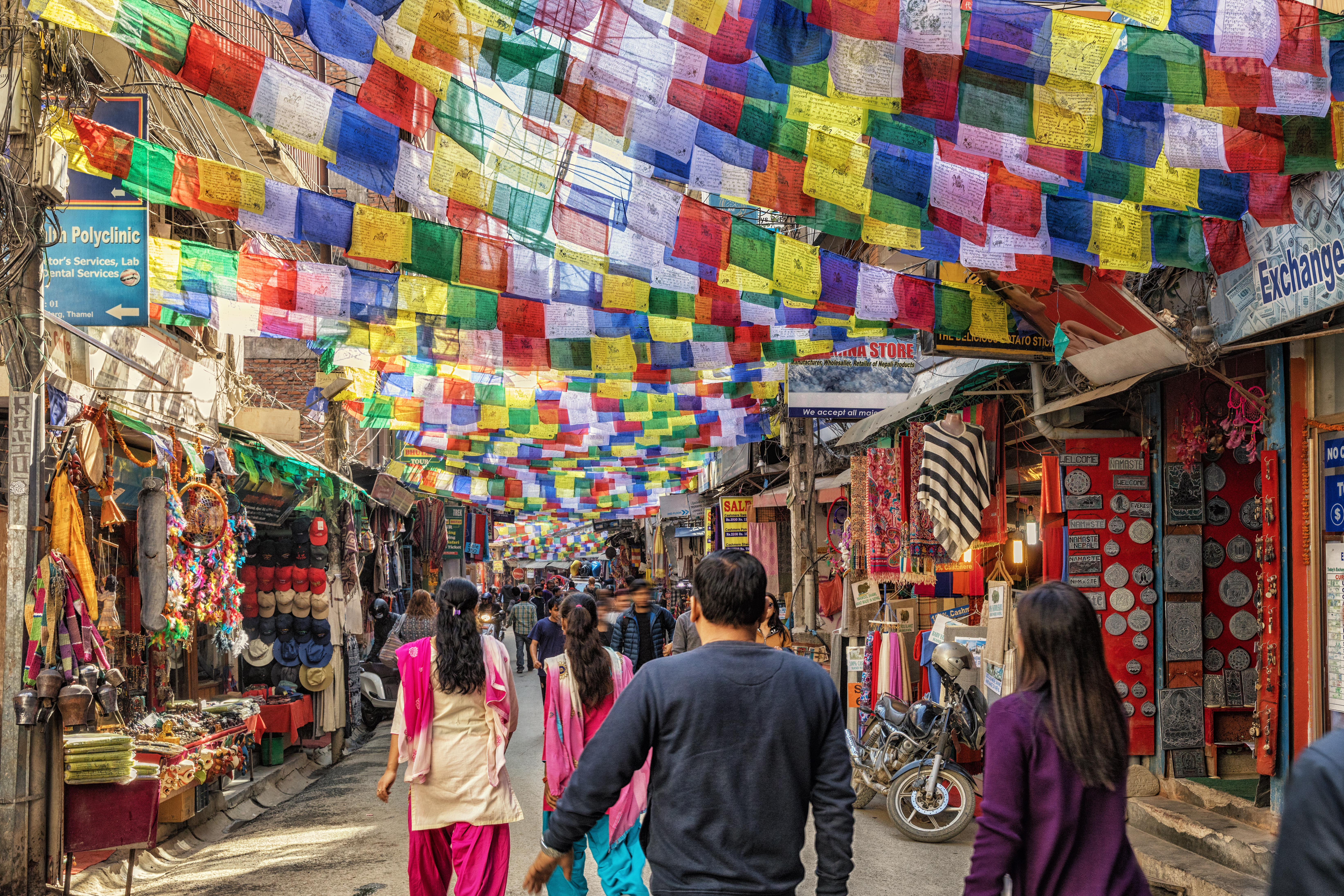
Adventure starts in Kathmandu
Begin your adventure in Kathmandu, a brief stop on our way to Bhutan. You’re free to arrive at any time as there are no activities planned today.Want to explore Kathmandu further? Secure pre-tour hotel nights through your sales representative.
Day 2
Fly to Paro
Today we fly to Paro. Our route takes us over the eastern Himalaya and, if the weather is clear, we should get a fantastic view of magnificent peaks including Everest, Lhotse, Nuptse, Makalu and Kanchenjunga. The Paro Valley is considered one of the most beautiful in Bhutan, with blue pine-covered hills and attractive solidly built houses among the paddy fields.Say hello to your tour leader and fellow travellers, when we gather as a group to get to know each other and learn more about the adventures ahead. If there is the time in the afternoon there will be a visit to visit the museum and Rinpung Dzong. Your tour leader then ensures a big welcome over dinner together.
Meals: Breakfast,Lunch,Dinner
Day 3
Full day at Thimphu Festival
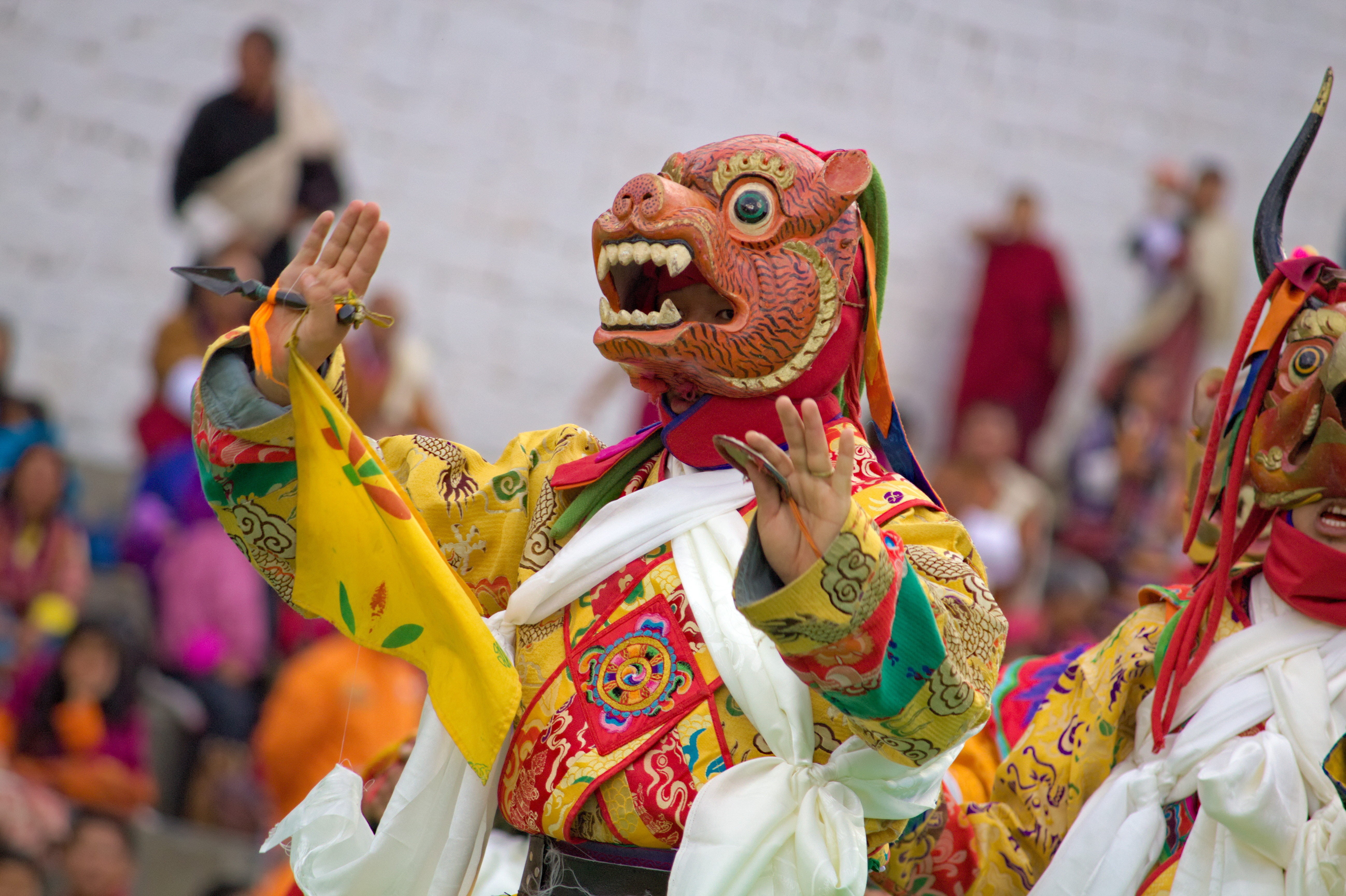
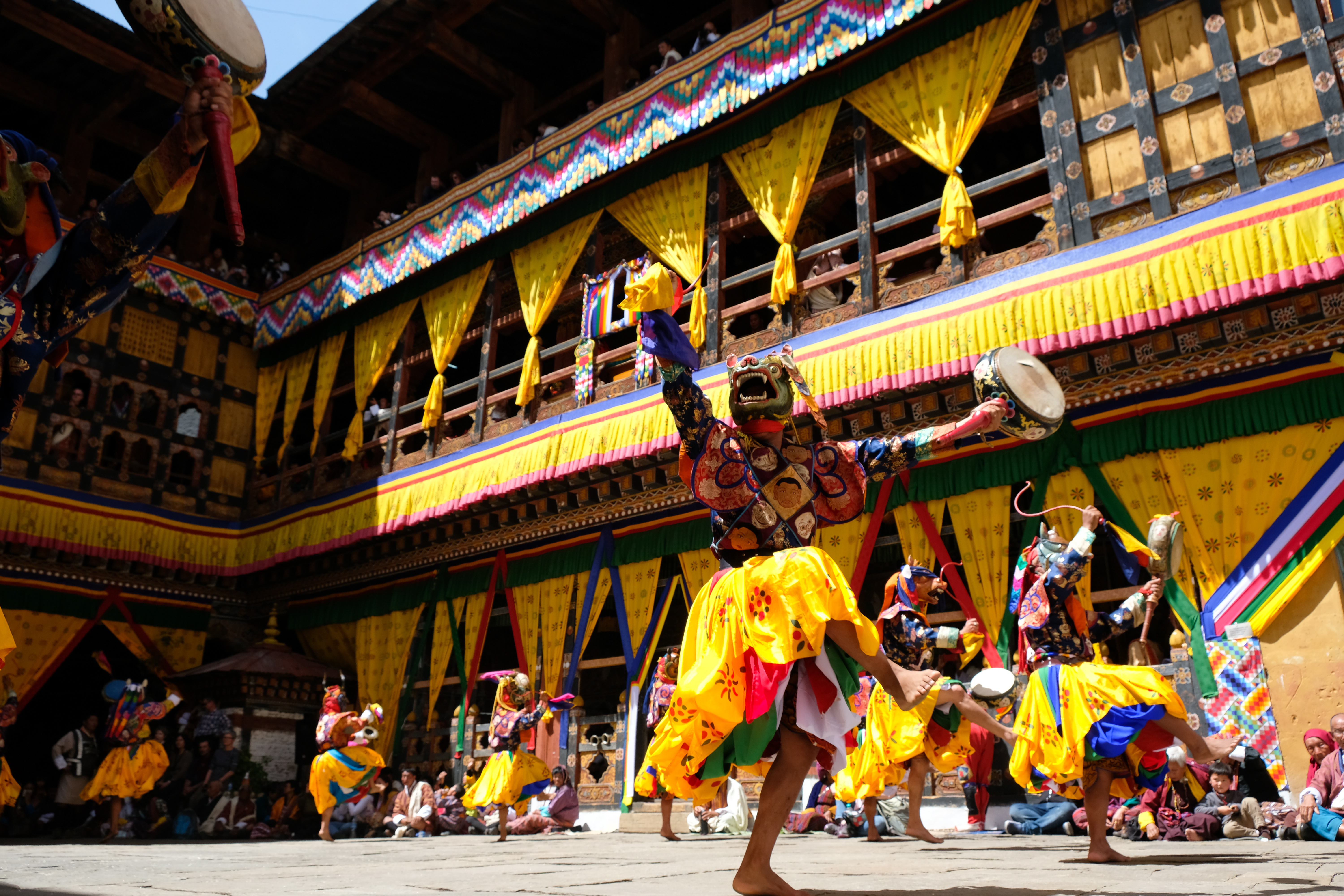
We have an early start today, driving one hour from Paro to Thimphu to find our spot to enjoy the festival entertainment from.Thimphu is considered the most popular festival in Bhutan and plays an important part in the Bhutanese lives.We spend the whole day experiencing this vibrant festival, watching the Bhutanese gather to see monks and lay dancers dressed in colourful brocade and silk costumes, wearing painted masks re-enacting the stories of the religious and lay history of Bhutan through music and dance. For several days, there are masked dances and prayer meetings, and a general carnival atmosphere prevails as villagers arrive to meet old friends.The Bhutanese all dress in their finest national dress for the festival and one of the highlights is the riot of colours of the magnificent silks on display.Those who wish can walk to the post office in Thimphu to collect a unique souvenir: personalised Bhutan stamps!
Meals: Breakfast,Lunch,Dinner
Day 4
Thimphu
We take a break from the festivities and enjoy the sights and history of the Thimphu, the relatively new capital of the Kingdom of Bhutan. The ancient city of Punakha was replaced by Thimphu as the capital in 1961 by the third king, Druk Gyalpo Jigme Dorji Wangchuck. The main sights include Kuensel Phodrang, known locally as Buddha Point, where there is a huge statue of Buddha overlooking the whole valley. Simtokha Dzong, the oldest dzong in Bhutan, built in 1629, now serves as the Institute of Language and Cultural Studies. It houses numerous statues and paintings of various religious figures and deities. You can also view Takin Reserve from above on your journey into Thimphu and visit a paper factory and weaving centre to see authentic local weaving techniques, plus the local market is interesting to explore.
Meals: Breakfast,Lunch,Dinner
Day 5
Drive to Gangtey; visit Wangdiphodrang Dzong monastery
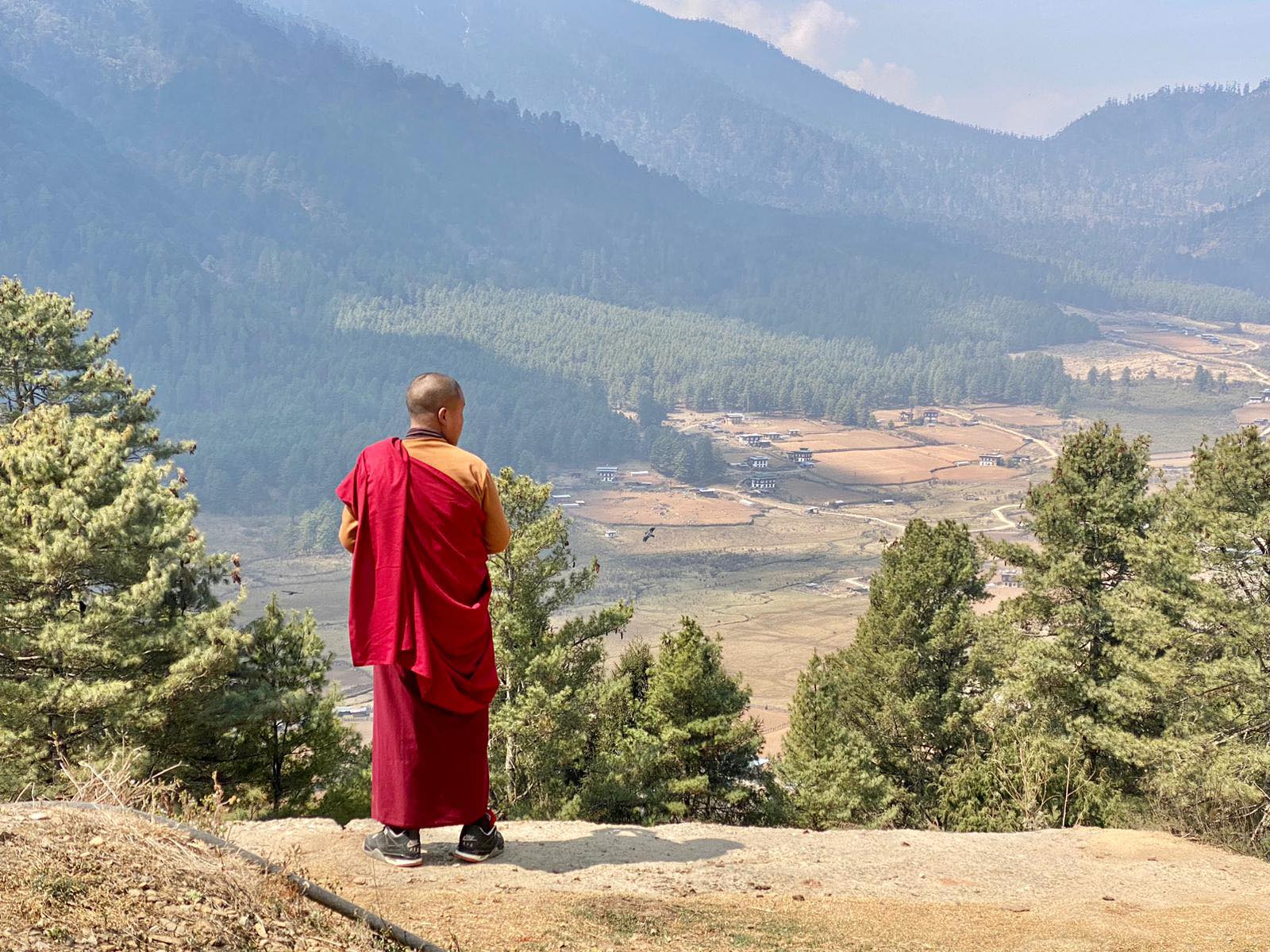
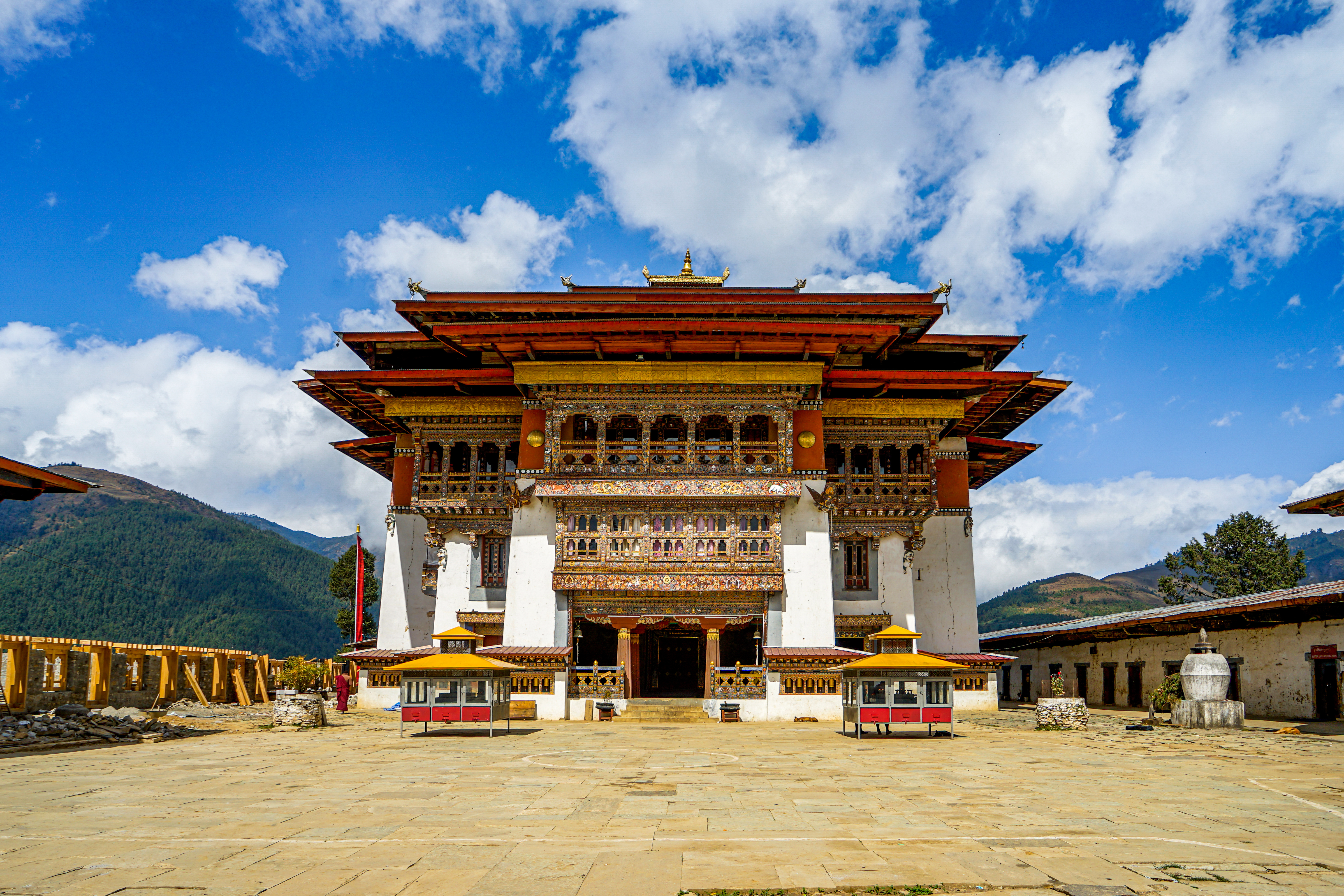
We leave Thimphu in the morning and drive east to Gangtey. The route climbs steadily on a good road to the Dochula Pass, where there are 108 chortens (Buddhist shrines).At 10,000ft (3,050m), we can enjoy glorious views over the eastern Himalaya, weather dependent. We then descend to the valley floor and continue to sub-tropical Wangdue. We stop to visit the Wangdiphodrang Dzong, one of the larger monastery’s we visit on this trip it overlooks the picturesque river and rural agricultural fields surrounding it and has an impressive courtyard.This afternoon, we have plenty of time to explore the Phobjikha Valley, one of the most beautiful in Bhutan. This wide-open U-shaped glacial valley is home to barking and sambar deer plus wild boars, while Himalayan black bears have also been spotted here. It is also where black-necked cranes come roost during winter. Usually arriving from Tibet towards the end of October, they announce their appearance by circling the monastery three times. Come spring, they again fly three times around the monastery before returning to Tibet.Today’s drive is approximately 78mi (125km) and takes four to five hours, although variable road conditions may mean we spend longer on the road.
Meals: Breakfast,Lunch,Dinner
Day 6
Morning hike through the Gangtey Valley. Afternoon visit to Khewang Lhakhang
This morning, we set off on foot from our hotel for a walk through the Gangtey Valley (approximately 3mi/5km, two to three hours) – the climb up to the monastery involves around 1,640ft (500m) ascent. This glacial valley comprises farmlands, pastures and blue-pine forests and we may encounter herders caring for their livestock.After lunch, we visit the 15th-century Khewang Lhakhang, on the east side of the Phobjikha Valley. It features a trio of two-storey statues depicting the past, present and future Buddhas. We can also visit the Black-Necked Crane Visitor Center, where we learn about the conservation efforts to protect these majestic birds. We also have a short visit to a farmhouse and an optional hot-stone bath, which costs approximately 830 ngultrums (US$10).
Meals: Breakfast,Lunch,Dinner
Day 7
Drive to Punakha, visit Chimi Lhakhang, Punakha Dzong
We drive back westwards to subtropical Punakha, which may take about three hours. En route, we visit the Chimi Lhakhang, built in 1499 to honour Drukpa Kuenley. Nicknamed the Divine Madman or Mad Saint, he was a maverick spiritual leader, who subdued a demon controlling the Dochu La. He built a chorten where the monastery stands and was reputed to have unorthodox ways of teaching Buddhism – he advocated for phallic symbols to be painted on walls and houses, which were intended to drive away the evil eye. Most of the houses in this area are decorated with highly ornate phallic paintings. We walk through the village to the monastery with a chance to see traditional Bhutanese-style farmhouses.We then continue to Punakha, which at 3,940ft (1,200m) is warmer than Paro or Thimphu. Punakha was once the capital of Bhutan and is still the winter residence of the monastic body. We visit the dzong, one of the most beautiful in Bhutan. This remarkable fortress between the Mo and Po Chhu rivers has survived many fires, an earthquake and several floods.
Meals: Breakfast,Lunch,Dinner
Day 8
Drive to Paro, visiting Tachogang Lhakhang Bridge, Dzongdrakha Goemba and Kyichu Lhakhang monastery
In the morning, we drive for about three hours back to Paro. En route, we visit the Tachogang Lhakhang Bridge, which crosses the Paro Chhu. This 600-year-old bridge, which is popularly known as the Iron Chain Bridge, was built by Thangtong Gyalpo in the late 1300s, who is said to have built 108 bridges in Tibet and Bhutan. Made of wood and iron, this is the first bridge to have ever been built in Bhutan.We continue our drive to the Dzongdrakha Goemba, also known as Mini Taktsang or Mini Tiger’s Nest, a serene site above the village of Bondey on the western side of the Paro Valley.Before arriving at our hotel, we stop at Kyichu Lhakhang. Built in the seventh century, it is said to be the oldest temple in Bhutan and therefore holds great spiritual significance to the country. Legend says a king built it in one night on an ogre’s foot.
Meals: Breakfast,Lunch,Dinner
Day 9
Day walk to Taktsang, Tiger’s Nest Monastery
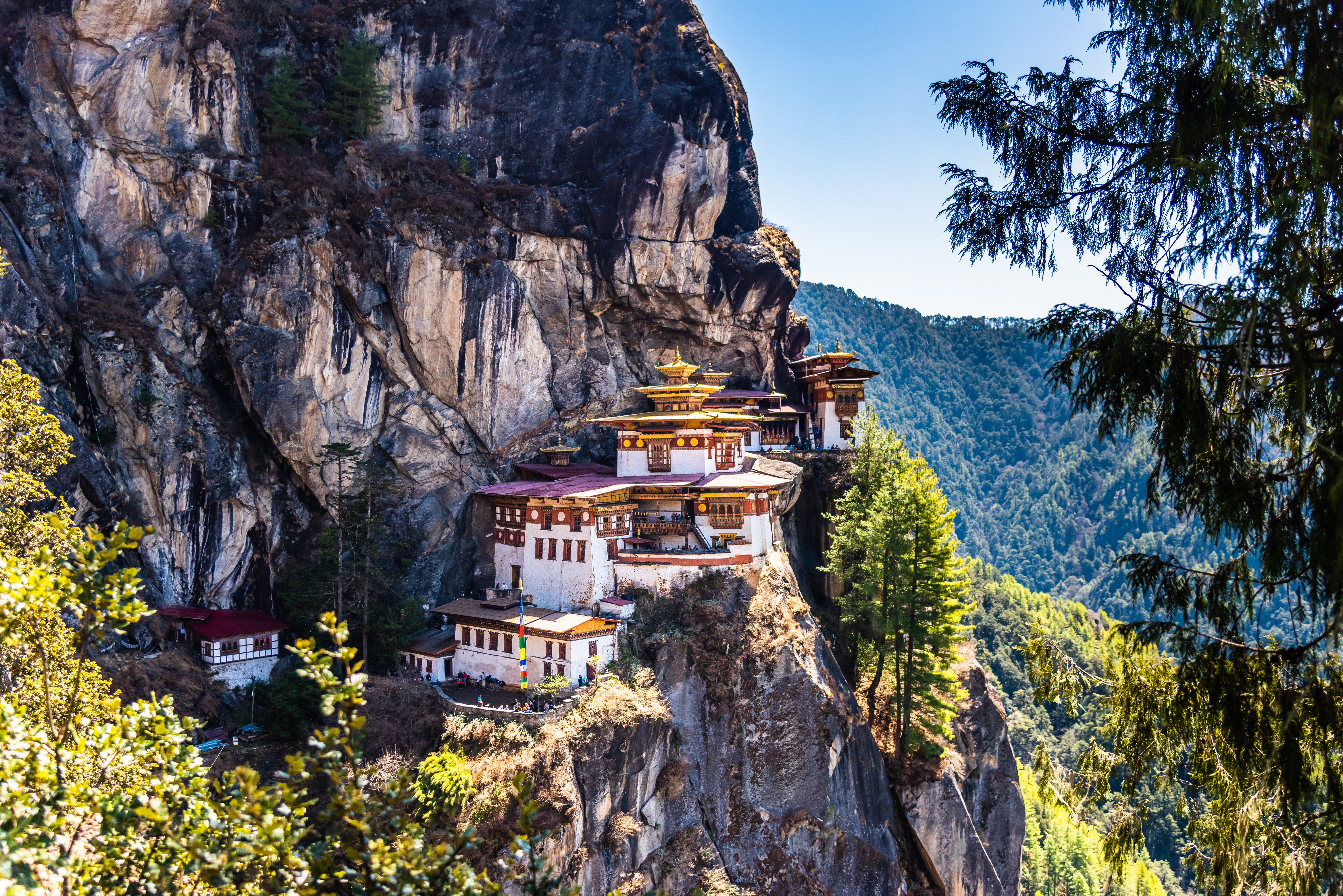
Today we hike (approximately 6.8mi/11km round trip with an elevation of approximately 915m) to Taktsang Monastery, also known as the Tiger’s Nest. This spectacular building is perched on the ledge of a cliff high above the Paro Valley.Partly destroyed by fire in 1998, it has now been completely restored to its former magnificence. From the car park to the cafeteria viewpoint is about two hours’ uphill walk through the forest. From here, we have incredible views of the monastic buildings that cling to the cliff. For the energetic, there is the chance to walk even higher to the actual monastery.This takes another two hours and involves walking up and down stone steps. We spend about an hour at the monastery looking around the temples (photography is not allowed inside) before descending to the cafeteria for lunch. After lunch, we return to the car park and drive back to our hotel. There should be time to have a look round Paro before dinner or indulge in a hot-stone bath or massage (paid locally) at the hotel if you want to unwind after the trek.
Meals: Breakfast,Lunch,Dinner
Day 10
Fly to Kathmandu
We transfer to the airport to check in for our flight back to Kathmandu. The rest of the day is free for individual sightseeing or shopping. You may want to visit Durbar Square in the heart of the old city, the monkey temple at Swayambhunath, the largest Buddhist stupa on earth at Boudhanath or the Hindu temple at Pashupathinath. Another option is to take a taxi to Bhaktapur, the medieval city 10.5mi (17km) east of the capital. Bhaktapur has its own Durbar Square with many temples and statues and a maze of narrow streets, which are generally quieter than the capital.The Exodus representative in Kathmandu can give you more information on what there is to see.
Meals: Breakfast
Day 11
Adventure ends in Kathmandu
Your journey ends Kathmandu after breakfast. If you don’t want the adventure to end, speak to your sales representative about extending your stay.
Meals: Breakfast
What’s included
What’s not included
Additional information
Food
Breakfast is included throughout the trip plus eight lunches and eight dinners while in Bhutan.
During your adventure in Bhutan, prepare to savor a delightful array of flavors that blend Bhutanese and Western cuisines. While Bhutanese dishes are traditionally seasoned with chilies, often tempered for foreign palates, the local cuisine boasts rich and varied tastes. Enjoy a diverse selection of meat, vegetable, rice, and potato dishes, alongside iconic specialties like ema datshi—featuring chilies and cheese. If you desire a more authentic or spicier culinary experience, don’t hesitate to share your preferences with your trip leader, who will endeavor to tailor meals to your liking.
Breakfasts are an assortment of cereals, eggs, toast, fruit and often some Bhutanese dishes. Lunches are taken in a restaurant and dinners are either in the hotel or at a local restaurant.
Please allow approximately 2,500-3,350 ngultrums (US$30-US$40) per day for other main meals in Kathmandu.
Khewang Lhakhang Temple Visit
Visit the 15th-century Khewang Lhakhang, a peaceful country temple whose prayer halls glow with the soft light of butter lamps. Step inside to see the trio of statues representing the past, present and future Buddhas.
Murals and carved details speak to a centuries-old spiritual lineage that anchors life in the Phobjikha Valley. The temple’s contemplative atmosphere invites a quiet moment of reflection amid pastoral surroundings.
Taktsang (Tiger’s Nest) Monastery Hike
Make the celebrated hike to Taktsang (Tiger’s Nest), weaving through pines hung with stone steps and prayer flags to a soaring cliffside monastery. Vantage points reveal the complex perched almost 900m above the valley.
Here, Guru Rinpoche is said to have meditated after arriving on a tigress, sanctifying the site. Rebuilt after a 1998 fire, its chapels brim with murals and statues. Photography is not permitted inside, preserving a deeply contemplative mood.
Dzongdrakha Goemba Cliffside Temples
Climb to Dzongdrakha Goemba, a cluster of cliffside temples often nicknamed the Mini Tiger’s Nest. Simple chapels cling to the rock, their prayer rooms filled with murals and time-worn statues.
The vantage looks across the Paro Valley’s fields and farmsteads. Quiet footpaths and the scent of incense lend a contemplative air to this smaller, less-visited counterpart to Taktsang.
Thimphu Highlights: Buddha Dordenma & Simtokha Dzong
Explore Thimphu’s cultural landmarks, starting at Kuensel Phodrang, where the Buddha Dordenma gazes over the valley with sweeping views. Continue to Simtokha Dzong, Bhutan’s oldest fortress, known for its serene courtyards and richly painted chapels.
Witness traditional weaving techniques at an artisan center, see handmade paper being crafted, and browse the lively market. From a viewpoint above the Motithang Takin Preserve, glimpse Bhutan’s gentle, odd-looking national animal, before returning with a deeper sense of Thimphu’s heritage.
Dochu La Pass & 108 Chortens Scenic Stop
Ascend to Dochu La Pass (3,100m) and wander among the 108 chortens that crown this breezy ridge. On clear mornings, a Himalayan panorama stretches across serrated peaks, while prayer flags snap and flutter in the mountain air.
Commissioned by the Queen Mother in the early 2000s, these whitewashed stupas invite quiet moments to pause for photos and reflection. The scent of pine and the hush of high-altitude wind create a contemplative counterpoint to the valleys below.
Wangdue Phodrang Dzong Visit
Visit Wangdue Phodrang Dzong, a commanding clifftop fortress surveying river terraces and farm fields. Step through carved gates into spacious courtyards framed by whitewashed walls and richly painted prayer halls.
Founded in the 17th century and rebuilt after a 2012 fire, the dzong blends spiritual life with regional administration. Monastic chants drift across the complex, offering a calm window onto Bhutan’s intertwined civil and religious traditions.
Gangtey Nature Trail Hike in the Phobjikha Valley
Walk the Gangtey Nature Trail across the wide bowl of the Phobjikha Valley, passing farmhouse hamlets, marshy meadows, and blue pine forests. The route frames photogenic views of Gangtey Monastery and the glacial valley floor.
This high-altitude wetland is winter home to black-necked cranes, revered in Bhutanese culture. Even outside migration season, the quiet paths, mani walls, and crisp air offer restorative immersion in Bhutan’s rural landscapes.
Black-Necked Crane Visitor Centre
Learn about Bhutan’s emblematic winter visitors at the Black-Necked Crane Visitor Centre. Exhibits illuminate the species’ migration from the Tibetan Plateau and the fragile wetland habitat they rely on.
In season, use scopes to spot the elegant cranes across the marshes near Gangtey. Conservation stories highlight how local communities protect the birds’ winter roosts, blending stewardship with long-standing reverence.
Traditional Farmhouse Visit in Phobjikha
Step inside a traditional farmhouse to glimpse daily rhythms of rural Bhutan. Note the thick rammed-earth walls, timber beams blackened by kitchen fires, and lofts stacked with grains that sustain families through long winters.
Conversations with hosts reveal planting cycles, herding patterns, and the quiet pride of self-sufficient highland life. It’s a gentle, human-scale look at rural Bhutanese life beyond the monasteries and mountain passes.
Chimi Lhakhang Fertility Temple Walk
Cross fields and village lanes to Chimi Lhakhang, the celebrated fertility temple linked to the maverick saint Drukpa Kunley, the Divine Madman. Spot playful phallic motifs painted on houses to ward off the evil eye.
Inside the small monastery, pilgrims seek blessings while prayer flags ripple above the valley. The easy walk pairs countryside charm with a light-hearted yet meaningful strand of Bhutanese spirituality.
Punakha Dzong: Fortress of Great Bliss
Enter Punakha Dzong, the Fortress of Great Bliss, set at the confluence of the Mo Chhu and Pho Chhu rivers. Cross the wooden bridge to courtyards lined with jacarandas and galleries of intricate woodcarvings.
Former seat of government and winter home of the monastic body, Punakha’s grand chapels and storied relics reflect Bhutan’s spiritual and political heart. River breezes and gilded rooftops complete this evocative riverside setting.
Tachog Lhakhang Iron Chain Bridge Crossing
Walk across the Tachog Lhakhang Iron Chain Bridge, a swaying span over the Paro Chhu draped in prayer flags fluttering in the breeze. Feel centuries of ingenuity in the iron links beneath your feet.
Attributed to Thangtong Gyalpo, the Buddhist master-engineer famed for his chain bridges, this medieval crossing connects riverside paths to a quiet hillside temple—an elegant fusion of devotion and engineering skill.
Kyichu Lhakhang: Bhutan’s Ancient Temple
Visit Kyichu Lhakhang, among Bhutan’s oldest sanctuaries, where seventh-century chapels glow with butter lamps and elderly devotees spin prayer wheels. Orange trees perfume the courtyard year-round.
Tradition holds it as one of the 108 temples raised by Tibetan king Songtsen Gampo to subdue a demoness and pin Buddhism across the Himalaya. The temple’s layered legends and living rituals impart Paro’s deep spiritual roots.
Paro National Museum (Ta Dzong) & Rinpung Dzong
Discover the Paro National Museum (Ta Dzong), a former watchtower displaying thangkas, textiles, and natural history that chart Bhutan’s cultural arc. The circular galleries also frame wide views over the valley.
Stroll down to Rinpung Dzong—the “Fortress of the Heap of Jewels”—via its stone-flagged ramp and cross the cantilever bridge over the Paro Chhu. Carved beams, painted pillars, and monastic calm reveal Bhutanese craftsmanship in every detail.
Welcome Dinner in Paro
Gather to meet your Tour Director and fellow travelers over a warm welcome dinner in Paro. Sample Bhutanese dishes such as ema datshi, red rice, and momos, alongside milder options tailored to your tastes.
Enjoy practical insights into etiquette at temples, dress for festivals, and Bhutan’s love of archery. This hosted evening sets the tone for a culturally rich journey and fosters easy camaraderie within the group.
Personalized Bhutan Stamps at Thimphu Post Office
Create a quirky keepsake at the Thimphu General Post Office by arranging to create personalized Bhutan stamps with your own photo. Leave with an official sheet you can post—or frame as a memento.
Bhutan is famed for inventive philately, from silk to 3D issues. This lighthearted stop blends design, storytelling, and national iconography. This experience is at additional cost and bookable on tour, subject to opening hours.
Traditional Bhutanese Hot-Stone Bath
Soothe trail-weary legs with a traditional hot-stone bath, where a wooden tub is infused with herbs and heated by river-heated stones. Settle into the warmth as steam rises and muscles relax—a perfect post-hike ritual.
Long used in the highlands for recovery and circulation, baths are offered at local farmhouses or hotels in Paro and Gangtey. This experience is at additional cost and bookable on tour, subject to availability.
Relaxing Hotel Massage in Paro
Unwind after trekking with a hotel massage in Paro designed to ease tired legs and shoulders. Choose light or deeper pressure to target the after-effects of altitude and stone steps.
Treatments are delivered by trained therapists and can be scheduled through your tour leader at the property. This experience is at additional cost and bookable on tour, subject to therapist availability.
Thimphu Tshechu Festival at Tashichho Dzong
Immerse yourself in Bhutan’s most spirited celebration as you join Bhutanese families for a full day at the Thimphu Tshechu. In the courtyards of Tashichho Dzong, watch monks and lay performers whirl in brocade robes and masks during masked cham dances, set to the thrum of long horns and drums.
Gain insight into rites that honor Guru Rinpoche, the saint whose teachings shaped Bhutanese Buddhism. Jokers called atsaras mingle with the crowd, blessings are bestowed, and the festival’s color and devotion create a vivid window into Bhutan’s living spiritual culture.