Your itinerary

Day 1
Adventure starts in Kathmandu
Begin your adventure at the Royal Singi Hotel in Kathmandu, the start point for many of our Himalayan treks over the years.Around 6pm, bid namaste to your tour leader and fellow travellers, when we gather as a group for the first time to get to know each other and learn more about the adventures ahead during a full trek briefing.Your tour leader then ensures a big Nepalese welcome by arranging a group dinner.Want to explore Kathmandu further? Secure pre-tour hotel nights through your sales representative.
Meals: Dinner
Day 2
Early morning transfer to Manthali for your flight to Lukla. Trek to Phakding
We have a very early start this morning to drive (approximately four hours) out to Manthali Airport (RHP) where all Lukla flights now operate from. We depart our hotel at approximately 3am to ensure arriving in Manthali for in time for the first morning flights to Lukla. The hotel will provide a packed breakfast for the journey.We fly to the mountain airstrip of Lukla (9,190ft/2,800m), and set off on the first short leg of our trek, heading north up the valley of the Dudh Kosi (Milk River). We descend from the small plateau into the forested valley. The trail offers tantalising views before reaching the settlement of Phakding, where we spend our first night.
Meals: Breakfast
Day 3
Follow the Dudh Kosi and ascend to Namche Bazaar
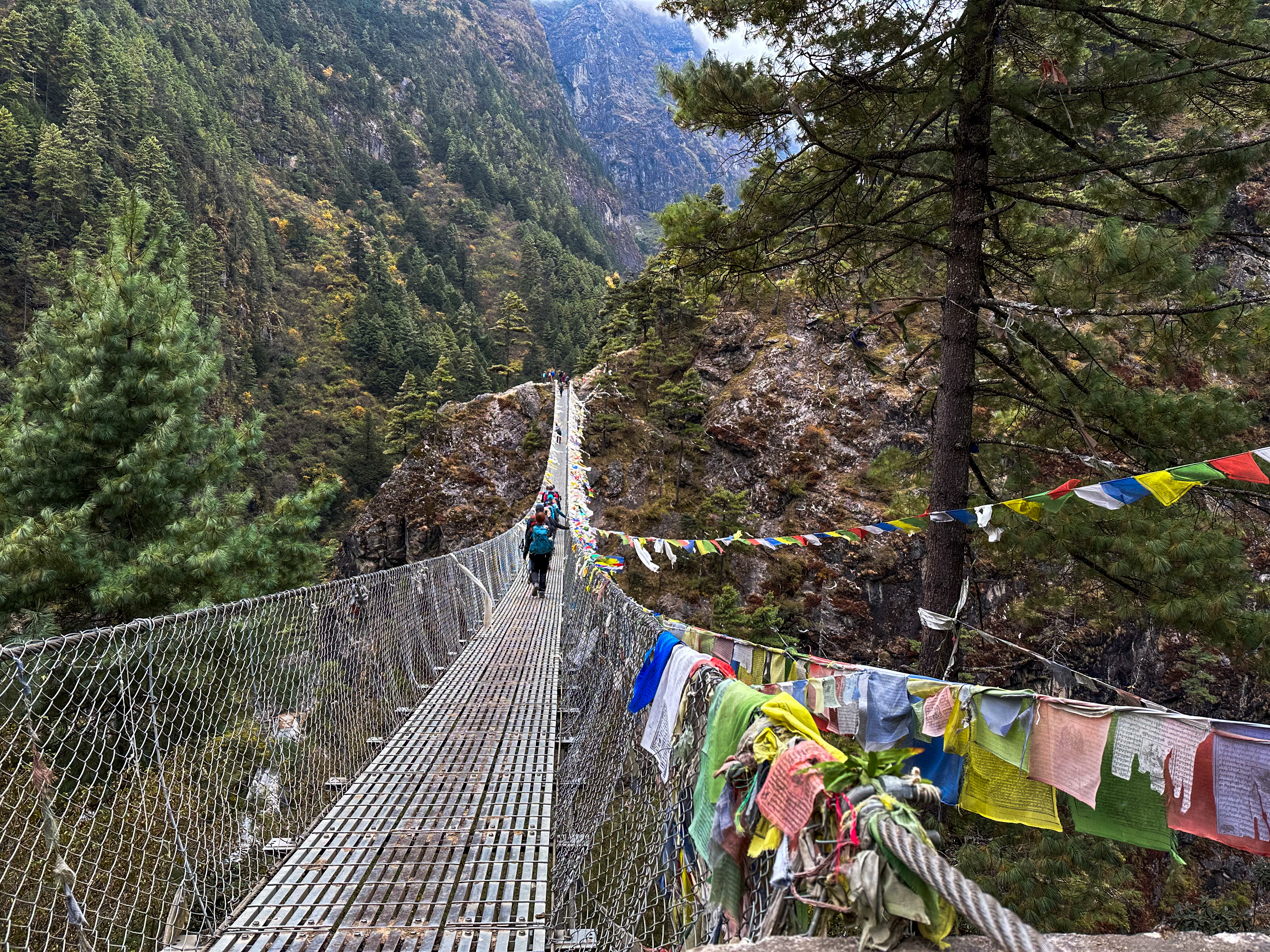
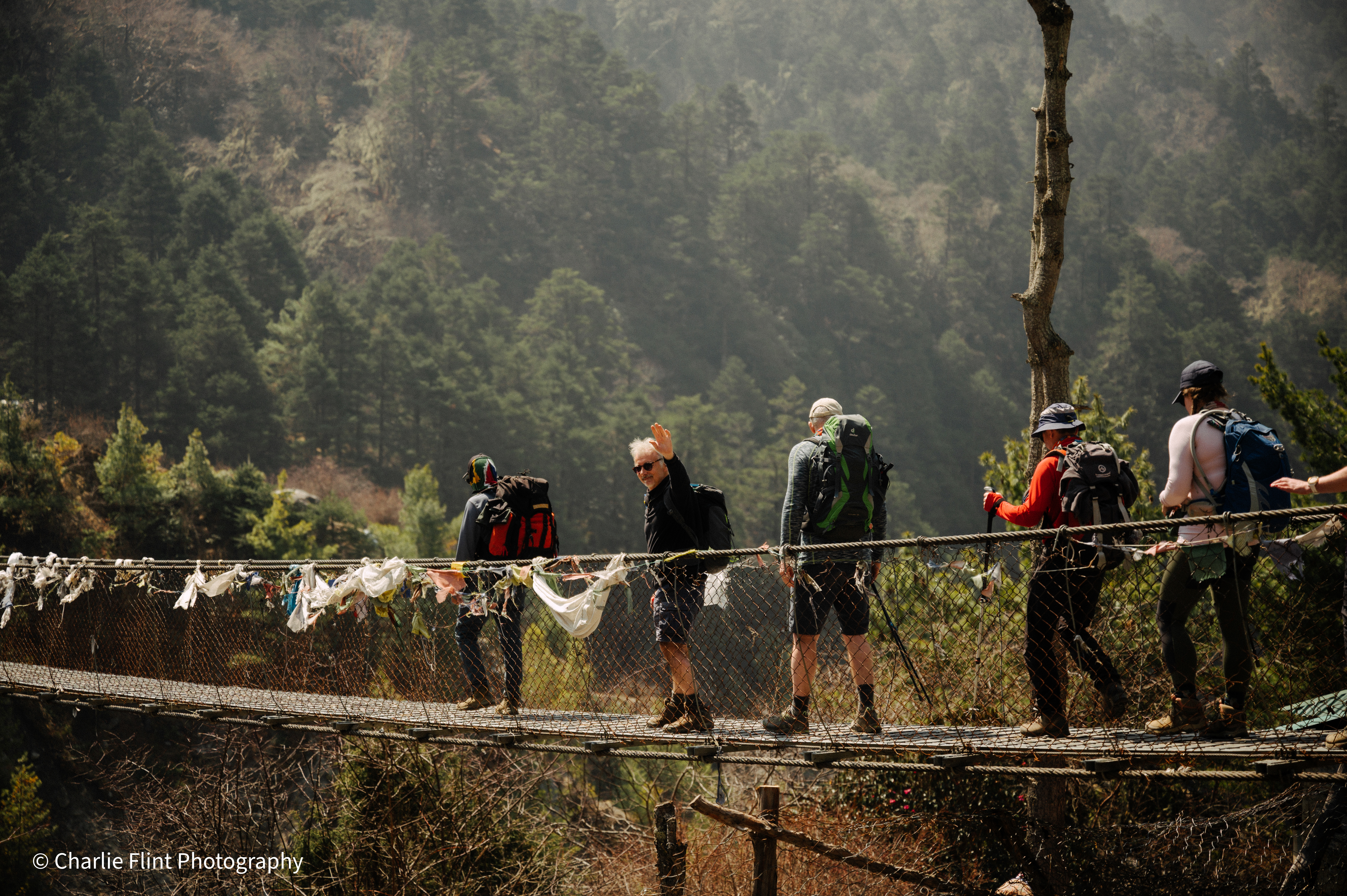
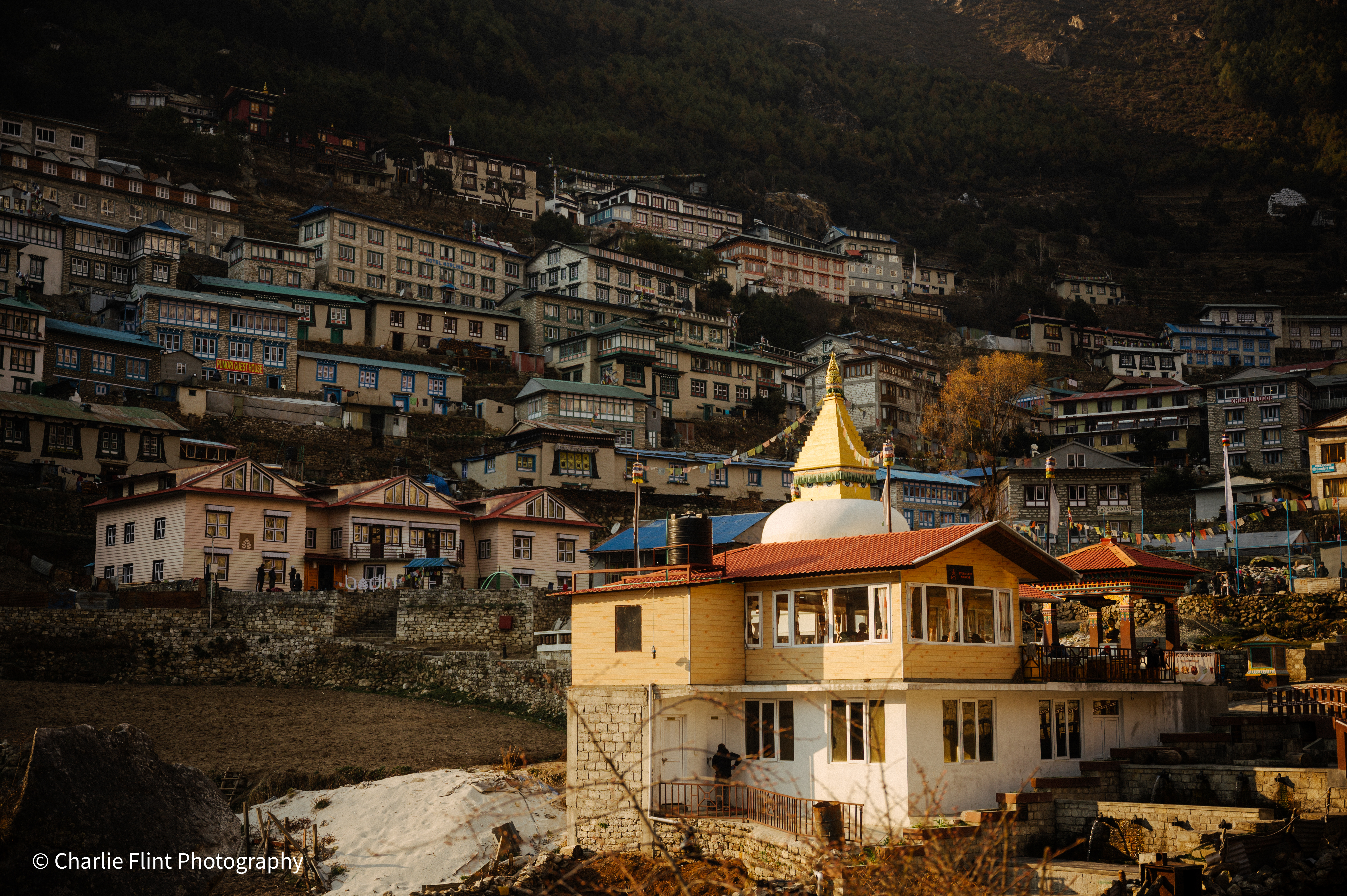
Heading out of Phakding, we follow the Dudh Kosi north. Today’s walk takes us through magnificent forests with glimpses of the mountains ahead. We cross the river several times by bridge as we pass through the villages of Benkar, Monzo and Jorsale. A final bridge brings us to the foot of the steep climb to Namche. Halfway up the ascent, we may get our first glimpse (cloud permitting) of the Everest summit behind the great ridge of Nuptse-Lhotse. A last 985ft (300m) climb brings us to Namche Bazaar, the Sherpa capital and the main town in the area. Namche is a prosperous Sherpa town and an important trading centre. It has a weekly market on Friday afternoons and Saturday mornings, but the town always bustles with trekkers, coffee shops, bakeries and stores selling all kinds of trekking and climbing gear and Tibetan souvenirs.
Meals: Breakfast
Day 4
Acclimatisation walk to Kunde and Khumjung; descend to Kyanjuma
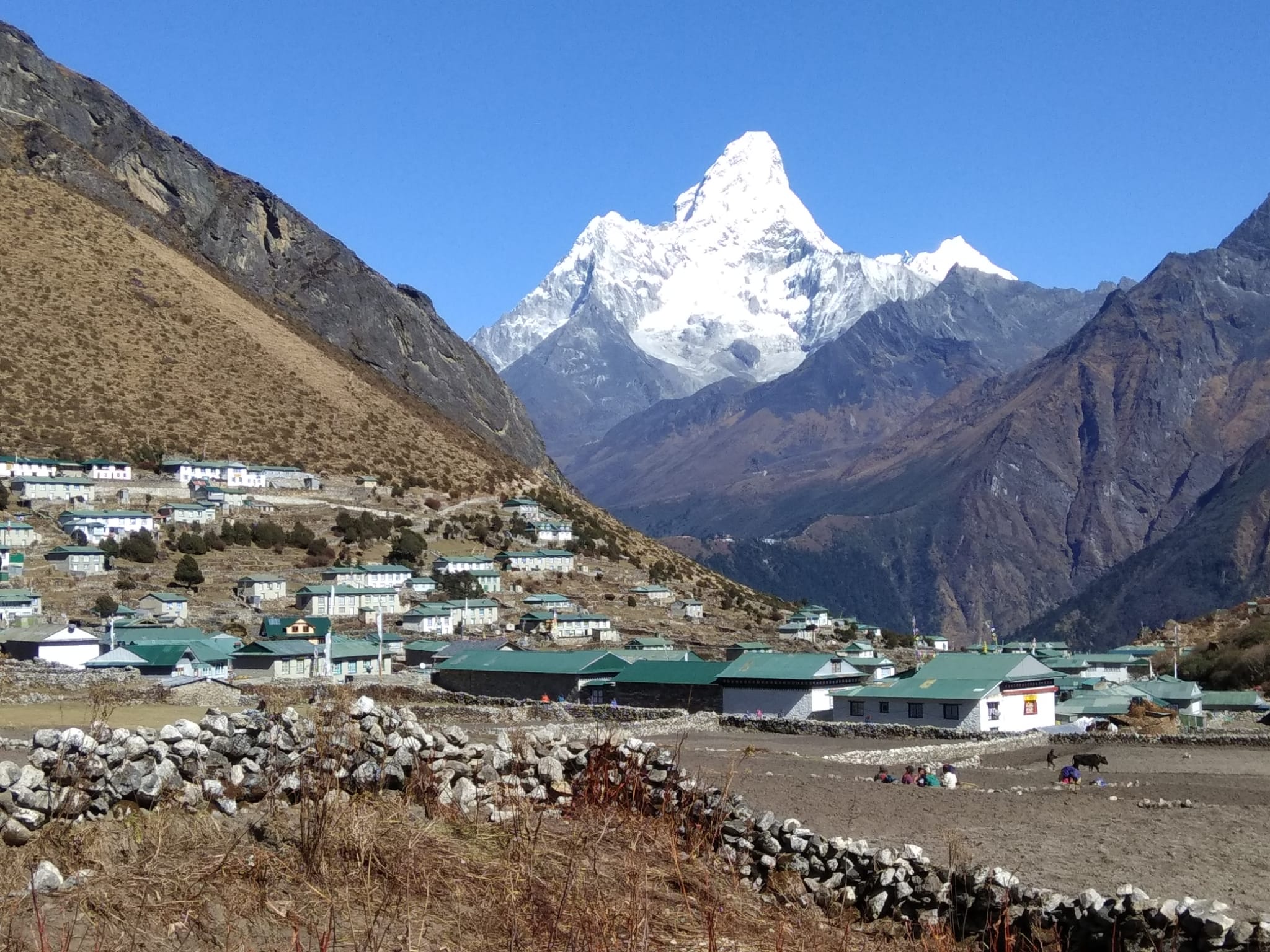
We climb steeply out of Namche past the airstrip at Shyangboche to the Everest View Hotel, the highpoint of our day at 12,730ft (3,880m). Built by the Japanese, this spectacularly situated hotel with wonderful views of Everest and Ama Dablam is an ideal place for a tea break.Enroute to the Everest View Hotel, you will have the option to stop off at the Sagarmatha Next experience centre and learn about the work this local organisation is doing to tackle waste pollution on the mountain trails and how you can help.Descending through forest, we come to Khumjung, where we have lunch close to the Sir Edmund Hillary School. After, we walk up to Kunde and visit the Edmund Hillary Hospital. The twin villages of Kunde and Khumjung are below Khumbila, the rocky peak sacred to all Sherpas. For much of the walk, we have great views of Ama Dablam and other Himalaya giants. We walk back down through Khumjumg to the monastery. Sadly, it was damaged in the earthquake but is now being repaired. Inside is a small box and, after paying the entry fee (which goes towards the repairs), we will be shown the only yeti skull in the world. Descending to the main trail, we spend the night at Kyanjuma.
Meals: Breakfast
Day 5
Cross the Mong La into the Gokyo Valley and trek to Dole
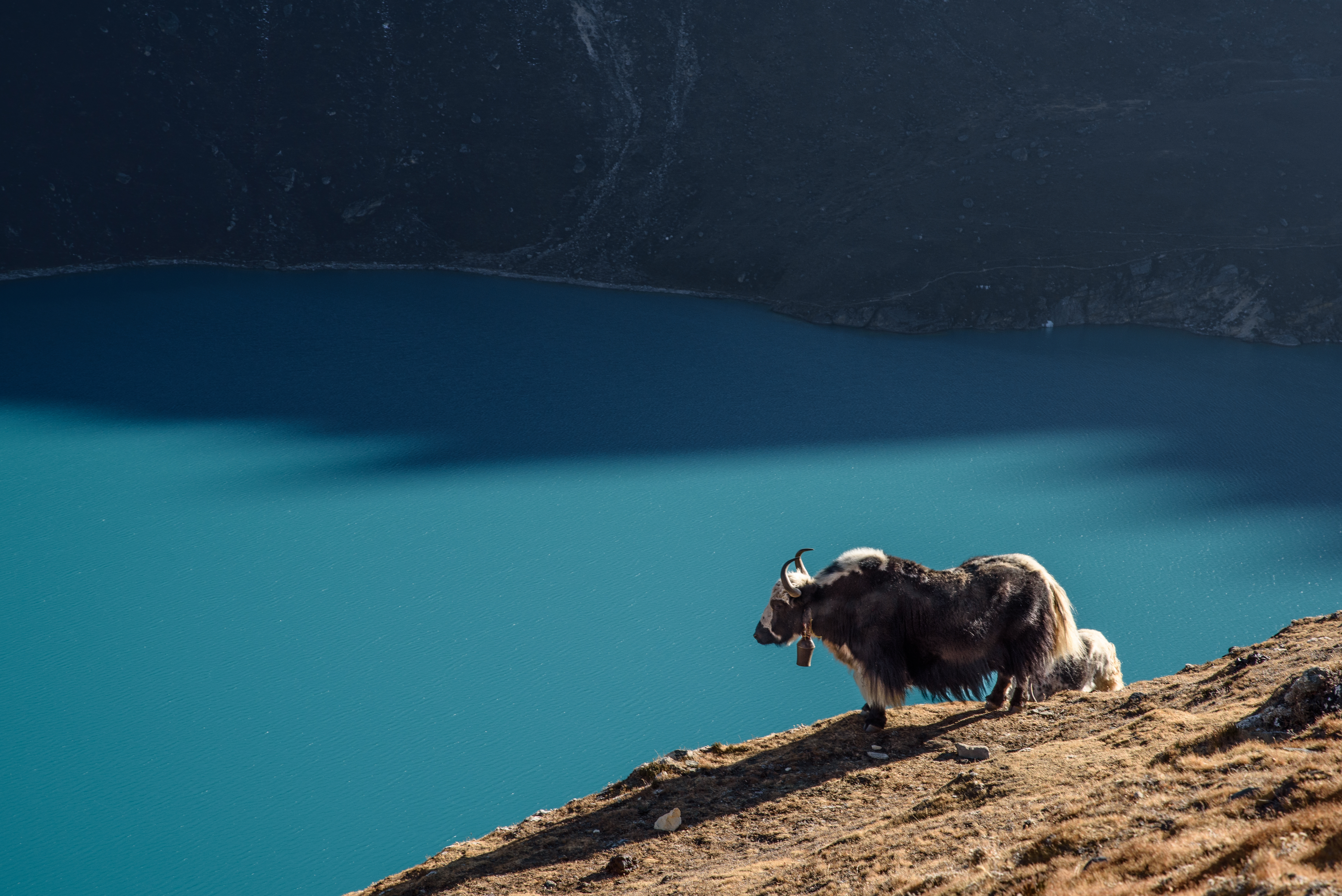
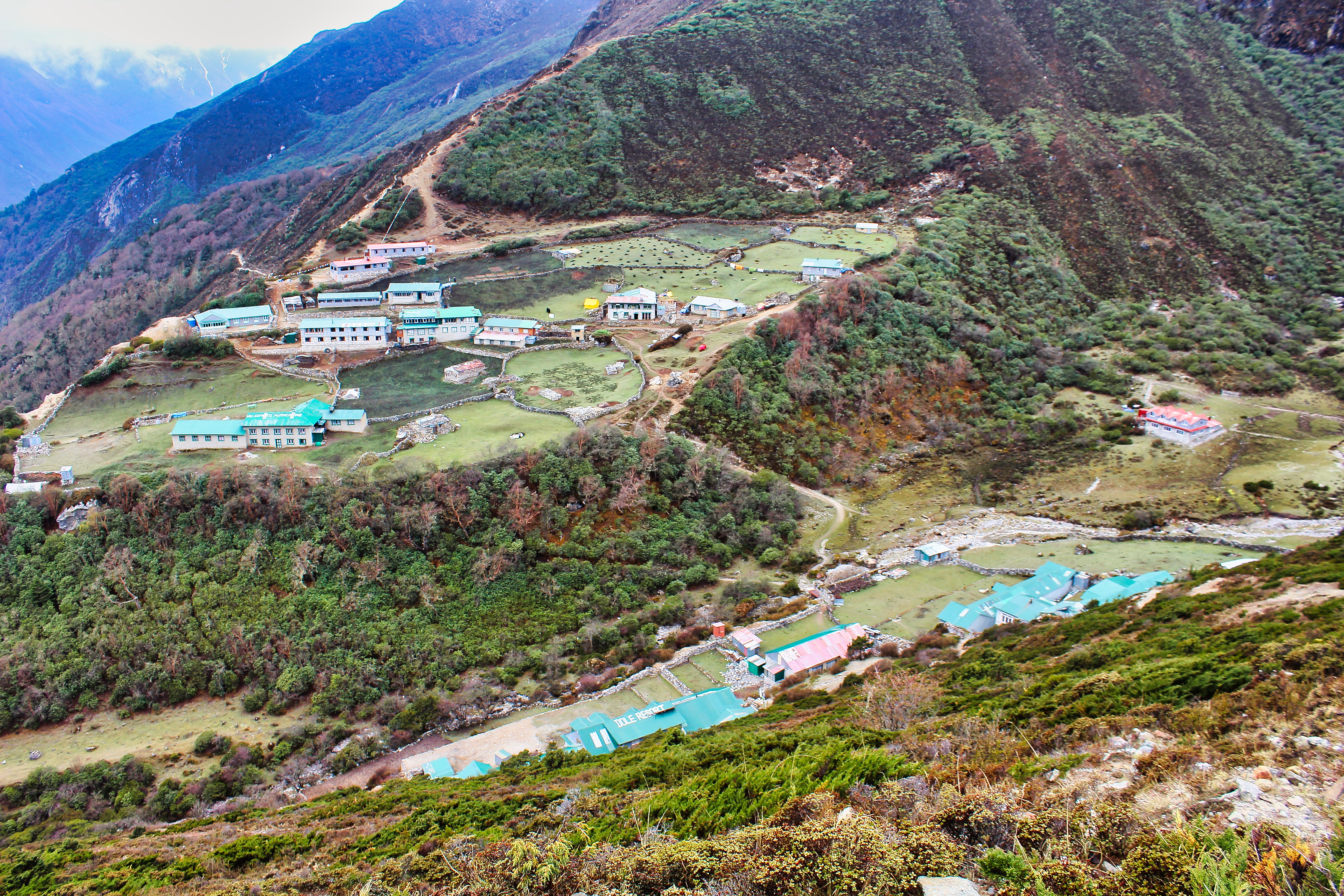
At Kyanjuma we turn off the main trail and begin climbing to the Mong La, marked by a chorten on the top of a ridge at 3,972m. This ridge descends from Khumbila, the abode of the patron god of all Sherpas. From the ridge, the trail descends in a series of steep switchbacks towards the Dudh Kosi. At Phortse Tenga (3,600m) there are a few tea houses to choose from for our lunch stop. After lunch the trail starts to climb steeply out of the valley and we enter the rhododendron forests, which give way to juniper and conifers higher up the valley. We pass through kharkas, summer settlements used by the Sherpas to graze their yaks, before coming to Dole, where we have magnificent views of Kangtaiga and Tramserku.Total ascent: 2,887ft (880m); total descent: 2,119ft (464m)
Meals: Breakfast
Day 6
Continue to Machhermo
A short walk today. From Dole the trail is steep in places as it passes through Lhabarma and Luza along the side of the valley, high above the river through scrub junipers until we cross the sandy spurs to Machhermo (4,410m). It was here in 1974 that a yeti was reported to have attacked a sherpa and killed three yaks! We should get to Machhermo by lunchtime and in the afternoon there is time for an acclimatisation walk up onto the ridge behind the lodge for amazing views of Tramserku.
Meals: Breakfast
Day 7
Trek to Gokyo Lake, a small settlement of lodges on the shores of a blue lake. Afternoon, optional walk up the hill behind camp for incredible views of the Ngozumpo Glacier
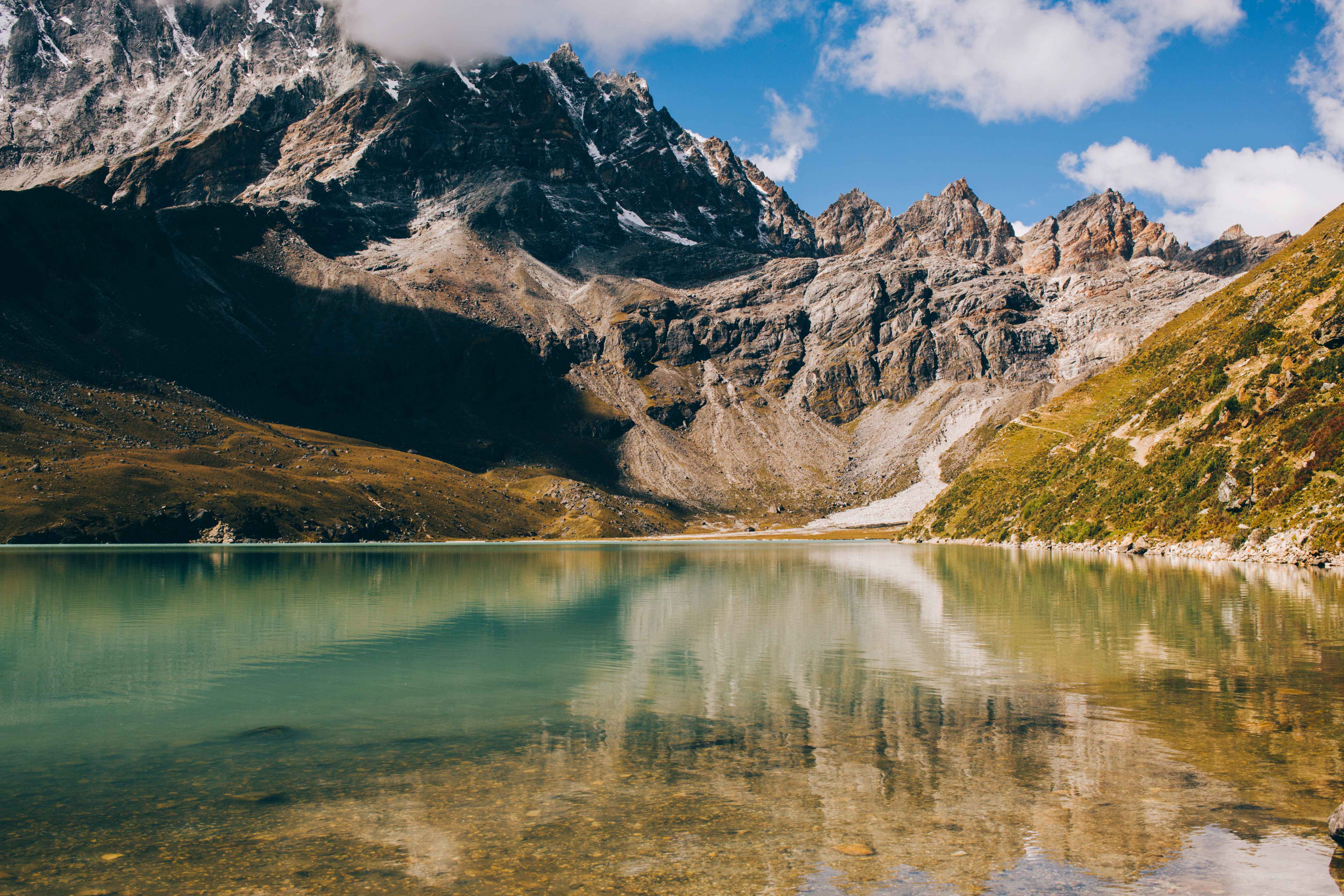
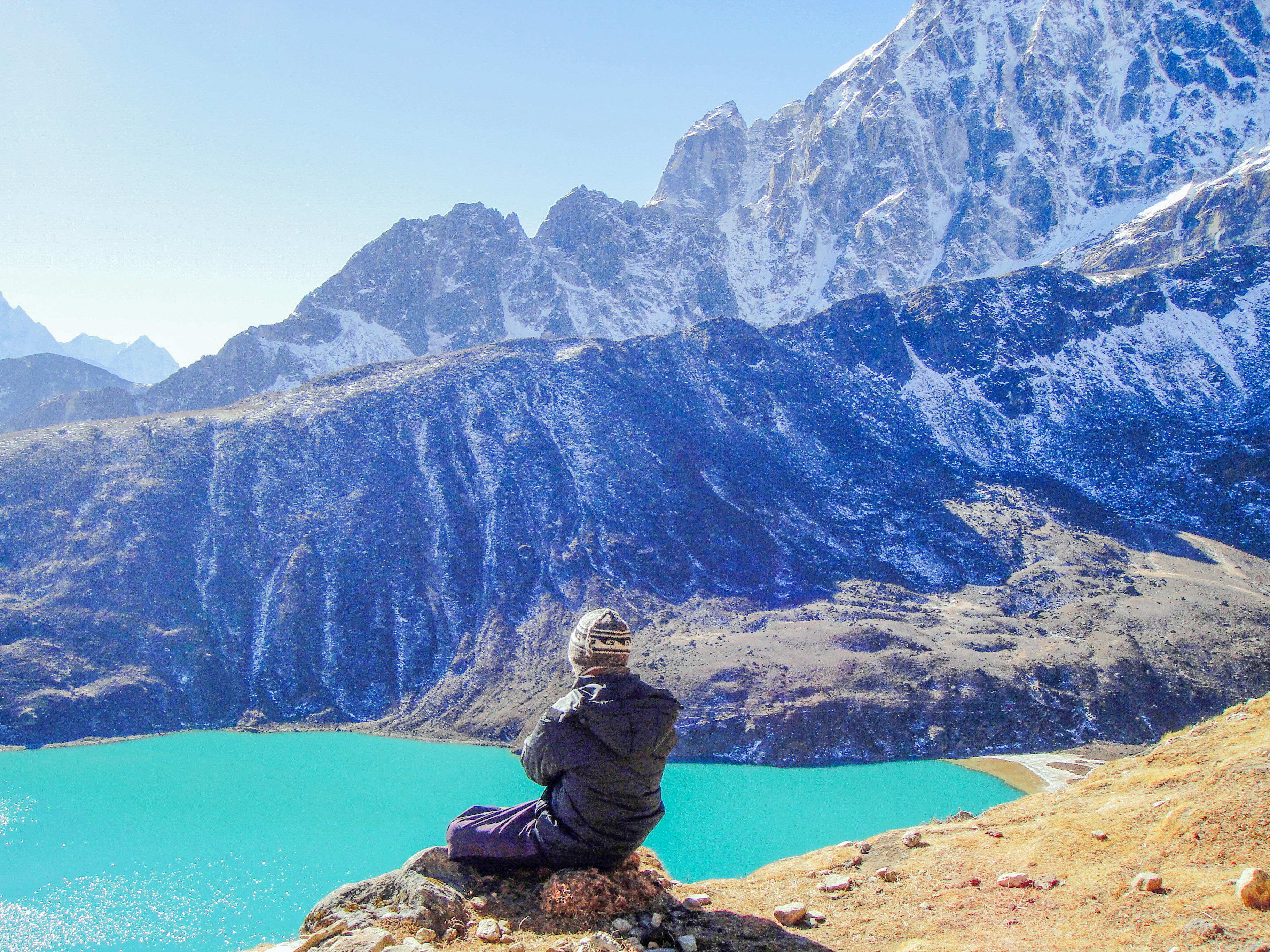
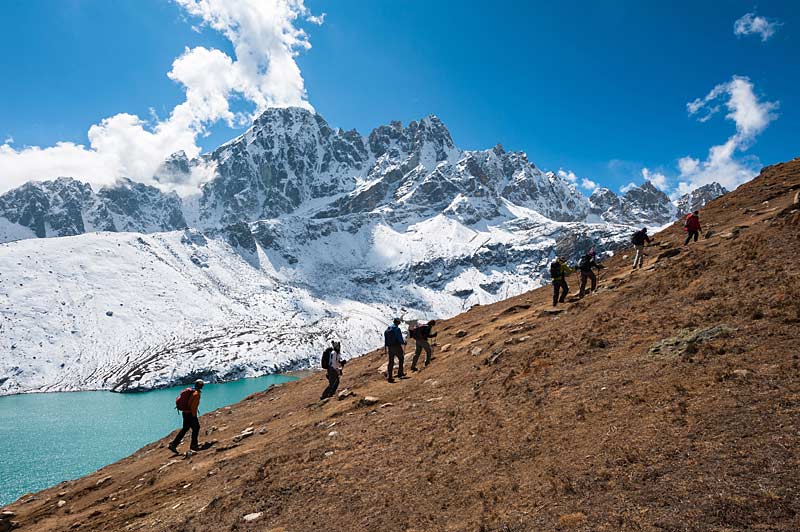
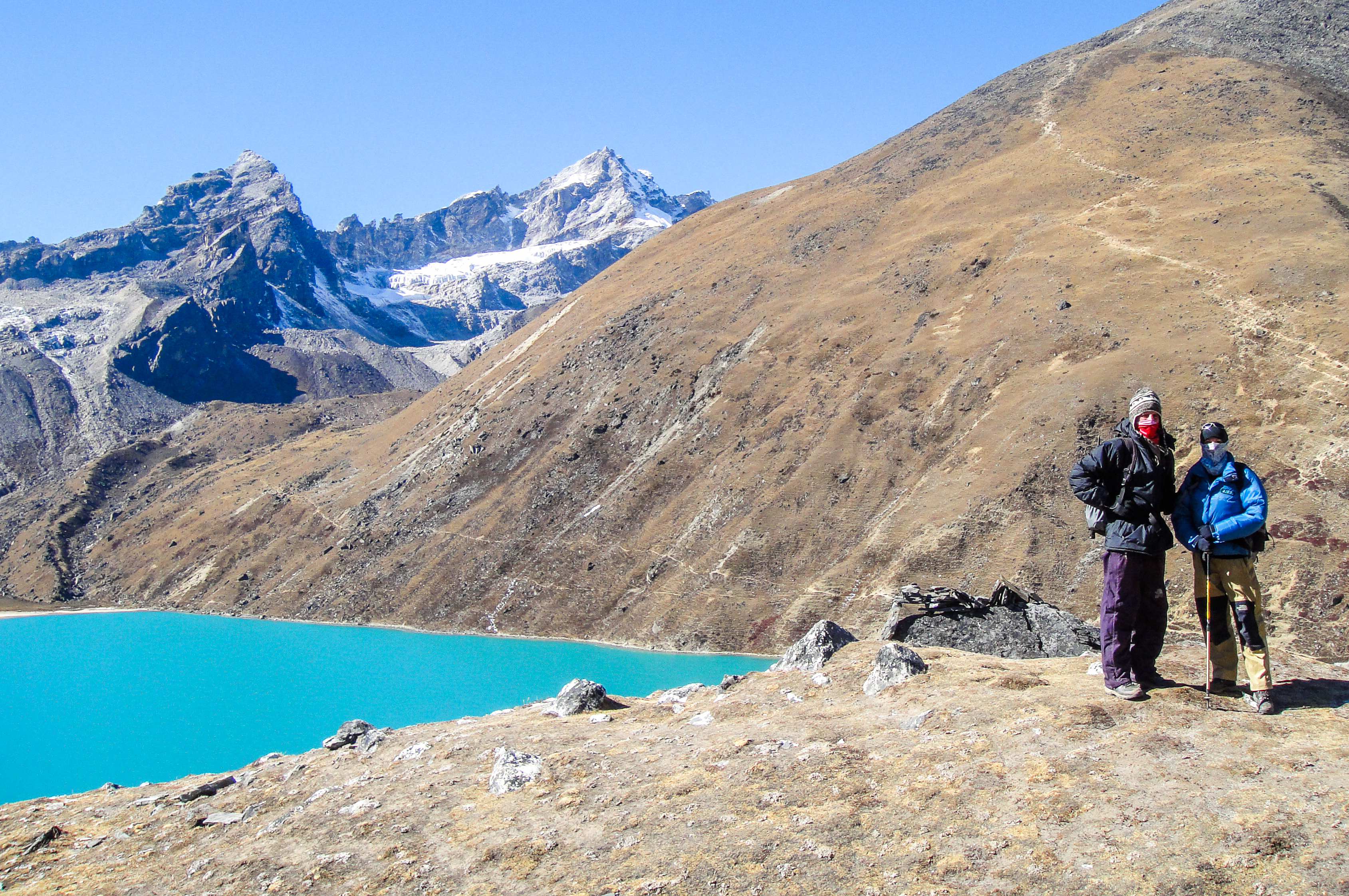
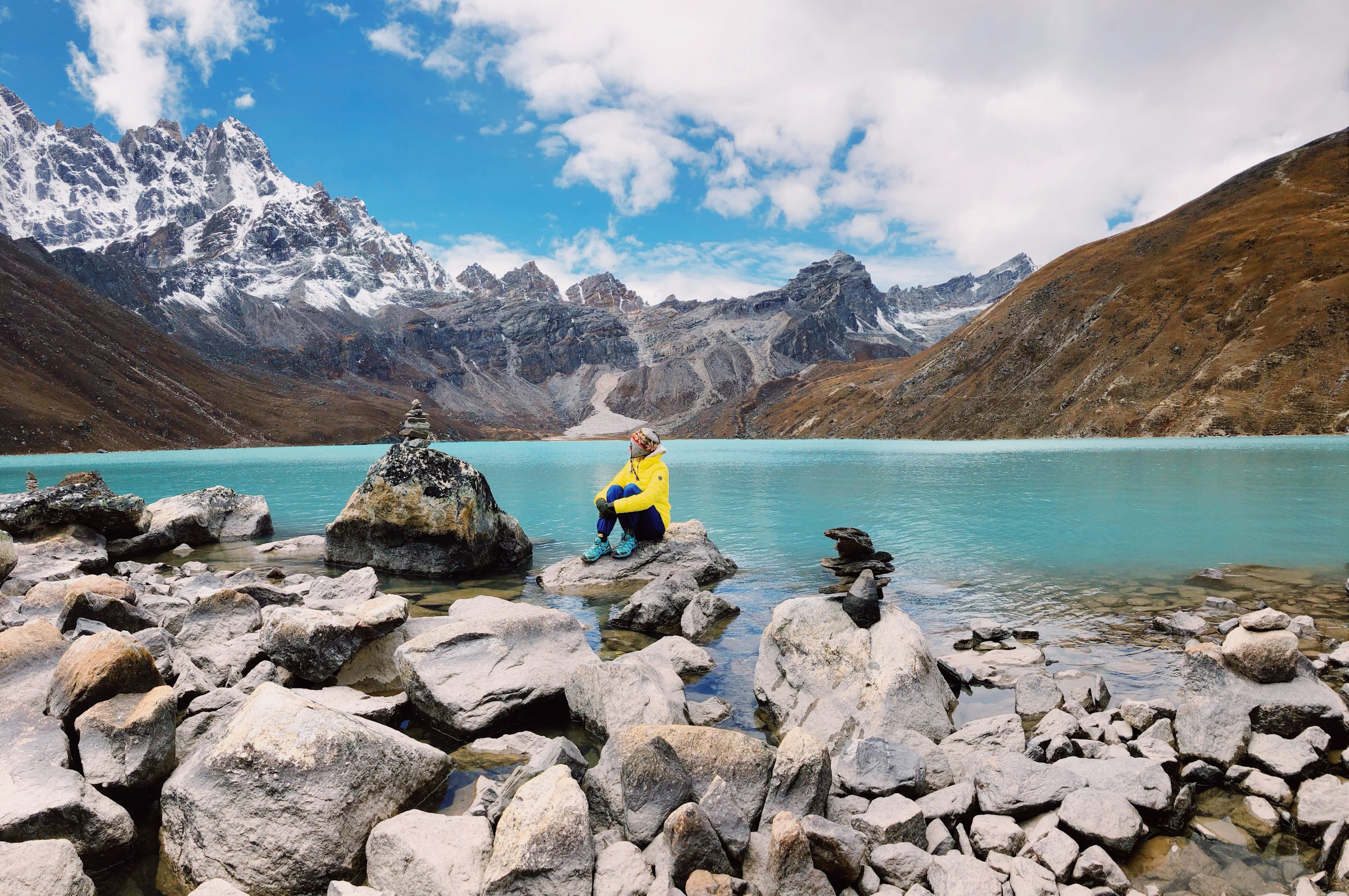
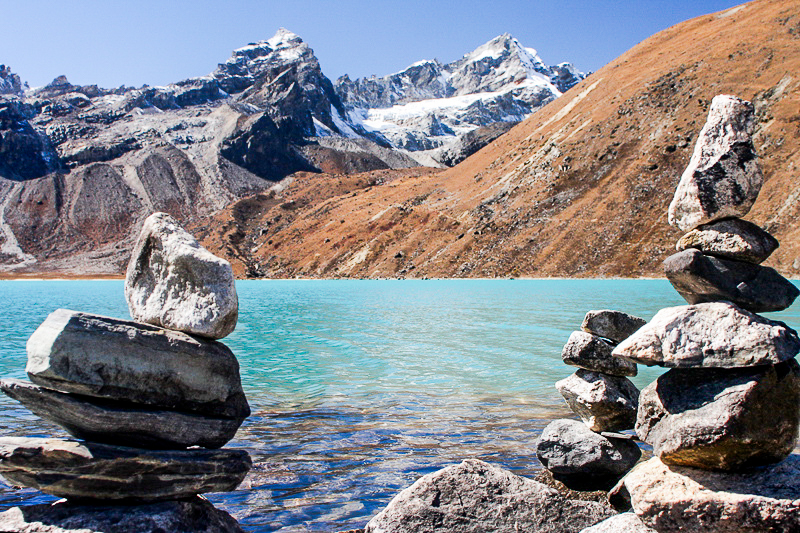
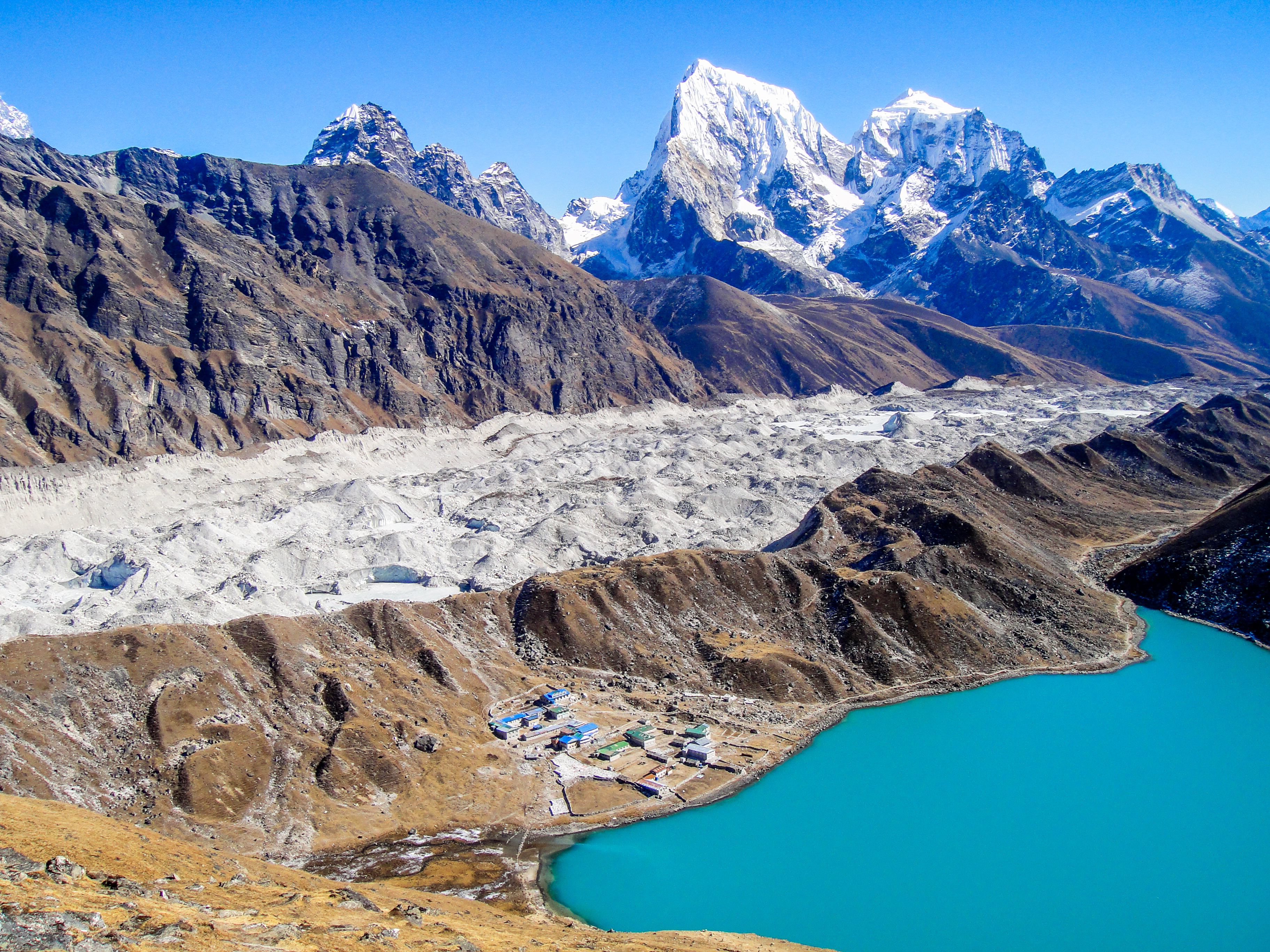
We begin today by climbing a ridge for an excellent view down the valley to Kangtaiga and Tramserku and up the valley towards Cho Oyu (8,201m). The valley now widens as the trail passes through Pangkha then descends to the riverbank before beginning the steep climb on a narrow trail onto the terminal moraine of the Ngozumpo Glacier. We pass the first of the lakes at Gokyo, called Longpongo. We then follow the almost level trail past the second lake and on to the third lake and the walled meadows and lodges of Gokyo at 4,750m. Gokyo is a small settlement of lodges on the shores of a blue lake. Look out for Brahmany Ducks swimming in the lake. We have lunch in Gokyo and in the afternoon we can walk up the hill behind the lodge for incredible views of the Ngozumpo Glacier.
Meals: Breakfast
Day 8
Climb Gokyo Ri
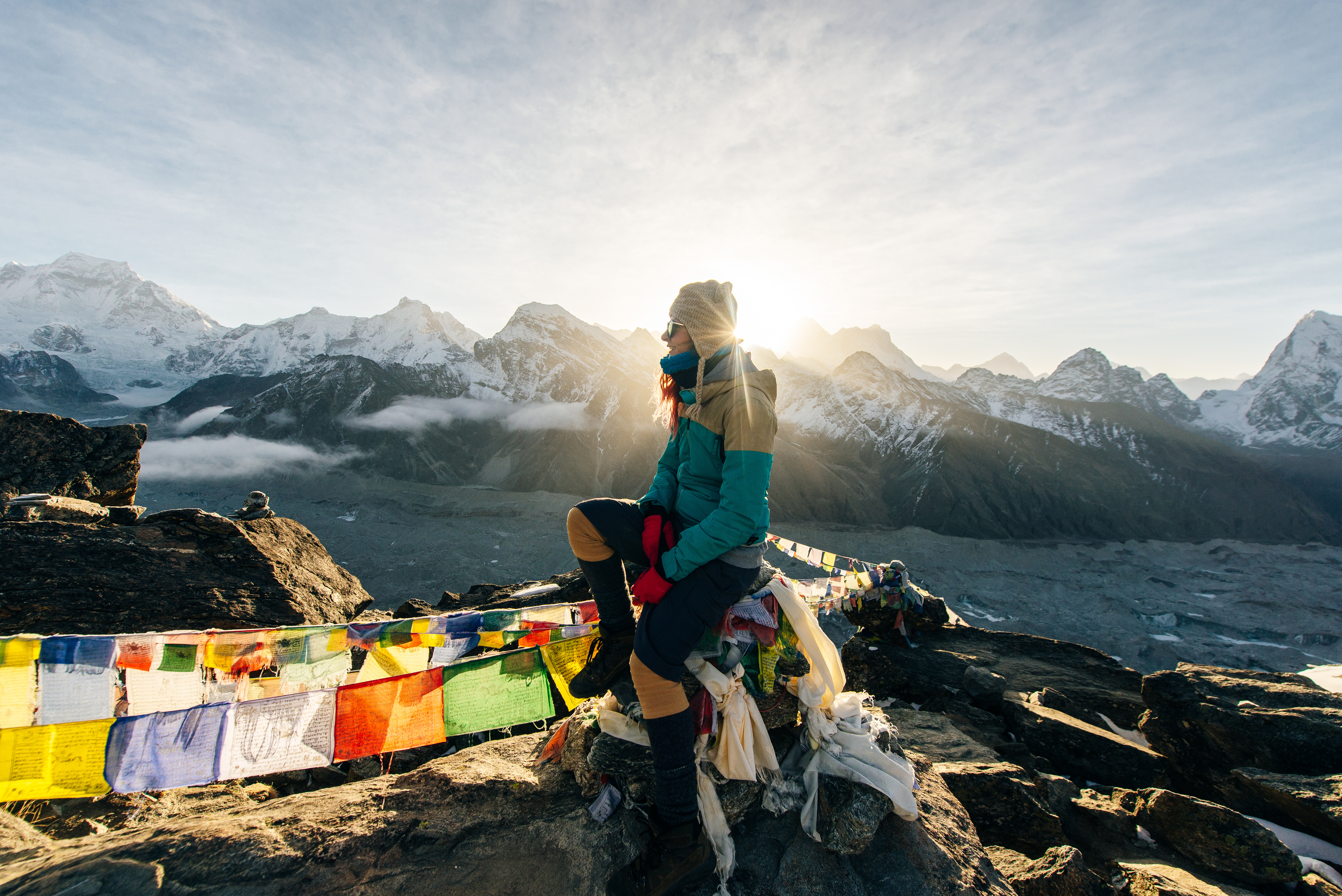
An early start this morning for the steep ascent of Gokyo Ri (17,585ft/5,360m), a small peak above Gokyo village. As we climb, the views become even more fantastic and from the top we can see four of the eight highest peaks in the Nepalese Himalaya: Cho Oyu, Everest, Lhotse and Makalu. Stretching out for miles below us is the longest glacier in Nepal – the Ngozumpo Glacier, which tumbles down from the slopes of Cho Oyu. One of the best all-round views in Nepal, the climb is well worth the effort. We return to Gokyo for lunch and the afternoon is free to relax or explore the lakeshore.
Meals: Breakfast
Day 9
Walk across the Ngozumpo Glacier to Thangnak
There is time this morning to explore the area around Gokyo. The energetic can walk to the fourth lake or explore the trail to the Renzo La from where you can see Everest.After an early lunch we set off for Thangnak. The trail starts by climbing to the crest of the moraine overlooking the Ngozumpo Glacier. The route across the glacier is well marked with cairns but we need to take care as the path is narrow and there is ice underfoot in parts. The trail climbs up and down and takes us to the eastern side of the Gokyo Valley. We stay tonight at Thangnak at the foot of the Cho La Pass.
Meals: Breakfast
Day 10
Cross the Cho La and enter the main Khumbu Valley; trek to Dzongla
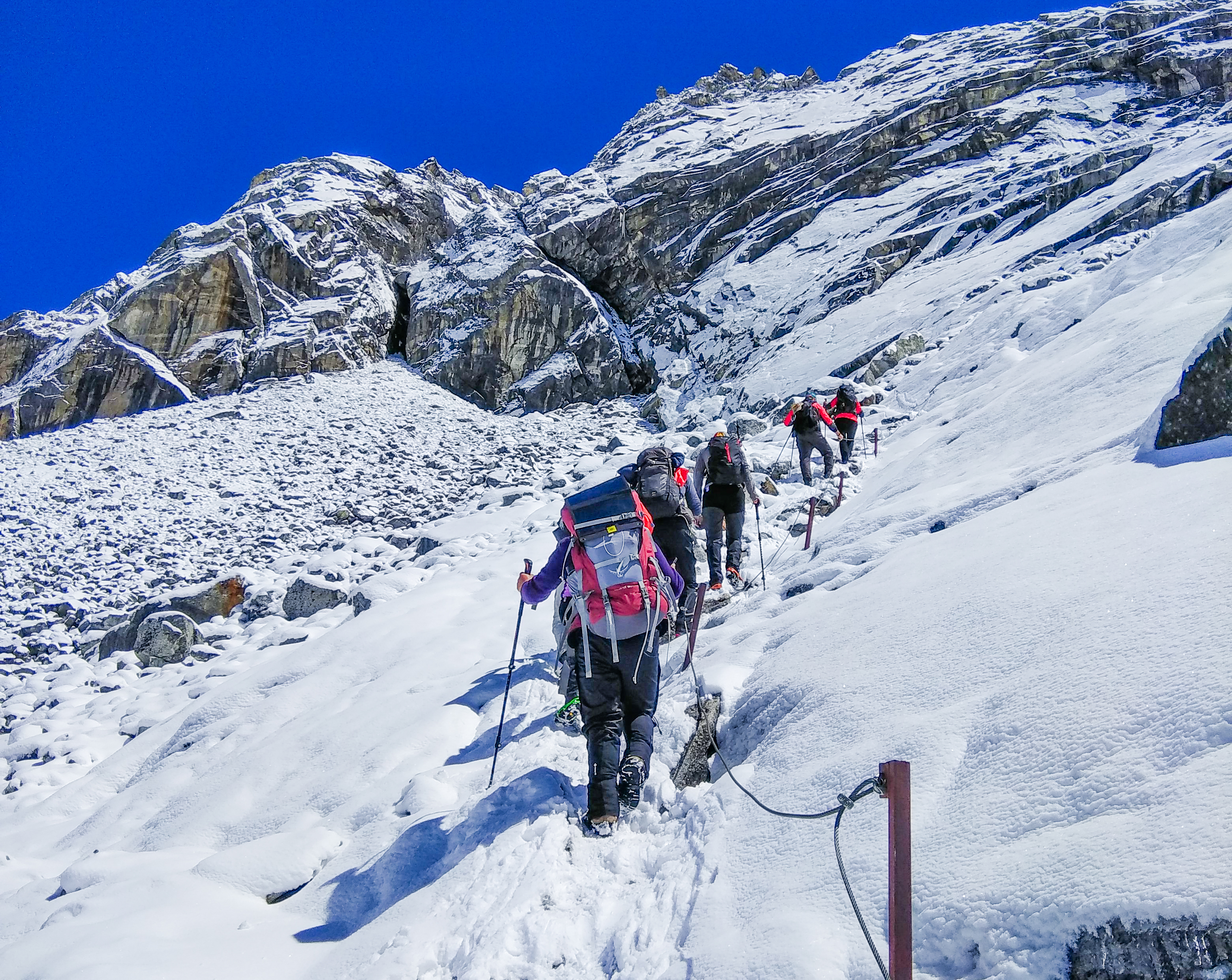
An early start for the very long day across the Cho La (5,420m), you will need to carry your micro-spikes with you today. We climb up the valley from Thangnak for about two hours to a col. Ahead we can see the Cho La in the distance. We descend to a large boulder field, which we cross on a well-defined path to the base of the steep part of the ascent. A new trail has been created up the Cho La to avoid the risk of rock fall and there are some metal chains in place to use as handrails. The last couple of hours are very steep and rocky and involve some scrambling as we zig-zag up to the top.The upper part of the route can be covered in snow and ice, particularly after November and in spring.Finally, we reach the glaciated top, from where there are excellent views including an unusual aspect of Ama Dablam. We will need microspikes for the descent (and sometimes on the ascent) and we need to take care on the descent as it’s steep and involves the crossing of a glacier (usually snow-covered) which is fairly straightforward. After a scramble down onto the glacier, we follow a trail across the snow and down a rocky gully to the pastures below. The trail becomes more defined as we approach Dzongla, where we stay tonight.
Meals: Breakfast
Day 11
Continue the ascent to Lobuje
An easier day ahead as leaving Dzongla we begin with a continuation of our descent. A short ascent brings us to the foot of Awi Peak, which we contour round on a wonderful high trail with great views of Chalotse and Tawoche across the valley. We finally descend to join the main trail again just below Lobuje. We spend the night at Lobuje (4,930m). The sunset on Nuptse from the ridge across from the lodge is not to be missed.
Meals: Breakfast
Day 12
A long day to visit Everest Base Camp. Overnight at Gorak Shep
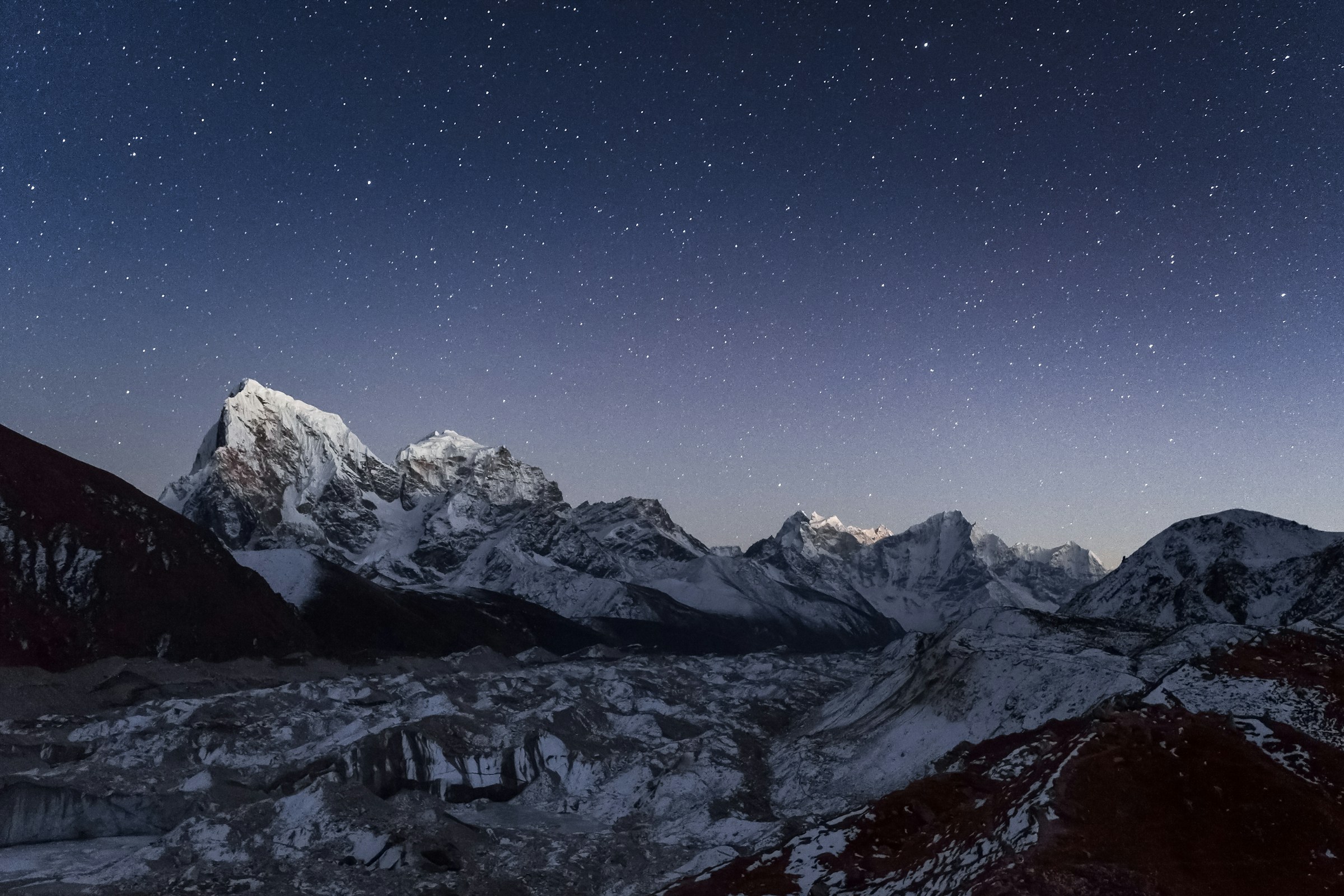
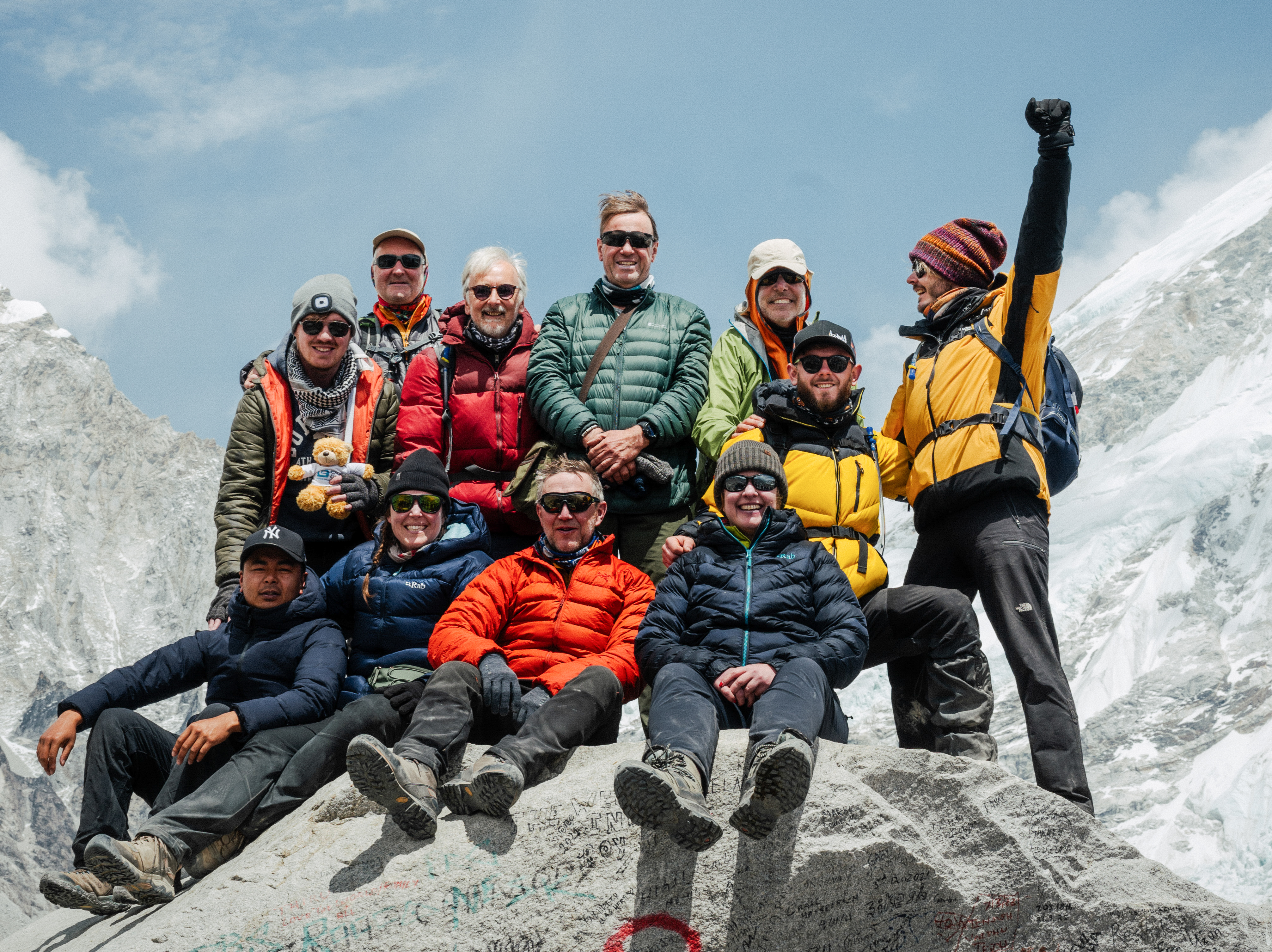
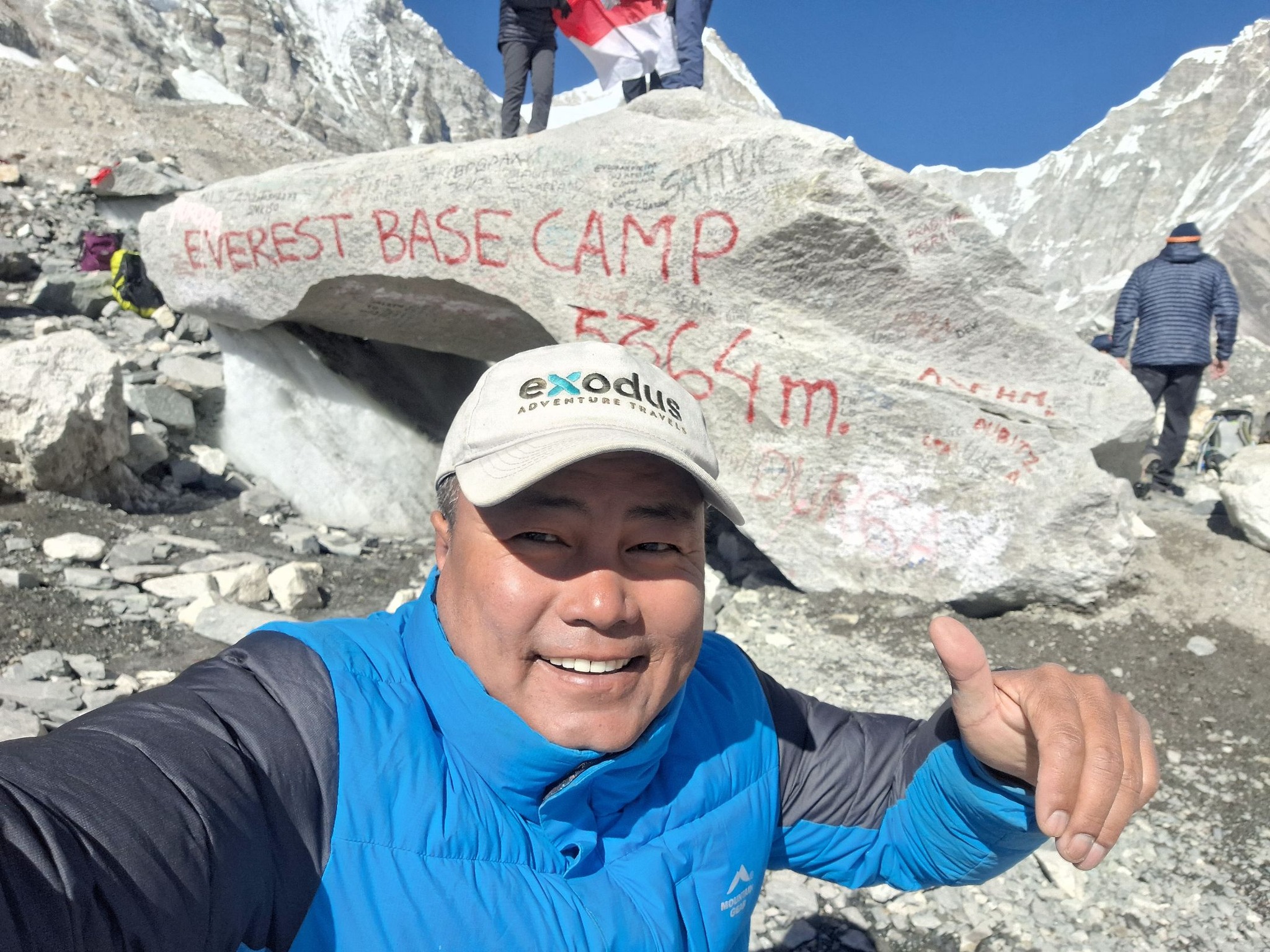
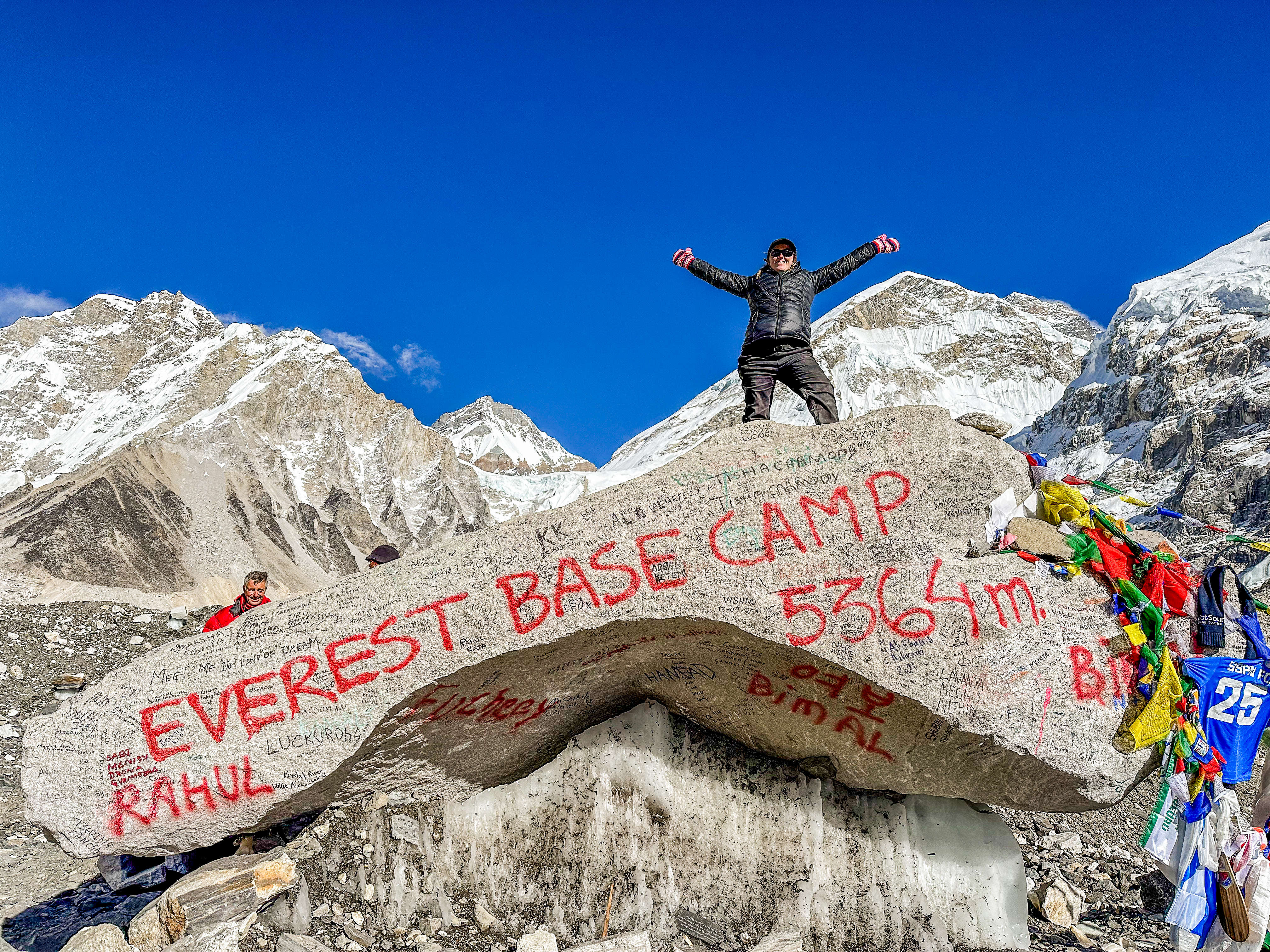
We are now surrounded by giant Himalayan peaks; Everest, Nuptse, Lingtren, Khumbutse and Pumori tower above us. Today is long and hard as we visit Everest Base Camp (5,364m). The trail from Lobuje climbs steadily by the side of the Khumbu Glacier, with some steep ups and downs on a rocky trail. It will take us about 3 hours to reach Gorak Shep (5,180m), a collection of lodges situated at the foot of Kala Pattar. After a short break and an early lunch, we fill our water bottles and make sure we have plenty of snacks (there are no lodges from here to Base Camp) and set off for Base Camp. The trail heads along the crest of the moraine at first with plenty of undulations, some of them quite steep. We then drop steeply down onto the Khumbu Glacier itself, where we get magnificent close-up views of the great Khumbu Icefall as it tumbles down from Everest. In the spring season we will see expedition teams as they prepare for an ascent. We retrace our steps to Gorak Shep for the night.
Meals: Breakfast
Day 13
Climb Kala Pattar (5,545m) for classic views of Everest; descend to Pheriche
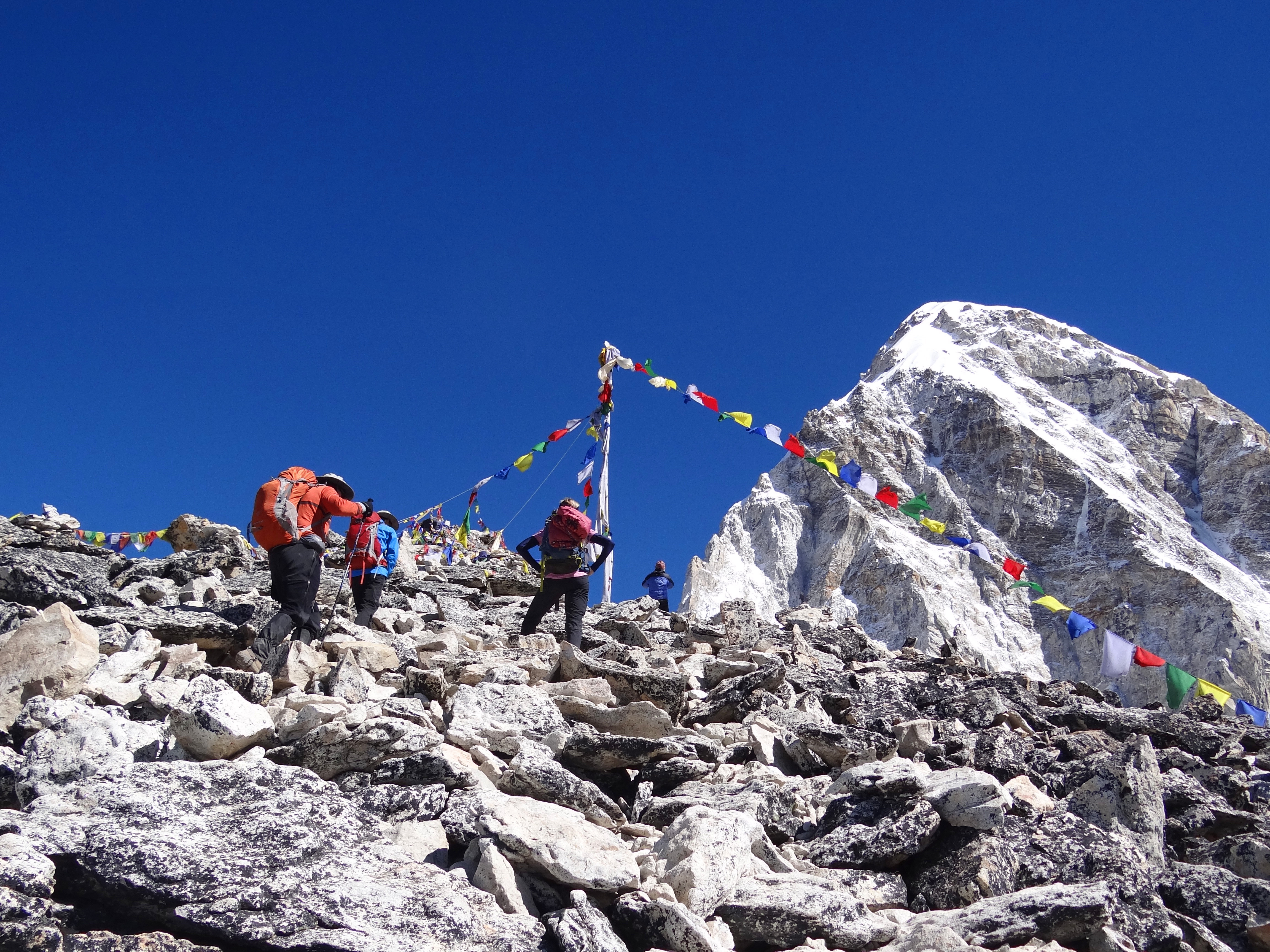
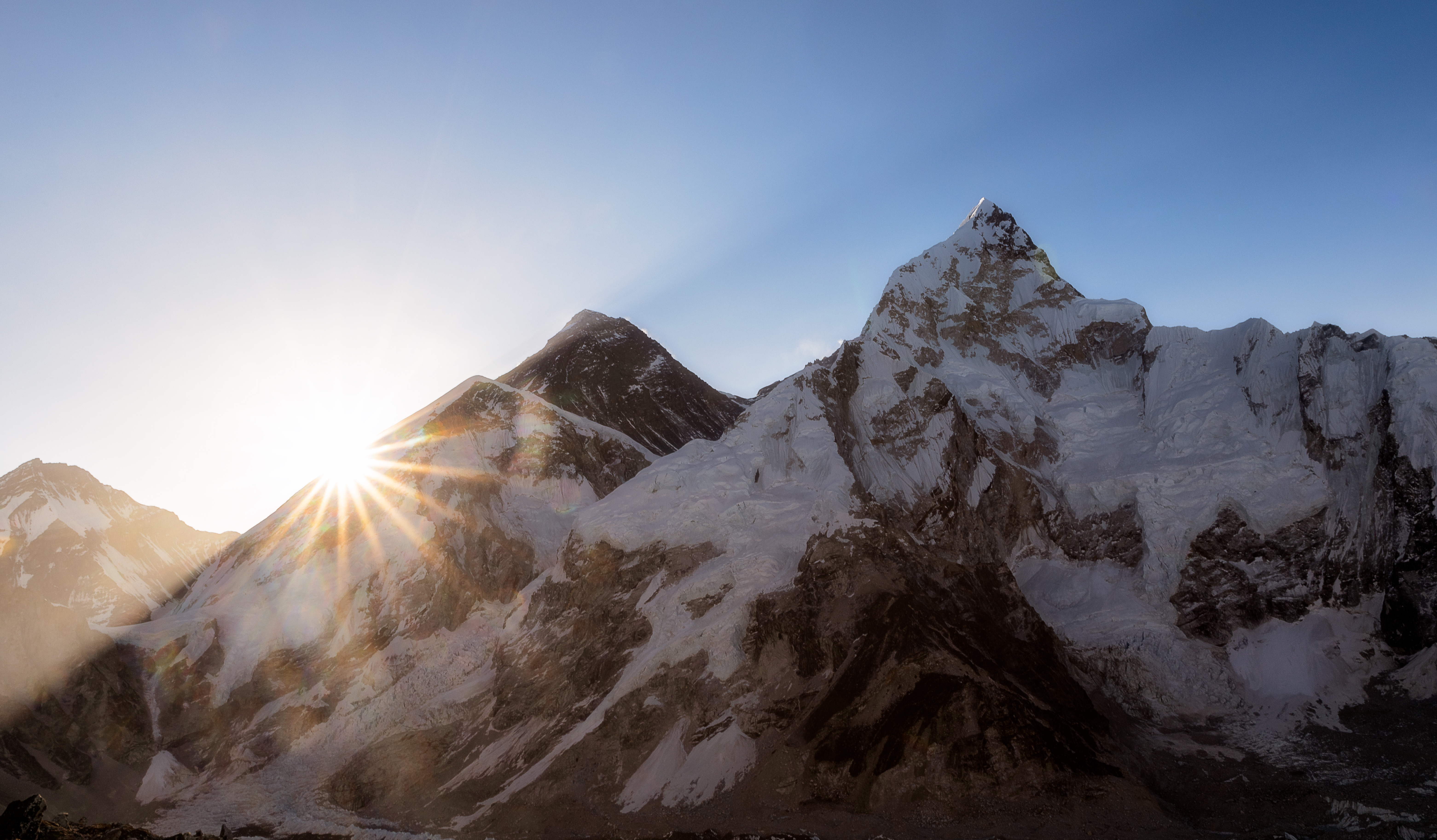
Another long day as we ascend the small peak of Kala Pattar (‘black rock’) at 18,192ft (5,545m). We set off very early before breakfast for the steep two-hour climb to the summit, but the effort is well worth it, as we appreciate the most magnificent view of the Khumbu glacier and above all a close-up sight of the world’s highest mountain which the Nepalese call Sagarmatha – Head of the Waters and the Sherpas Chomolungma – Mother of the World.We return to Gorak Shep for a well-deserved breakfast and then head back down to Lobuje for lunch. Descending on the main trail we pass through Chukpo Lhari, where there are many memorials to those who have died on Everest. From here we drop down steeply to Dugla, a small collection of tea houses. The trail then descends to the riverbed and we have an easy walk down the valley to Pheriche.
Meals: Breakfast
Day 14
Trek to Thyangboche and visit the famous monastery, descent to Phungki Tenga and ascend to Kyanjuma
We descend the Pheriche Valley with spectacular views of Ama Dablam. We join the main Imja Khola Valley, which we follow down to Pangboche with superb views looking back to the great ridge of Lhotse-Nuptse. Pangboche, at 13,075ft (3,985m) is the highest permanent settlement on the approach to Everest. Dropping down to the rushing Imja Khola we then walk through rhododendron forests to Thyangboche. From here we have a fantastic panorama of Everest, Nuptse, Lhotse, and Ama Dablam. We have lunch here and can visit the famous monastery. After lunch the trail descends to the river at Phungki Tenga and then we have a long climb up to our lodge for the night at Kyanjuma, where there are wonderful views across the valley to Ama Dablam.
Meals: Breakfast
Day 15
Trek back to Namche and further down to Monzo
This morning our walk to Namche Bazaar takes us along a beautiful undulating trail high above the Dudh Kosi. We have time in Namche and after lunch we descend through Namche Bazaar and pick up our outward trail again to Monzo, where we stay tonight.
Meals: Breakfast
Day 16
Return to Lukla
We retrace our steps southwards with a final climb to the airstrip at Lukla.
Meals: Breakfast
Day 17
Fly to Manthali; transfer to Kathmandu
We fly back to Manthali airport on one of the first flights of the day (approximately 7-7:30am) to allow for the five to six hour bus transfer back to Kathmandu arriving in the city for mid-late afternoon.
Meals: Breakfast
Day 18
Free day in Kathmandu
Today is free for sightseeing in Kathmandu (it is also a spare day to allow for any delays in the flights to or from Lukla). You may wish to visit the monkey temple at Swayambunath, one of the largest Buddhist stupas in the world at Boudhanath, or the most important Hindu temple in the valley at Pashupatinath. We offer a full range of sightseeing tours, which can be booked and paid for locally; please ask your leader for details. Or you can simply hire a taxi from outside the hotel. The Thamel area is full of shops and restaurants and coffee shops for those who want a more relaxing day.
Meals: Breakfast
Day 19
Adventure ends in Kathmandu
The trip comes to an end after breakfast. However, if you’d like a little more time to explore Kathmandu or the surrounding region, speak to your sales representative about extending your stay.
Meals: Breakfast
What’s included
What’s not included
Additional information
Food
Breakfast is included throughout the trip as well as a welcome dinner at the start.
In the teahouses, breakfast will be a choice of bread (a slice of toast, chapatti or Tibetan bread), a choice of egg (boiled, fried or omelette), and a choice between either muesli or porridge each day. Hot tea/coffee is also served. On specific days, there will not be a choice for breakfast and either a trekkers breakfast (egg, hash brown, baked beans and toast) or a pancake with jam/honey will be served – these options are not available in all teahouses and so we have only included them in locations where they can be guaranteed. You may also be able to supplement your included breakfast with additional items on the teahouse menu should you wish. Additional items that are not included in the set menu should be ordered and paid for separately.
Please note, some more remote teahouses/lodges are unable to provide an extensive menu due to irregular delivery schedules and during periods of bad weather or a high volume of trekkers, there may be a more limited menu choice. Also, the higher altitude the more expenses the menus and extras generally are.
Lunch will be taken at a teahouse en route – sometimes one of your guides will go ahead with the group’s order to make it more expedient. Dinner will be in the same teahouse that you sleep at (this is custom in Nepal as teahouses base their room rate on it).
Although most lodges have almost identical menus, they are reasonably extensive and offer a varied selection, ranging from traditional Nepalese dhal bhat to pizza and apple pie. Dhal bhat is the staple diet in Nepal and comes in many different forms but generally comprises curried lentils and meat or vegetables, some rice, and a pickle/chutney. Another popular snack is momos; a type of Nepalese dumpling, fried or steamed, filled with meat or vegetables.
Meat is available in the teahouses but we advise against eating it on trek. The meat has often been carried in the heat from lower altitudes for several days before reaching the lodges and can cause stomach upsets or illness. Germs can also be spread by handling dirty money – we recommend using hand sanitiser.
If you have a gluten-free diet, we strongly recommend you bring extra food and snacks with you to supplement the food on trek as there will be little variety available for you, particularly for breakfast. Even many of the soups are powdered and contain gluten. Gluten-free breakfast options will be limited to vegetable fried rice and a choice of egg, and on specific days only, a trekkers breakfast (without the toast/with an extra egg). Breakfast options for vegans will be limited to a choice of muesli/porridge with water each day, and on specific days only, a trekkers breakfast (without the egg) or vegetable fried rice. If you are lactose intolerant, the same will apply although you will also have a choice of egg each day.
If you buy imported food and drink on trek, you will spend more than the suggested amount.
Drinking water
Staying hydrated is important when undertaking any physical activity but particularly at altitude where it is generally recommended you drink at least 100floz to 135floz (3-4 litres) per day.
We strongly encourage you not to buy bottled water on trek as this contributes to the growing problem of plastic pollution in Nepal.
The teahouses sell boiled water for approximately 150-300 rupees (US$1.80-US$3.65) per litre (the price increases the higher you trek) which should not require treating. This is also perfect for a bedtime refill as it can double up as a hot-water bottle.
Alternatively, all teahouses provide free cold water. Although this should not be drunk untreated, we recommend you bring a reusable bottle/water bladder/Camelpak (ideally two) and use an effective form of water treatment. There are a wide range of products available including Steripens or purification tablets, which are the quickest and easiest options to use on trek – we recommend talking to an outdoor retailer for the latest advice as technologies are improving all the time. Make sure to check the product’s performance in cold/freezing conditions and consider battery life (lithium batteries are best in cold conditions).
Exodus has partnered with Water-to-Go, a filtration system that eliminates more than 99.99 percent of all microbiological contaminants from any non-saltwater source – visit Water-to-Go for more information. Exodus customers can claim 15 percent off their first order and, better still, 15 percent of the purchase value will be donated to the Exodus Travels Foundation. These bottles filter the water as you drink through the spout may not be the most efficient while on the go on a trek. Please note, if the water freezes it will clog up the filter. In this event, defrost before use by sitting the filter in lukewarm water for 10-15 minutes.
Kala Pattar Summit View of Everest
Climb to the famed lookout and climb Kala Pattar (5,545m), a steep, rewarding path to the black-rock pinnacle above Gorak Shep. From the crest, take in close-up views of Everest, the ice-riven flanks of Nuptse and Lhotse, and the sinuous Khumbu Glacier far below.
This is the classic vantage of the Khumbu, cherished by photographers for rose-gold dawn light on the summit pyramid. The name means “black rock” in Nepali; the panorama delivers a visceral sense of height, space and thin, crystalline air.
Gokyo Ri Panorama over Four 8,000ers
Ascend the stony ridge path to climb Gokyo Ri (5,360m) for a sweeping 360-degree view of four Himalayan giants. From the summit cairns, admire views of Everest, Lhotse, Makalu and Cho Oyu, with the lake-dotted Gokyo Valley luminous beneath you and the Ngozumpo Glacier flowing away like a frozen river.
Prayer flags flick in the breeze as your leader points out storied summits and passes. On clear days, the horizon is a rampart of snow and sky, offering one of Nepal’s greatest natural amphitheatres.
Cho La Pass High-Altitude Crossing
Traverse a rugged col to cross the Cho La pass (5,420m), a dramatic link between the Gokyo Valley and the main Khumbu trail. The approach climbs through boulders to a glaciated saddle, where chains aid the steepest steps and snow underfoot can linger in shoulder seasons.
From the crest, glimpse Ama Dablam’s little-seen western face and serrated horizons in every direction. The descent threads snowfields and rock gullies to yak pastures below, capturing the exhilaration of misty mountain passes earned the honest way—on foot.
Ngozumpo Glacier Traverse to Thangnak
Navigate the high moraine and walk across the Ngozumpo Glacier, Nepal’s longest, following a cairn-marked route over gravel ridges and blue-ice pockets to the hamlet of Thangnak. Hear the creaks and groans of this living river of ice as you thread a careful path between meltwater pools.
Fed by Cho Oyu, the glacier is a geologic timepiece, carving and transporting the Himalaya grain by grain. Expect otherworldly textures, ice-sculpted terrain and vast perspectives that place your trek in the scale of the mountains themselves.
Gokyo Lakeside Stay & Birdlife
Unwind at day’s end beside the village’s azure glacial lake at Gokyo. Stroll the stone-lined shore, watch for elegant Brahminy ducks, and take in mirror-glass reflections of surrounding peaks when the wind drops.
These high sacred lakes are revered in both Buddhist and Hindu traditions, their turquoise hues set against yak-grazed pastures and dry-stone walls. It’s a rare moment to soak in the lakeside atmosphere and feel the stillness of the high Himalaya.
Namche Bazaar Orientation Walk
Join a guided orientation walk through terrace-built Namche Bazaar, the lively Sherpa capital. Explore narrow lanes of gear shops, cafes and bakeries curving around the natural amphitheatre, and learn how this hub grew from historic salt–grain caravans to today’s trekking crossroads.
When timing allows, browse the weekly market where villagers trade fresh produce, yak cheese and Tibetan wares. Clear-weather viewpoints reveal far-off ridgelines and, on lucky days, that first teasing silhouette of Everest.
Everest View Hotel Panorama & Khumjung–Kunde Cultural Walk
Walk via Shyangboche to the famed Everest View Hotel for a mid-trek pause to sip tea with Everest views framed by Ama Dablam. The vantage is an elegant perch above forested slopes and yak pastures.
Continue to Khumjung and Kunde to visit the Sir Edmund Hillary School and the Edmund Hillary Hospital, Himalayan Trust projects that transformed life in the Khumbu. Learn about Sherpa heritage below Khumbila, the sacred mountain that watches over both villages.
Thyangboche (Tengboche) Monastery & Everest Panorama
Visit Thyangboche Monastery (Tengboche), the spiritual heart of the Khumbu, set on a forested ridge with a wide-angle view of Everest, Lhotse, Nuptse and Ama Dablam. The approach through rhododendron and fir feels contemplative as the gompa’s red walls come into sight.
Discover how this 1916 monastery was rebuilt after the 1989 fire and sustained through community effort. If prayers are underway, the deep horns and drums enrich a moving encounter with living Tibetan Buddhist tradition.
Kathmandu Welcome Dinner & Trek Briefing
Meet your Tour Director and fellow trekkers at the Royal Singi Hotel for a convivial welcome dinner showcasing Nepali flavours—think warming dal bhat, momos and aromatic masalas—before you head into the mountains.
Your leader delivers a full trek briefing covering acclimatisation, daily walking expectations and local customs, ensuring you start prepared and confident. It’s a relaxed setting to ask questions, share excitement and fine-tune your kit.
Khumjung Monastery Yeti Relic Viewing
Step inside Khumjung Monastery to view the so-called yeti scalp, a curiosity that has intrigued visitors for decades. The small inner shrine houses the relic in a lidded casket, with murals and butter lamps adding atmosphere.
Your visit supports the gompa’s upkeep via a modest entry donation. Additional cost; bookable on tour with your leader, subject to opening hours and the day’s trail timings.
Sagarmatha Next Experience Centre (Sustainable Khumbu)
Near Shyangboche, explore the Sagarmatha Next experience centre to learn about responsible trekking and how waste is upcycled into art and useful materials to protect fragile mountain trails.
Interactive exhibits and a design lab spotlight local initiatives tackling plastic and litter across the park. Additional cost/donation; bookable on tour with your leader, subject to opening hours.
Kathmandu Heritage: Swayambhunath, Boudhanath & Pashupatinath
Join a guided city tour of three Unesco-listed landmarks: hilltop Swayambhunath (Monkey Temple), the immense Boudhanath stupa with its watchful eyes, and the sacred Pashupatinath temple complex on the Bagmati River.
Experience living ritual—spinning prayer wheels, butter lamps and riverside cremation ghats—while your guide explains Nepal’s entwined Buddhist and Hindu traditions. Additional cost; bookable on tour, typically on your free day in Kathmandu.
Everest Base Camp & Khumbu Icefall Approach
Visit the high Himalayan arena where climbers launch their bids for the summit and visit Everest Base Camp. Walk on the Khumbu Glacier to the seasonally tented outpost and gaze at the shattered seracs of the Khumbu Icefall, with Pumori, Lingtren and Nuptse enclosing the scene in ice and rock.
Hear how the modern climbing season unfolds as prayer flags snap in the wind. In spring, expedition camps dot the moraine; in autumn it is quieter, perfect to pause for photos and reflection on Sagarmatha/Chomolungma and the Sherpa communities who make these ascents possible.