Your itinerary
Day 1
Adventure begins in Kathmandu
Begin your adventure at the Royal Singi Hotel in Kathmandu, the start point for many Himalayan trekkers over the years.
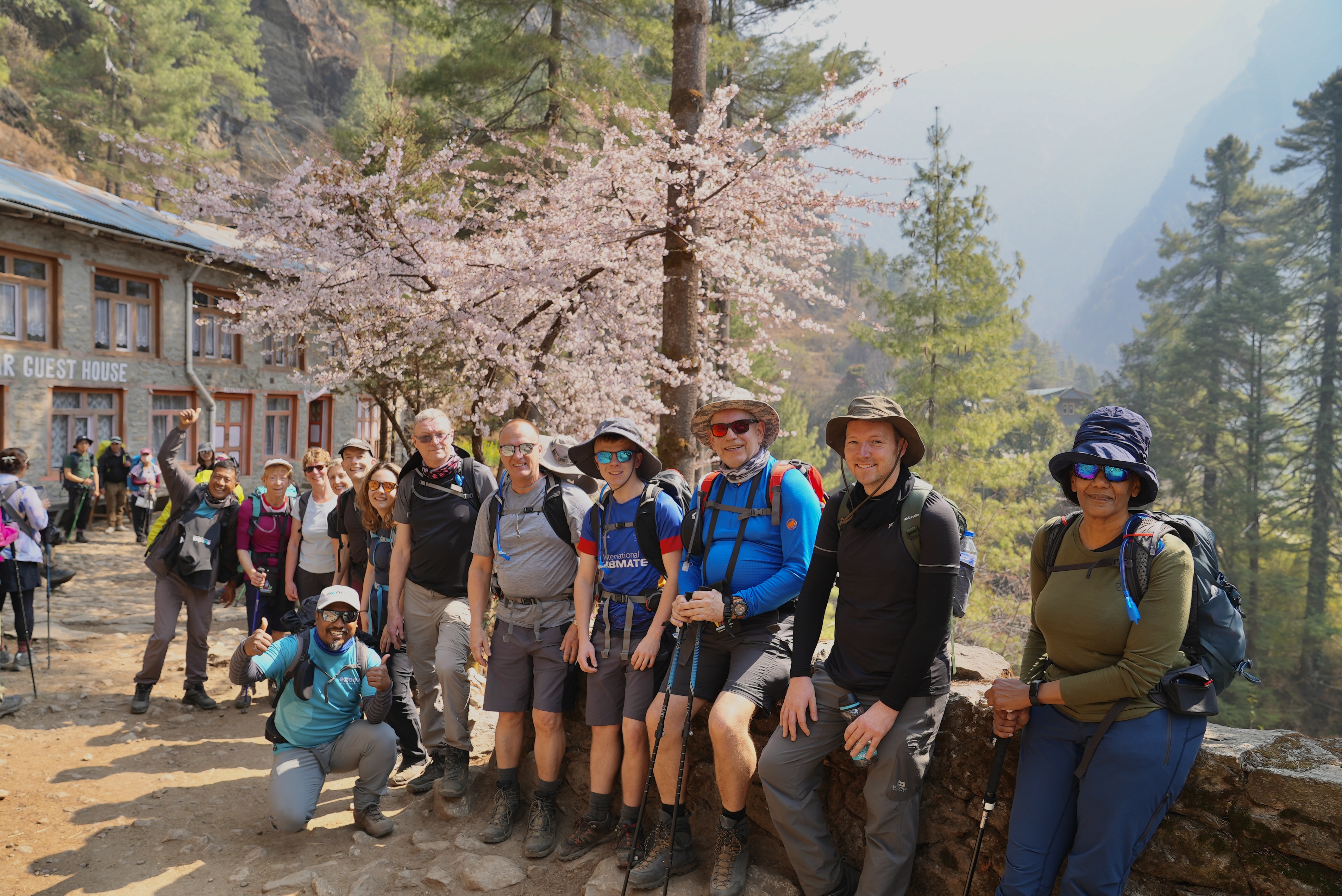
Around 6pm, bid namaste to your tour leader and fellow travellers, when we gather as a group for the first time to get to know each other and learn more about the adventures ahead during a full trek briefing.
Your tour leader then ensures a big Nepalese welcome by arranging a group dinner.
Rest up, we begin our trek to Everest Base Camp tomorrow.
Want to explore Kathmandu further? Secure pre-tour hotel nights through your sales representative.
Meals: Dinner
Day 2
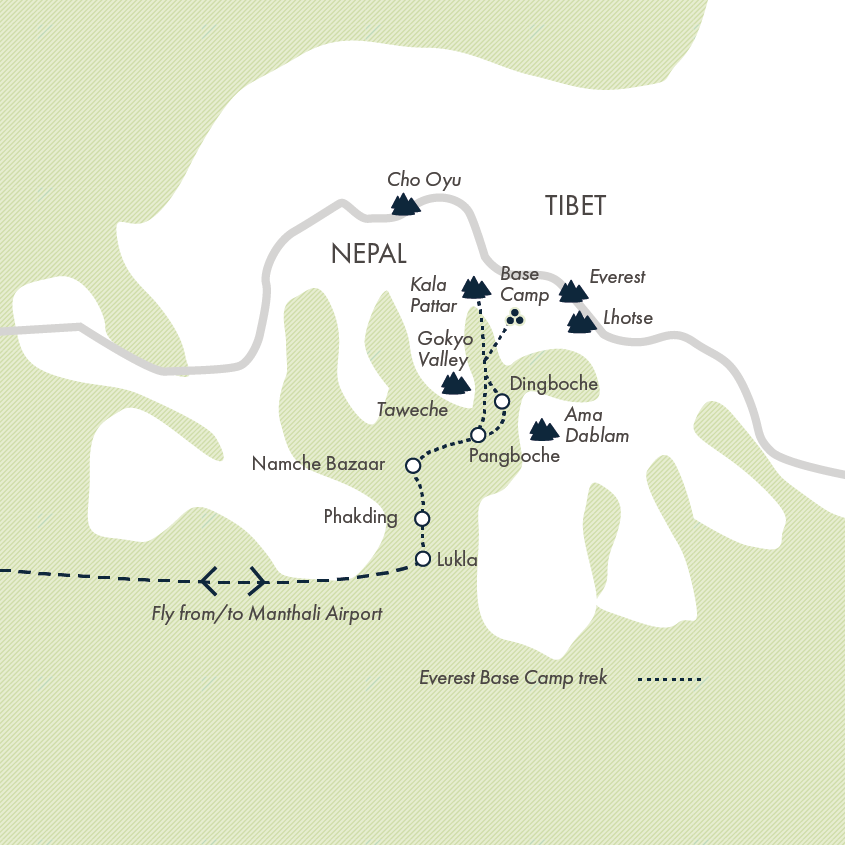
Early morning transfer to Manthali for your flight to Lukla • Trek to Phakding
Start very early this morning to drive (approximately four hours) to Manthali Airport (RHP), where all Lukla flights now operate from. We leave our hotel at approximately 3am to arrive in Manthali Airport in time for the first morning flights to Lukla. The hotel provides a packed breakfast for the journey.
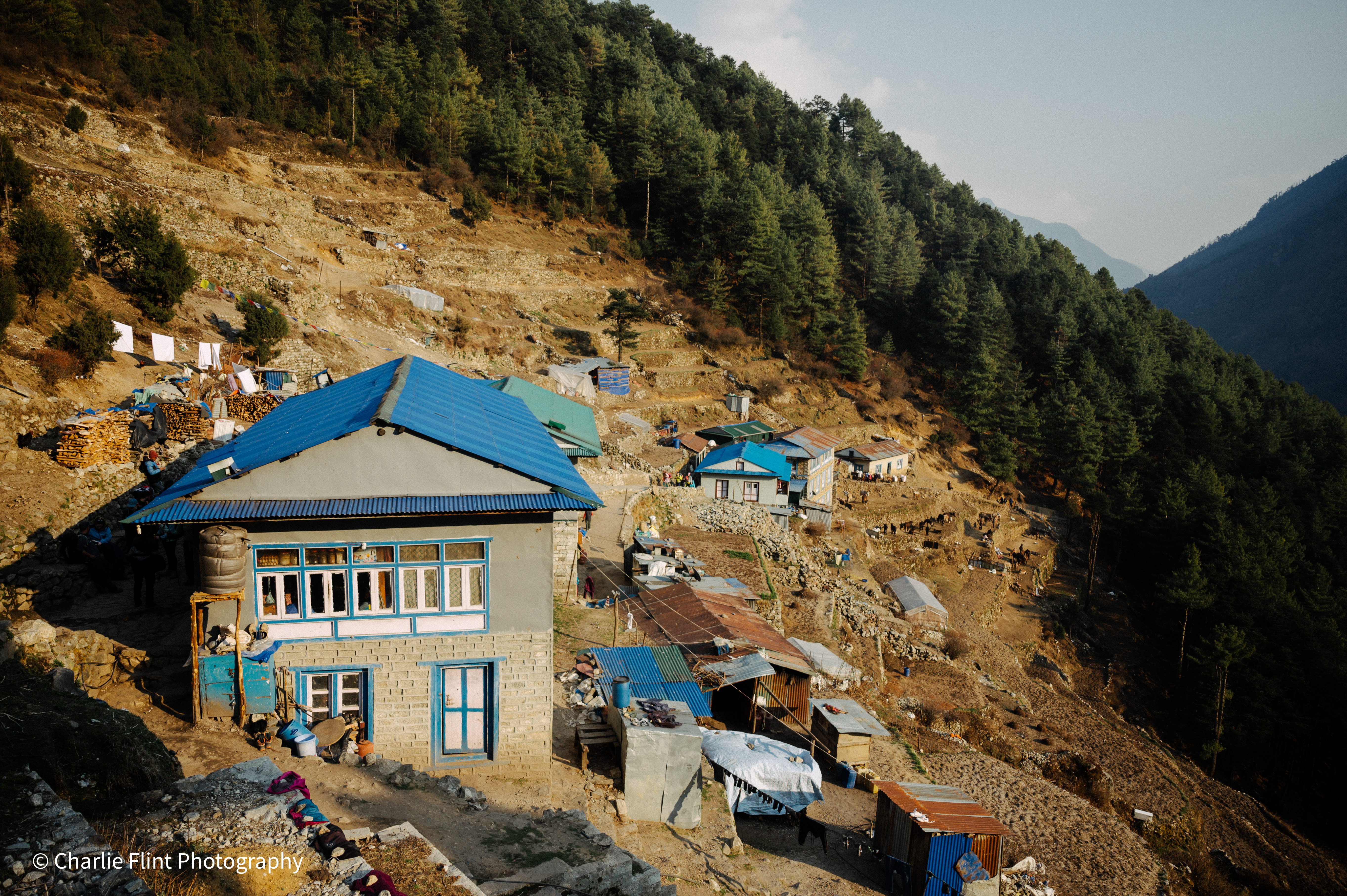
Fly to the mountain airstrip of Lukla (9,190ft/2,800m), and set off on the first short leg of our trek, heading north up the valley of the Dudh Kosi (Milk River), then descend from the small plateau into the forested valley. The trail offers tantalising views of green, hilly terrain before reaching the settlement of Phakding, where we spend our first night.
Meals: Breakfast
Day 3
Follow the Dudh Kosi and ascend to Namche Bazaar with time to explore Sherpa villages
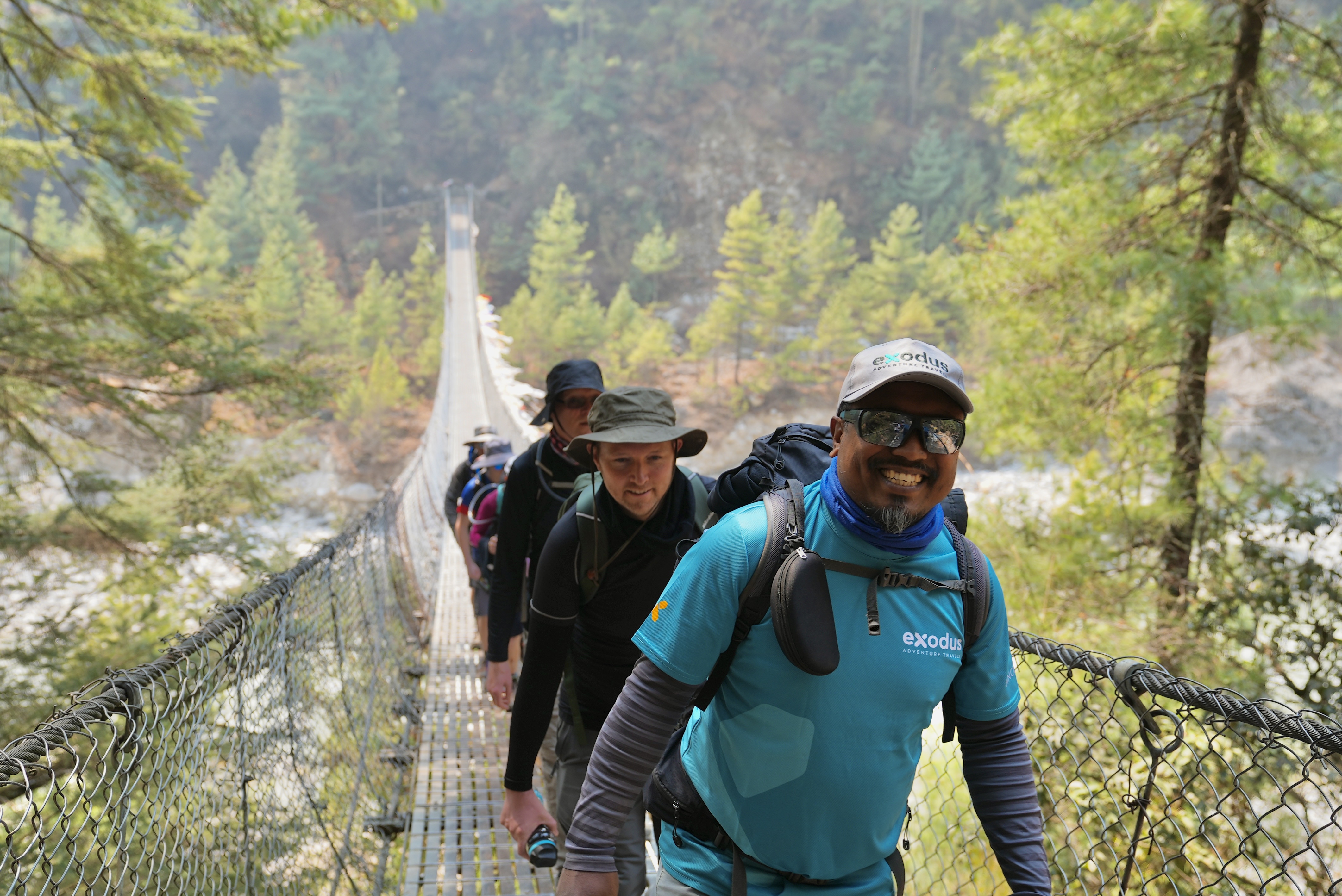
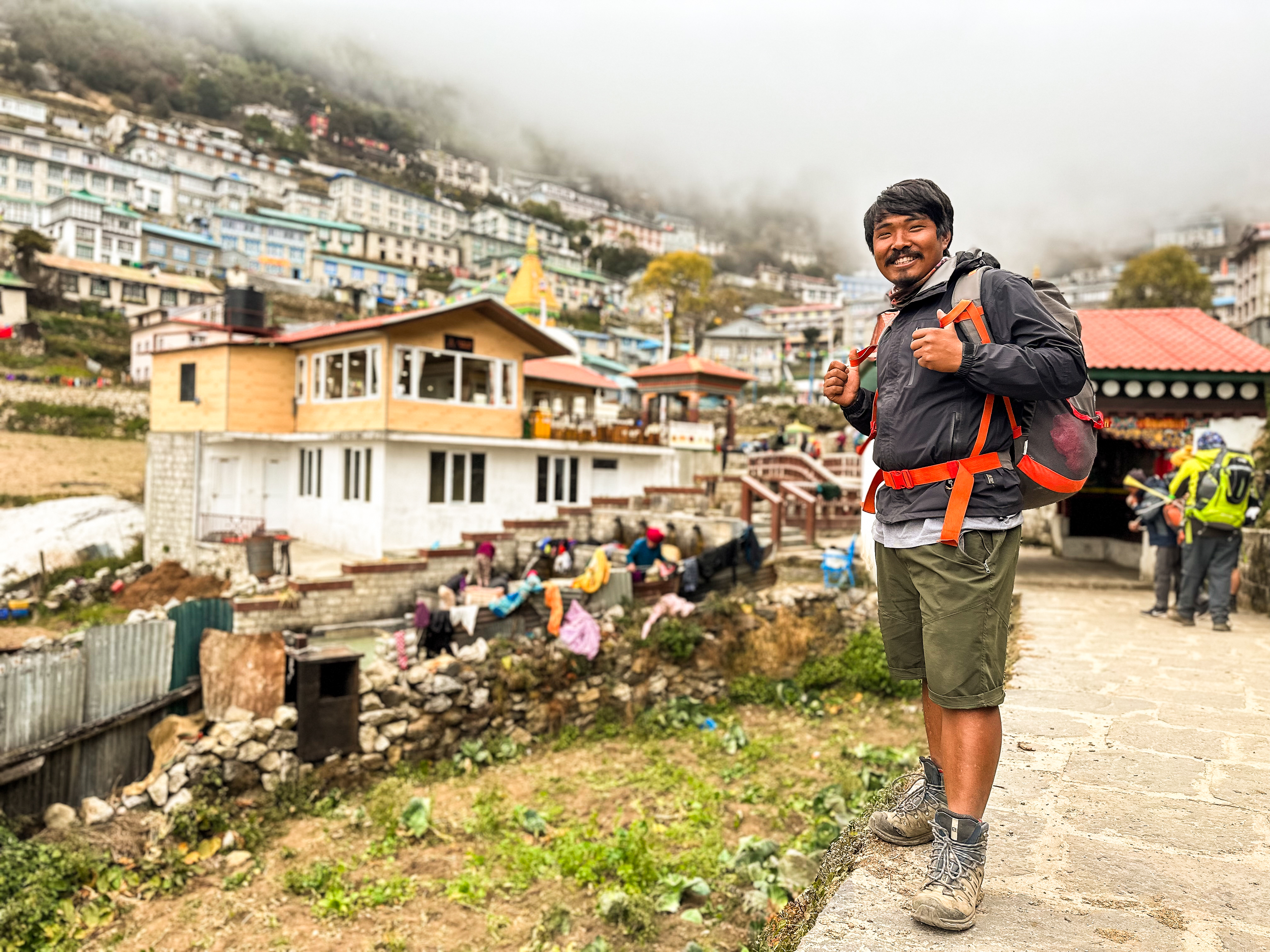
Heading out of Phakding, follow the Dudh Kosi north. Today’s walk takes us through magnificent forests with glimpses of the mountains ahead. We cross the river several times by bridge as we pass through the villages of Benkar, Monzo and Jorsale. A final bridge brings us to the foot of the steep climb to Namche. Halfway up the ascent, we may get our first glimpse (cloud permitting) of the Everest summit behind the great ridge of Nuptse-Lhotse. A last 985ft (300m) climb brings us to Namche Bazaar, the Sherpa capital and the main town in the area, which get can explore properly on our return from Base Camp. Namche is a prosperous Sherpa town and an important trading centre. It has a weekly market on Friday afternoons and Saturday mornings, but the town always bustles with trekkers, coffee shops, bakeries and stores selling all kinds of trekking and climbing gear and Tibetan souvenirs.
Meals: Breakfast
Day 4
Acclimatisation walk to Kunde and Khumjung • Descend to Kyanjuma
Climb steeply out of Namche past the airstrip at Shyangboche to the Everest View Hotel, the highpoint of our day at 12,730ft (3,880m). Built by the Japanese, this spectacularly situated hotel with wonderful views of Everest and Ama Dablam is an ideal place for a tea break.
En route to the Everest View Hotel, you have the option to stop at the Sagarmatha Next experience centre. Here we can learn about the work this local organisation is doing to tackle waste pollution on the mountain trails, while also seeing amazing art pieces created from waste.
Descending through forest, arrive at Khumjung for lunch close to the Sir Edmund Hillary School. After, walk up to Kunde and visit the Edmund Hillary Hospital. The twin villages of Kunde and Khumjung are below Khumbila, the rocky peak sacred to all Sherpas. For much of the walk, enjoy great views of Ama Dablam and other Himalaya giants. Walk back down through Khumjumg to the monastery. Sadly, it was damaged in the earthquake but is now being repaired. Inside is a small box and, after paying the small entry fee (which goes towards repairs), see the only ‘yeti’ skull in the world. Descending to the main trail, spend the night at Kyanjuma.
Meals: Breakfast
Day 5
Trek through the Sherpa heartland to the monastery at Thyangboche for superb mountain views
Descend to the river this morning, crossing at the little settlement of Phunki Thangkha (10,665ft/3,250m), then climb steeply through the forest to Thyangboche (12,867ft/3,867m). Arrive by lunchtime and visit the famous monastery in the afternoon. The sunset and sunrise over the mountains are not to be missed – Everest, Nuptse, Lhotse and Ama Dablam provide a wonderful backdrop to our teahouse. Look out for Himalayan tahr, a native wild goat, in the forest surrounding the monastery.
Meals: Breakfast
Day 6
Continue up the Khumbu Valley and then the Imja Valley to Dingboche
Descend through the forest to Devoche and, a little further on, cross the rushing Imja Khola, whose valley we now follow. Climbing steadily, the trail enters Pangboche (12,795ft/3,900m), the highest permanent settlement in this valley. Ascending, we have lunch at Shomore, after which we leave the trees and cross a wooden bridge at the confluence of the Khumbu and Imja rivers. A short, steep climb brings us to Dingboche (14,270ft/4,350m), a summer settlement where great peaks surround us.
Meals: Breakfast
Day 7
Spend the day at Dingboche for acclimatisation
Spend the day at Dingboche to continue acclimatising. Those adapting well to the altitude can climb Nangkartshang Peak (16,730ft/5,100m) for great views of Makalu, Lhotse, Chalotse, Tawoche and Ama Dablam. There is the option to climb halfway up or, if you’re feeling energetic, it takes about 3hr 30min to the top. It’s a tough, steep climb but well worth the effort for the amazing views. Return to Dingboche for a late lunch. The rest of the afternoon is free to relax and acclimatise.
Meals: Breakfast
Day 8
Continue the ascent to Lobuje
The trail climbs steeply out of Dingboche, past a chorten (Buddhist shrine), and ascends the valley gradually to Dugla at the end of the terminal moraine of the Khumbu Glacier. Stop for a tea break and snack before the steep climb to Chukpo Lari, a beautiful, poignant place with a line of memorials to climbers who have died on Everest and a beautiful panorama of the peaks on the Nepal-Tibet border. The trail then eases off as we follow the valley to Lobuje, a tiny hamlet with a few teahouses. In the late afternoon, there is the option to walk up onto the lateral moraine of the Khumbu Glacier. Sunset on Nuptse is not to be missed.
Meals: Breakfast
Day 9
Visit Everest Base Camp • Overnight at Gorak Shep
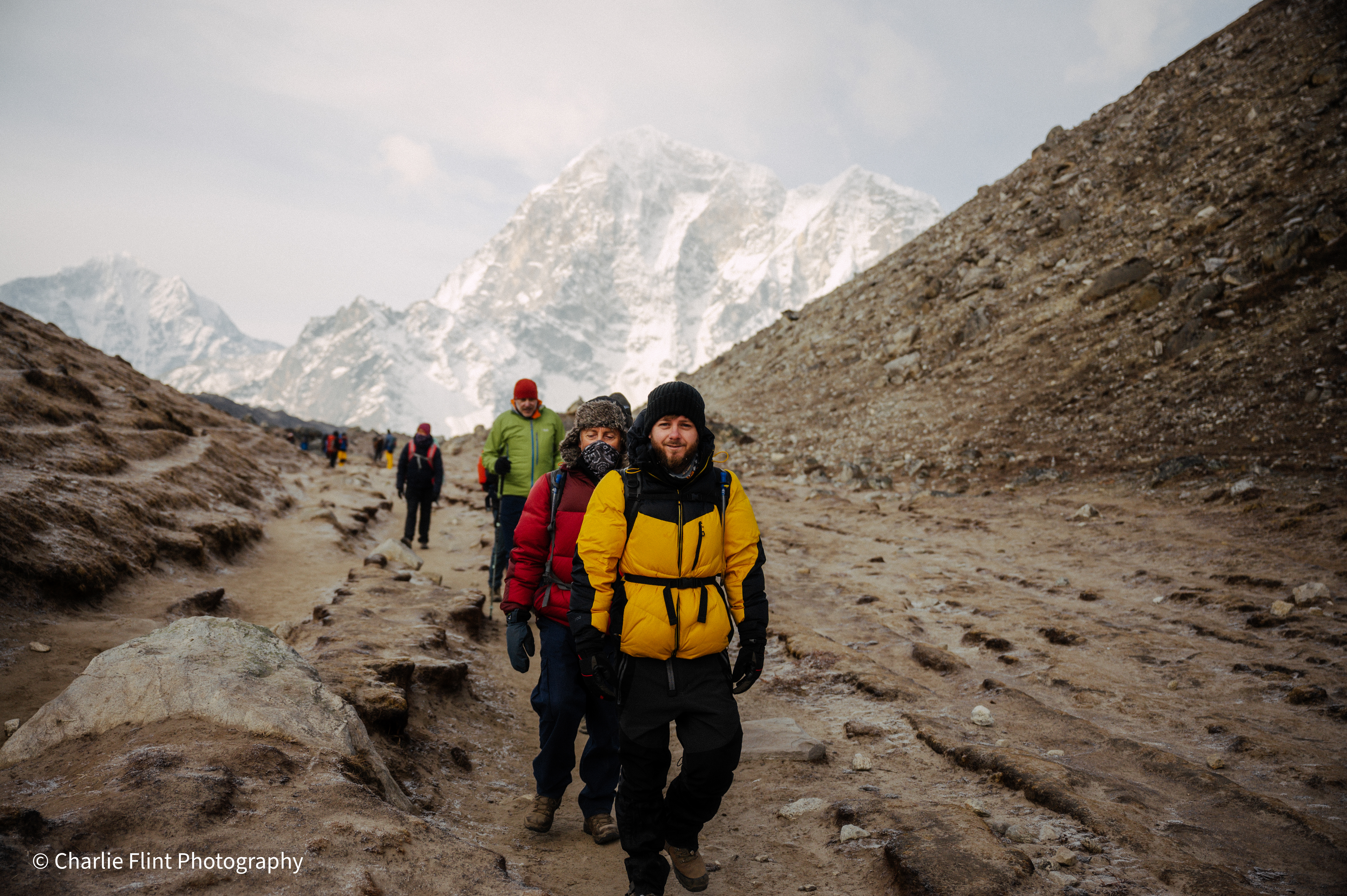
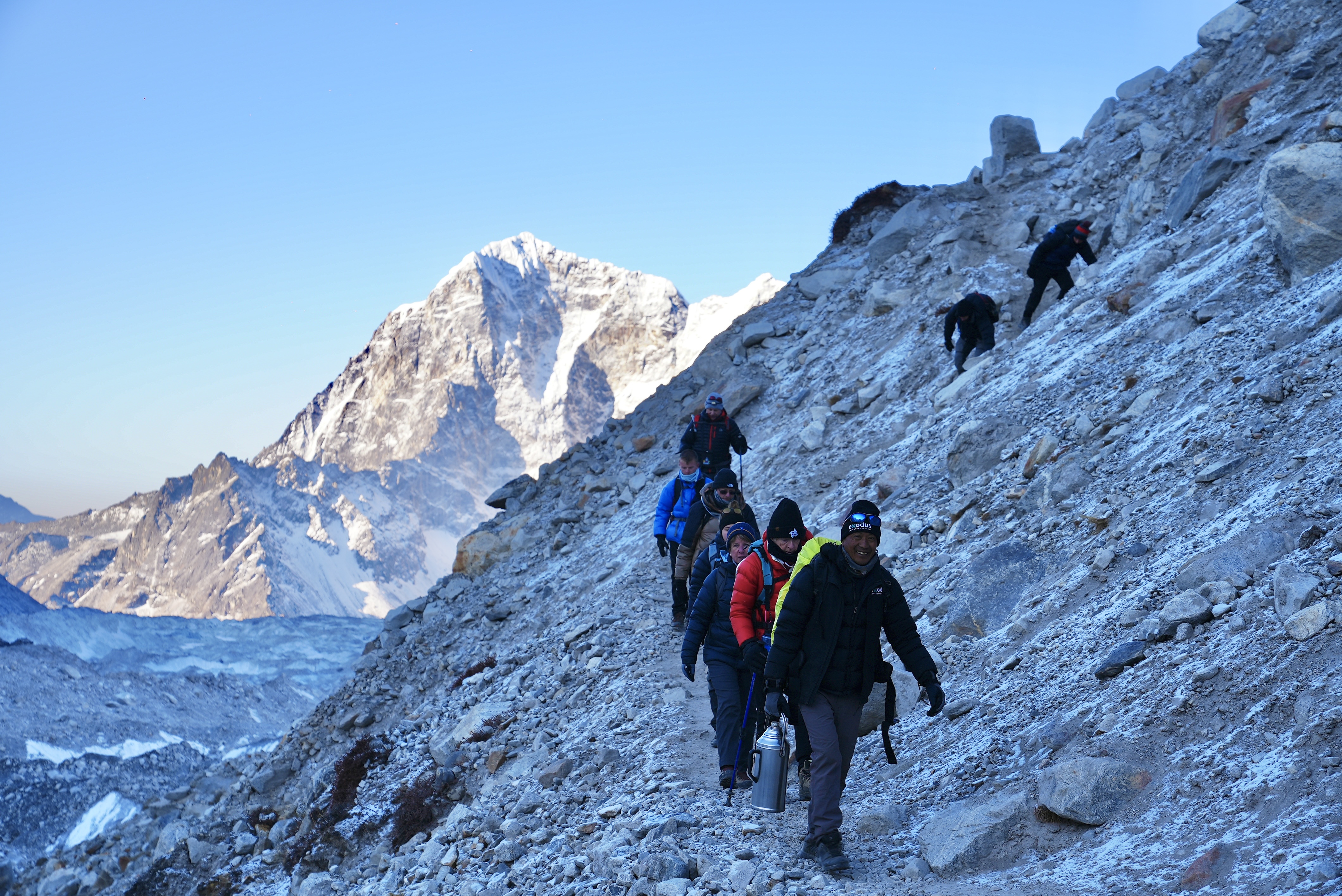
Today is a very long, hard day as we leave very early, following the Khumbu Glacier northwards to Gorak Shep (17,008ft/5,184m). The trail rises and falls along the moraine with some short, steep sections. It is also rocky as we are now on the lateral moraine of the Khumbu Glacier. It takes about three hours to reach Gorak Shep, where we rest and eat. There are no lodges from here to Everest Base Camp and back, so fill water bottles and take snacks.
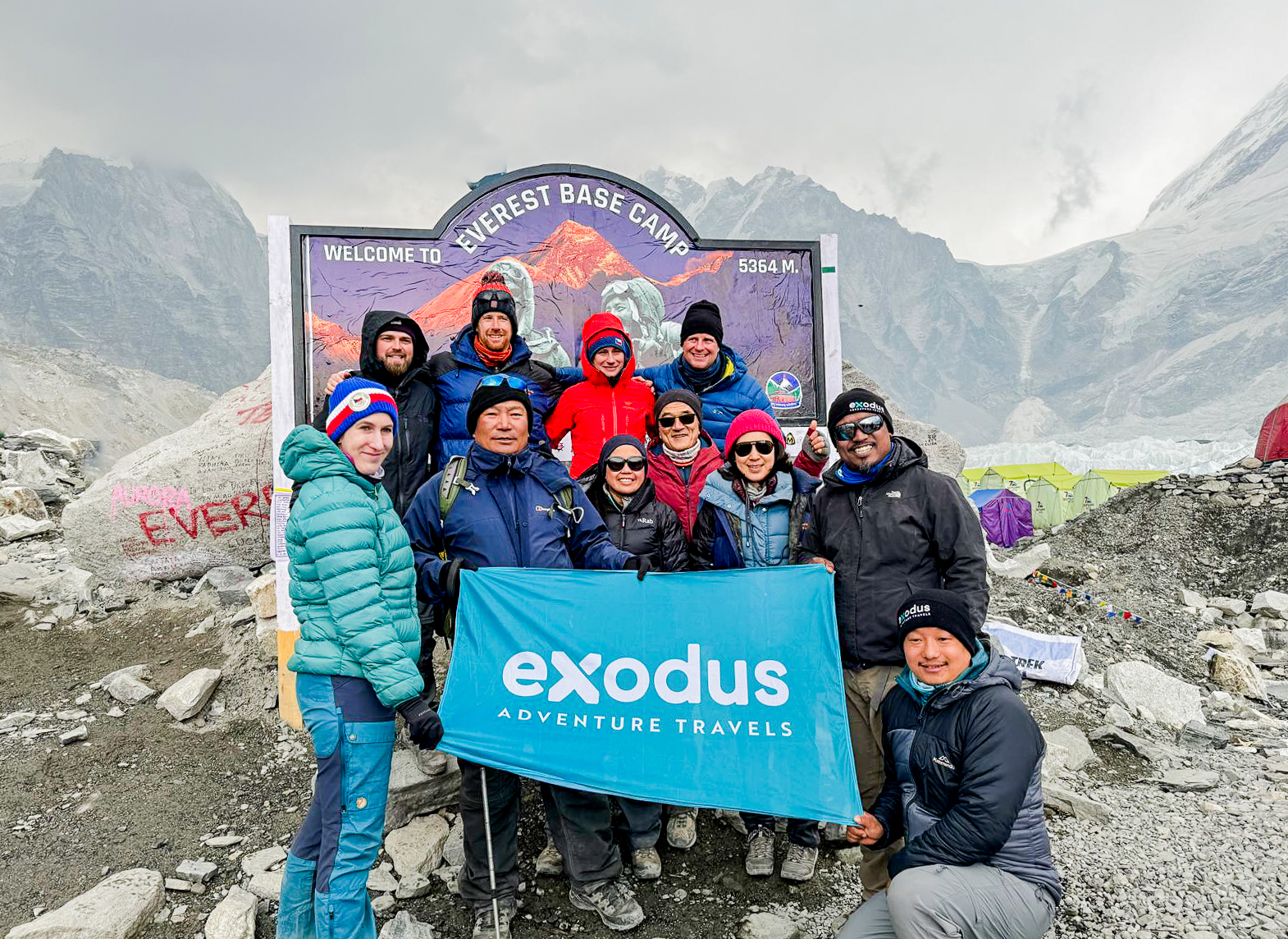
Start by walking across the sandy flat at Gorak Shep and climb onto the lateral moraine of the Khumbu Glacier. The trail ascends the side of the glacier for a couple of hours before finally descending onto the rocky glacial moraine itself. The trail winds up and down through fascinating ice seracs to Everest Base Camp, the world’s most celebrated campground and the culmination of our trekking efforts. It’s a real achievement to reach EBC, so share some hugs or high fives and make sure to spend a moment or two quietly reflecting on your journey and taking in the famed surroundings. Enjoy close-up views of the Khumbu Icefall and see just how difficult it is for climbers to negotiate through the huge ice blocks. Also capture your essential photo at the Base Camp rock – it can hang on your wall back home forever! Then, having reached our goal, return to Gorak Shep for a well-earned relax.
Please note, accommodation options are extremely limited at Gorak Shep and our teahouse is very basic, though the communal dining area is warm, and the food served promptly to satisfy trekkers’ appetites. Because of the high altitude, the plumbing facilities can be affected and water freezes much of the time.
Meals: Breakfast
Day 10
Climb Kala Pattar for classic mountain views of Everest • Descend to Pheriche
It is another hard day as we climb steeply above Gorak Shep to the small peak of Kala Pattar (Black Rock) at 18,192ft (5,545m) from where we can look over the base camps of the various Everest expeditions. This climb affords a magnificent view of the Khumbu Glacier and, above all, a close-up view of the highest mountain in the world. Return to Gorak Shep and retrace our steps to Lobuje for lunch and then continue down the valley to the lower altitude of Pheriche for the night.
Please note, the walk to Everest Base Camp and the climb of Kala Pattar are both very tough. Sometimes we may change the order in which we tackle the walks depending on the group’s ability and weather conditions.
Meals: Breakfast
Day 11
Retrace our steps to Kyanjuma
Descending through Pheriche, cross a small bridge and have a short climb before descending to join the main Imja Khola valley. Follow the valley down to Pangboche through an alpine meadow landscape. Drop down to the rushing river then walk through peaceful rhododendron forests to the village of Devoche, where we climb back up to Thyangboche on the ridge for lunch. Descend off the ridge to Phunki Tenga and walk back up to Kyanjuma, where we spend the night.
Meals: Breakfast
Day 12
Descend through Namche to Monzo
The walk to Namche Bazaar takes us along a beautiful rolling trail high above the Dudh Kosi. We have time in Namche and, after lunch, descend through Namche Bazaar and pick up our outward trail again to Monzo, where we stay tonight.
Meals: Breakfast
Day 13
Continue to Lukla
We retrace our steps to Chaunrikhara, where we start the last climb to the airstrip at Lukla.
Meals: Breakfast
Day 14
Fly to Manthali • Return to Kathmandu
Fly back to Manthali airport on one of the first flights of the day (approximately 7am to 7.30am) to allow for the five to six-hour bus transfer back to Kathmandu arriving in the city for mid to late afternoon.
Meals: Breakfast
Day 15
Free day in Kathmandu to explore the city
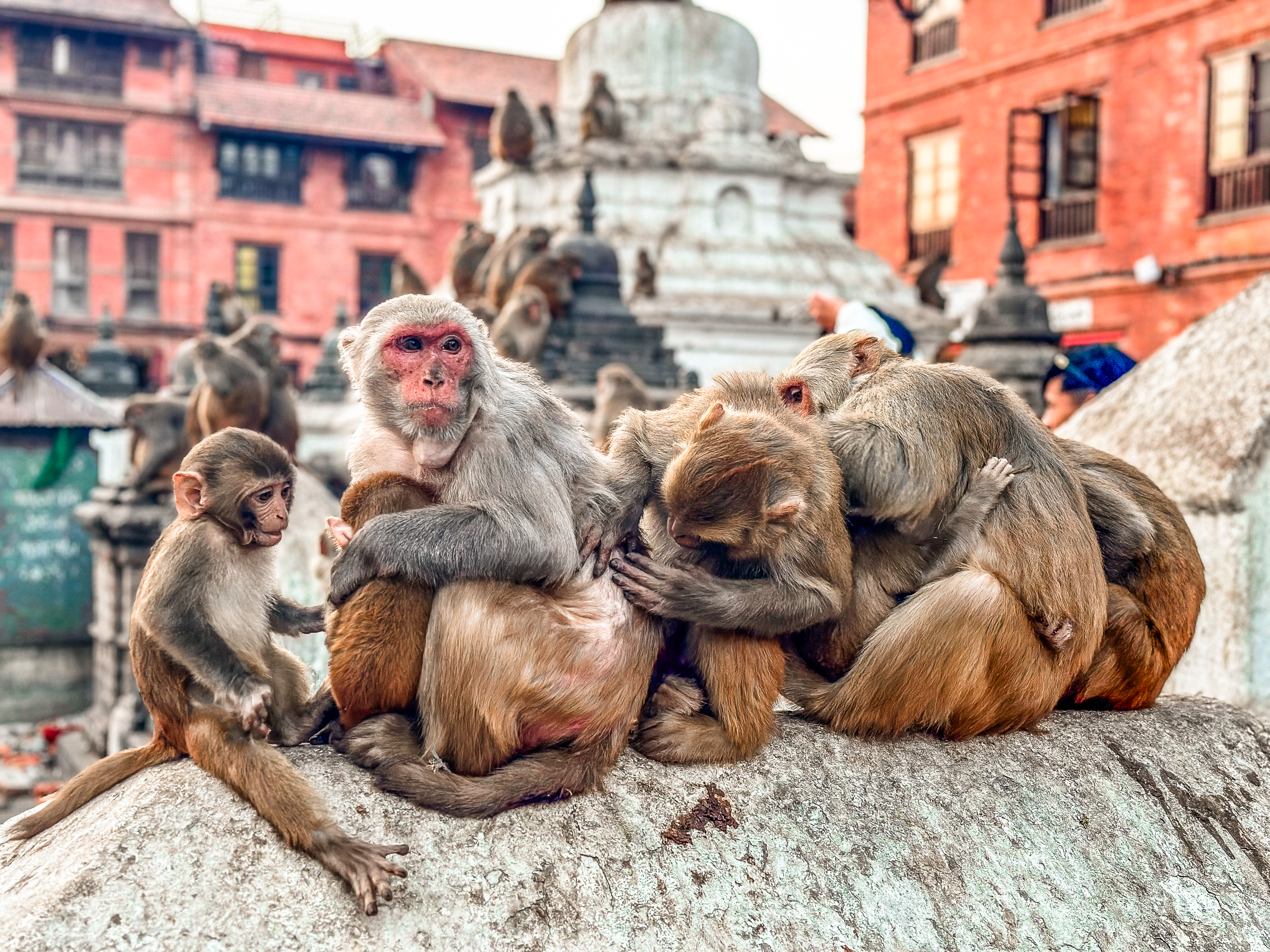
Today is free for sightseeing in Kathmandu (it is also a spare day to allow for any delays in the flights to/from Lukla). You may wish to visit the monkey temple at Swayambunath, one of the largest Buddhist stupas in the world at Bodnath, or the most important Hindu temple in the valley at Pashupatinath. We offer a full range of sightseeing tours, which can be booked and paid for locally. Please see the Optional Excursions section within the Trip Notes or our noticeboard in the hotel in Kathmandu.
Meals: Breakfast
Day 16
Adventure ends in Kathmandu
You’ve walked in the footsteps of some of the world’s great adventurers; but today, the tour comes to an end, so it’s time to start your return journey home.
Alternatively, swap mountain trails for animals tracks by joining our add-on safari tour in Chitwan. Speak to your sales representative to book.
Meals: Breakfast
What’s included
What’s not included
Additional information
Food
In the teahouses, breakfast will be a choice of bread (a slice of toast, chapatti or Tibetan bread), egg (boiled, fried or omelette), and either muesli or porridge each day. Hot tea/coffee is also served. On some days, there will not be a choice for breakfast and either a trekkers breakfast (egg, hash brown, baked beans and toast) or a pancake with jam/honey will be served. You may also be able to supplement your included breakfast with additional items on the teahouse menu should you wish – additional items not included in the set menu should be ordered and paid for separately.
Please note, some more remote teahouses/lodges are unable to provide an extensive menu due to irregular delivery schedules. During periods of bad weather or a high volume of trekkers, there may be a more limited menu choice. Also, the menus and extras are generally more expensive at higher altitudes.
Lunches are taken at a teahouse en route – sometimes one of your guides will go ahead with the group’s order to make it more expedient. Dinner is in the same teahouse you sleep at (this is custom in Nepal as teahouses base their room rate on it).
Although most lodges have almost identical menus, they are reasonably extensive and offer a varied selection, ranging from traditional Nepalese dhal bhat to pizza and apple pie. Dhal bhat is the staple diet in Nepal and comes in many different forms but generally comprises curried lentils and meat or vegetables, some rice, and a pickle/chutney. Another popular snack is momos: a Nepalese dumpling (fried or steamed) that’s filled with meat or vegetables.
Meat is available in the teahouses but we advise against eating it. Meat is often carried in the heat for several days before reaching the lodges and can cause stomach upsets or illness. Germs can also be spread by handling dirty money – we recommend using hand sanitiser.
Dietary requirements
Gluten-free diets: We strongly recommend you bring extra food and snacks with you to supplement the food on trek as there will be little variety available to you, particularly for breakfast. Even many of the soups are powdered and contain gluten. Gluten-free breakfast options are limited to vegetable fried rice and a choice of egg. On specific days only, a trekkers breakfast (without the toast/with an extra egg) will be served.
Vegan diets: Breakfasts are limited to a choice of muesli/porridge made with water each day, and on specific days only, a trekkers breakfast (without the egg) or vegetable fried rice.
Lactose-free diet: The same will apply although you will also have a choice of egg each day.
If you buy imported food and drink on trek, you will spend more than the suggested amount.
Drinking water
Staying hydrated is important when undertaking any physical activity but particularly so at altitude where it is generally recommended to drink at least 0.7gal to 1gal (three to four litres) per person per day.
We strongly encourage you not to buy bottled water on trek as this contributes to the growing problem of plastic pollution in Nepal.
The teahouses sell boiled water for approximately 150-300 Nepalese rupees (US$1.15-US$2.30) per litre (the price increases the higher you trek), which should not require treating. This is also perfect for a bedtime refill as it can double as a hot-water bottle.
Alternatively, all teahouses provide free cold water. This should not be drunk untreated, so we recommend you bring a reusable bottle/water bladder/CamelBak (ideally two and wide mouth) and use an effective form of water treatment. There are a wide range of products available including Steripens or purification tablets, which are the quickest and easiest options to use on trek – we recommend talking to an outdoor retailer for the latest advice as technologies are improving all the time. Make sure to check the product’s performance in cold/freezing conditions and consider battery life (lithium batteries are best in cold conditions).
Exodus has partnered with Water-to-Go, a filtration system that eliminates more than 99.99 percent of all microbiological contaminants from any non-saltwater source – visit Water-to-Go for more information. Exodus customers can claim 15 percent off their first order and, better still, 15 percent of the purchase value will be donated to the Exodus Travels Foundation. These bottles filter the water as you drink, though the spout may not be the most efficient while moving on trek. Please note, if the water freezes it will clog up the filter. In this event, defrost before use by sitting the filter in lukewarm water for 10-15 minutes.
Everest Base Camp & Khumbu Icefall Approach
Traverse glacial moraine and undulating trails to Everest Base Camp, the seasonal village of tents at the foot of the Khumbu Icefall. Crunch over gravel and ancient ice, threading between seracs and boulders in a stark, high-altitude amphitheatre.
Mark the moment at the Base Camp rock, gaze into the shifting maze of the icefall and absorb the hum of expedition history. This is the storied staging ground beneath the world’s highest peaks.
Scenic Flight to Lukla, Gateway to the Khumbu
Lift off on a scenic mountain flight along Himalayan foothills to the legendary Tenzing–Hillary Airport (Lukla). Watch valleys unfold from terraced farmland to serrated Himalayan ridgelines, before a thrilling touchdown on the short, cliff-edge runway that clings to a high ridge.
The air is crisp, prayer flags ripple, and stone trails radiate from Lukla into Sherpa country. This is the dramatic, high-altitude threshold where the Everest region begins and the walking world takes over.
Namche Bazaar Cultural Walk & Market
Explore Namche Bazaar, the bustling amphitheatre town known as the Sherpa capital. Stone lanes climb past gear shops, bakeries and cafés, while yaks clink their bells and mountain views wink between slate-roofed houses.
Browse the lively weekly market when timing aligns, chat with traders and sample local snacks. Namche’s terraced setting and high-mountain energy offer a vivid snapshot of Khumbu life, ideal for photos and people-watching.
Everest View Hotel Terrace & Khumjung–Kunde Heritage Walk
Climb to the famed Everest View Hotel for tea on the terrace and crystalline views of Everest and Ama Dablam. Breezes carry the scent of juniper as prayer flags snap along the ridge above the airstrip at Shyangboche.
Continue on foot to Khumjung Monastery to see the village’s storied “yeti” relic, then visit the Sir Edmund Hillary School and Hospital in Khumjung and Kunde. These community projects embody Sherpa resilience and the mountaineering legacy rooted in the Khumbu.
Sagarmatha Next: Mountain Waste-to-Art Center
Visit Sagarmatha Next, a thoughtful hub championing cleaner trails in the Everest region. Discover striking waste-to-art installations and learn how local initiatives and trekkers collaborate to protect Everest’s trails through education, innovation and community action.
Exhibits reveal the journey from discarded materials to creative works, reframing the environmental story of the Khumbu. It’s a memorable, purpose-driven stop that adds depth and responsibility to the adventure.
Thyangboche Monastery Visit & Himalayan Panorama
Enter the hilltop sanctuary of Thyangboche Monastery (Tengboche), framed by an immense skyline of Everest, Lhotse, Nuptse and Ama Dablam. Listen for the deep-voiced horns, watch spinning prayer wheels, and breathe in juniper-scented air on this serene ridge.
Rebuilt after the 1989 fire, the monastery radiates quiet resilience and living Tibetan Buddhist practice. Photographers prize the shifting light as clouds comb the ridgelines and the peaks ignite at dawn and dusk.
Nangkartshang Peak Acclimatisation Hike from Dingboche
Undertake a steady acclimatisation hike to Nangkartshang Peak (5,100m/16,730ft), a rocky eyrie above Dingboche. Footpaths wind over alpine tundra and cairn-topped knolls as the air thins and vistas widen.
From the crest, savour commanding Makalu and Lhotse views with Ama Dablam’s sculpted north ridge close at hand. Your leader sets an unhurried pace; participants can turn at intermediate viewpoints, making this a flexible, confidence-building ascent.
Chukpo Lari Climbers’ Memorials above Dugla
Walk among the Chukpo Lari memorials, stone chortens and plaques honouring mountaineers who perished on Everest. Fluttering prayer flags and the sigh of the wind create a natural chapel on a shoulder of moraine.
Set above the snout of the Khumbu Glacier, this poignant place invites you to pause for photos and reflection while tracing the serried peaks along the Nepal–Tibet border. It’s a powerful reminder of the mountains’ beauty and consequence.
Kala Pattar Summit Viewpoint
Climb the wind-carved slopes of Kala Pattar (5,545m/18,192ft) for the region’s most celebrated panorama: a close-up view of Mount Everest across the Khumbu Glacier, with Nuptse and Pumori standing sentinel.
In clear conditions, sunrise alpenglow paints the ice faces gold before the day hardens to steel-blue clarity. It’s a demanding ascent, rewarded by sweeping depth, scale and silence at the heart of the Himalaya.
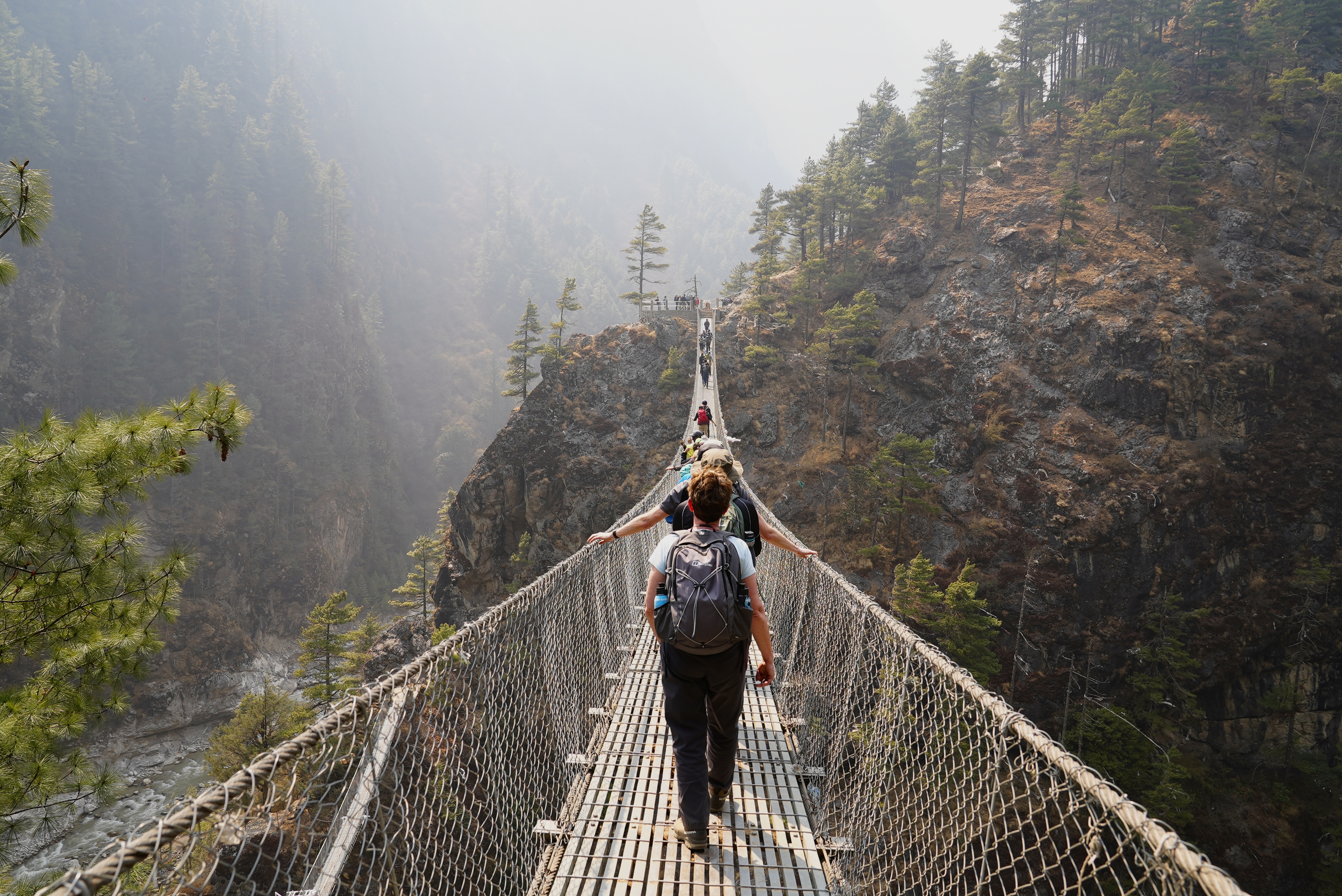
Hillary Suspension Bridge & Dudh Kosi Gorge Crossing
Stride across the Hillary Suspension Bridge, a high, prayer-flag-draped span leaping the turquoise torrent of the Dudh Kosi. The deck hums underfoot, yaks pass with tinkling bells, and cliffs crowd the narrow gorge.
This elegant piece of engineering links vital Khumbu trails and offers a thrilling, photogenic crossing. Pause midspan to feel the wind, watch the river roil below, and look up to snow-fringed ridges above the pines.
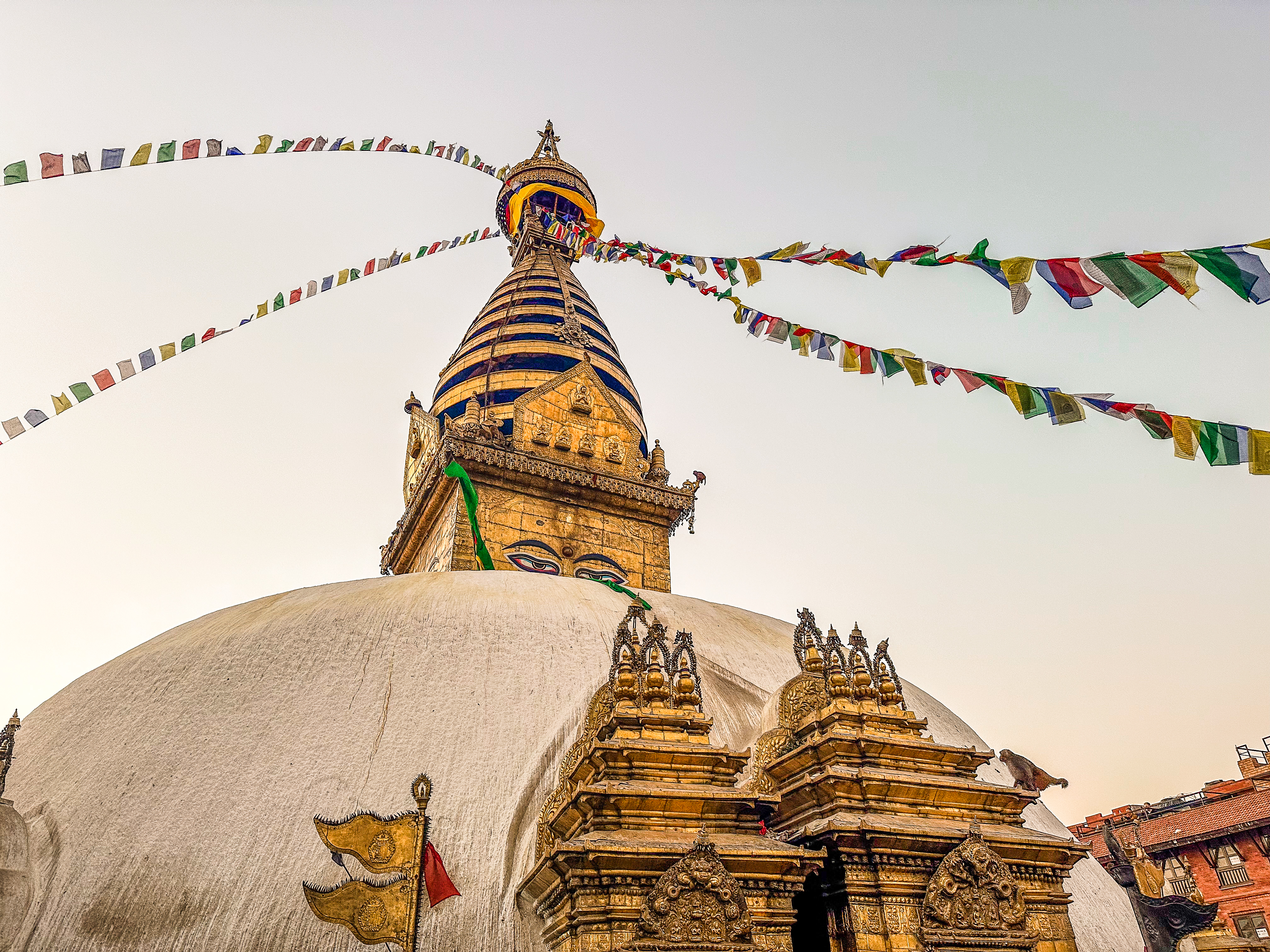
Kathmandu Heritage Tour: Swayambhunath, Boudhanath & Pashupatinath
Explore the valley’s living heritage on a guided city tour taking in Swayambhunath (Monkey Temple), the immense Boudhanath Stupa, and the sacred Pashupatinath Temple by the Bagmati River. Incense curls through courtyards as bells chime and pilgrims circle shrines.
This cultural immersion connects Buddhist and Hindu traditions through architecture, ritual and storytelling. This experience is at additional cost and bookable on tour, subject to availability and timing in Kathmandu.
Chitwan National Park Safari Extension
Swap peaks for jungle on a wildlife add-on in Chitwan National Park, where sal forests and riverine grasslands shelter the endangered one-horned rhinoceros, deer and abundant birdlife. Venture out on a guided jungle safari and tune into the sounds of the Terai.
Evenings bring quiet riverside sunsets and tales of conservation success. This extension is at additional cost and bookable through our team; availability may require arranging before your trek.
Welcome Briefing & Nepali Group Dinner in Kathmandu
Meet your group and meet your tour leader at the Royal Singi Hotel for a full trek briefing covering altitude, trail etiquette and local customs. Questions are encouraged, gear is checked, and nerves settle as you prepare for the high Himalaya with expert guidance.
Afterwards, share a convivial Nepali group dinner, tasting dishes such as momo dumplings and dhal bhat while absorbing the easy-going buzz of the Thamel district. It’s a relaxed, culture-rich start that sets the tone for camaraderie on the trail.