Your itinerary
Day 1
Start Buenos Aires, Argentina
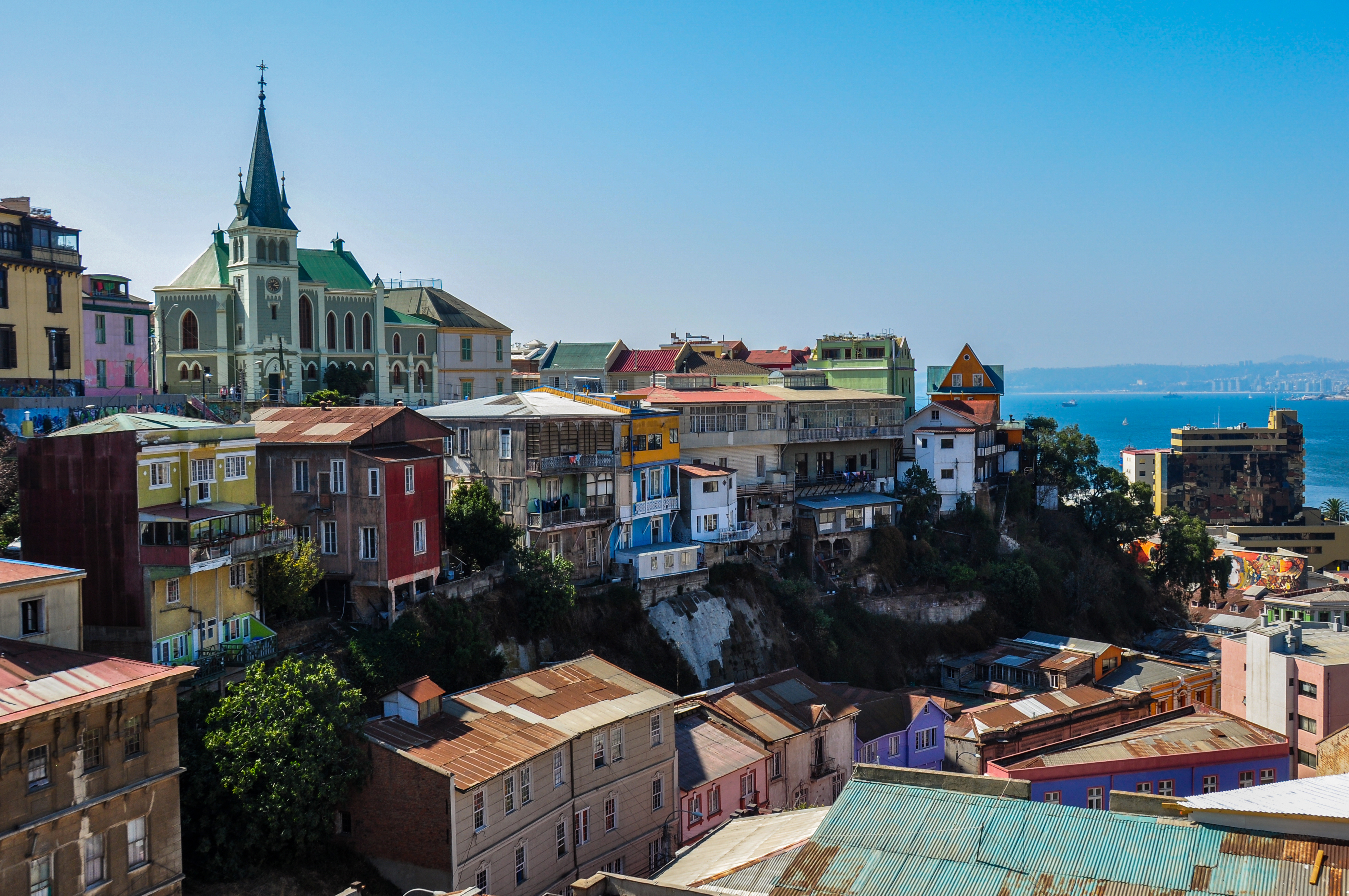
You may arrive in Buenos Aires at any time during Day 1 of your itinerary. Upon arriving in this splendid city, known for its architecture and rich European heritage, you will independently transfer to your group hotel.
Day 2
Fly to Ushuaia and embark
After an early breakfast at the hotel, the group will transfer to the airport and board our private charter flight to Ushuaia, Argentina.
Upon arrival, you will be transferred from the airport to a central downtown location to have some time on your own to explore this quaint port town before making your way to the pier.
After a late afternoon embarkation, you will sail along the historic Beagle Channel, which transects the Tierra del Fuego archipelago in the extreme south of South America.
Meals: Breakfast,Dinner
Day 3
Cape Horn
As we begin our exploration of Chile’s southern extent, expect a new adventure every day. Though each expedition will be different, depending on the weather, we aim to start our journey to the ‘edge of the earth’ with a visit to historic Cape Horn (Cabo de Hornos). At the southernmost point of the Tierra del Fuego (‘Land of Fire’) archipelago, the most isolated place in the Americas, this steep, rocky headland on Hornos Island marks the northern boundary of the famous Drake Passage, where the Atlantic and Pacific Oceans meet. From the 1700s to the early 1900s, prior to the opening of the Panama Canal, this cape was part of a major global trade route.
If sea and weather conditions allow, you may go ashore for a hike out to the lighthouse, the tiny Stella Maris (‘Star of the Sea’) Chapel, and the albatross-shaped monument honoring the many mariners who lost their lives attempting to ’round the Horn.’ Atop the windswept promontory, pause for a moment to take in the panoramic view and to enjoy the peaceful solitude that can only be found at one of the most southern stretches of land in the world. You can even have your passport stamped by the family operating the lighthouse!
Meals: Breakfast,Lunch,Dinner
Day 4
Diego Ramirez Islands
Our ship will then continue cruising farther south, to the Diego Ramírez Islands, the most southern point of South America and one of the least-explored places on the planet. This small archipelago was actually thought to be the southernmost land mass in the world when it was discovered in 1619 by the Spanish Garcia de Nodal expedition. Named after the expedition’s cosmographer, the archipelago held this distinction for 156 years, until Capt. James Cook’s discovery of the South Sandwich Islands in 1775.
Weather permitting, depending on conditions, we may choose to zodaic cruise or ship cruise cruise around these tussock-grass-covered islands to admire the abundant birdlife. A designated Important Bird Area, and part of the recently-designated Diego Ramirez Islands and Drake Passage Marine Park, the archipelago is home to millions of breeding seabirds, and an exceptional place for birdwatching. Binoculars in hand, birders will marvel at the sight of multiple species of albatross (these islands are the southernmost albatross breeding ground in the world), including Black-browed albatross, Shy albatross and Grey-headed albatross. Sightings of dolphins, South American Fur seals, and Rockhopper, Macaroni and Magellanic penguins are also possible here.
Meals: Breakfast,Lunch,Dinner
Day 5
Pia & Garibaldi Glaciers, Glacier Alley
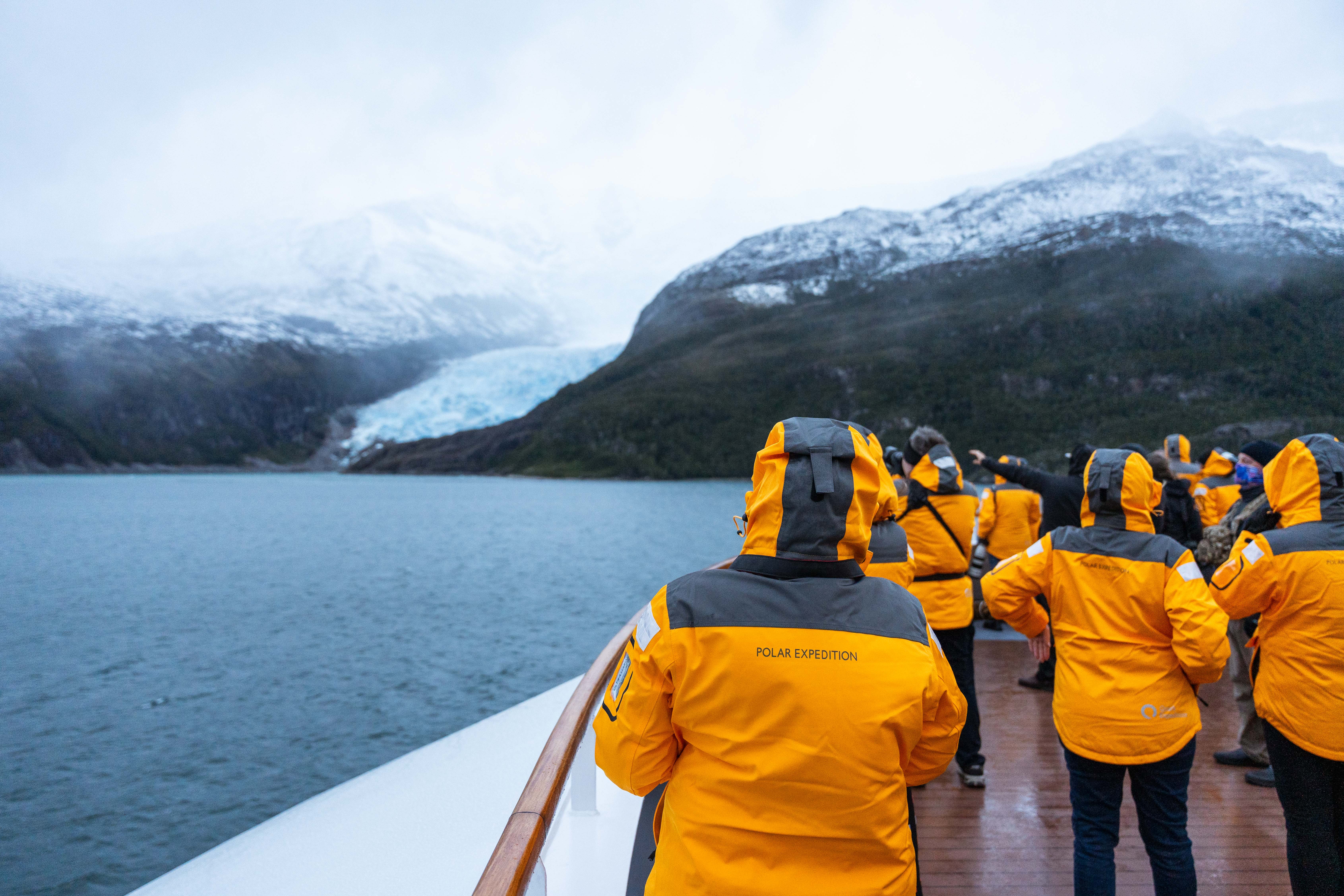
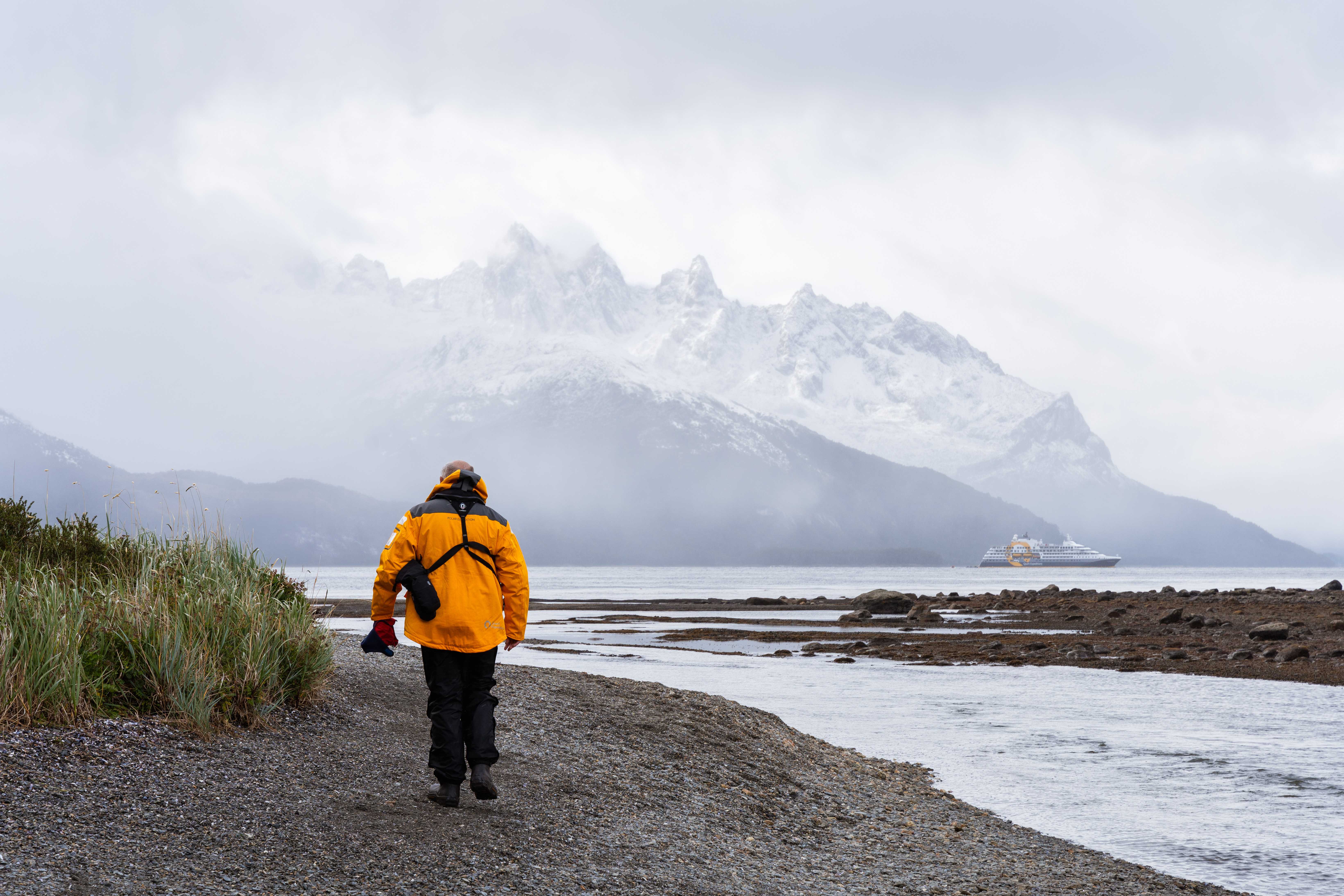
As our ship sails back north toward the southern edge of Tierra del Fuego, stimulating presentations by your Expedition Team will enrich your knowledge of the glacial systems, geology, environment, wildlife and storied history of the region as you retrace Charles Darwin’s historic journey through the Beagle Channel, a 150-mile (240 km) strait separating Tierra del Fuego’s main island from several smaller islands. Named after Captain Robert FitzRoy’s famous ship on which Charles Darwin was a passenger, the channel presents plenty of photo ops to capture seabirds hovering overhead and dramatic vistas of jagged-peaked mountains and massive tidewater glaciers. Rugged and untouched, this magnificent landscape is as starkly beautiful as it was when Darwin first laid eyes on it in 1833.
Glacier Alley (as it’s nicknamed) is one of the most spectacular ship passages in Tierra del Fuego. To honour the European countries that first explored the region, the glaciers have taken their names—España (Oblicuo), Romanche, Alemania (Roncagli), Francia, Italia, and Holland Glaciers.
Situated within the protected boundary of Alberto de Agostini National Park, both Pia and Garibaldi Glaciers sit at the head of picturesque ice-choked fjords that offer jaw-dropping views. Located within the Cordillera Darwin (Darwin Mountain Range), the impressive Pia Glacier extends from the soaring mountaintops down into the sea. A short hike to a lookout point provides superb vistas of the glacier and mountains.
Surrounded by pristine sub-Antarctic forests, Garibaldi Glacier flows from a separate mountain, providing equally exceptional views, with the Darwin Mountains rising dramatically out of the fjord. We can explore this area by Zodiac, including a beautiful glacial waterfall nearby.
As we navigate the fjords, your Expedition Team will keep watch for Andean condors, massive birds rivaled in wingspan by only the Wandering albatross.
Meals: Breakfast,Lunch,Dinner
Day 6
Dainelli (Aguila) Glacier
Located at the end of a tranquil lagoon surrounded by lush sub-Antarctic forests in Agostini Sound, Dainelli Glacier (sometimes called Aguila—Spanish for ‘Eagle’ Glacier) is a unique sight, as it appears to flow over rolling hills rather than mountains. Cruising aboard a Zodiac toward the blue-tinged wall of ice, conditions permitting, you will be humbled by the wonder of nature’s power. We hope to venture ashore for an easy hike along the beach to get a more intensive look at the glacier and surrounding mountains.
Meals: Breakfast,Lunch,Dinner
Day 7
Cruising the Chilean Fjords
Continuing north, we’ll navigate through a remote network of coastal fjords and channels, including time spent venturing out into the Pacific Ocean. Your Expedition Team will prepare for the adventures that await, helping you further understand the glacial systems, as well as the flora and fauna that can be found in this part of Chile. Take a moment, as we glide past soaring snow-capped peaks, to contemplate the mariners of long ago who traveled these same sheltered passageways, and were rewarded with the same wondrous sights.
Meals: Breakfast,Lunch,Dinner
Day 8
Puerto Natales & Torres Del Paine Nationa Park
Sailing the turquoise waters of the extraordinary stretch of coastline leading to the small port of Puerto Natales, we’ll meander through a mesmerizing maze of deep, windswept fjords, narrow channels and isolated bays, with an eye toward the rugged landscape, unique wildlife and impressive glaciers that tumble from the towering mountains into the icy waters below, along with the imperial and king cormorants, South American terns, black-necked swans and southern wigeons (Chiloé wigeons) that frequent the fjord.
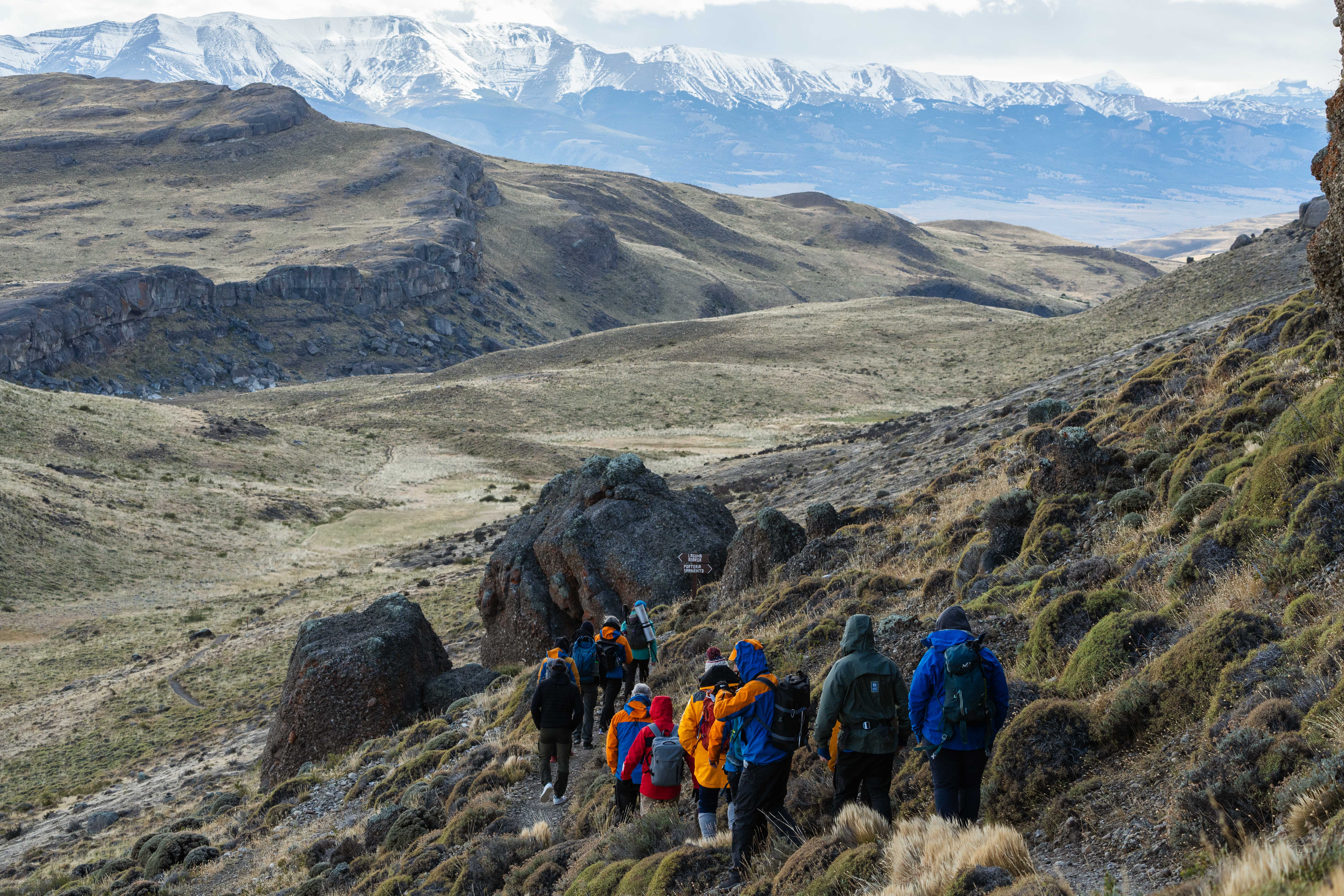
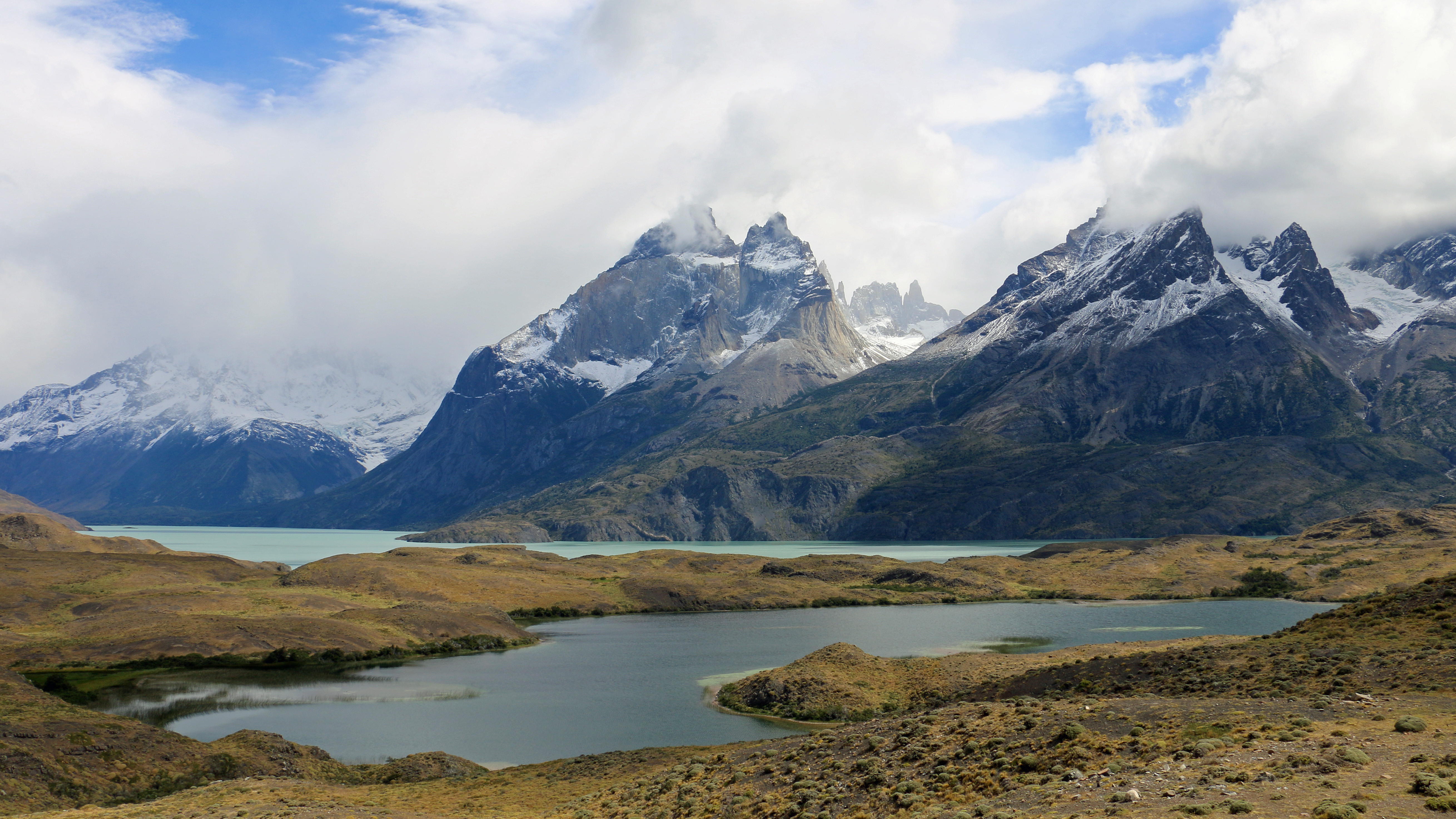
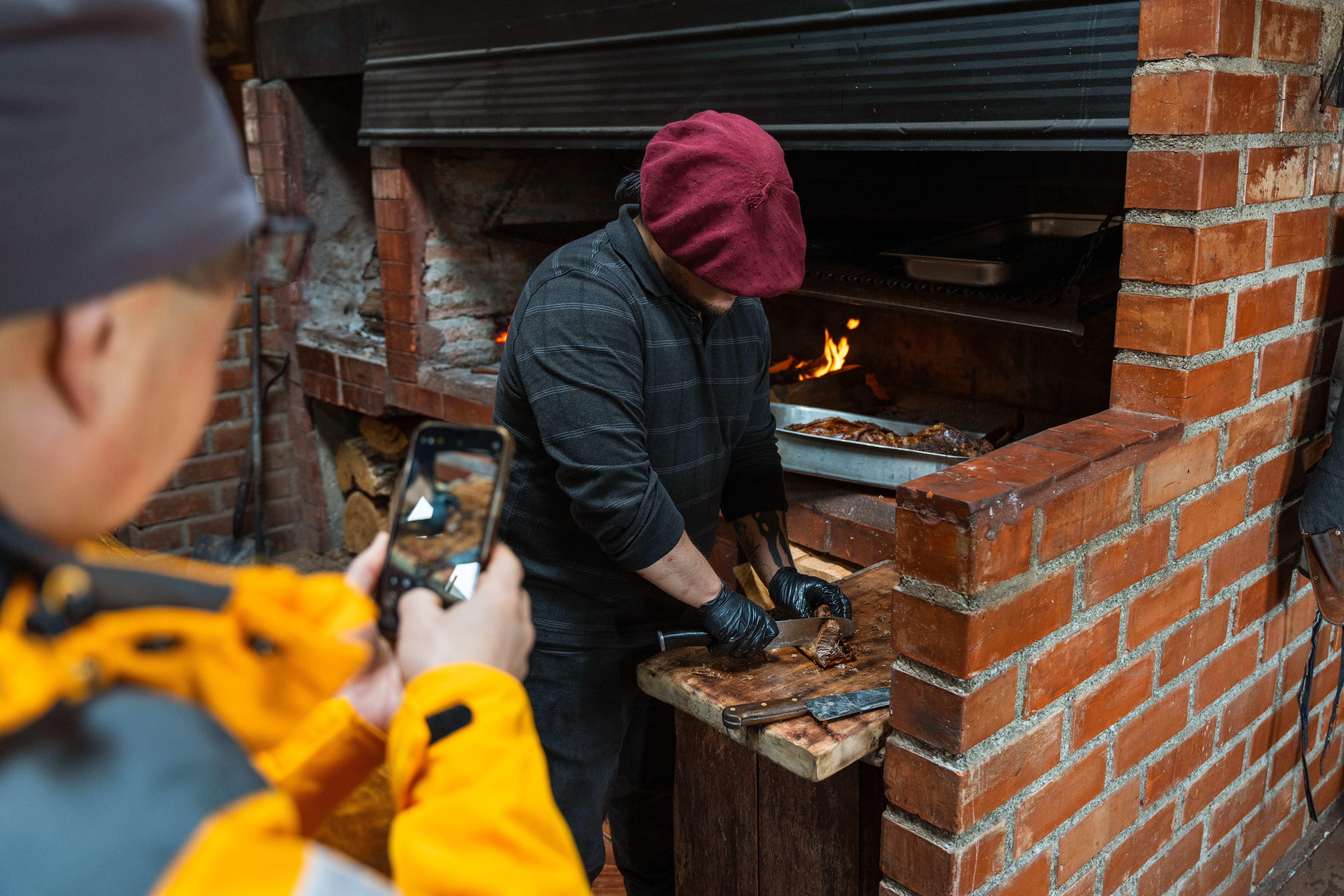
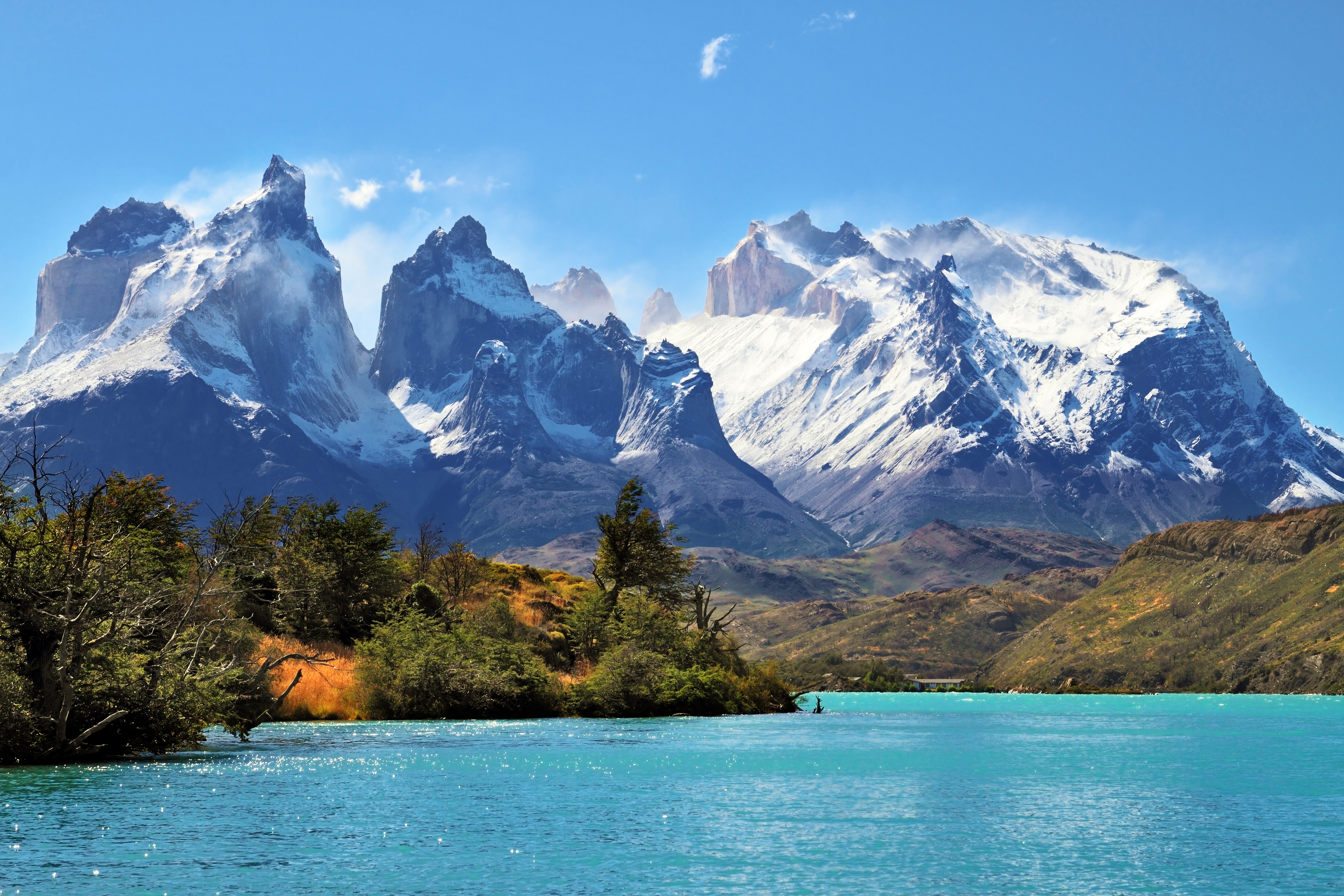
Torres del Paine National Park is one of the most stunning wilderness areas in South America, and Puerto Natales is the gateway. This enormous park is a UNESCO Biosphere Reserve, so designated for both its natural wonders and ancient human history, and named for the three granite peaks that tower above the glacier-fed lakes. Enjoy a full day of hiking tailored to your preferred activity level and stopping at lookouts in the park, followed by a traditional Patagonian barbecue in the afternoon.
Taking our expedition onto dry land for another full day, we will also visit a working Patagonian estancia (‘ranch’), founded in 1891 by Scottish immigrants. Here you will learn about Patagonian sheep farming in a historic pastoral setting. Inhabiting the surrounding grasslands are the ostrich-like rhea, and guanacos, a wild relative of the domestic llama. Complete your cultural experience with a lunch of barbecued lamb al palo (‘on a stick’), and return to the ship in the early evening.
Meals: Breakfast,Lunch,Dinner
Day 9
Puerto Natales & Torres Del Paine Nationa Park
Sailing the turquoise waters of the extraordinary stretch of coastline leading to the small port of Puerto Natales, we’ll meander through a mesmerizing maze of deep, windswept fjords, narrow channels and isolated bays, with an eye toward the rugged landscape, unique wildlife and impressive glaciers that tumble from the towering mountains into the icy waters below, along with the imperial and king cormorants, South American terns, black-necked swans and southern wigeons (Chiloé wigeons) that frequent the fjord.
Torres del Paine National Park is one of the most stunning wilderness areas in South America, and Puerto Natales is the gateway. This enormous park is a UNESCO Biosphere Reserve, so designated for both its natural wonders and ancient human history, and named for the three granite peaks that tower above the glacier-fed lakes. Enjoy a full day of hiking tailored to your preferred activity level and stopping at lookouts in the park, followed by a traditional Patagonian barbecue in the afternoon.
Taking our expedition onto dry land for another full day, we will also visit a working Patagonian estancia (‘ranch’), founded in 1891 by Scottish immigrants. Here you will learn about Patagonian sheep farming in a historic pastoral setting. Inhabiting the surrounding grasslands are the ostrich-like rhea, and guanacos, a wild relative of the domestic llama. Complete your cultural experience with a lunch of barbecued lamb al palo (‘on a stick’), and return to the ship in the early evening.
Meals: Breakfast,Lunch,Dinner
Day 10
Canal de las Montanas
Cruising the calm, crystal-clear waters of the Canal de las Montañas (‘Channel’ or ‘Fjord of the Mountains’) will leave you breathless. You’ll be awed by the amazing series of waterfalls cascading down between the jagged peaks that rise up sharply on either side of the narrow, 41-mile (66 km) long channel dotted with glaciers, five of which spill dramatically into the water. Here, impressive ice fields glisten, and steeply sloped glaciers exceed elevations over 8,235 feet (2,510 metres). The channel also provides an ideal place to put our Zodiacs in the water for more detailed exploring or going ashore for a hike to scenic viewpoints. If you’re feeling more adventurous, perhaps you’ll treat yourself to an optional kayaking excursion (extra cost), an exceptional opportunity to experience the channel from a special perspective.
Meals: Breakfast,Lunch,Dinner
Day 11
Tuckers Islets
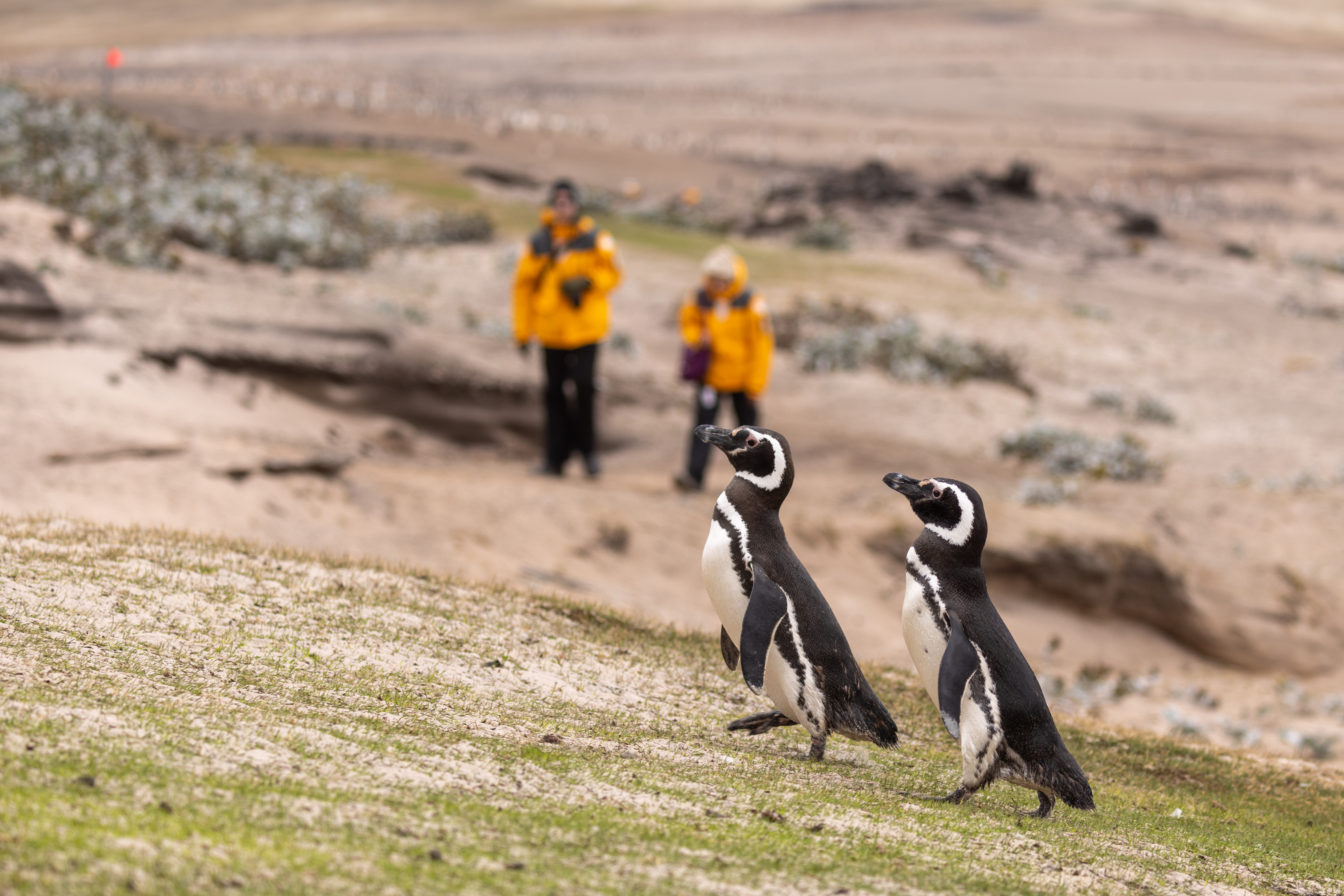
A series of small islands and rocky outcrops in Almirantazgo Sound (‘Admiralty Sound’), a small fjord off the Strait of Magellan, Tuckers Islets is a superb location for viewing penguins. Though landing here is prohibited, a Zodiac excursion will take you very near a pebble beach to view a colony of 4,000-plus breeding Magellanic penguins, conditions permitting. Named for Portuguese explorer Ferdinand Magellan, whose crew sighted the charming creatures in 1520 during the first circumnavigation of the globe, the species is native to the region, and the sight of them in their burrows, lounging on the beach or waddling in and out of the water, is one you won’t forget. If we’re fortunate, we may also see Chilean skuas, Magellanic cormorants (Rock shags), Imperial cormorants (King shags), oystercatchers, Kelp geese, or even dolphins.
Meals: Breakfast,Lunch,Dinner
Day 12
Ainsworth Bay & Islote Albatros
Continuing our exploration of Almirantazgo Sound, we plan to explore ashore at Ainsworth Bay, one of the most picturesque and pristine places in Patagonia. Surrounded by untouched sub-Antarctic forest, this isolated bay is a protected area within the border of Alberto de Agostini National Park. It hosts abundant birdlife, so you’ll want to keep your eyes peeled as we cruise in the Zodiacs. Hiking options will be available for all fitness levels, affording panoramic views of Marinelli Glacier, Marinelli Fjord and the surrounding Darwin mountain range.
In 2003, a small breeding colony of Black-browed albatross was documented on Islote Albatros (‘Albatross Islet’), located in Admiralty Sound. Normally albatross are seabirds, nesting and feeding in coastal waters and open ocean; this the first record of a colony of this species in inland waters, feeding mainly in fjords and channels.
Meals: Breakfast,Lunch,Dinner
Day 13
Bahia Brookes
Another excellent spot for glacier exploring in Almirantazgo Sound is Bahia Brookes (Brookes Bay), where, conditions permitting, we’ll go ashore by Zodiac. The bay offers ample chances for closer views of a number of waterfalls and glaciers, including the calving North Brookes Glacier, set against the breath-taking backdrop of the towering Darwin mountain range. Amid the serene silence of this icy wonderland, the only sound you may hear is the powerful roar of ice breaking off and crashing into the frigid waters below. This is also a great location for viewing ice fall deposits, which form reconstituted glaciers, and kame (silt and sediment deposits).
Meals: Breakfast,Lunch,Dinner
Day 14
Marta Island
In the middle of the Strait of Magellan, Marta Island (Isla Marta) is home to abundant birdlife and more than one thousand Patagonian (South American) Sea lions. To protect the wildlife, shore landings are not possible here, but we do plan to circumnavigate the island, providing numerous opportunities to observe and photograph the colony from a short distance, in the comfort of a Zodiac. Called lobos marinos (‘sea wolves’) by local Chileans, these giant pinnipeds—males can weigh over 700 pounds/320 kg—form quite a noisy group as each Sea lion vies for a choice spot of coastline. As you cruise by, sightings of Imperial cormorants, skuas, Southern gulls, Antarctic pigeons—and if we’re lucky, dolphins—are also possible.
Meals: Breakfast,Lunch,Dinner
Day 15
Disembark in Punta Arenas and fly to Santiago
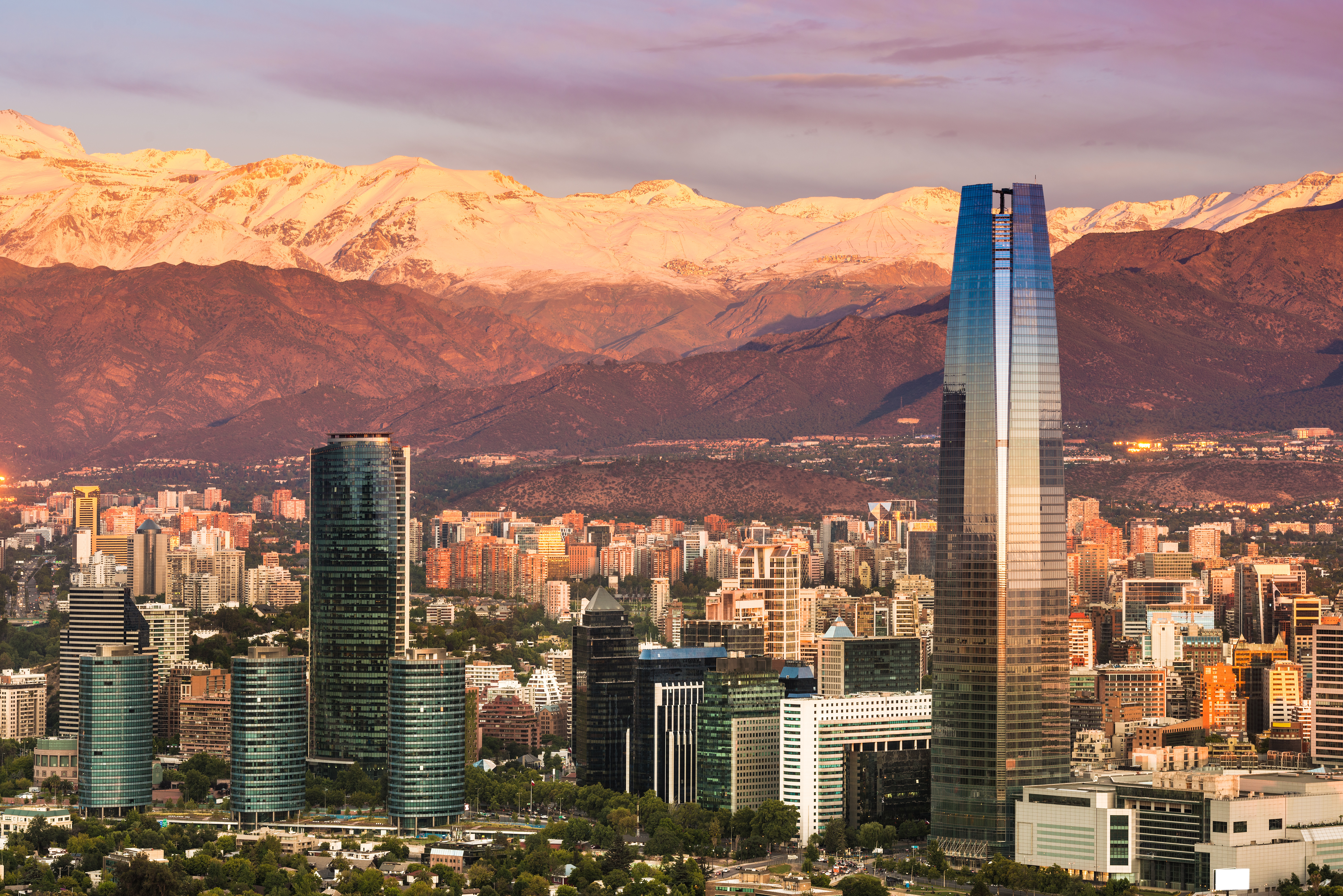
After an adventurous two weeks of exploration, you’ll say goodbye to your Expedition Team and disembark in Punta Arenas, to be transferred to the airport for your charter flight to Santiago, where you are welcome to continue on your own travels or connect to your homeward flights.
Meals: Breakfast
What’s included
What’s not included
Additional information
Sea Kayaking in the Canal de las Montañas
Slip into a stable touring kayak for optional sea kayaking beneath waterfalls and glacier-capped walls in the Canal de las Montañas. Paddle in small, guided groups, paddle beneath ice-clad peaks, and feel the hush of fjord water under your hull.
This experience is at additional cost, bookable on tour, and operates when weather and expedition timing allow—rewarding paddlers with low-angle perspectives and mirror-calm reflections between bouts of wind-sculpted ripples.
Tuckers Islets Magellanic Penguin Viewing by Zodiac
Drift close to a pebble shore to view Magellanic penguins by Zodiac at Tuckers Islets in the Strait of Magellan. Watch adults shuffle between the surf and their burrows while youngsters preen, and listen for braying calls that carry over the wash.
Named for Ferdinand Magellan’s epochal voyage, the area is also frequented by skuas, cormorants and oystercatchers. With luck, dolphins may arc across the channel’s slate surface beside you.
Diego Ramírez Islands Zodiac Wildlife Cruise
Climb into a Zodiac for a Zodiac wildlife cruise around the remote Diego Ramírez Islands, whose tussock-capped ridges rise from the sub-Antarctic sea. Scan the sky for Black-browed, Shy and Grey-headed albatross and the shores for Rockhopper and Magellanic penguins shuttling between surf and burrows.
First mapped in 1619, this archipelago is an Important Bird Area within the Diego Ramírez–Drake Passage Marine Park. Naturalists highlight nesting behavior, feeding strategies and flight dynamics of albatross gliding effortlessly on katabatic winds.
Food
All meals while on the ship are included.
Typical meals
The ship’s galley offers good-quality service and cuisine throughout, with excellent chefs preparing international menus, including vegetarian dishes. If there is one constant on board, it is that you’ll enjoy delicious meals. While meal times may change due to landings and wildlife sightings, you’ll always be served three well-prepared meals per day. Vegetarians and vegans can be well catered for on this adventure – please inform us before departure of any special dietary requests so our local team can be well prepared.
Breakfast: Buffet style – unlimited tea and coffee, a selection of fruit juices, hot options including bacon and eggs or omelettes, a selection of bread and toast and jam/honey/marmalade, fruit and cereal.
Lunch: Three-course set meal or the occasional buffet or barbecue.
Dinner: Three courses with a starter of soup, salad or anti-pasto, a choice of three mains with at least one vegetarian and one seafood option and a dessert of sweet pudding or ice cream or fruit, tea and coffee.
Drinks: Complimentary coffee, tea, cocoa and water stations are available around the clock, while soft drinks and juices are available during meals and when the bar is open—all included in the cost of your package. Enjoy complimentary select beer, wines and select cocktails during bar service hours and dinner as part of the “Raise a Glass and Stay Connected Free” program. Premium wines and champagne are available at extra cost and can be billed to your shipboard account. The well-stocked bars on the ship are open late morning, afternoon and evening, though hours may occasionally change to accommodate the expedition schedule.
Cape Horn Landing & Lighthouse Hike
Weather permitting, go ashore for a hike on windswept Hornos Island to the Cape Horn (Cabo de Hornos) lighthouse, the tiny Stella Maris chapel, and the moving albatross-shaped monument. From the cliff tops, ocean swells pound rock ledges while spray drifts on polar winds—classic sensations at the meeting place of two great oceans.
Trace stories from the Age of Sail at the northern edge of the Drake Passage, where countless ships battled lethal seas before the Panama Canal. Pause at the summit, and—if the keepers are present—have your passport stamped to commemorate rounding the Horn.
Glacier Alley Scenic Sail
Settle on deck to cruise Glacier Alley, watching an elegant sequence of tidewater glaciers—España, Romanche, Alemania, Francia, Italia and Holanda—slide from the Cordillera Darwin into steel-blue fjords. Brash ice taps the hull while sunlight scatters across sculpted seracs and fresh snow lines the granite spires.
Named for the European nations whose explorers first charted these coasts, Glacier Alley is prime territory for photography and reflection. Keep an eye aloft for Andean condors spiraling on thermals along the ridgelines.
Pia Glacier Shore Hike & Viewpoint
Land by Zodiac at the head of a fjord and follow a forested path on a short hike to a lookout over the mighty Pia Glacier, a river of ice that descends from the soaring peaks of the Darwin Range straight to the sea. Listen for thunderous cracks as chunks calve into jade water.
Inside Alberto de Agostini National Park, guides decode the glacier’s blue hues, moraines and crevasse fields, linking what you see to the dynamics of Patagonia’s vast icefields.
Garibaldi Glacier Zodiac Cruise & Waterfall
Bundle up for a Zodiac cruise beneath Garibaldi Glacier, nosing along cliffs where lichens cling above turquoise water and a glacial waterfall veils the rock face. The fjord narrows dramatically, the ice wall radiates blue, and sea lion heads may surface between ice floes.
Fed by a separate massif from Pia, Garibaldi’s ice tongue showcases classic fjord geology—U-shaped valleys, hanging cirques and rock polished by ancient ice—framed by sub-Antarctic forest and the austere Darwin Mountains.
Dainelli (Aguila) Glacier Zodiac & Beach Walk
Motor toward the blue-tinged ice wall of Dainelli—also known as Aguila—then step ashore for an easy shore walk across pebble beach and driftwood to a quiet vantage. Unlike most Patagonian ice, Dainelli appears to flow over hills, offering a curious, gentler profile as it meets the lagoon.
Encircled by coigue and lenga forest in Agostini Sound, the setting is ideal for studying ice textures and scale, with bergy bits bobbing in still water and mountains framing the amphitheater of ice.
Chilean Fjords Network Scenic Cruising
Trace a labyrinth of channels and headlands as you cruise Chile’s fjords and channels. Granite buttresses plunge into teal water, snow-capped peaks loom beyond, and dolphins may draft the bow wave while petrels and skuas sweep low across the swell.
Expedition naturalists interpret the glacial origins of these sheltered passageways used by early mariners, pointing out hanging valleys, tide lines and forest zones adapted to perpetual wind and rain.
Torres del Paine National Park Day Hikes & Lookouts
Explore Torres del Paine National Park on tailored hikes to high viewpoints over glacier-fed lakes and the famous granite Torres. Wild guanacos graze the pampa, rheas stride the steppe, and condors may ride updrafts off the massif’s cliffs.
A UNESCO Biosphere Reserve, the park unites Patagonian steppe with Andean peaks. Guides share insights on geology, guanaco–puma dynamics, and the area’s changing glaciers as you pause at miradores framed by shifting Patagonian light.
Patagonian Estancia Visit with Lamb al Palo
Travel inland to visit a working Patagonian estancia founded by Scottish immigrants in 1891. Meet ranch hands, walk through windswept corrals, and learn about sheep farming traditions that shaped the Magallanes region.
Settle by the fire for a lamb al palo barbecue, its slow-roasted flavors perfumed by woodsmoke. Watch for guanacos and rheas on the surrounding grasslands as your hosts share stories of frontera life—resilience, community, and the rhythm of the shearing season.
Canal de las Montañas Zodiac Exploration & Hiking
Enter a 66-km corridor where cascading waterfalls link hanging valleys and glaciers tumbling to the sea. By Zodiac you weave below vertical walls streaked with ice and lichen, then go ashore to climb to overlooks that reveal an amphitheater of peaks and icefields.
Geologists onboard explain how pressure, frost and time sculpted the Canal de las Montañas, decoding striations, moraines and rock flour that give the water its milky hue.
Ainsworth Bay Shore Hike & Islote Albatros Birding
Go ashore at Ainsworth Bay in Alberto de Agostini National Park for hikes tailored to fitness and views of Marinelli Glacier and fjord. The scene layers emerald forest with braided streams and cloud-wrapped ridges of the Darwin Mountain Range.
Scan nearby Islote Albatros, where researchers documented a rare Black-browed albatross colony in inland waters. Naturalists detail nesting behaviors and explain why this fjord system creates unique feeding opportunities.
Bahía Brookes Glacier & Waterfall Landing
Step ashore by Zodiac to land at Bahía Brookes, a natural gallery of icefalls, streams and the calving front of the North Brookes Glacier. Silence dominates until the ice calving roar ricochets off fjord walls and ripples spread beneath the zodiac pontoons.
Guides point out reconstituted glaciers and kame deposits—signatures of ice’s restless work—adding a geologist’s clarity to this starkly beautiful amphitheater.
Marta Island Sea Lion Zodiac Circumnavigation
Idle the outboard and circumnavigate Marta Island by Zodiac to observe a raucous colony of South American Sea lions. Bulls posture along the wrack line, pups porpoise between kelp rafts, and Imperial cormorants spiral above the Strait of Magellan.
Known locally as lobos marinos—sea wolves—these pinnipeds can top 320 kg. Naturalists decode social dynamics and haul-out behavior while you photograph the colony at a respectful distance.
Ultramarine Helicopter Flightseeing over Patagonian Fjords
Lift off from the helideck to enjoy helicopter flightseeing aboard Ultramarine, banking over Patagonian fjords and glaciers for a rare aerial perspective. From above, ice tongues, cirques and kettle lakes sketch a living map of glacial force.
Offered when weather, landing zones and permits allow, this experience enriches your understanding of fjord geology and reveals vantage points unreachable by ship or Zodiac, with the Andes stretching to a serrated horizon.
Onboard Enrichment: Glaciology, Wildlife & Exploration Talks
Between landings, attend expert-led lectures that illuminate glacial systems and fjord geology, seabird identification, marine mammals, and the history of exploration from Magellan to Darwin. Sessions blend clear science with field anecdotes and photography tips.
These briefings sharpen what you see on deck and ashore, helping you read mountain forms, interpret animal behavior and appreciate how climate and current shape the Patagonian seascape.
Beagle Channel Sailaway from Ushuaia
Embark and sail the historic Beagle Channel, skirting the forested slopes of Tierra del Fuego as seabirds ride the wind off the bow. Low, pewter seas and distant lighthouse flashes frame a corridor once charted by FitzRoy and Darwin, perfect for scanning the waterline and capturing the first blue gleam of river-fed fjords.
Hear your Expedition Team connect the route’s science and lore, retracing Darwin’s route through a strait linking Atlantic and Pacific worlds. The channel’s sheltered waters create ideal conditions for photography and wildlife spotting before the voyage pushes deeper into Patagonia’s glacial realm.