Your itinerary
Day 1
Start Buenos Aires, Argentina; overnight in hotel
Our journey begins in Buenos Aires where we will overnight in a hotel.
Meals: None
Day 2
Fly to Ushuaia and embark
After breakfast at the hotel, the group will transfer to the airport and board our private charter flight to Ushuaia, Argentina. Upon arrival, you will have a little time to explore this quaint port town before heading to the pier.
Embarkation will occur in the late afternoon, after which your vessel will sail down the historic Beagle Channel. This famous channel transects the Tierra del Fuego archipelago in the extreme south of South America. Expect an air of anticipation as you depart—the next time you see land you’ll be in the world’s most southern continent!
Meals: Breakfast,Dinner
Day 3
At Sea
There are many activities to keep you engaged while we’re at sea. You can take advantage of the library of books available on your ship, hang out at the bar chatting to other travellers or spend time out on deck, admiring the sea. Your Expedition Team will also conduct a series of presentations to familiarize you with how to prepare for Zodiac cruises and shore landings.
Meals: Breakfast,Lunch,Dinner
Day 4
Falkland Islands (Islas Malvinas)
The Falkland archipelago contains two main islands, East and West, which we will explore by Zodiac excursions and daily landings. These rugged islands have a frontier feel to them, especially at Port Stanley—the largest settlement on the islands. It’s an interesting British outpost–type place, where you may just as easily wander into a pub as you will a church or museum.
With your camera at hand, our wildlife sightings in the Falklands (Malvinas) should include at least three species of penguins and two endemic bird species—Cobb’s wren and the Falkland’s flightless Steamer duck.
Your team of lecturers and specialists will be sure to educate you on the local flora and fauna so that you have the most memorable time.
Meals: Breakfast,Lunch,Dinner
Day 5
Falkland Islands (Islas Malvinas)
The Falkland archipelago contains two main islands, East and West, which we will explore by Zodiac excursions and daily landings. These rugged islands have a frontier feel to them, especially at Port Stanley—the largest settlement on the islands. It’s an interesting British outpost–type place, where you may just as easily wander into a pub as you will a church or museum.With your camera at hand, our wildlife sightings in the Falklands (Malvinas) should include at least three species of penguins and two endemic bird species—Cobb’s wren and the Falkland’s flightless Steamer duck.Your team of lecturers and specialists will be sure to educate you on the local flora and fauna so that you have the most memorable time.
Meals: Breakfast,Lunch,Dinner
Day 6
At Sea
Enroute to South Georgia you’ll cross the invisible biological boundary unique to Antarctica – the Antarctic Convergence. This meeting of oceans is what creates the abundance of krill and marine life that attract large cetaceans such as Humpback whales.
Meals: Breakfast,Lunch,Dinner
Day 7
At Sea
Enroute to South Georgia you’ll cross the invisible biological boundary unique to Antarctica – the Antarctic Convergence. This meeting of oceans is what creates the abundance of krill and marine life that attract large cetaceans such as Humpback whales.
Meals: Breakfast,Lunch,Dinner
Day 8
South Georgia
Evidence of the old whaling and sealing heydays is still found throughout the island. You’ll be surprised to learn that whale and seal populations were once decimated here, as today their populations are strong, with massive rookeries to be seen.
One significant and historic site that will be of interest is the grave of the great explorer, Sir Ernest Shackleton. Visiting his grave at the settlement of Grytviken, which is also home to an old whaling station and a research station, is a day for reflecting on what it must have been like to be one of the first explorers to this unforgiving, yet beautiful environment.
While South Georgia’s history is an important attraction to the islands, it is the wildlife that you and your shipmates will likely find most captivating. Often referred to as the ‘Galapagos of the Poles,’ South Georgia contains an exceptional quantity of wildlife. Each landing you make on South Georgia will open your eyes to a new wonder of wildlife. One day you may see rookeries with a 100 thousand pairs of King penguins waddling on the beach. The next day we may visit another beach with thousands of Fur or Elephant seals.
The grasses, mountains and beaches of South Georgia all play an important role in the breeding and survival of different bird and animal species. Your Expedition Team will be happy to share their knowledge of how these vulnerable relationships all play out on the island.
Meals: Breakfast,Lunch,Dinner
Day 9
South Georgia
Evidence of the old whaling and sealing heydays is still found throughout the island. You’ll be surprised to learn that whale and seal populations were once decimated here, as today their populations are strong, with massive rookeries to be seen.One significant and historic site that will be of interest is the grave of the great explorer, Sir Ernest Shackleton. Visiting his grave at the settlement of Grytviken, which is also home to an old whaling station and a research station, is a day for reflecting on what it must have been like to be one of the first explorers to this unforgiving, yet beautiful environment.While South Georgia’s history is an important attraction to the islands, it is the wildlife that you and your shipmates will likely find most captivating. Often referred to as the ‘Galapagos of the Poles,’ South Georgia contains an exceptional quantity of wildlife. Each landing you make on South Georgia will open your eyes to a new wonder of wildlife. One day you may see rookeries with a 100 thousand pairs of King penguins waddling on the beach. The next day we may visit another beach with thousands of Fur or Elephant seals.The grasses, mountains and beaches of South Georgia all play an important role in the breeding and survival of different bird and animal species. Your Expedition Team will be happy to share their knowledge of how these vulnerable relationships all play out on the island.
Meals: Breakfast,Lunch,Dinner
Day 10
South Georgia
Evidence of the old whaling and sealing heydays is still found throughout the island. You’ll be surprised to learn that whale and seal populations were once decimated here, as today their populations are strong, with massive rookeries to be seen.One significant and historic site that will be of interest is the grave of the great explorer, Sir Ernest Shackleton. Visiting his grave at the settlement of Grytviken, which is also home to an old whaling station and a research station, is a day for reflecting on what it must have been like to be one of the first explorers to this unforgiving, yet beautiful environment.While South Georgia’s history is an important attraction to the islands, it is the wildlife that you and your shipmates will likely find most captivating. Often referred to as the ‘Galapagos of the Poles,’ South Georgia contains an exceptional quantity of wildlife. Each landing you make on South Georgia will open your eyes to a new wonder of wildlife. One day you may see rookeries with a 100 thousand pairs of King penguins waddling on the beach. The next day we may visit another beach with thousands of Fur or Elephant seals.The grasses, mountains and beaches of South Georgia all play an important role in the breeding and survival of different bird and animal species. Your Expedition Team will be happy to share their knowledge of how these vulnerable relationships all play out on the island.
Meals: Breakfast,Lunch,Dinner
Day 11
South Georgia
Evidence of the old whaling and sealing heydays is still found throughout the island. You’ll be surprised to learn that whale and seal populations were once decimated here, as today their populations are strong, with massive rookeries to be seen.One significant and historic site that will be of interest is the grave of the great explorer, Sir Ernest Shackleton. Visiting his grave at the settlement of Grytviken, which is also home to an old whaling station and a research station, is a day for reflecting on what it must have been like to be one of the first explorers to this unforgiving, yet beautiful environment.While South Georgia’s history is an important attraction to the islands, it is the wildlife that you and your shipmates will likely find most captivating. Often referred to as the ‘Galapagos of the Poles,’ South Georgia contains an exceptional quantity of wildlife. Each landing you make on South Georgia will open your eyes to a new wonder of wildlife. One day you may see rookeries with a 100 thousand pairs of King penguins waddling on the beach. The next day we may visit another beach with thousands of Fur or Elephant seals.The grasses, mountains and beaches of South Georgia all play an important role in the breeding and survival of different bird and animal species. Your Expedition Team will be happy to share their knowledge of how these vulnerable relationships all play out on the island.
Meals: Breakfast,Lunch,Dinner
Day 12
At Sea
Antarctica awaits, along with its own penguin and seal species. While you’re at sea, you can enjoy quiet time or take in presentations by the Expedition Team, who will cover everything from the history and geology of Antarctica to tips on identifying different species and what makes each of them unique.
Meals: Breakfast,Lunch,Dinner
Day 13
At Sea
Antarctica awaits, along with its own penguin and seal species. While you’re at sea, you can enjoy quiet time or take in presentations by the Expedition Team, who will cover everything from the history and geology of Antarctica to tips on identifying different species and what makes each of them unique.
Meals: Breakfast,Lunch,Dinner
Day 14
South Shetland Islands and Antarctic Peninsula
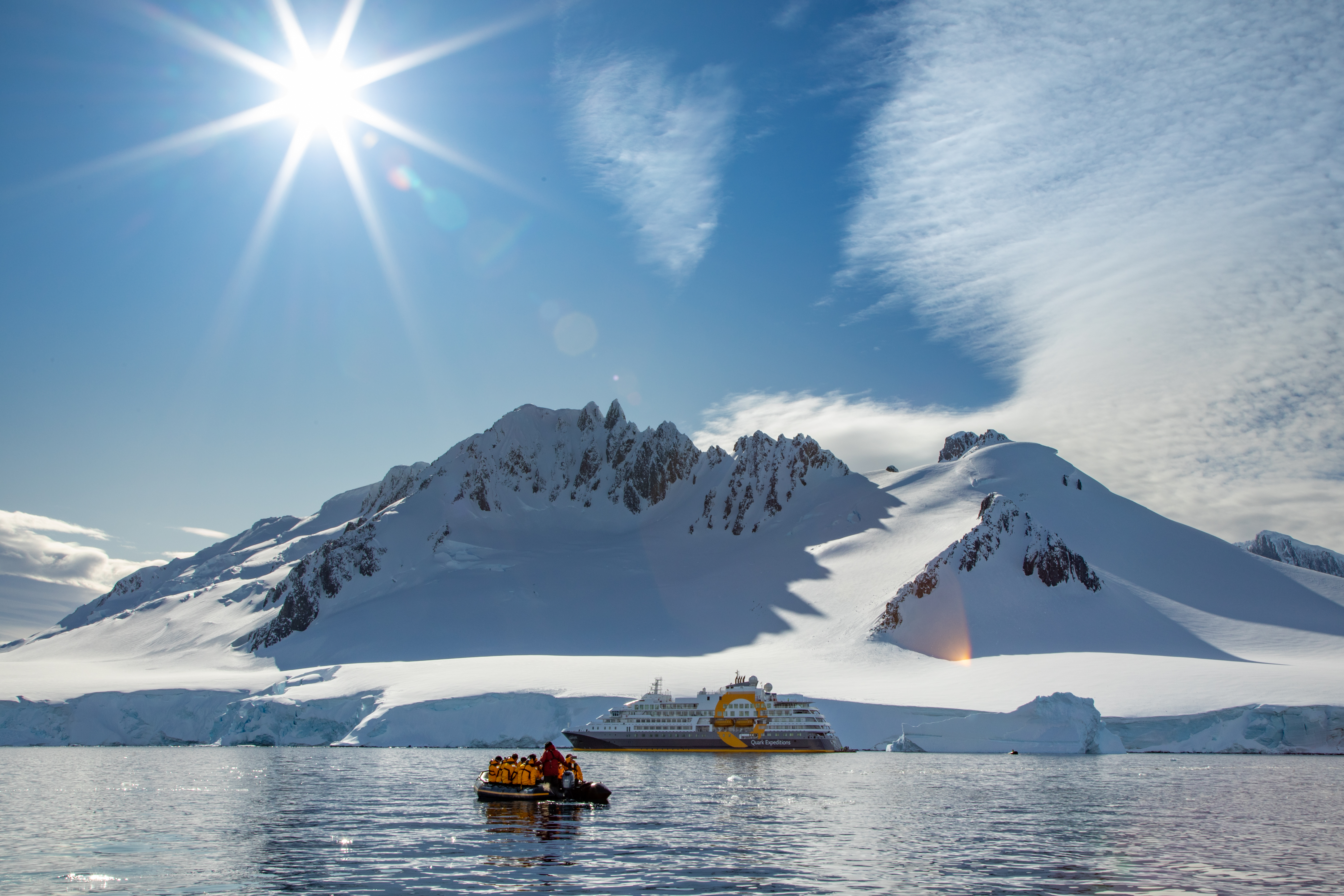
The most common reaction to arriving at the White Continent is a sense of reverence and awe. The experience is hard to put into words. You will discover that Antarctica is a land of extremes: at one moment you’ll be overcome with a feeling of complete silence and loneliness, the next you’ll be laughing at the comical antics of a curious penguin.
Glacier hikes, visits to research bases and, of course, communing with seals and penguins are sure to keep you smiling each and every day. Perhaps you’ll catch sight of the fearless penguin-eater, the Leopard seal, or come eye–to–eye with a curious Minke whale while on a Zodiac. Each day and each landing will present a new collection of creatures to entertain you and keep your camera busy!
Meals: Breakfast,Lunch,Dinner
Day 15
South Shetland Islands and Antarctic Peninsula
The most common reaction to arriving at the White Continent is a sense of reverence and awe. The experience is hard to put into words. You will discover that Antarctica is a land of extremes: at one moment you’ll be overcome with a feeling of complete silence and loneliness, the next you’ll be laughing at the comical antics of a curious penguin.Glacier hikes, visits to research bases and, of course, communing with seals and penguins are sure to keep you smiling each and every day. Perhaps you’ll catch sight of the fearless penguin-eater, the Leopard seal, or come eye–to–eye with a curious Minke whale while on a Zodiac. Each day and each landing will present a new collection of creatures to entertain you and keep your camera busy!
Meals: Breakfast,Lunch,Dinner
Day 16
South Shetland Islands and Antarctic Peninsula
The most common reaction to arriving at the White Continent is a sense of reverence and awe. The experience is hard to put into words. You will discover that Antarctica is a land of extremes: at one moment you’ll be overcome with a feeling of complete silence and loneliness, the next you’ll be laughing at the comical antics of a curious penguin.Glacier hikes, visits to research bases and, of course, communing with seals and penguins are sure to keep you smiling each and every day. Perhaps you’ll catch sight of the fearless penguin-eater, the Leopard seal, or come eye–to–eye with a curious Minke whale while on a Zodiac. Each day and each landing will present a new collection of creatures to entertain you and keep your camera busy!
Meals: Breakfast,Lunch,Dinner
Day 17
The Antarctic Circle
Crossing the Antarctic Circle is an impressive achievement, as most expeditions to the Peninsula do not come close to reaching this far south.
With a toast to the first explorers who ventured here, you can raise a glass of champagne and take pride in knowing you’ve made it to a part of the world visited by very few people. This is raw Antarctica, home to the midnight sun, with the potential for fantastic iceberg sightings.
Meals: Breakfast,Lunch,Dinner
Day 18
The Antarctic Circle
Crossing the Antarctic Circle is an impressive achievement, as most expeditions to the Peninsula do not come close to reaching this far south.With a toast to the first explorers who ventured here, you can raise a glass of champagne and take pride in knowing you’ve made it to a part of the world visited by very few people. This is raw Antarctica, home to the midnight sun, with the potential for fantastic iceberg sightings.
Meals: Breakfast,Lunch,Dinner
Day 19
Northbound Along the Peninsula
If you haven’t had your fill of Antarctic wildlife and icebergs by now, you’ll surely be satisfied by the time we return to the Drake Passage. You will continue to journey onto land by Zodiac twice daily as you travel north along the western Antarctic Peninsula.
The Expedition Team will always be on the lookout for species of penguins, seals and whales that may have eluded you on the journey south.
Meals: Breakfast,Lunch,Dinner
Day 20
Northbound Along the Peninsula
If you haven’t had your fill of Antarctic wildlife and icebergs by now, you’ll surely be satisfied by the time we return to the Drake Passage. You will continue to journey onto land by Zodiac twice daily as you travel north along the western Antarctic Peninsula.The Expedition Team will always be on the lookout for species of penguins, seals and whales that may have eluded you on the journey south.
Meals: Breakfast,Lunch,Dinner
Day 21
Crossing the Drake Passage
After more than a dozen days of memorable wildlife encounters, your journey home begins. Crossing the Drake is your unofficial rite of passage, putting a final stamp of approval on your Antarctic adventure.
Meals: Breakfast,Lunch,Dinner
Day 22
Crossing the Drake Passage
After more than a dozen days of memorable wildlife encounters, your journey home begins. Crossing the Drake is your unofficial rite of passage, putting a final stamp of approval on your Antarctic adventure.
Meals: Breakfast,Lunch,Dinner
Day 23
Disembark in Ushuaia and fly to Buenos Aires
We will arrive in Ushuaia in the morning after breakfast. After disembarkation, we will taste a little of Patagonia by touring Tierra del Fuego National Park before we transfer to the airport for the return group charter flight to Buenos Aires.
Meals: Breakfast
What’s included
What’s not included
Additional information
Food
All meals while on the ship are included.
Typical meals
The ship’s galley offers good-quality service and cuisine throughout, with excellent chefs preparing international menus, including vegetarian dishes. If there is one constant on board, it is that you’ll enjoy delicious meals. While meal times may change due to landings and wildlife sightings, you’ll always be served three well-prepared meals per day. Vegetarians and vegans can be well catered for on this adventure – please inform us before departure of any special dietary requests so our local team can be well prepared.
Breakfast: Buffet style – unlimited tea and coffee, a selection of fruit juices, hot options including bacon and eggs or omelettes, a selection of bread and toast and jam/honey/marmalade, fruit and cereal.
Lunch: Three-course set meal or the occasional buffet or barbecue.
Dinner: Three courses with a starter of soup, salad or anti-pasto, a choice of three mains with at least one vegetarian and one seafood option and a dessert of sweet pudding or ice cream or fruit, tea and coffee.
Drinks: Complimentary coffee, tea, cocoa and water stations are available around the clock, while soft drinks and juices are available during meals and when the bar is open—all included in the cost of your package. Enjoy complimentary select beer, wines and select cocktails during bar service hours and dinner as part of the “Raise a Glass and Stay Connected Free” program. Premium wines and champagne are available at extra cost and can be billed to your shipboard account. The well-stocked bars on the ship are open late morning, afternoon and evening, though hours may occasionally change to accommodate the expedition schedule.
Antarctic Circle Crossing & Champagne Toast
Mark the moment as you cross the Antarctic Circle at 66°33′ S, a latitude few travelers reach. Gather on deck to raise a glass in honor of the early explorers who first pushed into these ice-laden seas.
In this realm of long summer light and vast pack ice, the atmosphere turns contemplative and celebratory at once—a milestone that deepens your connection to the White Continent’s far south.
Falklands Zodiac Wildlife Cruise & Penguin Colonies
Set out by Zodiac to scan kelp-fringed coves and wave-cut headlands where gentoo, Magellanic, and rockhopper penguins nest in boisterous rookeries. Glide close to shore for safe, respectful views as albatross and petrels wheel overhead and sea lions watch from surf-splashed rocks.
Naturalist guides help you spot Cobb’s wren and the Falklands flightless steamer duck, highlighting how currents, kelp forests, and nutrient-rich waters sustain this remarkable birdlife at the edge of the southern seas.
Grytviken Whaling Station & Shackleton’s Grave
Visit Grytviken, South Georgia’s historic whaling station, where weathered boilers and slipways speak to a bygone industry. Pay respects at the tiny cemetery, pausing at Sir Ernest Shackleton’s grave to reflect on the Endurance saga and the grit required to explore these latitudes.
Step into the small museum to trace the island’s transformation from whaling outpost to wildlife sanctuary. Guides illuminate how protection efforts reversed declines, allowing seals and birds to rebound dramatically.
South Georgia King Penguin Rookery Landing
Step ashore at sites such as Salisbury Plain or St Andrews Bay to witness vast King penguin colonies carpeting beaches beneath snow-dusted peaks. The air thrums with calls as sleek adults shuttle to the surf and downy, cinnamon-brown chicks huddle in crèches.
Along the strand, elephant seals doze and jostle while skuas patrol overhead. Your expedition team explains breeding cycles and how tussock grass and glacial valleys sustain one of the planet’s greatest wildlife spectacles.
Antarctic Peninsula Zodiac Cruising & Shore Landings
Cruise by Zodiac among brash ice and sculpted bergs in glassy bays and the Gerlache Strait, where leopard seals haul out on floes and porpoising penguins stitch dark lines across the water. Land on snowy headlands for quiet moments amid peaks and calving glacier fronts.
Guides share fieldcraft for safe wildlife viewing and photo tips to capture shifting light on ice. Expect close, respectful encounters that reveal the Peninsula’s raw beauty and thriving polar life.
Visit to an Antarctic Research Station (conditions permitting)
Visit a working base or historic station—such as a small museum or seasonal field camp—when permits and ice allow. Meet staff if available and glimpse scientific life at the end of the world, from weather logs to wildlife monitoring and logistics.
See how researchers study glaciers, climate, and penguin colonies, and why international cooperation anchors Antarctica’s protected status. This encounter grounds the landscape’s grandeur in everyday polar science and stewardship.
Helicopter Flightseeing from Ultramarine
Lift off in Ultramarine’s twin-engine helicopters for helicopter flightseeing over ice-choked bays, tidewater glaciers, and labyrinths of blue bergs. From above, the scale of the Peninsula’s ridgelines and fjords snaps into focus, revealing patterns invisible at sea level.
Pilot and naturalist commentary enhances the aerial panorama, spotlighting wildlife tracks on snow and fractured ice tongues. This experience is included and operated weather and aviation protocols permitting for optimal safety.
Lemaire Channel Scenic Navigation (ice permitting)
Sail the narrow Lemaire Channel, a mirror-calm corridor hemmed by towering granite walls and dripping seracs. When ice opens a path, the ship threads between bergs while light and shadow ripple across polished water—catnip for photographers.
Keep watch for humpbacks surfacing in the distance and penguins commuting along floe edges. The Channel’s intimate scale and theatrical scenery have earned it the nickname “Kodak Gap” for good reason.
Drake Passage Crossing & Seabird Watch
Experience the legendary Drake Passage crossing, where the Southern Ocean breathes in long, rolling swells. From the aft decks, scan for albatross riding the westerlies, cape petrels tracing the wake, and occasional dolphins arcing alongside.
Expedition staff offer pelagic birding tips and polar history talks that transform sea days into a rite of passage—an oceanic threshold that frames your Antarctic chapter.
Crossing the Antarctic Convergence & Whale Spotting
Watch for surface slicks and temperature shifts as you cross the Antarctic Convergence, where cold polar waters dive beneath warmer seas. This nutrient surge fuels krill blooms that attract humpback and minke whales, along with clouds of seabirds.
Guides explain the oceanography that underpins Antarctica’s food web, helping you read currents, fronts, and sky patterns that hint at life below.
Shipboard Lectures & Citizen Science
Join shipboard lectures led by your expedition team on glaciology, penguin behavior, photography, and polar exploration. Participate in a Citizen Science program, logging seabirds, cloud types, or phytoplankton data to support real research.
These hands-on sessions enrich every landing and Zodiac cruise, sharpening identification skills and deepening context so the ice, wildlife, and weather tell a more vivid story.
Polar Plunge
Take the famed Polar Plunge for a bracing dip in the Southern Ocean, cheered on by shipmates and crew. A safety line, quick-entry platform, and medical staff stand by while you revel in the electric rush of near-freezing water.
Warm up with towels and hot drinks on deck as smiles spread and cameras click—an exuberant tradition that caps your personal connection to Antarctica’s elements.
Tierra del Fuego National Park Tour
Tour Tierra del Fuego National Park, where lenga and ñire forests meet the Beagle Channel beneath serrated Andean peaks. Short walks reveal peat bogs, beaver ponds, and viewpoints over green fjords shaped by ice.
At Lapataia Bay, contemplate the “end of the road” sign that marks the Pan-American Highway’s far terminus. It’s a fitting Patagonian coda to your polar voyage.
Sea Kayaking Program
Kayak quietly through sheltered bays among drifting bergy bits and cliff-hung glaciers, matching the slow rhythm of penguins and seals. Low to the water, every sound—ice crackles, wingbeats, distant blows—feels close and immediate.
Led by expert guides with drysuits and gear provided, this small-group program offers multiple paddles when conditions allow. This is an optional, additional-cost activity with limited space; request on tour (advance interest recommended).
Paddling Excursion (One-Time Taster)
Sample Antarctica from the water on a stable sit-on-top kayak, perfect for first-time paddlers. Slip through glass-calm coves near shore while guides share tips and help you photograph ice textures and mirror-like reflections.
All equipment and instruction are included for this gentle outing. This is an optional, additional-cost activity offered when weather and landing plans align; bookable with the expedition team on board.
Stanley Town Walk & Falkland Culture
Explore Stanley, the characterful capital of the Falkland Islands (Islas Malvinas), on a guided stroll past Christ Church Cathedral and the photogenic Whalebone Arch. Low-slung, brightly painted homes and cozy harborside pubs reveal the islands’ British outpost heritage set against a bracing South Atlantic backdrop.
Visit local museums and craft shops, hear stories of seafarers and sheep farmers, and learn how life unfolds on these wind-polished shores. It’s a vivid introduction to the Falklands’ community spirit, maritime history, and resilient island identity.