Your itinerary

Day 1
Adventure starts in Tashkent
Our adventure begins in Tashkent, the capital of Uzbekistan. As many flights arrive very late in the evening or early tomorrow morning, there are no activities scheduled today.
Want more time in Tashkent? Secure pre-tour hotel nights through your sales representative.
Day 2
City tour of Tashkent
Say hi to your tour leader and fellow travellers this morning, when we gather as a group to get to know each other and learn more about the adventures ahead.
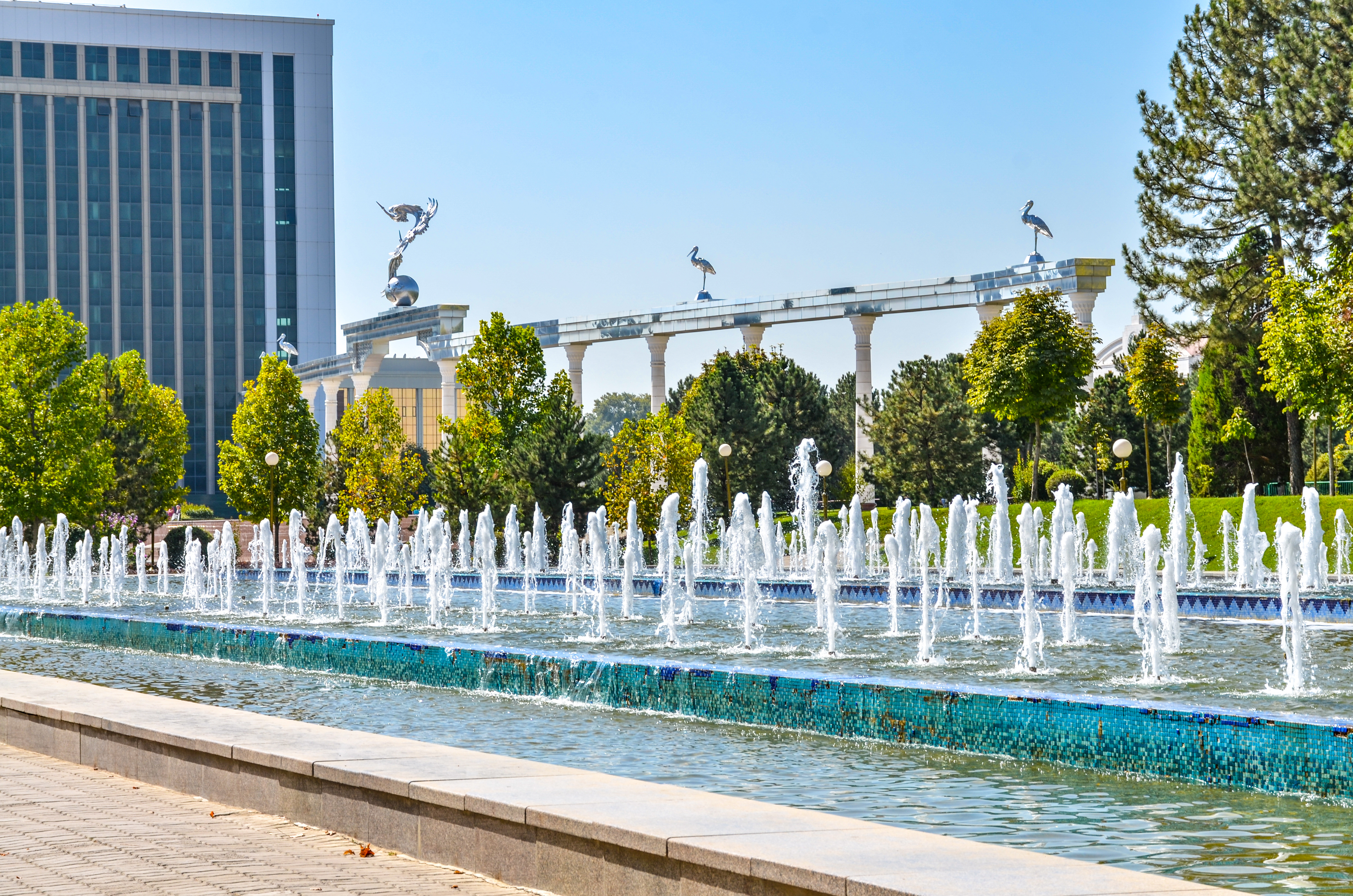
Late morning, we explore this Central Asian capital, which includes visiting Independence Square, which is flanked by public buildings and water fountains, and the Old City, home to mausoleums and a bazaar. Tashkent was largely destroyed by earthquakes in the 1960s and was rebuilt in true Soviet style with pleasant leafy boulevards and lots of fountains to cool the summer heat. There are also very interesting museums and mosques. This evening, your tour leader will ensure a big welcome over dinner at a local restaurant before returning to our hotel.
Please note: Some flights arrive into Tashkent very early this morning, giving a few hours to rest before the city tour.
Meals: Breakfast,Dinner
Day 3
High-speed train to Samarkand; city tour
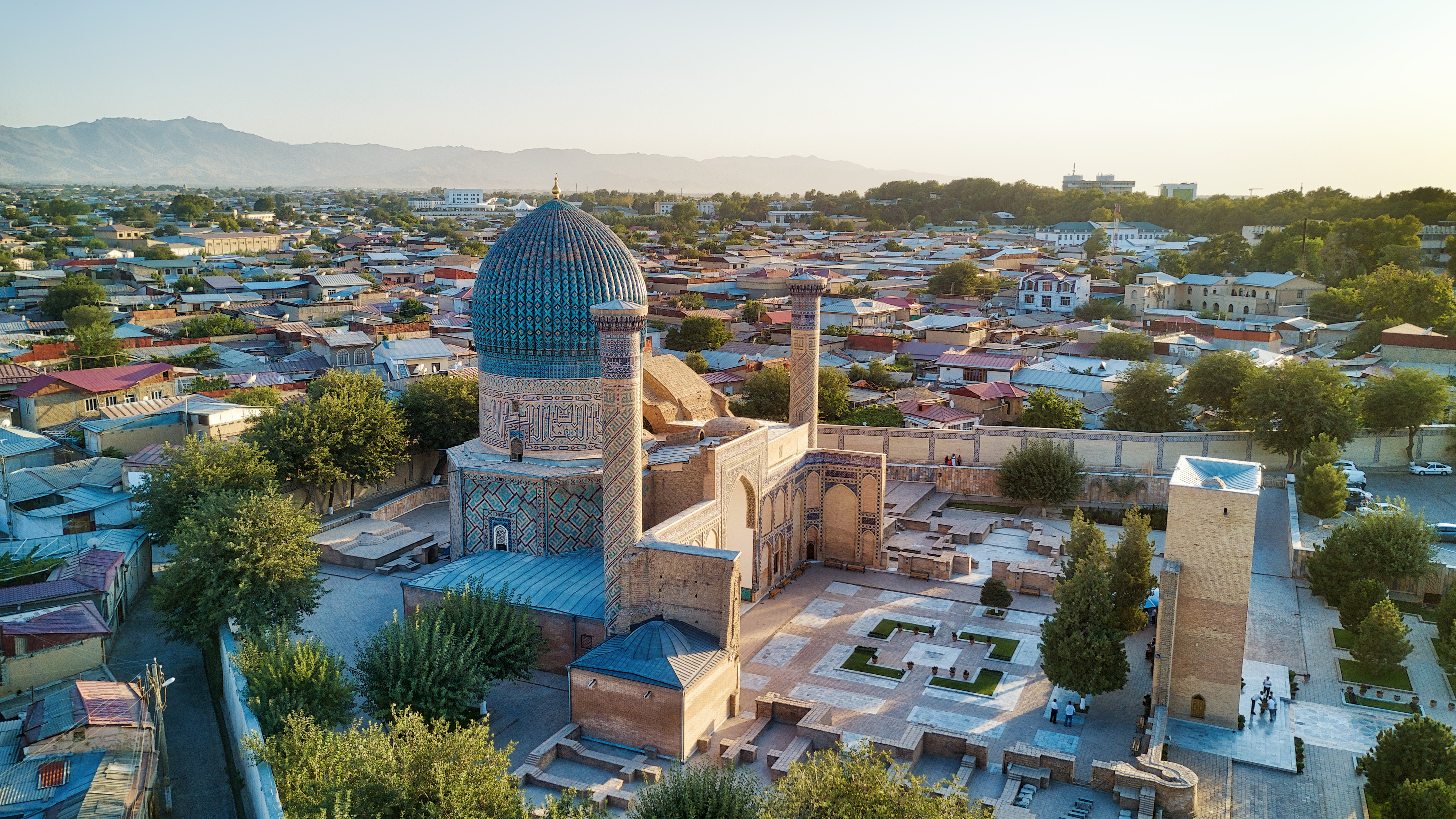
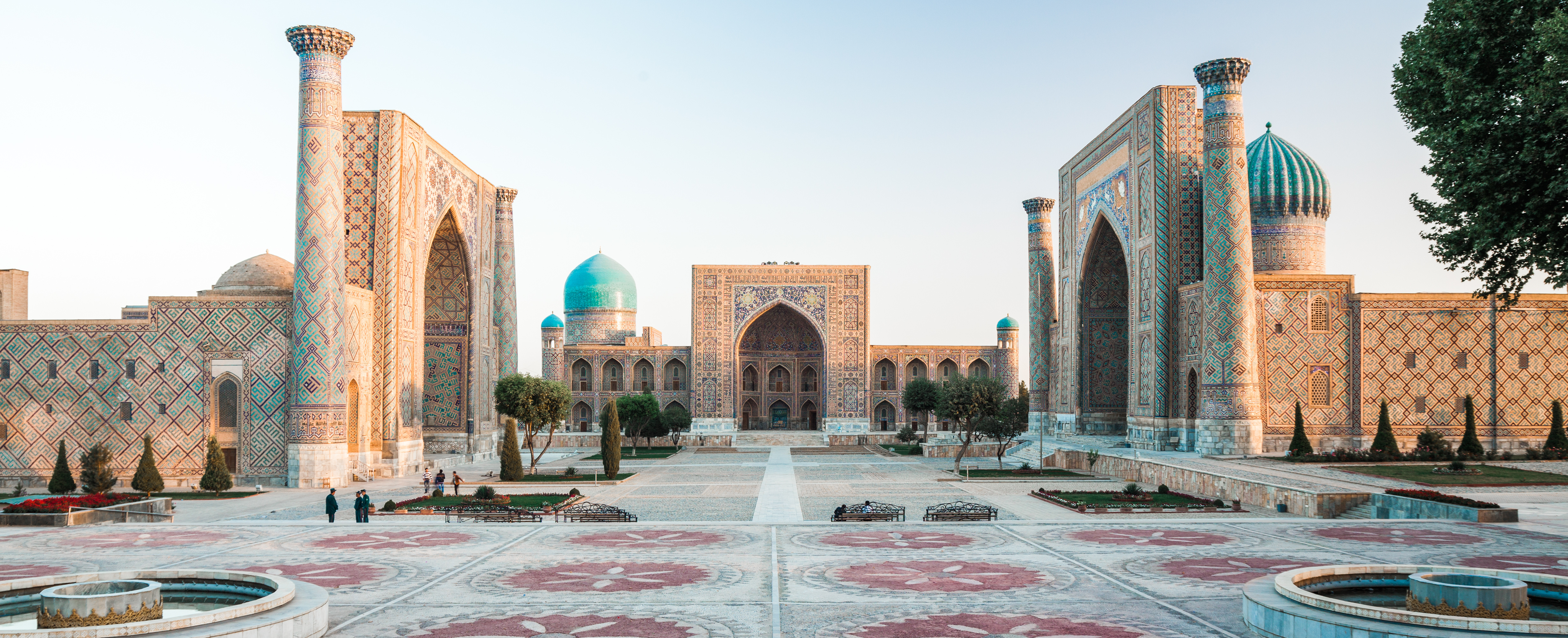
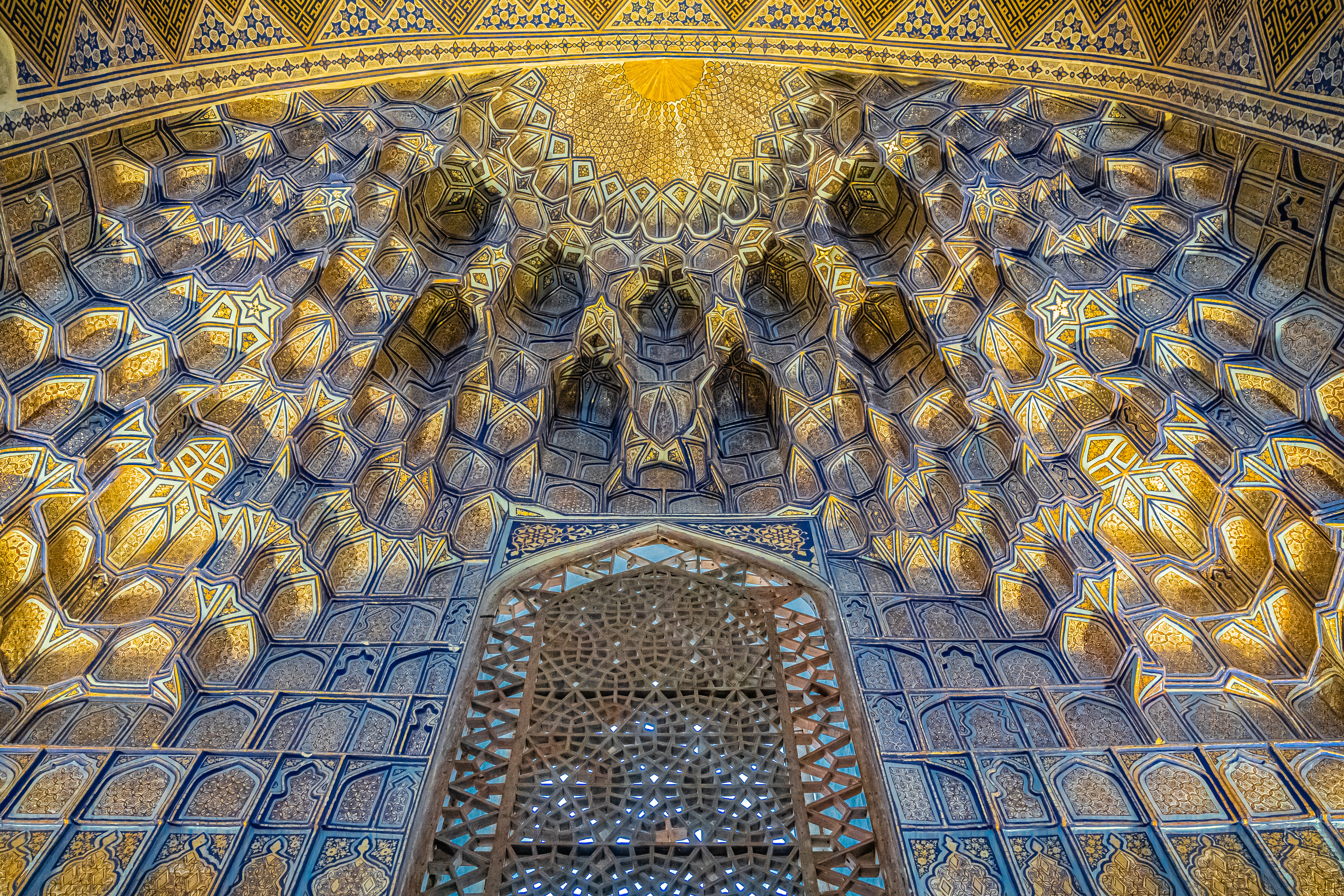
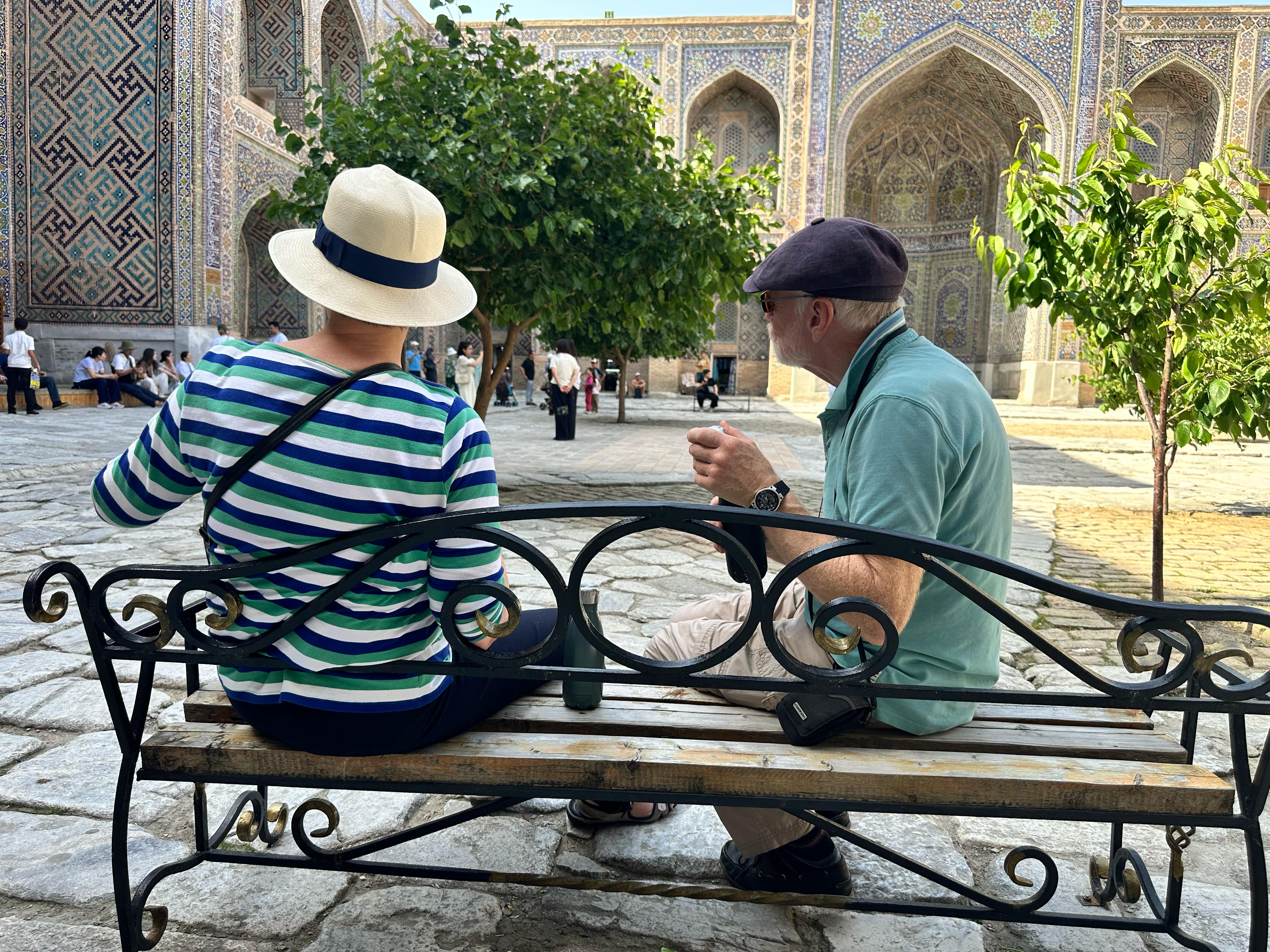
Travel to Samarkand by high-speed train (approximately 2hr 15min) this morning. Samarkand is a jewel of the ancient and modern Silk Road. We have a busy day, taking in many of the sights. There is the exquisite jade mausoleum of Gur-i-Emir, the resting place of Tamerlane, now considered by many to be an Uzbek national hero. Perhaps the greatest treasure is Registan Square, Tamerlane’s outstanding creation, a vast complex of domes and minarets, mosques and madrassas. We visit the grandiose Bibi Khanum mosque, and the magnificent Gur-Emir mausoleum, where Tamerlane, his sons, and his grandson Ulugbek are buried.
Samarkand is still a major hub for textiles, carpets and art and is a great place to try your bargaining skills and explore the bazaar.
Meals: Breakfast
Day 4
Explore Samarkand more; ceramics painting masterclass and paper-making demonstration
We continue our exploration of Samarkand today, visiting: Ulugbek Observatory; Shahi-Zinda, the necropolis of the rulers and nobility of Samarkand, home to magnificently decorated mausoleums; and Siab bazaar.
We also enjoy a masterclass on making and painting ceramics, plus a demonstration on creating silk paper using medieval technology in the village of Konigil.
Meals: Breakfast
Day 5
Free morning in Samarkand; drive to the Nurata mountains
Enjoy free time in Samarkand this morning for shopping or further exploration. In the afternoon, we drive (4hr 30min) to the Nurata Mountains through the central Jizzakh Region.
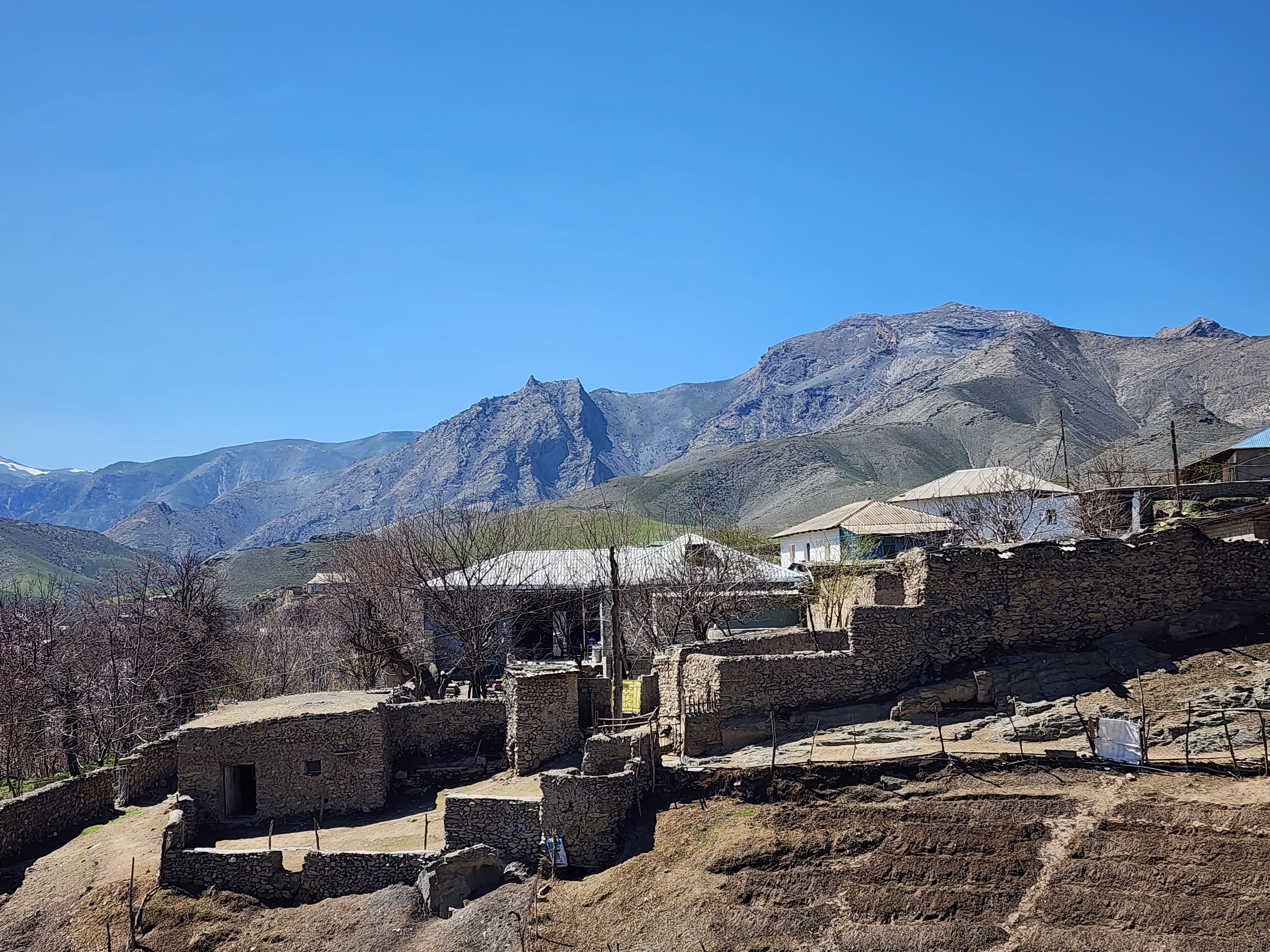
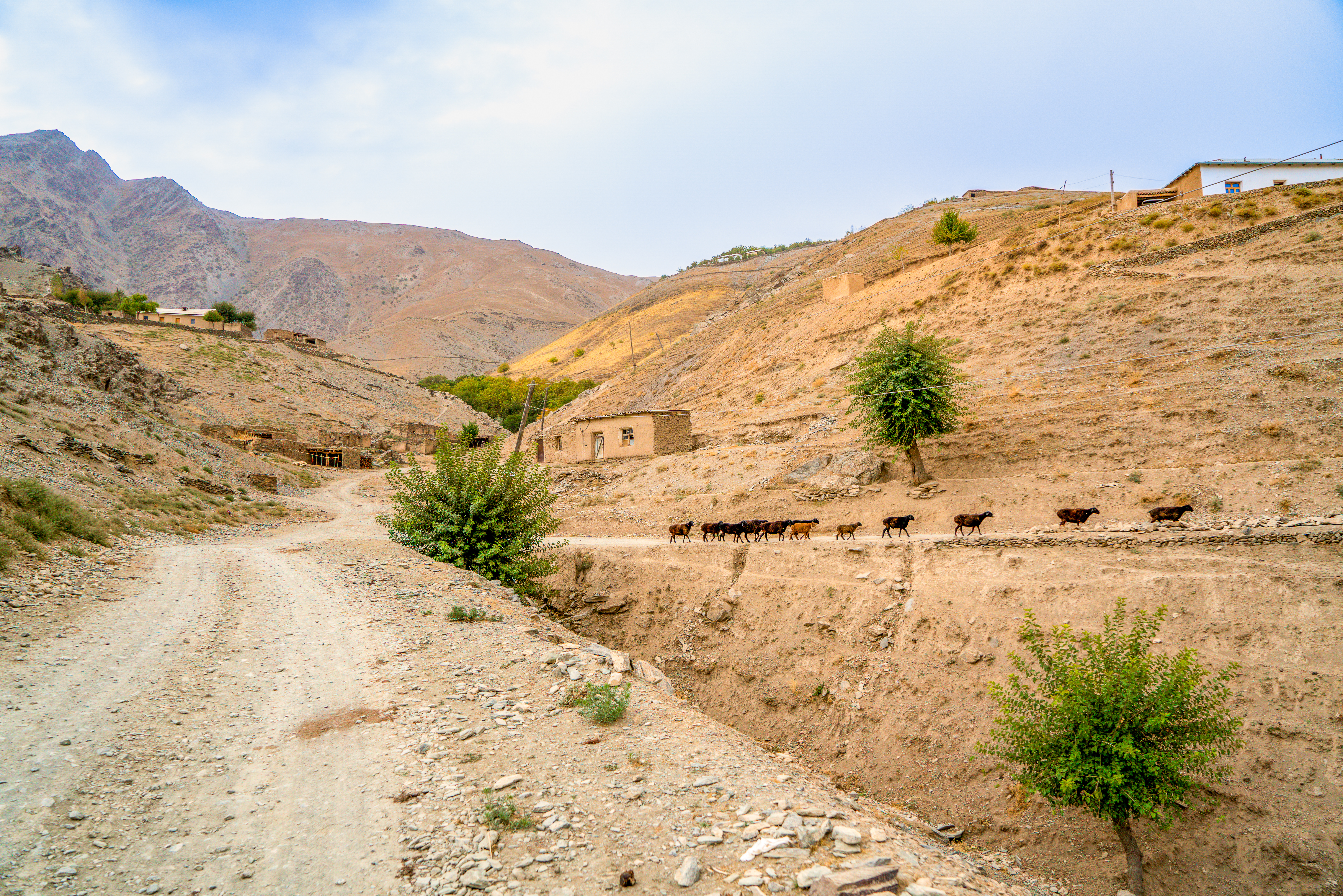
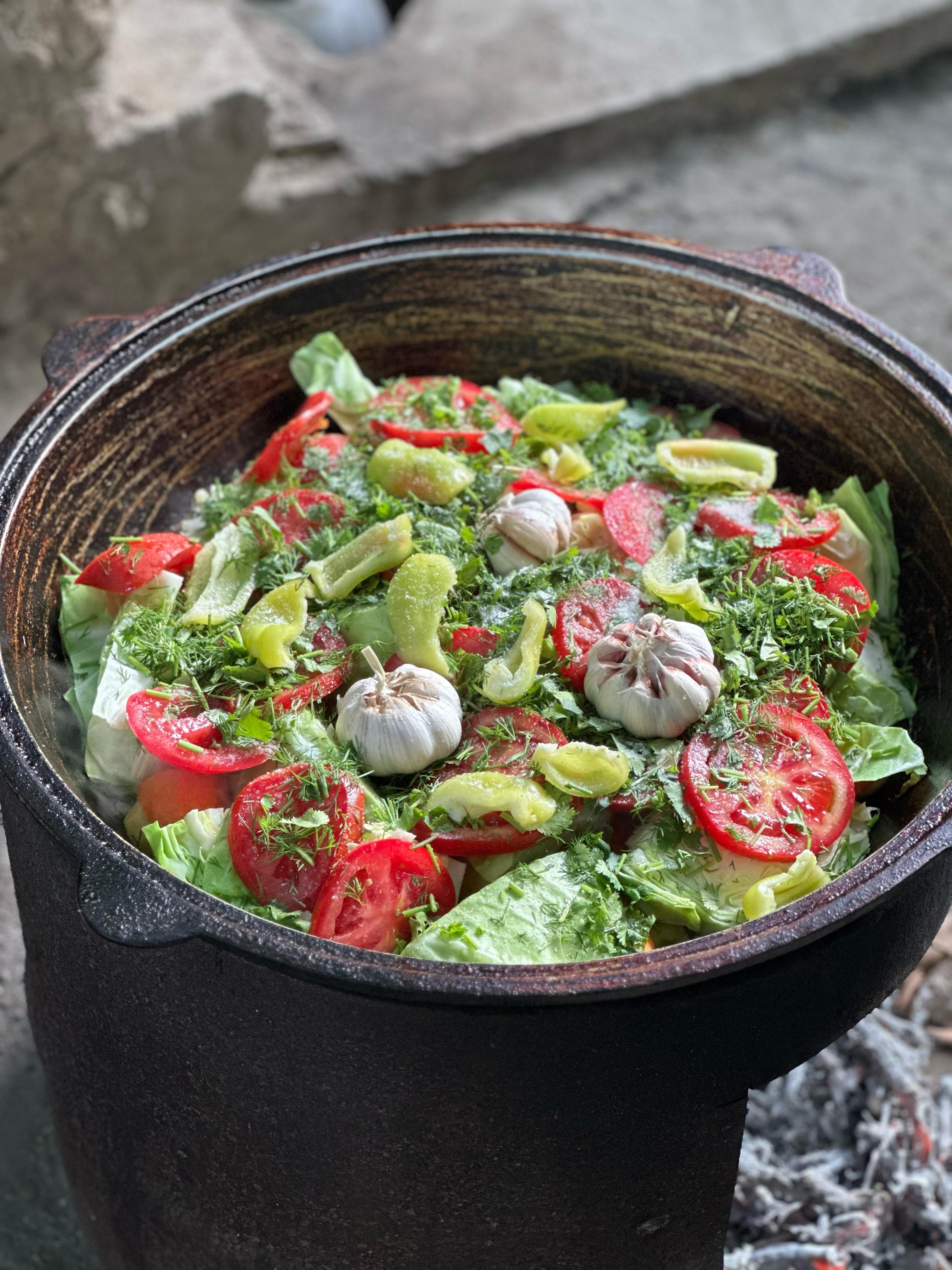
Our destination is the ancient mountain village of Sentyab, nestled into a fertile river valley. We have time for a scenic walk to explore the village, before cooking a traditional dish with our hosts.
Meals: Breakfast,Dinner
Day 6
Mountain village walk; drive to yurt camp
This morning, we hike for two to three hours to the ruins of an ancient village, where the houses were originally built of flat stone.
After lunch at the homestay, we drive west for three hours to the Kyzylkum desert, where we stay overnight at a simple yurt camp.
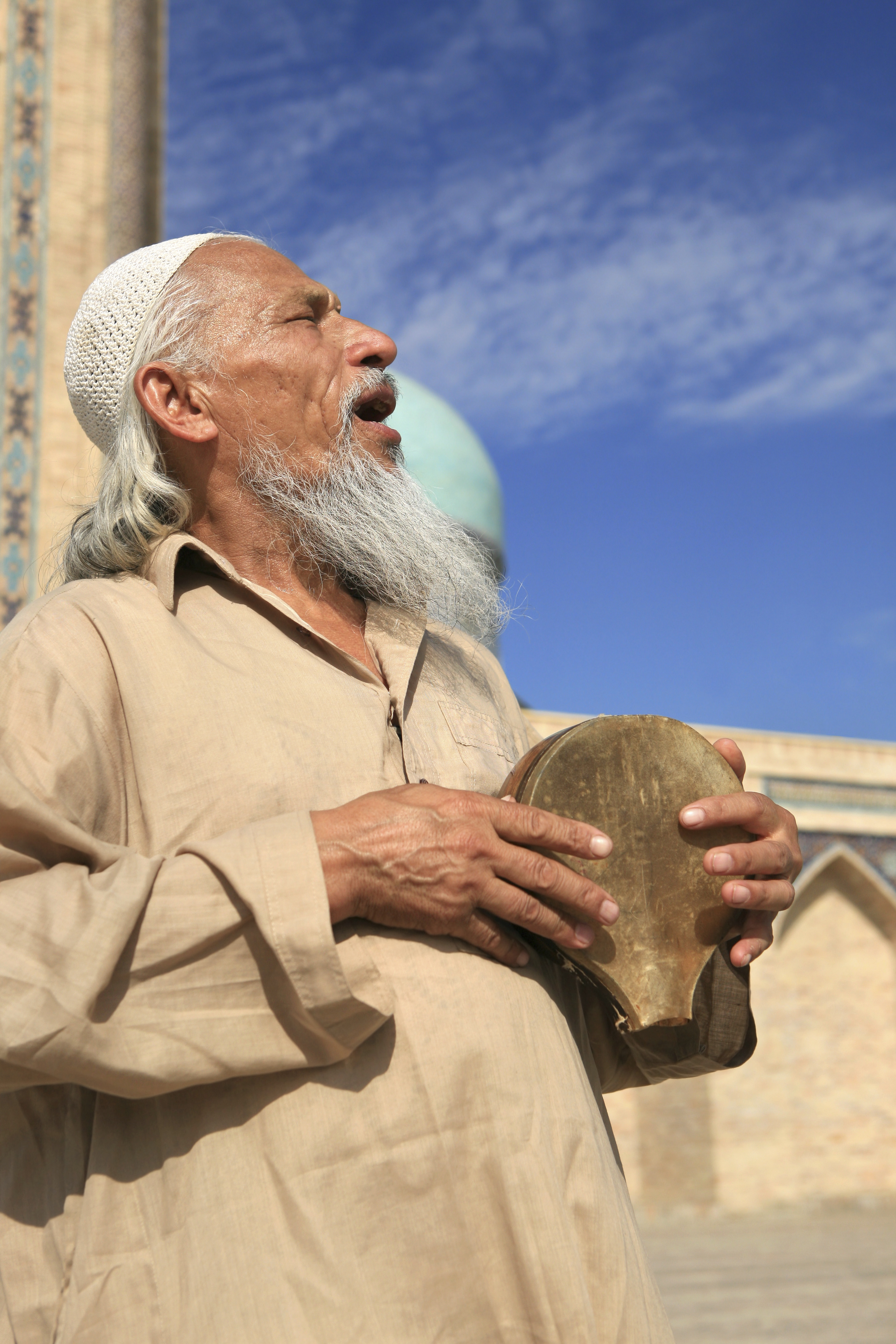
After arriving, we take a walk in the vicinity of the camp and get acquainted with the flora and fauna of the desert. After dinner, we sit around a large bonfire while listening to traditional folk musician, who sings with a dombra (a stringed instrument).
Meals: Breakfast,Lunch,Dinner
Day 7
Camel ride, lunch near Aydarkul lake; tour Nur; sleeper train to Kungrad
After breakfast, we can take a short ride (optional) on two-humped Bactrian camels, before heading to nearby Aydarkul, a huge lake (more than 125mi/200km long) surrounded by the sands and dunes of the Kyzyl-kum desert. Here, we can relax and swim from the sandy beach, before returning to the yurt camp for lunch.
In the afternoon, we drive towards the city of Navoi. After around one hour, we stop in Nur, a place of pilgrimage, for a short exploration of the city. After, we complete the transfer (two hours) to Navoi and take a sleeper train departing around 10pm to Kungrad, arriving around 11am tomorrow (train times are subject to change).
Meals: Breakfast,Lunch
Day 8
Karakalpakstan: Witness the human-made Aral Sea disaster at Moynaq; drive to Nukus
We arrive into Kungrad and the Republic of Karakalpakstan, an autonomous (at least in name) republic of Uzbekistan. The Karakalpak people have a culture and language closer to that of the Kazakhs than Uzbeks. Once an area of agricultural importance, Karakalpakstan now suffers greatly from drought. The Amu Darya River (historically known as the Oxus) ran into the Aral Sea but Soviet-era irrigation schemes, particularly for the production of cotton, mean the river no longer reaches the sea, causing an environmental tragedy and the dramatic shrinking of the sea.
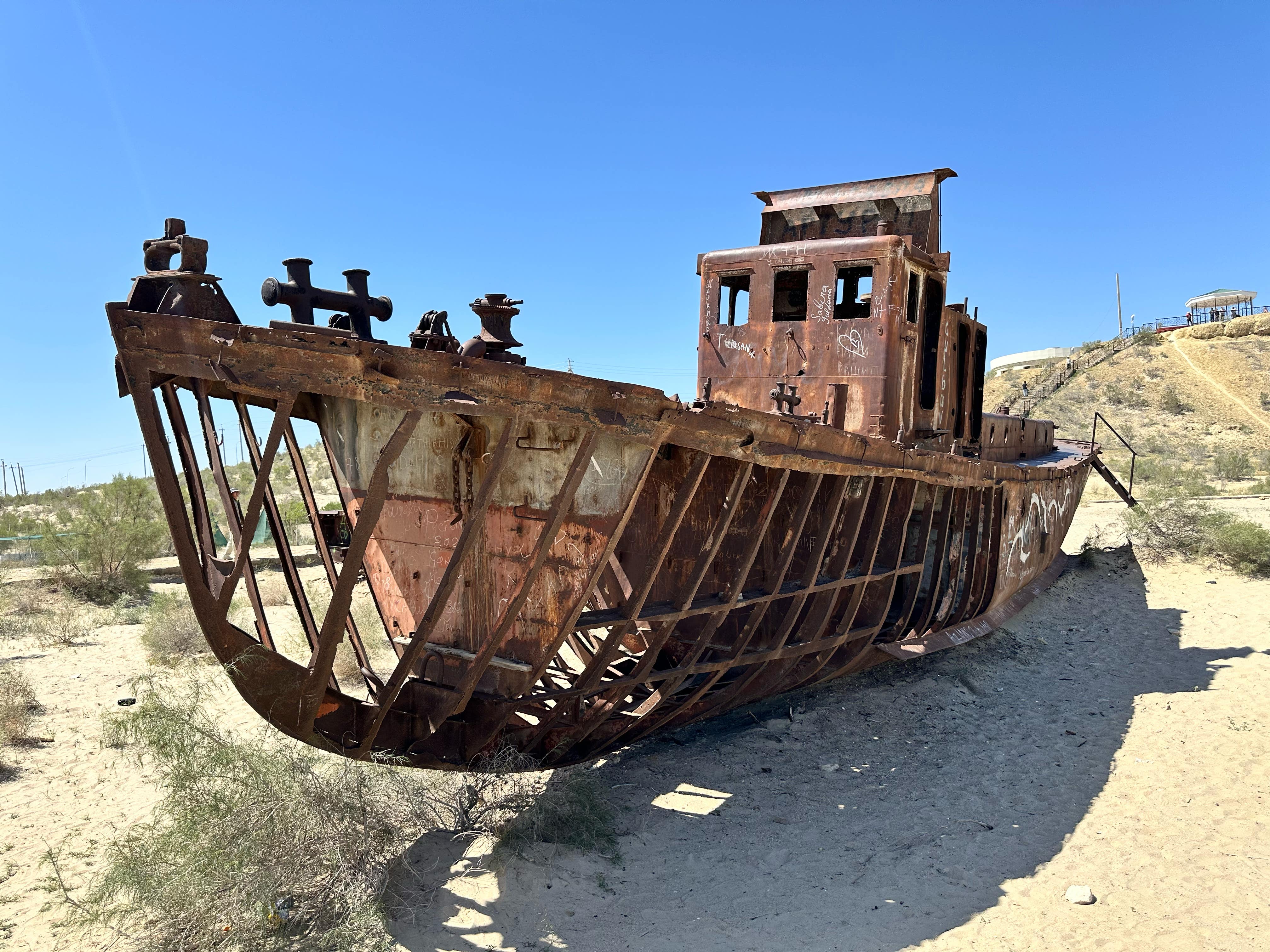
We drive on the bumpy road from Kungrad to Moynaq, which takes about two hours. Moynaq was formerly an important fishing port on the shores of the Aral Sea. The sea is long gone and all that’s left behind are the rusting remains of the fishing fleet sat on the dry seabed amid what is now a bleak, lunar-like landscape. We have time to look around and see the town’s small museum. At times, the area can be dusty, temperatures high and air quality poor, caused in large part by the disappearance of the sea. We leave Moynaq and drive about three hours to Nukus, the capital of Karakalpakstan for the night.
Meals: Lunch
Day 9
Visit Savitsky art museum; explore ancient desert fortresses; drive to Khiva
Visit the Savitsky art museum this morning, which houses an important collection of Soviet avant-garde art, plus a collection of historic artifacts of ancient Khorezm and a collection relating to Karakalpak culture.
Leaving Nukus, we visit the Mizdakhkan necropolis before beginning the drive to Khiva (which takes about six hours). On the way, we visit the Zoroastrian Chilpik dakhma and the ancient Ayaz-Kala fortress, where we enjoy dinner at a yurt camp before the final leg of our journey to Khiva.
Meals: Breakfast,Dinner
Day 10
Full day in Khiva, walking tour of the walled city
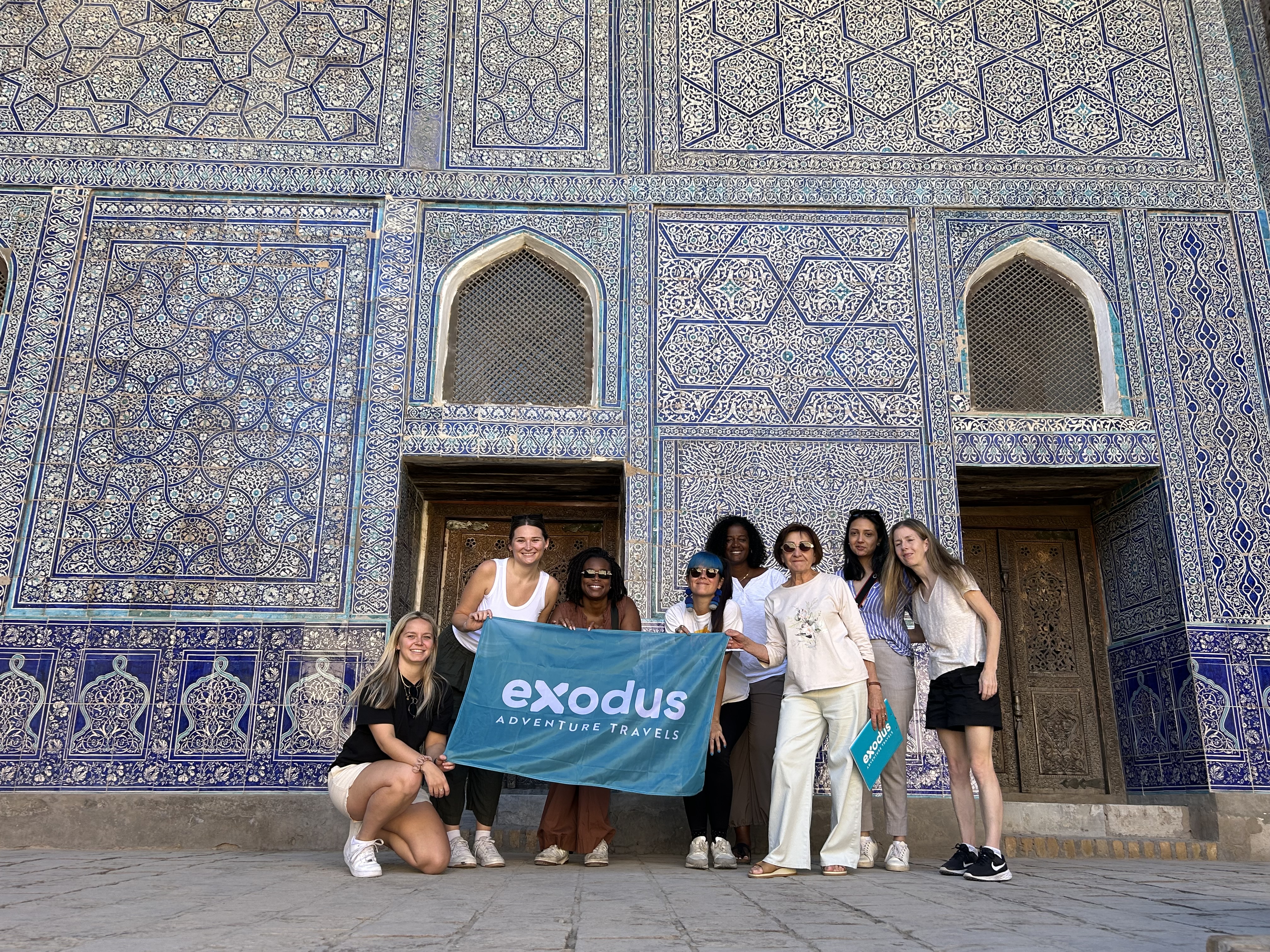
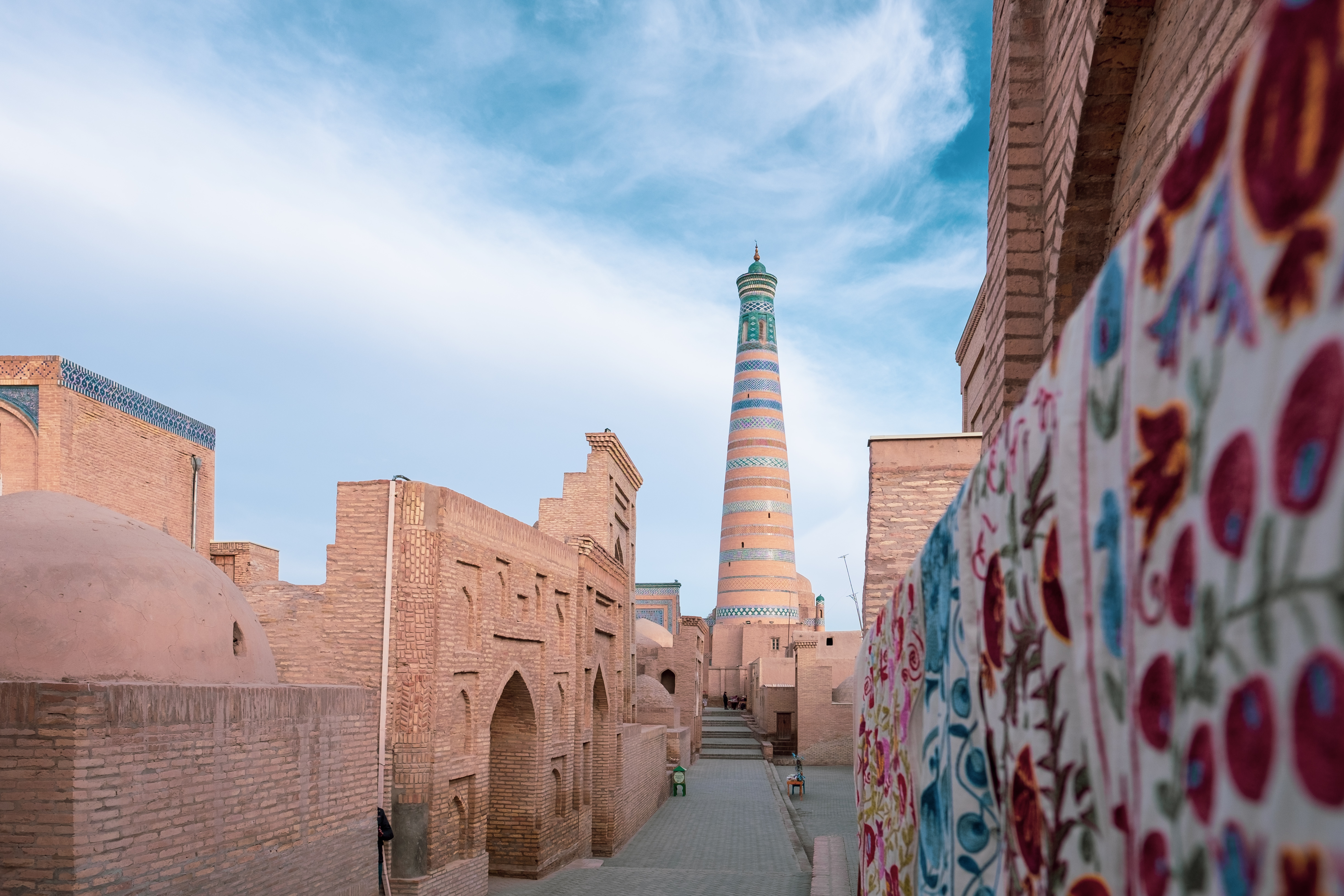
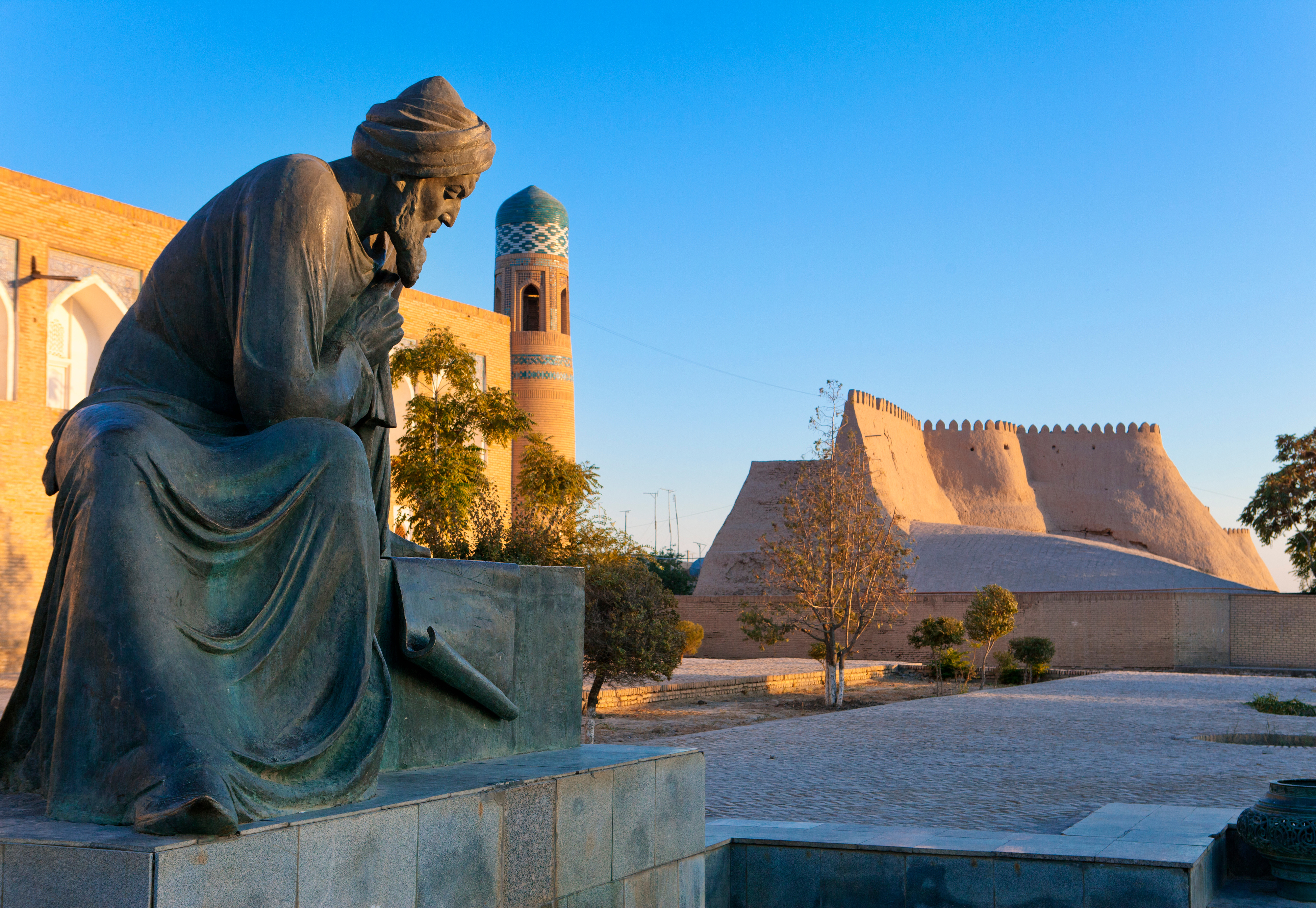
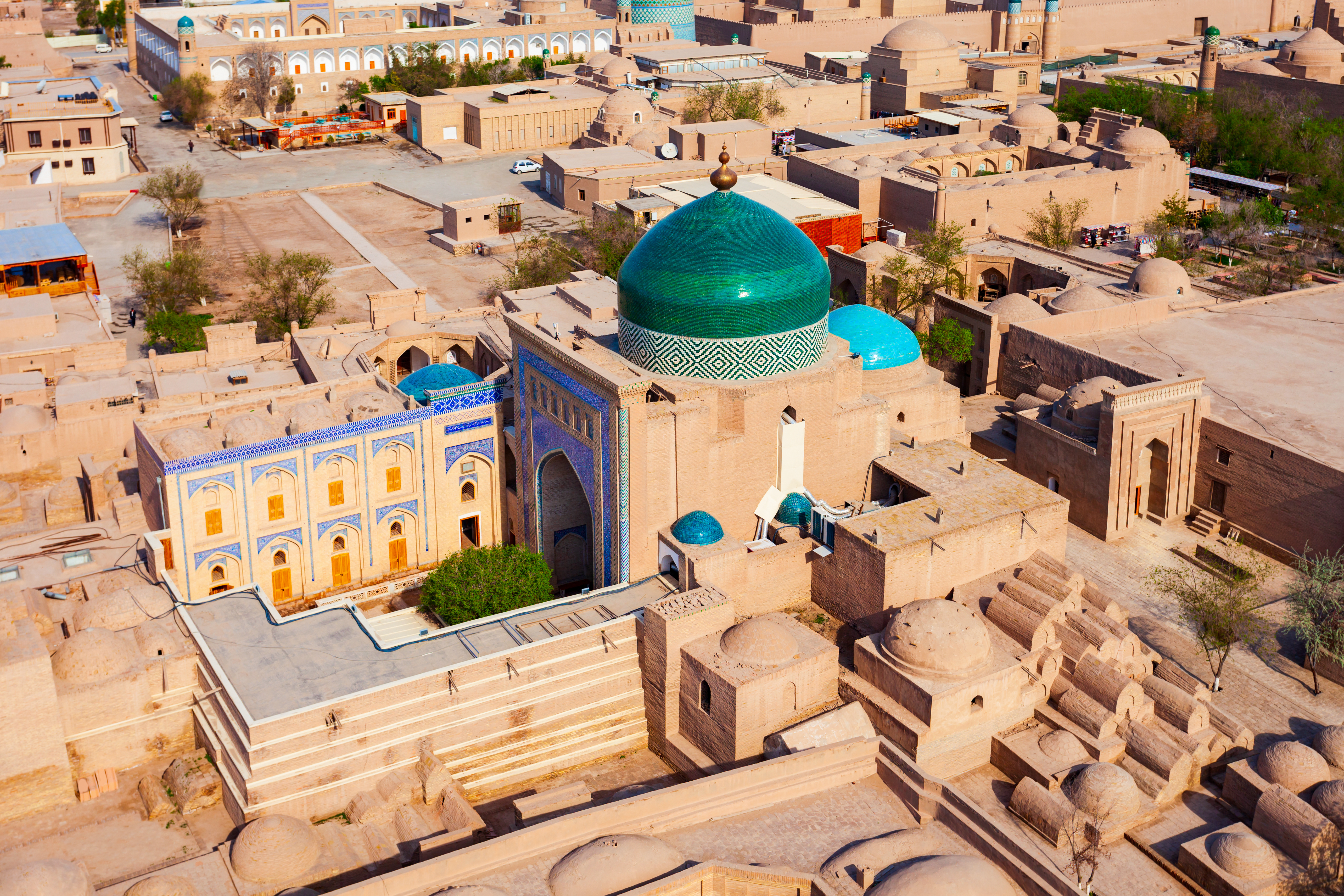
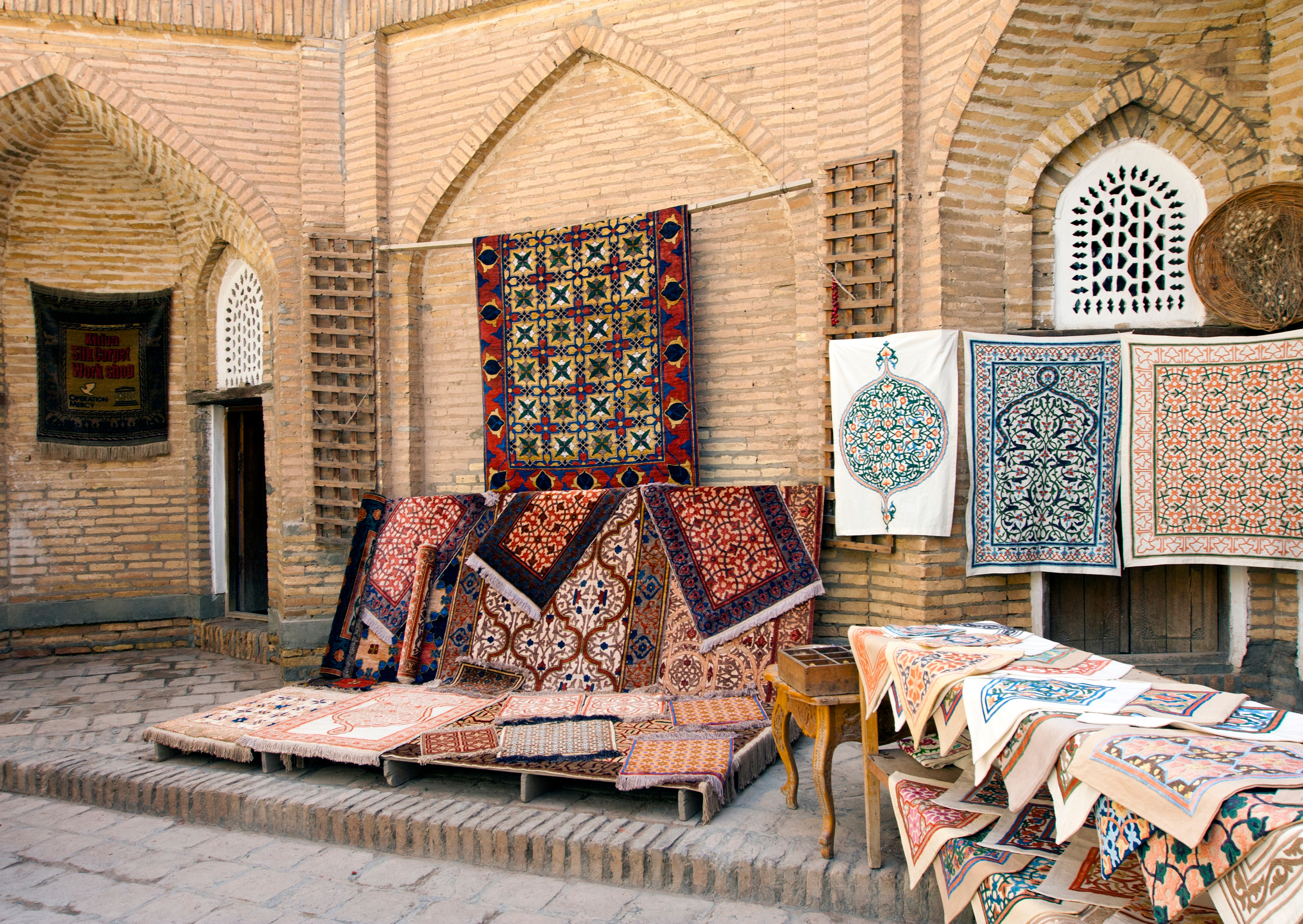
We spend today exploring Khiva, starting with a visit to Ichan Kala, a World Heritage Site, the inner fortress of Khiva. While exploring the open-air museum-city, we see the tile-decorated Kalta Minor minaret, Kunya Ark Fortress (the former residence of Khiva khans), the complex of Pahlavan Mahmud (a national hero and poet), Islam Khoja minaret and madrasah, Juma Mosque, the Tash Khauli and Allakuli Khan palaces. We also visit the workshops of local artisans and see the production of Khiva wool and silk carpets, embroidery, ceramic products and wood inlays.
Meals: Breakfast
Day 11
Train through the Kyzyl-Kum desert to Bukhara
Today we travel across the Kyzyl-Kum desert from Khiva to Bukhara by train, normally with the morning in Khiva before taking an early afternoon train. The journey in a Soviet-era train with four beds per compartment usually takes around eight hours.
Bukhara has more than 900 historic monuments, and we spend time visiting many sites and wandering at leisure among the old city streets. Unlike Samarkand, the district of the old town has remained separate from the rest of Bukhara and has undergone lots of restoration and preservation in recent years. In addition to its importance as a trading hub, it is the perfect setting to sit and watch the world go by, much as it has done for hundreds of years.
Meals: Breakfast
Day 12
Explore Bukhara
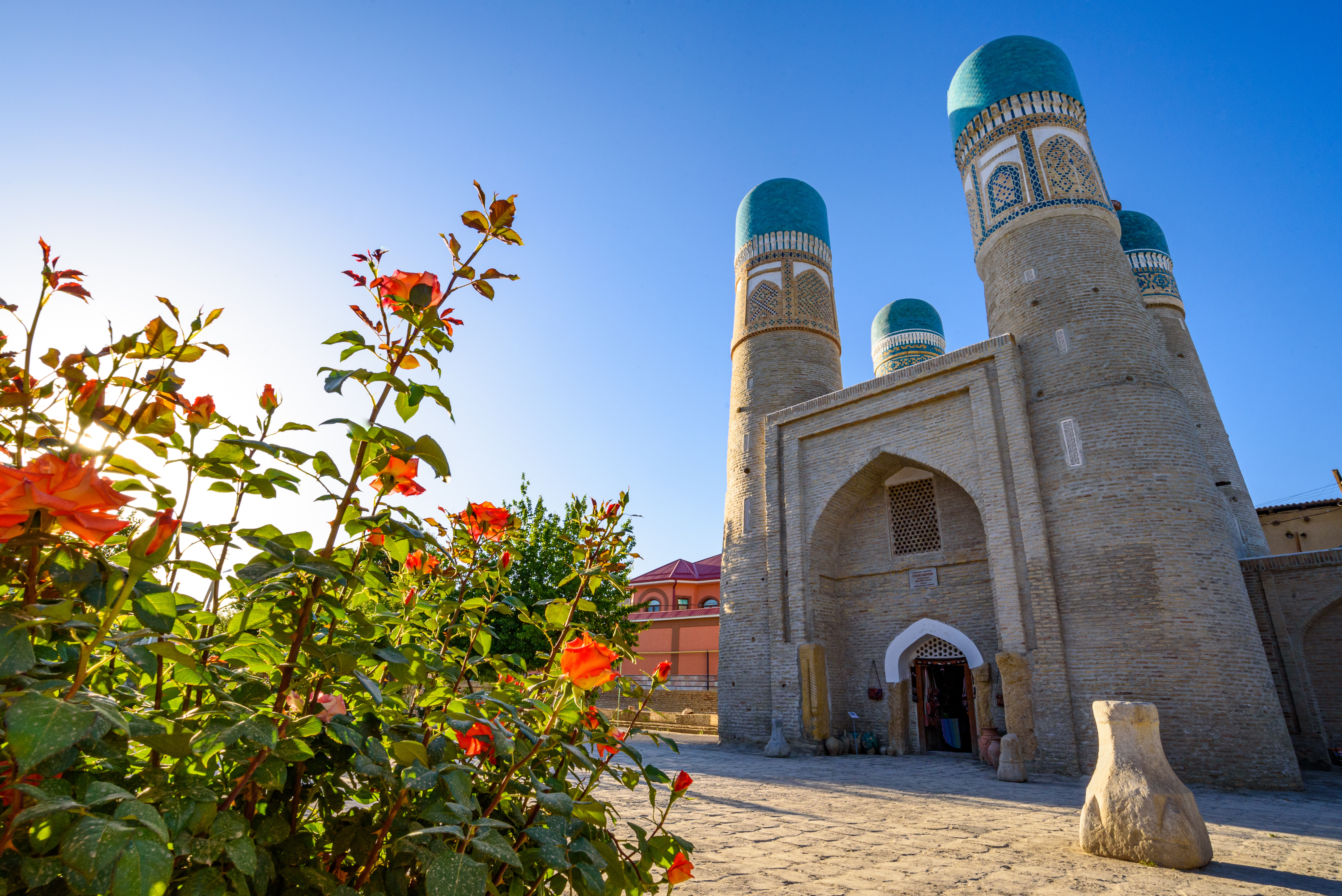
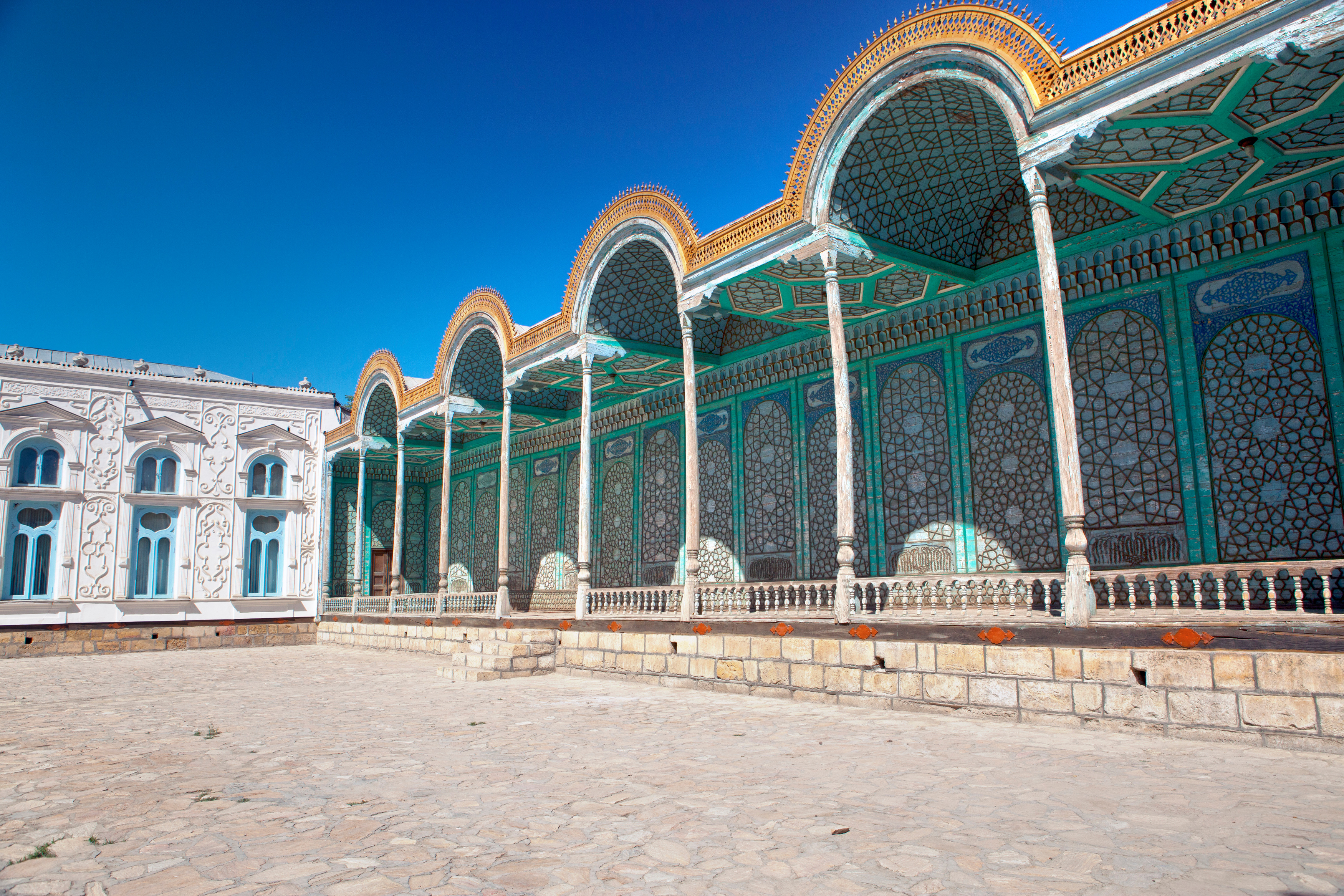
We spend the day exploring Bukhara. Of particular interest is the Fortress Ark where, in the 19th century, the Emir of Bukhara had the English officers Stoddart and Connolly imprisoned and killed, and the mausoleum of Ismail Samani, a beautiful example of early Islamic architecture dating to the 10th century. We also visit the Emir’s rather kitsch Summer Palace, the old town with its domed bazaars and khauz (stone pools, which used to be the only water supply for the city), and the attractive 12th-century Char Minar. One of the great landmarks of Bukhara is the Kalyan minaret, known as the death tower, where many an unfaithful wife has met a sticky end.
Meals: Breakfast
Day 13
Morning in Bukhara, evening train to Tashkent
We continue our tour of Bukhara today before boarding a high-speed train to Tashkent in the afternoon. After arriving in the evening, we transfer to our hotel and have the rest of the evening free to relax.
Meals: Breakfast
Day 14
Chimgan mountains and solar furnace
We have a day trip out of Tashkent today visiting Ugam-Chatkal National Park in the Chimgan mountains. This includes a visit to the resort of Amirsai and a cable-car ascent to an observation point at an altitude of 7,545ft/2,300m, providing views of the snow-capped peaks of the Tien Shan, Charvak reservoir and hydroelectric dam.
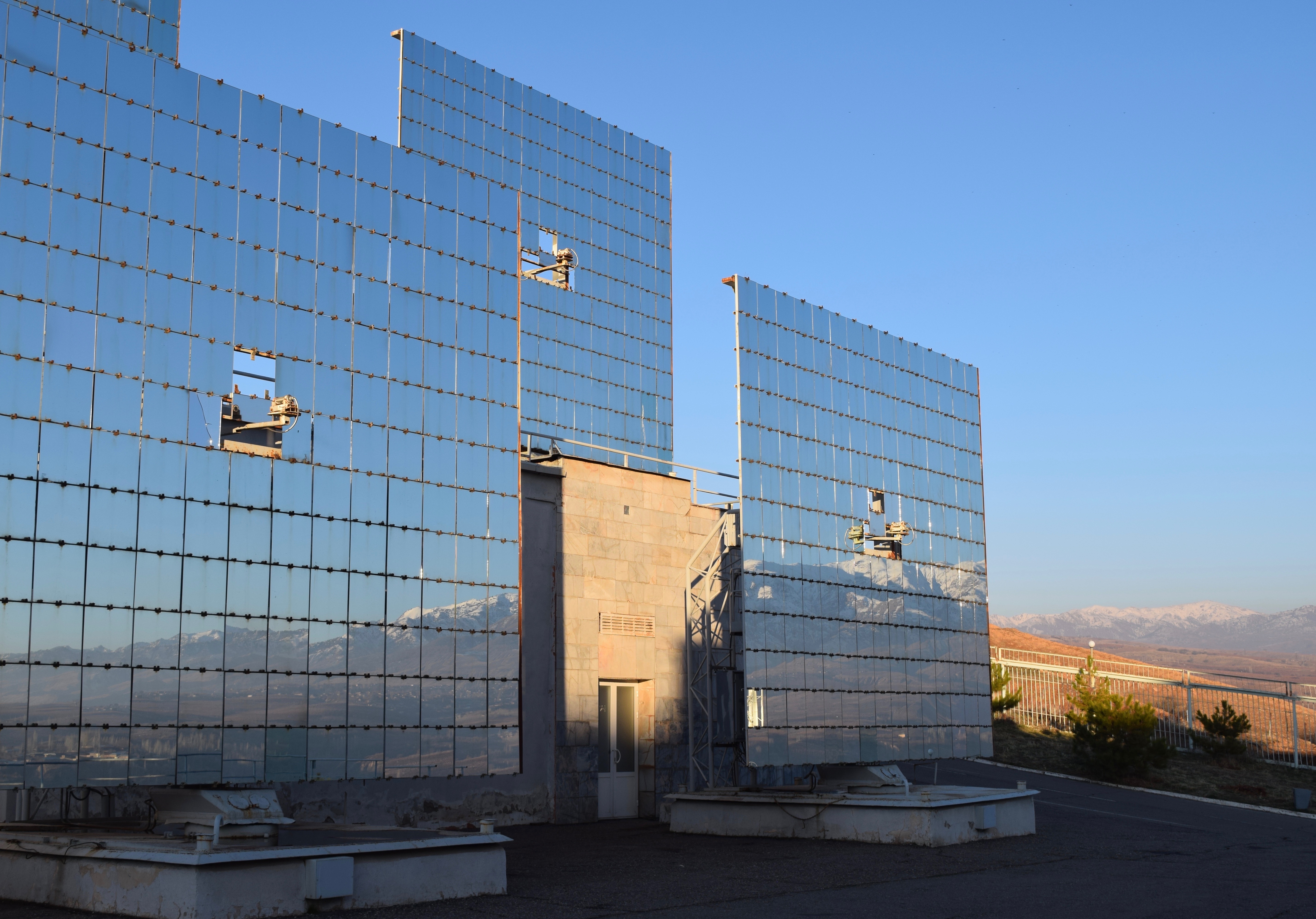
We also visit The Sun heliocomplex at Parkent, a gigantic solar furnace built in the 1980s for the Soviet Union’s Institute of Solar Physics. A vast series of mirrors concentrate the sun’s rays, creating the furnace, which is still in use today.
Meals: Breakfast
Day 15
Adventure ends in Tashkent
Our trip ends after breakfast this morning. If you’d like a little more time to explore, speak to your sales representative about extending your stay in Tashkent.
Meals: Breakfast
What’s included
What’s not included
Additional information
Food
All breakfasts, three lunches and four dinners are included.
Please note, vegetarian food choices may be rather limited. If you are strictly vegetarian, or have any special dietary requirements, please notify us well in advance. In Uzbekistan, the availability of certain specialised products for restricted diets, eg gluten-free or dairy-free, is minimal or non-existent and we strongly recommend you bring these specialised dietary items from home.
Drinking water is included and will be provided in large containers for you to refill your bottle – please bring a reusable bottle with you.
Savitsky Museum of Art, Nukus
Discover the Savitsky Museum, whose daring curator Igor Savitsky preserved Soviet avant-garde works once suppressed by censors. Galleries reveal modernist experiments alongside jewelry, carpets, and costumes of Karakalpakstan.
Hear how collections were assembled in the remote steppe, safeguarding artists’ legacies. The blend of radical canvases and Karakalpak culture makes this institution one of Central Asia’s most surprising and significant museums.
Bactrian Camel Ride in the Kyzylkum Desert
Opt to ride Bactrian camels—the gentle, two-humped icons of Central Asian caravans—across rippled sands near the yurt camp. Handlers lead a calm loop suited to first-timers, with time for photos.
Feel the slow sway above the silken sands and learn how camels carried salt, silk, and spices between oasis towns. This experience is at additional cost and bookable on tour.
Samarkand Icons: Registan, Gur-e-Amir & Bibi-Khanym
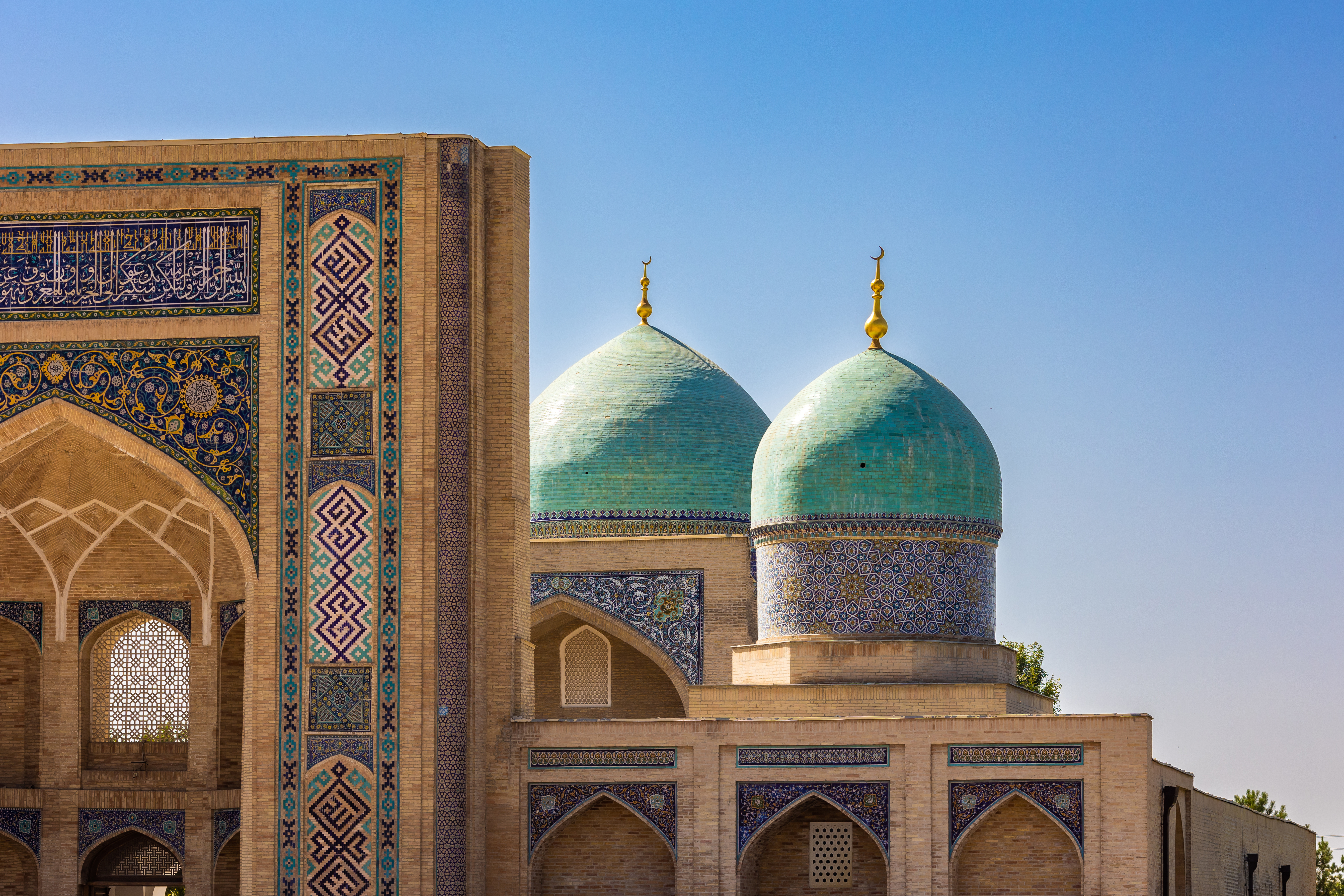
Explore Registan Square, framed by the Ulugh Beg, Sher-Dor, and Tilya-Kori madrasas, where cobalt domes and golden interiors recall the height of Timurid power. Step inside Gur-e-Amir, Tamerlane’s mausoleum, to study shimmering tiles and carved onyx.
Continue to the restored Bibi-Khanym Mosque and the nearby bazaar, where mounds of dried fruit and handwoven textiles color the lanes. Your guide connects architecture with empire-building, astronomy, and artistry that made Samarkand the Silk Road’s magnetic heart.
Ulugbek Observatory & Shah-i-Zinda Necropolis
Visit the Ulugbek Observatory to view the monumental underground sextant arc where the 15th-century ruler-astronomer measured the heavens with remarkable precision. The site connects science, statecraft, and stargazing in the Timurid age.
Walk the avenue of Shah-i-Zinda, a hillside procession of glazed-tile mausoleums. Lapis and turquoise ornamentation frames serene courtyards, each tomb a study in calligraphy and pattern. Stories of patrons, artisans, and pilgrimage bring this sacred complex to life.
Ceramics Painting Masterclass & Silk-Paper Workshop, Konigil
Get hands-on at a ceramics painting masterclass, learning folk motifs and cobalt palettes from Samarkand artisans. Brushwork techniques are demonstrated before you decorate your own tile or small bowl.
Nearby, see silk paper made in Konigil village using mulberry bark and medieval-style waterwheels. Craftspeople explain pulp preparation, pressing, and polishing, revealing how this durable paper once carried scholarship and art across the Silk Road.
Sentyab Village Walk in the Nurata Mountains
Walk the lanes of Sentyab village, where canals feed orchards and mud-brick homes face sun-warmed courtyards. The Nurata Mountains rise above, with goat bells and apricot trees marking a slower rhythm of life.
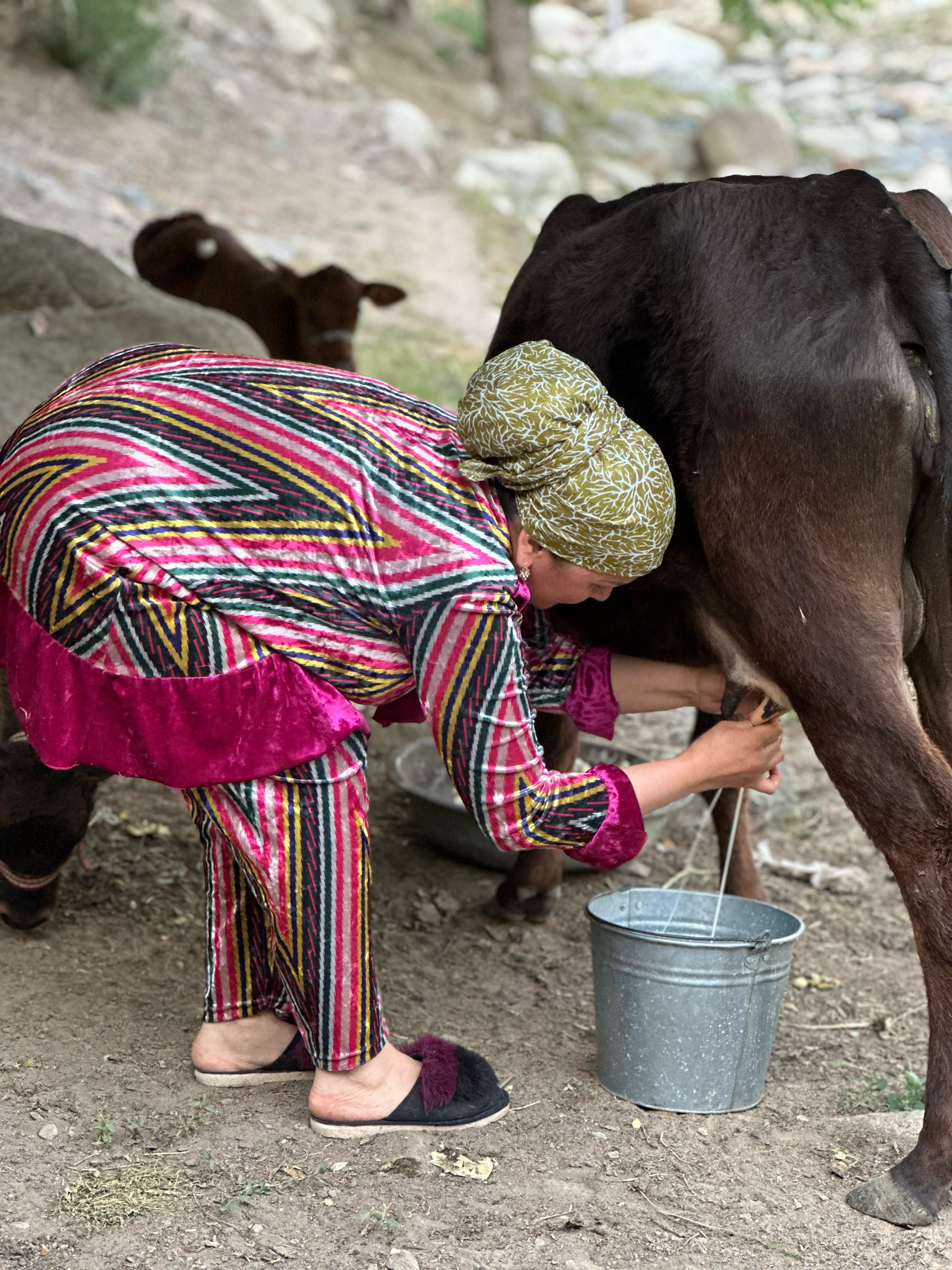
Meet families who tend small plots and livestock, and pause by a stream for mountain views. Your guide explains seasonal work, water-sharing traditions, and rural customs that sustain these remote mountain homesteads.
Traditional Cooking with Village Hosts, Sentyab
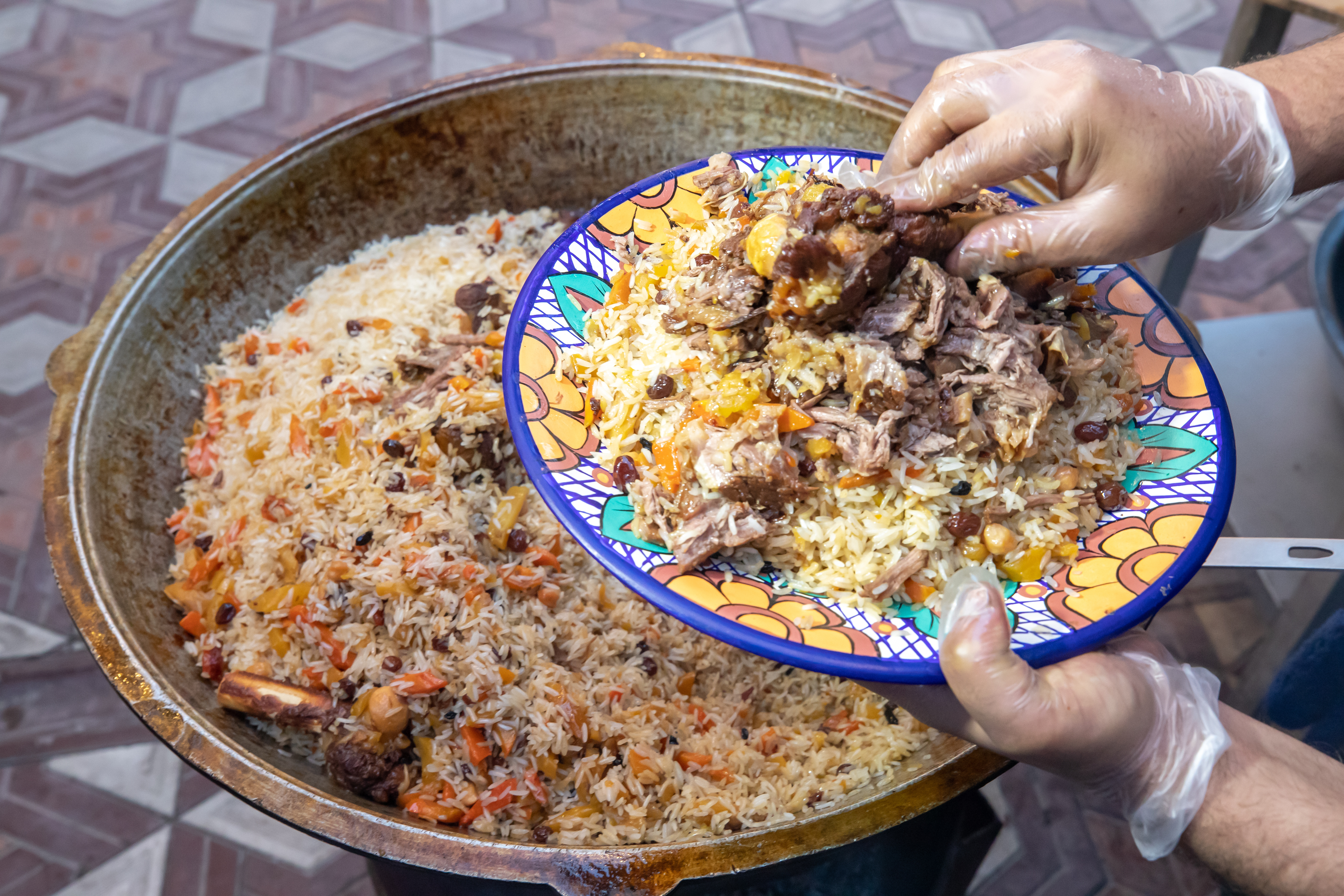
Roll up your sleeves to cook a traditional Uzbek dish alongside your hosts, from shaping non bread to stirring herb-scented stews. Ingredients come from garden plots and local flocks.
Gather around the open-fire hearth to hear about festive dishes, harvest-time preserves, and family recipes passed between generations. The shared meal showcases the hospitality and seasonal produce that define village cuisine.
Nurata Mountain Hike to Ancient Stone Ruins
Set out on a 2–3 hour hike to ancient stone-built ruins tucked into the folds of the Nurata range. Footpaths lead past dry-stone walls and grazing meadows to windswept lookouts.
Learn how highland settlements used local schist and spring water to endure harsh seasons. The rocky ridgelines and broad valleys frame a landscape of resilience, with your guide interpreting history etched into the terrain.
Kyzylkum Yurt Camp Experience & Bonfire Folk Music
Arrive at a yurt camp in the Kyzylkum Desert and take a gentle desert nature walk among hardy shrubs and dune crests. As the light softens, sip tea and watch the sky drain from amber to indigo.
After dinner, gather by the fire for a performance from a folk musician with a dombra. Songs and stories evoke nomadic lifeways, carried on the night air under a sweep of desert stars.
Aydarkul Lake Swim & Desert Shoreline
Drive to Aydarkul lake, a vast ribbon of water edging the Kyzylkum sands. Cool off with a swim from a sandy beach, or stroll the dune-fringed shore where reeds rustle and waterbirds skim the surface.
Your guide outlines how this reservoir transformed local ecology and livelihoods. The desert silence, broken only by wind and waves, offers a restorative pause in an elemental landscape.
Moynaq’s Aral Sea Ship Cemetery & Museum
Stand on the blighted shore where the Aral Sea once lapped and walk among rusted trawlers in the haunting ship cemetery. Sand drifts around propped hulls that once launched daily for sturgeon and caviar.
Visit the Moynaq Museum to learn how Soviet irrigation for cotton diverted rivers and collapsed a maritime economy. Photographs, nets, and charts trace a community’s fate amid one of the 20th century’s starkest environmental crises.
Mizdakhan Necropolis & Chilpik Dakhma
Explore the windswept Mizdakhan necropolis, a layered sacred site with mausoleums and legends spanning centuries near the Amu Darya plains. Stonework and domes rise from ochre earth, framed by the Khorezmian steppe.
Continue to the Chilpik dakhma, a reconstructed Zoroastrian tower of silence used for ancient funerary rites. Your guide links beliefs, trade routes, and shifting empires that shaped these enduring ritual landscapes.
Ayaz-Kala Fortress & Desert Yurt Dinner
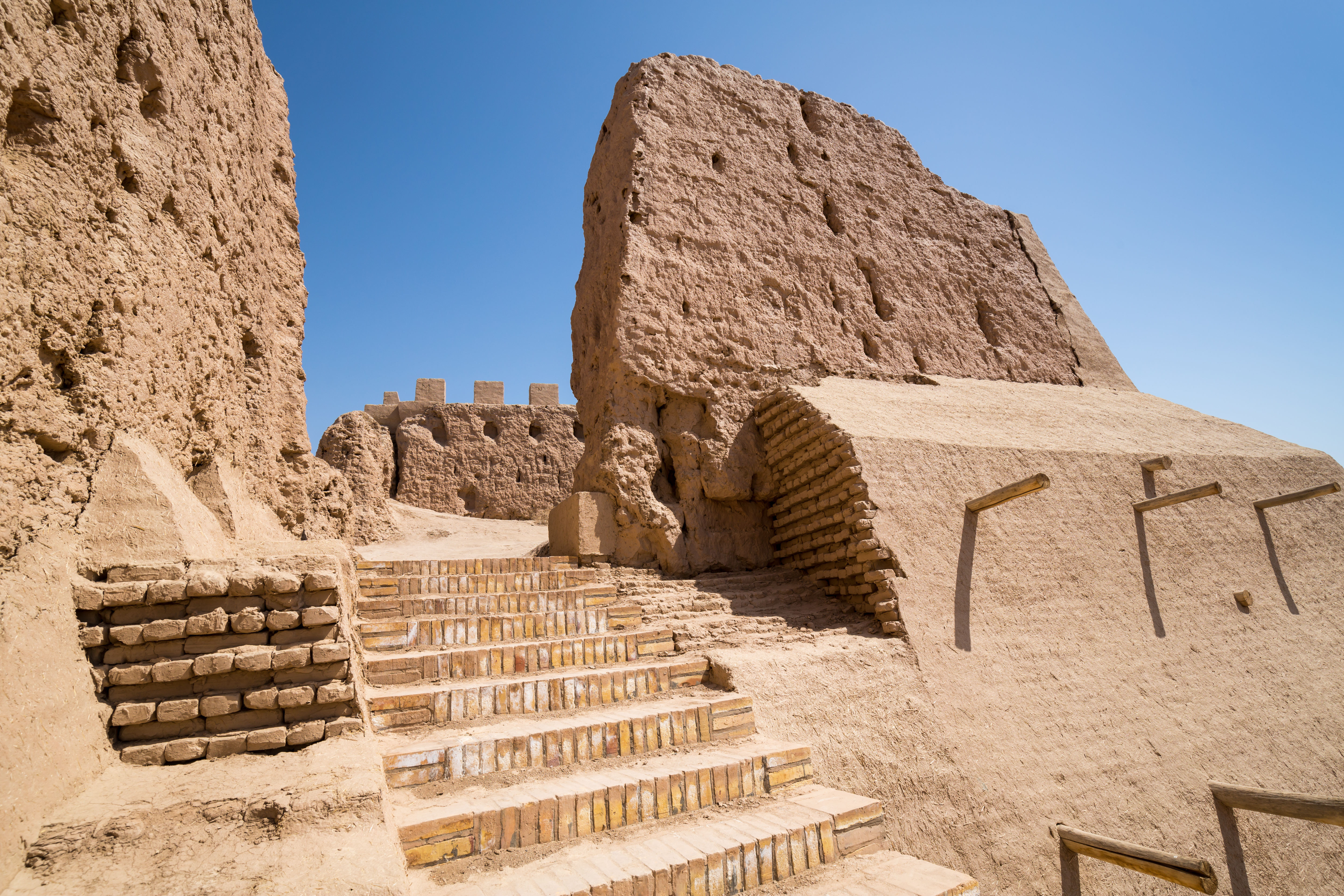
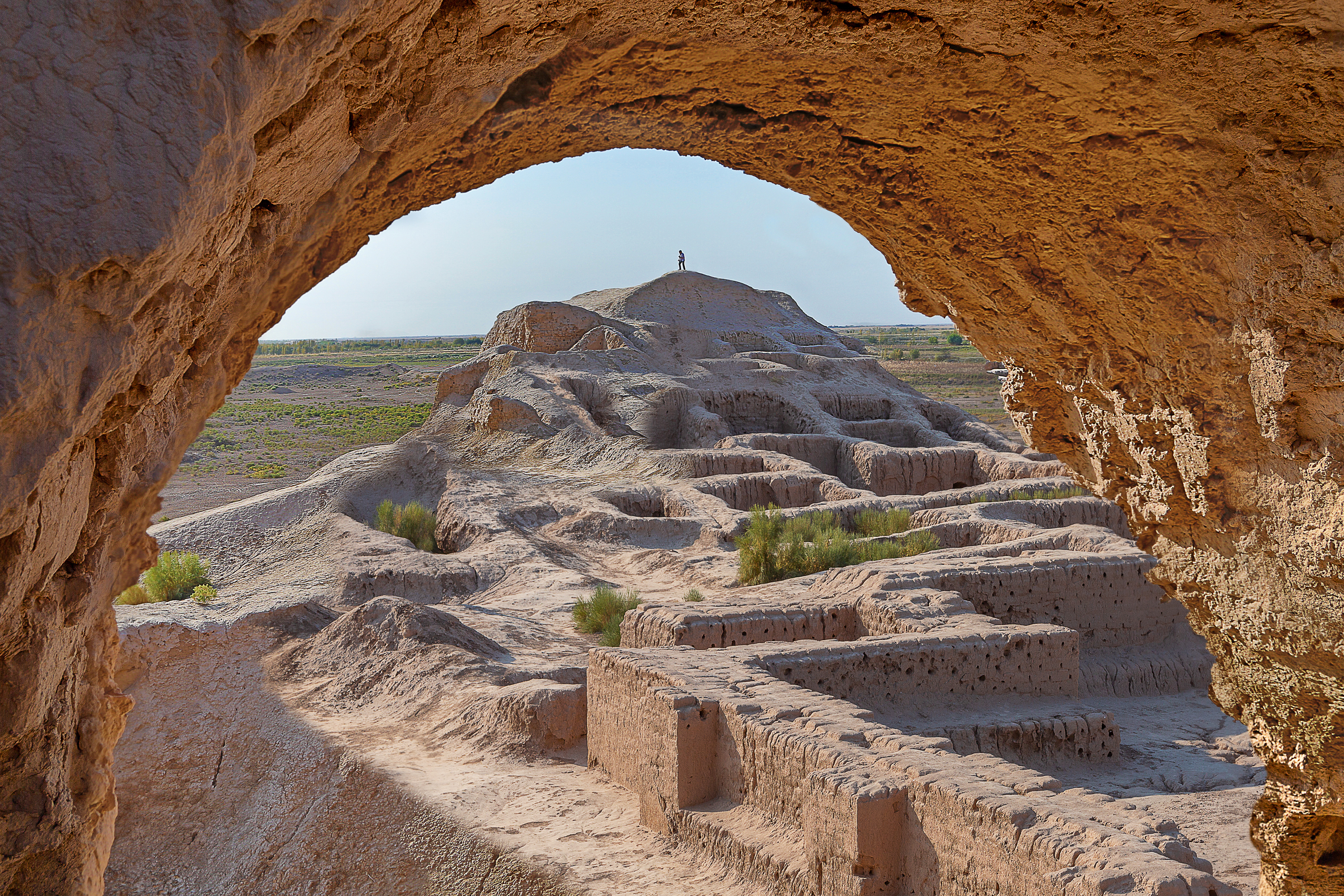
Walk the ramparts of Ayaz-Kala fortress, a chain of hilltop citadels guarding the Khorezm oasis from the 2nd–4th centuries CE. Mud-brick walls command views across tawny ridges and scrubland.
As the light fades, savor a desert yurt dinner near the site. Conversation, starlight, and the scent of spiced dishes accompany stories of caravan defenses and frontier life along the Oxus horizons.
Khiva’s Ichan Kala Walking Tour
Enter UNESCO-listed Ichan Kala, the walled inner city of Khiva, to see the teal-glazed Kalta Minor, the khans’ Kunya Ark Fortress, and the forest of pillars in the Juma Mosque. Narrow alleys reveal tilework, carved doors, and sunlit courtyards.
Climb viewpoints near the Islam Khoja minaret, then meet artisans weaving carpets, embroidering suzani, and turning wood in traditional workshops. Palaces at Tash Khauli and Allakuli Khan complete a vivid portrait of a Silk Road khanate.
Bukhara Historic Core: Ark Fortress, Kalyan Minaret & Lyab-i-Hauz
Walk Bukhara’s lanes to the royal Ark Fortress, seat of emirs and envoy intrigue, and gaze up at the 12th-century Kalyan Minaret, a baked-brick marvel spared by Genghis Khan. Trade domes shelter spice sellers, coppersmiths, and silk merchants.
Pause by the mulberry-shaded Lyab-i-Hauz pool, heart of the old city’s social life. Your guide connects Sufi heritage, madrassa learning, and the hum of domed bazaars that still anchor urban rhythms.
Ismail Samani Mausoleum & Char Minar
Admire the 10th-century Ismail Samani Mausoleum, renowned for its intricate brickwork that shifts with the light. Geometry, proportion, and baked-clay artistry create a serene, near-perfect cube.
Continue to Char Minar, a charming gateway with four decorative towers marking a former madrassa. These sites trace Bukhara’s evolution from early Islamic architecture to later decorative flourishes and neighborhood devotion.
Sitorai-Mokhi-Khosa, the Emir’s Summer Palace
Visit Sitorai-Mokhi-Khosa, the late-imperial retreat of the Emir of Bukhara. European salons meet Bukharan craftsmanship in lacquered ceilings, mirror-clad halls, and rose-scented gardens.
Costumes, porcelain, and courtly portraits illuminate changing tastes at the turn of the 20th century. The palace’s blend of East and West offers a final flourish to Bukhara’s architectural narrative.
Chimgan Mountains Cable Car & Tien Shan Viewpoint
Ride the cable car ascent at the Amirsay resort to a panorama over the Tien Shan foothills. Alpine meadows and craggy ridges tumble toward the turquoise Charvak reservoir and its dam.
Photograph snow-tipped peaks and serrated horizons while your guide outlines seasonal life in the Ugam-Chatkal National Park. Crisp mountain air and wide horizons offer a refreshing finale to your journey.
Parkent Sun Heliocomplex (Solar Furnace)
Explore the Sun heliocomplex near Parkent, a Soviet-era solar furnace where a giant mirror field concentrates sunlight to extreme temperatures for materials research.
Engineers recount the site’s Cold War origins and current experiments, while you examine the towering concentrator and control rooms. It’s an arresting blend of science, industry, and bold design in the foothills east of Tashkent.
Tashkent City Tour: Independence Square & Old City
Join a guided city tour of Uzbekistan’s capital to see Independence Square, tree-lined avenues, and cooling fountains before delving into the Old City’s madrassas and the bustling Chorsu Bazaar. Stroll broad, leafy boulevards and admire metro stations clad in marble and mosaics.
Hear how the city was rebuilt in Soviet style after the 1966 earthquake, shaping today’s mix of modernism and tradition. Your guide introduces the capital’s diverse faiths, markets, and museums, setting the scene for the Silk Road journey ahead.
Welcome Dinner in Tashkent
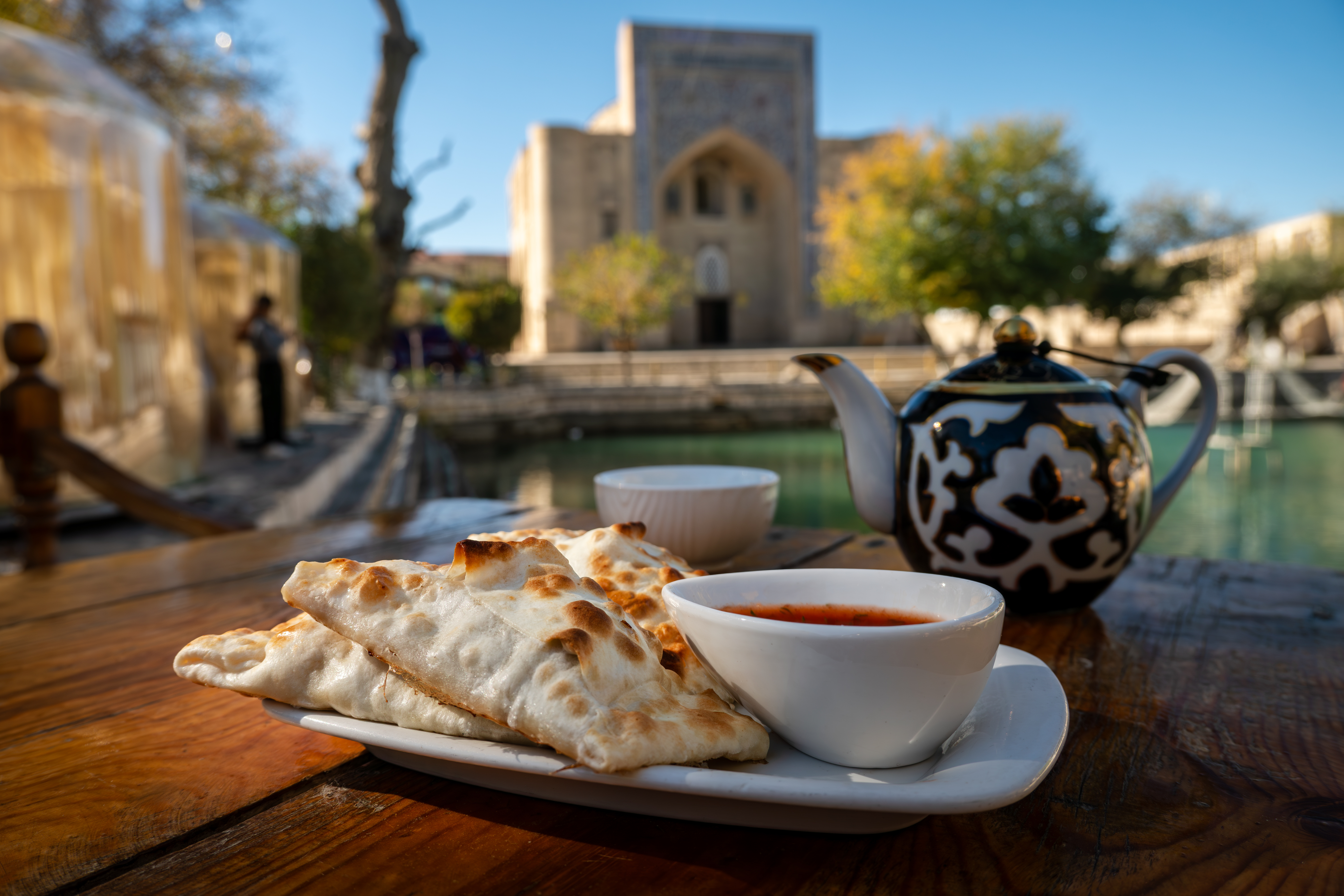
Share a convivial table at a local restaurant and meet your tour leader over classic Uzbek flavors: steaming plov, fire-grilled shashlik, fragrant lagman, and warm rounds of non bread. Toast the adventure with green tea or a glass of local wine.
Your host explains dining customs and the role of the dastarkhan communal spread. It’s a relaxed evening to swap first impressions and enjoy the generous, spice-laced cuisine that fuels life along the Silk Road.