Your itinerary
Day 1
Day 1
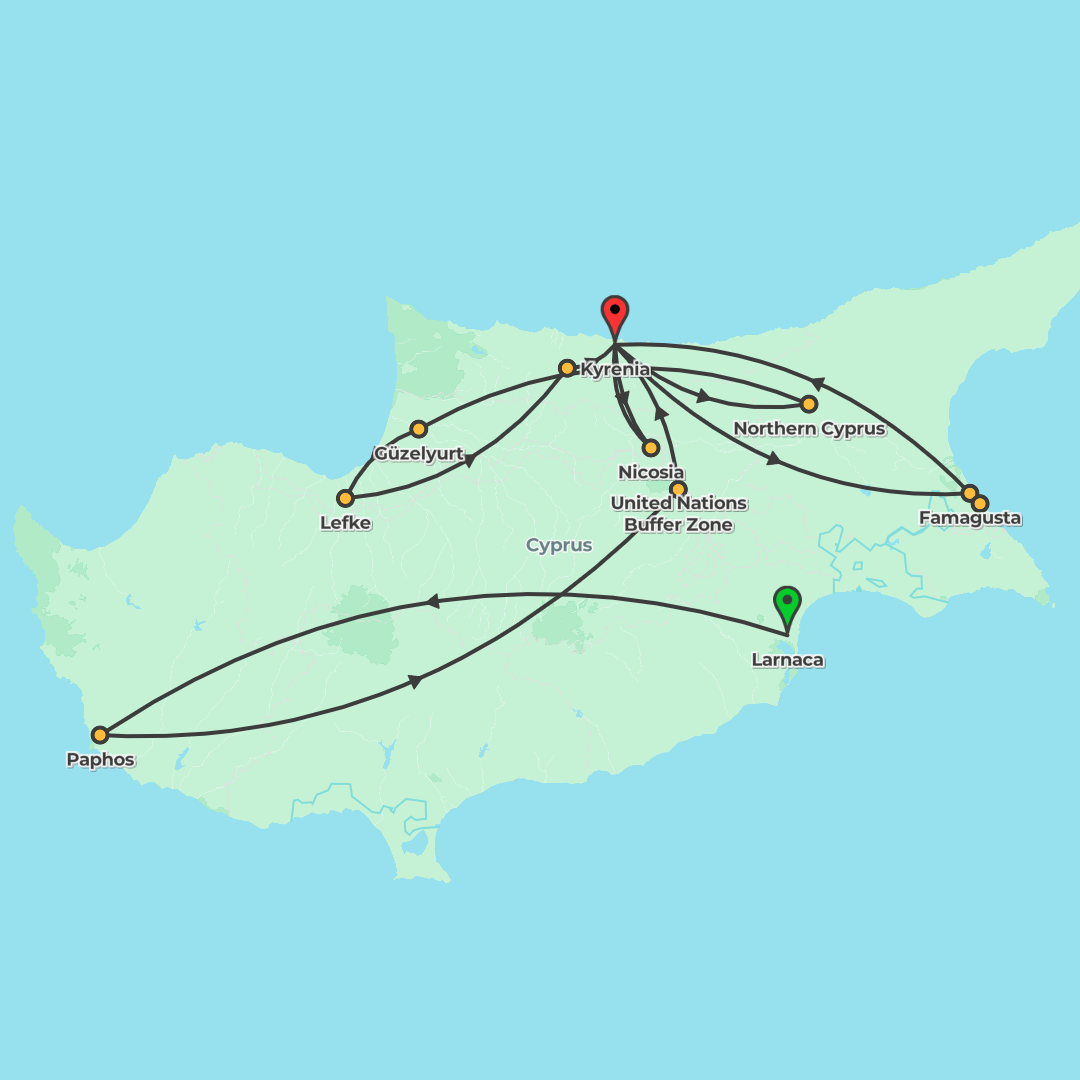
Day 1 – Arrive in Cyprus – Fly to Larnaca or Paphos, depending on your departure airport, where you will be met on arrival. Crossing over the United Nations Buffer Zone, which separates the Greek Cypriots in the south from the Turkish Cypriots in the north of the island, we’ll transfer to our hotel in Kyrenia for the next seven nights.
Day 2
Day 2
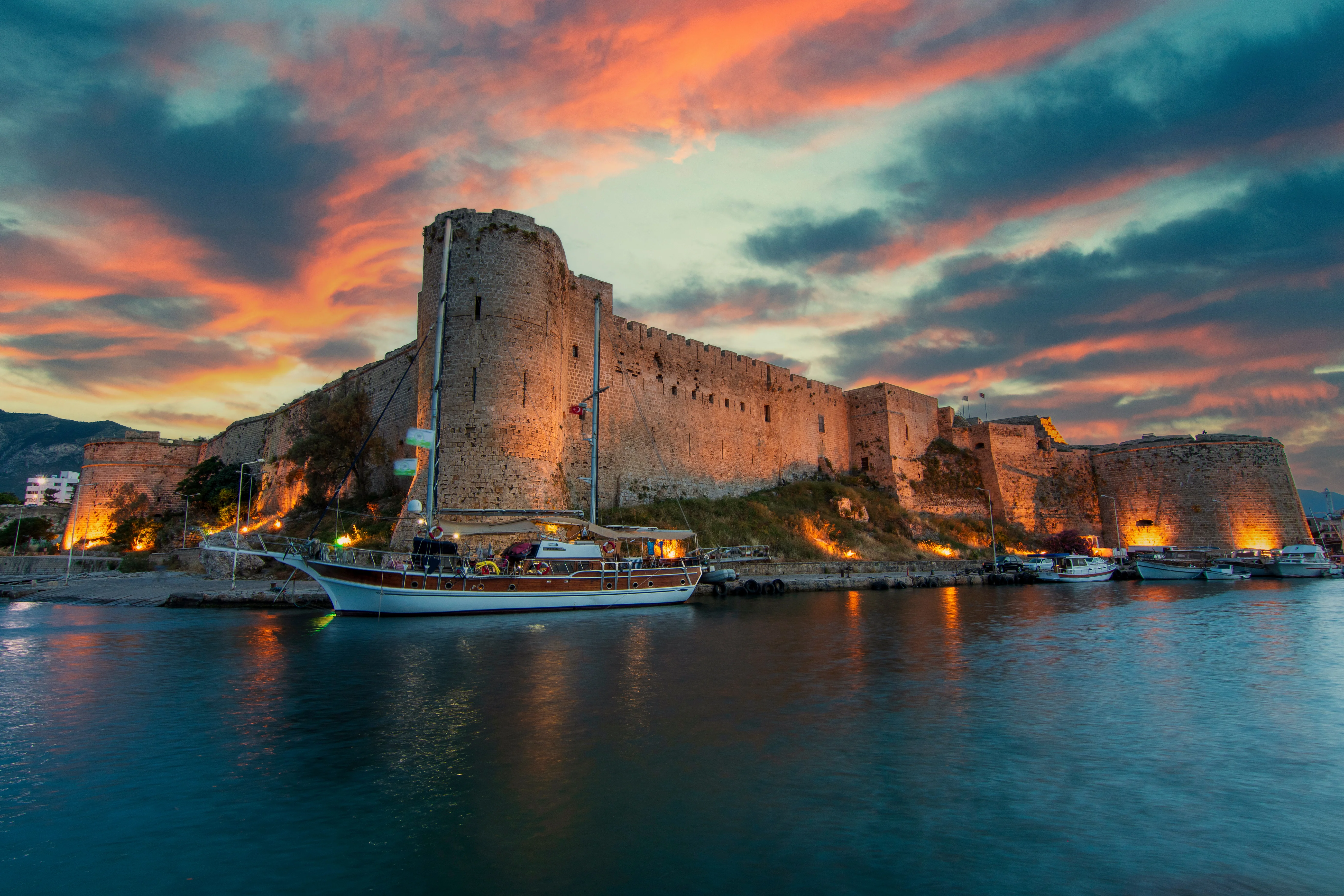
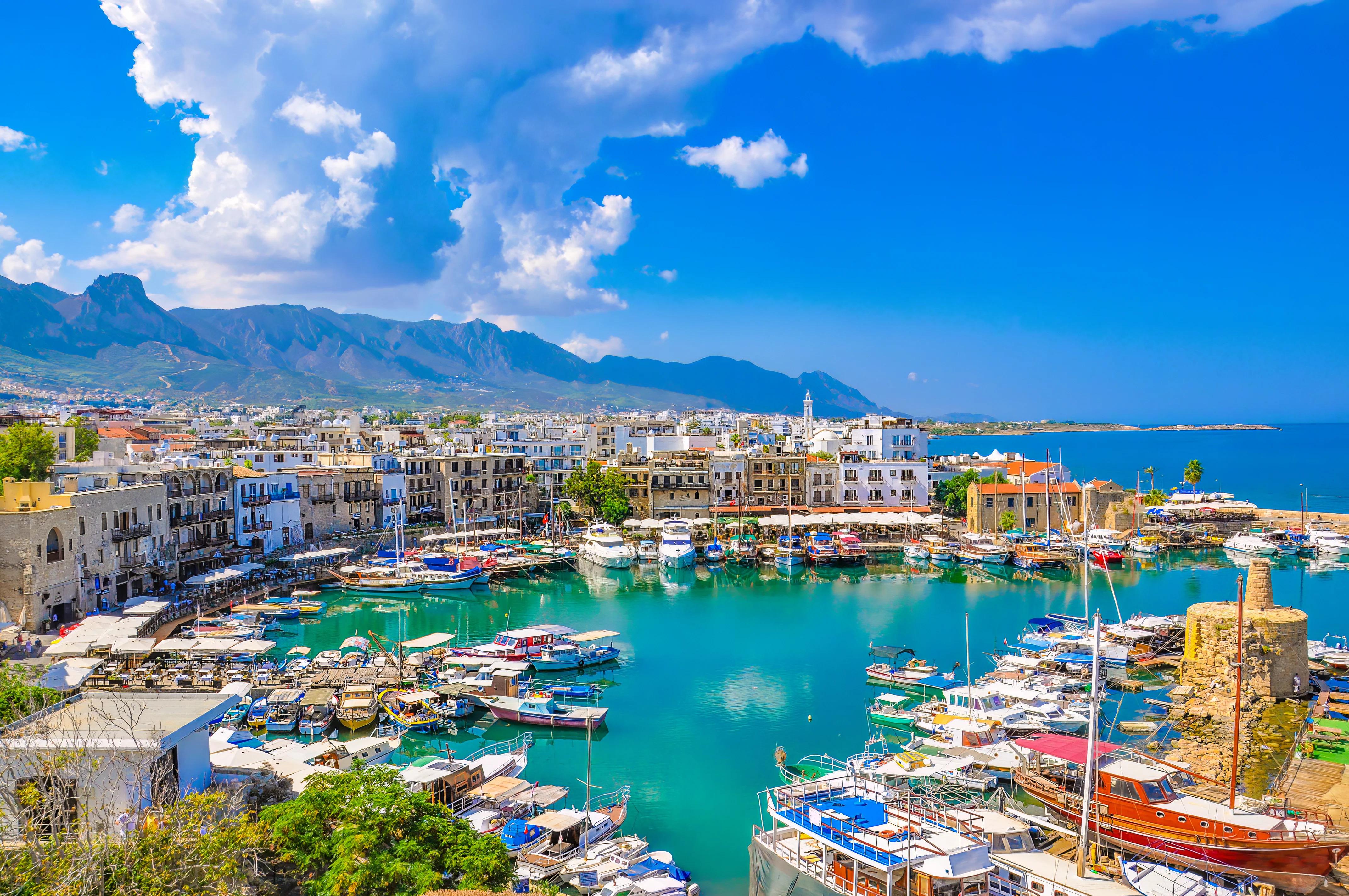
Day 2 – Kyrenia – We’ll begin our exploration in earnest this morning with a guided orientation tour of Kyrenia. This historic harbour underwent extensive renovations between 2022 and 2024, restoring it to its former glory as an ancient harbour.
Kyrenia grew in importance after the 9th century due to the safety offered by its imposing castle. Built by the Byzantines in the 8th century — possibly on an even older Roman site — and most recently modified by the Venetians in the 15th century, it holds much of the town’s history. Under British rule, Kyrenia flourished, with new roads built and developments to the harbour. It became the bustling port town we’ll explore today, framed by the blue waters of the Mediterranean Sea and the surrounding mountains.
We’ll explore the castle and its maze of fortifications, as well as spend time in its museum, which houses a range of archaeological finds and an impressive 3,000-year-old shipwreck. We’ll also see the charming old town, the harbour and the Belediye Meydani —the town hall square — all in the company of an expert local guide, who will bring Kyrenia’s history to life.
After some free time to enjoy lunch, we meet back at the hotel in the afternoon and head into the pine-clad mountains of Northern Cyprus. Here, we’ll visit a unique winery where artisan vintners are passionately crafting exceptional wine — it’s so exclusive that they export it off the island. But don’t worry, you’ll have the opportunity to buy a bottle or two to squirrel away in your suitcase!
We’ll begin with a guided tour of the winery, diving into the rich culture of winemaking, from nurturing vines to the final production, and of course, we will savour the wines! The experience culminates in a delicious dining experience in the vineyard’s boutique restaurant, where the chef prepares dishes to delight the palate.
Day 3
Day 3
Day 3 – Güzelyurt, Soli & the Palace of Vouni – You’ll be treated to views of peaceful villages and untouched countryside as we head northwest this morning. Our first destination is Güzelyurt, the “fruit basket of Cyprus.” Nestled in the majestic foothills of the Troodos Mountains — an ancient formation that rose from the sea 90 million years ago — this enchanting area boasts an abundance of trees bearing soft fruits, citrus and nuts.
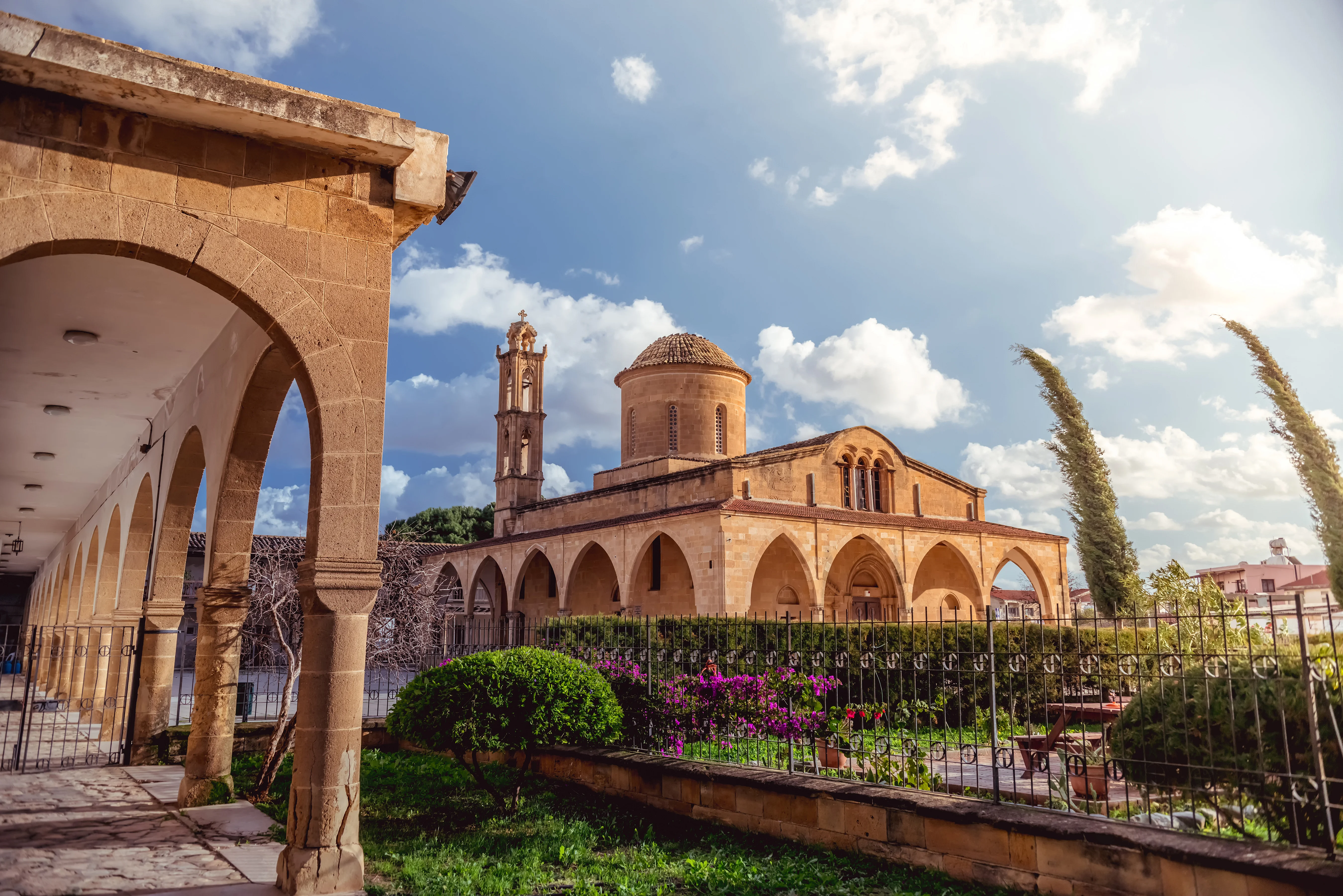
Even in this small town, you can still see the impact of the post-World War I population exchanges between Greece and Turkey, when Christian communities left and Muslim communities settled here. The curiously named ‘Church Mosque’ (also known as the Church of St Gregorius) highlights this complex history. Despite the upheaval, there are still many well-preserved ancient sites to uncover, such as the Agios Mamas Church and Monastery, which was built upon a site once dedicated to Aphrodite.
The Museum of Archaeology and Nature also invites exploration, showcasing significant artefacts from the Neolithic period and Bronze Age, each piece a testament to its long history.
Later, we’ll visit one of the most impressive sites on the island: the ancient city of Soli. This ancient settlement is one of the ten ancient kingdoms of Cyprus, dating to the 6th century BC. Believed to have been founded by the Athenians returning from the Trojan War, what remains today dates back to the late Roman and early Byzantine times. It offers fantastic insights into daily life.
Soli was one of the most important Greek capitals of Cyprus, with an abundance of copper deposits, a good water supply, fertile soil and a protected harbour. It’s also of great importance to Christianity: this is the site where St Mark was baptised.
The ruins of ancient architectural structures are ripe for exploration, such as the ruins of the Roman theatre, a nymphaeum, the temple of Athena, a palace, a necropolis and a great basilica with marvellous 4th-century mosaics. Although only part of the site has been excavated, they’ve already uncovered so much, including gold jewellery that is now on display in the museum in Güzelyurt.
After a short drive, we reach an idyllic location by the Mediterranean to explore the remains of the Palace of Vouni. Situated atop a hill with stunning views of the sea, the palace had a relatively brief existence. Built in early 500 BC by the pro-Persian city of Marion, it was intended to keep watch over neighbouring Soli, a supporter of the Greek cause. Unfortunately, its story was cut short when the palace was destroyed by a fire in 380 BC and abandoned.
The ruins indicate that its inhabitants enjoyed a life of wealth and luxury, evidenced by the remains of a great hall, a sophisticated plumbing system and a temple dedicated to Athena.
Our last stop for the day will be the historic town of Lefke, situated alongside the Green Line. With roots tracing back to the Neolithic period, its buildings — some dating to the 7th century — tell the story of its rich legacy. This charming town shines with its bustling university, flourishing copper mines and fragrant Jaffa orange groves.
Day 4
Day 4
Day 4 – St Hilarion & Bellapais – You’ll be tempted to succumb to the romance of two storybook highlights. First, we’ll visit St Hilarion Castle that many say is allegedly the inspiration for two fairytale castles: Bavarian King Ludwig’s Neuschwanstein Castle and Sleeping Beauty’s castle in Disneyland. If you’re fairly mobile, there’s time to explore inside; otherwise, you can take in the superb views from the easily accessible viewpoint at the entrance or from the castle’s café.
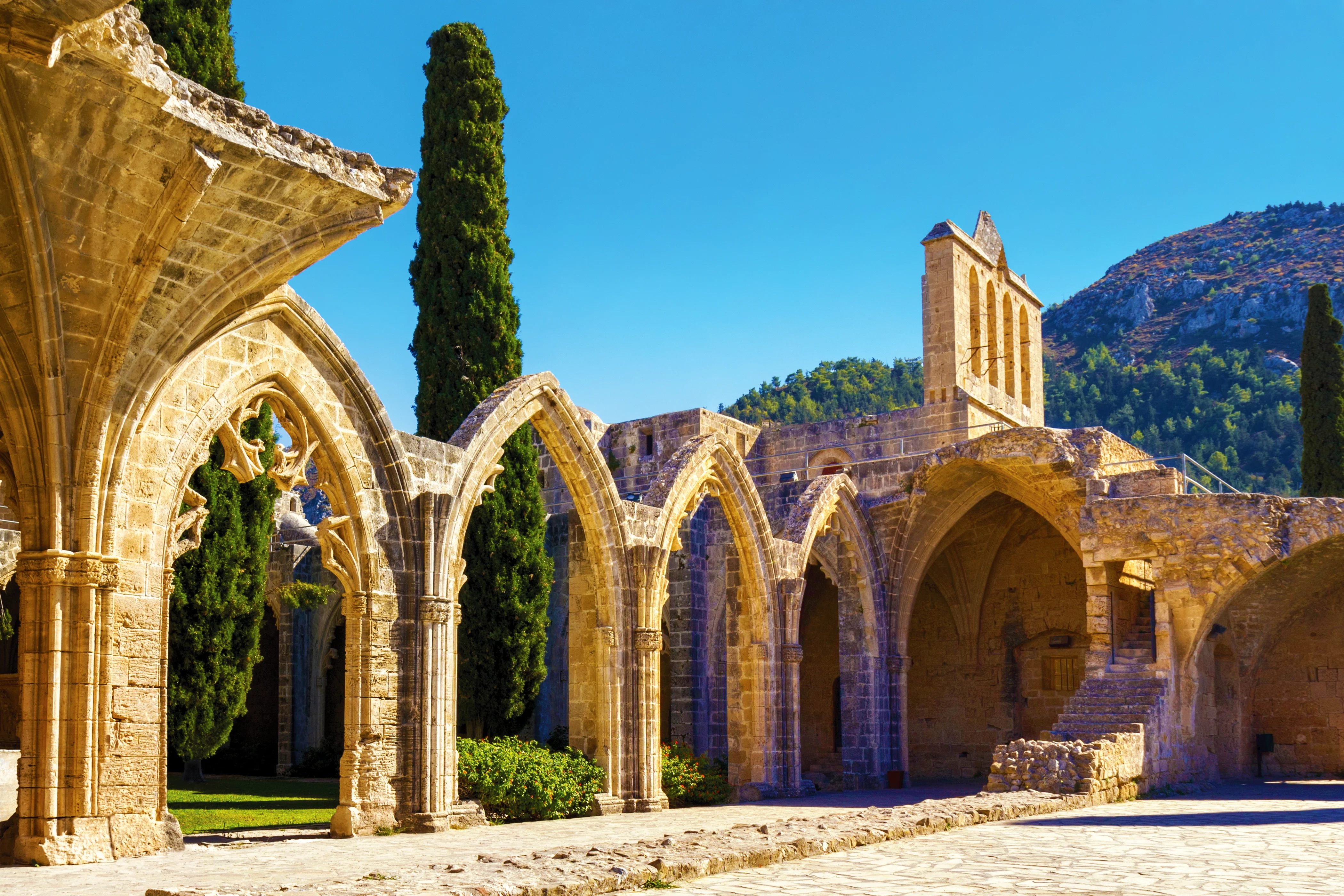
Then we’ll visit the beautiful village of Bellapais. You can wander through the tangle of narrow lanes past flower-bedecked buildings up the hill, where you’ll find outstanding views of Kyrenia harbour and the cerulean sea. The crown jewel of the village is its medieval ‘Abbey of Peace’, the ruins of a monastery that once offered shelter to expelled Augustinian monks when Jerusalem fell to Saladin. The site also houses a museum, and the abbey’s Gothic refectory serves as a unique venue for concerts and lectures.
After a lovely day of sightseeing, we’ll return to Kyrenia in the mid-afternoon and spend the rest of the day at leisure.
Day 5
Day 5
Day 5 – Nicosia – Today, we’ll explore the world’s last divided capital, Nicosia, once a small town established by the Ptolemaic dynasty in 300 BC. Nicosia was a walled city for centuries, and on our guided tour of its old town, we’ll see the impressive Venetian city walls and the superbly preserved Kyrenia gate, adorned with inscriptions left by past rulers, including the British. Discover the main square, the Bandabuliya market and the staggering Venetian column, transported from the ruins of Salamis. We’ll marvel at the mammoth Selimnye (St Sophia) Mosque, which is visible from both sides of the capital and is its most historically significant mosque. If it looks remarkably like a church, it’s because it was formerly St Sophia, a 13th-century Roman Catholic cathedral, before the Ottoman invasion introduced the twin minarets that tower above.
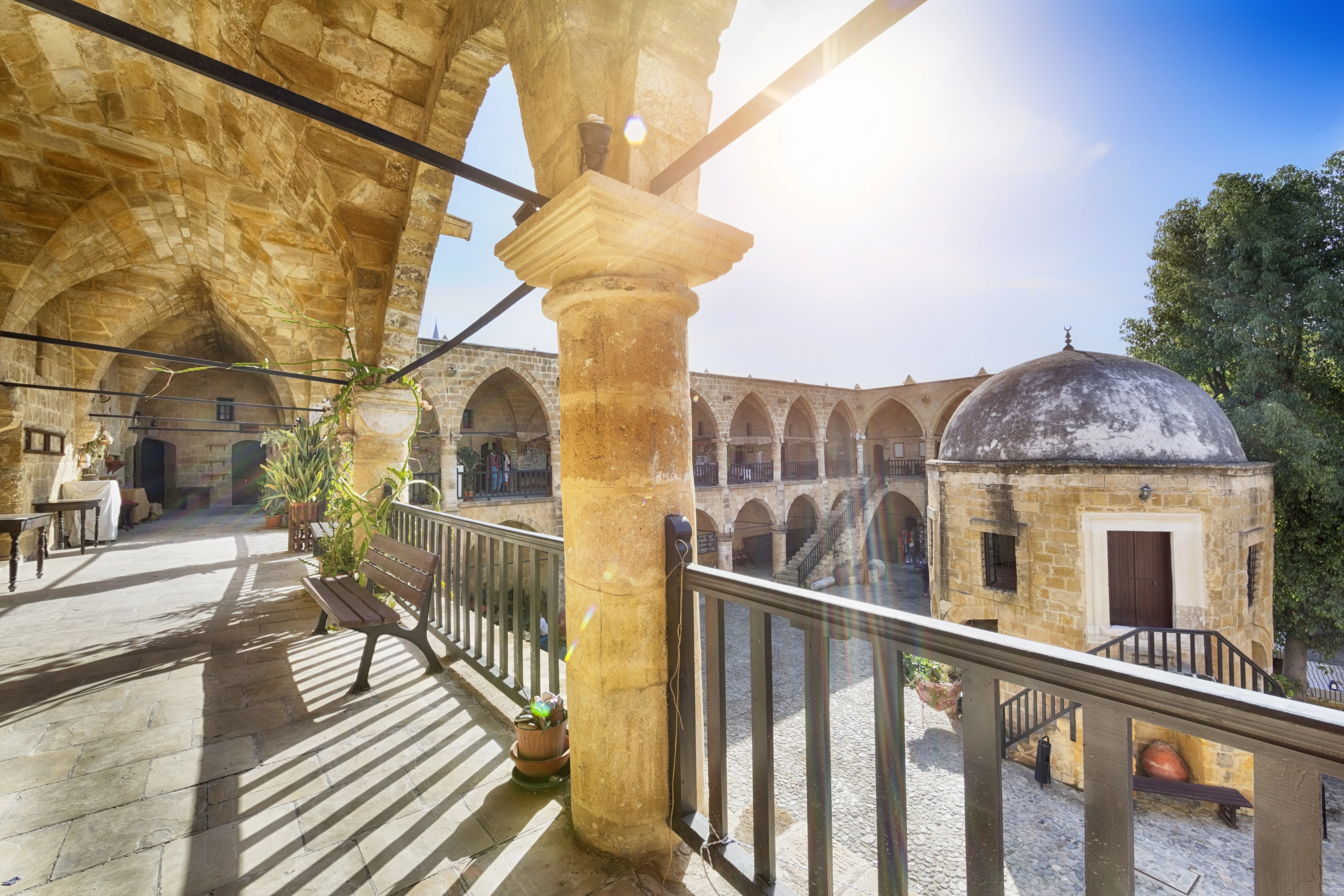
During time at leisure after our tour, you can choose to explore more of the north. Perhaps visit Büyük Han, the great 16th-century inn that was once used by the British as a prison and now houses a vibrant collection of shops and cafés.
Should you wish, you can cross the Green Line into south Nicosia with your passport on hand and experience the difference between the two sides. Visit the world-class Cyprus Museum, by far the best on the island and a real trove of archaeological treasures. Or head to the 11-storey Shacolas Tower, the tallest building in south Nicosia, once used to peer over the Buffer Zone into the north. Today, it serves as an observatory for enjoying spectacular views of the city.
Day 6
Day 6
Day 6 – Free day in Kyrenia – You have a full day at leisure, and Kyrenia is the perfect place for a little discovery. Wander through its serpentine alleys, where something unexpected always seems to await, or stroll to the picturesque harbour for a boat trip along the coast. A landmark you might seek out is the Ağa Cafer Paşa Camii mosque — a remarkable 16th‑century building whose distinctive minaret rises above the town and can be spotted from the water.
For a taste of local life, the Bandabuliya market is ideal for browsing textiles, pottery, jewellery and the kind of gifts you’ll be delighted to unwrap at home.
If relaxation is calling instead, enjoy a refreshing swim in the hotel’s rooftop pool or indulge in a little pampering at the spa.
Day 7
Famagusta, Salamis & St Barnabas
Famagusta, Salamis & St Barnabas – Today, we’ll embark on a full-day tour of northeastern Cyprus, starting with the Monastery of St Barnabus. Once one of the most prominent Christian sites on the island, the church is built over the tomb of St Barnabus, one of the earliest followers of Jesus, a leader of the early church and the founder of the Cypriot Church.
The monastery you’ll see today was reconstructed from the original ruins of a Byzantine church in the 18th century. Within its walls, it houses a religious icon and an archaeological museum. As we explore, we can visit a mausoleum, believed to be the final resting place of St Barnabus himself, to see a fresco that illustrates the legend of how the tomb was discovered.
Continuing, we’ll pass numerous historic relics, including the 7th-century Royal Tombs of the Kings, before arriving at one of the most thrilling highlights of our tour, ancient Salamis.
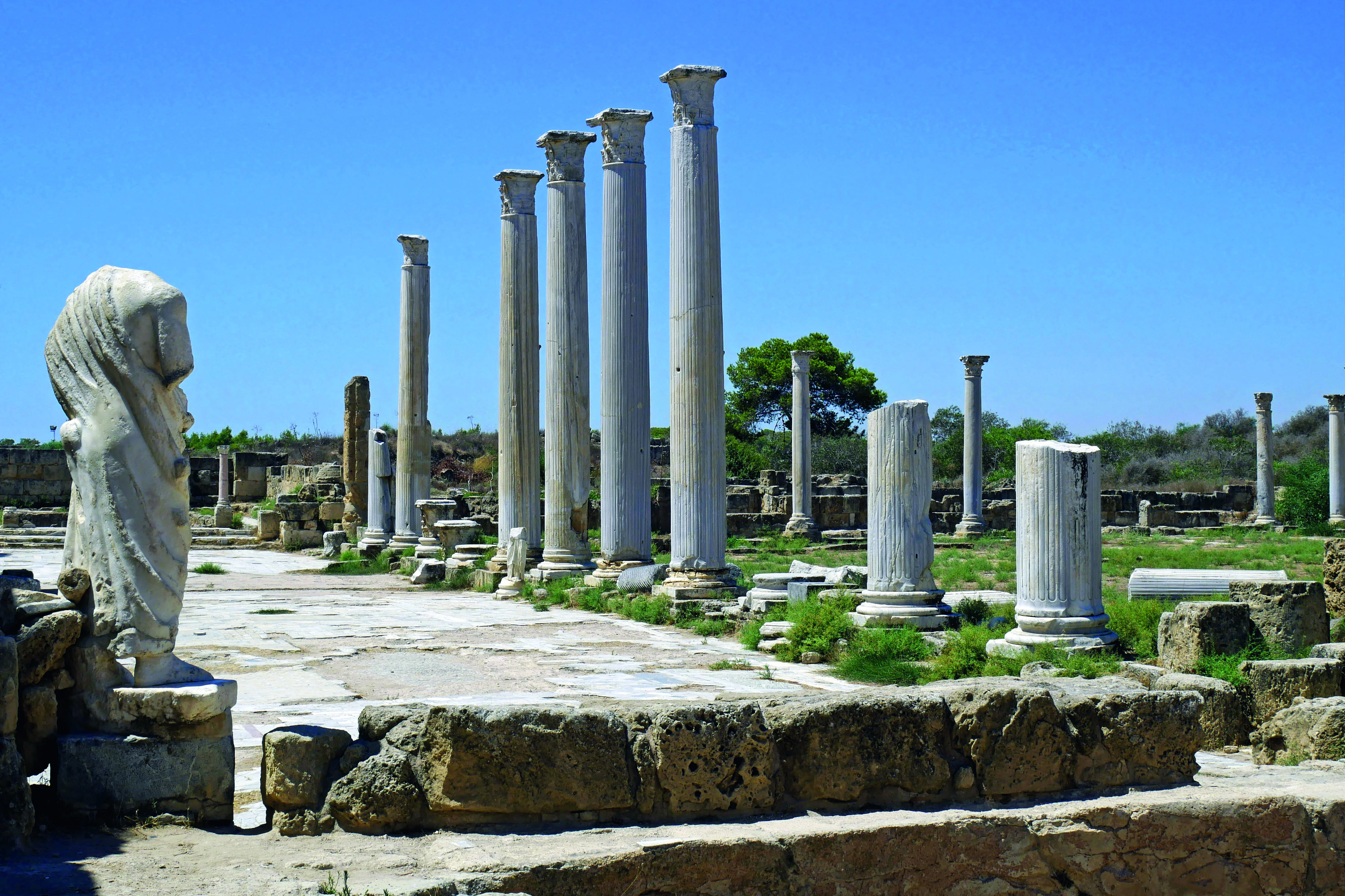
Believed to be the capital of Cyprus as far back as the Bronze Age, this is one of the island’s most significant archaeological sites, made even more impressive by the scenic beachside setting. During Classical Greek and Roman times, Salamis was a cultural centre, as well as the richest and one of the most important cities on the island. You can still see evidence of its wealth in the ruins of the amphitheatre, the gymnasium built by Emperor Hadrian, the Greek and Roman baths, and wonderful mosaics.
Next, we’ll visit Famagusta for a guided walking tour. As we explore the town, we’ll see the massive Othello’s Tower, the ruins of the Venetian palace and the impressive city walls, where British officers played golf along the tops in the 1930s. One of the most prominent landmarks in the town is the 14th-century Lala Mustafa Paşa Mosque, which was originally a church modelled after the French cathedral in Reims. Threading between the photogenic remains of ruined churches are plenty of shops and restaurants.
Lastly, we’ll visit Varosha, once a lively resort dubbed the ‘Monte Carlo of the Middle East’, frequented by celebrities such as Elizabeth Taylor. Though abandoned since the war in 1974, the haunting beauty of its ‘modern’ ruins serves as a poignant reminder of the island’s rich history and legacy.
After a fantastic day of sightseeing, we’ll return to our hotel in Kyrenia.
Day 8
Day 8
Day 8 – Return home
What’s included
What’s not included
Additional information
Ancient City of Soli: Theatres, Basilicas & Mosaics
Walk through the ancient city of Soli, one of Cyprus’s great classical settlements. Explore a hillside Roman theatre, basilica remains and shimmering basilica mosaics that hint at civic pride and prosperity between late Roman and early Byzantine times.
Streets, courtyards and sanctuaries evoke a coastal capital once famed for copper, fertile fields and safe anchorage. Traditions of early Christian heritage linger here, adding a contemplative thread to the archaeological narrative amid sea breezes and birdsong.
Palace of Vouni Hilltop Ruins
Climb to the Palace of Vouni, an acropolis-like complex poised above the coast. Wander courtyards, storerooms and a temple terrace where hilltop ruins frame views over Morphou (Guzelyurt) Bay and the serrated Kyrenia range.
Raised by a pro-Persian city to watch over Greek-leaning Soli, the palace later fell to fire and legend. Its cisterns and colonnades distil the island’s Persian–Greek rivalry into stone and sky, rewarding photographers and history-lovers alike.
Lefke Historic Quarter Walk
Explore Lefke, a town edged by citrus groves and framed by the Troodos foothills. Amble past Ottoman mansions with timber balconies, quiet mosques and shaded squares where everyday life unfolds at an easy pace.
Stories of copper-mining heritage and scholarly traditions mingle with the town’s multi-layered past, set near the island’s Green Line. The result is a thoughtful immersion in architecture, craft and community that rewards unhurried observation.
St Hilarion Castle Panoramic Visit
Visit St Hilarion Castle, a storybook stronghold soaring above pine-clad ridges. Follow stepped paths through gatehouses and courtyards to terraces where panoramic views of the coast and mountains unfold in dramatic layers.
First a Byzantine monastery, later a Crusader-era fort, its towers and keep form a fairytale silhouette said to have inspired castle legends. The summit rewards photographers with wind-cooled ramparts and long, blue horizons over misty mountain ridges.
Bellapais Village & Gothic Abbey
Wander Bellapais village, a hillside warren of stone houses draped with bougainvillea and glimpses of the sea. Climb to the ruins of the Gothic abbey, where pointed arches and a tranquil cloister capture the elegance of Crusader architecture.
The abbey’s setting, celebrated in Lawrence Durrell’s Bitter Lemons, invites quiet exploration. Views towards Kyrenia Harbour pair with the stone-arched cloister to create a mood of calm grandeur, often enlivened by music and cultural events.
Nicosia Old City Walking Tour: Walls, Gates & Selimiye Mosque
Explore the world’s last divided capital on a guided walk through North Nicosia’s old town. Trace star-shaped Venetian walls, pause at the 16th-century Kyrenia Gate, and browse the Bandabuliya market where spice scents and textile stalls animate daily life.
Step into the Selimiye (St Sophia) Mosque, a Gothic cathedral transformed after the Ottoman conquest, its soaring vaults flanked by slender minarets. Streets layered with Lusignan, Venetian and Ottoman influences reveal a city where the Green Line still shapes urban rhythm and identity.
St Barnabas Monastery & Icon Museum
Visit the Monastery of St Barnabas, raised near the apostle’s reputed tomb amid fields close to Salamis. Enter the 18th-century church to admire gilded panels and an icon museum that preserves centuries of Eastern Christian artistry.
Within the grounds, a small mausoleum and frescoes recall the tomb of the apostle and enduring pilgrimage traditions. The complex blends Byzantine and 18th-century heritage in a serene, cypress-shaded enclosure that invites contemplation.
Ancient Salamis Seaside Ruins
Roam ancient Salamis, a once-mighty capital set beside dune-backed sands. Walk colonnaded courts, the theatre and colonnades, and a complex of Roman baths and gymnasium that speak to civic life, ceremony and spectacle.
Marble fragments and mosaic floors glint in the coastal light while seabreezes thread through fallen capitals. The seaside setting intensifies Salamis’s scale and poignancy, revealing layers of Greek, Roman and Byzantine ambition at the island’s edge.
Famagusta Walled City Walk & Lala Mustafa Pasha Mosque
Join a guided walk inside the Famagusta walled city, where honey-coloured ramparts encircle medieval lanes. See Othello’s Tower, the ruins of the Venetian palace and the stout gates where British officers once strolled the Venetian ramparts.
Enter the soaring Lala Mustafa Pasha Mosque—formerly the Cathedral of St Nicholas, modelled on Reims—to feel Gothic ribs and later Ottoman touches in one remarkable space. Cafés and workshops nestle among church facades, fusing history with everyday Cypriot life.
Varosha Ghost Quarter Promenade
Visit Varosha, the once-glittering resort quarter paused in time. Walk permitted streets where silent hotels and ghostly resort seafront towers face an aquamarine bay, their sun-bleached balconies hinting at a vanished jet-set era.
Guidance frames the enclave’s post-1974 history and complex status, encouraging thoughtful engagement with a poignant urban landscape. Seaside breezes and distant surf set a contemplative tone as you pause for photos and reflection.
Boutique Winery Tour, Tastings & Gourmet Dinner in the Kyrenia Mountains
Experience a mountain vineyard where artisan vintners craft small-batch wines amid pines and carob. Enjoy a behind-the-scenes tour and tastings that follow the journey from sunlit terraces to cellar, as you sample regional wines shaped by limestone soils and Mediterranean breezes.
The visit culminates in a gourmet dinner at the boutique restaurant, pairing Cypriot flavours with carefully chosen vintages. Conversations with the team illuminate revived grape varieties and modern techniques rooted in age-old tradition—an atmospheric evening in the Kyrenia Mountains.
Güzelyurt Town, Agios Mamas Monastery & Archaeology Museum
Discover Guzelyurt, the island’s “fruit basket,” where citrus groves fringe quiet lanes and café tables spill onto sunlit squares. Visit the Agios Mamas Church and Monastery to admire icons and gilded woodcarving that reflect centuries of devotion in the Troodos foothills.
At the Museum of Archaeology and Nature, artefacts from the Neolithic through the Bronze Age chart the region’s long story. Exhibits reveal sacred sites once linked to Aphrodite and everyday objects that ground the grandeur of history in the rhythms of local life.
Kyrenia Old Town, Harbour & Castle with Shipwreck Museum
Join a guided walking tour of Kyrenia to wander the arcaded cafés and historic caiques of the Kyrenia Old Harbour, recently restored to its traditional silhouette. Stroll past stone warehouses to Belediye Meydani and the market quarter as stories of from Roman outpost to British-era port bring this north-coast town to life.
Continue inside Kyrenia Castle to trace thick ramparts and step into the Shipwreck Museum, where a Hellenistic-era merchant vessel and amphorae cargo reveal ancient seafaring. The interplay of honeyed stone and cobalt sea makes an evocative setting for photographs and reflection.