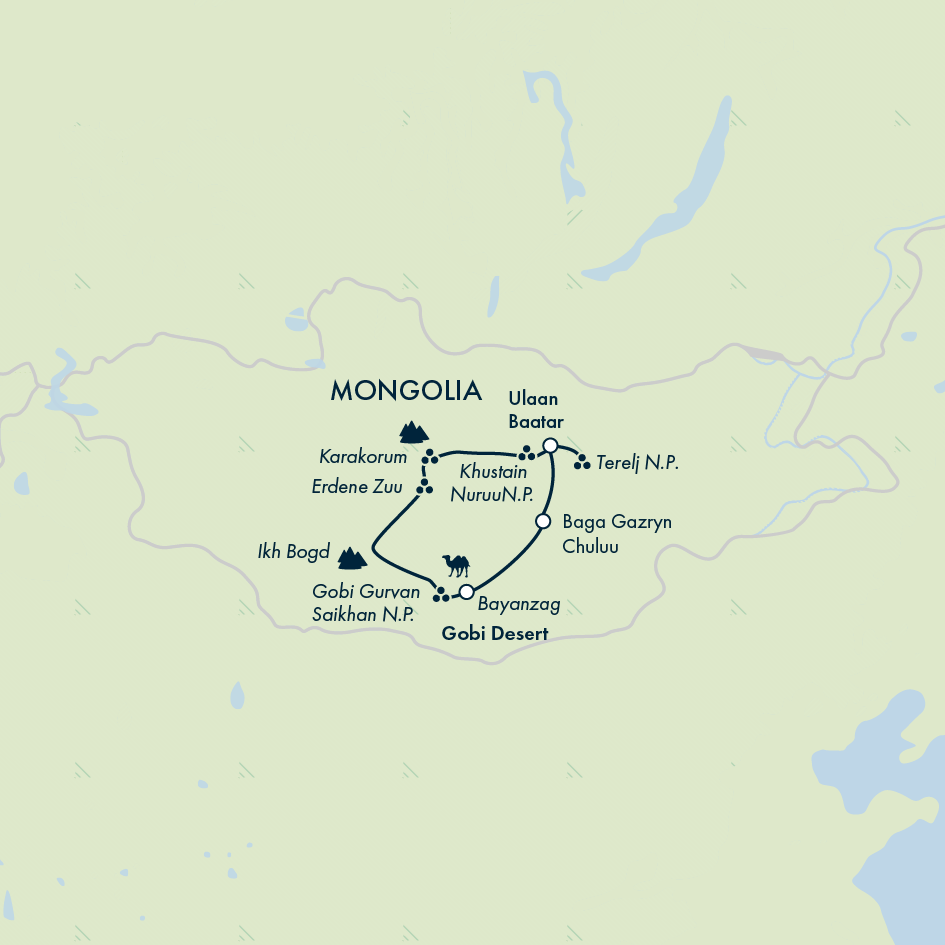
Your itinerary
Day 1
Adventure begins in Ulaanbaatar
Begin your adventure in Ulaanbaatar, Mongolia’s capital, where Soviet-era architecture, Buddhist monasteries and glass towers stand side by side on the high-altitude steppe.
Around 6pm, say sain baina uu (hello) to your tour leader and fellow travellers, when we gather as a group for the first time to get to know each other and learn more about the adventures ahead.
Your tour leader then ensures a big Mongolian welcome by arranging a group dinner.
Want more time in Ulaanbaatar? Secure pre-tour hotel nights through your sales representative.
Meals: Dinner
Day 2
Explore Mongolian religious life in Gandan Monastery • Journey into Terelj National Park
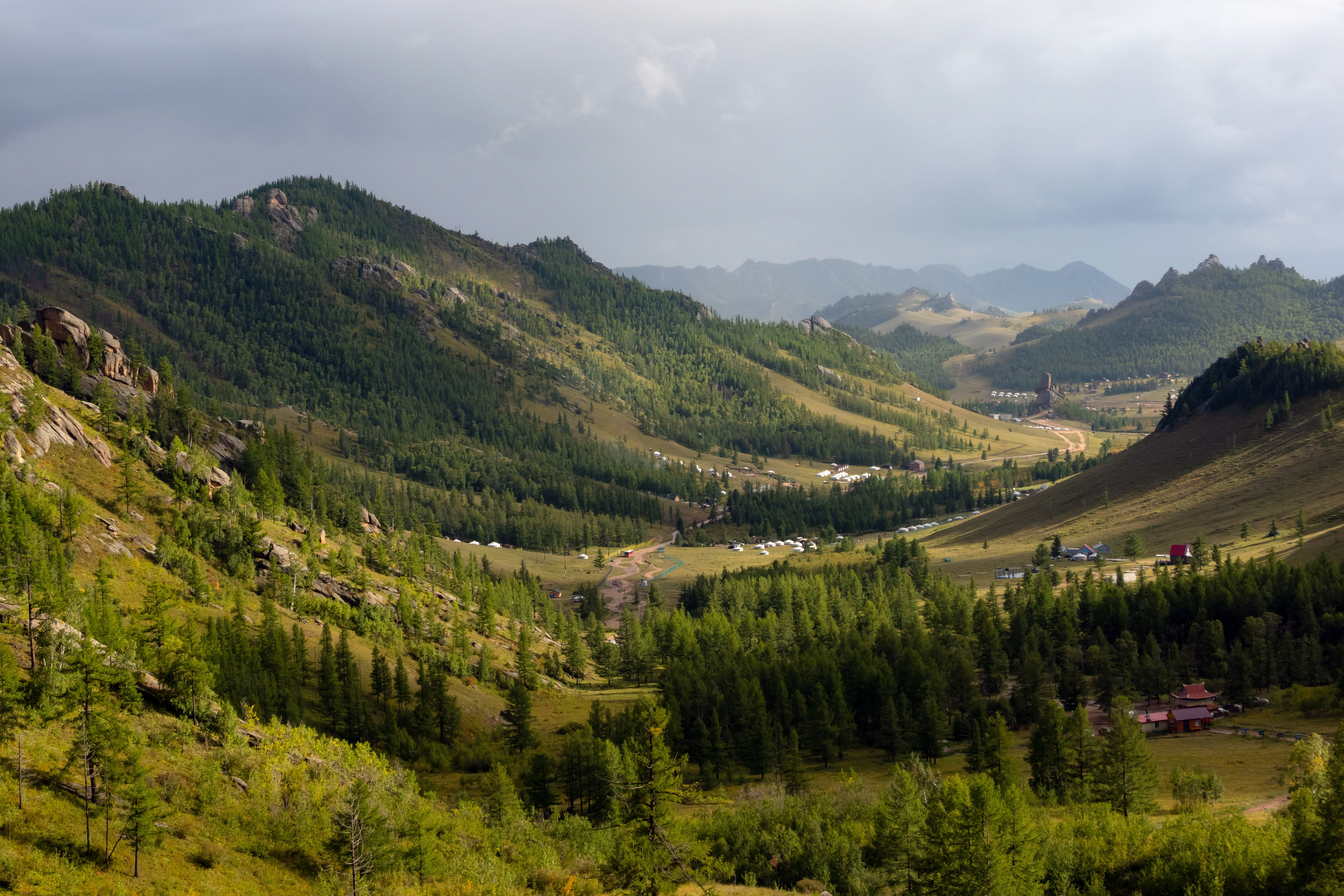
Leave the capital and head into the wide-open landscapes of Terelj National Park, where forested mountains, granite rock formations, and flower-filled meadows reveal a very different side of Mongolia.
Before departing Ulaanbaatar, we visit Gandan Monastery, the largest functioning Buddhist monastery in the country and an important centre of Mongolian religious life. Among the highlights is the gold-and-bronze Migjid Janraisig statue, standing 65ft (20m) high inside the main temple hall. If we’re lucky, we may hear the deep chanting of monks during morning prayers.
The drive (approximately two hours) to Terelj National Park takes us east into rolling grasslands and alpine scenery.
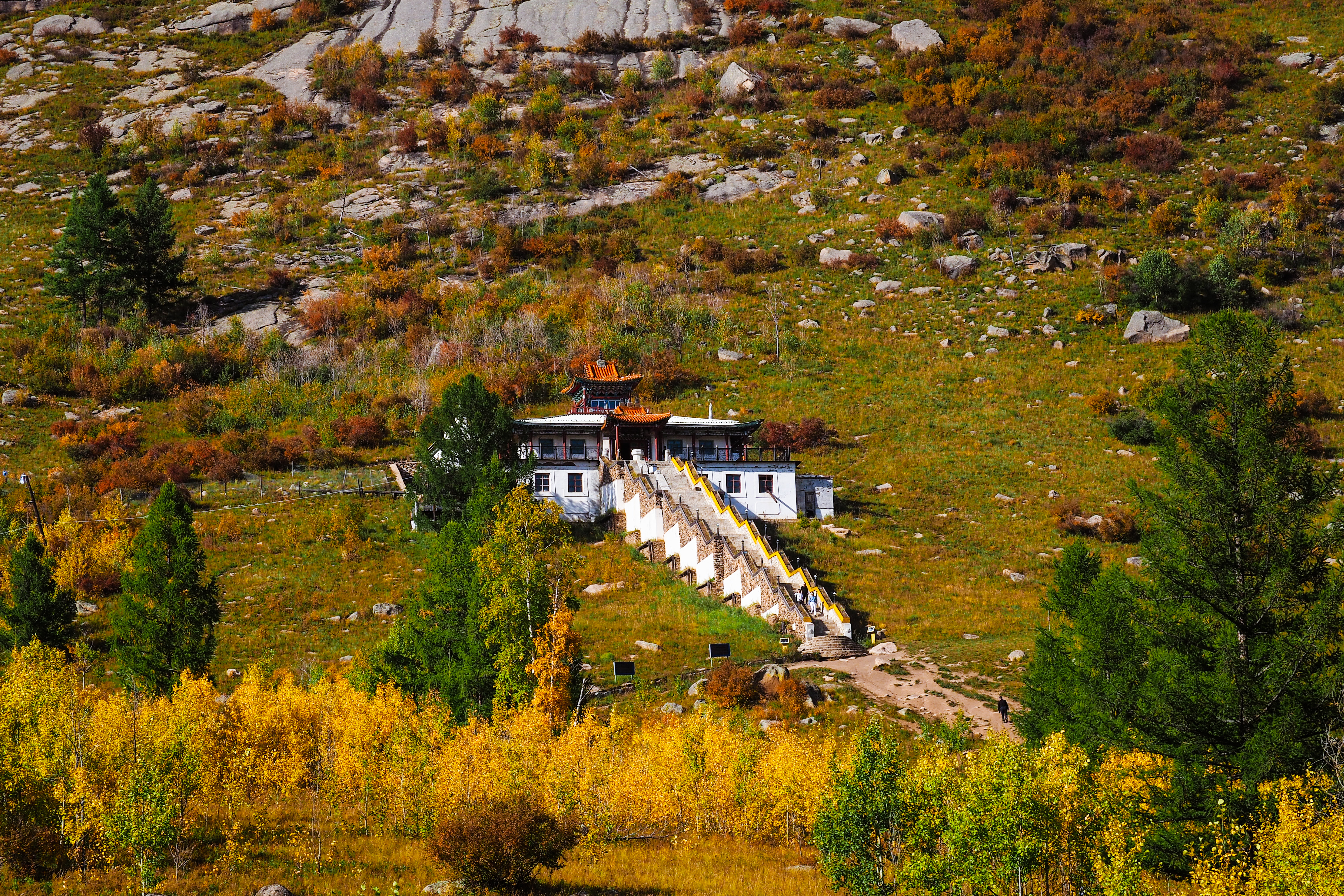
In the afternoon, we walk up to the Aryabala Meditation Temple, a Tibetan-style monastery built into the hillside. Along the path, wooden plaques display Buddhist teachings and reflections, while the temple itself overlooks the valleys and rock formations of the park. The climb involves several steps but rewards us with far-reaching views over the surrounding wilderness.
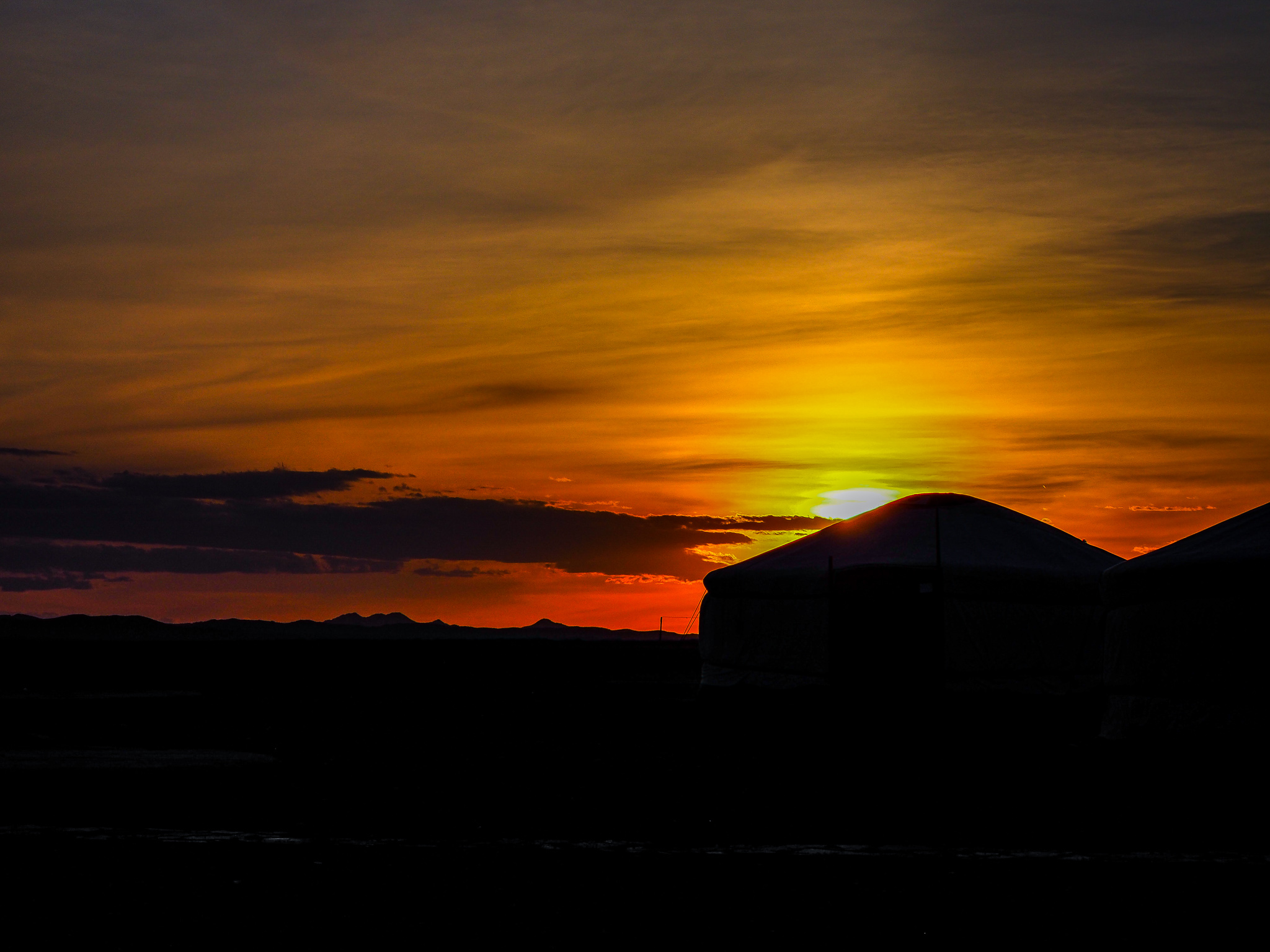
Tonight, we experience our first stay in a traditional Mongolian ger, the circular felt homes still used by nomadic families across the country.
Total drive time: 2hr 30min
Meals: Breakfast,Lunch,Dinner
Day 3
To the Little Gobi Desert • Track takhi, the last truly wild horses in the world
Today we head to the Mongol Els (Little Gobi Desert), where grassland gives way to dunes and semi-desert landscapes.
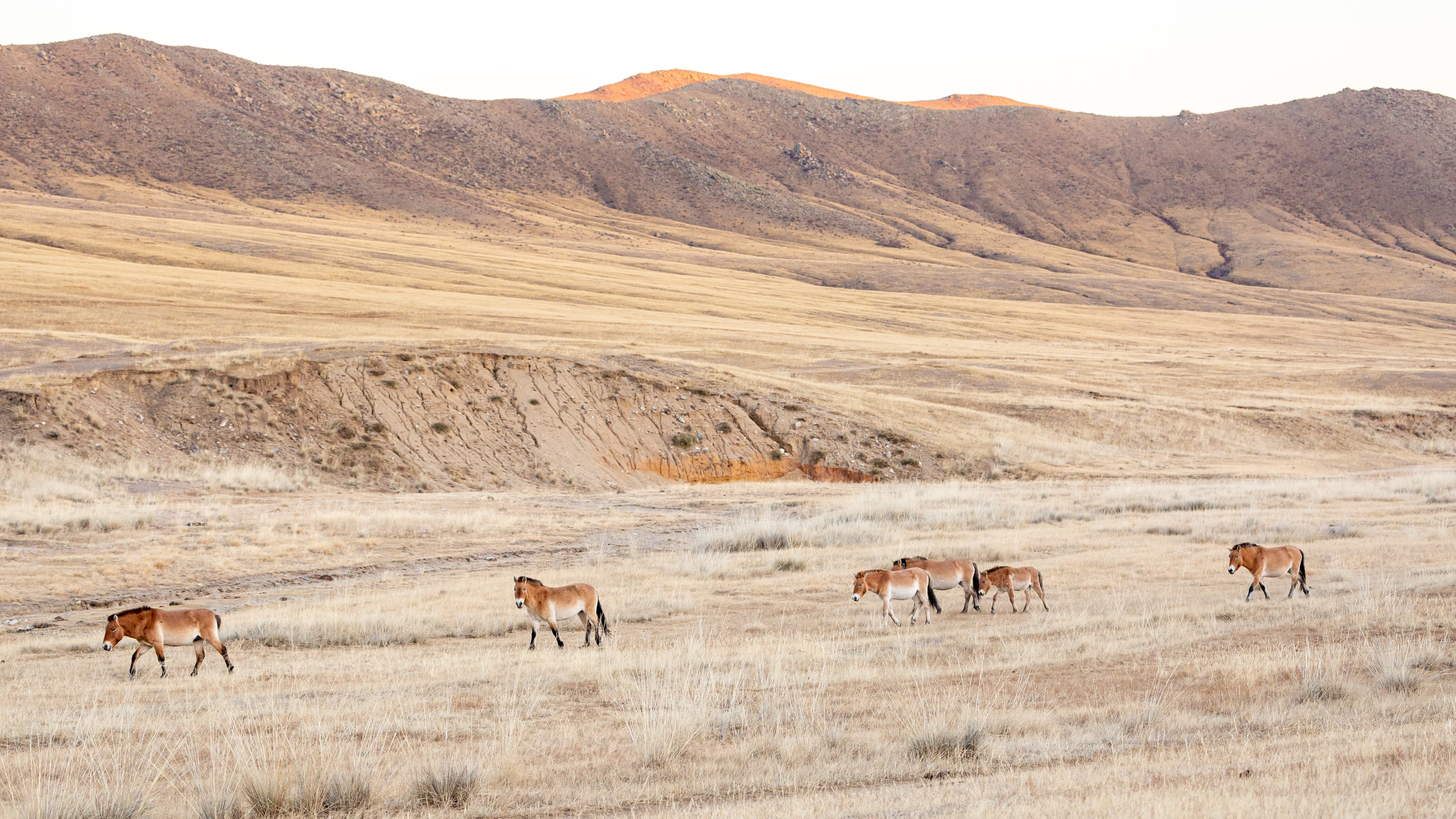
En route, we detour to Khustain Nuruu National Park, one of Mongolia’s great conservation success stories. The park is best known for the reintroduction of the takhi (Przewalski’s horse). Once extinct in the wild, the species now roams freely here again thanks to decades of conservation work led by Mongolian and international organisations.
After visiting the information centre, we take a guided hike through the steppe in search of the horses. The contrast of Bactrian camels crossing the dunes while horses graze nearby captures the unique geography of central Mongolia, where desert and grassland meet.
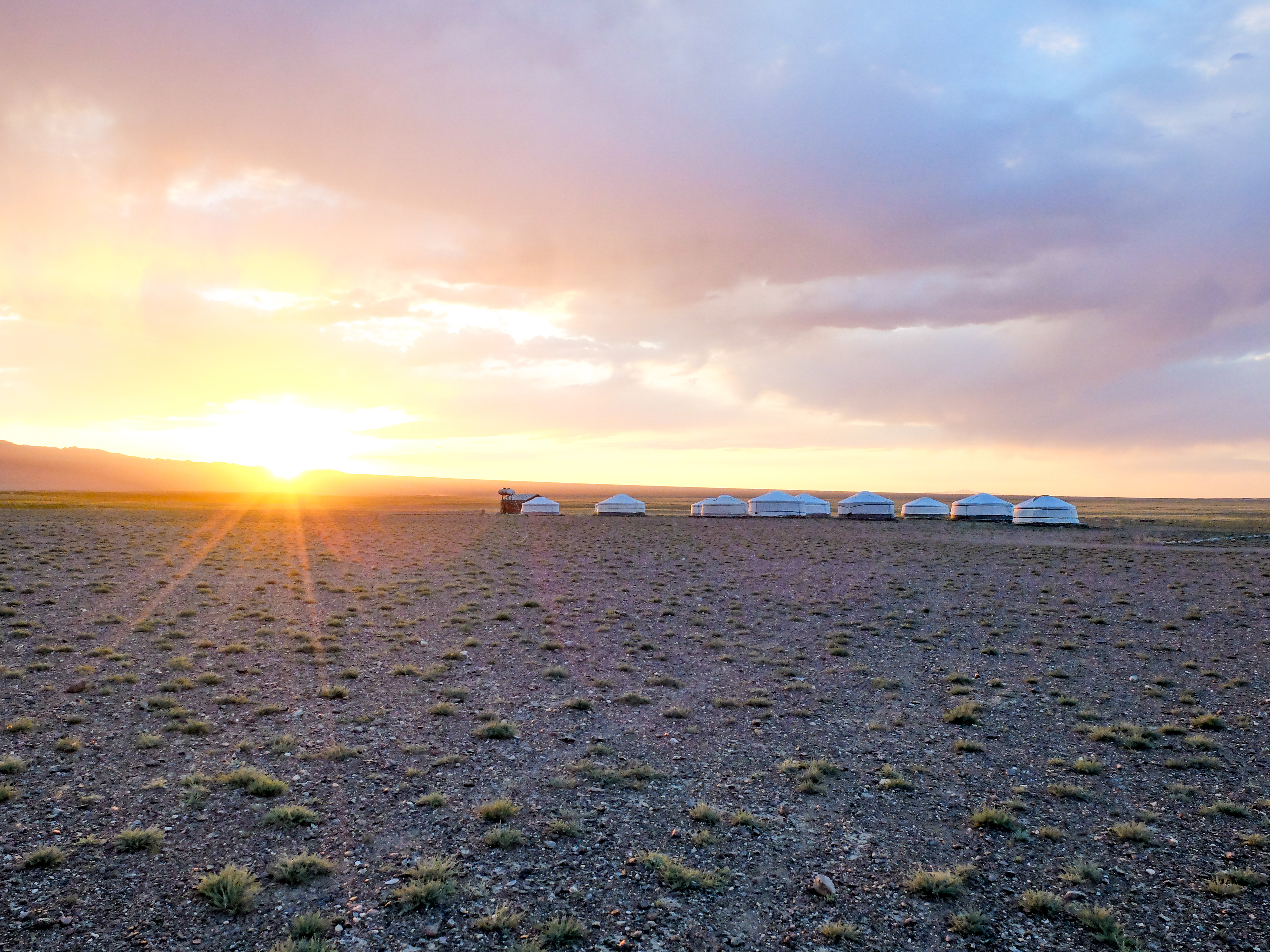
Continue to the Mongol Els for another night in a ger camp beneath expansive desert skies.
Total drive time: six to seven hours
Meals: Breakfast,Lunch,Dinner
Day 4
Discover the ancient capital of Karakorum
Travel deeper into Mongolia’s history, travelling to Karakorum, the 13th-century capital of the Mongol Empire founded by Ogedei Khan, son of Genghis Khan.
First, however, we head to the nearby Khogno Khan Mountain, an isolated granite massif known for its birdlife, including steppe eagles and vultures. At the foot of the mountain sits a small monastery, quietly positioned between the rocks and sand dunes.
Continue to Karakorum, once the political heart of the largest land empire in history. Though little remains of the original city, the surrounding landscape still carries enormous historical significance.
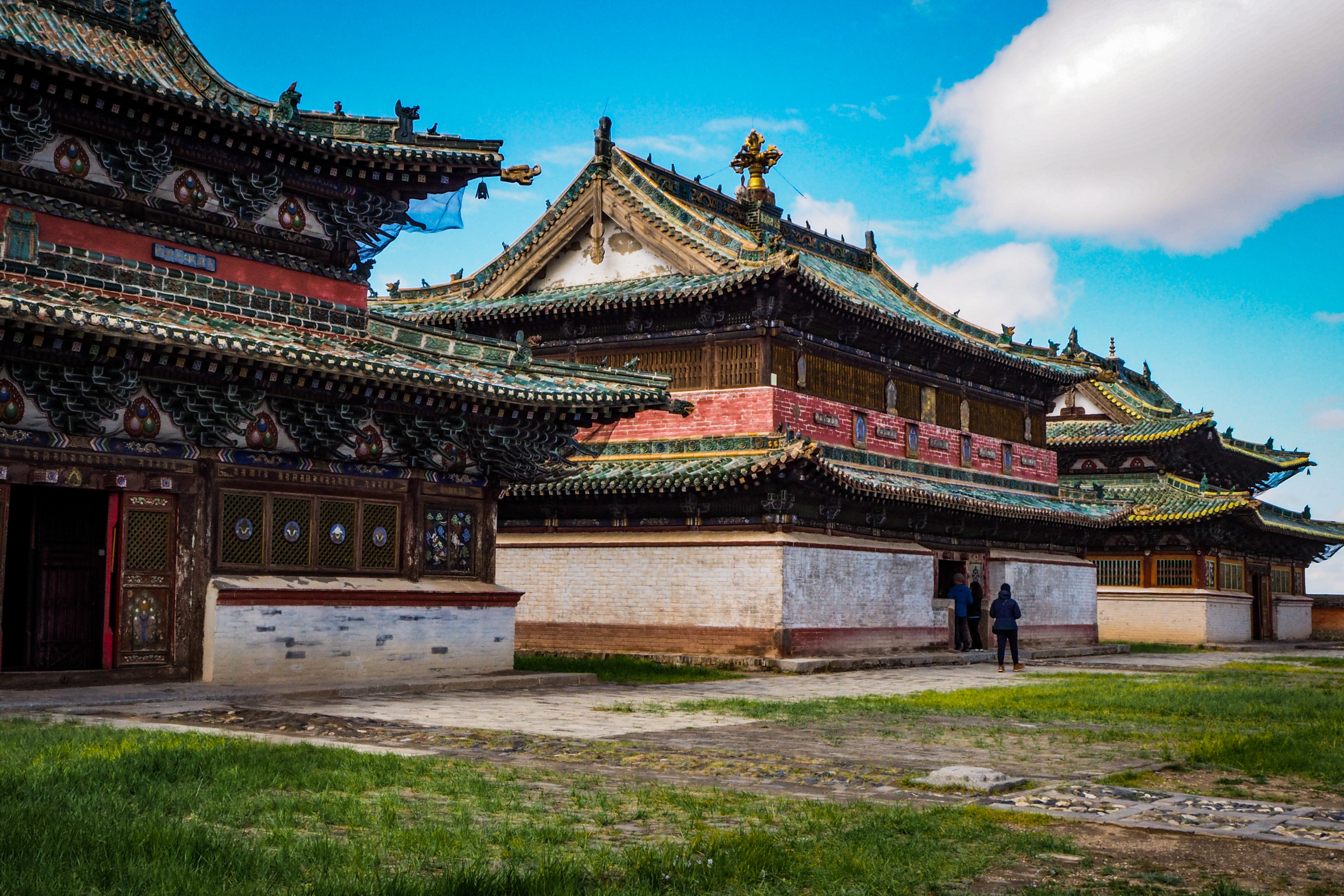
After lunch, we visit Erdene Zuu Monastery, established in 1586 using stones from the ruins of ancient Karakorum. Although much of the complex was destroyed during the Stalinist purges of the 1930s, the monastery walls, lined with 108 stupas, remain one of the most important religious monuments in Mongolia.
Later, we visit the Karakorum Museum, where artefacts recovered from the area help piece together the story of the Mongol Empire and Silk Road trade routes that once passed through here.
Total drive time: 1hr 30min
Meals: Breakfast,Lunch,Dinner
Day 5
Continue along the edge of the Gobi Desert to Arvaikheer
Follow the northern fringe of the Gobi Desert to Arvaikheer, the capital of the Ovorkhangai Province
Along the way, we stop at Shankh Monastery, one of the oldest monasteries in Mongolia and once associated with Zanabazar, the revered Buddhist scholar, artist and spiritual leader often considered the father of Mongolian Buddhism. The monastery remains an active religious site, and our tour leader helps bring its history and symbolism into context.
Arriving in Arvaikheer in the afternoon, we visit the local museum, where exhibits include ancient stone figures, archaeological finds and Turkic inscriptions that trace the deep human history of the Mongolian steppe. Depending on timing, we may also stop at the local market for a glimpse into everyday provincial life.
Total drive time: three hours
Meals: Breakfast,Lunch,Dinner
Day 6
Drive into the remote landscapes of Bayan Gobi
Today is the longest drive of the trip, but also one of the most rewarding as we leave the main tourist route behind and enter the more remote reaches of the Gobi.
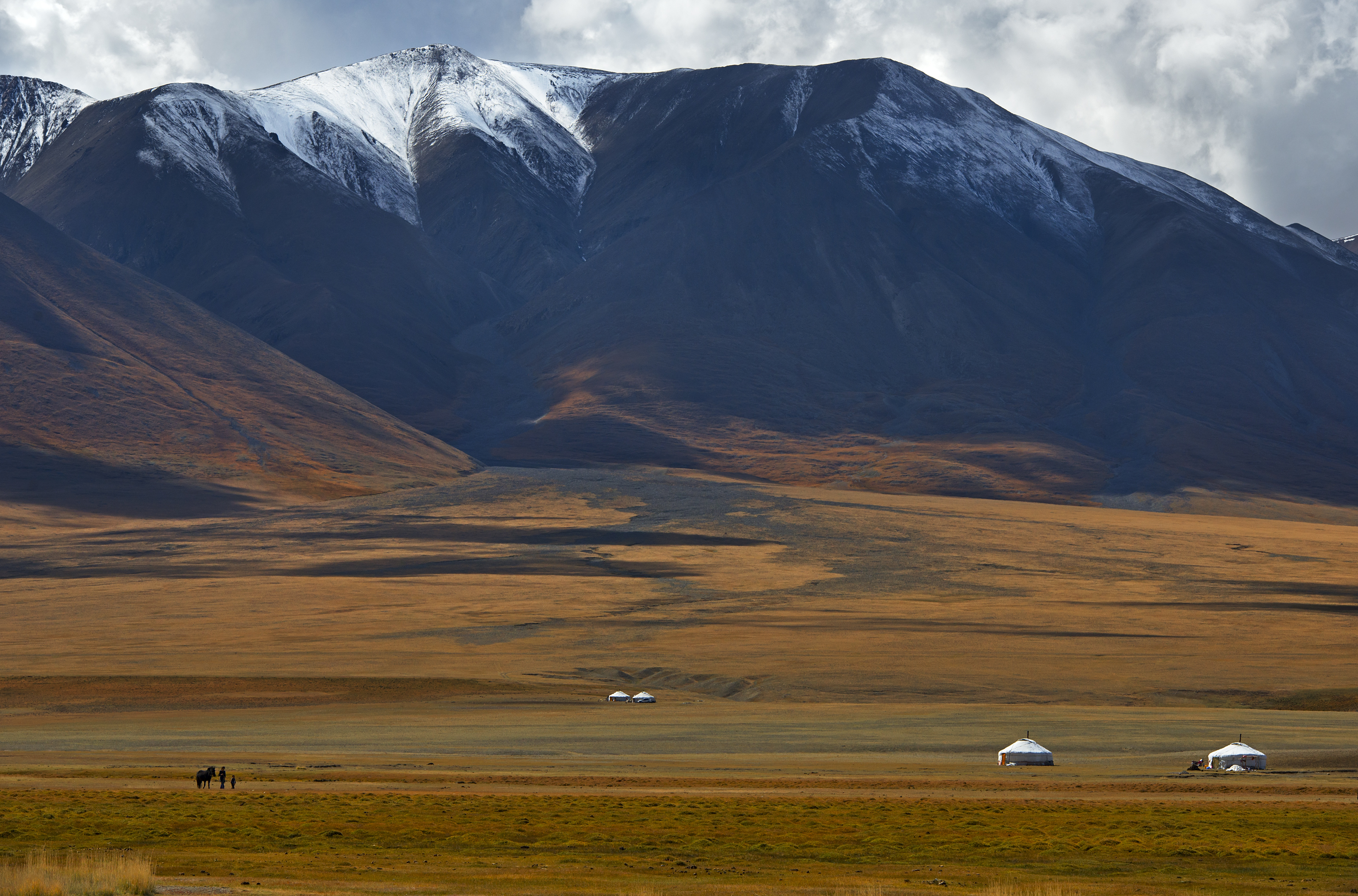
After breakfast, the paved road soon disappears and the scenery steadily changes. Vast gravel plains, dry riverbeds and distant mountain ranges dominate the horizon as we travel deeper into the desert. In the distance, the Ikh Bogd Mountain rises above the landscape, the highest peak in the Gobi Altai range and an important landmark for local herding communities.
The journey takes approximately nine hours including stops, giving us time to appreciate the sheer scale and isolation of Mongolia’s southern wilderness. Encounters with other vehicles are rare, and the silence of the open steppe becomes part of the experience itself.
Arrive at our remote ger camp by evening for a night surrounded by desert landscapes and uninterrupted skies.
Total drive time: five to six hours
Meals: Breakfast,Lunch,Dinner
Day 7
Cross desert passes • Visit the White Cave
Continue through classic Gobi scenery, where rocky plains, isolated outcrops and pockets of sand stretch across the Khatan Suudal Steppe.
After crossing a desert pass, we visit the White Cave, known for its pale quartz-rich rock formations and archaeological significance. The surrounding landscape feels increasingly remote, with little beyond open steppe and distant mountain silhouettes.
We stop for a picnic lunch overlooking Arts Bogd Mountain before continuing towards the Khongoriin Els dunes. The gradual arrival of the dunes is particularly memorable, their vast ridges rising unexpectedly from the flat desert terrain.
Reach our ger camp in the late afternoon.
Total drive time: five to six hours
Meals: Breakfast,Lunch,Dinner
Day 8
Experience the Singing Dunes • Meet camel herders to learn about their nomadic life
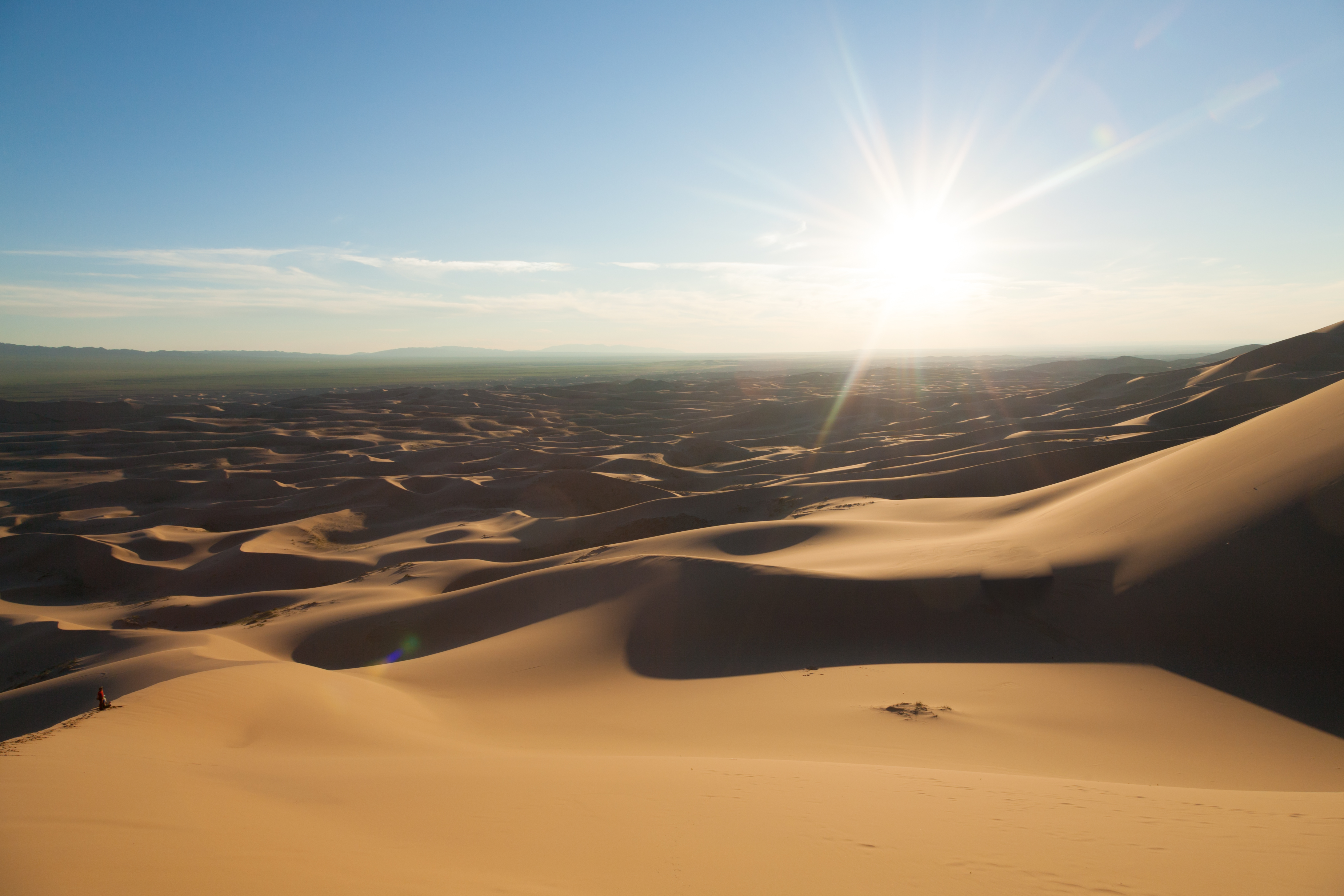
Spend the day among the Khongoriin Els, the largest dune system in Mongolia, stretching approximately 125mi (200km) across the South Gobi.
Some dunes reach heights of almost 985ft (300m), and when the wind conditions are right, the shifting sand creates the low vibrating sound that gives them the nickname Singing Dunes.
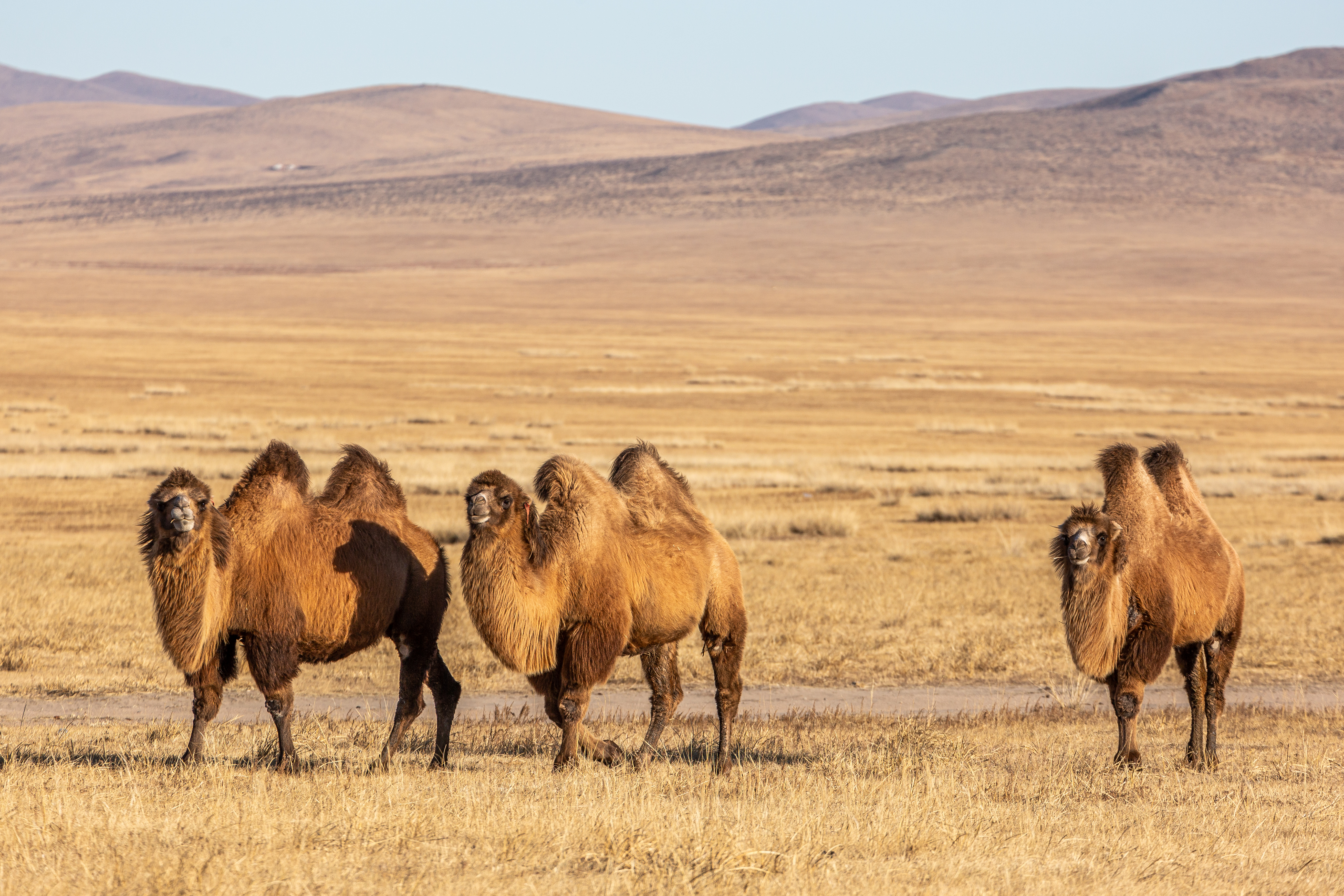
Later, we visit a local camel-herding family to learn more about nomadic life in the desert. The South Gobi is home to around 100,000 Bactrian camels, still widely used to transport goods and gers across remote areas in one of the world’s harshest environments.
Total drive time: 30 minutes
Meals: Breakfast,Lunch,Dinner
Day 9
Hike into Yolyn Am canyon in Gobi Gurvansaikhan National Park
Drive through Gobi Gurvansaikhan National Park, whose name translates as Three Beauties of the Gobi, referring to the mountain range that dominates the region.
The landscapes here are remarkably varied, shifting between rocky desert, sand plains, narrow ravines and isolated oases. Our main destination is Yolyn Am, also known as Vulture’s Mouth, a canyon so deep and narrow that winter ice can remain on the valley floor even in the height of summer.
We visit the local museum before walking into the canyon itself. The area supports a surprising range of wildlife, including ibex, lammergeiers, argali sheep and, more rarely, snow leopards. Our tour leader helps identify the signs of life in what initially appears to be a harsh and empty environment.
Later, transfer to a nearby ger camp.
Total drive time: four hours
Meals: Breakfast,Lunch,Dinner
Day 10
Hike among the Flaming Cliffs of Bayanzag
Enjoy a slower-paced day with time to relax at camp before visiting one of the most important palaeontological sites in Mongolia.
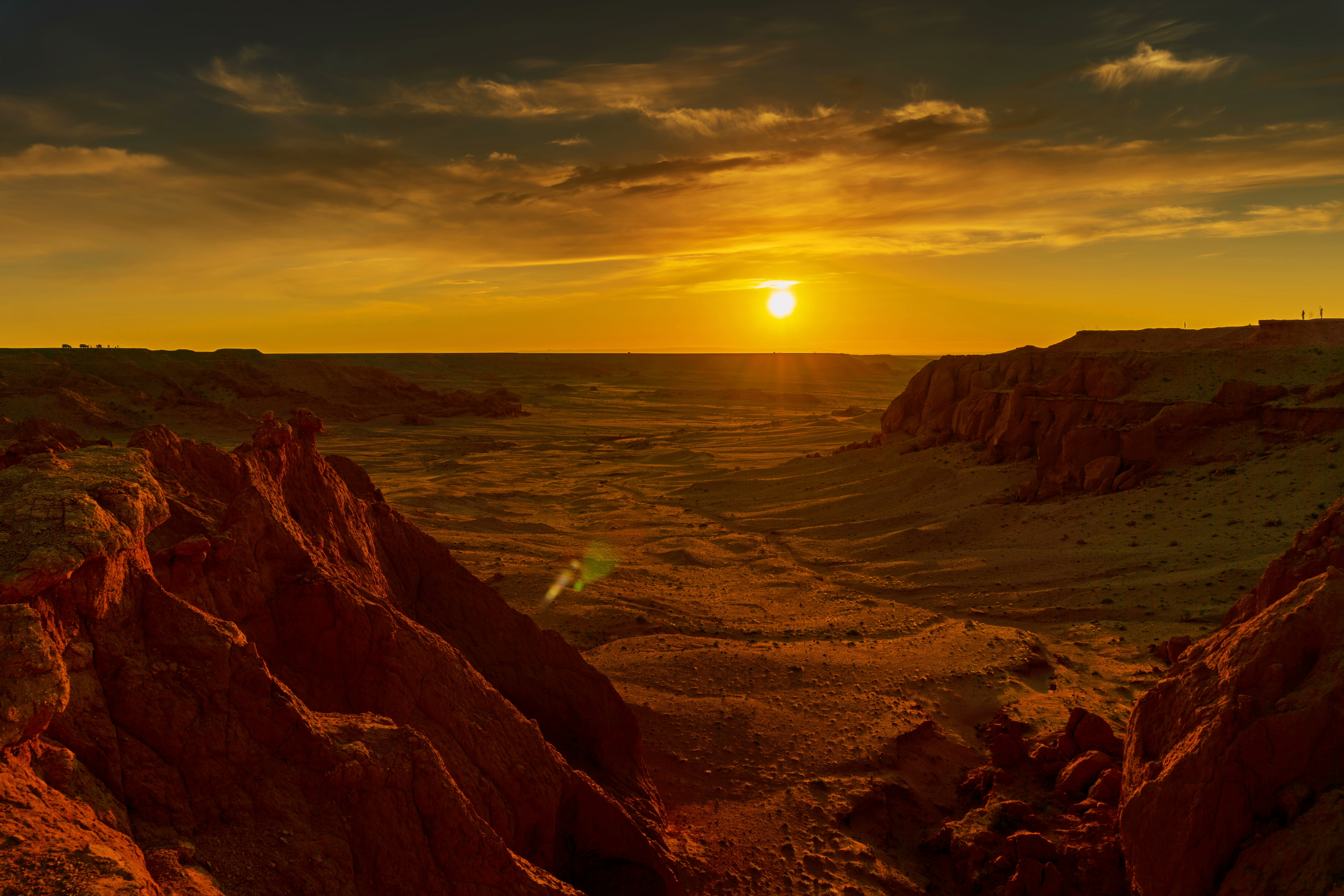
Either in the morning or afternoon, we drive approximately 43mi (70km) to Bayanzag, better known as the Flaming Cliffs. The name comes from the deep red-orange colour of the sandstone.
The cliffs became internationally famous in the 1920s, when American explorer Roy Chapman Andrews uncovered some of the world’s first dinosaur eggs here. Even today, fossil fragments can occasionally be spotted on the ground. During our hike through the area, our tour leader explains the significance of the discoveries and how they changed scientific understanding of dinosaurs forever.
Return to camp later in the day.
Total drive time: three hours
Meals: Breakfast,Lunch,Dinner
Day 11
Discover the dramatic rocks of Baga Gazryn Chuluu
Begin the journey back towards Ulaanbaatar, staying overnight by the dramatic granite formations of Baga Gazryn Chuluu.
Rising abruptly from the steppe, these weathered rock formations have long been associated with Buddhist pilgrimage and local legends. We visit the ruins of Lovonchombo Monastery, once an important religious centre hidden among the rocks, before continuing to a nearby natural spring believed by local people to have healing properties for the eyes.
The surrounding landscape is particularly atmospheric in the evening light, when the granite formations cast long shadows across the grasslands. Tonight is our final stay in a traditional ger camp.
Total drive time: six to seven hours
Meals: Breakfast,Lunch,Dinner
Day 12
Visit the iconic statue of Genghis Khan • Return to Ulaanbaatar
Travel back to the capital, stopping first at the Genghis Khan Equestrian Statue Complex at Tsonjin Boldog.
Standing 130ft (40m) high atop a 33ft (10m) visitor centre, the stainless-steel statue depicts Genghis Khan on horseback and has become one of the most recognisable landmarks in modern Mongolia. It is possible to climb inside the structure for views from the horse’s head across the surrounding steppe.
After lunch near the complex, continue to Ulaanbaatar (approximately 174mi/280km on paved roads). Back in the capital, there may be the opportunity this evening to attend a traditional music and dance performance at the National Academic Drama Theatre, featuring throat singing, folk music and contortion performances.
End the journey with a final group dinner, a chance to reflect on desert crossings, monastery visits and nights spent beneath Mongolia’s vast skies.
Total drive time: five to six hours
Meals: Breakfast,Lunch,Dinner
Day 13
Adventure ends in Ulaanbaatar
You’ve tracked wild horses across the steppe, crossed the landscapes of the Gobi Desert and visited ancient monasteries linked to the Mongol Empire, but now it’s time to begin your return journey home.
Alternatively, if you’d like to extend your adventure, speak to your sales representative to discuss our large range of extension options.
Meals: Breakfast
What’s included
What’s not included
Additional information
Food
Traditional Mongolian diets are very meat and dairy heavy. While there are opportunities to try some of these products, such as dry curd and fermented mare’s milk, the meals provided in the ger camps are generally Western meals, at times with an Asian influence. There is normally some form of soup and salad plus a main course and desert. Vegetarians are generally well catered for; if you are vegetarian or have other dietary requirements, please inform us in advance.
Breakfasts can vary from place to place, some are buffets while others are set, normally cereal, bread and possibly a hot dish. On some days, a pack lunch is provided, this is often still a proper meal (though without the soup). Water is provided and is generally from large water containers, so make sure to bring a refillable water bottle. Tea, coffee, soft drinks, beer, vodka and (most of the time) wine are available to buy at the ger camps. There is the opportunity to buy snacks in Ulaanbaatar and on a couple of other occasions along the way when we drive through towns or villages.
Khogno Khan Mountain & Monastery Visit
Visit Khogno Khan Mountain, an isolated granite massif rising from grass and sand. At its foot, a small monastery nestles among rocks and junipers, a quiet place of worship framed by sweeping steppe panoramas.
Your leader highlights the area’s birdlife—steppe eagles and vultures ride thermals above the granite massif—and the enduring link between sacred sites and nomadic routes that thread these transitional landscapes.
Gandan Monastery & Migjid Janraisig Statue
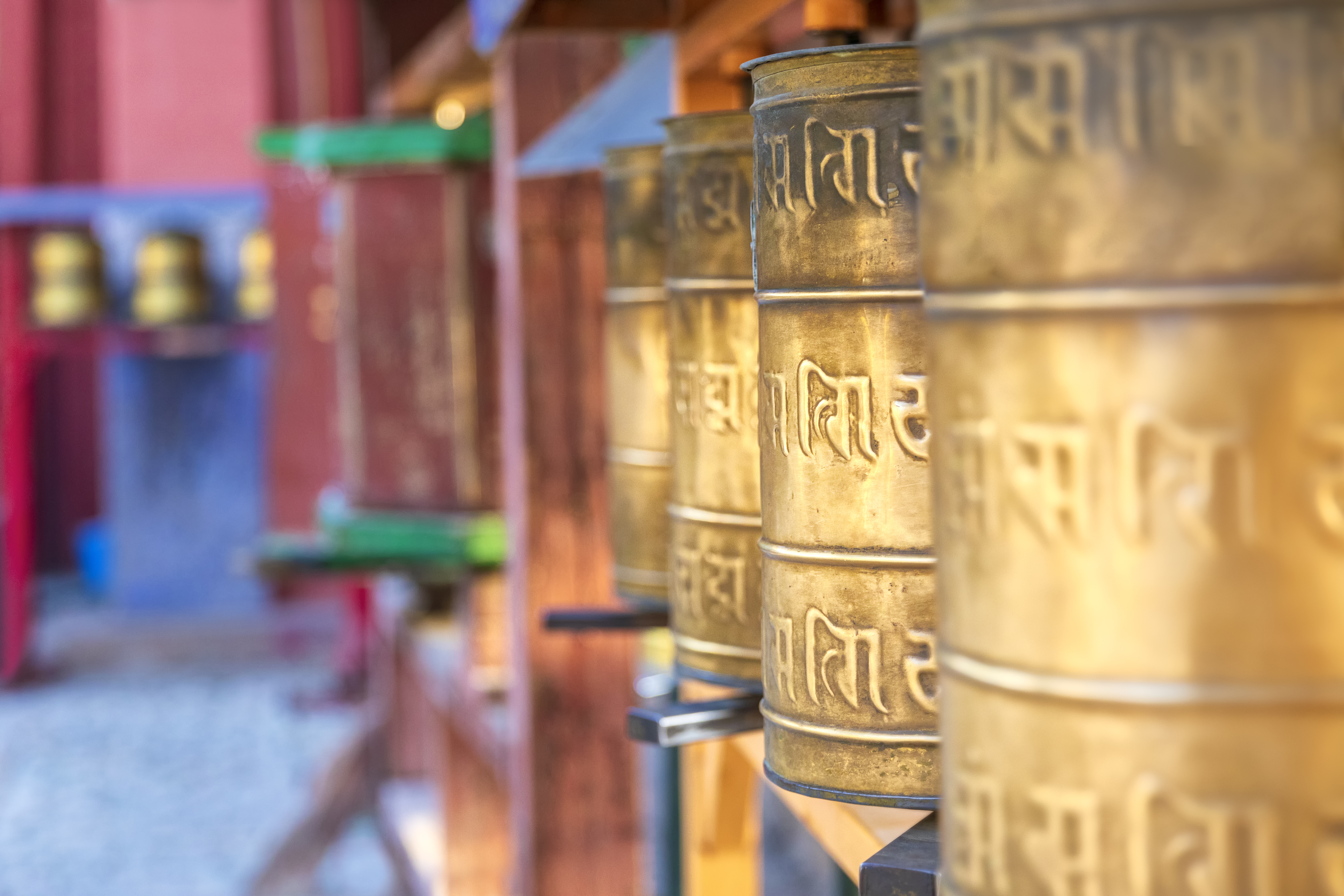
Explore Mongolia’s most important active Buddhist site on a guided visit to Gandan Monastery. Step inside the main hall to view the towering Migjid Janraisig statue (approx. 20m), its gold-and-bronze presence surrounded by turning prayer wheels and the scent of incense.
As you wander the complex, your leader illuminates how this spiritual centre weathered the 20th century and revived after the democratic transition. If timing aligns, pause to hear the deep chanting of monks carrying across courtyards alive with pigeons and pilgrims.
Terelj National Park Scenic Walk & Aryabala Meditation Temple
Walk into alpine meadows and granite outcrops in Terelj National Park to reach the hillside Aryabala Meditation Temple. Along the path, wooden plaques share Buddhist teachings while larks rise from flower-filled meadows and forested ridges unfold below.
At the temple, a Tibetan-style sanctuary offers quiet contemplation and panoramic views over valleys dotted with fantastical rock formations. The climb involves steps, rewarded by a calm atmosphere and the cool breath of the high steppe.
Khustain Nuruu National Park: Track Takhi Wild Horses
Venture into Khustain Nuruu on a guided wildlife walk to track takhi (Przewalski’s horse) in their native habitat. Begin with the park centre’s exhibits, then scan tawny slopes and river valleys for compact, dun-coloured herds moving across the grassland.
Your leader explains how these horses were once extinct in the wild before collaborative conservation brought them home. Keep watch for marmots and raptors as you scan the steppe where desert and pasture meet.
Mongol Els ‘Little Gobi’ Dunes Experience
Experience the shifting frontier where steppe grasses give way to the Mongol Els (Little Gobi). Walk among low, curving ridges and photograph rolling dunes that lift from the plains, with distant mountains soft on the horizon.
This semi-desert zone captures Mongolia’s contrasts: camel tracks on sand, lark song above ripples, and vast desert skies unfurling in every direction. It’s a contemplative landscape made for slow footsteps and long views.
Karakorum & Erdene Zuu Monastery with Museum
Encounter the legacy of the Mongol Empire at Erdene Zuu Monastery, Mongolia’s oldest surviving monastery, encircled by a ring of 108 stupas. Walk through prayer halls and courtyards that reuse stones from ancient Karakorum.
Continue to the Karakorum Museum to view artefacts that trace imperial power, Silk Road exchange and everyday life in the former capital—the heart of the Mongol Empire that once commanded Eurasia’s great steppe routes.
Shankh Monastery & Arvaikheer Provincial Museum
Visit Shankh Monastery, one of Mongolia’s oldest Buddhist centres and historically linked with Zanabazar, revered scholar-artist and spiritual leader. Incense and prayer flags lend a contemplative air to this active place of worship.
In Arvaikheer, the Provincial Museum reveals deep steppe history through ancient stone figures, archaeological finds and Turkic inscriptions, connecting nomadic lifeways with the archaeological record of the region.
White Cave Visit & Desert Pass Viewpoint
Visit the White Cave, a remote site known for pale quartz-rich rock and archaeological interest amid stark Gobi scenery. Feel the remoteness as wind combs the steppe and distant ridges mark the horizon.
Pause at a desert pass for a picnic with views toward Arts Bogd Mountain. Your leader shares notes on geology, archaeology and migration routes that have long threaded these high, weathered hills.
Khongoriin Els Singing Dunes Walk
Walk the vast Khongoriin Els, Mongolia’s largest dune field. Climb towering ridgelines for Gobi-wide views and listen for the dunes’ famed voice—the low, vibrating wind-born hum that has earned them the name “Singing Dunes.”
Underfoot, sand ripples in fine patterns and light shifts from pale straw to amber. It’s an elemental encounter with scale, silence and the power of moving sand.
Nomadic Camel-Herder Family Visit
Meet a local family to learn about Bactrian camels and the rhythms of nomadic ger life in the South Gobi. Hear how herders manage water, pasture and weather, and see tack, ropes and pack systems used for travel across open country.
Conversations reveal how desert livelihoods adapt to seasons and markets, linking ancient caravan ways with contemporary Mongolia. It’s an authentic, personal window into culture shaped by wind, distance and resilience.
Yolyn Am Canyon Hike, Gobi Gurvansaikhan National Park
Hike into Yolyn Am (Vulture’s Mouth), a narrow gorge within Gobi Gurvansaikhan National Park. The shaded chasm shelters streams and, in places, lingering ice deep into summer, while lammergeiers and griffons patrol above the cliffs.
A short museum visit frames the park’s “Three Beauties” mountain range and surprising biodiversity. Under soaring walls, feel cool air, running water and silence reshape your idea of the Gobi.
Flaming Cliffs of Bayanzag Hike
Walk the Flaming Cliffs of Bayanzag, where deep red sandstone glows and crumbles into gullies and shelves. Your leader recounts how expeditions here uncovered some of the world’s first dinosaur eggs, reshaping scientific understanding in the 1920s.
Trace the rim for sweeping views and pause as late light turns the escarpment into a sunset glow. Keep your eyes to the ground—tiny fossil fragments still lie underfoot.
Baga Gazryn Chuluu Rocks & Lovonchombo Monastery Ruins
Explore Baga Gazryn Chuluu, a labyrinth of weathered granite towers rising from the steppe. Seek out the ruins of Lovonchombo Monastery tucked among boulders, then visit a nearby sacred spring long believed to benefit the eyes.
Your leader shares legends and pilgrimage traditions bound to these stones. As evening approaches, the rocks cast long shadows across the grasslands, sharpening colour and contour across the plain.
Genghis Khan Equestrian Statue Complex
Visit the stainless-steel Genghis Khan Equestrian Statue at Tsonjin Boldog, a 40m colossus atop its visitor centre. Climb to the horse’s head for a bold viewing deck and sweeping steppe views that place Mongolia’s vastness in perspective.
Exhibits outline the conqueror’s legacy and modern symbolism of this stainless-steel monument, a striking fusion of myth, memory and nationhood gleaming against the horizon.
Traditional Music, Throat Singing & Dance Performance (Ulaanbaatar)
Attend an evening of national arts in the capital featuring traditional music and dance performance. Hear the ethereal harmonics of throat singing (khoomei), the plaintive Morin Khuur horsehead fiddle and dazzling contortion and folk dance.
This cultural showcase is at additional cost and bookable on tour, offering an atmospheric introduction to Mongolia’s nomadic rhythms and stagecraft in an intimate theatre setting.
Welcome Dinner & Orientation in Ulaanbaatar
Begin your Mongolian journey in the capital as you meet your Tour Director and travelling companions for a convivial evening. Join a welcome dinner in Ulaanbaatar, where Soviet boulevards, Buddhist monasteries and modern towers frame conversations about the landscapes and cultures you are about to encounter.
Your leader shares insights on ger camp etiquette, steppe customs and practical tips for travel across the Gobi. It’s a warm start that sets the tone for remote horizons and nights beneath vast desert skies.