Your itinerary

Day 1
Adventure starts in Ulaanbaatar
Our adventure starts in Ulaanbaatar, Mongolia’s capital city. There are no activities planned for today to allow for different arrival times. If you have time to explore some of the sites we recommend visiting Sukhbaatar Square, the National Museum and the landmark State Department Store.Around 6pm, say hello to your tour leader and fellow travellers, when we gather as a group for the first time to get to know each other and learn more about the adventures ahead. Your tour leader then ensures a big welcome by arranging a group dinner at a nearby restaurant.Want more time in Ulaanbaatar? Secure pre-tour hotel nights through your sales representative.
Meals: Dinner
Day 2
Visit Terelj National Park, including Aryabal Temple • First night in a ger camp
As we head out of Ulaanbaatar city, we visit the giant Genghis Khan statue at Tsonjin Boldog. Standing 130ft (40m) tall, the statue depicts the Mongolian ruler astride his horse and sits atop the visitor centre (itself 33ft/10m tall). It is possible to climb onto the horse’s head to get a closer look at Genghis Khan’s face.After, we continue to Terelj National Park, a large, protected area of green mountain meadows filled with edelweiss and other wildflowers. The contrast to the Gobi Desert is striking and it feels like being in a different country.We visit the Tibetan-style Aryabal Temple, a mountainside meditation centre with sweeping views over the national park. As we follow the walk up to the temple, we can read the inspirational sayings on placards every few steps. The climb to the temple is not difficult but does involve many steps and can be tiring.Tonight, we have our first night sleeping in a ger.Total drive time: 1hr 30min
Meals: Breakfast,Lunch,Dinner
Day 3
Naadam Festival
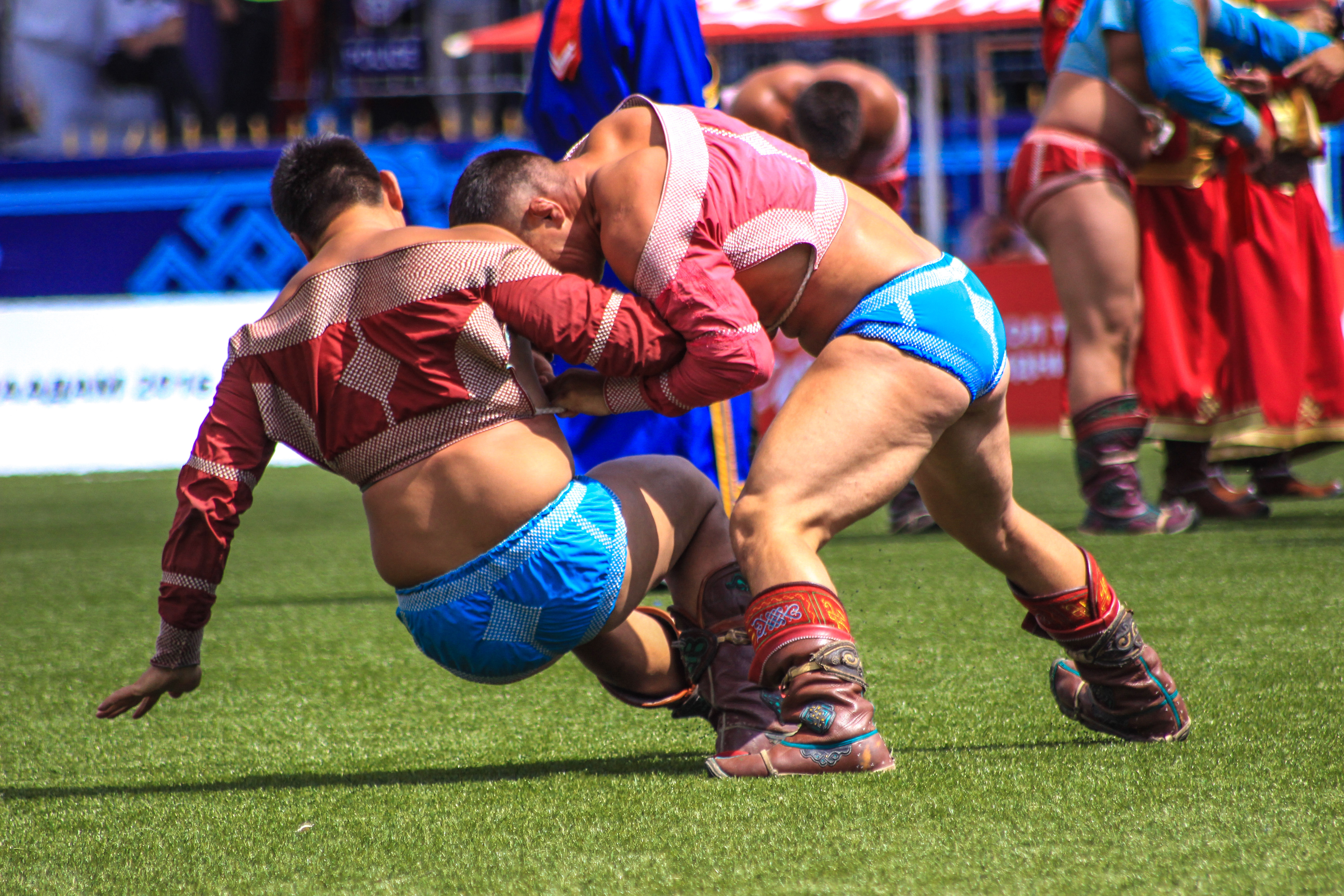
We leave Terelj National Park early this morning to drive back to Ulaanbaatar for Naadam Festival.The Naadam Festival celebrates the ‘three games of men’ (or Erin Gurvan Naadam): wrestling, horse racing and archery. More recently, a fourth game, knuckle-bone flicking, was added to the competitions. The festival is celebrated throughout the country but the biggest is in Ulaanbaatar.Over the next two days, we attend the grand opening ceremony before we watch Mongolians compete in all four sports. We also mingle with hordes of Mongolian spectators as the grounds around the stadium (where wrestling, archery and bone-flicking take place) and the horse races are filled with stands selling food, games, flags and various other things.The atmosphere is a big part of the experience and many Mongolians dress in their best traditional clothes for the occasion.In 2010, the festival was entered into the Unesco Intangible Cultural Heritage list and is a great celebration of the Central Asian nation’s culture.Total drive time: 1hr 30min
Meals: Breakfast,Lunch,Dinner
Day 4
Naadam Festival
We leave Terelj National Park early this morning to drive back to Ulaanbaatar for Naadam Festival.The Naadam Festival celebrates the ‘three games of men’ (or Erin Gurvan Naadam): wrestling, horse racing and archery. More recently, a fourth game, knuckle-bone flicking, was added to the competitions. The festival is celebrated throughout the country but the biggest is in Ulaanbaatar.Over the next two days, we attend the grand opening ceremony before we watch Mongolians compete in all four sports. We also mingle with hordes of Mongolian spectators as the grounds around the stadium (where wrestling, archery and bone-flicking take place) and the horse races are filled with stands selling food, games, flags and various other things.The atmosphere is a big part of the experience and many Mongolians dress in their best traditional clothes for the occasion.In 2010, the festival was entered into the Unesco Intangible Cultural Heritage list and is a great celebration of the Central Asian nation’s culture.Total drive time: 1hr 30min
Meals: Breakfast,Lunch,Dinner
Day 5
To Mongol Els • Guided hike to search for takhi, the world’s last wild horses
We drive to Khustain Nuruu National Park, two hours’ west of Ulaanbaatar. Khustain Nuruu is famous for the re-introduction of Przewalski’s horses (also known as takhi horses), which were once native to Mongolia and almost became extinct earlier in the 20th century.Through the efforts of several Mongolian and international organisations, these magnificent wild horses now roam in the steppes of the national park once again. We visit the Project Information Centre and take a guided hike to see the wild horses.We continue on the main road westwards towards Karakorum, Bactrian (two-humped) camels wander the desert dunes as horses graze on green steppe nearby – an incredible sight.Total drive time: 4hr 30min to five hours
Meals: Breakfast,Lunch,Dinner
Day 6
To Karakorum • Visit Erdene Zuu Monastery
We continue our drive to Karakorum, the 13th-century capital of the Mongol Empire, making a brief stop to see the dunes of the Little Gobi along the way. Karakorum was established by Ogedei Khan and remained the Mongol powerbase until Khublai Khan established Beijing as the capital. Erdene Zuu (Hundred Treasures) Monastery was the largest monastery in Mongolia, built in 1586 under the direction of Abtai Khan on the ruins of the ancient capital. Much of the monastery was destroyed during Stalin’s purges of the 1930s, but an impressive wall with 108 stupas and several temples remain. After lunch, we visit the monastery, the modern Karakorum Museum and the surrounding area.Total drive time: 1hr 30min
Meals: Breakfast,Lunch,Dinner
Day 7
Along northern edge of Gobi Desert to Arvaikheer via Shankh Monastery
We continue along the paved road to Arvaikheer, the capital of Ovorkhangai Aimag, on the northern edge of the Gobi Desert. On the way, we visit the Shankh Monastery, once the home of the great Mongolian theologist Zanabazar. We should arrive at Arvaikheer mid-afternoon. In the afternoon, we have time to visit the local museum, which contains nature collections, stone figures and Turkic scripts, and possibly go to a local market.Total drive time: three hours
Meals: Breakfast,Lunch,Dinner
Day 8
To Bayan Gobi via Ikh Bogd mountain
Today is a long day as we head properly off the tourist route into some of the wilder parts of the Gobi Desert. After an early breakfast, we start our journey and rapidly leave the paved road behind. The landscape changes as we head deeper into the Gobi and the majestic Ikh Bogd should be visible in the distance, the highest mountain in the Gobi Altai mountain range. Eventually, after about nine hours of travelling (with stops), we arrive at our ger camp in the wilderness. This is the longest day’s driving but is also a trip highlight as we pass through some of the most spectacular scenery in Mongolia.Total drive time: five to six hours
Meals: Breakfast,Lunch,Dinner
Day 9
Cross the Gobi via White Cave
After going over a desert pass and visiting the quartz-rich White Cave, our journey continues through classic Gobi Desert scenery of flat stony plains mixed with small rocky outcrops and patches of sand across the Khatan Suudal Steppe. We stop for a picnic lunch on the way, with views of Arts Bogd mountain to the north. We head off to the Kongoriin Els dunes, arriving in the late afternoon.Total drive time: one to two hours
Meals: Breakfast,Lunch,Dinner
Day 10
Visit singing sand dunes, the largest dunes in Mongolia
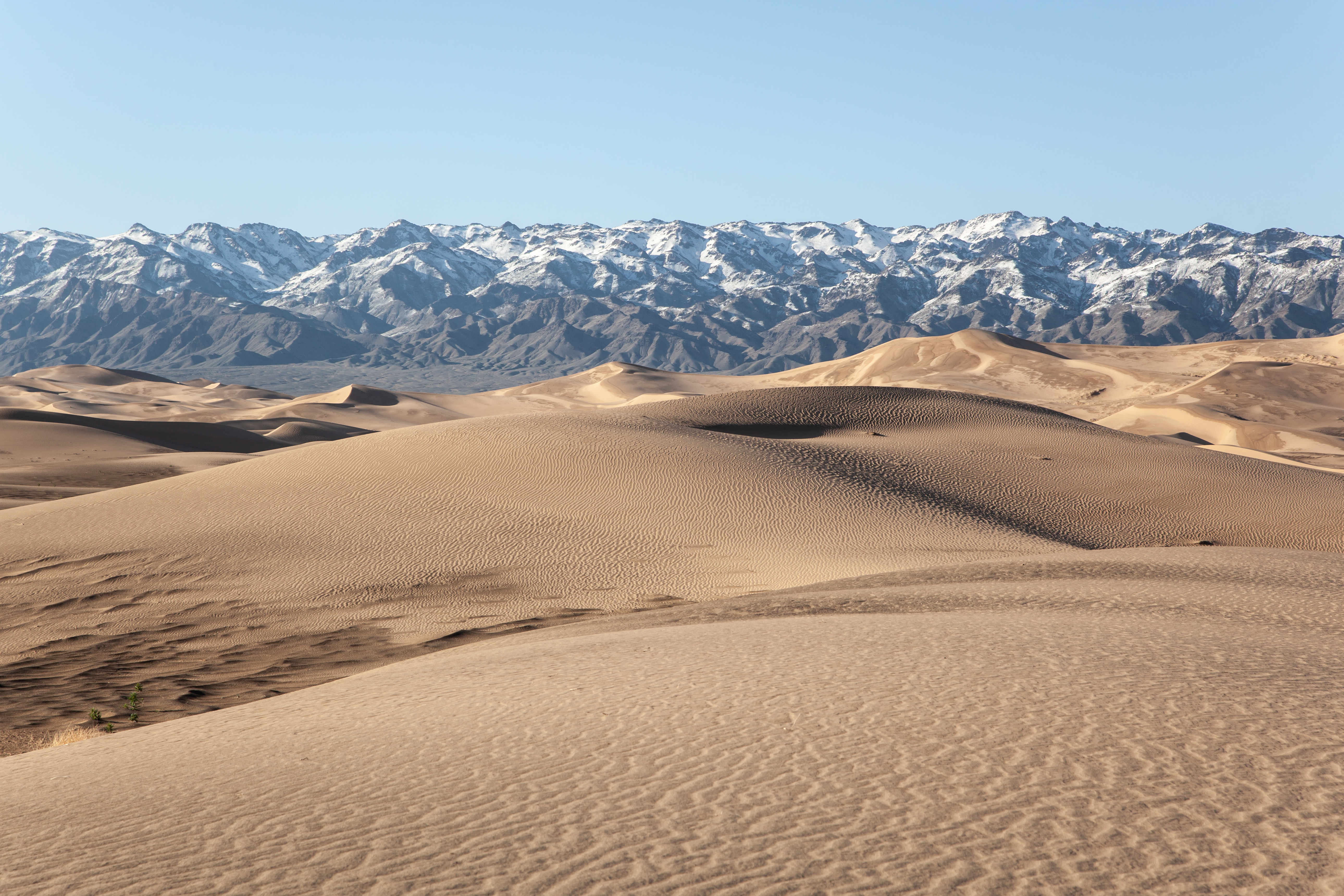
We have a full day to explore the dunes and surrounding area. The Khongoriin Els stretch for 125mi (200km) and are as high as 985ft (300m) in places. They are known as the Singing Dunes because of the beautiful sound that resonates through them on a windy day. The South Gobi has 100,000 camels, typically used by herders for transportation of their gers. We have the opportunity today to visit a camel-breeding family and glimpse the way of life of the nomadic herders of these parts.Total drive time: five to six hours
Meals: Breakfast,Lunch,Dinner
Day 11
Travel through rocky plains of Gobi Gurvansaikhan National Park
This morning, we drive through Gobi Gurvansaikhan National Park. Gobi Gurvansaikhan means Three Beauties of the Gobi and this range marks the eastern end of the Gobi Altai range. The park landscape is extremely varied, with rocky and sandy desert plains, precipitous cliffs and ravines, salt pans and oases. We visit a spectacular natural sight of this region, Yolyn Am. The name means Vulture’s Mouth and it is a canyon so deep and narrow that winter ice can remain on the valley floor even in the height of summer. This region is also renowned for the diversity of its wildlife and many endangered species live here, including khulan, ibex, argali and elusive snow leopards. We visit a museum and explore the canyon before transferring to a nearby ger camp for dinner and overnight.Total drive time: four to five hours
Meals: Breakfast,Lunch,Dinner
Day 12
Hike around the Flaming Cliffs of Bayanzag
Today we have time to relax in our luxury ger camp. Either in the morning or afternoon, we drive 45mi (70km) to Bayanzag. Known as the Flaming Cliffs, their red/ochre colour can be striking and we have the opportunity for a short hike among sands of red, yellow and orange. Bayanzag is a world-renowned dinosaur fossil exploration site, discovered in the 1920s by Mongolian and American palaeontologists. We are free to explore the region and may even be lucky enough to spot dinosaur fossils. We later return to our ger camp.Total drive time: 3hr 30min to four hours
Meals: Breakfast,Lunch,Dinner
Day 13
To Baga Gazryn Chuluu National Park
This morning, we begin our journey back toward the capital city, but we stay overnight at the stunning rocky formations of Baga Gazryn Chuluu – an iconic outcrop rising dramatically from the open steppe.We visit the ruins of Lovonchombo Monastery and explore a well-known natural spring believed to have eye-healing properties. In the evening, we enjoy our final night in a traditional Mongolian ger.Total drive time: six to seven hours
Meals: Breakfast,Lunch,Dinner
Day 14
To Ulaanbaatar • Visit Gandan Monastery
After completing our return to Ulaanbaatar, we visit Gandan Monastery, the largest functioning lamasery in Mongolia and the seat of Buddhist studies in the country. Here, we may see monks praying and the 65ft (20m) gold-and-bronze statue of Migjid Janraisig.The remainder of the day is free for some last-minute shopping or sightseeing. This evening, we have the option of attending a local song and dance performance at the National Academic Drama Theatre (US$10).Total drive time: four to five hours
Meals: Breakfast,Lunch,Dinner
Day 15
Adventure ends in Ulaanbaatar
The tour ends after breakfast and we begin our return journeys home, full of tales and magnificent photos to share. If you aren’t ready for the adventure to end, speak to your sales representative about our range of extension options.
Meals: Breakfast
What’s included
What’s not included
Additional information
Food
Traditional Mongolian diets are very meat and dairy heavy. While there are opportunities to try some of these products, such as dry curd and fermented mare’s milk, the meals provided in the ger camps are generally Western meals, at times with an Asian influence. There is normally some form of soup and salad plus a main course and desert. Vegetarians are generally well catered for; if you are vegetarian or have other dietary requirements, please inform us in advance.
Breakfasts can vary from place to place, some are buffets while others are set, normally cereal, bread and possibly a hot dish. On some days, a pack lunch is provided, this is often still a proper meal (though without the soup). Water is provided and is generally from large water containers, so make sure to bring a refillable water bottle. Tea, coffee, soft drinks, beer, vodka and (most of the time) wine are available to buy at the ger camps. There is the opportunity to buy snacks in Ulaanbaatar and on a couple of other occasions along the way when we drive through towns or villages.
Karakorum Heritage: Erdene Zuu Monastery & Museum
Walk the walled precincts of Erdene Zuu Monastery, Mongolia’s oldest Buddhist monastery, encircled by 108 stupas. Step into assembly halls adorned with thangkas and wooden carvings, then visit the Karakorum Museum to trace the city founded by Ogedei Khan in the 13th century.
Hear how the 1930s purges shattered monastic life and how spiritual practice later revived. Artifacts and maps illuminate Karakorum’s role as a Silk Road crossroads linking Eurasian empires.
Chinggis Khaan Equestrian Statue Complex, Tsonjin Boldog
Discover the gleaming Chinggis Khaan Equestrian Statue, a 40m stainless-steel monument rising over the steppe. Inside the complex, explore exhibits on the Mongol Empire, then climb onto the horse’s head via an internal walkway for panoramic views of the grasslands.
Learn the legend of the golden whip said to be found at this very site and admire the bold artistry that blends national pride with contemporary engineering. The sweeping steppe outlook offers striking photo opportunities in every direction.
Terelj National Park Walk & Aryabal Meditation Temple
Explore Terelj National Park, a landscape of granite outcrops, larch forest and wildflower meadows. Follow a gentle trail lined with aphorisms up to the Aryabal Meditation Temple, a Tibetan-style sanctuary perched on a mountainside with far-reaching views.
Feel the quiet of prayer wheels and breeze-ruffled banners in a place designed for reflection. The temple’s setting above alpine pastures reveals the gentler, green heart of Mongolia, a vivid contrast to the deserts you encounter later in the journey.
Naadam Opening Ceremony & Stadium Sports, Ulaanbaatar
Experience the Naadam Festival opening ceremony at Ulaanbaatar’s main stadium, where parade pageantry, riders and musicians ignite Mongolia’s biggest celebration. Settle among proud locals to watch wrestling, archery and ankle-bone flicking unfold on the festival grounds.
Learn how centuries-old contests became a symbol of national identity, recognised as UNESCO Intangible Cultural Heritage. Traditional deels, embroidered boots and the scent of festival foods create a vibrant, living portrait of the steppe culture.
Naadam Horse Races on the Steppe
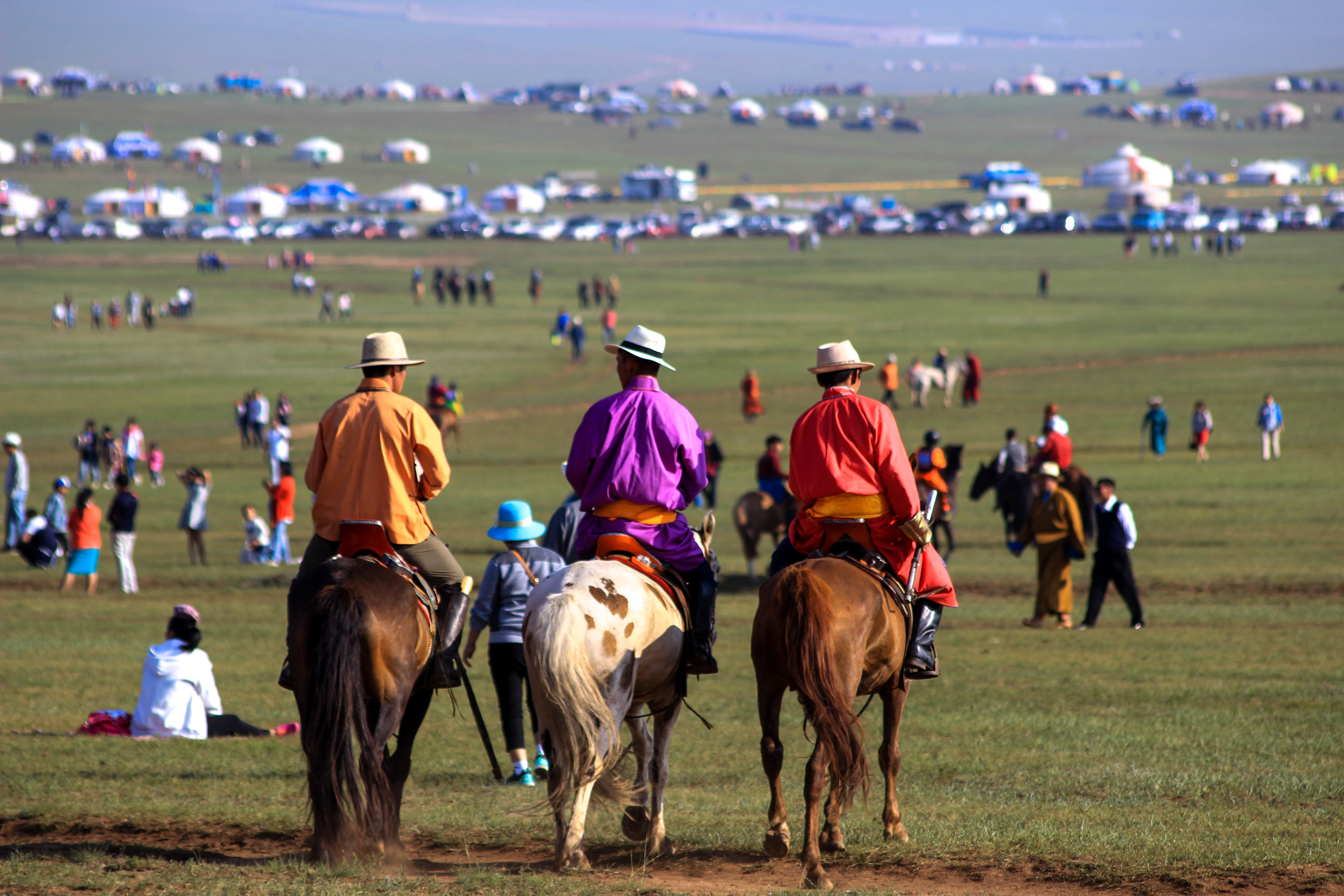
Witness Mongolia’s legendary long-distance horse races on open steppe terrain, typically at Khui Doloon Khudag outside the capital. Cheer as young jockeys in colourful silks guide swift Mongol horses across rolling prairie in dramatic, dust-kicking gallops.
Feel the festival buzz among family picnics, flags and folk songs while elders place bets and riders are splashed with fermented milk for luck. These endurance races celebrate hardy mounts and nomadic spirit more than a sprint finish.
Khustain Nuruu National Park: Tracking Wild Takhi
Join a guided hike in Khustain Nuruu to search for Przewalski’s horses (takhi), the world’s last truly wild horse. Scan tawny hills and rippling grassland as rangers explain reintroduction efforts that returned these sturdy equines to their ancestral home.
Learn how careful breeding from zoo populations restored a species once extinct in the wild. With patience and quiet steps, you may spot family bands at dusk, a powerful encounter with Mongolia’s rolling steppe ecology.
Shankh Monastery & Arvaikheer Cultural Museum
Visit Shankh Monastery (Shankh Khiid), once associated with the revered artist-philosopher Zanabazar. Its timber architecture and painted altars stand against the steppe, evoking Mongolia’s resilient Buddhist tradition.
In Arvaikheer, browse the local museum’s nature exhibits and steppe ethnography, including Turkic stone figures and regional crafts. This pairing reveals a timeline from nomadic ancestors and shamanic traces to the Buddhist scholasticism that shaped the country’s cultural heartland.
White Cave (Tsagaan Agui) Quartz Chambers
Explore the White Cave (Tsagaan Agui), a quartz-rich grotto set amid stark Gobi uplands. Pick out shimmering mineral seams as you step into cool rock shelters used across millennia by travellers and herders.
Guides share stories of archaeology and desert lore while you admire quartz-lined chambers and sculpted walls. This short walk offers a contemplative contrast to the wide horizons outside, revealing a fragile subterranean world within the Gobi’s hard stone.
Khongoryn Els Singing Dunes & Camel-Herder Visit
Climb the ridge of the Singing Dunes (Khongoryn Els), where wind sets sand humming and the Gobi stretches to distant ranges. Footsteps sink into warm slopes as views sweep over oases dotted with Saxaul trees.
Meet a local family to learn about breeding Bactrian camels and life between pasture and well. Share salty milk tea or dried curds and hear how herders read weather and tracks. This grounded encounter deepens your feel for desert resilience.
Yolyn Am Gorge Walk, Gobi Gurvansaikhan National Park
Walk into Yolyn Am (Vulture’s Mouth), a narrow canyon where shade preserves lingering summer ice. Sheer rock walls frame a ribbon of stream and meadow frequented by pikas and soaring lammergeiers.
In the park museum, trace the geology and wildlife of the Three Beauties range. Outside, cool air, birdsong and rare alpine plants offer a surprising oasis within the desert—an elemental meeting of rock, water and sky.
Bayanzag Flaming Cliffs Hike & Fossil Landscape
Hike the ochre ravines of the Flaming Cliffs of Bayanzag, where sunset sets sandstone ablaze. Trace the footsteps of 1920s expeditions that revealed dinosaur fossil beds and the first scientifically described dinosaur eggs.
As you wander among wind-shaped hoodoos, guides interpret geology and the fragile desert ecology. The silence of this fossil-rich badlands invites slow exploration and a thoughtful look back into deep time.
Baga Gazriin Chuluu Outcrops, Monastery Ruins & Spring
Roam the granite labyrinth of Baga Gazriin Chuluu, where tors rise from the steppe like stone ships. Among the boulders, find the Lovonchombo Monastery ruins, a reminder of nomadic monastic life on Mongolia’s open plains.
Pause at a revered eye-healing spring tucked between rocks and hear legends tied to its waters. The blend of geology, spirituality and wide-sky solitude makes this a quietly powerful stop on your Gobi route.
Gandantegchinlen Monastery, Ulaanbaatar
Visit Gandantegchinlen Monastery, Mongolia’s largest active lamasery. Step inside to hear monastic chanting and incense swirls, then gaze up at the gilded Migjid Janraisig statue, a towering embodiment of compassion.
Stories of destruction and revival frame this living centre of Buddhism. Monks, devotees and curious visitors share the courtyards, where turning prayer wheels and fluttering khadag scarves reflect a city reconnecting with its spiritual roots.
Ulaanbaatar Folk Song & Dance Performance
Spend an evening at a national theatre for a folk song and dance performance celebrating nomadic art forms. Hear the haunting long-song (urtiin duu) and the resonant twang of the morin khuur as dancers trace stories of steppe life in richly embroidered deels.
This cultural showcase is at additional cost and bookable on tour. It offers an elegant, time-efficient way to absorb Mongolia’s musical heritage, from throat singing to courtly choreography.
Hosted Welcome Dinner in Ulaanbaatar
Savour a warm introduction to Mongolia as you meet your Tour Leader and travelling companions over a hosted welcome dinner in Ulaanbaatar. Sample hearty local flavours alongside Asian-influenced dishes while hearing practical tips for navigating city life and the vast steppe beyond.
Gain first insights into customs that shape daily life, from toasts with vodka to the etiquette of shared tables. This relaxed evening sets the tone for the journey ahead and celebrates the spirit of Mongolian hospitality in the capital.