Your itinerary

Day 1
Adventure starts in Ulaanbaatar
Our cycling adventure starts in Ulaanbaatar, Mongolia’s capital city. There are no activities planned for today to allow for different arrival times. If you have time to explore some of the sites we recommend visiting Sukhbaatar Square, the National Museum and the landmark State Department Store.Around 6pm, say hello to your tour leader and fellow travellers, when we gather as a group for the first time to get to know each other and learn more about the adventures ahead. Your tour leader then ensures a big welcome by arranging a group dinner at a nearby restaurant.Want more time in Ulaanbaatar? Secure pre-tour hotel nights through your sales representative.
Meals: Dinner
Day 2
Morning sightseeing followed by a free afternoon; overnight train to Erdenet
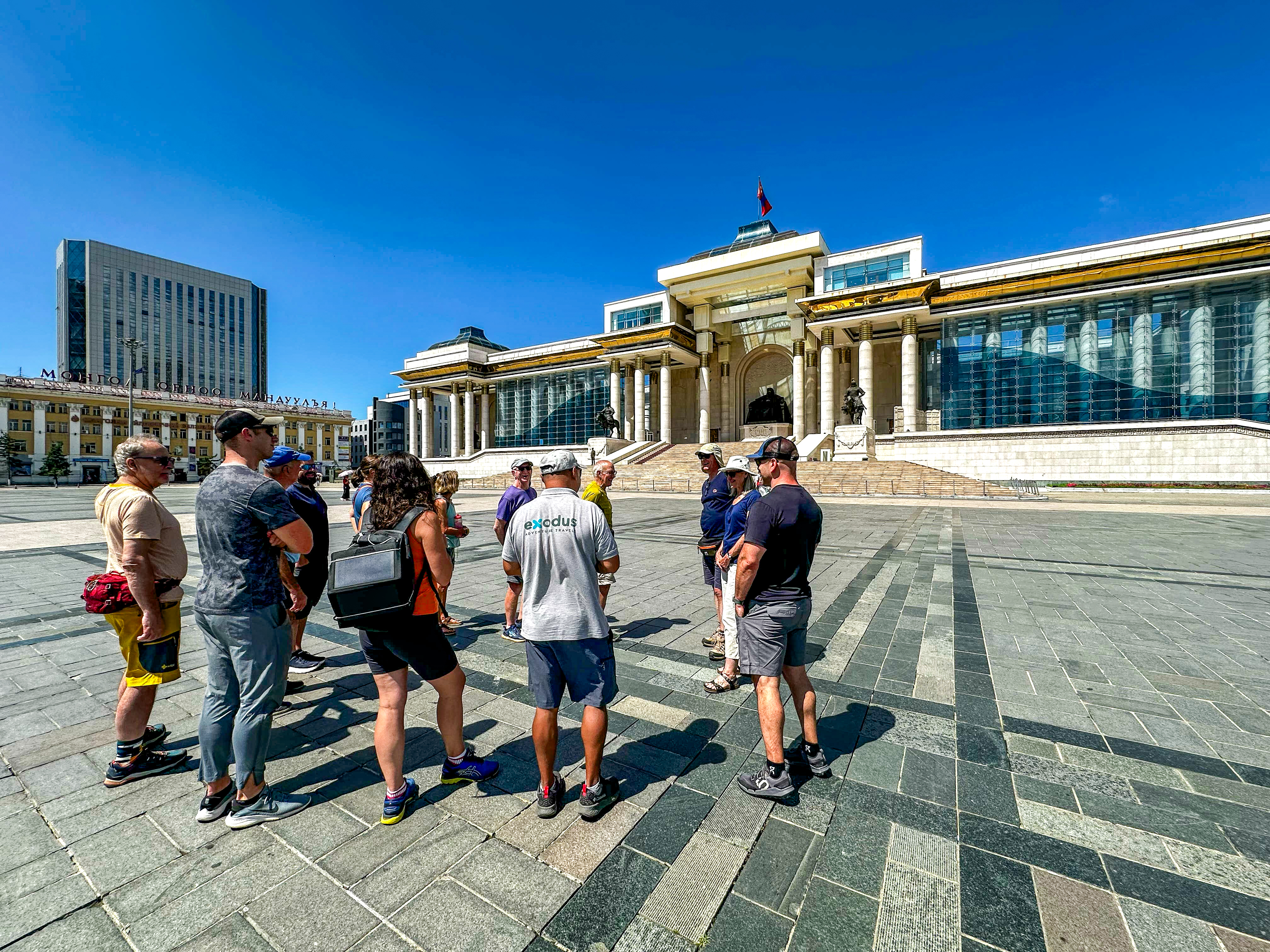
We start the day after breakfast with the trip briefing and then strike out on an introductory tour of Ulaanbaatar, including Sukhbaatar Square (the main square in the city) and Gandan Monastery. In the afternoon, you have free time before boarding the overnight train to Erdenet in the early evening. Erdenet is the third largest city in Mongolia and home to one of the largest copper mines in the world. We stay in comfortable sleeping compartments on the train.
Meals: Breakfast,Dinner
Day 3
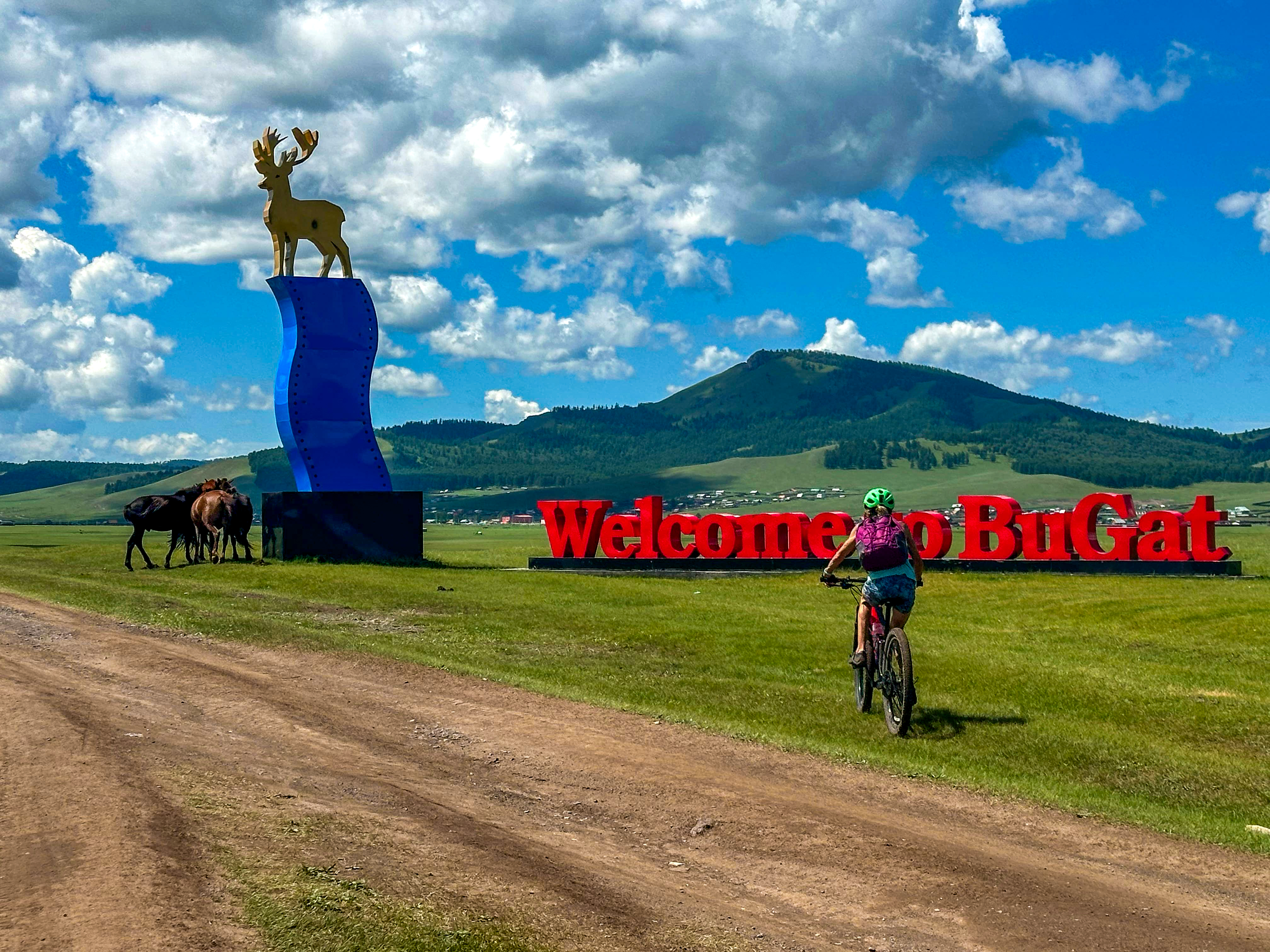
Ride to Tal Tolgoi Well via the small township of Bugat
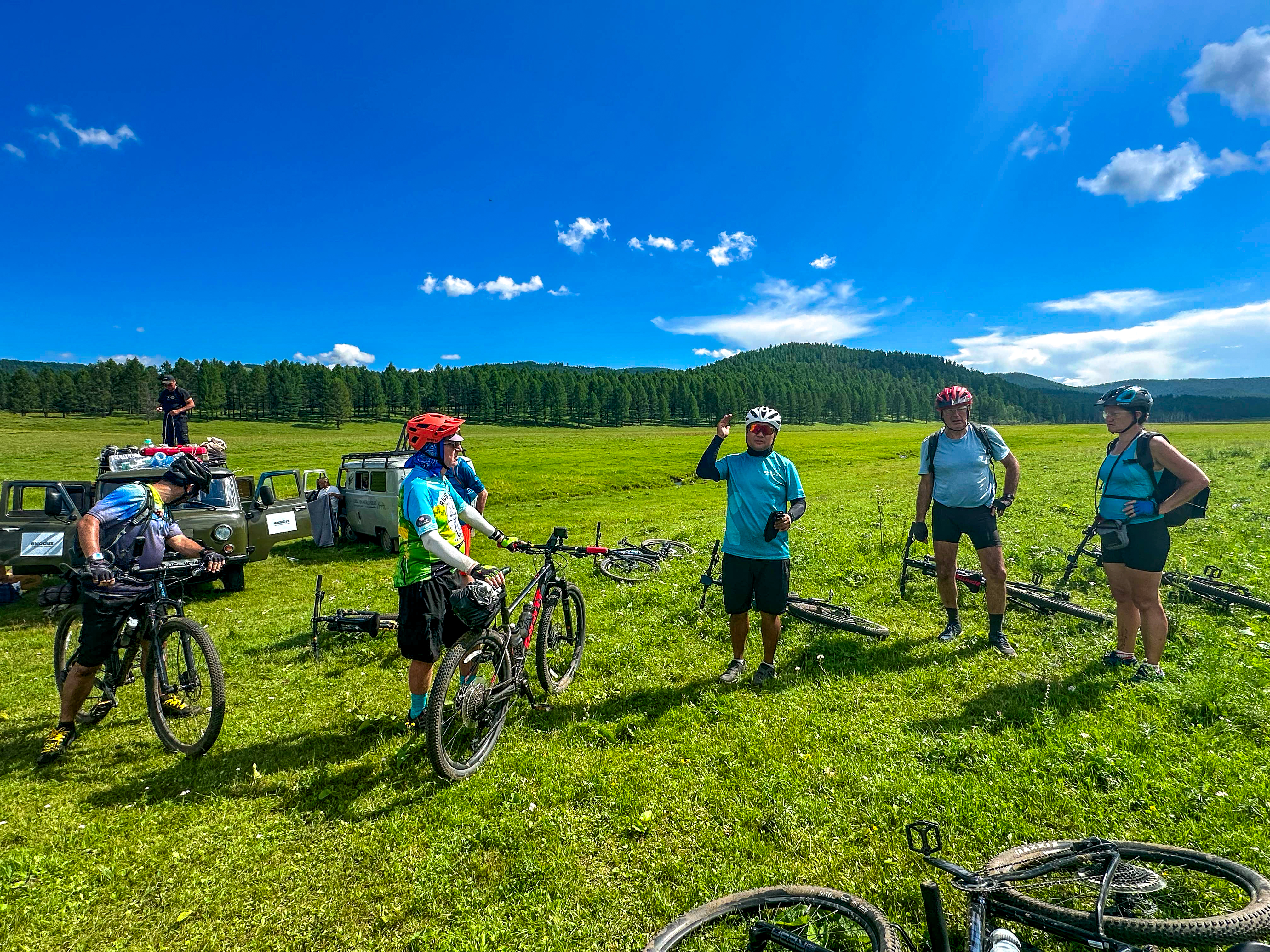
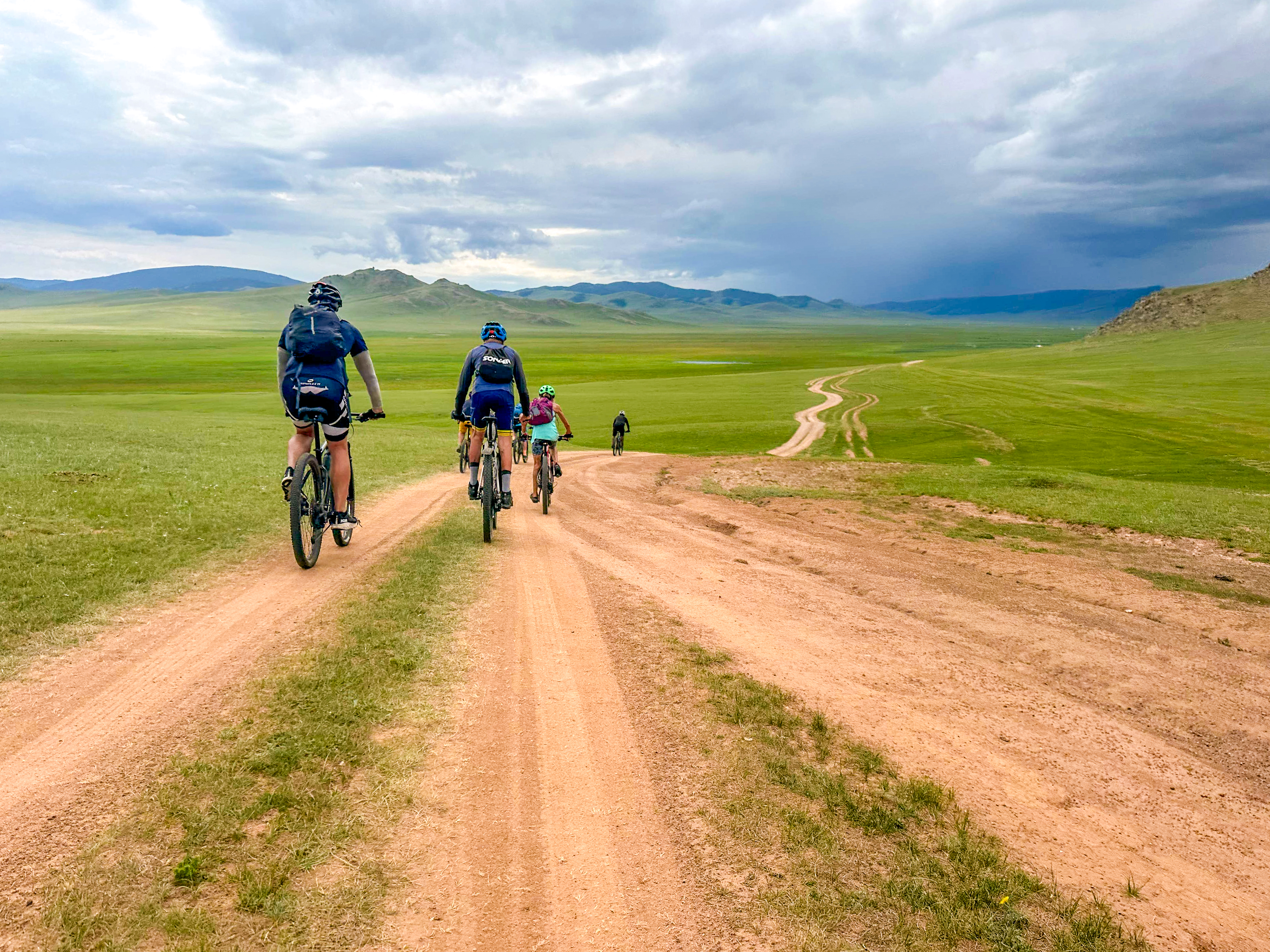
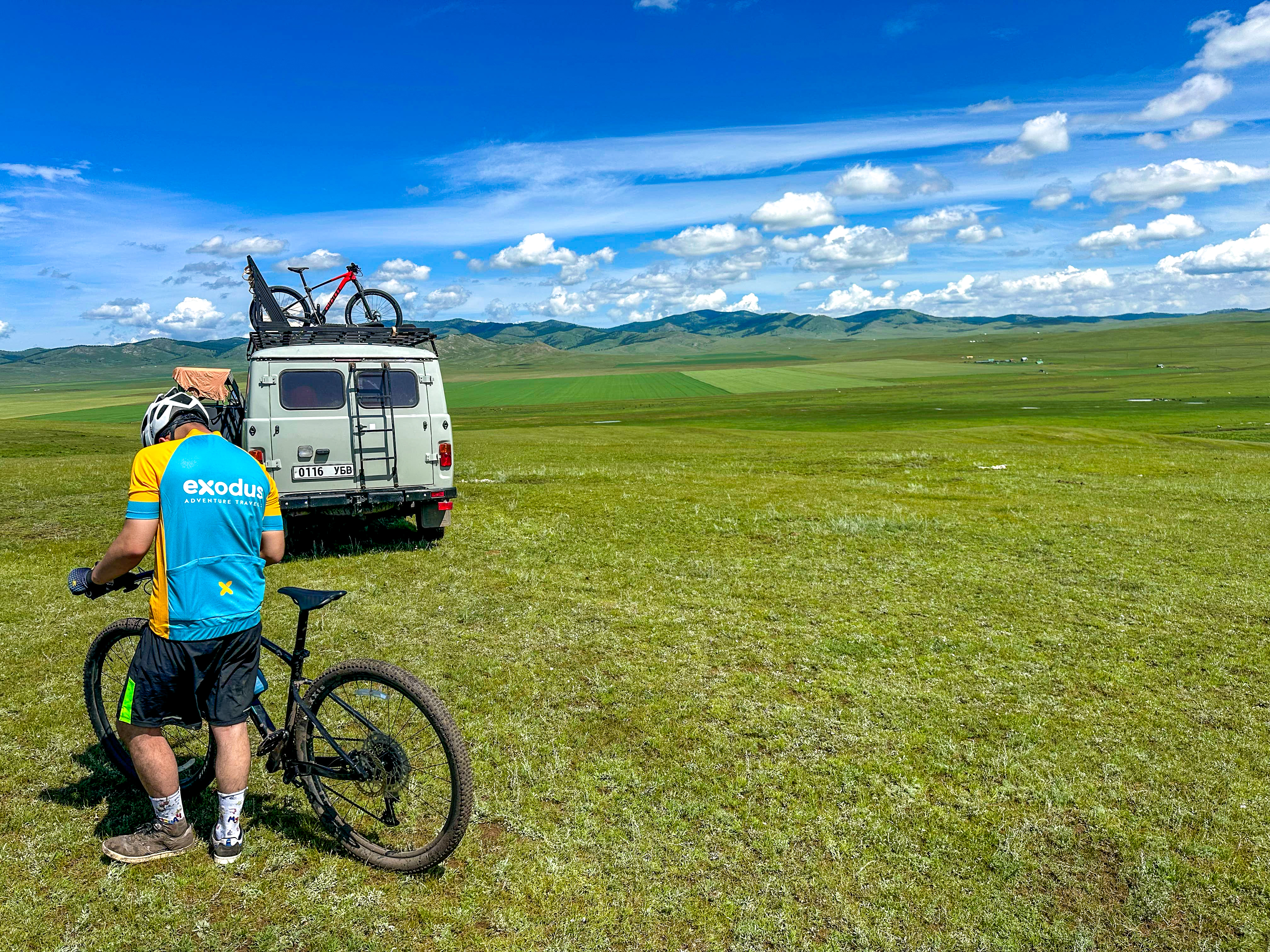
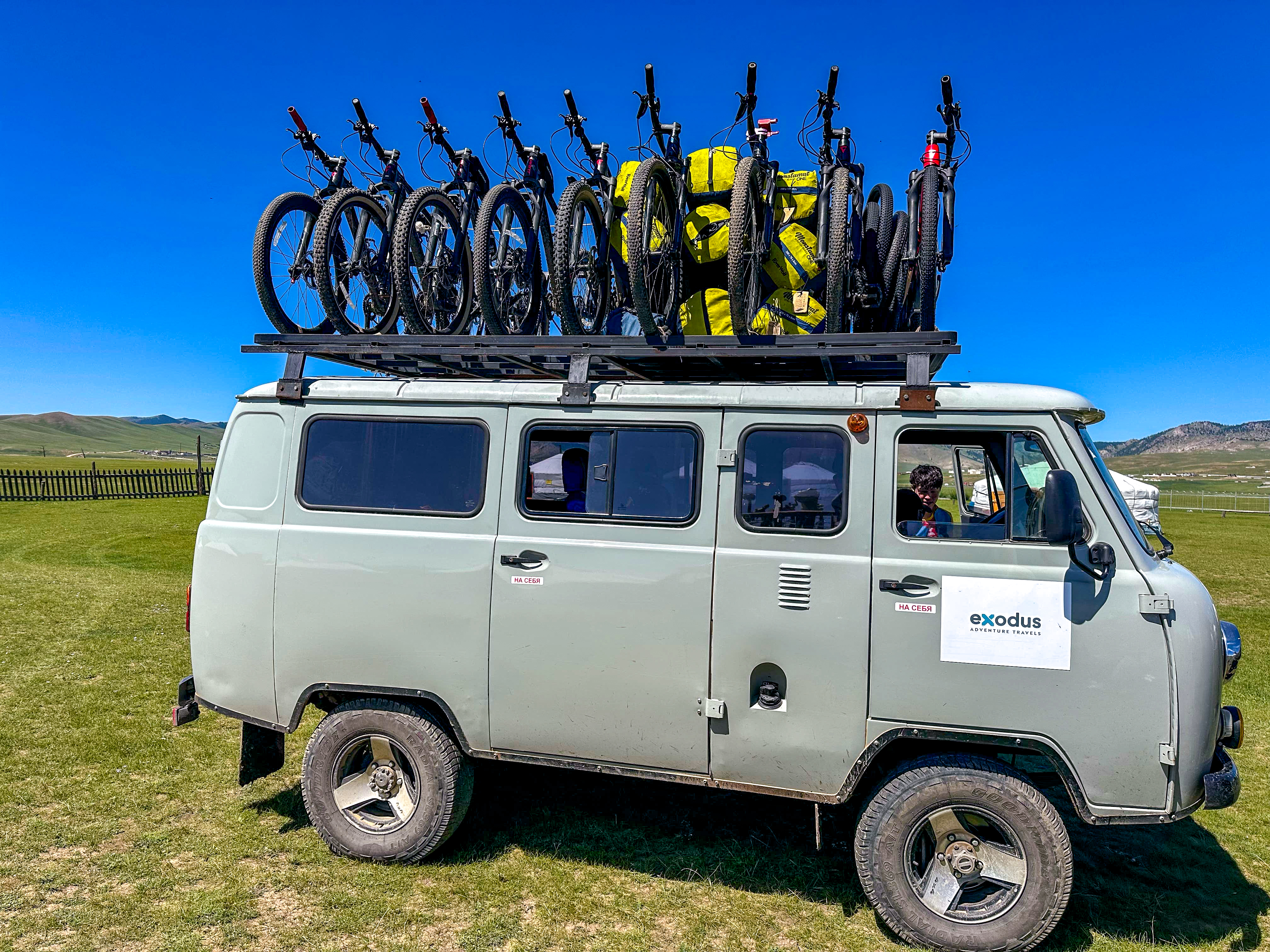
Our train arrives early in the morning. Upon arrival, we are joined by our crew and support vehicles. After breakfast, we set up the bikes and head out towards the wilderness. The small township of Bugat makes a convenient lunch stop. After lunch, our route takes us over Chuluutiin Davaa, a long pass on which care must be taken as the surface is loose in parts. With a steep descent, we arrive at a long plain leading to tonight’s camp near Tal Tolgoi Well.
Meals: Breakfast,Lunch,Dinner
Day 4
Cross Tuluugiin Pass
After our first night near local herding families, we cycle through rolling country before descending to a bridge over the Altaan (Golden) River. Rock formations in the area hint towards a volcanic past. The riverbanks make an idyllic spot for a picnic lunch. It is a long, steady climb to Tuluugiin Pass, where the scenery changes dramatically as the forests give way to open steppe, at least for a while. Today is our longest cycling day on the trip.
Meals: Breakfast,Lunch,Dinner
Day 5
Arhangai steppe ride through undulating country to a valley below Khairkhan Mountain
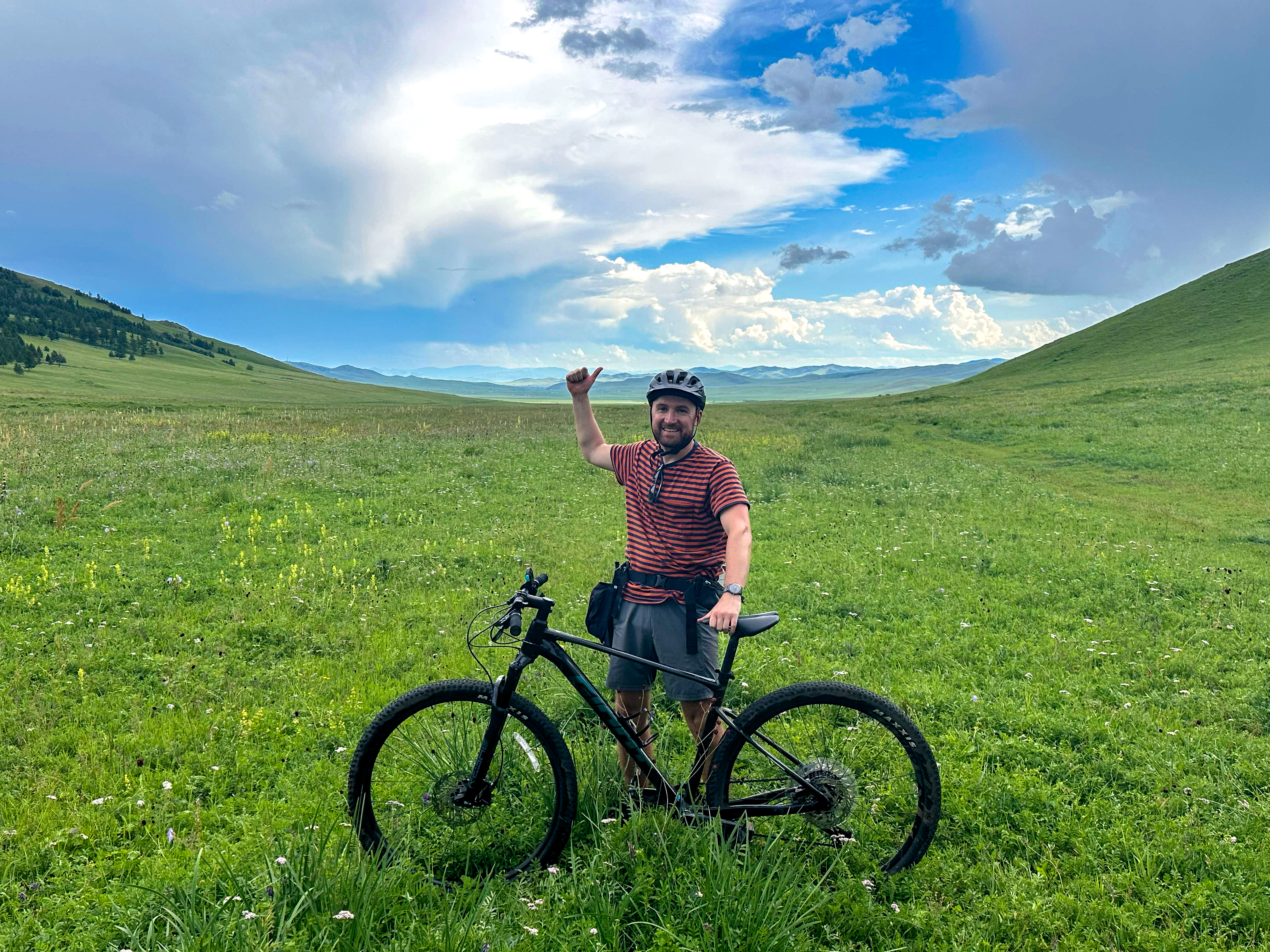
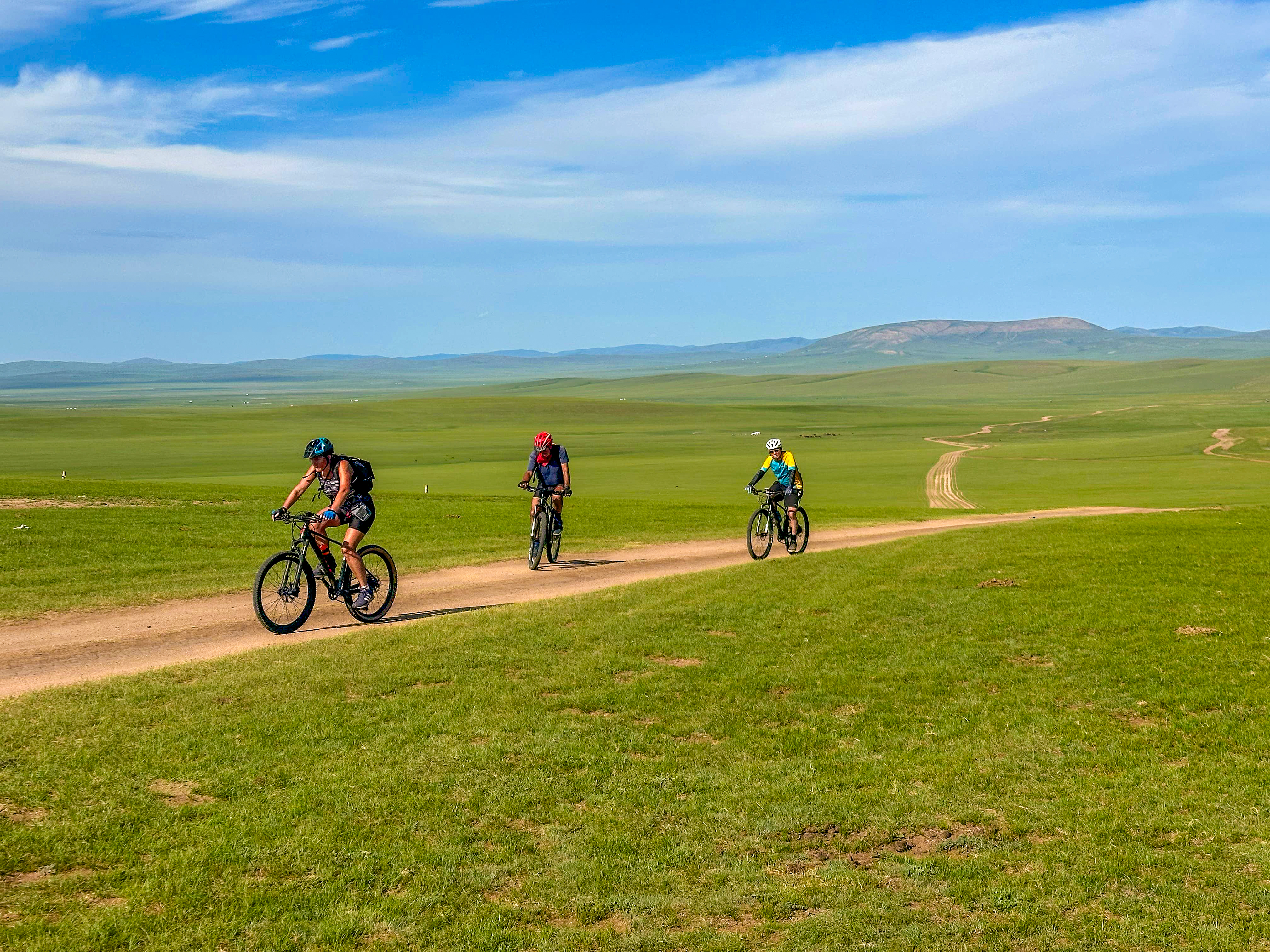
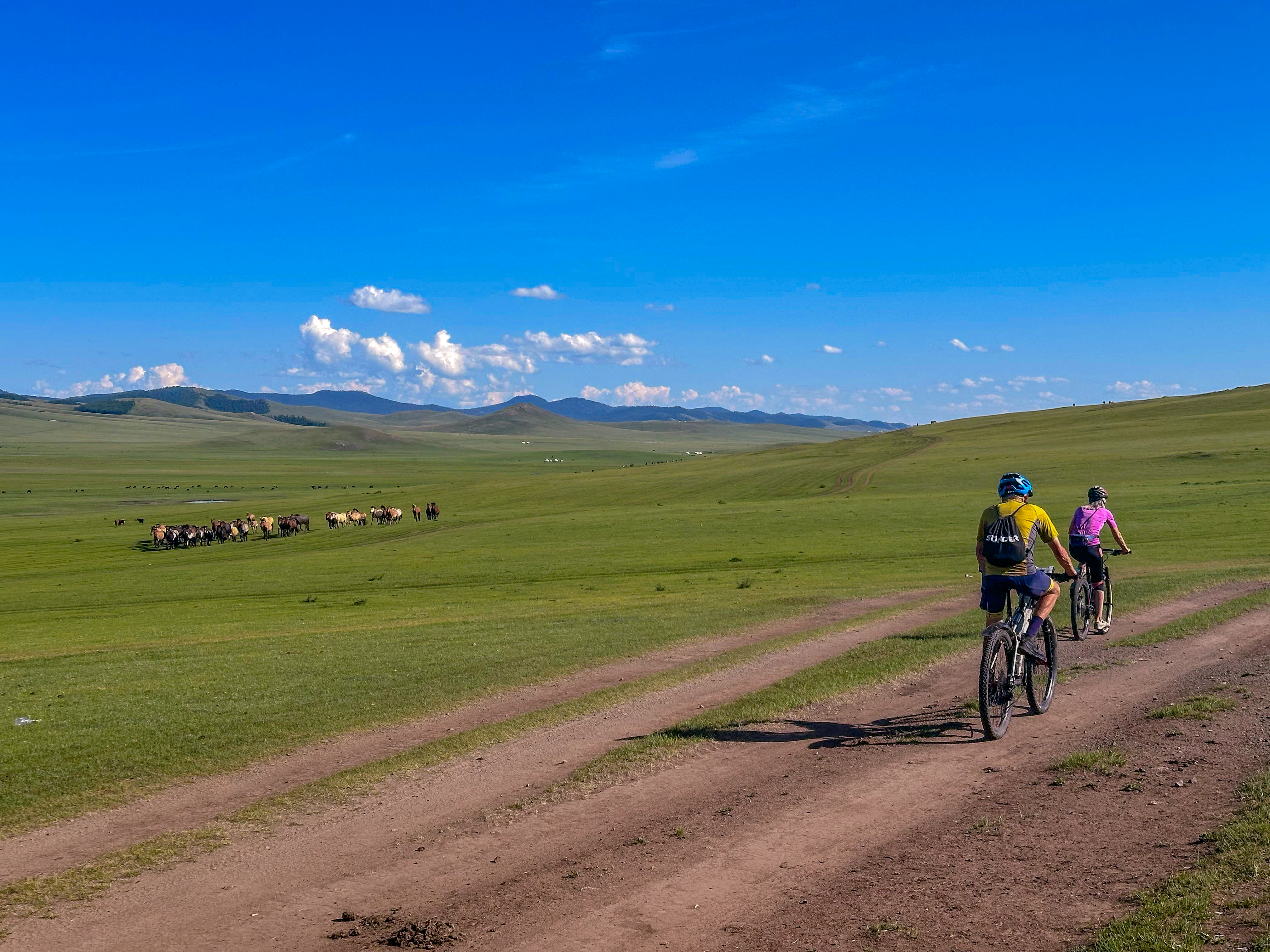
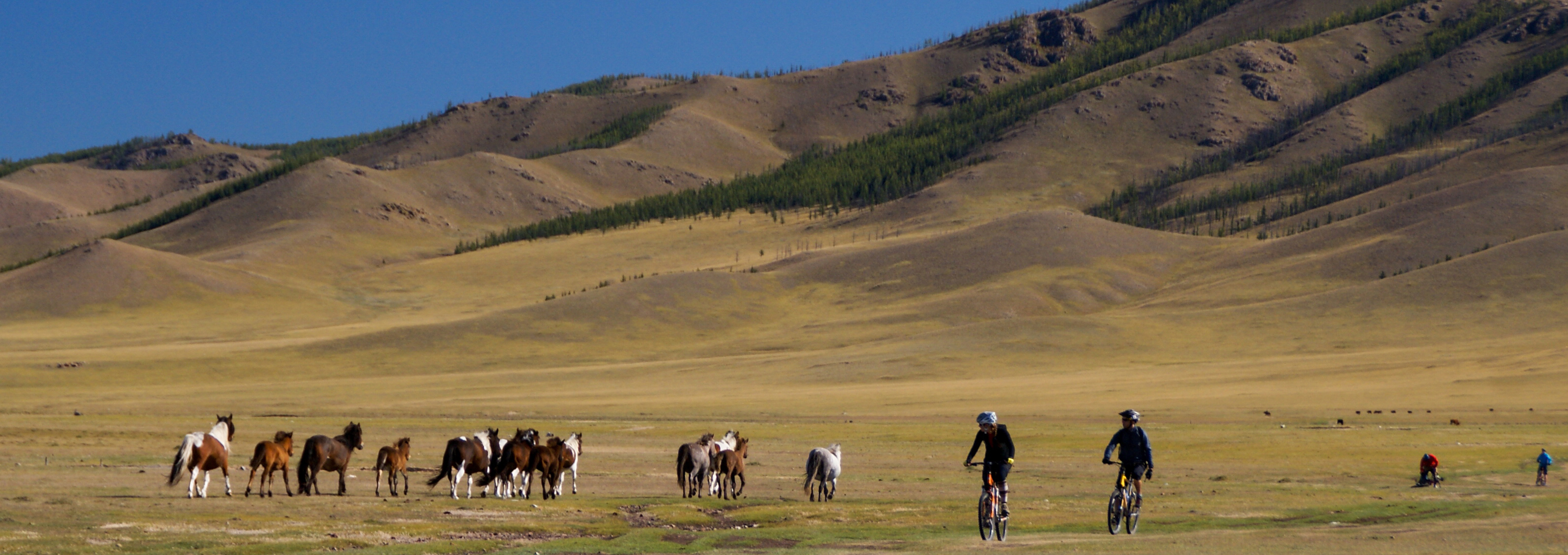
Today we pass through rolling hills, past small lakes and herds of horses. Steppe eagles can be seen in this area. We stop for lunch with views across the steppe. After lunch, we continue on tracks around the southern side of Khairkhan Mountain (6,108ft/1,862m) and make camp in an open, green valley beneath the Kholbooriin Pass (5,410ft/1,649m).
Meals: Breakfast,Lunch,Dinner
Day 6
Short climb to cross the Kholboogin Pass before descending to Khairkhan Lake camp
We begin with a bit of exertion as we make the short climb in the morning up to the pass, giving us far-reaching views across the countryside. Down the other side, we wind along gentle river valleys before emerging at the township of Khairkhan. After lunch on the outskirts of town, we pass a series of small lakes before choosing a camp for the night.
Meals: Breakfast,Lunch,Dinner
Day 7
Cycle up Khunjiin River Valley to camp beneath Chingeltei Mountain
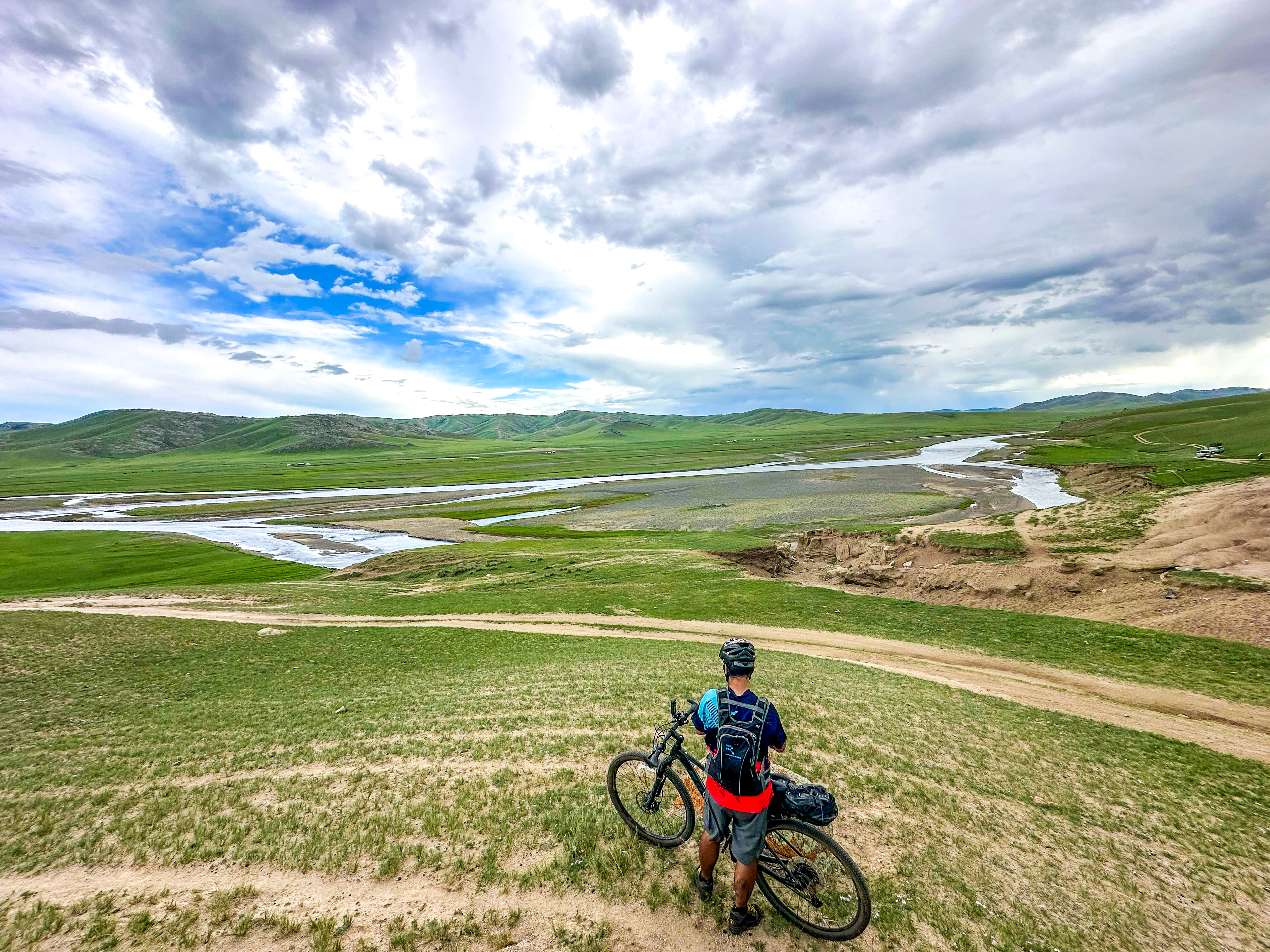
Today we follow the Khunjiin River as it rises gently towards its headwaters. River valleys like this provide fertile pasture for grazing livestock and are popular campsites with local herders. Wetlands near the river attract birdlife, including demoiselle cranes. We stay overnight in the upper reaches of the river valley, beneath Chingeltei Mountain.
Meals: Breakfast,Lunch,Dinner
Day 8
Short climb past the headwaters of the Khunjiin; descend into Tamir River valley; camp near Great Rock of Ikh Tamir
After a short climb to the headwaters of the Khunjiin River at the Uran Khutul pass, it is downhill to the Tamir River where we have lunch on the banks. Near the river, we pass burial grounds dating to the eighth century. We camp tonight on the banks of the Tamir, not far from Ikh Tamir or Great Rock. Locals say that if you can throw a rock over the rock, it will bring you good luck for the rest of the journey.
Meals: Breakfast,Lunch,Dinner
Day 9
Half-day ride to Tsetserleg; afternoon free
Today is a half day of cycling and we make a good start to make the most of the afternoon for a chance to rest. The Gurviin Dava Pass is a long but steady ascent through forest for the most part, with a short, steep climb at the end. Arriving at the provincial capital of Tsetserleg makes the effort well worthwhile. Tsetserleg means garden and this township has one of the most attractive settings of any in Mongolia. We pitch camp by the Tsetserleg River. The afternoon is free to relax, enjoy a hot shower and experience staying in a traditional Mongolian ger.
Meals: Breakfast,Lunch,Dinner
Day 10
Morning ride in foothills of the Khangai Mountains
We are now close to the Khangai Mountains and a short ride takes us to the foothills. The rolling country of Arhangai has been replaced by forested hills of larch and pine with dramatic alpine peaks in the distance. There are three short passes today, with lunch on the third before descending to tonight’s camp.
Meals: Breakfast,Lunch,Dinner
Day 11
Cycle across undulating steppe to Ondor Khairkhan Mountain
Our route now takes us into the heart of the Khangai Mountains, following well-marked 4×4 trails. Herders still inhabit the valleys, yet yaks have replaced cows as the milk-producing animals. We follow picturesque valleys and camp beneath Ondor Khairkhan Mountain (7,585ft/2,312m). This a relatively long day that can be challenging if conditions are windy.
Meals: Breakfast,Lunch,Dinner
Day 12
Ride the Khangai mountain range on good jeep tracks; descend to Orkhon River Valley
Today we cross the Khangai mountain range on good jeep tracks and drop down to the Orkhon River on the longest, smoothest descent of the journey. The Orkhon River flows to the ancient capital, Karakorum, then to Lake Baikal in Russia and further northwards to the Arctic Ocean. After lunch, we continue downstream to our overnight camp on the banks of the Orkhon River.
Meals: Breakfast,Lunch,Dinner
Day 13
Ride to Karakorum and Erdene Zuu Monastery; overnight in traditional ger camp
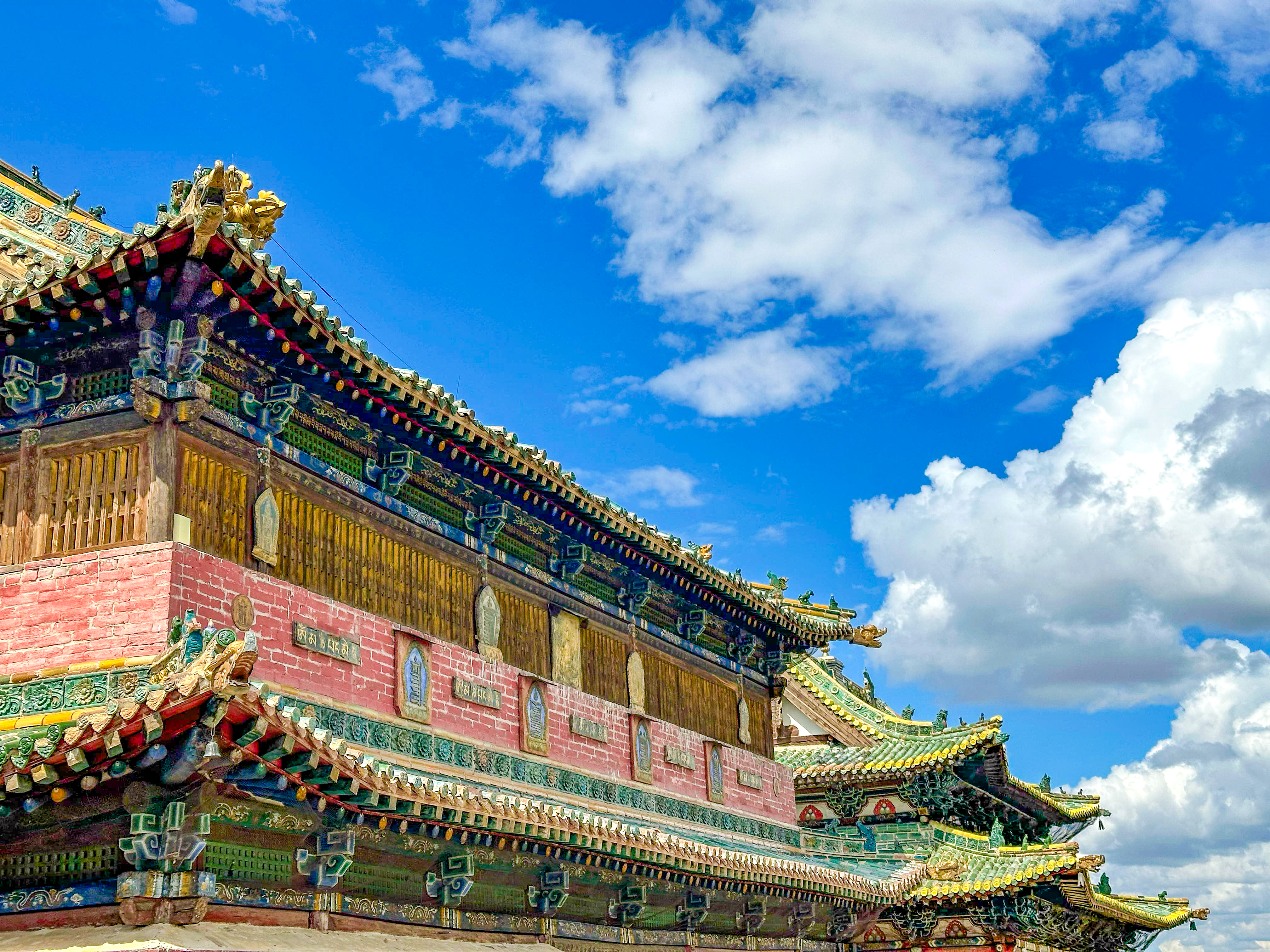
We ride from camp following rolling terrain, crossing and recrossing the Orkhon River as we head for the fertile plain chosen by Genghis Khan as the location for the capital city of his empire. ‘Karakorum’ is derived from a Turkic language and means black rock. Arriving in the ancient capital in the early afternoon, we check into the ger camp for hot showers and a well-earned rest. This afternoon, we explore Erdene Zuu Monastery, the largest and most famous monastery in Mongolia. Built in 1586 under the direction of Abtai Khan on the ruins of the ancient capital, much of the monastery was destroyed during Stalinist purges of the 1930s, but an impressive wall with 108 stupas and several temples remain.
Meals: Breakfast,Lunch,Dinner
Day 14
Drive to Ulaanbaatar, visit Mongol Els dunes; enjoy a traditional Mongolian show
We make a good start this morning for the 250mi (400km) drive back to Ulaanbaatar. Travelling at an easy pace, we stop at Mongol Els to view the dunes with a picnic lunch en route. We check into our hotel on arrival in Ulaanbaatar – hot showers and cold beers! This afternoon, we enjoy a performance of traditional Mongolian song and dance by the renowned Tumen Ekh troupe.
Meals: Breakfast,Lunch,Dinner
Day 15
Adventure ends in Ulaanbaatar
The trip ends after breakfast and we begin our return journeys home. If you’d like a little more time to explore, speak to your sales representative about extending your stay.
Meals: Breakfast
What’s included
What’s not included
Additional information
Hosted Welcome Dinner in Ulaanbaatar
Meet your group and meet your Tour Director at a convivial welcome dinner showcasing the city’s cosmopolitan dining scene. Share first impressions of the steppe over warming dishes such as grilled meats, dumplings, and fragrant salads, paired with local soft drinks or beer.
Your host outlines the adventure ahead, offering tips for riding off-road and cultural etiquette. This relaxed group dinner sets the tone for camaraderie on the trail and introduces Mongolia’s generous hospitality.
Cycle Over Tuluugiin Pass & Picnic by the Altaan River
Pedal steady gradients to cycle over Tuluugiin Pass, where the track crests into sweeping views of tawny hills and distant herders’ gers. Loose gravel under tyre adds focus and fun as skylarks rise from the sage-scented steppe.
Descend to the banks of the Altaan (Golden) River for a picnic among sculpted rocks that hint at a volcanic past. Expect open steppe horizons, big skies, and the hush of water slipping past sun-warmed stones.
Kholboogin Pass Ascent & Khairkhan Lakes Ride
Spin into the hills for a short, satisfying climb to Kholboogin Pass, rewarded with far-reaching panoramas of larch and pine. The descent unwinds along soft river valleys where marmots whistle from burrows and raptors circle high.
Skirt the flanks of Khairkhan Mountain and thread past a chain of small lakes, their reeds whispering in the breeze. Shifting light across forested ridges and wide steppe makes this a photographer’s favorite stretch.
Khunjiin River Valley Ride beneath Chingeltei Mountain
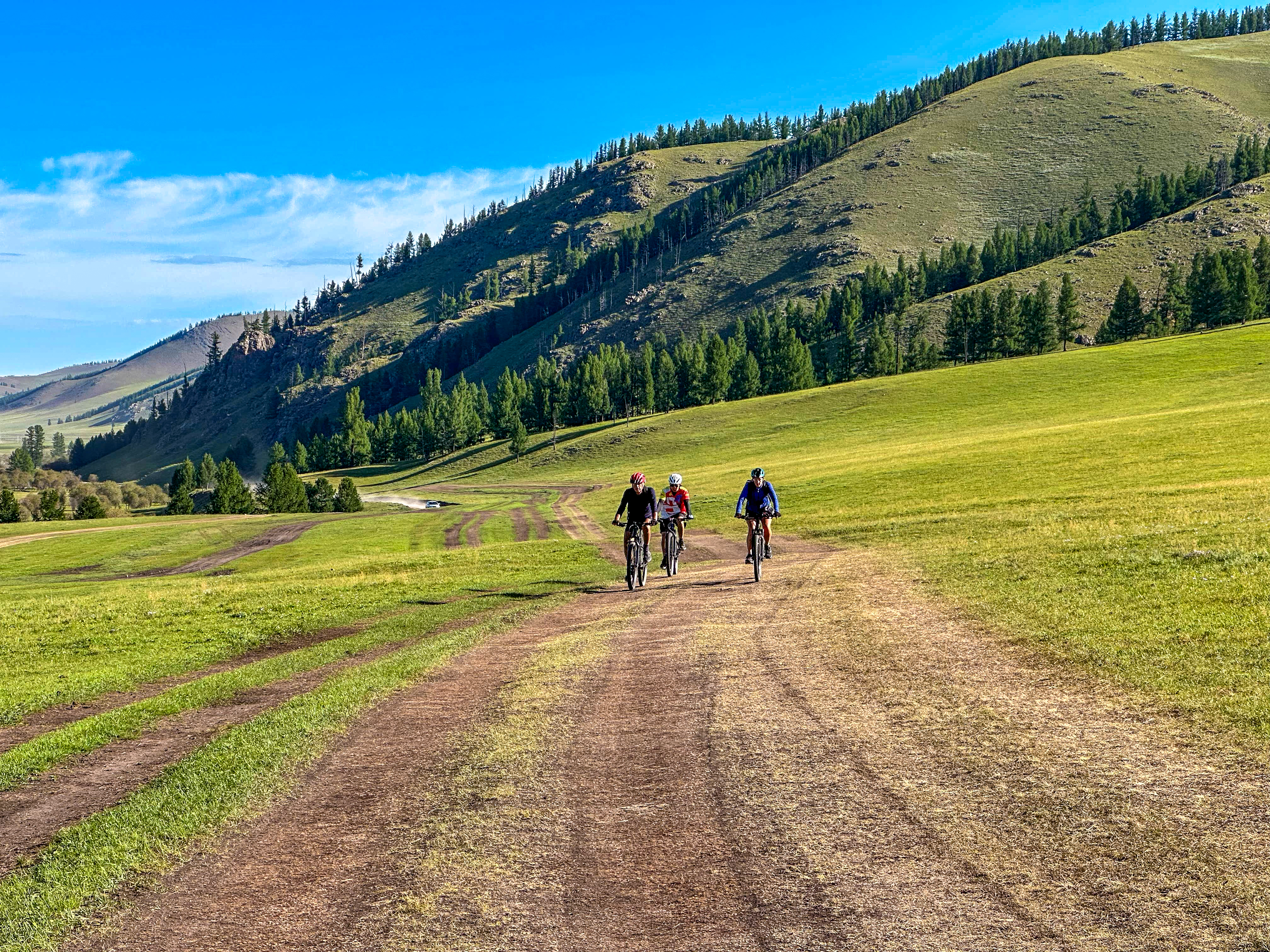
Follow the Khunjiin River Valley as it climbs gently through lush pasture used by nomadic herders. Hoofprints lace the sandy track, and the air carries the resin of larch forests and the clean tang of mountain water.
Keep binoculars ready for demoiselle cranes foraging in wetlands and raptors gliding on thermals. Camp settles beneath the shoulders of Chingeltei Mountain, where dusk paints the hills a deep copper and stars switch on one by one.
Tamir Riverbanks & the Great Rock of Ikh Tamir
Ride down to the willow-lined Tamir for lunch by clear, fast-flowing water before visiting the Great Rock of Ikh Tamir, a hulking outcrop rising from the grass. Local lore promises luck to those who can cast a stone clean over its crown.
Nearby lie ancient burial grounds that speak to the valley’s long human story. The Tamir River frames reflective moments—perfect for photos and quiet pauses between effortless spins along its banks.
Khangai Foothills Ride via Three Short Passes
Transition from rolling steppe into the forested skirts of the Khangai Mountains, ticking off three playful climbs on firm jeep tracks. Peaks serrate the horizon while the scent of pine rides the breeze and woodlarks stitch song across the canopy.
Each crest reveals new angles on short mountain passes, leading to flowing descents between larch stands. It’s a varied, rhythmic day of riding that balances effort with the joy of momentum through textured terrain.
Cross the Khangai Range & Descend to the Orkhon River
Trace well-worn nomad tracks to cross the Khangai range, then settle into the tour’s longest, smoothest descent as the landscape opens like a scroll. Tyres hum; horizons widen; the ride feels pure and unbroken.
Meet the storied Orkhon River as it threads the UNESCO-listed Orkhon Valley Cultural Landscape, cradle of steppe empires. This is classic Mongolia: riverside willow shade, distant herds, and the sense of rolling toward history.
Karakorum & Erdene Zuu Monastery Exploration
Ride into Karakorum, the ancient Mongol capital founded by Genghis Khan’s heirs on the fertile Orkhon plain. The city’s legacy lingers in earthworks and legends that shaped routes across Eurasia.
Step inside Erdene Zuu Monastery, Mongolia’s earliest surviving Buddhist complex, encircled by a wall crowned with 108 stupas. Hear how temples endured the Stalinist purges of the 1930s and trace carved timbers, vibrant thangkas, and quiet courtyards scented with juniper smoke.
Mongol Els Sand Dunes Scenic Stop
Break the overland journey with a visit to the Mongol Els (Elsen Tasarkhai) dunes, where rippled sand meets steppe grasslands and low mountains. Walk the crest lines for soft, shifting views and the gentle hiss of wind over grains.
This contrast zone, nicknamed the ‘mini Gobi’, is ideal for a photo stop. Catch textures of rippled sand, feathered grass, and camel tracks etched across pale gold slopes under a far-reaching sky.
Traditional Mongolian Performance by the Tumen Ekh Ensemble
Experience a showcase of national arts with the renowned Tumen Ekh Ensemble. Dancers sweep in silk brocades while musicians summon steppe moods through throat singing and the plaintive strings of the horsehead fiddle.
Precision drumming, folk epics, and acrobatic contortion reveal centuries-old traditions adapted for a modern stage. The performance illuminates nomadic culture’s poetry and pulse, offering a memorable cultural counterpart to days on the trail.
Traditional Ger Camp Stay
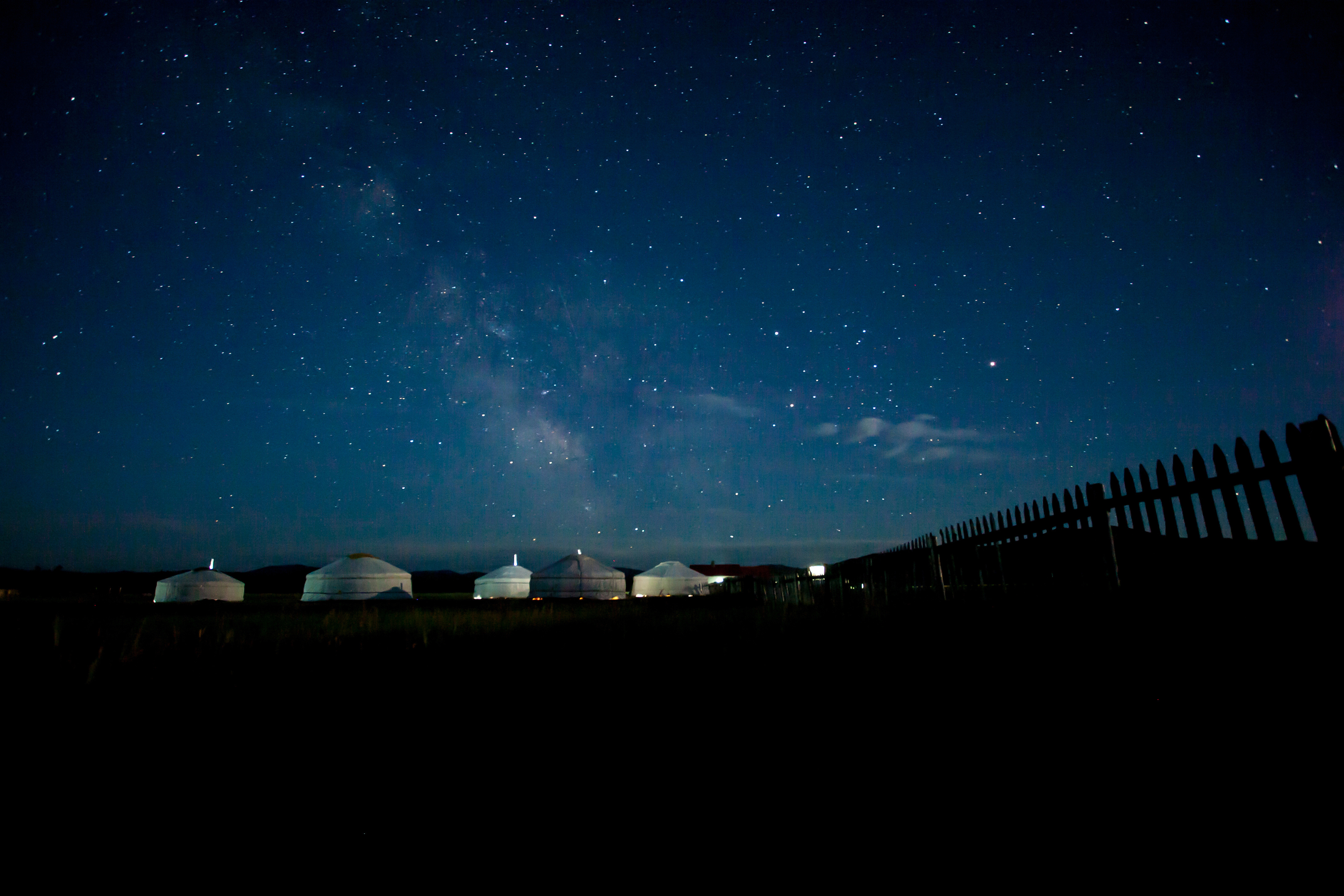
Stay in a traditional Mongolian ger, the felt-lined, circular dwelling perfected for nomadic life. Step across a painted threshold into orderly warmth, with carpets underfoot and a central stove radiating gentle heat.
Evenings unfold beneath big skies, with stories shared over tea and the soft creak of lattice walls. The felt-lined walls and wood-burning stove offer comfort while keeping a tangible link to centuries of steppe tradition.
Participatory Wild Camping on the Steppe
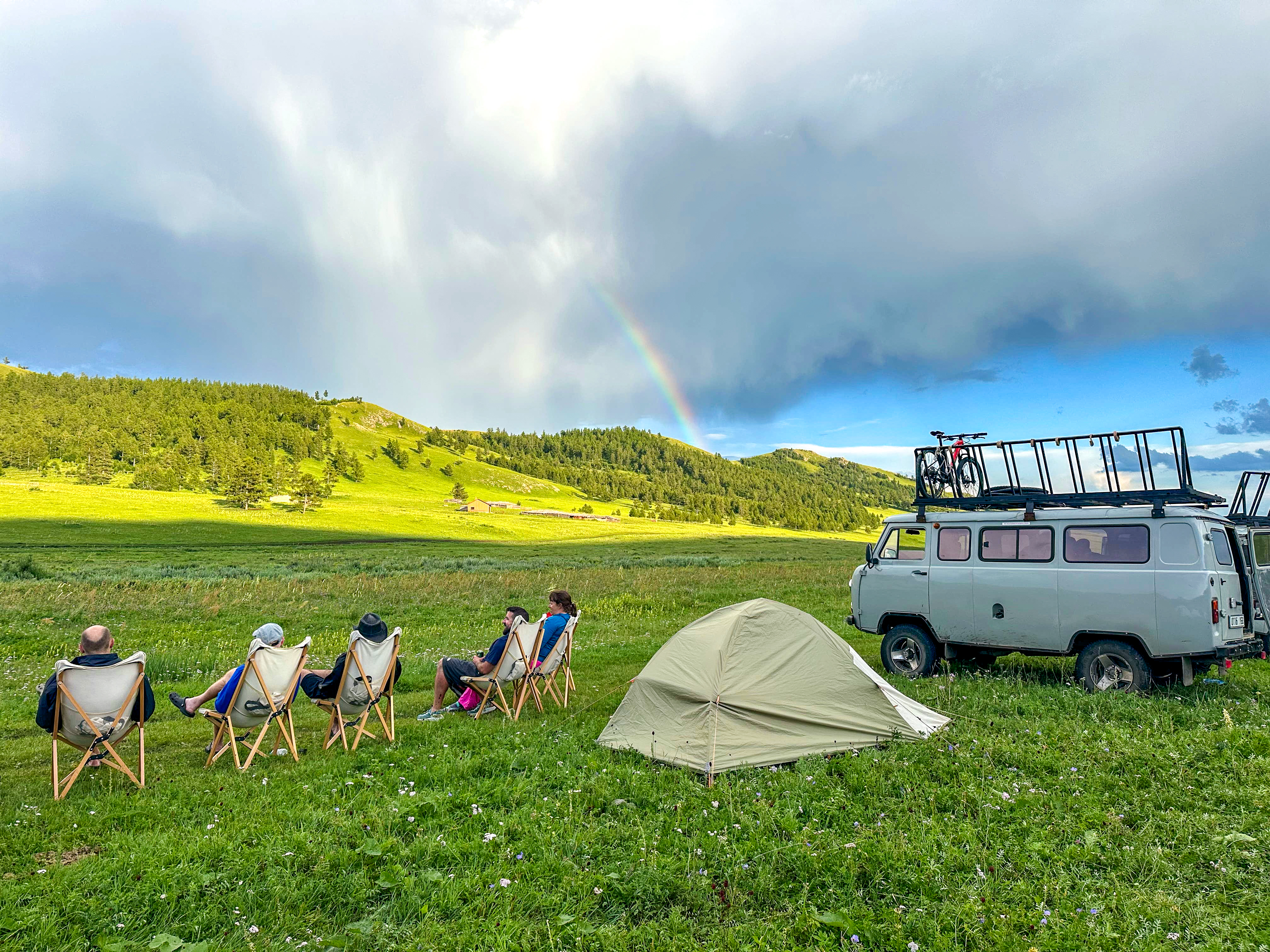
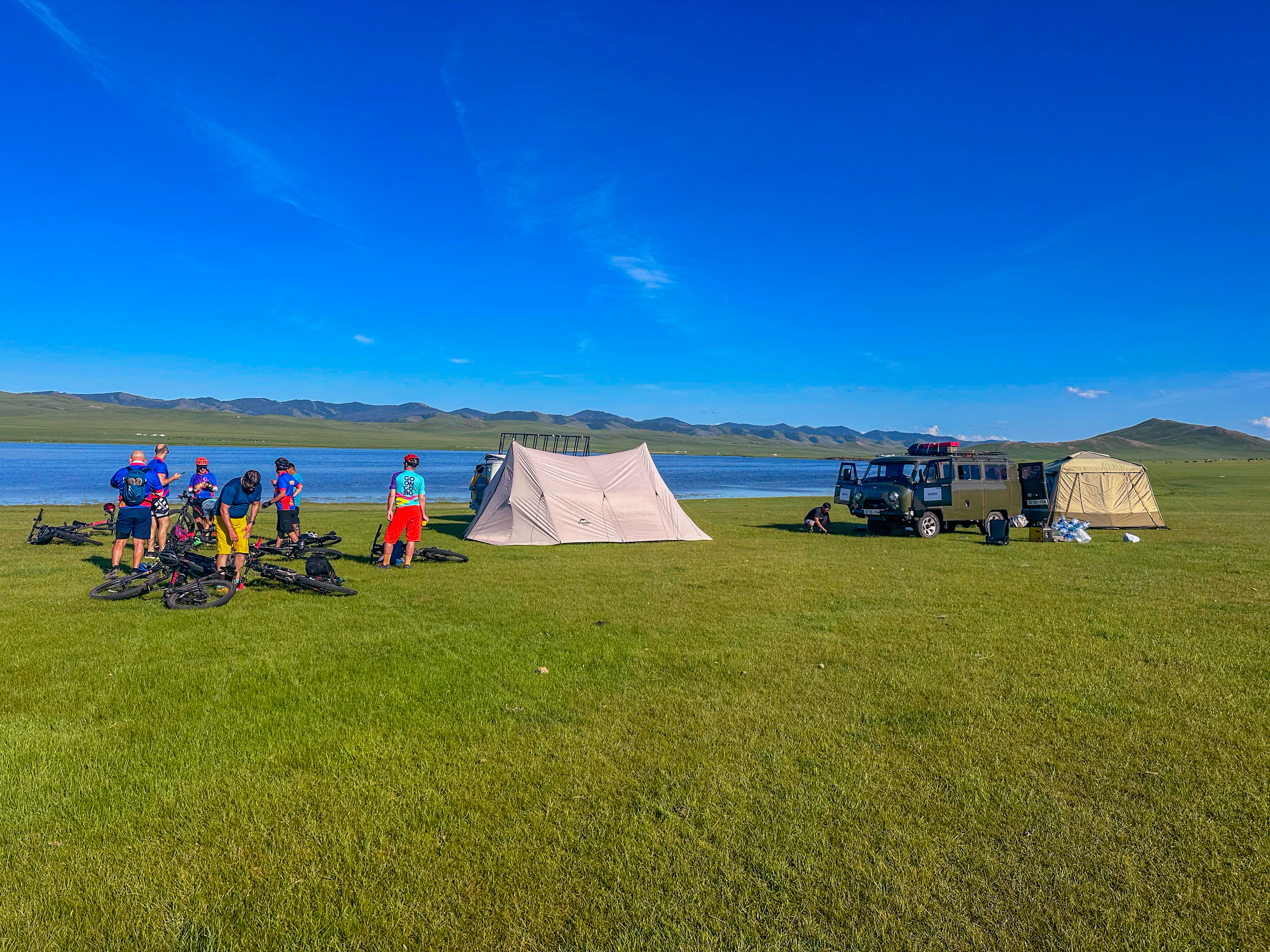
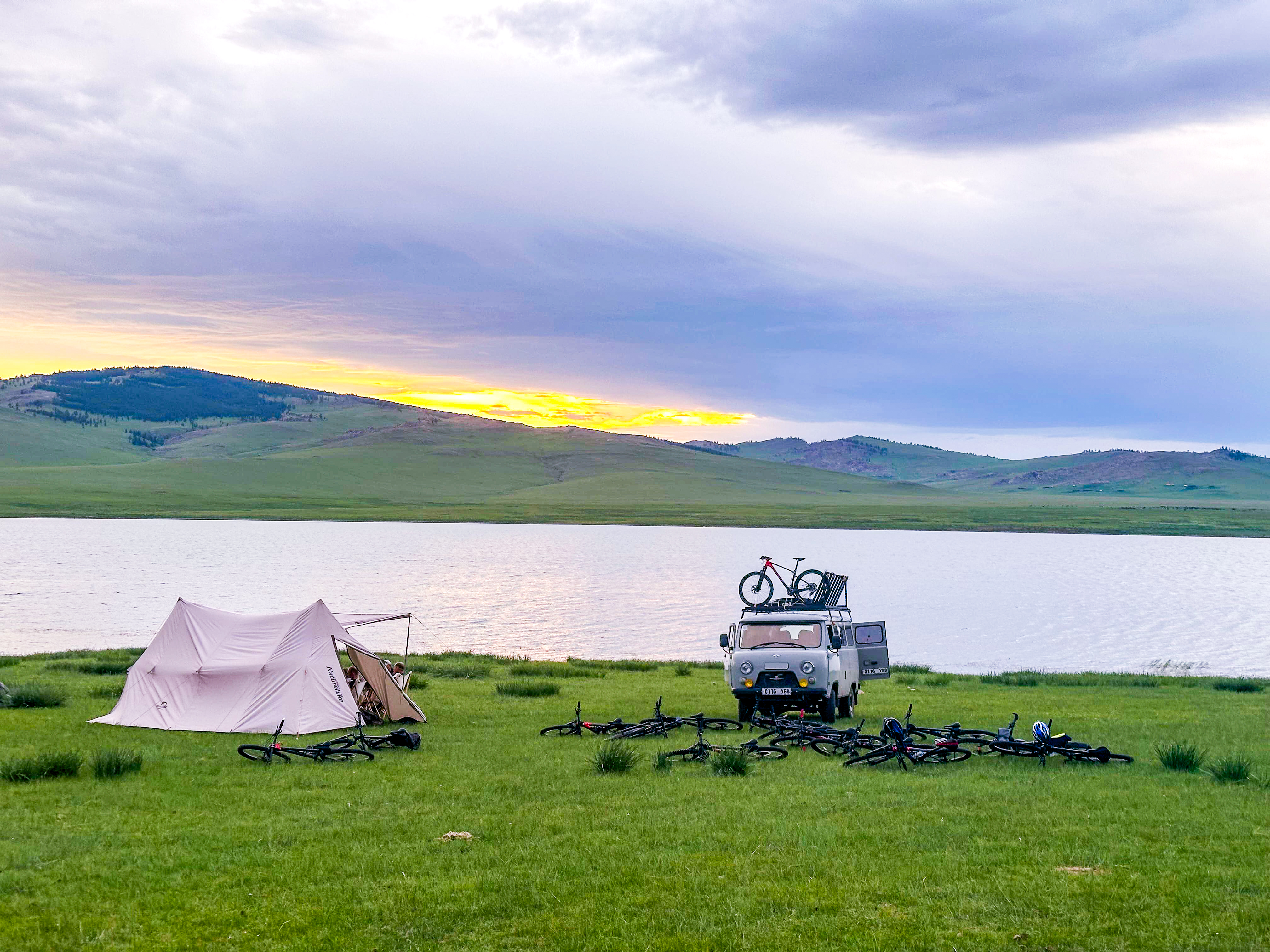
Embrace participatory wild camping across river valleys and open grasslands. Help pitch tents, share camp duties, and dine al fresco as twilight washes the plains in copper and violet.
Nights bring wide-open skies pricked with constellations and the hush of steppe silence, broken only by horse bells or a distant herder’s call. It’s immersive, elemental living that pairs perfectly with the rhythm of off-road riding.
Ulaanbaatar Panoramic City Tour & Gandan Monastery
Join a guided panoramic tour of Mongolia’s capital, taking in the civic heart at Sukhbaatar Square and the contrast between broad Soviet-era boulevards and rising modern skylines. Navigate lively streets where prayer wheels spin beside coffee kiosks and bookstalls.
Continue to Gandan Monastery, the country’s principal Buddhist center, to admire the soaring statue of Migjid Janraisig and hear how Buddhism revived after decades of suppression. Monks’ chants and fluttering prayer flags set a contemplative tone amid incense and gilded iconography.
Food
In the countryside, our support vehicles carry the kitchen, food supplies and kitchen staff including a professional chef. Meals are Western style with a strong Asian influence. Breakfasts are typically cereals, toast and a hot dish. Lunches on the road are sandwiches, cheese, meats and salad. Dinners are a variety of vegetables, meat, rice, potatoes and pasta dishes. Filtered or purified drinking water is supplied on all cycling days, as are tea, coffee and fruit drinks. Dining in Ulaanbaatar is excellent and includes Mongolian, Indian, French, Chinese and Mexican restaurants. If you follow a vegan diet, expect that the variety of food may be limited on this trip. As this kind of diet is relatively uncommon in this region, we cannot guarantee the hotels and restaurants will provide meals that have the necessary variety to be considered satisfying.