Your itinerary
Day 1
Adventure starts in Bucharest
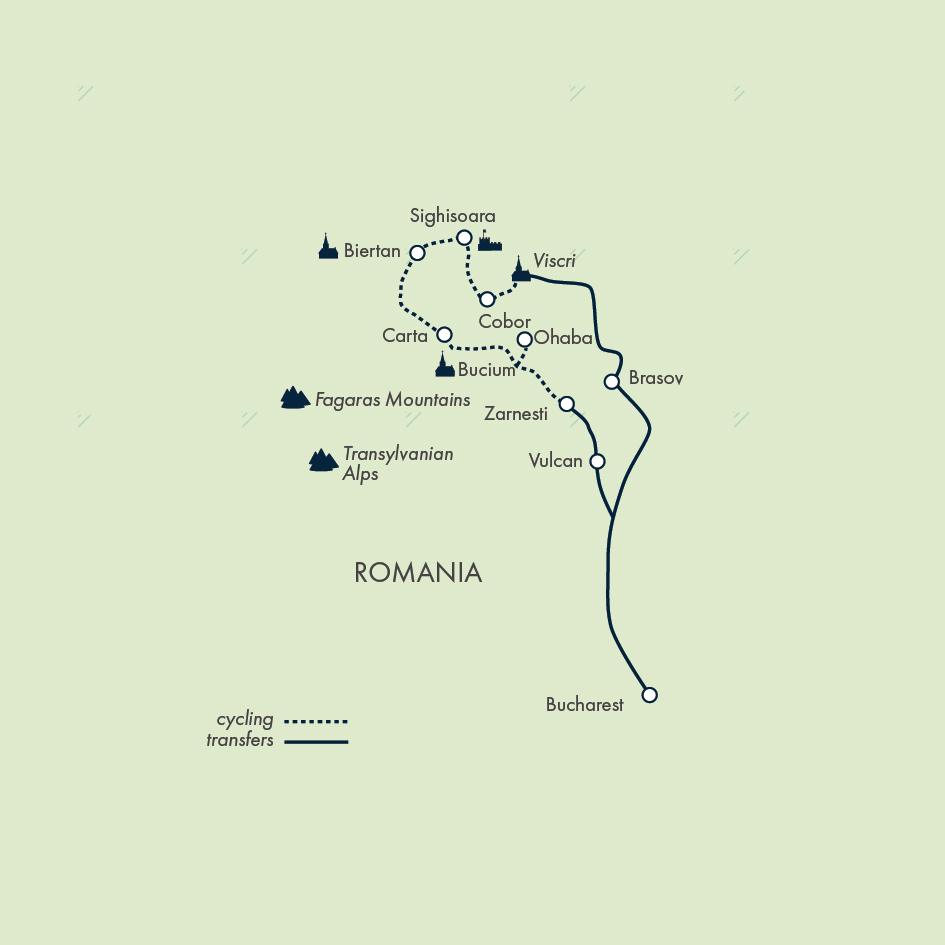
Upon arrival, we will be greeted by an Exodus leader and transferred out of Bucharest to the small town of Vulcan in Brasov Country, Transylvania. This transfer is roughly three hours, but will be broken with a short stop.Say bună ziua (hello) to your leader and fellow travellers around 6:30pm, where we gather as a group for the first time to get to know each other and learn more about the adventure ahead.Your leader will ensure a big welcome by arranging a group dinner for us all.Want to explore further? Additional pre-tour hotel nights are bookable through your sales representative.
Meals: Dinner
Day 2
Ride to Bucium, stopping at Ohaba flour mill en route
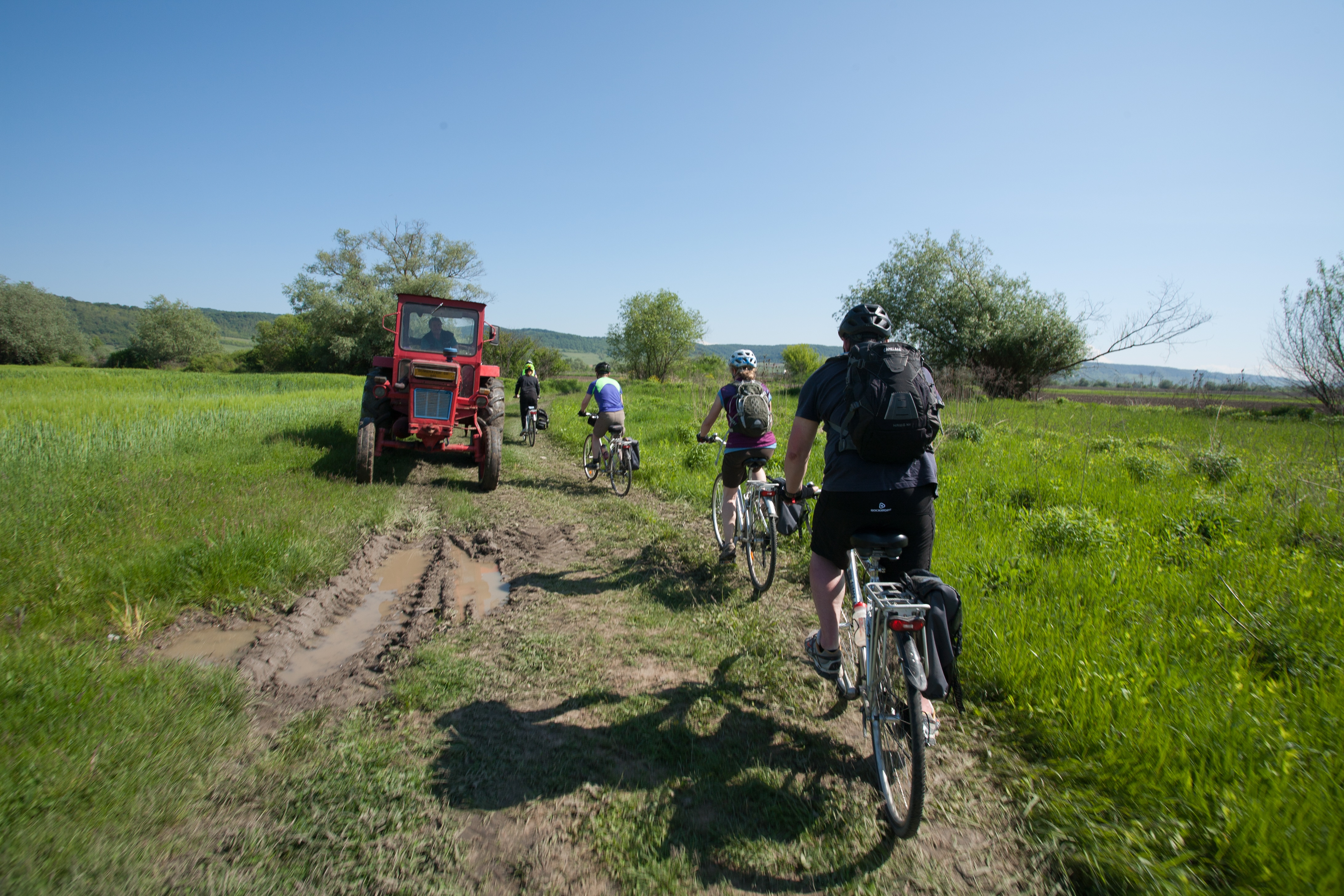
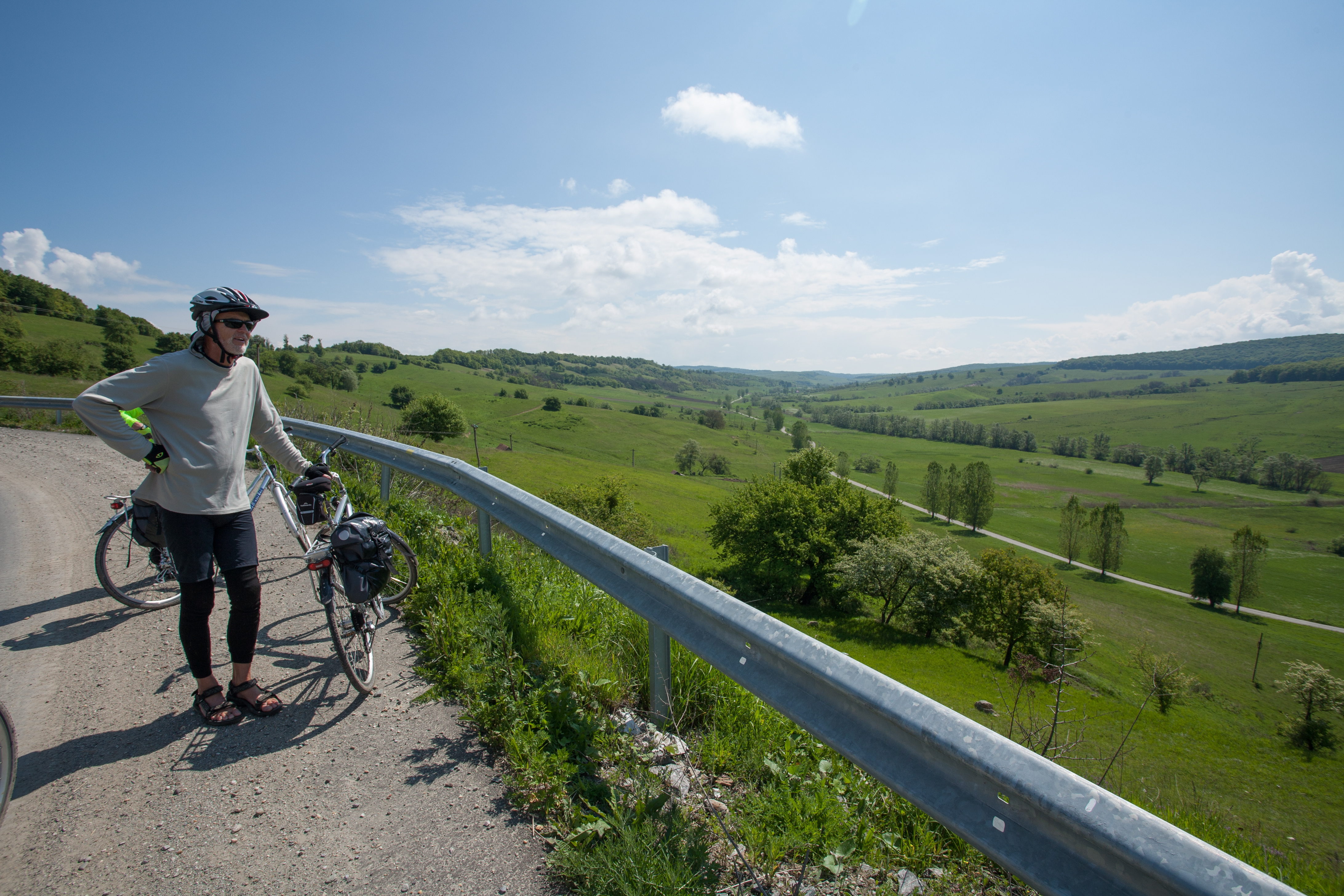
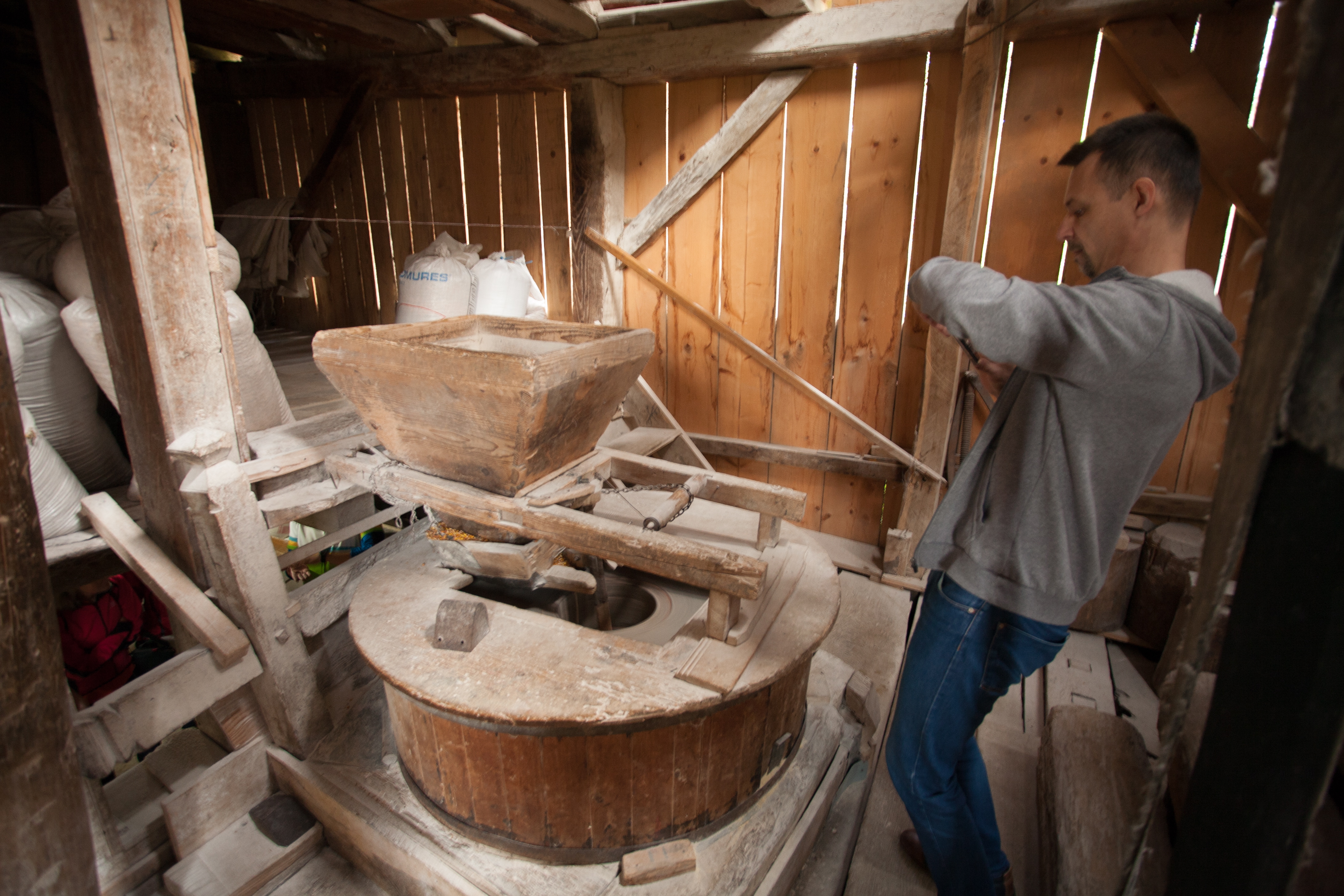
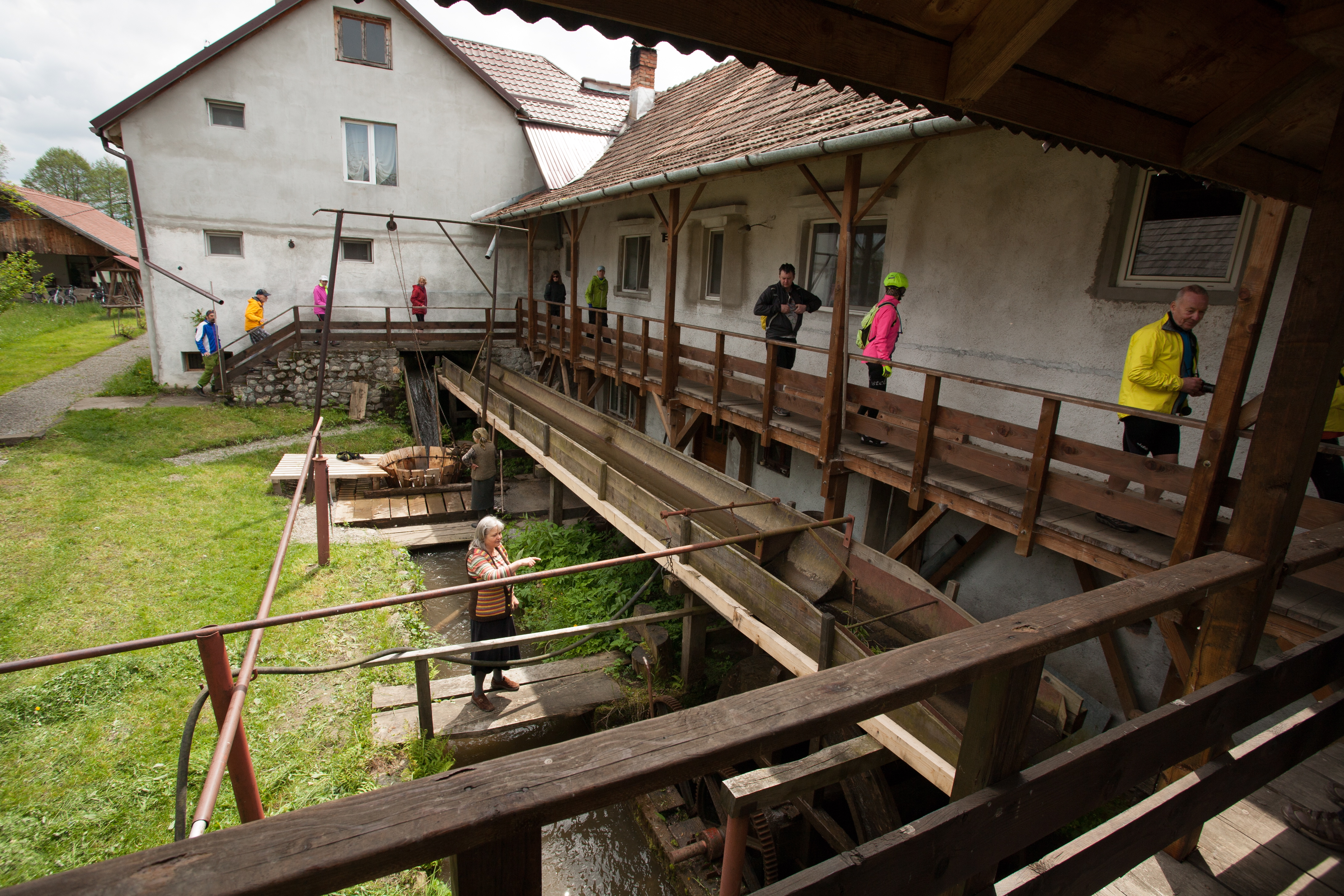
After breakfast, we set up our bikes and enjoy our first cycling experience in the region. We begin with an ascent, away from traffic and into remote pine-covered hills, stopping for a view of the snow-topped Bucegi Mountains. We then tackle a 4.5mi (7km) dirt road that offers us a glimpse of life in rural Romania. Please note, we may go in the opposite direction during rain to avoid the dirt road; this adds 6mi (10km) to the cycling distance. Today we also visit the oldest flour mill in Fagaras county, which is powered by the neighbouring river. The tale of how it survived the Communist period is fascinating.
Our goal is the town of Bucium; however, if the weather is favourable, we may take a detour (adding 3mi/5km) to a nearby cave that served as a place of worship more than two centuries ago. At that time, the local people – the Dacians – would have prayed to Zalmoxis, a popular deity in the lower Danube region. Little is known about Zalmoxis, though what is known is based mainly on the writings of the ancient Greek historian Herodotus.
Meals: Breakfast,Lunch,Dinner
Day 3
Cycle to Carta at the foot of the Fagaras Mountains
We ride to the village of Lisa, with the ridge of the highest mountain range in Romania, the Fagaras Mountains, as our constant companion. There we visit a wool mill to see how woollen blankets and clothes are still made using traditional methods. There is even a 100-year-old machine still in operation.
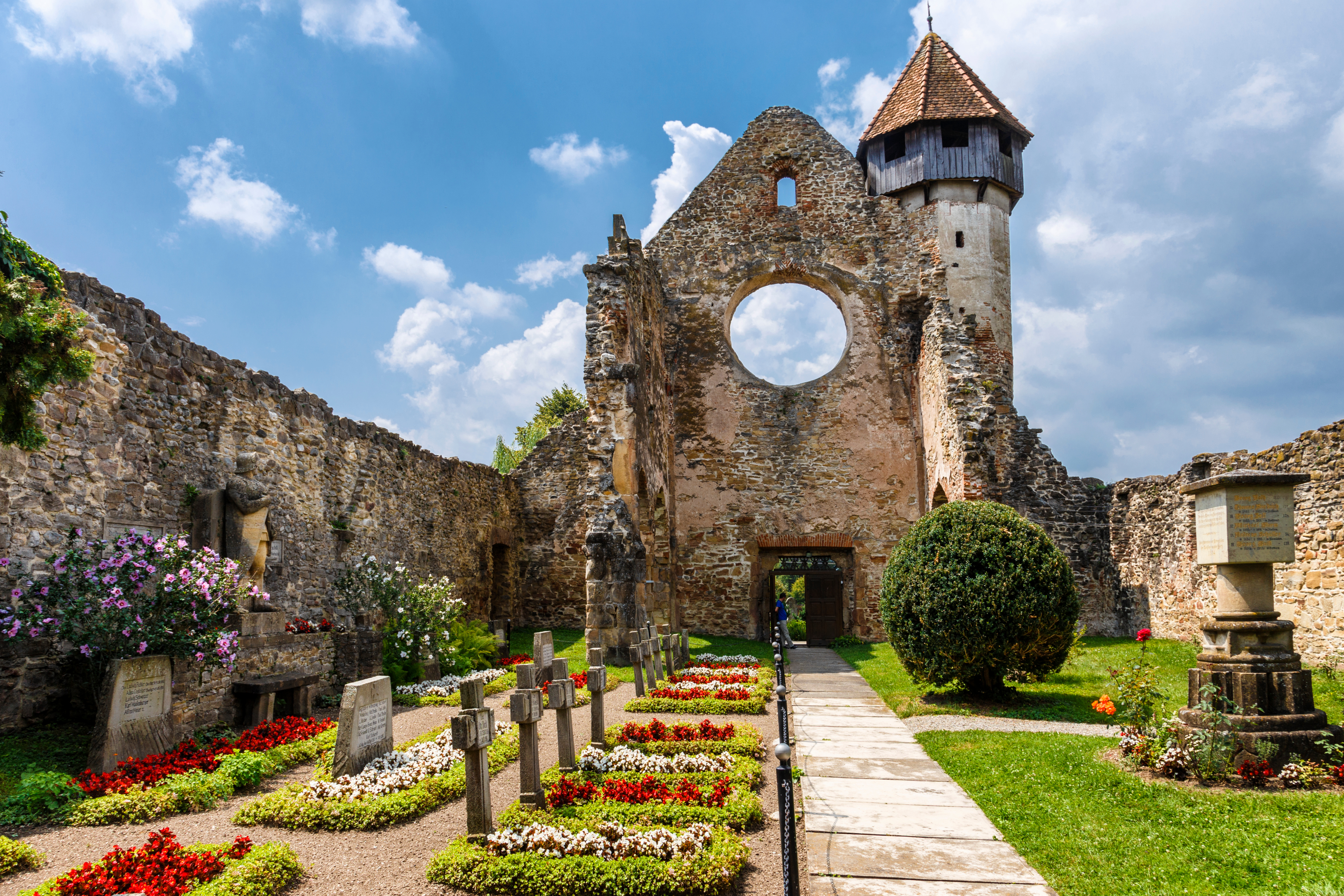
We then cycle to the village of Cartisoara and on to Carta itself and visit the Cistercian monastery. The oldest buildings on the site date to around 1205 and, like many buildings in the area, have a fascinating history.
Please note, on some departures our groups stay in Cartisoara and will visit the monastery in Carta on Day 4. The distances of each day would, therefore, change by 3mi (5km). We may also have time during the day to take a detour to Sambata Monastery, which will add 6mi (10km) to the day’s cycling.
Meals: Breakfast,Lunch,Dinner
Day 4
Cycle to Biertan; visit the Unesco-listed church
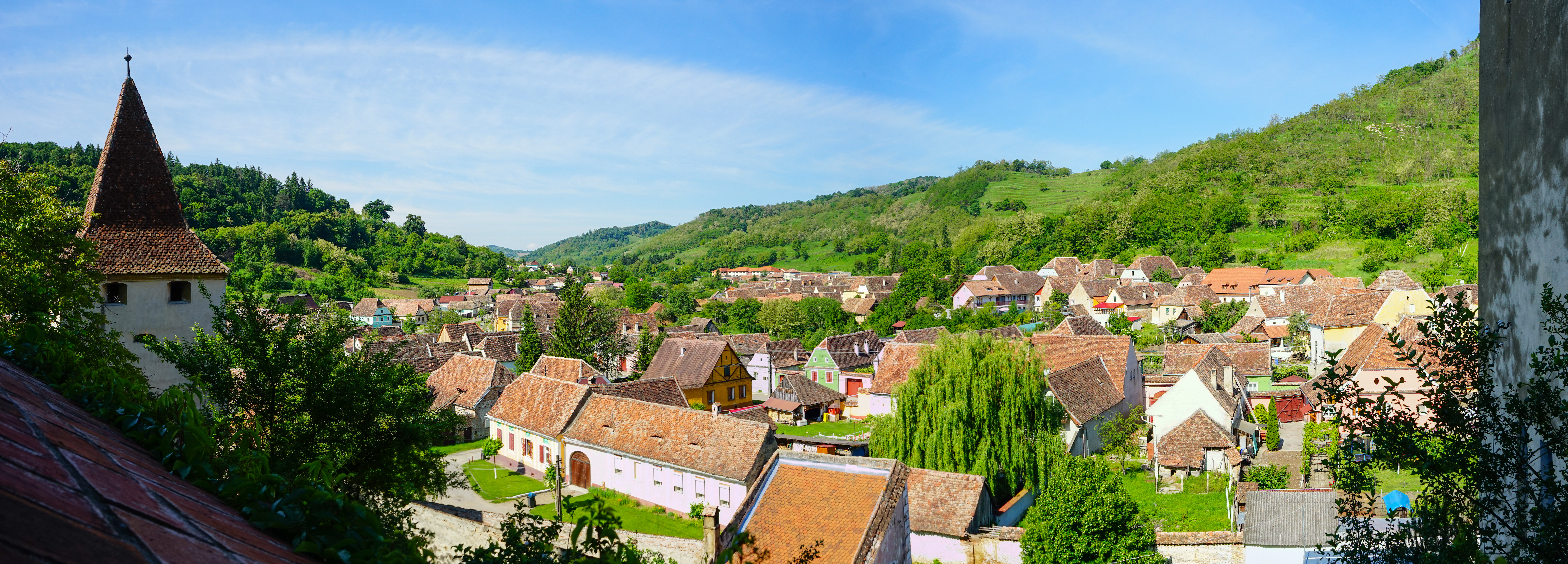
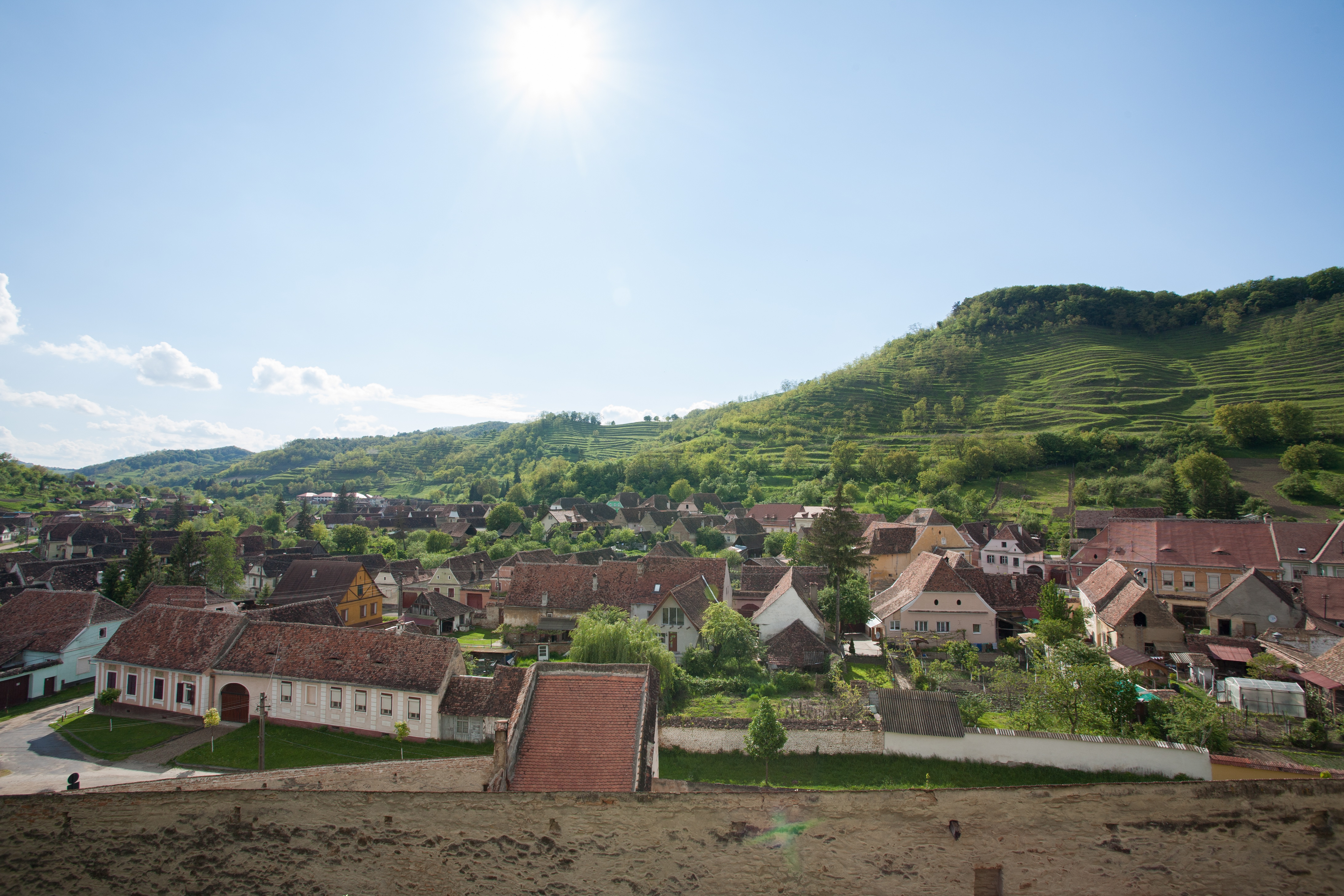
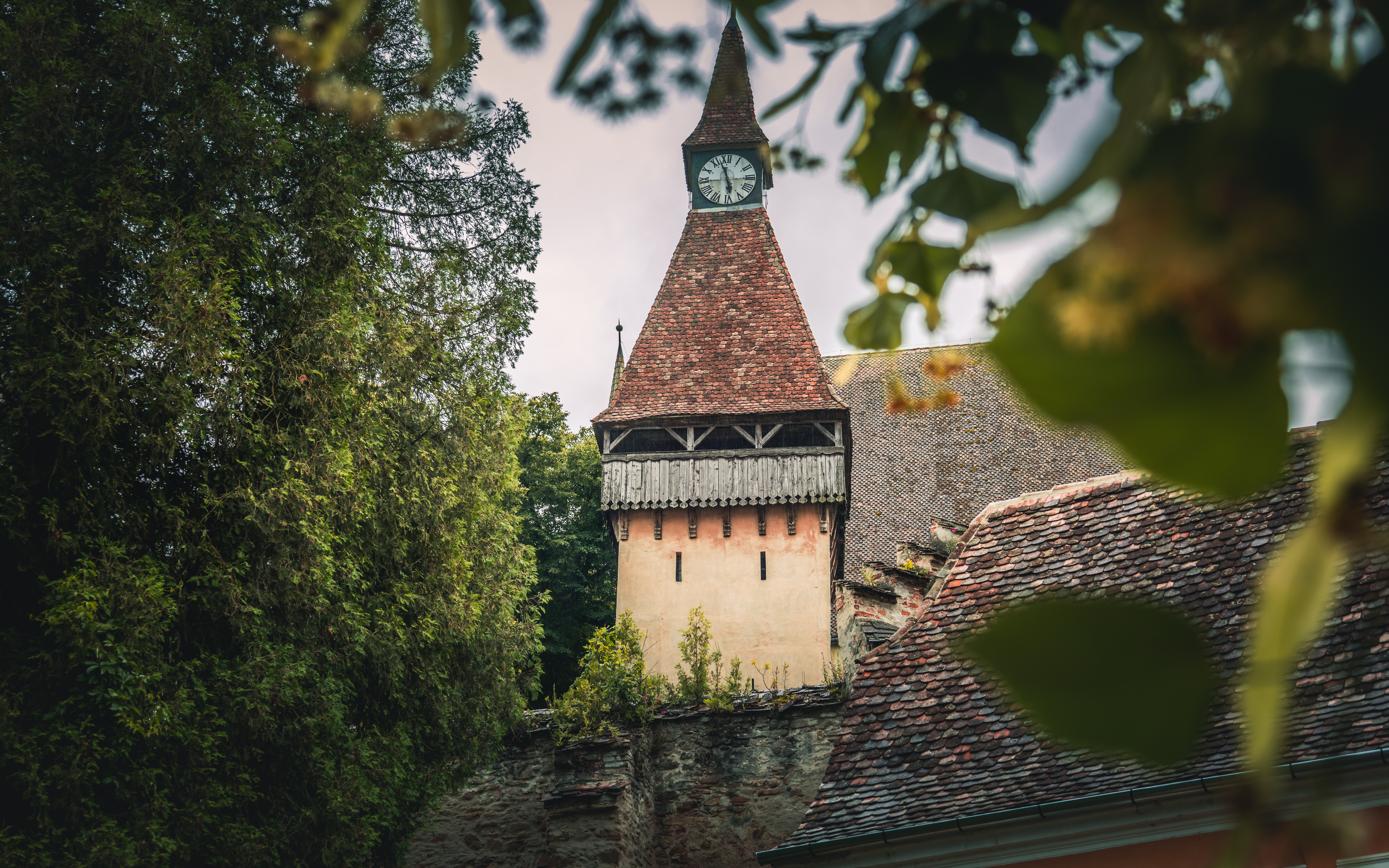
Today’s ride starts with a crossing of the river Olt and continues along quiet country roads. We cycle past the fortified church of Richis as we make our way towards Biertan. Once there, we tour a Unesco-listed fortified church, which stands on a hill overlooking vineyards and fields. Building began in 1486 by the German-Transylvanian Saxon community when the area was part of the Kingdom of Hungary.
As a late-Gothic church, it stands out thanks to the concentric ringed walls and huge towers, and is often considered one of the most impressive of its kind in Romania. It achieved Unesco status in 1993 and has numerous interesting buildings in the complex. The church contains some beautiful Renaissance pieces, while there are also three bastions, six towers and three rows of walls to ward off undesirables.
Please note, the cycling today will be approximately 42mi (68km) if we sleep in Cartisoara, 39mi (63km) if we sleep in Carta.
Meals: Breakfast,Lunch,Dinner
Day 5
Visit the medieval citadel of Sighisoara
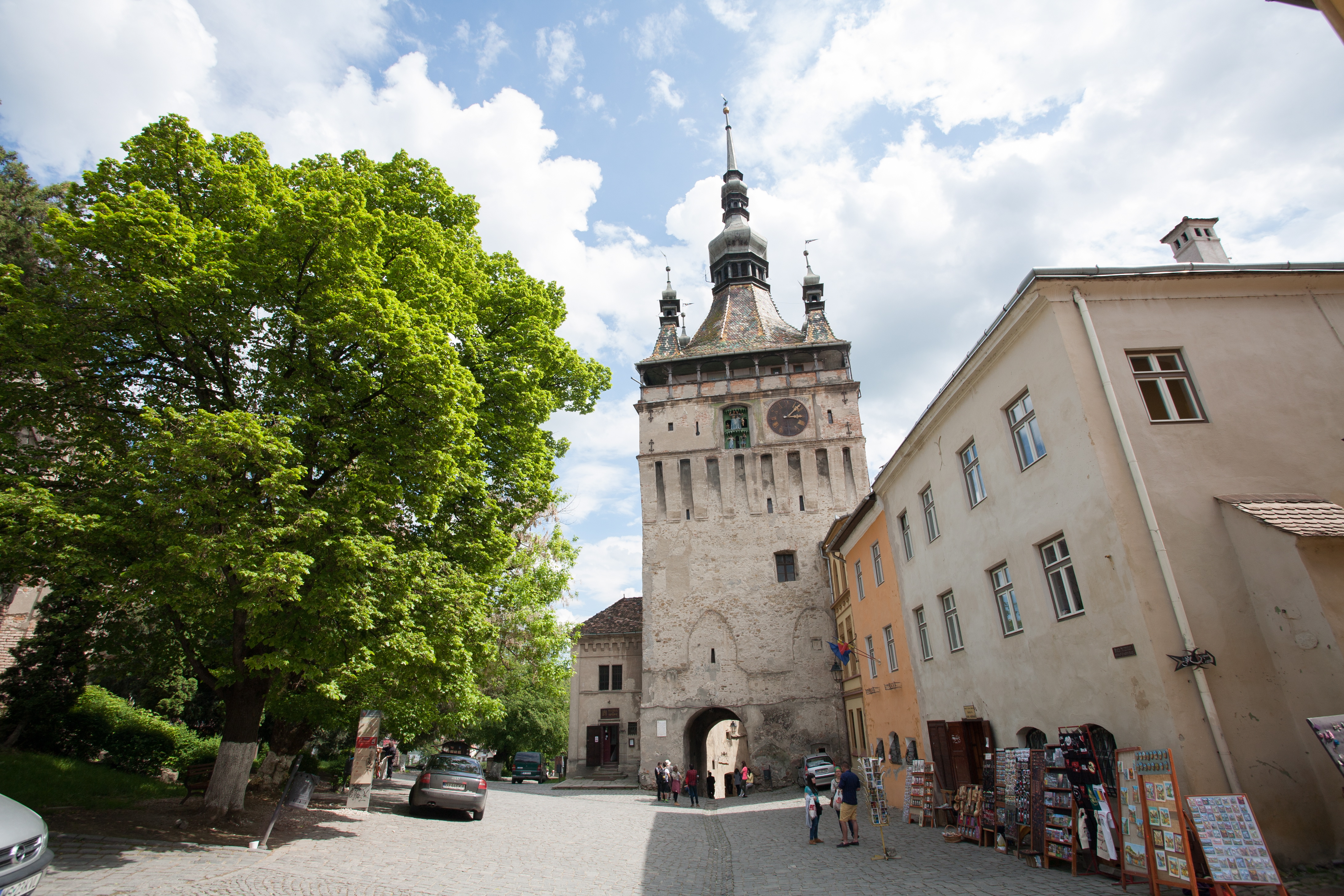
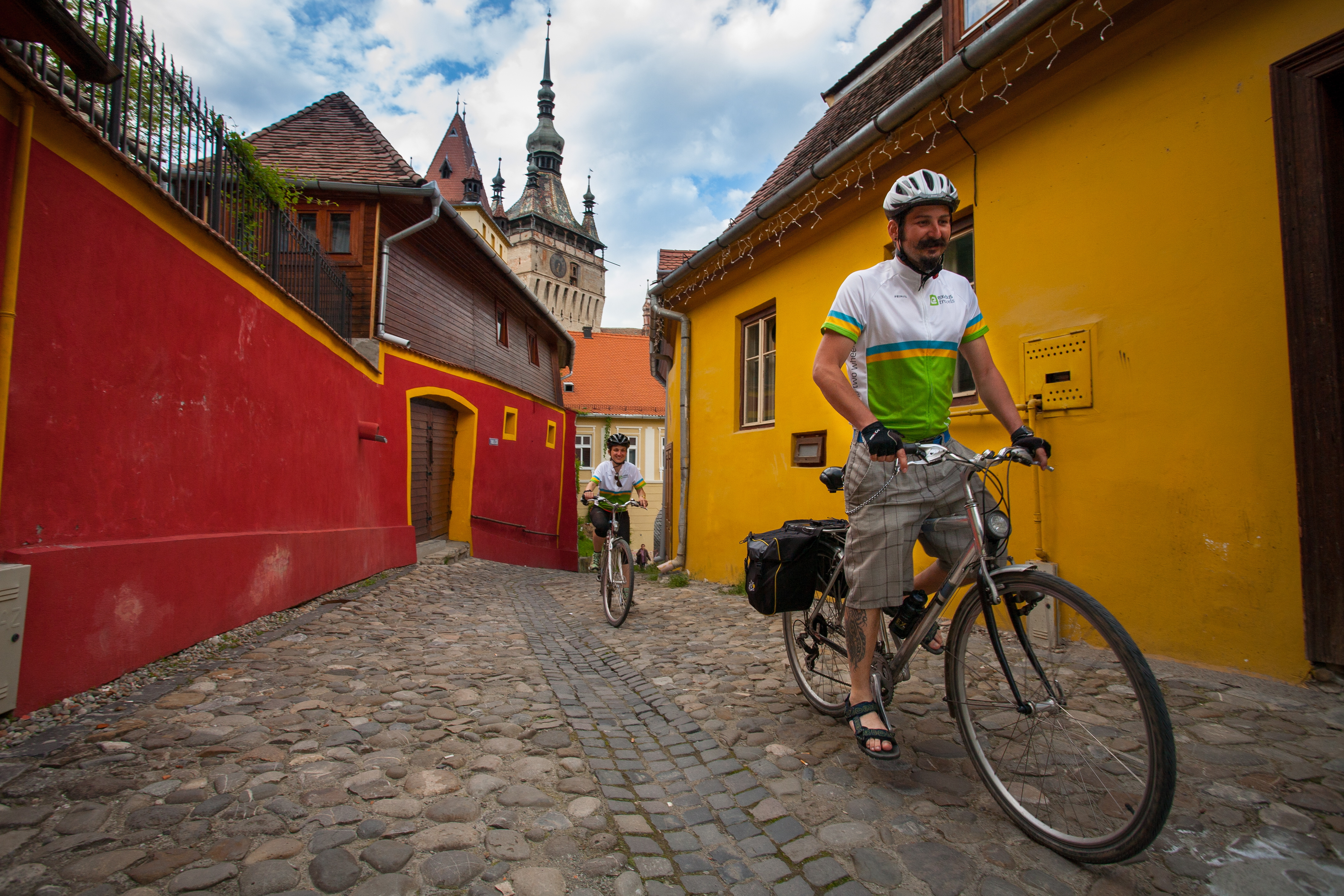
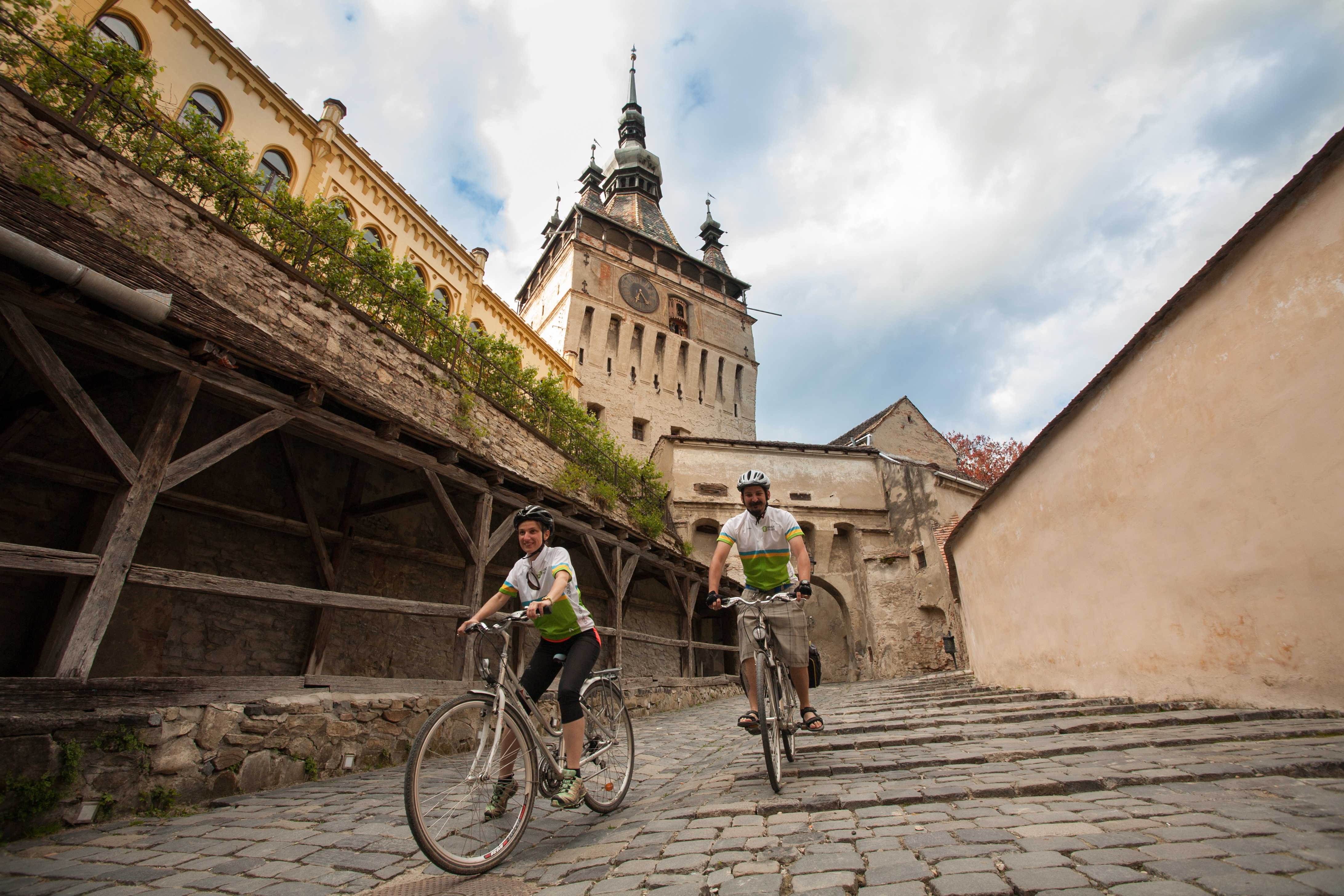
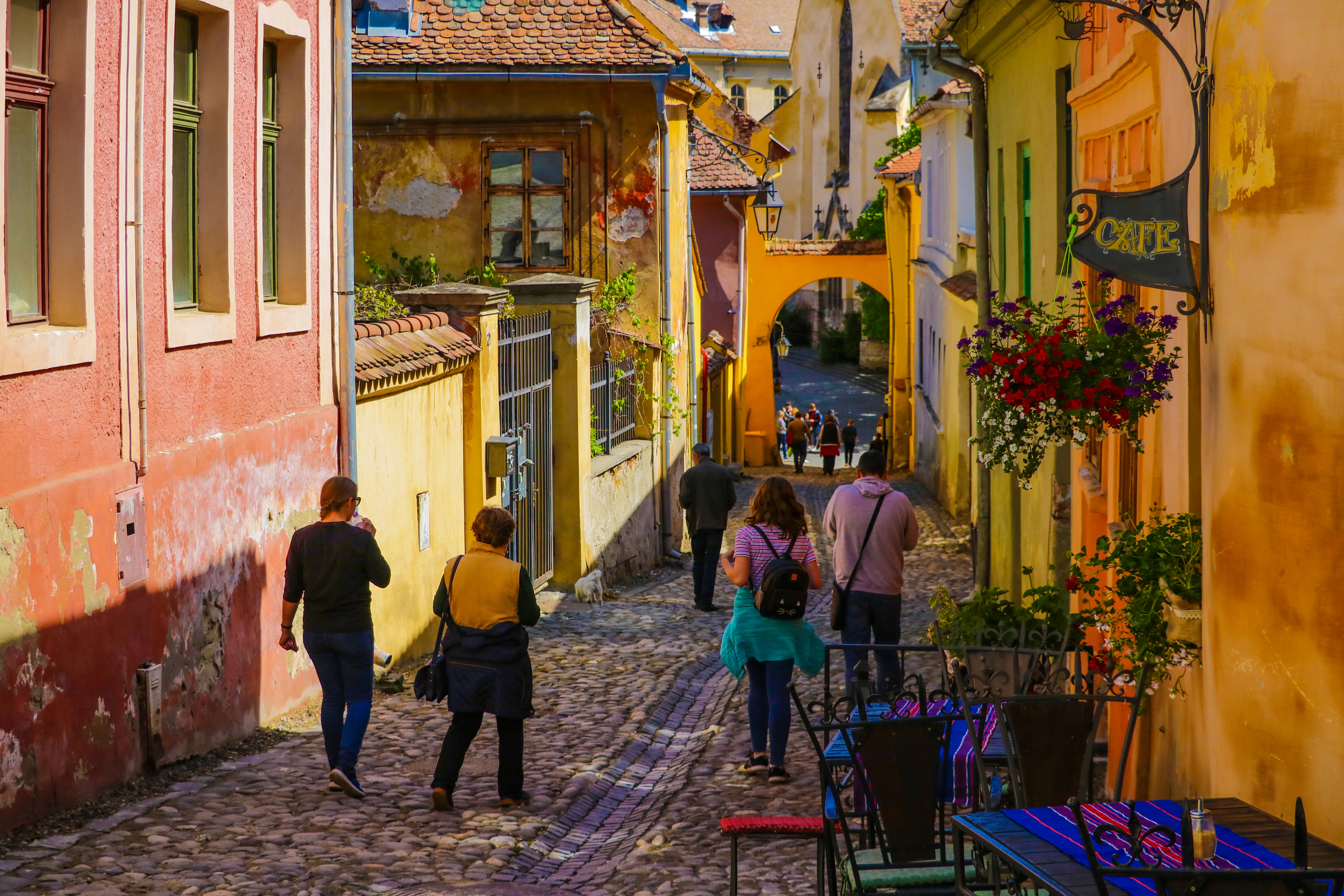
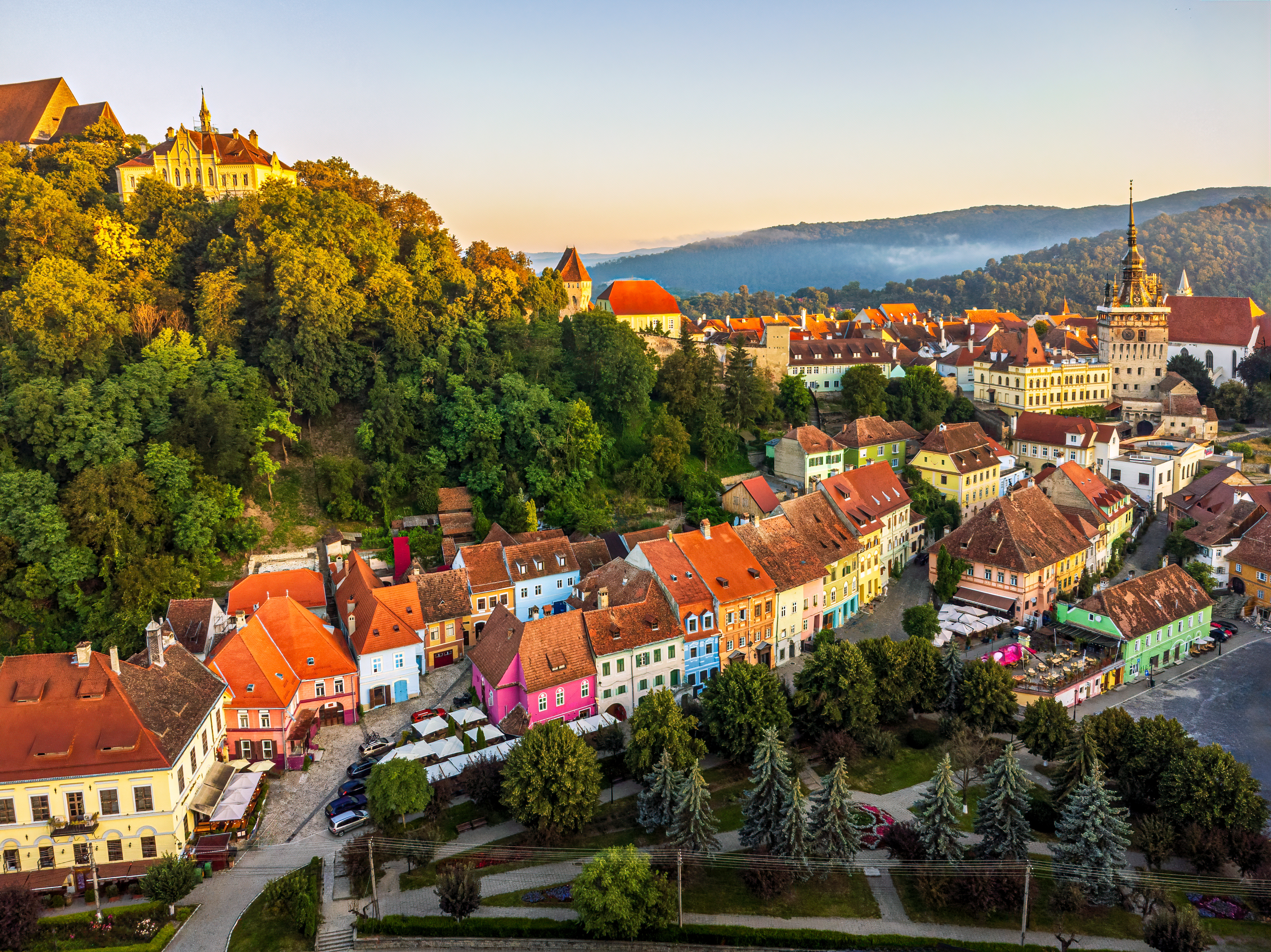
Today we have a beautiful ride through the countryside and remote villages of Transylvania. Following the river Tarnava Mare, we pass hop fields and set our sights on Sighisoara. One of the few fully inhabited medieval citadels in Europe, this Unesco-recognised spot is fascinating. We have a free afternoon to wander the streets and immerse ourselves in places so wonderfully preserved and faithful to the origins. There is even the house where Vlad Dracul, father of Vlad the Impaler, was born.
Meals: Breakfast
Day 6
Cycle to Cobor Farm
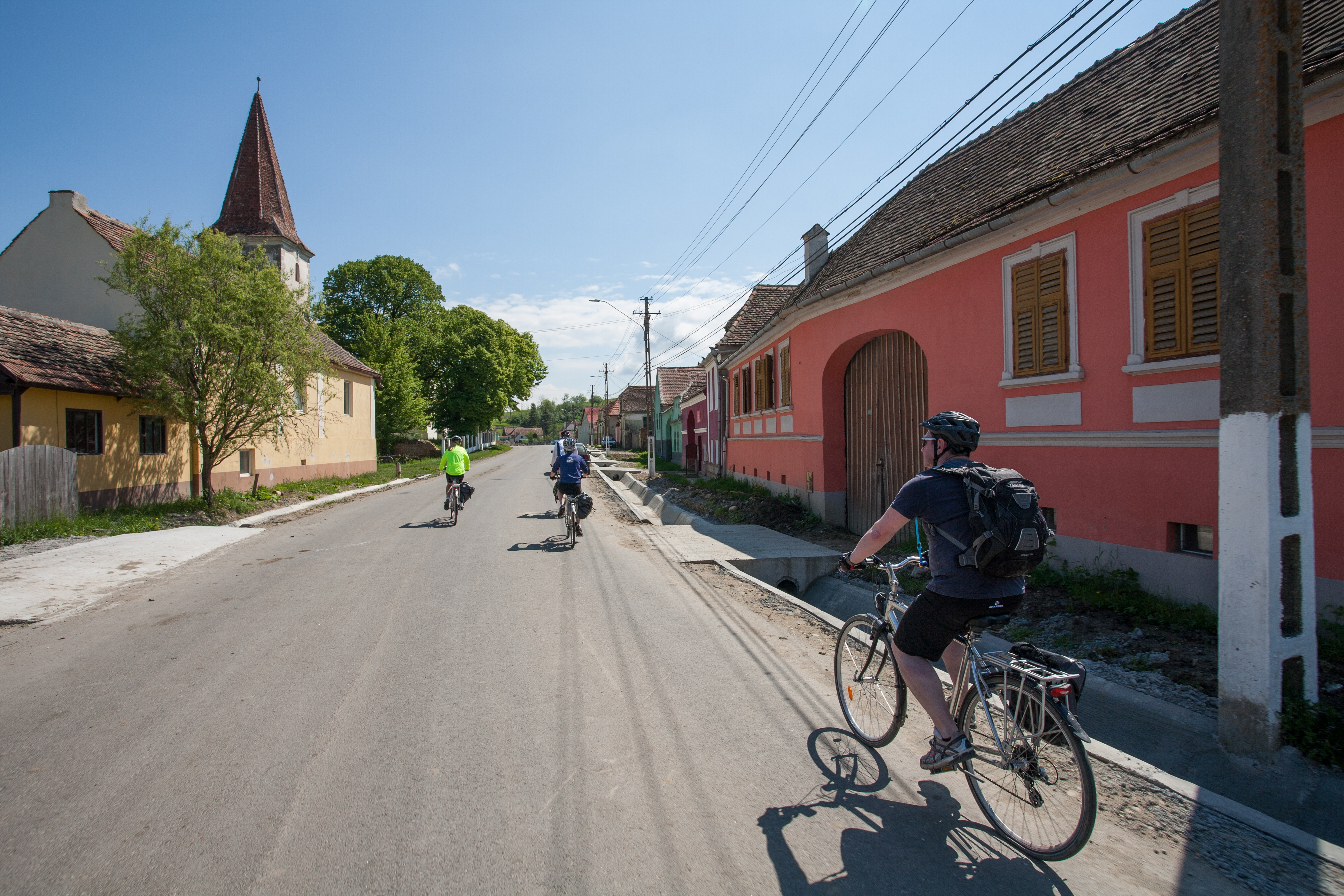
Today’s ride follows a lovely quiet country road through the Transylvanian hills to Apold and Bradeni village. One of these places will be our perfect stop for a snack and looking around the fascinating old church. Then we hop back on the bikes to continue our ride through small farming towns and pastures. Today’s ride ends in the small village of Cobor. Here we will discover the beautiful story of an old abandoned house to a farm and guesthouse with organic vegetables cultivated in their own garden and involved in animal protection projects. The seeds originate in old varieties that produce less, but higher quality.
Meals: Breakfast,Lunch,Dinner
Day 7
Cycle to Viscri; explore the town and fortified church
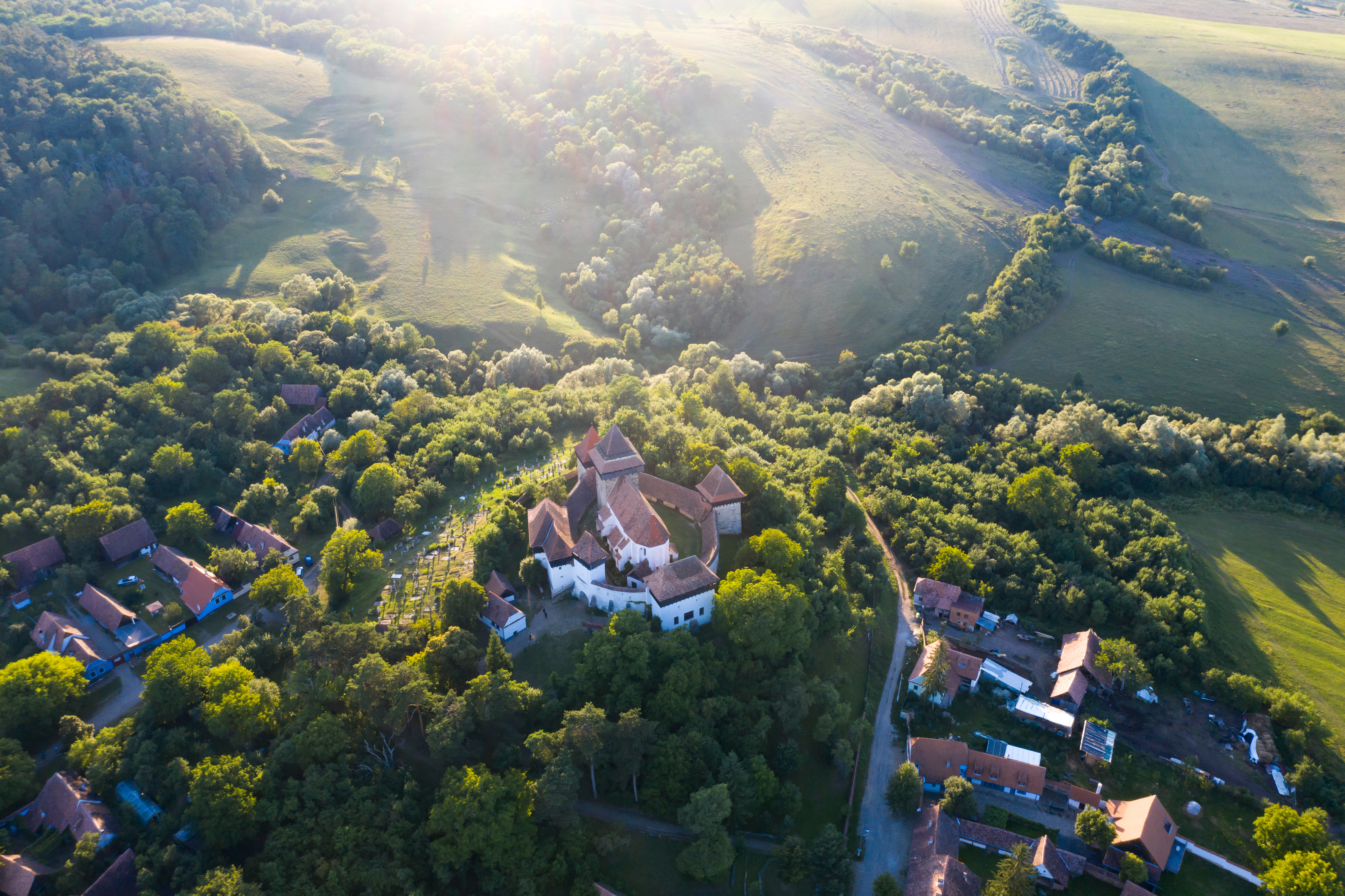
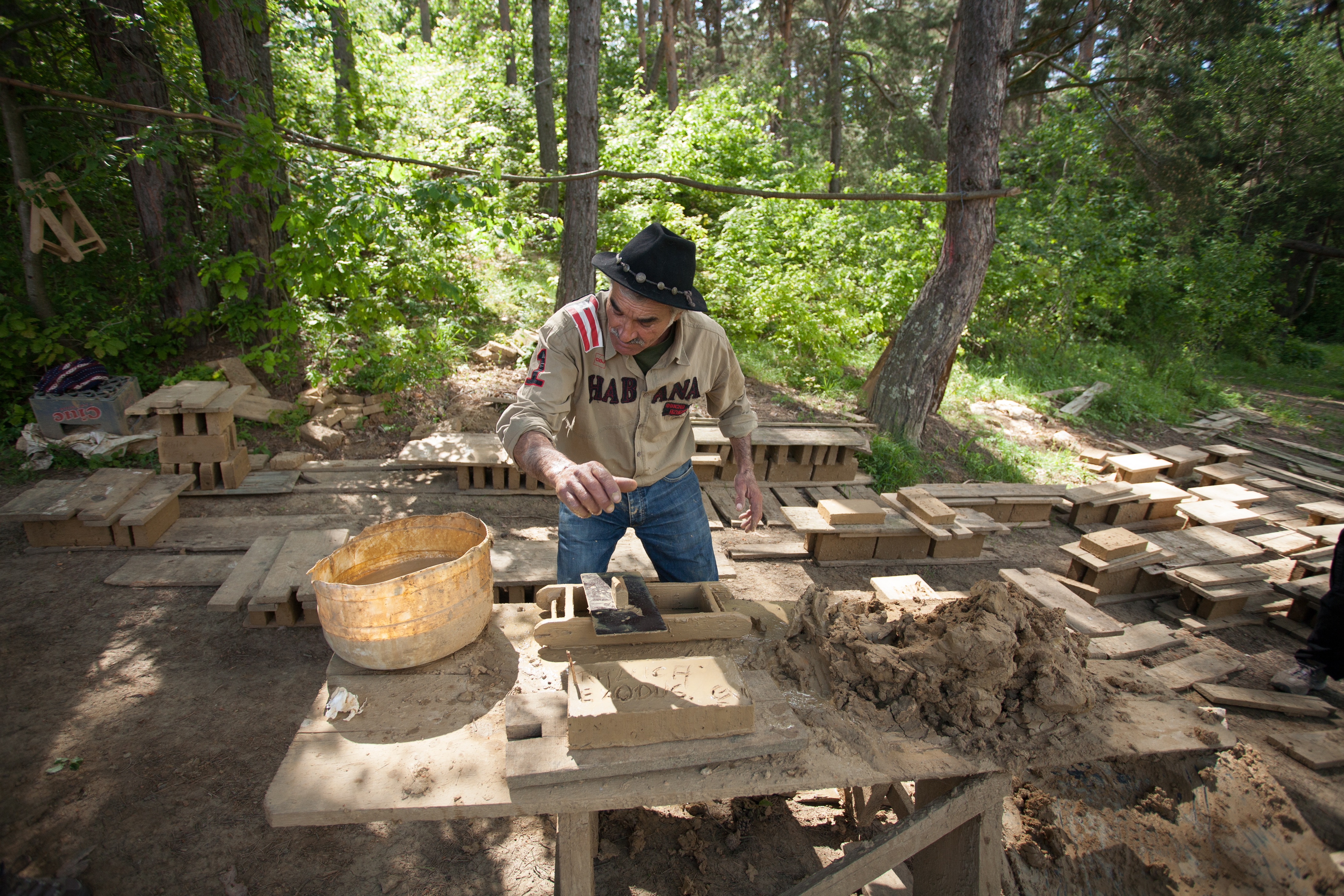
After breakfast, we ride out of Cobor. The day starts with a short climb through the forest before a lovely stretch of road through several small towns takes us to Viscri. Here we can explore this pretty old town and visit a well-known fortified church and meet the brickmakers and blacksmiths who helped restore the building in 1991. It is now regarded as one of the best examples of a fortified church anywhere in the world. There will be plenty of time to fully explore Viscri, which we will tour by horse-drawn cart.
Meals: Breakfast,Lunch,Dinner
Day 8
Transfer to Bucharest; visit Brasov and, time permitting, Peles Castle on the way
After breakfast, we take a long private transfer to Bucharest, stopping at the beautiful medieval town of Brasov en route. Here we climb the towers of the old fort for views over the town centre and 14th-century Black Church, before returning to street level for a short stroll on the cobbled pedestrian roads.
We then hop back in the vehicle and continue towards Bucharest. If there’s time, we stop at Peles Castle, a forest-wrapped residence of the former Romanian royal family. We enjoy a short walk around the spectacular gardens before completing our journey to Bucharest, arriving at the end of the day.
Meals: Breakfast
Day 9
Adventure ends in Bucharest
After breakfast, we have most of the day to explore Bucharest; we can wander the old streets and do last-minute shopping or visit some of the fascinating old museums and palaces before the trip ends. Either make your way home or speak to your sales representative to extend your stay in this fascinating city.
Meals: Breakfast
What’s included
What’s not included
Additional information
Food
Romanian cuisine has strong influences from the surrounding countries including Bulgaria, Serbia and Hungary.
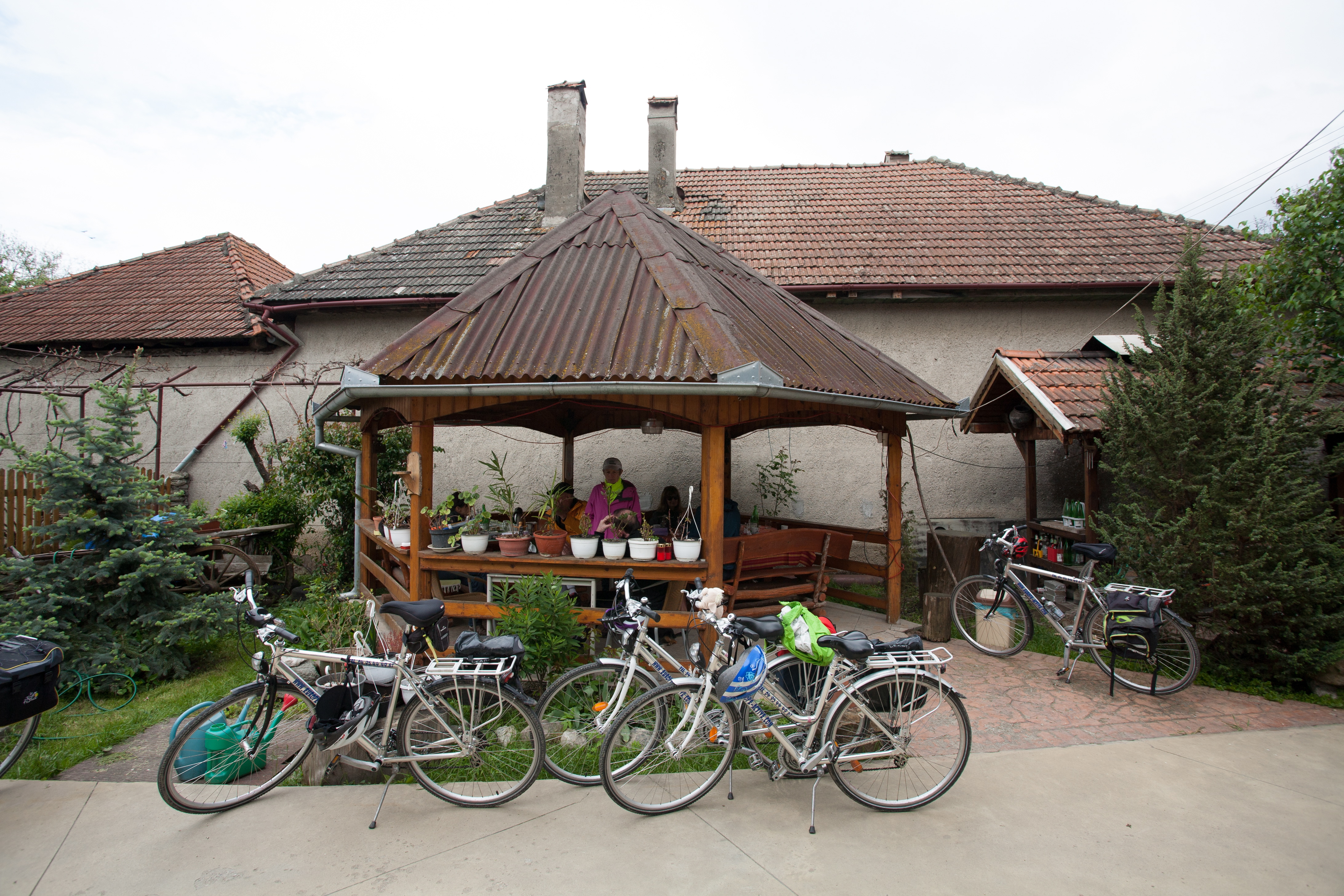
We will try fantastic home-cooked meals on this trip as we spend most nights staying with local families and in guesthouses.
Breakfasts will consist of homemade bread and cheeses plus a selection of locally sourced meats, salad, and tea or coffee.
There are five picnic lunches, two at a local family home and three enjoyed al fresco. They are made by the staff at our guesthouses and will usually be sandwiches, salad, fruit and more of their homemade cheese. Some days we will have a traditional vegetable soup for lunch with homemade crème fraiche and bread.
Dinners are usually centred around pork or beef. Lots of guesthouses will prepare sarmale cu mamaliguta, a traditional Romanian dish of minced pork wrapped in pickled cabbage leaves and served with polenta and a chilli.
It’s not all about the food though; every household makes their own tuica (pronounced tsweeka), a spirit usually made from plums and flavoured with herbs from their garden or the surrounding area. This is usually drunk while being welcomed into the house and after dinner.
Biertan UNESCO Fortified Church Tour
Tour the UNESCO-listed fortified church of Biertan, rising above vineyards and Saxon-roofed houses. Cross defensive rings to reach a late-Gothic sanctuary, where sturdy buttresses and a concentric system of walls speak to centuries of frontier life.
Inside, discover Renaissance details and a church designed as both house of worship and refuge. Bastions, towers, and gateways reveal how faith and fortification intertwined in Transylvania’s Saxon settlements.
Sighisoara Medieval Citadel Walk
Walk the cobbled lanes of Sighisoara’s UNESCO-listed citadel, one of the best-preserved inhabited medieval towns in Europe. Pastel guild houses, covered stairways, and burgher towers frame a living fortress where history remains part of daily life.
See landmarks such as the Clock Tower and the house linked to Vlad Dracul, father of Vlad the Impaler. The blend of Saxon craft heritage and Transylvanian folklore gives this hilltop town its magnetic, time-capsule character.
Cobor Farm Conservation & Garden Visit
Visit Cobor Farm, a restored village homestead championing organic gardens and traditional breeds. Stroll the beds where heritage seeds are nurtured, learn about conservation grazing, and see how a once-abandoned property has blossomed into a model of rural regeneration.
Meet the team behind projects that protect nature while sustaining village life. The garden-to-farmstead setting, birdsong, and aroma of sun-warmed herbs capture Transylvania’s quiet, restorative pace.
Viscri Village Heritage: Fortified Church, Crafts & Cart Ride
Explore Viscri, a Saxon village of lime-washed cottages and cobbled lanes, where you’ll visit the fortified church of Viscri and meet the craftspeople—brickmakers and a blacksmith—who helped restore it. Experience a horse-drawn cart tour that rolls past gardens, barns, and orchard-backed homes.
Learn how community projects, supported by heritage advocates including King Charles III’s restored house, have revived skills and traditions. The village’s UNESCO-listed character shines through its robust walls and thriving craft culture.
Brasov Old Town Walk & Fort Tower Viewpoint
Climb the old fort towers above Brasov for sweeping views across red roofs and the 14th-century Black Church. Return to street level to wander Council Square (Pia?a Sfatului), where merchants once traded beneath pastel baroque facades.
Brasov’s Saxon walls, narrow lanes, and mountain backdrop illustrate the city’s role as a medieval trading hub. The panoramic outlook pairs perfectly with a gentle old-town stroll through cafes, churches, and lively pedestrian streets.
Peles Castle Gardens Stop, Sinaia
Stroll the landscaped grounds of Peles Castle, a forest-framed royal residence in Sinaia famed for its Neo-Renaissance architecture. Terraces, fountains, and alpine vistas set an elegant scene at the foot of the Bucegi Mountains.
This short, scenic pause is typically made during the transfer toward Bucharest, time permitting. The setting highlights Romania’s late 19th-century royal era, with ornate facades and mountain air combining for a refined, picture-perfect interlude.
Saxon Village Church Visit (Apold or Bradeni)
Step inside a Saxon fortified church in either Apold or Bradeni, where sturdy towers and enclosing walls once protected villagers and their harvest. The quiet nave and thick defensive ramparts evoke centuries of shared labor and faith.
Explore fresco fragments, wooden galleries, and a grassy churchyard tucked beside modest farmhouses. This intimate visit illuminates how rural communities built sanctuaries that doubled as strongholds across the Transylvanian plain.
Lisa Traditional Wool Mill Demonstration
See a working wool mill in the village of Lisa, where blankets and garments are produced using time-honoured methods. Step inside a modest workshop where century-old machines still card and finish the wool, preserving techniques that once clothed farming communities across the region.
Learn how local artisans maintain living craft traditions, from raw fleece to finished fabric. The hum of belts and the scent of lanolin evoke a slower era, offering insight into Transylvania’s self-sufficient rural economy.
Ohaba Historic Watermill Visit
Visit the Ohaba Watermill, the oldest working flour mill in Fagaras county, and watch the river-powered wheel turn timber gears as grain becomes flour. Set in a quiet valley, this small workshop offers a close look at the tools and rhythms that still shape rural Transylvanian life.
Hear how the mill survived the Communist period and continues serving local families. The scent of fresh flour, worn millstones, and creaking beams reveal a craft passed down through generations—an intimate snapshot of authentic village heritage.
Câr?a (Carta) Cistercian Monastery Ruins
Step into the Cistercian monastery at Câr?a, a serene complex with Gothic fragments dating from the early 13th century. Wander among ivy-touched walls, quiet graves, and meadow-like grounds framed by views of the Fagaras Mountains.
As one of Transylvania’s earliest Gothic ecclesiastical sites, it reflects the spread of Western monastic culture to the Carpathian frontier. Pause beneath weathered arches and stone tracery to appreciate the region’s layered medieval past.