Your itinerary
Day 1
DAY 1
Crete Uncovered
Day 2
Heraklion & Knossos
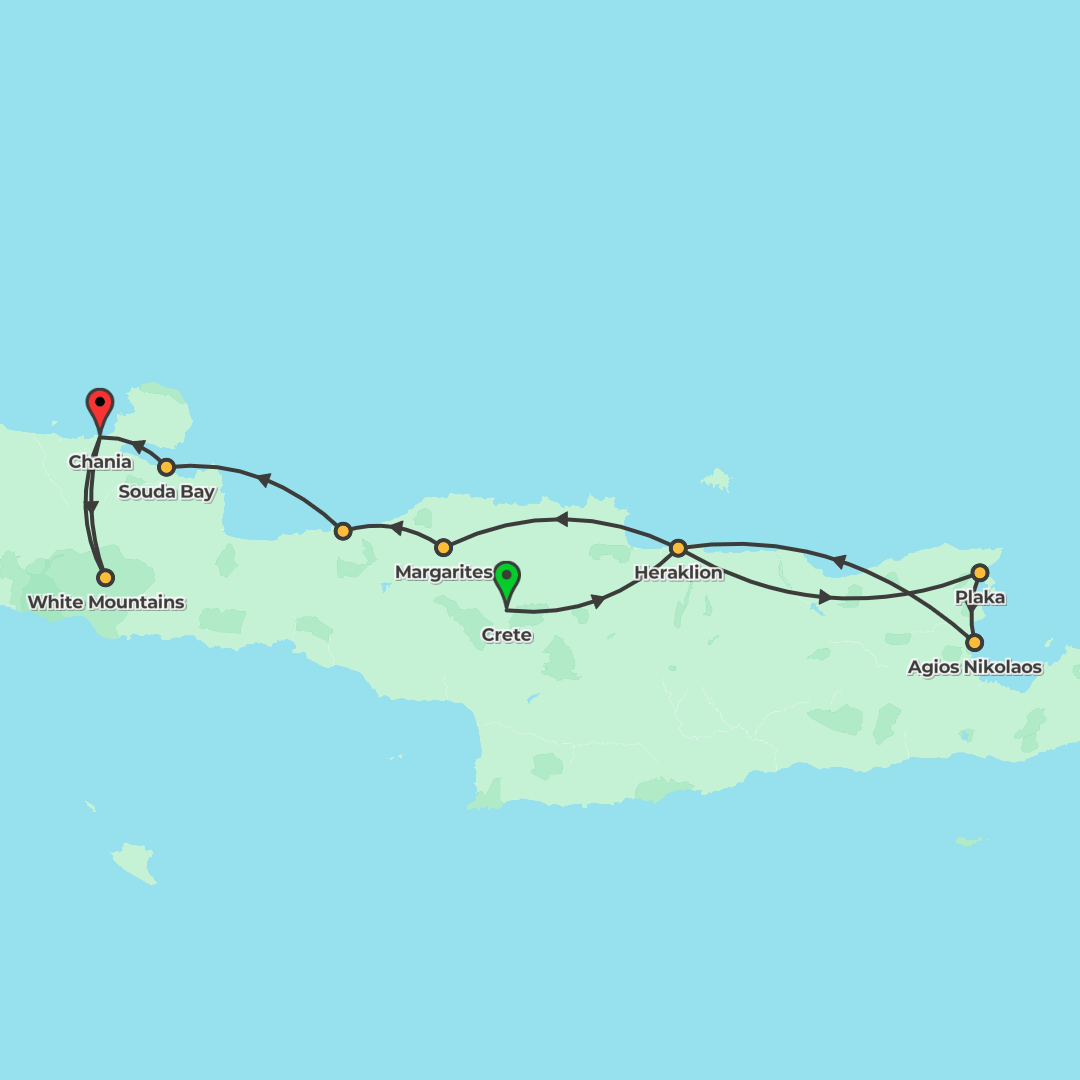
Heraklion & Knossos – This morning, we’ll begin with a guided visit to Heraklion’s world-famous archaeological museum – a treasure trove of Minoan history and one of Europe’s most important cultural collections. Inside, you’ll wander through artefacts that stretch back an astonishing 3,000-5,000 years.
Follow our guide as they bring these highlights to life – from vivid frescos that capture scenes of Minoan life in brilliant colour, to the delicate Bee Pendant from Malia, a tiny masterpiece of ancient goldsmithing. You’ll also come face-to-face with the striking Bull’s Head rhyton, carved from deep black steatite and shimmering with inlaid detail – a powerful emblem of Minoan culture and its connection to nature and ritual. And, of course, the mysterious Phaistos Disc, inscribed with symbols that still keep scholars guessing to this day – it’s always a conversation starter!
As you explore these treasures, our guide will weave their stories together, connecting the dots between these remarkable pieces and the wider Minoan world, setting the scene perfectly for our next stop and enriching everything we’ll discover together throughout our Cretan adventure.
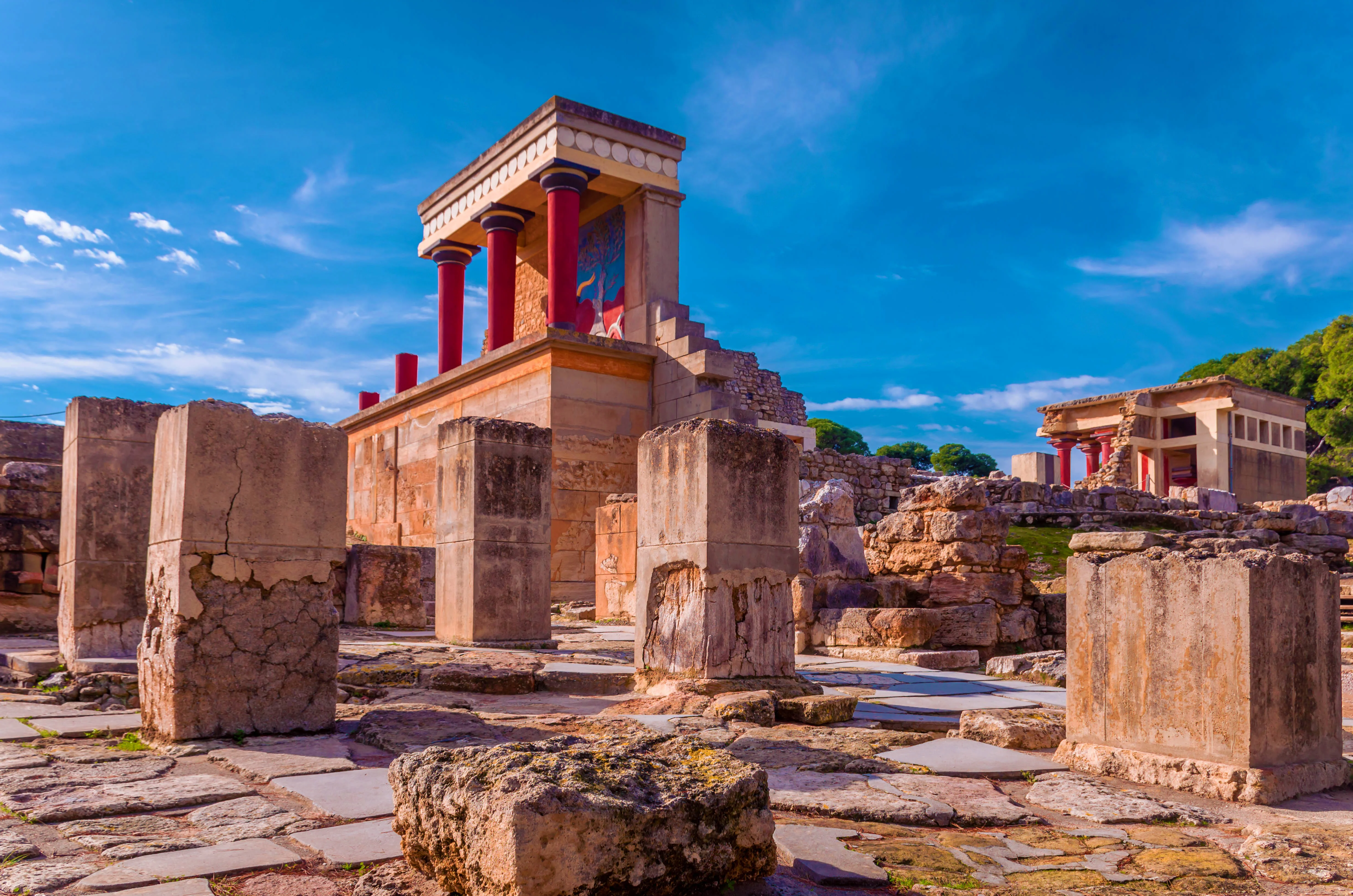
We then continue to another Minoan highlight: the archaeological site of Knossos. Often described as Europe’s first city, its history stretches all the way back to 700 BC.
Once a vast multi-storey palace filled with colourful art, elegant rooms and an impressively advanced plumbing system, Knossos was rediscovered in the late 19th century and excavated between 1900 and 1931. Today, some areas have been reconstructed, giving us a vivid sense of just how sophisticated this ancient world once was. As you wander the courtyards and corridors, you can almost feel the hum of a civilisation that was far ahead of its time.
Myth weaves through history here, too. Knossos is the legendary home to the Minotaur – the fearsome half-man, half-bull was said to lurk within a labyrinth beneath the palace. Theseus’s daring journey into the maze, guided by Ariadne’s thread, has captured storytellers for centuries.
While no minotaurs roam the site these days and the labyrinth is not to be found – or so we’re told – our guide will bring the stories and secrets of Knossos vividly to life.
After two fascinating historical visits, we change pace and head to a family-run agritourismo that’s been in the same hands for four generations. The original farmhouse still sits at its heart, surrounded by a thriving estate producing wine, honey, olives, olive oil, and seasonal fruits and vegetables.
Here, you’ll hear about the family’s traditions and sustainable working practices before sitting down to a delicious lunch made entirely from ingredients grown on-site or sourced nearby. With views across the vineyards and olive groves, it’s the perfect moment to relax and savour the day.
After this wonderful blend of culture and cuisine, we return to our hotel and spend the rest of the day at leisure.
Meals: Breakfast,Lunch
Day 3
Plaka, Spinalonga Island & Agios Nikolaos
Plaka, Spinalonga Island & Agios Nikolaos – Our day begins with a journey to Plaka, a charming coastal village where you can stroll to a local cafe for a coffee – and perhaps a cake or two – while enjoying views of our next stop: Spinalonga.
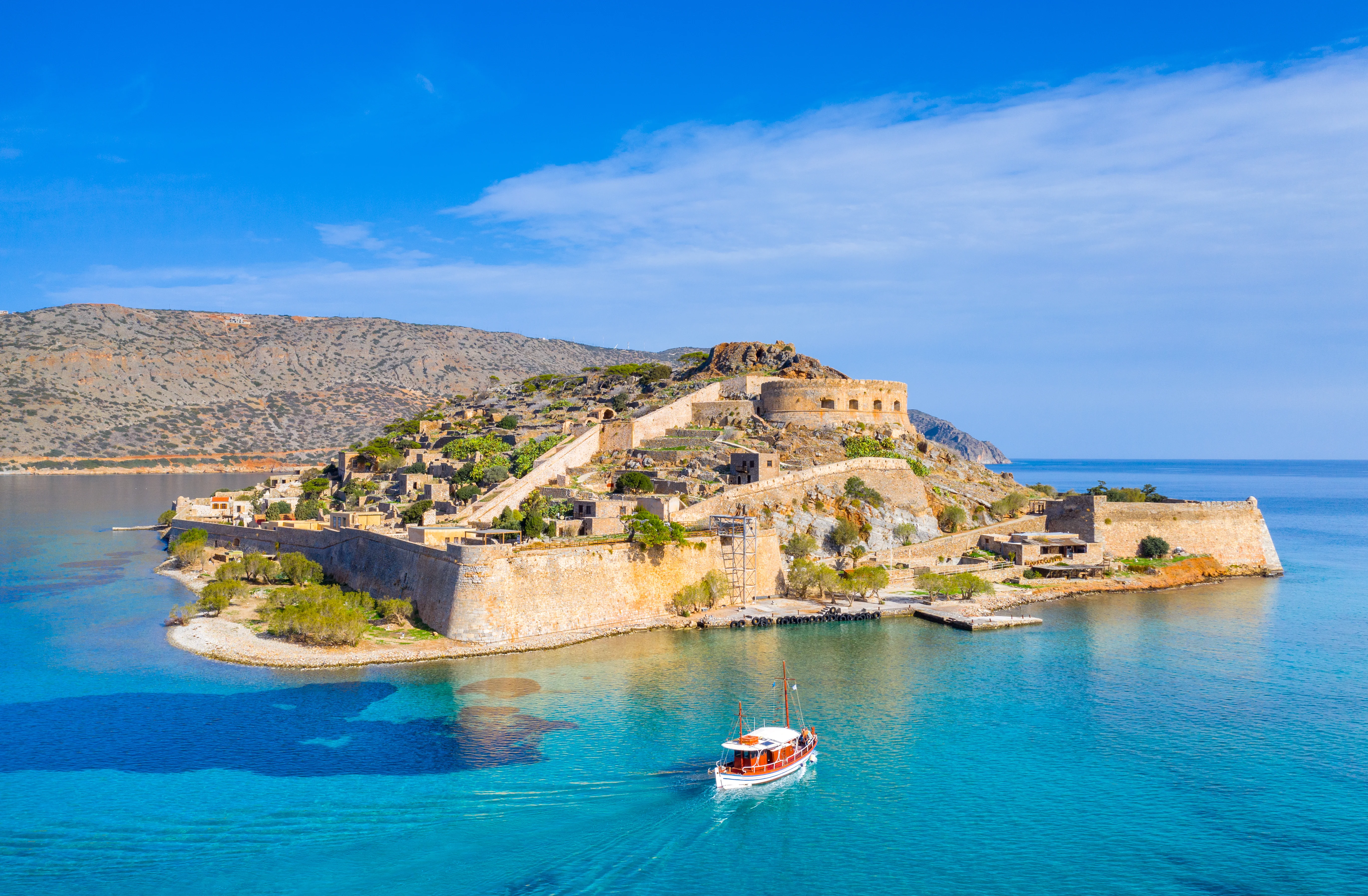
After your break, we’ll reconvene and board a short, chartered boat to the UNESCO-protected island, just a stone’s throw from the shore. Originally fortified to protect the ancient city of Olous – now long submerged – Spinalonga became a Venetian stronghold in the 13th century before falling to Ottoman rule. Then, in 1903, its story took a poignant turn: Crete declared mandatory isolation for those with leprosy, and Spinalonga became Europe’s last leper colony until its closure in 1957. It has remained uninhabited ever since.
Our guided tour brings both its ancient fortifications and moving modern history into focus.
Returning to the mainland, we continue our journey along the coast to Agios Nikolaos, set on the Gulf of Mirabello – fittingly, that translates to ‘beautiful view’ in Italian. Here, you’ll have time to explore and enjoy lunch at your own pace. With its colourful buildings, inviting tavernas and cafes, and lovely waterfront, it’s easy to see why this town is considered a real gem.
Its most famous feature is the so-called “bottomless” lake, linked to the harbour by a narrow channel, and is said to be where Athena once bathed. This ‘bottomless’ myth has been debunked – though locals still prefer the legend.
We return to the hotel late in the afternoon, with the evening free to relax as you wish.
Meals: Breakfast
Day 4
Margarites, Rethymno & Souda Bay
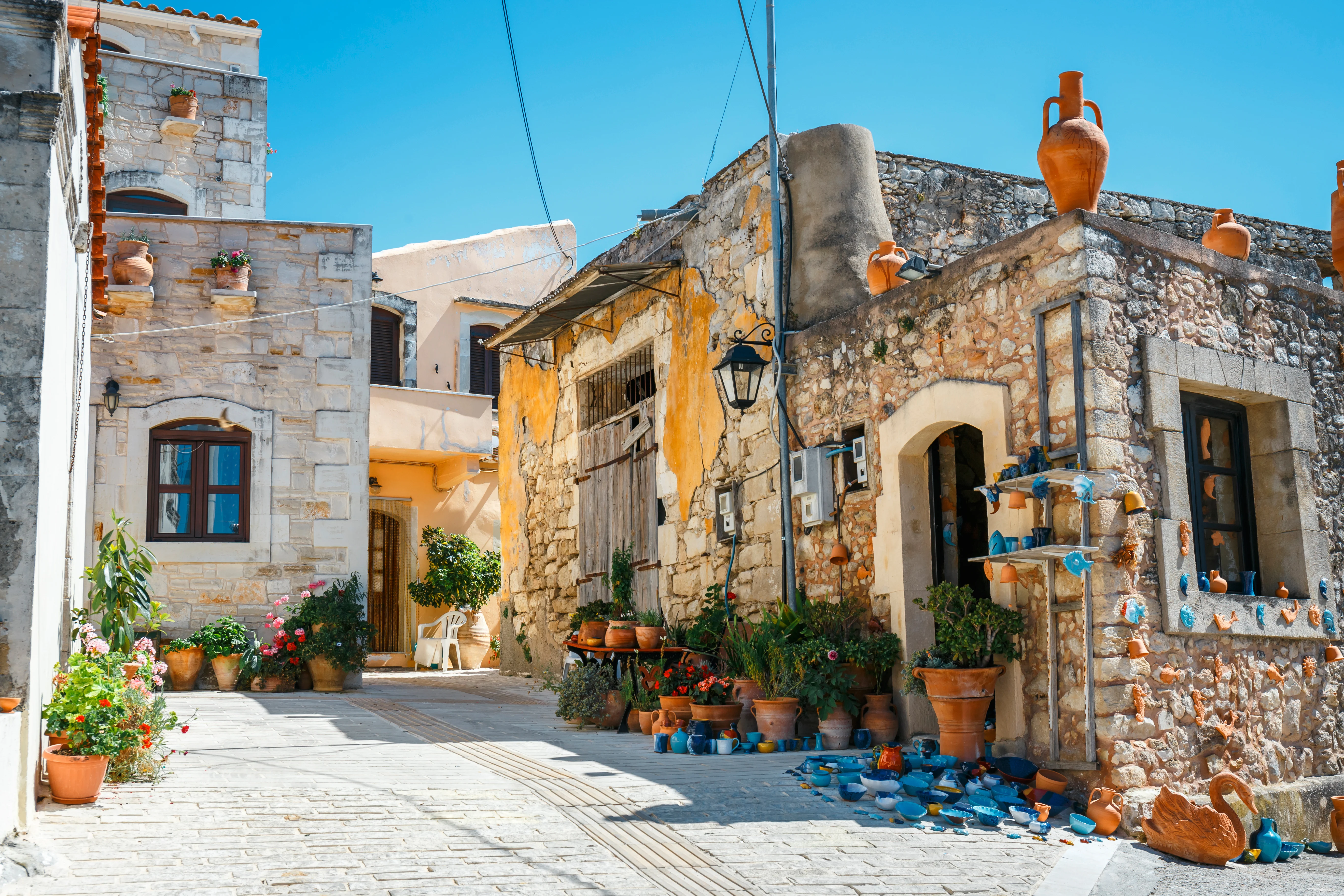
Margarites, Rethymno & Souda Bay – Today, we start with a visit to the picturesque village of Margarites, known as the “village of potters”. Pottery has been part of life here for centuries – perhaps even since Minoan times – thanks to the rich clay found in the surrounding hills. As you wander its maze of narrow streets and alleys, you’ll spot workshops and colourful displays of tiles, jars, pots and vases lining doorways. It’s a charming place to watch local crafts in action.
After time to explore, we continue to Rethymno, one of the best-preserved medieval towns in Greece. This charming coastal city still carries the legacy of the Venetians, with a beautiful harbour and a maze of narrow streets lined with citrus and pomegranate trees, bougainvillaea and jasmine. Churches, courtyards and shops selling local crafts add to its easy appeal – it’s a great place for authentic souvenirs!
Later rulers left their mark too: the Ottomans introduced minarets, steam baths and an impressive mosque, giving the town its distinct blend of architectural styles. We’ll enjoy a short orientation tour here before free time for lunch and further exploration.
Continuing west, we’ll make a short, but poignant, stop at the Commonwealth Military War Cemetery at Souda Bay. This vast natural harbour offers beautiful views today, but in WWII it was a strategic battleground, playing a key role in the Battle of Crete in May 1941. After a time to pause and reflect, we continue to our hotel in Chania, where we’ll stay for the next three nights.
Meals: Breakfast
Day 5
Chania & Botanical Gardens
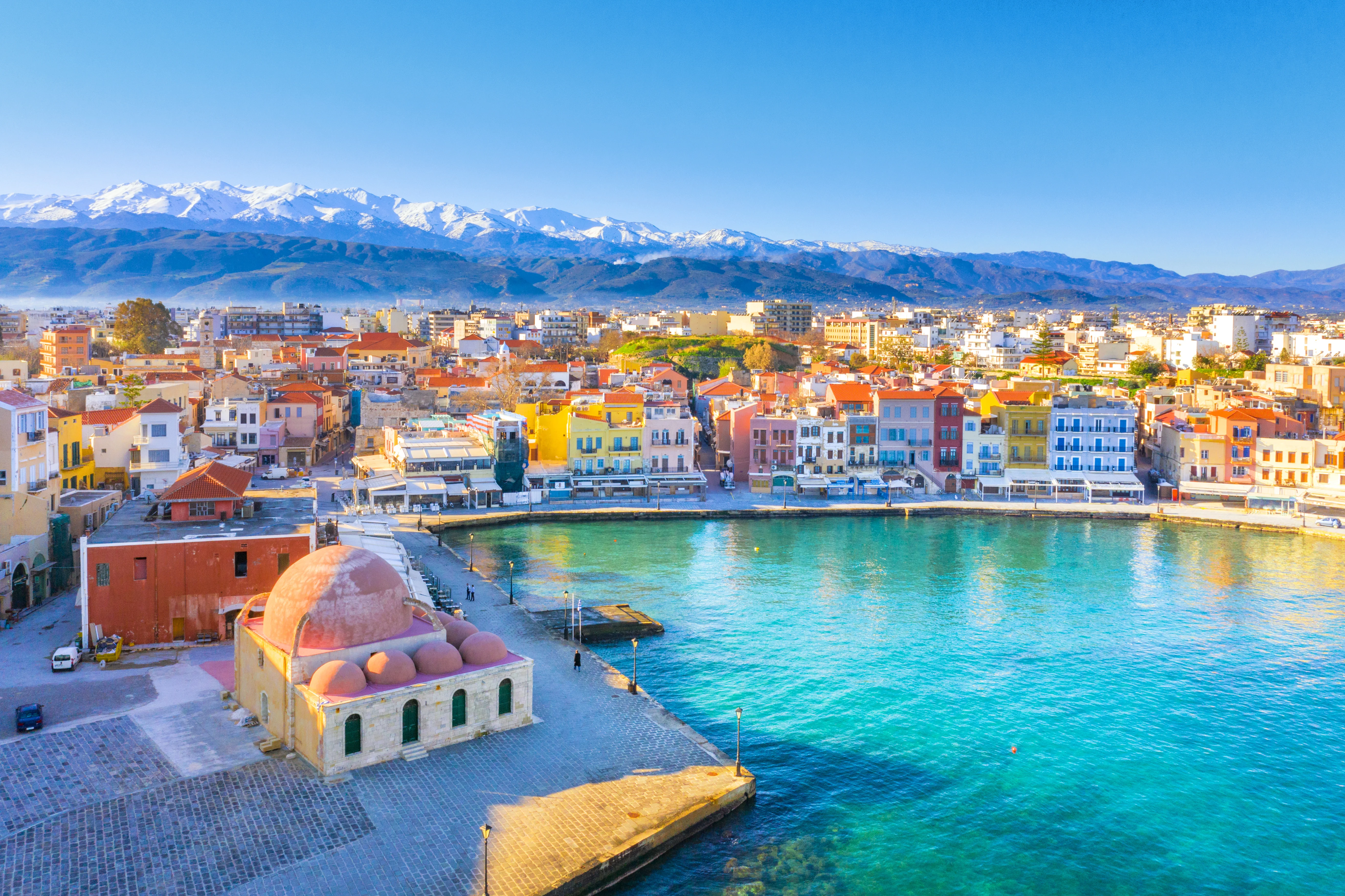
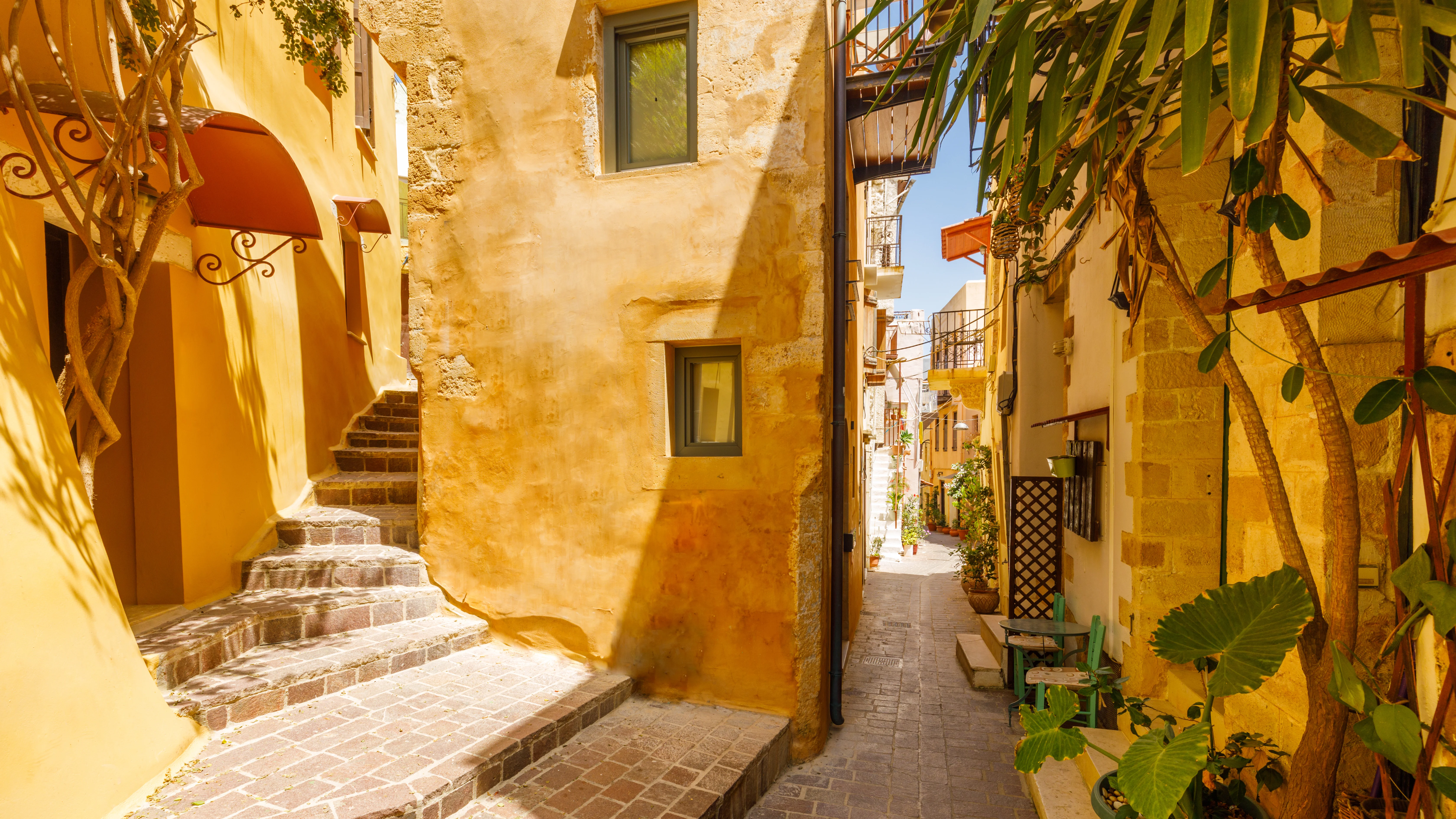
Chania & Botanical Gardens – After breakfast, we set off on a guided walking tour of Chania, tracing the town’s layered history through its Venetian harbour and lighthouse, the former Ottoman quarter of Splanzia – now full of lively cafes and historic churches – and the network of narrow streets and old city walls that give Chania its timeless charm.
After a short break, we meet our coach and take a scenic journey to the foothills of the White Mountains for a visit to the Botanical Gardens of Crete. Created in 2003, these 200-acre gardens were built after a devastating fire to restore the land and cultivate plants and trees from around the world alongside rare local species. Thanks to clever use of the hillside’s natural microclimates, everything from tropical fruit trees to alpine herbs thrives here.
Set inland and surrounded by forests, the gardens follow a winding 2km path that descends before rising again, with something new at every turn. Keep an eye out for wildlife too – you may spot birds of prey overhead, songbirds in the trees, or even resident peacocks strolling the grounds.
After exploring, we enjoy a small tea tasting featuring blends made from herbs grown on site – some old family recipes, others new creations. There’s time for lunch before we return to Chania in the mid-afternoon and spend the rest of the day at leisure.
Please note: Guests are invited to walk at a pace that suits them, as the garden walk is not guided. Due to the serpentine paths and slopes, the walk may not be suitable for everyone, though handrails are provided in places.
If you choose not to explore the grounds, the on-site restaurant serves locally and sustainably produced food, and the visitor area is easily accessible, offering wonderful hillside views. Alternatively, you may choose to remain in Chania and explore at leisure.
Meals: Breakfast
Day 6
Free day in Chania
Free day in Chania – Spend a delightful day discovering more of Chania at your own pace. Meander through the old town’s charming lanes, relax at a harbour-side cafe with a drink and pastry, or perhaps step inside the inviting cathedral, Maritime Museum, or Archaeological Museum. The town brims with welcoming workshops—from ceramics and mosaics to leatherwork, painting, and calligraphy—perfect for finding a special, locally made treasure.
Be sure to look out for the historic covered market in the old town, built on the site of a former Venetian fortress. Closed for renovation in recent years, it’s due to reopen in 2026. When open, it specialises in local produce – vegetables, fish, meat, herbs and spices, plus classic Cretan staples such as cheese, olives and raki. In summer, many stalls also offer souvenirs, and you’ll find a few traditional workmen’s cafes serving authentic local dishes.
If you’d prefer a slower day, you might simply unwind on one of the nearby beaches and soak up the Mediterranean sunshine.
Meals: Breakfast
Day 7
Aptera & Monastery of the Holy Trinity
Aptera & Monastery of the Holy Trinity – We begin our morning with a guided tour of Aptera, a hilltop site where Crete’s history seems to echo through the landscapes. Dating back to the Early Iron Age, Aptera grew into a powerful Minoan and later Classical city-state; its influence stretches across the island. As you wander its ancient theatre, enormous Roman cistern and sturdy fortifications, the views over Souda Bay are breathtaking – a reminder of why this vantage point has been so fiercely prized throughout the centuries.
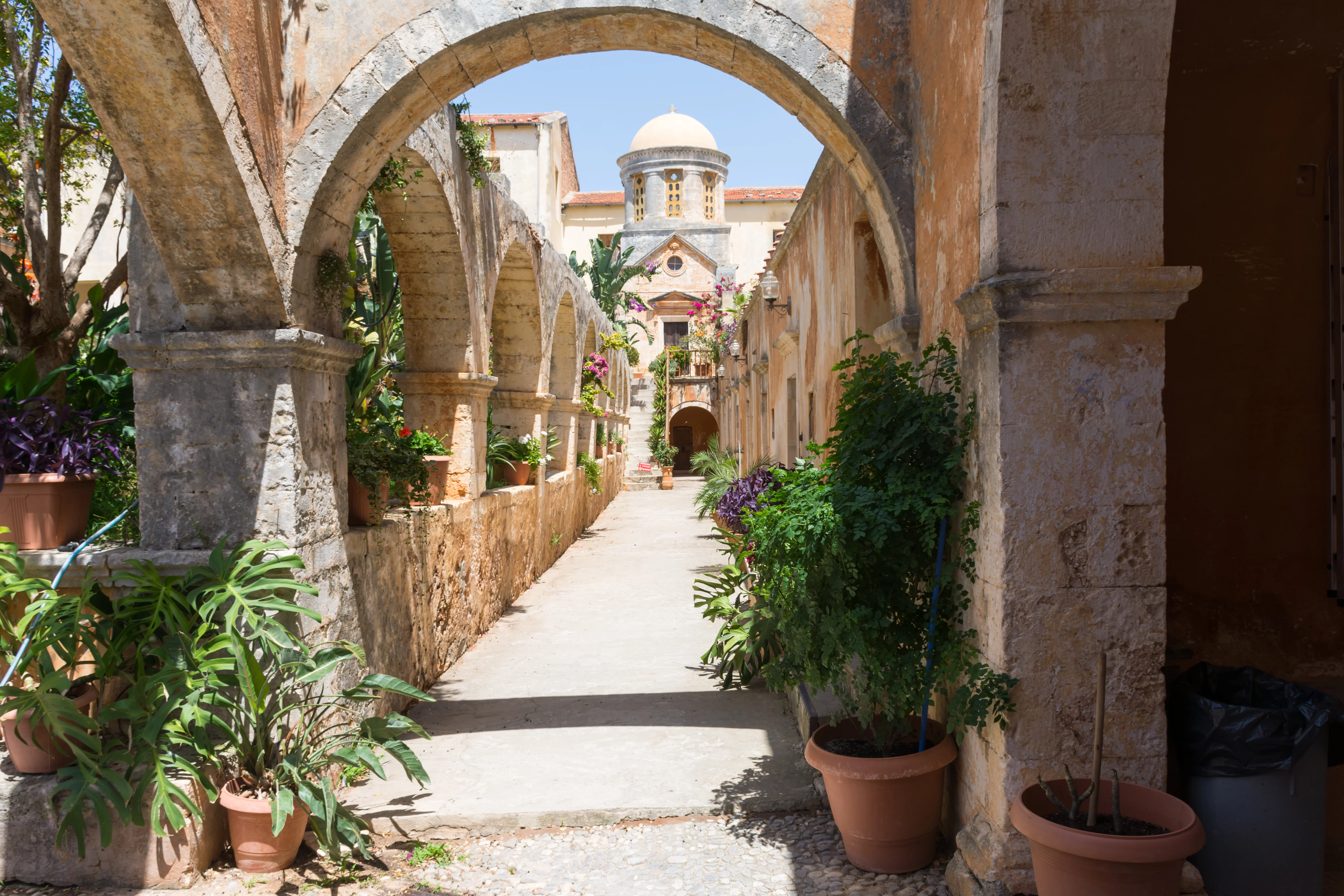
Later, we continue on to the Monastery of the Holy Trinity (Tzagaroli), a magnificent 17th-century complex built atop an earlier medieval foundation. Its Venetian-inspired architecture, peaceful courtyards and active monastic community offer a serene contrast to the ancient ruins we’ve explored this week. Inside, the small museum displays rare manuscripts, icons and sacred artefacts that illuminate centuries of Orthodox tradition on Crete.
Our visit concludes in the historic cellars, where you’ll discover the monastery’s long wine-making heritage. Here, you can sample the monks’ own wines and olive oils, paired with local treats such as breads, stuffed vine leaves and cheeses – easily enough to pass as a light lunch.
Later this afternoon, we’ll return to Chania for an evening at leisure.
Meals: Breakfast,Lunch
Day 8
DAY 8
Return home
Meals: Breakfast
What’s included
What’s not included
Additional information
Chania Old Town Walking Tour & Venetian Harbour
Join a guided walking tour through Chania’s atmospheric lanes, skirting the Venetian Harbour and Lighthouse before weaving into the Splantzia quarter. Discover artisan workshops, church courtyards, and sections of the stone city walls that reveal centuries of trade and conquest.
Unpack Chania’s layered history—from Byzantine roots and Venetian elegance to Ottoman influences—at spots like Firkas Fortress and quiet backstreets where jasmine drifts on the air. Lively cafés, cobbles polished by time, and a working waterfront add a vivid, lived-in character to this coastal gem.
Botanical Gardens of Crete Walk & Herbal Tea Tasting
Wander terraced paths in a hillside garden shaped by the microclimates of the White Mountains. Follow a 2-kilometre loop past citrus, Mediterranean shrubs, tropical fruit trees, and native herbs, pausing for birdlife, butterflies, and resident peacocks that animate the leafy canopies.
Interpretive signs reveal how the landscape rebounded after wildfire to host diverse species. Conclude with a herbal tea tasting drawn from estate-grown blends—fragrant dittany, mountain tea, and mint—sipped amid birdsong and valley views for a quietly restorative nature experience.
Margarites Pottery Village Visit
Explore Margarites, Crete’s renowned village of potters, where clay-rich hills have sustained workshops for centuries. Step inside studios to watch artisans at the wheel, shaping jars, bowls, and amphorae by hand, and admire courtyards lined with glazed tiles and colourful ceramics.
Learn how rich local clay and age-old firing methods inform both everyday wares and decorative pieces. Traditional motifs—spirals, leaves, and marine forms—echo Minoan aesthetics, while contemporary makers keep techniques alive, making this a rewarding encounter with living craft heritage.
Rethymno Old Town Orientation Walk
Take an orientation walk through Rethymno’s honey-stoned lanes to the burbling Rimondi Fountain, Venetian Loggia, and café-lined streets leading toward the silhouette of the Venetian Fortezza. Lush bougainvillaea, fragrant bakeries, and artisan boutiques complete the old-world tableau.
Discover how Venetian townhouses, Ottoman doorways, and slender minarets create a distinctive architectural blend. Historic churches and lively squares speak to a mercantile past, while seafront breezes and harbour views frame a graceful, walkable town steeped in culture and coastal charm.
Souda Bay War Cemetery Visit & Reflection
Visit the Commonwealth War Cemetery at Souda Bay, where ranks of white headstones overlook sapphire waters and cypress groves. Take a moment to pause for photos and reflection in a place tended with quiet dignity by the Commonwealth War Graves Commission.
Contextual notes recall the Battle of Crete, May 1941, and the multinational forces who fought across these hills. The serene setting and meticulous landscaping provide a contemplative counterpoint to the island’s ancient sites and lively harbours.
Aptera Archaeological Site Guided Tour
Walk the windswept plateau of Aptera on a guided visit to a once-powerful city-state. Explore the ancient theatre, massive Roman cisterns, and stout Hellenistic walls, taking in wide Souda Bay views that explain the site’s enduring strategic value.
From Early Iron Age origins to classical prosperity and later fortifications, Aptera’s layers tell a long story of trade, defense, and ritual. The blend of monumental engineering and panoramic scenery makes this a compelling archaeological encounter.
Monastery of the Holy Trinity (Tzagaroli) Visit with Wine & Olive Oil Tastings
Visit the serene Monastery of the Holy Trinity (Tzagaroli), a 17th-century complex with Venetian-inspired architecture, arched cloisters, and a small museum of icons and manuscripts. Incense, stone courtyards, and olive groves set a contemplative tone on the Akrotiri peninsula.
In the historic cellars, sample monastic wines and olive oils paired with local breads, cheeses, and dolmades—a generous, meze-style light lunch. Monastic agricultural traditions meet spiritual heritage here, offering a distinctive taste of Crete’s countryside and culture.
Chartered Boat to Spinalonga & Island Walking Tour
Cruise by chartered boat across the blue of the Gulf of Mirabello, arriving beneath Spinalonga’s ramparts as travellers once did. Walk the island’s Venetian fortifications, follow the shoreline path, and take in sea-washed views framed by bastions and battlements.
Trace a layered story from Venetian stronghold to Ottoman garrison and its moving 20th-century chapter as a former leper colony. A guided exploration through narrow lanes, chapels, and restored houses explains daily life and resilience in this isolated community, set against the serenity of the surrounding bay.
Cretan Agritourism Estate Visit & Farm-to-Table Lunch
Visit a fourth-generation, family-run agritourism estate set among olive groves and vineyards. Stroll the grounds, learn about organic practices, and sample estate-produced olive oil and wine alongside honey and seasonal produce that reflect Crete’s terroir and culinary heritage.
Settle in for a leisurely farm-to-table lunch celebrating time-honoured recipes—think crisp salads, local cheeses, herbed pies, and garden-fresh vegetables—served with views over vineyards and olive groves. The warm, rural setting brings Cretan hospitality and sustainability to the table in delicious, authentic fashion.
Palace of Knossos Guided Tour
Explore the storied Palace of Knossos, the Minoans’ sprawling ceremonial and political heart. Walk through reconstructed colonnades and storerooms, study the color-drenched fresco replicas, and consider the pioneering—if debated—reconstructions by Sir Arthur Evans that reveal advanced drainage, elegant courtyards, and sophisticated design centuries ahead of their time.
Hear legends where archaeology meets myth, from the labyrinth and Minotaur to Ariadne’s thread, and understand how palace ritual, storage magazines, and grand processional ways shaped society. Panoramic views and atmospheric ruins make this a definitive encounter with Crete’s Bronze Age power.
Heraklion Archaeological Museum Guided Visit
Discover the masterpieces of Minoan art and ritual at the Heraklion Archaeological Museum with a local expert. Marvel at the filigree Bee Pendant from Malia, the sleek Bull’s Head rhyton, and the enigmatic Phaistos Disc, alongside vivid fresco panels and delicate faience figurines that illuminate daily life and sacred ceremony on Bronze Age Crete.
Gain a deeper understanding of Europe’s earliest palatial culture through motifs of sea, nature, and bull-leaping, and learn how archaeologists decoded these objects to piece together a seafaring, craftsmanly society. This richly contextual visit sets the cultural scene for the island’s storied sites and landscapes.